
What’s Hot (24.9.22)

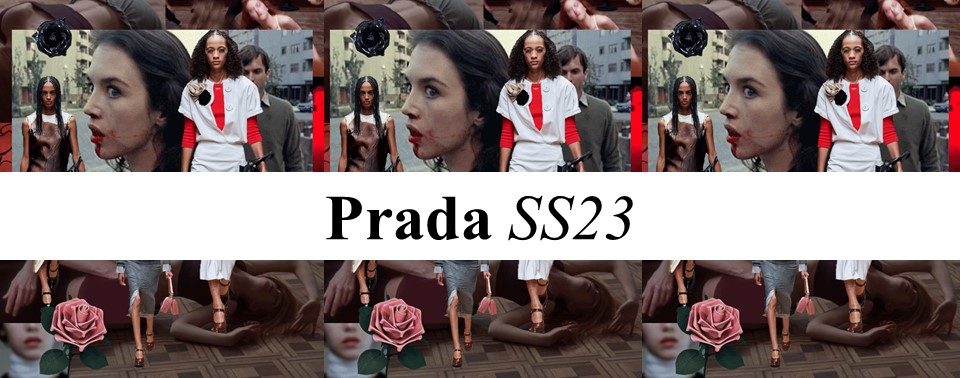

Finally, after two and half (fashion) weeks, a truly brilliant collection. Of course, it had to be Prada. Spring-summer 2023 might be the most sensual offerings to date coming from the creative dialogue between Miuccia Prada and Raf Simons. At a first glance, one might find it very simple, even straightforward. But the more you dig into the details, into its raw, yet cinematic effect, and the oddness of silhouettes and lenghts and material clashes, you realise that another word describes it better: “crude”. For the show, the Prada Fondazione was covered in black craft paper. Cut into the set walls were windows behind which short videos by the director Nicolas Winding Refn fame played: clips of a coat on a wooden dining chair, an empty kitchen, women in repose on couches. Were these scenes of domestic bliss? Knowing our protagonists, and understanding the two years we’ve all been through, that doesn’t seem likely. Instead, what Miuccia Prada and Raf Simons seemed to be after was some sort of truth – peering behind the curtain for a glimpse of reality or its close verisimilitude. “There is a sense of the life of women,” Miuccia Prada said in a statement. “Life and humanity crafts the clothes – not superficial embellishment, but traces of living, leaving marks. This idea of clothes shaped by humanity excites us.” The first look, in its corporate anonymity, seemed to belie that statement. Where’s the humanity in a dour gray top coat and lighter gray button-down onesie? But before long, the layers came undone. The boxy tailoring of that coat, for example, was replaced with an old-fashioned nightie, the familiar logo triangle embroidered on its tulle neckline. Picking up on the craft paper of the set, they used paper – “the most simple, modest material” – for dresses whose color and print didn’t quite meet the edges. These were the most thought-provoking pieces in the collection. The white outlines at necklines and hems gave the sleeveless shifts an unfinished, work-in-progress quality, like an artist made clothes out of a freshly painted canvas, rather than putting it in a frame. Clearly, Miuccia had her autumn-winter 2004 collection as the reference, where a similar technique was used for dresses and coats. Knit sweaters and skirts, meanwhile, came pre-creased in places, and the skirts’ slits were left raw-edged, with the slips underneath following the same almost ragged lines. The white nighties and peignoirs over black briefs and the icy silk duchesse dresses tapped into beloved parts of the house archives. Trained for decades to see Mrs. Prada as fashion’s fortune teller, a mostly silent arbiter with an outsized influence, we come to Prada shows eager to know how we’ll want to dress next season. On that topic, the house founder and her partner had a new idea, and it goes back to that skinny legged, stripped of all excesses all-in-one. Many designers are thinking wider and fuller for spring – the overwhelming vibe is go big or go home. But here the silhouette was tapered to the ankle and punctuated with a boxy coat or jacket and chunky cowboy boot mary janes. A new Prada uniform? In his own comments, Simons said, “more than any other collection, this one is filled with different views… different bodies of work, within a single body of work – shifting between disparate form languages.”
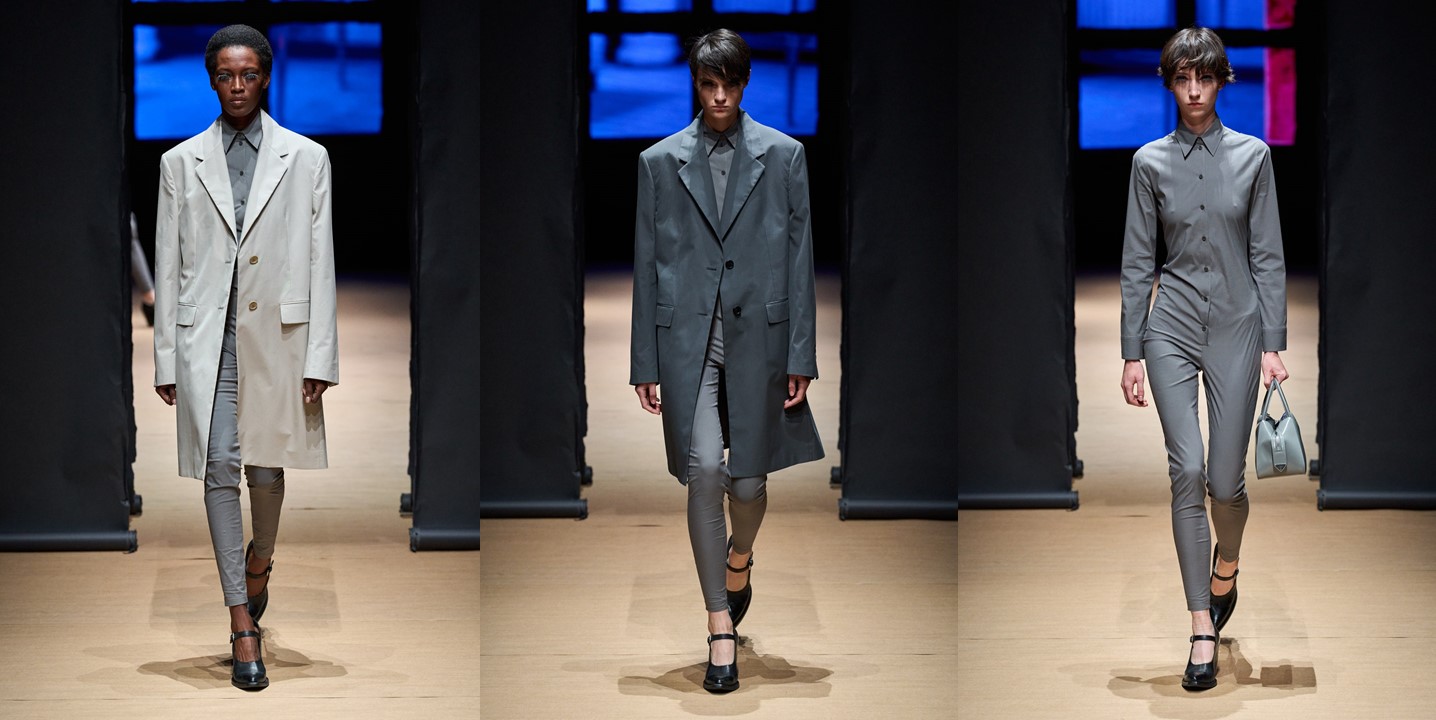
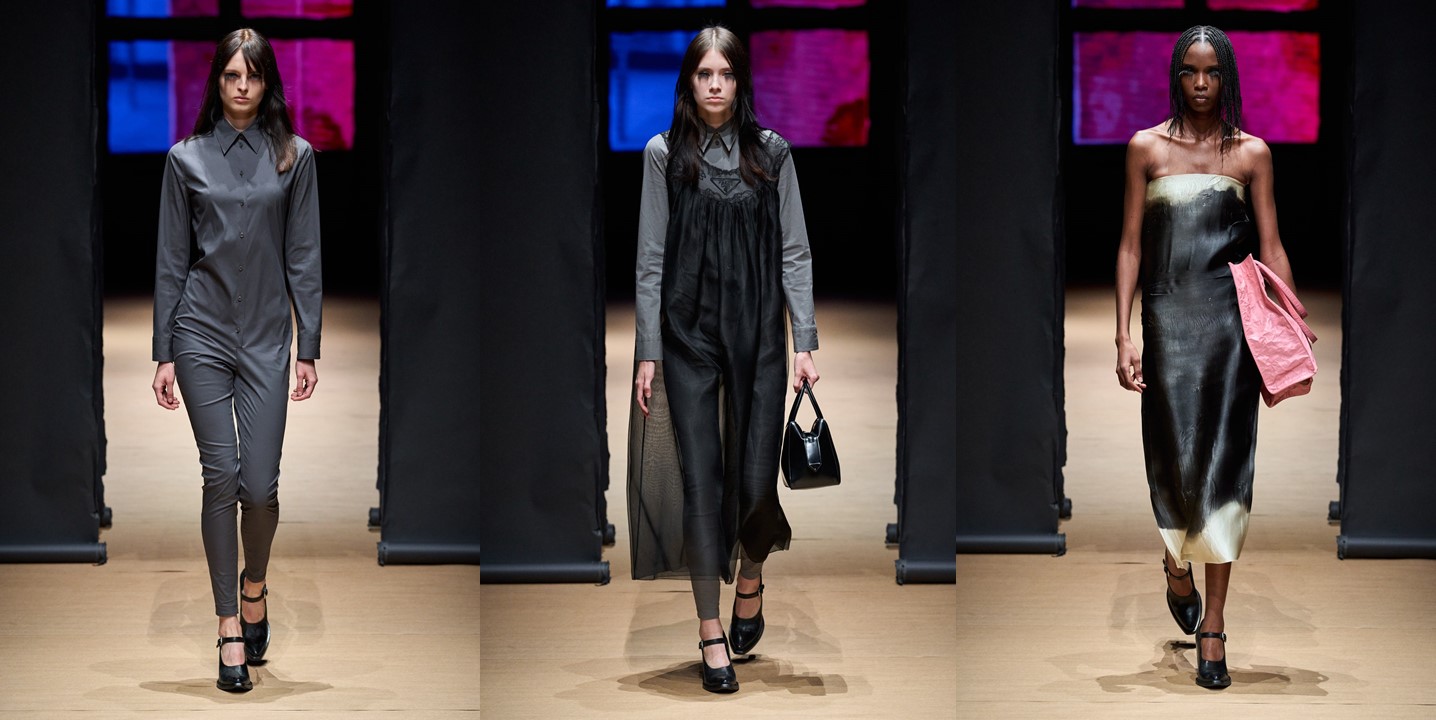
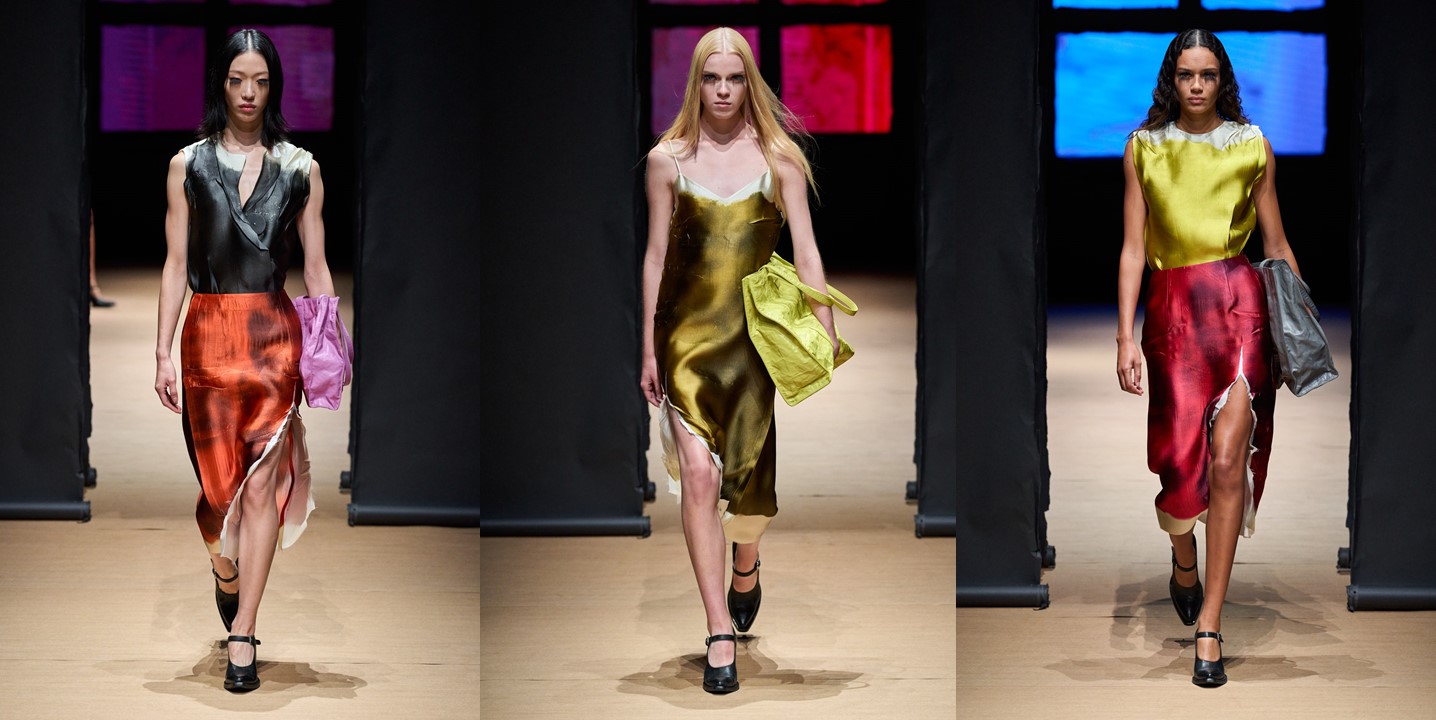
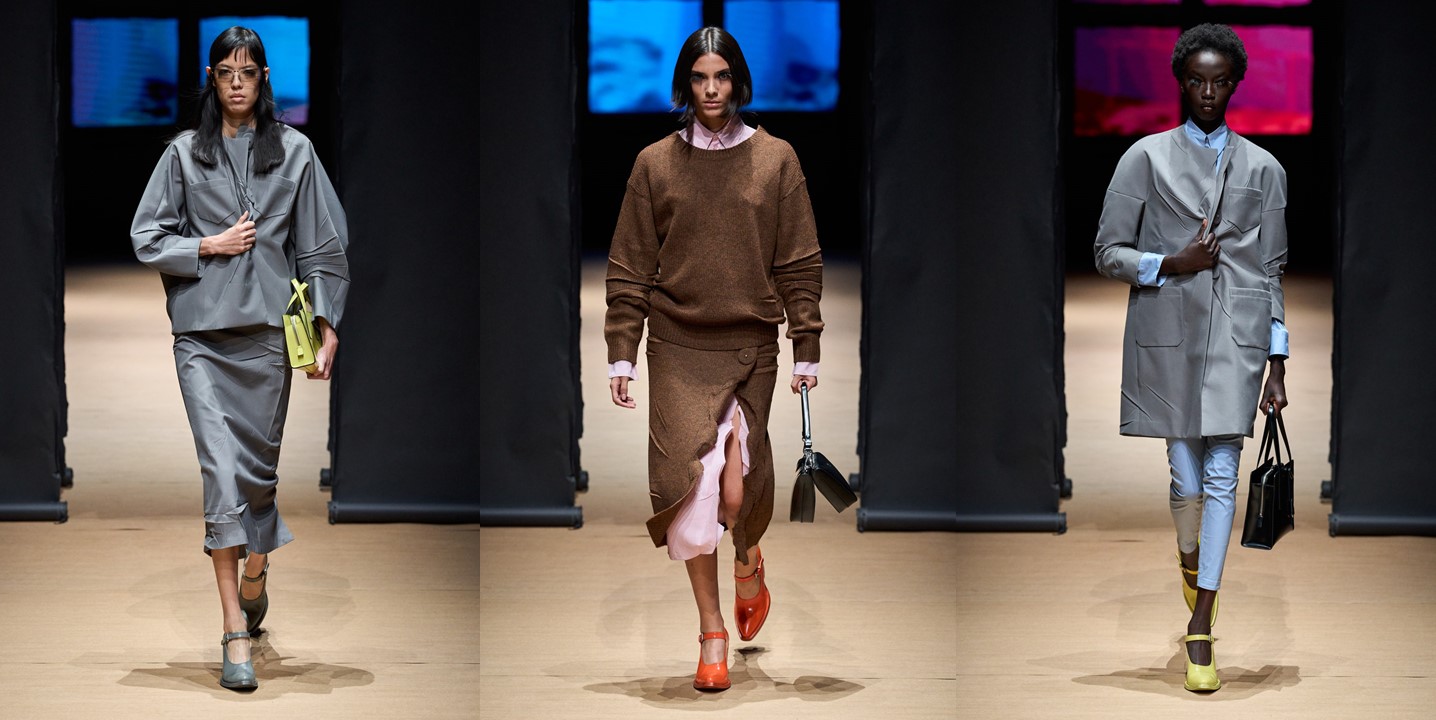
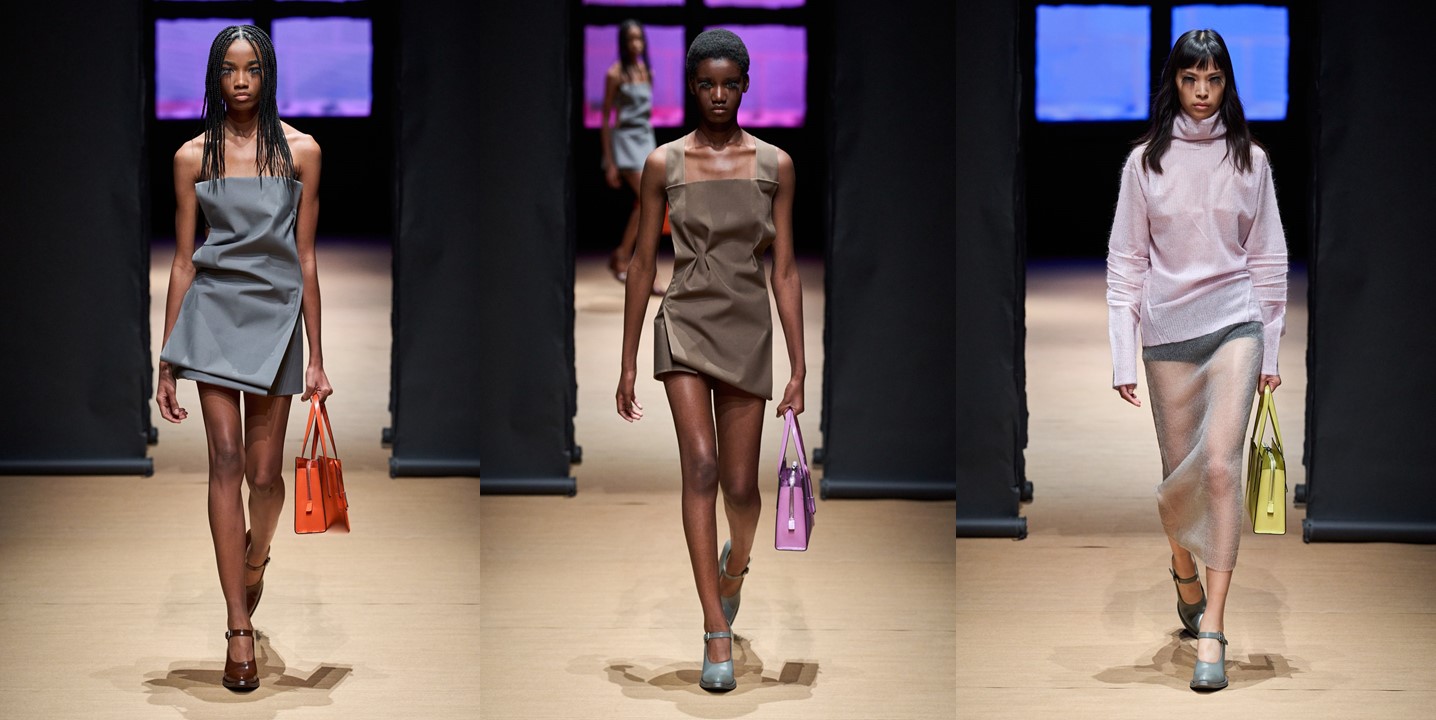
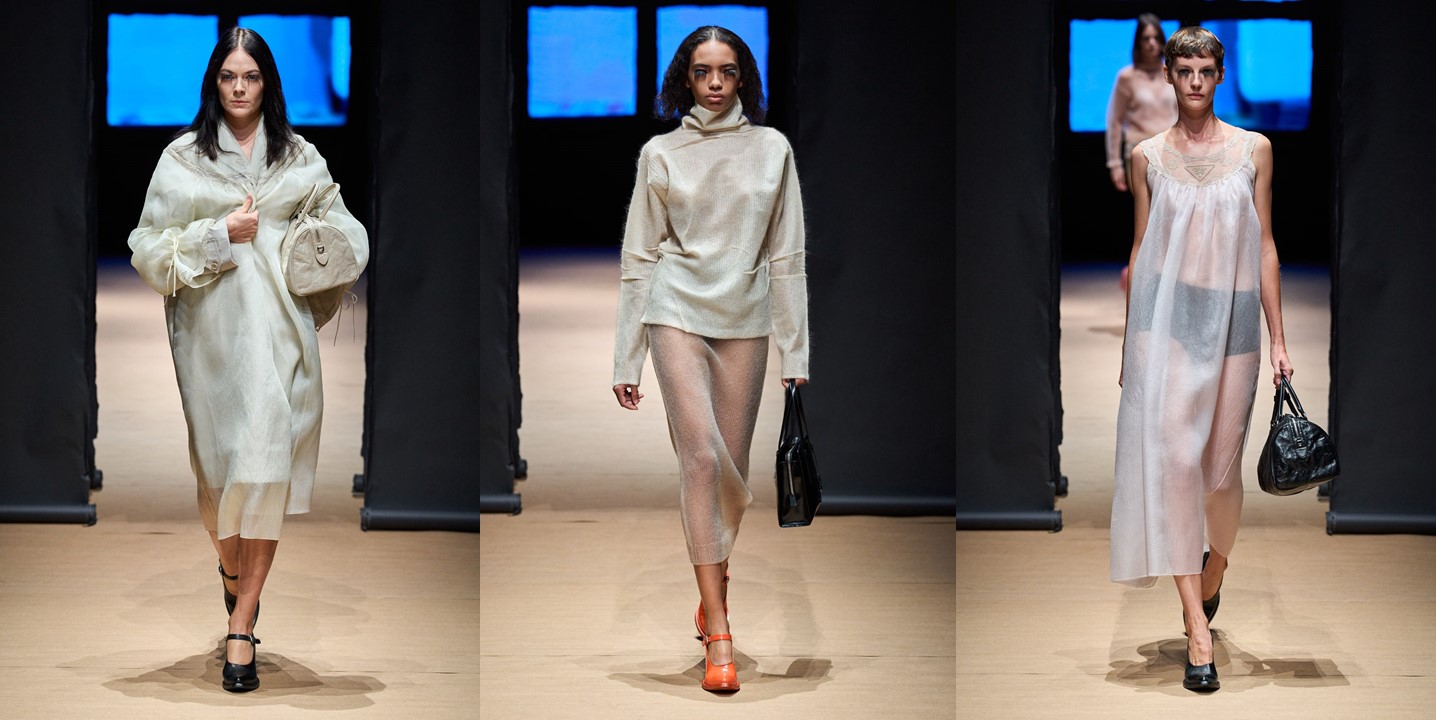

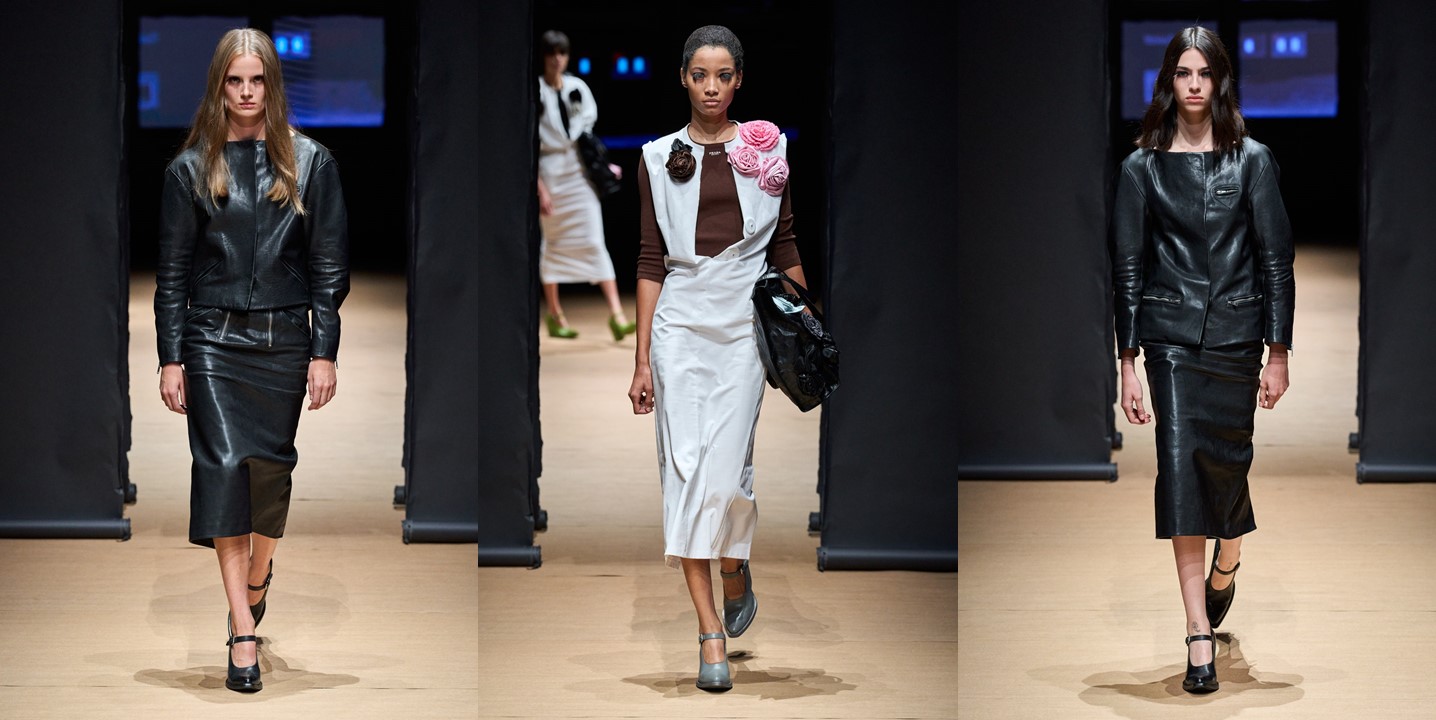
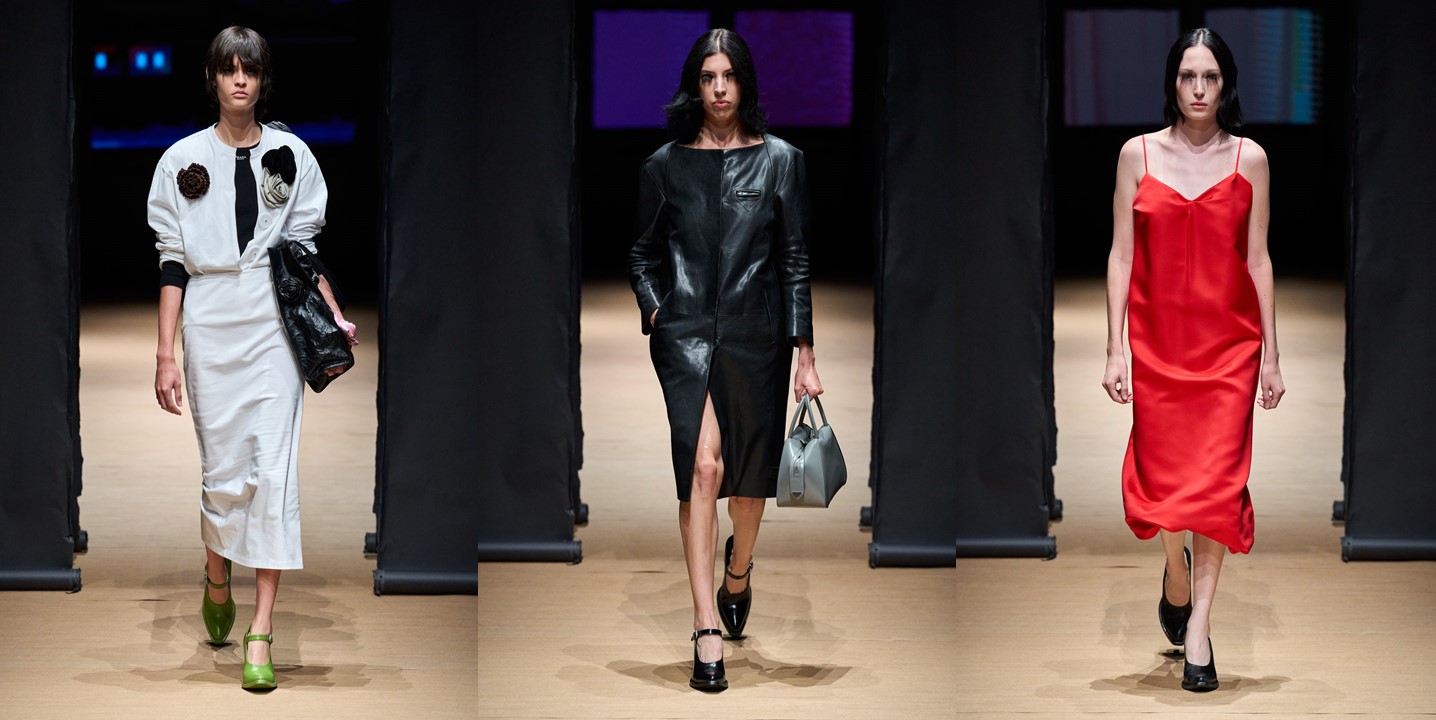
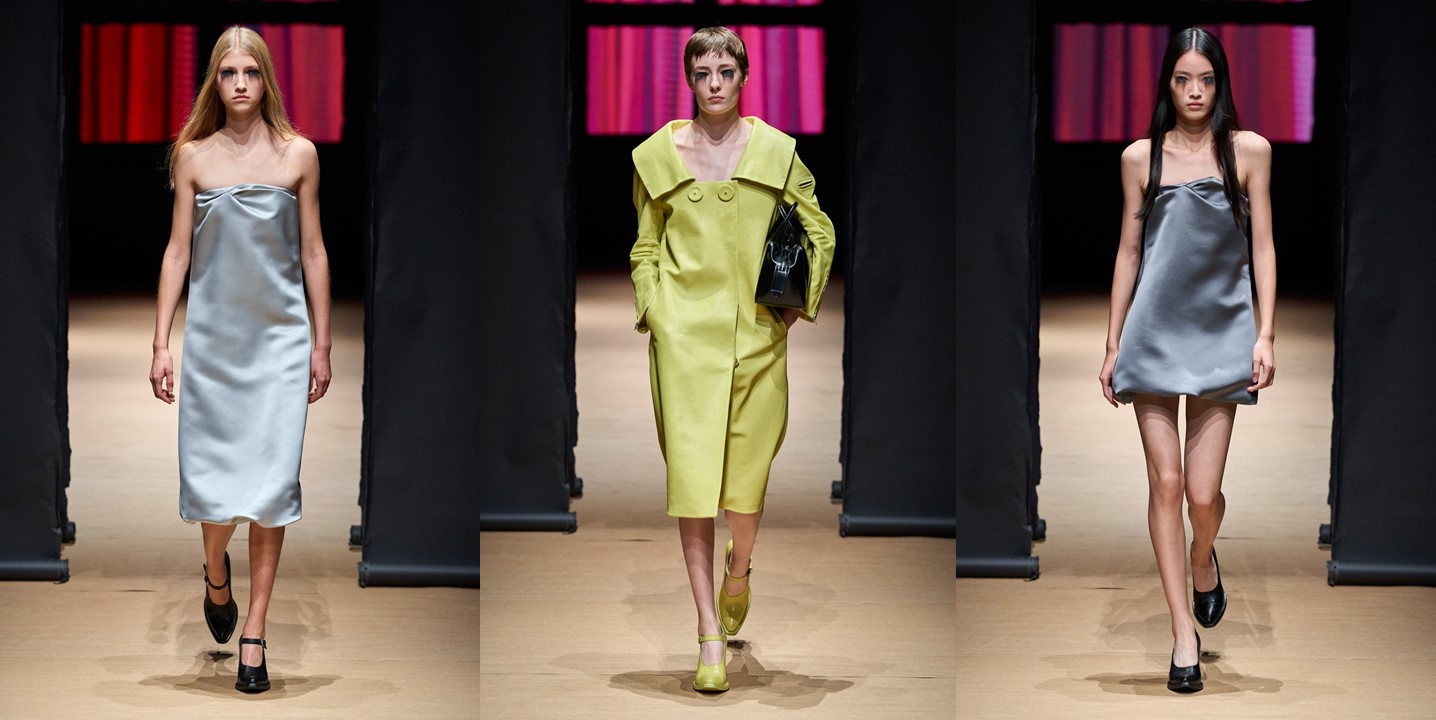

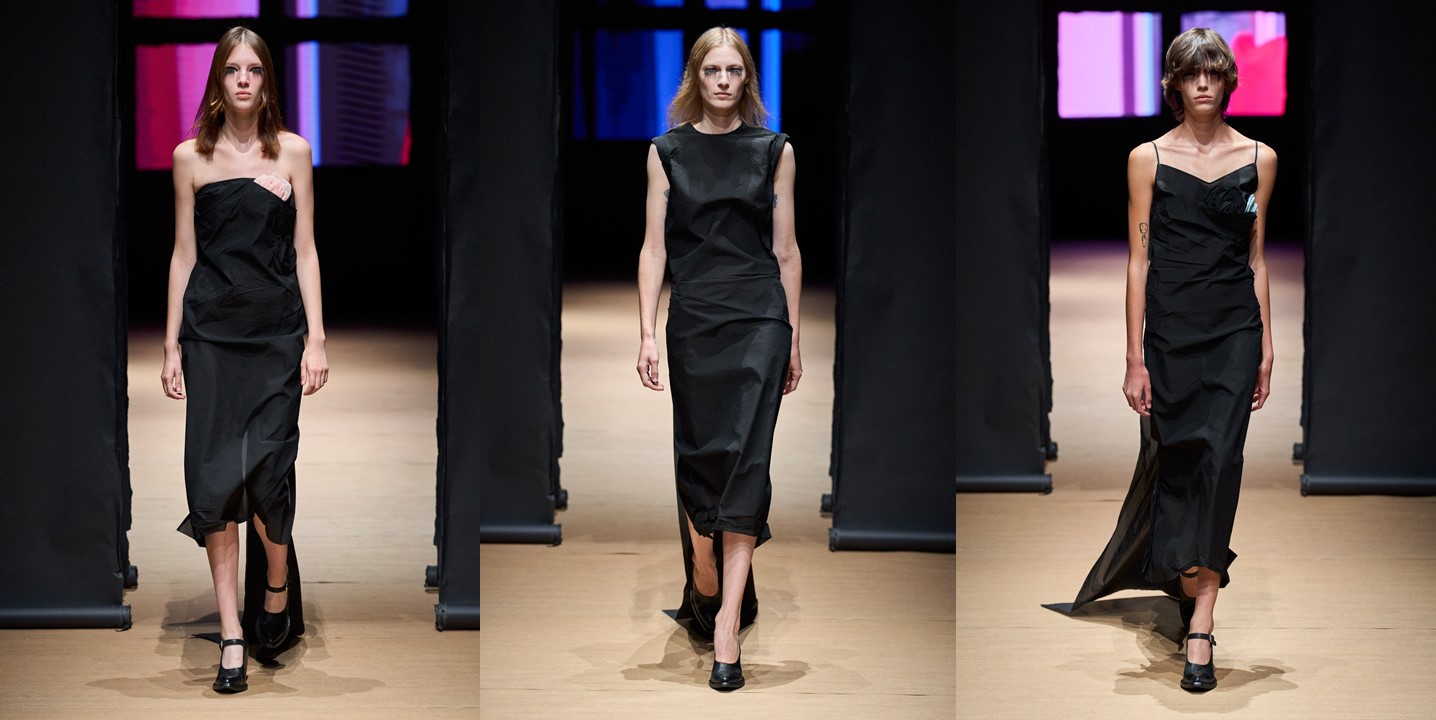

Collage by Edward Kanarecki.
Don’t forget to follow Design & Culture by Ed on Instagram!


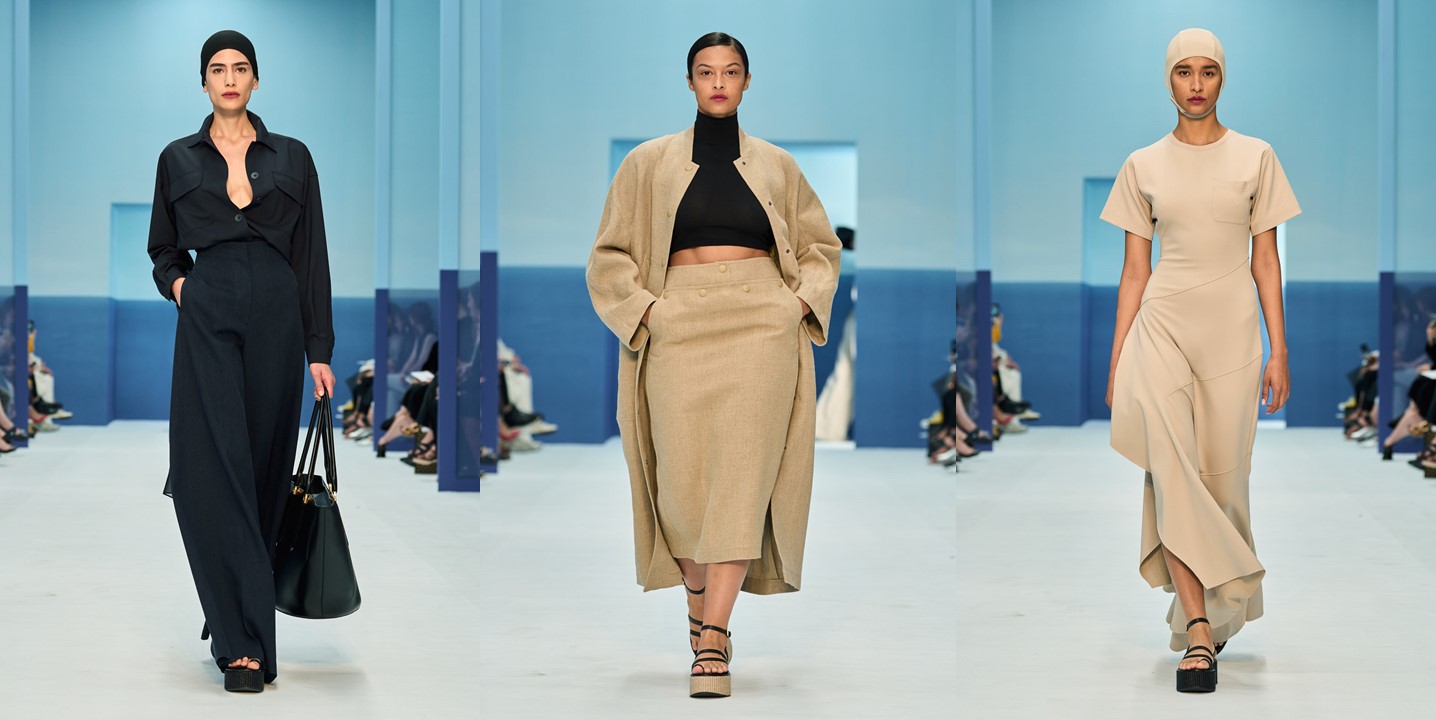
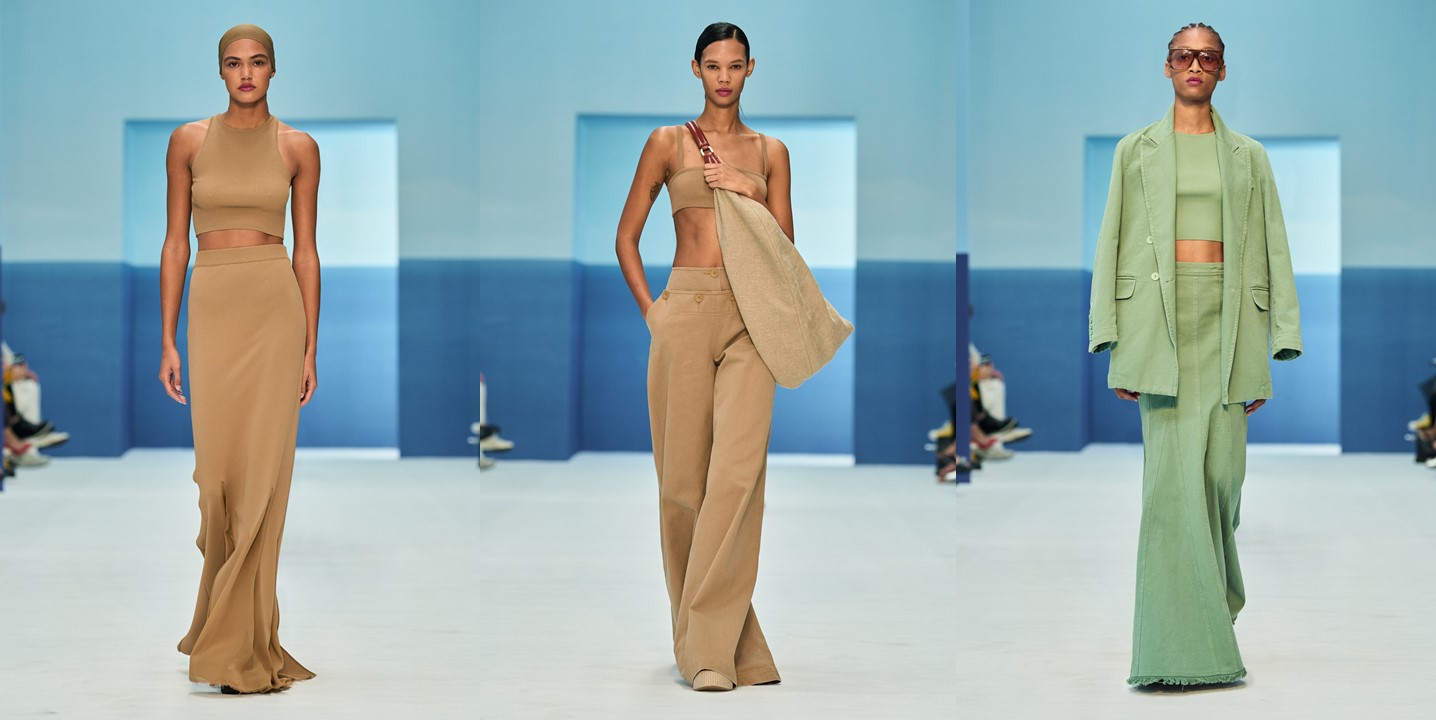
It’s quite shocking how good Max Mara is latey. Ian Griffiths is becoming the patron saint of overlooked and underestimated historical “muses.” Following his resort reassessment of fabulous-’50s Lisbon radical Natália Correia, for sping-summer 2023 Griffiths turned his restorative eye two decades earlier. It focused on Renée Perle, a lover and much-snapped subject of early alpha-photographer Jacques-Henri Lartigue. “But she also painted all these self-portraits that were absolutely panned by the critics,” said Griffiths. Then there was Eileen Gray, who designed her own feminocratic ideal of the modernist house, the Villa E-1027 in Roquebrune-Cap-Martin, France, in 1929. This was much coveted by Le Corbusier, who painted murals in its interior while staying there and was sometimes even wrongly credited with its wonderful design. As Griffiths suggested, both women were cast as muses – objects of masculine inspiration – rather than artists who were themselves inspired. The irony in the benevolently meant result of Griffiths’s rehabilitation mission was that while seeking to recast Perle’s and Gray’s place in history he was also to a degree reinforcing it. For there they were behind him as he spoke, fabulously frozen in time but pinned to his mood board like butterflies. Griffiths’s excavation of these histories allowed him to pitch this collection as a redemption song, but it also provided the designer, whose college tutor in the 1970s was Ossie Clark, to engage with gusto in the fashion conversations that echo between the 1930s and that decade. Yet it would have been remiss for a collection predicated on elevating unacknowledged female cultural protagonists to reject the full-blown “feminine,” and this was delivered in swooping backless dresses worn with doorframe-wide sun hats and a trio of swimwear-inspired citrus looks topped with Esther Williams–worthy swimming-cap hats. A closing bunch of hand-drawn floral gowns and separates, sometimes hitched to trailing bow-tied strips of organza, drew the veil on another dreamy Max Mara meander.
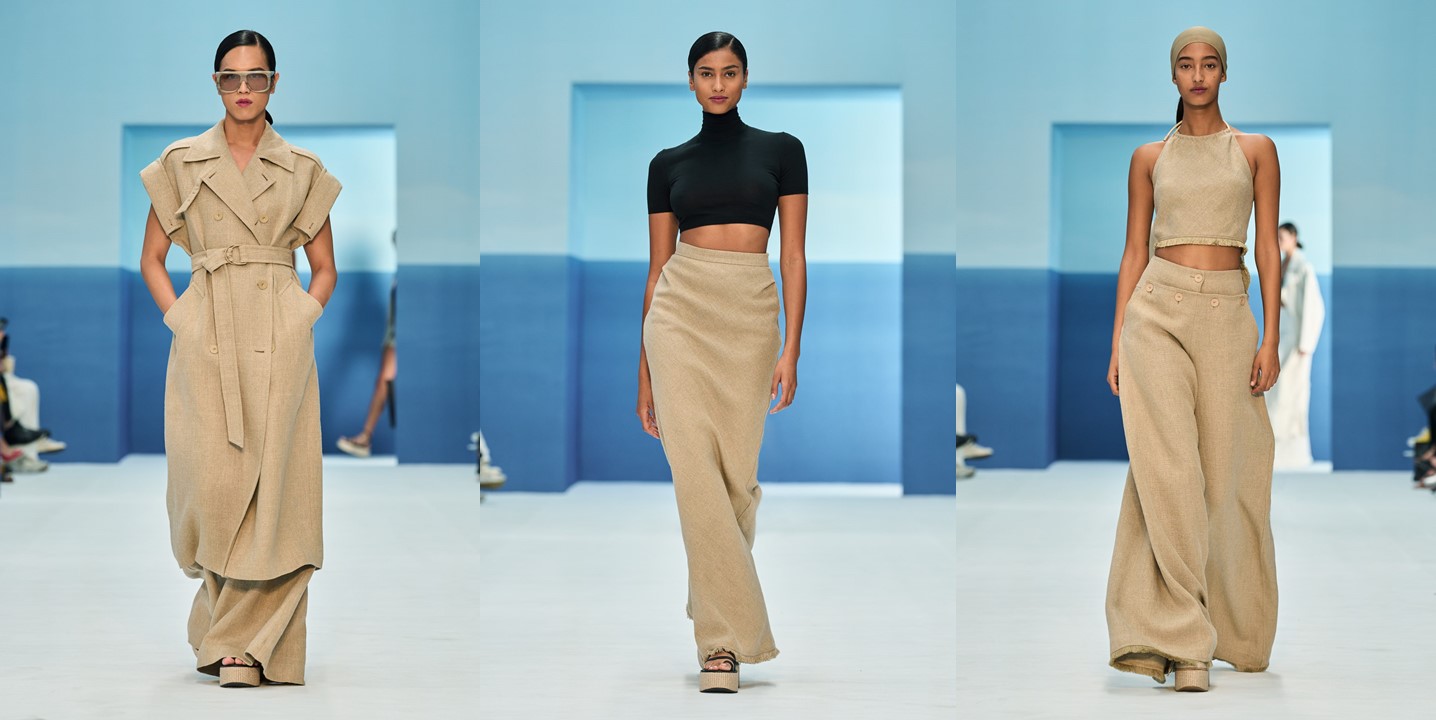



Collage by Edward Kanarecki.
Don’t forget to follow Design & Culture by Ed on Instagram!

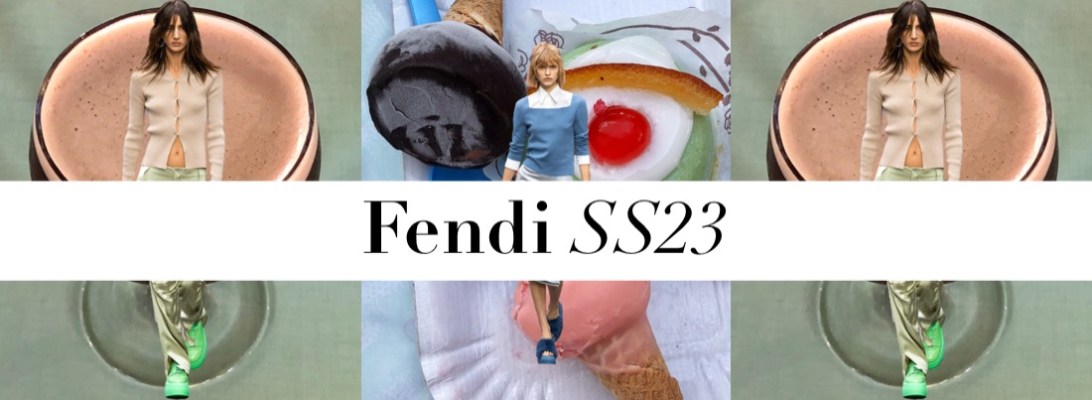
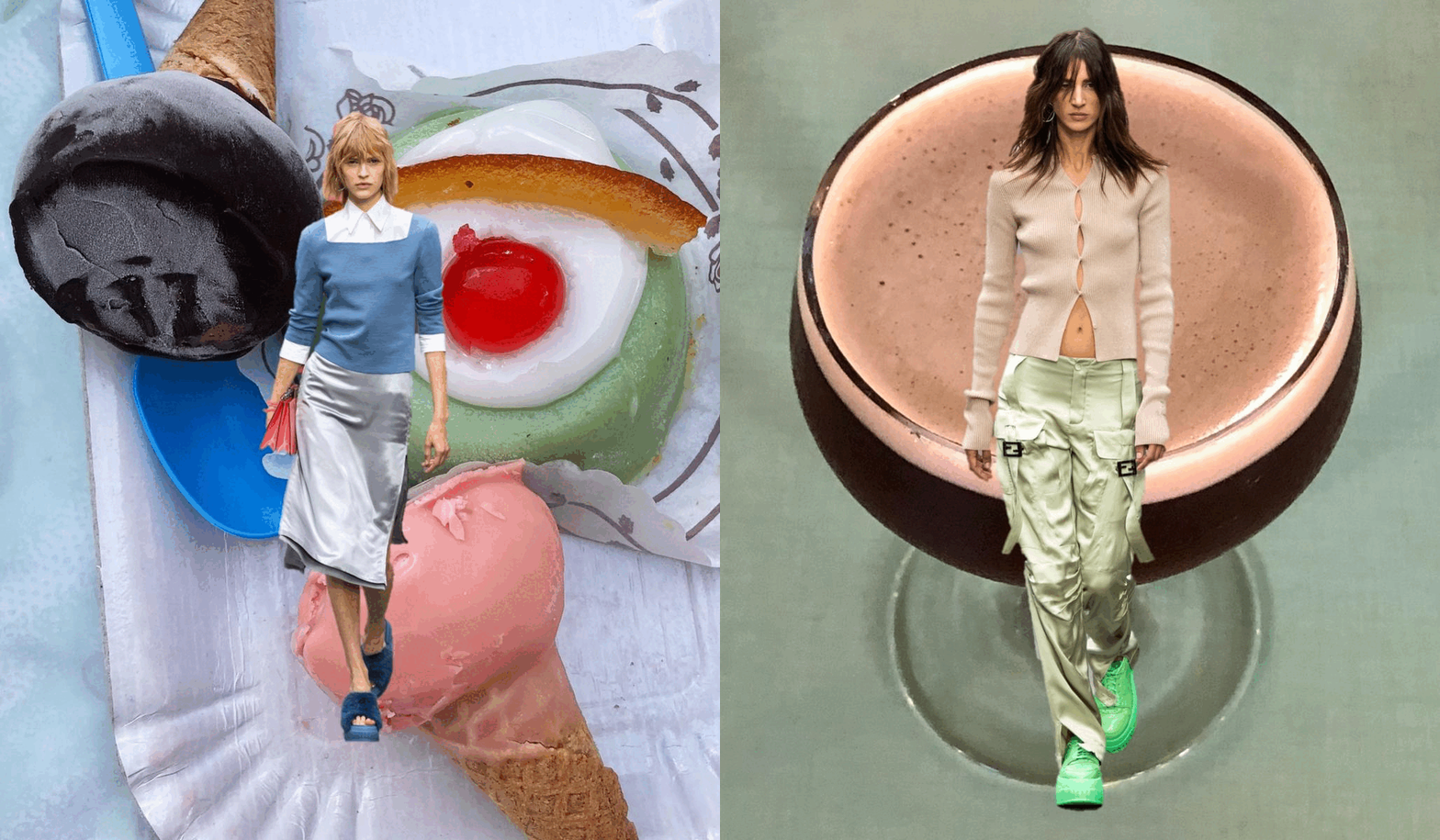
With Kim Jones‘ Fendi, there are ups and downs. The resort 2023 fashion show, which opened New York Fashion Week and celebrated Baguette’s anniversary, was a high. The spring-summer 2023 collection which opened Milan Fashion Week wasn’t entirely bad, but it was… mediocre. One might easily mistake it with a brand like Max Mara or Sportmax. And Fendi isn’t really a brand that fits this profile, lifestyle-wise. The collection’s shots of color, in green and blue and fiery red, were, as Jones said, purposefully projected across a clothes-scape of the neutrals that are key to the Fendi identity in order to generate new freshness to the jolt of recognition. The double-F logo first drafted by Karl Lagerfeld in 2000 was used all over the line-up. Its graphic geometric severity contrasted with the silhouetted botanical relief that Jones said had featured in a ’96-vintage Lagerfeld outing for the house. This featured on pieces including a laser-sliced leather vest and sheer, organza, Fendi-brown racerback dresses and tops. Obi-belt detailing and the inverted masculine tailoring were respectively nods back to the most recent Jones for Fendi Couture collection, and then autumn before that. Explaining this, Jones unpacked part of the process that will allow him to produce 11 collections this year (he thinks) and probably 12 collections next year. He said: “I program it so that if you put fall and then Couture and then this in a row the brand makes sense. And then there will be another to build upon it after this.” Noting that Jones also does four collections a year at Dior Man (plus all the creative direction), this entire statement sounds, well, terrifying.


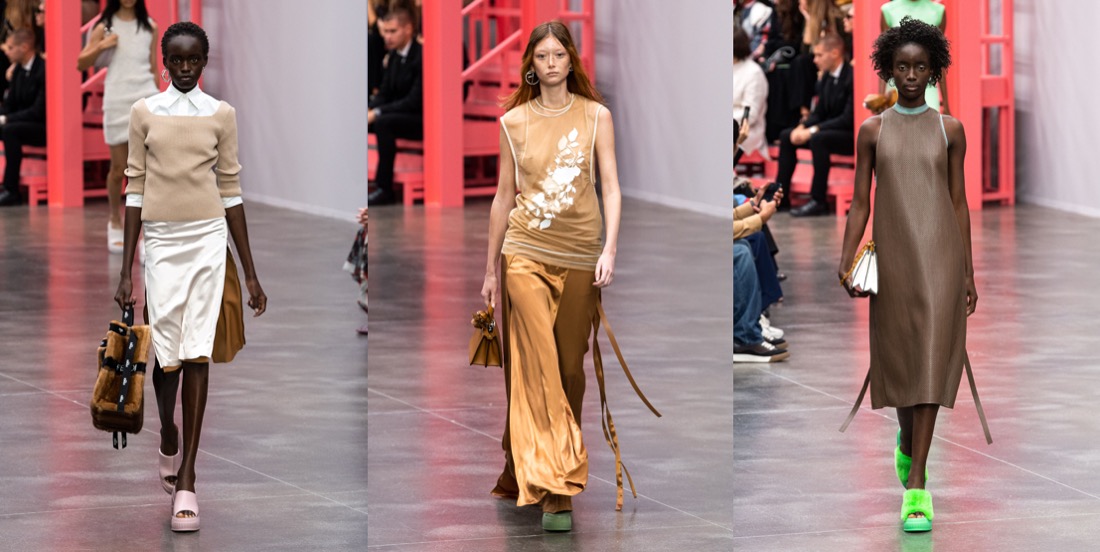


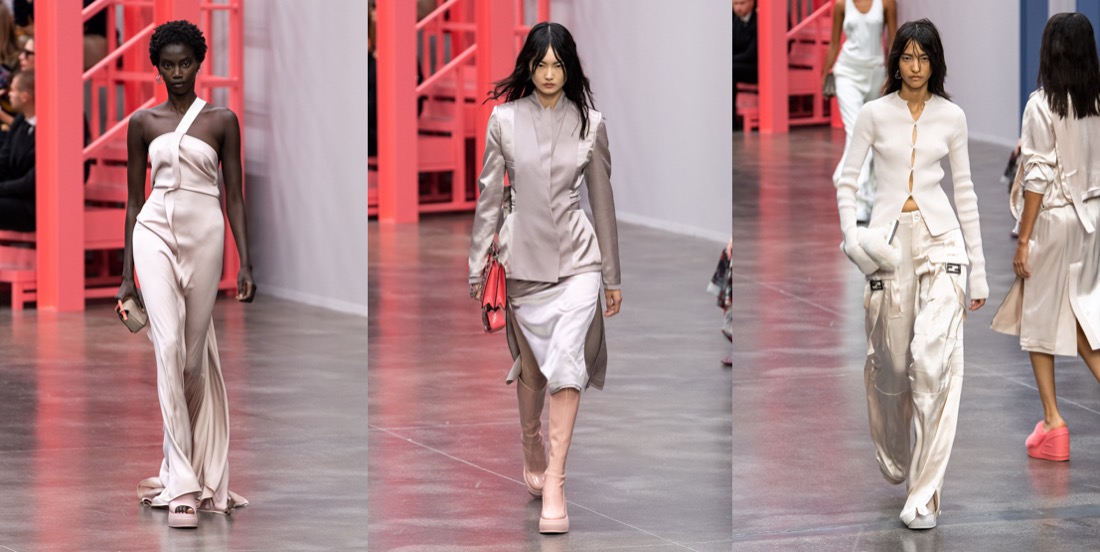
Collage by Edward Kanarecki.
Don’t forget to follow Design & Culture by Ed on Instagram!
 Design & Culture by Ed