
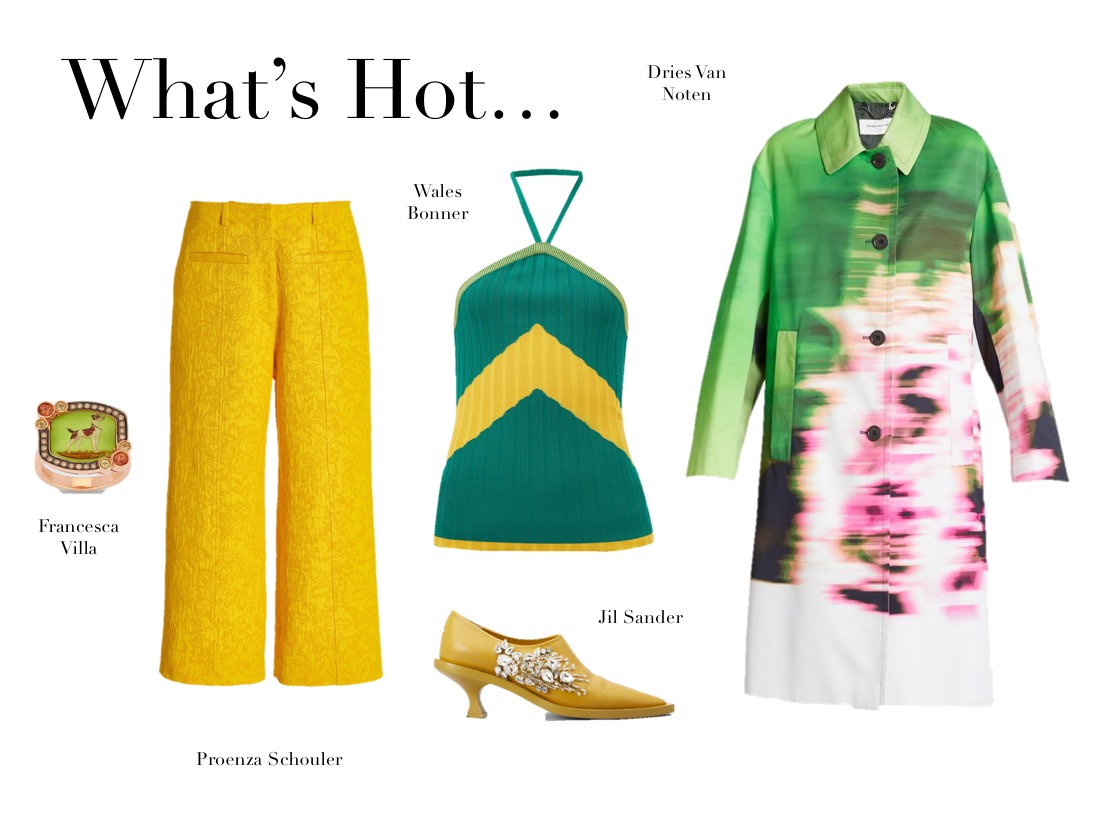
What’s Hot (16.3.22)


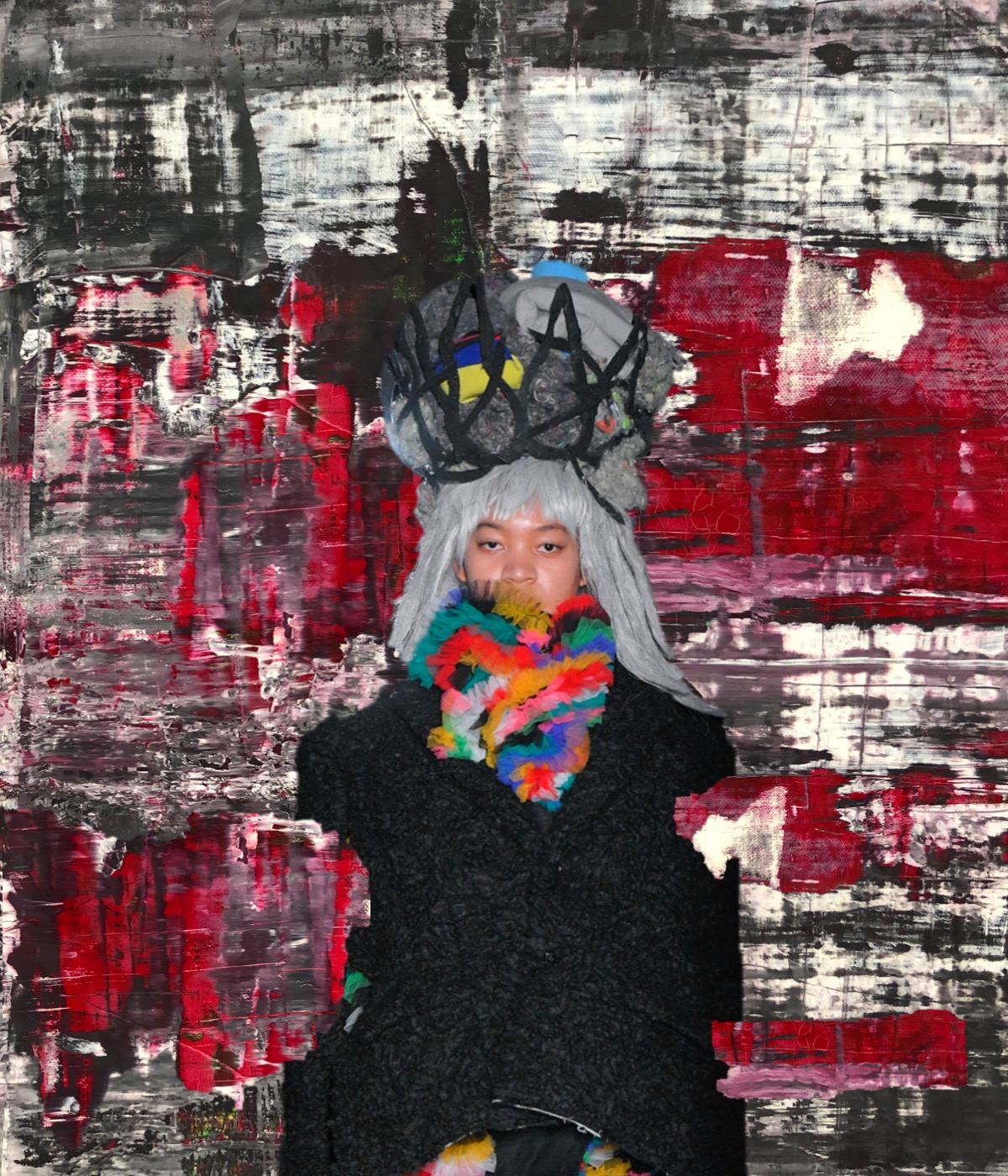
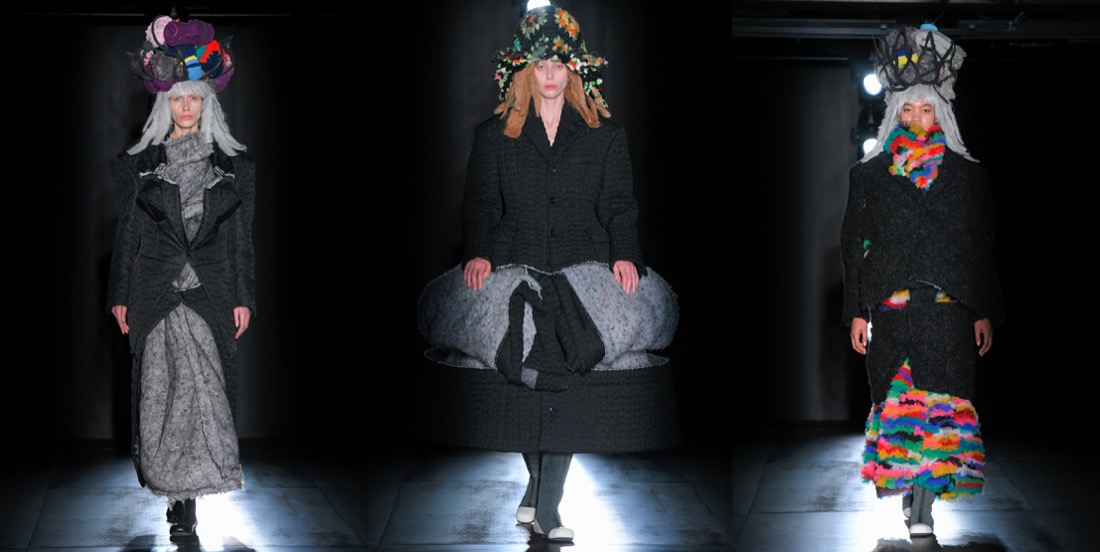
“For me, the dark beauty of the black rose symbolizes courage, resistance, and freedom”, Rei Kawakubo stated regarding her Comme des Garçons autumn-winter 2022 show presented a few days ago in Tokyo. The black rose in Irish culture is a symbol of resistance against British rule. It might be a bit hard to discern it in the Comme lineup – it only comes in, patterned on a sort of Victoriana brocade at the 12th of the 16 exits. It’s certain that anti-British imperialism in Ireland is what Kawakubo meant, though, because the haunting music – “a beautiful resistance song from Ireland, Roisin Dubh, the little black rose,” was recorded for the show by the Northern Irish slow flautist Ciaran Carlin. Possibly that’s the most political reference Kawkubo’s made in her work – it has no equivalence to the Russian invasion of Ukraine, except for the common factor of dangerously contested borders. But anyway: how to put words to her clothes? Was a sense of dark history, something primal, or even medieval going on? It seemed so to begin with anyway, what with Kawkubo’s use of thick, wadded, speckled-gray felt carpet underlay (or something similar) and headpieces created by Gary Card bulging with assortments of rough, rolled up fabrics. Other hand-crocheted floppy woollen hats had the air of bonnets, country-cottage style. Comme des Garçons hasn’t been showing outside Tokyo for two years, and Paris Fashion Week really misses its presence. Hopefully, Kawakubo (as well as Junya Watanabe and Noir Kei Ninomiya) returns to the French runway next season.


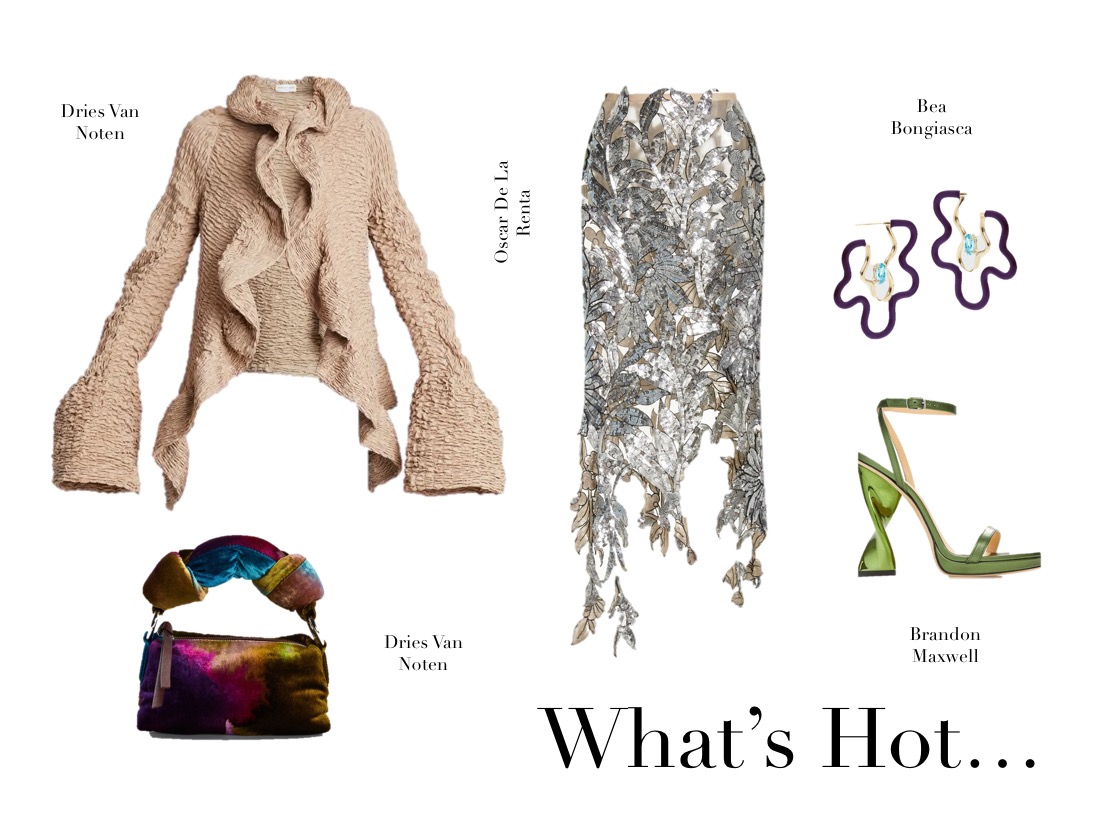
Collage by Edward Kanarecki.

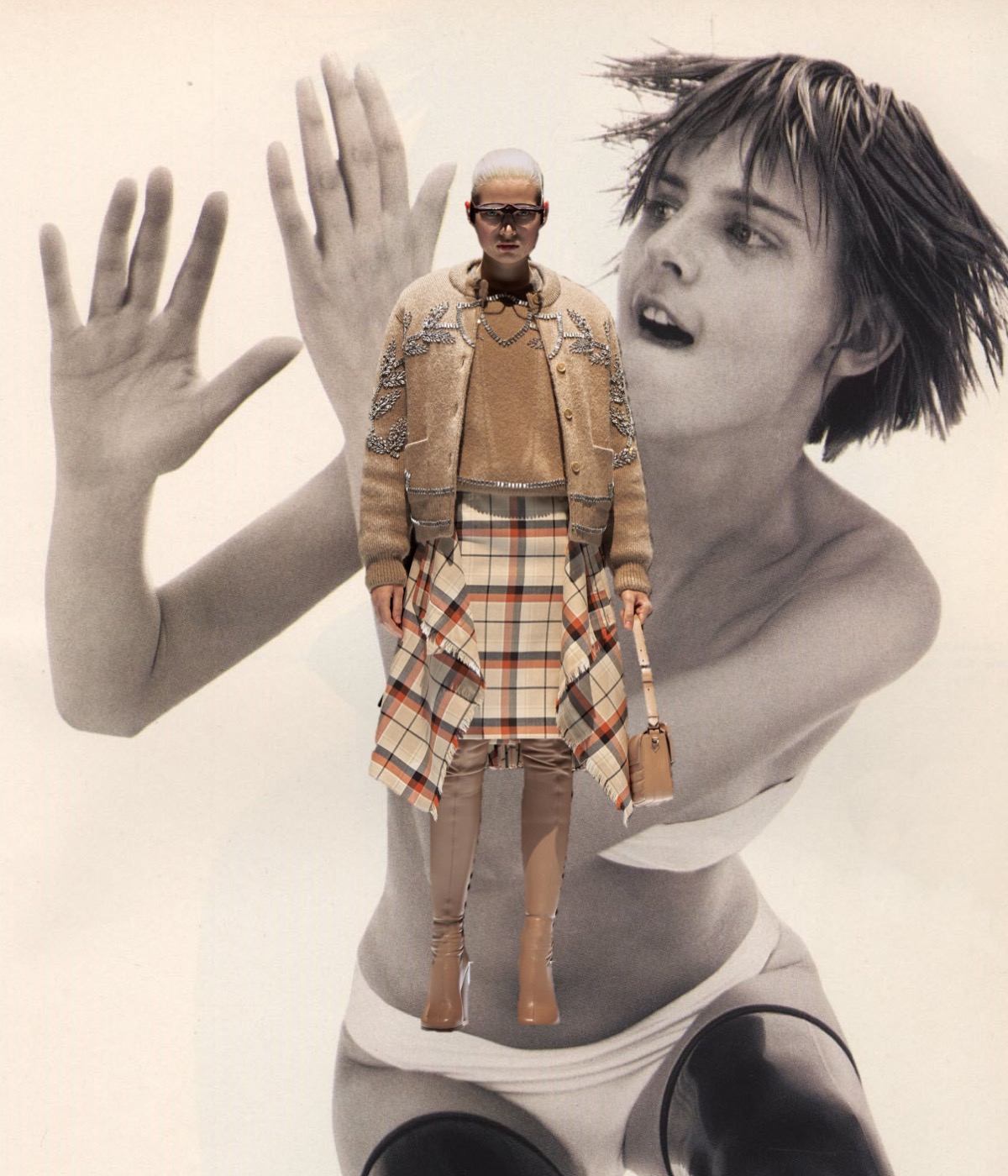
In 1856, young Thomas Burberry set out to equip local sportsmen from a small outfitter’s shop in Basingstoke, England. He made his name by inventing gabardine, a waterproof, tightly woven cotton inspired by the loose linen smocks worn by English shepherds and farmers. And by the early 1900s, business was booming in the Burberry emporium on London’s Haymarket street. The firm gained prestige by outfitting high-profile Antarctic explorers, aviators, and mountaineers. And, in addition to kitting out more humble seekers of adventure – golfers, skiers, horsemen – it soon got into the business of fine everyday outerwear, too. It’s an unmistakably British brand, and in 2022, it’s really worth digging into a brand’s heritage and redefining its codes. After seven full seasons, Riccardo Tisci is finally on (what seems to be) the right path. For the autumn-winter 2022 fashion show, presented a few days after fashion month’s finale in London’s Central Hall Westminster, guests stood massed together in the dark, shuffling back to give way to Tisci’s supermodels, friends, and artist-celebrities as they descended from somewhere high up in the wood-paneled auditorium. Clad in the spectrum of Tisci’s ideas about global, generational, and gender non-conforming realities, British tradition and, of course, Burberry checks and trenches, they climbed up to pose on tables which were set with silver and crystal, as if for a country-house dinner. “It’s a reconstructed collection of what I find in Burberry, and what I’ve been living as human in this moment in Britain too,” Tisci said before the show. “It’s a different perspective – you know, the way you feel things was a very deep different journey.” That stood as an explanation for the leveling, everyone-together breaking of catwalk convention, except that the event simultaneously managed to be a bombastic reclaiming of Burberry’s corporate position, a landmark of the British fashion business with global reach. So two collections came out – a menswear one and the women’s. For women, he ran the gamut of trench-and-check daywear through to grand ballgowns, segueing though deconstructed evening trenchcoats. He said he’d pulled it together by focusing on country waxed and quilted coats, and pulling out the symbol of the Burberry Prorsum knight on horseback. There were blanket-skirts and tartan capes, as well as old-school, fleecy twinsets. The designer reflected on how he was initially daunted by paying tribute to Britishness, but now feels much freer about applying his own instincts. “I was scared,” he admitted. “You know, as an Italian, Britain is important – it’s a such an historical country, with so much to say. So at the beginning, it was like the first kiss. It takes time, you know. And now I find my own way.”

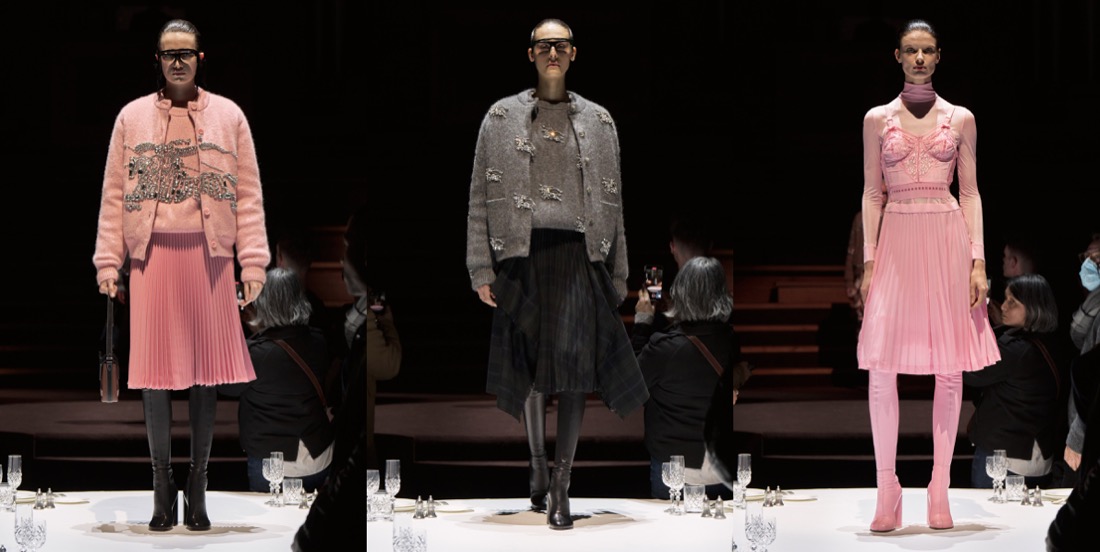

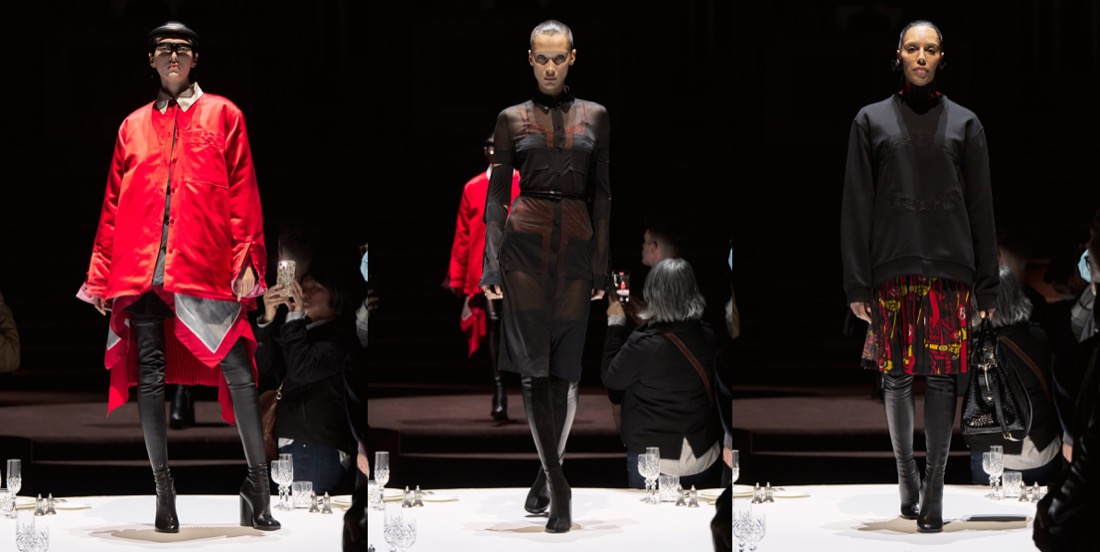


Collage by Edward Kanarecki.
 Design & Culture by Ed