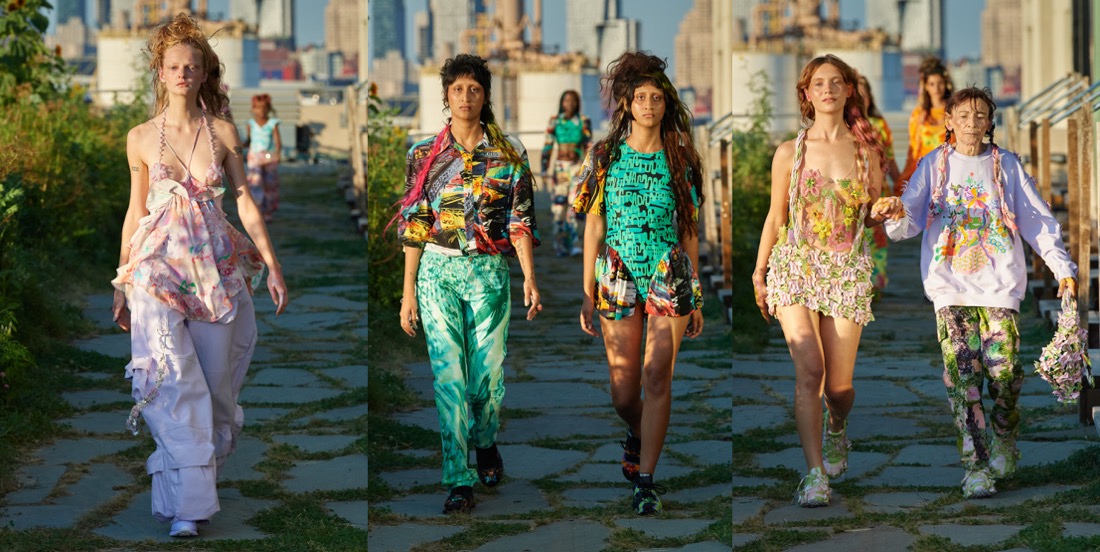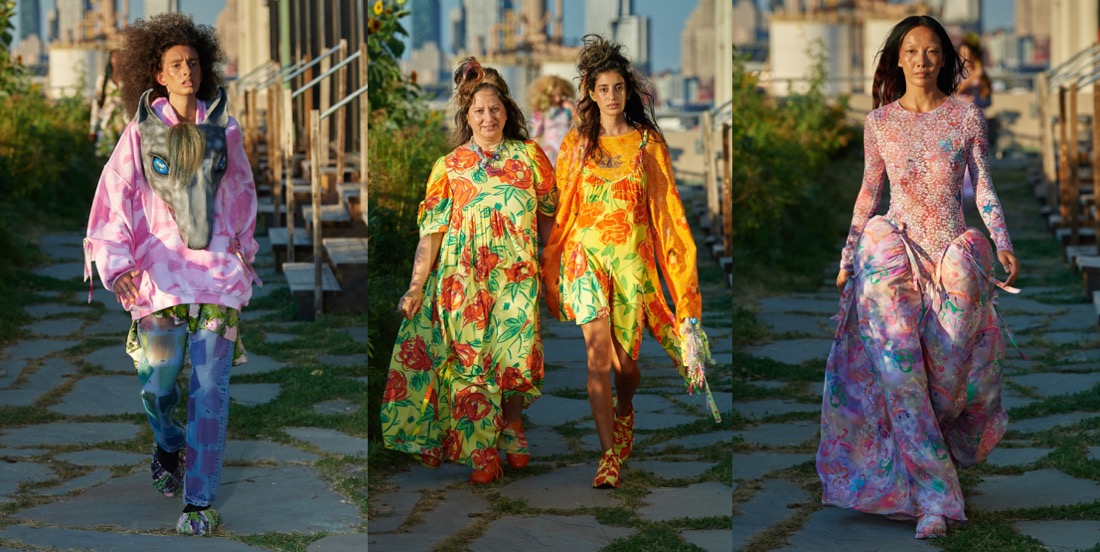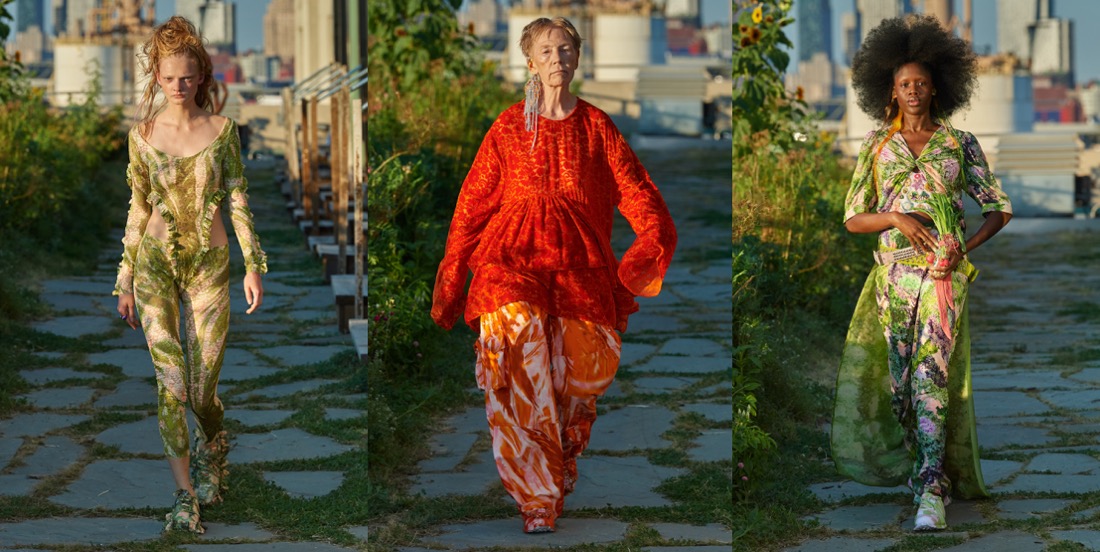
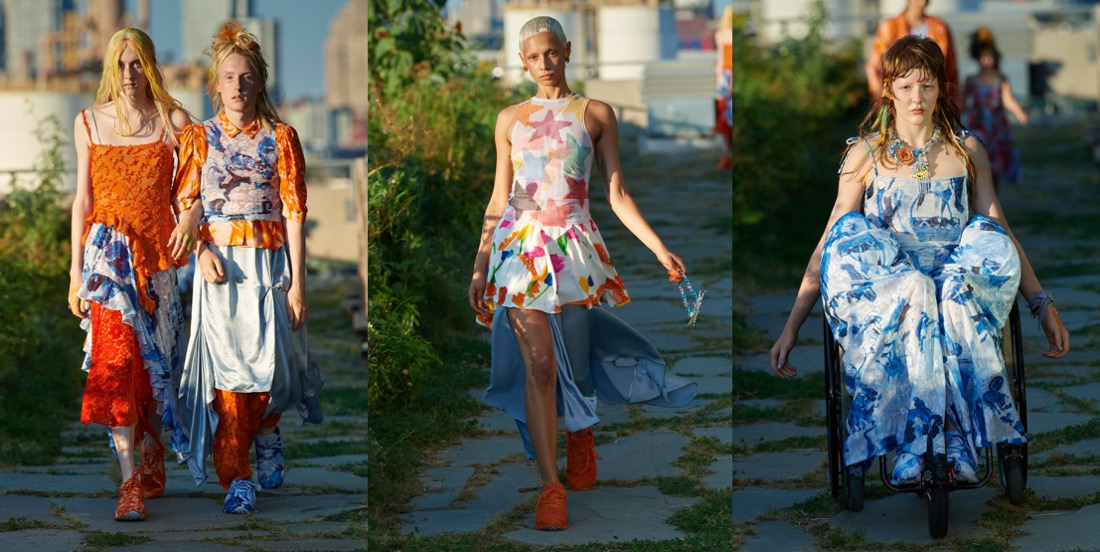
Blooming Queens. Collina Strada SS22

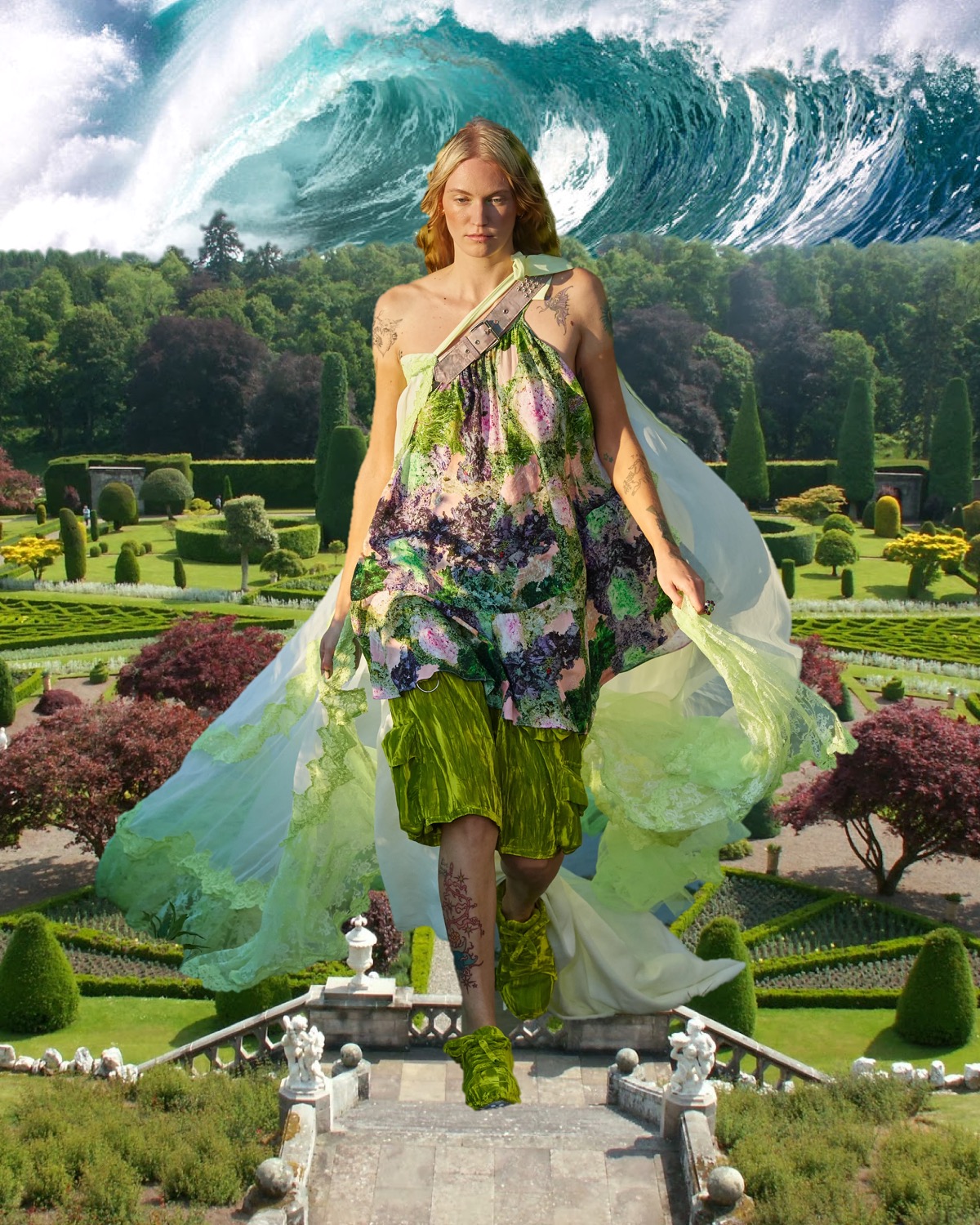
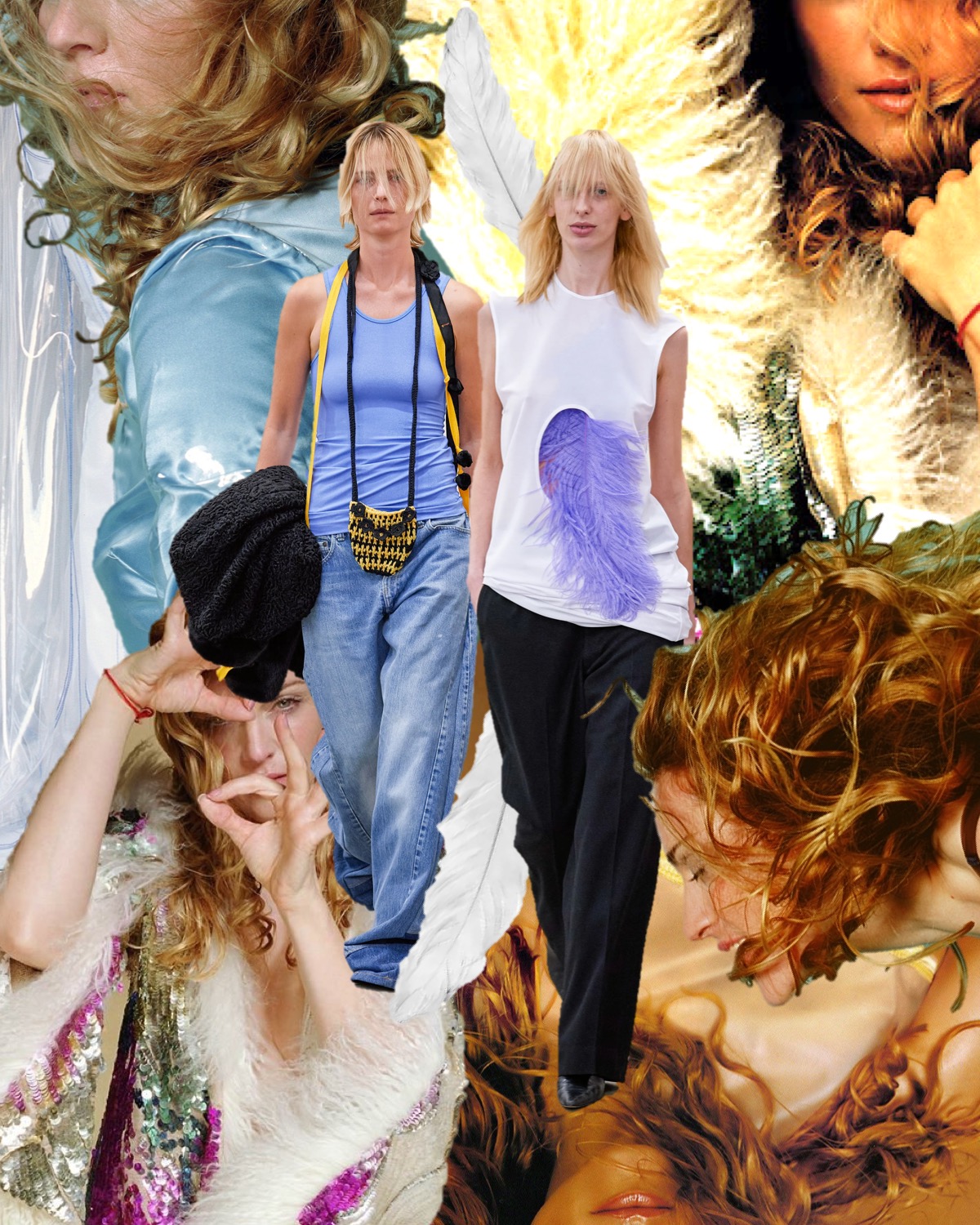
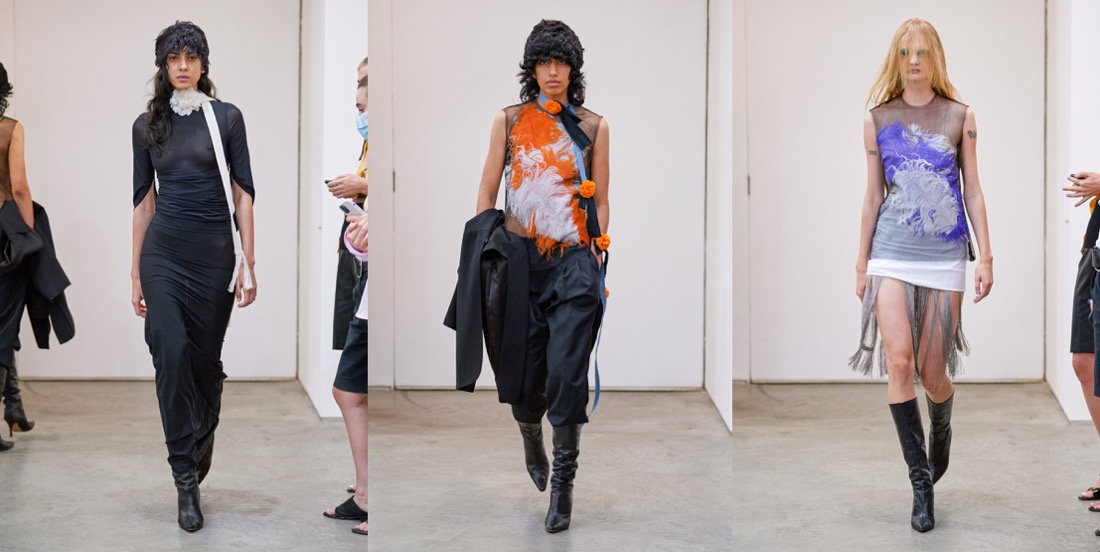
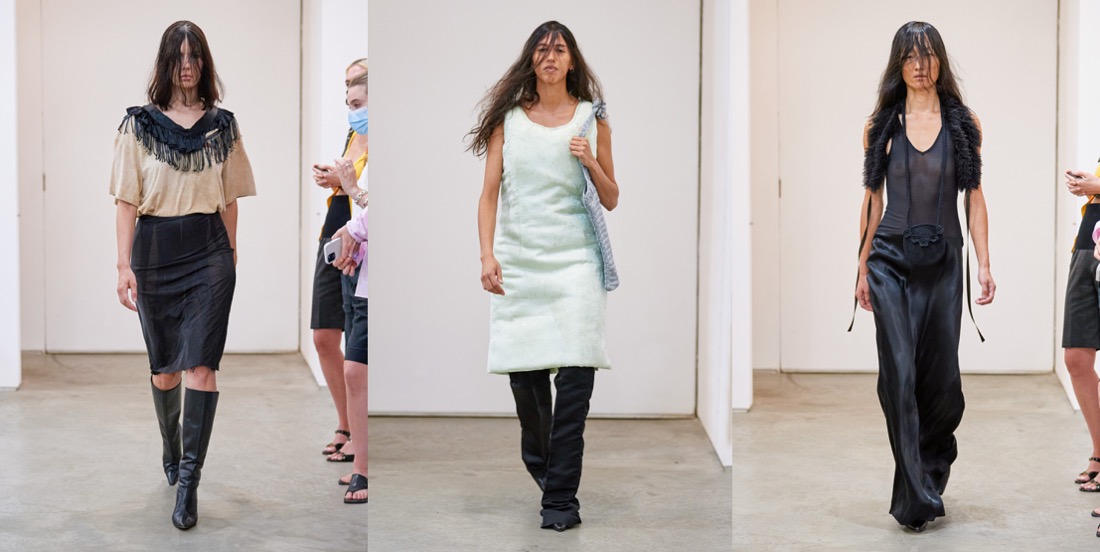
Nature. Sunset. Raving. Queens. Situated on Brooklyn Grange’s rooftop garden in Sunset Park, the Collina Strada show was a vibrant welcome back to physical fashion shows in New York. Hillary Taymour described the scene as following: “We’ve got a farm queen, broken skater queen, prom queen, and a frog princess.” The simple message was that after a year of doldrums, we should all have the freedom to dress up as the queens we are. For spring-summer 2022, the designer has found a happy marriage between the natural world and the world around her. She’s deftly fusing literal garden references with real-world pragmatism: the actress Sasha Frolova walked in a macramé skirt and a hand-beaded bodysuit hand-in-hand with her grandmother, who played the gardener. The voluminous, wafty dresses, mostly layered over pants on the runway, were for those sticky summer days when you feel ick about your body, but you’ve got to go out. A new trouser style had a thong built in, for when you feel hot, and belts were made to look like crystal tramp stamps – for when you feel really hot. There were tons of new layering pieces like upcycled tees, cargo trousers, bias-cut and draped midi skirts, and even swimwear, not to mention the sculpted horse and beetle corsets. Look even closer, and you’ll find dozens of new accessories too, like upcycled raffia bags and necklaces and straps made from studio detritus. The level of handwork in this collection was dialed up exponentially, with hand-beaded pasties and flowers accompanying more producible items like doodle jeans and a new collaboration with Levi’s that birthed star-studded straight legs and classic denim jackets. On the runway Taymour dialed the wackiness of it all up to 11 as well. Models plucked carrots, sprinted down the catwalk, waved, laughed, and hugged while two live performances took place. The front row – composed of Kim Petras, Tommy Dorfman, Hari Nef, Aaron Philip, Camila Mendes, and Ella Emhoff – was eating it up, maybe even literally. An errant carrot on the runway, while rhinestone-studded, would have made a nice snack. In addition to bringing the good vibes and high octane fun to NYFW, Taymour also brings a deep commitment to reducing waste, turning bottle caps into pieces of high fashion jewelry. As we return to Fashion Week “as usual,” more of her peers should consider doing things the Collina Strada way.
Collages by Edward Kanarecki.
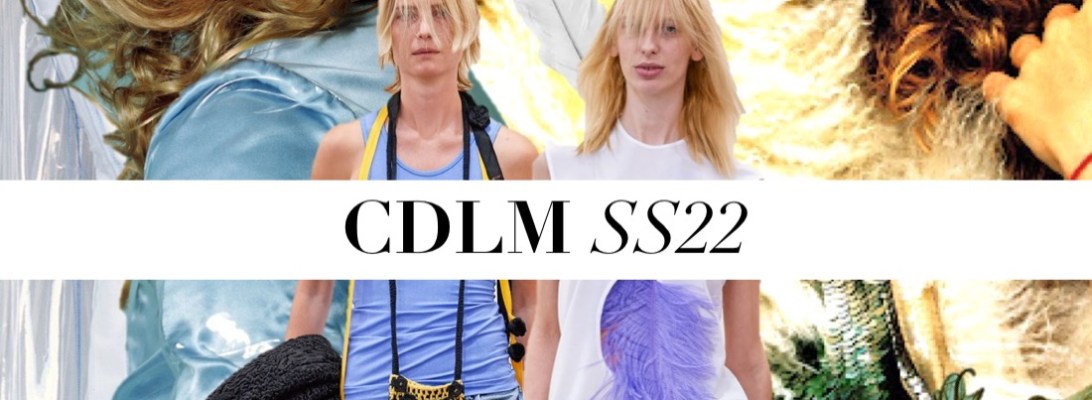
Into The Groove. CDLM SS22

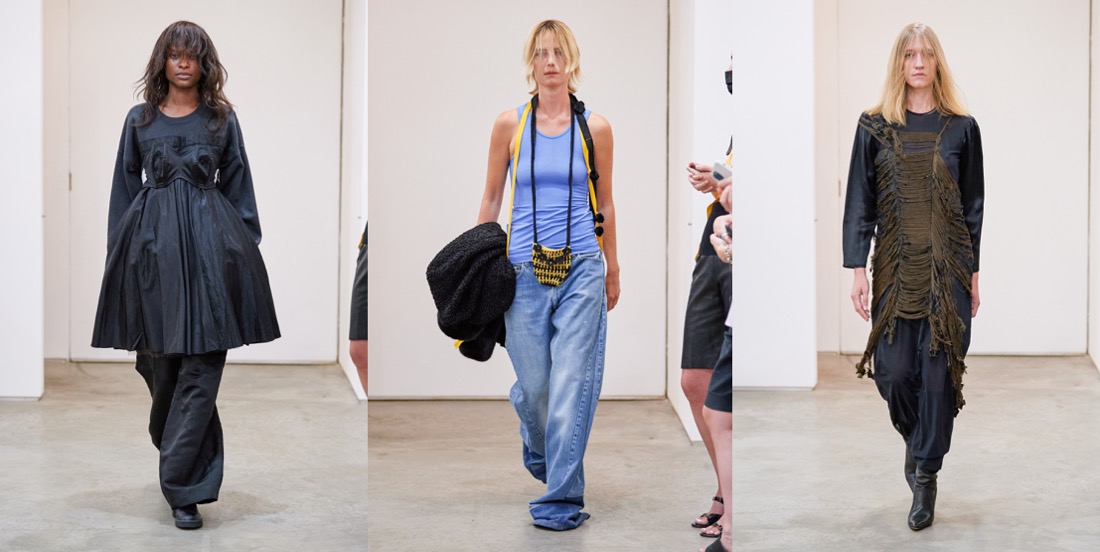
New York Fashion Week is on! And it’s real. What a joy to see the young designers back on the runway. CDLM‘s spring-summer 2022 line-up is a good start. Held at the James Fuentes Gallery on the Lower East Side, the label’s designer, Chris Peters, delivered a post-lockdown vision of a night-out wardrobe. Romantic, frayed, messy, and intoxicating vision of what can go right and, what the hell, what sometimes goes a bit wrong, but in the end, what makes something a beautiful reminder of all the possibilities of life between dusk and dawn. And the emphasis here is on hands: Peters made most of these clothes himself, using whatever was around, or out of pieces of things he has lovingly collected, then given a second life. Take, for instance, the poetically dulled gleam from a top made up of patching together pieces of a 19th century Indian tapestry, worn with black satin evening trousers whose perfection of cut pursued an idea of anti-fit; a little off, a lot cool. “A trouser which feels quite sexy, which has attitude,” is how he put it. Another case in point: The deadstock floral fabric radically transformed when used for a pair of low slung jeans. Elsewhere, that adorned top and minimal-glam trouser combo came in the form of a draped tank made from unused tulle from the ’50s, its athletic shape blown apart by the swoosh of an ostrich feather, a recurring motif, partnered with straight-cut anyone-can-wear-’em pants. Other times, the shirt was the focus: a white cotton tux version over a second-skin tubular dress, or a deconstructed style in a washed, faded black, wrapped and draped and twisted around the body. But sometimes the eye would be wrested away from the clothes, and look at the adornments: the crochet garland scarfs, or the entanglement of delicate chain necklaces. For Peters, the question, he said, was where does the clothing stop and the ornamentation start? As he remarked, “You can wear one of the garlands with your t-shirt. That’s your gown.” What he is doing is opening up the conversation to create things that don’t just exist in a vacuum, but can be in conversation with what you already own, and wear, and love to death. Pieces which can, in other words, do the thing we’re learning to do again: socialize.

Collage by Edward Kanarecki.

My Summer Wine… Tastes Like Vivanterre

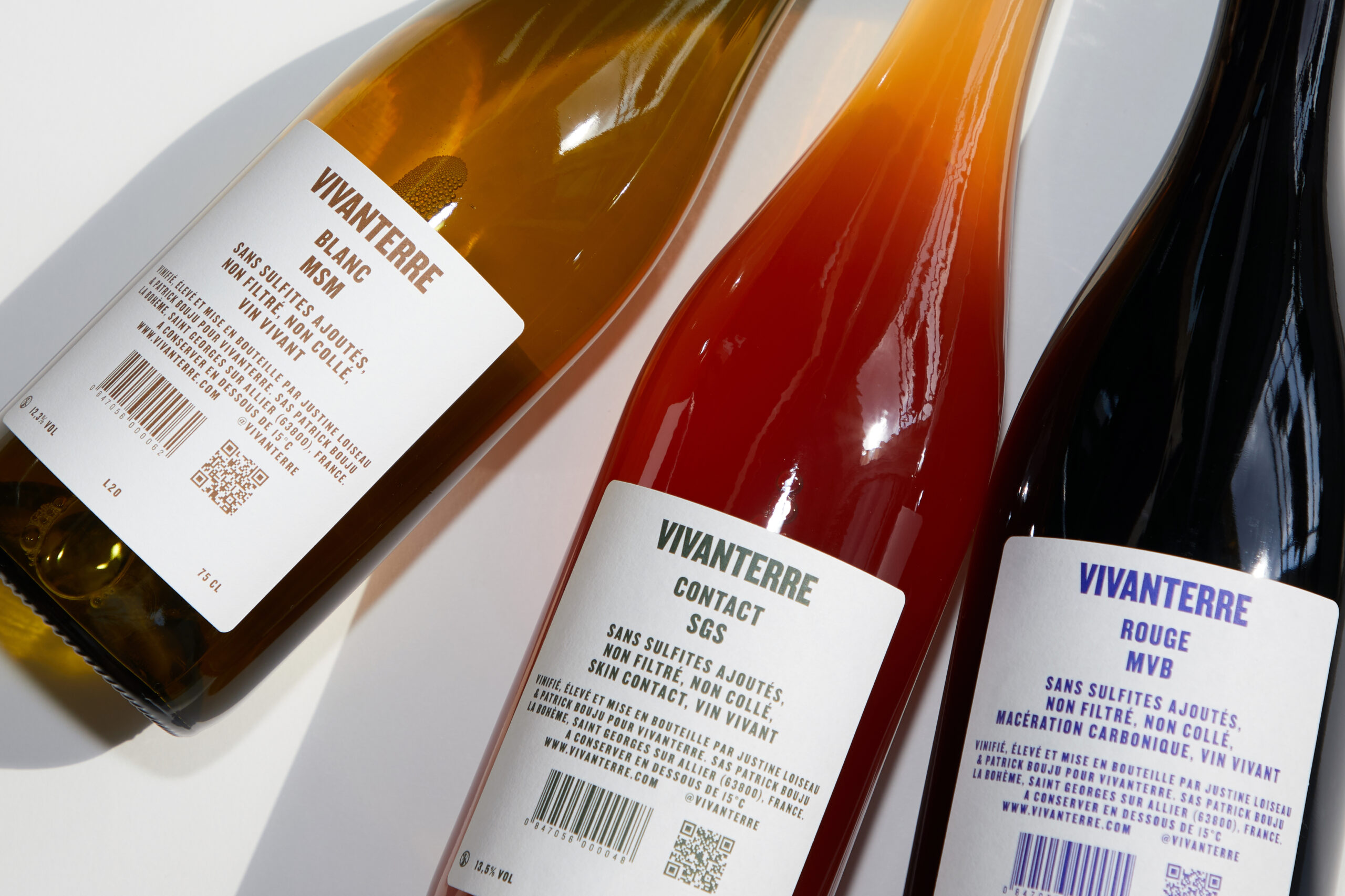
My summer wine… tastes like the Vivanterre wine! September is in full swing, yes, so why not induldge your taste buds with a good sip of a sun-drenched delight? The Orange Contact SGS is exactly that. But first, about the company: Vivanterre is a natural wine produced in the Auvergne region of France by Patrick Bouju and Justine Loiseau, and founded by Rosie and Max Assoulin, with the support of renowned sommelier Cedric Nicaise. Using organically and biodynamically farmed grapes, vinified using natural processes, and untouched by any fining, filtering, or added sulfites, Vivanterre reflects the “Living Earth” from which it comes. Introduced by mutual friends, the Vivanterre team – the new-wave wine-makers! – came together with the intention to create a delicious natural wine using sustainable practices. The collaborative spans the creative worlds, with a mix of wine experts and novices, who came together to create a wine that is truly a product of shared perspectives.

This time, I’ve tried the amazingly refreshing Orange Contact. It’s a heavenly blend of Gewurztraminer, Sylvaner and Sauvignon Blanc. The Sauvignon Blanc grapes come from the Touraine-Oisly sub-appellation of the Loire Valley, from a vineyard managed by Benjamin Delobel. The vineyard started organic conversion in 2013. The grapes come from 60-year-old vines planted in sandy soils that are rich in minerals with calcium, flint and clay. They were destemmed and saw three weeks of maceration with pigeage, aged in stainless steel. Meanwhile, the Gewurztraminer grapes come from the village of Heiligenstein in Alsace and are picked from 35-year-old vines, planted on clay and blue slate. The whole clusters were then placed directly into stainless steel vats for two weeks of skin maceration, foot trodden, then racked into amphorae. The vineyards are farmed by the Goepp Family. The Sylvaner grapes also come from Alsace, from a vineyard located in the village of Rosheim, that is rich in limestone, with 60-year-old vines. The Sylvaner comes from the vineyards of the Dreyer Family. The Sylvaner grapes were pressed, and the juice was added to the Gewurztraminer, which was macerating on its skins. There was no fining, filtering, or SO2 added during any phase of winemaking. Wines were aged until May 2021, when blending took place, just before bottling. The harvesting, wine making, and elevage was done by Bouju and Loiseau.

There are three more blends available – White MSM, White Petnat PRS and Gamay MVB (tried it out few months ago!)

Discover the world of Vivanterre here and follow them on Instagram. In Poland, Natural Rascal stocks the Vivanterre selection.