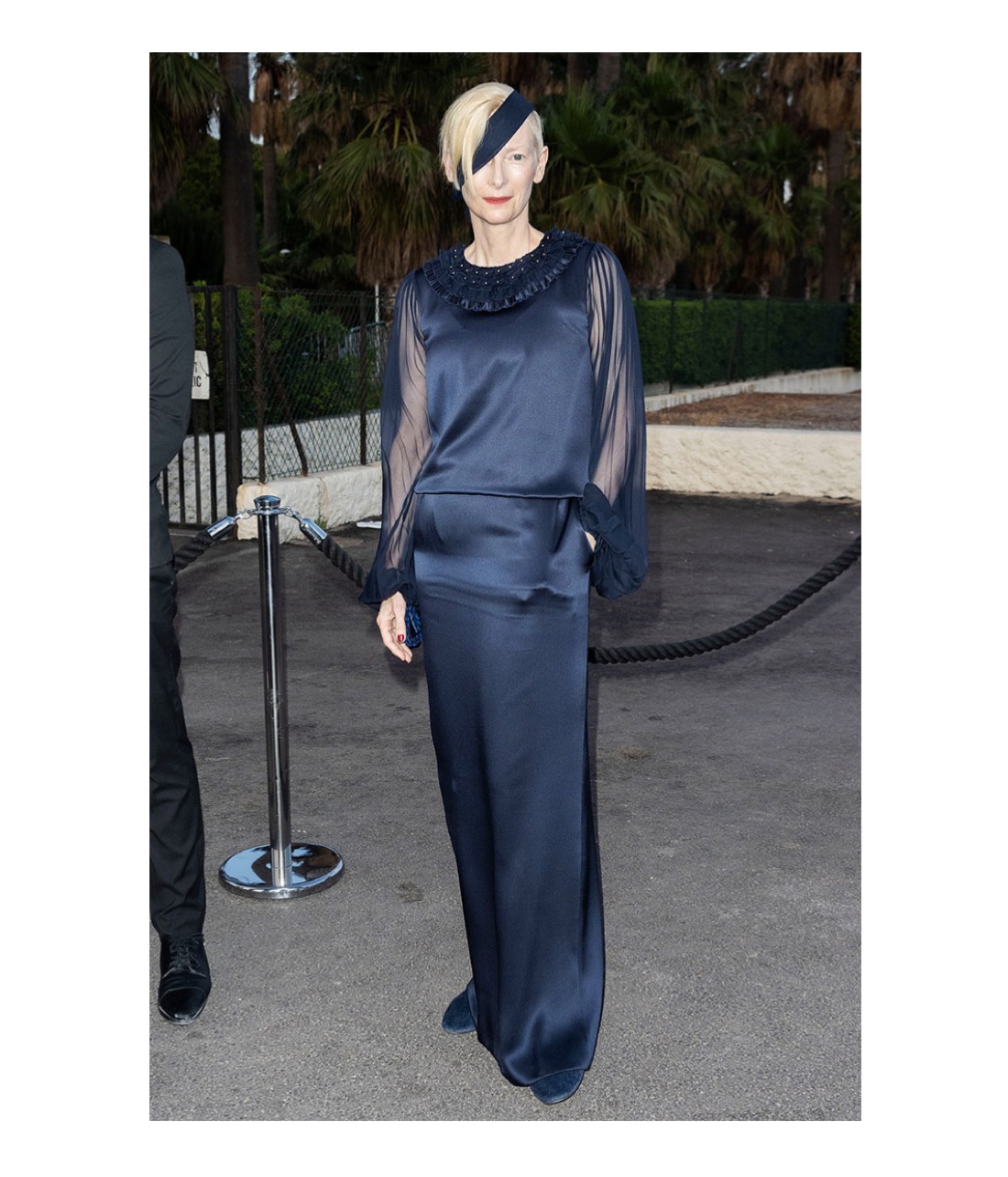
I usually don’t do red carpet coverages, but Tilda Swinton (with a pinch of Timothée Chalamet) at this year’s Cannes Festival is an exception. It was a Swinton fashion week, if you ask me. This woman doesn’t only elevate each film she stars in, but she also serves looks like no one else. Whether it’s a custom, colorful ensemble by Haider Ackermann – one of her most frequent collaborators and, privately, best friends – or a Schiaparelli haute-shirt-dress, Tilda owned Cannes. Here’s a recap of her looks!
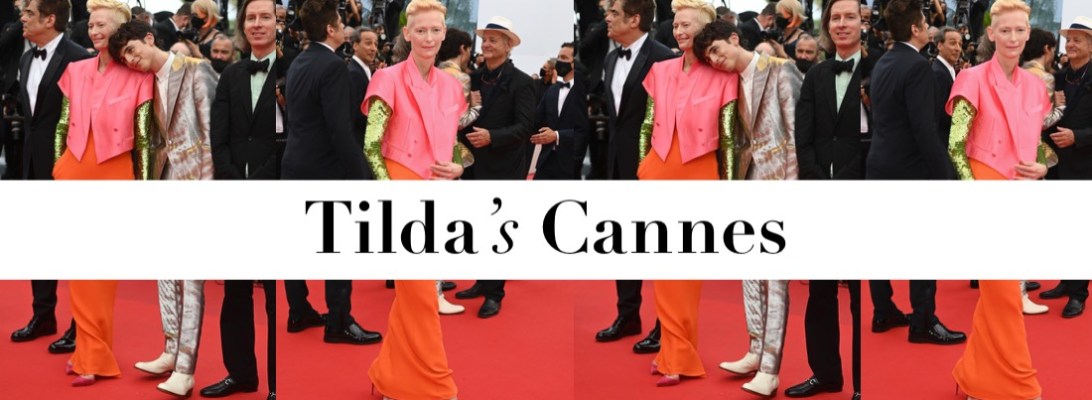
The Haider Ackermann look from Wes Anderson’s “The French Dispatch” premiere is everything. It included a cropped, pink satin bolero blazer and top, paired with an orange floor-length skirt. Never one to skimp on theatrical flair, Swinton wore sequin green sleeves underneath the blazer. Timothée in Tom Ford was a great addition.
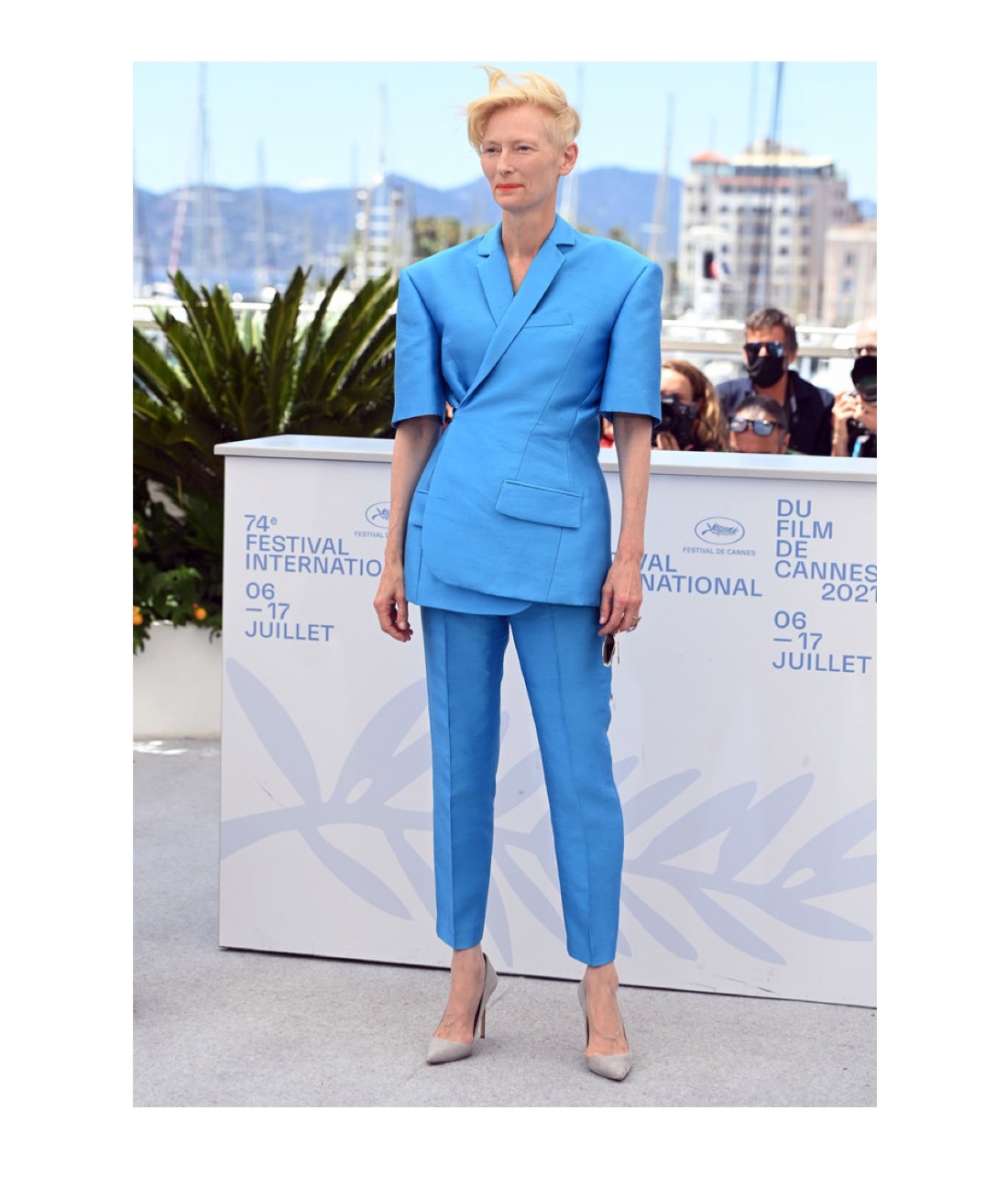
Another Haider Ackermann look – this time, it’s all about impeccable, electric blue tailoring. Amazing.
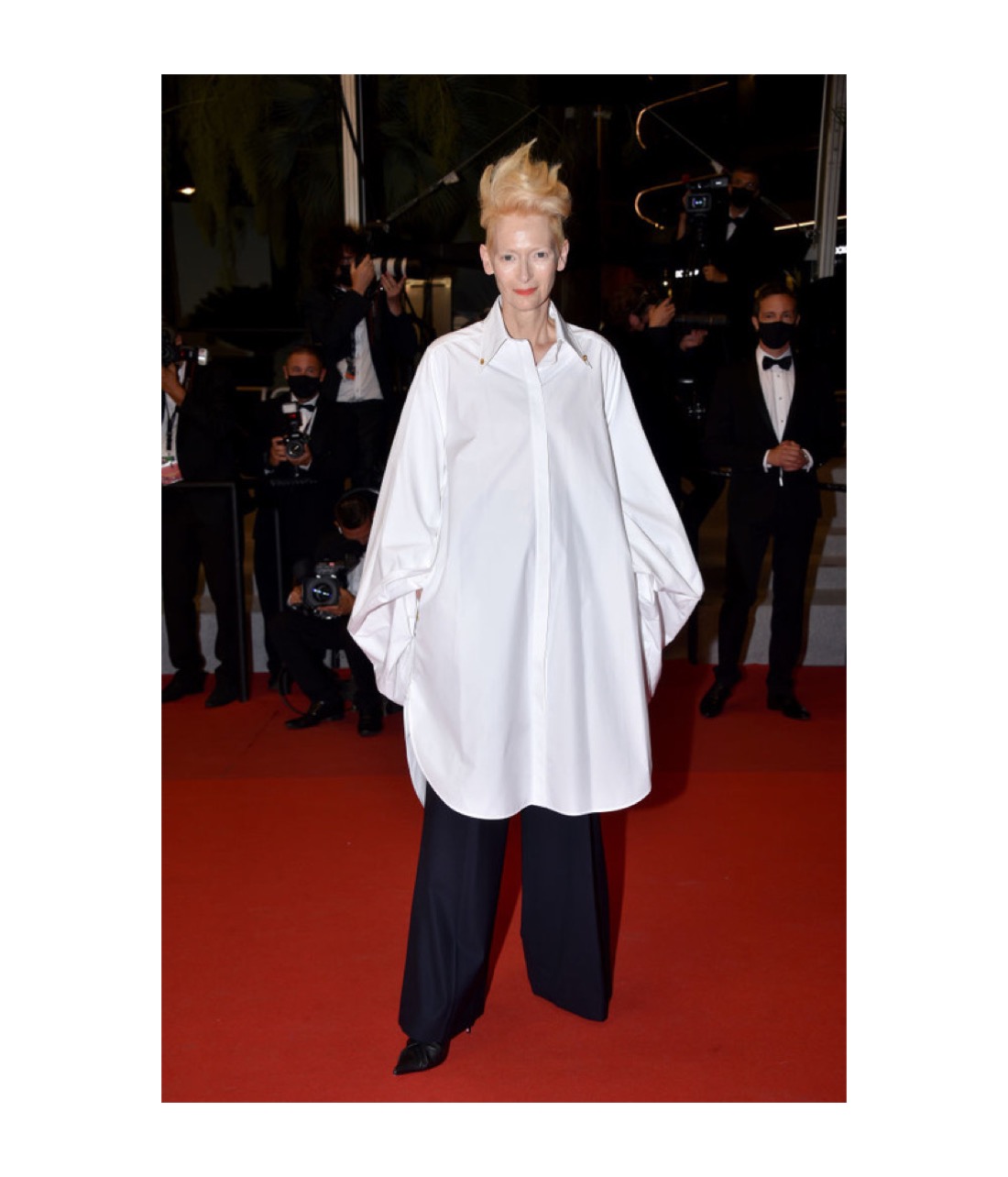
Tilda fell in love with Daniel Roseberry‘s Schiaparelli, and this means we can expect seeing her in the Parisian maison‘s couture soon. For Cannes, she chose Roseberry’s haute classics. This crisp, white shirt(dress) is so chic.
Swinton in Virginie Viard‘s Chanel – I love. This white gown is so functional – perfect for the Cannes red carpet, yes, but I can also see it worn to the French Riviera beaches. It’s both elegant and easy, refined, yet approachable.
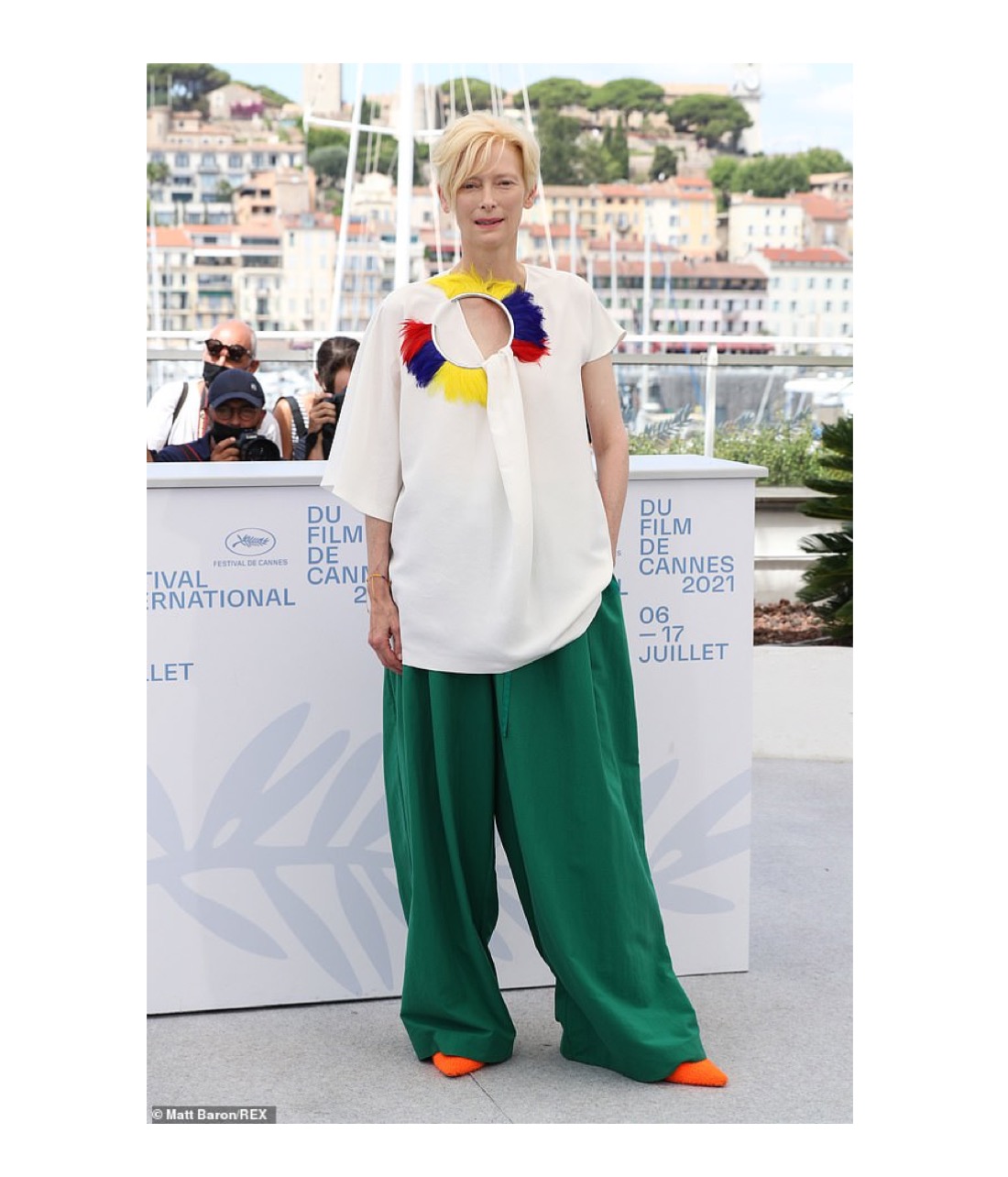
“Casual” done the Tilda way is going for over-sized Loewe by Jonathan Anderson.
Another Schiaparelli, another shirt, but a totally different vibe. Here, Swinton went boy-ish, and announced global peace with that beautiful, Picasso-esque dove illustration.
Maybe I’m not entirely a fan of this Chanel look, but then, here’s the ultimate, sophisticated pirate à la Parisienne mood.
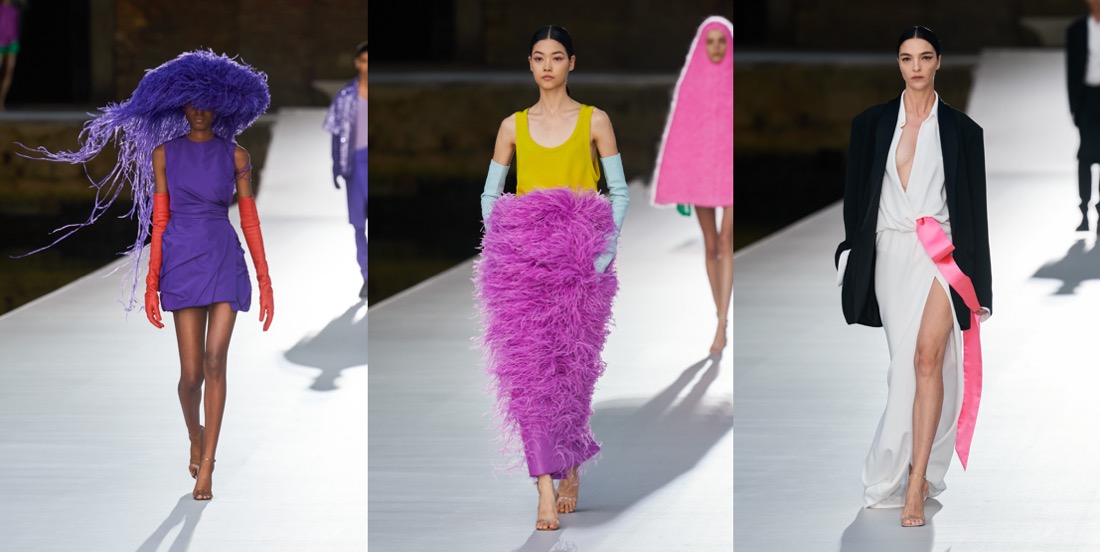
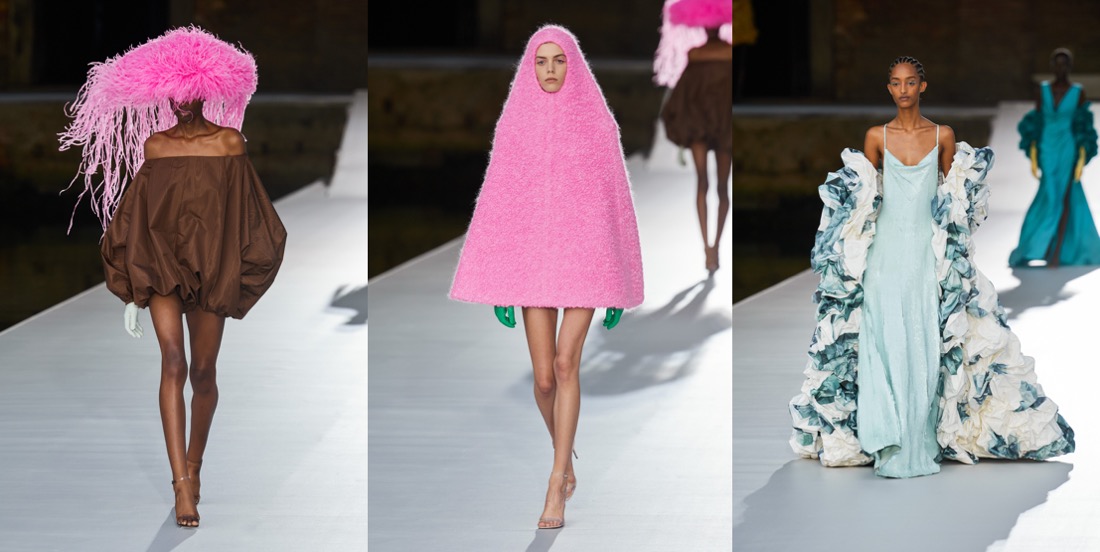
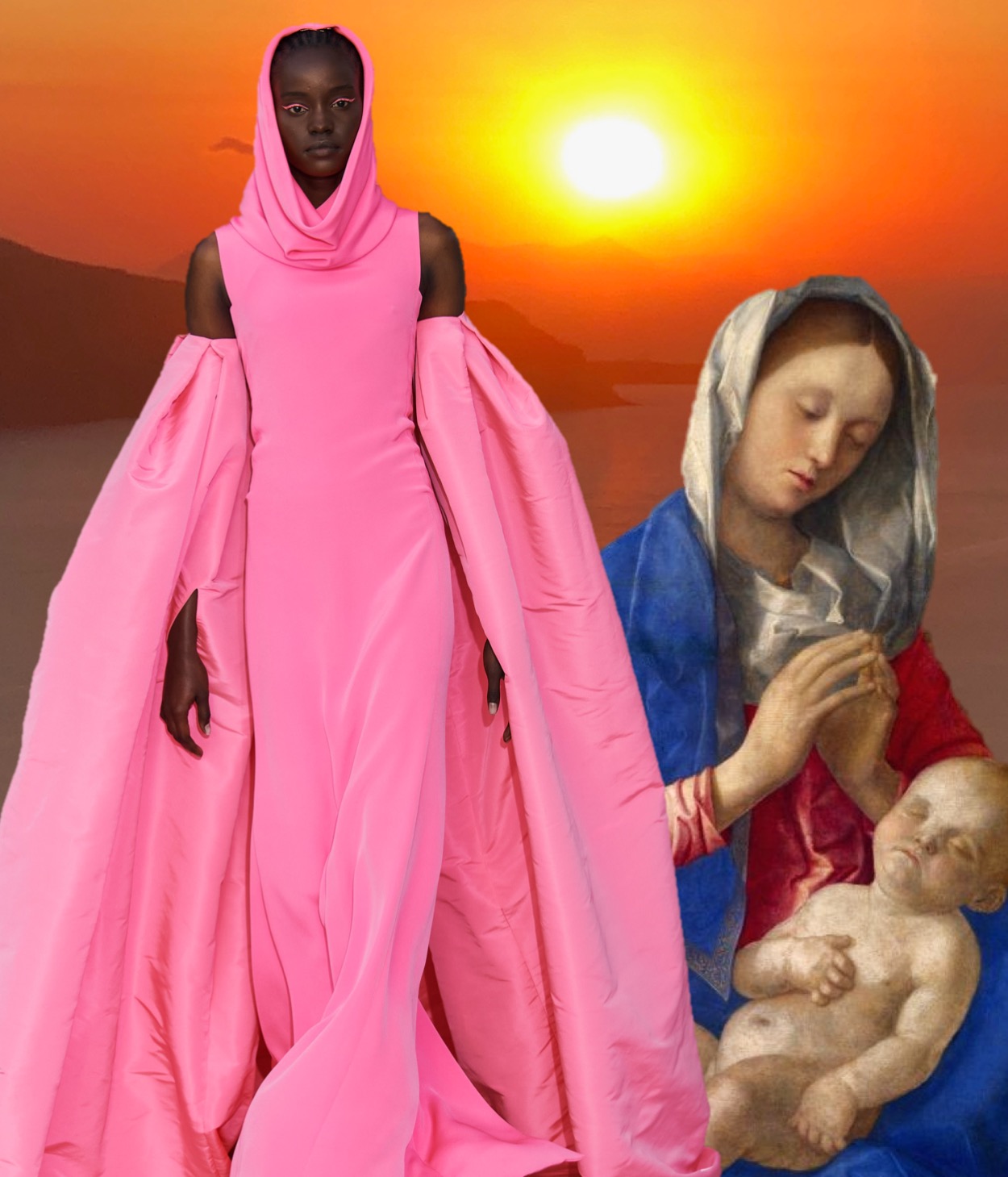
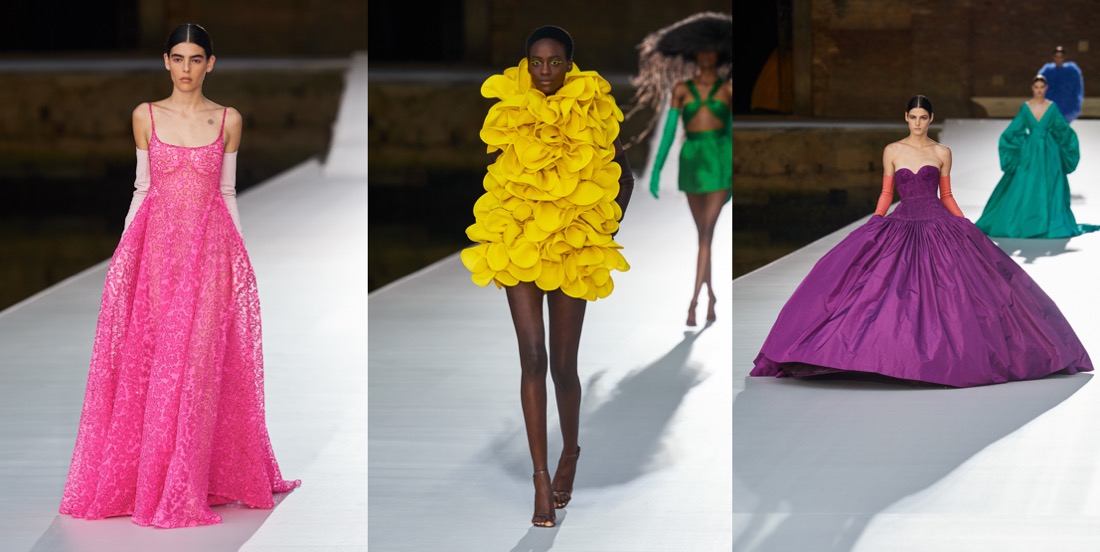
What a show. What a feeling. What a symphony. Celebration of great beauty. Valentino’s creative director Pierpaolo Piccioli set his sublime couture collection in the Gaggiandre, or ship building yard, of Venice. He was drawn to the place’s haunting beauty which he likened to a De Chirico painting with its arches and robust columns. In Renaissance times this place represented the hub of the city’s trading machine, a sophisticated production line that was said to churn out a boat a day. This being Venice and the Renaissance, of course the place – now part of the Arsenale where the city’s art and architecture Biennales are showcased – is as beautiful as it was once productive, having been built (between 1568 and 1573) by Jacopo Sansovino, one of Venice’s most revered architects of the period. Piccioli set his snaking runway under Sansovino’s soaring arches where the ships were once sheltered to be repaired, so that it appeared to float over the water. Guests were bidden to wear white. Luckily everyone did as they were told, and the effect, as the golden light of early evening streaked the water, the stone, tile, and brick, was undeniably poetic. To add to the spine-tingling moment, the collection was serenaded by the British singer Cosima, whose plangent voice gave a powerful twist to Calling You from the 1987 movie Bagdad Cafe, that opened the show. Piccioli brings the ultimate level of gasping wonder to fashion’s color wheel, setting flamingo pink, chartreuse, violet, cocoa, and mallard green ball gowns one after another, for instance. Or he might throw a raspberry double-face balmacaan over darker pink pants and an orchid pink crepe shirt, or a lilac cashmere cape over violet pants, frog green sequin t-shirt, and pea green gloves, and then ground the look with eggplant shoes with the heft of Dr. Martens. These last two ensembles, by the way, are part of the menswear offerings in the collection, in case you were wondering, and very persuasive they were too.
There were 84 looks in the show, and each one was a different proposition, from puffball micro minis, (shaded with Philip Treacy’s giant trembling ostrich frond hats that moved like jellyfish), to trapeze silhouettes, skirts that hit the mid-calf or hovered above the ankle, and slinks of satin and crepe cut to spiral round the body like affectionate serpents. From ball gown to micro mini the effect was one of commanding elegance. The fashion history sleuth will find echoes here of Madame Grès, of Cardin, and Capucci, as well as note taking from Mr. Valentino’s own magnificent oeuvre, but Piccioli takes these iconic moments of design history and makes them uniquely and persuasively his own. Also unique were the artist collaborations, curated by Gianluigi Ricuperati, who assembled a roster of 17 painters, including Jamie Nares, Luca Coser, Francis Offman, Andrea Respino, and Wu Rui. Art and fashion have often united in symbiosis – think of Warhol and Sprouse, or Schiaparelli and Dalí – but here the effect was a celebration of creativity, the hand, and of the nonpareil Valentino workrooms whose talented artisans evoked the source artworks through various cunning means. There were elaborate collages of textiles, for instance 46 in all for Look 6, Kerstin Brätsch’s The If, 2010, (as the Valentino show program notes helpfully noted, alongside the names of the craftspeople in the ateliers who have made them). Meanwhile, the five pieces by Patricia Treib, combined in the ballgown of Look 68, called for 140 meters and 88 different textiles, and took 680 hours to complete. On close inspection even the fine lines of Benni Bosetto’s pencil strokes (Untitled, 2020), that appeared to have been drawn directly onto the pale satin of Look 46, turned out to have been suggested by subtle hand-stitching (a stunning 880 hours of work, if you are counting). The ball gown and cape that closed the show, Look 84, were scrolled with motifs drawn respectively from Jamie Nares’s It’s Raining in Naples, 2003 and Blues in Red, 2004, requiring 700 hours of work, 107 meters of fabric, and custom screens for the hand-printing as it had to be done on such a large scale. The effect was appropriately magisterial. Summing up: total magnificience.
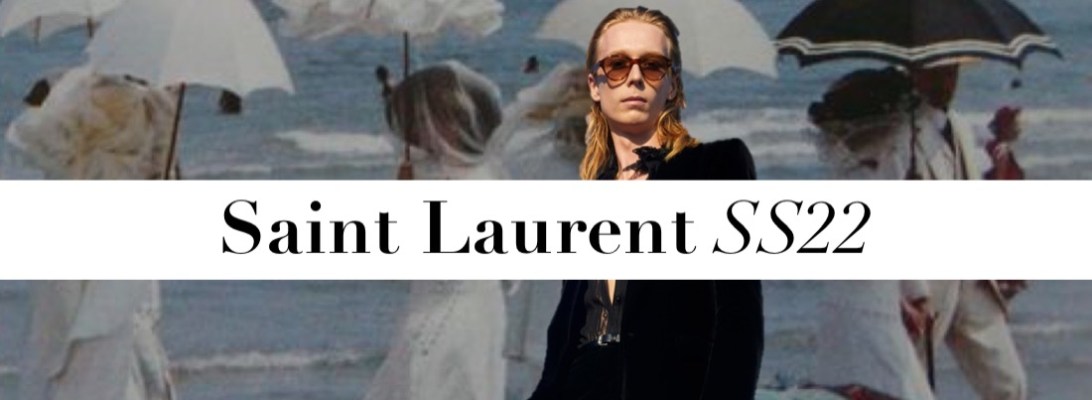
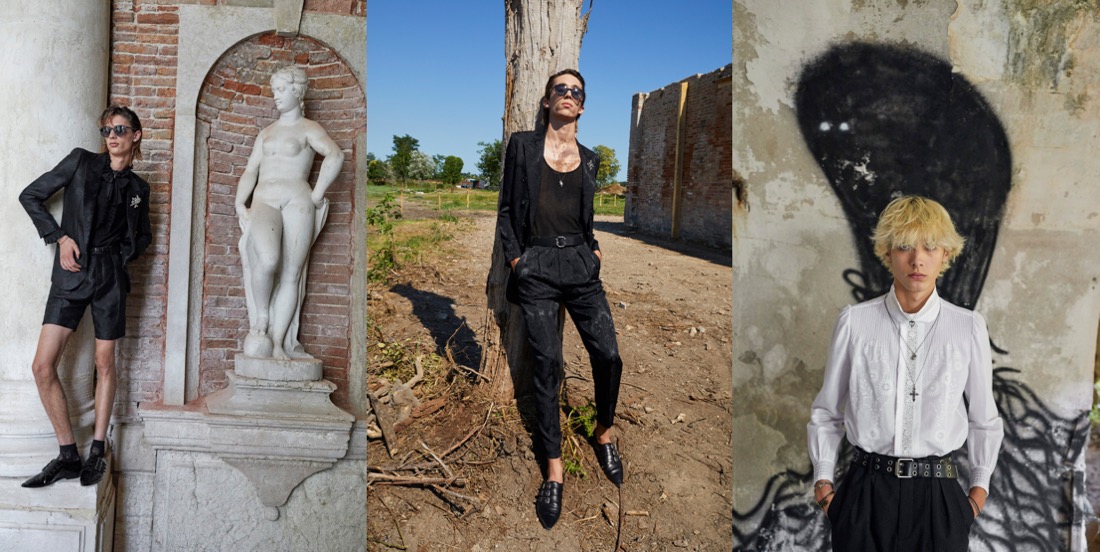
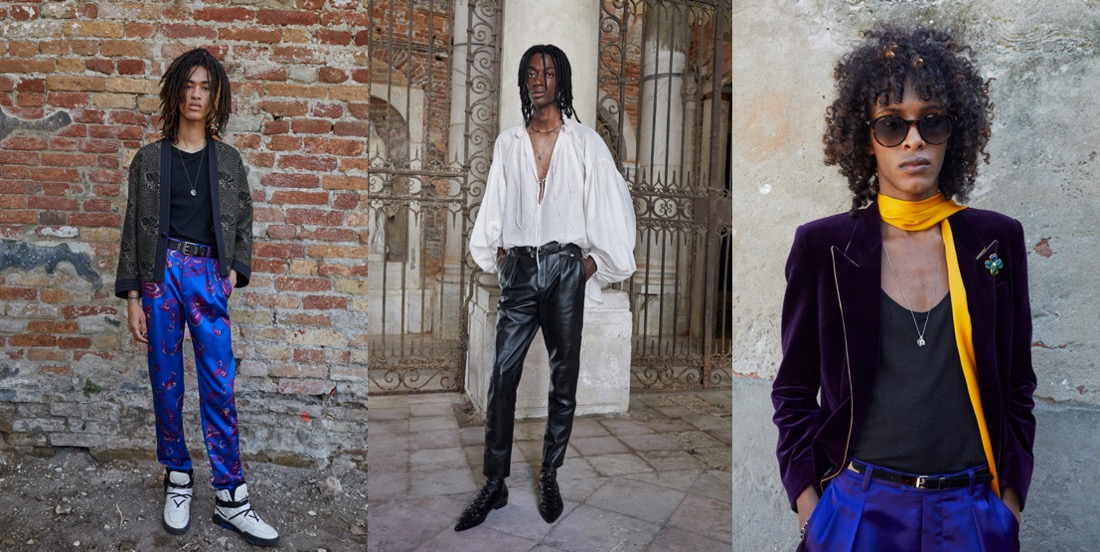
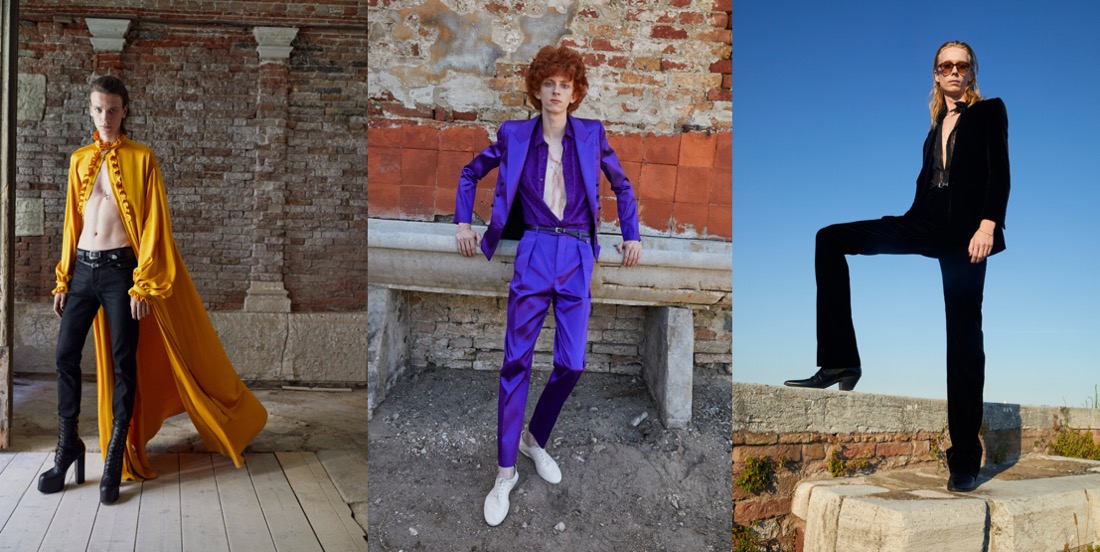
With Venice’s winding lanes and piazzas relatively empty, not exactly overwhelmed with visitors, an army of very slender wraiths, confettied with tattoos, bristling with attitude, and wafting around the city’s fabled landscape, seemed even more conspicuous. These proved to be the (extra, extra skinny) models and brand icons of Anthony Vaccarello’s Saint Laurent, in town to walk the runway in the designer’s collection. In keeping with the city’s current focus on the possibilities of architecture, Vaccarello collaborated with the genre defying artist and filmmaker Doug Aitken (who won the International Prize at the 1999 Venice Biennale) on an environment to showcase his collection. Aitken created Green Lens, an amazing mirror-faceted structure that was assembled in a month on the Isola della Certosa, and planted with hot house jungle greenery. It serves as a response to the question posed by the Biennale, harmoniously blending futurism with the natural landscape. “All the sets of Saint Laurent I’ve always done myself in a way,” Vaccarello explained, at the magical post-show dinner set in the roofless ruin of an old brick structure on the island, “so it was nice to share a concept for the first time with an artist who I truly admire, and it was fun. That concept was supposed to be for the women’s show last year,” Vaccarello added, “and because of the pandemic we pushed it to now. In the end it made more sense to have it in Venice than in Paris, especially with the Architecture Biennale – and with that collection, which is a mix of a lot of influence of Saint Laurent and a lot of Venetian ‘New Romanticism.’ Not putting them into the historical, classical Venetian way, but in a futuristic environment. I think after COVID you want to look more into the future than the past – and I like that mix of the past in the references in the clothes, and the future in the setting.” During the fast-paced show the structure reflected the blue skies, dusk light, and dappled lagoon waters while Aitken’s lighting transformed the mood from moment to moment, suggesting by turns a flaming sunset or a glacial blue Scandinavian dawn. Refracted in those mirrors, Vaccarello’s tribe strode forth in lean jackets or billowing piratical blouses, and cigarette-leg pants with winkle picker ankle boots extending the slender silhouette further still. In a timely reversal of the endless womenswear borrowings from the traditional men’s wardrobe, Vaccarello also had fun exploring the unparalleled Saint Laurent archives for women’s wear pieces that could be appropriated by the guys, including jacquard crepe de chine blouses and shirts from the early ’70s, cropped toreador jackets and spencers from Picasso line-up, and a padded brocade bolero from the China collection reimagined as a bomber and worn with black jeans, as well as a number of variations on Le Smoking. In homage to the host city there was Venetian carnival drama too in the dramatic billowing capes, including one in brilliant yellow silk that evoked a faille example shown in Saint Laurent’s autumn-winter 1983 haute couture show. “I think it was fun to see how a young guy could assume it,” said Vaccarello of his gender fluid propositions, “And I have to say they assumed it very naturally, [whether] a lace shirt, or platform shoes.” With this most convincing menswear line-up to date coming from the designer, hope to see more of such moments coming from Vacarrello in the future.












 Design & Culture by Ed