
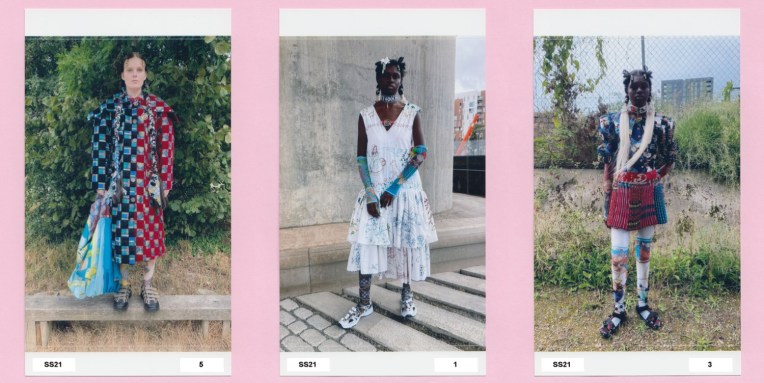
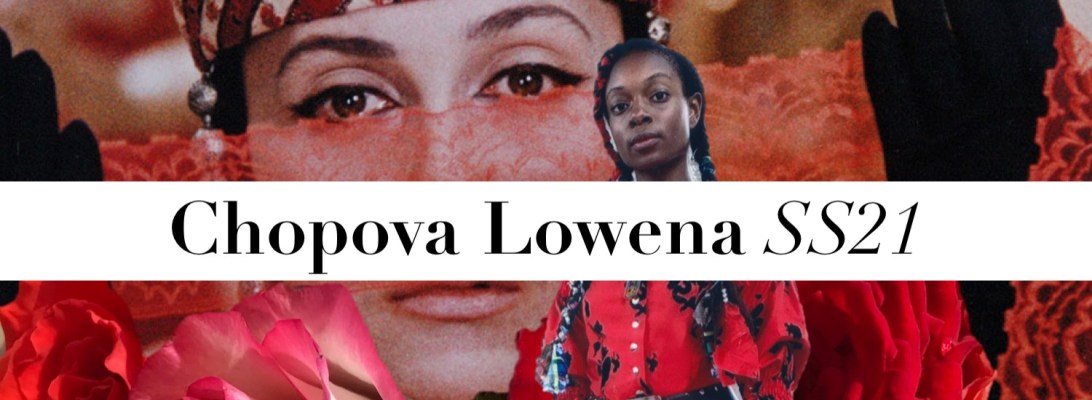
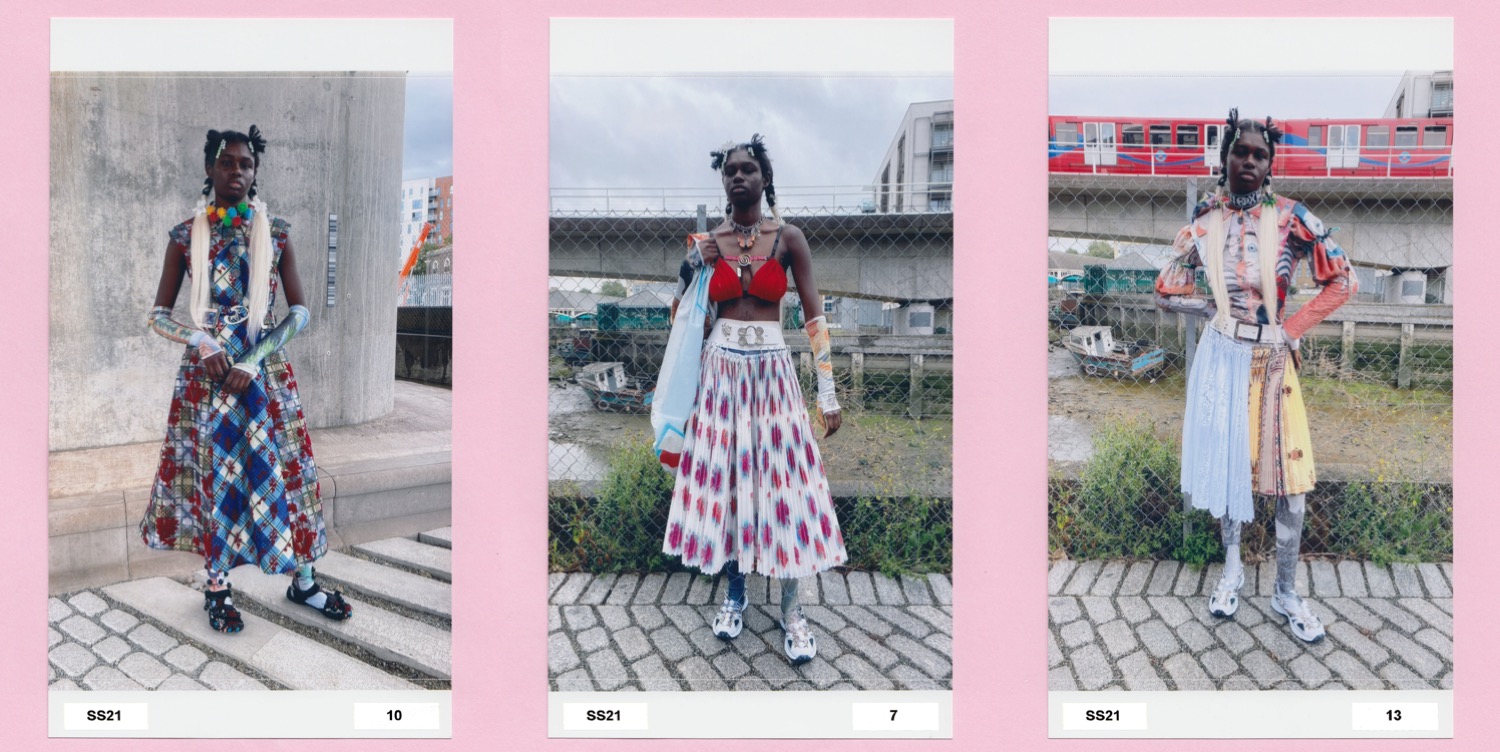
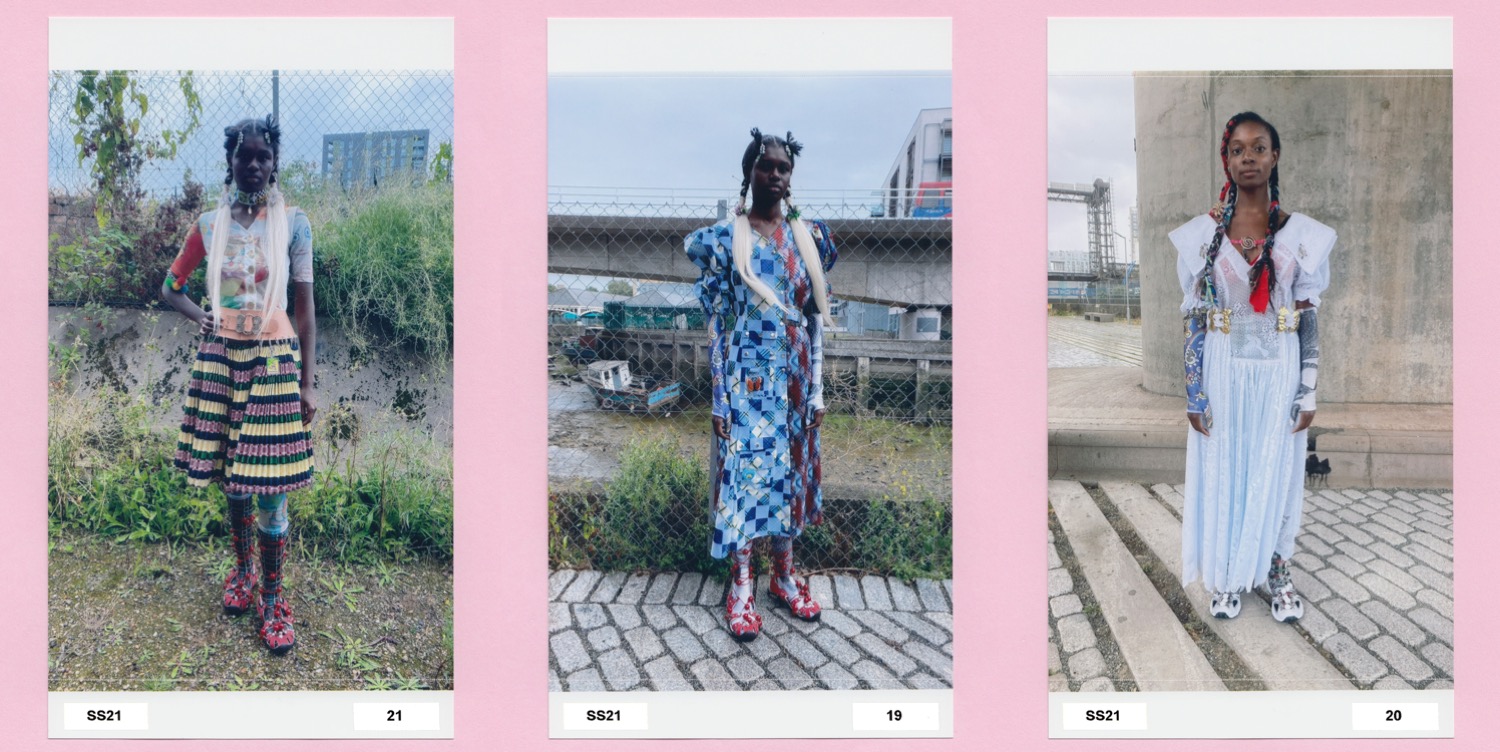
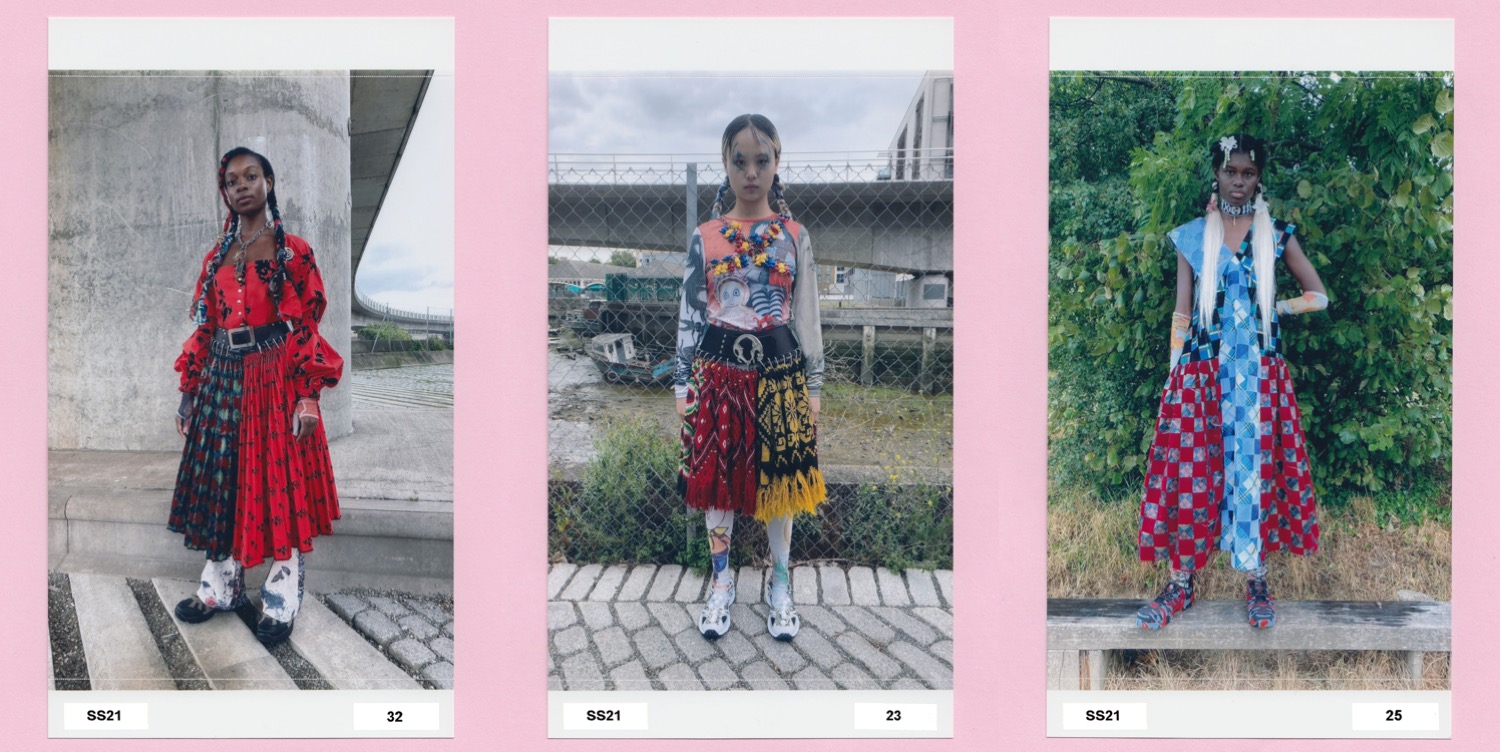
Seeing all the favourite, relatively small, unique brands in the London Fashion Week digital schedule this season is truly heart-warming. And with less pressure of being noticed in the presentations and showrooms marathons the editors and buyers usually have, look-books seem to let that tension off. I’m following Chopova Lowena since its start about two years ago, and I must say I’m impressed how this label evolves with such confidence and thought, simultaneously staying true to its style. Emma Chopova and Laura Lowena took a gathering of their collaborators and interns outside their studio in the postindustrial docks area of Deptford to shoot their spring-summer 2021 look book. “We did it ourselves on our iPhones,” they said, on a Zoom call with Vogue as they shared the pictures. “Everyone we collaborated with is in the look book, except for a Bulgarian woman, who we found on Facebook, who made loom-beaded pieces for us.” So here are their friends, standing on concrete and cobblestones under an overpass, with a washed-up wooden riverboat in one direction, a red commuter train shooting overhead, and the vivid green shoots of untended nature springing up beneath their feet. As a glimpse of a little-seen corner of the Thames shore, the backdrop is a perfect metaphor for the designers’ youthful energy – their uplifting knack of finding beauty and romance in overlooked places, and their ingeniously pragmatic ways of re-crafting fragments of the past into ideas that young women find irresistibly wearable. Some of the Chopova Lowena girl gang pictured are Faye, a painter who contributed designs for their burgeoning line of printed jeans; Jewel, a makeup artist; Ami, who made prints based on cut-up Bulgarian postcards of dogs, roses, and Easter eggs for T-shirts; and jewelry designer Georgia, who made charms. The label is focused on building up signatures, like their accordion-pleated kilts suspended on steel climbing hooks clipped to leather belts, and developing their penchant for dresses in checks and tartans made from deadstock fabrics. All of this continues with even more exuberance and multiple-check action here. Explaining the narratives of how they source and make in Bulgaria, which is Chopova’s family home, is also important to the designers. There are lots more vintage materials from her home country in this collection. “My mum helped me clean and recondition antique wall hangings. People traditionally used to hang them in their kitchens over stoves or above their sofas or beds,” Chopova relates. Bulgarian people are willing to part with them, she says, because they don’t use them anymore. “The fabrics have a lot of baggage. They remind them of communism and folklore, which don’t have favorable connotations.” Look 1, a lovely white drop-waisted linen dress with two deep flounces, is remade from kitchen hangings embroidered with line drawings of folk tales. There’s a top made from lace doilies too. The designers now feel they want to deepen the connection with tradition and with showing the authenticity of how their things are made and by whom. “I think in the pandemic, everyone in fashion has been thinking, What is our brand’s purpose in all of this?” They learned how much their audience likes seeing stuff being made when they ran a video of artisans in Turkey marbling white denim for their new line of jeans. In tough times, their priority is to keep supporting the Bulgarian women who work on the clothes – those with the skills to produce, for instance, the deep accordion pleats that are “made with the one remaining mold in the factory, which was always used to pleat traditional costumes.” Amazing.


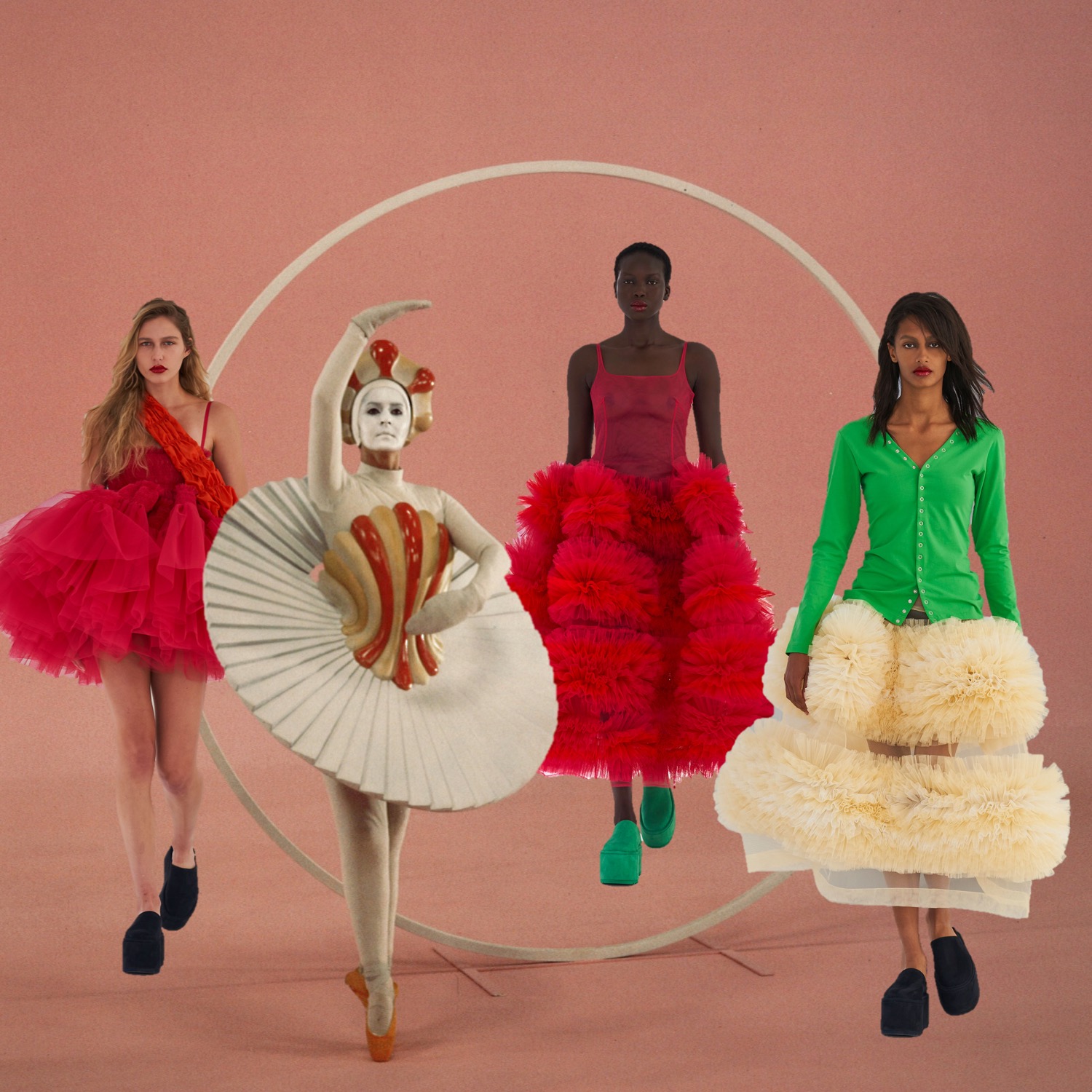
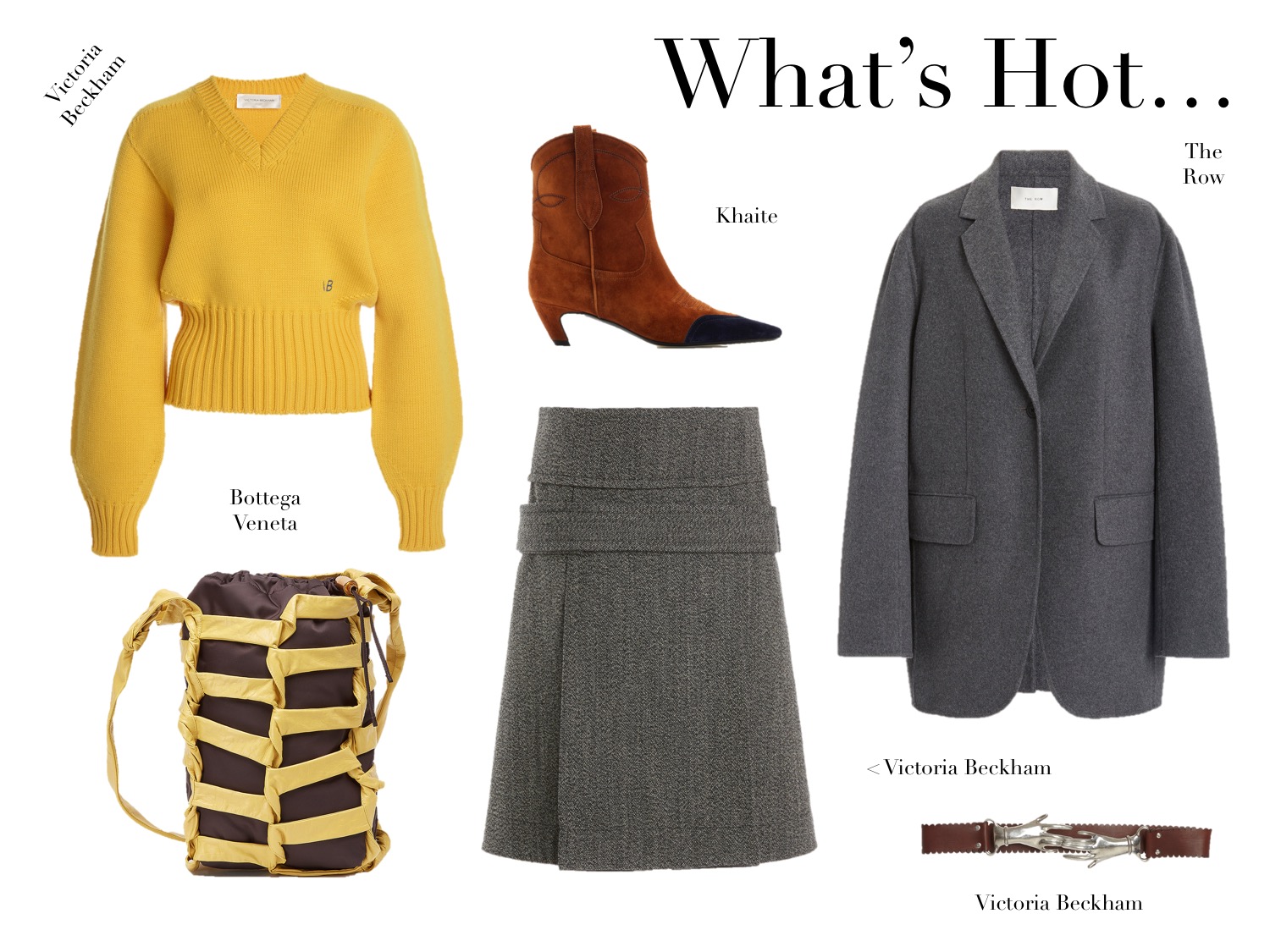
Collage by Edward Kanarecki.







 Design & Culture by Ed