
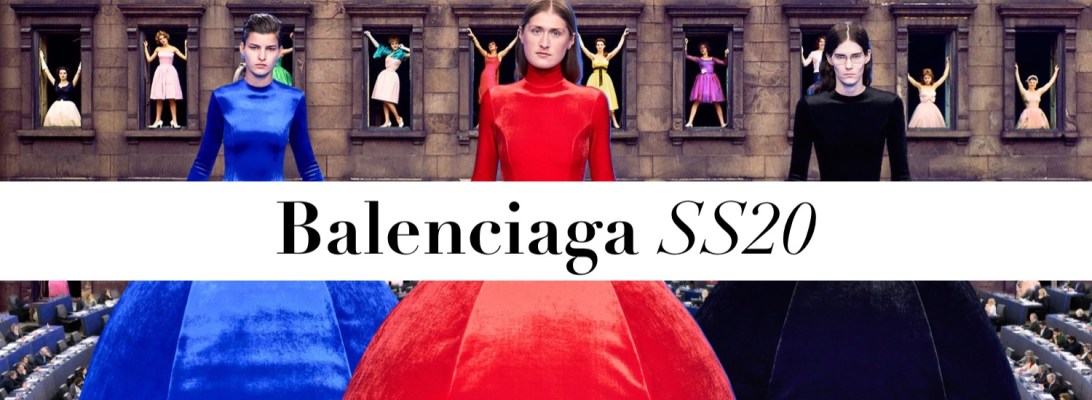
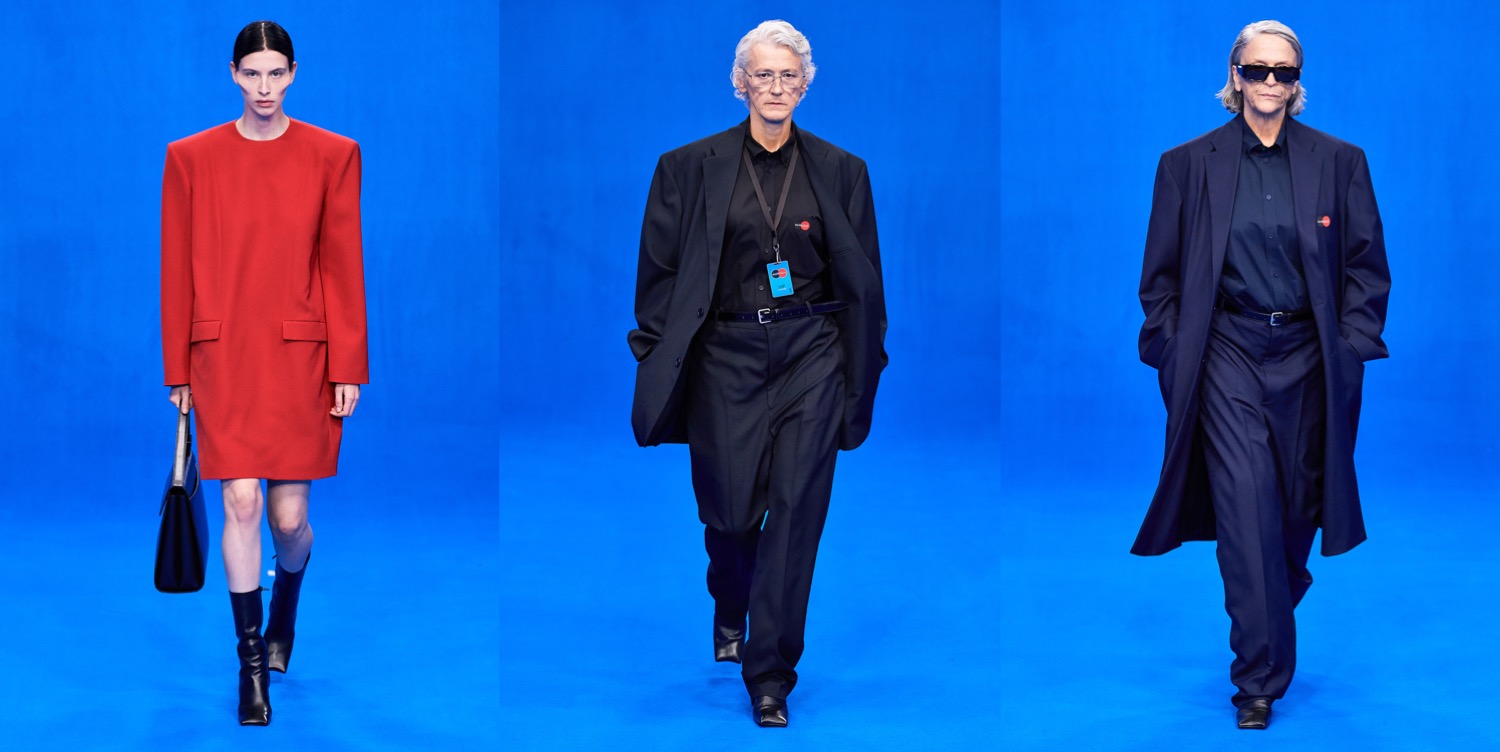
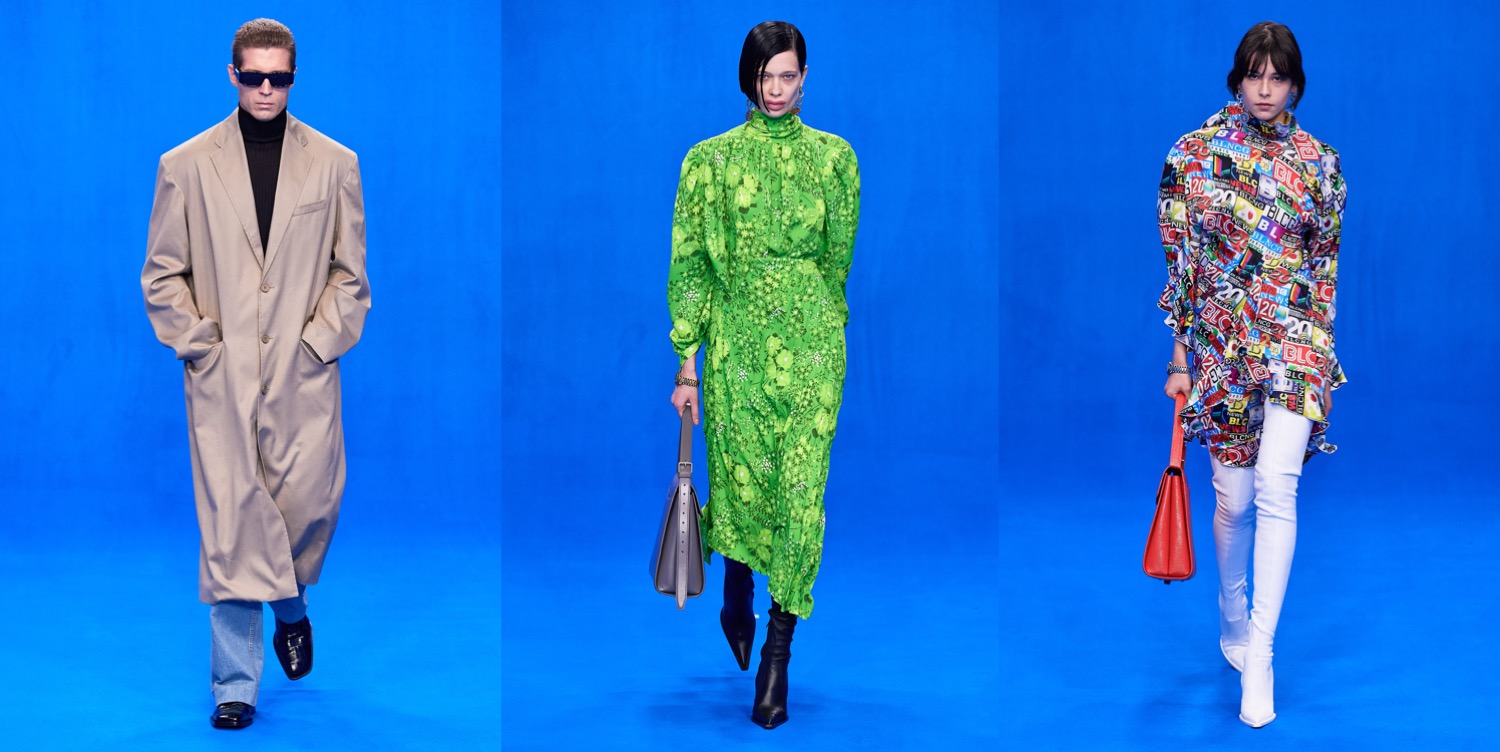
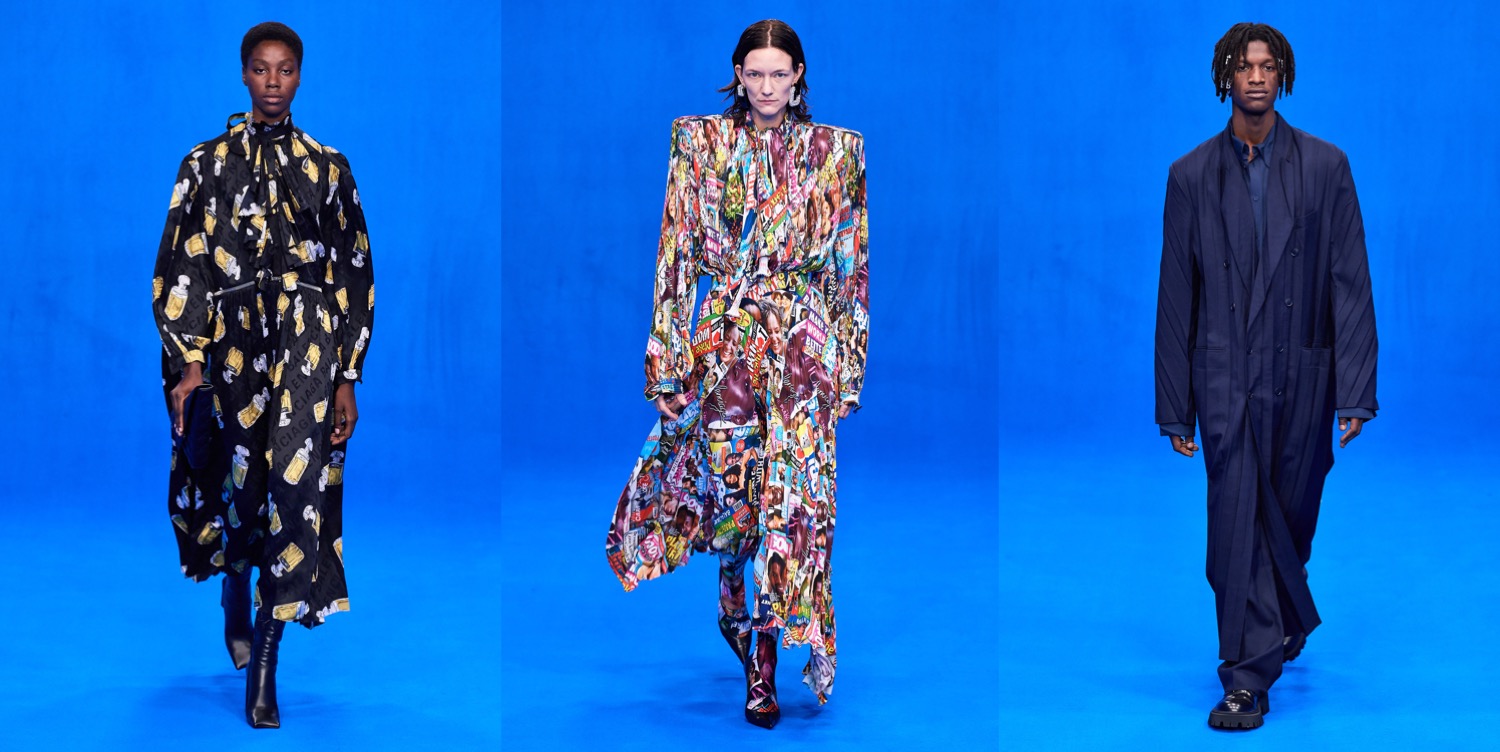
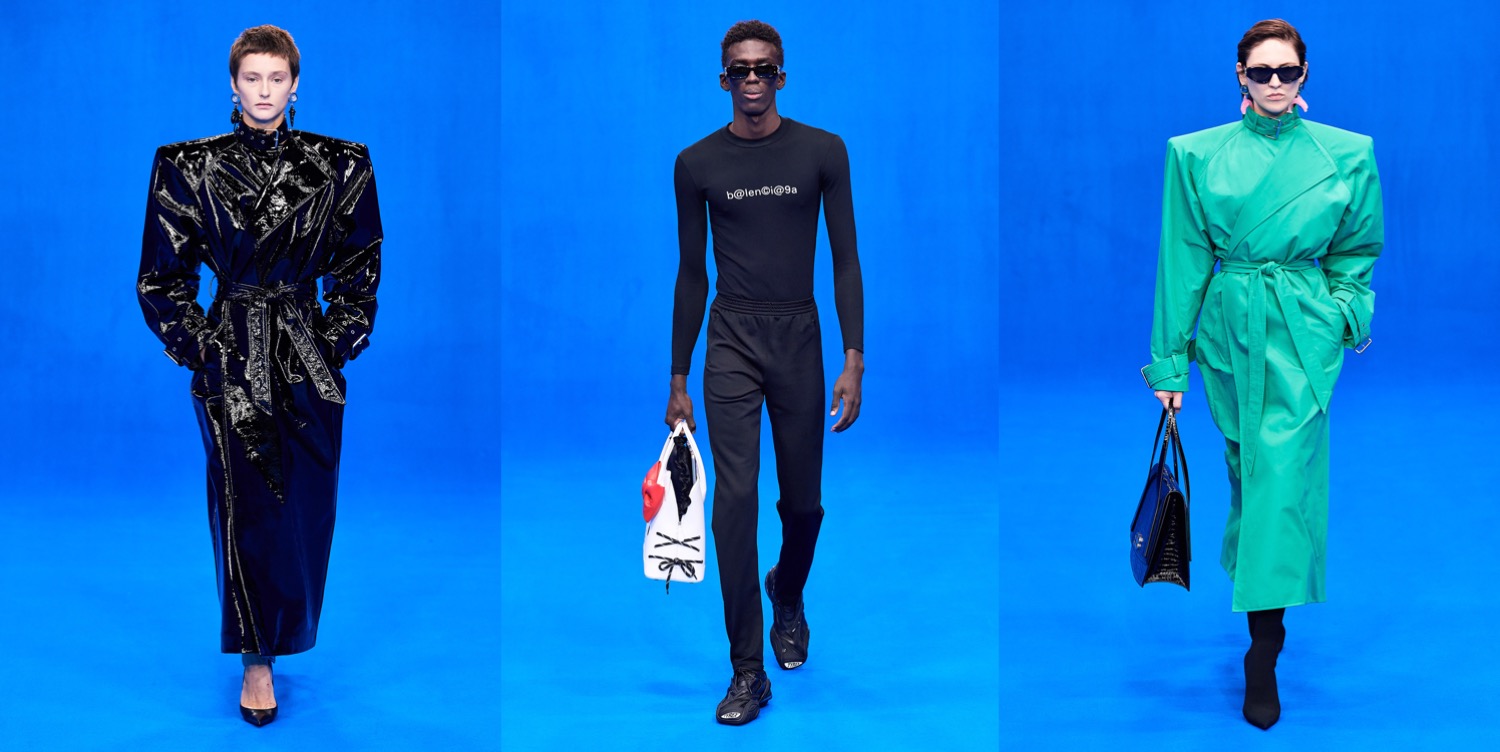
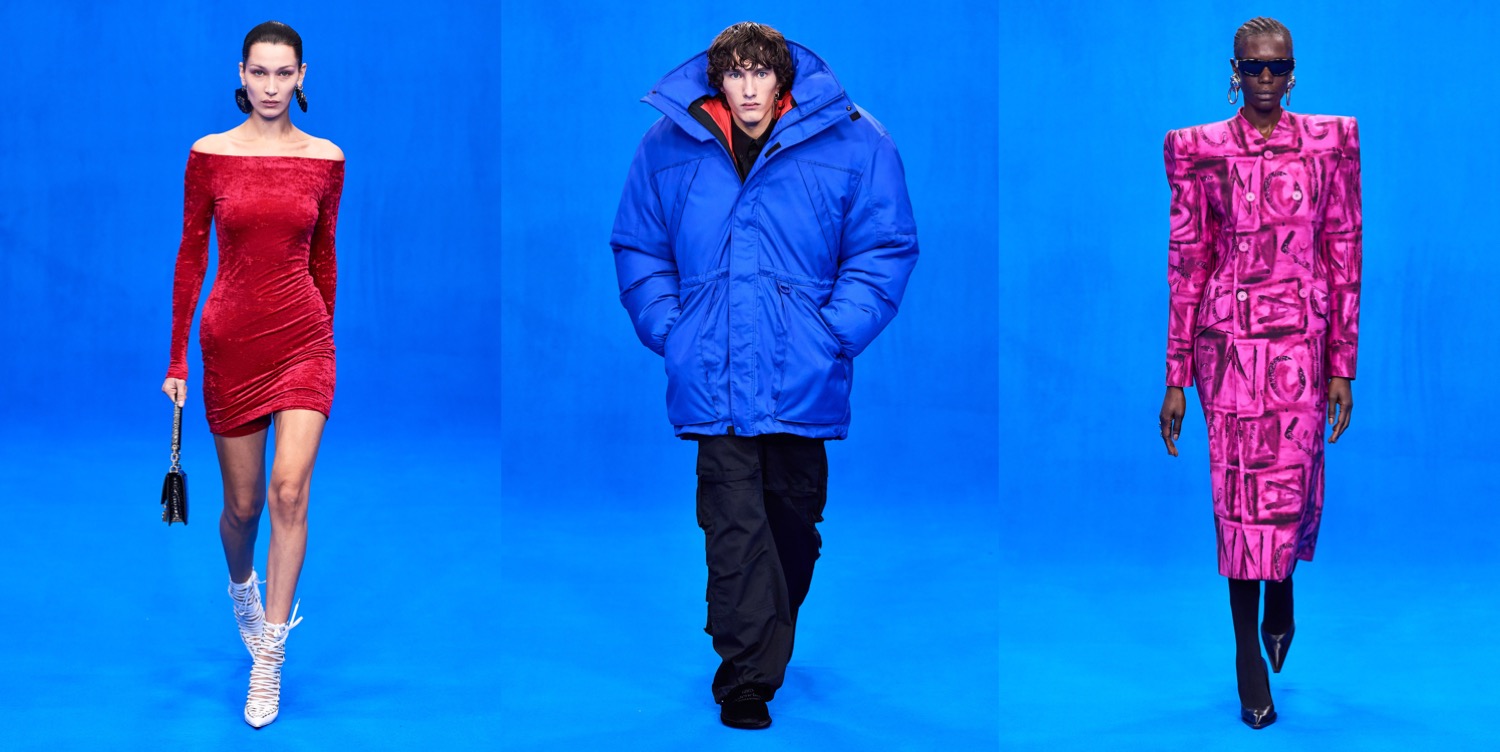
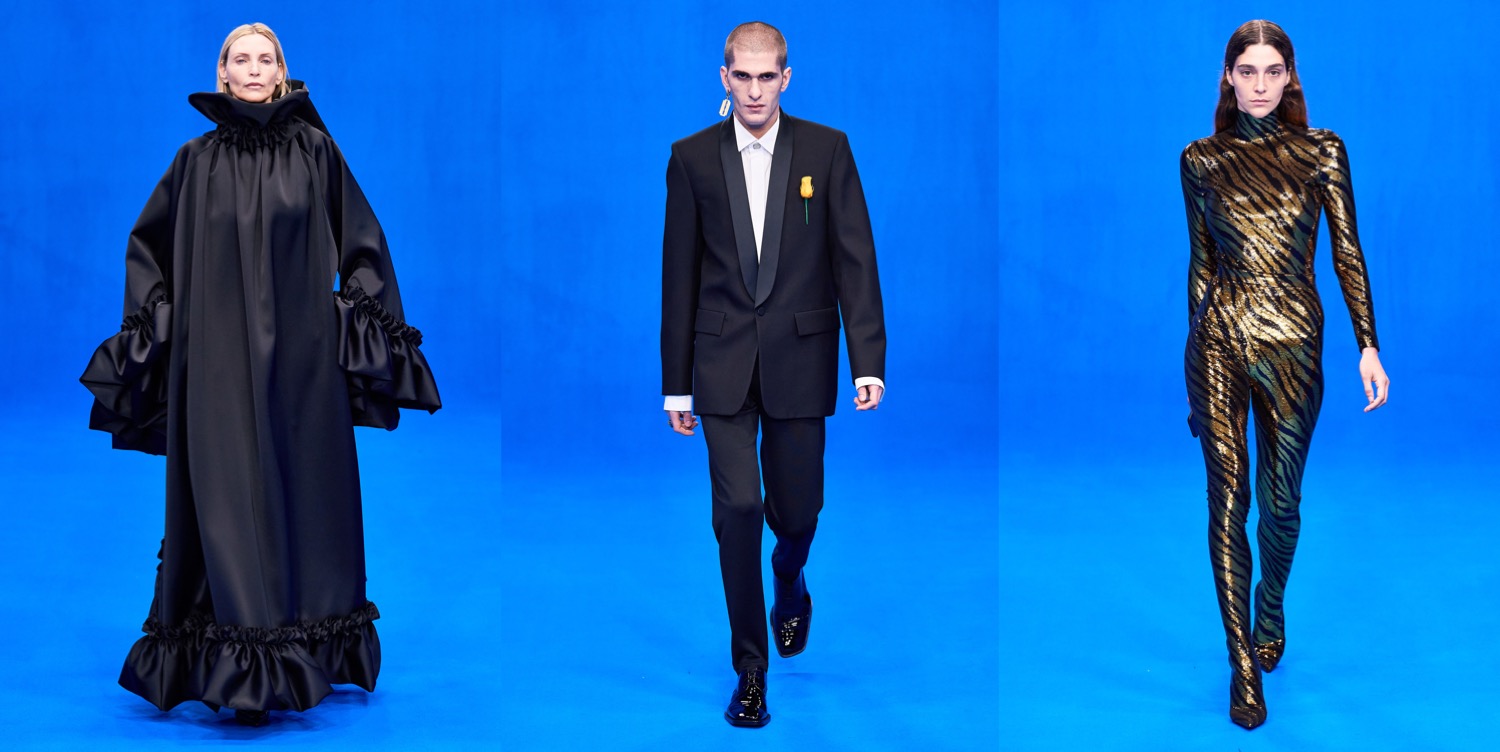
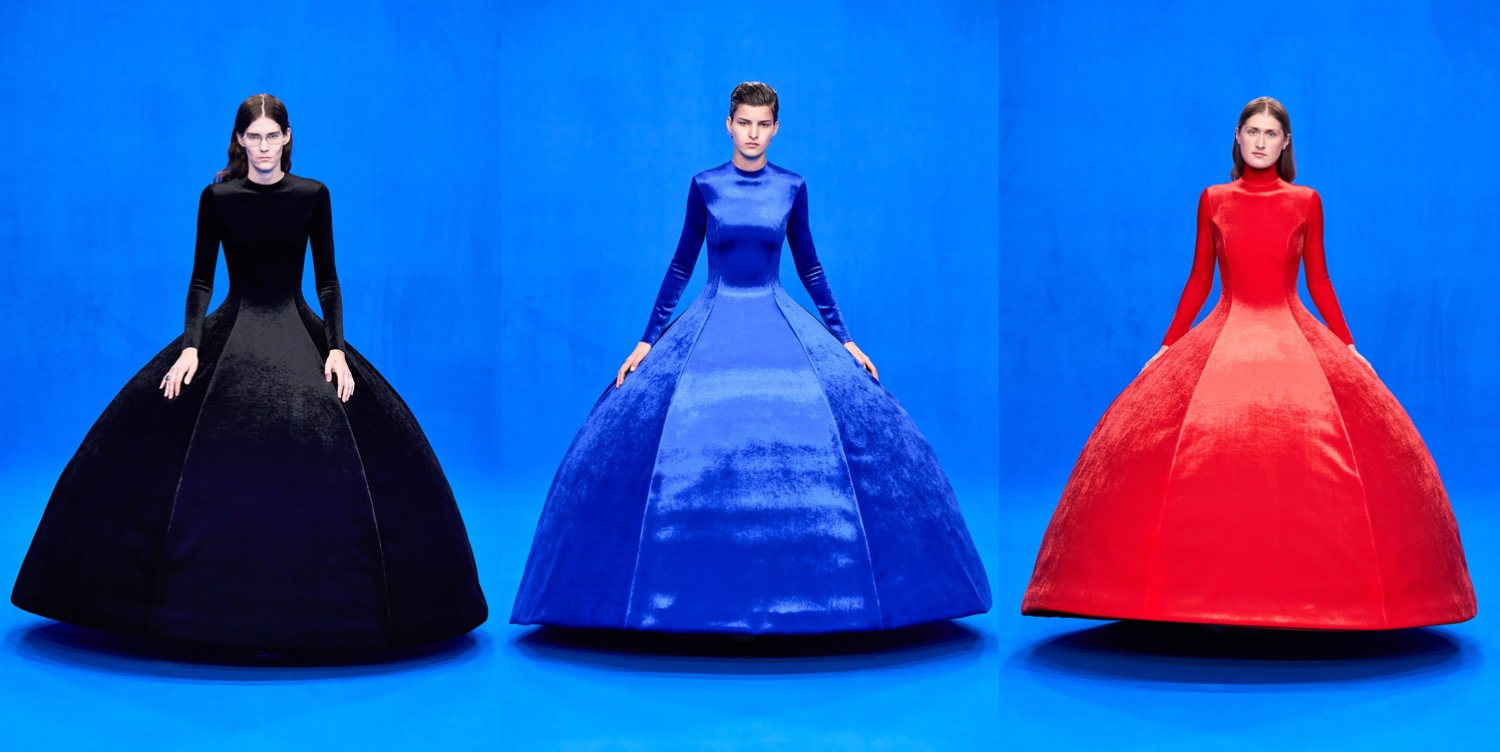
Balenciaga‘s spring-summer 2020 collection was really something. It’s quite clear that since Demna Gvasalia departed from Vetements, his focus is solely directed on the Parisian maison. For me, his latest line-up was as incredible as his debut collection – it proved again that his take on ready-to-wear is truly visionary. The collection was raw, properly odd, ironic and real (all the models come from different walks of life: there were nurses, actresses, super-models, lawyers, gallerists, engineers, etc.). But so, so desirable! Lets start from the beginning. He set the collection in a political arena – a faux “Balenciaga parliament or assembly,” which he’d convened to investigate the subject of “power dressing and fashion uniforms.” First looks: senior delegates in corporate tailoring. On their breast pockets were embroidered badges, two discs bisected with a Balenciaga logo (very Mastercard). Then came what Gvasalia called ‘the campaign dresses’. “We looked at pictures of women politicians, of what they wear campaigning. We took this type of tailored daywear dress and tried to make it cool – not an easy challenge, to be honest,” he said. His solution was to “make them more boxy and cocoon-y, which is quite Balenciaga. So many body types can wear it. Democratic and easy-to-wear volumes.” Later, he sent down a line-up of over-sized, turtleneck frocks in logos, perfume bottles and sneakers prints, and long-sleeved t-shirts with cliche slogans you see in cheesy gift shops (like ’18+’ or ‘Top Model\). In his latest interview with Jo Ellison for How To Spend It, he told the critic that not doing simple, commercial stuff is simply not honest at a brand like Balenciaga. And he’s right. Next: turtle duvet jackets (their construction is amazing – it’s modern day Cristóbal Balenciaga sort of thinking); hybrid, velvet garments that in front look like dresses, but in the back appear to have pants; coats, in faux fur or bold colours, with exaggerated shoulders; XXL, black, widow dresses (worn by Nadja Auermann and Renata Litvinova). If it couldn’t get any more eclectic, here’s the best part. The eveningwear, which instantly became the most memorable / meme moment of Paris Fashion Week. Specifically, crinoline dresses (two in lurex and with a huge, doll-like bow in the back, and three identical velvet masterpieces in different colours). “Ballroom dresses go back to the beginning of Balenciaga, when Cristóbal started in Spain. It was mostly this type of silhouette he did, from Spanish painting,” Gvasalia observed. “But we wanted to make sure they were wearable. If you take out the crinoline, you have a sort of goth dress.” True, there’s something that makes you feel uncomfortable while looking at the collection: maybe it’s the extreme blue of the venue? The prosthetics used as part of models’ make-up? The chilling soundtrack created by Demna’s boyfriend, Loik Gomez? Still, I can’t help but love it. Good fashion makes you want something for a moment. Great fashion makes you feel something and think about it for a couple of days.
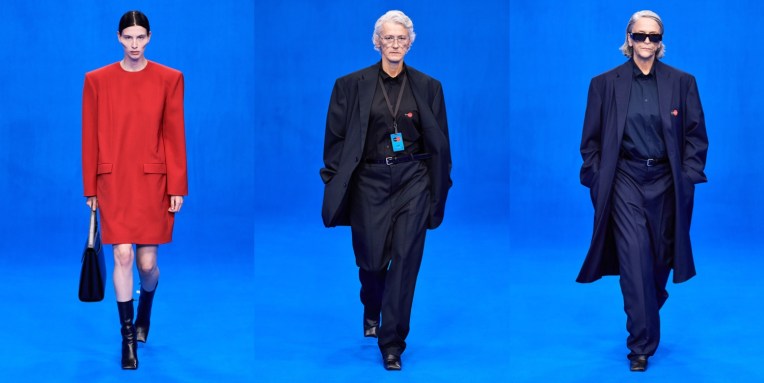
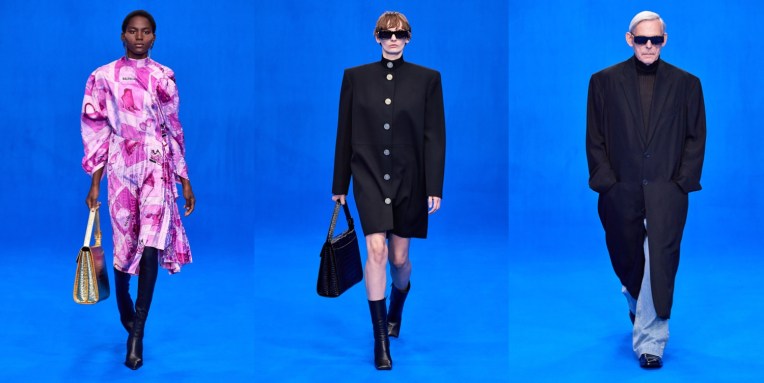
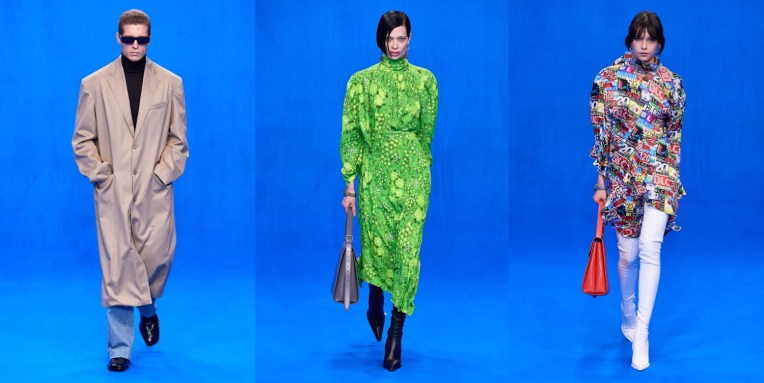


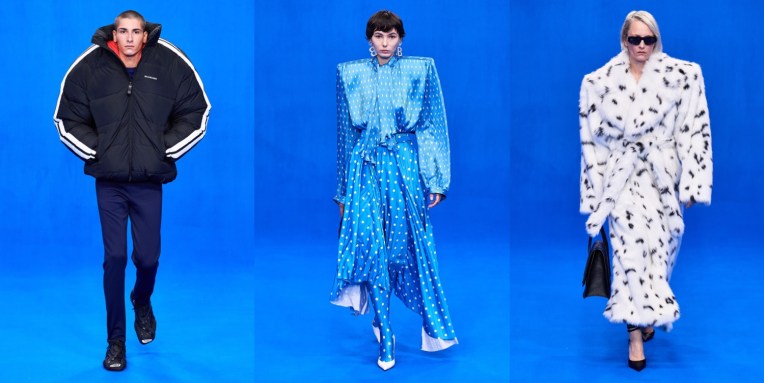

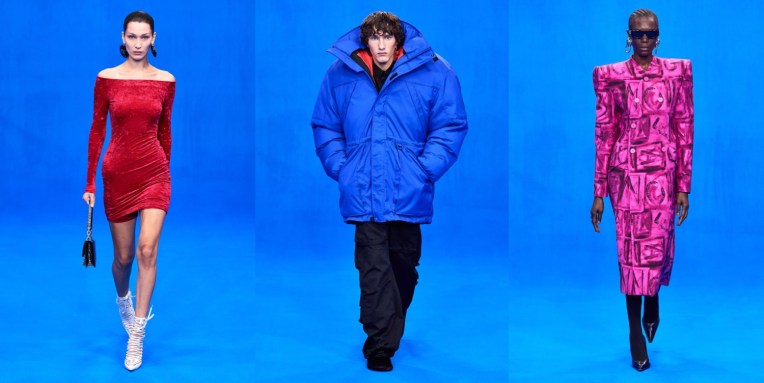

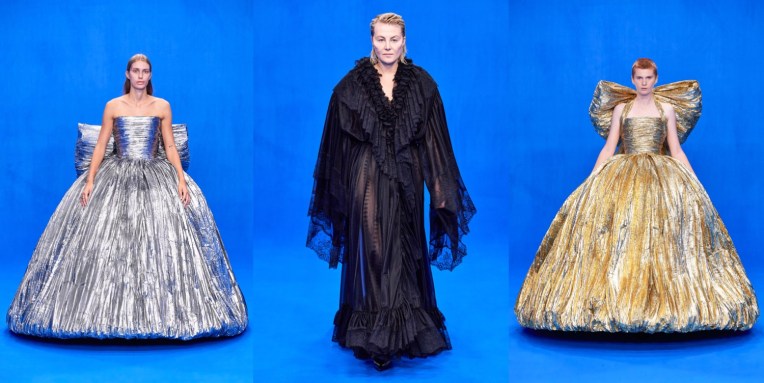


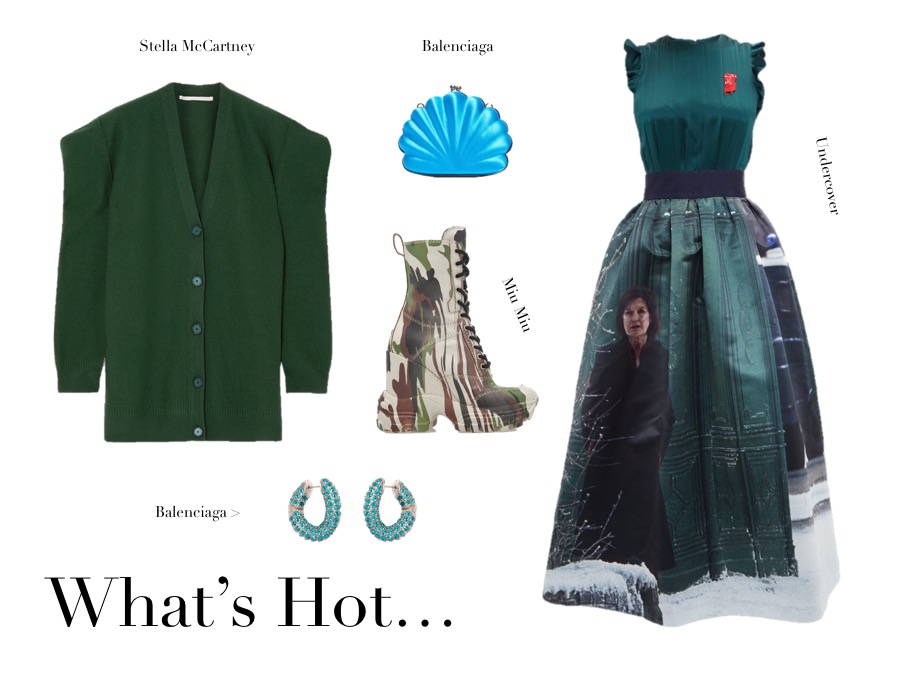
Collage by Edward Kanarecki.














 Design & Culture by Ed