Sex in Nature. Christopher Kane SS19

Slajd1

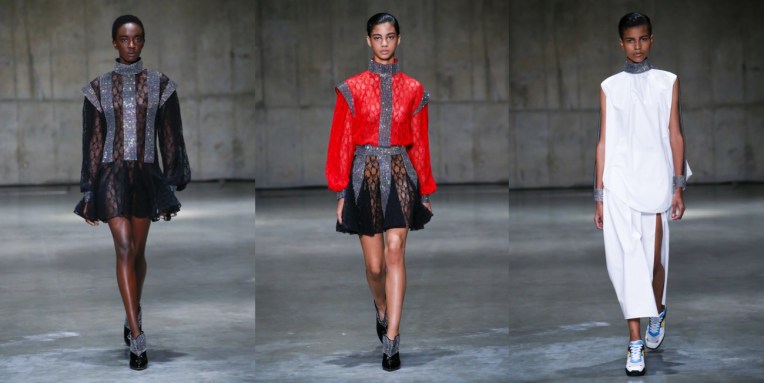
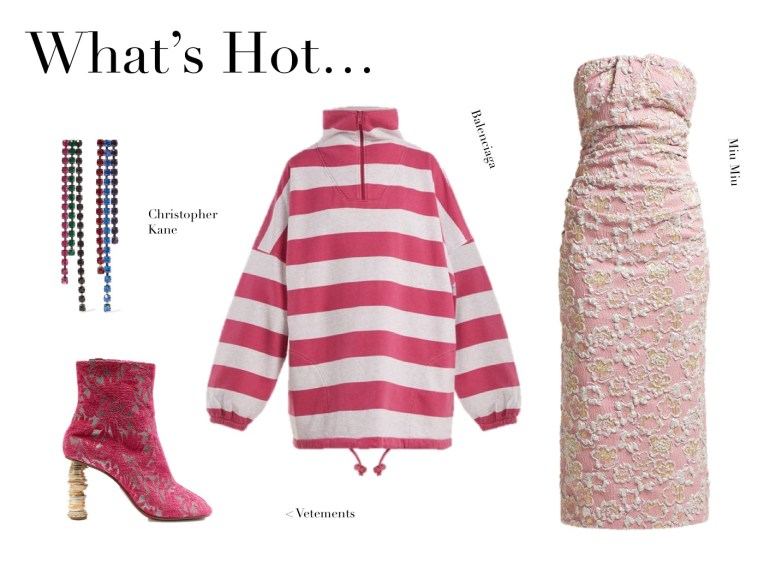
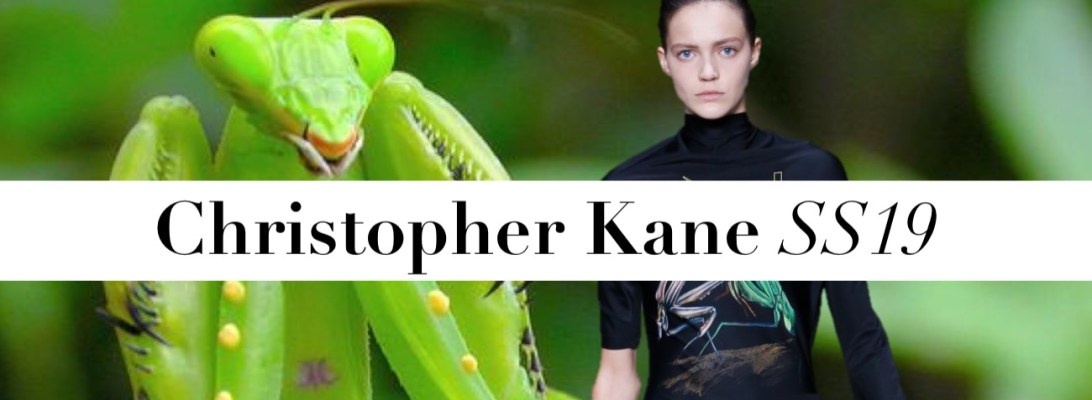
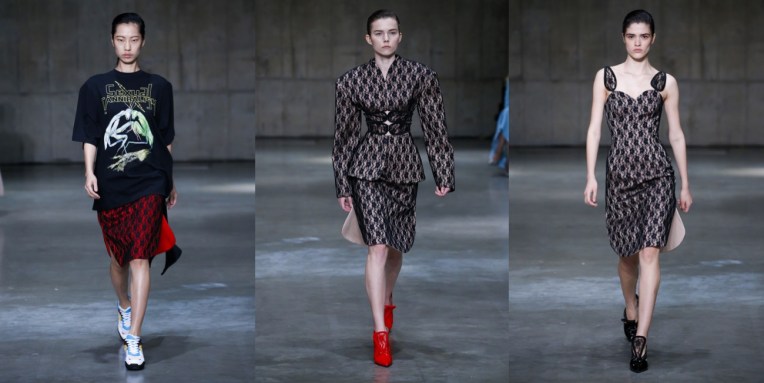
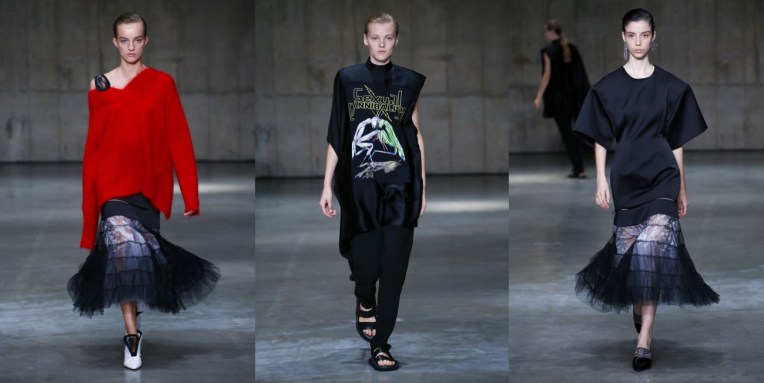
No one talks about sex like Christopher Kane. Especially, in fashion. Last year, his collection was inspired with Cynthia Payne, a South London brothel keeper who entertained the Members of Parliament in her suburban house, and John Kacere’s paintings portraying female bodies. Then, last season, Kane was obsessed with The Joy of Sex, the 70s of blockbuster that was all about illustrated sex education and evocative explanations. In a way, Christopher doesn’t go for straightforward, ‘sexy’ clothes, but goes deeper with the idea of sexiness. Spring-summer 2019 is no different. Titled as Sex in Nature, expect the most unexpected. The show starts and the soundtrack is on. The mating rituals of wildlife animals – as narrated by David Attenborough – are remixed with a recording of Marilyn Monroe speaking about her own sex symbol status. The clothes are equally surprising and multi-faceted. To-be sell-outs, the t-shirts, had such slogans as ‘Foreplay’ (depicting two tussling leopards), ‘Sexual Cannibalism’ (two mantises mating, where the female will devour the male later on) and ‘Horsepower’ (speaks for itself). But there were the less commercial pieces as well. Take the boxy mini-dress belted with a lace belt. Wait, is it made out of C-strings? Kane found that accessory in a sex shop in Tokyo, and here we are with the ‘aroused’ tongues on shoes, dress straps and bustiers made solely out of C-string-like elements. Something surprisiglt sexy was also there in that turquoise velvet dress and exaggerated, big, cheesy-chic diamonds that were used in jewellery, tops and prints. Sensuality, instincts, desire, pleasure. Christopher manages to plant all that in his fashion, and doesn’t get trapped by stereotypes or, simply speaking, by the commonly vulgar, over-sexualised notions.
Slajd01Slajd02Slajd03Slajd04Slajd05Slajd06

Collage by Edward Kanarecki.
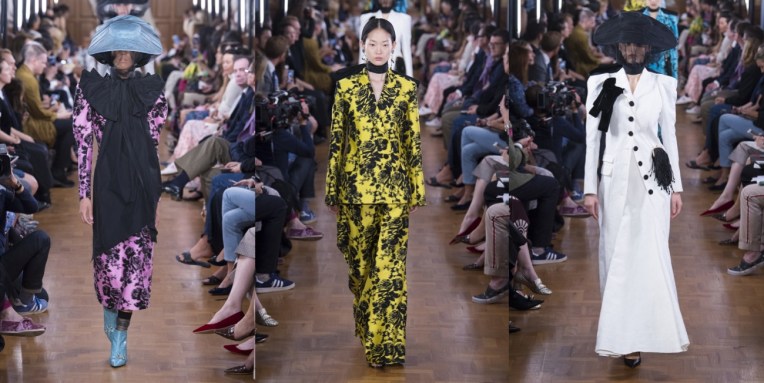
Stella & Fanny. Erdem SS19

erdenn

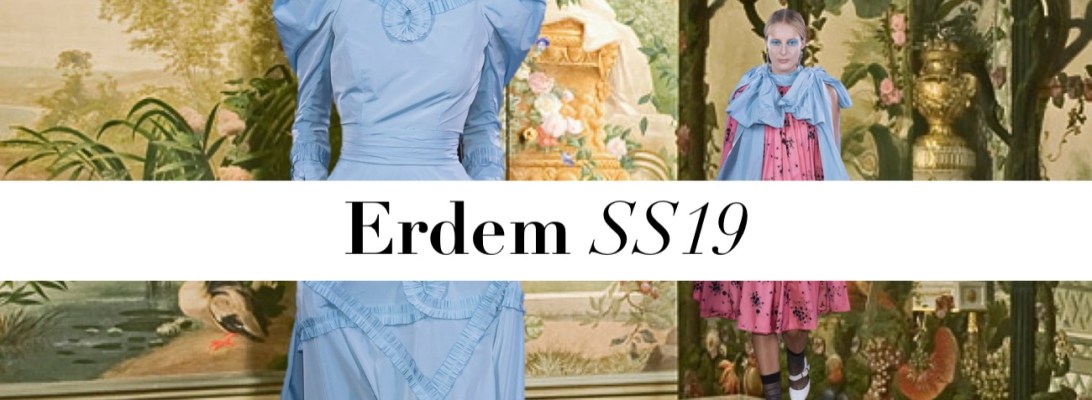
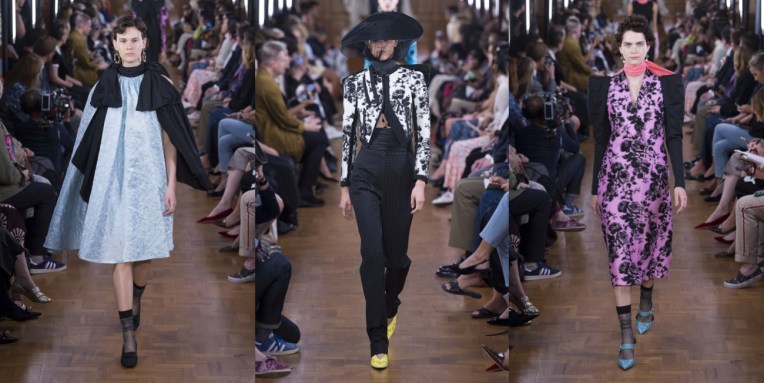
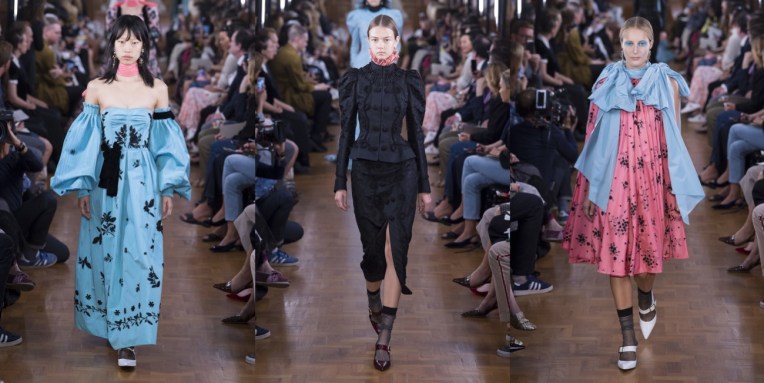
At a first glace this seemed to be a very typical, Erdem collection. Floor sweeping gowns made of satin; puffed sleeves; huge bows in the brightest colours; lots and lots of brocades and lace. A wardrobe suited for a palace dame, you might think. But in fact, the idea behind the collection isn’t that regal, or even conservative, as you might easily suppose. For those more concerned, this collection was deeply connected with the contemporary politics of gender self-identification. Erdem Moralioglu and his parter, Philip Joseph, lately bought a house in Bloomsbury, “and there was a plaque around the corner dedicated to two sisters, Stella and Fanny, who in fact were Frederick Park and Ernest Boulton, who lived as women in the 1860s.”  As Sarah Mower teaches in her Vogue feature, “Fanny and Stella, retrospectively honored as heroines of queer London in that plaque, were very publicly out and about in Victorian nightlife. In 1870, the notorious ladies were arrested leaving the Strand Theatre and charged with “conspiring and inciting persons to commit an unnatural offense”—although they were later acquitted.” Not only were the Victorian era-inspired garments a clue for this quite very uncommon reference, but as well a gender-fluid model casting that appeared on the runway. The beauty of craftsmanship and dress-making was embraced in this gorgeous line-up, yes, but as well the beauty of something much, much deeper and humane. “Far beyond any perceived thrill of cross-dressing,” the designer wrote in his press notes, “these were individuals with the courage to explore the power of self-expression.” Powerful.

Slajd1Slajd2Slajd3-kopiaSlajd4-kopiaSlajd5-kopia

Collage by Edward Kanarecki.
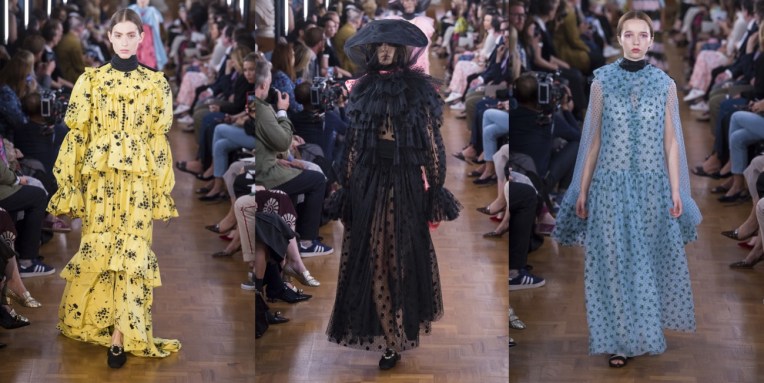
Heritage. Simone Rocha SS19

Slajd1

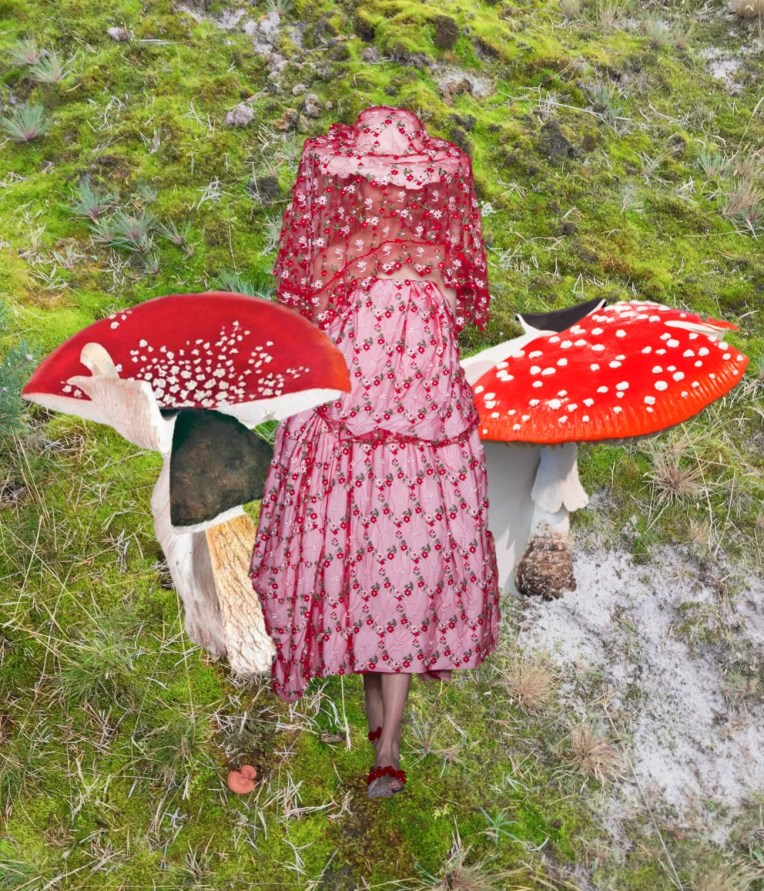
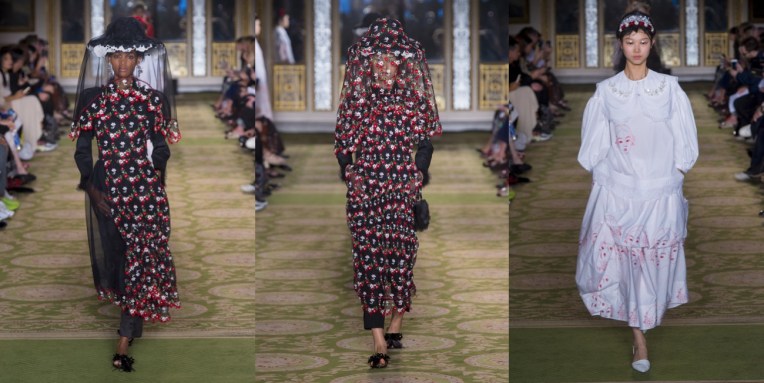
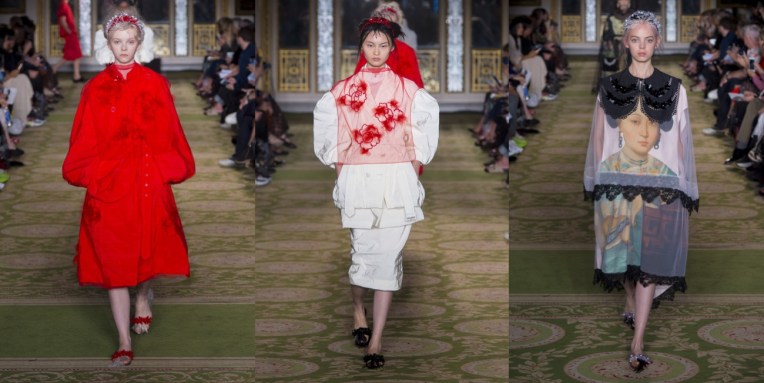
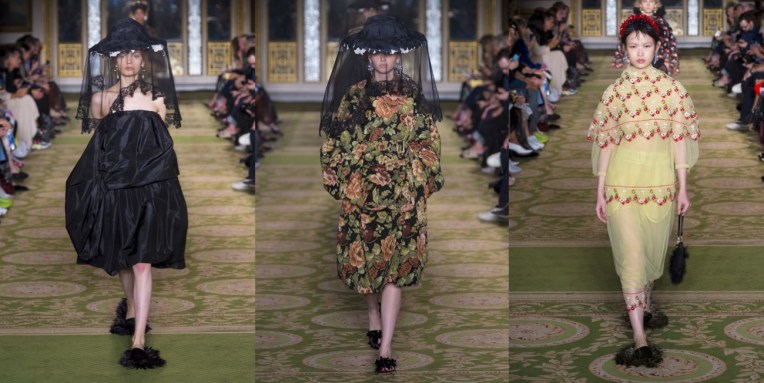
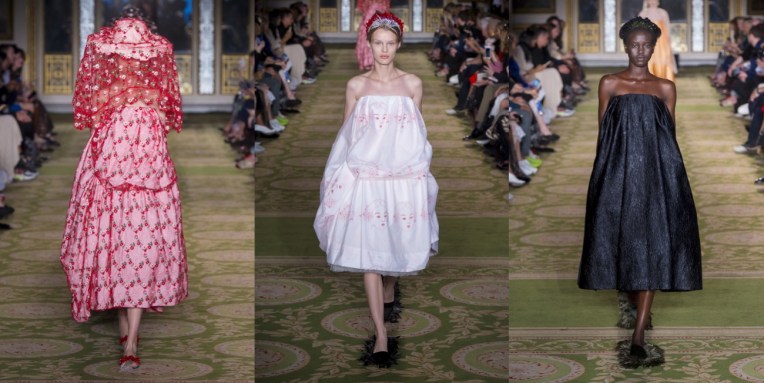
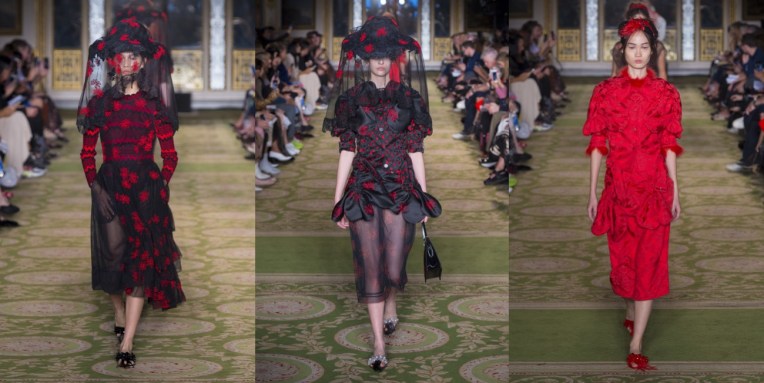
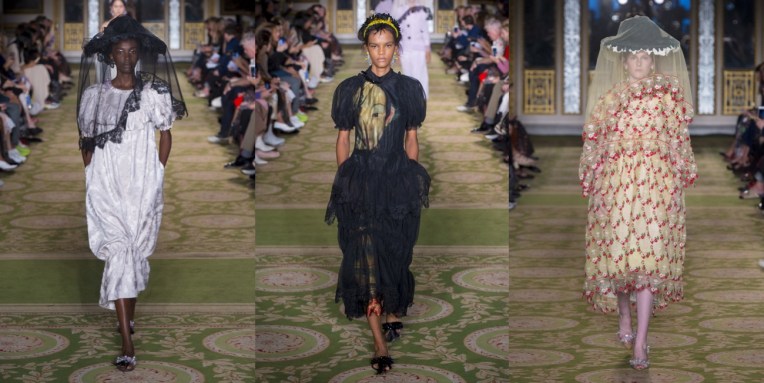
For Simone Rocha, the spring-summer 2019 show marks the first time she explored her Chinese heritage. During the research, the designer looked at the images of royals dating back to the Tang dynasty and was immensely inspired by their way of dressing and opulent fashion they favoured. But don’t think Simone went for anything too straightforward, like an ‘oriental’ themed collection. In an impressively smooth way, Rocha incorporated the Chinese history elements (like floral patterns from ceramics and emperor-esque volumes) into her signature dresses. While shopping in an antique market in Hong Kong, the designer came across the 16th-century paintings of concubines coming from the same dynasty. Elements from those paints show up in prints and portraits used in the dresses and skirts (slightly obscured by romantically lace trimmed, sheer sheaths). Some chic drama was delivered by the quite heavy-looking veils, made from meticulously embroidered tulle. But taking apart the headwear (and those gorgeous feathered flats!), the pieces that Rocha presented this season are more than welcome in the daily life. That’s the designer’s real charm – she creates stunning, fairytale garments that can be worn for any occasion.

cdemxSlajd2z

Collage by Edward Kanarecki.