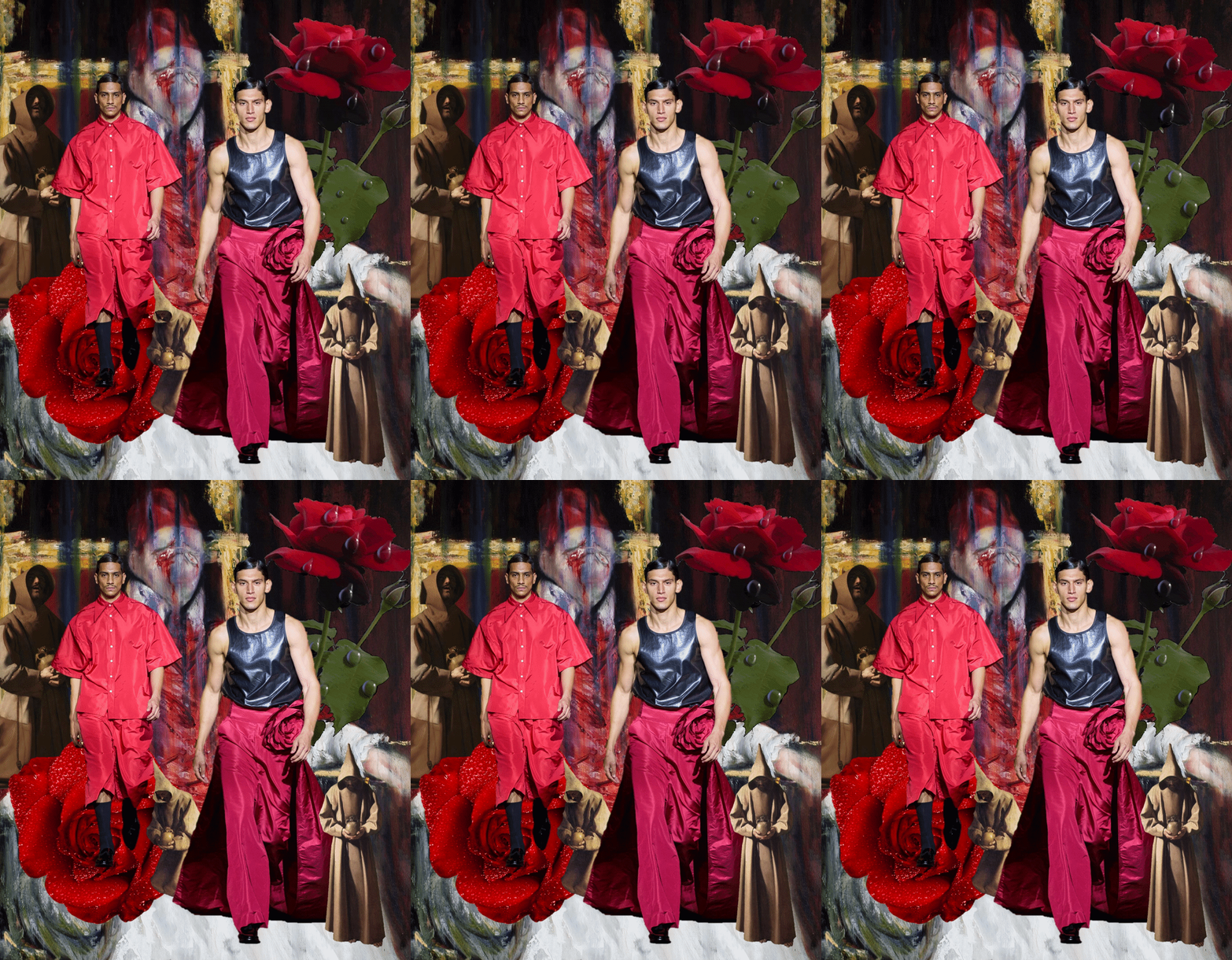
Take Me To Church. Willy Chavarria SS23

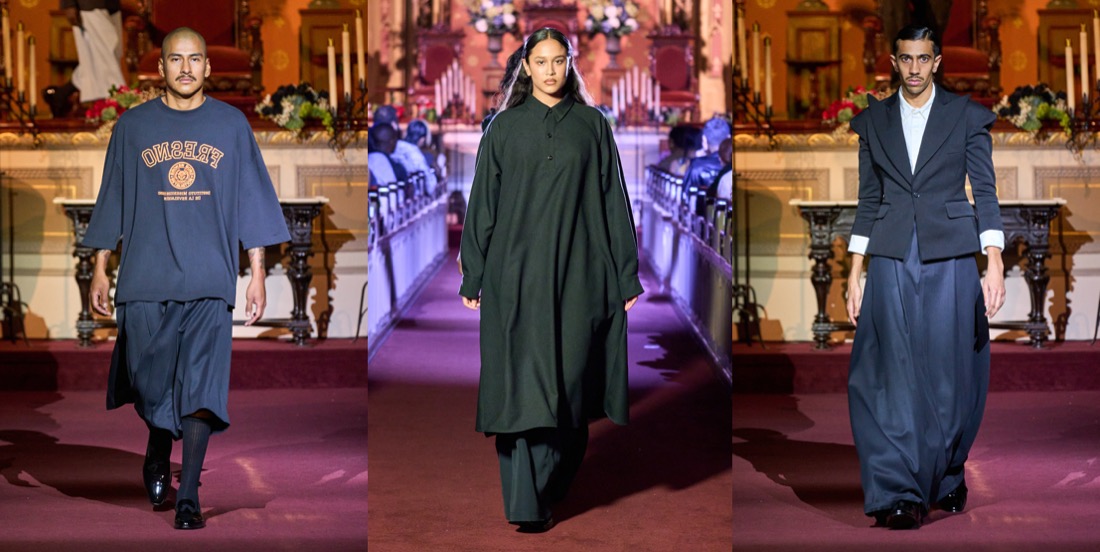
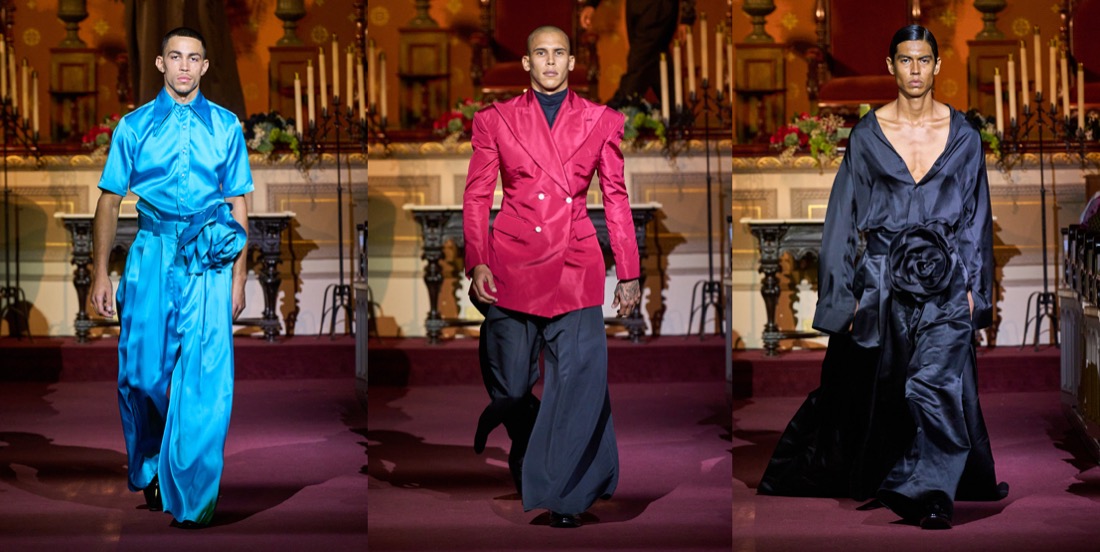
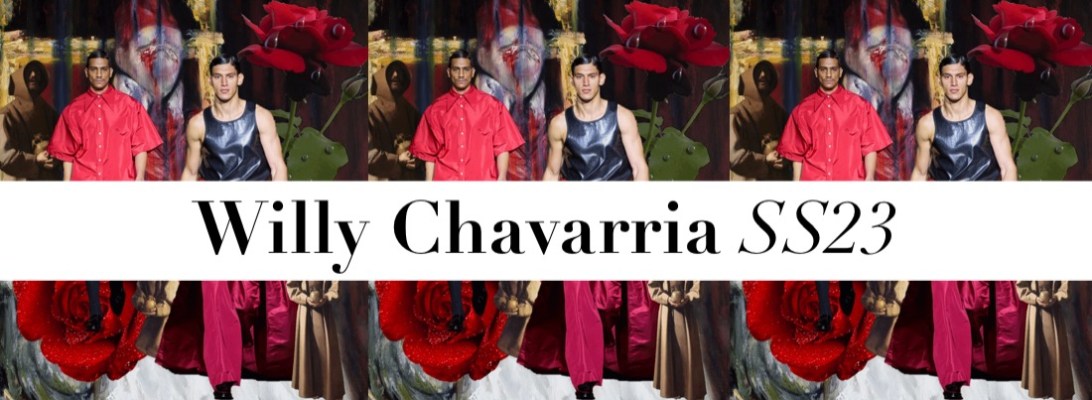
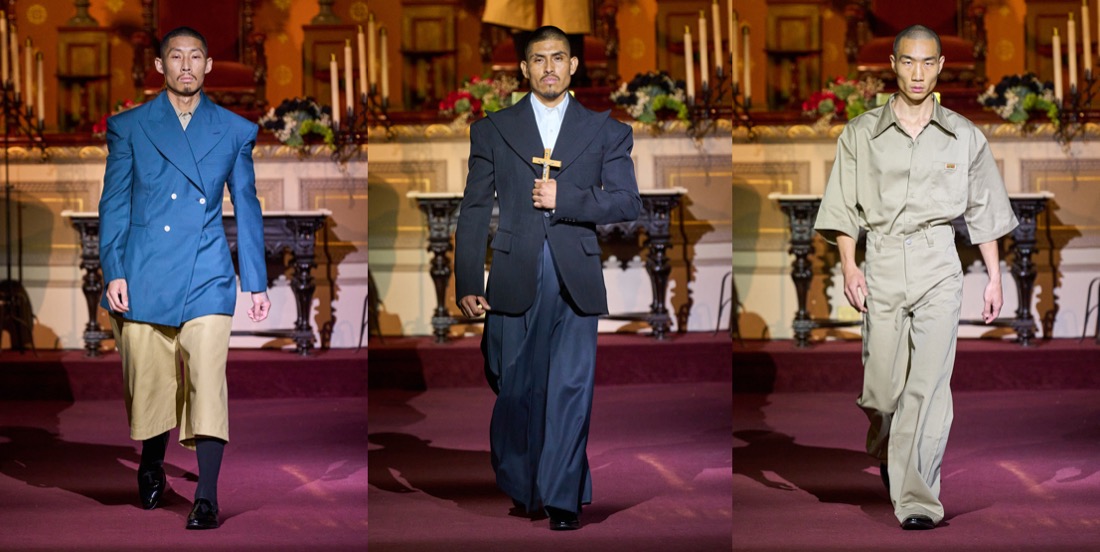
Willy Chavarria took us to church (the Marble Collegiate Church in New York, to be precise) for a show that mixed his signature larger-than-life silhouettes with exquisite tailoring. It opened with a beautiful song performed a cappella in Spanish by Dorian Wood about the way borders keep us separated, which could be read literally but Chavarria meant it more metaphorically. “The song is about the division in our world,” he explained backstage afterward. “If you noticed in the show, the actors were divided by ethnicity, and that was not only to represent the division that we are experiencing, but to show the solidarity within the culture. To show the strength of people when they’re unified.” First, a group of men wearing extra-long T-shirts and Dickies walked out and placed bunches of roses on the altar. The first look was a navy tailored jacket with strong, wide shoulder pads that were situated ever so slightly beyond the natural line of the body, which worked to create a great amount of tension against the extra-long lapels that extended past the top of the torso. Its intersecting lines alluded to the Chi Ro symbol, also called a Christogram. The model, who wore a collared shirt and pleated wide-leg trousers as well, carried a cross at the center of his chest with one hand.
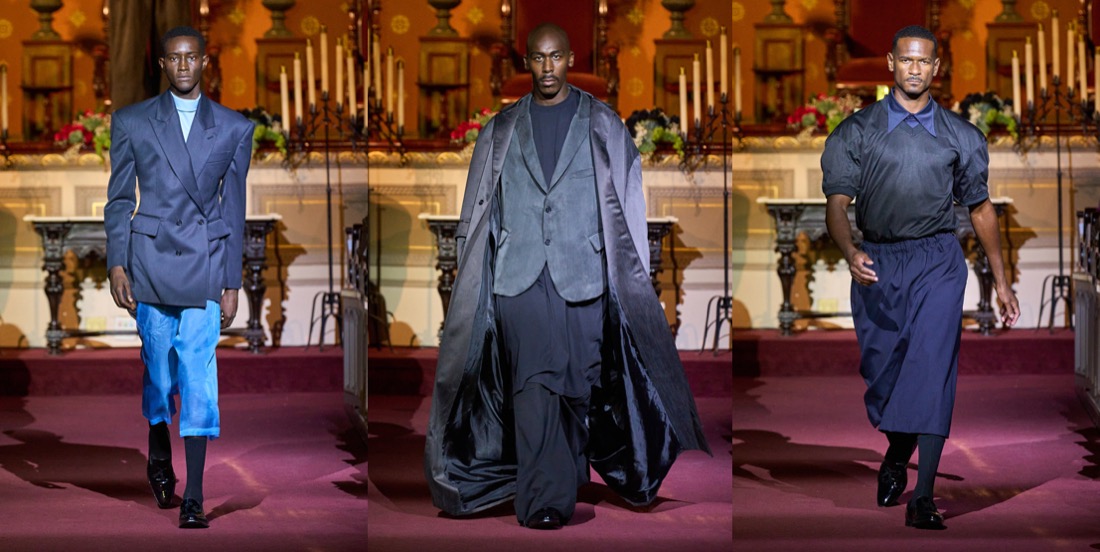
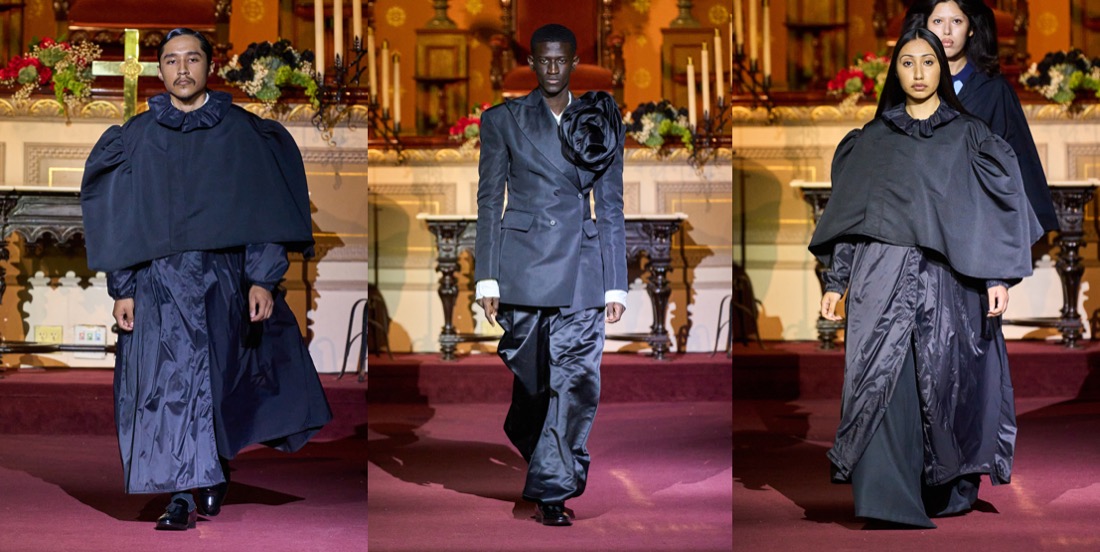
Chavarria, who recently won the National Design Award for Fashion Design, has always favored volume and extra-large silhouettes as a way to “reclaim [the] space that has been taken” from people of color, but there was a new level of softness and sensuality woven through his collection this time around. Though it was always played against more traditionally American masculine elements like varsity logo T-shirts and football jerseys, which he turned into short, princess-sleeve tops and layered over short-sleeve button-down shirts and paired with a skirt. Men wearing robes and dresses has been normalized on menswear runways, but it was interesting to see how, in the context of a church, the silhouettes completely changed meaning and were imbued with a sensibility that hinted at both a uniform as well as tradition. “The first piece I did [for the collection] I called the altar-boy cape, and I just had it on a mannequin in my studio for a long time as the rest of the collection came about, so it’s funny that the collection became as spiritually tied as it ended up being,” said the designer. The capes were worn by both male and female models who came out in a group halfway through the show. The absolute star of the show was a group of gorgeous fine-tailored pieces, like the slightly asymmetrical double-breasted silk tuxedo jacket with a giant fabric rose on the left shoulder, worn with fluid satin trousers. The rose also appeared on red silk taffeta trousers, complete with a ball gown–esque train and paired with a black leather tank, and again on a pair of extra-wide black satin trousers and matching button-down shirt, worn open at the chest and falling off the shoulders. “I felt like this was a show about good and evil,” the designer added. “Coming from a religious background, I’ve always been a firm believer that good out-wins evil, [but] I felt like there’s almost a loss of God right now in the world.” If it’s true that God is love and beauty, then this fashion show took us a little closer to heaven.
Collage by Edward Kanarecki.
Don’t forget to follow Design & Culture by Ed on Instagram!
NET-A-PORTER Limited

Razzle Dazzle. Tom Ford SS23

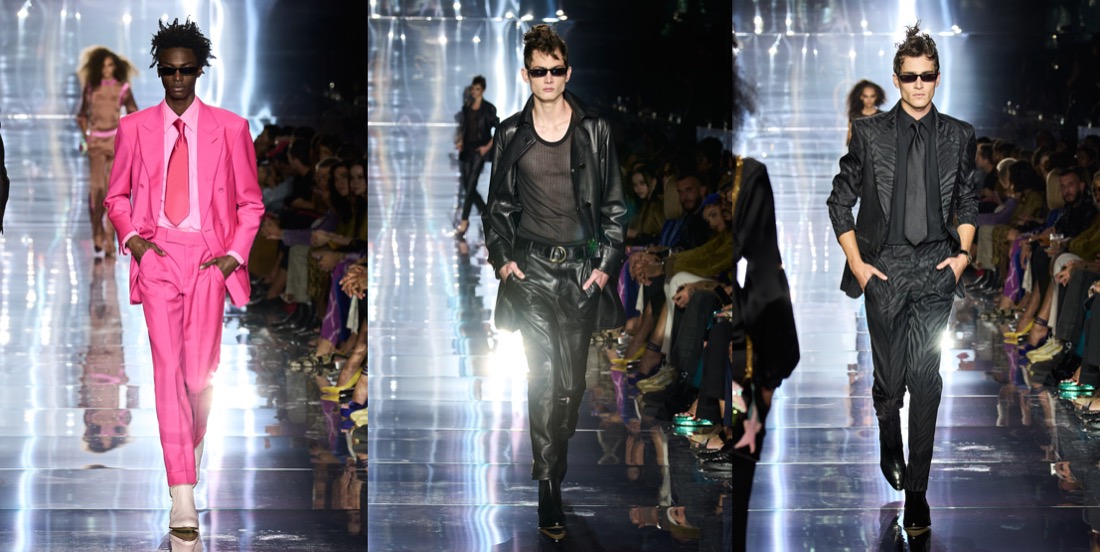
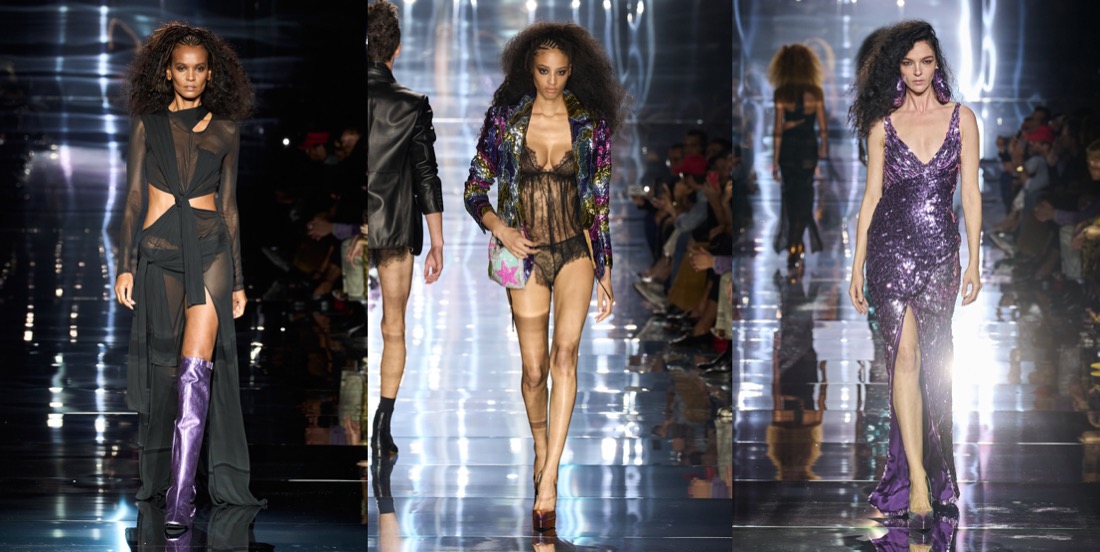
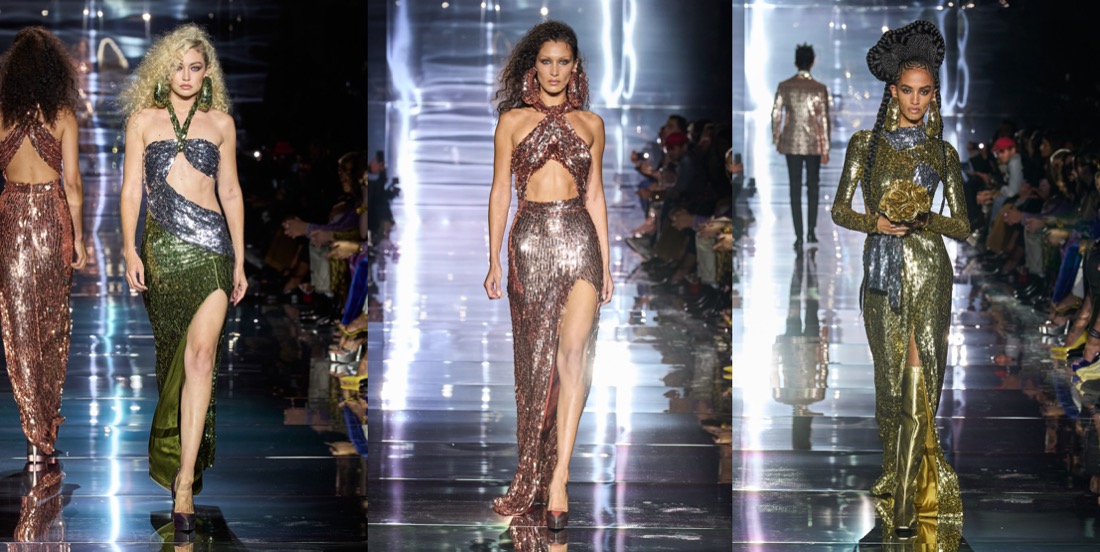
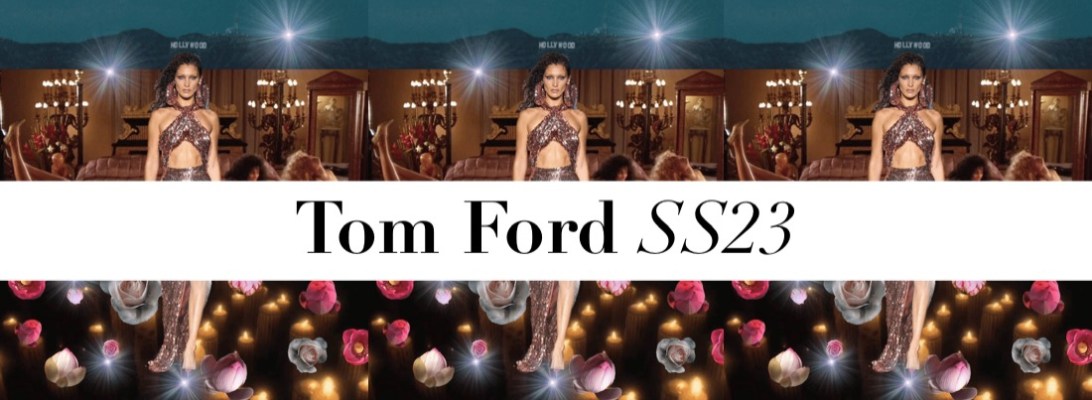
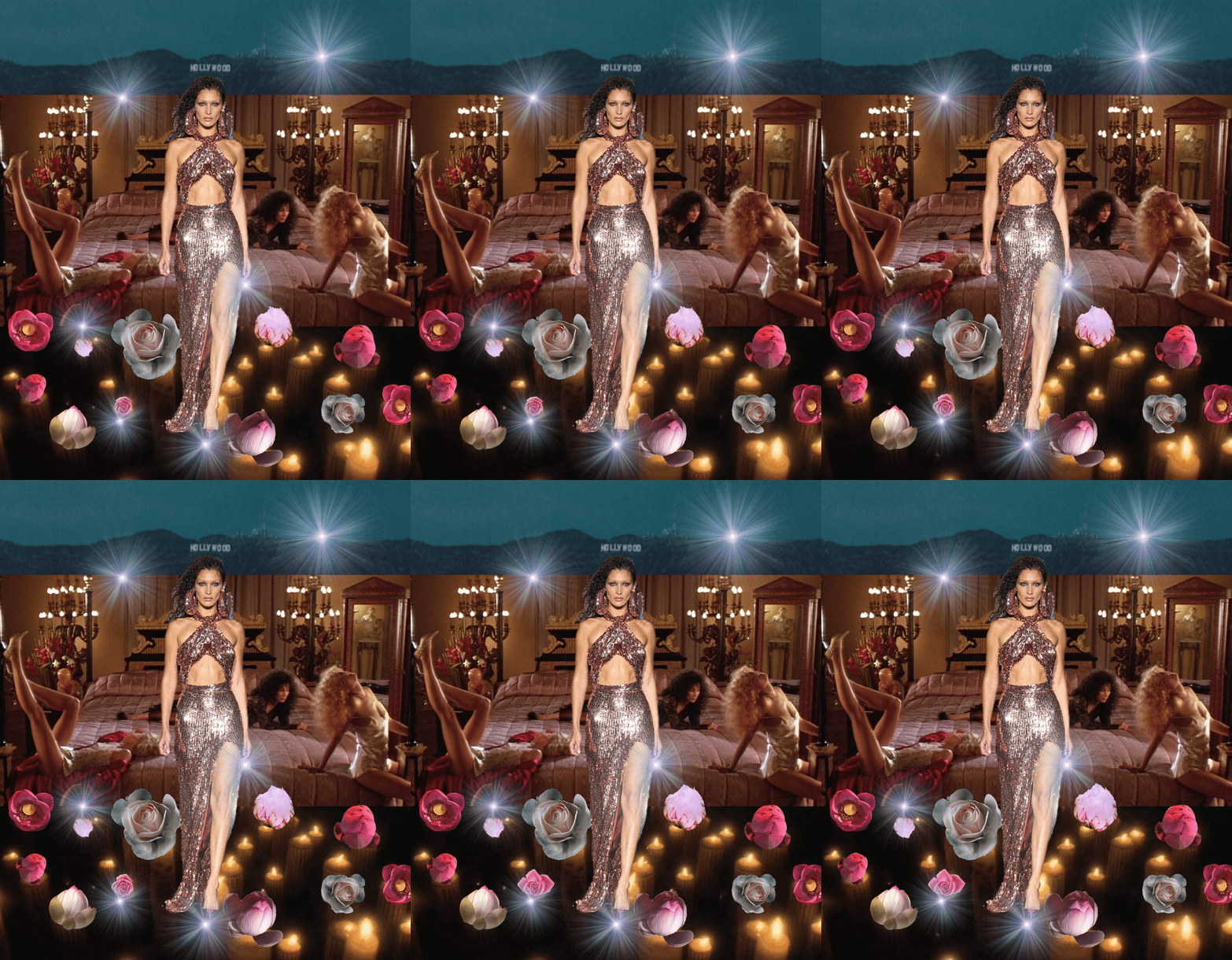
Tom Ford was in the headlines in July when it was reported that he was exploring the potential sale of his brand. The designer has said little in the months since, but industry talk has had it that the deal could be worth $3 billion. So it’s no wonder he put on the razzle dazzle for his New York Fashion Week finale show, packing the room with celebs – Madonna among them – and sending out a collection with Hollywood Boulevard and Elvis-in-Las-Vegas vibes, heavy on the pastel lamé, Nudie Suit-style embroideries, and black lingerie lace. Ford wrote the book of nudity – so trendy this season among other American designers – nearly 30 years ago. Spring-summer 2022 collection looked back on his different chapters, the sheer tees and black satin bra tops evoking a Gucci spring 2001 show, the deconstructed chiffon dresses reminiscent of a YSL outing for spring 2002. Friends and collaborators who have been with him since those days, like Carine Roitfeld, Elizabeth Saltzman, and Lisa Eisner, were in attendance, but he had things for the Instagram generation, too. A year ago he was talking about the ways in which social media has changed fashion, killing off subtlety in favor of high impact. The sequin patches decorating cargo shorts and the fringed cowboy shirts here certainly qualified. The menswear was slightly more tempered, but not entirely. A hot pink zoot suit was accompanied by a necktie that looked wider and shorter than recent examples. The lace boxers made made the audience scream.

For all the glossy surfaces and metallic shine, however, there was an undeniable melancholic undercurrent. When the daywear section concluded, a soundtrack of upbeat ’80s hits was swapped out for Freddie Mercury singing “Time Waits for No One.” Ford lost his husband Richard Buckley nearly a year ago. On Saturday, the photographer William Klein died, and this week the industry mourned Roxanne Lowit, who was among the first photographers to romance the behind-the-scenes action at runway shows. One of Lowit’s early subjects was Pat Cleveland, a frequent model for Yves Saint Laurent, and she was in the audience that evening, too. The pandemic has accelerated a generational shift the reverberations of which will only become more pronounced. Nothing stays the same, but Ford has his sexy extrovert signatures, and he’s sticking with them – all the way down to the cheeky lace underthings.

Collage by Edward Kanarecki.
Don’t forget to follow Design & Culture by Ed on Instagram!
NET-A-PORTER Limited

The Attitude. Batsheva SS23

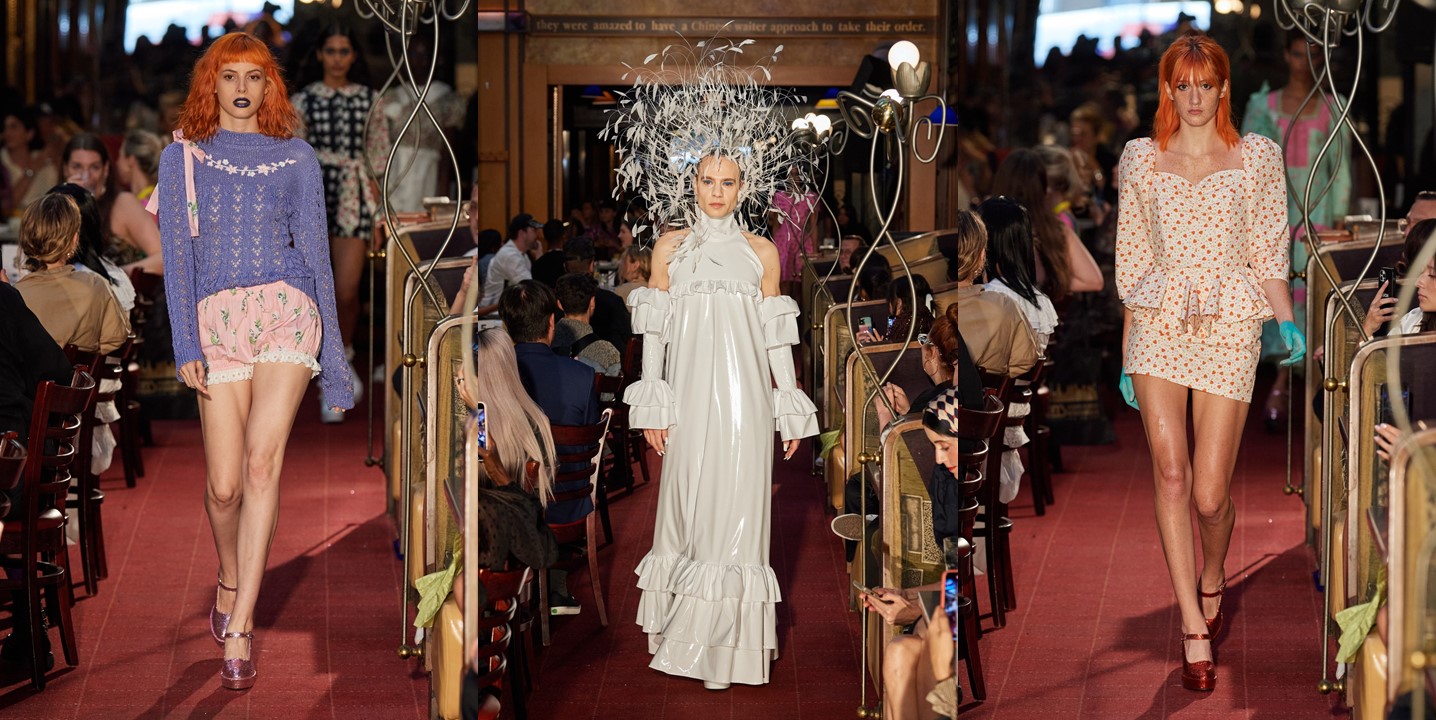
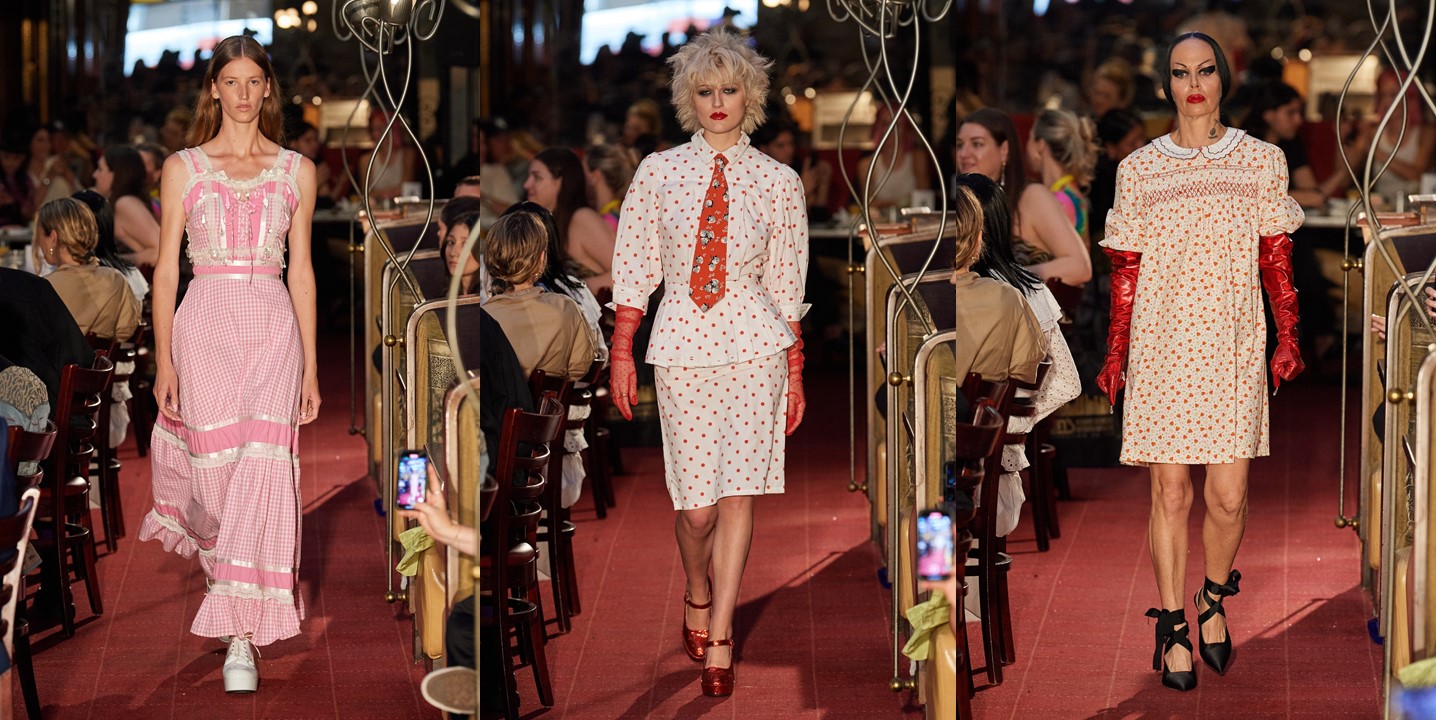
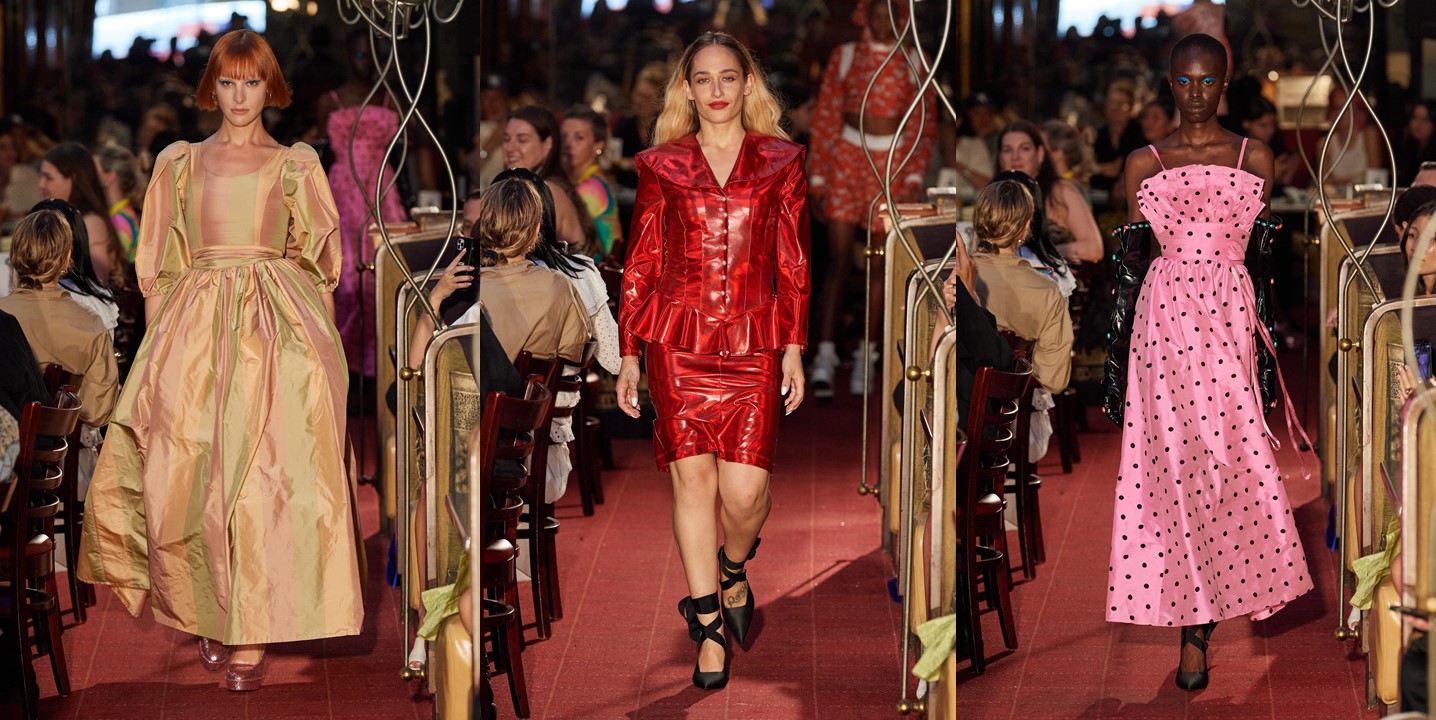
Batsheva‘s spring-summer 2023 fashion show was a bold and charismatic scene. Ben’s Kosher Deli on West 38th street was this season’s venue, and it was filled with Batsheva Hay‘s friends, muses and clients – both sitting in the dining booths and walking the runway. This season, the designer wanted to challenge herself. “I started thinking about Gunne Sax, because I’ve so Laura Ashley’d myself out that I was like, ‘Let’s go into this more ’70s kind of vibe,’” she said after the show. “I was appalled by how I continually make such frumpy garments, and I thought, the only thing I can do is try to do something sexy, show more skin and make it sexy… or whatever.” The sexiness was there in the fabrics, like the white mesh with black flocked velvet stars that was used on a short princess sleeve cropped top with Batsheva’s signature ruffle on the chest, worn with a matching mid-rise maxi skirt (complete with red lace underwear visible underneath). It was also there in the Working Girl-esque ensemble of a slim button down shirt tucked into a pencil skirt with a peplum, all done on a red polka dot on white fabric and accessorized with a floral print tie and red polka dot mesh gloves. Hay’s challenge to show more skin resulted in bikini tops, lots of PVC, and a wide variety of shorts including bloomers – in an all-over bow fabric with a corset-inspired cotton shirt with a sailor collar, and modeled by Kembra Pfahler – which seemed to epitomize the vibe of this collection. The cast included Jordan Roth, Hari Nef, and Jemima Kirke and Alex Cameron – the couple opened the show in sort of matching white PVC wedding looks. “This felt like a really big show,” Hay said, “Post-COVID, I’ve never done anything that felt as grown-up, so I kind of looked back to where I started, and largely I am still using the same shapes, but they look completely different because I’ve changed proportions, I’ve changed fabrics.” She added, “I wanted to make it like it was me, but also kind of unrecognizable.” There were a few gowns that may not have fit into her demand for more skin, but were attractive in the confidence of their shape: a spaghetti strap dress made from a pink with black polka dots taffetta fabric was cinched at the waist like a cummerbund, and overflowing at the bust with ruffles. Another came in a purple iridescent fabric with a slight sweetheart neckline and a big bow at the waist, and a high-low overlay over a column skirt. It was Dynasty, it was over-the-top, and it was unmistakably Batsheva.

Collage by Edward Kanarecki.
Don’t forget to follow Design & Culture by Ed on Instagram!

NET-A-PORTER Limited

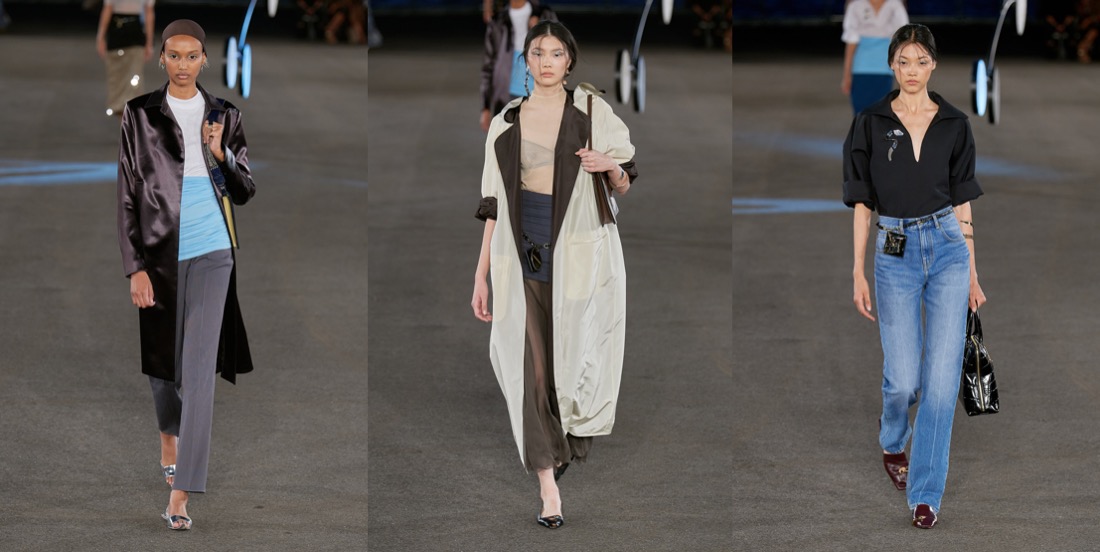
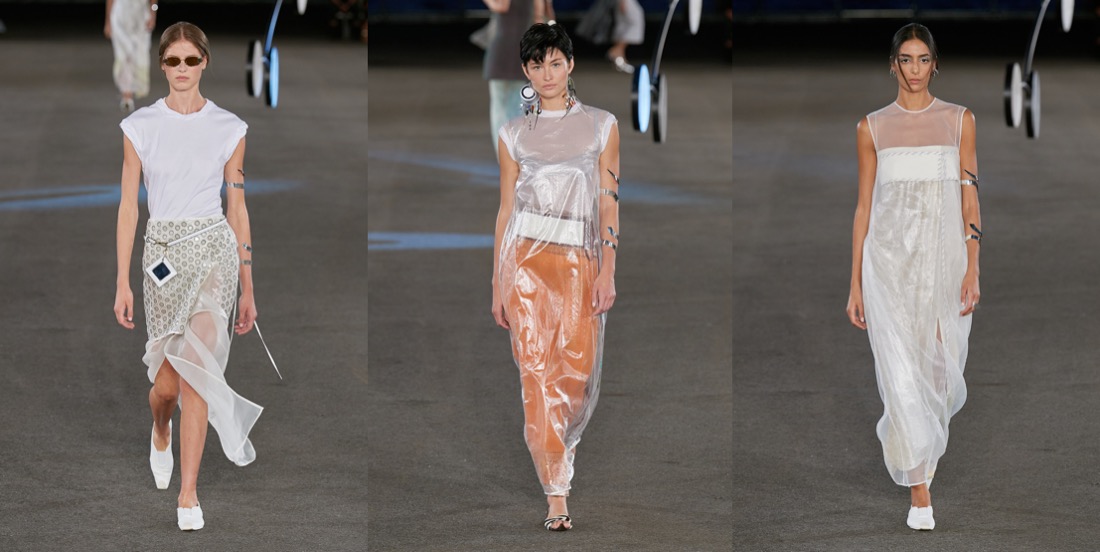
What Shall I Wear? Tory Burch SS23

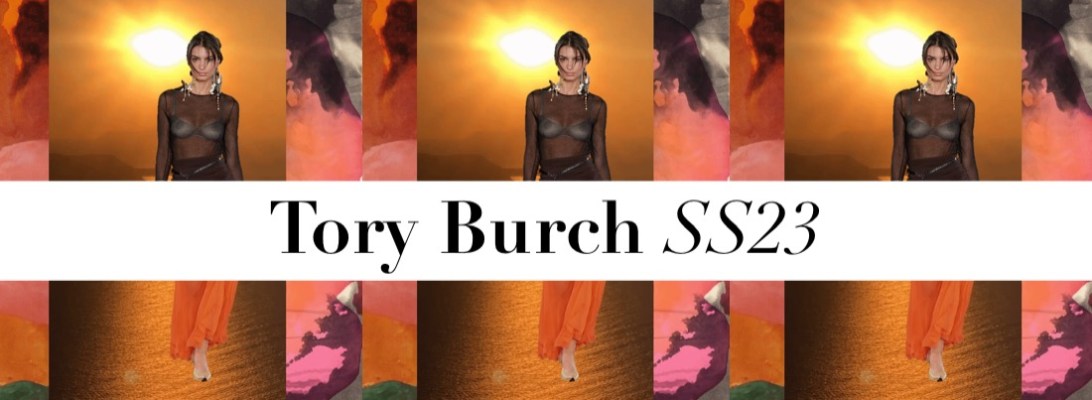
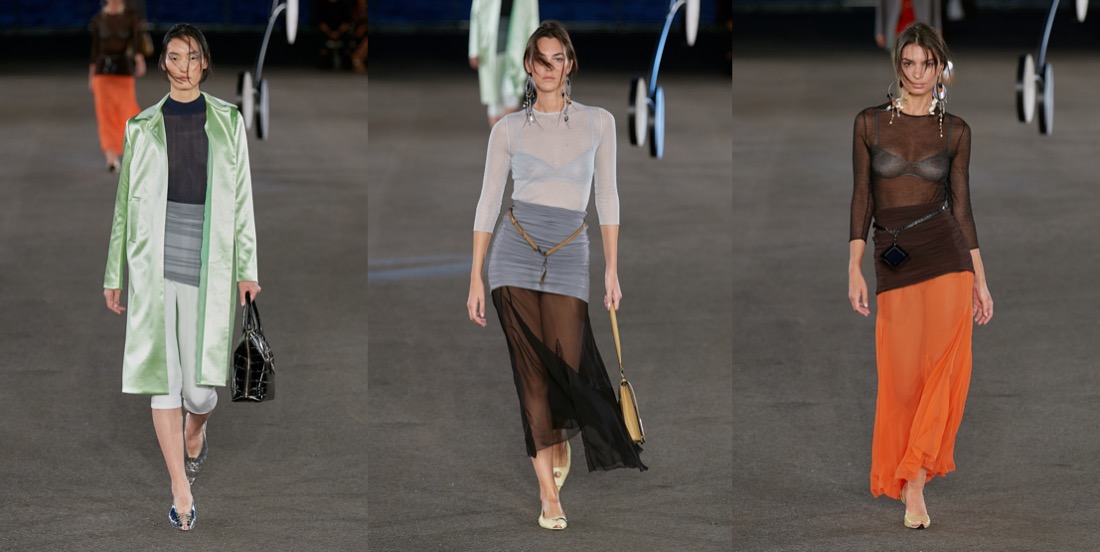
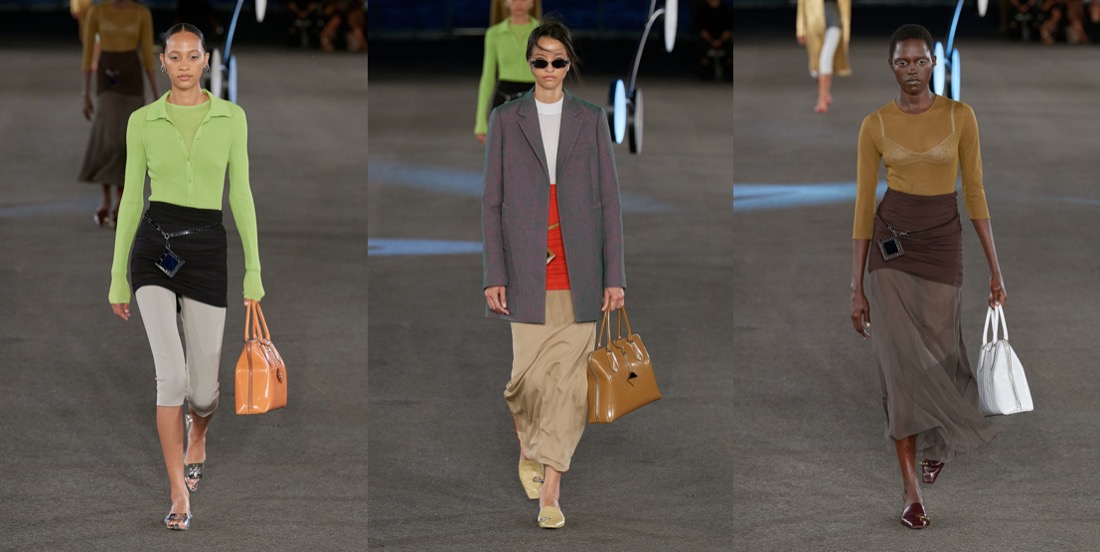
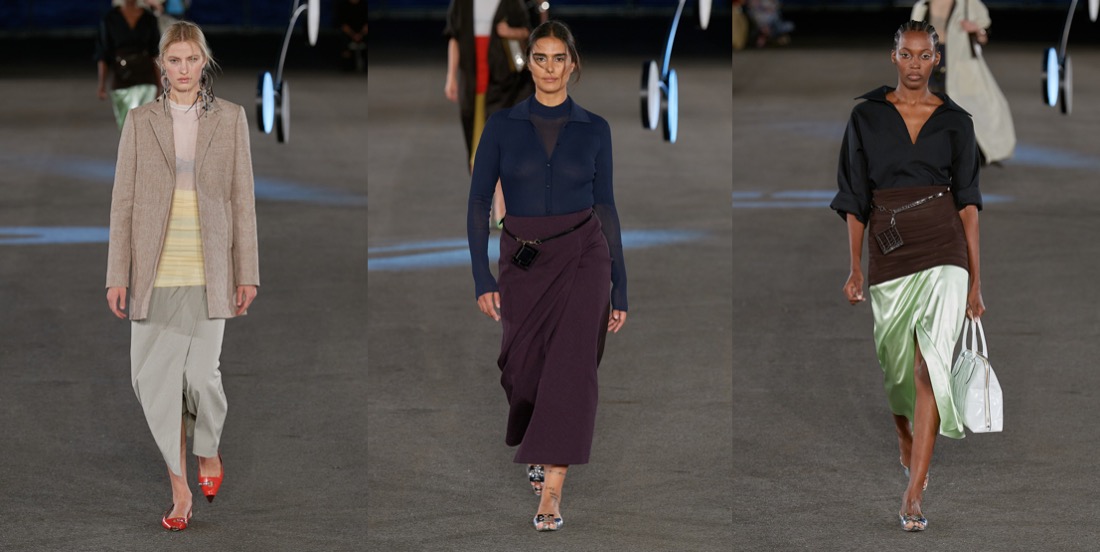
Tory Burch‘s renaissance keeps on giving. Spring-summer 2023 collection is yet another gorgeous line-up coming from this New York-based, well-established designer. For context, Burch wrote a new forward to a just-released re-edition of a book by Claire McCardell, the mid-century designer known for easy-on, easy-off dresses when high fashion was still a made-to-measure business. A year ago Burch was talking up McCardell’s designs and the ways in which they served to “unencumber” women. Something clicked, and resulted in an on-going creative dialogue between two American, female designers. “I started thinking about when I first moved to New York in the ’90s,” said Burch backstage of her fashion show. “Even then, women didn’t want to be restricted, so we spent a lot of time developing fabrics that had all kinds of stretch and pieces that you could wear in different ways. I wanted it to be really focused.” The models skimmed in flat slingbacks or mules – “if the shoe hurts, give it away,” is a McCardellism. They wore a modular wardrobe of fine gauge knits, double layer skirts (the fitted upper part covering a sheer lower part that hit the mid-calf), or tube skirts over capri-length leggings. These looks didn’t obscure or deny a woman’s form, but nor did they enhance it necessarily. The best way to put it is that they were true to a woman’s body, and they exuded a certain confidence because of it. Tossed over the top could be a boxy man’s blazer, or a gold leather jacket, or a tech-y fabric raincoat. The effect was streamlined and simple, but not quite minimal. There was too much color and, when the evening looks emerged at the end, too much ornament to qualify for that. Burch’s more formal outfits combined a tunic-length hourglass-shaped sleeveless top in suiting fabric with a soft lace-edged slip, or layered a sheer panel over a slip dress that could be cut from sari fabric or embellished with mirror paillettes. McCardell’s reissued book is called “What Shall I Wear? The What, Where, When, and How Much of Fashion“. She didn’t have much to say about denim, but we will say this, Burch’s jeans – high-waisted and faded, with the hint of a crease down the front – are the best of the season so far.

Collage by Edward Kanarecki.
Don’t forget to follow Design & Culture by Ed on Instagram!

NET-A-PORTER Limited

Hot Versatility. Peter Do SS23

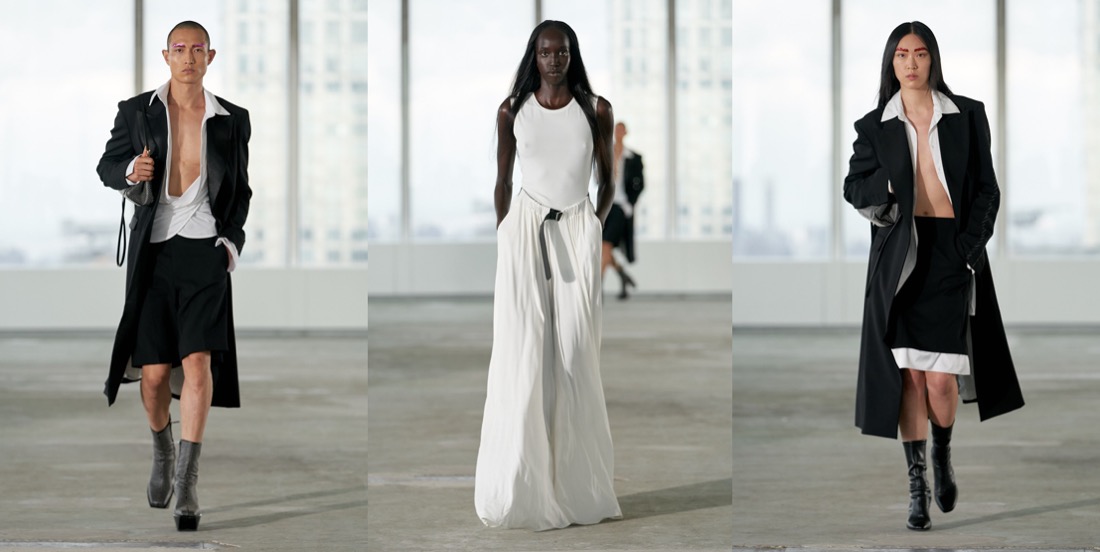
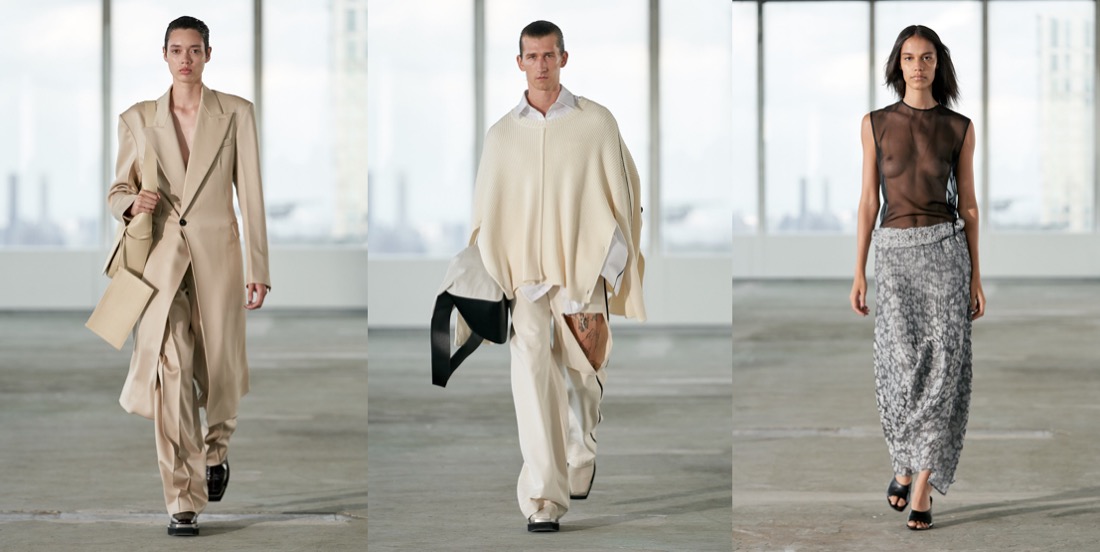
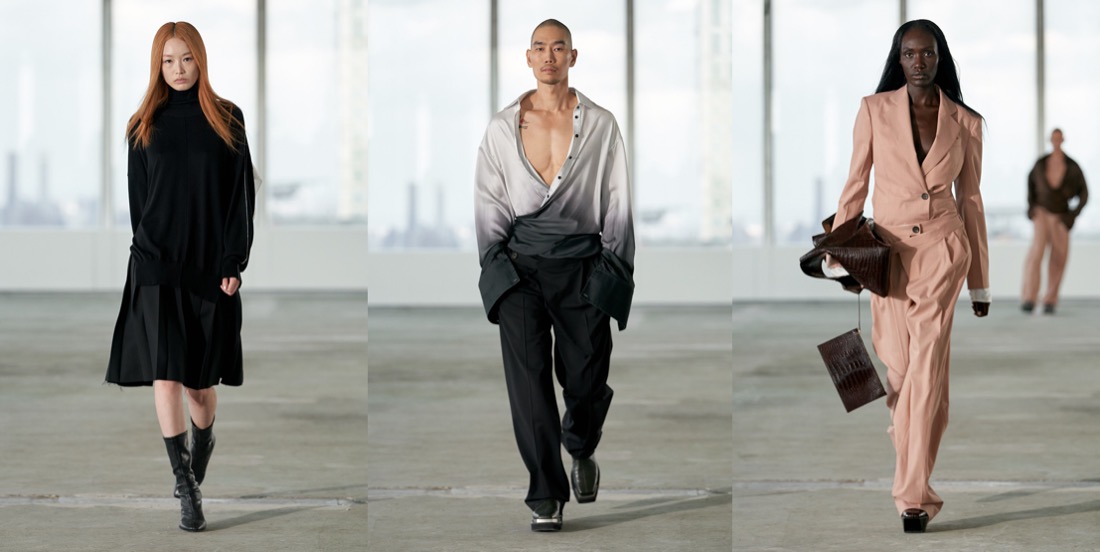
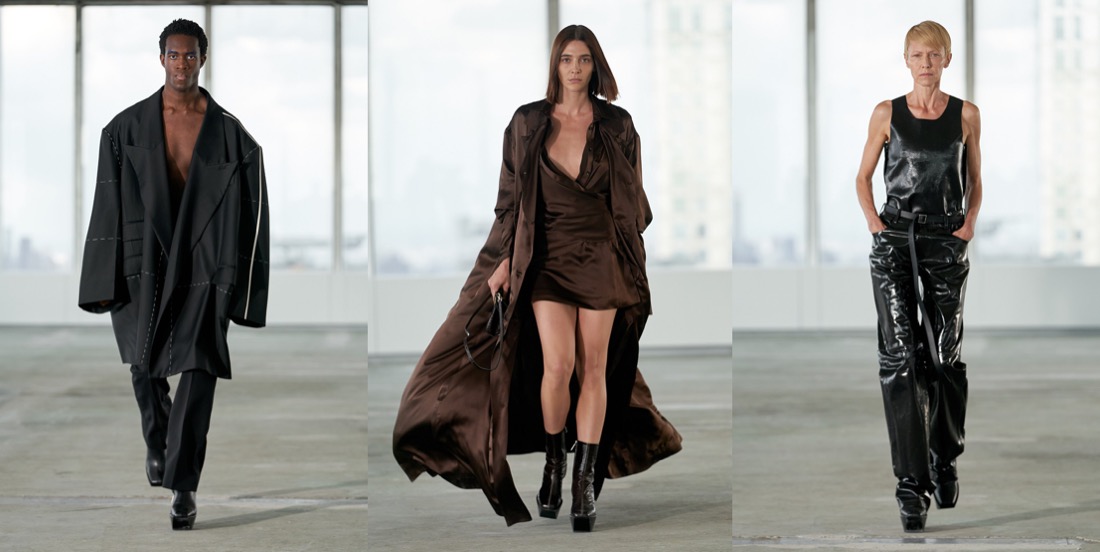
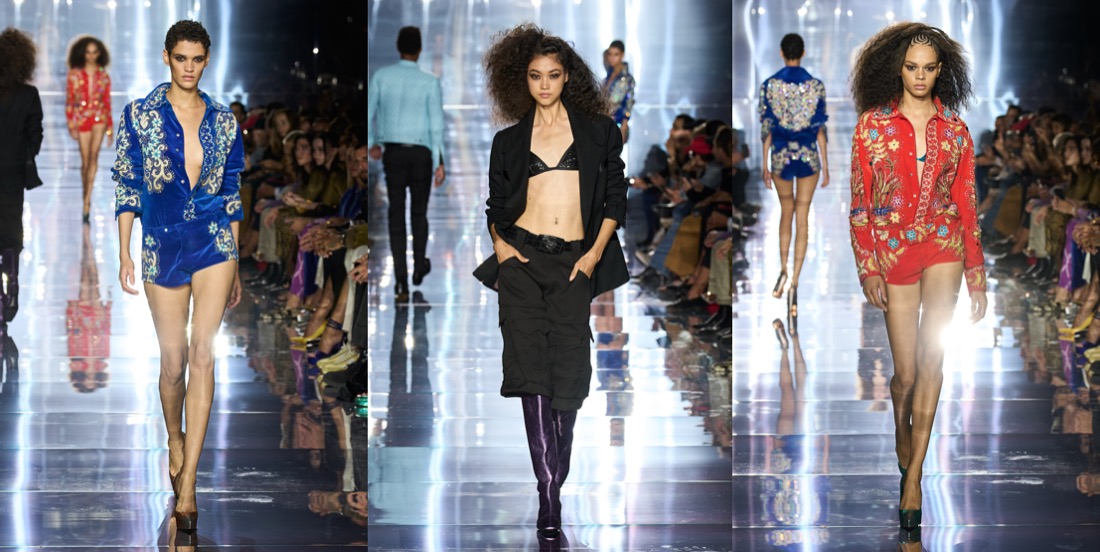
Peter Do has delivered one of the most convincing, coherent and desirable collections of this entire New York Fashion Week. If Helmut Lang, the designer, showed collections in 2022, then this might have been the effect – it’s this good. What gave Do this sort of new confidence is the official launch of menswear. The spring-summer 2023 show was opened with a men’s look: the double breasted jacket fastened with a single button over a white shirt, both with a large triangle cutout exposing a flash of muscled back, over a pair of full satin pants with open side seams that tapered at the ankle over those signature boots. The model was Lee Jeno of the K-Pop group NCT who has 3.4 million followers on Instagram. Celebrity influencers will play their part, but more important: Do’s exacting, even methodical approach is equal to his ambition. As with his women’s, tailoring is central to Do’s aesthetic. In fact, the offering is more or less unisex, in addition to being quite sexy. “During the fitting process we try everything on both, 80% is pretty genderless,” he explained. For him, for her, for them: over the course of 60 looks – this was one of New York’s bigger shows – Do set out his vision. It involves deconstruction in the form of suits slit open at the hem to reveal their inner workings, minimal leaning ornamentation like tone-on-tone suture stitches over seams, and the two- or three-in-one versatility that he’s built into his work from the start. Waistbands can be adjusted to accommodate different sized hips and clever pleated skirts are attached to belts so they can be open and closed, almost like curtains. Shirts can play it straight, meaning buttoned from collar to hem, or they can be worn wrapped around the waist for the undone look he favored here. Another novelty, this one on the sustainable tip: a tank and pants in what looked like patent leather were made from discarded shrimp shells, a food industry waste product.

Collage by Edward Kanarecki.
Don’t forget to follow Design & Culture by Ed on Instagram!
NET-A-PORTER Limited