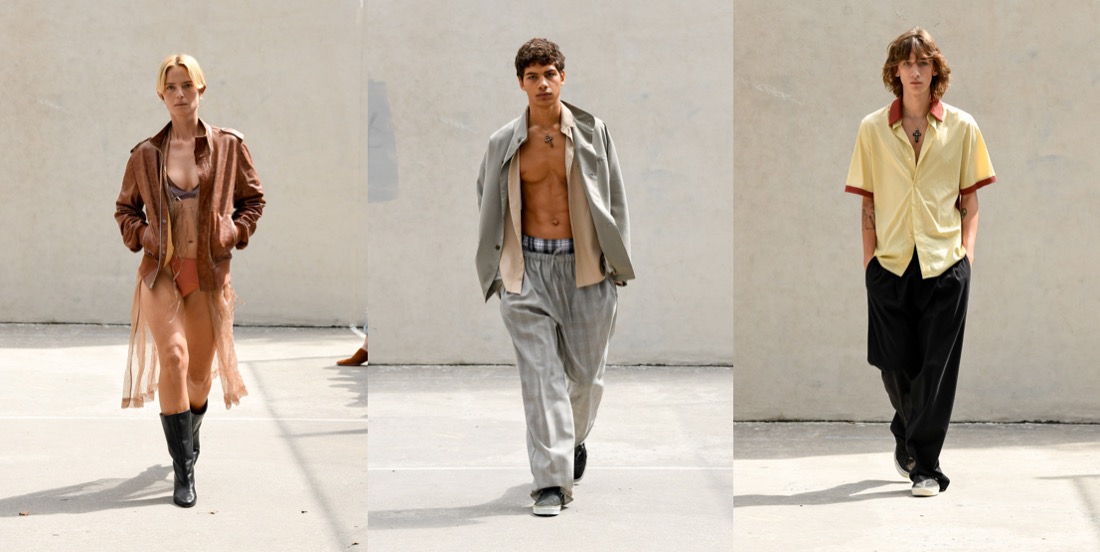
Ukrainian Heritage. Bevza SS23

Svitlana Bevza of the label Bevza is one of the more than 10 million Ukrainians who fled their homes when Russia invaded their country over six months ago, only nine days after Bevza showed her autumn-winter 2022 collection in New York. After a month of staying at her home in Kyiv with air sirens ringing, she fled with her children for two days by bus, leaving her husband behind. (Men between 18 and 60 in Ukraine have mandatory military conscription.) Bevza first went to the Czech Republic, and a month and a half later, she settled in a small town in Portugal, where she currently lives. Since then, Bevza has only returned to Ukraine twice, for less than a week at a time. The designer’s emotional experience, a combination of alienation and perseverance, culminated in a packed show held in the stark interiors at the empty assay office of 30 Wall Street. At the start of the show, a projector showed a massive yellow-and-blue Ukrainian flag as a recording of her voice played, calling for a moment of silence for Ukrainian lives lost during the war.

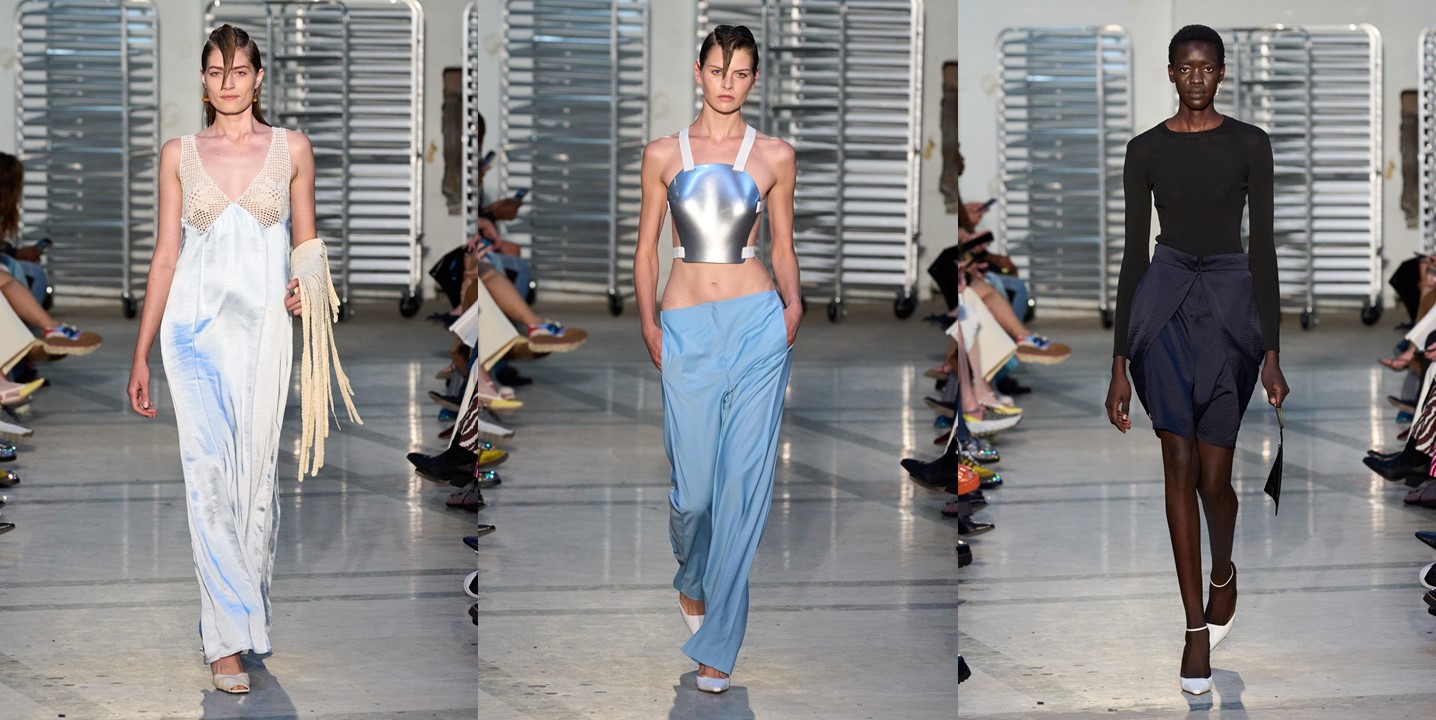
Bevza has always been fiercely proud of her heritage. Her brand, one of the largest in her native Kyiv, is built on subtly weaving craft-driven traditional Ukrainian motifs into her minimalist designs. There were those symbolic moments throughout this season, including the hair, which was done in a Cossack style with a singular sharp bang cutting across the forehead, and traditional Ukrainian singing spliced with modern beats by a Ukrainian DJ. (Bevza’s show was produced by an entirely Ukrainian team; fellow Kyiv designer and LVMH nominee Anton Belinskiy styled it.) Those signature traditional Ukrainian embroideries were evident. The bust of one icy blue slip dress featured a knit of traditional Ukrainian embroidery – an unlikely but ultimately beautiful combination. A keptaryk, a traditional Ukraine vest fastened by knots, was produced in a beautiful thick navy wool and paired with low-slung vegan leather trousers. There was a nod to war too: a bulletproof vest, a longtime motif for the label, was fashioned into a curve-skimming, floor-length dress.
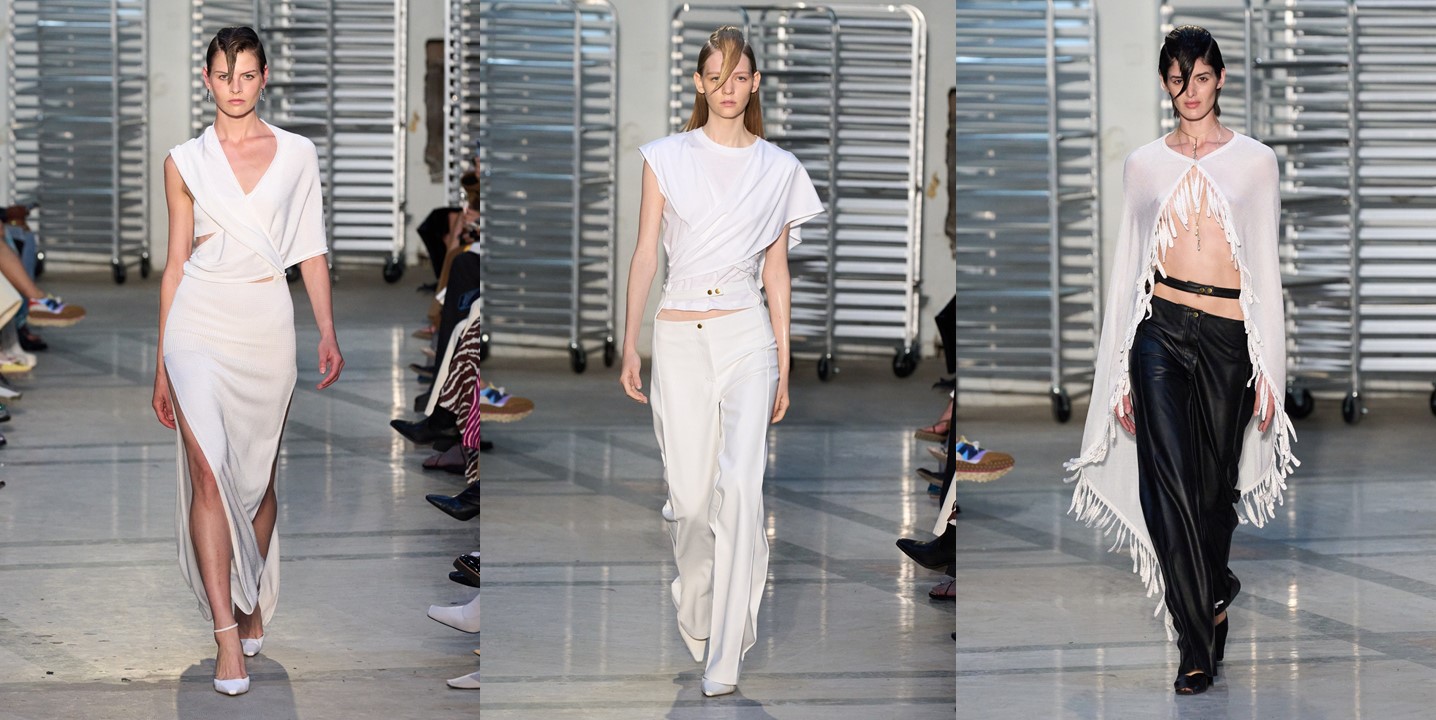
Bevza also used the runway as her platform to showcase one of the biggest issues affecting Ukraine right now: wheat. The theme was already baked into the setting: Large wheeled trays with loaves of bread dotted the corners of the space. Ukraine is considered the breadbasket of Europe, and wheat is embedded within the country’s customs. “When you’re making a proposal to marry somebody, you bring bread with you. When you’re going to somebody’s new home, you should always bring bread,” says Bevza. “Even when you’re saying goodbye to the dead, you used to bring bread.” Currently, there is a crisis: fields of wheat are being destroyed by Russian missiles, and that’s predicted to have harrowing effects on the world’s wheat supply for months to come. The importance of the grain was translated through the use of wheat spikelets. Even before the war, Bevza produced spikelet necklaces and earrings. This time, that golden spikelet necklace was blackened, symbolizing the burning of the wheat fields. Silk skirts—paired with itty-bitty bandeau tops – boasted an elegant hourglass silhouette thanks to how the fabric was gathered at the sides, a nod to how Ukrainian women centuries ago would gather wheat in the fields. Ukraine can be a tricky place for designers to define themselves; some heavily use Ukrainian traditional motifs in their designs, and others opt to go their own way sans any reference to their roots. Both choices are of course fine, but Bevza possesses the stellar ability to seamlessly translate her homeland – and its crisis – through a contemporary and, in this season’s case, very strong lens.

Collage by Edward Kanarecki.
Don’t forget to follow Design & Culture by Ed on Instagram!
NET-A-PORTER Limited

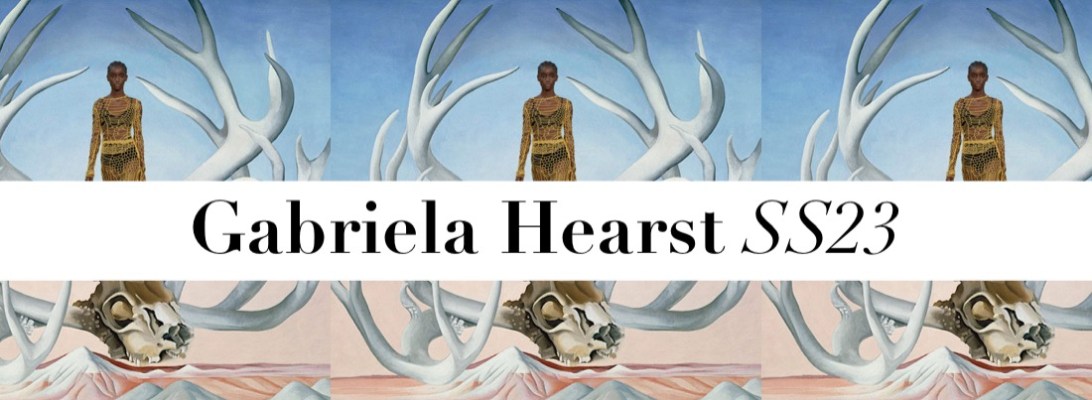
Empowerment. Gabriela Hearst SS23

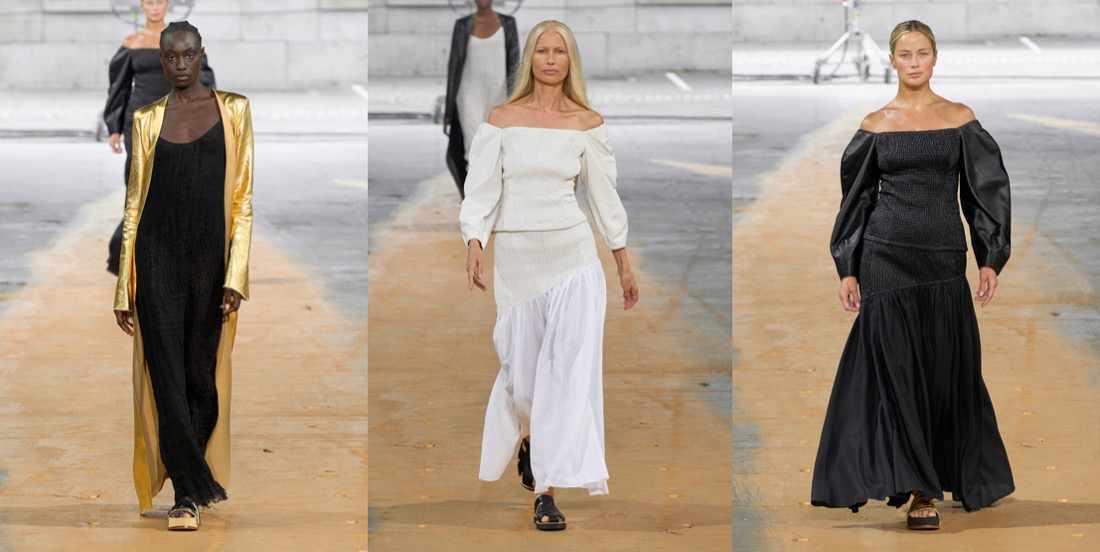
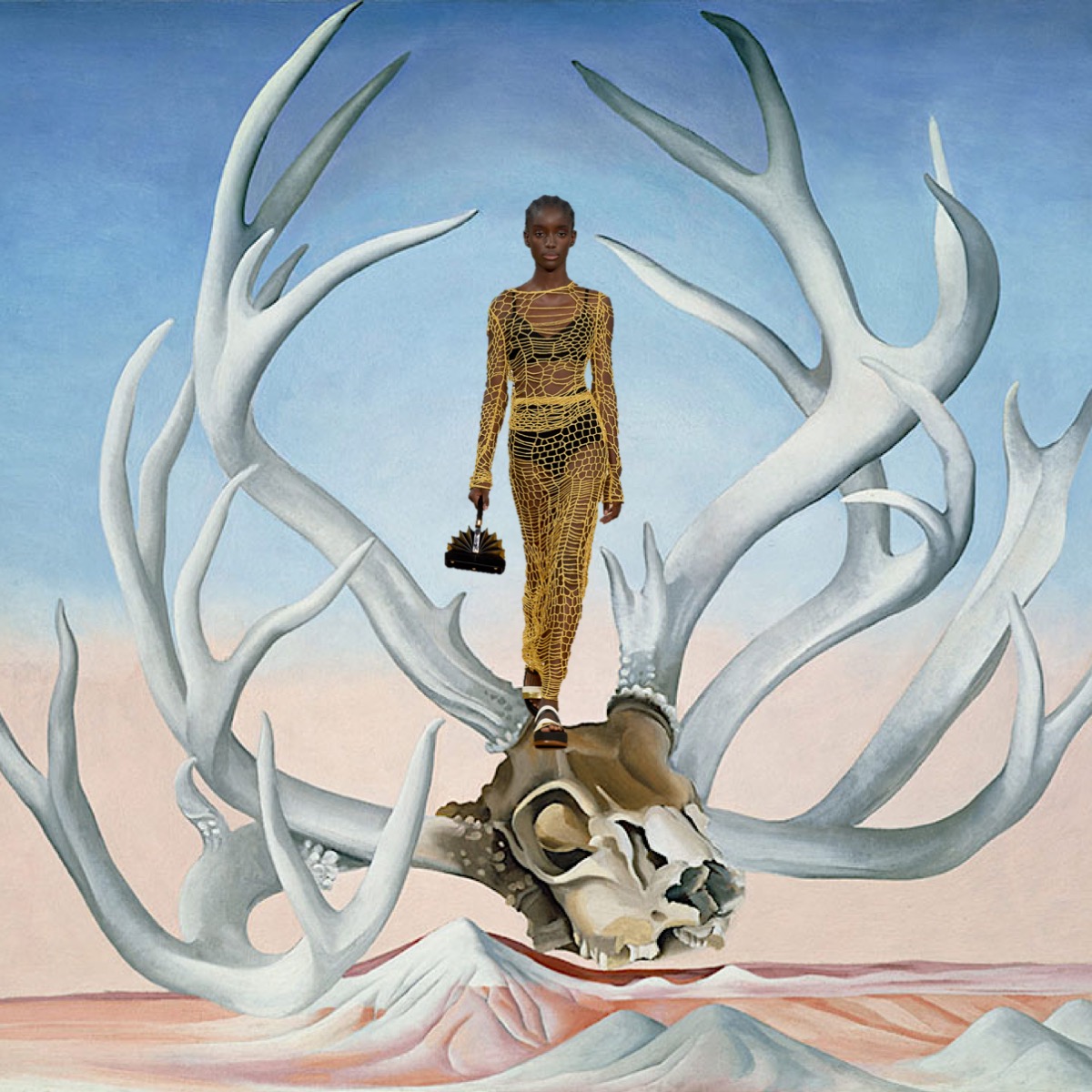
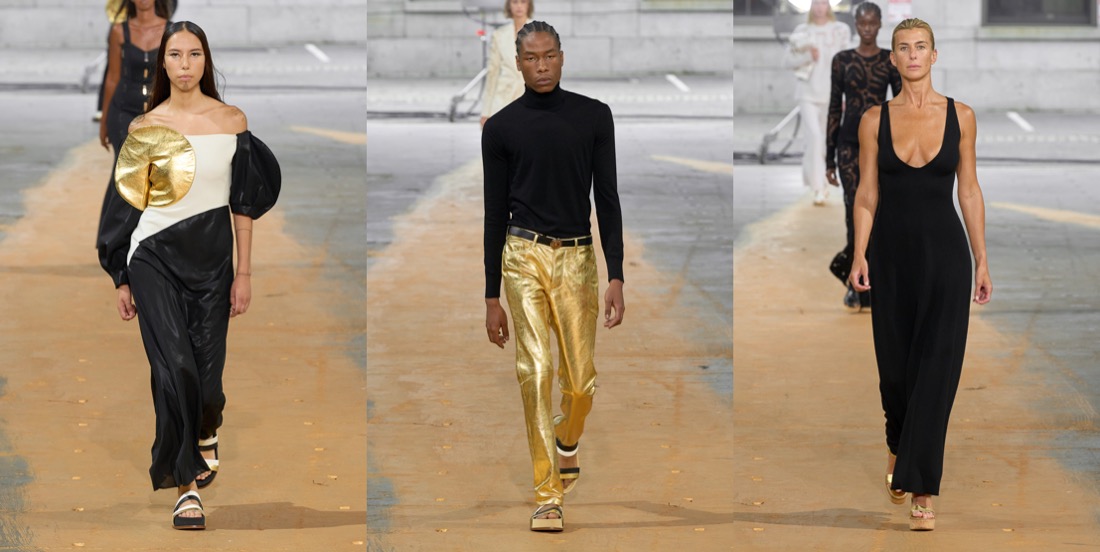
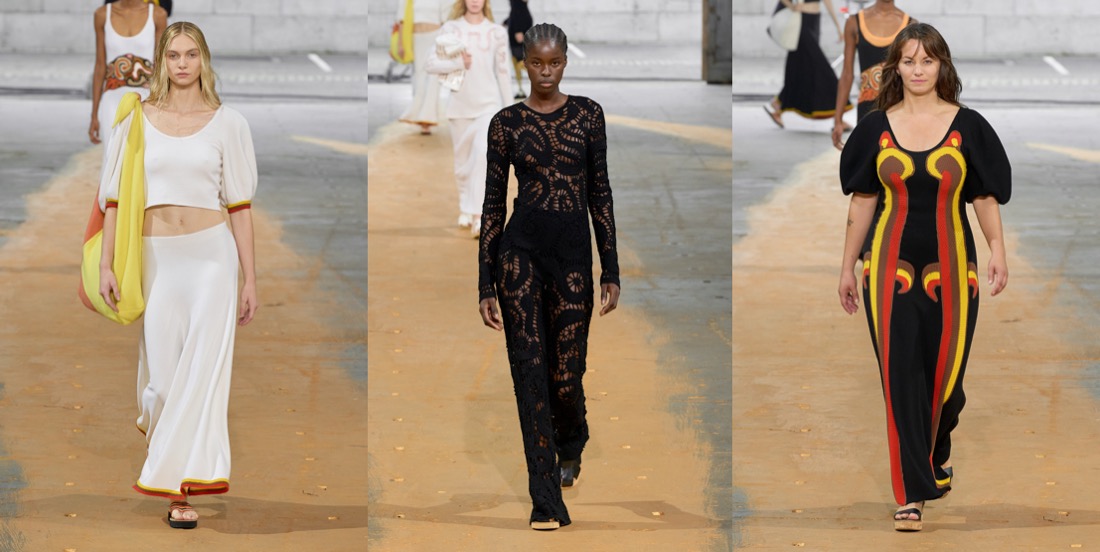
The runway photos tell only part of the story about Gabriela Hearst’s spring-summer 2023 show. Just beyond the picture frame, the runway was lined with members of the Resistance Revival Chorus. They sang “This Joy,” a gospel song written by Pastor Shirley Caesar. Joy has been the buzzword of the week; few designers have failed to mention it. But only Hearst booked this choir, and the singers more than delivered on the song’s promise. It was a feel-great moment, made more so by the diverse group of friends that Hearst cast, from the former president of Planned Parenthood Cecile Richards to the young climate activist Xiye Bastida to the anti-toxic shock syndrome advocate Lauren Wasser. Hearst has woven female empowerment into her brand DNA. She likes being a connector, hooking up one woman on a mission with another, and in the process side-stepping the male dominated systems that disadvantage us. This season she made those intentions more explicit in the clothes. The opening series of dresses were constructed of black jersey fixed with molded gold leather whose ruffled raw edges extended beyond the shape of the torso. These nodded in the direction of the Yves Saint Laurent gold breastplates made by Claude Lalanne, but the vibe here was more Athena, goddess of wisdom and war. Later on came a pair of knit pieces inset with crocheted segments in fiery shades of red and orange, and these too conjured thoughts of warrior women who dared to approach the flame. Heart’s friend Cecile Richards’s book is called Make Trouble, don’t forget.

The collection was a showcase for similarly fine handicrafts. Soft ruched leather for a pair of looks worn by the ’90s stars Kirsty Hume and Carolyn Murphy; three-dimensional gold thread embroideries on an ivory dress and well-tailored suit; silk ladder stitch knit dresses as gossamer as spiderwebs. A gold version worn with a matching poncho was especially striking. Hearst came out for her bow wearing a cap stitched with the logo of Sound Future. Her friend Brandy Schultz, who walked in the show, is the co-founder of the non-profit, which seeks to “measure, discover, and deploy meaningful environmental solutions for the live event industry.” Fashion is in need of a meaningful environmental solution. It’s a long way from positive intent to measurable change, but Hearst is making the right connections.

Collage by Edward Kanarecki.
Don’t forget to follow Design & Culture by Ed on Instagram!
NET-A-PORTER Limited

Spikey. Area AW22

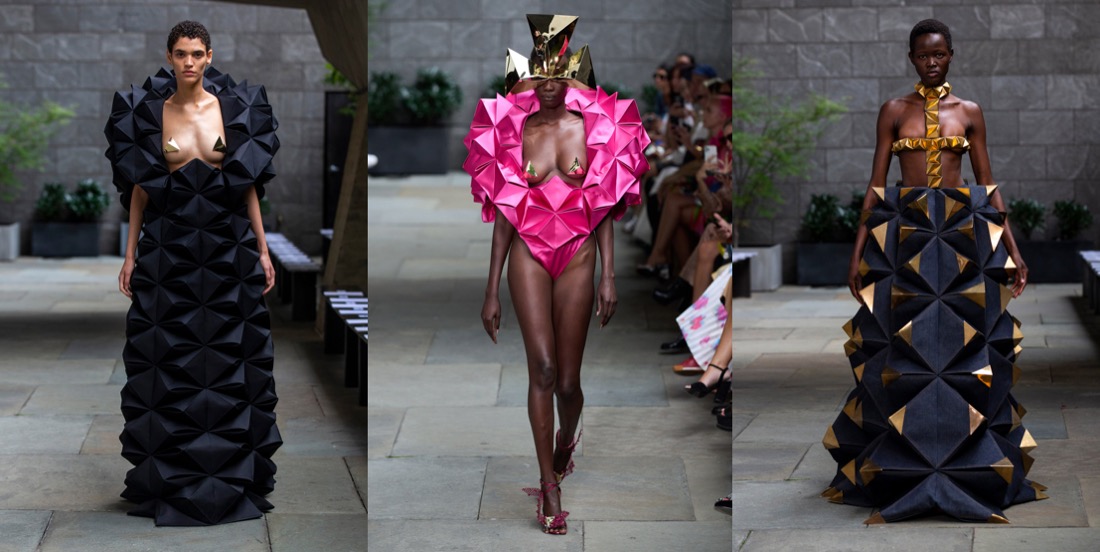
The opening look of Area‘s first ever runway collection was quite a message. A cage dress made from bands of Japanese selvedge denim and covered in jumbo spikes around the body, sleeves and neck, was an immediate plea to be left alone, but worn with flat sandals, you could almost imagine the practical implications of wearing such a garment out in the real world – perhaps to take the train by oneself late at night? If it wasn’t obvious that underneath the spikes there was a wearable sporty denim dress, then the second look, a bustier with a sweetheart necklace and a matching miniskirt also made of denim, and featuring the season’s “folded bondage bow,” as it was named it in the show notes, finished spelling it out. At Area there is constant exploration of the liminal space between aggression and rebellion and making beautiful clothes that sell. “For me it’s always been so hard to understand that there’s this separation between stuff that you sell and stuff that you dream of,” designer Piotrek Panszczyk said after the show. “And it’s really about connecting the dots and showing people how they’re related to each other, and why both are really important.” And so if you looked beyond the jumbo spikes and the folded pyramid elements and the fantastic sculptural pieces that are Area’s signature, you’d notice the sporty jersey track pants with multicolor Swarovski details down the side worn with an easy sleeveless tank with a cutout detail at the chest, or the silver velvet jeans worn with a matching bustier. You’d also spot a series of cocktail dresses that were classic in their execution, including a purple mini dress with a pleated detail at the sweetheart neckline (“Purple is this kind of religious color, there’s something very priest-like about it, so we wanted to embrace that and twist it and show it in a different way,” Panszczyk explained). Area also announced a collaboration with Sergio Rossi for this season, who did several pairs of high heeled strappy sandals as well as a pair of flats. This certainly isn’t my favourite Area collection (feels too overworked), but big thumbs up for all the experimenting.

Collage by Edward Kanarecki.
Don’t forget to follow Design & Culture by Ed on Instagram!

NET-A-PORTER Limited

New Wave. Maryam Nassir Zadeh SS23

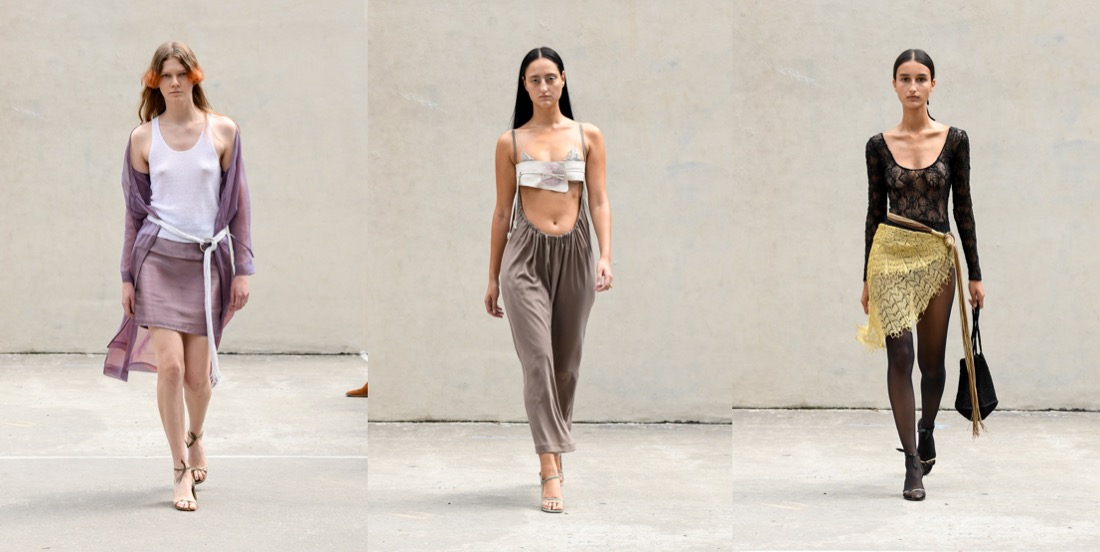
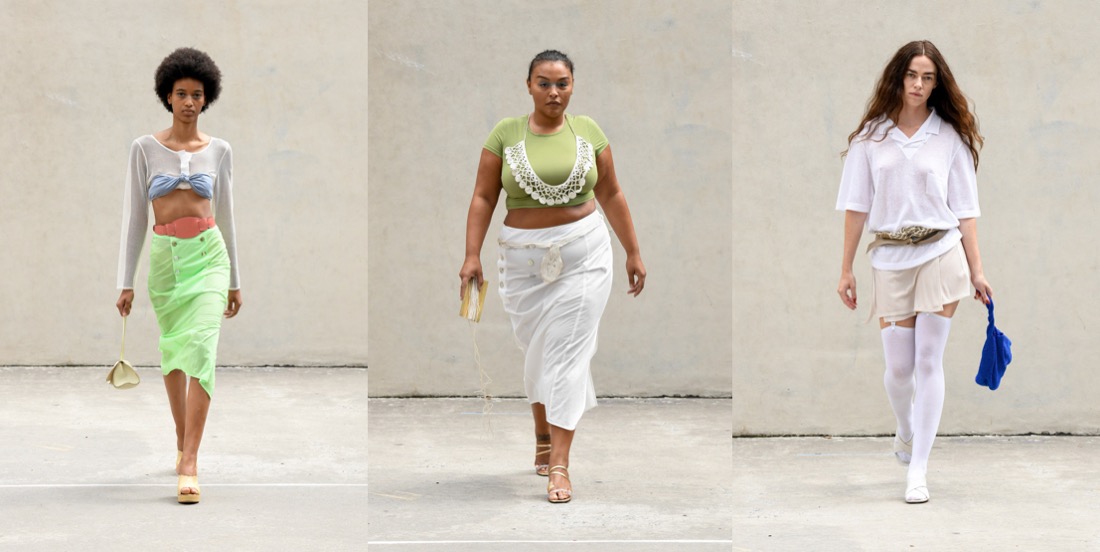
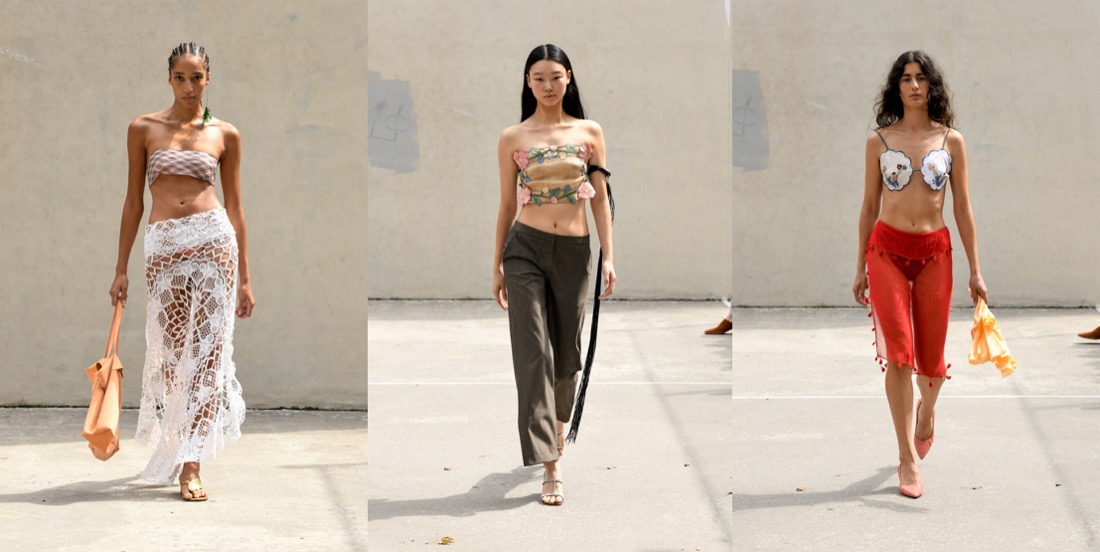
Jean-Luc Godard, the most iconoclastic of New Wave filmmakers, has sadly passed away today. He invented a resolutely modern, intensely free vision of film-making. Godard’s storylines mixed up time and space, changing the idea of a fixed narrative. He filled cinema with poetry and philosophy. Also, his sense of visual aesthetic, from “Breathless” to “Pierrot Le Fou“, has left an ever-lasting legacy. If there is one designer who conveys that Nouvelle Vague style with ease, even subconciously, it’s the New York-based Maryam Nassir Zadeh. Whenever I see her collections, I have an impression of watching a pack of contemporary New Wave women (and men) materialize IRL.

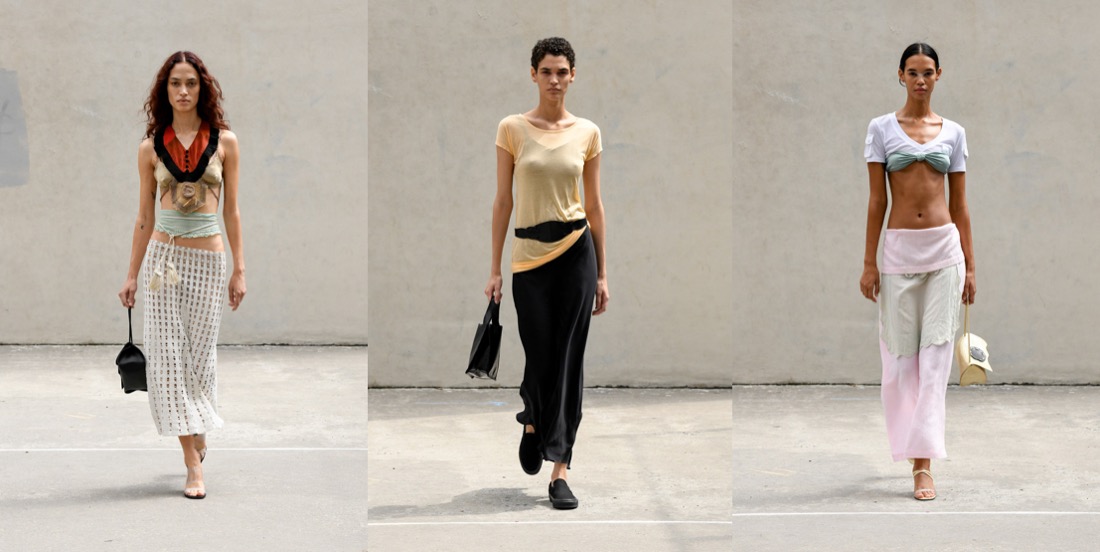
Zadeh began her show notes with the word “waves”, and she was thinking not only about the azure waters lapping on Mediterranean shores (the designer spent part of the summer on the idyllic Greek island Hydra) but also of time. In 2013 Zadeh first dipped her toe into design with accessories and then moved into clothing – and MNZ quickly created a niche in the downtown scene. “What I’m known for is making timeless, elevated basics,” she said after her spring show, which veered from that formula this season. It was a full-circle moment: Zadeh came back to the Sara D. Roosevelt handball court where she had shown before, located just across the street from her studio; the cast and audience were full of friends. The lineup was infused with the freedom of summer dressing—or undressing—the instinctual improvisation of wearing a towel as a sarong, say. Modesty is not a consideration in the MNZ universe, which is body positive and empowering, and that is an extension of how Zadeh lives her life. On vacation, she said, “I was dressing in ways that were like half naked, half covered.” But that’s only part of the story: “I feel like there’s a fusion of the domestic element of my life [as a working mother], but then there’s sort of a tension between that and being free.” The idea of domesticity came through in a literal way; the designer worked with interior textiles like tablecloths and bath towels. Similarly, the idea of finding “space in between” was evident in such garments as half skirts. How these will translate on a rack would be a question, save for the fact that they might not ever land there. Zadeh explained that many of the materials she used have been in her personal collection for decades. Not wanting to cut them up, she worked around them, allowing the textiles to guide the patterns and some no-sew pieces in ways that she feels will lead her in exciting new directions. Thus her reworkings represented a dialogue with fabric and the sum of her past experiences and relationships. It was the lightest pieces that best captured the ephemerality of memory and emphasized the space that exists between the body and the cloth. A polka-dot dress, for example, was the color of sky in the early morning; a yellow woven men’s shirt was tethered by knit cuffs and collars. Layering heavier materials over lighter ones was another way to emphasize the delicacy of the fabrics. Garters and bras added a whiff of the boudoir to the proceedings. A jersey dress with a beautifully shaped scoop neck in front and back was paired with a bra, which by now has fully come out from under. The idea of apron skirts and tying things on is one that is surfacing in many collections. In some ways this harks back to classical precedents and manipulation of material rather than construction. “I wanted to be natural,” Zadeh said, and there’s nothing more so than the human form, which was the designer’s focus this season. What she calls her reworks are works in progress – as is life.

Collage by Edward Kanarecki.
Don’t forget to follow Design & Culture by Ed on Instagram!
NET-A-PORTER Limited

Wild At Heart. Khaite SS23

Khaite is now one of New York’s must-see brands. Celebrities jostle for seats and, editors are eager to buy and wear it. Catherine Holstein knows her audience. “That independent, New York, strong, stealth woman – that is who I’m designing for,” she said backstage of her spring-summer 2023 show. For spring she sent out her dependable mix of sequins and silk fringe, leather and denim. Because she was looking at the 1990s films of David Lynch, Wild at Heart in particular, there was a good amount of python print. Nicolas Cage’s character wears a python jacket in the movie; Holstein stamped the pattern on leather for exaggerated bombers and pencil skirts, and silk charmeuse for a voluminous peasant dress. A little python goes a long way, admittedly. The other novelty here was bubble skirts (a trending item this week). Their horsehair reinforced waistbands sat at the crest of the hip bones below everything from a mesh bustier to a crystal embroidered shirt. The low waistlines gave those outfits a cool attitude – polished but not pretentious. Because Holstein is designing for herself and for women like her, she’s got the attitude aspect nailed, but that’s not to diminish her eye for proportion or the exacting lines of her tailoring. A strong-shouldered, elongated jacket with crystal-studded lapels was a looker. You’ll be seeing it around next autumn with a tie-neck silk blouse and jeans and those little sandals.

Collage by Edward Kanarecki.
Don’t forget to follow Design & Culture by Ed on Instagram!
NET-A-PORTER Limited