Cinema Inferno. Maison Margiela AW22 Couture

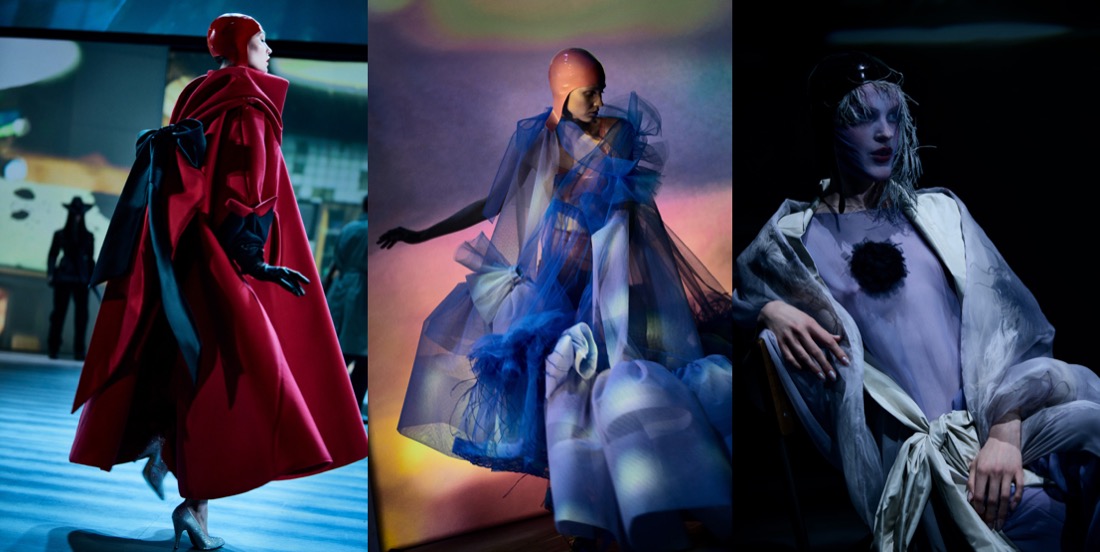
John Galliano delivered one of the most brilliant couture collections of the season. Prompted by his enjoyment of communicating through various digital hybrids during the pandemic, the designer balked at the prospect of returning to the old stripped-down white runway format for his Maison Margiela Artisanal collection. To him, it’s an inadequate arena for expressing the intense, allusive narratives which have always fueled his creativity. An epiphany came when he saw a stage production of Dracula by the British theatre company Imitating the Dog, who in the words of its director, “stitch together” videos of actors in real time. “I thought, wouldn’t it be wonderful to embrace fashion, theater, digital – all the cultures?” The producers collaborated with him to realize Cinema Inferno, the multidisciplinary fantastically-costumed American psycho-drama of dreams and nightmares that played out on stage, screens, and livestream from the Palais de Chaillot. Galliano’s model muses – the talented cast who’ve worked with him throughout the pandemic – plus a few grand supermodels lip-synced to a script following the misfortunes of a desperate pair of young lovers on the run. “They’re Hen and Count, driving through this mythical Arizona desert. They’re shot up,” Galliano narrated. “Then, we have what we call ‘spectral cowboys’ who come to assail them. Representatives of abuse of power, whether it’s the judge, the preacher, medicine, certain toxic relationships, patriarchal societies, and on and on.” In a preview at the theater, astonishing clothes were laid out waiting to embody the bloody, romantic tale in fragile whooshes of pastel tulle, brutally-cut tailoring, and twisted takes on 1950s haute couture and prom-scene Americana. The bad men – who came bristling with guns – had sandstorm-weathered coats whose shadowy, creviced surfaces were created with micro-beading, dégradé jacquard, and flocking. “Because this,” said Galliano, “is haute couture. The highest form of dressmaking!” Unfortunately, the collection’s look-book features only 9 looks – so you are more than welcome to watch the full performance to catch a glimpse of these wearable artworks.

Of course, Galliano has known his way around the highest form of dressmaking since his time at Christian Dior – and even before. Since the days of his eponymous collection, ideas revolving around characters from the 1920s to the ’50s have populated his collections, and the deconstruction and reconstruction of period clothing. So this was in every sense, a show set in Galliano’s mental landscape. This time, though, there was an inescapably darker haunting of trauma and violence behind the stunning sequences of clothes – of nurse’s coats in the mint-greens of hospital scrubs, the watermelon pouffes of the evil mother’s gown, the diaphanous trapeze dresses and abstracted prom dresses constructed from several gowns sewn together. Why choose this time to delve into an American narrative? Superficially, it was about the movies: “Films that have had a huge impact on the man I am today. A Streetcar Named Desire, Natural Born Killers, Suddenly Last Summer.” But beneath that runs a more personal thread. It’s no coincidence that Arizona, where the performance was notionally set, is the state where Galliano underwent rehab in 2011. It’s the place where he faced his demons. Did that make these recurring nightmares swirling around sin, sex, death, and parental and societal abuse subconsciously autobiographical? Galliano nodded. At the end of the show there was a smashed ‘black mirror’ dress, a symbolic reflection of the psychological impossibility of fully escaping memory – even in ‘recovery’ – if ever there was one. “Because, as you see in the show, our protagonists keep falling into these dreams. The whole thing is based on a loop. An endless loop.” There is much more of this self-revelation to come next year when a documentary about Galliano, made by director Kevin Macdonald, will premiere. Galliano says it’s been “like going to confession.”

Collage by Edward Kanarecki.

NET-A-PORTER Limited

Otherwordly. Balenciaga AW22 Couture

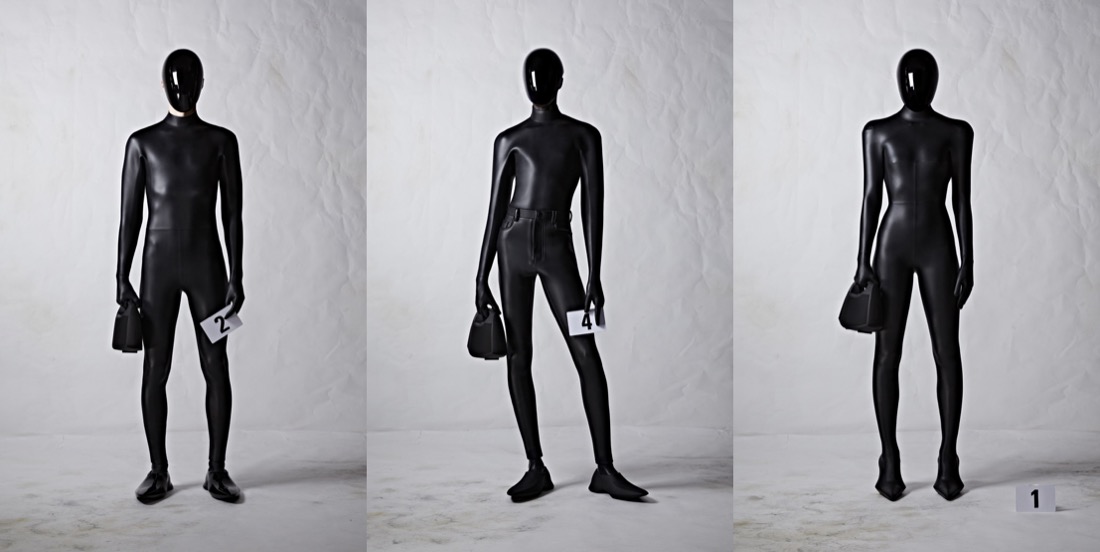
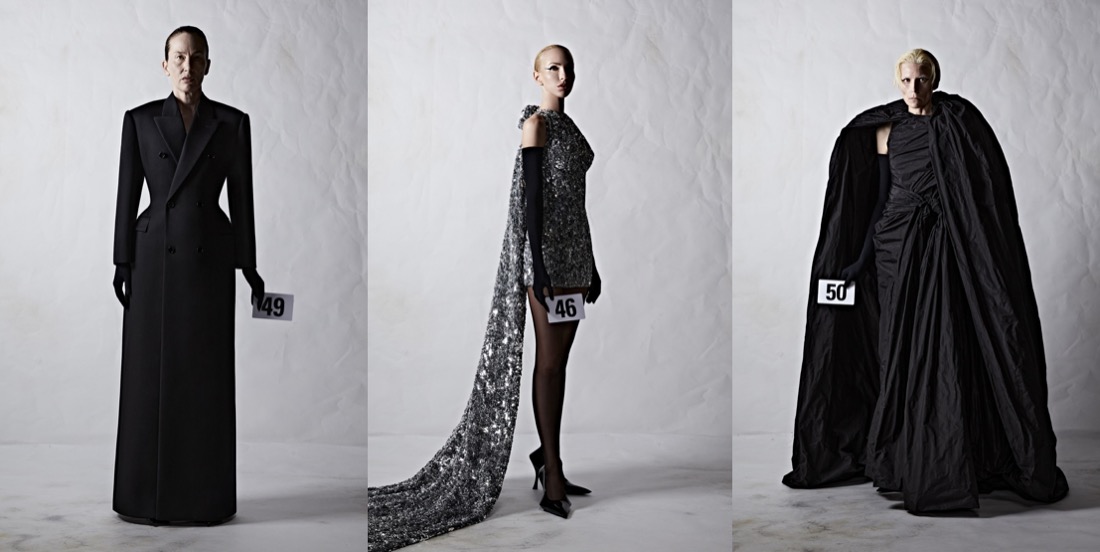
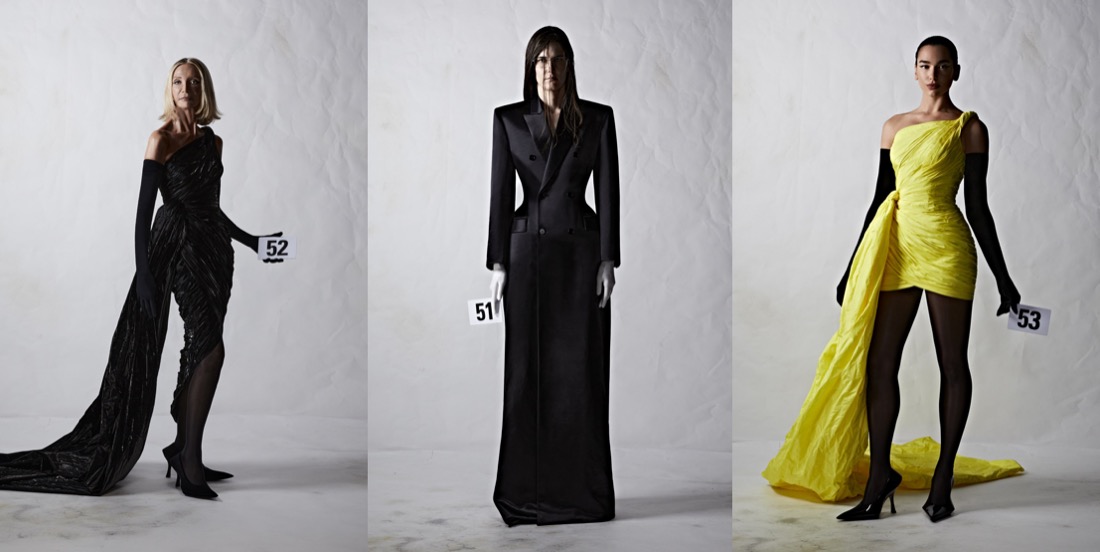
To be honest with you, this haute couture season didn’t really start for me until Balenciaga happened. The 51st Balenciaga haute couture collection. And the second coming from Demna. Nobody knew what to expect, the anticipation had the fashion insiders on an ecstatic high on a mid-week morning, and in the end, he didn’t dissapoint. To the sound of a love poem voiced by AI, a breed of haute couture humanoids encased in black neoprene, their faces uniformly erased in high-tech reflective face shields, stalked the Balenciaga haute couture salon. It looked like an invasion by a sinister breed marching on their spiked, chiseled space boots, ready to take over the earth once humanity has wiped itself out. This was Demna’s dystopian introduction to his latest couture collection for the house, which he shows annually. “This year I decided that I needed to put more of myself into it, and kind of find a new future, you know?” he said afterwards. “This is why the lineup started with very otherworldly, almost futuristic neoprene looks, which was my idea of interpreting gazar in 2022.” Invention, and taking time over it, is central to moving the art of couture forward. Famously, gazar was the sculptural silk which Cristobal Balenciaga invented with the fabric manufacturer Abrahams in 1958, in order to create the magnificently voluminous gowns he became known for. Demna’s equivalent – shaped into these wickedly kinky hyper-molded second-skin scuba dresses and tailored jackets – was engineered with a new kind of neoprene, made in collaboration with a sustainably-oriented Japanese manufacturer.

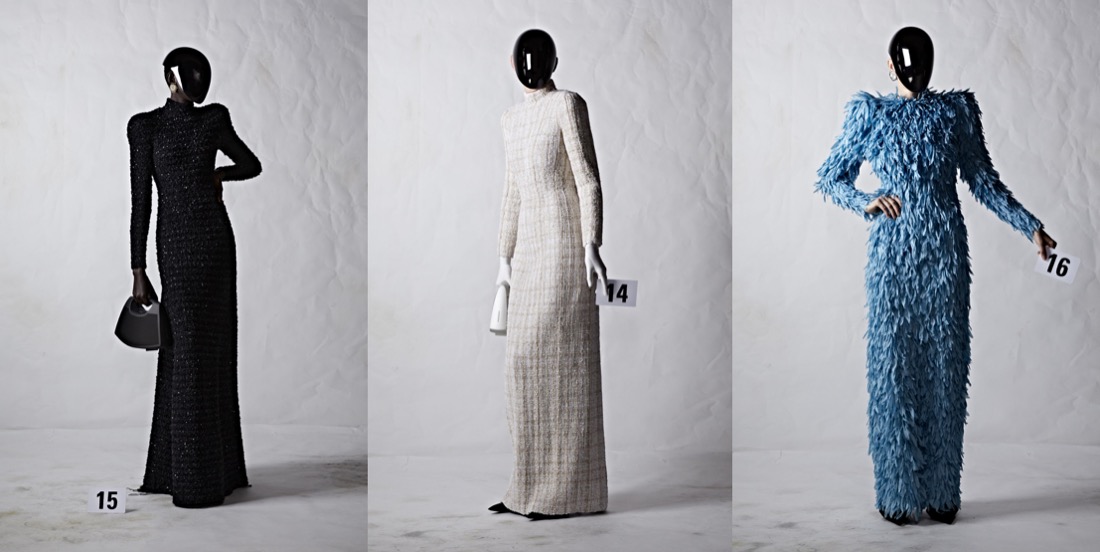
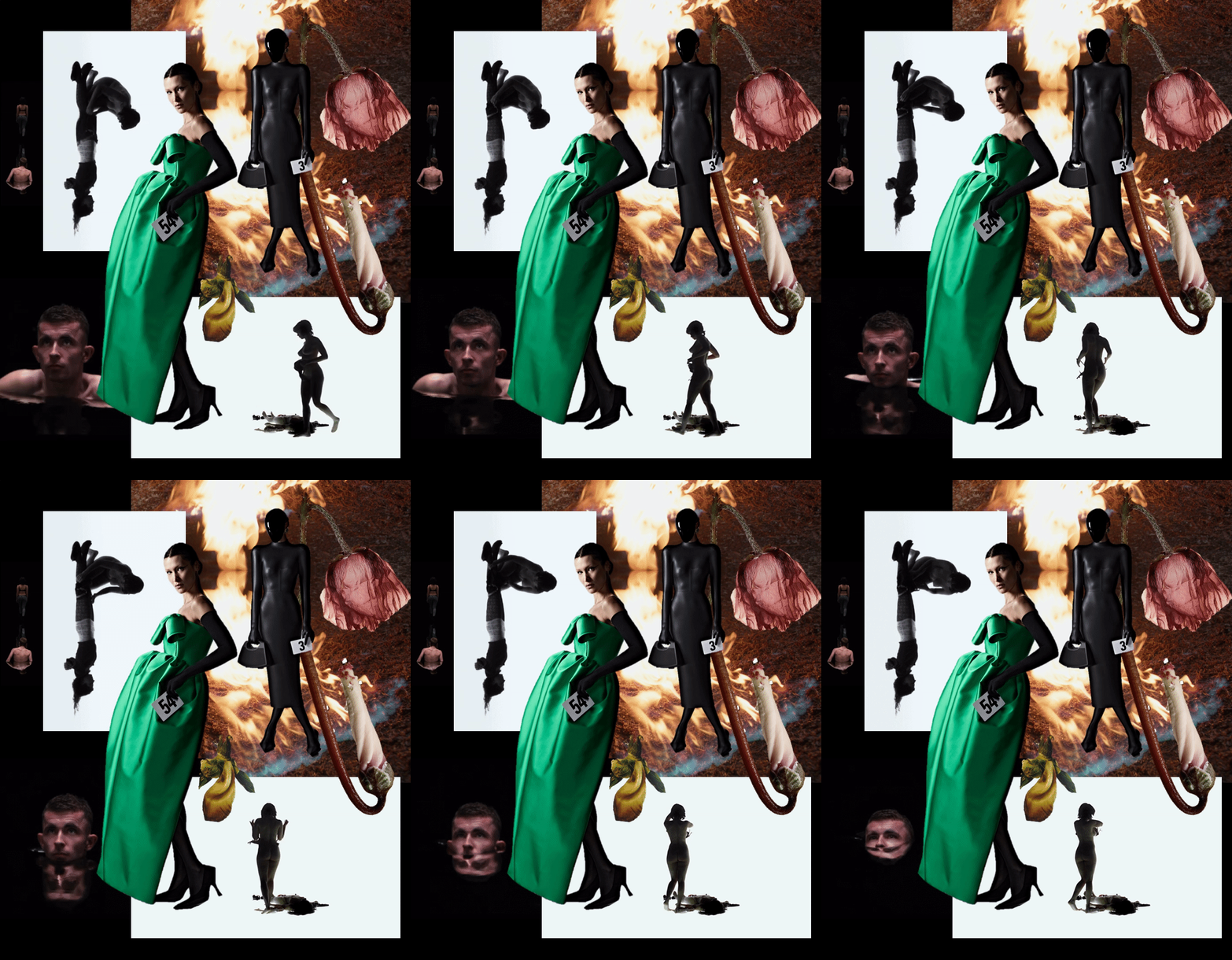
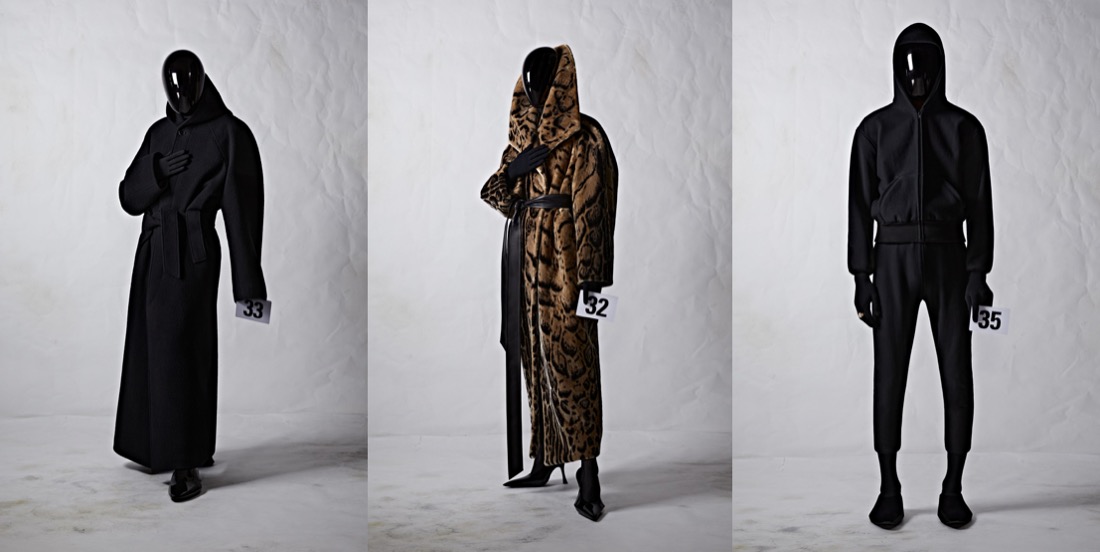
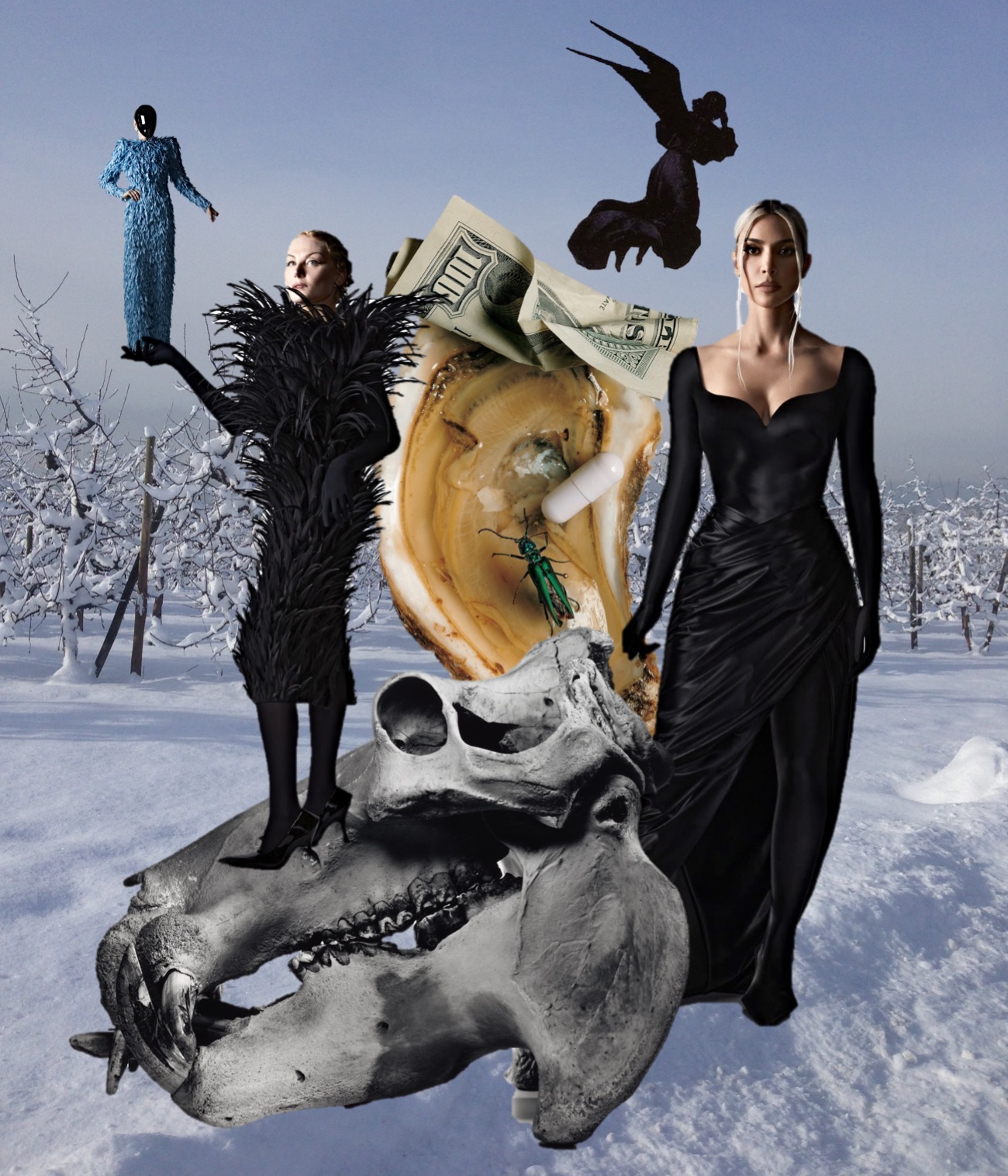
In the second half of the show, where faces were revealed, Demna’s friends, muses, and brand ambassadors walked. Kim Kardashian in a deep-plunge corset and draped skirt. Demna’s musician husband BFRND in opera gloves and a couture tank-top. Nicole Kidman in a silver gown. Dua Lipa and Bella Hadid in draped pops of colour. Eliza Douglas in the most perfect hourglass coat. Renata Litvinova in an all-black feather-mad cocktail dress. Naomi Campbell was the ultimate Balenciaga Maleficent. But back to his motivation for a minute. Last season, Demna caused a sensation by dealing with the stark, tailored elegance of the Balenciaga couture aesthetic. Now, he was putting himself first – owning an haute couture version of the streetwear that he has been responsible for elevating to designer fashion status. Hoodies, sweatshirts, worn-out denim, and parkas – some made of upcycled originals, others shot with aluminium to create crinkled couture-like volumes – followed the dystopian Balenciaga neoprene tribe. The commercial conundrum he faces is finding a way to connect couture with the following that is his main, democratically-based youth constituency – represented by all the outside spectators whose cheers poured in through the salon windows as the sidewalk turned into a celebrity-spotting event.

To square that circle, a new Balenciaga couture shop had opened on the Avenue Georges V, where certain limited edition items, like the upcycled pieces, Balenciaga souvenir porcelain figurines, and the ‘Speaker’ bag toted in the show can be bought. “There are items that will be ready to buy already. After the last show, people started to ask me, ‘how do we buy it?’ People, especially from the younger generation of maybe up-and-coming couture customers, don’t know, and we want to establish the dialogue. Create some kind of an entry to the salon.” But in a sense, Demna was also meeting Cristobal coming back. The arc of the show, he said, “was going from future into the past.” Thus the hyper-extravagance and drama of the vast crinolines and slinky, draped, train-trailing of his celebrity-walked finale. It’s still a debate whether the bride who couldn’t walk through the doors and struggled a lot to move in her heavily embellished dress was an art performance or an actual runway casualty. I’m fine with both versions of the story.

If it was more personal this season, there was a touching reason behind it. Explaining the AI-voiced poem at the opening of the show, Demna said they were the words of a love poem he’d written to his husband. “Because je t’aime is the most beautiful word in the language to me. I realized that couture, what I do, is the only thing I love doing and I want to be doing. And somehow this was a love letter to the person I love most in my life, and to the work, the art that I do. Both.

Collages by Edward Kanarecki.

NET-A-PORTER Limited

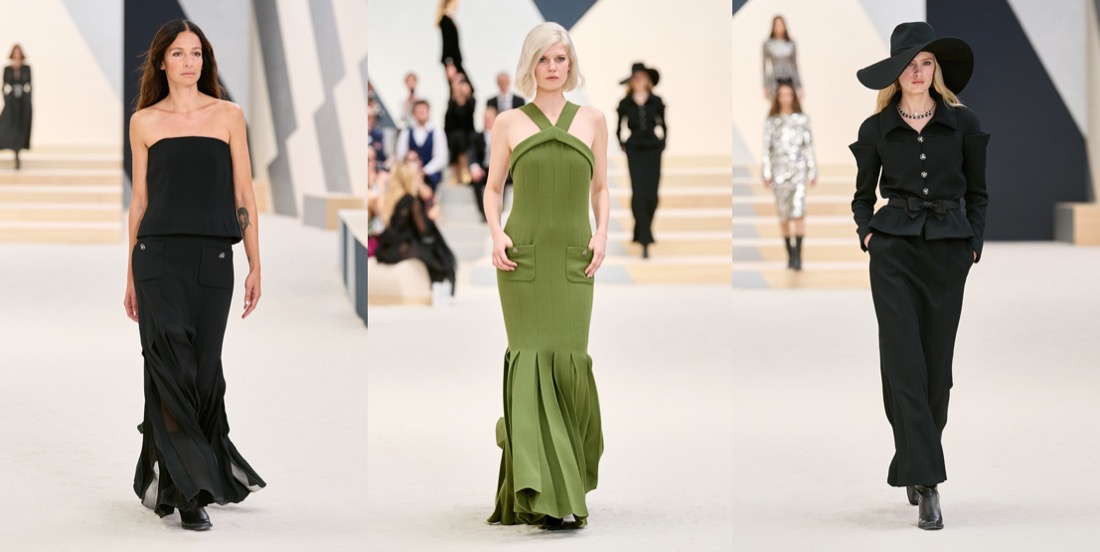
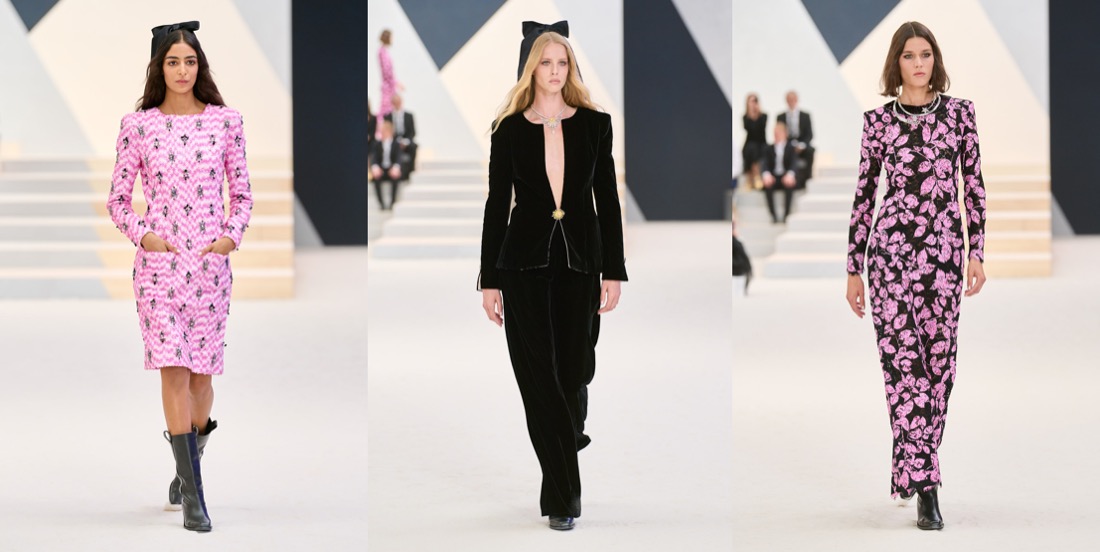
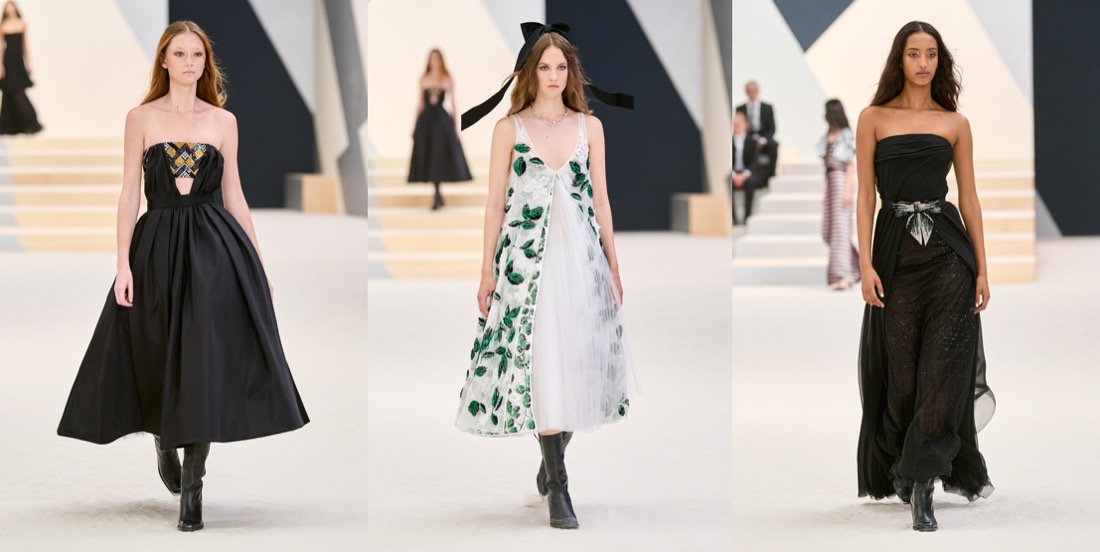
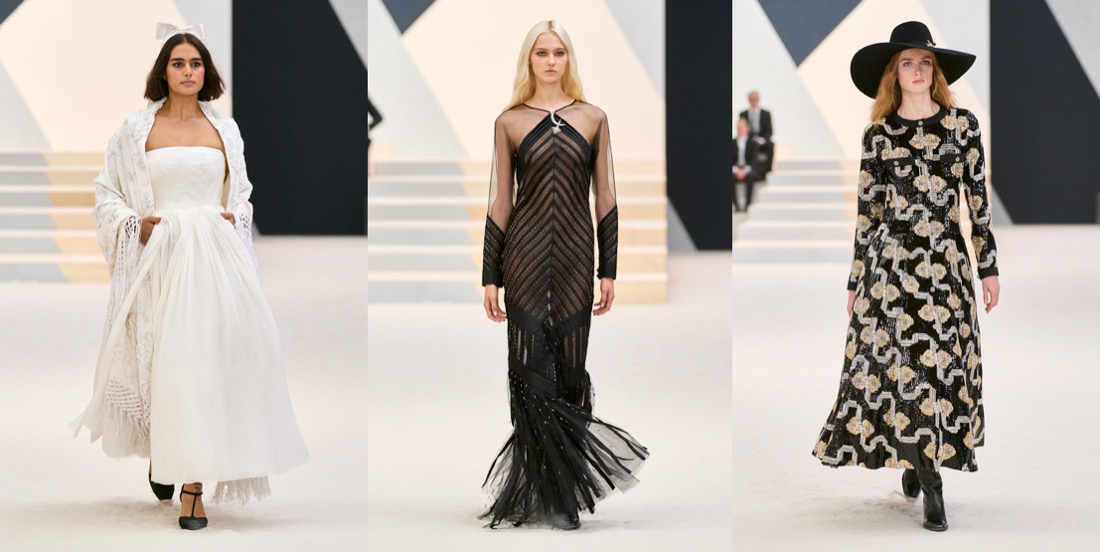
Move Beautifully. Chanel AW22 Couture

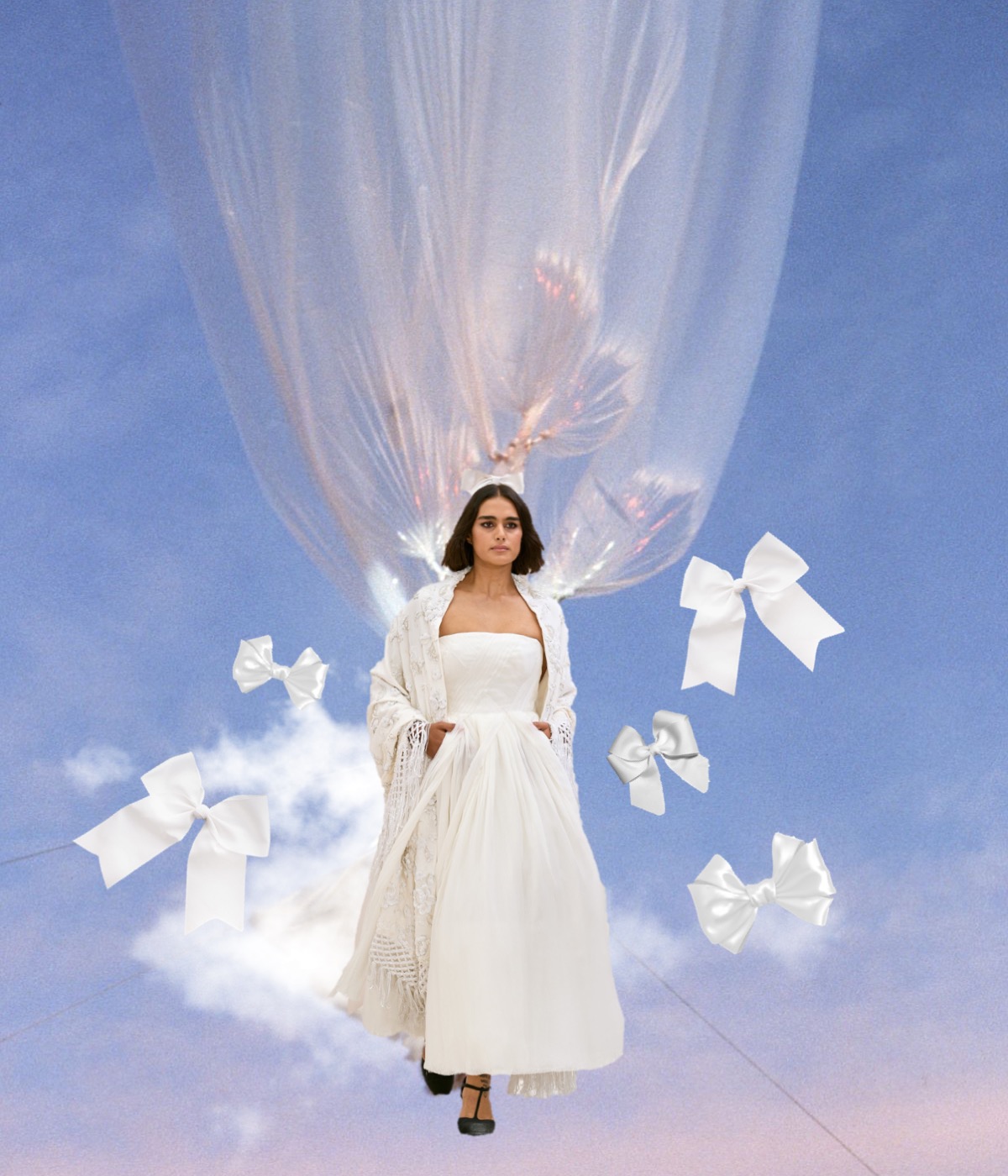
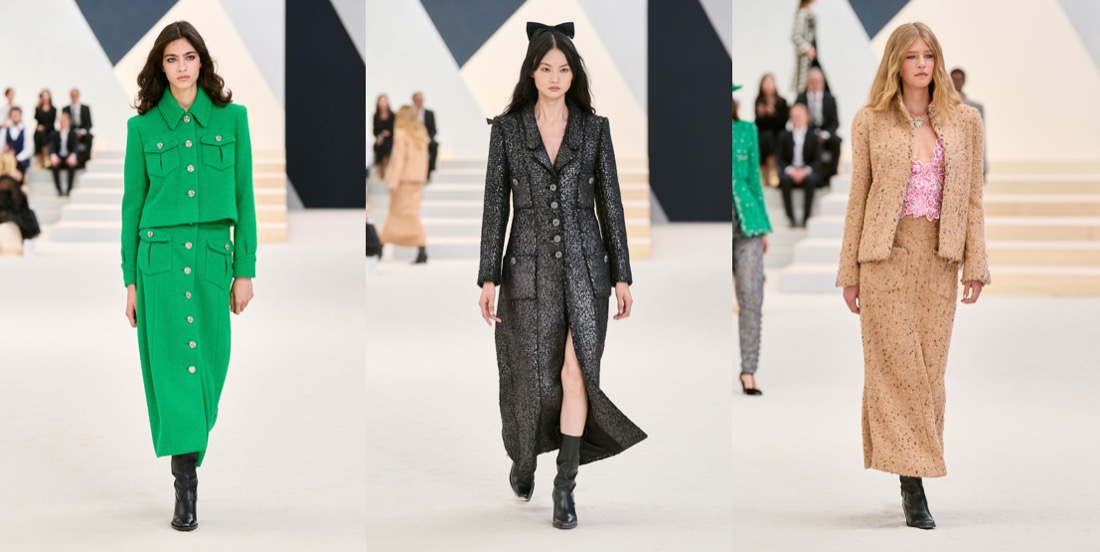
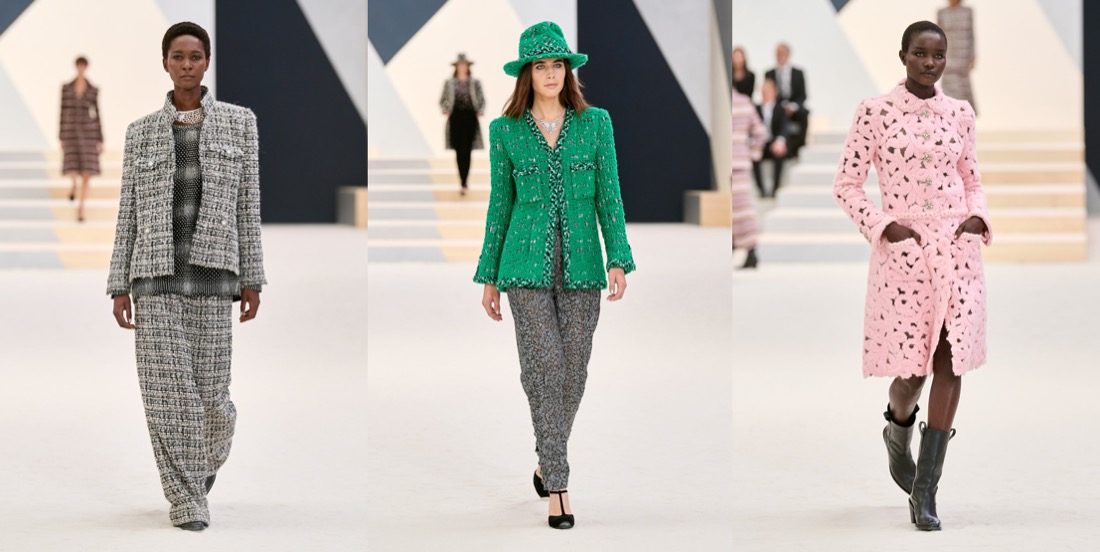
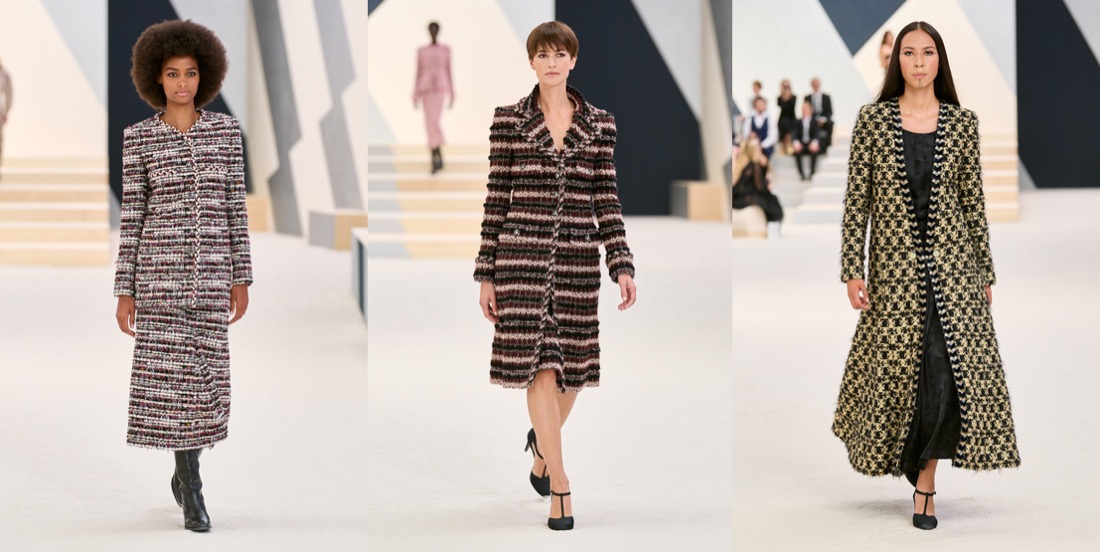
This Chanel haute couture certainly won’t appear in fashion history books, but it did please the eye. For Virginie Viard, her collections reflect the pragmatic needs and desires of the house’s clients and her own eclectic but never fantastical sources of inspiration. Not for Viard the sweeping statements of her mentor Karl Lagerfeld, who might impose a powerful new silhouette on practically every look in a collection, but instead a sense of gentle evolution and a myriad of references and inspiration sparks that might range (as in this collection) from a blinding memory of Inès de Fressange dressed by Lagerfeld in a jacket of bright grass green and shocking pink (for a 1988 Chanel couture show, when Viard first joined the house), to a shot of Fred Astaire in cinematic action, the tails of his white tie evening coat caught flaring out in mid-dance move, to a 19th century shot of a real-life Annie Oakley, to archive Chanel references from slouchy 1920s day suits to slithery 1930s gowns to prim 1960s tailoring, to Lagerfeld’s vividly impressionistic sketches from the 2000s. None of these references, however, are used by Viard literally, but instead serve as starting points for outfits that evolve with the input of the textile designers and makers who weave those extraordinary painterly tweeds, and the dressmakers who understand how to make perfect pleats that “move beautifully,” as guest Sigourney Weaver enthused, “and are just so elegant.” That Astaire flare, for instance, might translate into the kick at the hem of a calf length skirt, the Oakley image into a dirndl skirt with practical pockets that encourage a certain assertive body language, the ’30s house archive references into slinky evening dresses deftly cut to fall straight to the floor when standing still, but that break into swirling movement below the knee when the wearer walks. To set the scene, Viard reached out again to the artist Xavier Veilhan who created a Constructivist set for the spring couture collection. This time, Veilhan built a series of structures that formed a symbolic landscape (arches, bullseye targets, mobiles, cubes of bubblegum pink recycled plastics) in the sandy outdoor stadium of the equestrian L’Étrier de Paris center in the Bois de Boulogne. Guests walked through or around these structures before moving indoors to more sand and a set of kinetic color blocks in black, white, sand yellow, and gray. This gently suggested something of the art deco flavor to the drop-waisted dresses and linear shapes that appeared in some looks in the collection. The symphonic soundtrack, created by Viard’s friend Sébastien Tellier, was set to a video projected on a giant screen as a backdrop to the parade of girls, an impressionistic clip that featured an varied cast including Charlotte Casiraghi and Pharrell Williams. That eclecticism continued with the clothes, showcasing amazing textiles – lace painted in resin; a shower of embroidered leaves on a white tulle trapeze dress, shadowing a print of the same motif underneath; an all-over deco print on a bell-skirted coat dress that on closer inspection turned out have been entirely beaded in sequins by Lesage; or tufts of ostrich plumes painstakingly applied to black chiffon and glimpsed through the openings in a streamlined trench coat of textured black tweed.

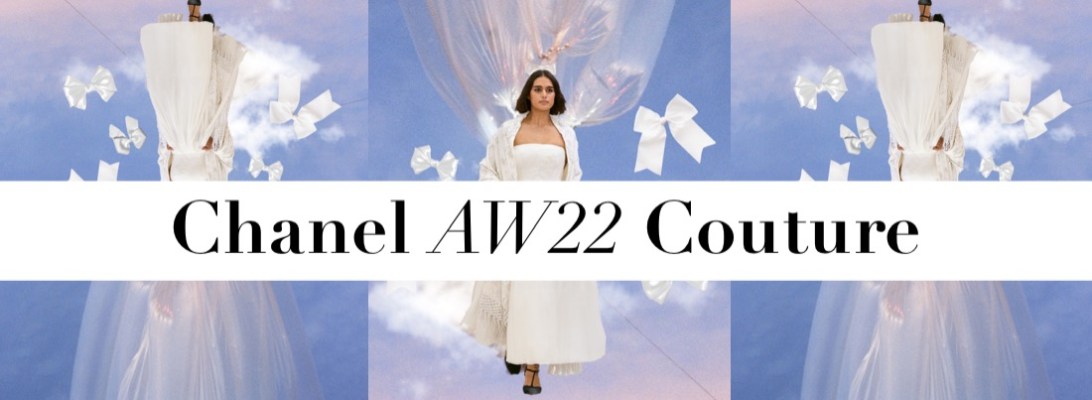
Collage by Edward Kanarecki.

NET-A-PORTER Limited

Big Feelings. Schiaparelli AW22 Couture

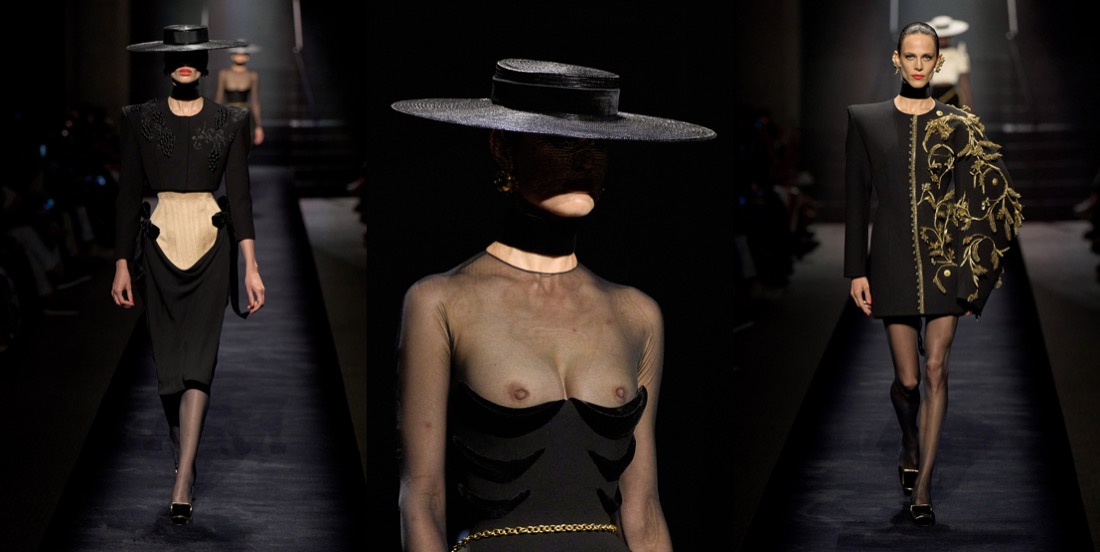
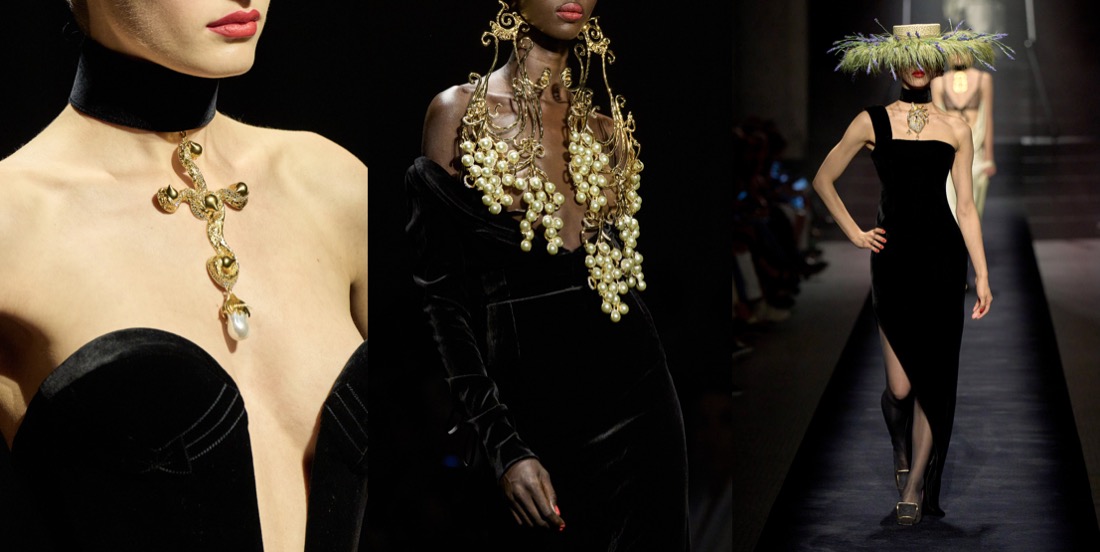
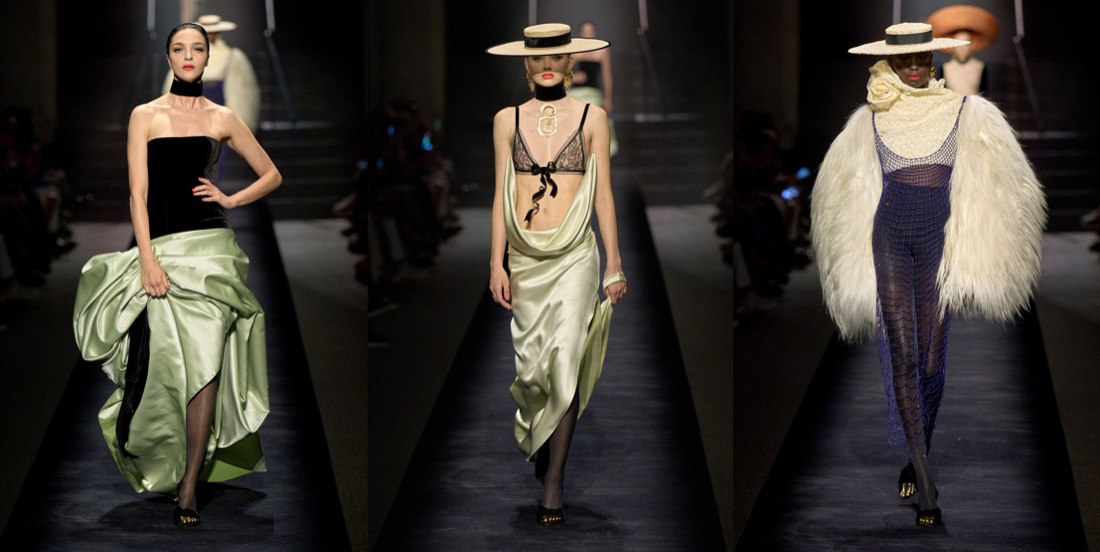
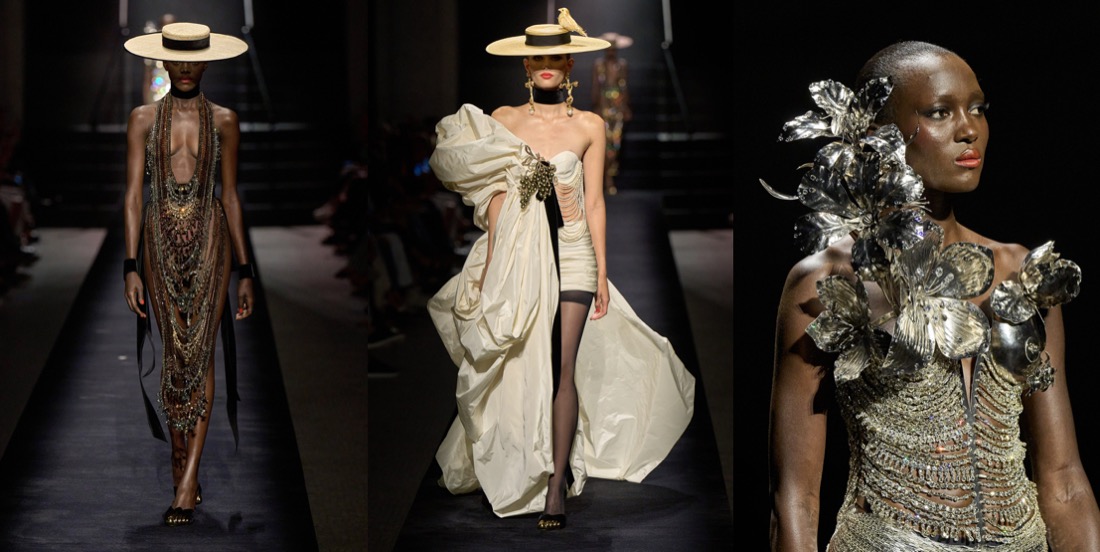
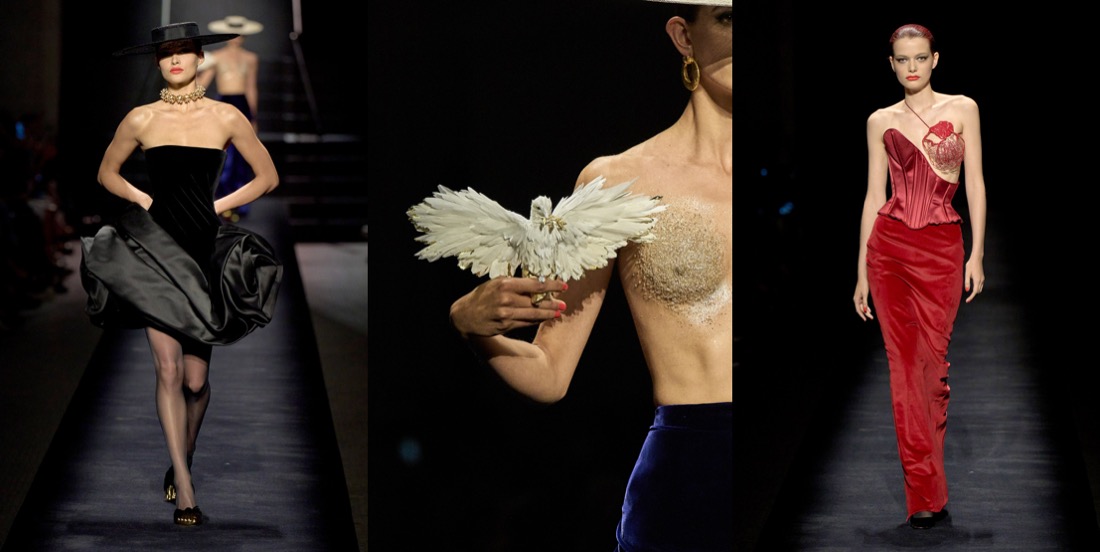
Shocking! The Surreal World of Elsa Schiaparelli,” the high-impact exhibition opening this week at the Musée des Arts Décoratifs, includes pieces that fellow designers – among them Yves Saint Laurent, Jean Paul Gaultier, Azzedine Alaïa, and Christian Lacroix – created in homage to the house’s founding genius. For this season’s Schiaparelli haute couture collection, Daniel Roseberry, the house’s artistic director, took this idea of “being in conversation with the people who had been so inspired by her.” Earlier this year Roseberry had an in-person conversation with Lacroix himself, “which was really inspiring,” as Roseberry noted during final fittings on the eve of his show. “We talked about color, we talked about volume. We talked about Arles, and for him it meant black bulls, white horses, and the gold of the sun, which just kept ringing in my ear. It was probably, for him, a passing conversation, but for me it felt like someone plugged me into the wall a little bit, and I wanted to make a collection that brought me back to the kind of fashion that I fell in love with and that period of fashion that feels, in retrospect, very naive in a way.” And so Roseberry evoked the euphoria of Christian Lacroix’s 1987 debut collection with its giddy pouf silhouette, bustles, gigot sleeves, coruscating toreador embroideries, and severe matador hats. For Roseberry, ’80s nostalgia is in the air. But the collection was also informed, as Roseberry confided, “by the way Elsa dressed herself,” which meant rigorous tailoring. That was exemplified by the coatdress worn by Carolyn Murphy with trompe l’oeil drawers for pockets – a detail that Salvador Dalí himself conceived for Schiap and now a piece that will go directly from the runway to the museum exhibition – and what Roseberry described as “this sort of sensual body-conscious and body-obsessed eveningwear, everything built around the bustier and the corset.” Some sprouted with floral displays inspired by Carolyne Roehm’s book A Passion for Flowers, a copy of which sat on Roseberry’s grandmother’s coffee table when he was an impressionable boy. Seen up close these were remarkable triumphs of embroidery – sunflowers and roses and lavender fronds crafted from hand-painted and sequined silk and even leather molded onto the back of spoons to create the petals. They instantly reminded me of Yves Saint Laurent’s spectacular spring-summer 1988 couture show, where jackets became tableau vivants of sunflowers and irises. A simple black velvet evening dress that looked like one of Roseberry’s dramatic fashion sketches come to life was brought into Schiaparelli’s madcap world thanks to a pair of earrings dripping bunches of golden grapes and so heavy that they had to be secured with a discreet tiara hair band. Meanwhile, Stephen Jones’s magnificent wide-brimmed hats bristled with what looked like fields of wheat that on close inspection turned out to have been simulated with glycerinated ostrich feathers. It was all, as Roseberry himself promised, a “mash-up between something that felt incredibly modern and then also wildly romantic.” Hopeful doves of peace (another YSL reference) brought some much-needed optimism to 2022’s disturbing state of things. All of it certainly left the audience on a high.

Collage by Edward Kanarecki.

NET-A-PORTER Limited

Rough And Elegant. Alaïa SS23

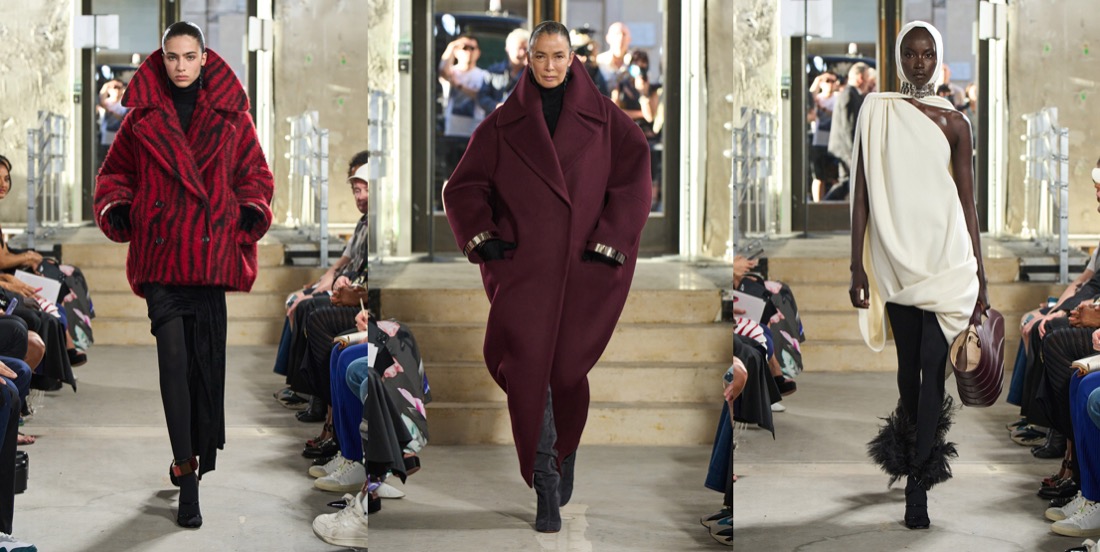
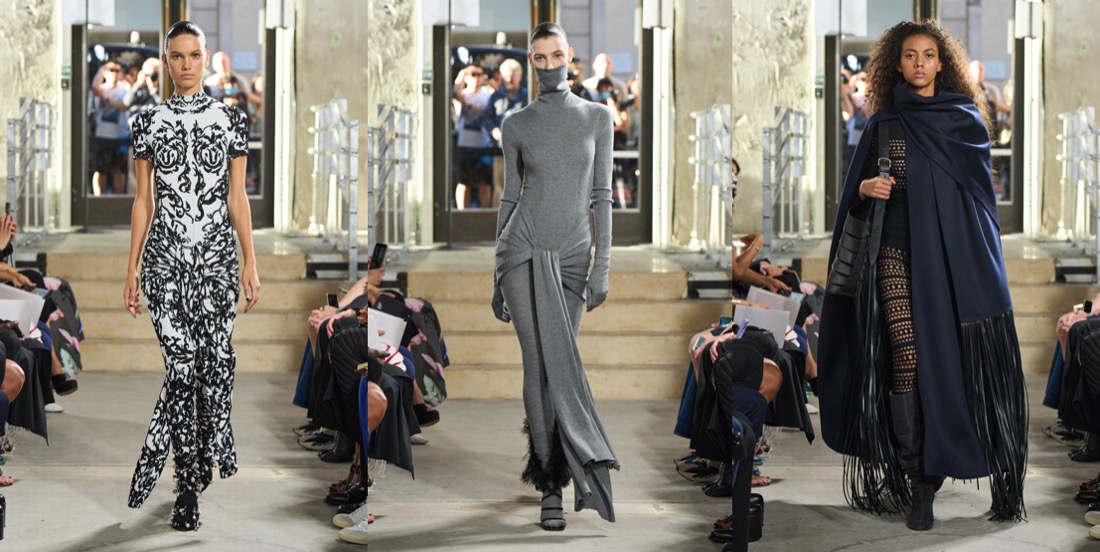
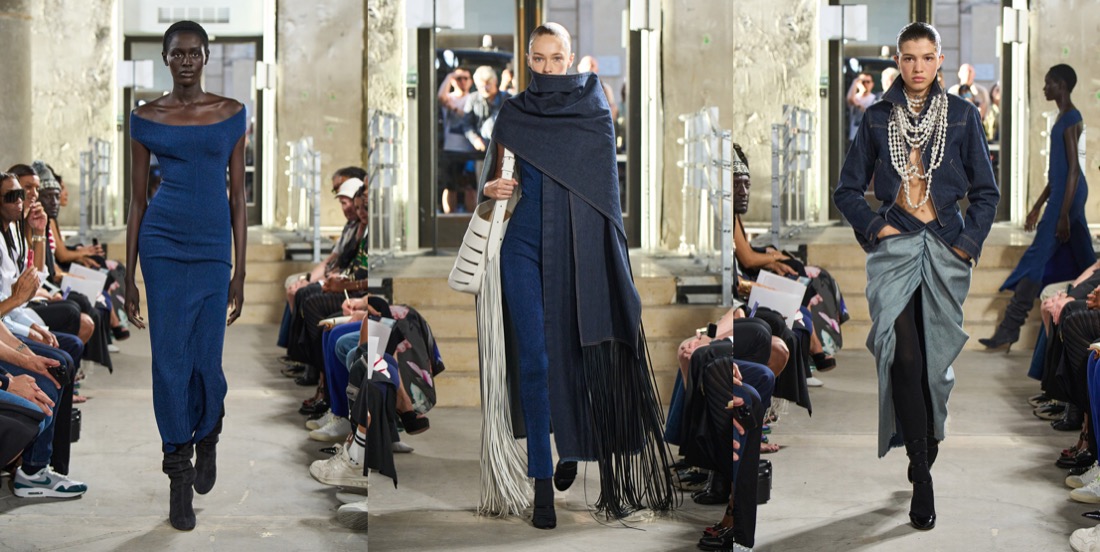
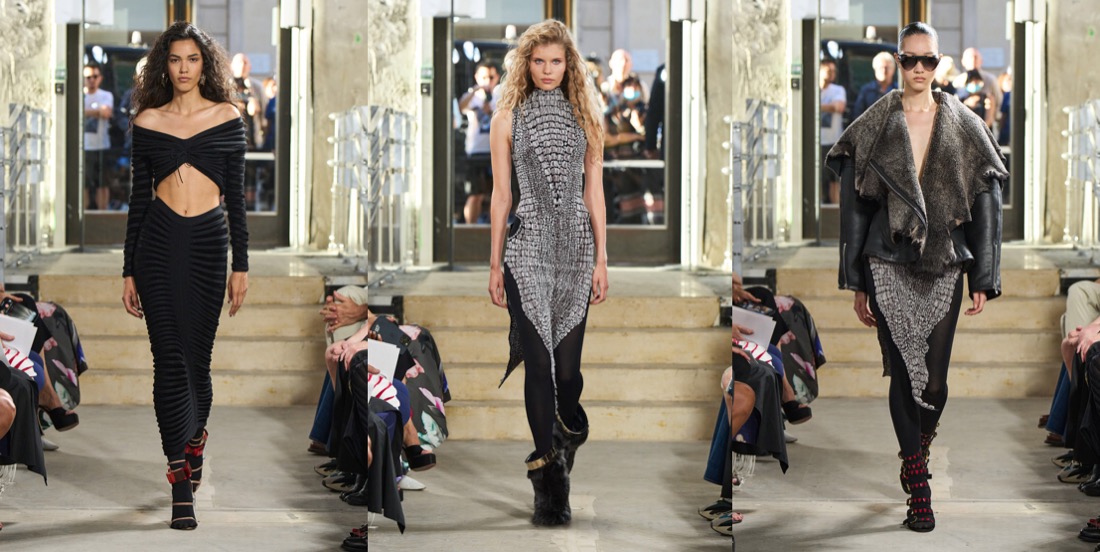
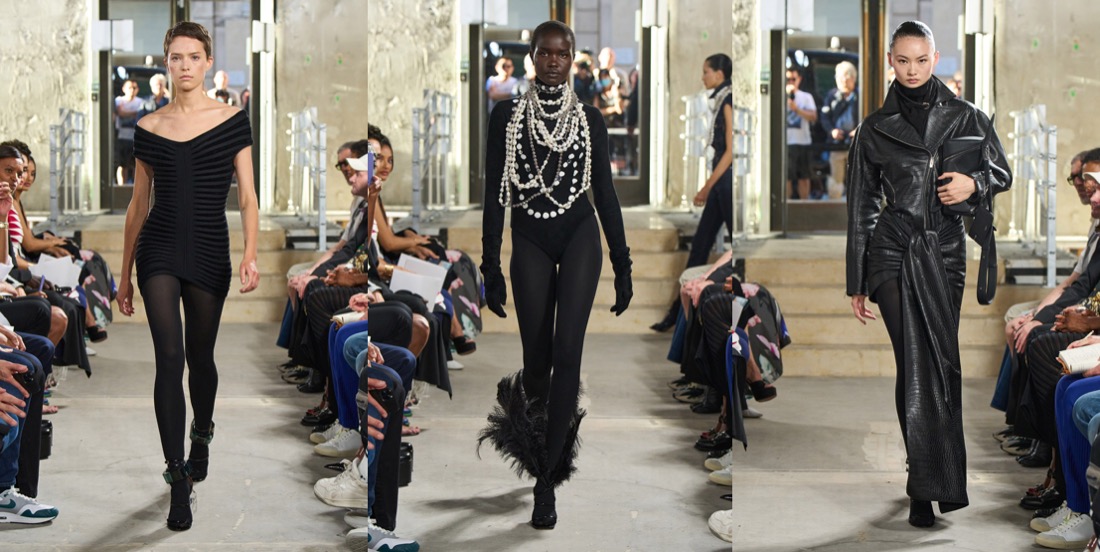
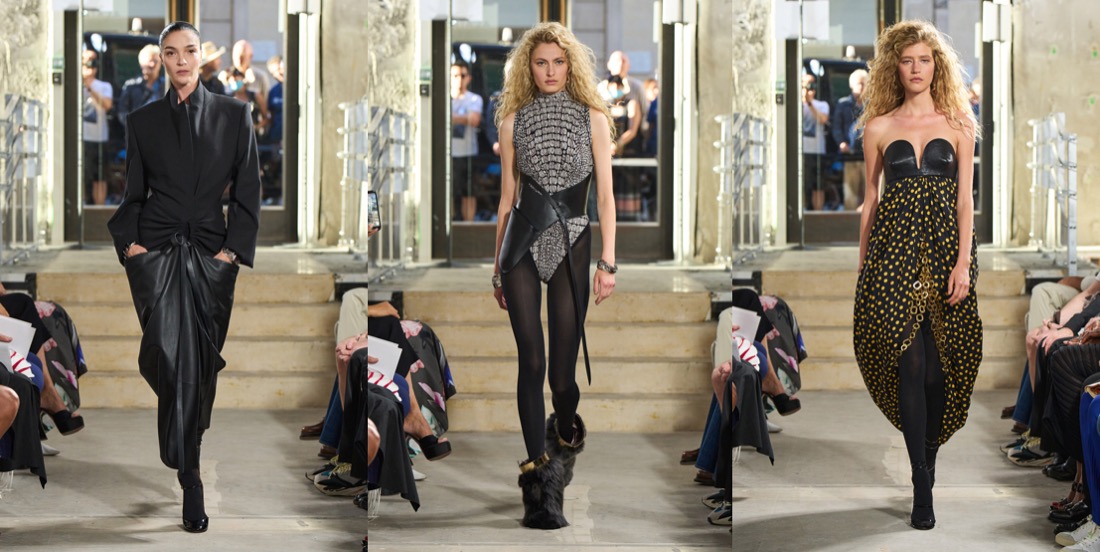
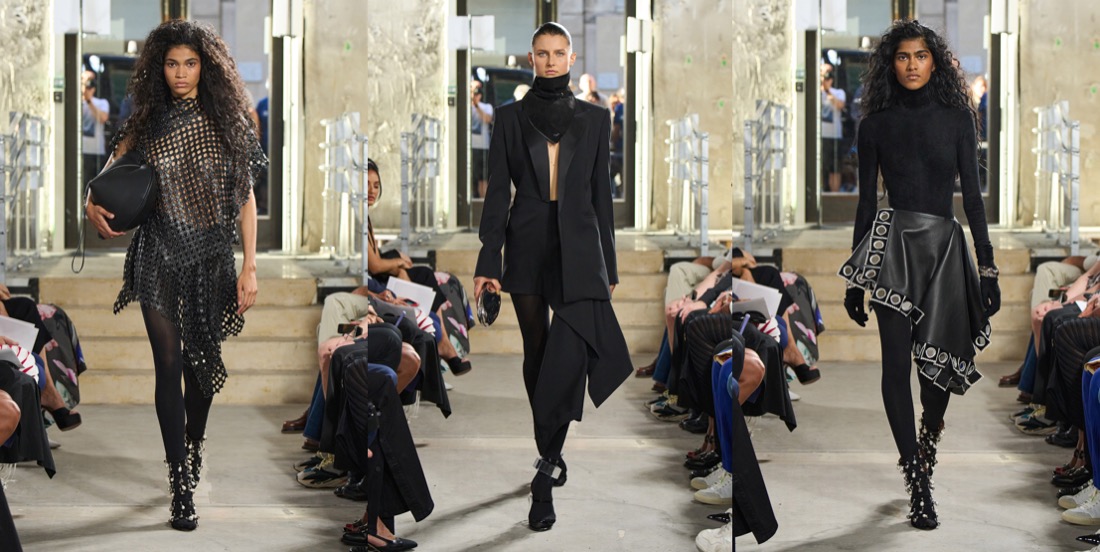
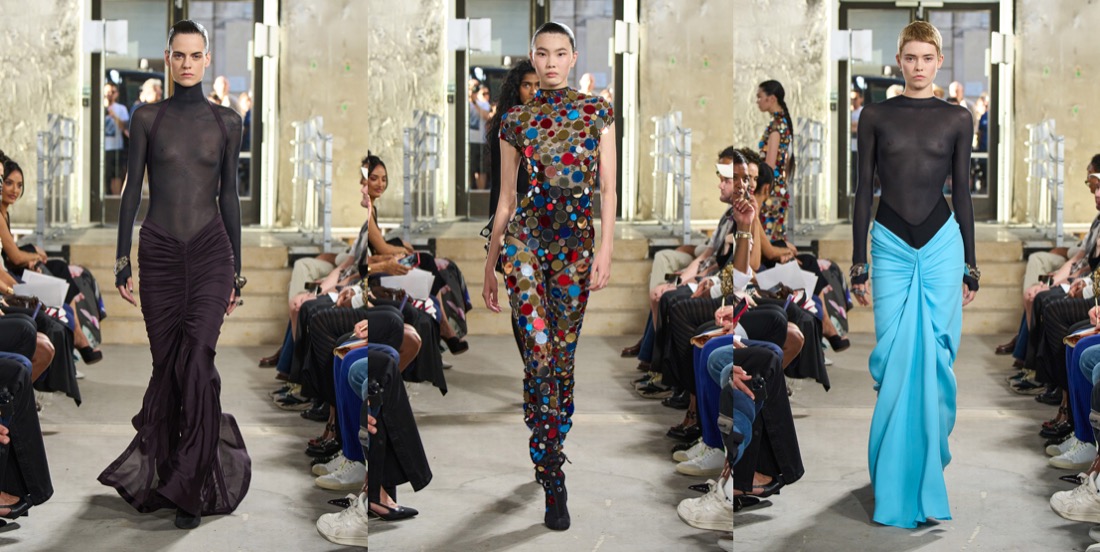
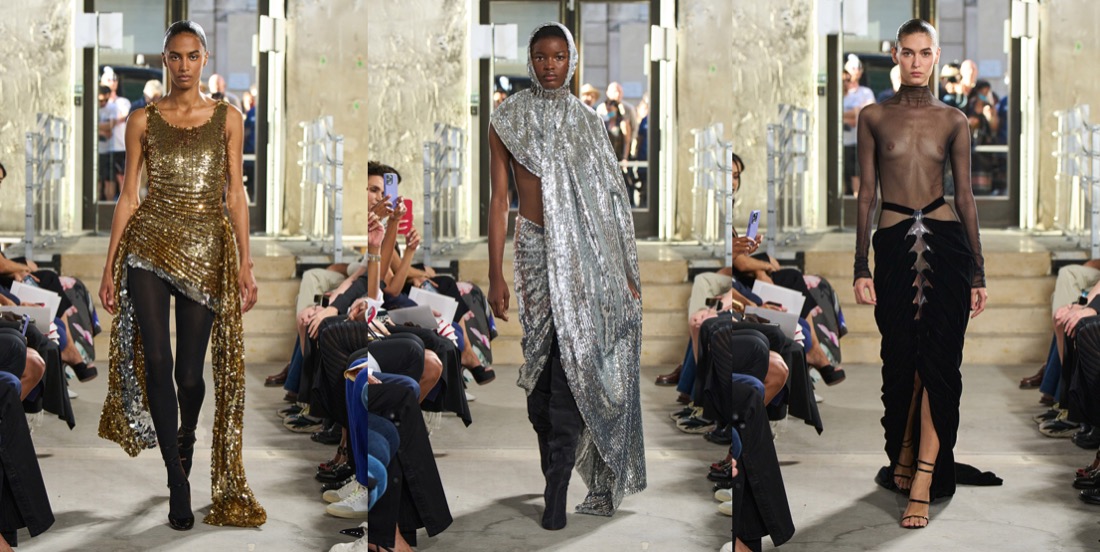
This is Pieter Mulier‘s third season for Alaïa. The Belgian designer has already proved that he understands the codes of Azzedine Alaïa, and is capable to convey them to a contemporary audience with grace, sophistication and refinement. The spring-summer 2023 fashion show, which opened the haute couture week in Paris, was, however, the designer’s most turbulent line-up. It seems that Mulier wanted to tackle far too many Alaïa themes and in the end, the collection read as overcharged and, well, messy. Of course, each garment put separate is a masterful work of artistry and tailoring – we are speaking of Monsieur Alaïa’s studio know-how – but the overall of the collection needed an edit. But let’s start from the beginning.

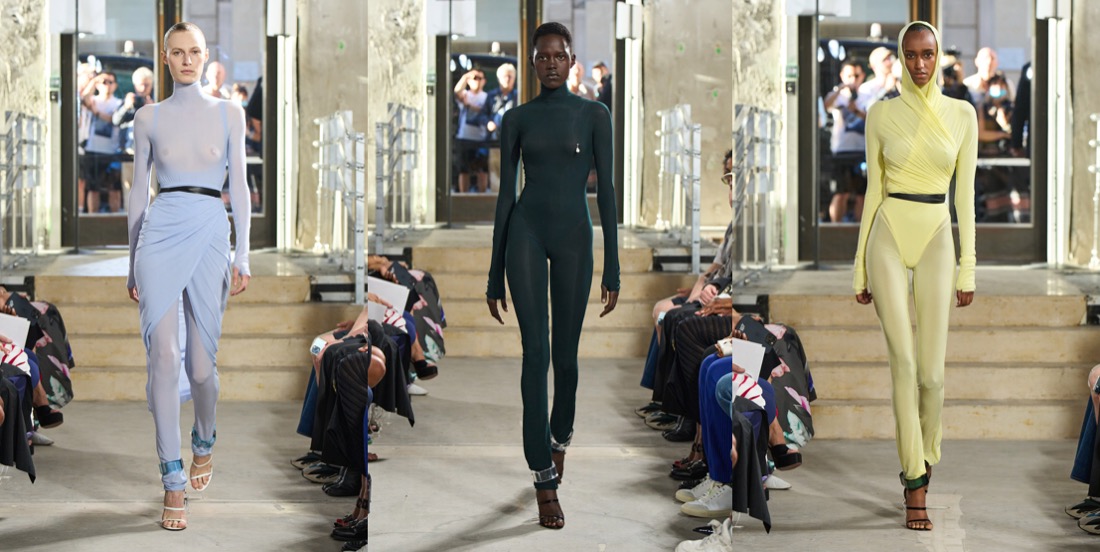
Mulier invited people to the unfinished space that will be the new Alaia store on the Faubourg St. Honoré – an architectural work-in-progress that he saw as the perfect foil for the feeling of his third collection: “something rough and something elegant at the same time.” It crackled with energy; the models collectively channeling a modern vision of the glamazonian power of female physicality that was born in this house in the ’80s. As if to emphasize that it’s dressing the body he’s talking about, Mulier opened with second-skin almost-sheer stretch silk layered bodysuits, the first with a single trompe l’oeil pearl-drop nipple “piercing.” What followed flowed into all kinds of sophisticated twists and turns of draping, wrapping, ruching, and knotting, interspersed with the kind of anatomical knitted body-dresses that are an Alaia wonder. Eyes fell to the footwear: long-haired boots cuffed with huge metallic bangles on cubic lucite heels; black lacquer stiletto heels in the shape of a naked woman’s legs. Mulier has an instinct for the extreme accessory which chimes with today’s hunger for the surreal. The chunky bangles, his own invention, are bound to trigger bounty-hunters, but the suggestive stilettos were reissued Azzedine originals from 1992. Mulier said he’d never had the chance to explore drape in his former jobs (at Christian Dior and Calvin Klein), but if that was ever an ambition, he’s come to the right place. Alaia is staffed with people who have a spectacular and nuanced repertoire of technical skills which enable Mulier to model ideas in 3-D; to make dresses that rely on asymmetry, hip-ruching, suspension, and the North African influences which Alaia used as a source of innovation.

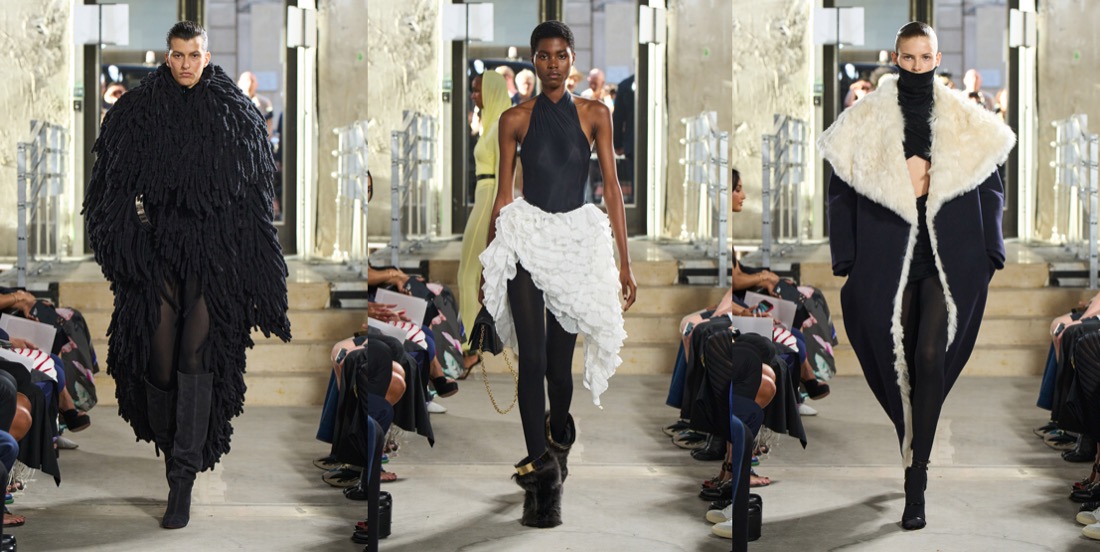
Mulier said he’d been “obsessed with a 1984 show, which not many people know, because Azzedine was basically draping with viscose, and also draping with leather.” In emulating the latter – the leather and shearling – he left edges raw and invented a version of perforated black leather – almost like paillettes – to make a rough-edged t-shirt and tiny skirt that Tina Turner would have worked to the max. The knack of it was to make the complex look almost spontaneous. Again, the craftsmanship amazed, yet the the final result unfortunately felt heavy. There’s a sense that Mulier is learning on the job all the time, and finding the creative balance between respecting the brand’s codes and his own vision of contemporary relevance. It takes time for people to get to know and understand each other in any house where there’s an atelier. The spectacularly erotic finale dress – this one would make Azzedine proud. Somehow, it consisted of a black velvet skirt, suspended from a ribbon-belt, the central drape radiating, by some magic, from a line of vertical geometric transparent paillettes. And on the top, a sheer black long sleeve bodysuit. It looked astonishing enough, walking sinuously towards you, but the real impact of this genius construct was in the back. The draped swoop of the skirt dipped down just a fraction below the line of the bodysuit. Above it was the belt, tied nonchalantly in a bow. As I’ve mentioned earlier: the new Alaïa keeps the extremely high standards of garment-construction. I just wish Mulier would introduce some much-needed lightness to his work, so that these exquisite looks could truly speak, and not fight for space. That’s one of Monsieur Azzedine’s main ethoses: find the right balance.

Collage by Edward Kanarecki.

NET-A-PORTER Limited