Cosmogonies. Gucci Resort 2023

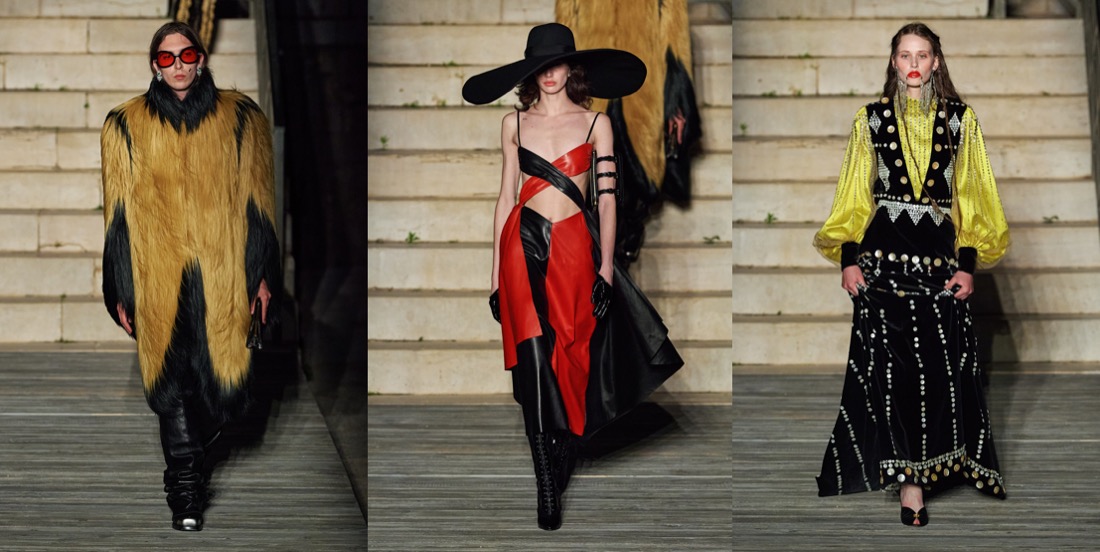
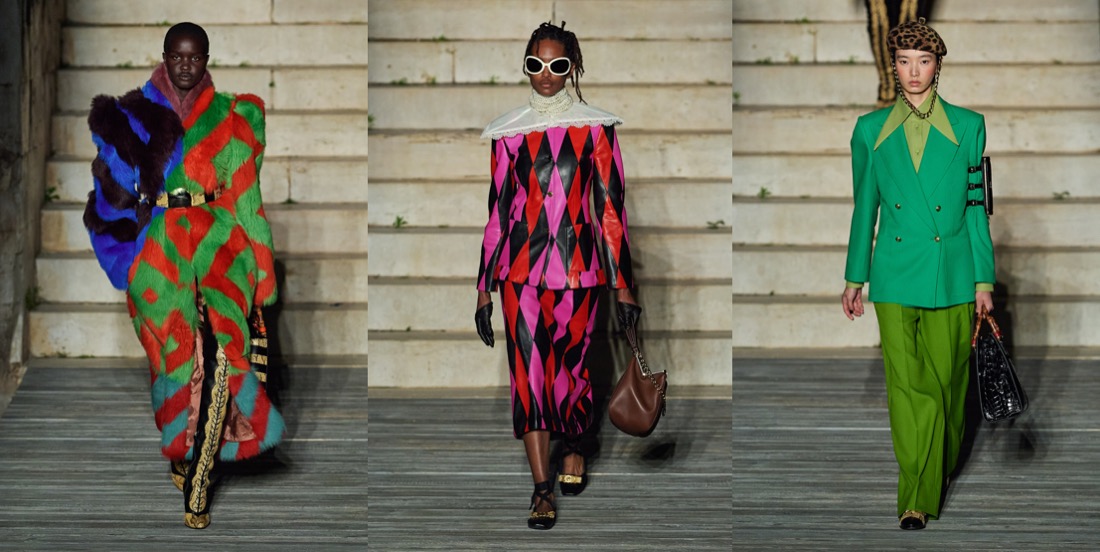
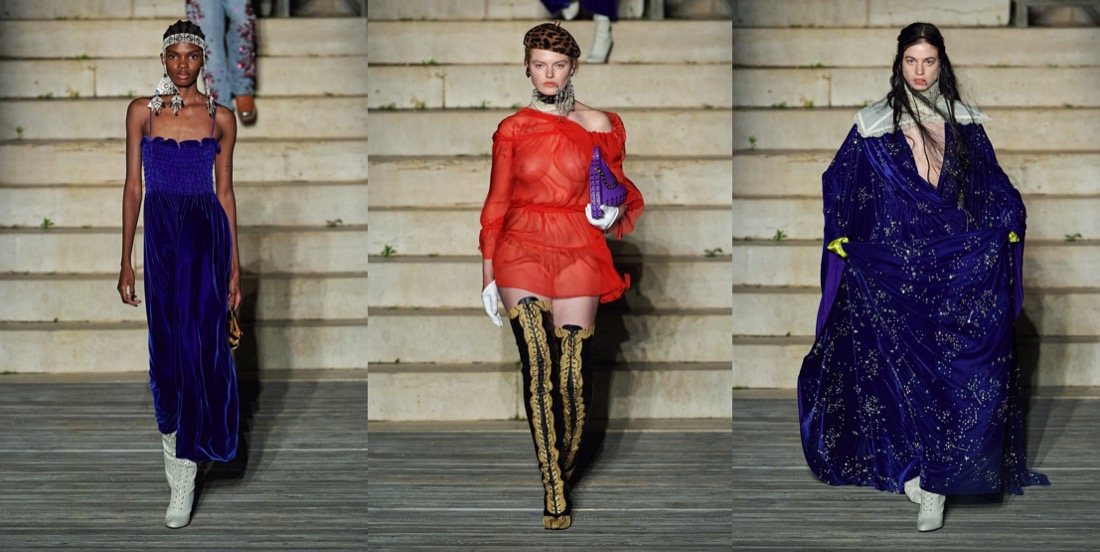
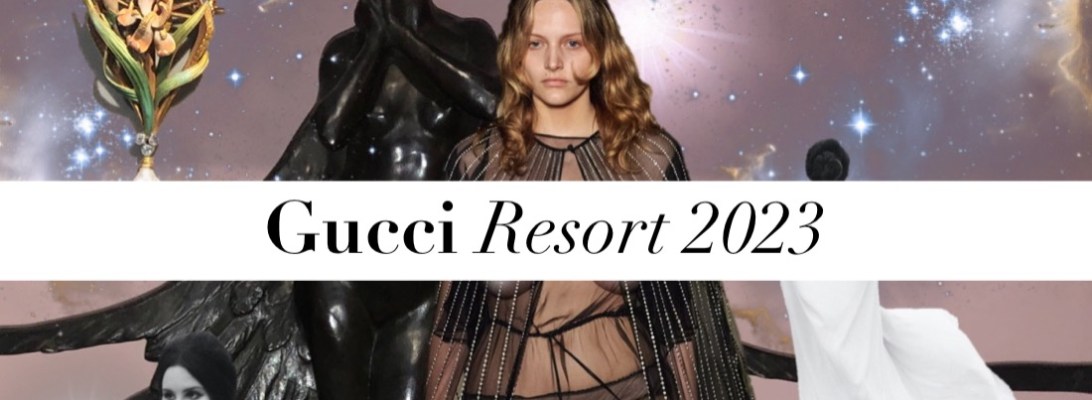
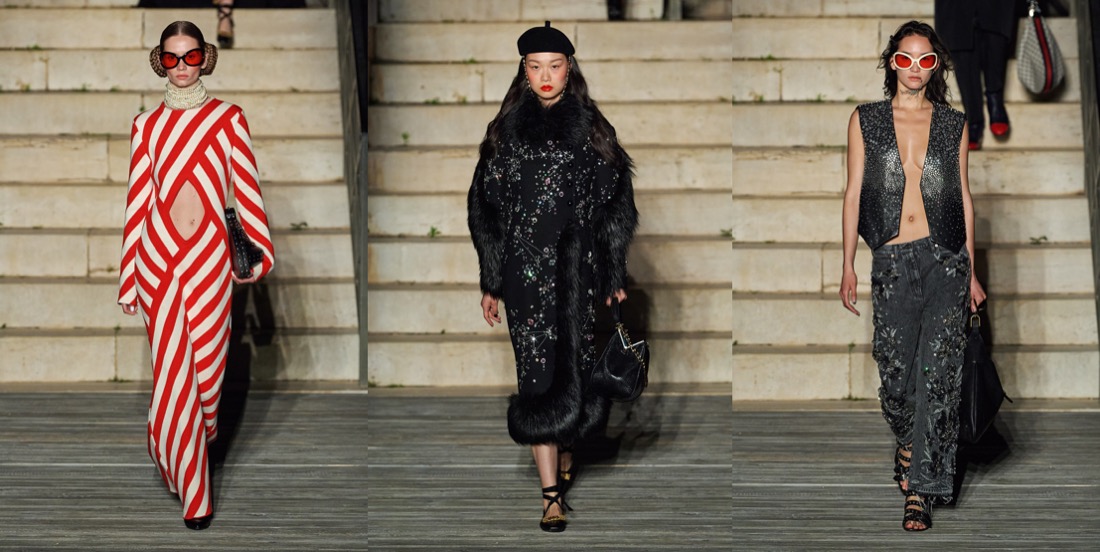
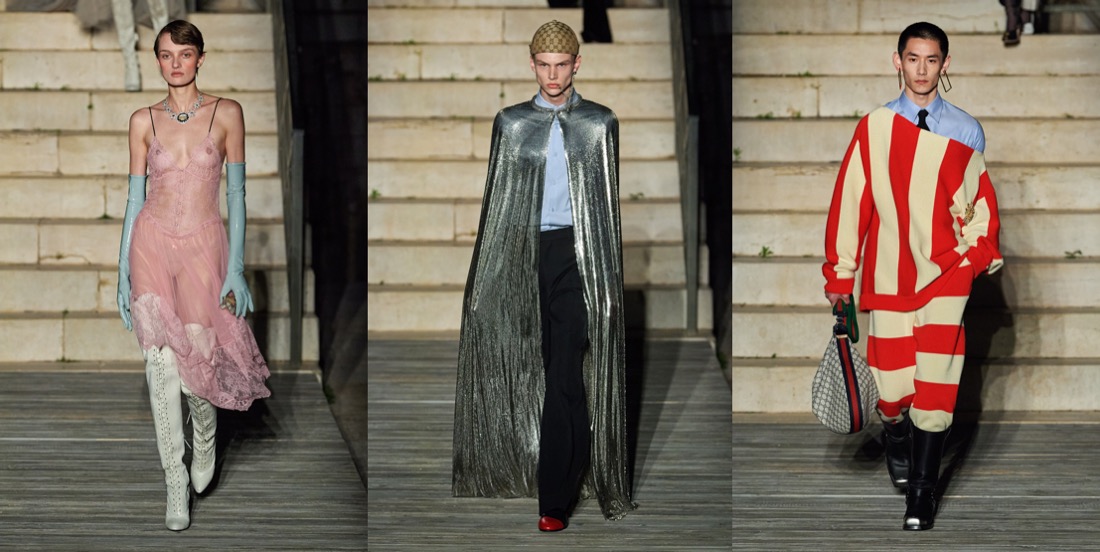
Once upon a time (last Monday), a tribe of cosmic goddesses and priests landed in Puglia and inhabited Castel del Monte – the extraordinary, 13th century castle that actually looks like an alien spaceship. All thanks to Gucci and its resort 2023 fashion show event. Alessandro Michele’s line of reasoning has never been linear. The collections he creates are prismatic affairs, as visually diverse as they are infused by meanings sometimes impervious to easy deciphering. His fascination for layered references and his love of history make him a collector of objects and memories, an archivist of galaxies of images. Not surprisingly, he called this collection “Cosmogonies“. At Gucci, Michele has brought his collections to places of esoteric, disquieting charm – the Promenade des Alycamps in Arles, an ancient necropolis, or Rome’s Musei Capitolini overlooking the Fori Imperiali, where archeological remains give off vibes of splendor and decay. But as far as magical thinking goes, Castel del Monte surely upstages his previous settings. In the castle’s timelessly edgy construction, the number eight was obsessively repeated as an arcane bearer of meaning. It goes without saying that Michele was drawn to the genius loci of this rather setting. “I was looking for a place which gave grace to the mythological,” he explained. “It’s a site where measurements and proportions cross each other as if by magic – the same way measurements of collars and jackets can be somehow magical.” For Michele, the mystery of Castel del Monte resonates with the enigmatic genesis of his creativity, “which operates through the need of putting together constellations of signs and symbols.” Michele’s collections seem to be part of a complex, well orchestrated flux of consciousness, gelled into attractive visual dénouements. While widely Instagram-compelling and immediate, they’re often substantiated by high-falutin, erudite citations. The idea of “cosmogonies of constellations” was born after a reading of German philosopher Hannah Arendt’s essay on Walter Benjamin, whose library was confiscated by the Gestapo, leaving him unable to access to the eclectic network of other people’s thoughts that nurtured his entire oeuvre.
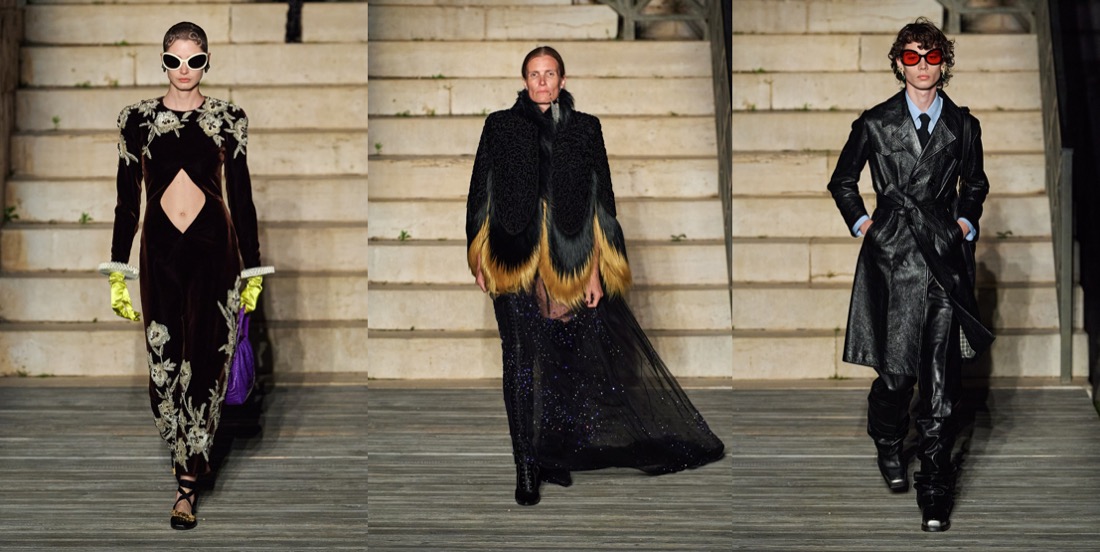
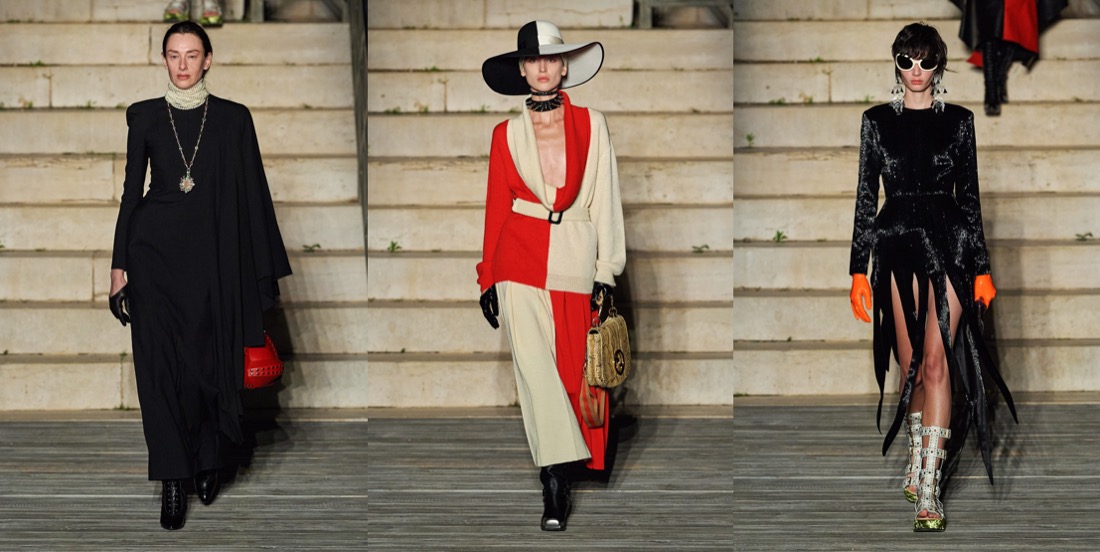
Michele has often built on the tension and vitality of the past to write his own version of the present. “Clothes are mediums, strata of languages,” he said. “Today, ‘making fashion’ doesn’t mean just being a tailor, or chronicling just a one-dimensional narration. Putting together a collection has to do with talking about your idea of the world, because fashion is deeply connected to life and to humanity. Fashion isn’t just a hieroglyph that only élites can understand. It’s about life, it speaks a multitude of idioms, it’s like a huge choir from which nobody has to be excluded. It’s like being at sea, in the ocean, and casting out someone or something is not being fair to the complexity of life.” The designer’s journey this season manifested in a show intended “as a rave,” he explained, where his skills as a costume designer were boosted by the theatricality exuded by the location. “I thought the castle shouldn’t be kept shrouded in silence, but had to be lived and celebrated as it probably was when it was built, a sort of California, the Silicon Valley of the time.” Under a serendipitous full moon, his constellation of characters paraded around the fortress, lit by projections of stars and galaxies. While the idea of cosmogony was only tangentially translated into actual shapes or decorations, the designer’s recurrent theme of metamorphosis was hinted at through unobtrusive prosthetic insertions in some dresses, and also by an unrelenting, flowing panoply of divergences. Chatelaines and go-go girls, demure bourgeois ladies and spectacular nocturnal creatures, long-limbed lovers of bondage sheathed in thigh-high, laced-up stiletto-boots and romantic heroïnes swathed in yards of velvet—it was a feast of coherent discordances, tied together by historical references (portrait collars, plissé gorgets, crusaders’ capes, trains, and medieval crinolines) and by the “incendiary shimmer,” as he called it, of luminous textures under the light. “Women have often worn constellations on their bodies,” Michele said in a sort of conceptual pirouette. “Just think of Marilyn Monroe’s famous last dress studded with crystals; she looked like the beautiful tail of an impalpable comet.” What comes around goes around, but no one performs past-to-present magic quite like Michele.
Collage by Edward Kanarecki.

NET-A-PORTER Limited

Camp-y. Jordan Dalah Resort 2023

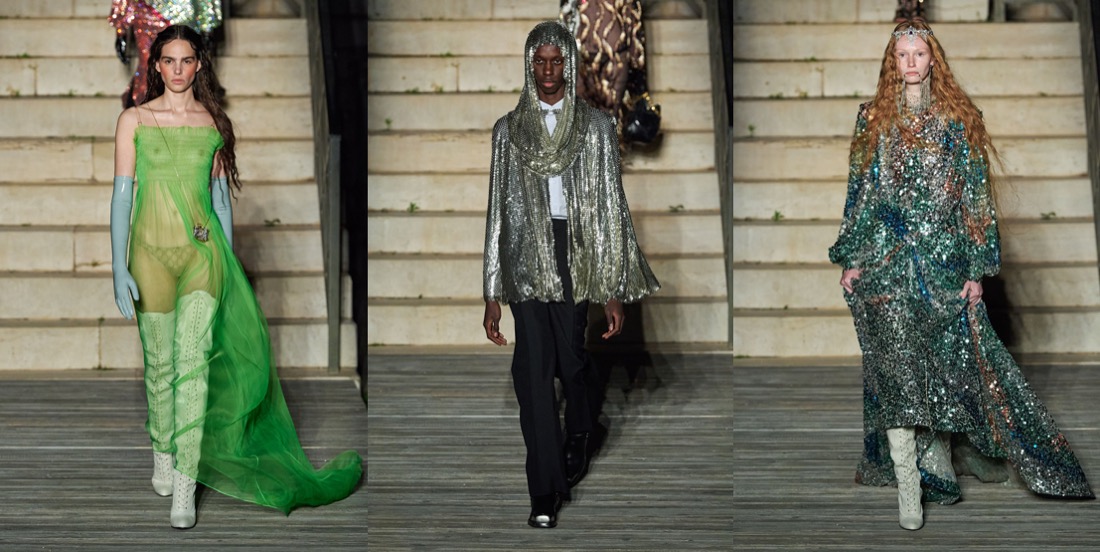
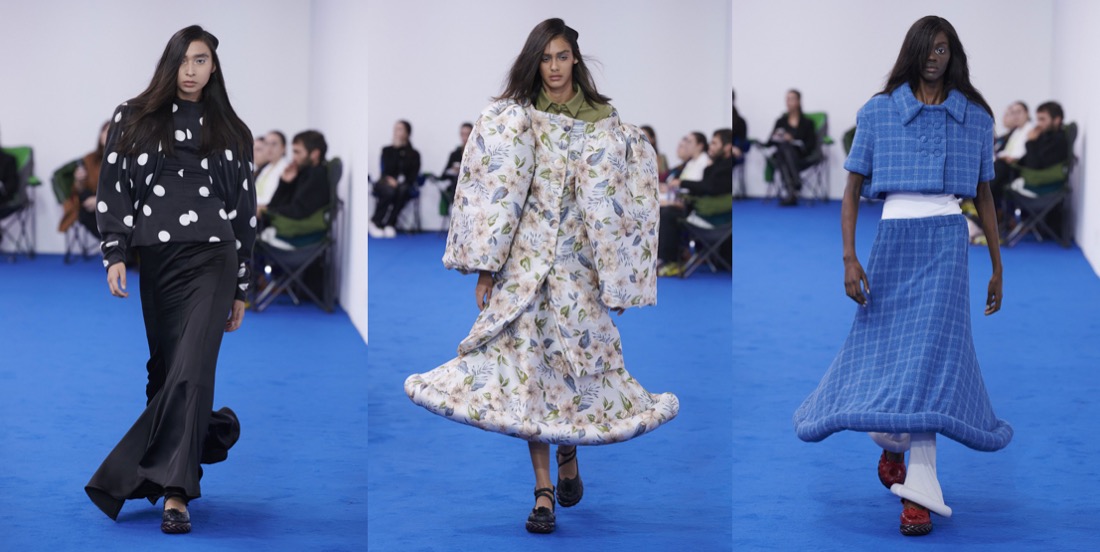
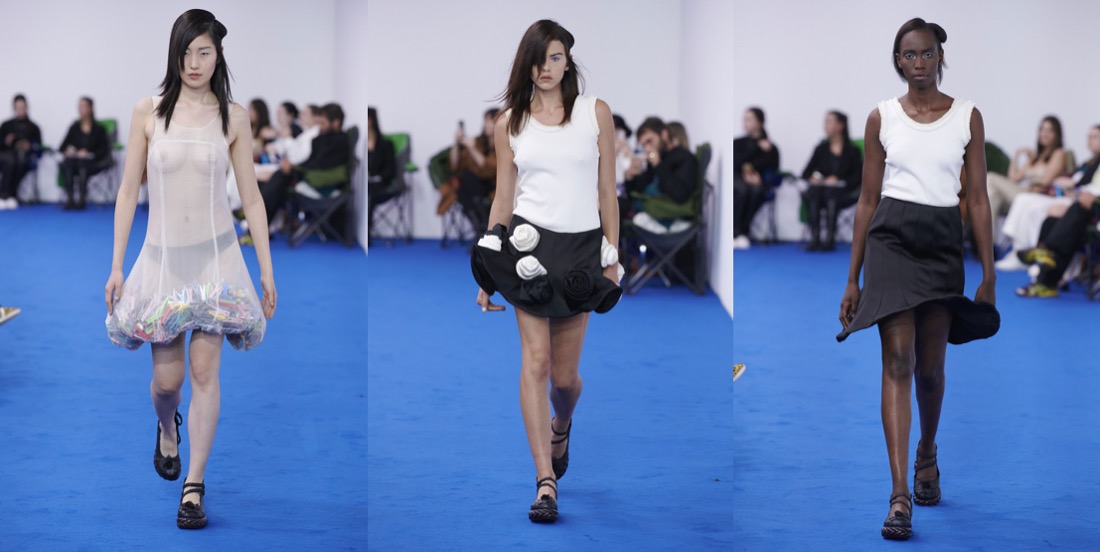
During the Australian Fashion Weeks, I always look forward to Jordan Dalah’s collections. His resort 2023 show was ‘camp’ – not in the Susan Sontag way, but in the literal way. Guests arrived to find comfortable camping chairs instead of the expected benches, while the modern ensembles saw Dalah embrace colour and the beauty of the outdoors. The transparent dress with pegs inside the hems saw an unconventional take on classic Australian backyard imagery, and was a highlight for many. Dalah possesses the distinct ability to combine Australian optimism, raw materials and fearless innovation with European craftsmanship and distinct elevated aesthetic – a skill which can be attributed to his time at Central Saint Martins. The collection saw Dalah expand on his existing vocabulary of voluminous silhouettes, signature hemlines and avant garde expressionism by returning to his Australian roots with designs that are fit for prêt-à-porter release. The collection’s “statement” look came in the form of two ultra-wide, flowing maxi dresses with lengthy trains.  It’s delivering nothing short of high-fashion meets grand couturier meets avant garde editorial realness.

Collage by Edward Kanarecki.
NET-A-PORTER Limited

Past-Present-Future Goddesses. Louis Vuitton Resort 2023

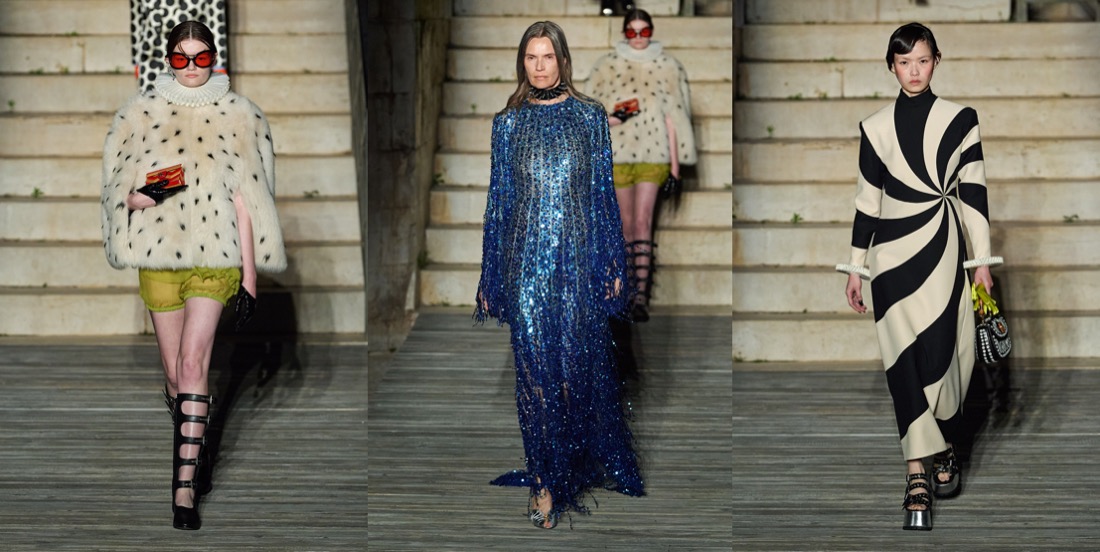
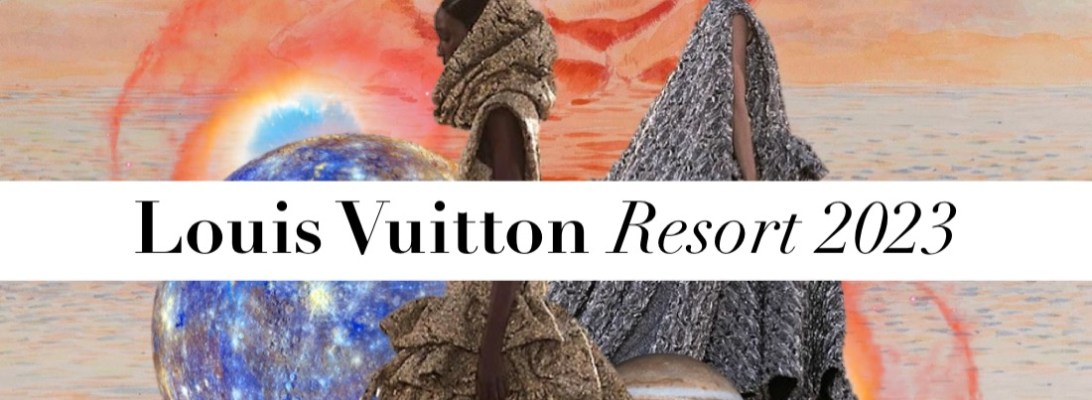
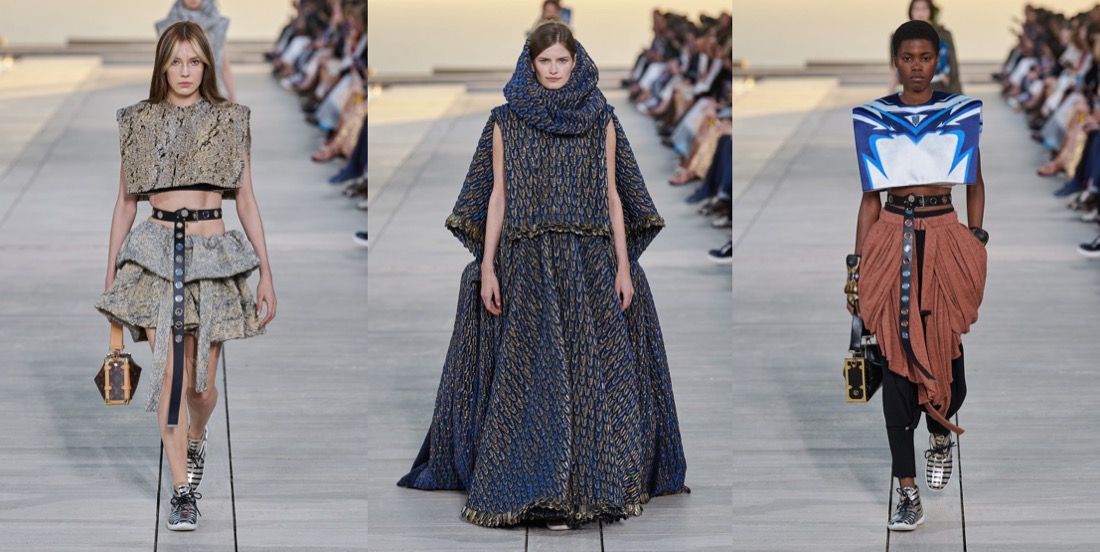
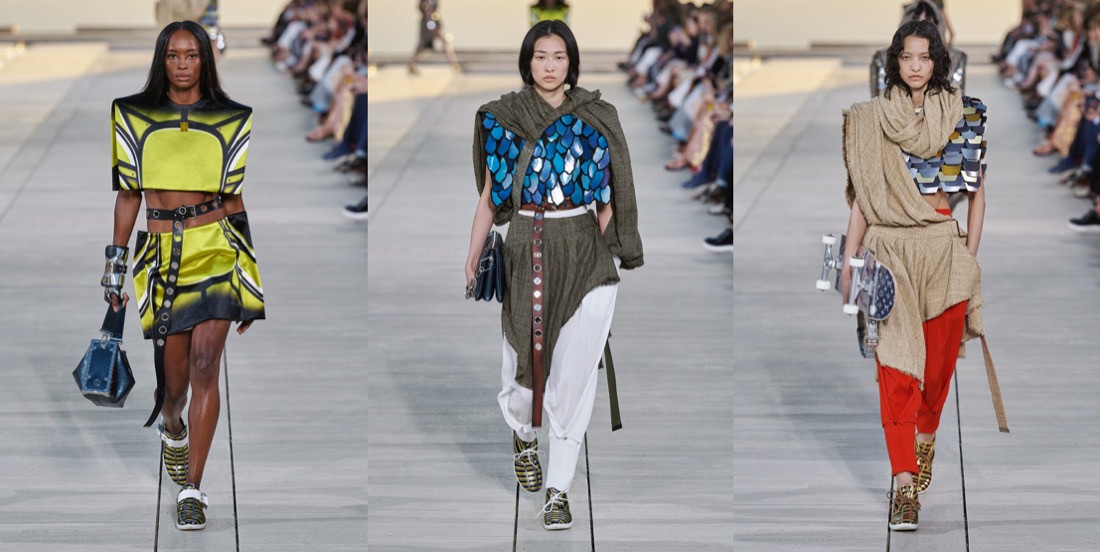
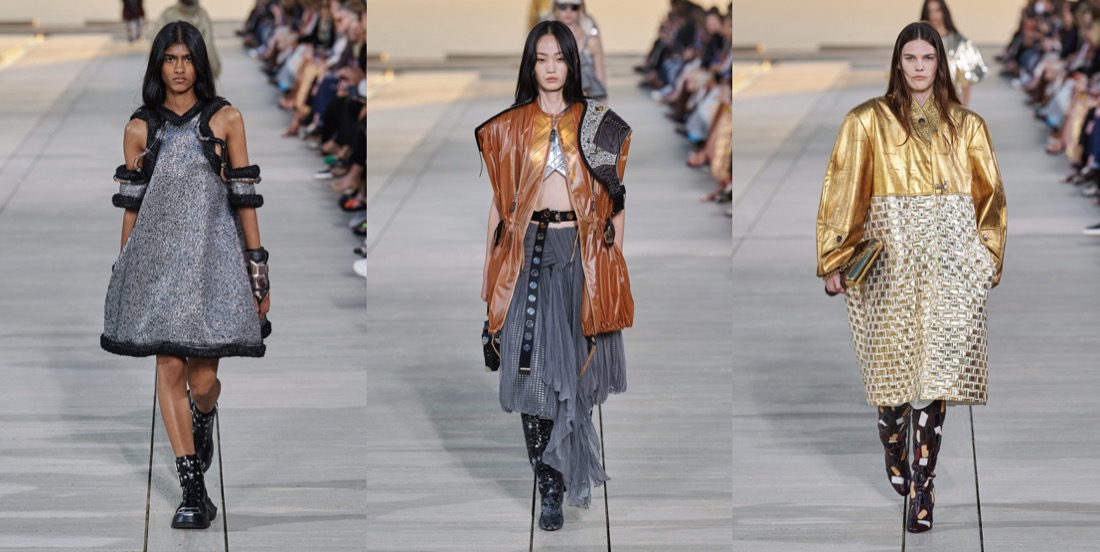
It’s been a while since I truly enjoyed a Louis Vuitton collection by Nicolas Ghesquière. Something clicked again for me. The collection was a powerful ode to goddesses – of the past, present and future. The resort 2023 line-up – presented in La Jolla, California – was a wonderful reminder of how forever-forward this Parisian designer is.

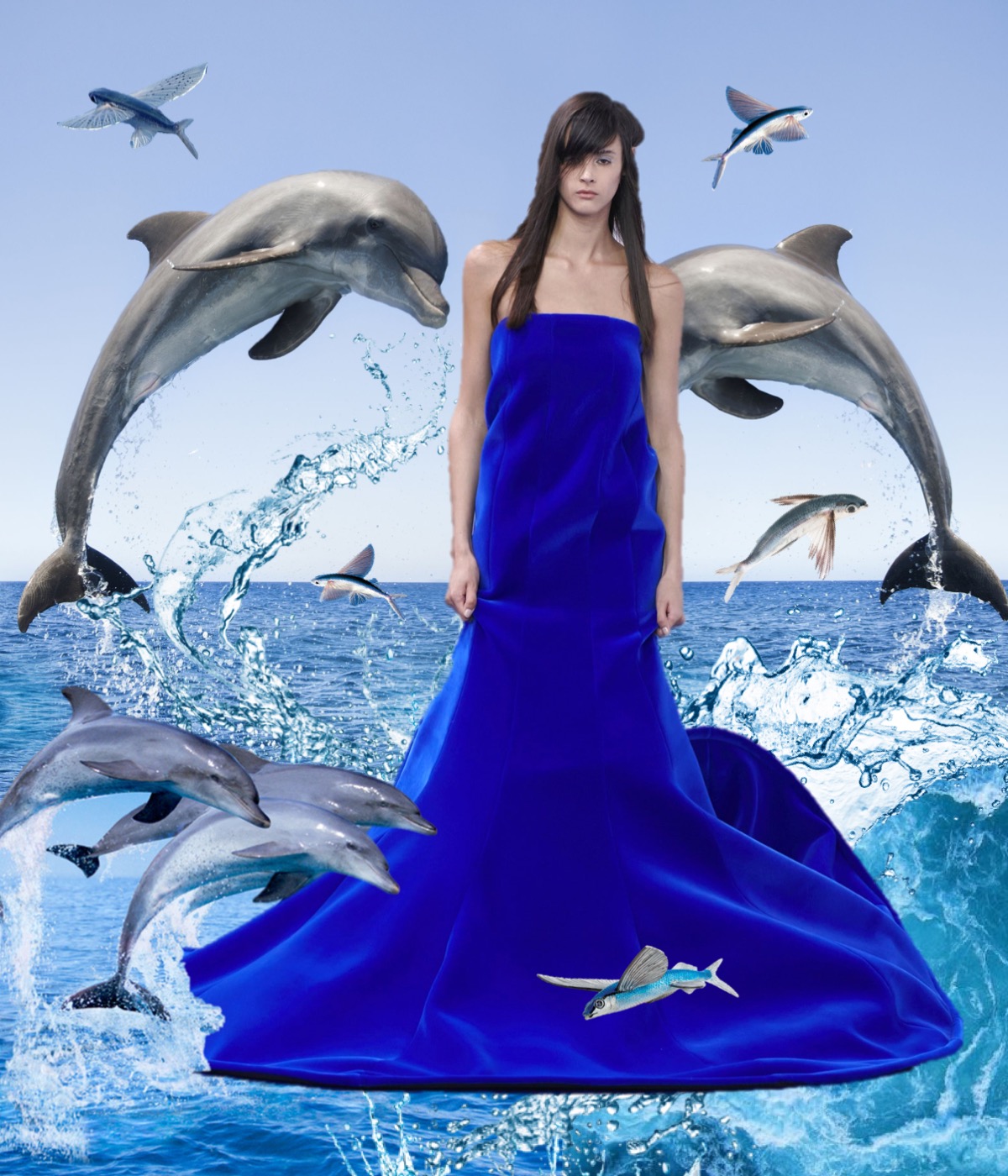
His two post-pandemic Paris shows and the one shown in USA, form a sort of trilogy, starting in the 19th century, making a pitstop in the ’90s of his own post-adolescence, and zooming off into a utopian future. At all three Ghesquière has set out to break down dress codes and build up complex silhouettes. And here’s another Vuitton epic: Ghesquière has made a tradition of staging his cruise shows at architectural marvels. John Lautner’s Bob Hope House in Palm Spring, Oscar Niemeyer’s Niteroi Museum in Rio de Janeiro, I. M. Pei’s Miho Museum outside Kyoto, and now the Louis Kahn-designed Salk Institute in La Jolla. Kahn’s masterpiece, its monumentality is matched by its humanity, but Ghesquière was as switched on by its setting as by its Brutalist concrete. “The guest of honor for the show is the sun,” he said poetically. “The elements are invited.” This was a collection about playing with those elements. He chose metallic fabrics and embellishments that reflected the setting sun, some as glassy as mirrors, and other materials that offered protection from it, wrapping long swathes of linen, for example, around the head and across the body. Other pieces lifted design details from water sports; the airbrushed colors of half tops and boxy short skirts apparently came from jet skis. Ghesquière is a designer whose collections are minutely pored over and studied, and some of these gestures looked like callbacks to earlier seasons, only amplified, maximal where he used to be minimal and streamlined. The show began and ended with a bang. The opening dresses, one more voluminous than the next, were cut from robust jacquards (he compared them to molten lava) that looked like they really could’ve repelled enemy fire. The effect was almost stately, but for the soft-soled sneakers they padded out on. At the finish came a trio of jackets with enormous sculpted collars as shiny as armor perched above tinsel sleeves. These were extraordinary: imaginative and otherworldy. Ghesquière was firing on all creative cylinders here, creating a positive feedback loop. You left wanting to be one of his Amazon superheroine goddesses.

Collage by Edward Kanarecki.
NET-A-PORTER Limited

Dans Paris. Celine AW22

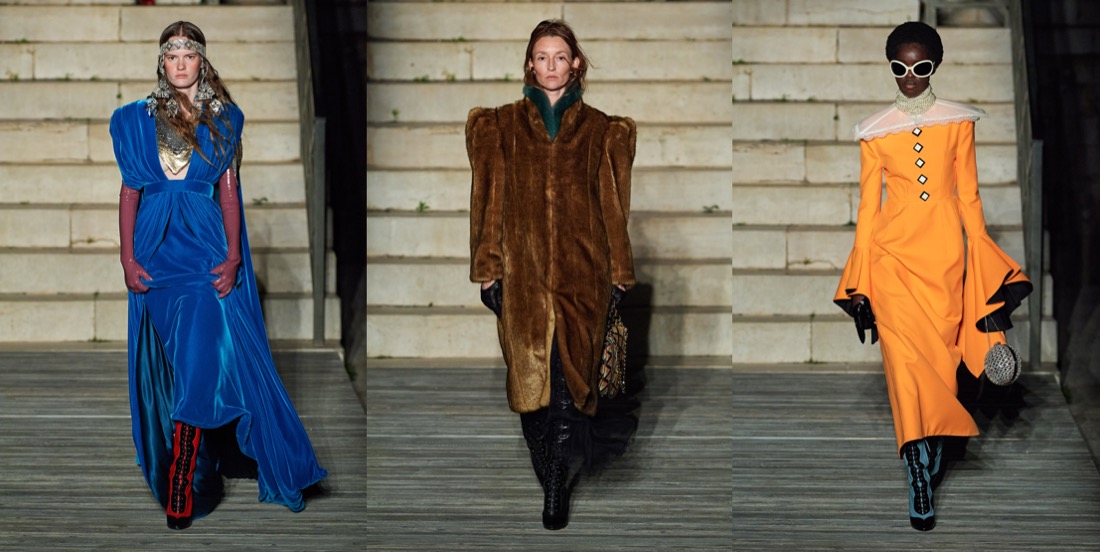
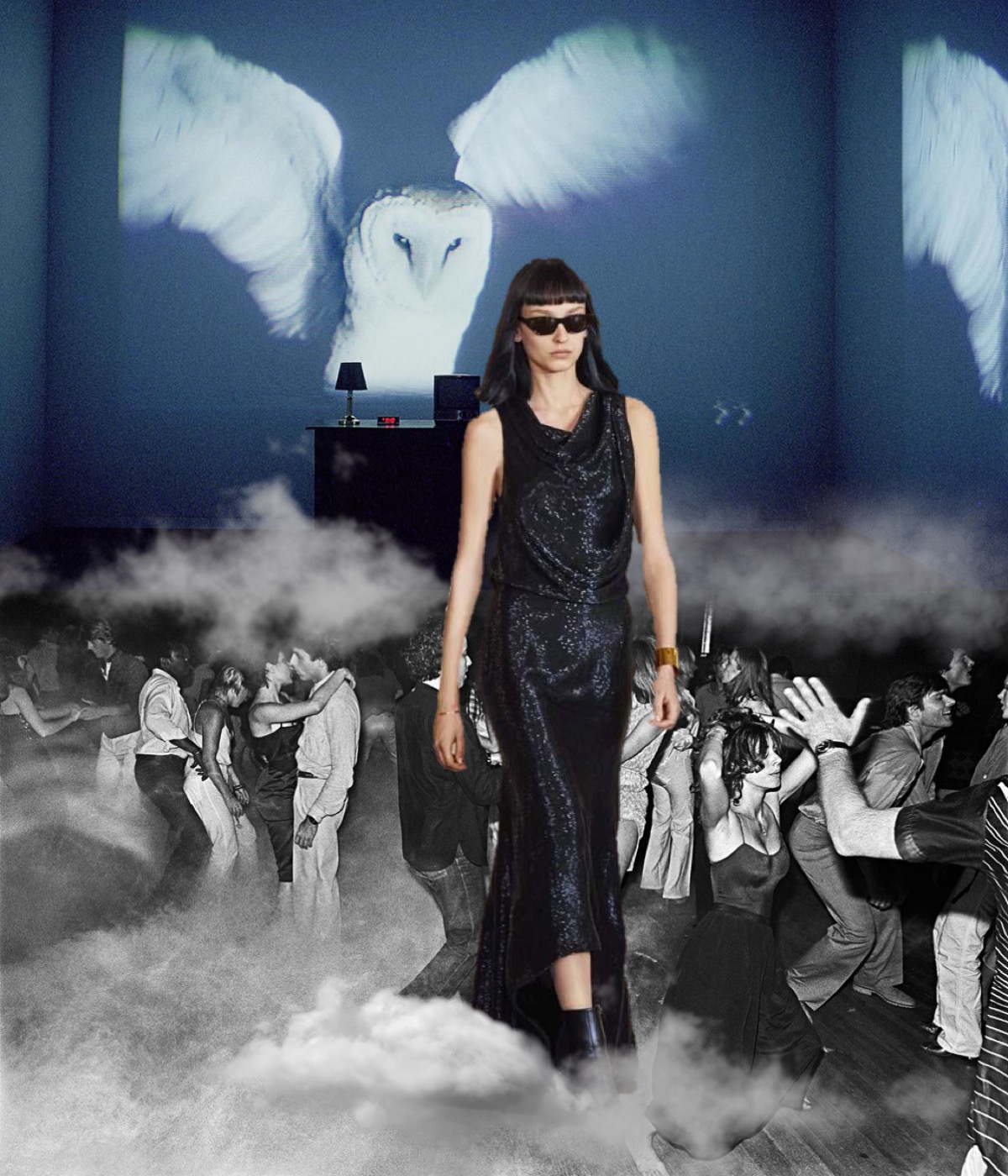
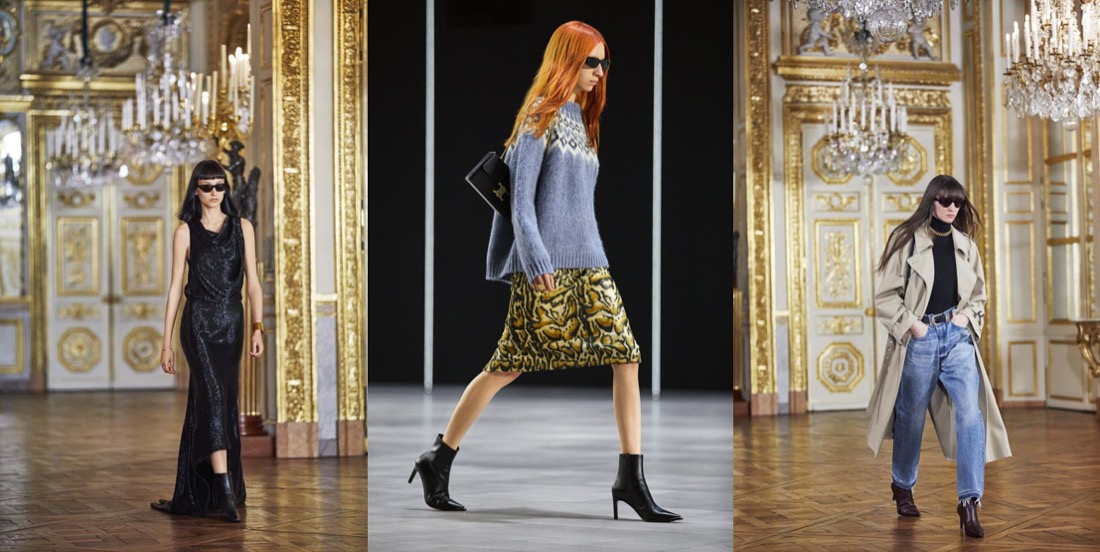
Last week, Hedi Slimane has presented his autumn-winter 2022 collection for Celine, which he chose to stage in two historical monuments in Paris, the Hôtel de la Marine and the the Hôtel National des Invalide. Entitled “Dans Paris“, the show was filmed by Slimane, off the usual Paris Fashion Week schedule and starred Kaia Gerber. Looking at the first half of the collection, you’d be forgiven for thinking that Slimane opted to pare down any notion of extravagance – a tricky feat given the opulent settings. Strolling below the golden ceilings came jeans and everyday wardrobe staples like a cream roll-neck jumper, a jersey zip-up and an oversized grey hoodie so large it extended into a dress. As club sounds pulsated louder throughout the show (provided by NYC-based artist Hennessey), as did the clothes, seemingly coming alive with every beat. Suddenly, sharp heels, sparkly party dresses and gold embellishments weaved their way into the line-up of everyday wear. But, like the dark corners of any sexy, exclusive Parisian nightclub, these pieces weren’t thrust in faces, rather intermingled with the simpler pieces. As usual with Slimane’s Celine, it’s not about novelty, but refining the timeless (and quintessentially Parisian) wardrobe.

Collage by Edward Kanarecki.

NET-A-PORTER Limited

Rejuvenating. Valentino Pre-Fall 2022

Keeping a consistent narrative is crucial for a brand’s credibility today; Gen Z customers, the demographic coveted by every luxury house, are drawn to designers whose work is creative and value-driven in equal measure. That dynamic isn’t lost on Pierpaolo Piccioli, who has rebooted Valentino for a new audience, amping up the brand’s cultural ethos to resonate with the zeitgeist. Pivoting on the label’s extraordinary couture heritage, Piccioli’s focus is to translate the codes of Italian savoir faire into an aesthetic that, while staying true to its high-style fundamentals, speaks to the attitudes of fashion’s younger consumers. This ongoing exercise somehow peaked, both visually and conceptually, in Piccioli’s spring collection last October, paraded in the streets of Paris with fashion students filling many of the seats. Models sported individual looks styled to suit their personality, further highlighting the intent to relate to the world of today. Picking up where that show left off, the words ‘real’ and ‘reality’ came up quite often in a conversation with the designer about pre-fall. Piccioli believes that the aesthetic codes of the maison can be given a different meaning by shifting the way they’re interpreted by the wearer. To that end, for pre-fall he worked on pieces quintessentially Valentino (so much so that some templates came directly from couture collections), but “shuffled the attitude,” as he said, and tweaked the styling to create a sort of dissonance and vitality.

Shot in the streets of London on young models, the lookbook images were conceived as a “portrait of a generation that wears clothes not necessarily different from those of 10, 20 years ago, but which are adapted to today’s lifestyle and our real social context,” said Piccioli. Case in point was the little black dress, a staple for cocktail receptions in a bourgeois milieu that Piccioli believes can be twisted into a sort of clubbing uniform. On the same note, an immaculate short white cape with matching pleated shirt that would’ve looked apropos on Marisa Berenson in the ‘70s if paired with high heels and a silk blouse, was given a cooler spin styled with a cropped marinière and chunky loafers. A sumptuous purple robe coat, lavishly embroidered with the Valentino atelier’s handcrafted couture techniques was turned into a citycoat and worn over a pair of distressed denim pants. The challenge Piccioli faces is to immerse into today’s complex reality a label whose imagery is rarefied and rooted in a world of privilege, twisting the references and techniques of couture to suit a modern way of dressing that favors personality instead of status. “I want to breathe life into Valentino,” he reiterated. “I want its idea of perfect beauty to be somehow stained, so to speak, by the reality of today’s life, and to make it alive and relevant for a community of people with no reverence towards fashion, but who inhabit fashion with sentiment and an attitude of personal creativity.”

Collage by Edward Kanarecki.

NET-A-PORTER Limited