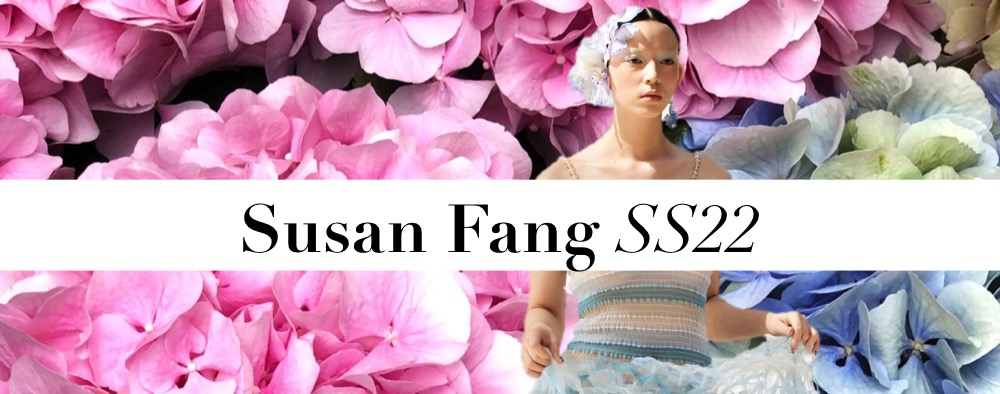
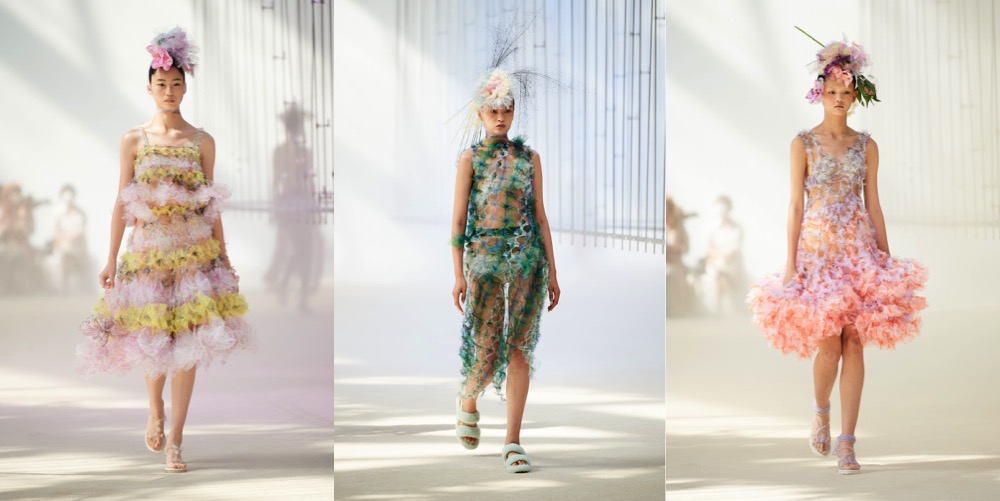
After a week-long blog pause caused by a major computer crash, I’m back! I planned to write about Susan Fang‘s enchanting spring-summer 2022 collection a week ago, but then my Mac’s hard drive went dead… luckily, it all ended well. Fang is a highly emotional designer in tune with the tenor of our times. Shown on a lightly misting runway in Shanghai back in October, the collection took texture to extreme and radical new places: she’s created a new material technique of folding tulle she calls “air flower” inspired by broken flowers and sliced fruits that repeats across the body in open-weave, netlike dresses, tightly latticed minis, and explosive, ombré poufs. The pieces are instantly appealing in both a visual way and in a sensory one, thoughtful to the bodies inside them and the observers taking them in. The exuberance and joy in each of Fang’s pieces belies an underpinning of sadness, though; like the best Dutch still life or memento mori, her frilly garments mark a passing of time or encapsulate the multiplicity of time itself. She quotes Einstein’s Dreams, a 2004 novel by Alan Lightman about the creation of the theory of relativity: “Suppose time is a circle, bending back on itself. The world repeats itself, precisely, endlessly.” Her work is almost precise, marked by engineering and repetition, but it’s never without a thoughtful touch. When she speaks about regenesis, self-love, and progress, you get the sense she operates in that special place between science and art. Place Susan Fang on your fashion radar!
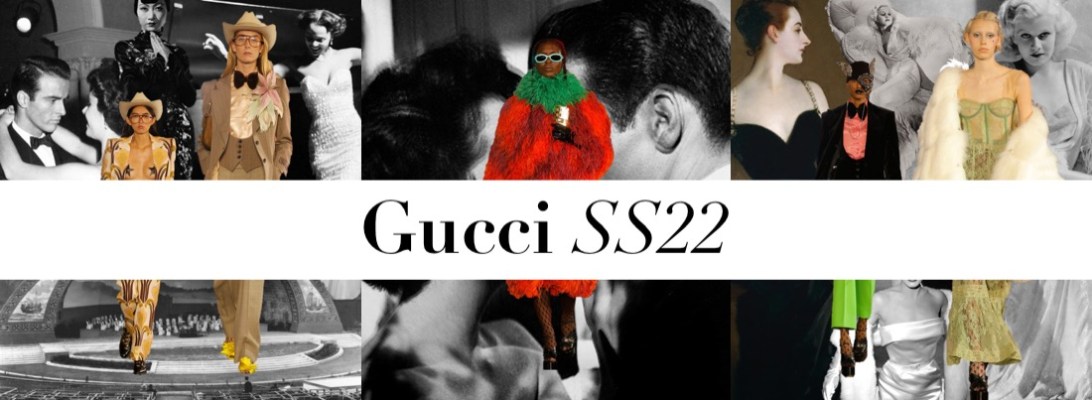
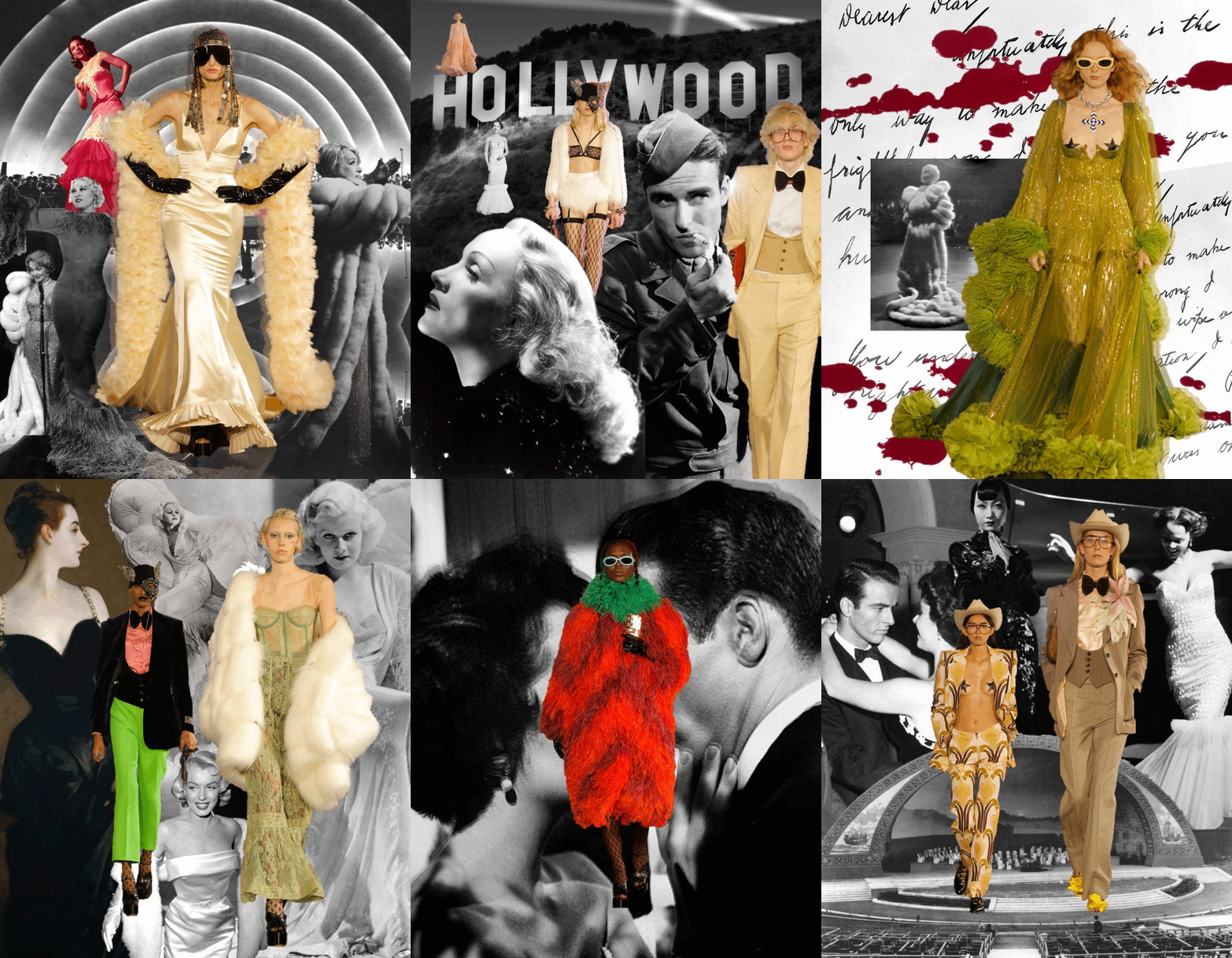
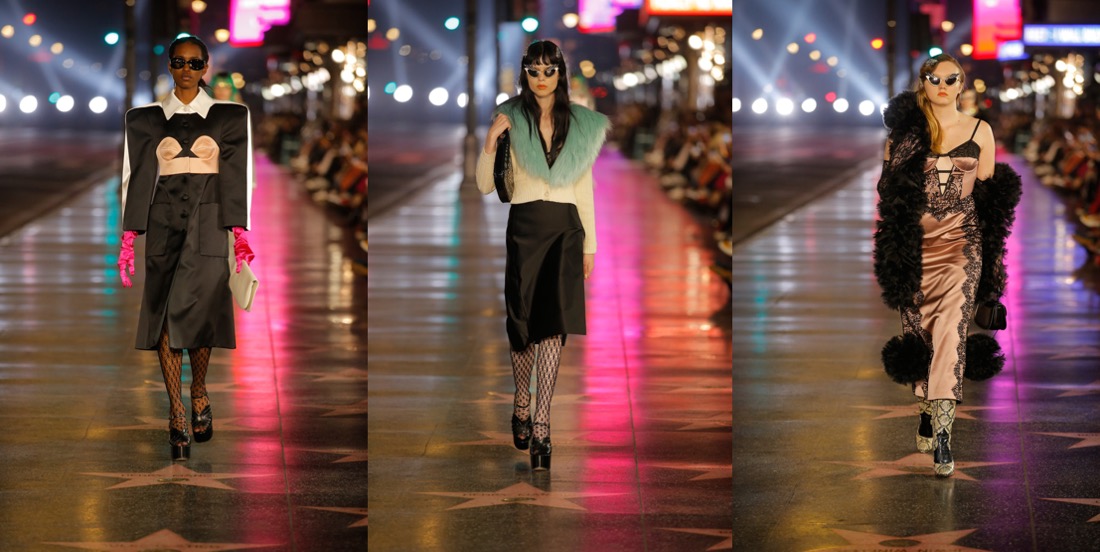
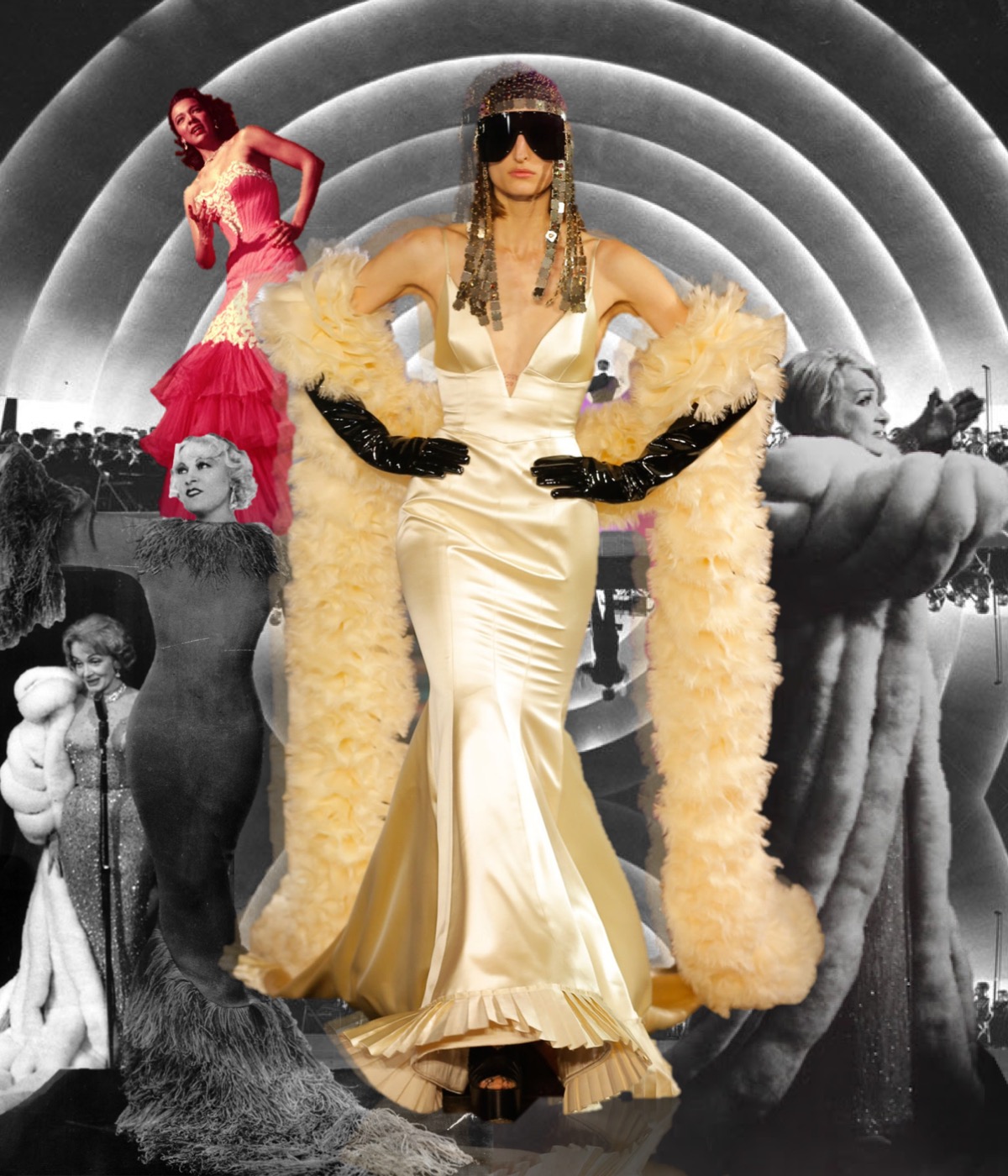
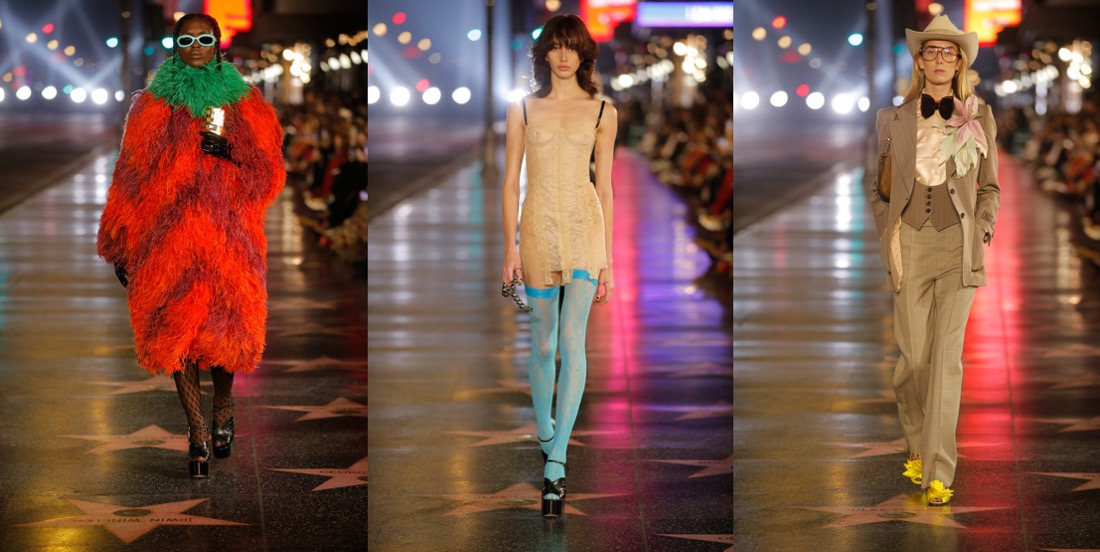
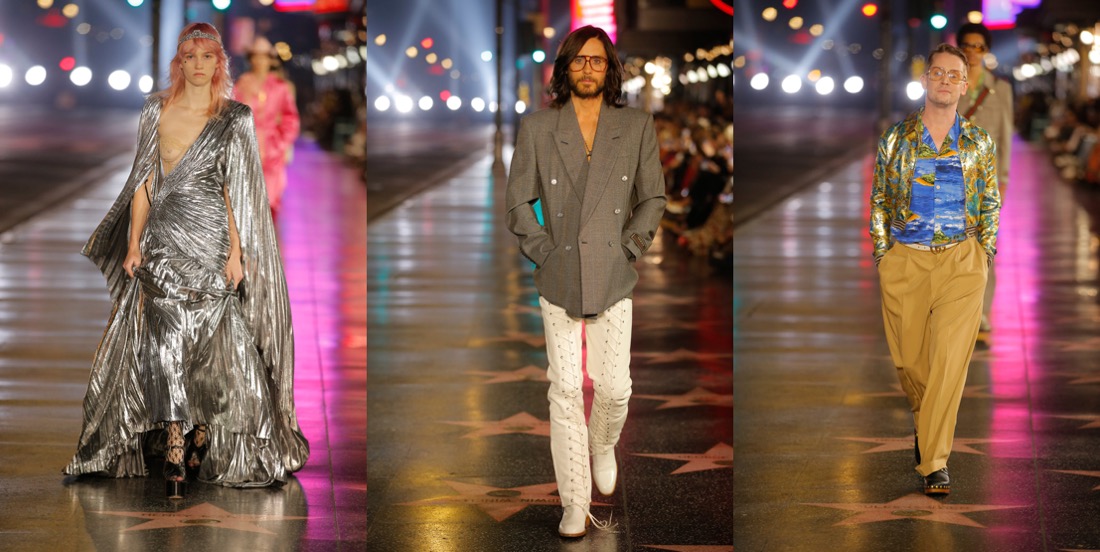
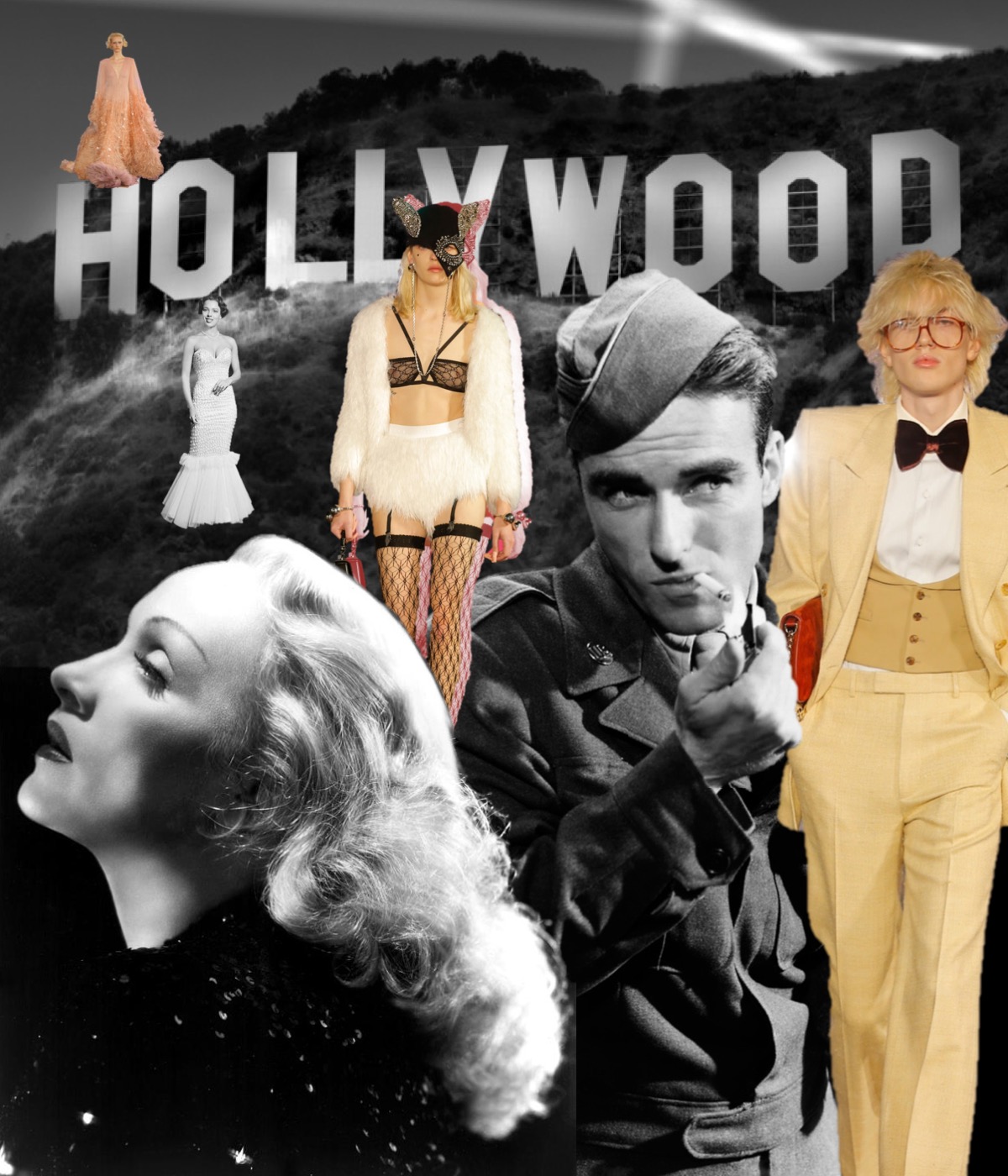
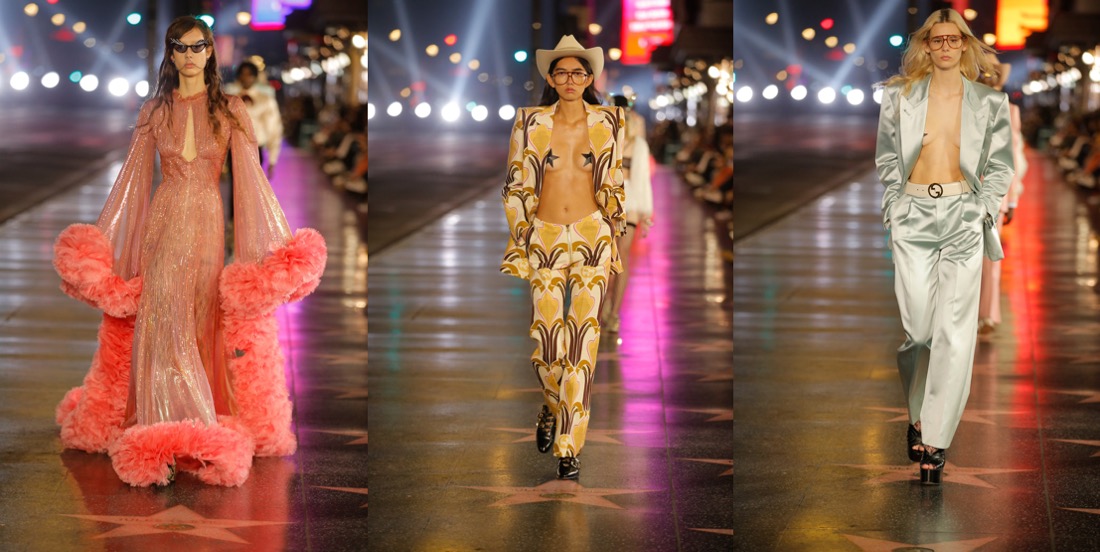
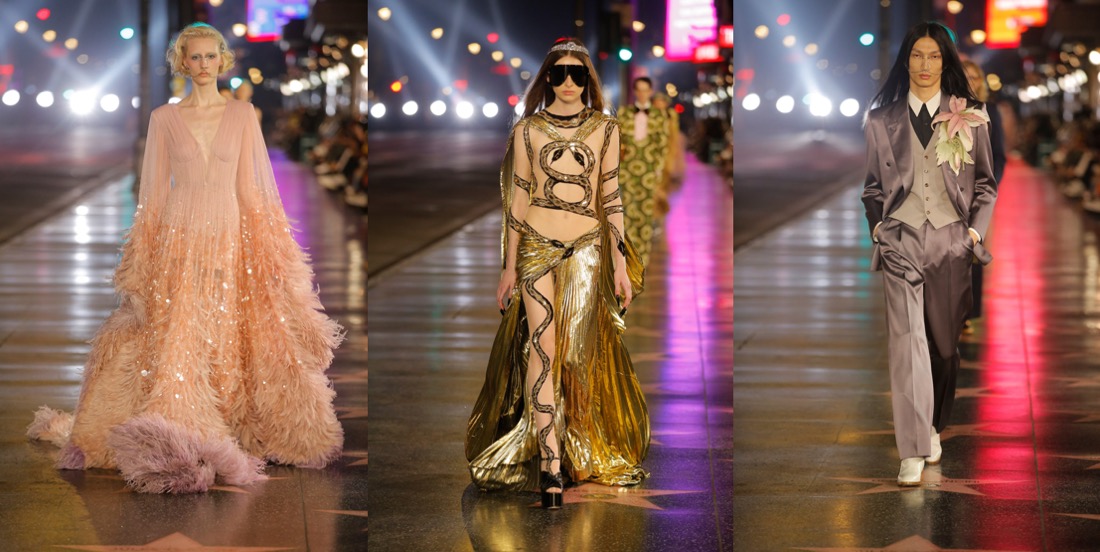
Alessandro Michele‘s latest Gucci adventures are just beyond words. Going for extreme glamour after nearly two years of lockdown style is the best thing one can come up with for spring-summer 2022. But Michele pushed the envelope in festive dressing even further. Gucci’s name has long been linked with Hollywood, long before the upcoming “House of Gucci” film starring Lady Gaga, and its connection with the movies was everywhere you looked at Alessandro Michele’s fab fashion show. There, in the front row, was Gwyneth Paltrow, wearing an updated version of the Tom Ford-designed red velvet Gucci tux she sported circa 1996. And there, on the runway, were a dozen celebrity “friends of Gucci,” including Macaulay Culkin, Miranda July, Jodie Turner-Smith, Phoebe Bridgers and Jared Leto. The backdrop was the iconic Chinese Theater and Hollywood Boulevard itself – “that temple of the gods,” Michele called it. The designer credits his mother, a movie buff and an assistant in a production company, with encouraging his love of old Hollywood. But equally this collection was about contemporary Los Angeles, a place the designer first visited at the age of 27 and that he has much affection for. “LA is not a fashion city, but it’s so fashionable,” he said backstage before the show. “Sometimes they are not appropriate, but in being not appropriate they are so precise. Maybe it belongs to my way of looking at fashion – it’s personal.” When it was finally time to return to in-person shows after two seasons of the virtual experiences that lockdowns required, Los Angeles seemed the obvious choice. Seven years into his Gucci tenure, he’s presented in New York, Paris, Rome, and most often Milan, but Michele’s collections have never made more sense than this one did tonight on Hollywood Boulevard, with its neon lights and Walk of Stars. At the post-show press conference, Michele said he originally wanted to be a costume designer. He spent part of the day today at the freshly opened Academy Museum of Motion Pictures, where he admired a bow-covered Shirley Temple dress, among other pieces. On the topic of special occasion dresses, it’s fair to say he raised the bar for himself this season. With their cinematic sweep, if his gowns don’t make it to a museum, we’ll surely be seeing them soon on an awards show red carpet. With his hungry eye, he’s absorbed all manner of Hollywood tropes, and mixed in with the screen sirens were would-be stars fresh off the bus in calico dresses, with dreams as big as their 10-gallon cowboy hats. “My Hollywood is in the streets,” he said, and the sartorial-sporty mix of wide-lapeled jackets worn with brightly colored knit leggings and running sneakers did look lifted from real life, combining post-pandemic polish with the famous California ease. As for the sex-toy jewelry, and the erotic undercurrent of skintight latex and see-through lace, Michele reminded the press conference crowd that Gucci isn’t a “monarchy of bourgeois” like many of its heritage brand peers, but has its roots in the “jet-set, artists, and cinema.” As Madonna once sang, “you get it right now, cause you’re in Hollywood”…
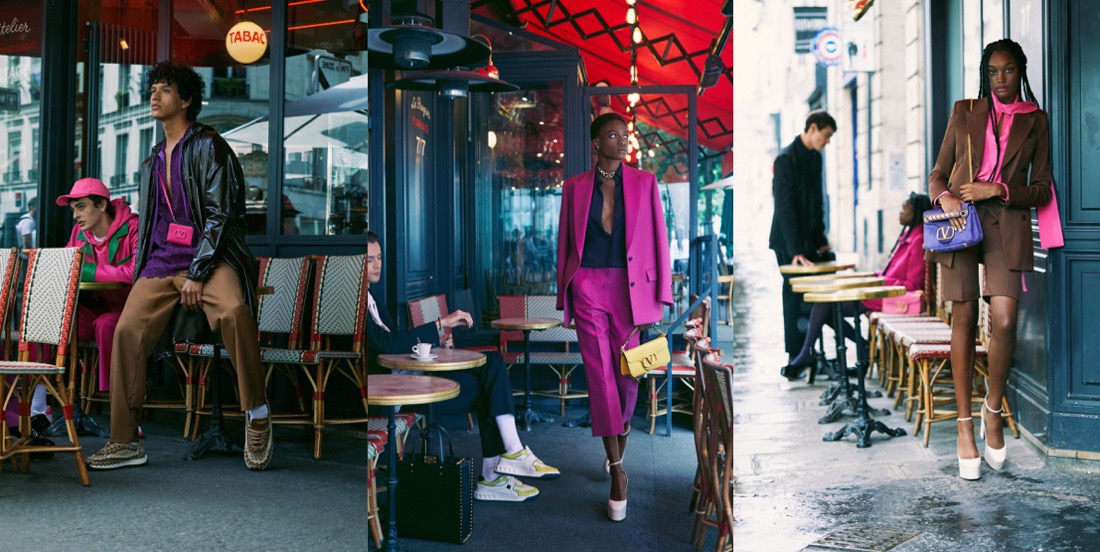
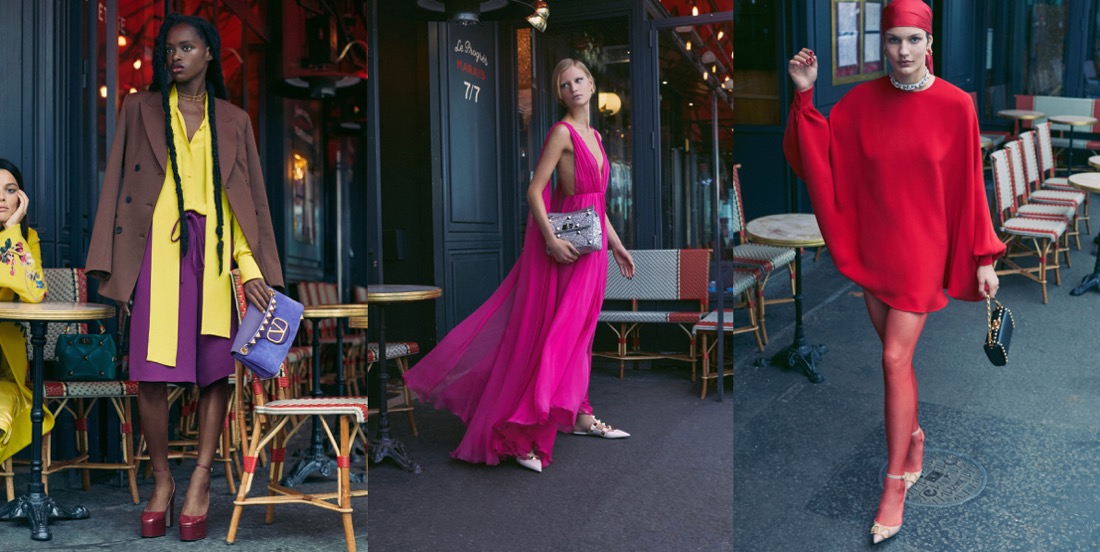
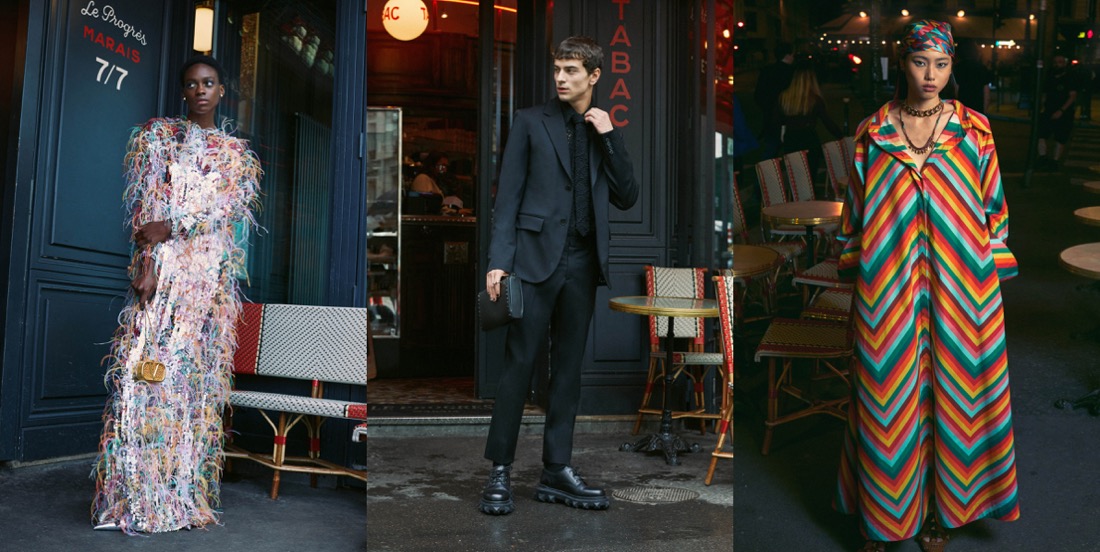
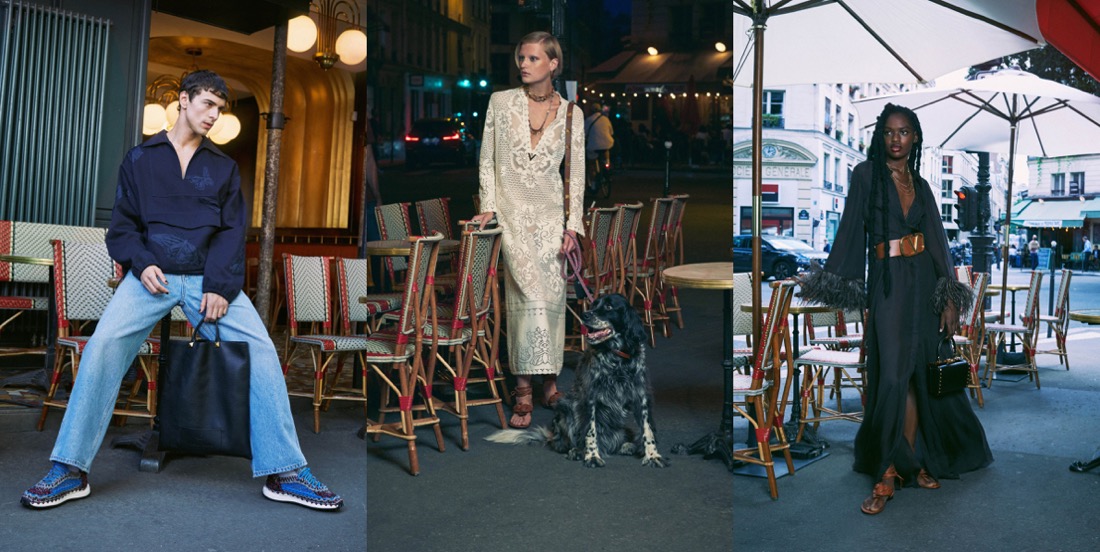
Lately, Pierpaolo Piccioli‘s direction at Valentino is towards creating clothes that celebrate life. Parisian cafés hold a particular charm for the designer these days. The Valentino show he staged last month had models walking out of the Carré du Temple to stroll in the surrounding streets, where people were sitting in cafés enjoying the en plein air experience. For resort 2022, which reads as a sort of prequel to the spring collection, the lookbook was shot in the Marais, a lively arrondissement populated by a hip and diverse crowd, in a café called Le Progrès. Its name resonates with Piccioli’s ongoing practice at the label, which he’s trying to steer forward without detracting from its history. “I want to bring life and a sense of reality into Valentino,” he said over Zoom from his studio in Rome. “Bringing it out of the atelier while retaining the savoir faire of the atelier.” Piccioli has been at the maison long enough to know its codes by heart; he has lived through its glamourous heyday, when Valentino Garavani received guests at his Château de Wideville, whose grounds were as perfectly manicured as the high-maintenance crowd that walked them. It was a world as fabulous as it was secluded and inaccessible. “I don’t want to forget the castle, but you have to be rooted in the present,” he said. “I want to bring the castle to the street, so to speak, and bring the street to the castle.” He calls this process re-signification; he feels that his duty as a fashion designer today is to be the vector of a vision of beauty in tune with the times we’re living in. “Beauty today means diversity and inclusivity; I want to encourage people to embrace it,” he said. Piccioli’s message is calibrated to appeal to younger generations, for which such values are a given; at Le Progrès, the cast included singer and TikTok-er Dixie D’Amelio; model and editor of the online platform the Youth Collective Project Amanda Prugnaud; filmmaker Christian Coppola; and actress Tina Kunakey. Every piece of the collection was treated individually to make it stand out on its own, not only adding to its value, but also allowing for the layered, personal styling which is becoming a sort of signature of Piccioli’s tenure. Shapes were simple and “almost elemental, without any grandeur,” and enhanced by elaborate decorations. A slender, slightly masculine white wool coat was appliquéd with floral ramages cut-out in black velvet, while a simple oversized black tee was intarsia-ed with lace as if a dressy blouse were somehow patchworked onto it. Eccentric flourishes were lavished on everyday pieces – feathers dotted sweats, capes, and svelte minidresses; long braided fringes trimmed ponchos; intricate broderie anglaise techniques appeared on slender, minimal tunics; and romantic blouses were encrusted with precious lace and worn with denim. “I wanted to make what is ordinary more imaginative and fantastical,” Piccioli said. “This is just extra-ordinary daywear.”
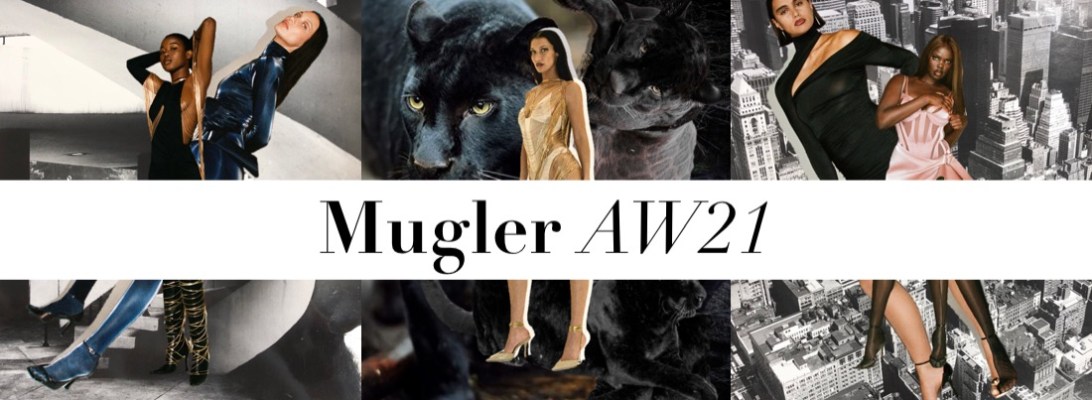
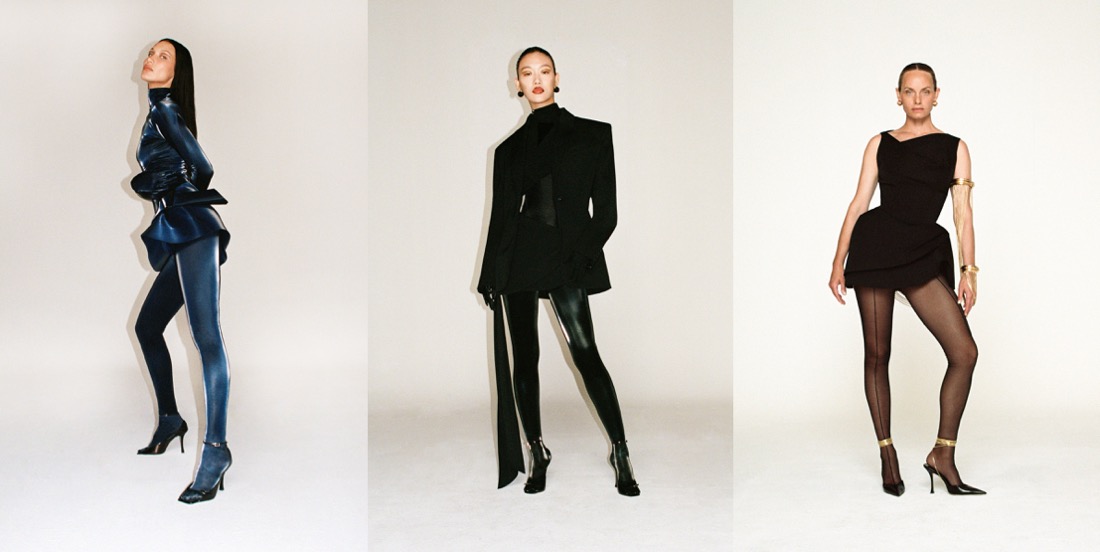
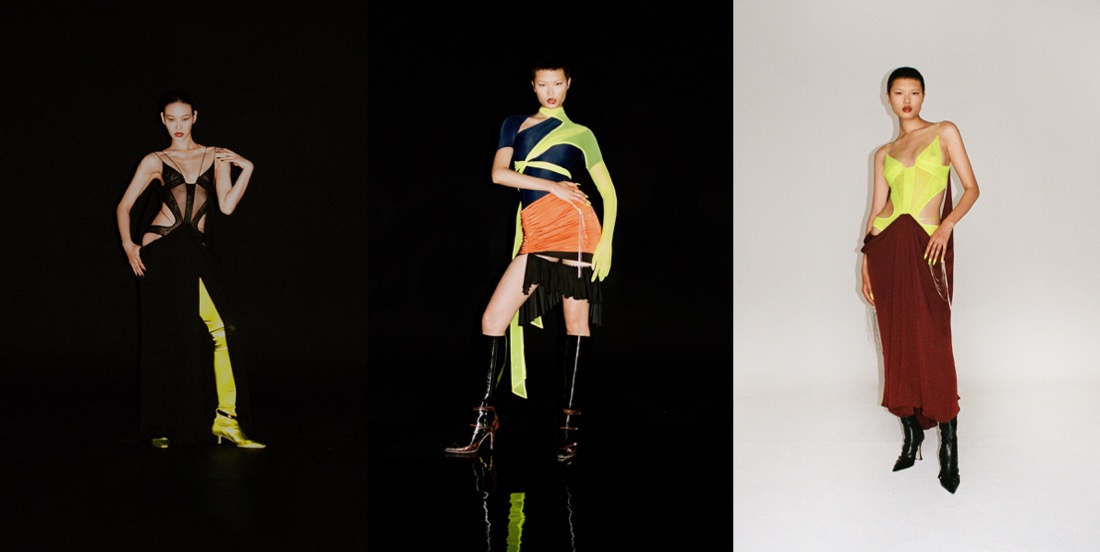
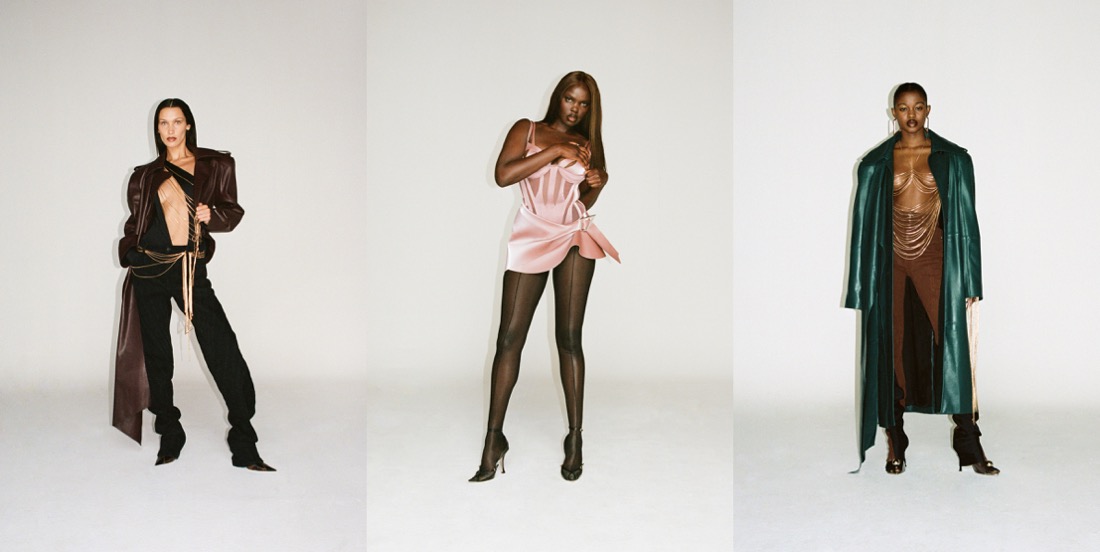
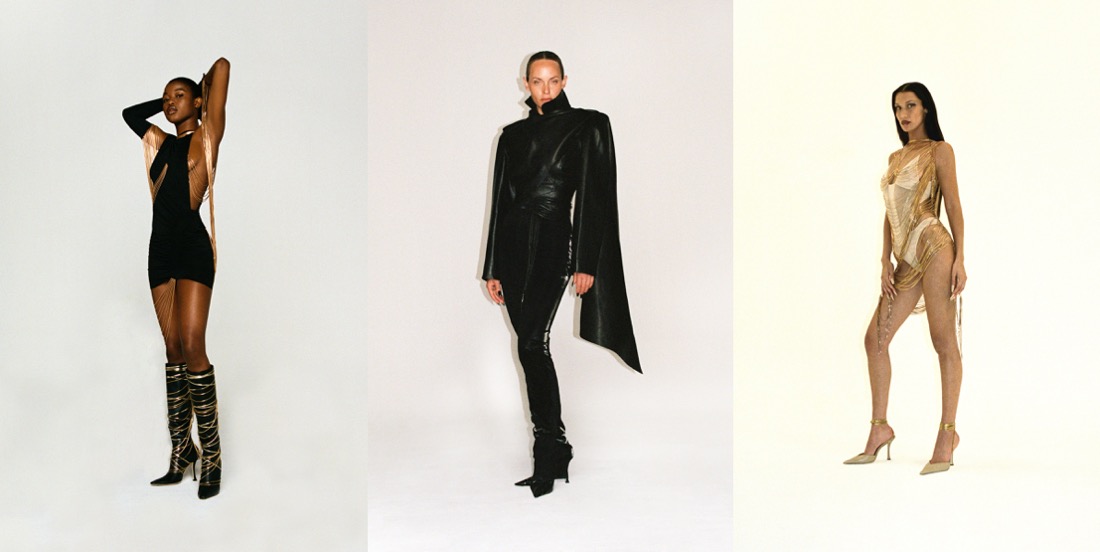
It’s getting sultry hot in here! Casey Cadwallader, the young American designer, has reignited the Mugler flame since his arrival at the label in 2018 by adapting the brand’s curvy, body-con aesthetic for the athleisure generation. Where Mugler’s corsets were rigid – his iconic 1992 motorcycle-chassis corset was made from plastic, metal, and Plexiglas – Cadwallader’s are built with two-way stretch. “You can tie your shoes, sit in a taxi, you can breathe,” he said in a preview of the autumn-winter 2021 collection. Material innovation and an embrace of extremes are essential to Mugler’s current success. There’s a pair of ass-less pants in the new lineup, but Cadwallader indicated that he might not have designed them if customers weren’t already wearing the part-sheer, part-opaque (read: mostly sheer) tights he’s been making for the last couple of seasons “without clothing.” The news at Mugler this time around is how he’s evolving his hyper-sexy vibe. In previous collections he’s leaned on black, but here he played with stretchy knit color-block layers to great effect, mixing emerald, ultramarine, bordeaux, and bright orange in one look and highlighter yellow, navy, and orange in another. His other experiment was born from a vintage Mugler bauble with a spray of flexible gold snake chains that he found at a flea market. “I loved how the chains moved,” he said. “I was looking for movement this season.” He sourced modern versions of the chains and made body jewelry from them. Bella Hadid models an intricate necklace top with a bodysuit in the brand’s new video, though Cadwallader’s fans are just as likely to wear it solo.
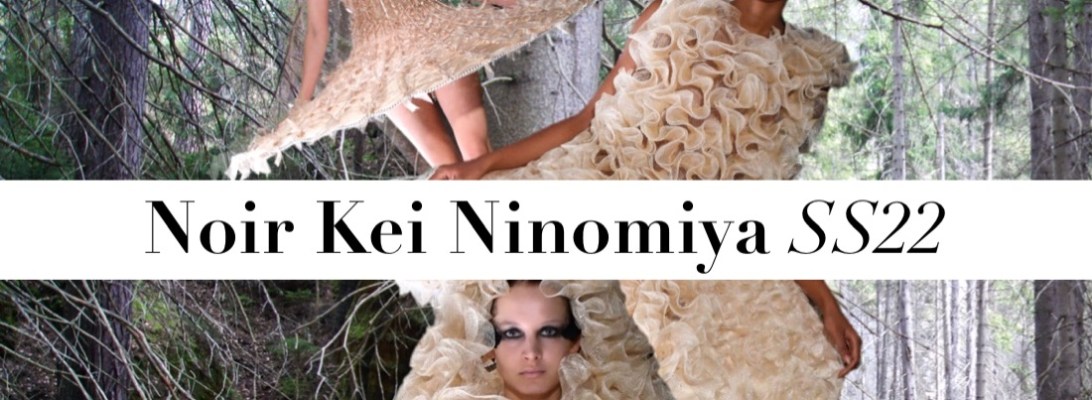
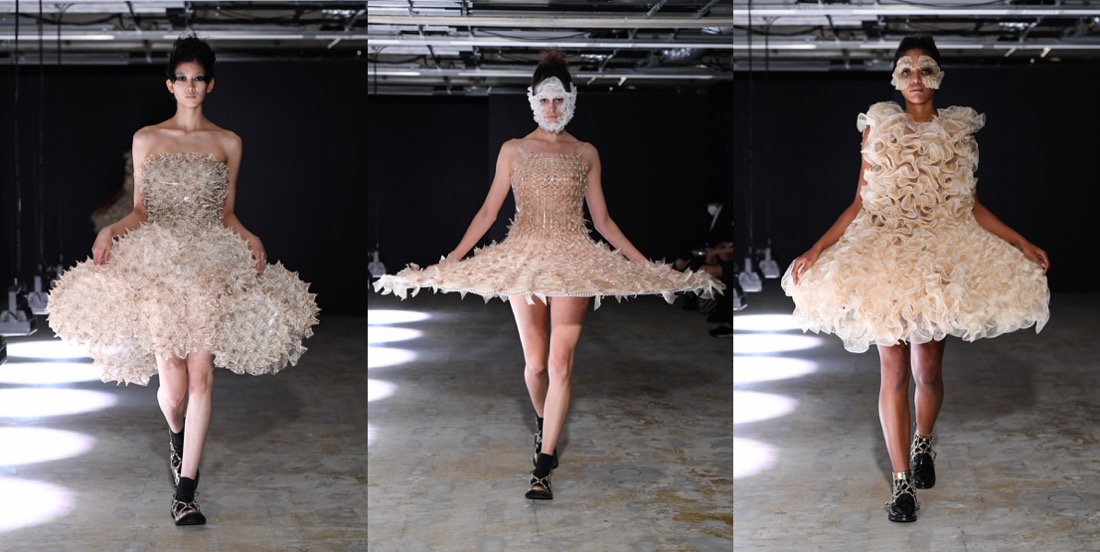
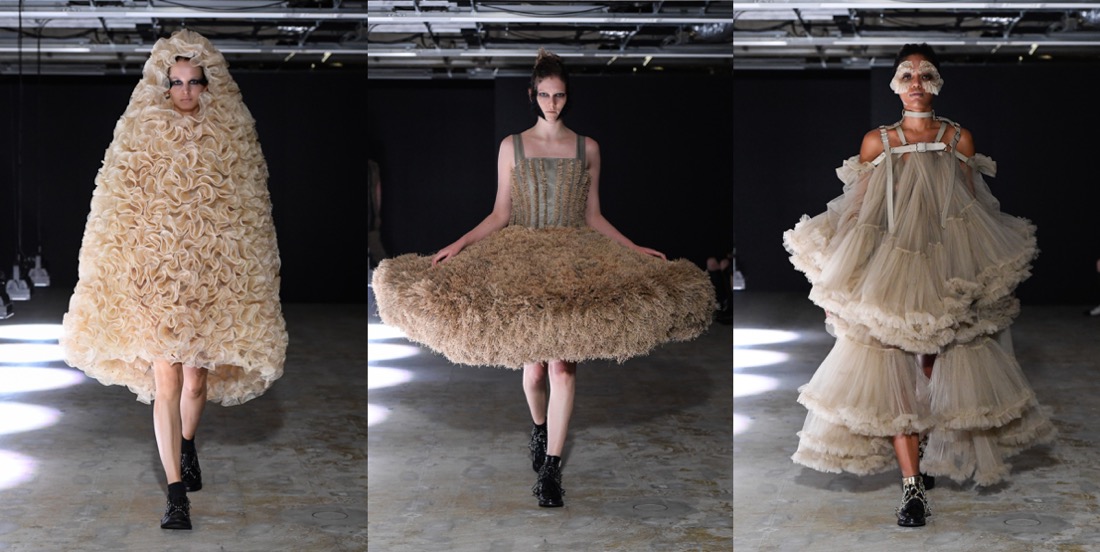
“For this collection, black is expressed through shadows,” said Kei Ninomiya in his spring-summer 2022 notes. “I wanted to express the ephemeral strength and beauty of things that are present around us although we cannot see them clearly.” The show was held in Aoyama, Tokyo, at the Commes des Garçons headquarters. Ninomiya has experimented with non-Noir color previously, most often via brilliant botanical worn installations that were absent today. Instead he expressed his notion of black’s shadow by creating a series of pieces in beige. The idea of something casting a paler shadow than itself implied a reversed polarity of some kind, and the paler procession of pieces did indeed mostly cover the still-breathtaking territory we have seen Ninomiya explore before. Sometimes, as in Look 15, they also looked to break new-for-Noir ground. Two more novelties were the use of woven hemp in rope-adjacent, wearable structures and the first written branding, beyond the garment label itself. The name of the brand was used to make rough white-on-black stripes and checks, which was fine enough on pants, shirts, and cycling shorts. When applied to a more sculptural piece, however, such as Look 9, this branding felt pretty extraneous. Noir Kei Ninomiya is a brand that doesn’t need logomania – those stunning, mushroom-y garments do the talking.

















 Design & Culture by Ed