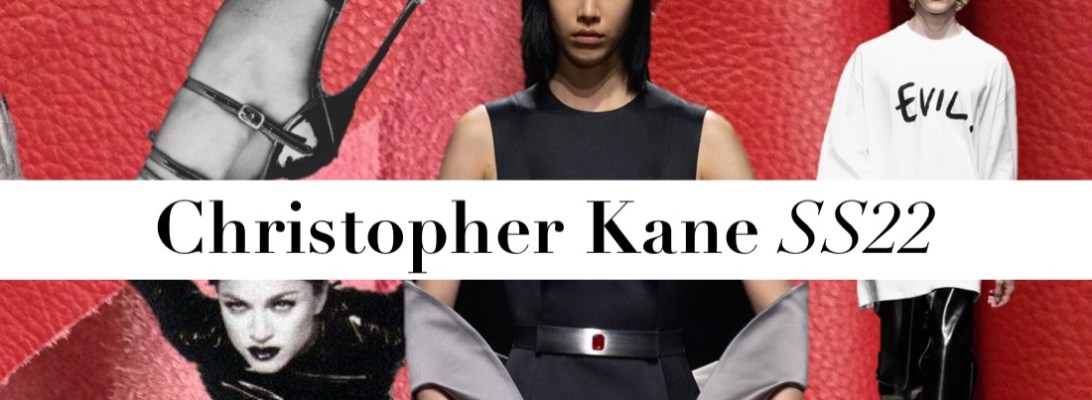
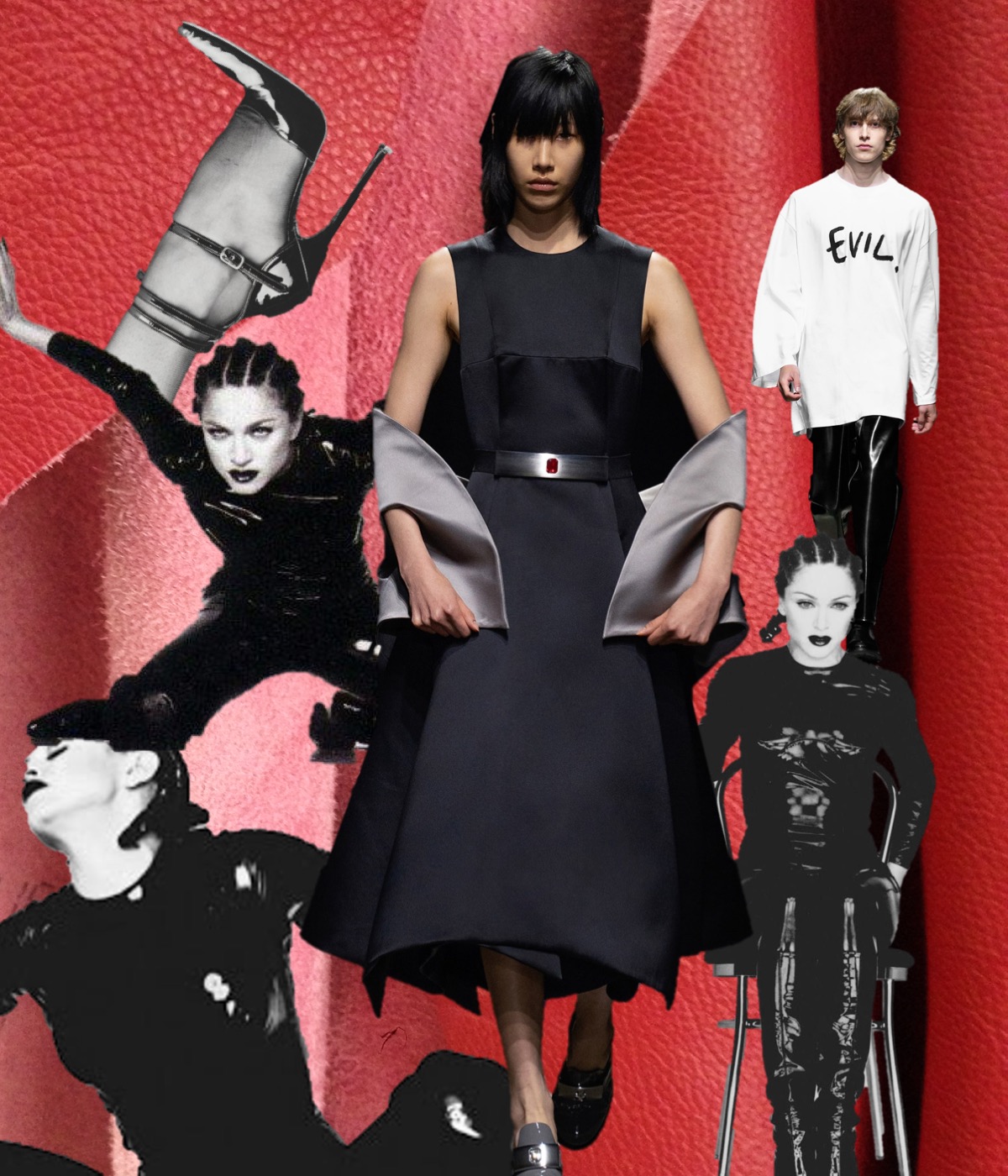
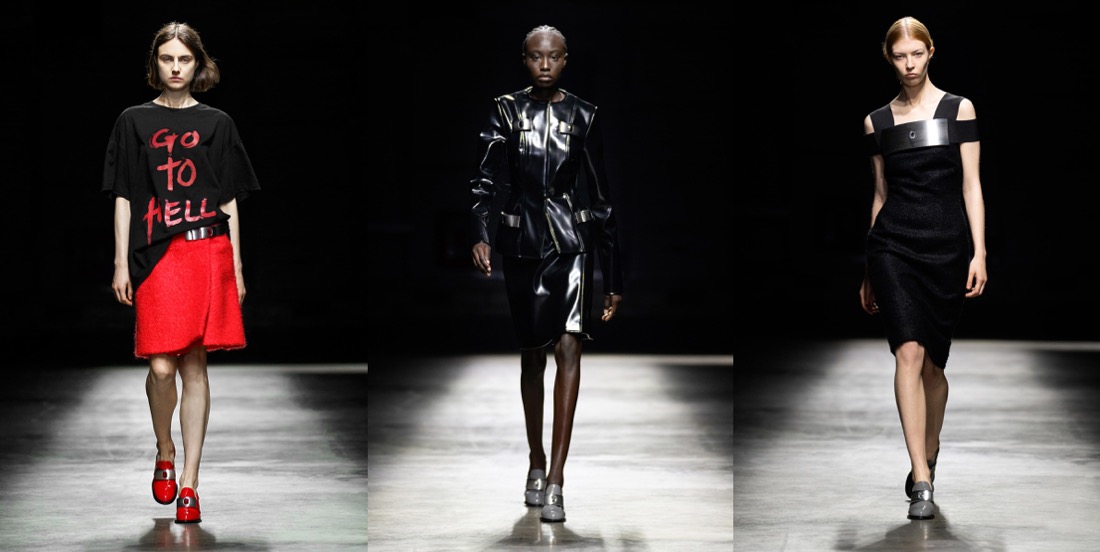
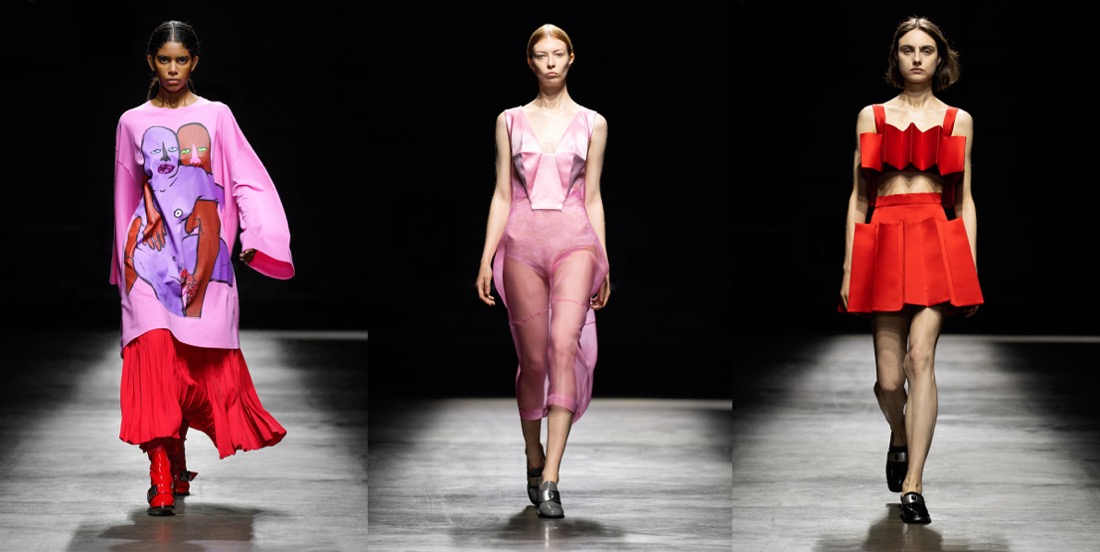
This might be the season of “sexy”, but nobody does sex in fashion like Christopher Kane. Never vulgar, but always elusive, enigmatic, multi-faceted and exciting. For spring-summer 2022, the designer shot a show in a darkened London warehouse a couple of months ago and released in the middle of Paris Fashion Week. It opens with strong, black patent: straight to the point of a furious kind of erotic chic. Kane girls don’t necessarily want to serve things up on a plate: his talent is for designing ways that play wickedly with all kinds of covert suggestions. Right through the collection there are devices for revealing skin – necklines in little black dresses that hint at fetish but are banded with protective metal; unconventional slits or port-holes in otherwise perfectly proper, covered-up dresses; a sporty crystal mesh miniskirt with a zippered slit. Kane experiments with form, too – and that leads to all kinds of modern-looking techniques. One this season is his play with corrugated shapes – like a scarlet bra top and matching skirt armored with zig-zaggy 3D geometric frills. The thing is, you never quite know where Kane’s references come from – but his career-long insistence on short, leggy going-out dresses means a glut of choices for original-minded girls who are finally, finally out and about at parties and whatnot. One of the inspirations he did allude to is the life of ’50s sex-bomb Jayne Mansfield. She of the overspilling breast – a controversial star who blatantly flaunted her sexuality and incredible body at a time when all that was highly disapproved of. You glimpse her energy behind a diaphanous dress with a pink satin bra formed into sharp geometric satin points: provocative, yes, but also armored with self-confidence.
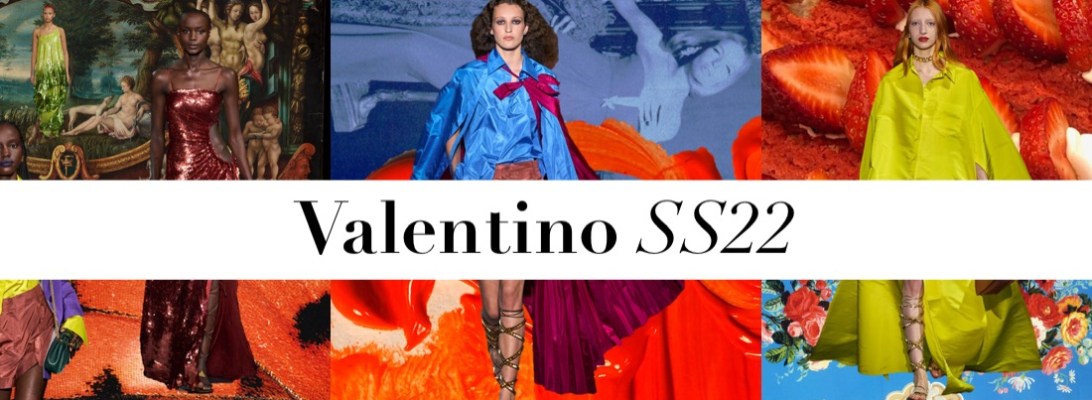
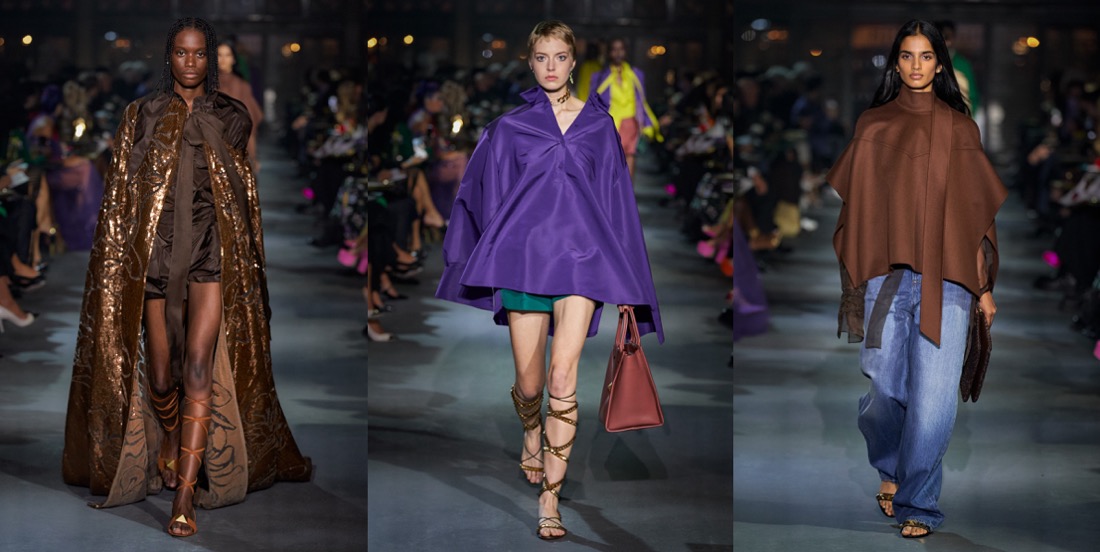
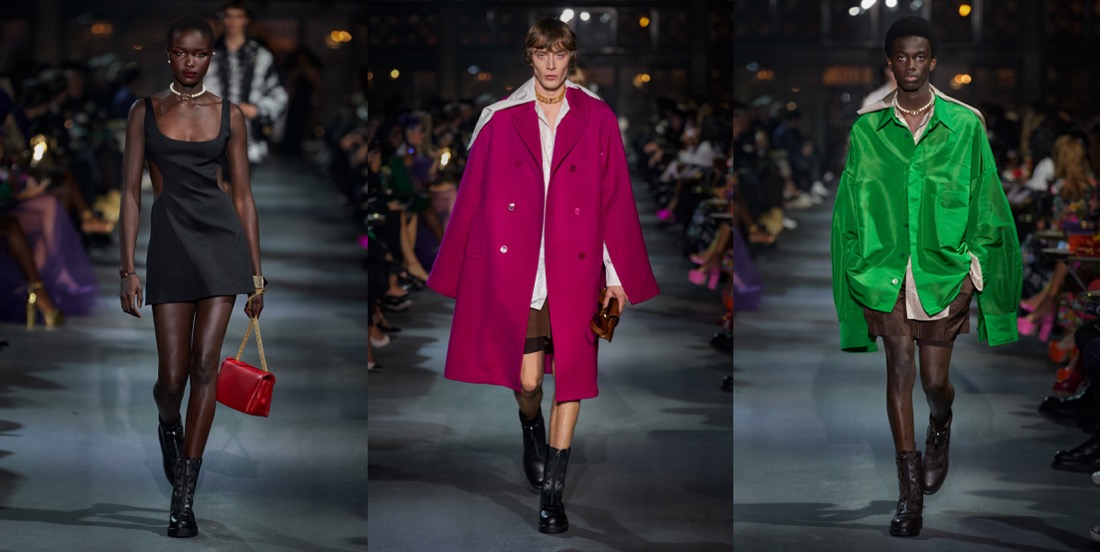
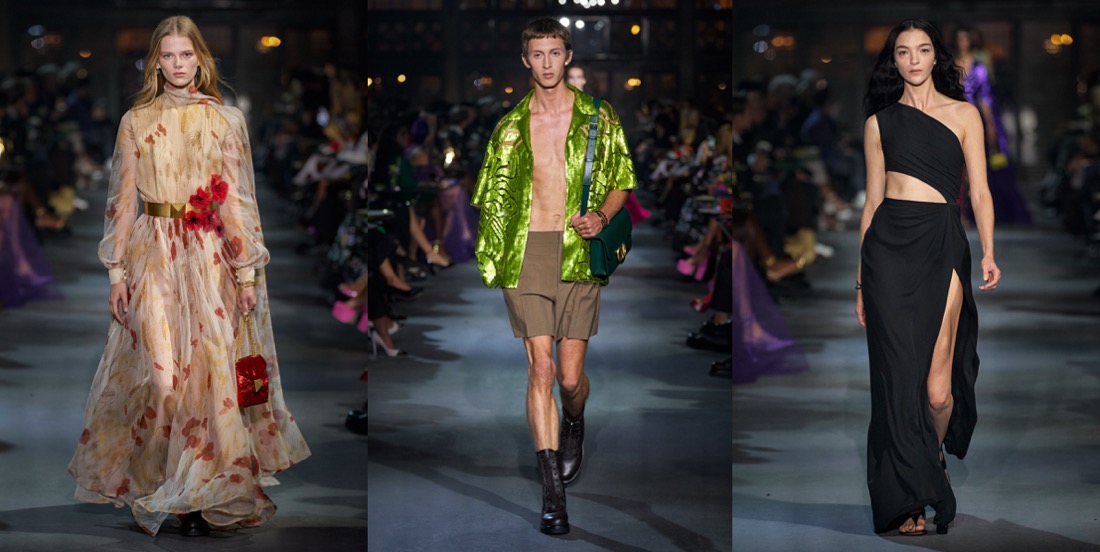
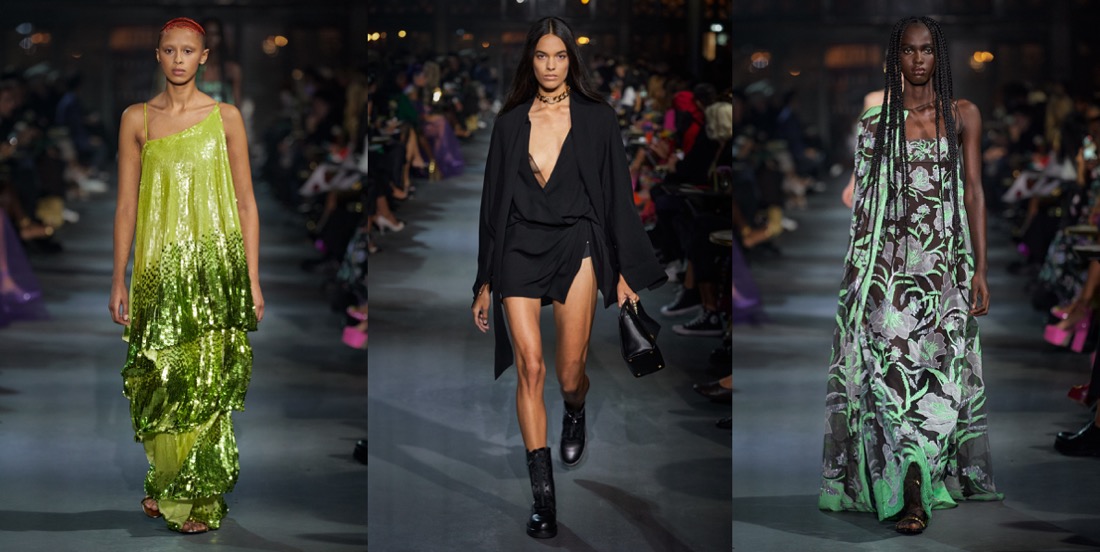
In his brilliant and vibrant spring-summer 2022 collection for Valentino, Pierpaolo Piccioli celebrates life and all its beauty. To mark the return of Valentino’s ready-to-wear to Paris, he took over the old marketplace at the Carreau du Temple, and a row of neighboring cafés and restaurants opposite, to put on a joyful all-gendered show reunion symbolically blurring the distinctions between insiders and outsiders. “It has been such such a tough moment. That’s why I decided to get Valentino into a new dimension: life,” he said, amidst a backstage scene packed with young people who were getting ready to walk along the street for everyone to see, before filing back into the market space where the regular invited audience were seated at café tables. Piccioli, much loved in the industry for his warmth and down-to-earth lack of snobbery, felt the rupture of the past two years meant it has finally come time to put words and fine intentions into action. “I’ve been talking for a long time about making a shift, embracing a new generation, a new world,” he said. “And also to be leading a change. You know, Mr. Valentino took part in engaging with youth in the ’60s. That was a revolutionary time. So I think this is my way of doing that today: keeping the codes and the couture values, and talking about a beauty which is about humanity and a shared wardrobe.” With refreshing candor, he said he didn’t really want to speak about clothes, inspirations, and narratives. “Fashion is about clothes – but it’s also about people wearing clothes. If I had to add words to talk about the storytelling, maybe my mission was not accomplished. Because I want to talk more about our community of people, sharing values – rather than a group of individuals that share the surfaces of a lifestyle. It’s more about celebrating diversity in a joyous way. “ He pitched the production towards embracing Gen Zers with a proposition of a beautiful, casualized couture wardrobe designed to float between genders: lightweight taffeta tailoring in vivid colors, plethoras of dresses from minuscule and cutaway to sweeping, embroidered caftans. There was also classic Valentino symbolism dotted through the collection. The opening look, an organdy flower-embroidered blouse and tiny skirt, referred to Valentino Garavani’s all-white collection of 1968 – immortalized in a photograph of Marisa Berenson. There was a reproduction of a slim, tiger-striped maxi coat, famously worn by Veruschka the following year – and to end with, a pair of floaty, flower-printed dresses from the ’70s. “Well, this is how I used to relate to Valentino when I was a kid myself – I came from far away from it. I dreamed about it through seeing fashion photographs, never the clothes, or the shows themselves,” Piccioli said. A personal memory of his own youth was immortalized in the relaunch of a pair of high-waisted jeans: “This is from the first denim collection Valentino launched in the ’80s, which I had,” he laughed. On the back of the jeans was the very fashion advert – likely Bruce Weber – which had brought Piccioli to buy into the brand in the first place. Democratizing and making a high-flown brand relatable to a new generation of consumers is of course the task and responsibility of pretty much every creative director today. Pierpaolo Piccioli is doing that with grace. It was a sociable, relaxed, celebratory moment where the future he believes in felt real.
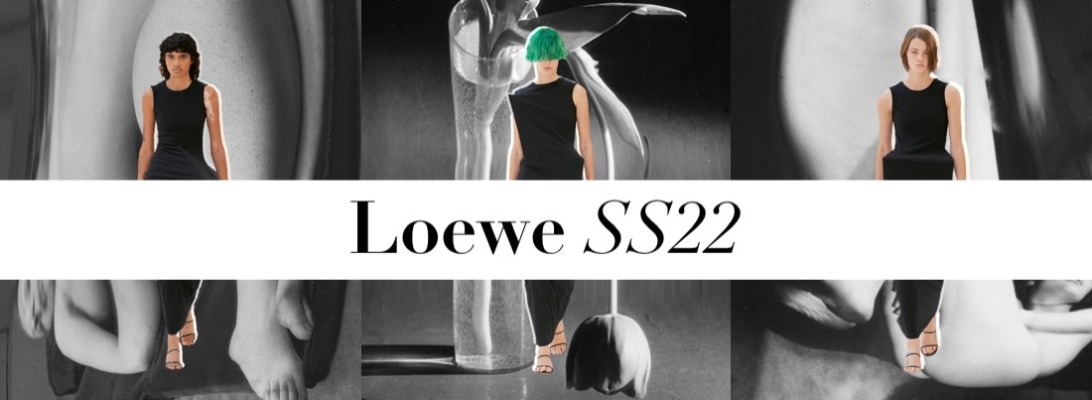
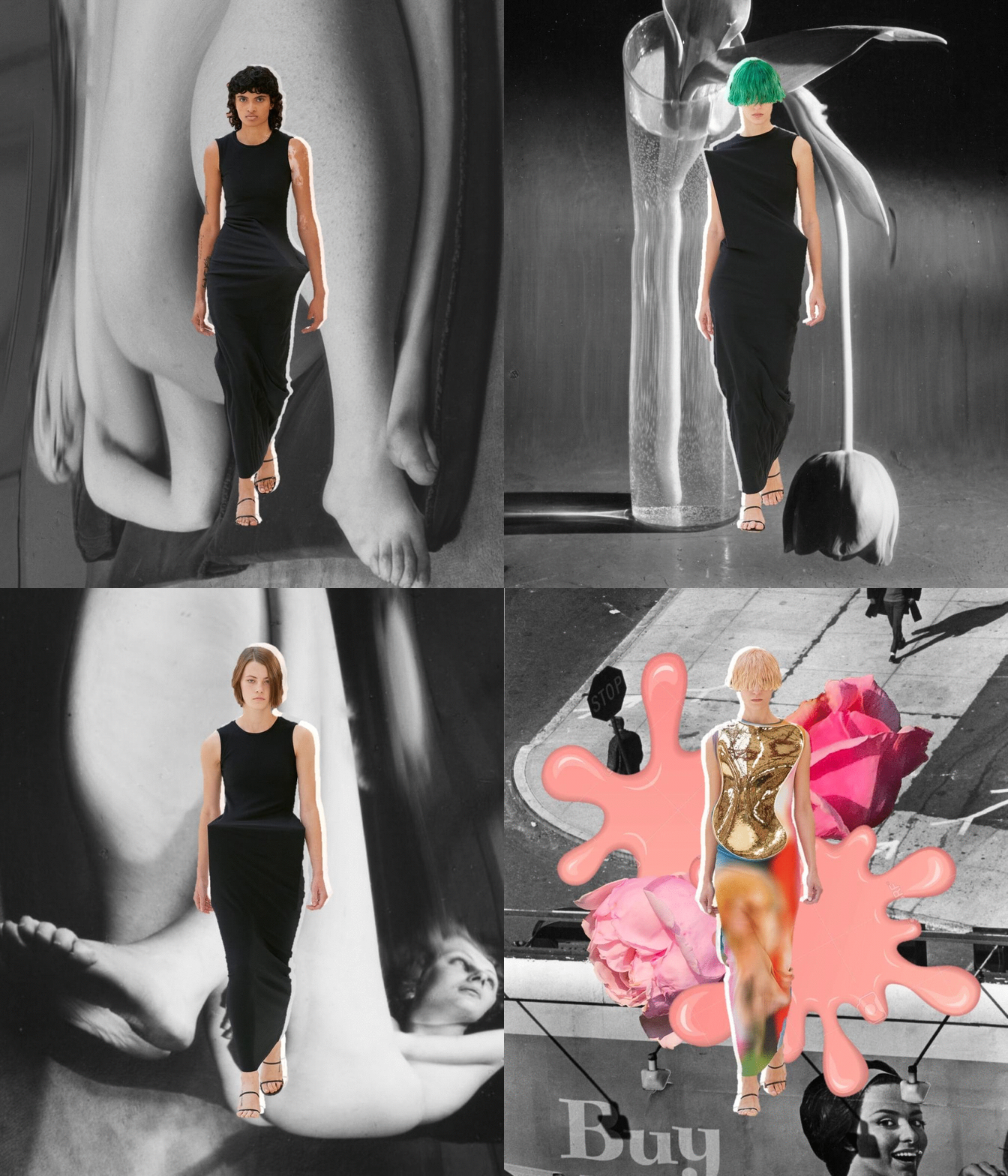
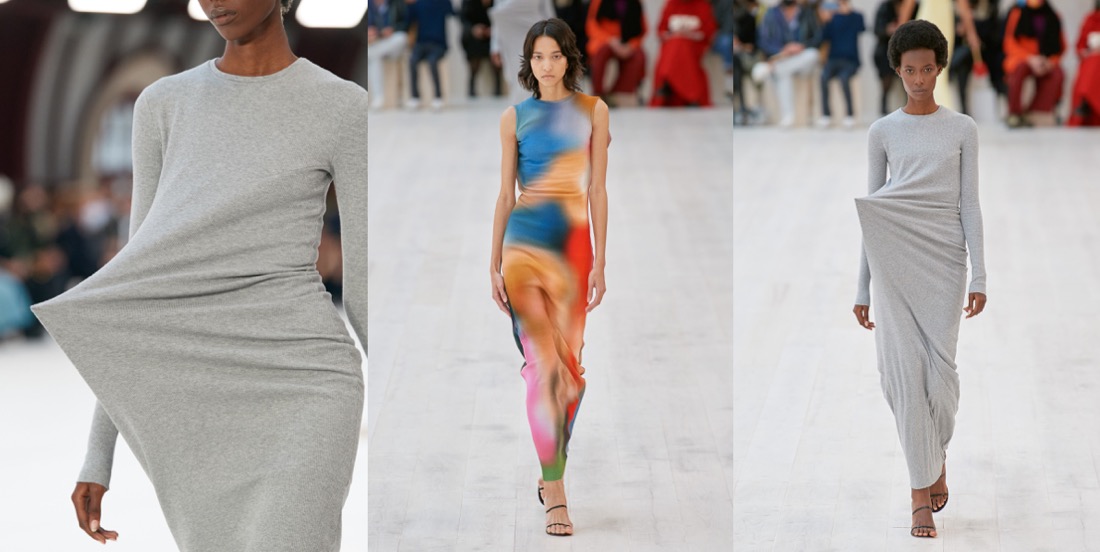
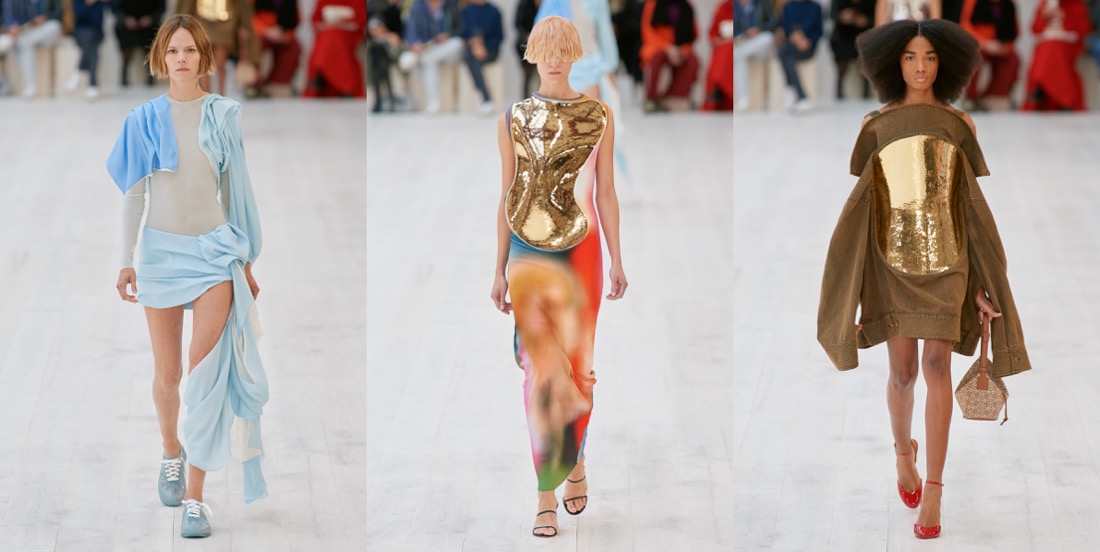
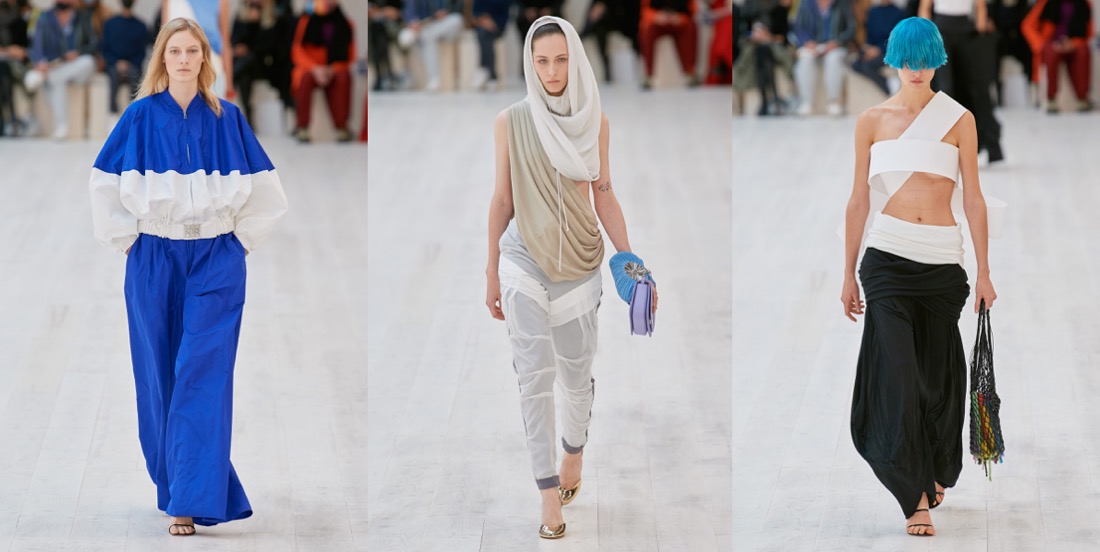
Sometimes, it’s great when nothing makes sense. “Neurotic, psychedelic, completely hysterical” are the terms describing the latest Loewe collection by Jonathan Anderson. After months of digital presentations, the designer was on a mission to mark his comeback runway show at Loewe with a massive creative change. “We’ve had the pandemic, and now we have to come out of it different,” he said. “I think it’s a moment of experimentation. If you’re going to reset after this period, you need to allow a moment to birth a new aesthetic. Start again.” It took place in a purpose-built “blank space.” No props, no artworks, no available rabbit holes of reference to divert attention: just clothes. Three long black column dresses to begin with. Minimal – except for the fact that each had a metal structure beneath, each one thrusting a different 3D geometric shape from stomach, shoulder, hip. The notorious “lumps and bumps” Comme des Garçons collection comes to mind instantly. Then three more ankle-length tube-dresses, one in a blurry pale blue and flesh-colored print; one pale gray, the next primrose yellow. So, was Anderson about to offer up an elegantly calm, relatively straightforward palate-cleansing antidote to the complexities and confusions of stepping out into the world again? Not so fast. He has a restless mind, always fighting against the too-obvious response. “In a weird way, I wanted the collection to be hysterical,” he said. “So that there’s a tension. Because this is a strange moment.” The collection had no moodboard behind, but Anderson provided one clue behind the passages of pastel blues and pinks, the swags and wraps of chiffon – and the wing-like shoulder structure that suddenly threw the collection off the straight and narrow. It was a picture of The Deposition from the Cross, painted by the Italian Mannerist artist Jacopo Pontormo in Florence 1528. Anderson liked all the “ hysteria” of the figures in the painting; something resonated. Back to the collection, there are even more exciting details to love. His fresh-start innovation combined ribbed jersey T-shirt material with golden breastplates – an echo, perhaps, of Claude Lalanne’s work for Yves Saint Laurent in the 1960s. There was an elevation of everyday fabric – white tanks terrifically teamed with chiffon balloon pants—and conceptual reworking of athletic tracksuits in taffeta. “Elevating the normal” as Anderson put it. On the feet were strappy shoes with heels surreally made from birthday candles, bottles of nail polish, a bar of soap. Bags in lavender or red were made from stiff teddy-bear fabric. Nothing made “sense” – but that was the daring and the fascination of this collection. We’re living in surreal times. Jonathan Anderson gets that, and is reflecting it back. Such experimentation with fashion is truly rare these days. Bravo to him for that.
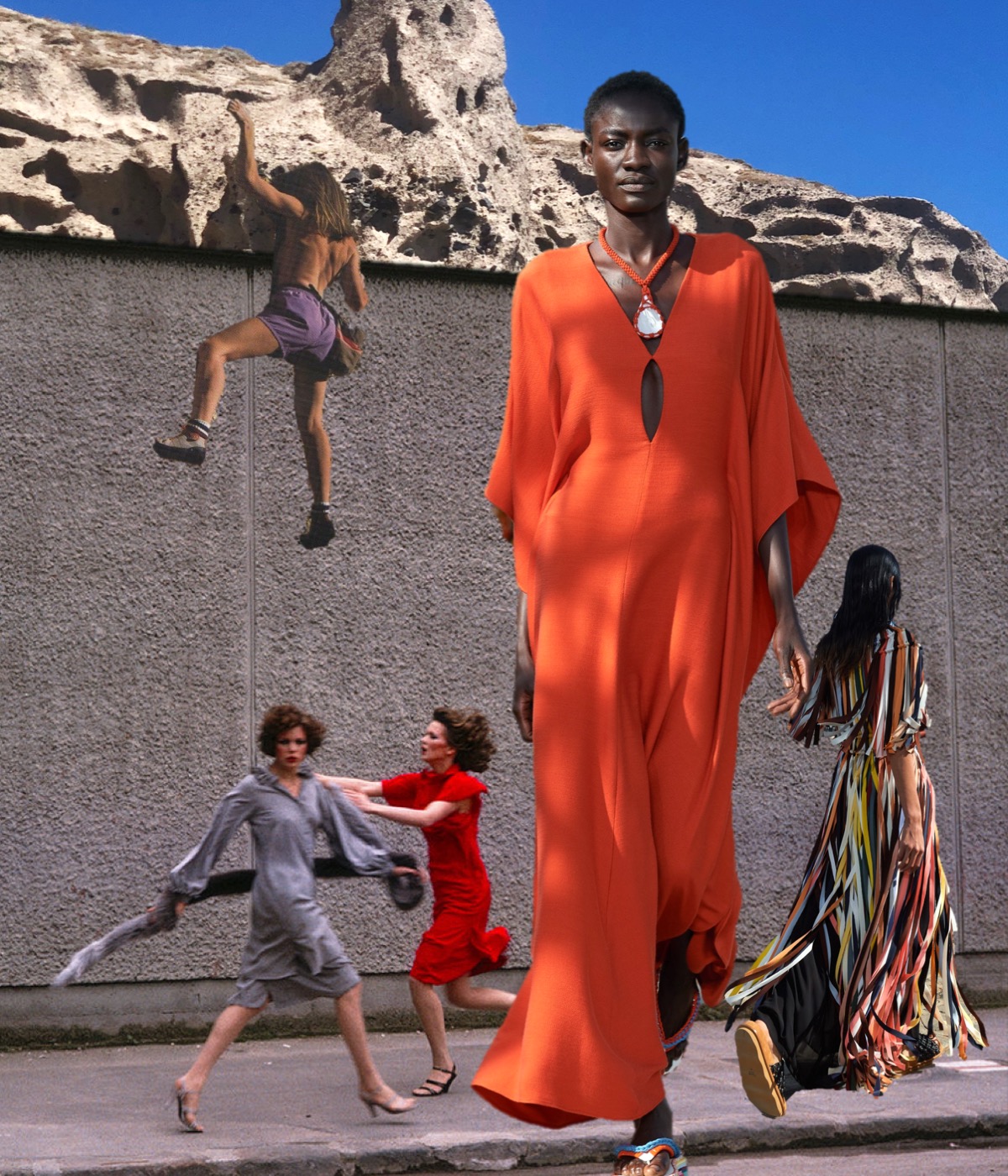
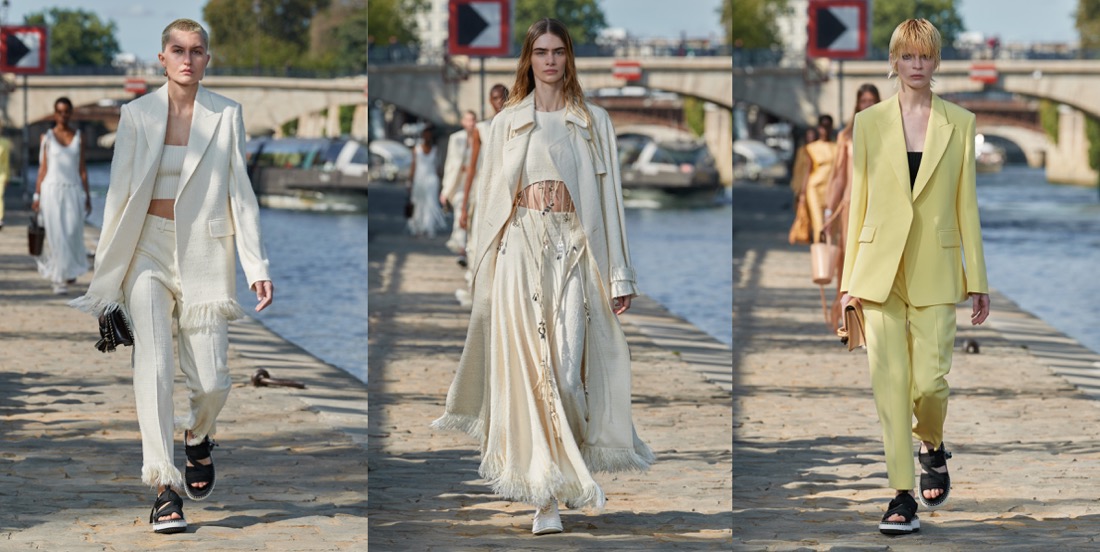
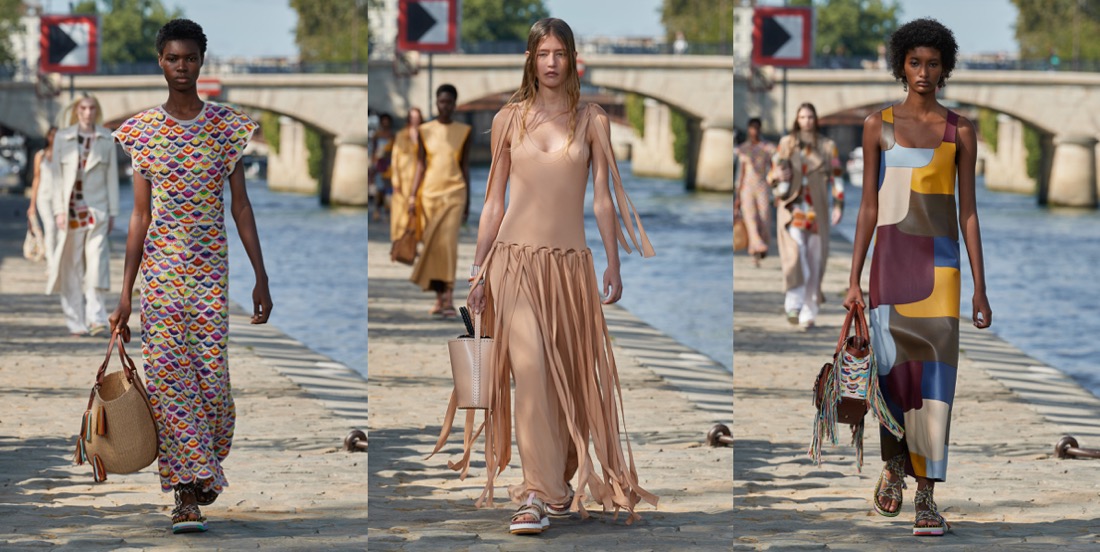
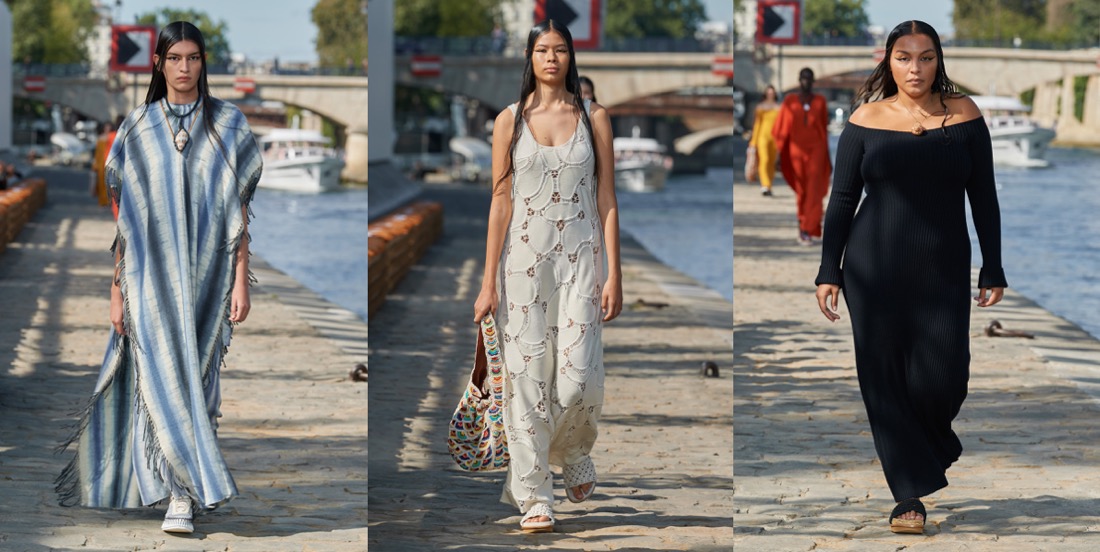
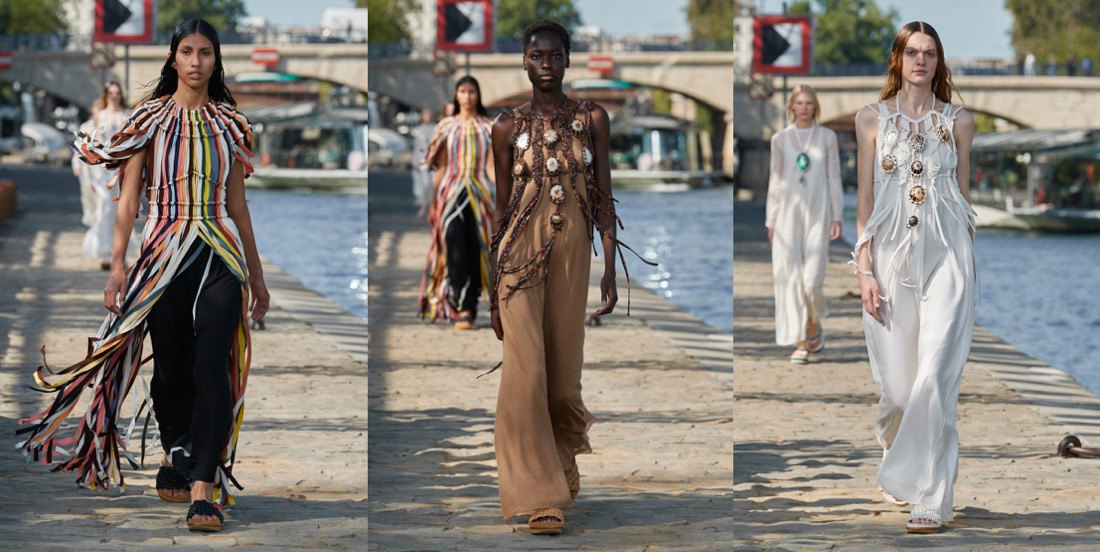
In her second season at Chloé, Gabriela Hearst convinces the Paris crowd that her take on the maison is truly worth observing and buying into. The show’s guests sat by the Seine, watching the inclusive model casting walk along the Quai de la Tournelle in brilliant sunshine. An accidental audience of Parisian passersbies and a packed riverboat made the IRL event feel even more… real. Somehow, this all felt like a very Gabriela Hearst moment, because the practice of sharing and openness is her all over. “As cheesy as it sounds, this collection is about love,” she said in a preview. “It’s really about the love of so many things: the love of craft, the love of friendship, the love of fellow humans. I literally have to memorize the many different NGOs, because I am working with so many this season.” You get the free-flowing, unforced boho spirit of what Hearst is doing with Chloé from the 31 pictures of the show. What with its summer-holiday caftans, ponchos, lacy dresses, and smattering of boyish pantsuits, the collection is fully in the tradition of the free-spirited Chloé girl brand identity that has been passed down from hand to hand by a succession of women designers, from Stella McCartney and Phoebe Philo onward. What’s very different with Hearst is, first of all, the reduced number of looks in the shows: down to 31 from sometimes more than 50. And second, the meticulous and quite formidable way she’s bringing in changes in sourcing, the supply chain, traceability, and environmental and social responsibility to a major Paris fashion brand.
All the information is documented in a Chloé press release and on its website: progress toward what all fashion houses ought to look like internally in this age of climate emergency. At points – when you consider how many women’s organizations and communities Chloé is benefiting through buying strategies around the world – it almost begins to seem possible that this work could even be marking a shift in the entire purpose of a luxury brand’s existence. One step in that direction is that the most exclusive level of Chloé luxury is now being launched as Chloé Craft – a group of products with a spiral logo, denoting, as Hearst puts it, “that only a human hand can make those pieces.” In the spring collection, those hand skills were evidenced in pieces like the petal-pattern crocheted dress and the intricately knotted streamer-harnesses made of strips of leftover fabric from seasons before – techniques created by Akanjo, a social enterprise organization in Madagascar. The chunky seashell and macramé necklaces, as well as baskets that come labeled with the name of the person who wove them, also bear the spiral branding. Shifting the needle toward causing less environmental harm primarily comes in Hearst’s creditable insistence on fabric switching. For example, there’s more linen and less cotton involved in this collection. It’s used to chic effect in the cream pieces, including a generous, Hearst-signature trench coat with a cool heft and whipstitched leather edging. And, more surprisingly, in a great indigo blue pantsuit that at first sight seemed to be denim, but was in fact a beautifully soft, supple linen. Underfoot, as well as the eco-friendly Nama trainers launched this year, a new and delightfully multicolored deep-soled Chloé flip-flop was treading the Parisian riverside quai. In fact, all the pretty pastel layers pressed into the soles were once other flip-flops. “They’re from Ocean Sole, which I’ve been wanting to work with for a long time!” Hearst declared. “It’s a Kenyan nonprofit that collects flip-flops from the ocean.” All the applause from the people of Paris, boat-trippers and fashion audience alike, was well deserved for the progress she’s pushing through.
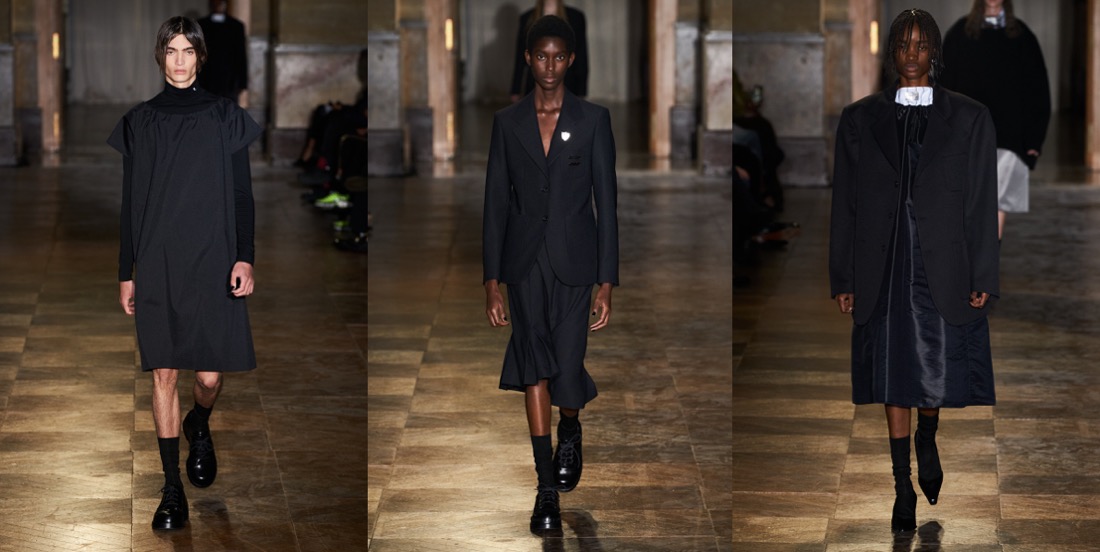
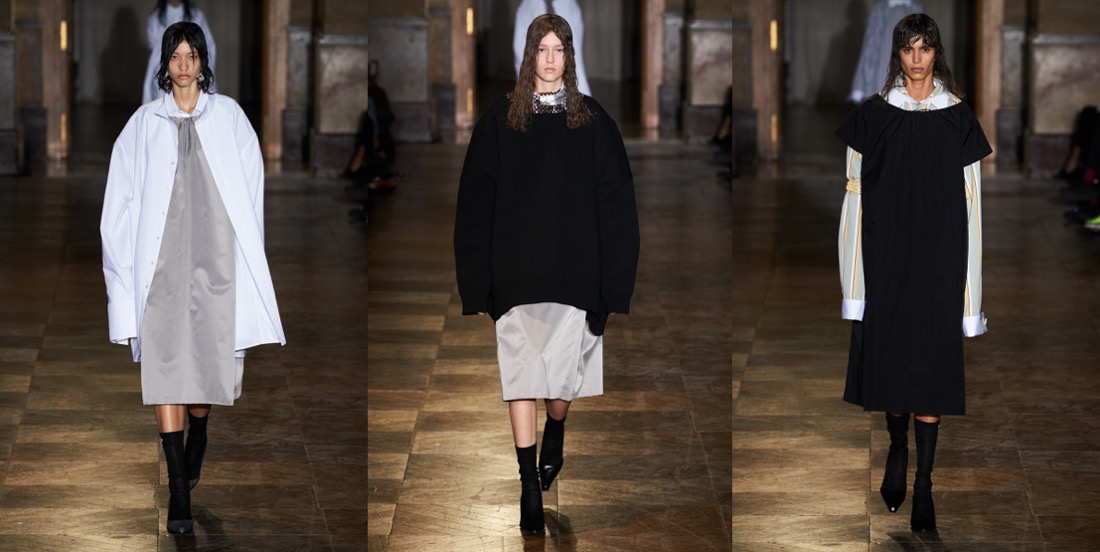
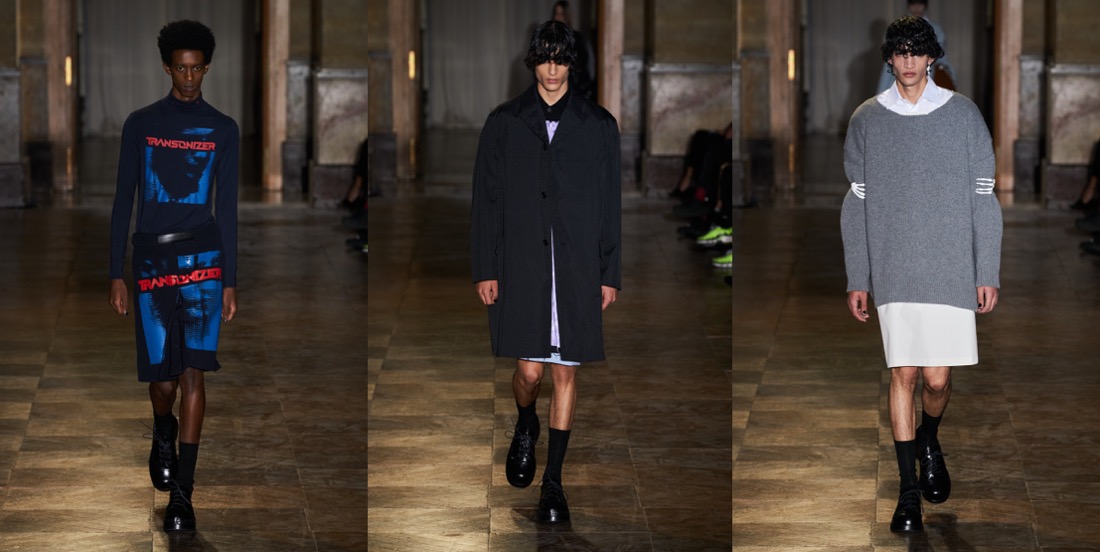
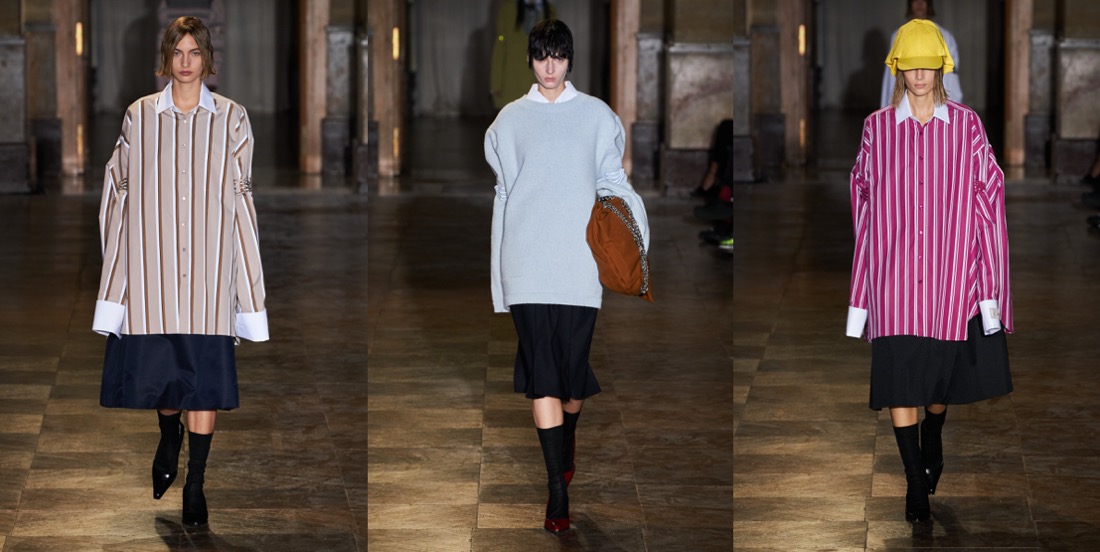
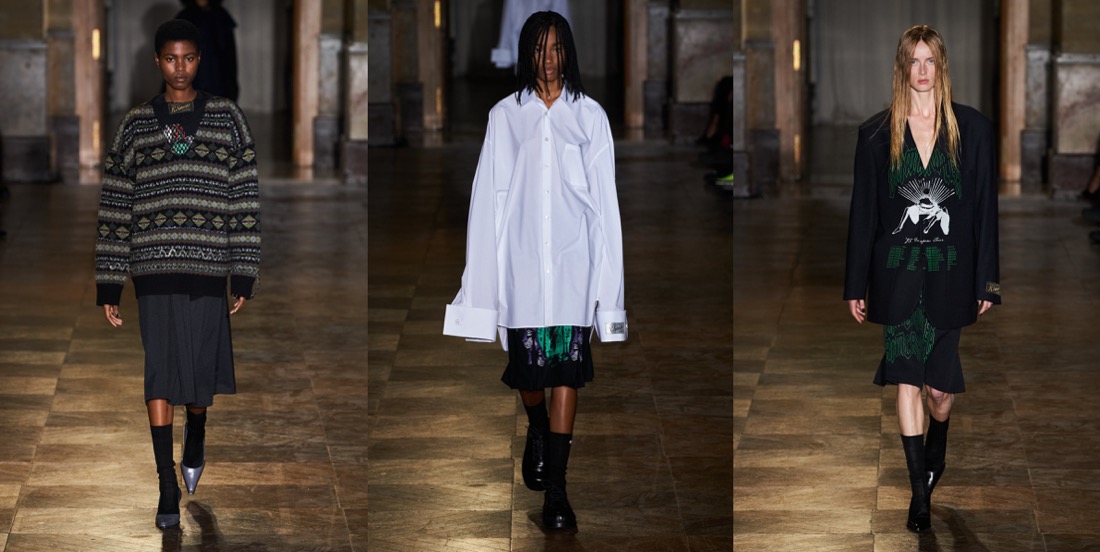
At a first glance, this might have been an unexpectional (which would be an anomaly) Raf Simons collection – a bunch of black and white outfits. But when you look deeper into it, you see what’s so extraordinary about it. Over the last years, genderless dressing has been so prevalent in fashion that it’s almost lost its meaning. We’re so used to seeing boys in dresses that nothing surprises us. In that sense, Raf Simons’s men and women in corporate skirt-suits didn’t send disbelief down the runway at the Bourse de Commerce. But once you actually tried to picture that image unfolding in the real world it was another matter altogether. Simons has always challenged our relationships with conventional dress codes. This collection was his timely reminder that our collective mentality perhaps isn’t quite as far ahead as we’d like to believe. But it was also a compelling study of how those business dress codes could evolve in a real – if still not super near – future. “Right now, I think it’s an important thing because so many men are buying womenswear anyway,” Simons said after the show. “The question is if they’re buying clothes that are made for women, or clothes that are made for both men and women. It’s something I find fascinating to focus on.” Trying to determine the nature of a genderless garment, his research brought him back to where it all begins. “At the birth of a baby, nobody is approaching it like male or female. It’s just a baby. I wanted to work out a shape that works for both in the same way, even if your perception of the girl or the boy dressed in it is different.” Along the way, his silhouette and styling generated a wealth of overtones, illustrating how associative the image of men in skirts and dresses still is to the contemporary eye. Some of the looks had a clinical sensibility about them, which evoked hospital gowns. Some were almost tribal in their uniformity; and others looked ceremonial – religious, even – a fact only intensified by the skeletal hands that clenched the models’ biceps. Simons, who carried the arm rings over from last season, said he considers them a brand symbol, “like Martin has the Tabi boot.” In the context of his dress code rebels, it felt more like the ghosts of tradition trying to cling on to those preordained gender norms tooth and nail. “Maybe it’s autobiographical, I don’t know,” Simons reflected. “I went to a high school that was almost monastic in a way. You were supposed to be this, you were supposed to be that, you couldn’t dress like this, you had to dress like that… It made me think a lot,” he said. This collection was rebellious, but there was also a distinctly Prada-centric character to the clothes and the styling, which made you wonder if the esotericism that permeates the halls of Simons’s other job in Milan hasn’t amplified his susceptibility to ideas of uniformity. “I think it looks more like a uniform on a boy, and more couture on a girl,” he said of his new silhouette. “It’s a very pure, timeless shape.”













 Design & Culture by Ed