Sirens. Di Petsa SS22

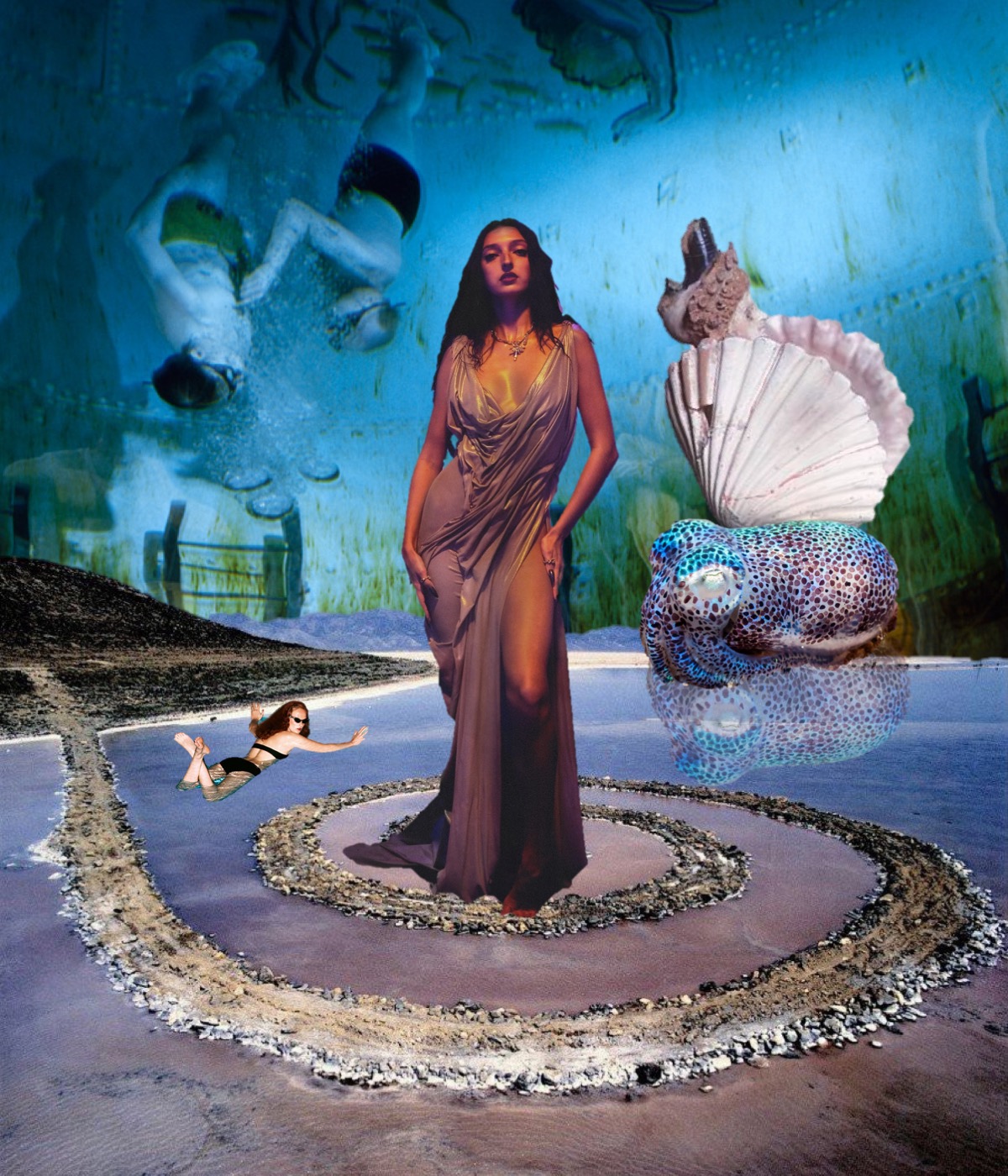
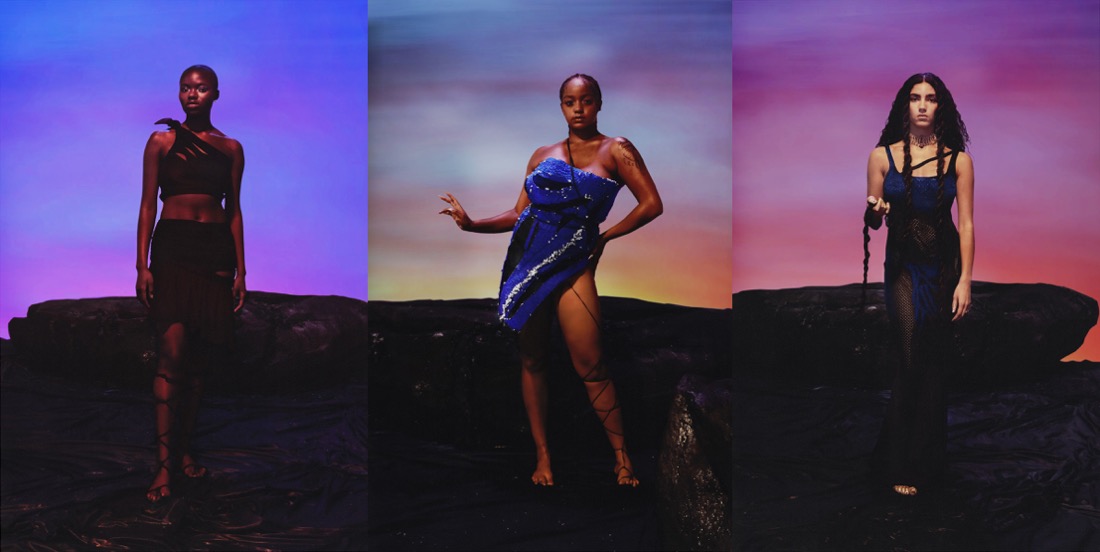
Much of mainstream fashion wants what Dimitra Petsa has – just look at the many major designers cribbing her wet-look, Greek-goddess aesthetic (one of the recent Dior collections comes to mind). But if 2020’s lockdowns and fashion’s subsequent recalibration has taught us anything, it’s that emotion can’t be faked and a new generation of fashion lovers and customers are looking for a personal connection to their clothing. Di Petsa‘s ready-to-wear, presented at Paris Fashion Week for the first time as a guest of the Fédération de la Haute Couture et de la Mode, contains the same level of passion and fury as her one-off gowns. The proof isn’t only in the sensitive way she drapes her jersey to cradle the bosom, slide down the hips, or pool on the ground around the wearer’s ankles – she describes her process both as “the body emerging from something” and as a method of “accentuating the naked body, not covering it up” – but in the many women from Greece and the U.K. who went to Paris to help make Petsa’s vision real. She’s called her collection Nostos-Touch; the touch part is obvious, representing the idea of wanting to be embraced but being wary of its consequences. Nostos is Greek for “homecoming,” sort of like Odysseus after a long journey through the Mediterranean. Petsa is less concerned with the trials of that mythic man and more with the Sirens he finds along the way. She tapped into this darker side of femininity, the idea of mermaids caught in nets, of constraint and dangerous freedom, with a moody palette of cobalt, navy, burgundy, and gold. Even with its complicated drapery and cutouts, this collection is her most wearable offering yet, made from cotton jersey and Tencel and adorned with custom marine blue rings, bracelets, and necklaces. At Paris Fashion Week, the Petsa Poseidonesses came together in a performance centered around the musician Lola Lolita. Models writhed, swayed, and lay down while Lolita commanded the ceremony. Petsa says she wants to move away from Western perceptions of Greek culture. Even those with a long memory and long scholarship of ancient cultures may be hard-pressed to remember the pre-Greeks, but many of those who do have hypothesized that the earliest cultures on the Peloponnesus were matriarchal. One hopes Petsa’s customers are willing to join her on this journey through time and womanhood – but if not, these are still some of the most beautiful sexy dresses and separates this season.

Collage by Edward Kanarecki.
Chic Adaptability. The Row Pre-Fall 2022

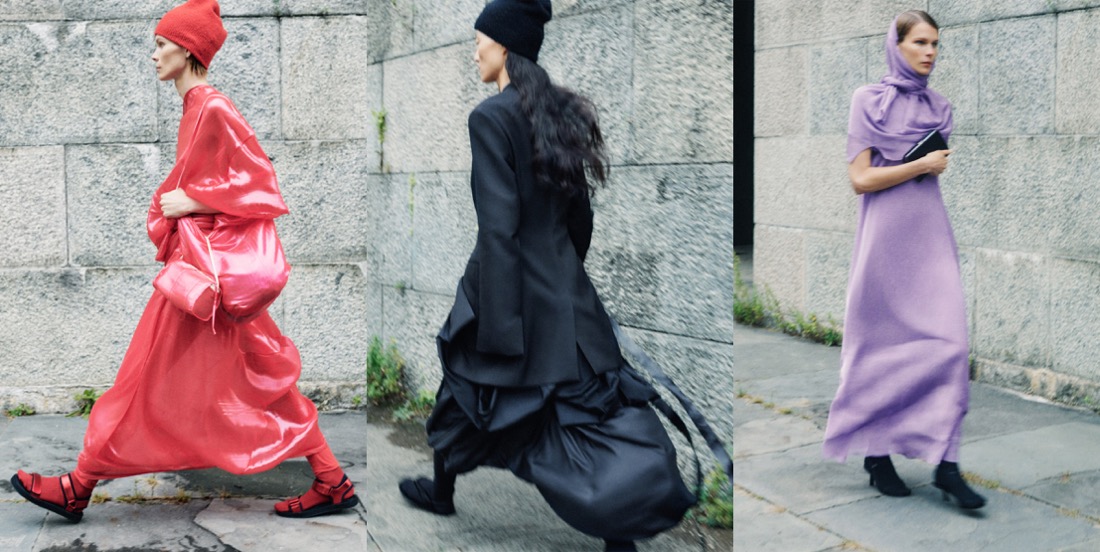
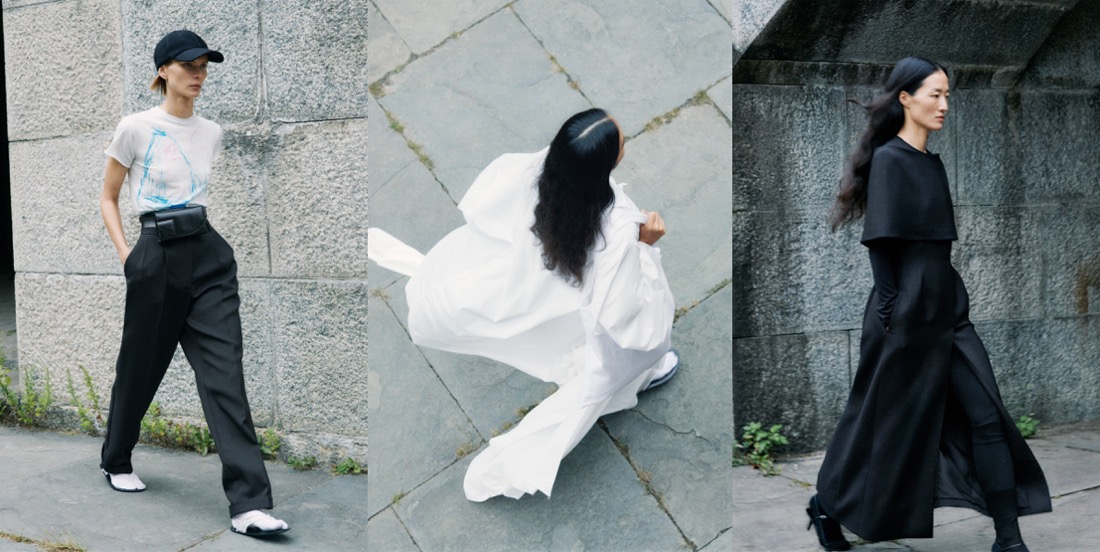
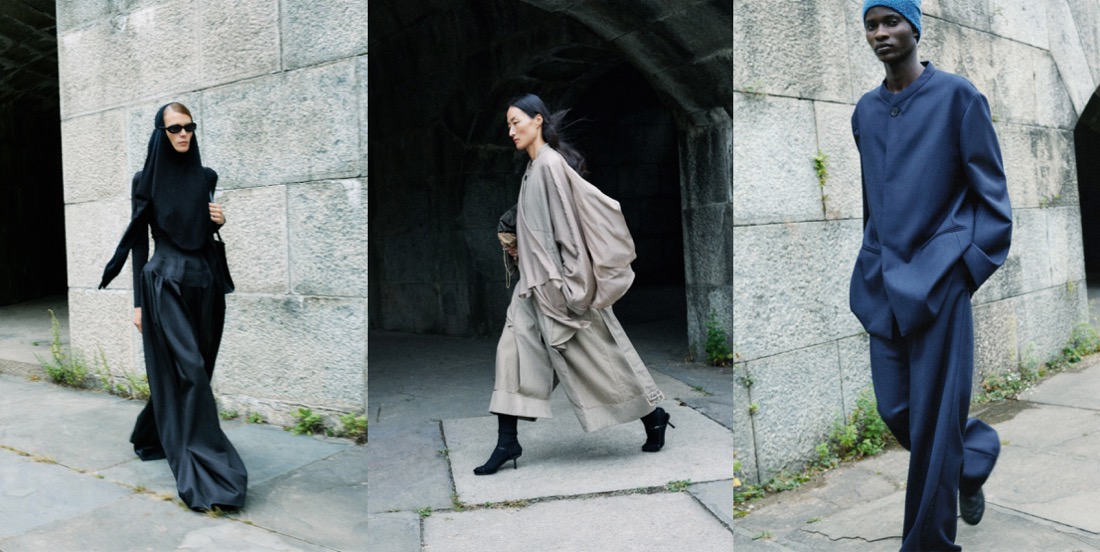
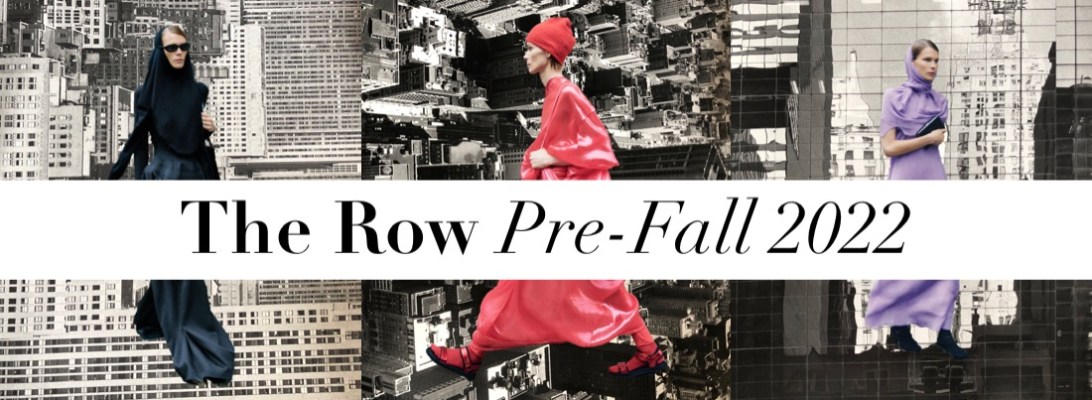
This is one of these The Row collections that are just… perfect. And extremely relevant. Ashley and Mary-Kate Olsen have never been the type to discuss the deeper meaning of their collections, and they’re not about to start now, but the opening look of their pre-fall 2022 offering definitely meets the turbulence of our current moment. It’s a grain de poudre jacket worn backwards, its single button fastened mid-spine and its lapels framing the shoulder blades. “Adaptability” is definitely one of their running themes here. Other tailored jackets can be worn inside-out, and on the accessories front there are reversible tote bags and cotton voile “protectors” for leather styles. After a season of more oversized, relaxed shapes, the waist has come back into focus for the Olsens. Their elongated and slightly nipped jackets cut an elegant line, and many of the looks are accessorized with leather belts featuring useful add-ons for cell phones and ear buds. Elsewhere, there are generous, pillowing volumes, as in the red nylon cellophane top and skirt of look two, which are cut with bubble hems to accentuate their material’s airy lightness. Extending a newfound interest in color, they showed metallic viscose knit separates in bright lilac or red worn layered and even wrapped around the head like scarves, and a trench in a crimped aqua tulle, shown with a matching bag. They also embraced humor. A couple of shrunken T-shirts (paired with excellent boned-waist trousers) are scribbled with children’s drawings; officially they’re part of The Row’s kid’s line, but they’ll be sold in women’s sizes too. The final look is the other side of that reversed jacket. It’s a back-to-front world, but The Row can help you hold it together.

Collage by Edward Kanarecki.

Nautical Dreams. Rosie Assoulin SS22

Rosie Assoulin is back. Well, not that she was actually absent – her delicious wine project, Vivanterre, keeps on growing, and her clothing line continuously keeps on delivering the wittiest eveningwear in New York – but spring-summer 2022 line-up is the first full-blown collection coming from the designer since the pandemic has started. Assoulin hasn’t shown a new collection since the eeriest March of 2020. That brilliant autumn-winter 2020 collection made it to Paris, but she and her husband Max, the brand’s CEO, made the wise choice to stay in New York as the virus descended on Europe. Eighteen months later, she was back in Paris working double-duty: taking IRL appointments in a courtyard showroom and Zooming with editors. She and her husband have been busy on the business side of things, too: In May, they formed a partnership with HIM Co. to scale the label in Europe and Asia. The most noticeable change for spring 2022 was the expansion into vegan leather shoes, like a preppy new sneaker, and new unisex sweaters intarsia’d with the brand’s graphic logo. What stands out most is the collection’s surprising anchor motif – a timeless symbol. Several looks feature bandeau tops hand-knitted in the curvy shape of an anchor, while a crisp white dress had one cut away at the ribcage. Other pieces came in watercolor anchor prints or with beaded fishing lures dangling from the sleeves; in a subtler twist, a white cotton gown had an oversized sailor collar fanning down the back. These summer-perfect pieces felt light and charming, delicate yet quirky, polished but with plenty of humor. There’s always a story behind Rosie’s curiosities, too: the sailing idea came from her kids’ favorite book, Amos and Boris. It got her thinking about going on a far-flung, care-free adventure again. The looks that captured that feeling best had a DIY feeling about them, in that you could twist and style them multiple ways. An ivory evening coat was cut with sashes in the front, to be left loose or tied in a bow, while a glittery one-shouldered gown was shown over black trousers, Assoulin’s signature twist on black tie. Other looks got more inventive: for instance, the skirt of that white cotton gown could be removed to become a shorter day dress. A shimmery coral bustier dress came with an attached matching shirt, inspired by the best-selling “one thousand ways” sweater Assoulin launched last year, which merged a cable-knit camisole and shrug. As for the dress, you could wear the shirt open, tie the sleeves around your waist or loop them around your shoulders, or remove the shirt entirely. It’s at least five looks in one. As the pandemic situation seems to calm down, smaller labels start to gradually re-emerge. Rosie Assoulin takes us on a dreamy sea cruise – I’m hopping in!

Collage by Edward Kanarecki.

Reminiscence. Junya Watanabe SS22

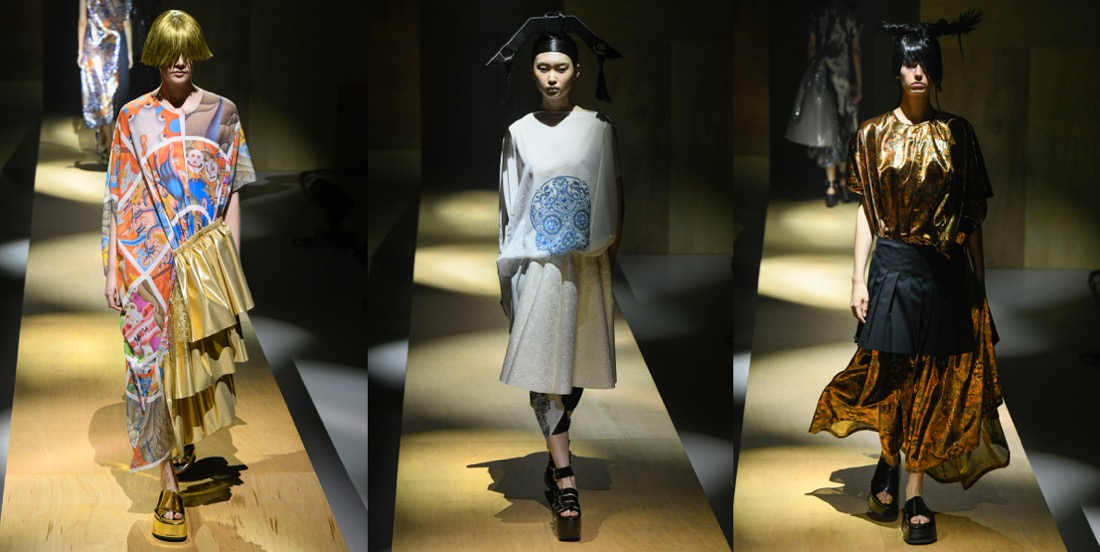
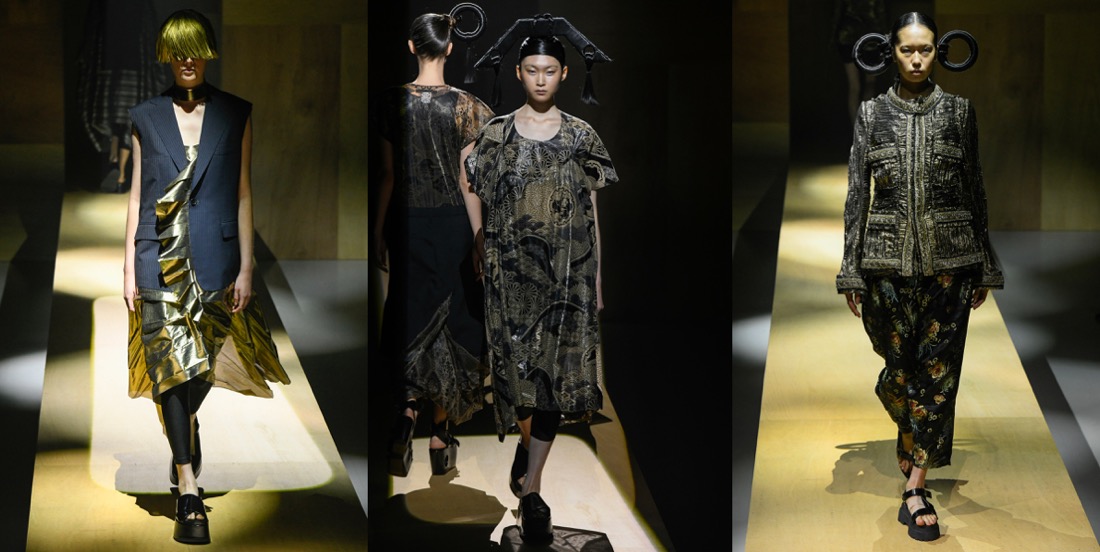
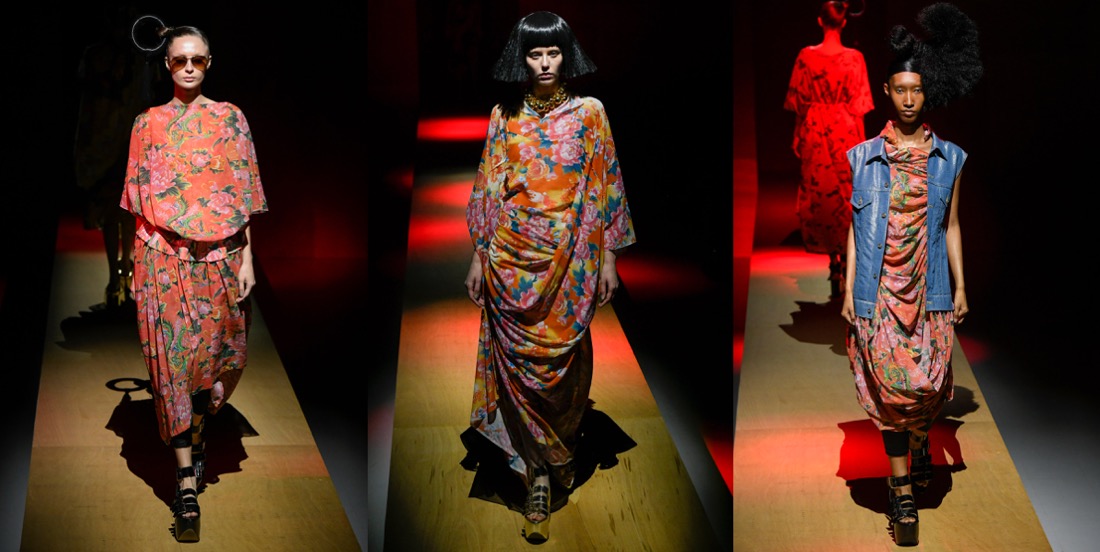
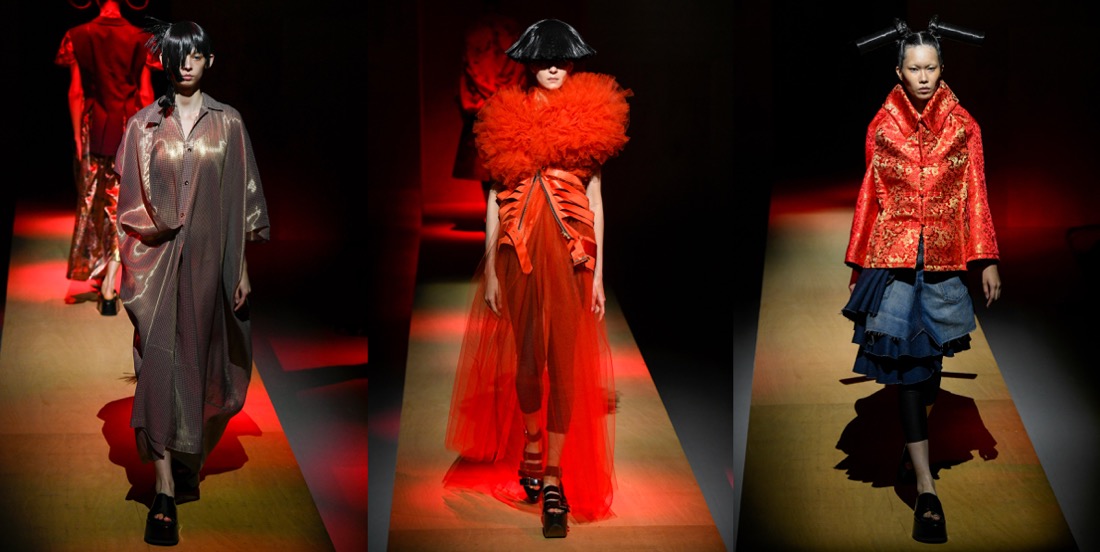
The big three names from Japan – Rei Kawakubo, Junya Watanabe and Kei Ninomiya – again skipped Paris Fashion Week, and they will probably do so until the pandemic completely winds up. From Tokyo, Watanabe treated the internet with a charming collection filled with gilded draping, filmy fabrics, disrupted tailoring and printed collaborations with Japanese, Chinese, Nepalese, and Thai contemporary artists. He called it “Eastern Reminiscence,” his term for his reminiscences of pre-pandemic travel. Looking through a collection of photojournalism that Jamie Hawkesworth, the British photographer captured in 2019 in Bhutan, India, and Kashmir, Watanabe “became nostalgic for Asia” and “the pure heart of people” he saw there. It was all there to read in the intersections of his gently-elegant folds, layers of glimmering asymmetric drapery, brocades and the fragments of biker jackets, kilts, and men’s tailored jackets. First up: a white dress printed with a skull artwork – part punk, part Chinese porcelain – by the Chinese artist Jacky Tsai, based in London. Watanabe had Japanese heroes working with him too: black-on-flesh-colored patterns in semi-translucent dresses almost as fine as second-skins were by the tattoo artist Nissaco, renowned for his geometric work. A dress with a psychedelic artwork of goldfish and stylized women’s heads came from a 1975 animation by Keiichi Tanaami, the legendary pop artist who has been working  his hallucinatory visions since the ’60s. Powerful hand-drawn black calligraphy by Wang Dongling, director of the Modern Calligraphy Study Center at the China National Academy of Arts, scrolled a Tang Dynasty poem over white dresses. Ang Tsherin Sherpa, a Tibetan artist based in California, creator of modern artworks based on traditional Tibetan thangka iconography, collaborated in orange-blue-green grid patterns sliding sideways over a draped dress. A vivid orange smock emblazoned with flowers and a painted dragon is a Thai fantasia dreamed up for Watanabe by the Bangkok-based illustrator Phannapast Taychamaythakool. It’s obvious how much mutual respect Watanabe enjoys with his creative peers who are all exploring traditions and crafts in free-wheeling, sometimes surreal parallel. The fantastically textured metallic series of evening pieces beautifully related to Jamie Hawkesworth’s photographs of golden female temple deities. This was definitely one of Junya Watanabe’s most inspired collection for a long time.

Collage by Edward Kanarecki.

Randomness. Comme Des Garçons SS22

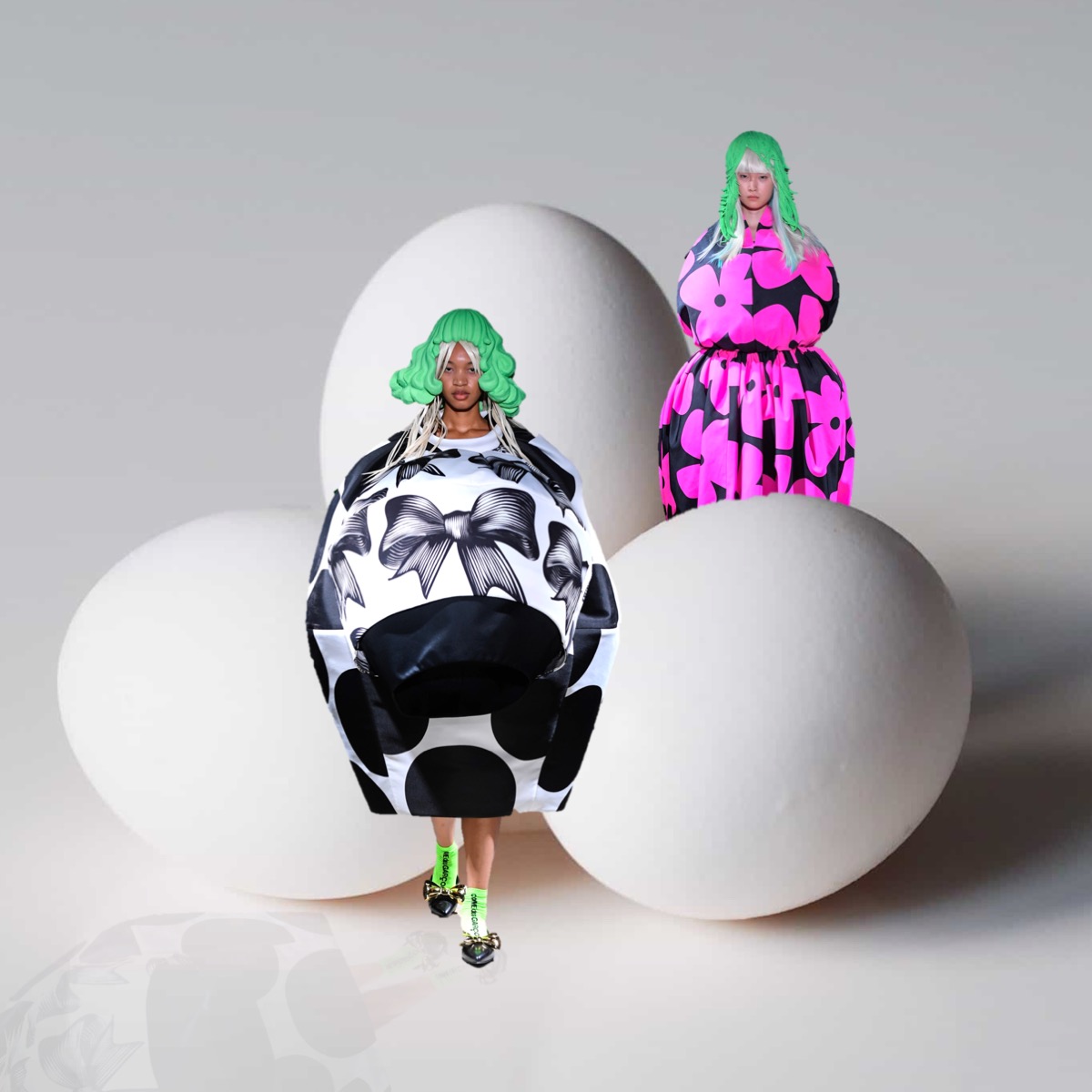
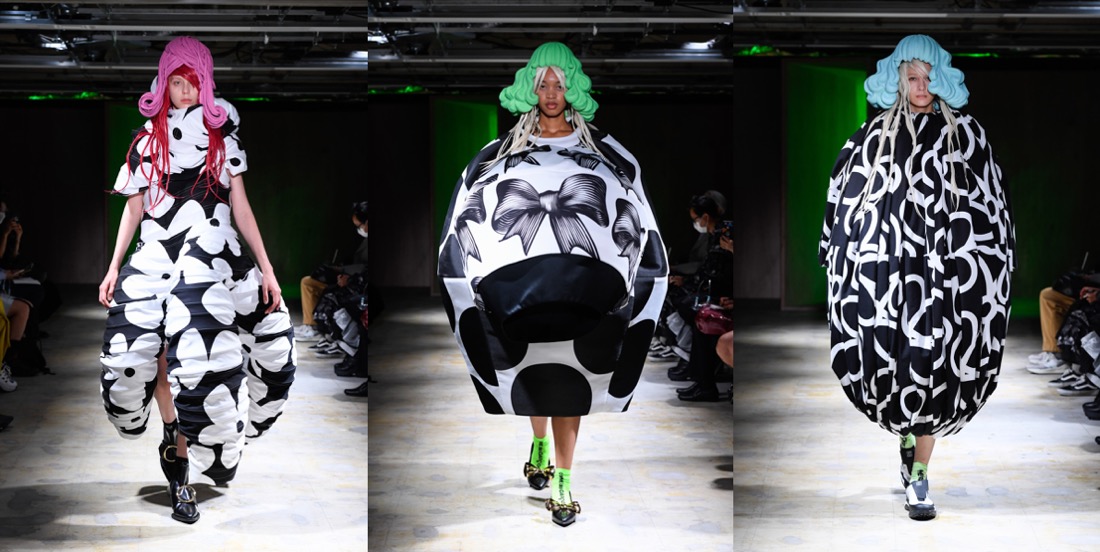
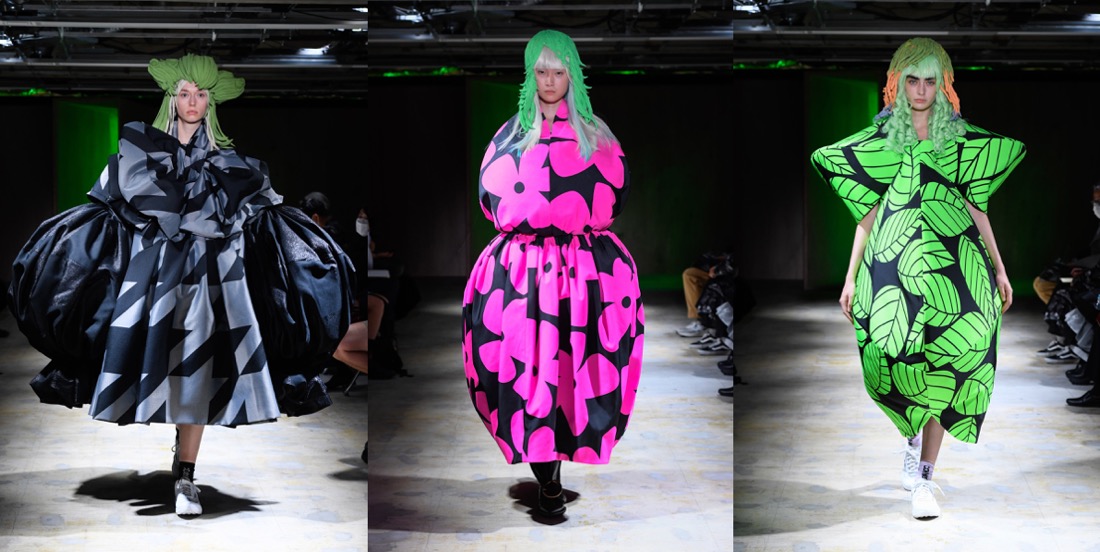
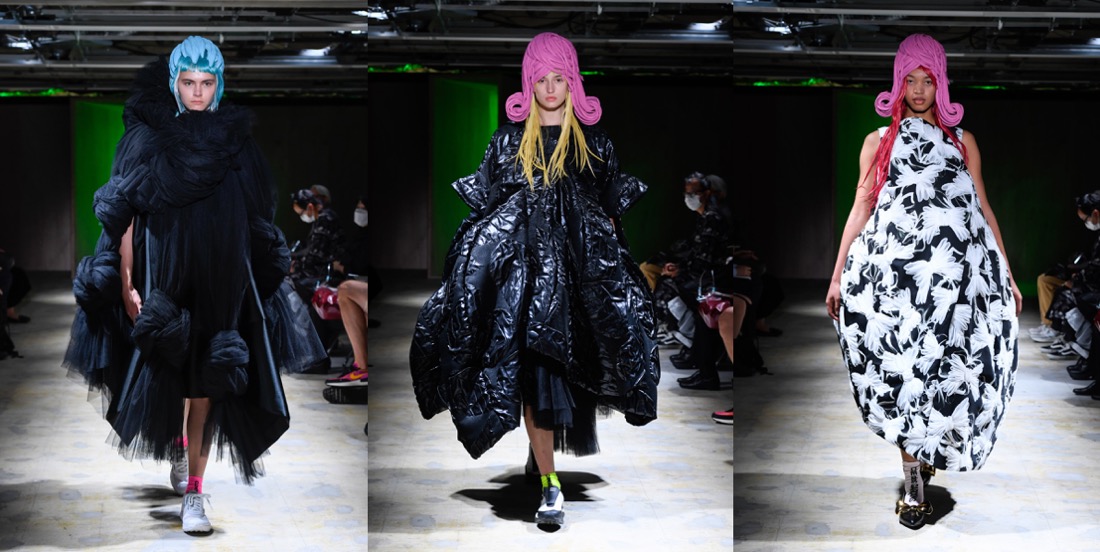
Livestreamed from Tokyo, Rei Kawakubo went for her signature giant portable Comme Des Garçons sculptures this season, imprinted with exaggerated flowers, leaves and bows. There were huge shapes, which meant models had to squeeze or shuffle sideways to emerge through a door onto a set. It didn’t feel like one of Kawakubo’s dystopian, apocalyptic moments in which she has seemed to sound a warning about bad things coming. Was her popping-out scenario closer to suggesting a feeling of rebirth, re-emergence, maybe? If so, it’s into a world where – as other fashion designers have been saying – nothing makes sense. Randomness, surrealism and absurdity are registering as part of the mood of 2021. Kawakubo, in confronting her “present state of mind” went large, very, very large, occupying space in ways that no women is meant to (though to be honest, vast art-fashion structures have been her safe space for experimenting for years). She certainly met her own criterion of avoiding making clothes. Comme “dresses” were presented as abstract perambulating 3-D fabric structures, topped off with pastiches of plastic cartoon girly wigs by Gary Card. Some of them had a sort of curved prow; several had net-filled cones spurting from their backs; some were ovoid, another was a 3-D black trashbag flower. Eventually there was an impression of the weight of furnishing fabric and swishing curtain swags. In the end there was a piece that seemed to have entirely merged a woman with a comfy black and white upholstered armchair. Paris Fashion Week missed having the Comme de Garçons show to contemplate at a time when fashion needs fearless innovators to take it forward. Kawakubo sets an example for all: a designer who has been independent for a lifetime and is still pushing.

Collage by Edward Kanarecki.