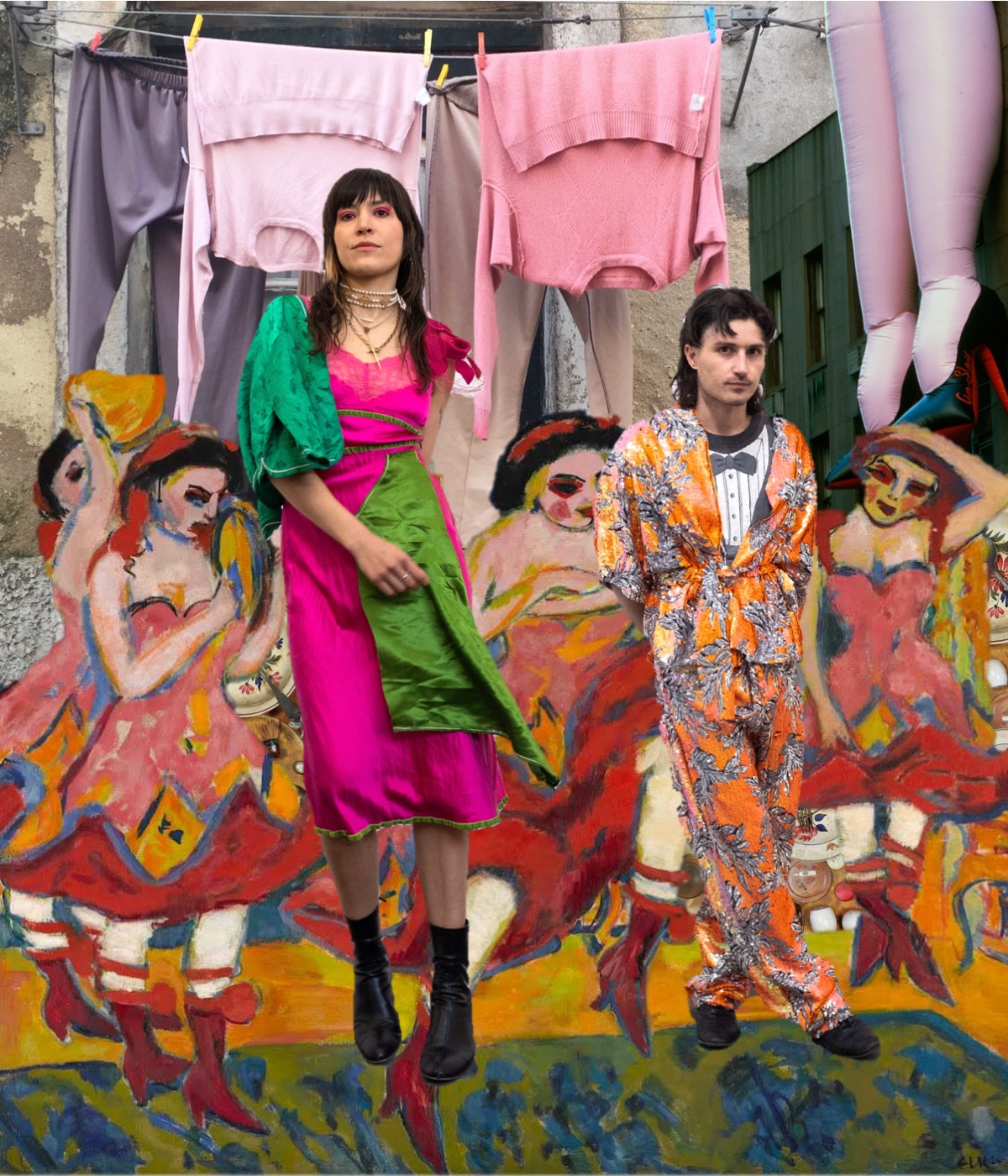
Act Compassionately & Sustainably. Imitation of Christ AW21

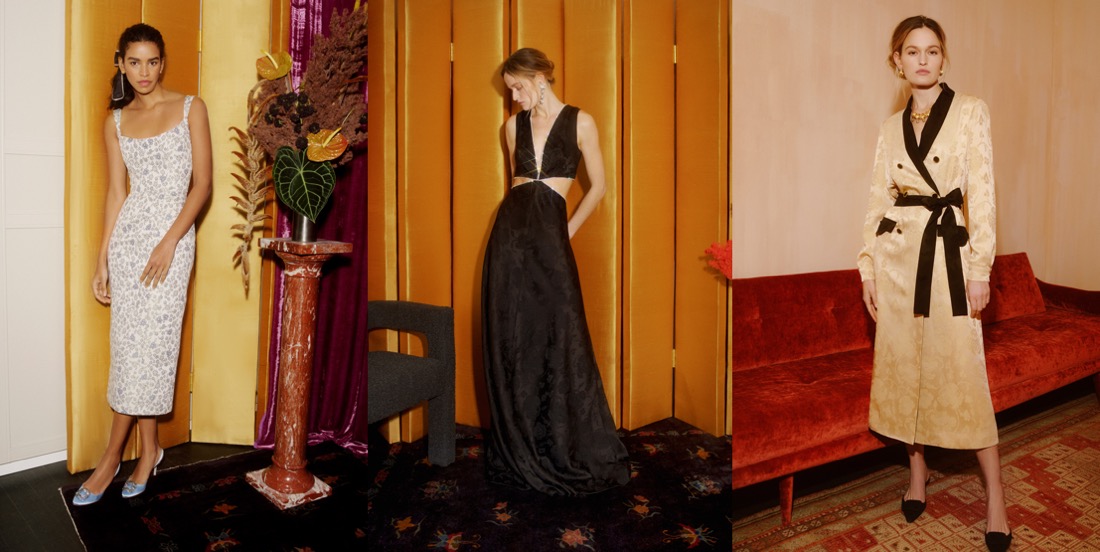
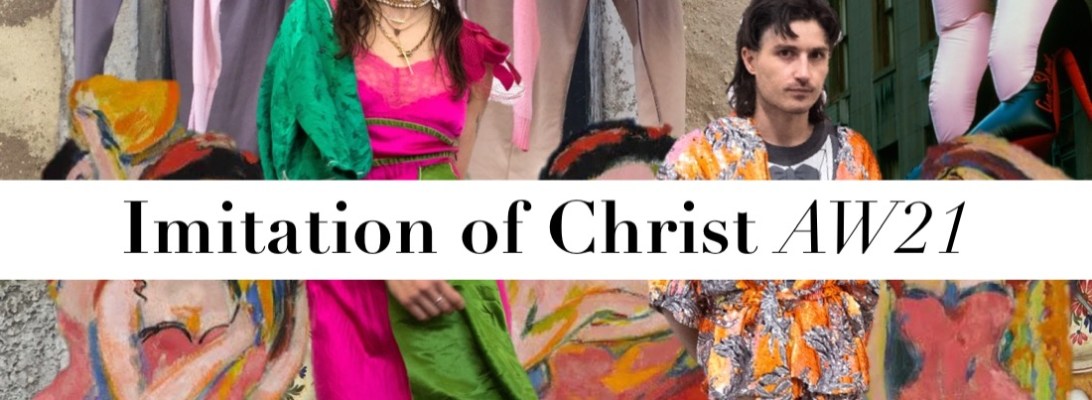
Imitation of Christ isn’t a regular fashion brand. Every single piece made (“produced” just doesn’t fit here) is one-of-a-kind. No pre-collections and no traditional business models, but rather spontainety and a sense of inspiring care-freeness is what prevails at Tara Subkoff‘s brand. And of course it’s one of the most ingeniously sustainable labels that exists. Second season in a row, Imitation of Christ’s upcycled collection is available and sold on The Real Real – and half the profits will go to Greta Thunberg’s Fridays for Future. Also, there’s no coincidence that the autumn-winter 2021 collection was presented on Valentine’s Day. It’s a reaction, said the designer on a call with Vogue, against “a Hallmark holiday or some consumer driven idea of romance.” Instead, the designer highlighted, the line-up (and the accompanying video) offers something “true.” The collection video, made in collaboration with Daphne Muller and Adam Teninbaum, is not for the squeamish. Though it features six hip Californians, a few of some renown, the piece is dominated by “a real 3D animated heart,” that is, admits Subkoff, “really shocking. We have this very strange idea of what a heart is, which is… really a cartoon version that we give to each other. We all have a heart pumping blood in our bodies and it pumps for a finite amount of time, then it’s over. And I think the more we understand that, maybe the more compassionate and kind we can be towards one another.” A similar feeling of compassion is present in the off-kilter garments. Subkoff  has always had a penchant for beaded dresses from the 1920s, and these were back and looking fresh. Deco beading was applied to pieces for men and women, and this incongruity was perhaps best exemplified by the pairing of a gray utility suit with shimmering white bead work (there’s a well-considered Martin Margiela method in these de- and reconstructed pieces). Subkoff believes that what good you do in the world becomes an ever growing legacy. She’s been serious about sustainability for decades and hopes, through her actions and messaging, to inspire others to design and act sustainably (“Please, other companies or other people – copy this, do this,” the designer offered).

Collage by Edward Kanarecki.
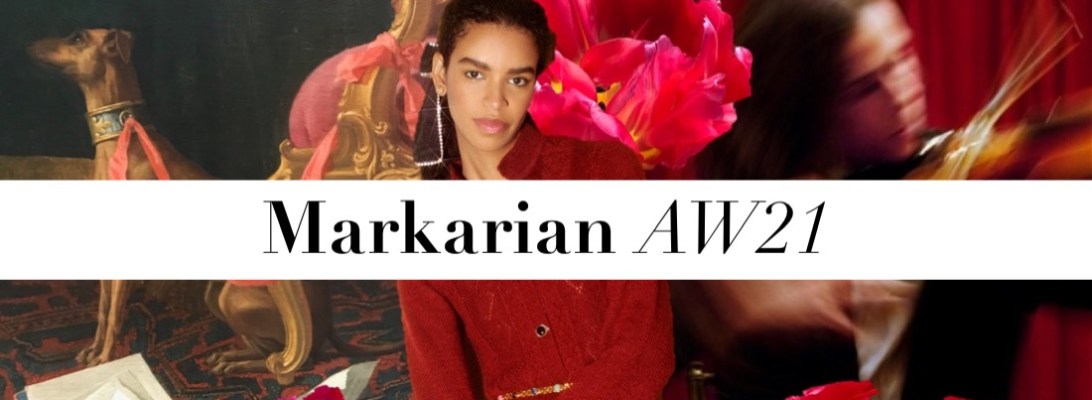
First Lady Approved. Markarian AW21

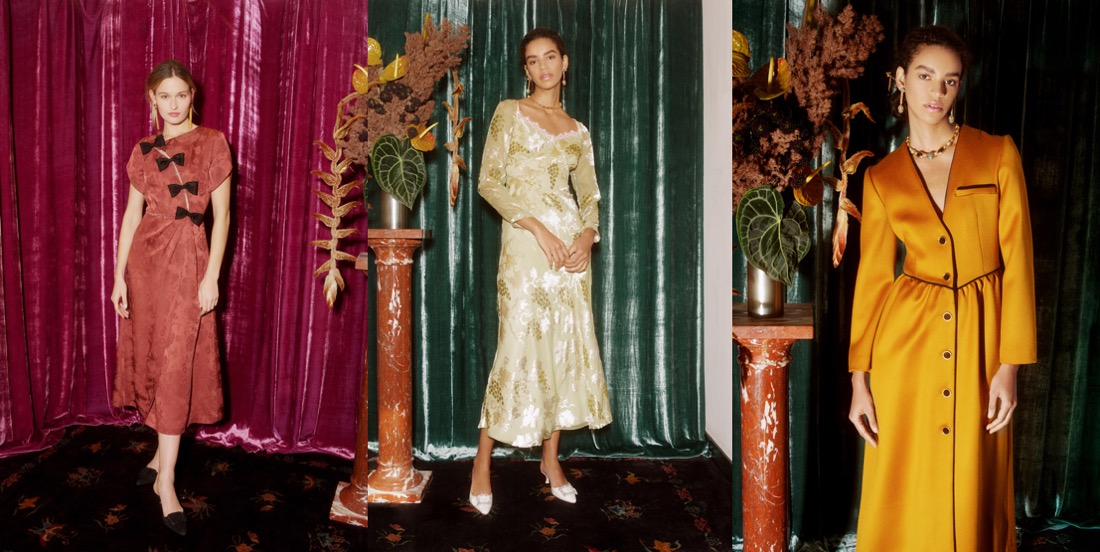
On January 20th, the Inauguration Day, Dr. Jill Biden wore Markarian from head-to-toe: a custom cerulean tweed dress and matching coat trimmed with pearls and velvet cuffs. Michelle Obama boosted the profile of many young American designers in her day, and Biden’s choice was a reminder of how deeply women care about what First Ladies wear – and how influential their choices can be. But also, it worked as a statement: supporting small brands and companies is important. That day, Markarian’s Alexandra O’Neill experienced ultra-visibility that most young designers only fantasize about. On a Zoom call with Vogue, O’Neill said her social media following doubled instantly, and the e-tailer Moda Operandi reported a 570% spike in traffic to Markarian pieces within 24 hours: overnight, the label went from relative obscurity to international news. And here’s a plot twist. Anyone expecting an autumn-winter lineup of Dr. Biden-esque coats or a deep political statement will be surprised to hear that O’Neill’s inspiration – one she conceptualized months before the election – was actually Ancient Rome. She studied Roman art and mythology in college, and the relaxed glamour of the period (draped tunics, twisting braids, lots of gold jewelry) felt newly relevant in a year of lockdowns. Markarian isn’t a casual brand, so O’Neill’s challenge of late has been creating elegant clothes you can wear out or at home. A brocade robe dress met the criteria, as did a long-sleeved style with a burnout velvet motif of shimmering grapes. Yet many of O’Neill’s customers will be more excited by the pieces that read fantastical, not practical: an LBD with “firework” crystal embellishments or the dreamy, yet unpretentious wedding gowns. With so much unexpected recognition the brand has received, it’s exciting how O’Neill will push her vision forward.

Collage by Edward Kanarecki.

A Fine Edit. Victoria Beckham AW21

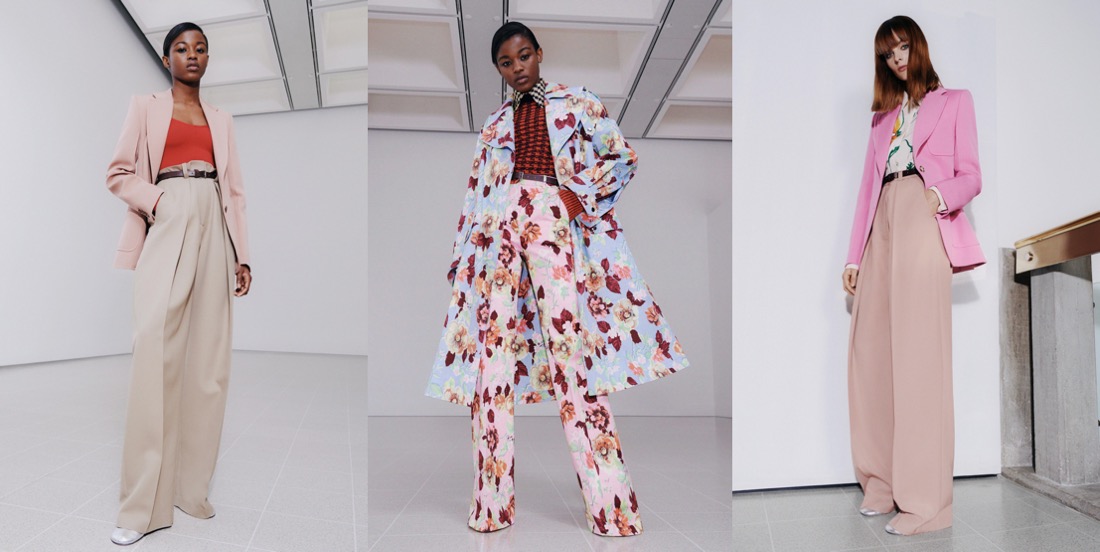
It’s the official start of fashion month, which of course won’t be the usual, hectic marathon we know from the pre-COVID times. Look-books and videos are here to stay, and much less brands will show in the traditional schedule. New York Fashion Week is having a hard time, cropped down to just two days. Many designers are reflecting on the way they used to work and put sustainability as their main priority. Victoria Beckham‘s autumn-winter 2021 is a fine edit of both pre- and main collection. It’s all about unmistakable wardrobe essentials with versatile intentions – meaning easy day-to-night transition pieces. After the financial shockwaves of the epidemic, this season marked Beckham’s pared-down foot forward in general. “I sell clothes,” Beckham told Vogue. “I don’t sell so many shoes and bags that my collections are just about ticking a fashion box. They’re about creating clothes that people want to wear and can really wear. That’s why commerciality is not a swear word to me.” The look-book she released today demonstrated what a consolidated Victoria Beckham woman looks like. Rather than introducing new complex cuts or ambitious experimentation, familiar VB garments bore testimony to a certain studiousness: they’ve been simplified and perfected. Prairie and flapper dresses were streamlined, her slinky long-sleeved everyday dresses were recut for a t-shirt-like ease, and tailoring looked as optimized for comfort as it must have felt. For anyone hankering for more bling-bling, there were those knee-high silver sparkle boots and some rather subversive floral prints. In one instance, the latter clashed in a mad floaty dress that evoked some of Beckham’s more directional collections. “We never want anything to be boring,” as she put it. The morale of this collection is that less is more, if the quality and design is at its best. “People ask me if I think people will buy less when we come out of lockdown, and I hope they will! We want to sell clothes, don’t get me wrong, but I hope people will want to invest in pieces they really want to wear. Buy a piece and get your wear out of it. Don’t just buy it for one season,” Beckham concluded.

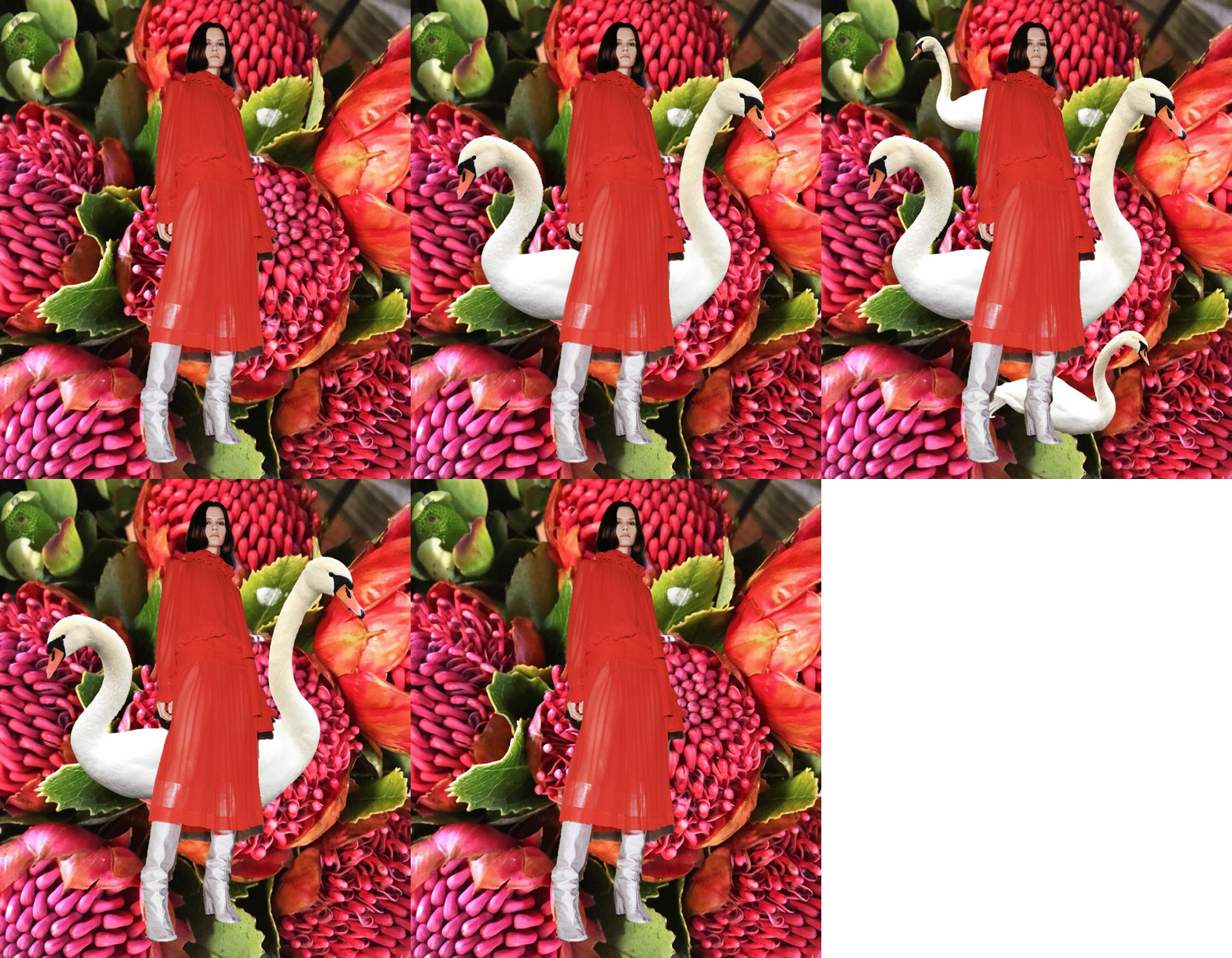
“Live” collage by Edward Kanarecki.
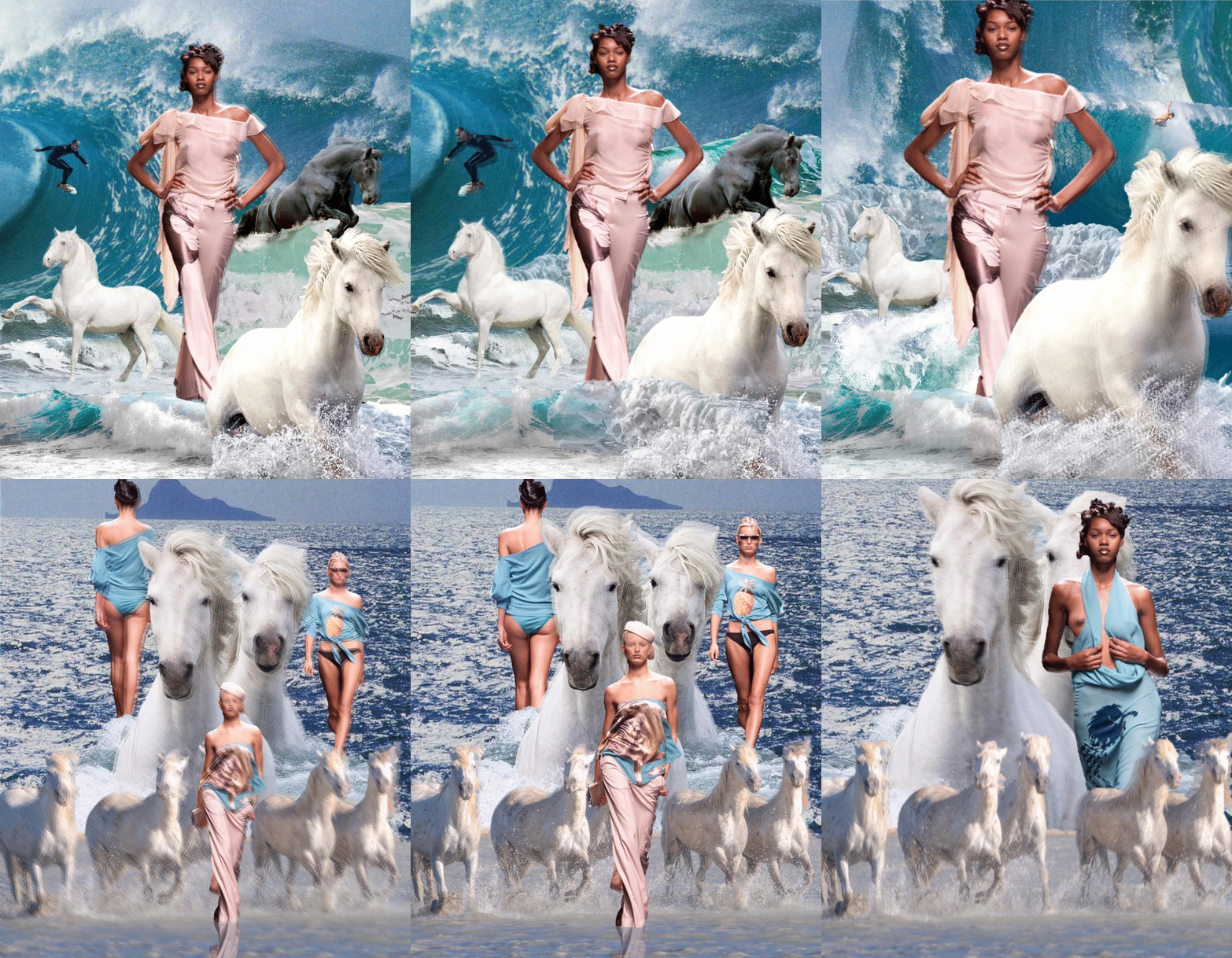
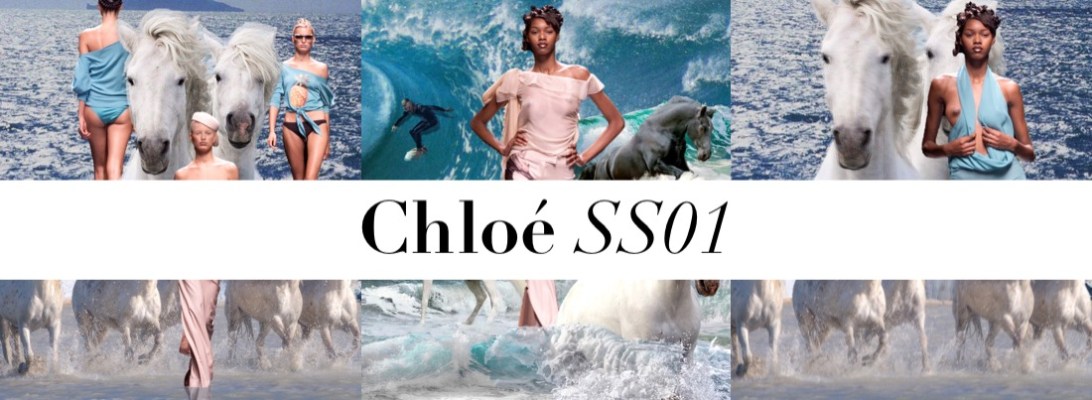
Wild Horses & The Sea. Chloé SS01

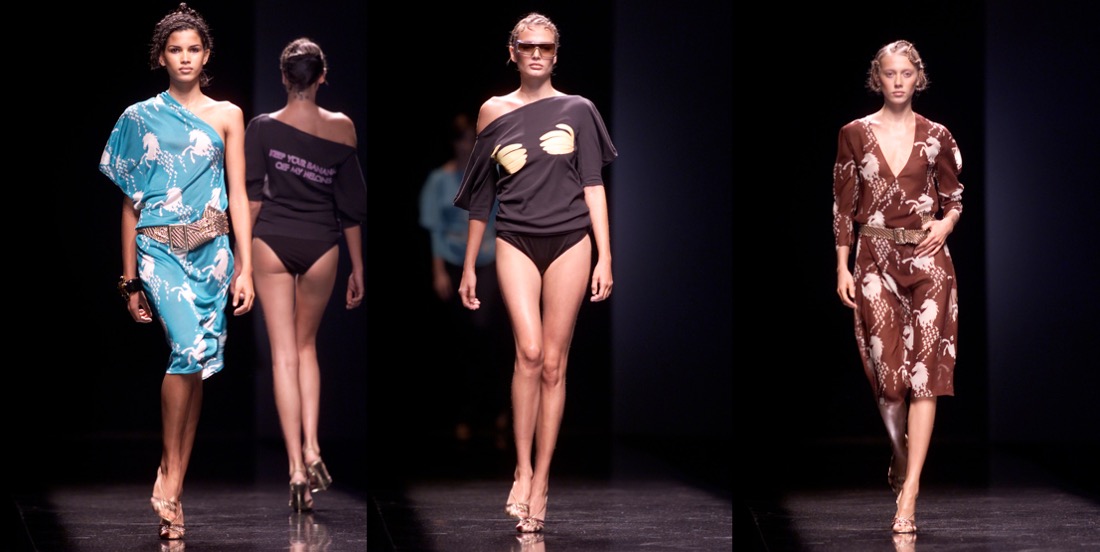
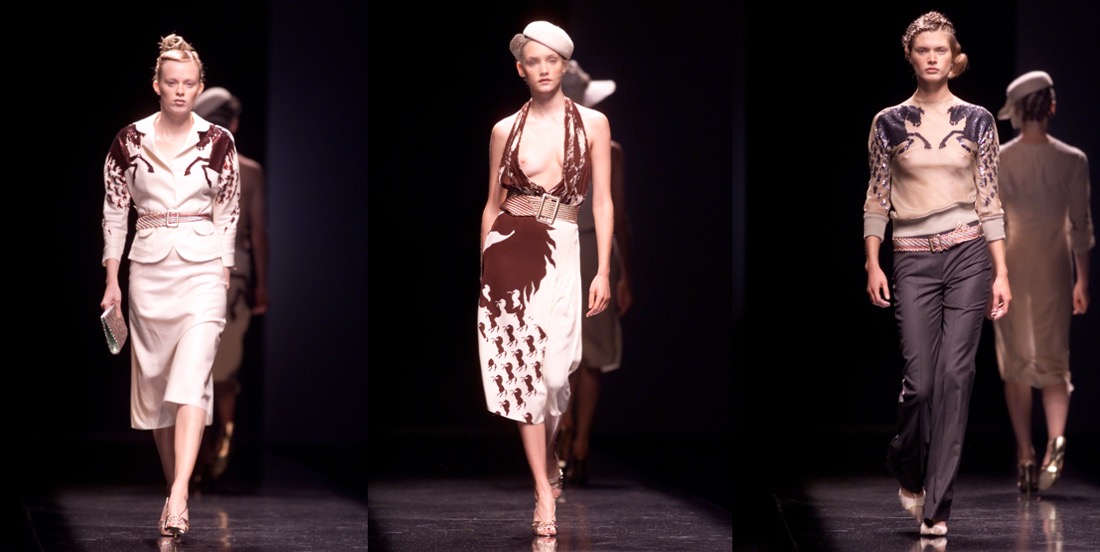
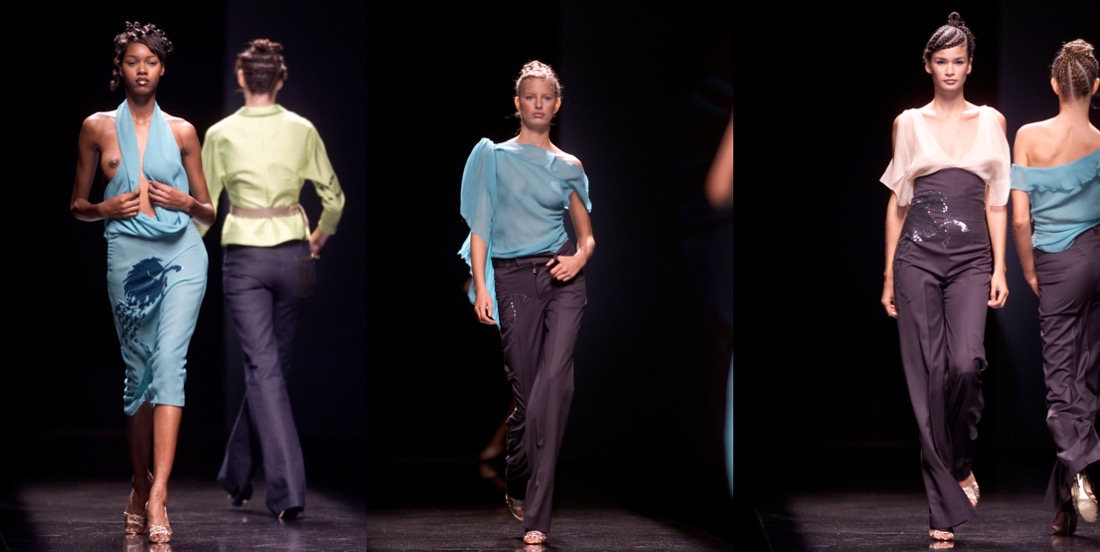
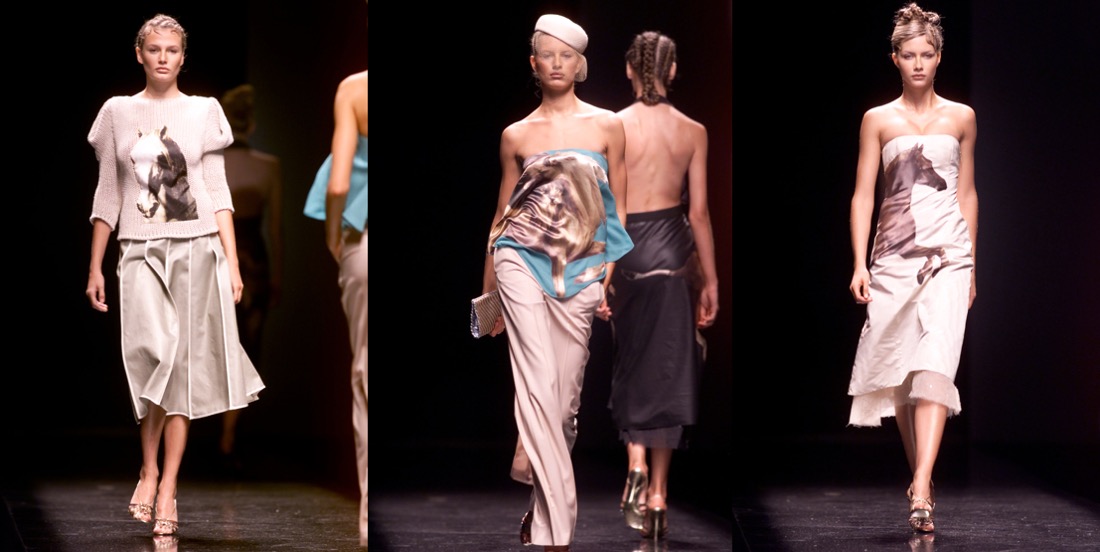
In the yesterday’s Insta-episode of “Never Worns” by Liana Satenstein (I highly recommend following her @schmattashrink!), she talked to journalist and fashion critic Alexadner Fury about his museum-worthy archive collection, and vintage trends that might be big soon. He mentioned Stella McCartney’s Chloé as a fashion moment that just waits to become sought-after on the market. I personally love Stella’s era at the French brand from the early 2000s, and I wish she did more of that carefree, sexy, trippy thing at her brand now. So, 20 years ago, the designer certainly did not disappoint her legions of fabulous young fans. For spring-summer 2001 season, in addition to delivering sexy new T-shirts and plunging bathing suits (with playful pineapple motifs – this sent shock-waves in Paris that day and eventually ended up being a feminist moment), McCartney explored grown-up territory, of course according to her signature princess-at-a-party style. Perhaps drawing inspiration from Elsa Schiaparelli’s inventive chic, McCartney worked graphic horse prints (borrowed from Stubbs and Géricault) into loosely structured diagonal-seam dresses and beautiful jackets with a softly draped triangle shoulder. Skirts were long and relaxed, perfect when paired with lightweight, flouncy off-the shoulder tops. Wide-brim hats and dainty pillboxes with a tulle overlay gave the look a touch of ’30s sophistication. More casual pieces included sexy jeans with zipper pockets and metallic horses galloping along the backside, and a T-shirt with strategically placed banana appliqués in the front and the words “Keep your bananas off my melons” in the back. This was one of the most memorable Stella-at-Chloé collections and one that confirmed her talent and potential as a major designer. I feel like those are clothes we want to see, love and wear in 2021 (or in post-COVID era that will eventually arrive, right?). Slightly hedonistic, beach-perfect, wild like a graceful mustang and simply sparking joy.

“Live” collage by Edward Kanarecki.

Classics. Alaïa AW21

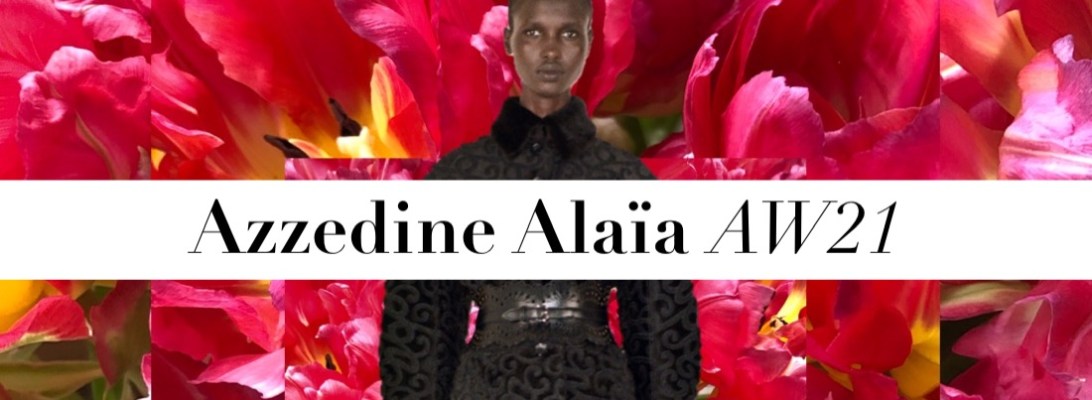
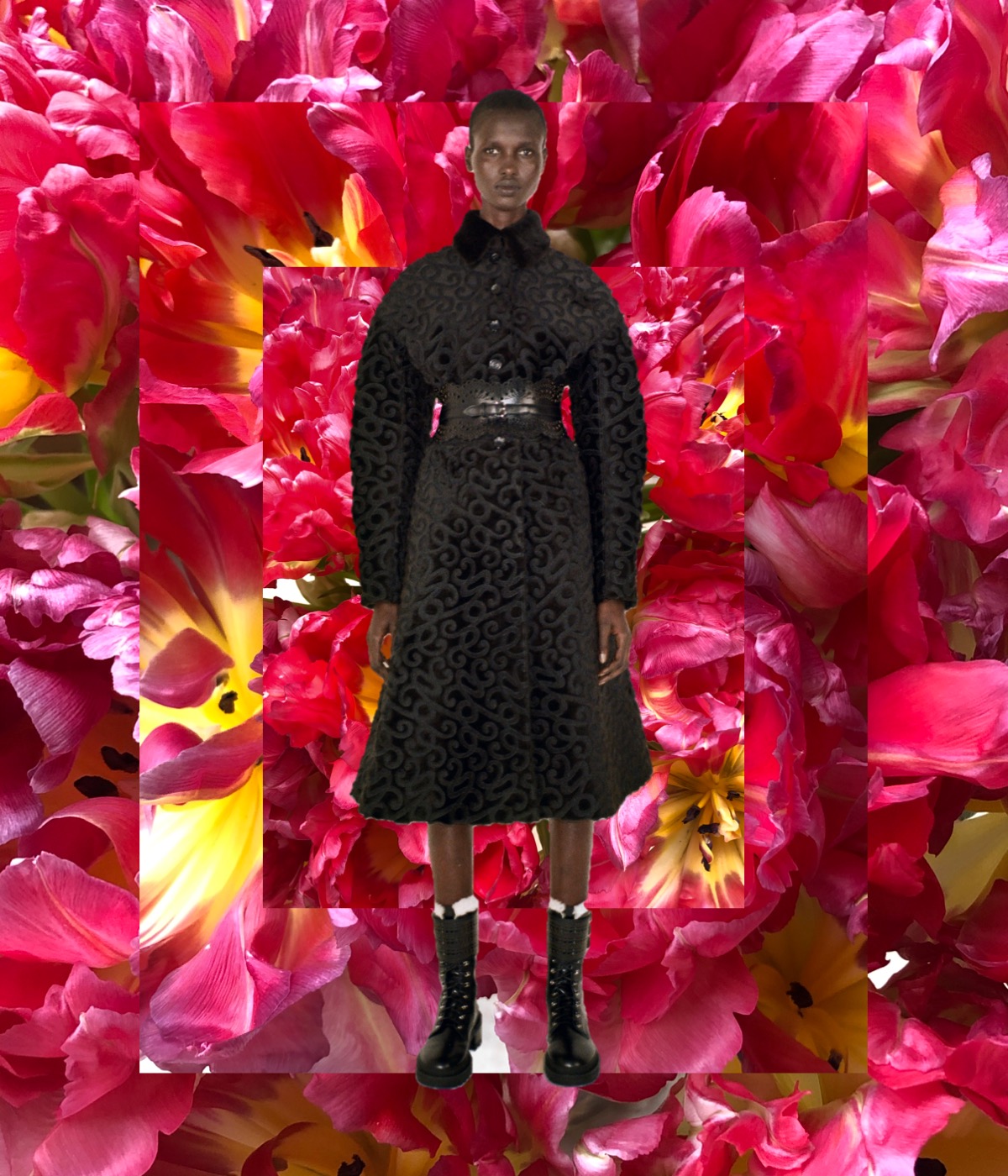
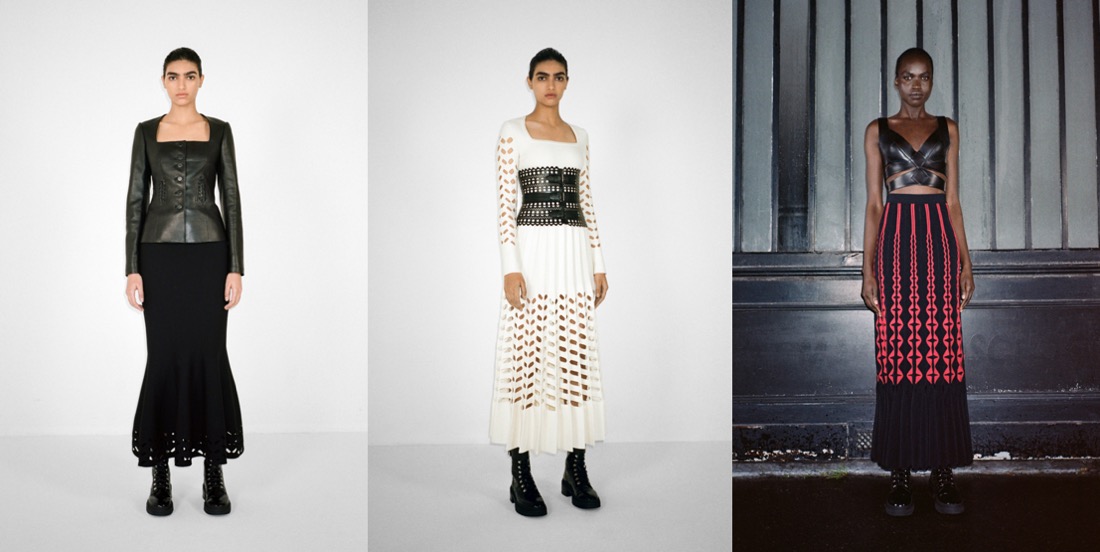
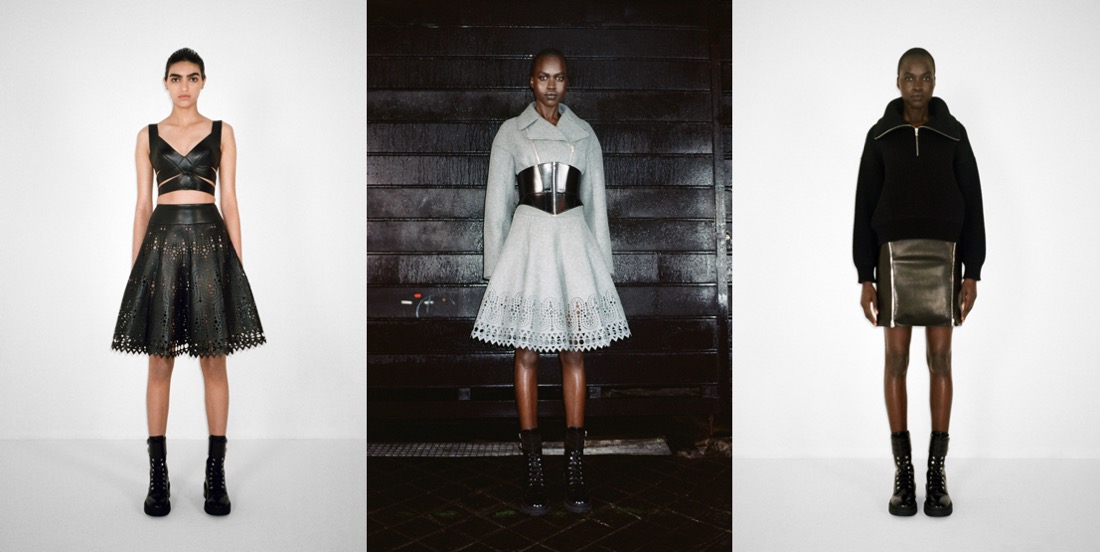
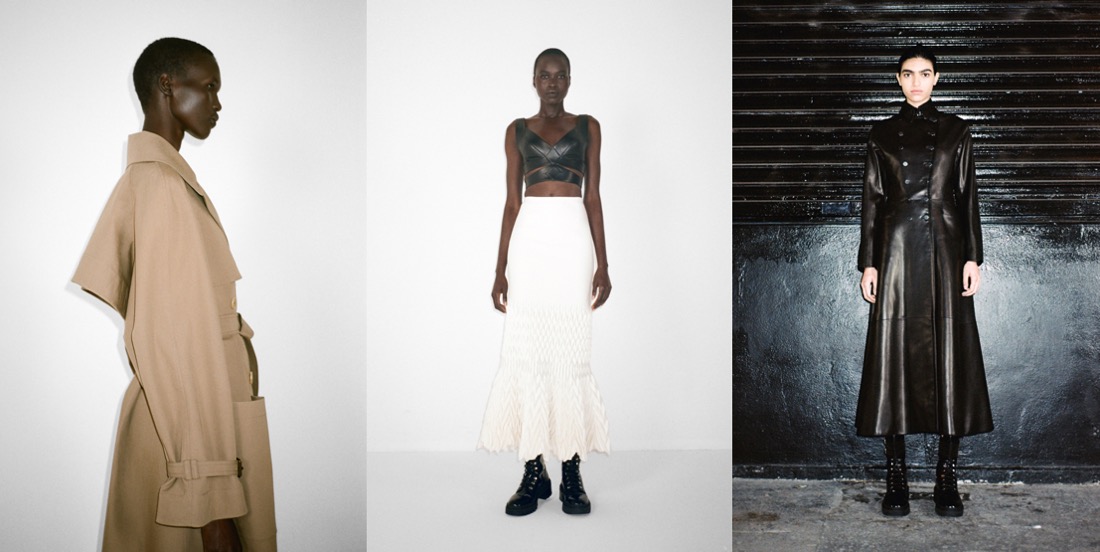
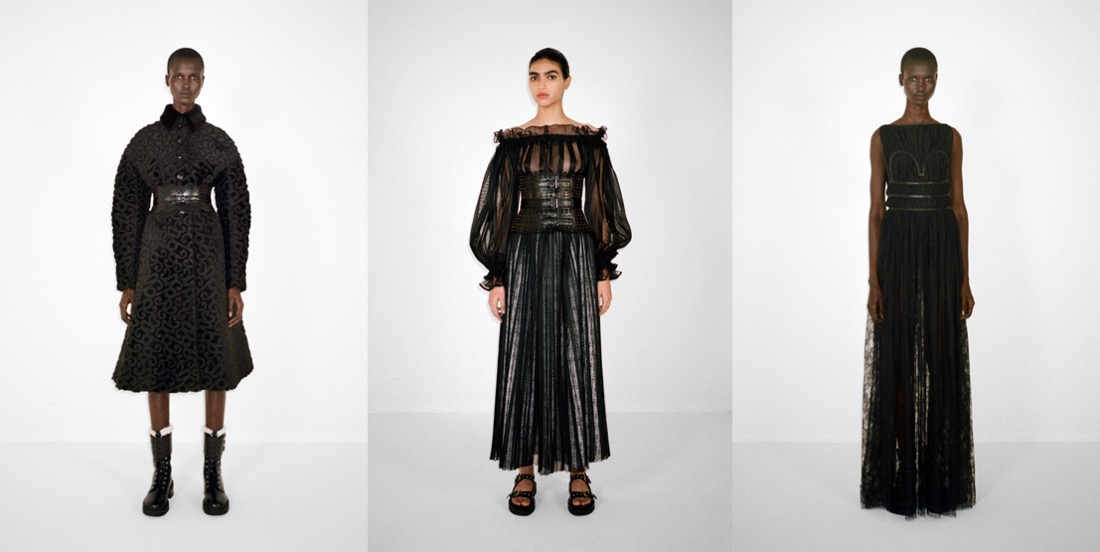
Azzedine Alaïa‘s studio team respects the late monsieur’s aesthetic, techniques and silhouettes, and keeps on working with well-known codes of the maison. The brand consistently evolves, mostly in peace and silence (the rumours of big-name designer appointments are just rumours). Given Alaïa’s decades-old archive of tens of thousands of prototypes, patterns, samples, and unfinished ideas, it’s amazing the house manages to edit down about 40 pieces for the seasonal Editions line. “It’s difficult and horribly frustrating because every time I go through [it, I] see so many pieces I know and love,” explained the house’s Heritage and Editions director Caroline Fabre Bazin. Ultimately, she and Alaïa CEO Myriam Serrano decided to focus on pieces they see as “important for the house, important in the history of fashion, that also speak of technique and timelessness.” Alaïa followers will recognize such iconic designs as the body-con black dress with a wraparound zip, now in long and short versions. They may also recall the intricacy of a coat held together with a technique the designer extrapolated from woodworking and transposed onto leather for a coat from 2006. Called charnière, the French word for hinge, it involves interlacing leather seams by hand in lieu of stitching. A rose-beige knit dress recalls the time a supplier turned up to show Monsieur Alaïa new lacelike techniques; he took them all and used them together for a corset dress. Elsewhere, a wool that was accidentally overboiled became a mesh-like coat, and entered into the house lexicon. Every piece has not just a date, but also a backstory. Autumn-winter 2021 revisits house techniques in new treatments and combinations that sometimes rival couture-level craftsmanship. Fragility and strength meet on a tiered lace dress with a charnière construction on the neckline, waist, and skirt. African inspirations inform the weave of a graceful skirt in russet, beige, and black; the skater skirt is revisited in a sculptural Japanese fabric, and a white skirt picks up on origami techniques. Laser-cut leather features a new style of perforation named for Sidi Bou Said, Alaïa’s Tunisian hometown and final resting place. The snow white sheepskin jacket embroidered with arabesques is a showstopper. Classics that never get boring.

Collage by Edward Kanarecki.