Contrasts Are Sexy. Saint Laurent AW21

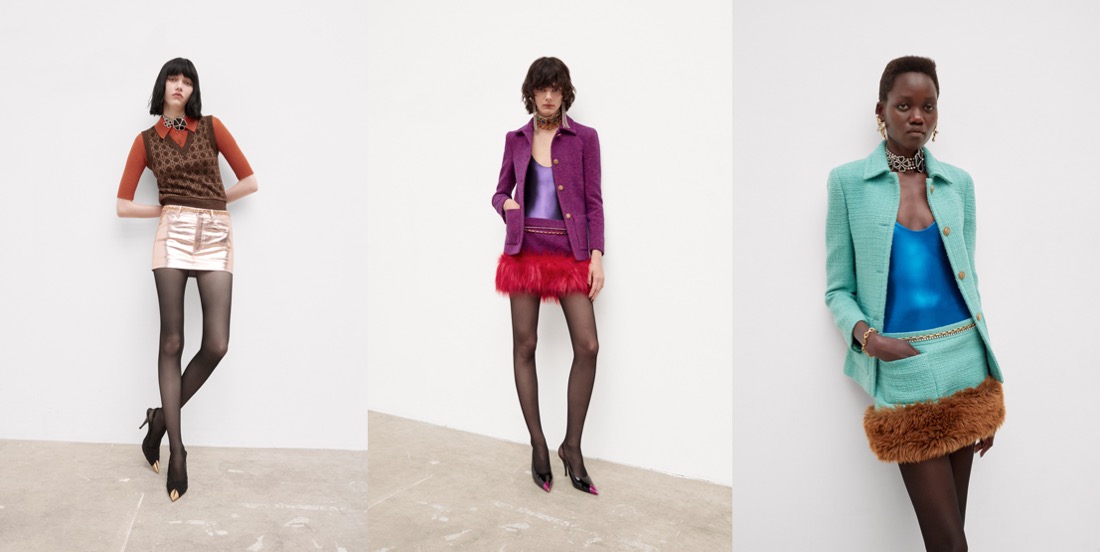
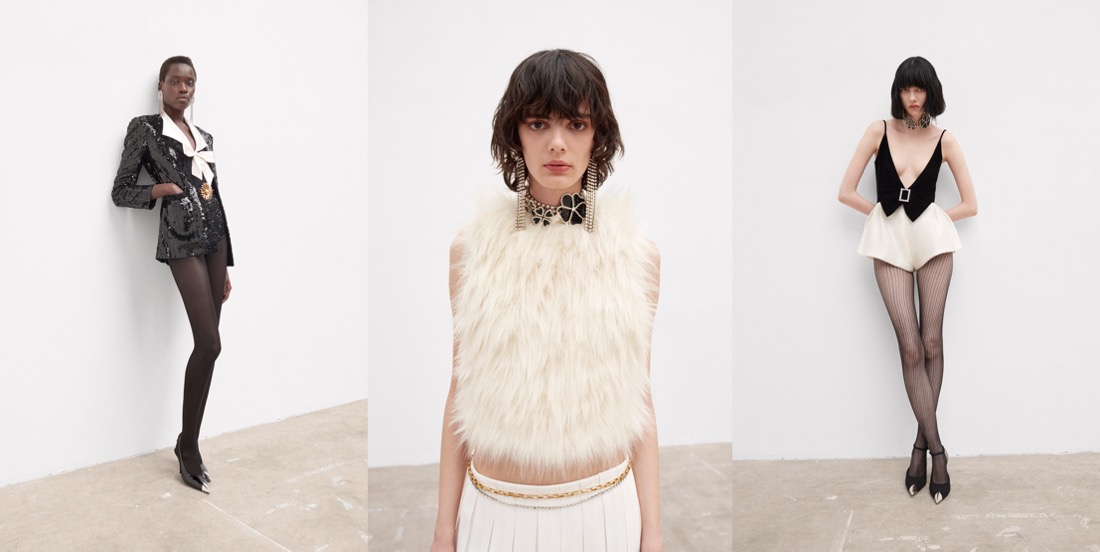
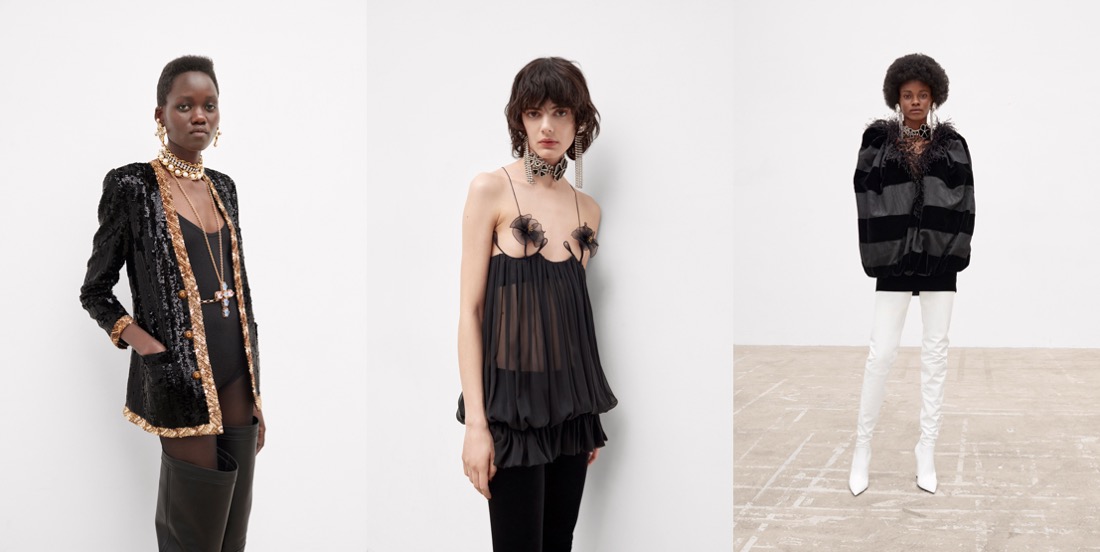
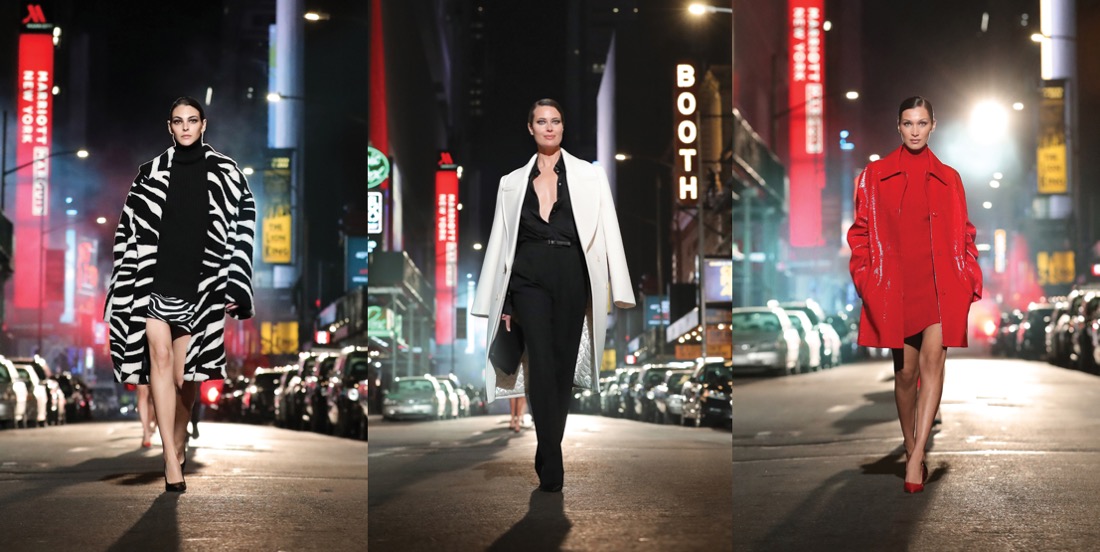
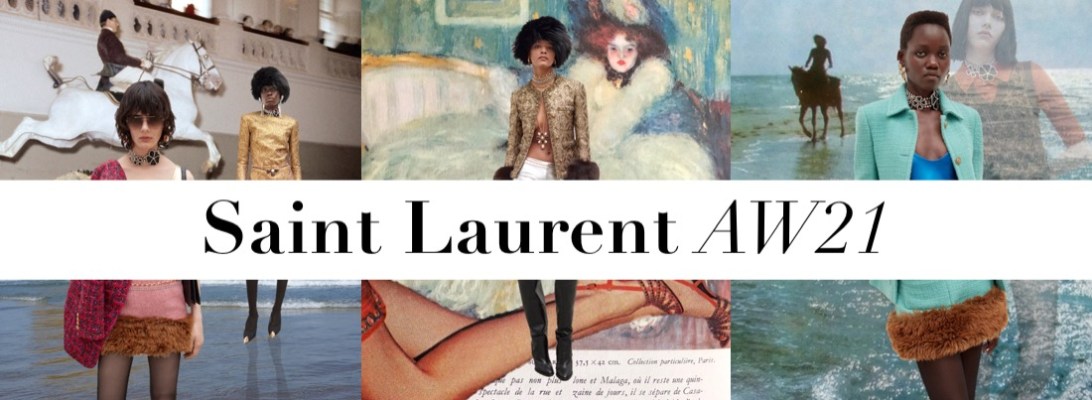
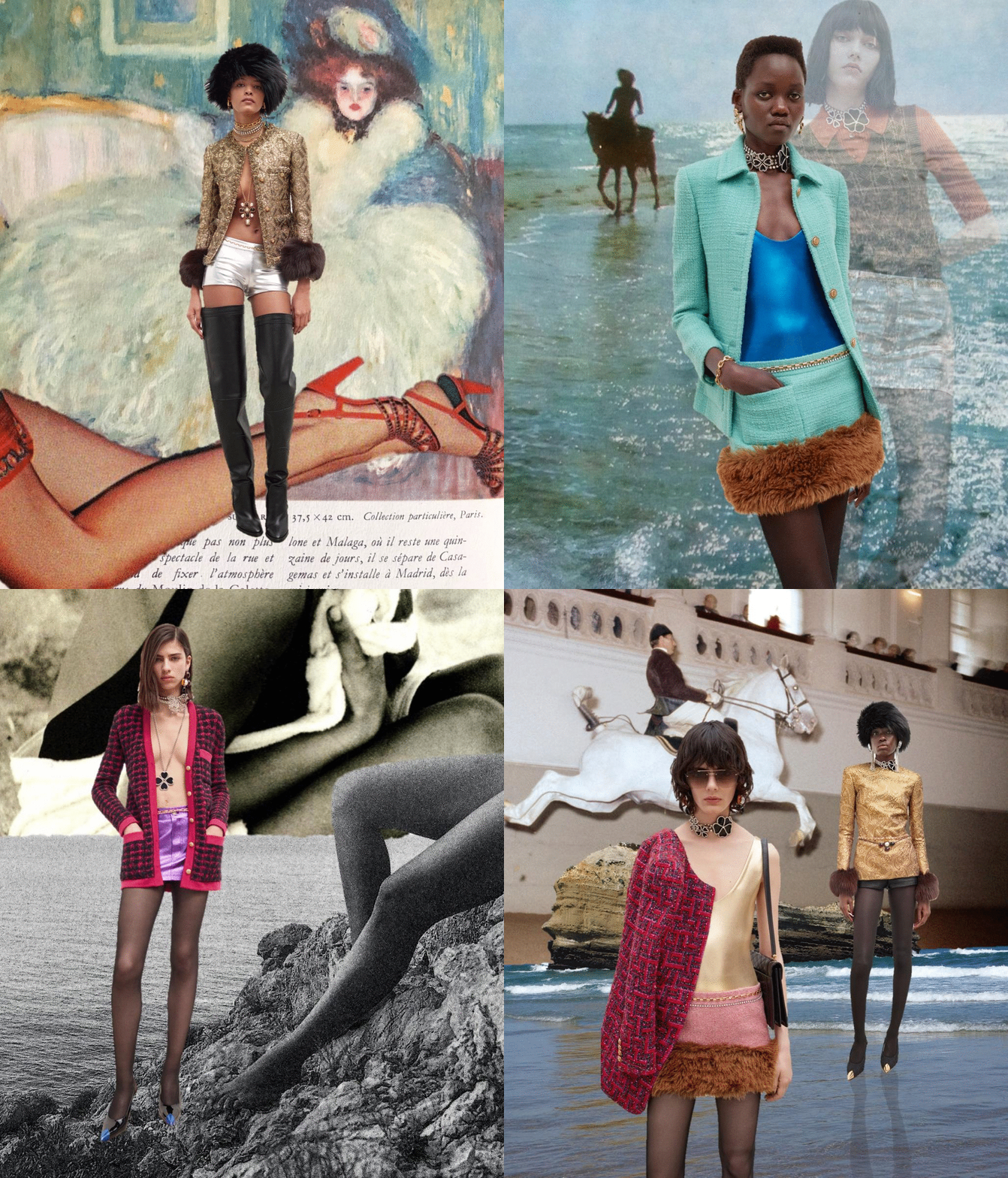
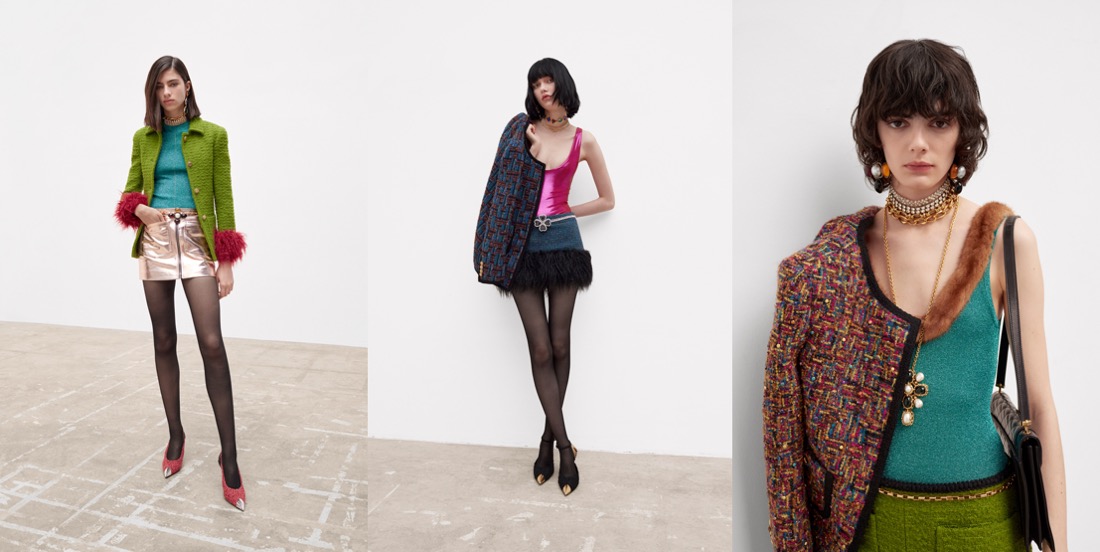
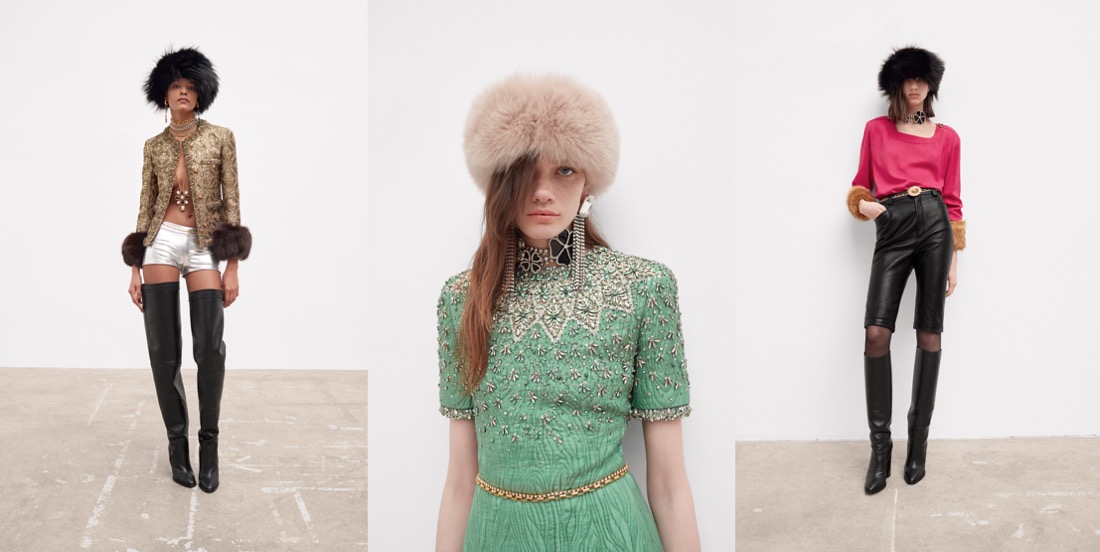
Anthony Vaccarello’s autumn-winter 2021 Saint Laurent collection was all about contrasts: luxury and kitsch, polished and raw, elegance and trash. There was even a stark contrast between the sultry clothes the designer delivered and the (rather very) windy runway venue. Against the most jaw-dropping of backdrops (of what looked like Iceland), with ice glaciers, crashing waves, and a volcanic, black beach, Vaccarello’s girls, looking like badass rock chicks, are shown striding as if on some fantastic odyssey. “When I was thinking about this collection, I had this place in mind, like a movie director,” Vaccarello said on a call to preview his collection. “It’s the idea of a girl in a landscape where she doesn’t belong. I knew I wanted a wintry location,” he went on to say, “one which showed how strong nature is; how we are really nothing next to it, how ephemeral we are. It’s not a place where anyone is going skiing, but Saint Laurent should do something that’s like a dream: What the F?! Why is she there?” The question of why this winter’s Saint Laurent woman is indeed there is left hanging somewhere in the movie’s moody overcast skies. Every season Vaccarello’s exploration of the YSL archive has a welcome air of mystery to it; there has never been any literal, first-degree rehashing of the back catalog’s greatest hits on his watch. This time round, he was drawn to Monsieur Saint Laurent’s classically elegant mid ’60s tailleurs rendered in menswear fabrics. He ratcheted up the cool factor by cutting the jackets lean and sinuous and then matching the length of their hems to his very-mini-skirts. Then he swapped out Saint Laurent’s then preferred monochromatic palette with a fabulously opulent and in your face array of violet, cobalt, gold, and chartreuse: “It’s the shapes of the ’60s with the colors of the ’80s,” Vaccarello said by way of explanation. Finishing the looks off, he slipped gleaming metallic stretch bodysuits or the tiniest of leather miniskirts under the tailoring. Then he loaded up on the bijoux – chandelier earrings, strasse bracelets, and chokers with a four-leaf-clover motif, something else sourced from the archive. It would be remiss not to mention the ultra-long leather boots or the wickedly pointy metal-tipped heels. Watching Mica Argañaraz navigate a stony cliff edge in them gives a whole new meaning to the appellation “rock goddess.” Also, she really seemed not to care for the cold, breezy wind. “I am doing things for the present; I don’t know what the future will be,” said Vaccarello on the subject of re-emergence fashion. “I want Saint Laurent to be more light and playful, but… it’s not just about going out to bars and parties. Life can’t just be when it’s bad we are all in black and pajamas and when it’s good we are in slutty dresses. After the last couple of years we can’t just go back, otherwise we will lose what we all lived through.” In other words, when you helm a house which has long had a reputation for both exuberance and chicness, how do you take it forward in a very big world? You let the fashion fly, but also keep it down to earth. “Fashion should be something you don’t take too seriously,” he continued. “Especially now, when nothing is really necessary. It’s good to laugh about life.”
“Live” collage by Edward Kanarecki.
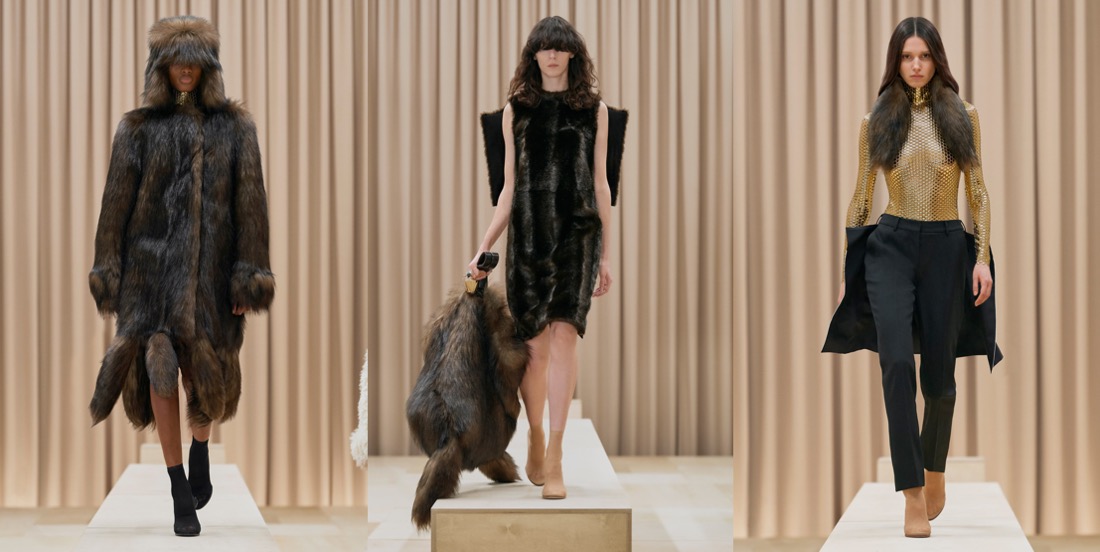
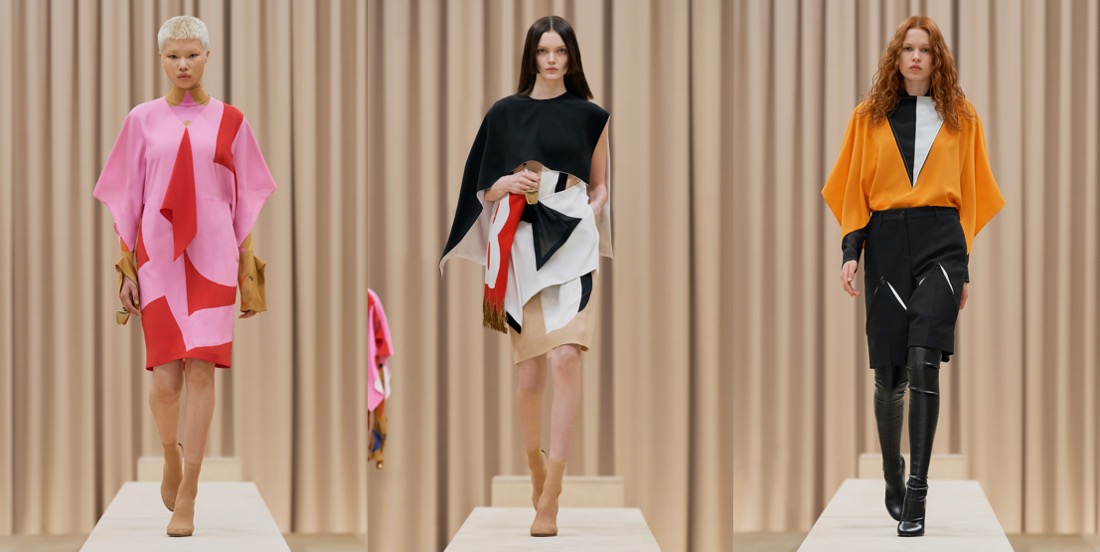
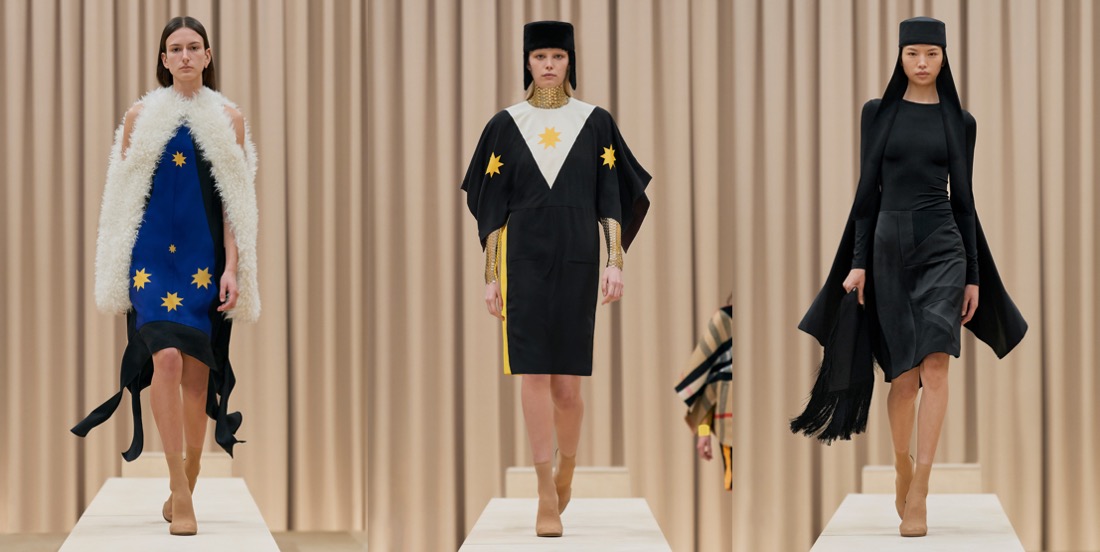
Femininity Now. Burberry AW21

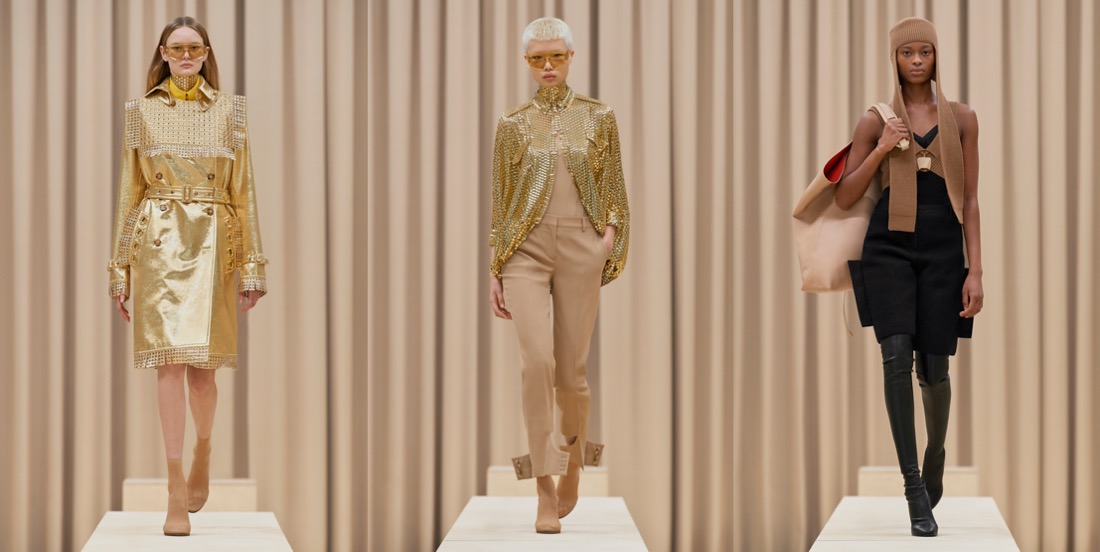
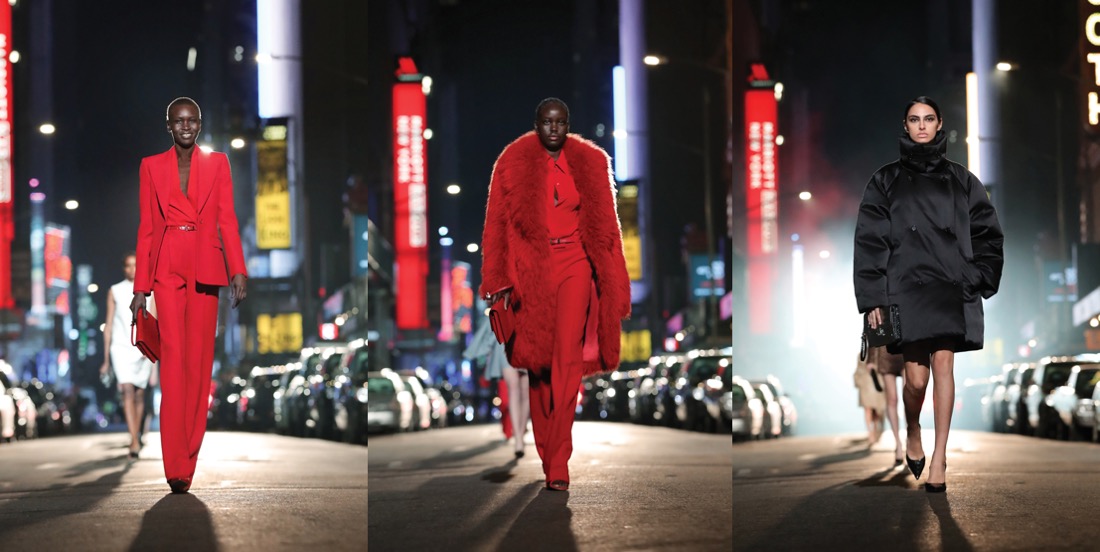
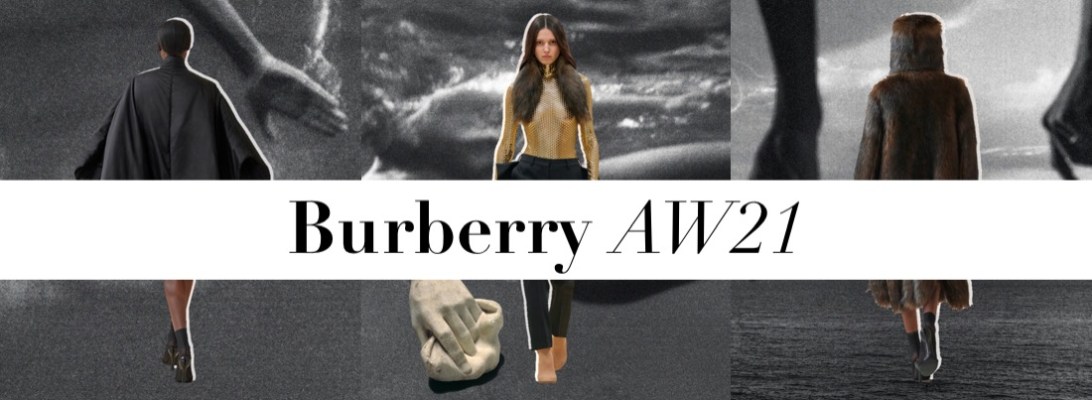
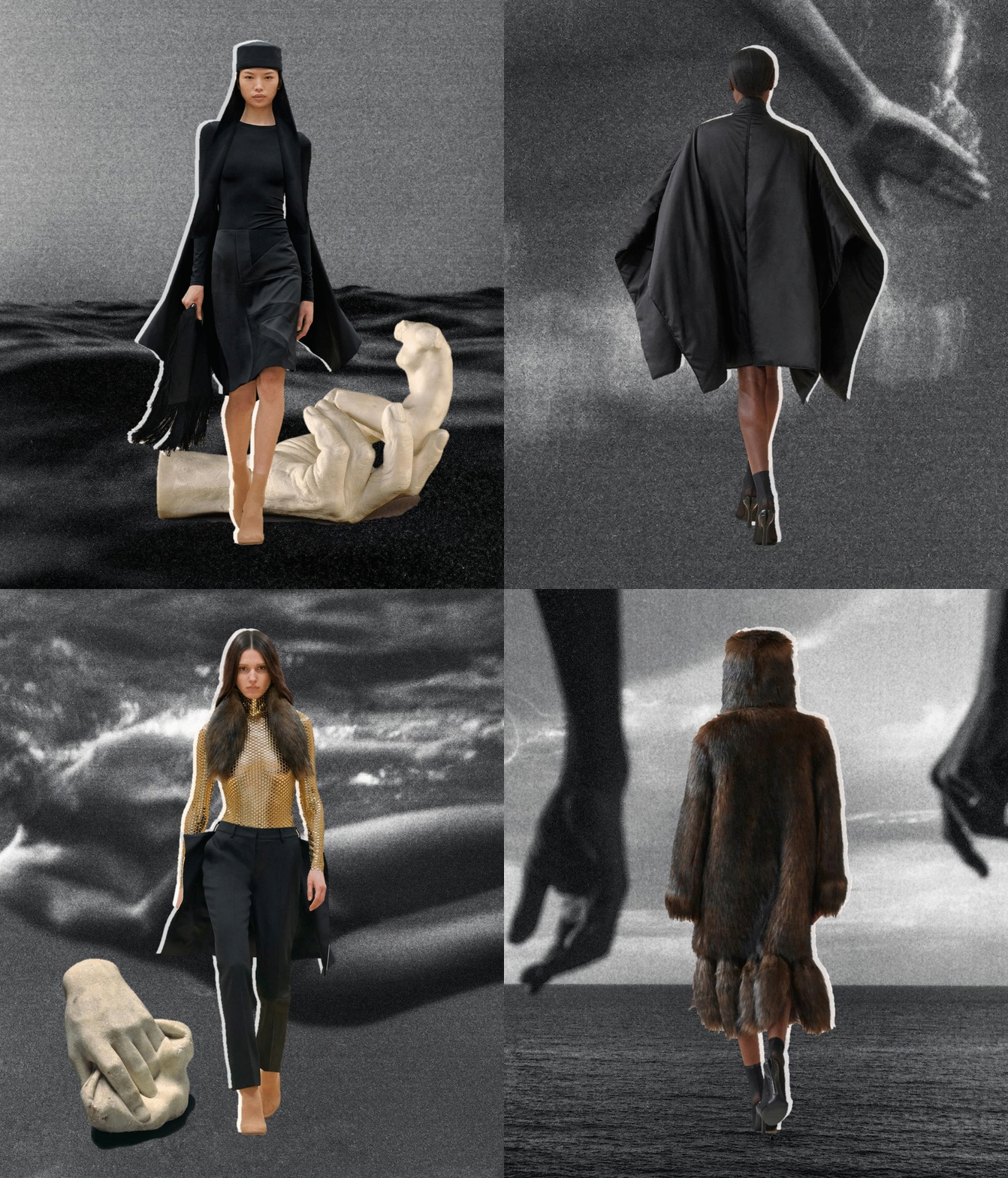
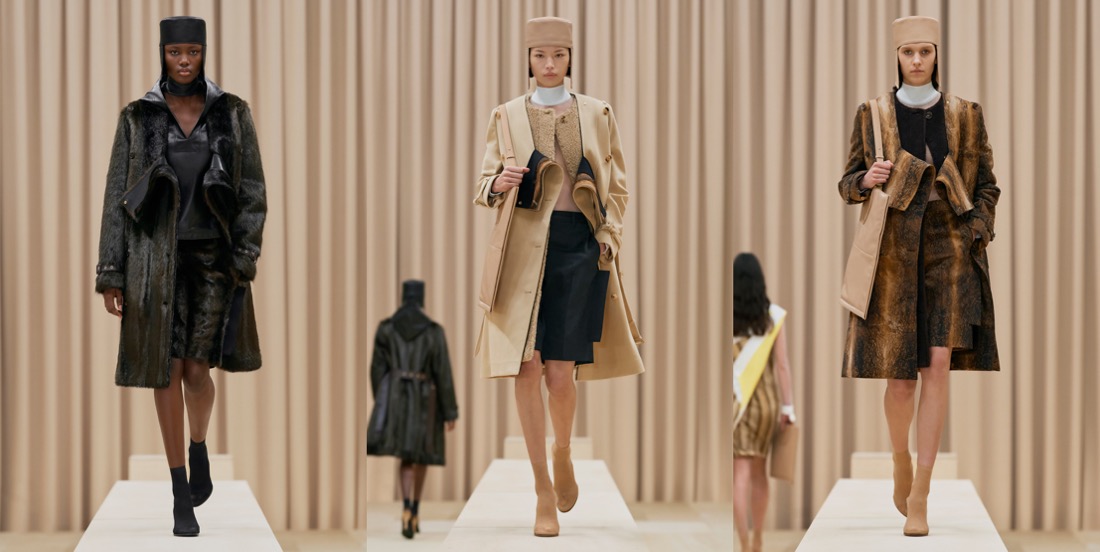
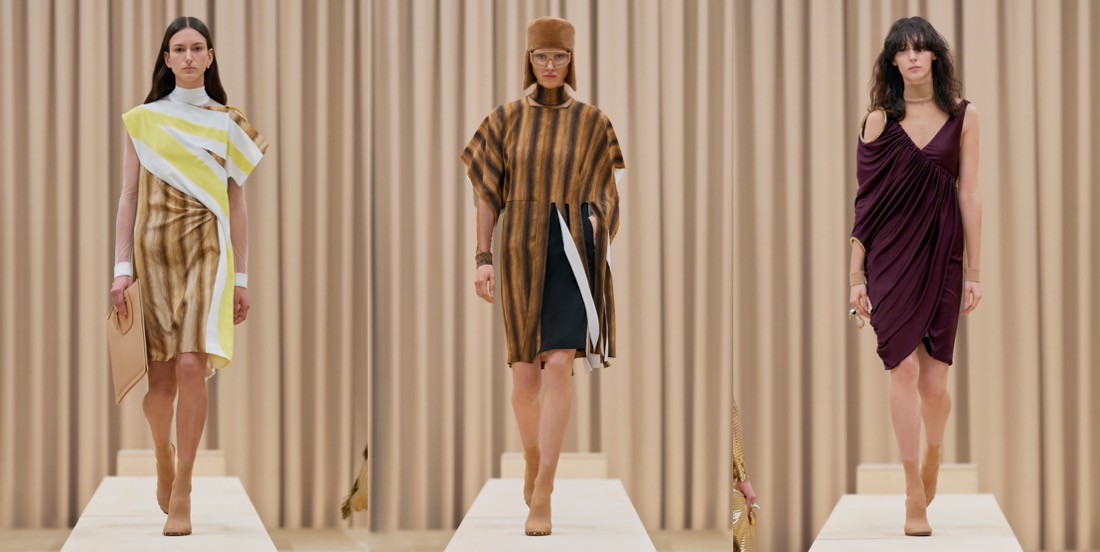
To some designers, the slowed down pace forced by the pandemic does wonders. Riccardo Tisci‘s latest collection for Burberry is his best yet for the British brand. The autumn-winter 2021 line-up reminds of Tisci’s early work at Givenchy: dark, well-edited, elegant, and perfectly balancing the feminine and the powerful. “Re-thinking a lot” was how he described his pandemic experience. “I had time to slow down. The fashion business is very fast. It’s a huge company. I was ticking boxes, and I was like, ‘Okay, stop.’ ” Rather than over-saturating his runway with multiple market categories and menswear, Tisci presented a focused women’s collection rooted in the ferocious and sensual but viable glamour that is his (slightly forgotten by the public) signature. “Slowly we’ve built an identity, and I realized my identity was very strong within the label,” he said, evaluating his tenure at the house. “It’s the most free collection I’ve done at Burberry.” Tisci expressed it through references to the clothes historically worn in nature, most specifically around the turn of the last century. “Through history, the costume of people going to the forest has been very ‘child-designed’: a naïve outline, but made much more sensual,” he said, explaining his approach to the idea. The ease and adaptability represented by those garments inspired dresses constructed as if from squares sewn together, and transformative takes on tailoring which could be de- and reconstructed by the wearer using closing techniques. There was an arts-and-craftsy character to the collection, backed up by manipulated flag and astronomy motifs and the lashings of eco faux-fur that drove home Tisci’s nature-centric message. His post-pandemic mindset had discovered a kindred spirit in the naturalist movements of the late 19th and early 20th centuries, which informed the collection. Fueled by the malaise of the fin-de-siècle, it was a time when instinct and whim were put above rationalism and materialism, when artists felt the call of the wild, and sought to de-program themselves from the rules of society. Before the show, Burberry released a video of a British-ly diverse crew of women reflecting on the meaning of femininity now. And the spoken-word show-opener by the British performer Shygirl, who starred as “Mother Nature,” was an homage to the waves of liberation and celebrations of identity washing over contemporary culture today. “It’s very sexy, I think, but without being vulgar. Femininity is something I really wanted to achieve at Burberry when I arrived, because it’s a very masculine company,” Tisci said, referring to the trench-tastic roots of the house. As with the progressive young generations to which his videos paid tribute, authenticity is key. For Burberry, it’s found in a menswear-y character that its female clientele probably expects. For Tisci, it’s the sensual and almost athletic glitz in which he excels. This collection showed that the two can co-exist on the same runway. As he said, “I feel like I’m starting to see my vocabulary at Burberry.” Finally.

“Live” collage by Edward Kanarecki.
Timelessness. Michael Kors AW21

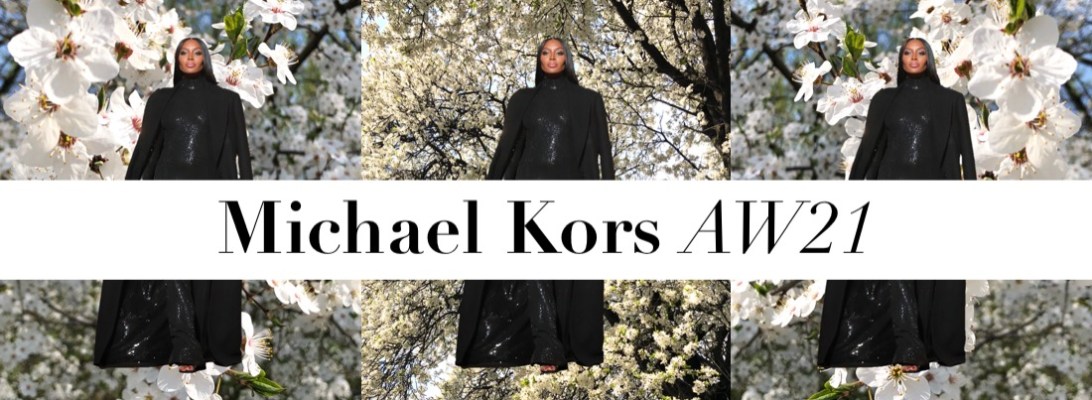
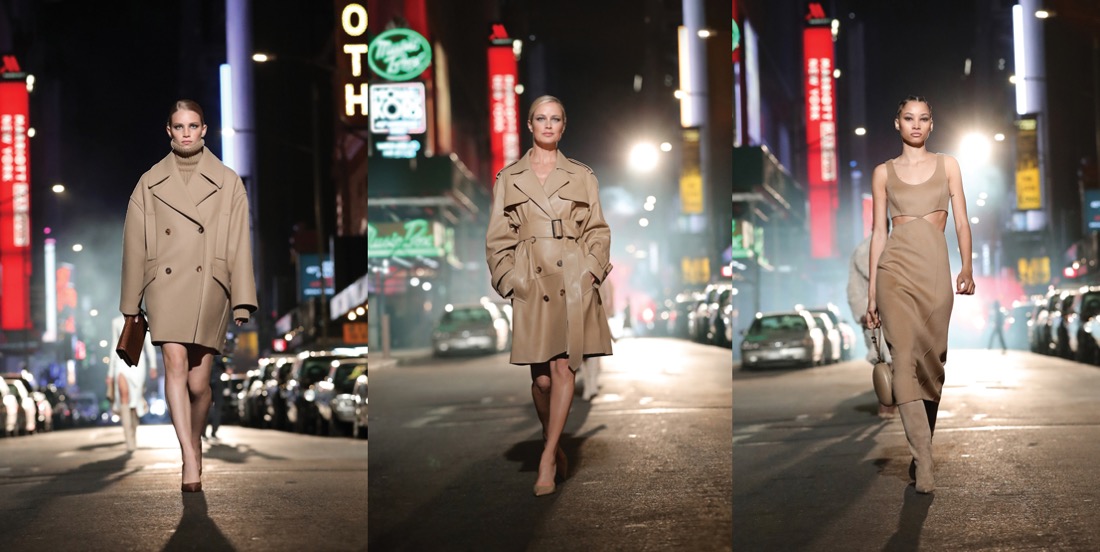
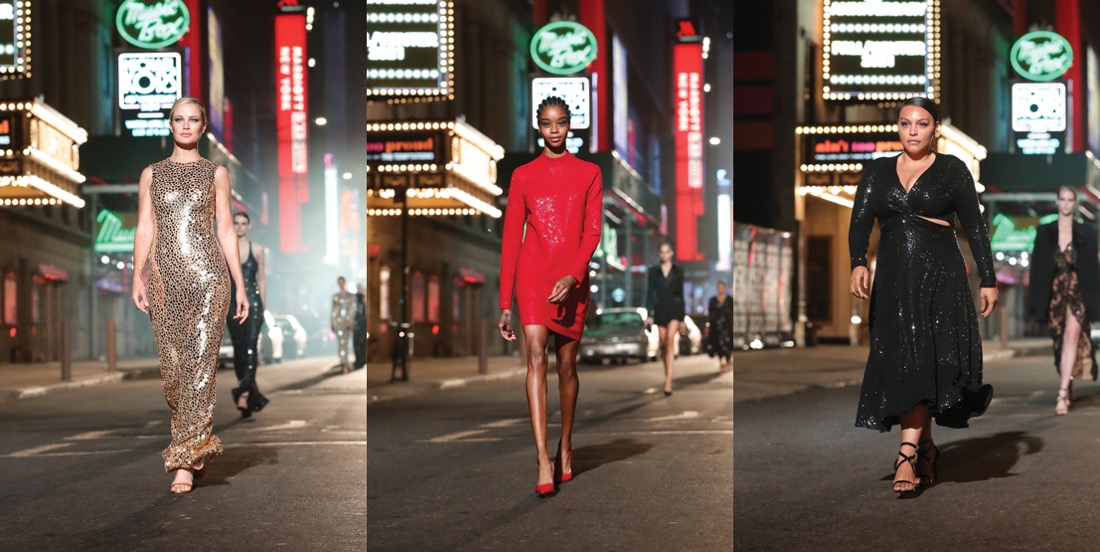
I might not be a Michael Kors fan, but his latest collection (celebratin the brand’s 40th anniversary) is so great. It’s the old, good Kors of the late 1980s and early 90s, adapted to contemporary times (well, maybe specifically the re-emergence times that will come sooner or later). How do you sum up a four-decade career in 63 looks during a pandemy? In an audienceless show, you’ve got Naomi Campbell, Helena Christensen, Carolyn Murphy, and Shalom Harlow vamping down New York’s 45th Street in evening sequins and double-face cashmere. The designer told Vogue that in the downtime of the pandemic, he’d gone searching for the “connective threads” of 40 years. “Certainly timelessness is something we’ve always prided ourselves in, something that I think our customers really appreciate.” One season he gives his runway a timely Mad Men gloss, another it gets a Studio 54 spin, but his collections are always optimistic, always unshakably him. Much of what he did first, American fashion now takes for granted. Bare legs in winter. The unexpected combination of a rhinestone-encrusted cocktail dress and a man’s topcoat. A city-country mix. An evening number with streamlined athleticism, a maillot with leather straps and matching heels. “Extremes of opulence and glamour with simplicity and ease” is how he summed up his approach. In a year when the Costume Institute is showcasing American fashion for the first time in decades it seems important to recognize that much of what we think of as American sportswear is Kors-ian sportswear. Considering our collective experience of the last 13 months, back on 45th Street Kors put the emphasis on opulence and glamour. “People are going to want to step out, get dressed up – in certain instances get overdressed. Girls are going out for a hamburger in cocktail dresses and high heels.” This was his bid to clothe them for those reemergence moments. Maybe in a red patent leather balmacaan, a “cotton ball of a shearling coat,” or a glossy black puffer cape. Or perhaps in a hand-sequined silk jersey gown in gold under a pavement-sweeping camel cashmere coat. And always with a spiky pump or slingback.

“Live” collage by Edward Kanarecki.
Feel Good. Balenciaga Pre-Fall 2021

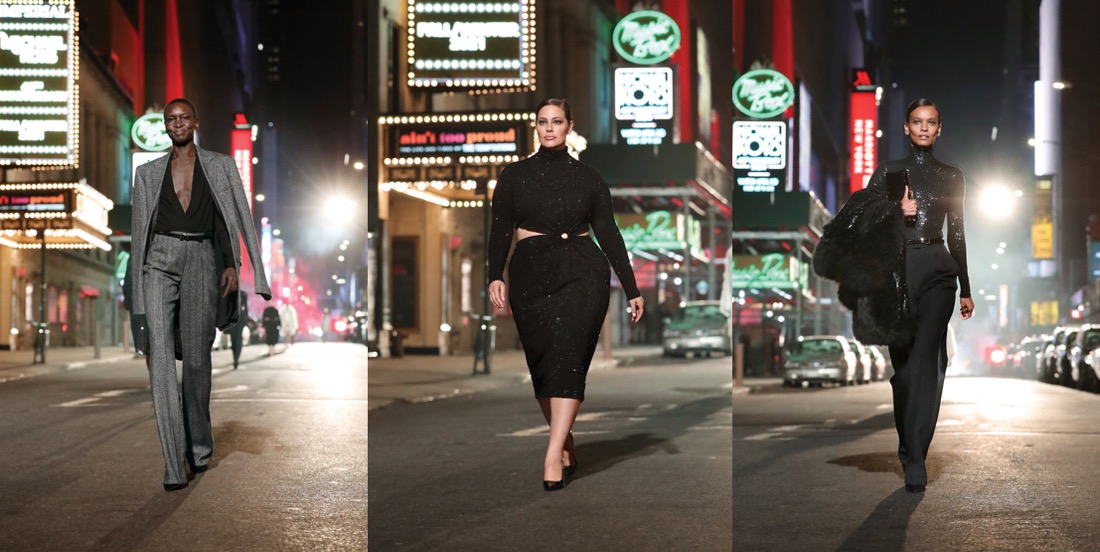
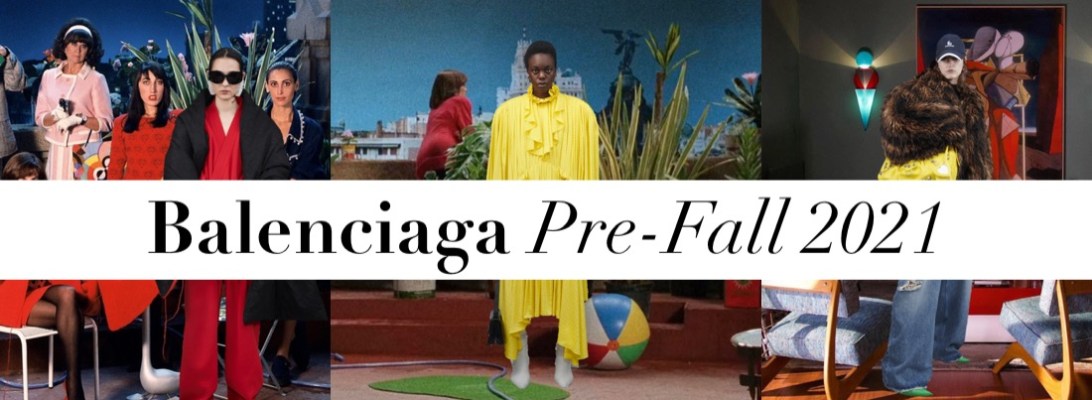
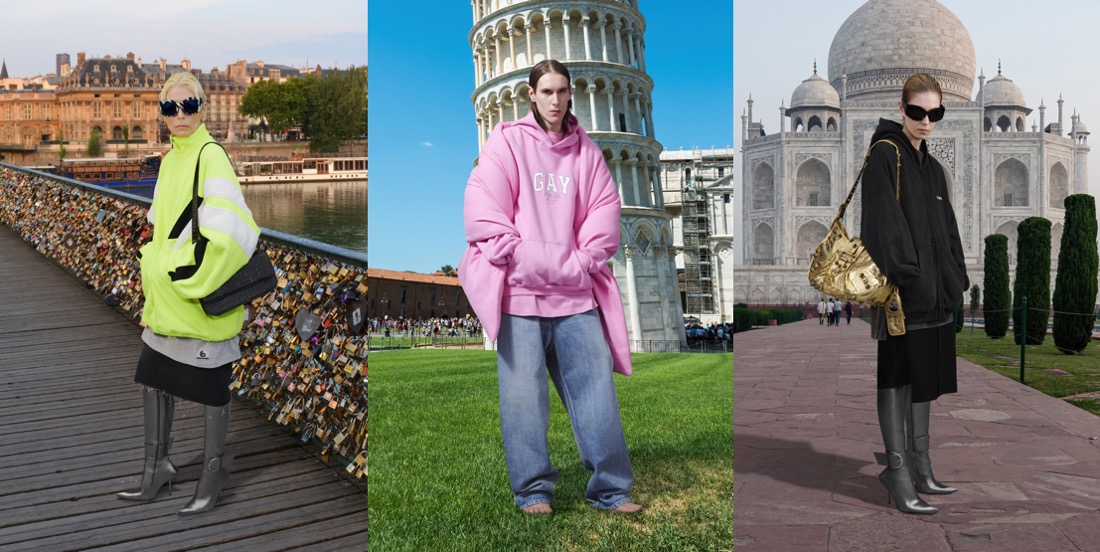
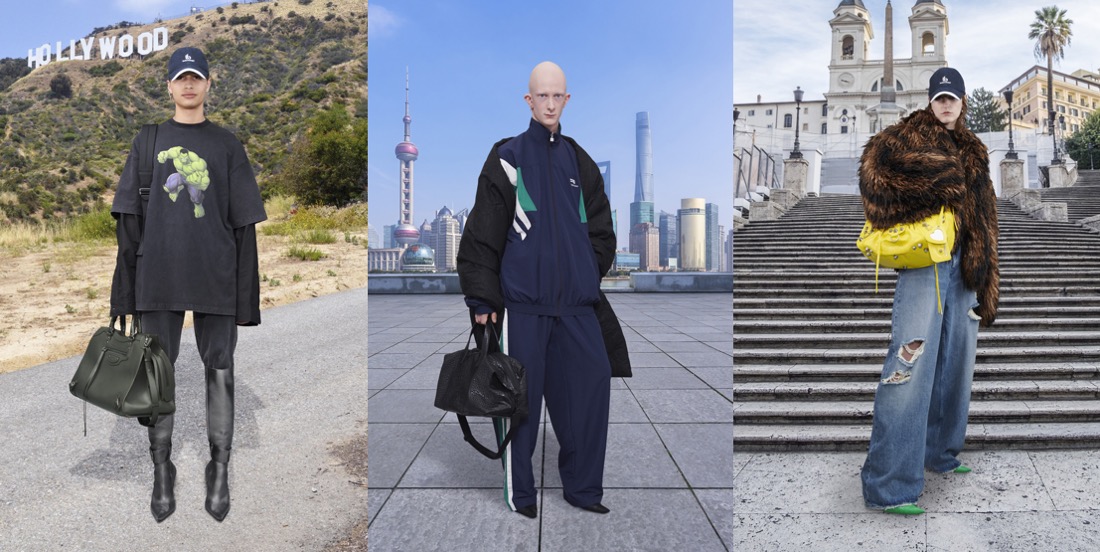
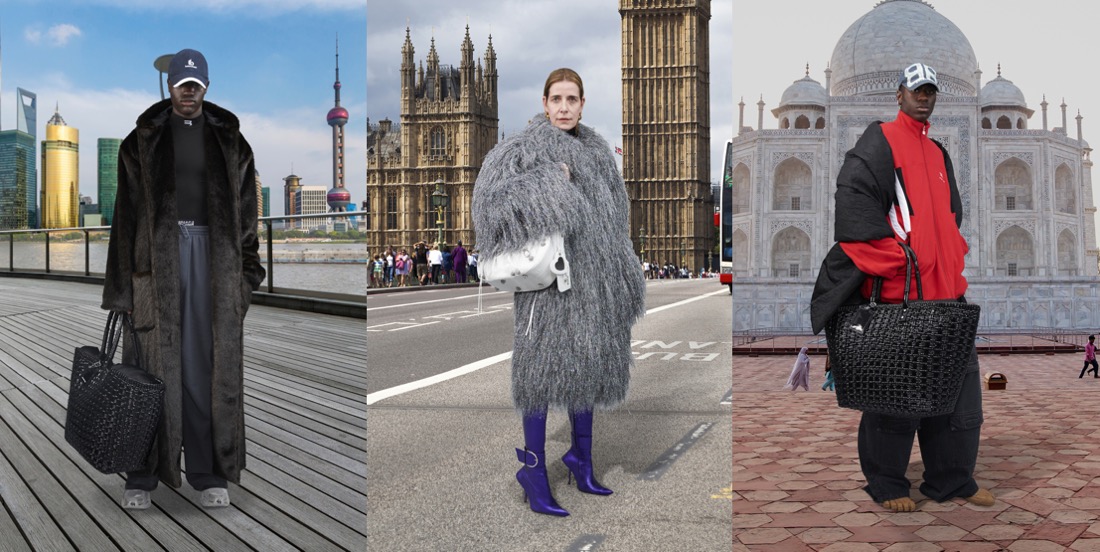
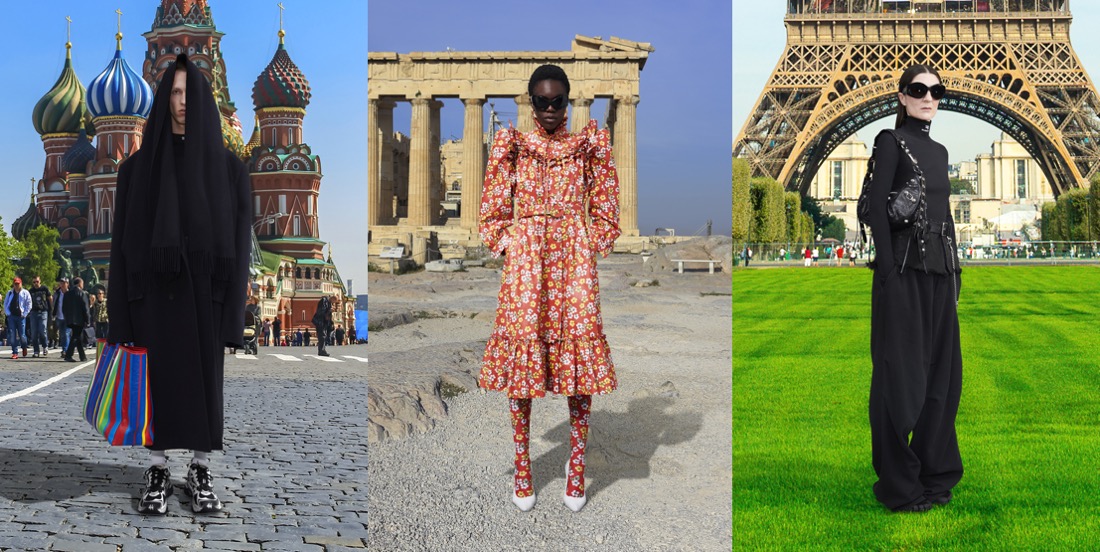
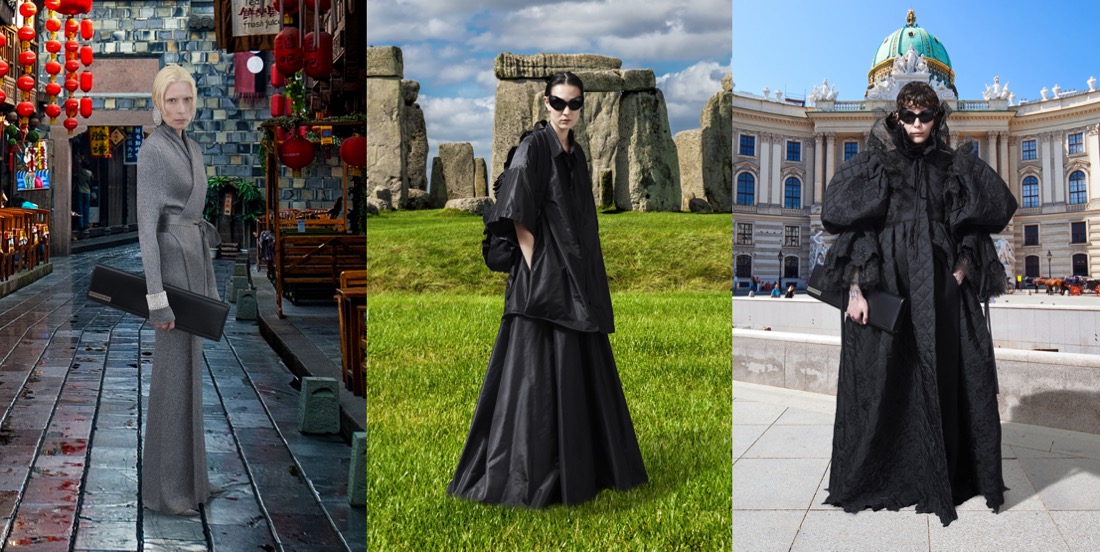
There’s always irony to what Demna Gvasalia does. You can tune into the pre-fall 2021 “Feel Good” Balenciaga video and not see any fashion at all – just a stock compilation of heart-warming running horses, kittens, children, and dreamy landscapes. But the most radical content in this Balenciaga outing is actually invisible to the eye. “When I started this collection,” Gvasalia told Vogue, “I said only show me sustainable fabrics. I don’t want to look at anything else.” So everything here, beginning with the pink hoodie to the black dramatic puffed-sleeve gownlike silhouette at the end, is made from recycled and otherwise certifiably okay materials. That’s big from a brand as powerful and as influential as Balenciaga, one of the major fashion actors of the universe which calls on suppliers who do significant volumes business with them. “As creative directors, asking for this causes a chain reaction, and we have to use it,” Gvasalia continued. Taking action on absolving shoppers’ anxieties about the damaging consequences of how their clothes are made ought to be the norm. Gvasalia promises that what’s gone into this collection isn’t a one-off gesture – because who isn’t suspicious of the greenwashing promo tricks of fashion these days? He started asking for better, more sustainable alternatives a while back, he attests, and began putting some of them into the collection in September. Now to the clothes: a photoshopped lookbook, posed against a wish-we-were-there travelogue of the famous backdrops of the world. Design-wise, there are just as many familiar Balenciaga-universe destinations here: the oversize hoodies, sweatshirts, tailoring; tweaked takes on signature floral-print dresses; recycled leather and denim things; magnified utility-worker jackets. A lot of the garments, Gvasalia said, are constructed as joined-together all-in-one pieces “trompe l’oeil, so what you see isn’t what you get. A lot of dresses which are actually coats.” So, too his lookalike ‘furs,’ which aren’t either animal pelts or petrochemical fakes. A brown chubby jacket and a coat are the results of hundreds of hours of chopping up and embroidering recycled cotton. They’re lavishly time-consuming hand-made pieces. Obviously, Gvasalia is keeping his creative powder dry for the long-deferred launch of the Balenciaga haute couture collection that he’ll show sometime this summer, pandemic willing. Meantime, predictive minds might leap to the elegant silhouette in black – full length, balloon sleeved, quilted and lace-trimmed drama that Gvasalia swears was inspired by the shape of Princess Diana’s wedding dress. It’s actually a coat. “ She’s wearing a t-shirt and jeans under that.” The Gay Pride hoodie worn with the padded stole (consciously a Demna-for-Balenciaga adaptation from Cristobal’s matching ensembles for couture customers) is another highlight of the collection. “I’m gay. I grew up in a society where I couldn’t have worn that, and there are places in the world that you cannot today,” the designer said. “It’s important to push through against homophobia. I’m not someone who goes out in the street and shouts. But this is the political fashion activism I can do.”

“Live” collage by Edward Kanarecki.
Men’s – Forever Timeless. Bode AW21

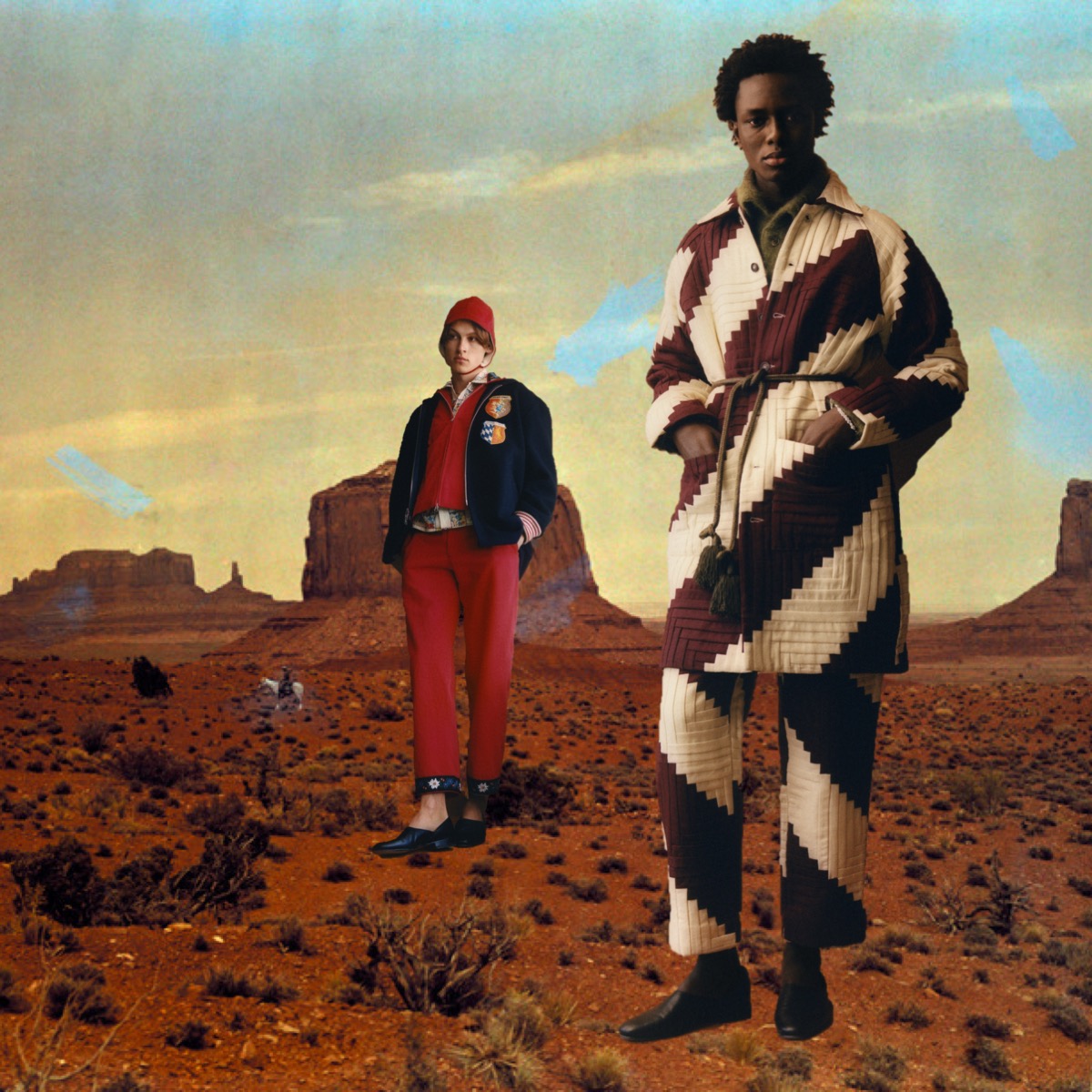
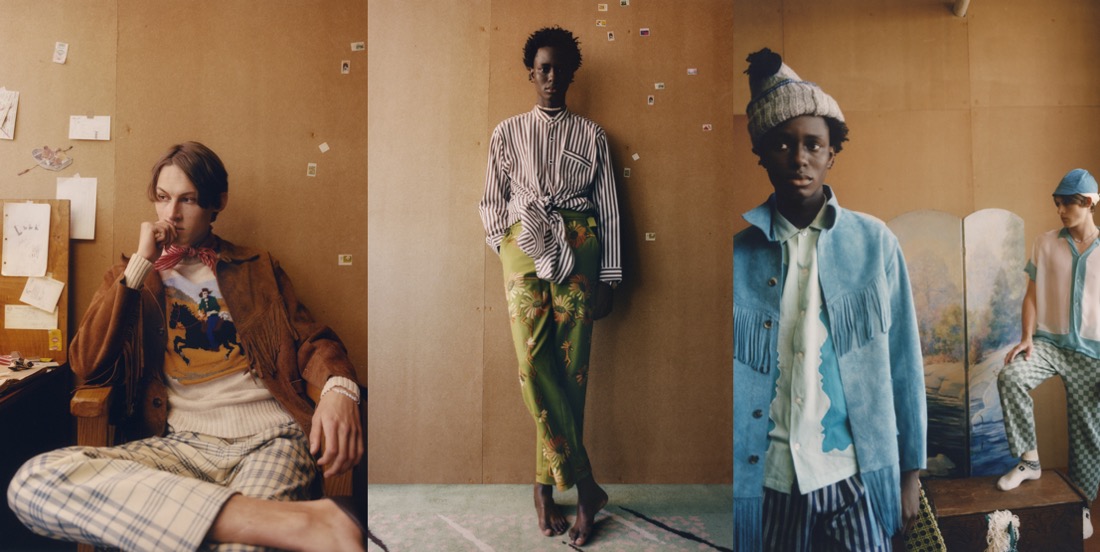
Autumn-winter 2021 marks the first collection Bode has shown since lockdown, though it’s technically spring (arriving in stores this month) and autumn rolled together. For the occasion, Emily Bode invited New York-based editors into what appeared to be a teenage boy’s 1960s bedroom, preserved in all its clutter. Newspapers and LIFE magazines were scattered on the tables; a vintage Monopoly set was splayed on the floor; desks were pinned with comic strips and old photos; and, of course, there were clothes everywhere: spilling out of a hamper, piled on the floor, dangling from coat hooks, draped over the bed. Each item was painstakingly arranged by Bode and her team, but it was a convincing replica of her uncle Bill’s college dorm room at the University of Vermont (or at least Bode’s impression of it, based on his recollection). In 1969, he tricked his parents into thinking he was back at school when in fact he was taking a year off to explore the East Coast, race cars, and play games. Bode explained it was also the last year before Bill’s wife, Mahri, came into the picture; they met in 1970, married, and were together up until 2019, when Mahri passed away. Suddenly, 2020 was Bill’s first “year off” from the life he knew, and he found himself reminiscing about 1969 again. Bode related his story of love, loss, and reflection to our own “year off” during the pandemic. Sifting through the piles, you could find all the familiar Bode-isms: silk button-downs with prints lifted from vintage postcards and handkerchiefs; embroidered camp shirts that are the expert work of Indian artisans; patchworked merino suits, an evolution of her quilted jackets; and her most refined knits yet, from a space-dyed pullover to a stunning hand-crocheted cardigan. A few pieces nodded to Bill and Mahri, like a souvenir jacket with a pug embroidered on the back, while others seemed happily arbitrary: an intarsia’d camel sweater, a pair of shorts chain-stitched with line drawings and funny phrases, a sweater crocheted with 3-D grapes. A small group of tailored pieces trimmed with rows of real pearl buttons spoke to Bode’s particular passion for preserving crafts and techniques. She bought them in bulk from a closed-down button factory in the Midwest, and pointed out how each was individually hand-carved, hand-sanded, and one-of-a-kind. They may have been thrown away or relegated to some dusty warehouse if Bode hadn’t purchased them; the same could be said of the quilts, table cloths, and scraps of fabric piling up in her Brooklyn studio.

If it’s tempting to lump Bode in with other “sustainable” or “upcycled” brands, it’s actually more of a coincidence that some of her materials – not all – were already made. Bode cares about sustaining traditions and stories, not just reducing her carbon footprint, and she understands her role as an employer. She couldn’t have scaled her business to its current size if she hadn’t found a pragmatic, sustainable way to mass-produce certain garments with new materials, like her camp shirts and chore jackets, nor would she have been able to hire her teams of craftspeople in India, Peru, and New York (many designers canceled their orders in Garment District factories during the pandemic, but Bode made it a point to support them.) Bode’s brand-new tailoring shop, located next to her flagship in the formerly-turquoise Classic Coffee Shop, is a more apt reflection of her sustainability ethos. Her tailors will alter your brand-new Bode suit or mend an old quilted jacket. Even if you just picked up your first Bode shirt next door, there’s a comfort in knowing you don’t have to be precious about wearing it; when the time comes, someone will be there to fix it up. On the long list of things that separate Bode from her peers (and her many imitators) is that she absolutely intends for her clothes to be worn – and would rather fix the hole in your shirt than sell you a new one.

Collage by Edward Kanarecki.