Thoughtful. Jil Sander Resort 2021

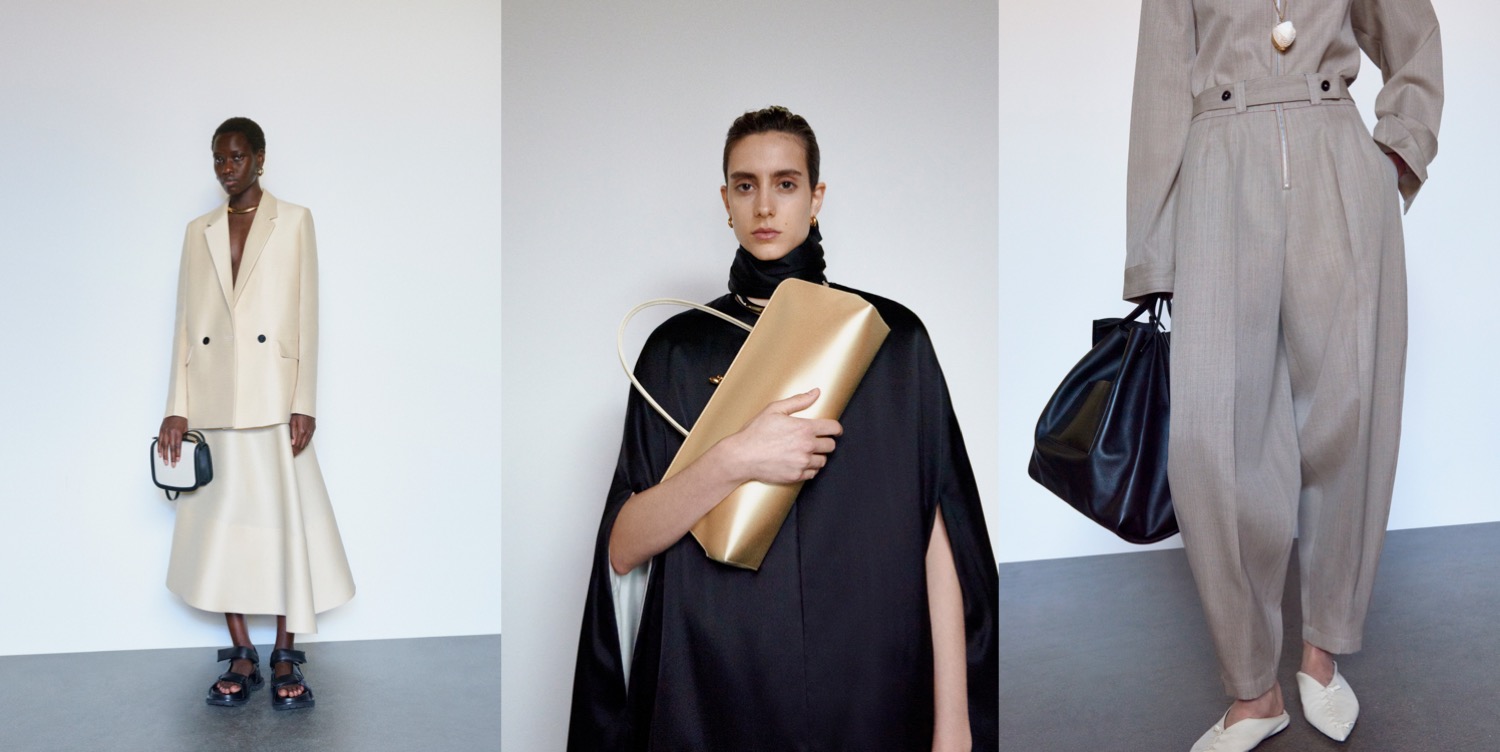
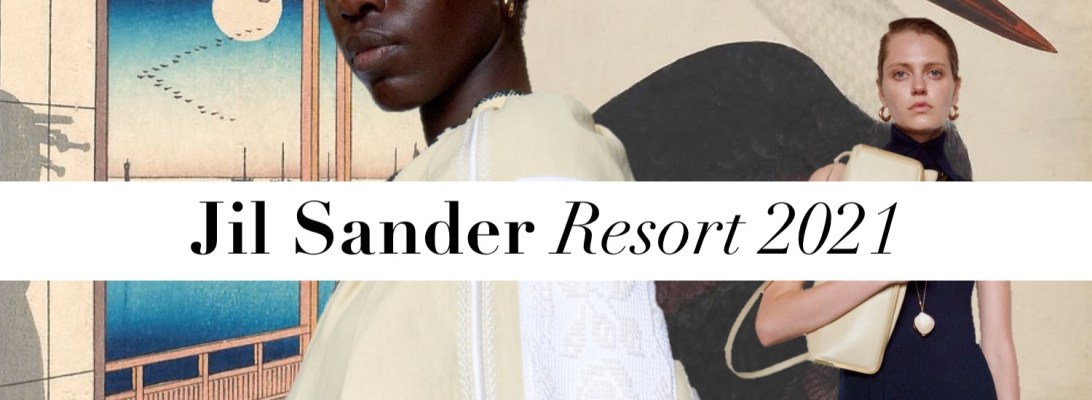
If the pandemic has made us consider a more thoughtful, responsible approach to fashion consumption and an appreciation for the consistency of values expressed by a labels’ ethos, then Jil Sander’s Lucie and Luke Meier could find themselves in a good position. “In a certain way, the pandemic has just reaffirmed what we believe in,” they said during their resort presentation, held at the brand’s showroom in Milan. “This tragic situation has made people take a long, hard look at themselves, their habits, their values. It’s what we’ve done. We really still find that our path is a good one; our philosophy hasn’t changed.” The Meiers have built their fashion credentials around a care for quality, creating pieces that stand the test of time while being of the moment, with an emphasis on great execution. The human touch of craftsmanship is paramount to their aesthetic – just take a look at a clean-cut, pleated dress in butter yellow linen with embroidered jacquard inserts appliqued on the peasant sleeves, all woven by a family in Sardinia with traditional local techniques. For resort, the designers favored pure silhouettes, together with their flair for style opposites: strong proportions and sensible fabrics; a masculine sharpness of cut and delicate choice of colors. Shapes were kept sculptural but softer than usual; suiting was given a chic modernist feel, as in a sharp-cut masculine blazer in cream wool silk gazar paired with a circle-cut, cone-shaped asymmetrical matching skirt. Contrasting the restraint the designers favor, a comforting, pillowy padded blanket cape in high-shine white silk satin with baby blue inserts was thrown languidly over a feminine double-cashmere sleeveless dress. Meiers’ conceptual approach to the brand is all about consistency: “We don’t think that the Jil Sander woman really changes,” they said. “She cares about really good design, beautiful fabrics, pieces that are very well made; all these elements are now becoming more important than ever. People will probably consume less but better; they still want to treat themselves to a beautiful piece.

Collage by Edward Kanarecki.
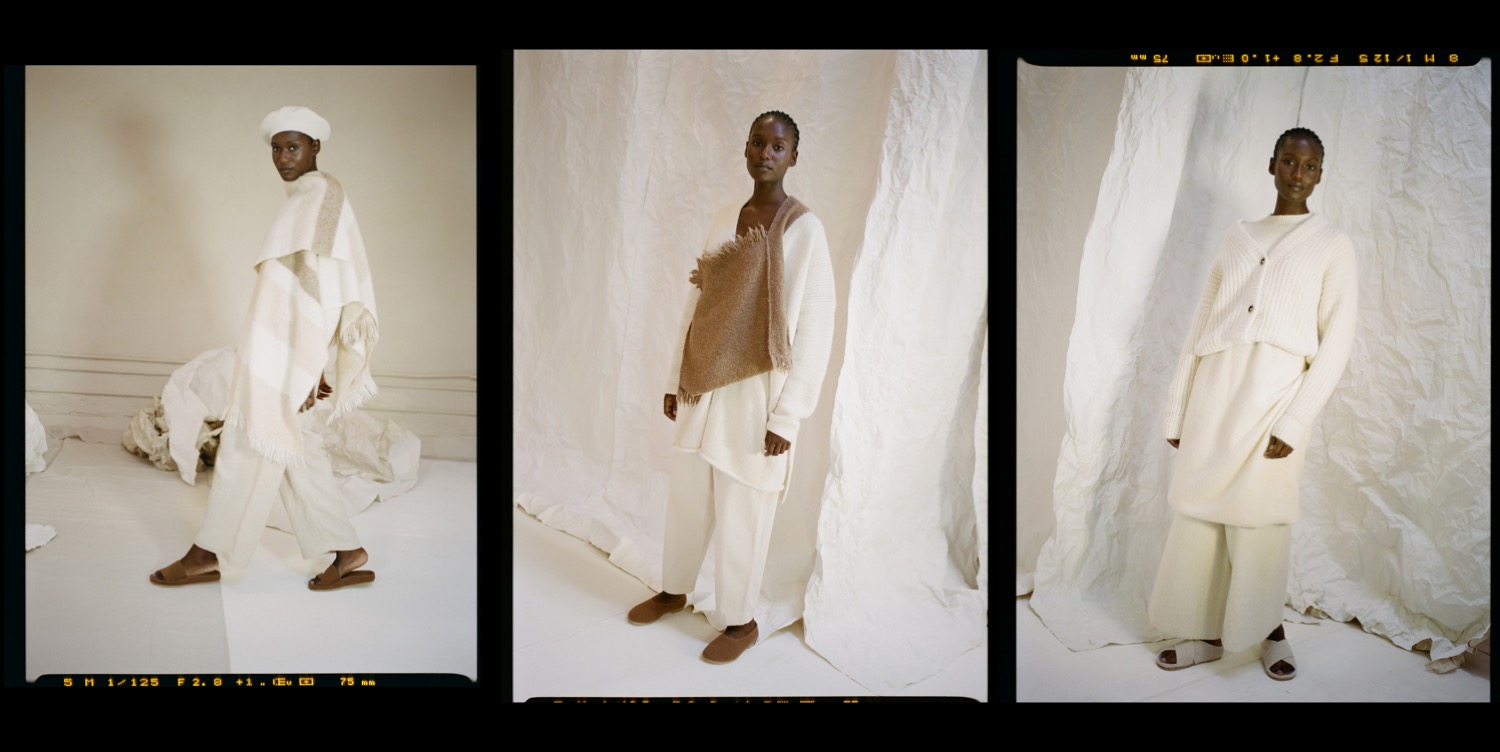
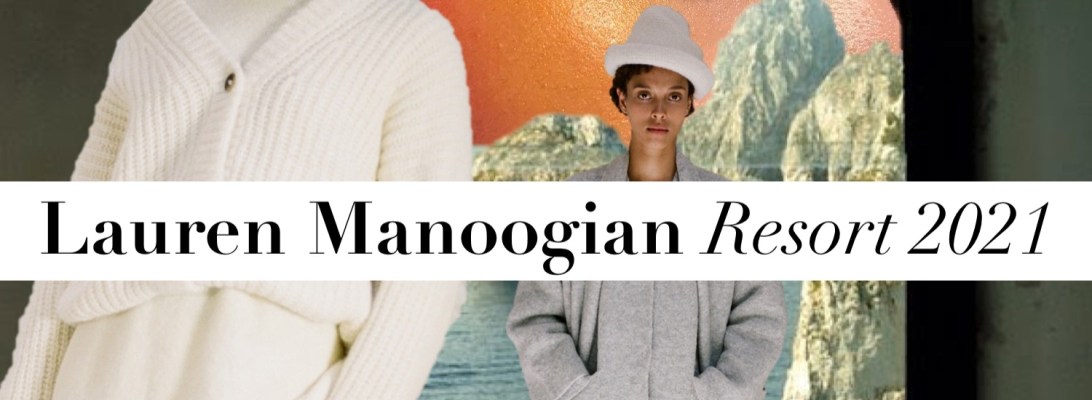
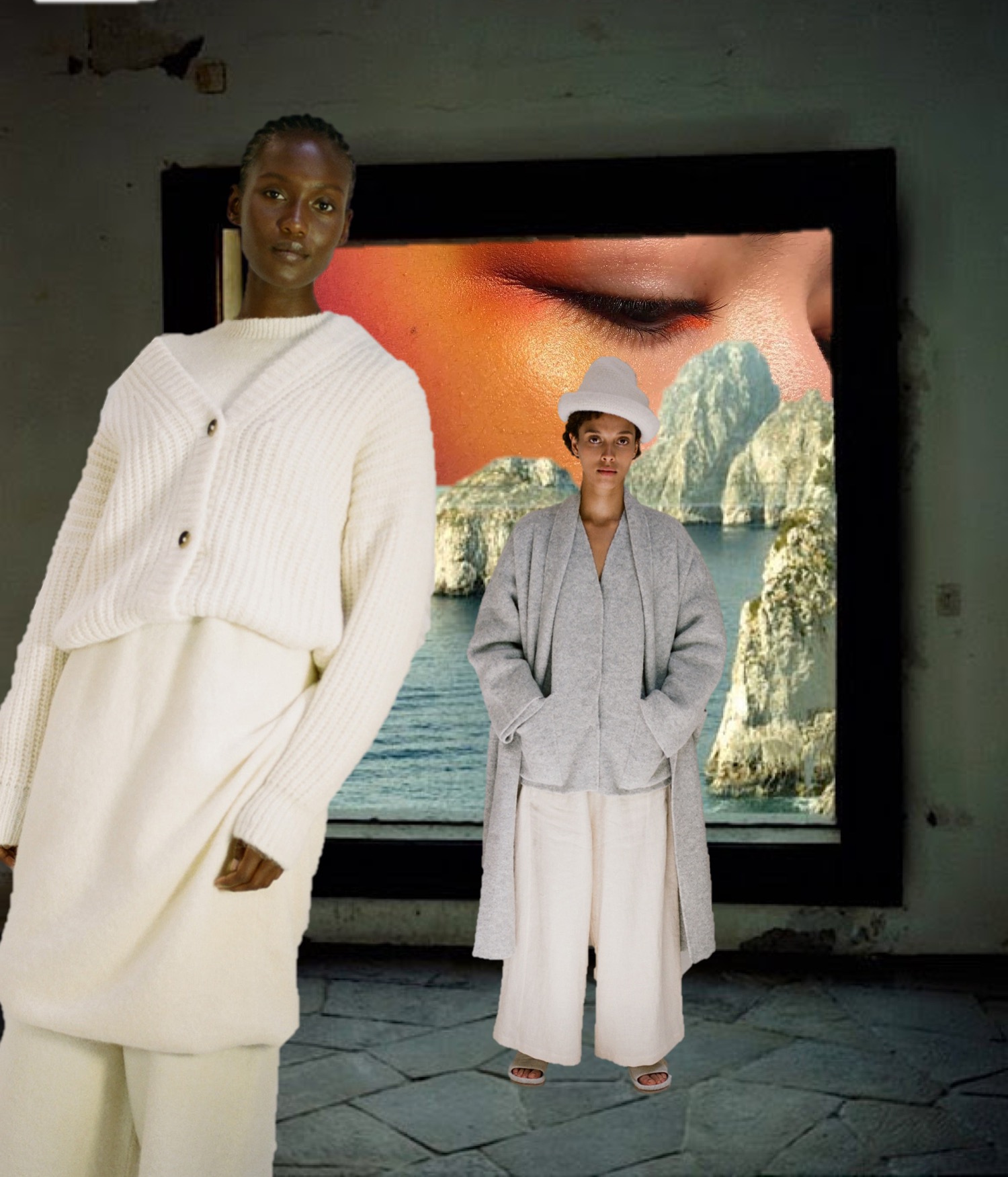
Serendipity. Lauren Manoogian Resort 2021

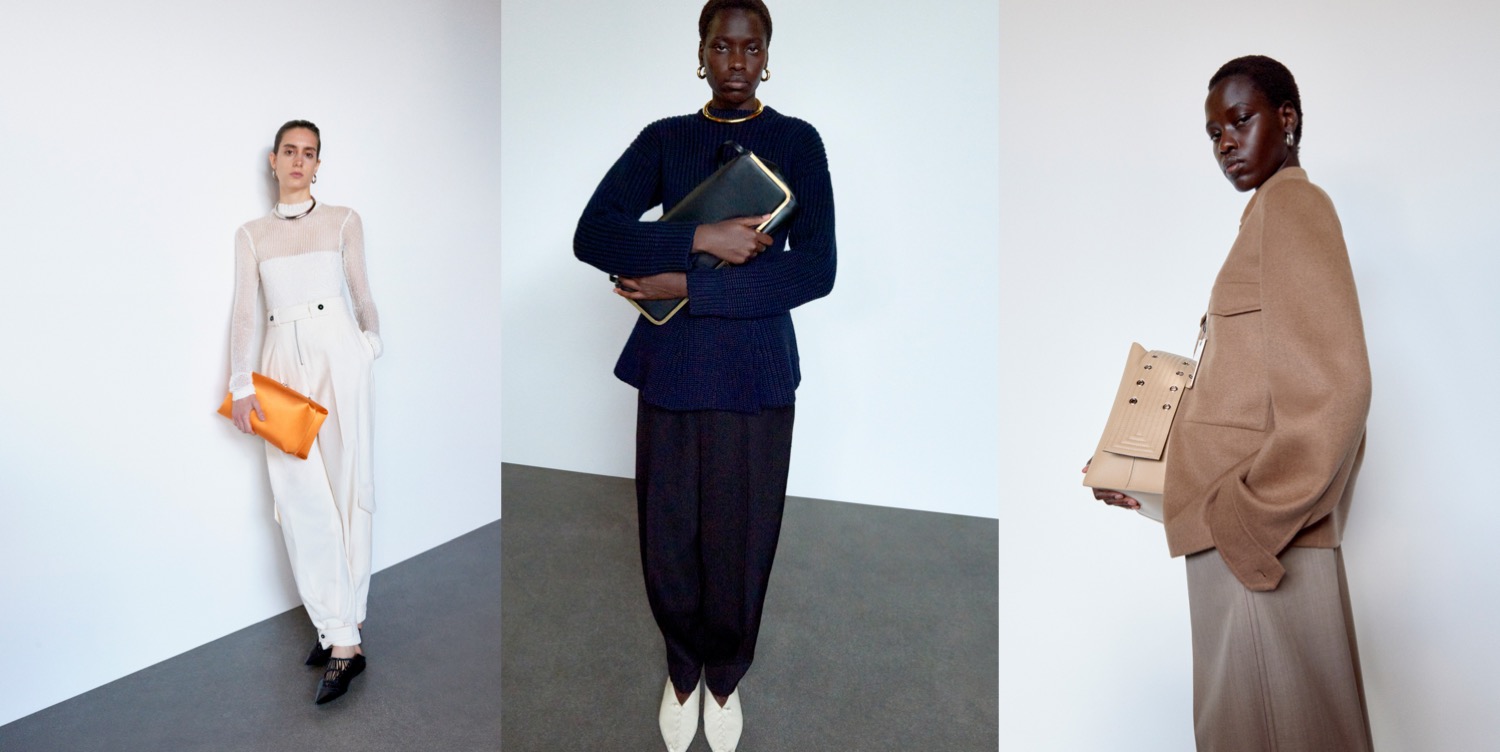
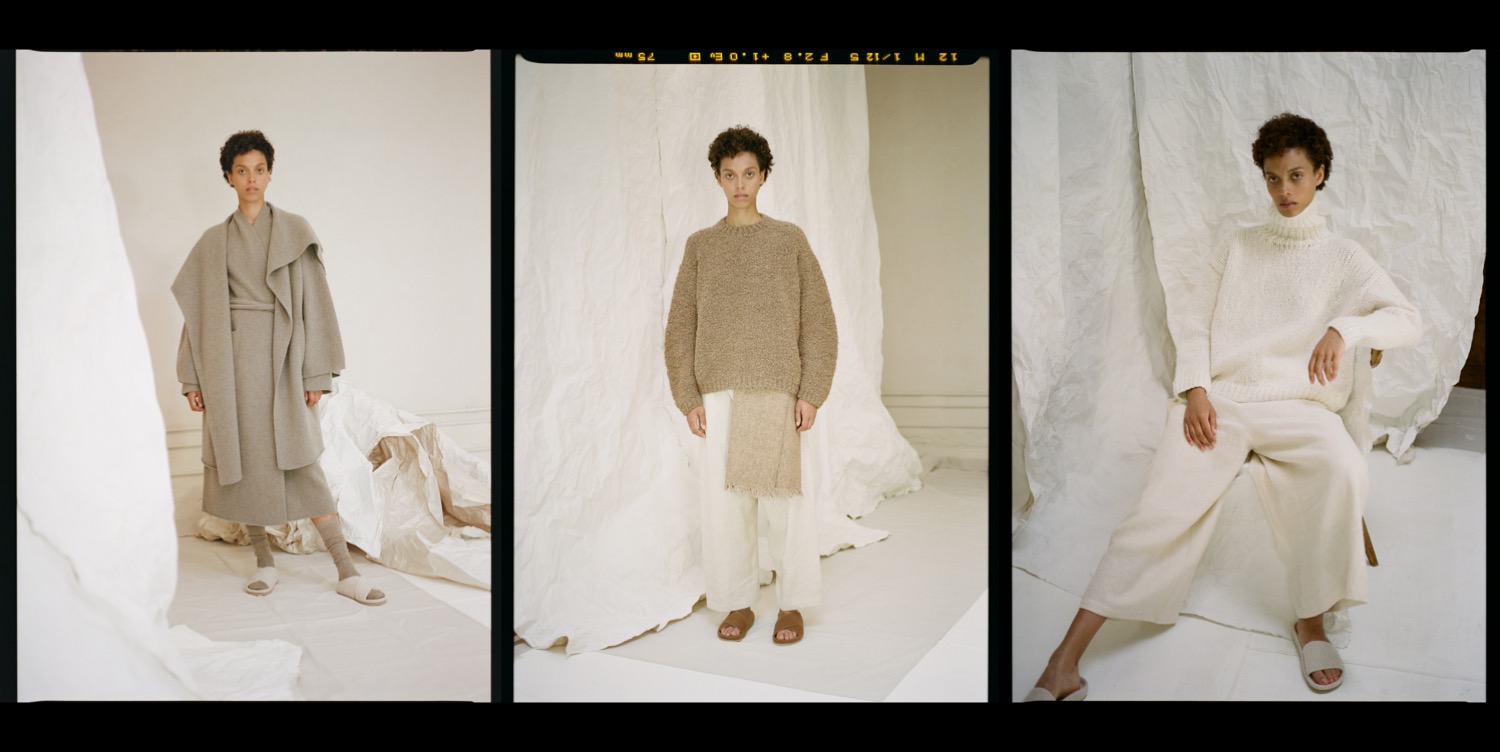
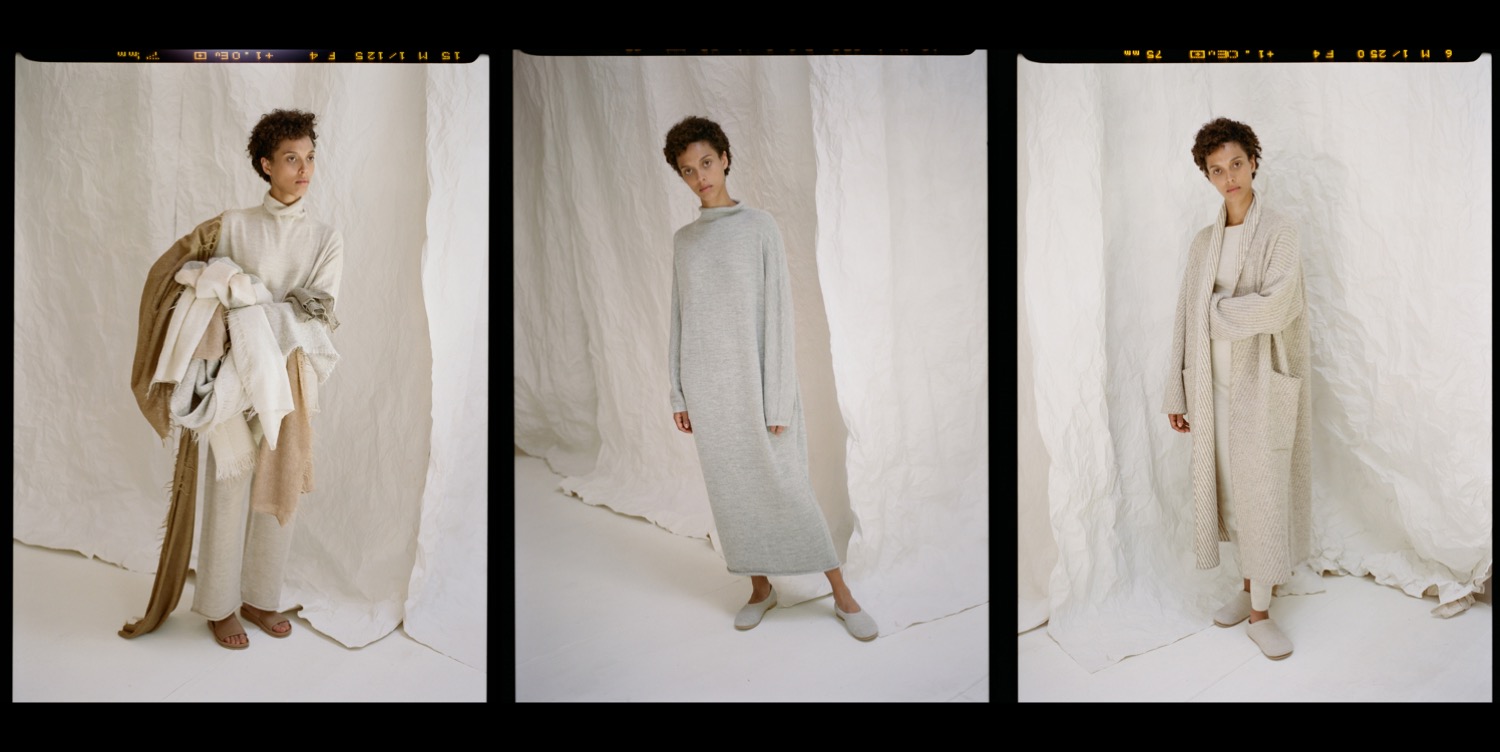
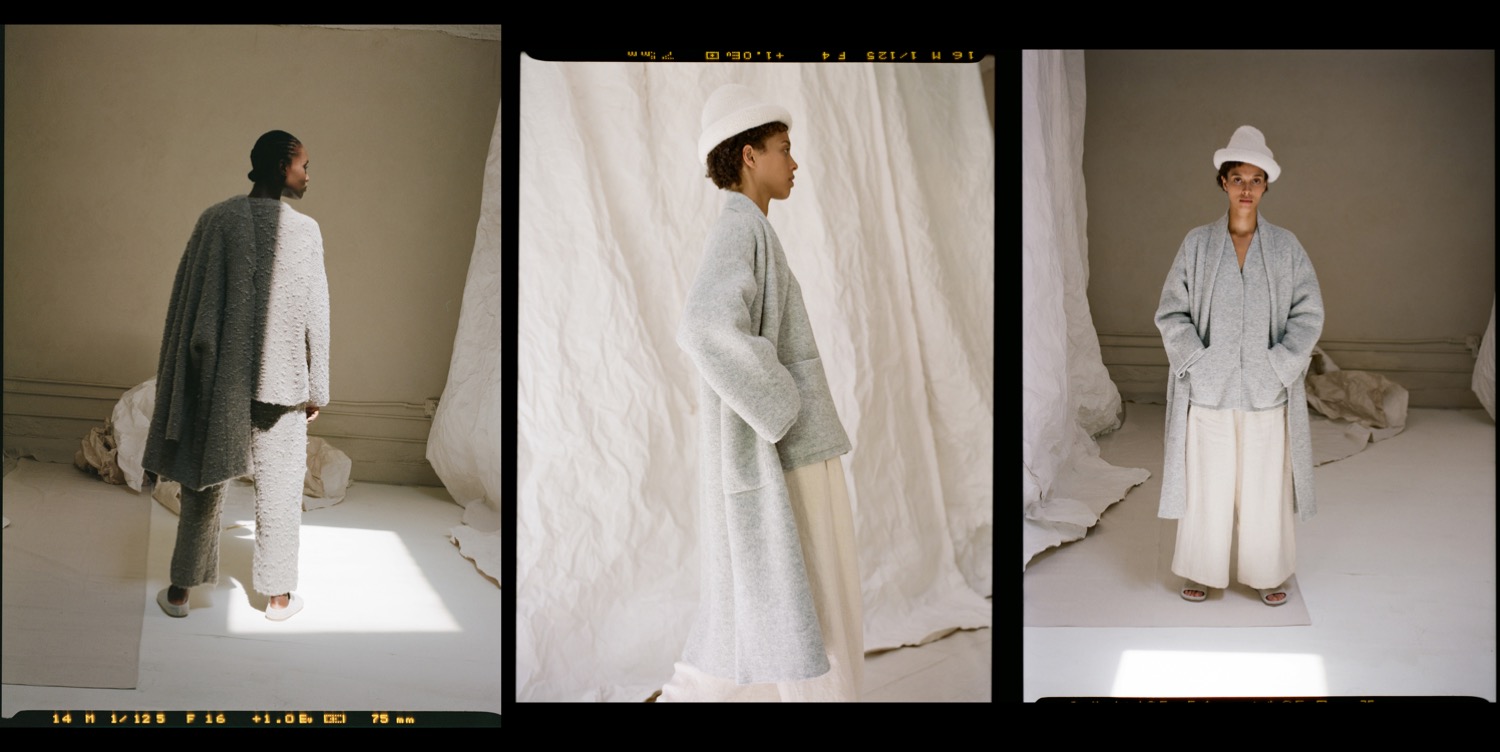
Switching from digital couture to one of the most heavenly labels in New York – Lauren Manoogian. For resort 2021, the designer’s earthy, tonal, and textural designs go side by side with her sculptural, wabi-sabi knits and accessories. Due to the pandemic, Manoogian was confined to her studio in Brooklyn and as such, her lineup, based on some greatest hits and forgotten gems from her archive, had to be captured with a more localized, low-key approach – no architectural backgrounds as usual. She hired two models, one that came in the morning and one in the afternoon, and photographed the clothes inside the studio with natural light and a backdrop made from items she picked up at the local hardware store. The finished images are unretouched, further emphasizing the organic look and feel of Manoogian’s new pieces. Soft blue and gray turtleneck dresses and bouclé blanket capes looked right at home in the serene, natural setting of Manoogian’s at-home studio. So too did the roomy, oversized trousers, cozy cardigans, and voluminous robes. Manoogian’s designs are grounding and unfussy but still striking, ideal for uncertain times like ours. The knis really speaks for itself, simple and timeless.

Collage by Edward Kanarecki.
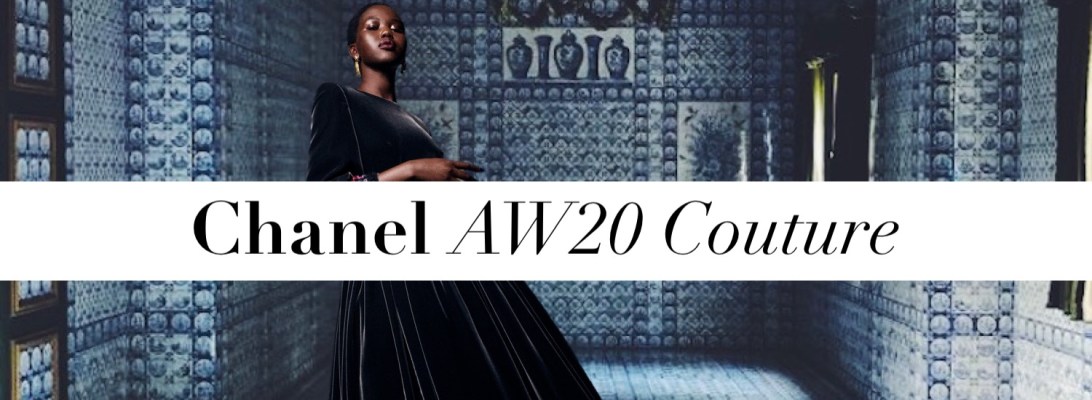
Eccentric Girl. Chanel AW20 Couture

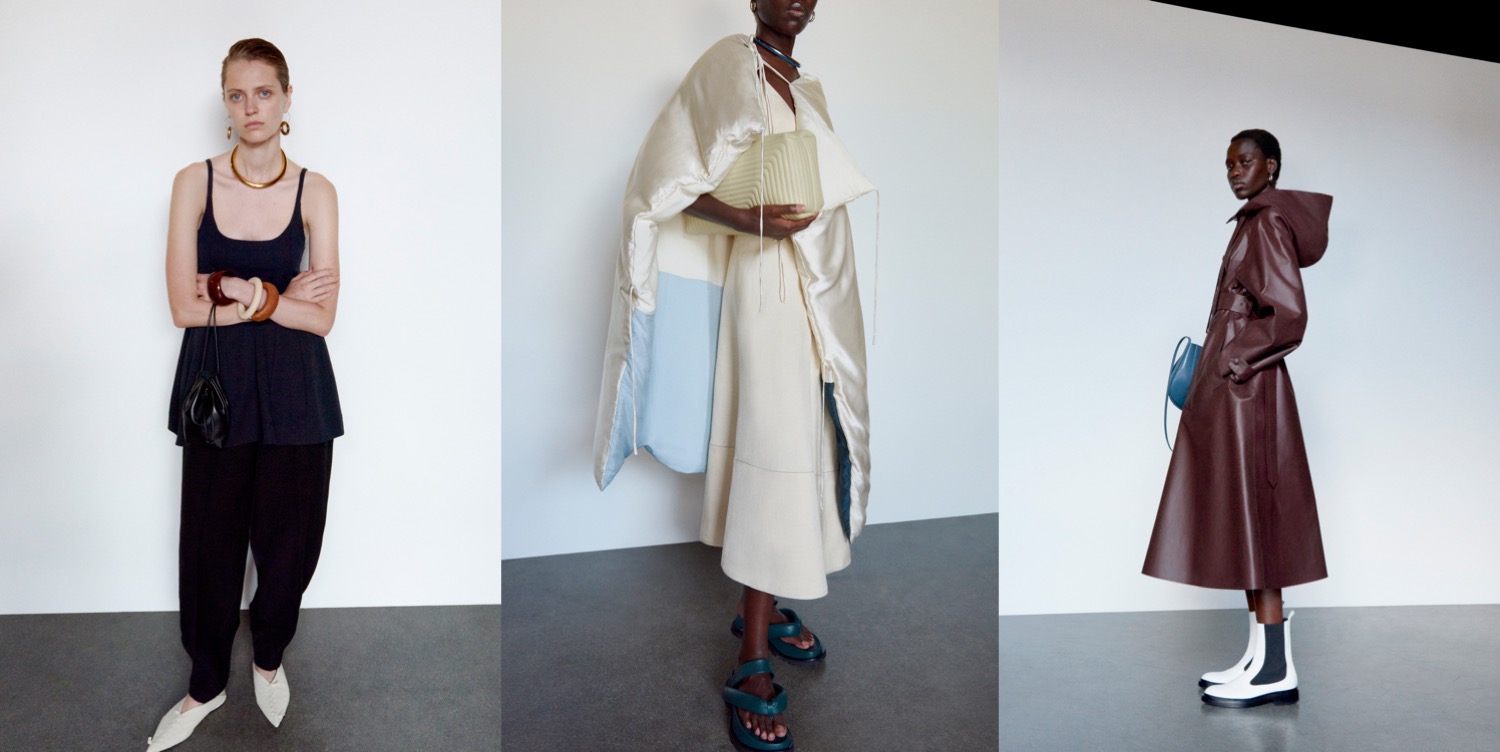
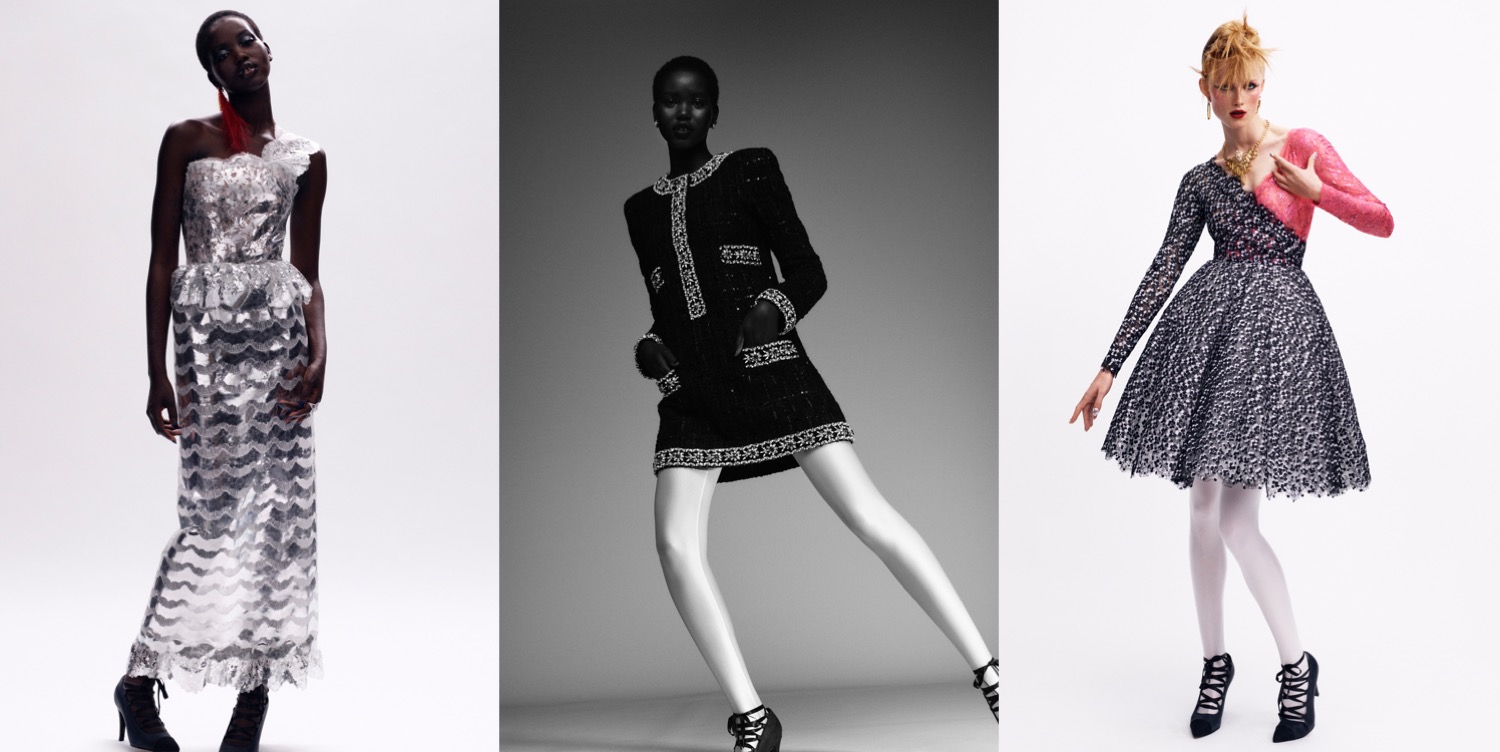
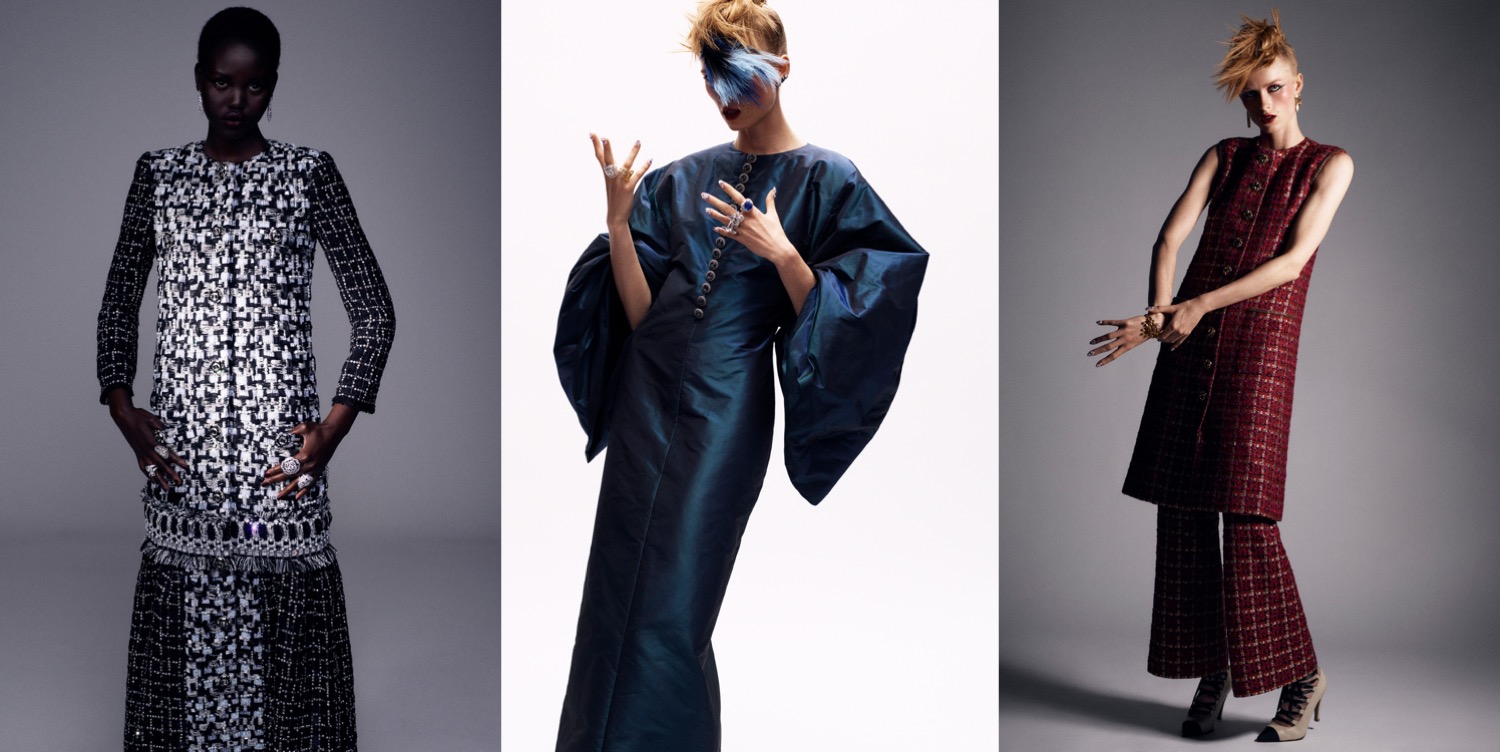
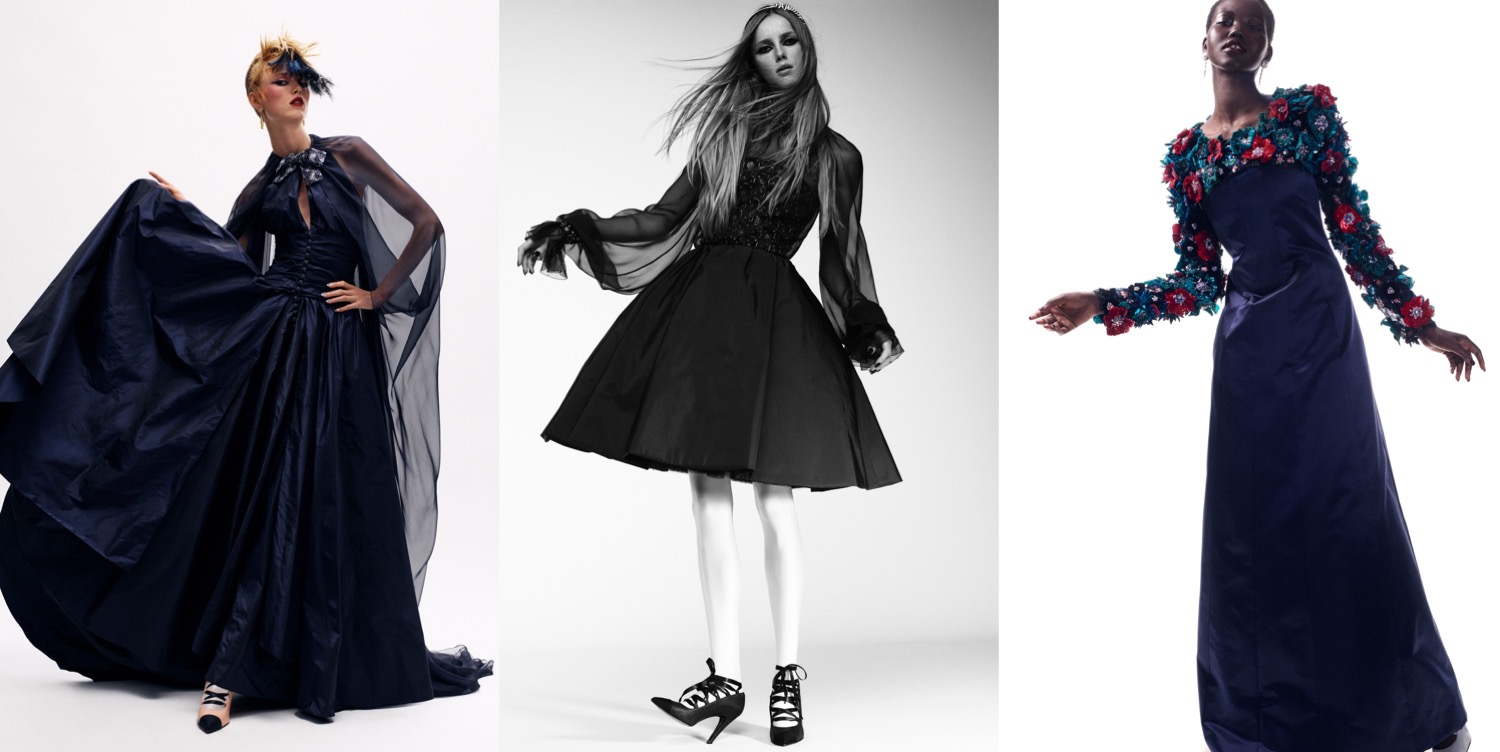
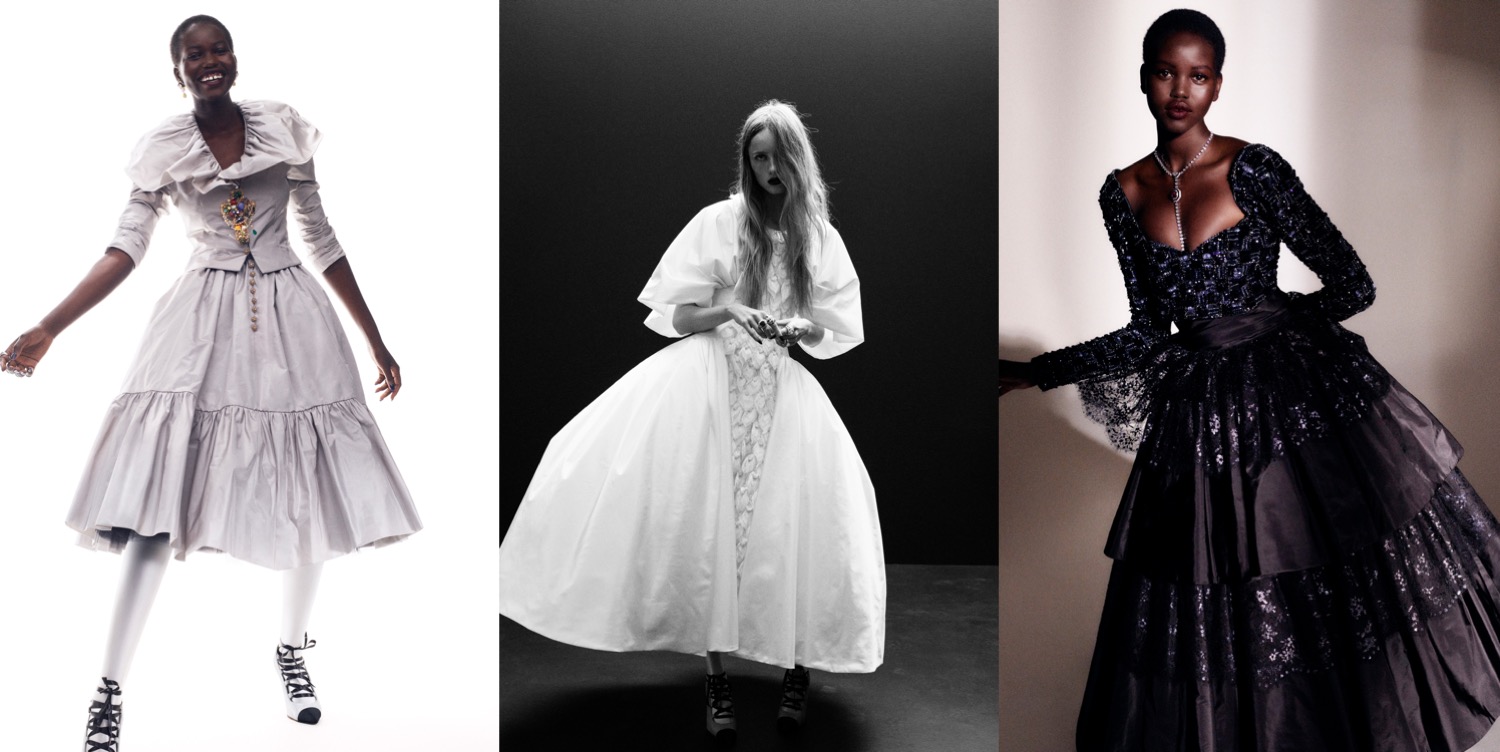
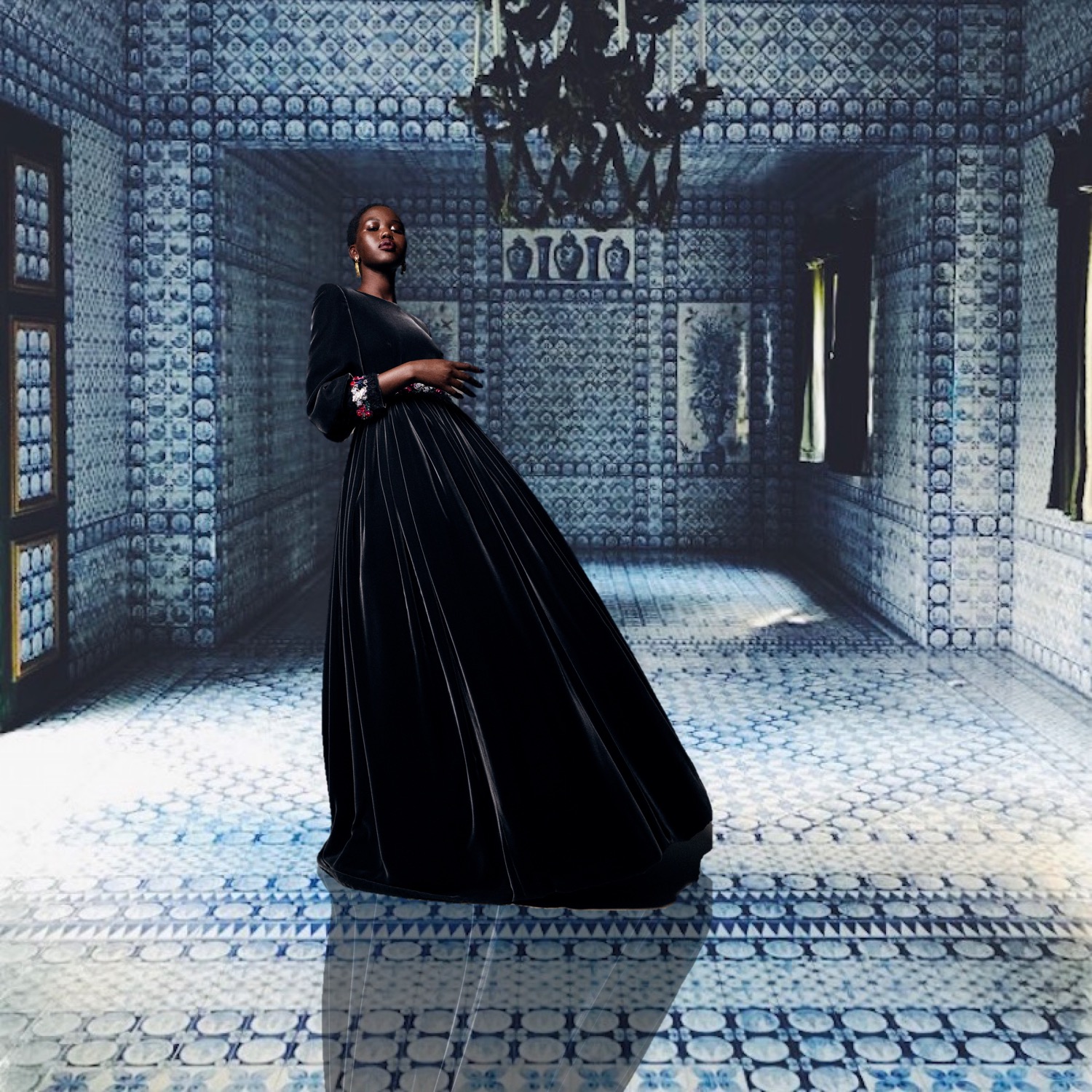
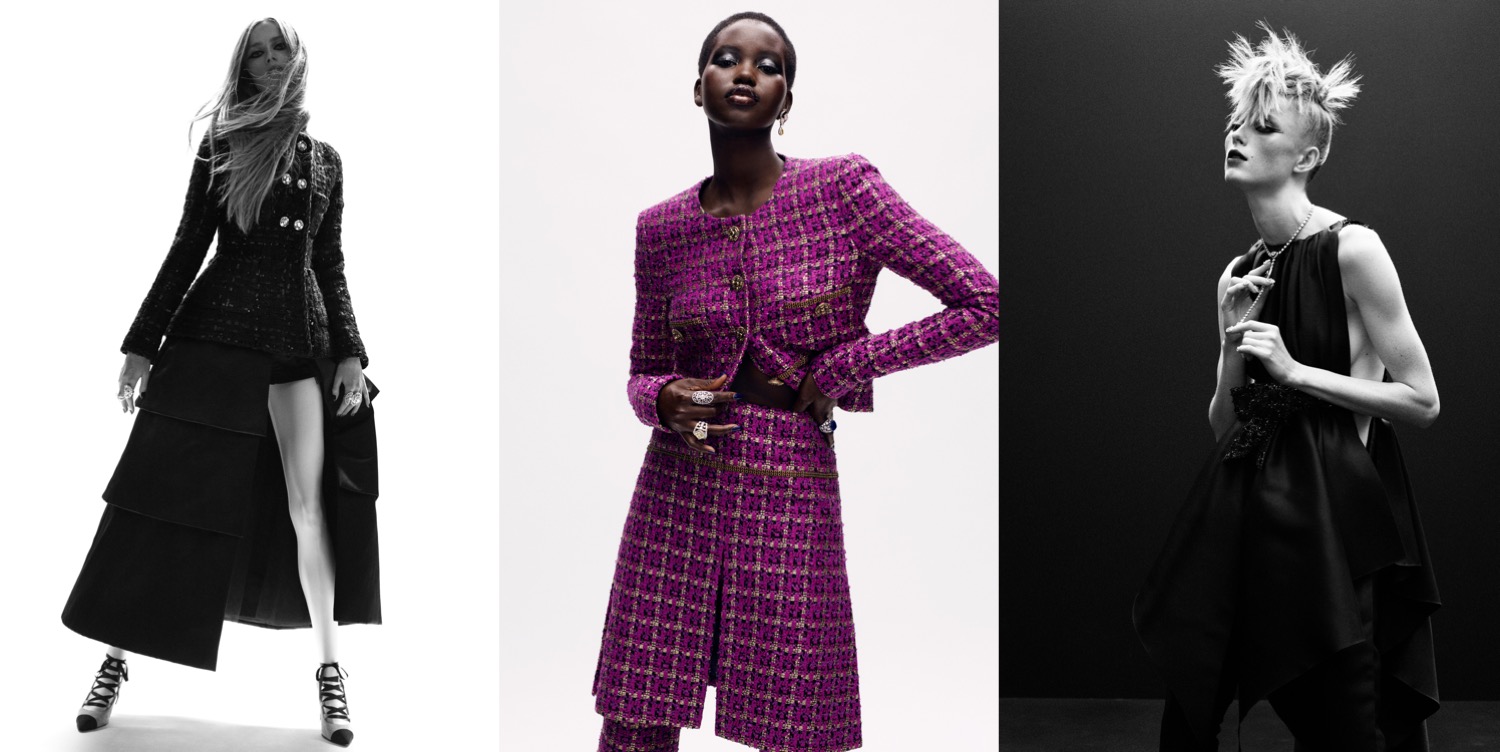
Things started looking up for this unusual, digital haute couture season the moment Chanel revealed its gorgeous collection by Virginie Viard. No pointless mega-productions with special effects, just a short video and a proper look-book shot by Mikael Jansson starring Adut Akech and Rianne Van Rompaey. The focus is on the clothes, which are a delight. “I was thinking about eccentric girls,” Virginie Viard said of her autumn-winter 2020 couture line-up. In particular, Viard was remembering Karl Lagerfeld heading off to parties with his sometime muse, the madcap Princess Diane de Beauvau-Craon, who as a teenage debutante got herself an American crewcut to give some punk edge to the pretty but detested pink dress her mother had chosen for her coming-out ball. “Life with her around is the ideal for me,” Lagerfeld said of de Beauvau-Craon when he spoke with Vogue, “because life must never be flat. She gives a light spirit, yet she is deeply spiritual.” Viard wanted to swing to some escapist opulence after last season’s soulful austerity – and because we all need the dream of a grand party right now! Viard was thinking of “things that maybe I would not do in a show – punk hair, fine jewelry.” Those Chanel haute bijoux included yellow diamond lions (Chanel herself was a Leo) and tiaras. The de Beauvau-Craon touch erupts in the form of a short frothy taffeta dress and faille ball skirts or a full-skirted retro cocktail dress of flowering black and white lace spliced with lacquered pink lace – and in punk feather mohawk bangs worn in the hair, and the lace-up court shoes that would have been perfect for dancing the night away in the great 1980s Parisian nightspots Les Bain Douches and Le Palace. As usual in her work, Virginie looks towards the essence of Chanel. Tweed figures large in the collection for day and night: a knee-length tunic worn over boot-leg pants, for instance, or a minidress with the traditional Chanel braid trim reworked in rhinestones. There is more amazing trompe l’oeil in the allover Lesage embroidery of a lean jacket worn with an ankle-length skirt, or in the Emmanuelle Vernoux–embroidered sleeves of a decorous wool ball gown, or the Montex sequin and wool tufts of an off-the-shoulder minidress. Viard provides subtle elegance too –  which I always adore the most in her collections – in pieces that include a sheath of inky faille with bishop sleeves or a solemn evening gown of steel gray silk velvet (my favourite), discreetly dusted with embroidery at the waist and cuff, and jackets with midriffs defined by hand smocking. Viard aptly describes the looks as “casual and grand” – and this is what I call relevant couture.

Collage by Edward Kanarecki.
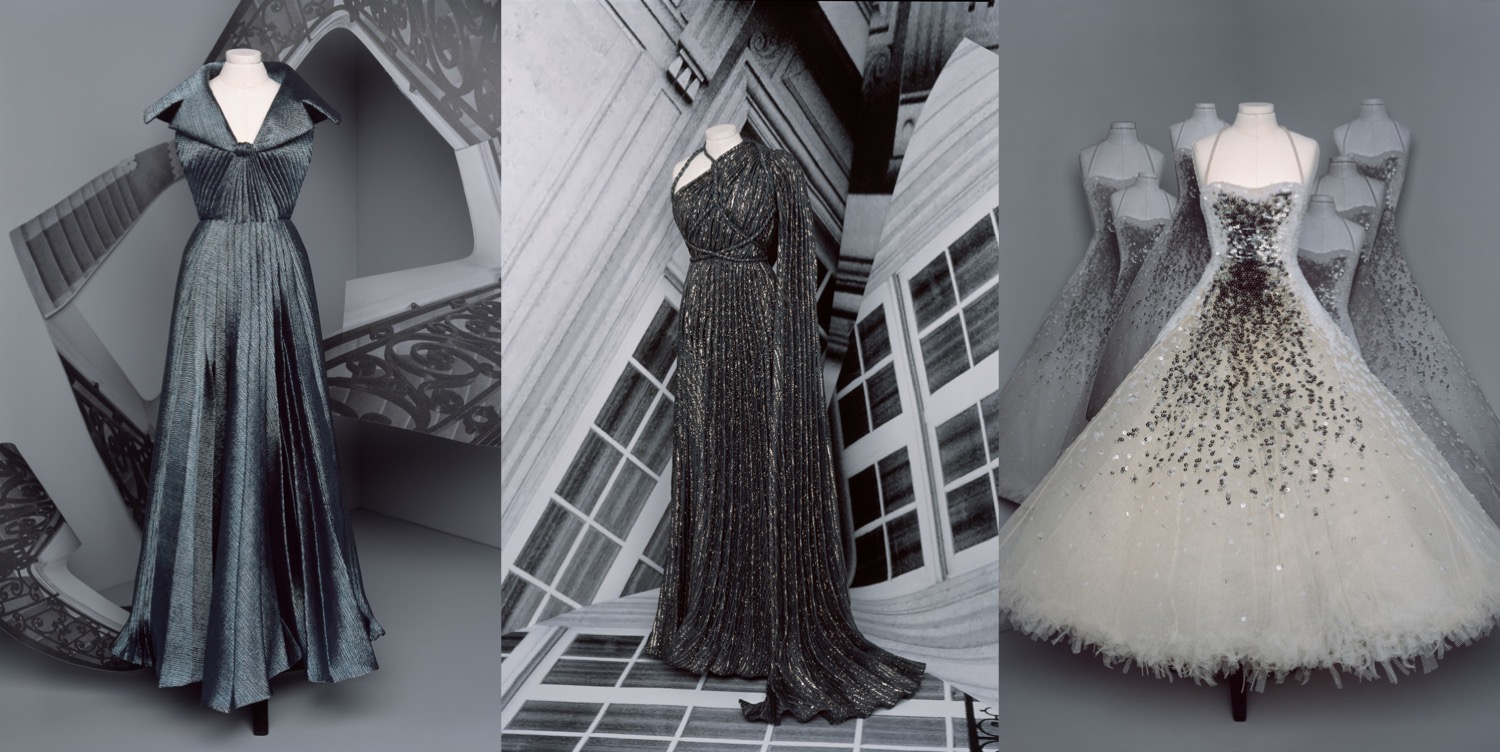
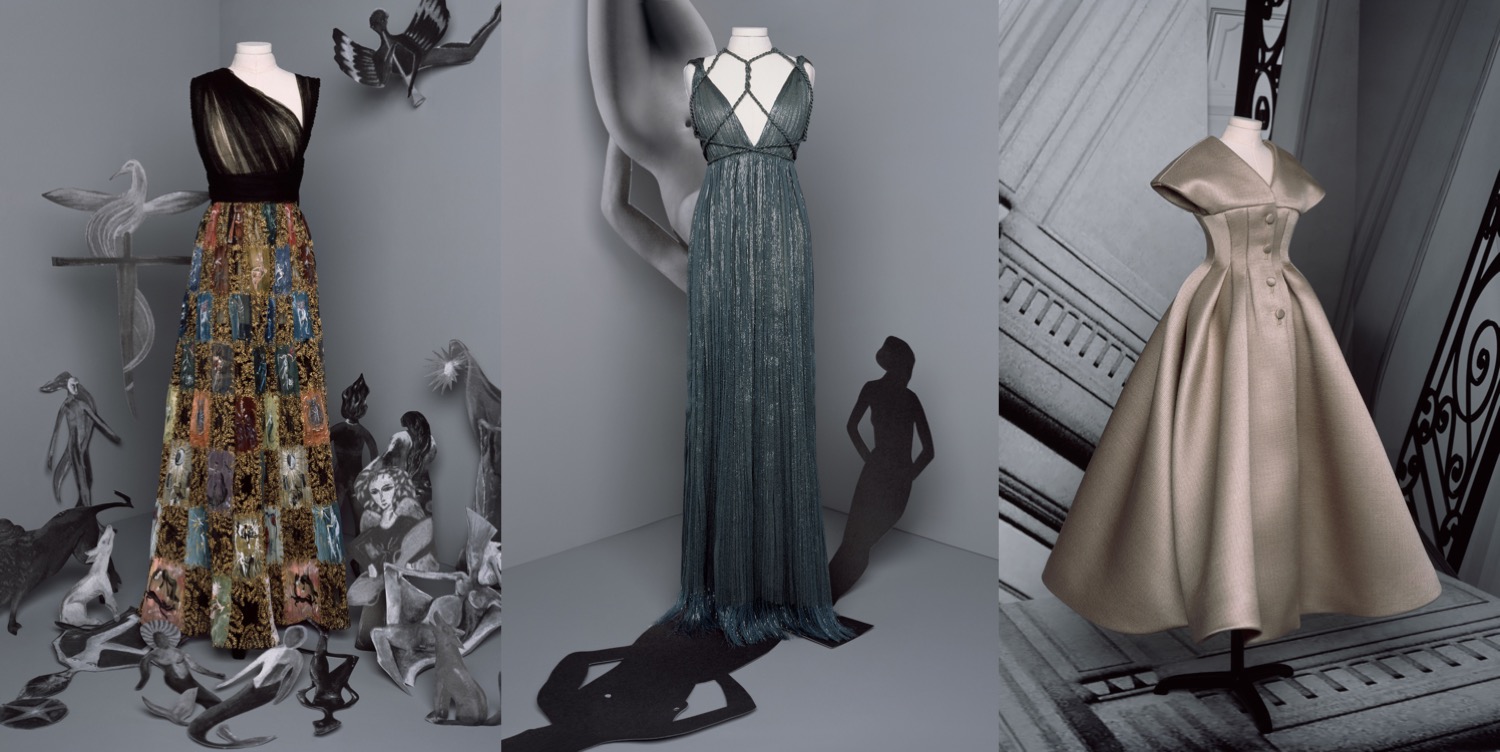
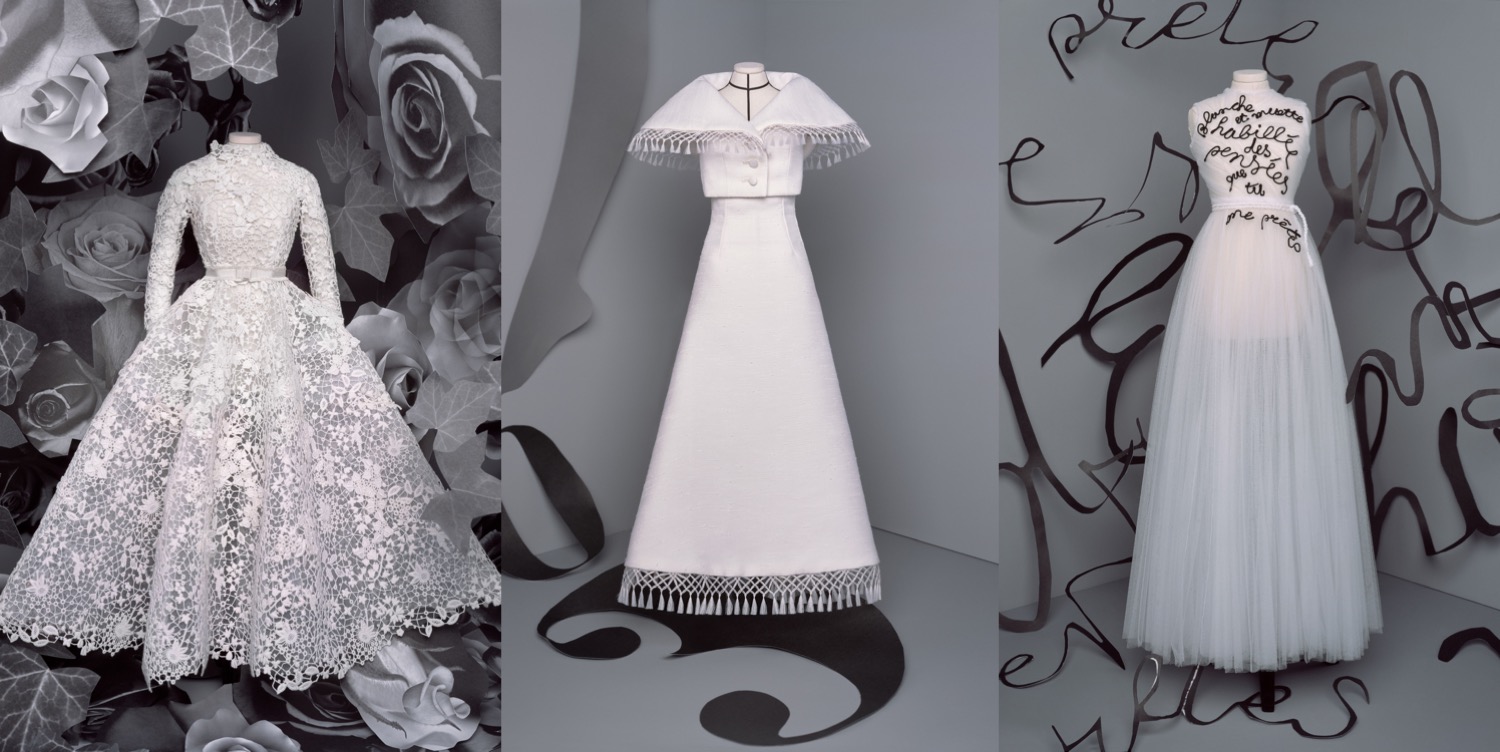
Théâtre de la Mode. Dior AW20 Couture

Yesterday was the first day of the autumn-winter 2020 haute couture “week”, digitally streamed from Paris due to confinement reasons. To be honest, I had a huge dilemma with it. After seeing all the look-books and pretentious, confusing videos, I felt like everybody would be completely fine with skipping this season entirely – designers the most. Schiaparelli released a look-book featuring Daniel Roseberry’s sketches, just to have a brief moment going on on Instagram. Illustrations are beautiful and all, but the execution of this concept felt completely empty. Olivier Theyskens couldn’t imagine a worse timing with his Azzaro debut – the blurry music video the label released tells nothing about his vision for the brand, and it would be simply best if they postponed it. But the fashion industry seems to still not know that word: “postpone”. Everything must be immediate, even if there’s nothing to show.

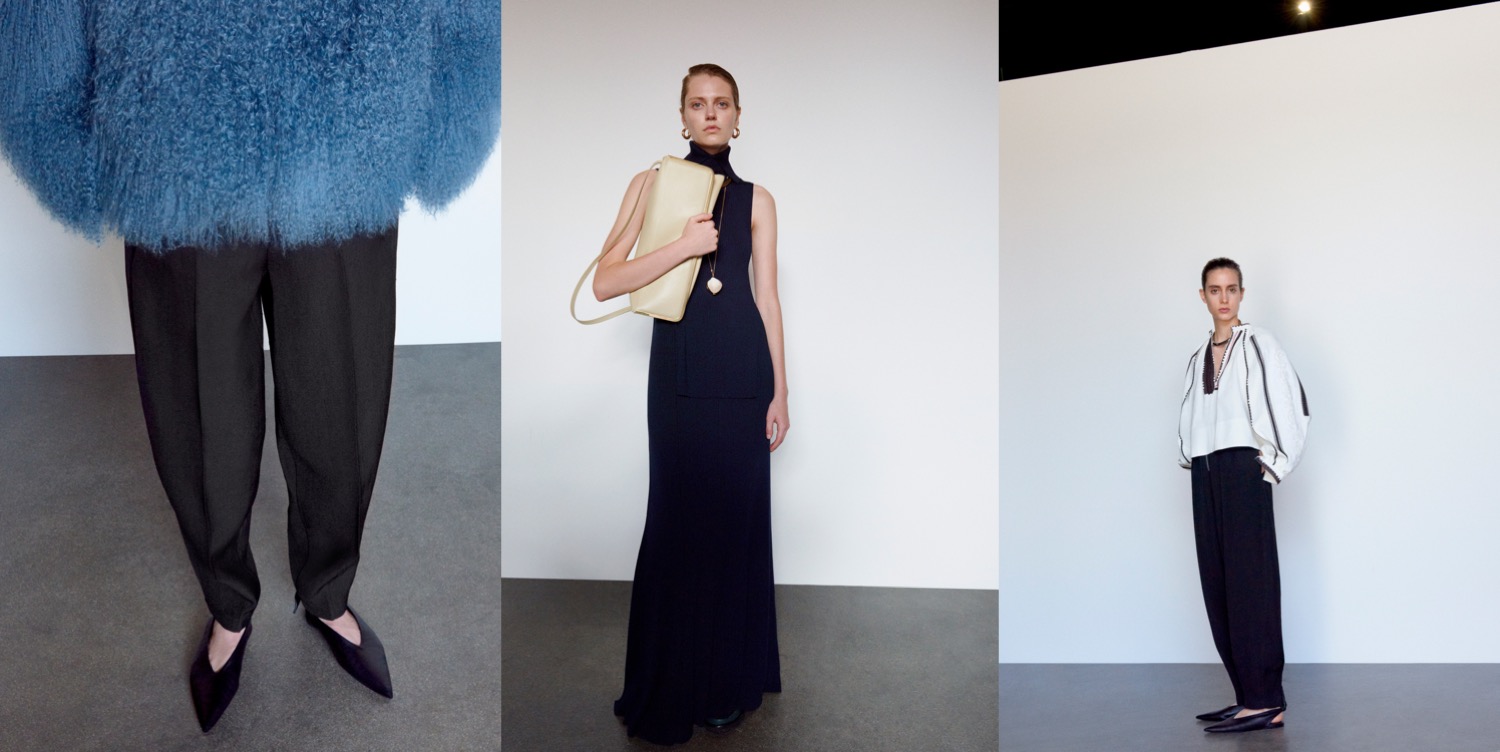
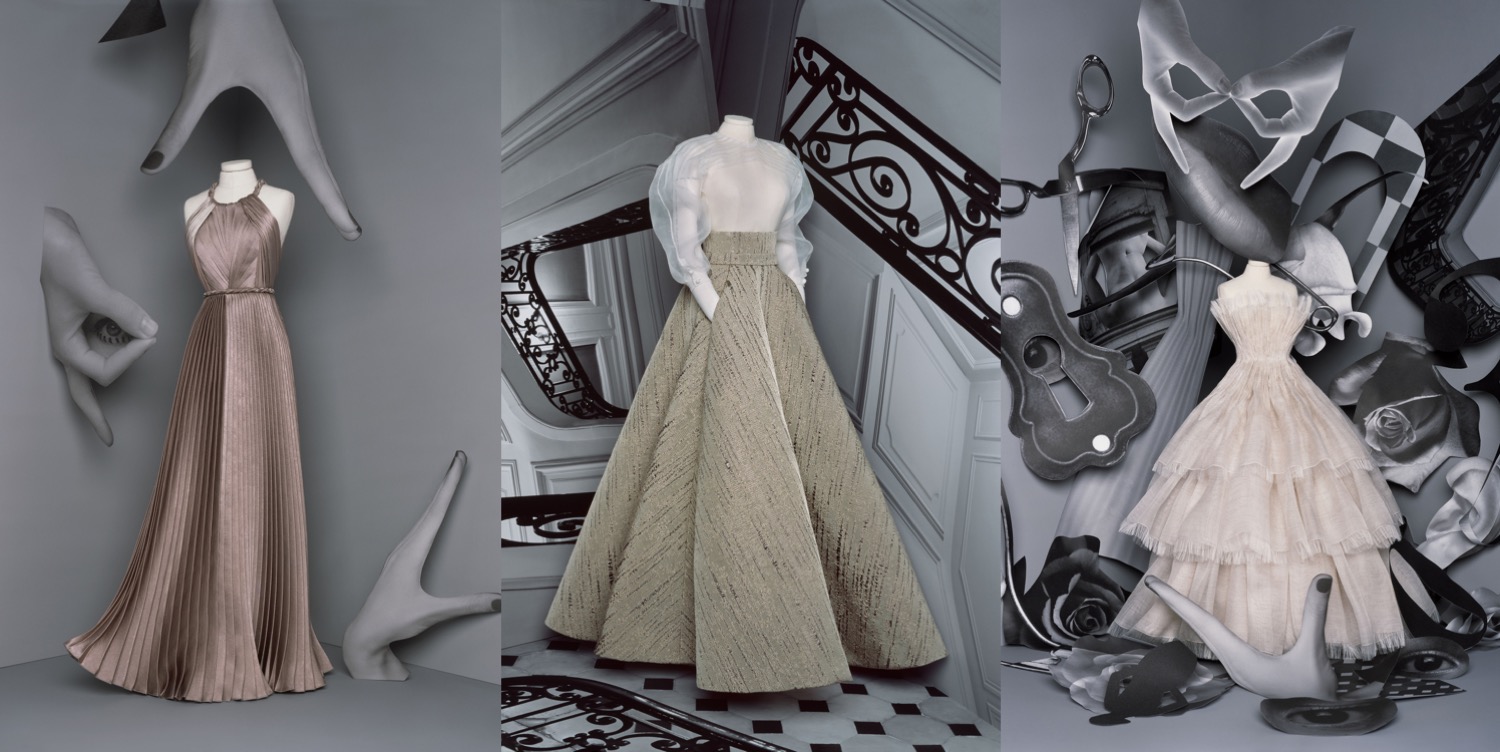
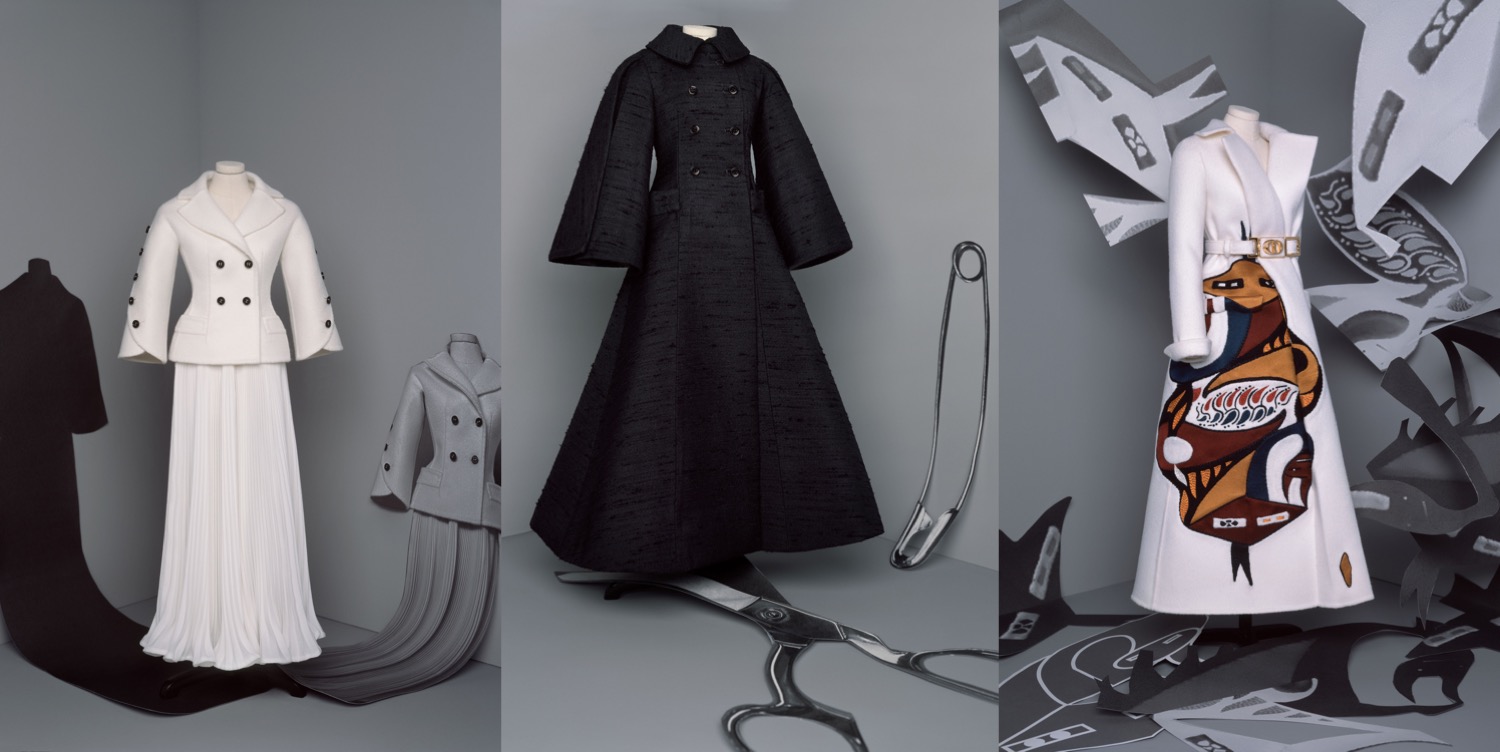
Maria Grazia Chiuri‘s Dior collection, clothes-wise, was surprisingly good. And they really, really could just leave it the way it is, a proper look-book photos of mannequins wearing couture and a well-written press release. Unfortunately, the brand decided to start with a visual, where everything went wrong. I’m talking about the film directed by Matteo Gerrone, which I found cheesy in production and, well, so, so ignorant towards current events going on in the world. As if Black Lives Matters never happened, an all white cast without a single model of colour held it all back to the maximum. And having models of colour in a casting is the easiest way for a brand to confront the term “diversity” – something Chiuri used to say was so important to her, with all her “feminist” themes… – and believe it or not, Dior failed with it. Which is sad and frustrating. Ok… lets go back to the collection. The film showed mermaids, nymphs, a live Venus statue and a travelling trunk of dresses (a nod to Théâtre de la Mode, the tour of miniature gowns on dolls in 1945-46 to revive the French fashion industry post-war) exploding into the woods in an Ancient dreamscape, and all that lead us to a collection filled with references of Greek mythology, fairytales and pre-Raphaelite times. Maria Grazia Chiuri name-checked the likes of Lee Miller, Dora Maar, Leonor Fini and Jacqueline Lamba – 20th-century women who are often remembered by history for their beauty or for their famous lovers and husbands, but in fact did important work of their own as artists. With a surrealist twist, that was a line-up of delightful diaphanous gowns and voluminous New Look-inspired coats, all kept in neutral colours. The bondage details in some of the dresses made me think of Man Ray and Lee Miller’s work, were kinky merged into sensual. At some points it all looked overly historical, even theatrical. Not sure if it’s relevant couture, like the one Virginie Viard does at Chanel. But if any sort of MET Gala is coming up in 2020, those dresses will perfectly match the About Time: Fashion and Duration theme.

Collage by Edward Kanarecki.
Italian Summer. Valentino Resort 2021

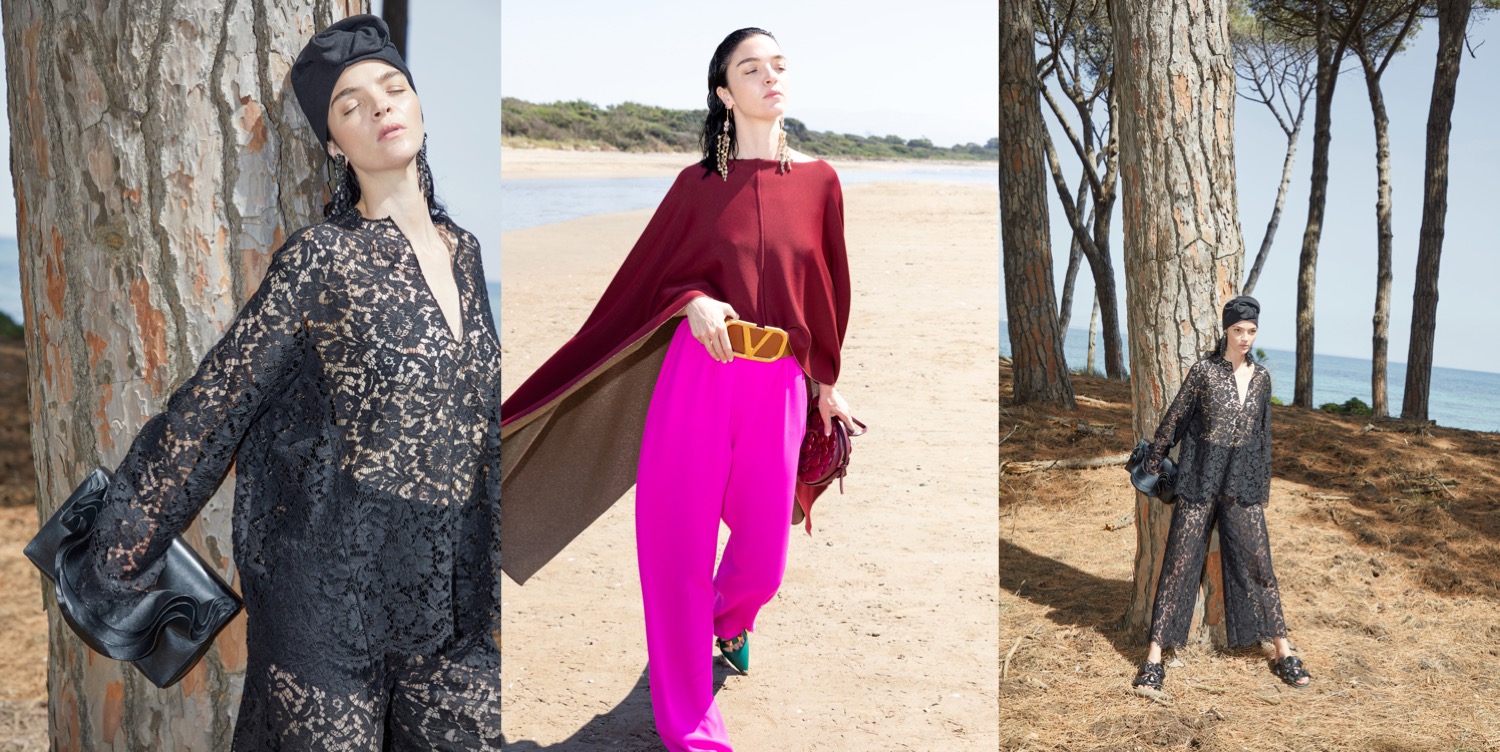
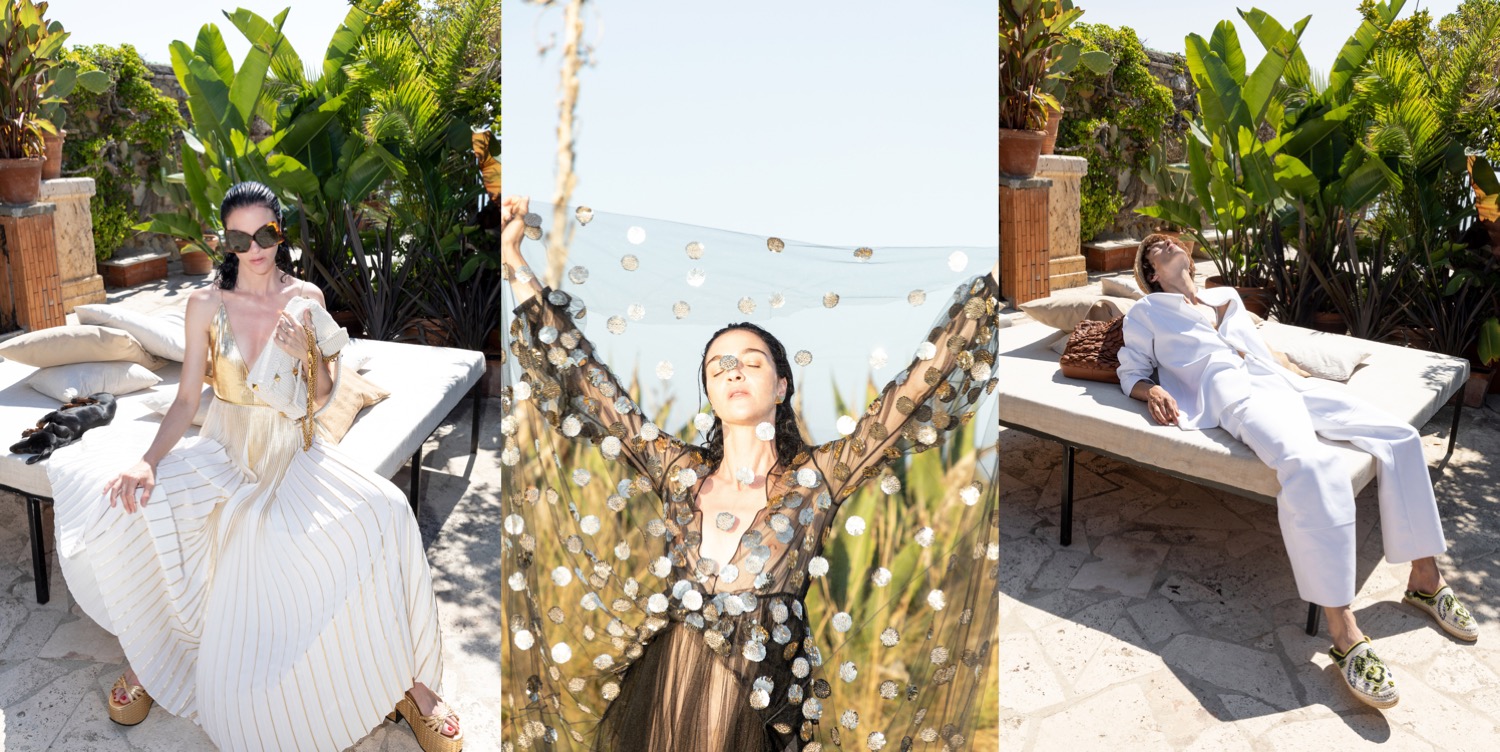
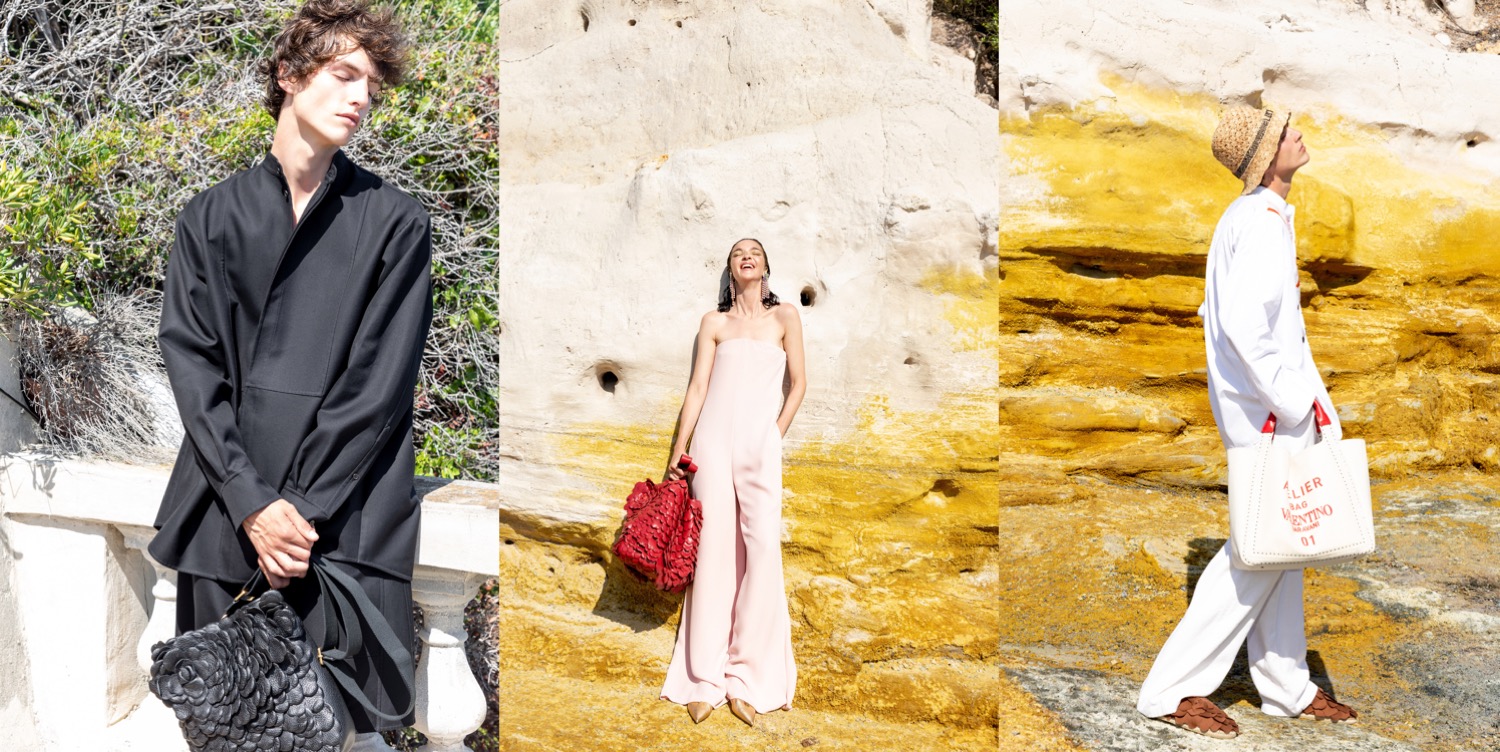
This is the ideal summer state of mind: Mariacarla Boscono dancing, laughing and sun-bathing at the Italian sea-side, wearing Valentino and being photographed by her friend – and the brand’s creative director – Pierpaolo Piccioli. Italy was the European country that was first tragically hit by COVID-19, and to many it seemed that good days aren’t coming back anytime soon. Now the country seems to gradually revive and the dream Italian summer is back on track. Optymism is winning. “I never stopped working,” Piccioli told Vogue during a Zoom call. “I profoundly love what I do; this is my passion, something fundamental for me – it isn’t just work.” The resort 2021 collection is the byproduct of the time spent alone drawing and painting, while remaining connected with his team. “I wanted to convey spontaneity and truth, even imperfection—but it’s the feel of human imperfection you long for right now,” he explained. “The collection was born out of flat drawings – paper and pencil, no styling, no mood board, just researching on paper shapes that linger in your head. A pure fashion process, as it should be done.” The human quality of creativity is paramount to Piccioli’s practice. He has imbued the rarefied world of couture with emotional values – exposing and revealing its craft and handmade processes, and shining a light on his team of seamstresses and artisans as essential players behind his fabulous creations. This center still firmly holds. “I wanted [to communicate] something even more personal, very close to myself. Conveying a sense of intimacy, a sentiment of individual connection, of emotion. I decided to photograph the collection myself because it seemed more coherent in this moment to send out a message with no filters, no manipulation, no other interpretation or mediation. I didn’t want the usual glamour of a fashion shoot,” he continued. “What I was interested in focusing on was what I’ve missed most in this confinement – the simple feeling of human connection, of shared love and friendship. This is what I wanted to bring about in my images.” Not surprisingly, simplicity is the collection’s key word. “It’s a radical simplicity though,” reflected Piccioli. “I wanted to be even more radical, in that the simplicity I’ve tried to achieve in shapes, volumes, and construction comes at the end of a process of resolved complexities. It’s a study and a project on cut, proportions, balance. Reducing and subtracting to reach the core, something essential and pure – but not more banal. Simple, not simplified.” There’s an ease and a fluidity of movement, a feel for freedom and effortlessness exuding from the lean silhouettes of caftans, elongated shift dresses, capes, and separates. Defined by strong, solid colors inspired by Mark Rothko’s chromatically powerful palette, pure shapes were infused with a vibrant, joyful flair. A few prints inspired by 18th-century tapestries were rendered as inconspicuous abstract strokes of color, as if they were just traces of memories, or shadows of the decorative motifs’ former selves. And what’s more special than a dear friend you’ve known and loved for years? “Mariacarla and I, we go back a long way,” he said. A spontaneous energy radiates from the images, shot by Piccioli in the natural surroundings of his home: a lake where he goes swimming; a sulfur mine where Pier Paolo Pasolini shot some scenes from his 1964 movie Il Vangelo Secondo Matteo. There’s a palpable sense of intimacy and of a familiar bond between photographer and model. Again, individuality and humanity are the pivots around which the collection, which was designed to appeal to both genders, came alive.

Collage by Edward Kanarecki.