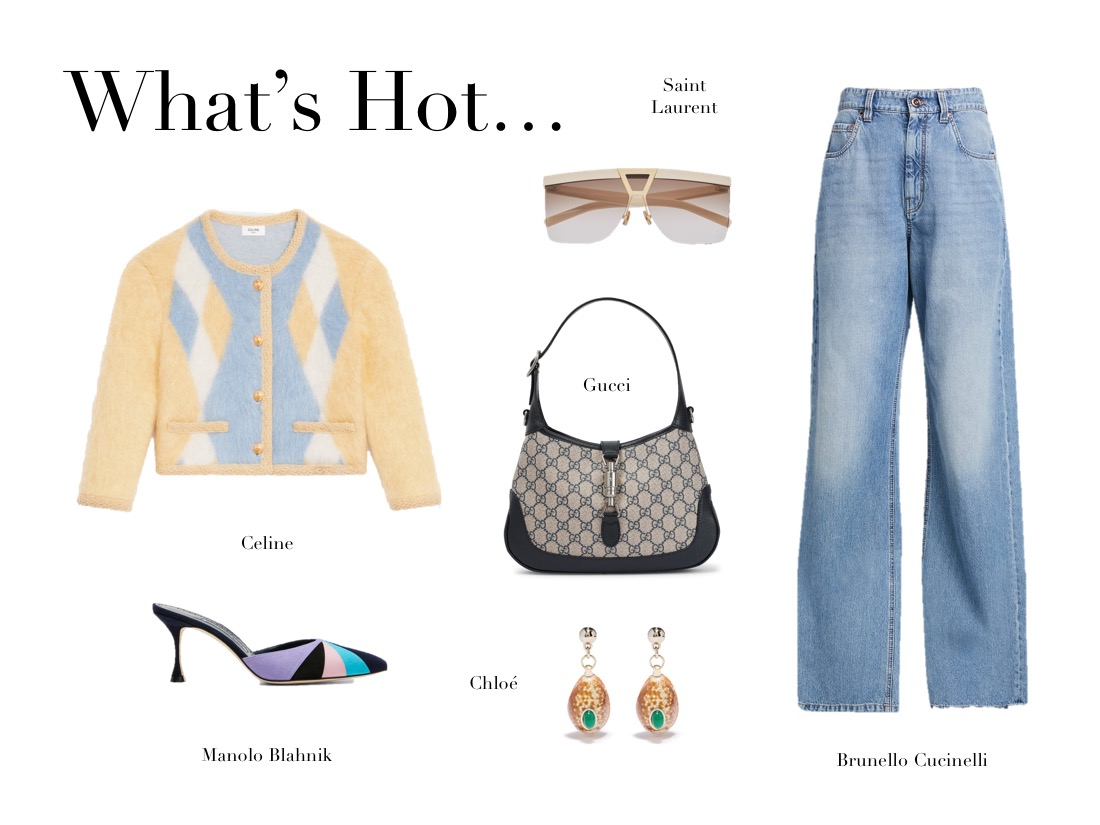
What’s Hot (24.6.22)


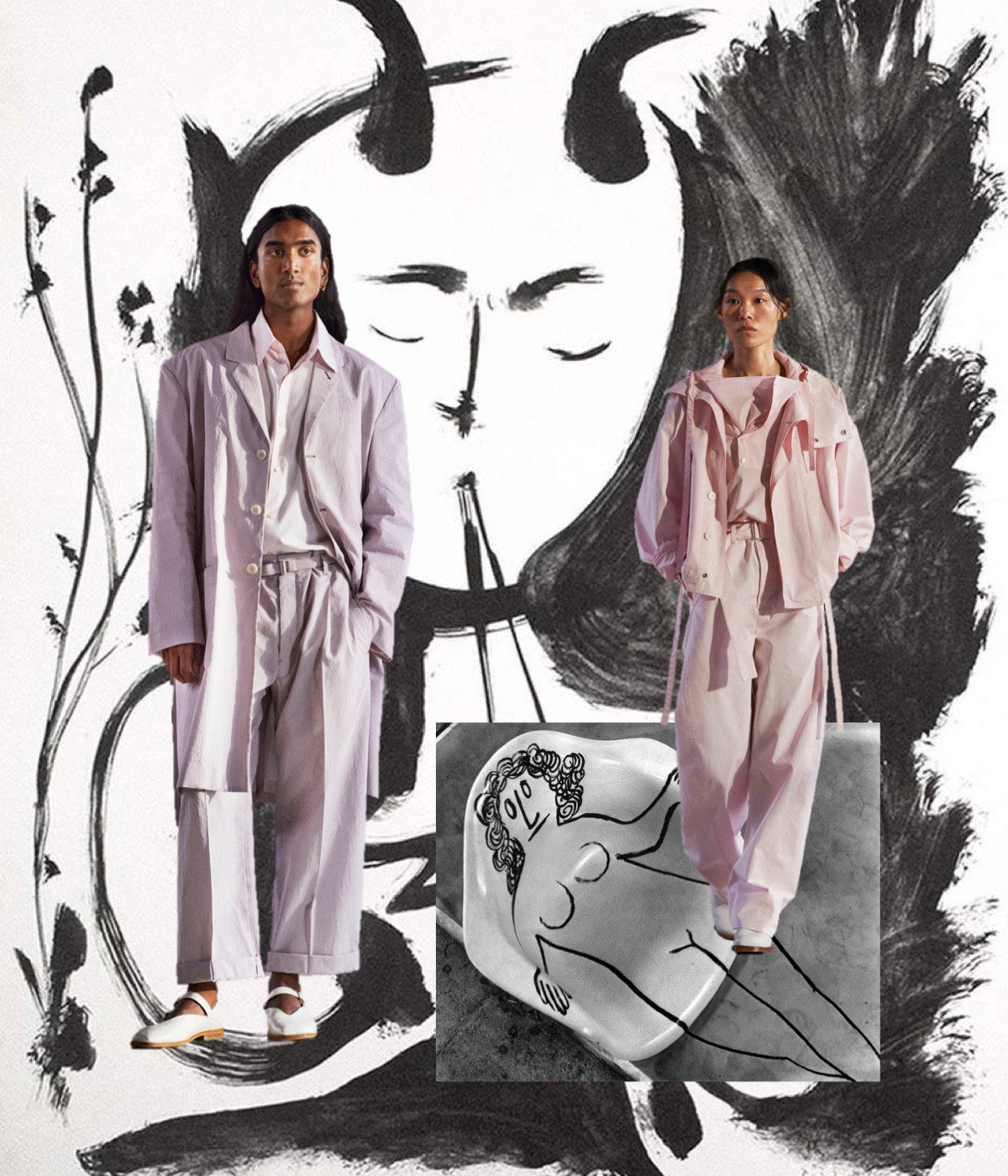
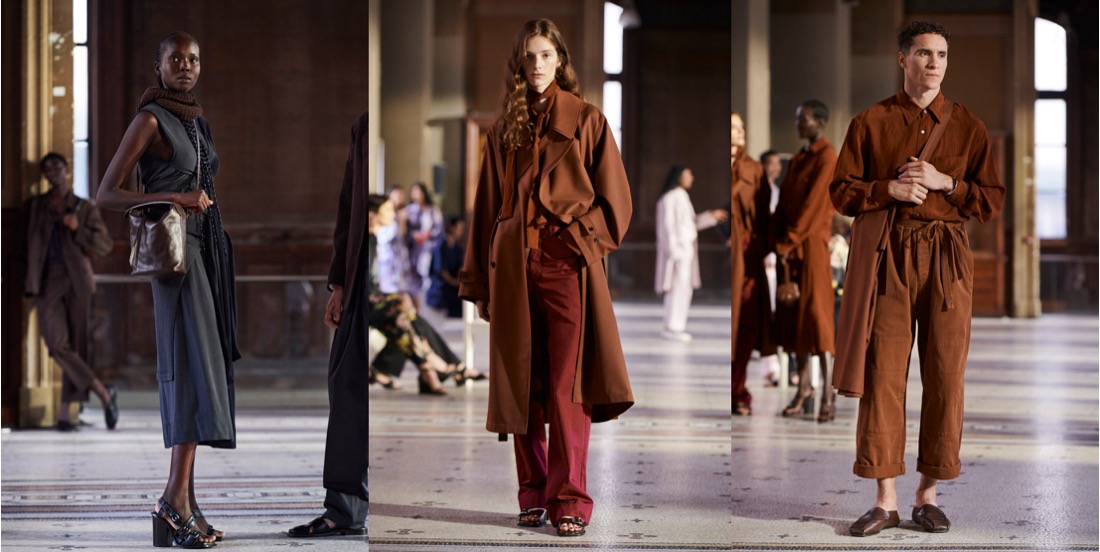
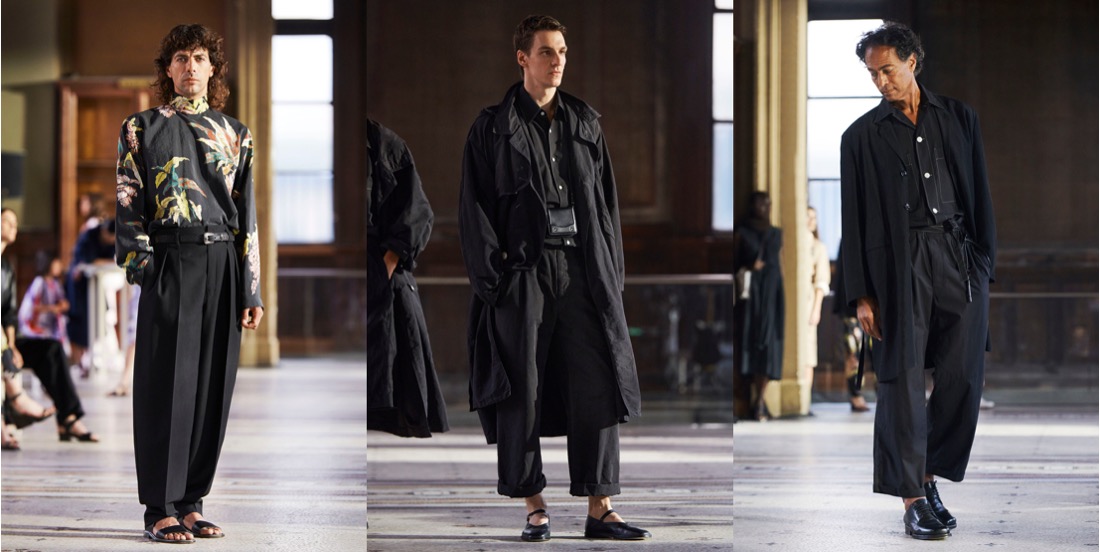
The Lemaire spring-summer 2023 presentation was a beautiful, harmonious scene. “It’s always nice to see people when they are in between things,” Christopher Lemaire said. “And people are very much themselves,” Sarah-Linh Tran added. Outside this presentation at the Musée des Arts et Métiers were clustered lots of fashion folk with no time to spare, waiting to go upstairs to see models in Lemaire acting as if they had time to kill. On the staircase a brace of male models idly swayed on their heels in top to toe monocolor stone, one wearing a crisp trench over full white pants in cotton and a split-upper slipper, the other a wide blouson over a collar-popped shirt and a multi-pleated silky pant with the same shoes. A female model in a culotte-integrating version of the outfits we’d just seen stood on the landing above. Up into the hall, there was a guy leaning on a window frame in brown blouson and work trousers with a bag strapped around his shoulder and a mini torch on his key fob. Across from him a woman in an interestingly halter-wrapped shirt and brown five pocket pants read a battered Luis Bunuel paperback. Further along another woman wore a dress and a guy wore a camp collar shirt that were both in the same hibiscus print. A female slept on a bench, warmed by the shafts of sunlight through the window, and cushioned by her softly blushing shirting and crisp cotton pants. A guy leant against a table in more pared down brown workwear reading Le Monde. At the end of the room, Ana Roxanne played mood music on multiple instruments and we saw more model groupings wearing super attractive printed pieces by the Indonesian artist Noviadi Angkasapura. This was a refreshingly straightforward collection that put the clothes on a pedestal of reality.

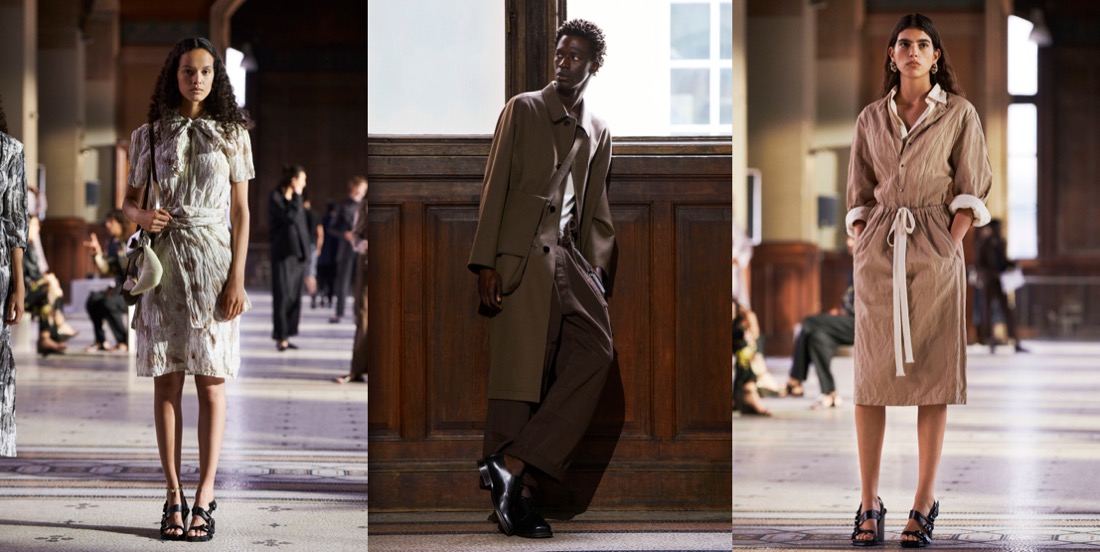
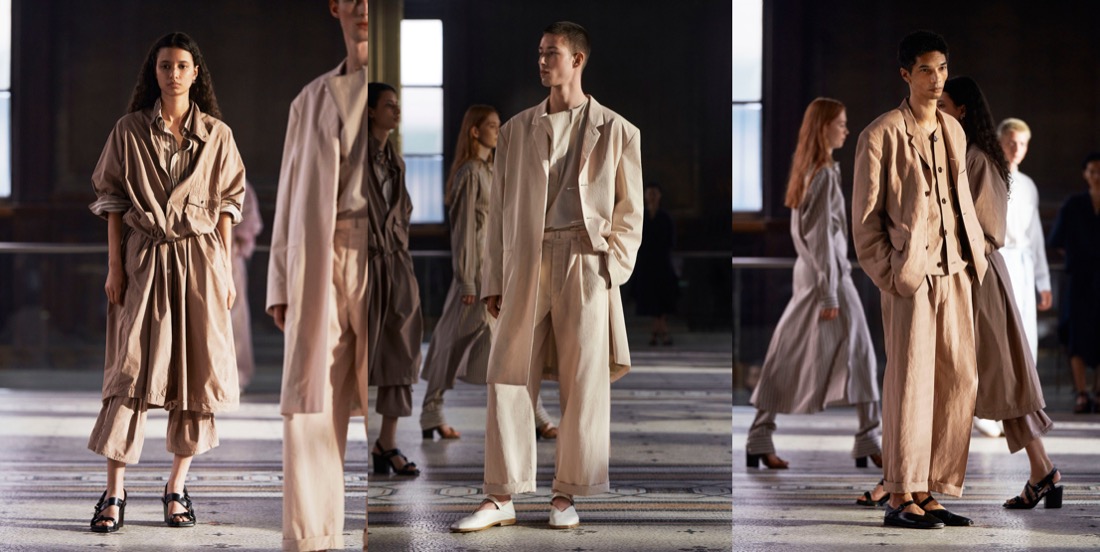




Collage by Edward Kanarecki.


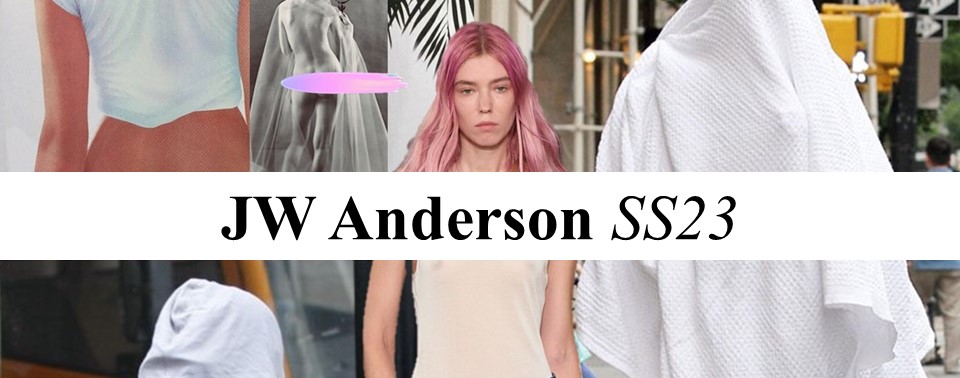

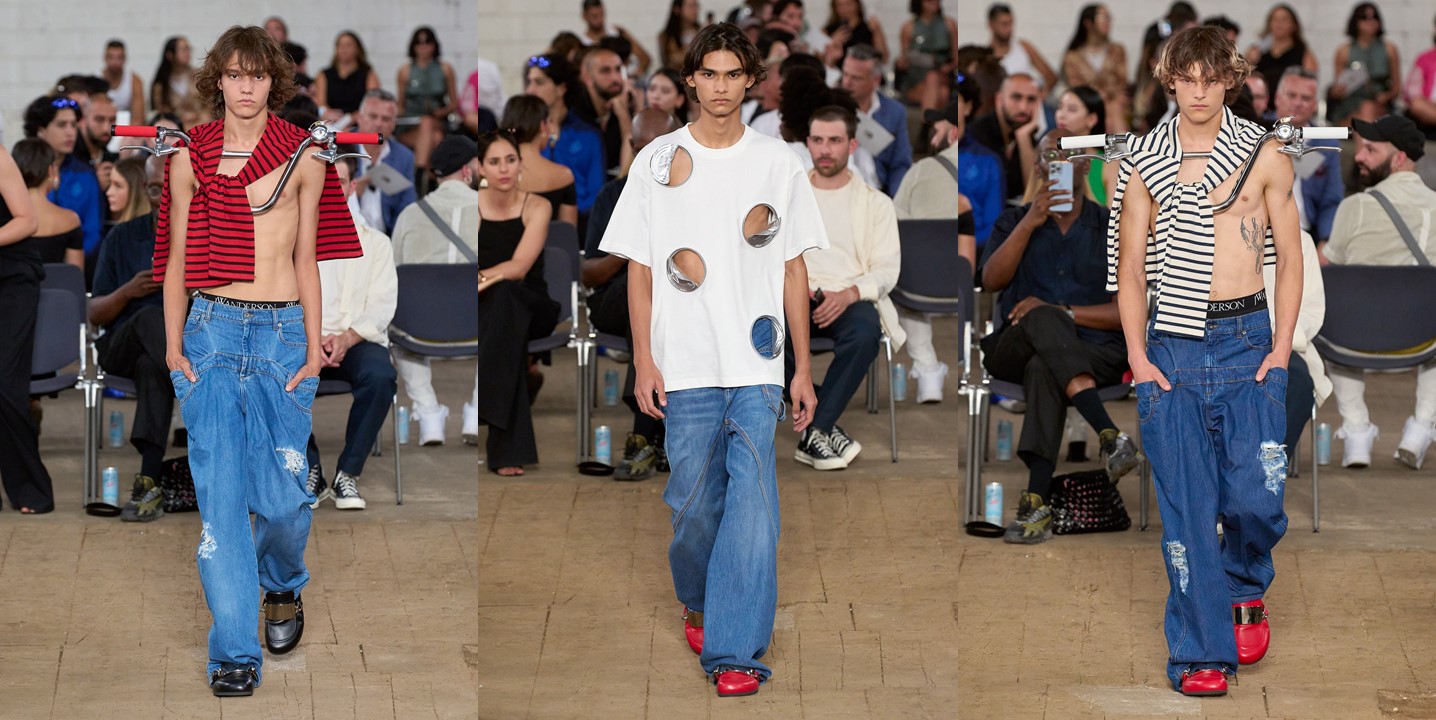
Jonathan Anderson is nailing it again, being in his surreal element. Back before Anderson started producing his in-your-face de-gendered mood-driven menswear in 2008 – the “shared wardrobe” concept that ironically led to him being practically frogmarched by his fans into expanding into in-your-face de-gendered mood-driven womenswear a few years later – he had plans to be an actor. That plan changed during an audition for Juillard in New York, where he performed a piece from the in-your-face ’90s play The Pitchfork Disney by Philip Ridley. Nearly a decade later The Pitchfork Disney, which he recently reread, was revived by Anderson as a central element in this first live Milan bow. Anderson said afterwards he’d been moved by “the shock of theater” that the play represented (some of the audience at its premiere in 1991 fainted) to shape a collection that tested our perceptions of clothing and modernity. The BMX handlebars, shattered skate decks and CDs were there to remind us of the intrinsic ephemerality of modernity, and its inevitable descent into anachronism. Anderson tried to add “eating canned goods” to this category of faded fads while speaking to the Italian press, but these pieces seemed more like witty acts of wearable assemblage. There was certainly a cheekiness to the project. The embedded bar codes made consumption provocatively both the ends and the means of engagement. “Fashion is a very modern device,” he said. “But it is not a modern act.” To underline the illusion of modernity he cast Rembrandt as the protagonist in his fashion play via intarsia reproductions on knitwear and prints on sneakers featuring the artist’s leery etching, Self-portrait in a Cap, Wide-eyed and Open-mouthed, from 1630. The nearly 400 year-old selfie stressed that while technology upgrades, the way in which we use it stays pretty constant. All these devices – along with industrial gloves, a stock photo of an apple-eating kid, and hardware-store door hinges – were placed within or adjacent to borderline generic contemporary canons of clothing. This created a have your cake and eat it result: you could wear JW Anderson-issued versions of 2023 uniform, and through those in-your-face interventions included within them simultaneously signal that you understood the narrative was entirely contingent – just a wearable moment in time.


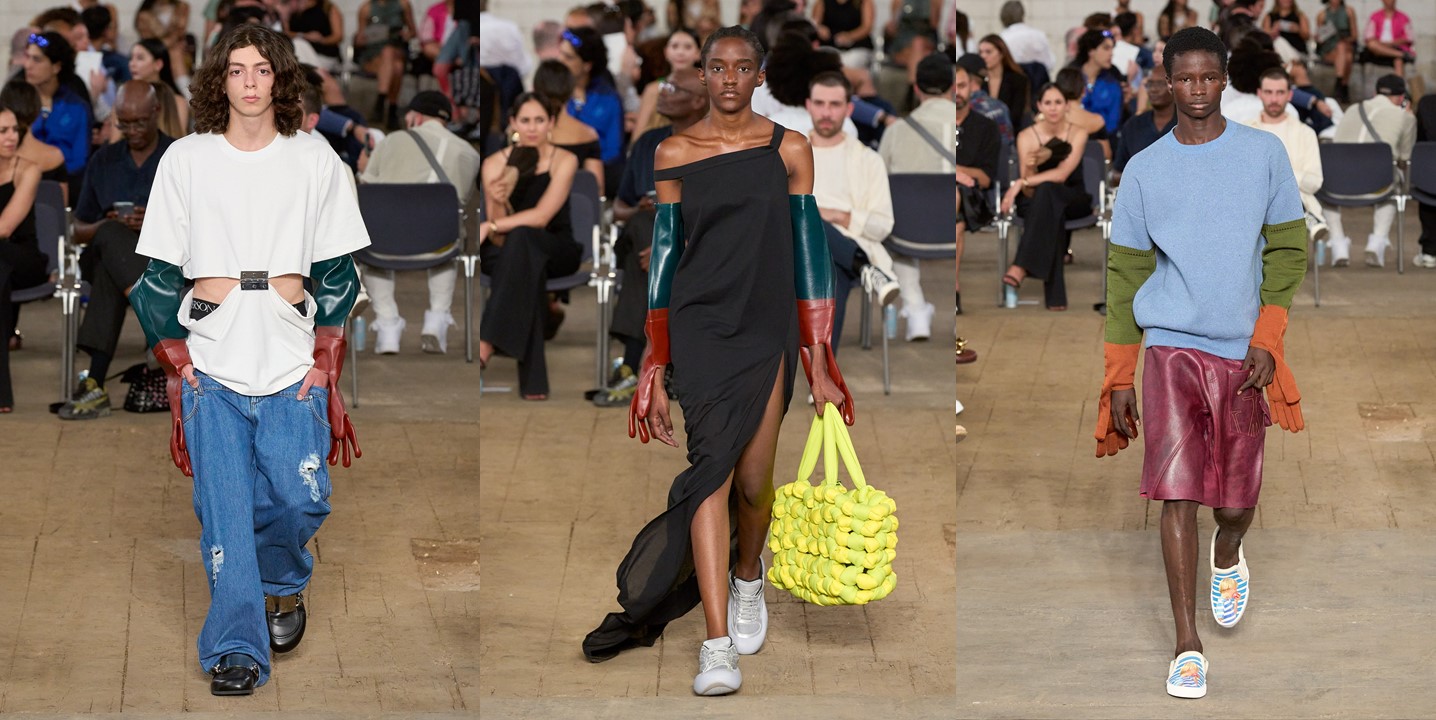

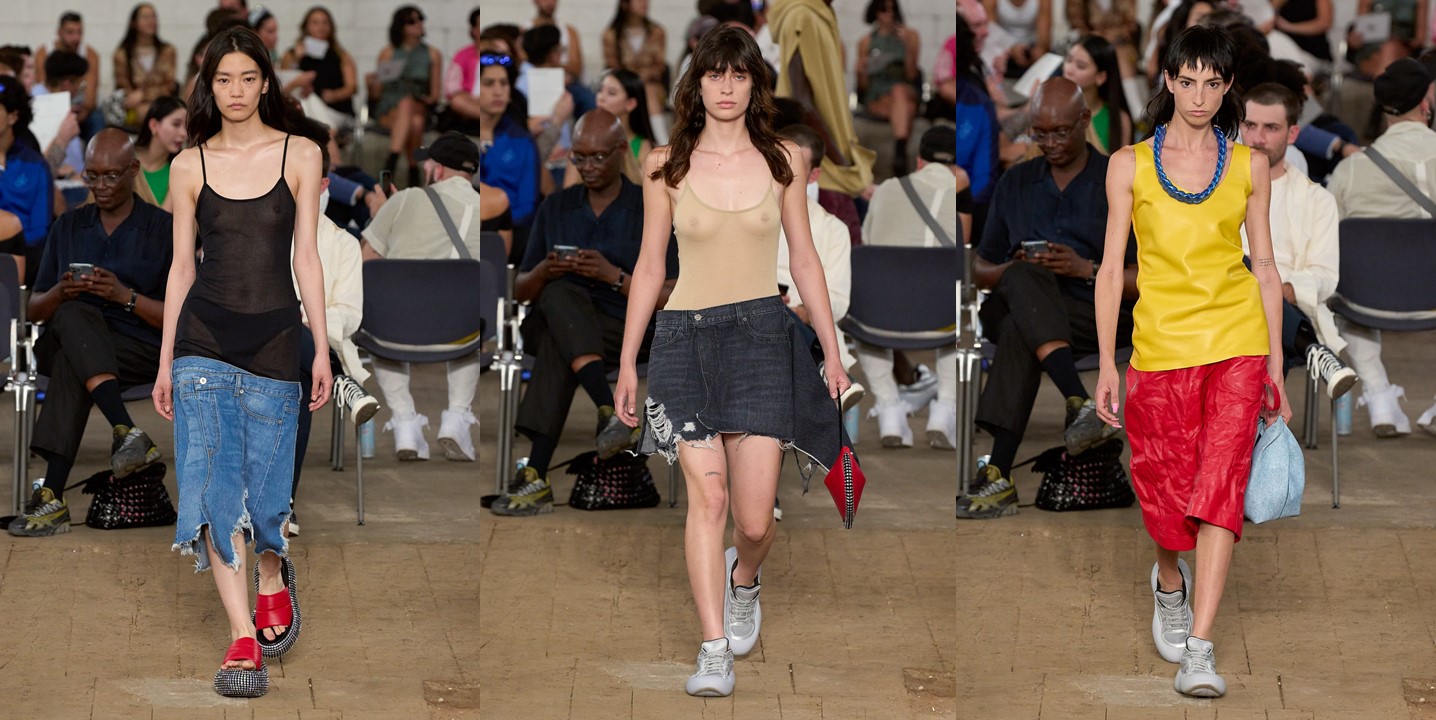
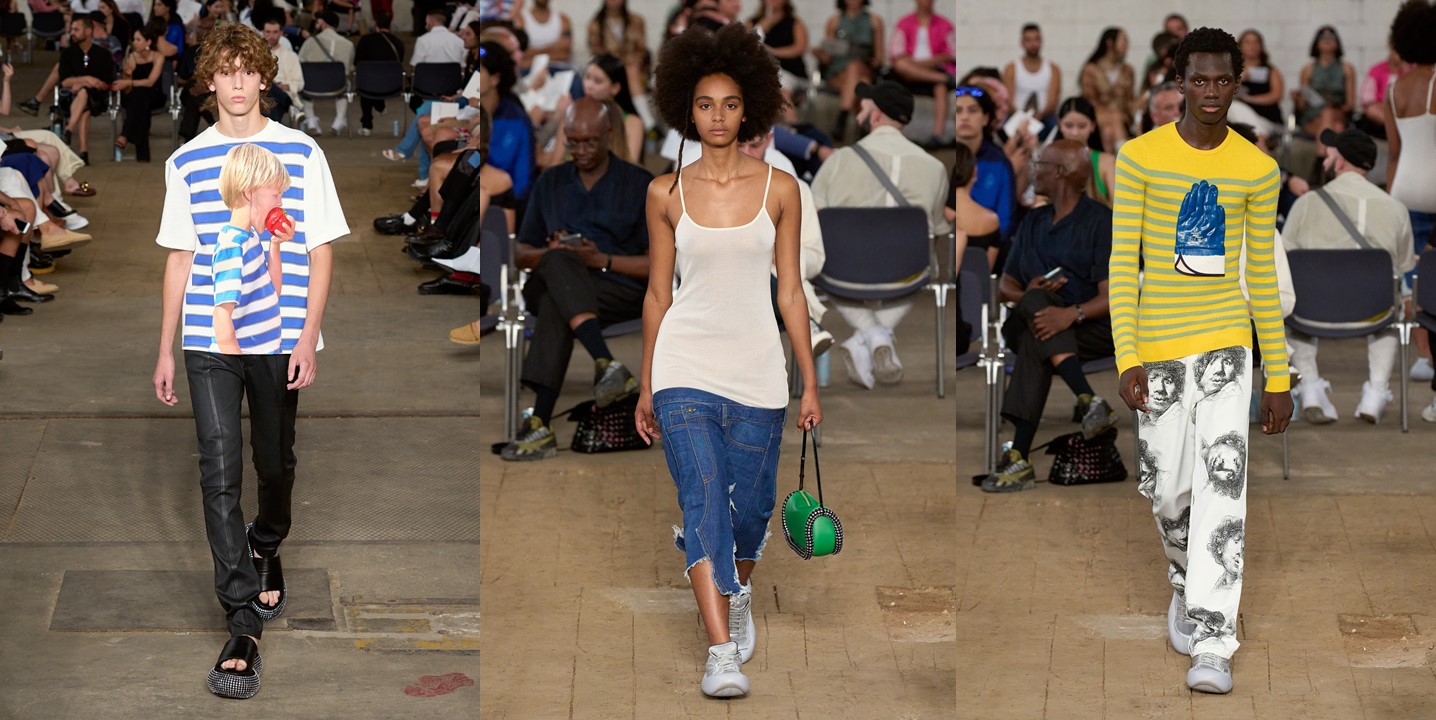
Collage by Edward Kanarecki.
 Design & Culture by Ed