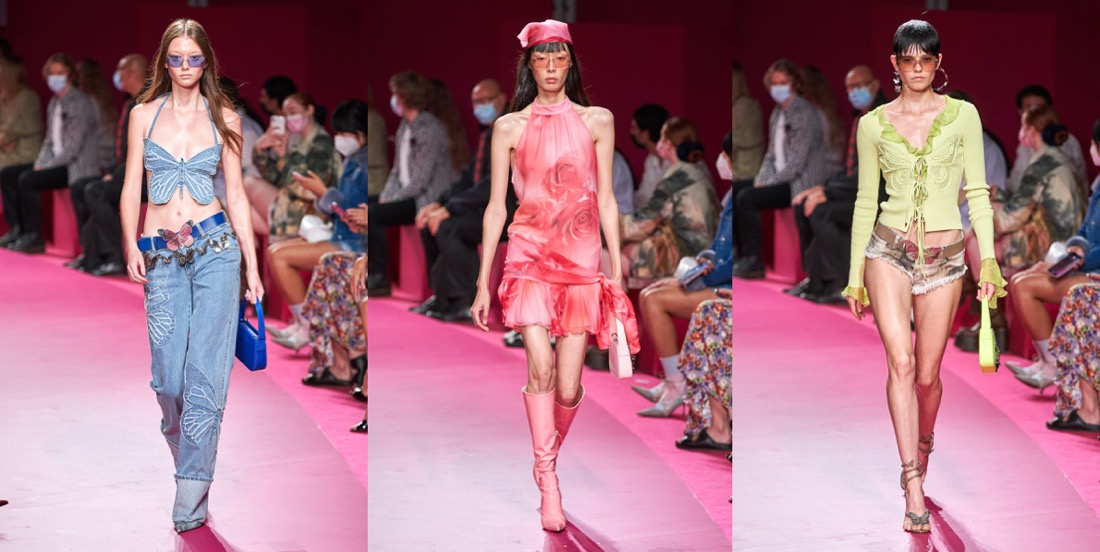
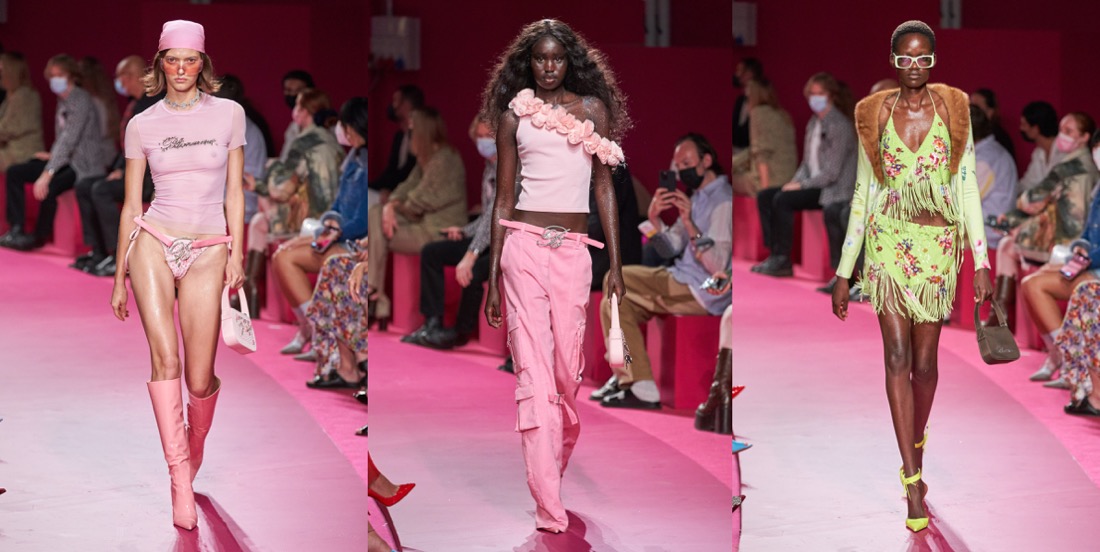
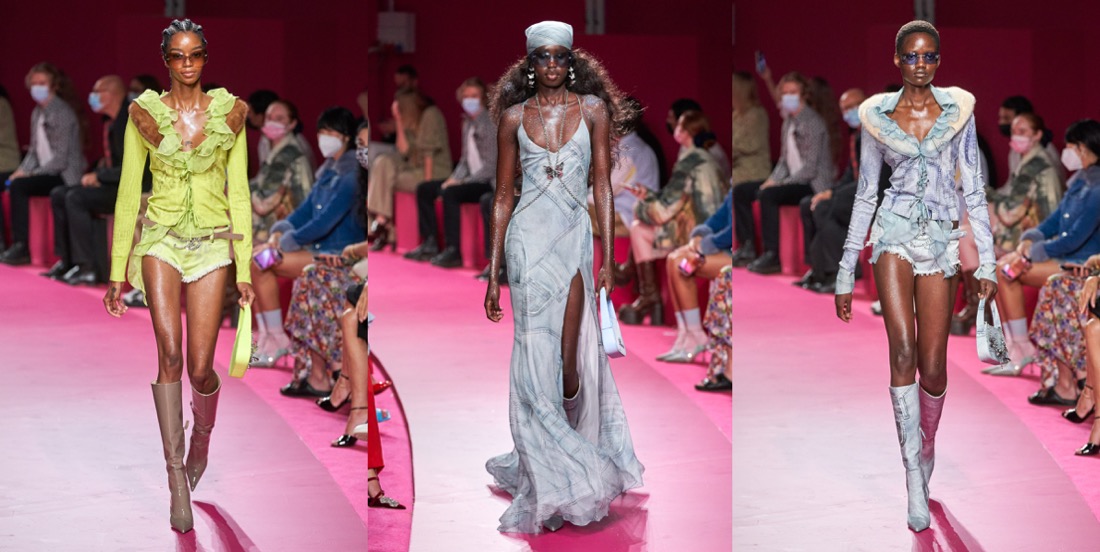
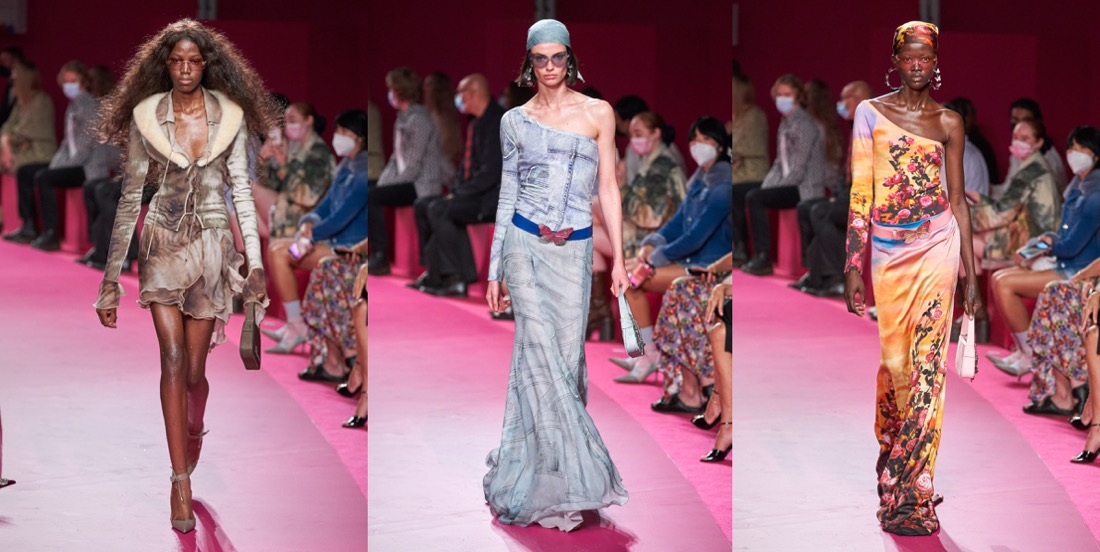
I Feel Like A Butterfly. Blumarine SS22

In just a few seasons, Nicola Brognano (with Lotta Volkova’s styling help) has flipped and twisted one of the sleepiest brands in Milan and transformed it into a 2000s-era e-girl nostalgia heaven. Blumarine last had such success in the end of the 90s and the beginning of the millenium, when nothing seemed better than rhinestone butterflies, sexy ruffles and lots, lots of denim. It’s 2021, and ironically, that’s what the TikTok generation loves and needs in their lives. Yet when asked backstage about his inspiration for spring, Brognano said “no one in particular really“. He knows that what matters is inundating social media accounts with the brassy swagger of all the skimpy, hotter-than-hot pants trotting on stilettos on the catwalk today, as well as the risqué fringed and beaded bikinis barely covered by a cropped cardi trimmed in regenerated mink or crocheted in fluoro recycled poly, or the see-through chiffon cargo pants with midriff-baring matching tops in eye-popping Day Glo colors. The co-conspirator in Brognano’s implacable turnaround is Volkova, who was busy backstage before the show shepherding models into a not-too-orderly lineup. Dressed in a whisper of a dress in pale pink stretchy gauze and chaperoned by her gallant, elegantly groomed black poodle Dimitri, Lotta fired off a barrage of her own takes on Blumarine’s new fundamentals: “Military Fairies. Sexy Butterfly girls. Frivolous and fun early Y2K mood when social media wasn’t on the horizon. Denim patchwork queens. Trippy, psychedelic, neon girls. Red carpet denim prints, red carpet bandanas. Low-waisted mermaids.” Love it or hate it, but that kind of Blumarine seems to be timeless.
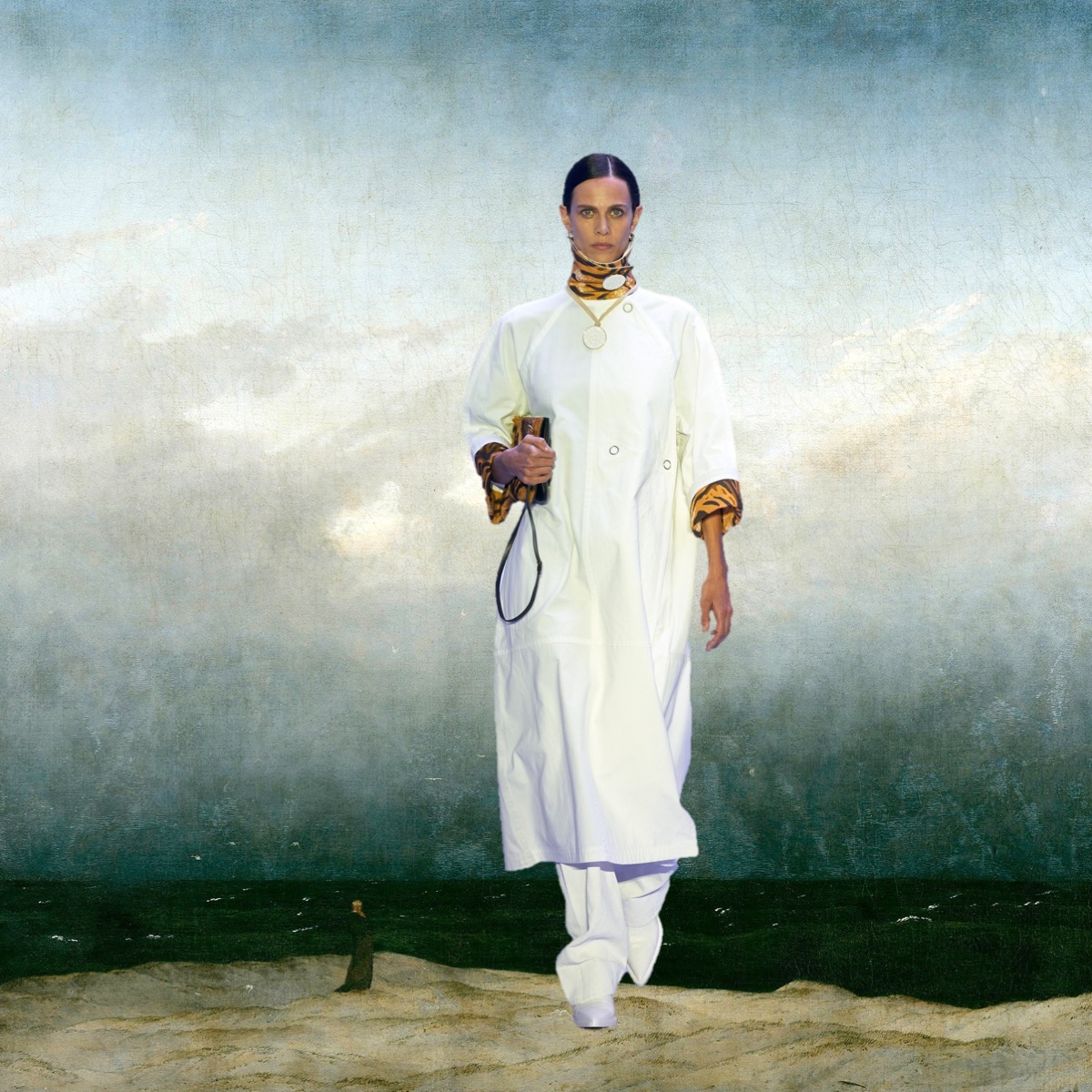
Collage by Edward Kanarecki.
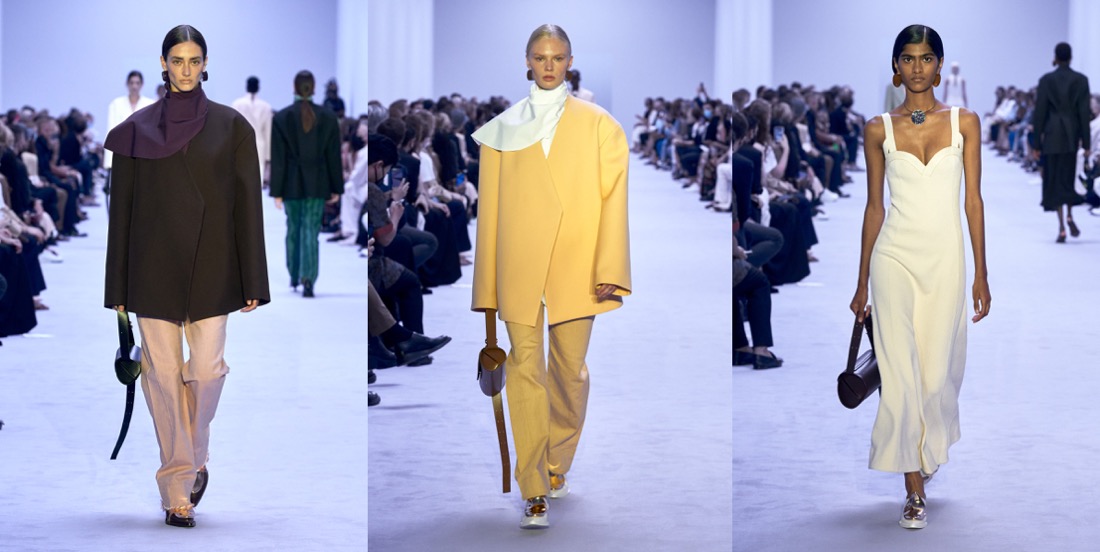
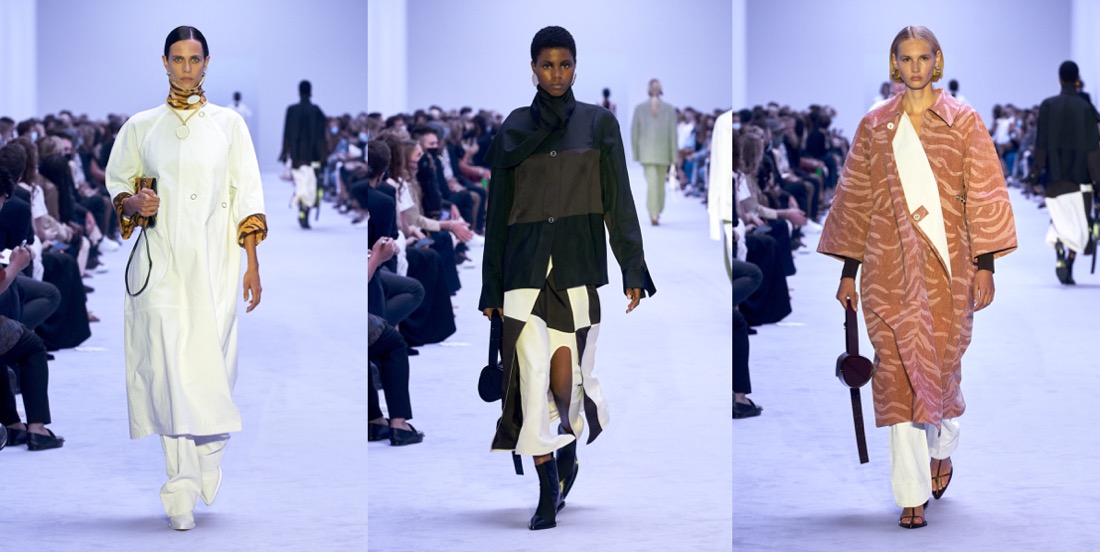
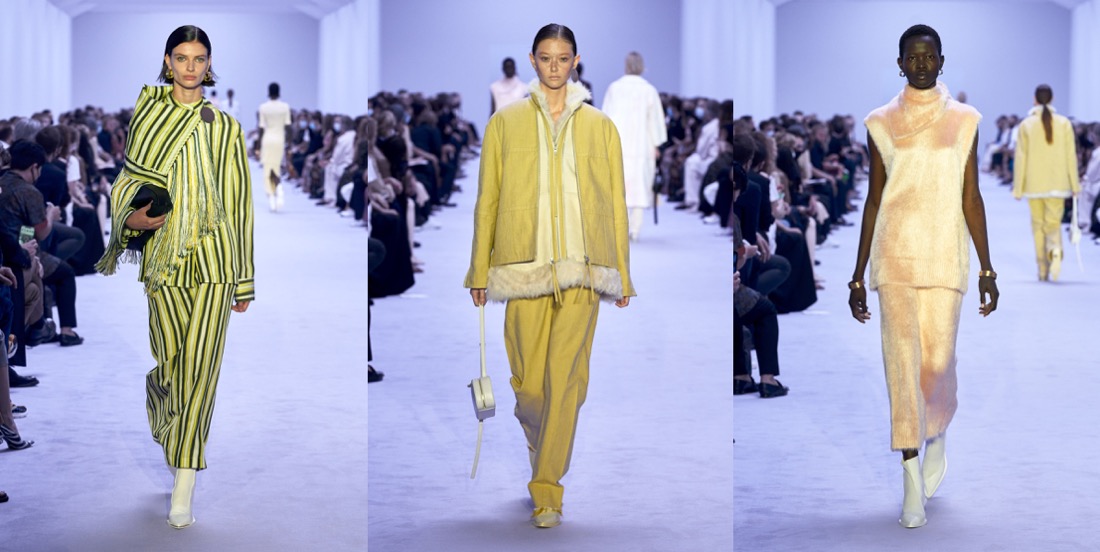
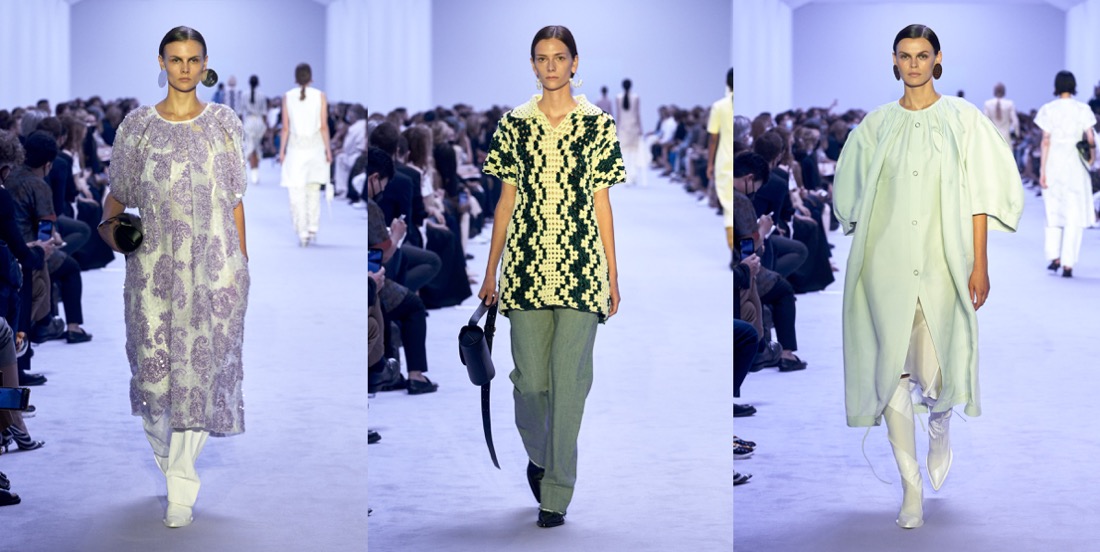
Emotional Reality. Jil Sander SS22

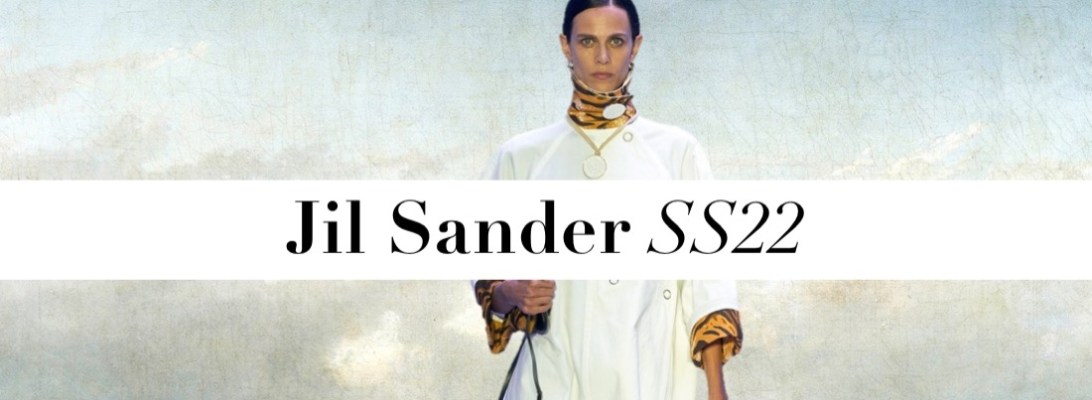
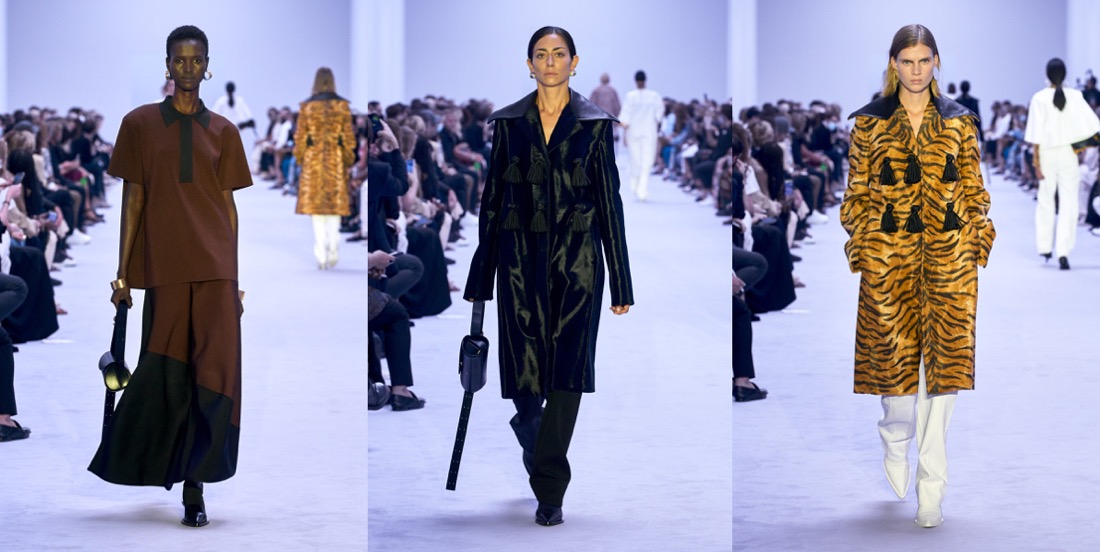
Lucie and Luke Meier made a life change this year – they had a baby girl in June. That kind of development can alter a designer’s perspective, and backstage they discussed their new point of view: “It’s about embracing a positive future,” Lucie said. “Yes,” interjected Luke, “kids are a material reminder that the future has to be better.” In their four years at Jil Sander the Meiers haven’t often talked about emotions; in the past, at least, they’ve been more comfortable discussing the cut and line of their clothes. This season the cut and line were, at turns, boxy and oversize or lightly nipped. Those details are important, they’re what separate the grownups from the kids, after all; but they’re only part of why people shop for and buy fashion. In the end, it often comes down to emotion. And tapping into personal emotions is bound to make a collection feel more connected. That’s what this Jil Sander collection felt: more connected to real life. Chalk that up to all the denim, which was cut loose and slouchy and in washes beyond basic indigo. Or chalk it up to the models’ mules and boots, which were chic yet still friendly. For spring-summer 2022, they experimented with a range of pastels and brights, and added in some zebra print for good measure. The purple-ish tone of the overheads made the colors shift as the looks came down the long runway. “We’ve learned not to take things too seriously,” said Lucie. That came across clearest in a couple of outfits at the end, which layered sequin-embroidered shifts over trousers and boots. Those sequined shifts count as a real departure for the Meiers: loose, playful, and fun.

Collage by Edward Kanarecki.
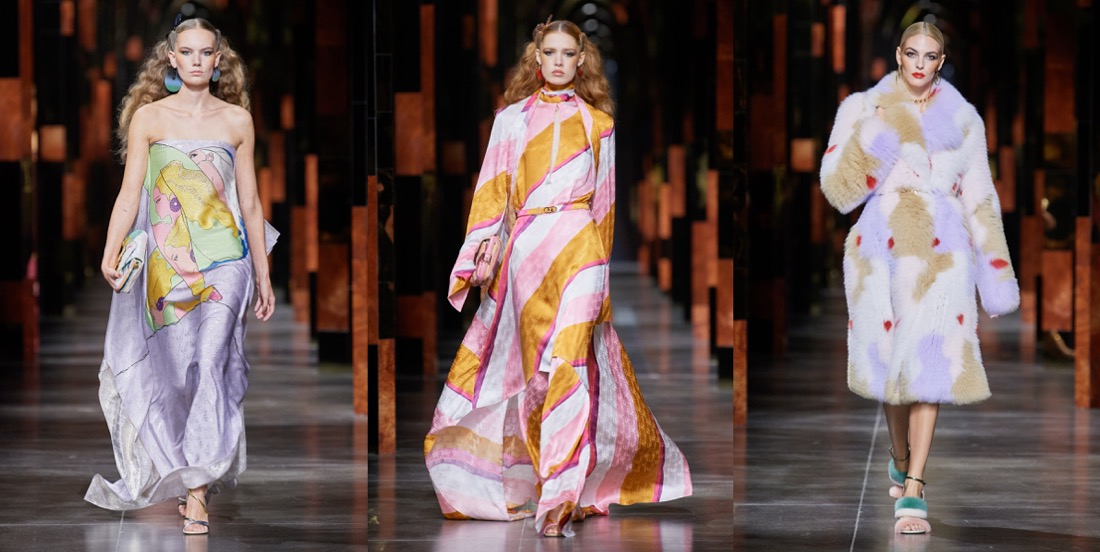
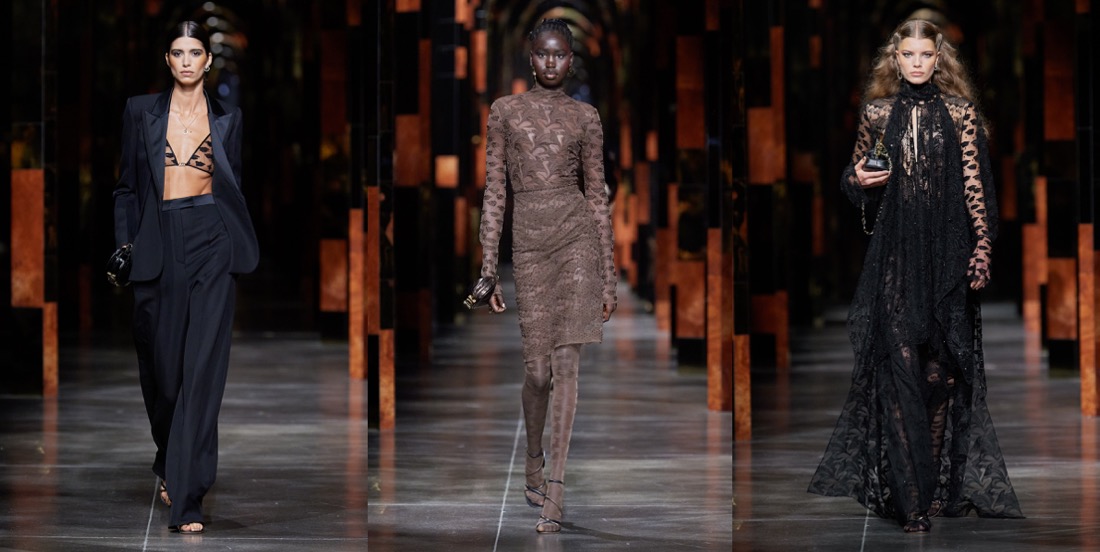
That Girl. Fendi SS22

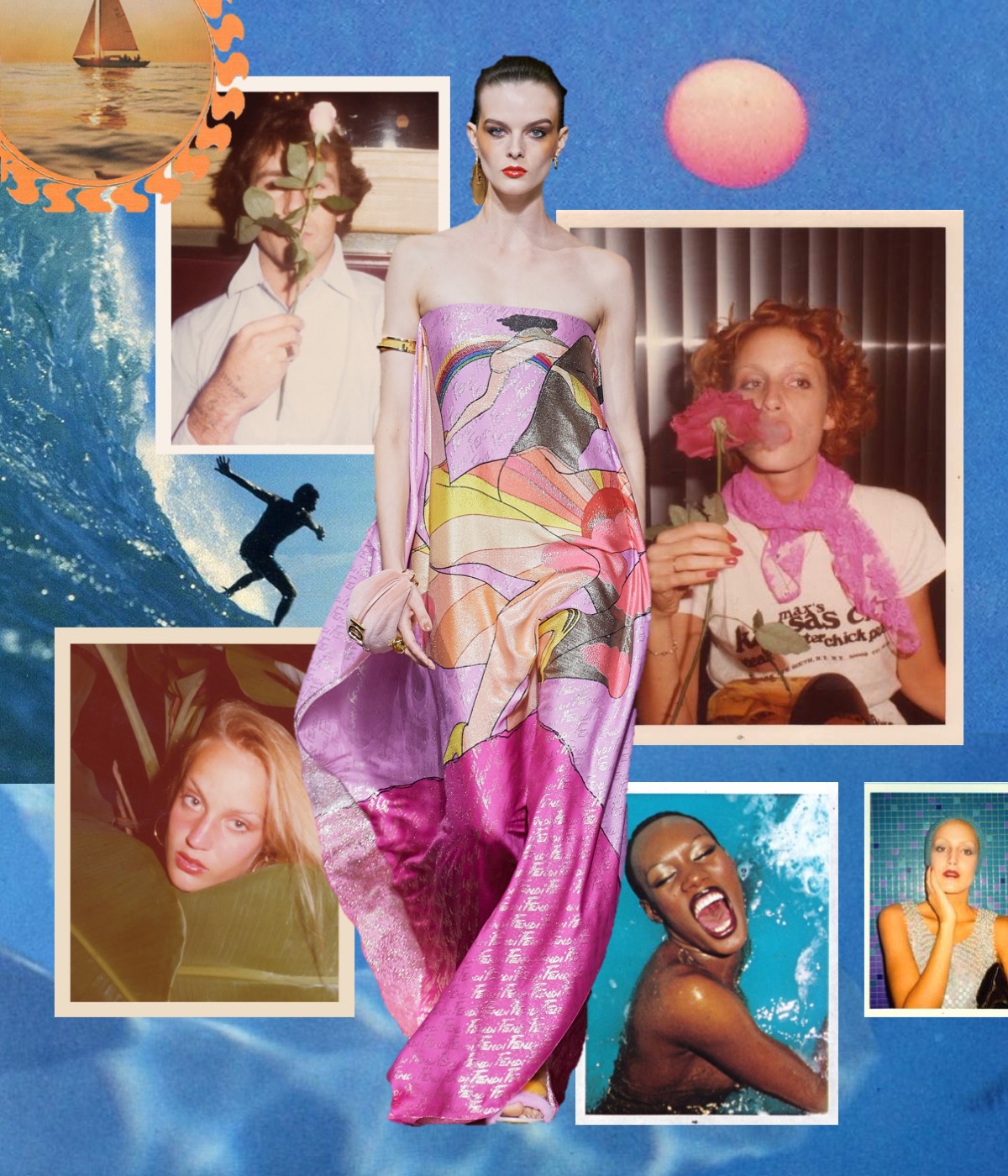
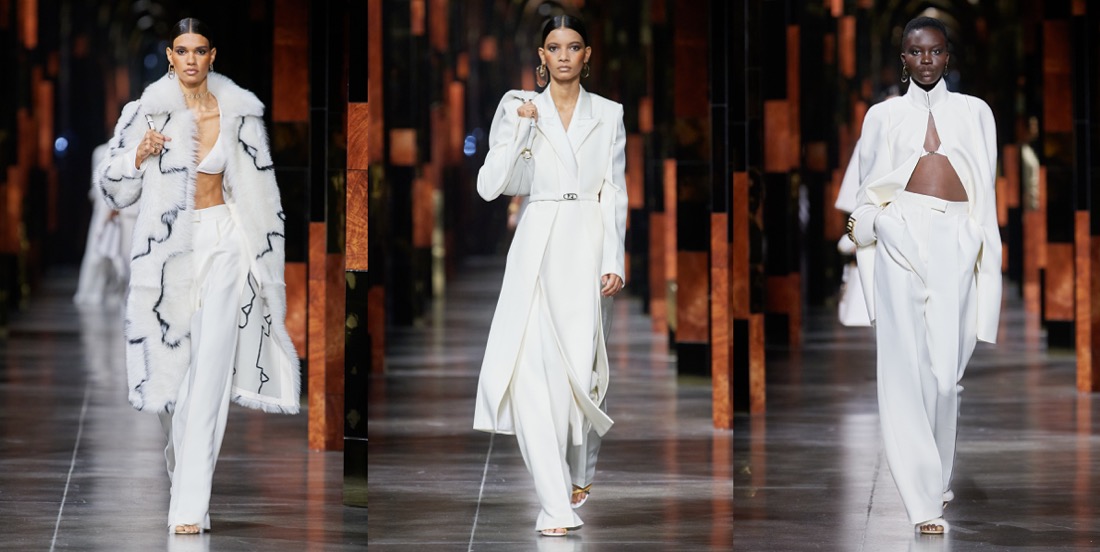
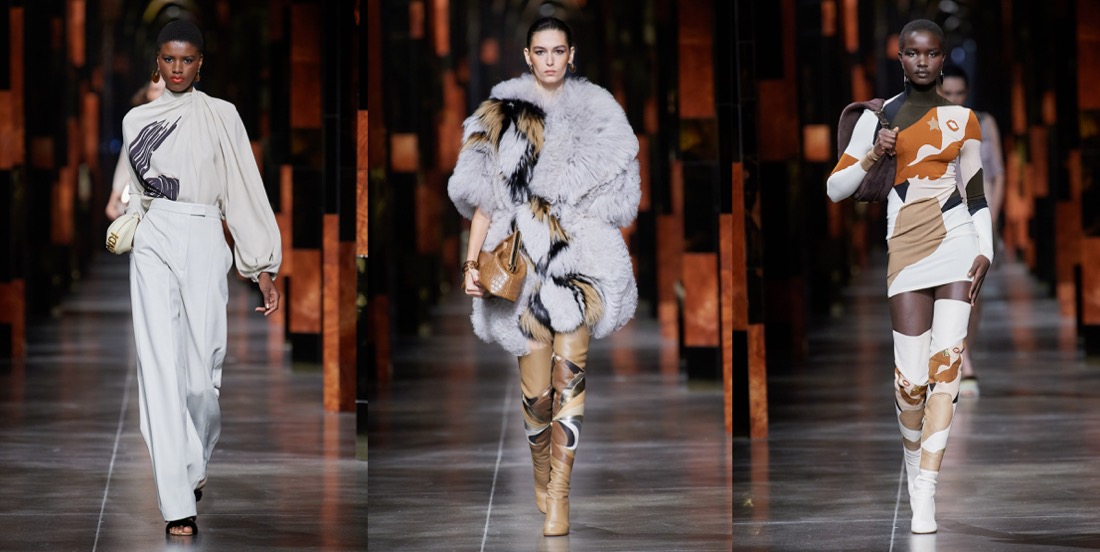
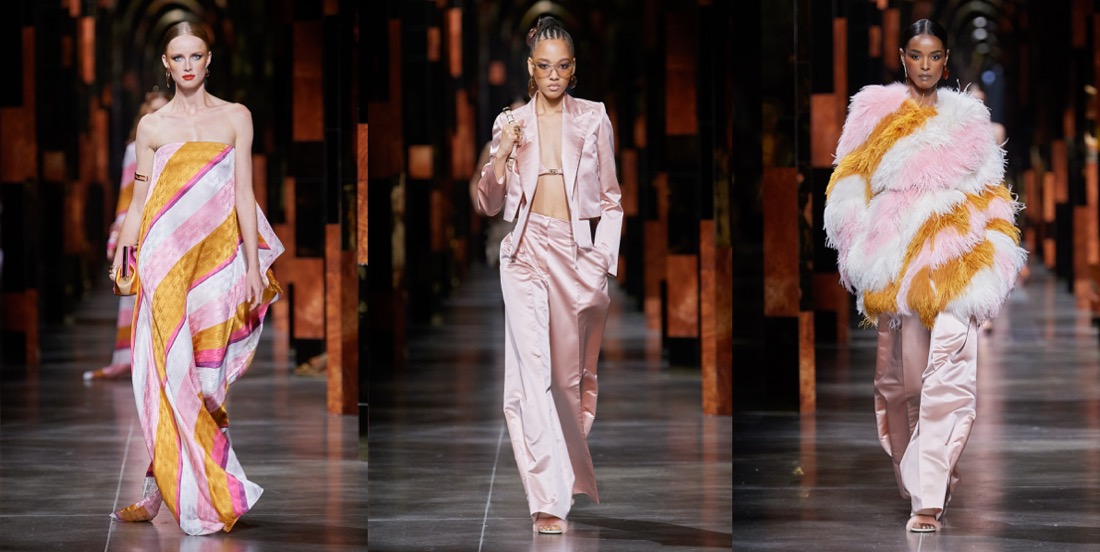
Kim Jones’s spring-summer 2022 collection for Fendi was a line-up of classically-flavored silhouettes and color progressions played against an irresistible decorative sample of archive Antonio López illustrations. The models glided out from backstage down a runway whose arches echoed the house’s Roman home, the Palazzo della Civiltà. The big reveal of this collection, the decoration, rotated around the vintage Fendi logo drafted by López during his period of collaboration with Karl Lagerfeld. Said Jones of López: “He was a big, big fashion influencer for a lot of people, but is not so talked about. He had this relationship with Karl and with Fendi, and he helped shape so many strong visions of women, because he loved them: that feels very authentic and topical.”The illustrations drawn from the López estate’s archive originated, Jones said, as the 1960s transitioned into the 1970s. Here his work was introduced via oversized brushstrokes, then zeroed-in upon via one particular drawing, a rouge-lipped profile of Jane Forth that was abstracted into the pattern that contoured four vivid intarsia and jacquard looks. Color became more impactfully calorific as further illustrations of wavy-haired and cherry-lipped rainbow-framed women were worked into kaftans, a fringed tapestry-woven Baguette, intarsia leather thigh-highs and silks. Plexiglass jewelry by DelfinaDelletrez was shaped in gold-edged transparent lily leaves, another López signature. Many looks remained illustration free, yet even without the figurative signposting, these outfits echoed the aesthetic of the period in which López was working. Just like Jones’ debut collection last March, this was… a proper-looking collection. Quite dangerously, Kim leads Fendi to that type of predictably classy, beige-y, luxury Italian brand category, which Lagerfeld avoided at all costs.

Collage by Edward Kanarecki.