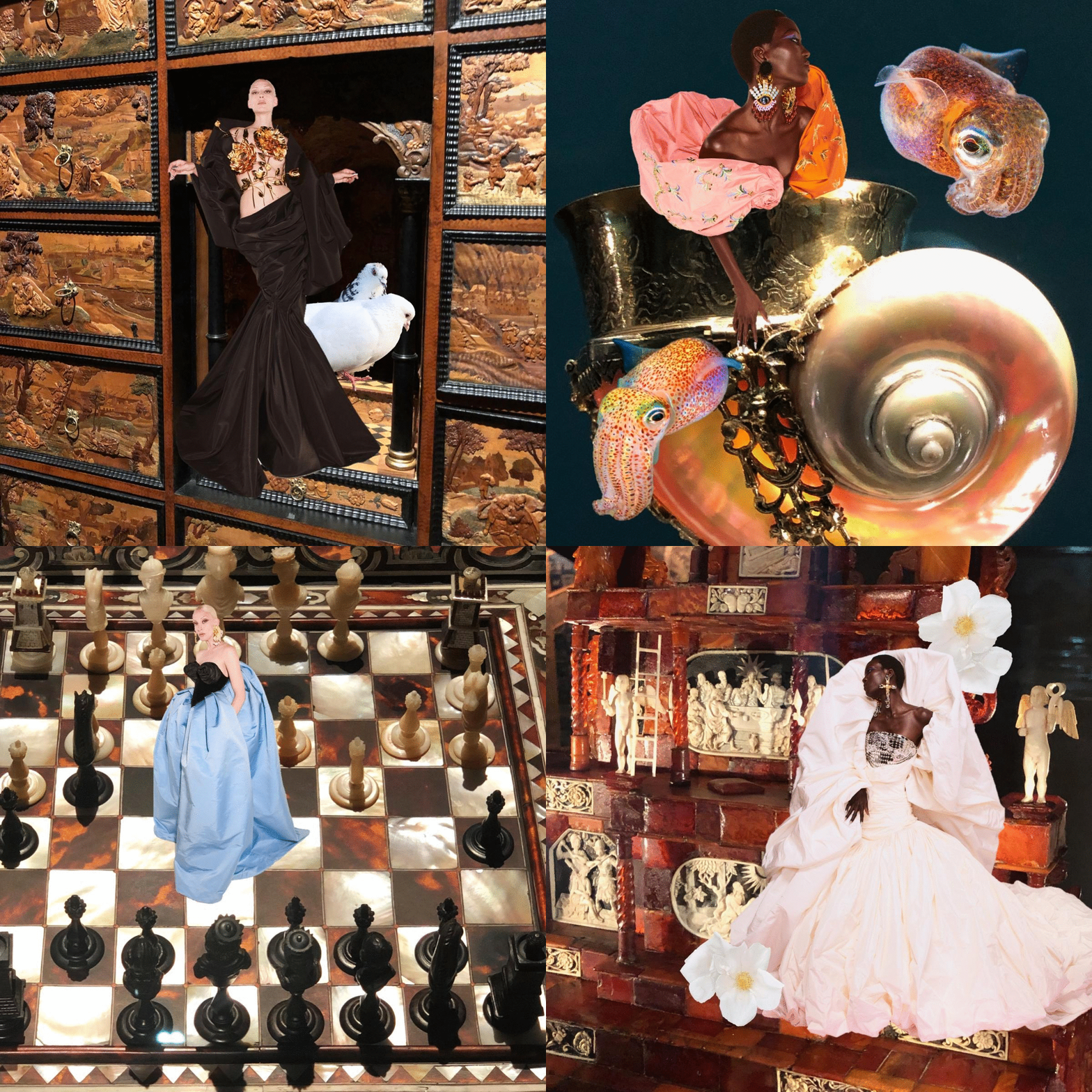
Outrageous and Fab. Schiaparelli AW21 Couture

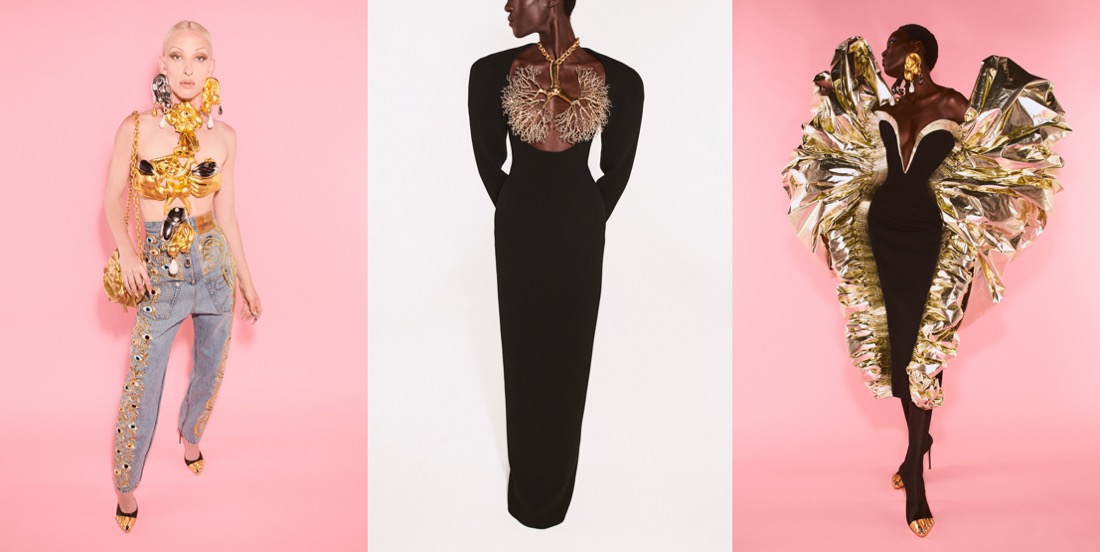
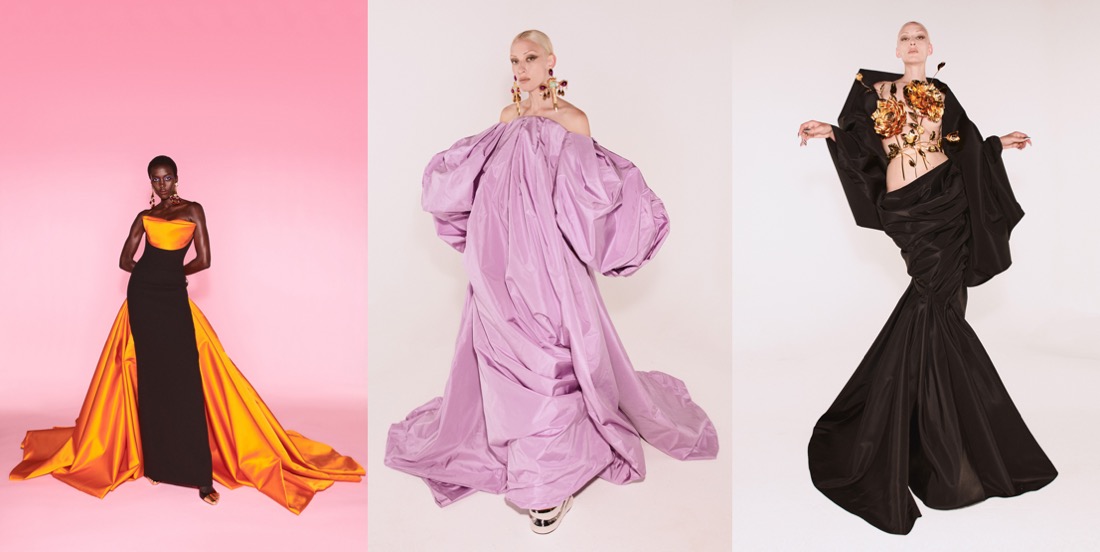
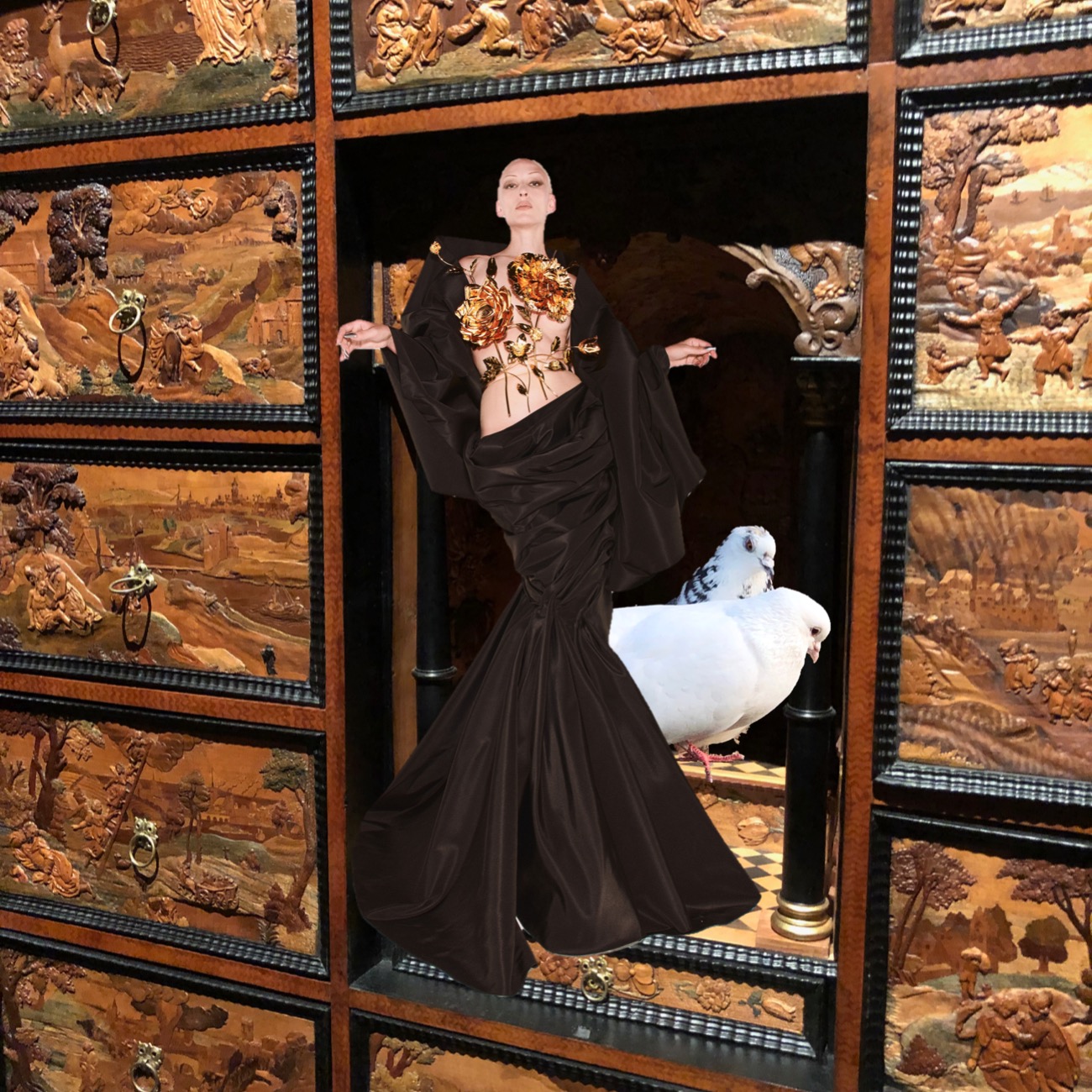
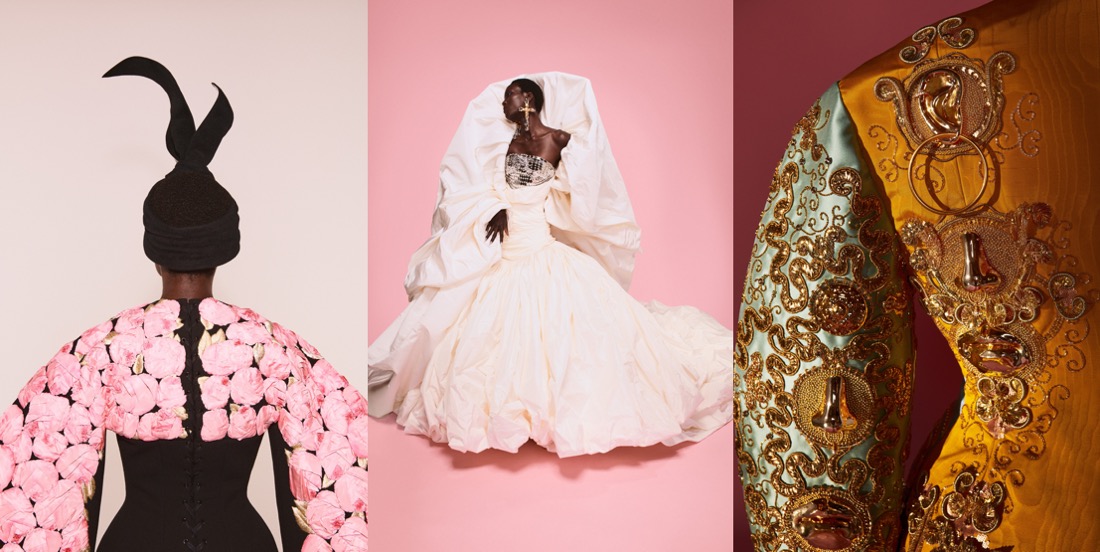
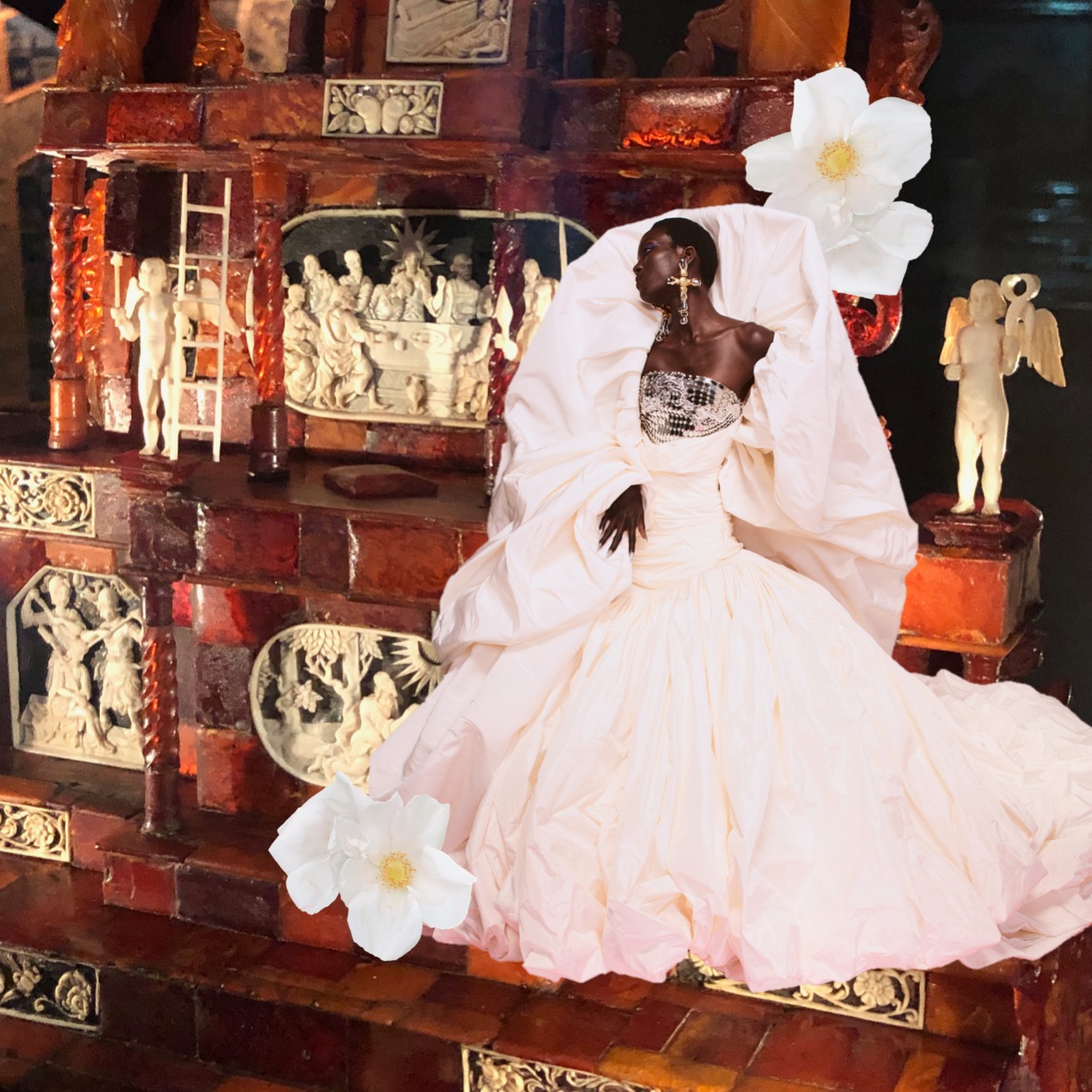
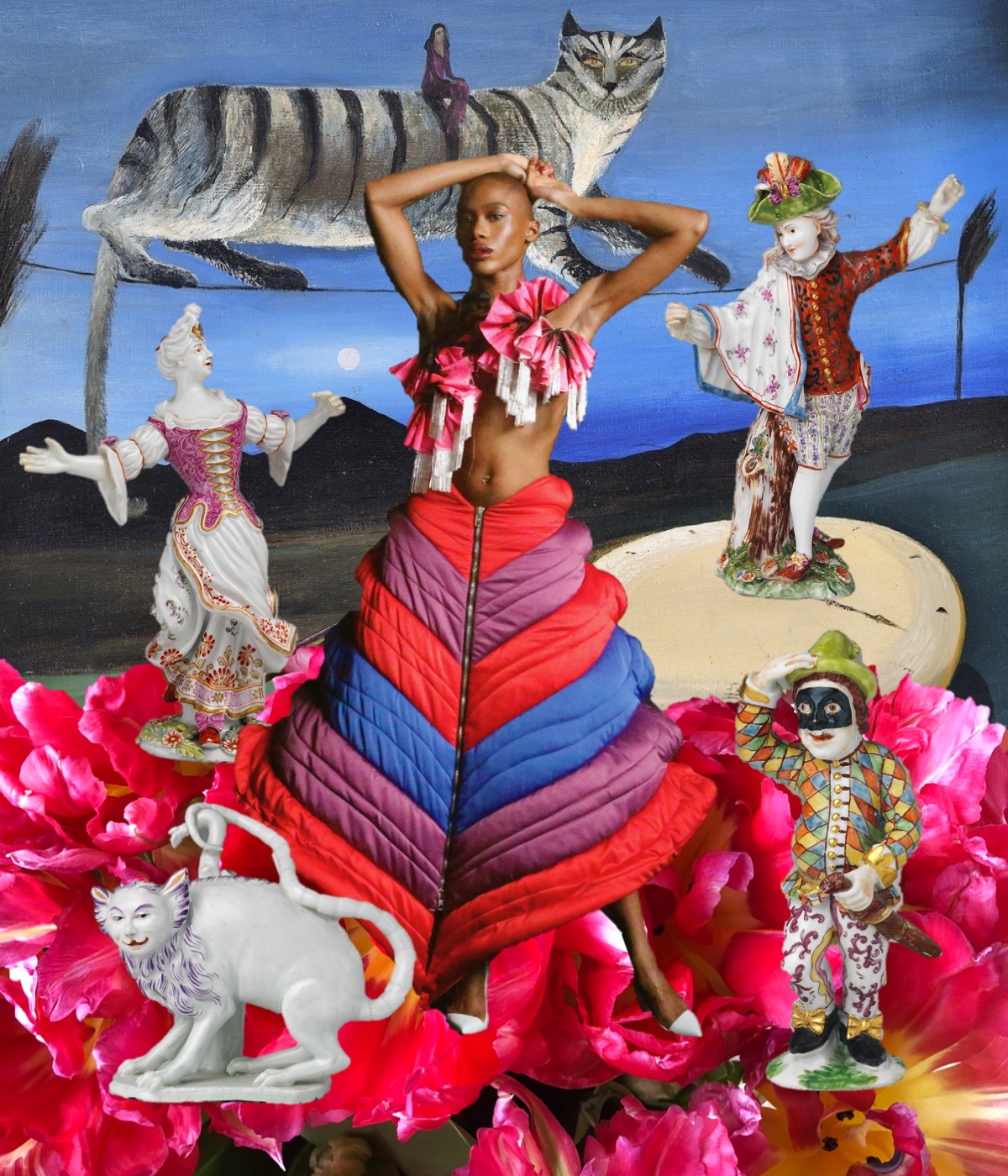
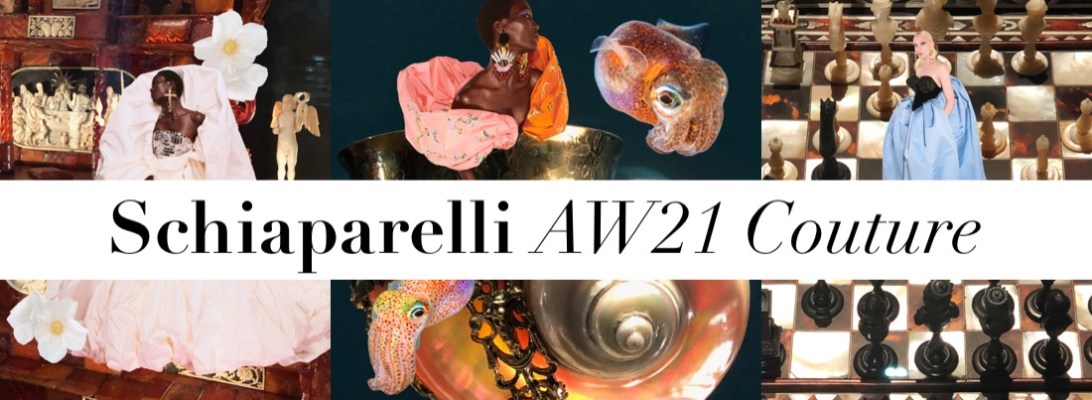
“In difficult times fashion is always outrageous“, Elsa Schiaparelli once said. Daniel Roseberry believes so as well – his latest, fabulously dramatic haute couture collection for Schiaparelli is the best proof for that. Visitors at the brand’s Place Vendôme salons are greeted by a lavish wedding gown. Typically, couture shows end with the bride, but Daniel Roseberry gave pride of place to the dress constructed from 70 meters of white cartridge pleated taffeta. “We’ve had so many requests from clients who come looking for this irreverent grandeur that we’ve been doing,” he said. Roseberry’s bride is not the shy, retiring type, but she is representative of what the designer described as the “new kind of prettiness” he was after this season. If this collection is as intense as his past outings, it’s a shade or two less irreverent. There are none of the molded leather six-pack abs corsets that were the defining looks of his last couture, for example. He came at prettiness in several different ways. Following on from that entrance-making bride is a salon devoted to embroidered jackets. These borrow as much from Lacroix and Jean Paul Gaultier as they do from Schiaparelli, with their curvaceous shapes, Versailles colors, and cone bra references. One black jacket blooms with pink silk roses, an ode to a collaboration between Schiap and Jean Cocteau circa 1937. Others are embellished with decades-old gold Schiaparelli threads that the embroiderer Lesage had saved in its stockpiles. All of them are trophies, perhaps especially the denim jacket that’s patch-worked from 11 pairs of used Levi’s sourced at a local vintage store – the very essence of haute friperie. Where this season’s jackets have a delicious propriety, a sculpted gold flower corset worn with a skirt barely clinging to the hips, and a scoop-front dress with a breastplate made of gold-dipped bronchi – the lungs being a locus of our attention in the pandemic – are more provocative. A silver bustier is accessorized by a fringed stole made from shredded black garbage bags, of all things. That’s couture heresy – and fabulously so. For the dessert, a cocktail dress punctuated by a shocking pink rose, a strapless black gown featuring a bust-line shaped like fiery orange lips with a matching train, and a voluminous infanta gown in a shade of lavender Roseberry said that he’s never used before. In his two years at Schiaparelli, he’s only doubled-down on the surreal glamour this historic house is known for. Turns out, he’s very good at pretty, too.

Collages by Edward Kanarecki.

Power Move. Area Couture SS21

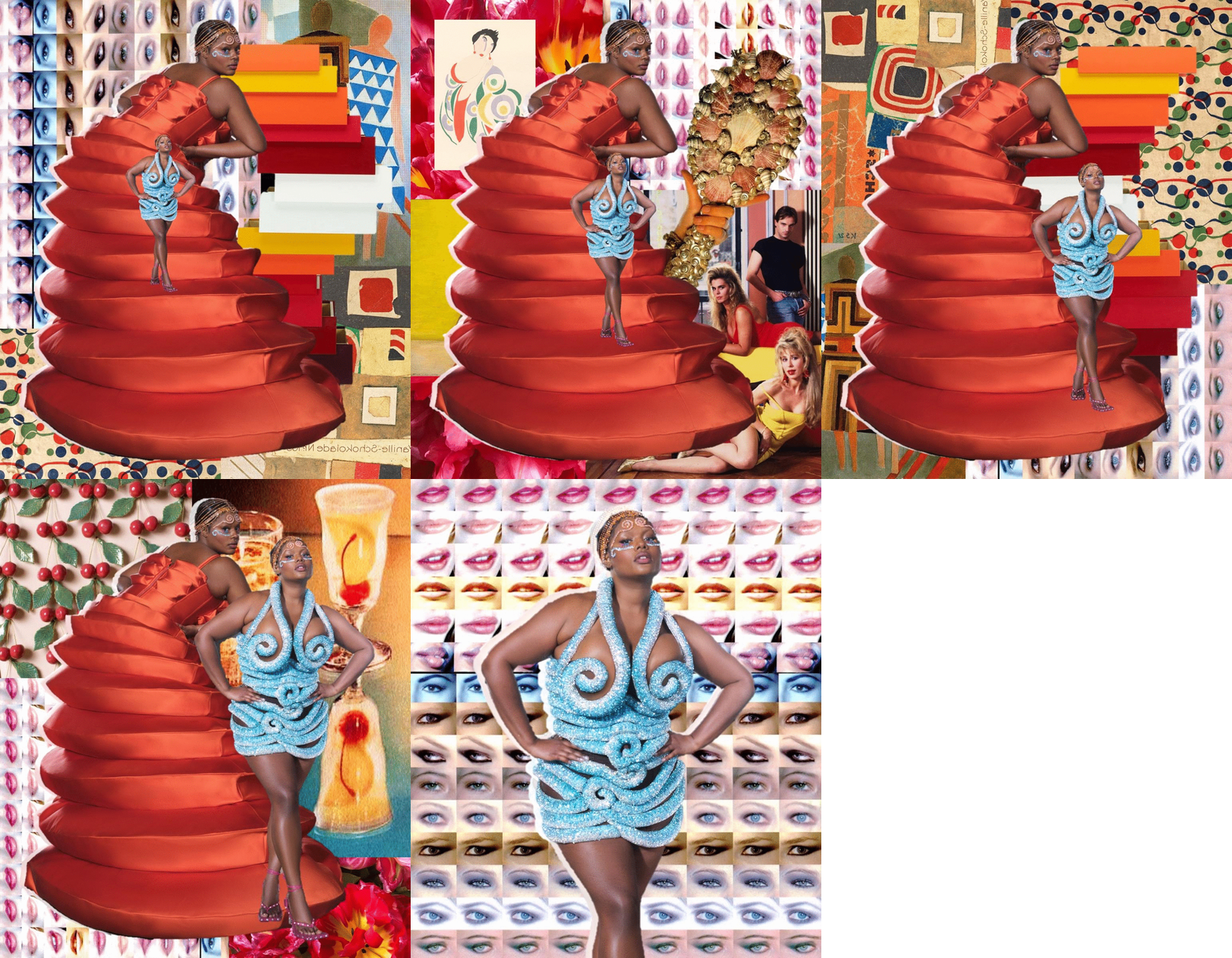
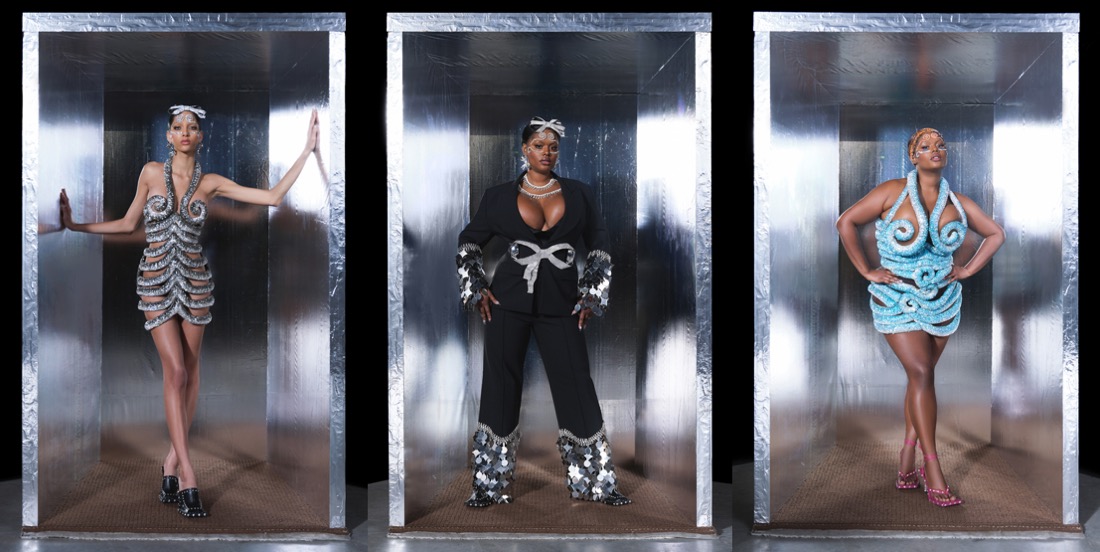
You really couldn’t wish for a better ending of an incredible (digital) haute couture week. Saying that this was Area‘s debut couture collection is quite a false statement, since each collection coming from New York-based Piotrek Panszczyk and Beckett Fogg is a couture-level fantasy. The designers ditched the spring-summer 2021 ready-to-wear schedule, making a bold power move not only for themselves, but for American fashion (same can be said of Schiaparelli’s Daniel Roseberry!). Area’s bold 14-look couture collection showcases their range of talent (think showgirl crystals and outlandish silhouettes combined with technically ambitious tailoring), and their lookbook, which stars Precious Lee and Yasmin Wijnaldum, is a sort of statement of intent. This is most certainly not old-world couture, with its strictly sample size casting. “Difference for us is a positive thing,” Fogg told Vogue. Lee opens the lookbook in a black smoking, featuring extravagant metalwork trimming the cuffs. The designers, who are catholic in their references, said they were looking at the coin embroideries of Berber peoples for the jacket’s embellishments, as well as for a pair of delicate and quite dreamy dresses made from thousands of individually hand-finished circles of organza. The rib cage pieces, embroidered with Swarovski crystals in India and assembled in New York, look destined for the Grammys or concert stages, once IRL events ramp back up again. Cake dresses whose tiers are fashioned from duchesse satin fully panniered in tulle do take their cues, Panszczyk said, from the couture of Emanuel Ungaro, Yves Saint Laurent and Cristobal Balenciaga, but the Area designers constructed them so they are open on one side. Wijnaldum flashes skin from her shoulders to the crystal-encrusted tops of the black leather platform clogs that Area will be selling with their third ready-to-wear drop later this year. This couture season has shown us that some of the designers are ready to challenge the system and are capable of reflecting the times we are living in. But seeing the new generation taking couture to new dimensions and redefining it is what I’m looking forward to the most!

“Live” collage by Edward Kanarecki.
Be Bold, Be Extra. Charles De Vilmorin Couture SS21

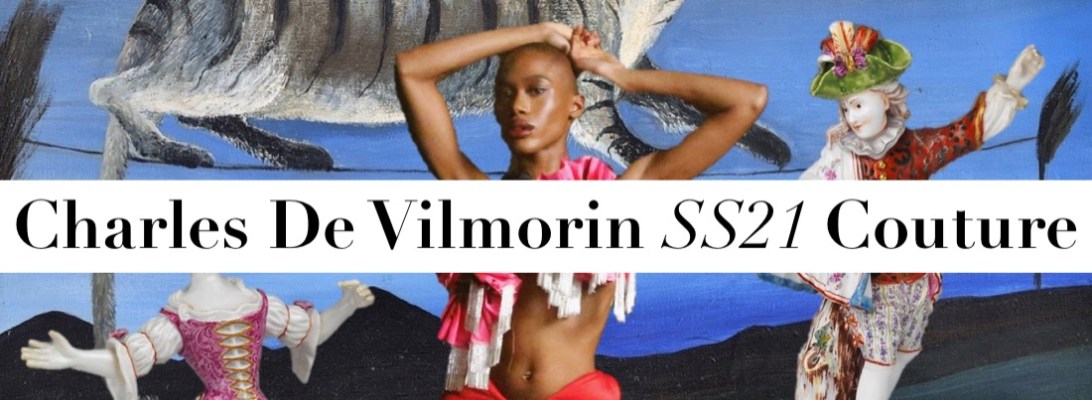
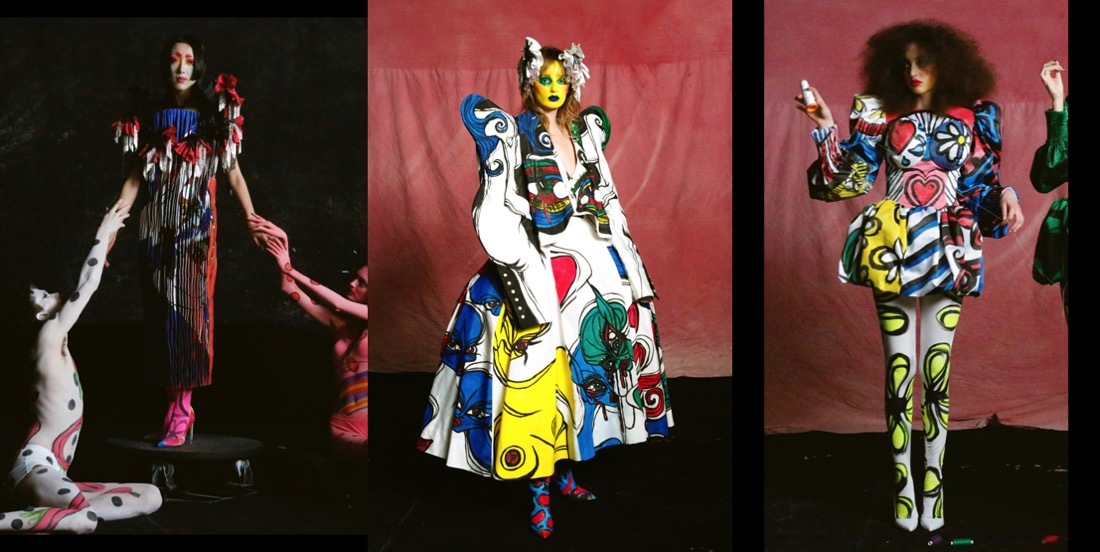
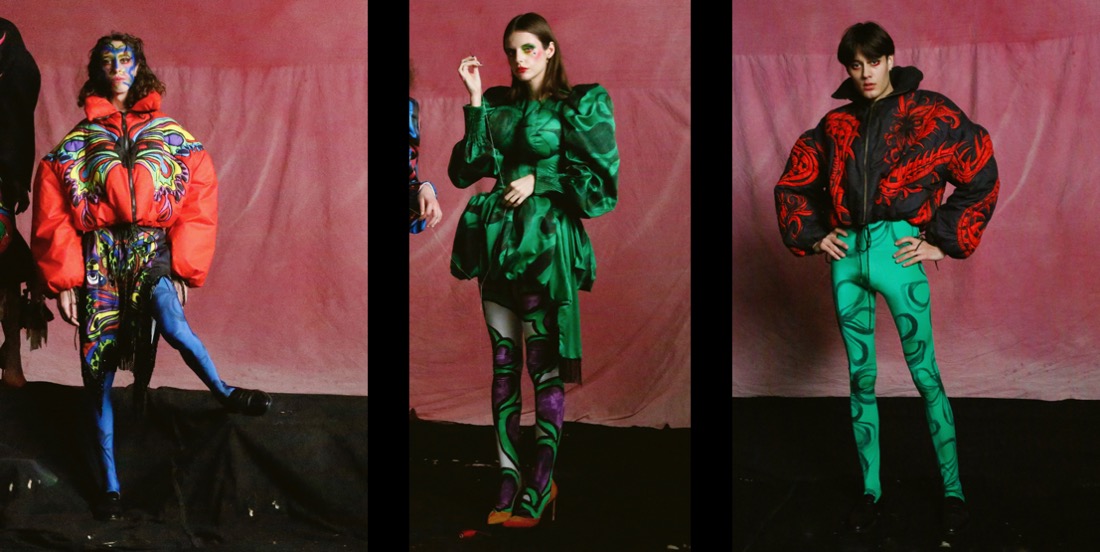
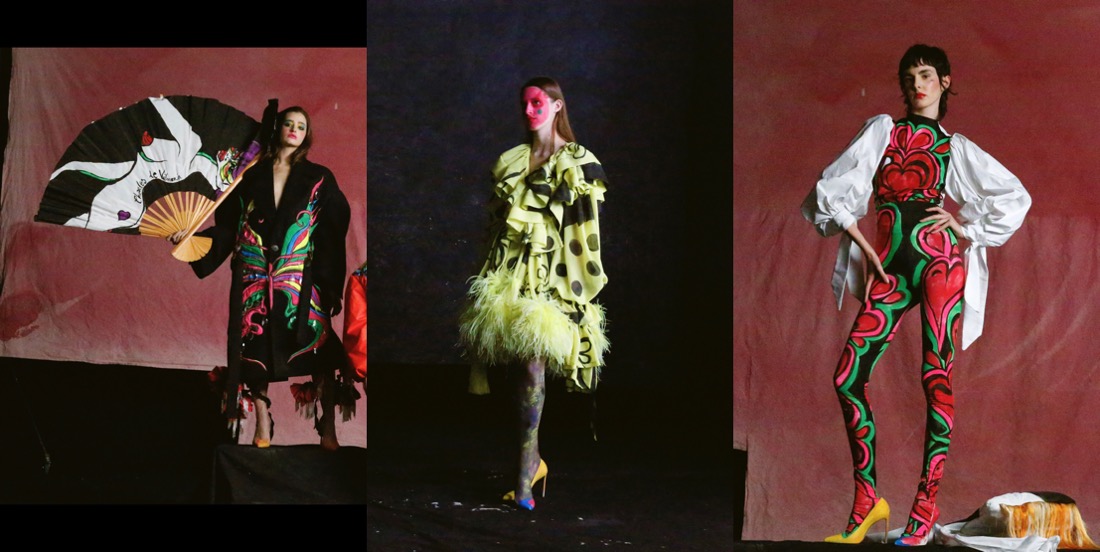
Couture is changing, and the best sign of that is the appearance of new, young talents. When Charles de Vilmorin launched his first collection after graduating from design school last year, no less a French fashion legend than Jean-Charles de Castelbajac was singing his praises: “Charles designs his dreams, paints his creations on the skin as on paper – and these silhouettes transform his muses into psychedelic conquerors…. His future is passionate.” Then, in December, Jean Paul Gaultier sponsored the young designer’s guest appearance on the Paris haute couture calendar. His spring-summer 2021 debut was virtual, but there’s no arguing that De Vilmorin is enjoying a charmed rise. The exuberantly patchworked puffer jackets of his first collection evoked Niki de Saint Phalle’s iconic Nanas. He must feel a connection with the artist. In the video he made this season with Studio L’Etiquette, De Vilmorin operates a paint gun, an obvious reference to the shooting paintings of the early 1960s with which De Saint Phalle made her name. The late artist attached buckets of paint to her canvases, then invited people to shoot at them; the paint would splatter all over her work when the bullets hit. De Vilmorin’s technique is more controlled, but his Instagram account reveals that he did paint his textiles by hand before they were assembled into the 11 looks in this collection. Flowers, butterflies, and psychedelic nudes are his chosen motifs, and the silhouettes, which are worn by all genders in the video, are playful. He likes a puffed sleeve and a full skirt and sprays of feathers at the hem of a dress. The short film stars De Vilmorin’s friends, and he says he keeps them in his mind when he’s designing. “You don’t need a special occasion to wear something extra,” he insisted. Hope to see more of his bold fashion in the near future!

Collage by Edward Kanarecki.

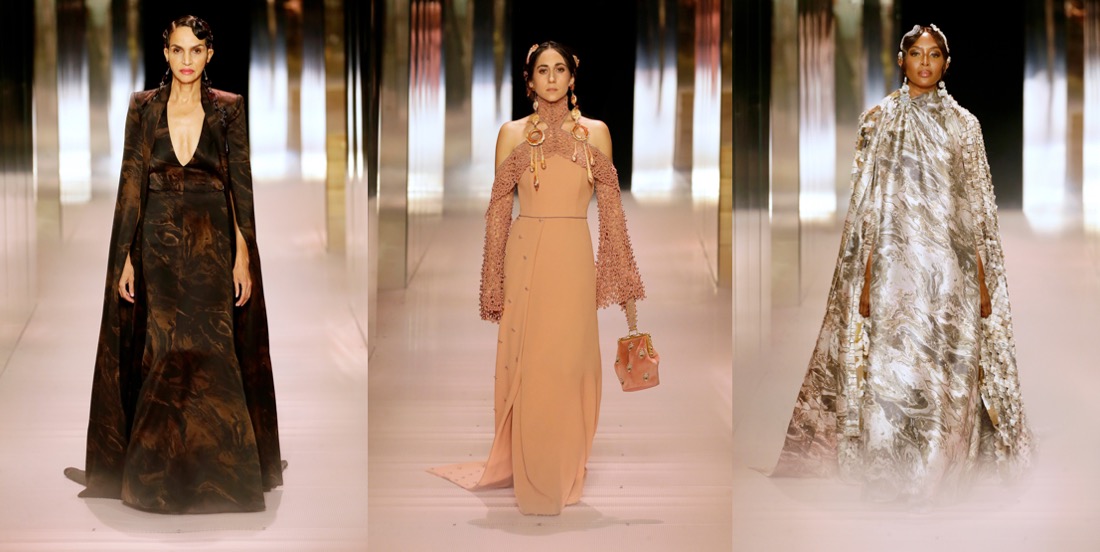
Romantic Melancholy. Fendi Couture SS21

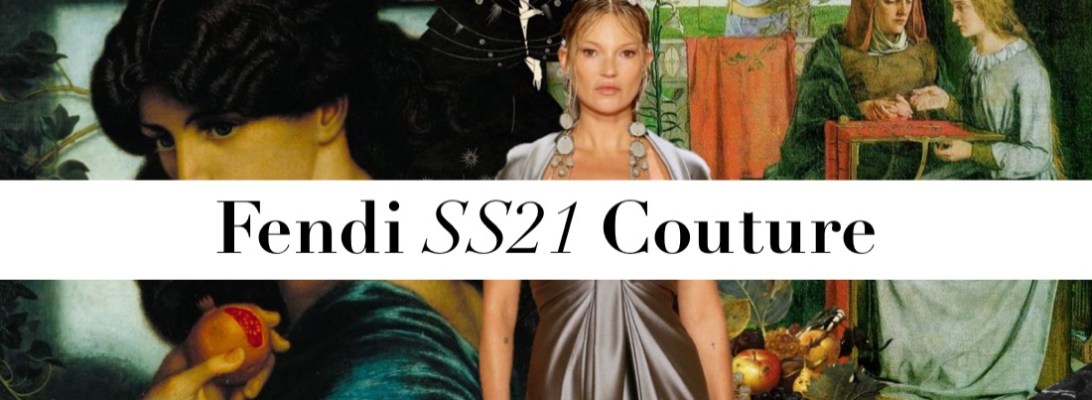
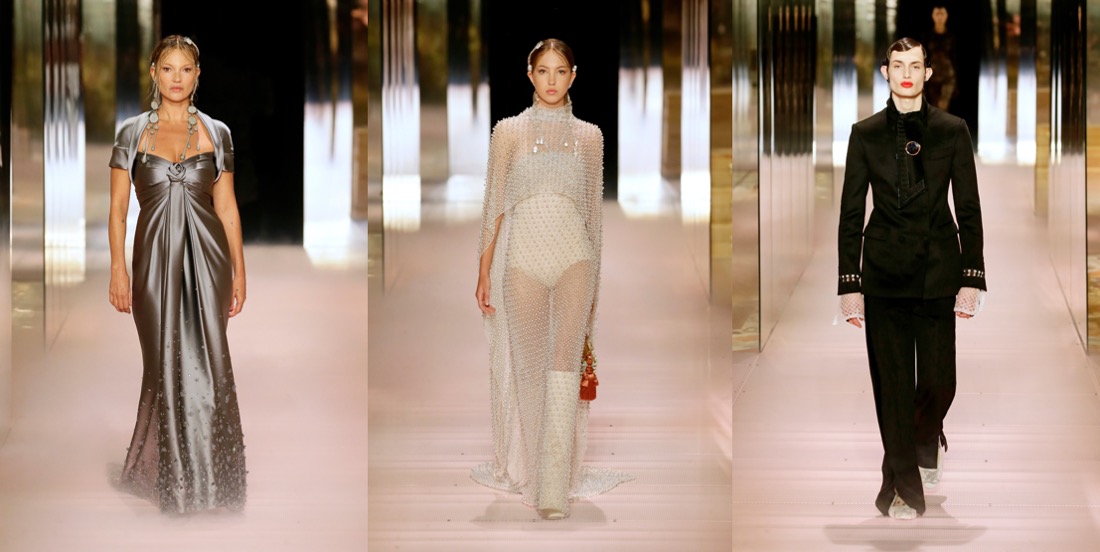
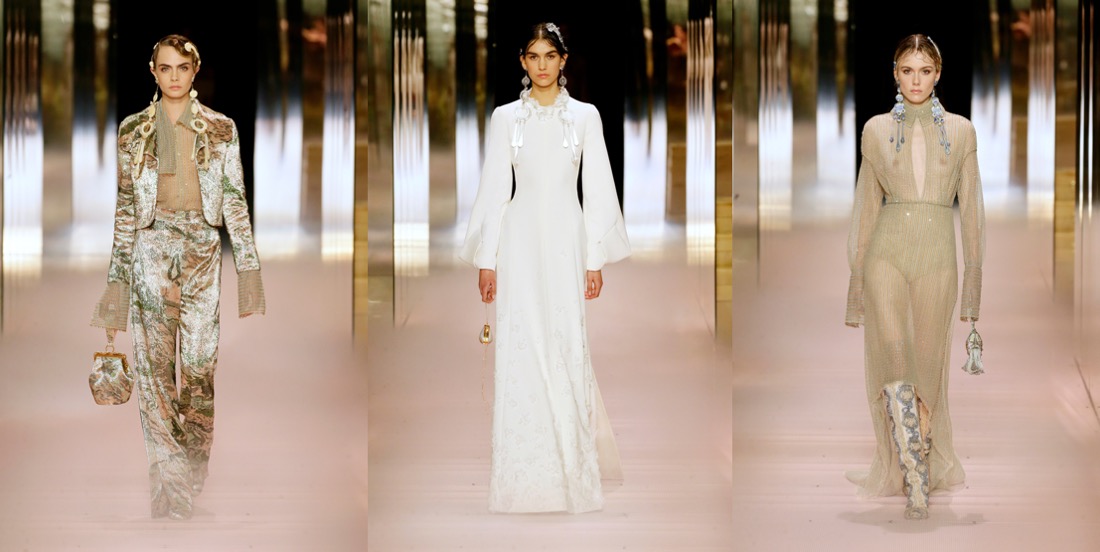
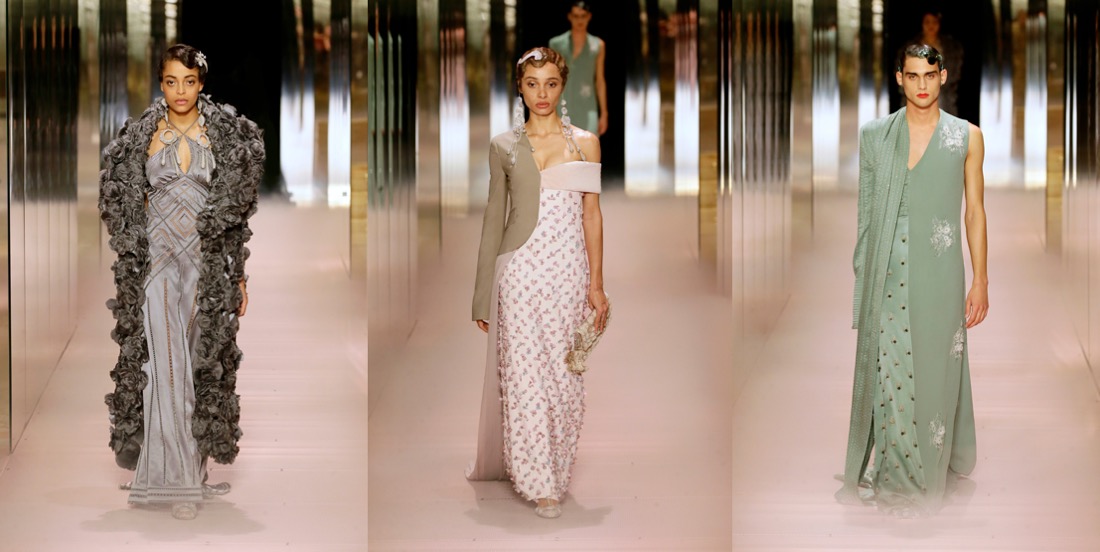
Kim Jones‘ big debut at Fendi‘s womenswear hit off with a haute couture show. You might know that I wasn’t his fan at men’s Louis Vuitton, and I’m not overly obsessed with his current Dior menswear venture. So I didn’t expect much from his arrival at Fendi. The spring-summer 2021 couture show is an example of a fashion spectacle, where everything wows the viewer except the actual clothes. First, the literary and artistic sources that shaped Kim’s Fendi line-up started in Charleston Farmhouse, the 16th-century Sussex retreat of the Bloomsbury set located not far from the village of Rodmell, where the designer was partly raised and owns a house. Young Jones would spend school trips exploring the house and learning about Bloomsbury’s bohemian members. Those dreamy stories stayed with him. Second, his Fendi collection showed a demonstration of how Jones expresses himself in form and decoration in womenswear.  Of carving out that silhouette, Jones said he observed “the reality of what women around me are wearing. I have friends that just buy couture clothes, and they don’t buy big ball gowns. They buy real clothes, things that fit their bodies.” Above all, he wants to create work “reactive to the time we’re living in.” And three, enter ‘Orlando’, Virginia Woolf’s time-traveling tale of androgyny and fashion’s favorite lexicon for the study of genderlessness. “’Orlando’ was published in 1928, and Fendi was founded in 1925,” he pointed out. The “journey from Bloomsbury to Borghese” interpreted Vanessa Bell and Duncan Grant’s frescoes of Charleston in hand-beaded prints and the marbles of the Galleria Borghese in painted tailoring, meanwhile dresses evoked the wet drapery of its Bernini sculptures. It all sounds delightful and thorougly considered, but the effect was overcharged, heavy and most of the time, simply unflattering. In the prerecorded show, Jones echoed ‘Orlando’’s themes in a coed cast featuring many of his high-profile friendships: Demi Moore, Kate and Lila Moss, Christy and James Turlington, Adwoa and Kesewa Aboah. The family constellations celebrated Fendi’s values as a matriarchal fashion dynasty, whose class-act custodian, Silvia Venturini Fendi, still serves as artistic director of accessories and menswear. Joining the cast were her daughters, Leonetta Fendi and jewelry designer Delfina Delettrez, whom Jones has now named as creative director of the brand’s jewelry. Delettrez’s supersized murano glass chandelier earrings accompanied each look, and must have been heavily inspired by Romeo Gigli (if this name doesn’t ring a bell, you better Google him!). Tailoring felt more rigidly structured for male anatomy, framed by floor-sweeping capes. At times, forms grew shapeless, like a pink look of highly textured layers topped off with a lace coat webbed from roses or a mound of marbled garments draped over Naomi Campbell (I love Naomi. But this look didn’t serve her at all – she drowned in it!). Jones’s juxtapositions culminated in split-personality dresses hybridized from half an evening gown and half a blazer or shirt. The inspiration was found in the sketches of his predecessor, Karl Lagerfeld, who left 54 years’ worth of archives behind him when he died two years ago. Lagerfeld’s Fendi was epitomized by Roman modernism, a handsome glamour that often found time for quirk. Jones’s approach was romantic (and suffocating) melancholy in contrast. Of course, most ‘major’ debuts go wrong. It’s the beginning of a new chapter at Fendi, and I’m looking forward to see what Jones will bring next to the table.

Collage by Edward Kanarecki.
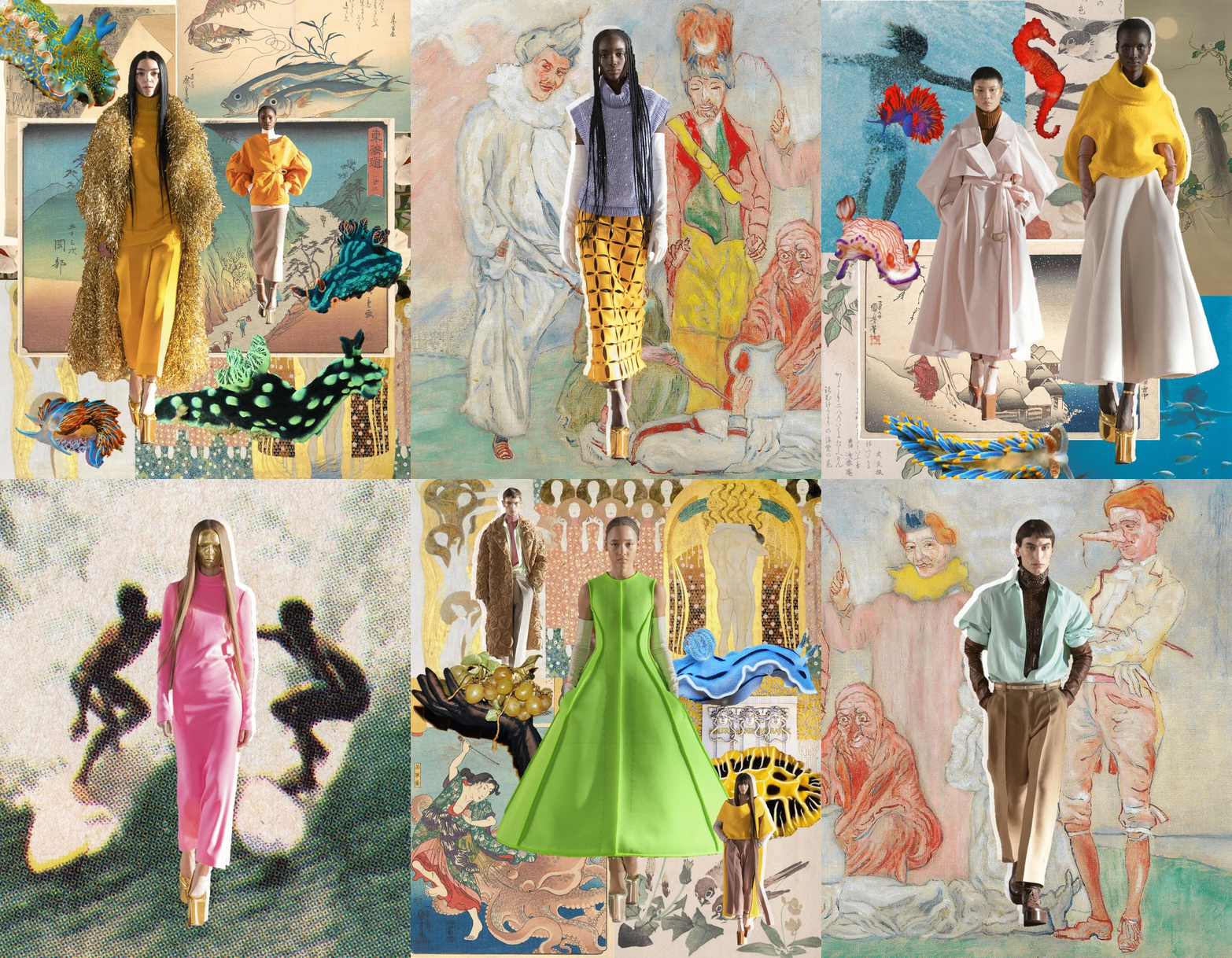
Statuesque Beauty. Valentino Couture SS21

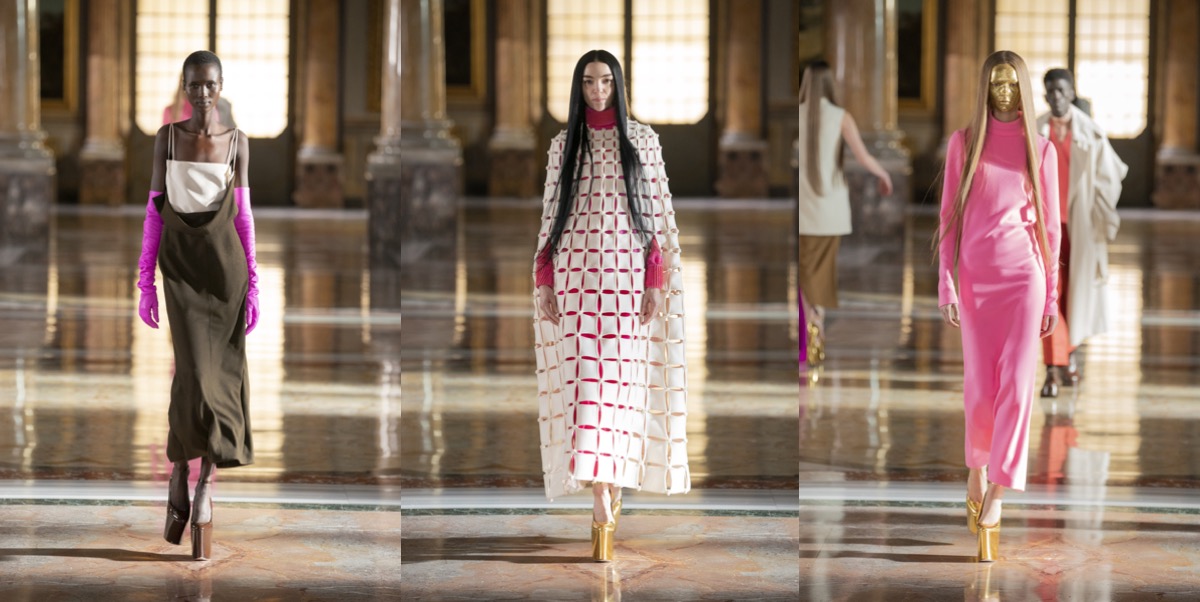
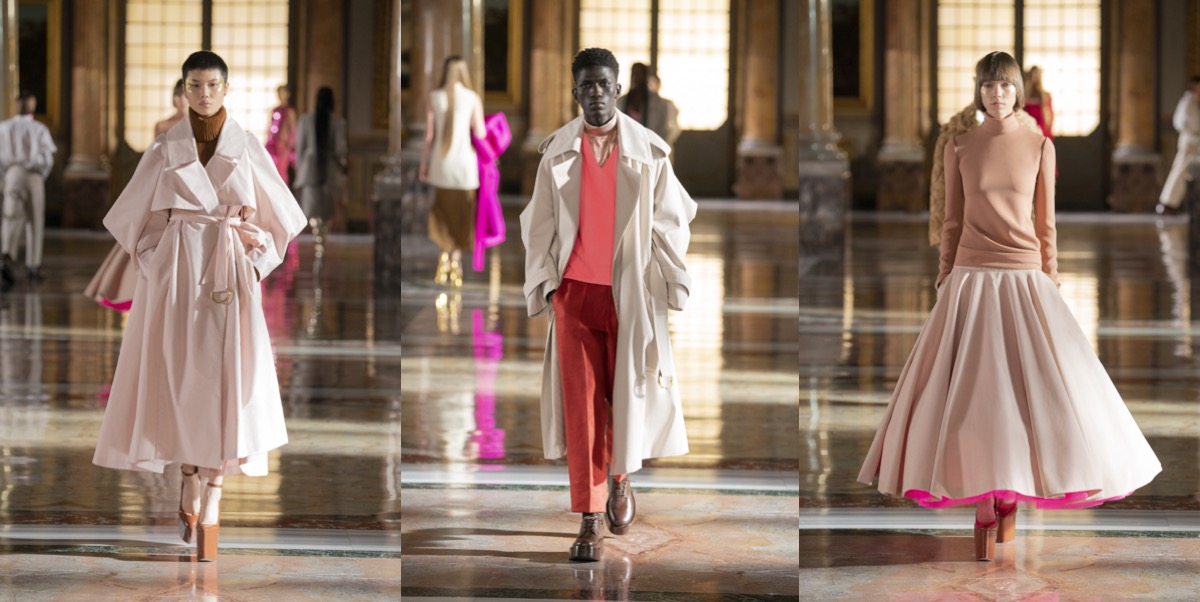
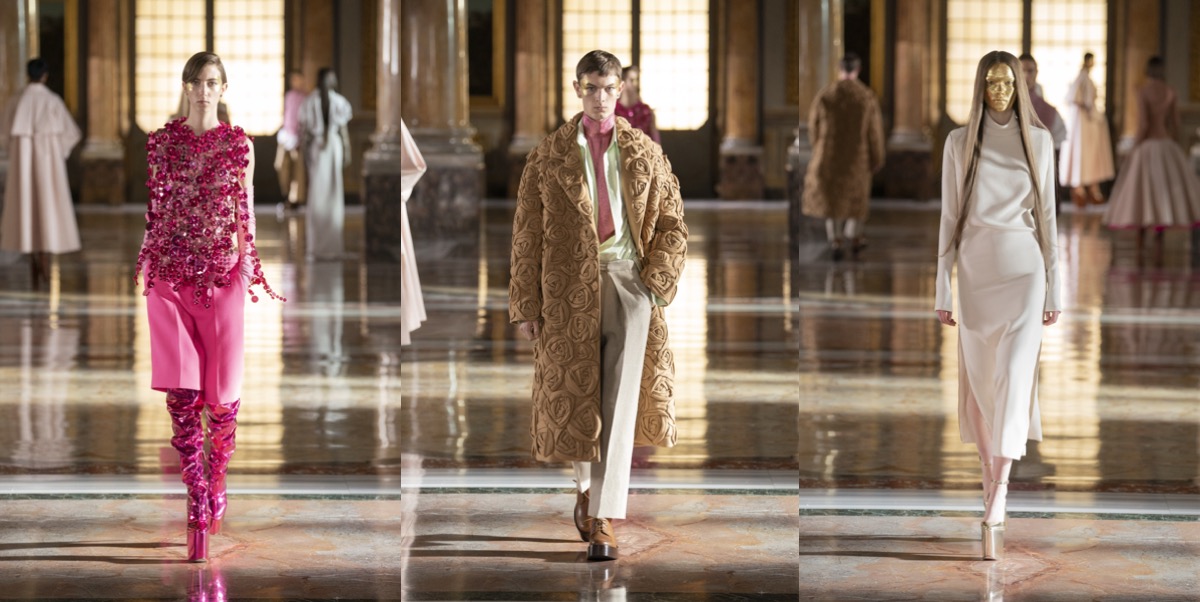
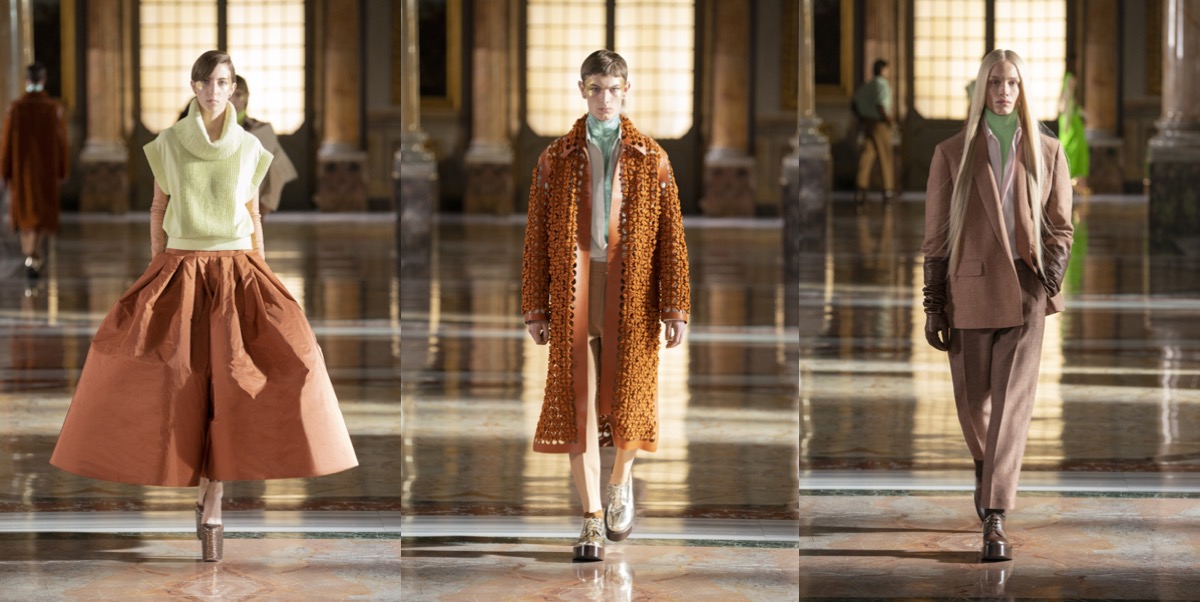
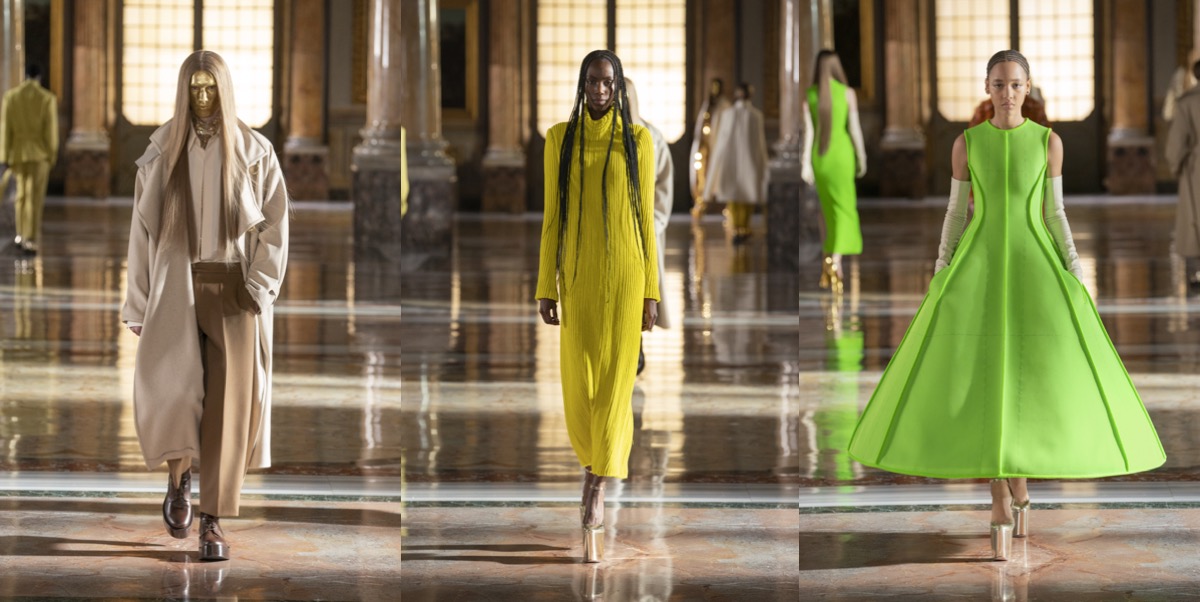
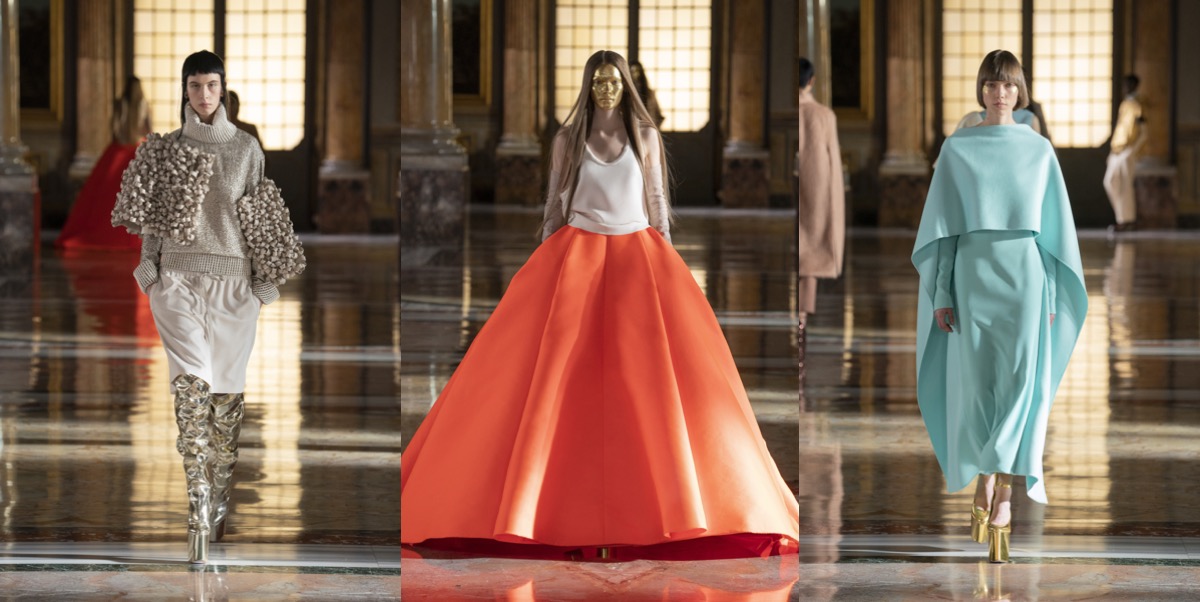
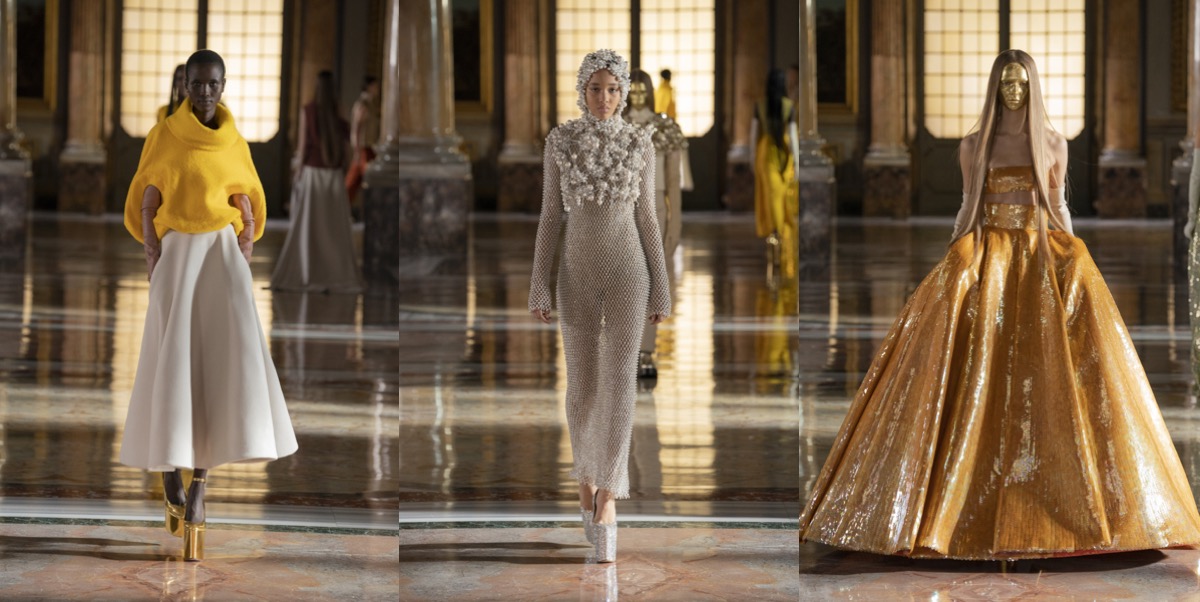
Pierpaolo Piccioli is (again) the king of haute couture. With his Valentino spring-summer 2021 collection, he proves that the most elaborate and intricately detailed ball gown of his is equally couture as a seamless, sculpture-like cape (“I don’t want to call it that. It’s not a caftan, or a poncho. It’s a shape!”) with not even one sequin or embellishment. This season, the designer floated towards haute minimalism, which was all about lean sharpness and elevated boldness. It was just so, so, so beautiful and inspiring to see. “It’s more about pieces that will give an effortlessness,” Piccioli said. “The narrative of the collection is the collection itself. No stories. Nothing figurative. I wanted to work on surfaces, not in a decorative sense, but workmanship which becomes the surface itself.” Along came garments that (also crassly) might ordinarily be classified as hoodies, sweaters, shirts, board shorts, and camisoles, acting as foils for amazing lattice-worked coats and sculptural capes. “I think elegance is not about ‘good taste’” said Piccioli. “It’s a bit daring.” And along came men, which was a big treat. At Valentino, “it’s for the very first time,” Piccioli shrugged. “But couture is for people. I don’t care about gendered (fashion). It’s an inspiration which is fluid, no-boundaries: a trench coat is for men and women.” And what a trench coat: structured so that the volume of the sleeves somehow continued seamlessly into a generous, chic storm-flap in the back of the coat. Only haute couture experts can pull off that sort of thing. It used to be that every haute couture look was conceived as a sacred kind of unit. Gone are those days. Now Piccioli is more motivated to make a white poplin shirt, which he showed with a long oyster-colored skirt that appeared narrow in the front, yet flared to a train in back in one of the show’s most arresting moments. “It’s a shirt, a fantastic shirt. Of course you can wear it like this, or any other way. And the skirt is timeless.” Piccioli is right: we’re thankfully long past the time when audiences might work themselves into a pearl-clutching froth at the sight of male models wandering an haute couture runway. Far more to the point is keeping the practice of haute couture relevant to the moment we’re living in. As many of haute couture’s old-world conventions drop away, what remains to be valued is the coalition of high craft and social insight. Piccioli spent a long time reflecting on that in the last months. “To me, the essence of couture,” he said, “is the ritual, the process, the care, the humanity. That’s what makes couture timeless, special.” Summing up: meraviglioso!

“Live” collage by Edward Kanarecki.