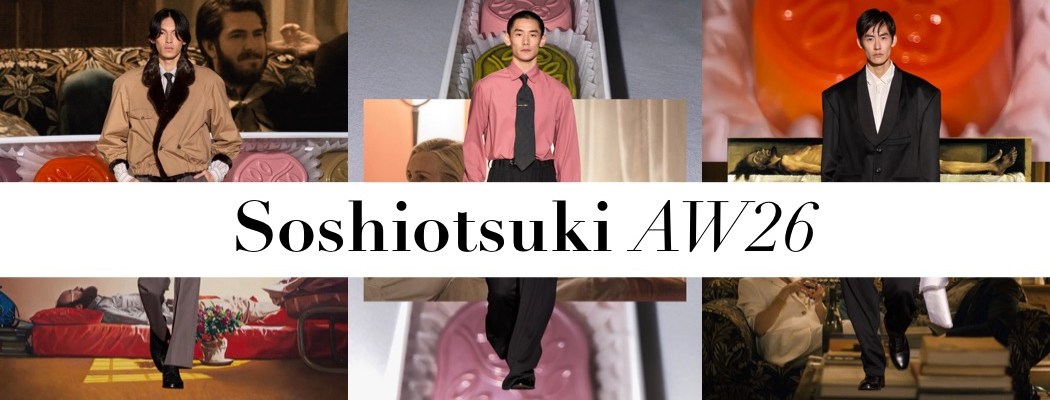
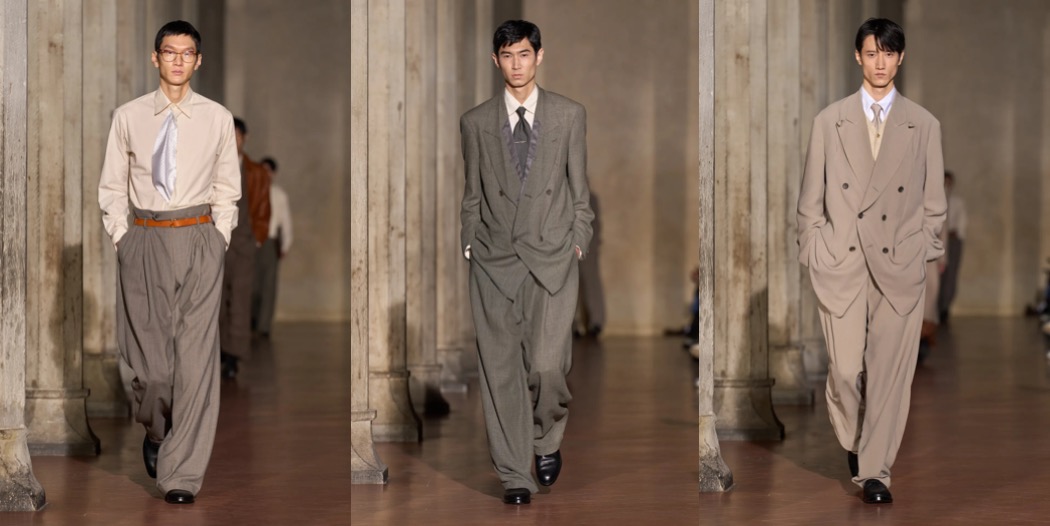
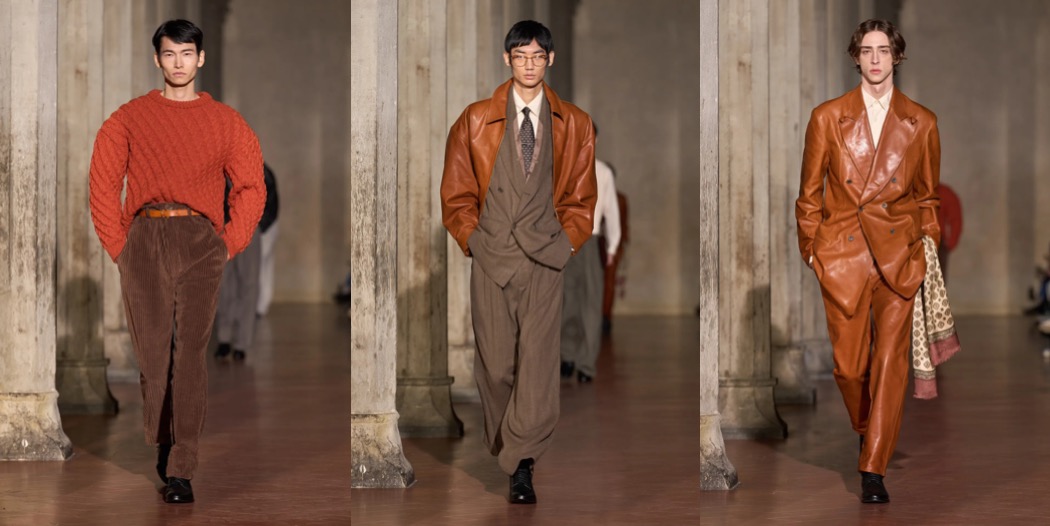
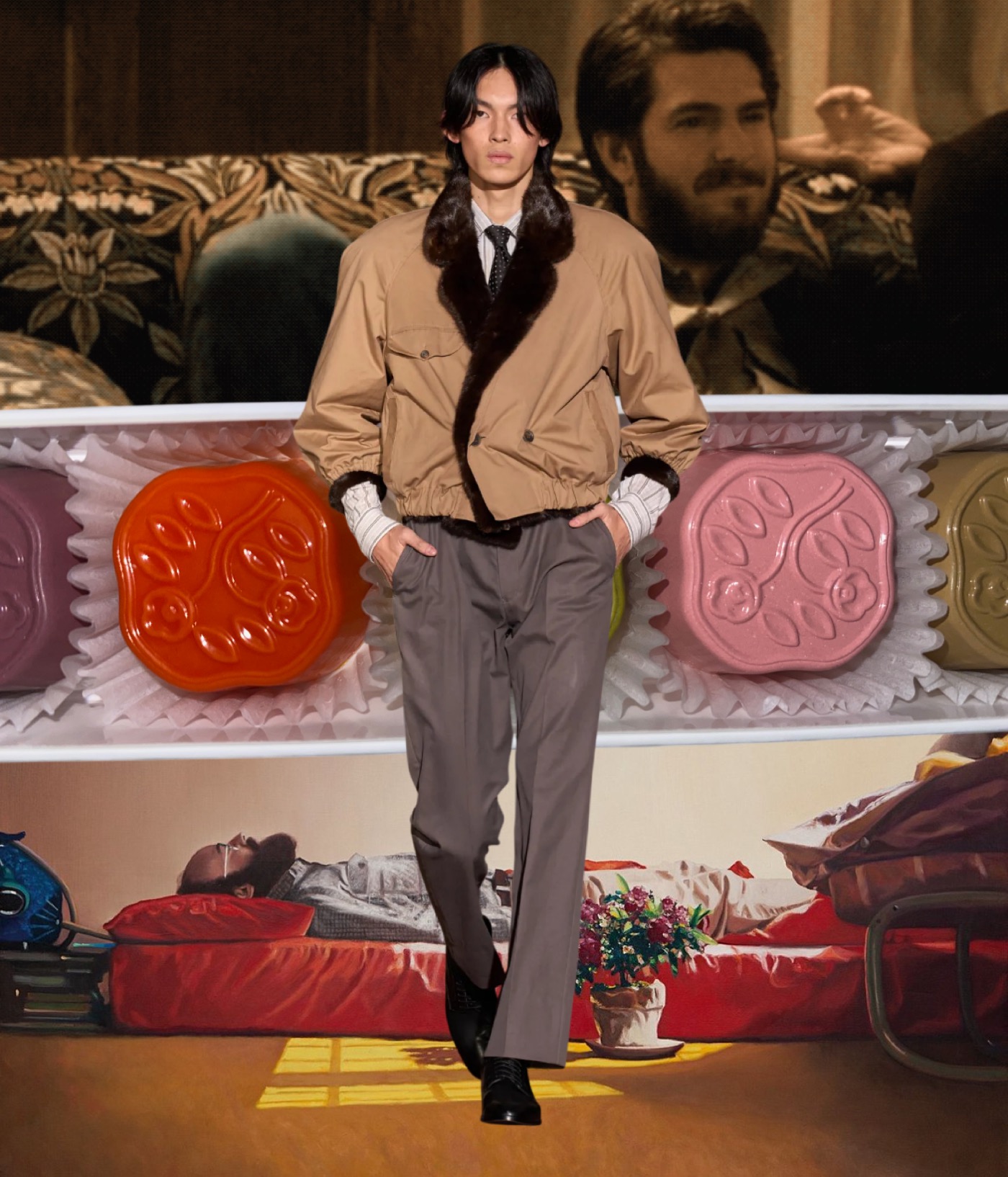
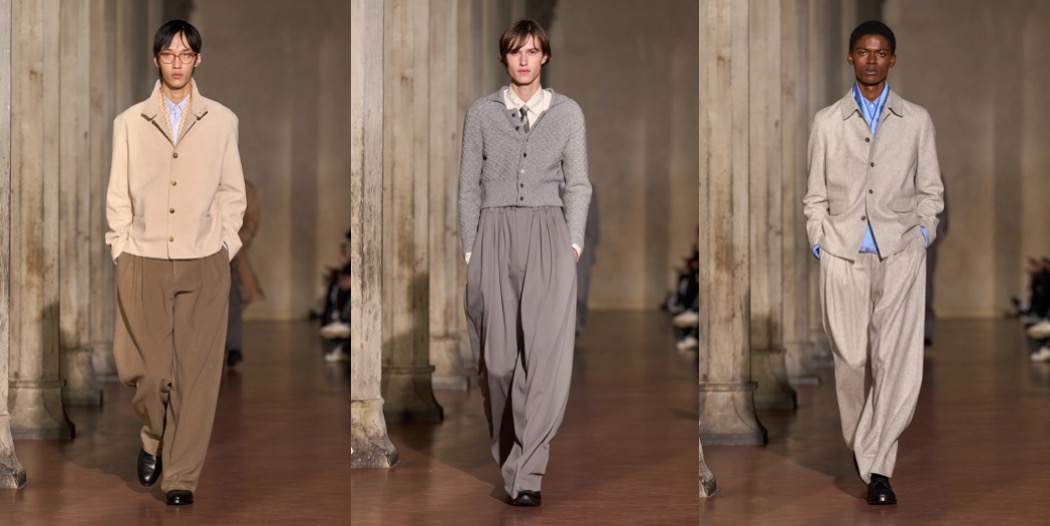
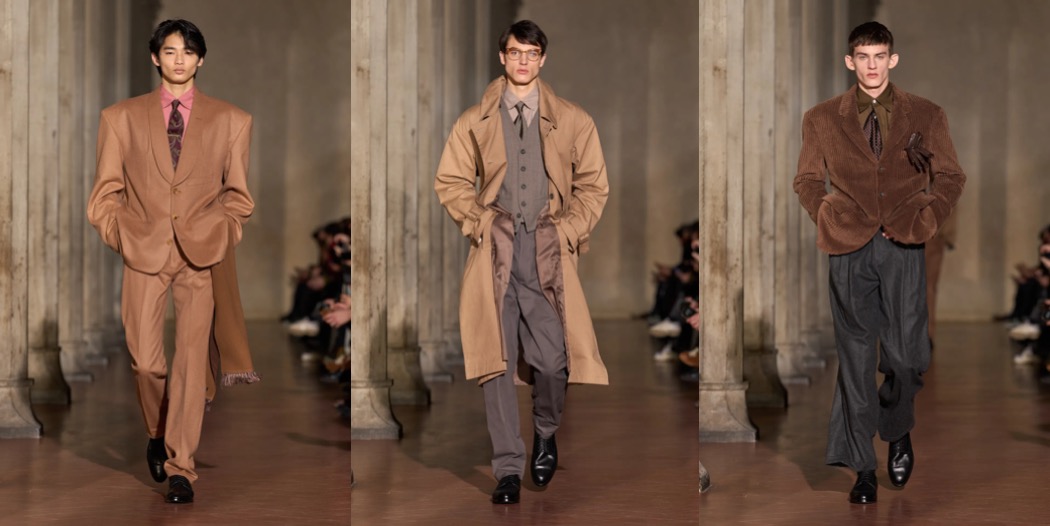
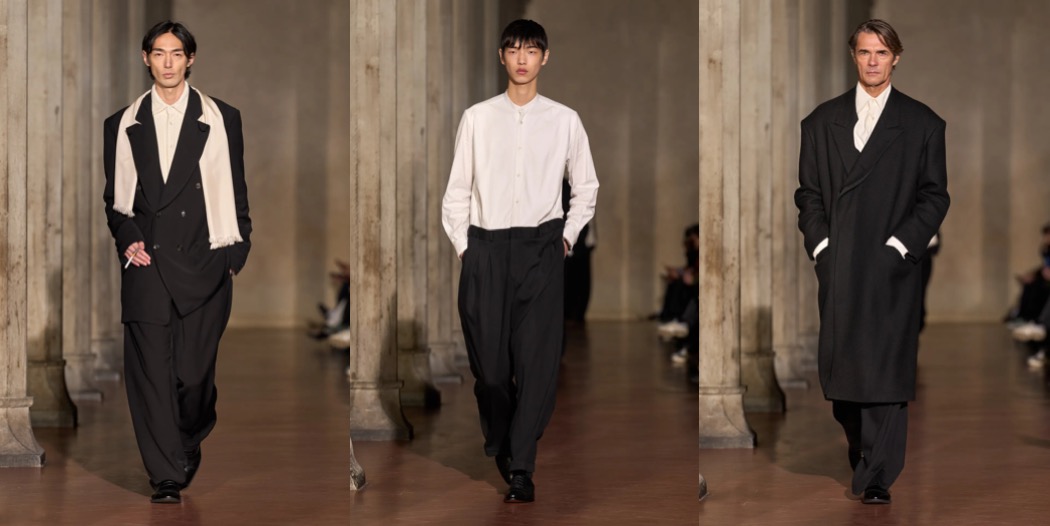
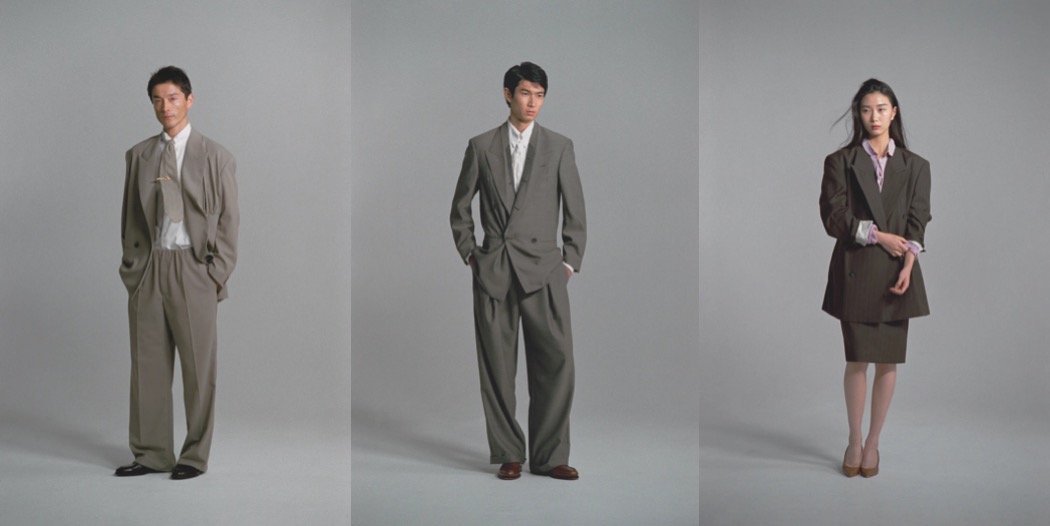
Menswear fashion month kicked off with its brightest emerging star: Soshiotsuki, the Tokyo-based brand rooted in 1980s-inspired sartorial craftsmanship, recalling the glamour and prosperity of Japan’s Bubble Era. Back in September, following Giorgio Armani’s still-unbelievable passing, I wrote that Soshi Otsuki was the designer the Italian mega-brand should consider in the near future. With his guest show at Pitti Uomo and his autumn–winter 2026 collection, he confirms that belief.
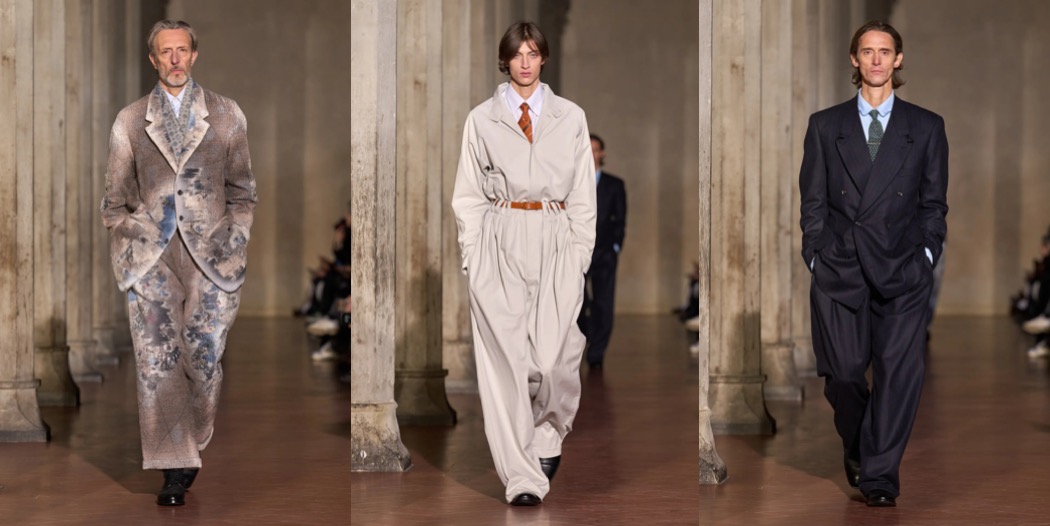
The LVMH Prize winner delivered a line-up that sharpened his tailoring ideas while expanding the vision of who the Soshiotsuki man is. One look featured a trompe l’œil jumpsuit combining a button-up shirt and trousers – a moment that recalled Phoebe Philo’s early Céline collections and sparked a question: why has no one adapted this idea to menswear sooner? Another highlight was the sashiko suit and jeans, created in collaboration with Proleta Re Art, a Japanese brand known for its painstakingly hand-stitched fabrics reinterpreted through streetwear. The silver-fox model seemed to gaze beyond in that grey, distressed-looking suit.
Then there are the details that make Soshiotsuki stand out even among affluent-men favorites such as Zegna or Berluti. Extra fabric is built into the inside placket of a shirt to suggest a tucked-in necktie, while trousers are given reams of belt loops or draped with so many pleats that they hang like curtains. The effect? A dapper, swaggering handsomeness – intoxicating, like the smell of smoke in a high-end izakaya.
Collage by Edward Kanarecki. Don’t forget to follow Design & Culture by Ed on Instagram.
Hey, did you know about my newsletter – Ed’s Dispatch? Click here to subscribe.
The news of Giorgio Armani’s passing is heartbreaking. What lifts my spirit, however, is knowing that his legacy – a body of work spanning five decades – will live on forever, especially in the work of younger generations of designers who have studied Armani since their teens.
Giorgio Armani photographed by Juergen Teller for System Magazine.
It must be some astro-numerological coincidence that yesterday Soshi Otsuki won the LVMH Prize. His Tokyo-based label, Soshiotsuki, is rooted in tailoring – one inspired by the sartorial craftsmanship of the 1980s, but filtered through a distinctly Japanese perspective. His suits, elegantly draping the body – always smooth yet refined – would surely make Mr. Armani proud.
In his delightful spring–summer 2026 collection, Otsuki mesmerizes and intrigues with nearly invisible details that make all the difference. For instance, extra fabric is built into the inside placket of a shirt to suggest a tucked-in necktie, which could be hidden or revealed depending on how it was buttoned. Deadstock kimono silk was repurposed into button-up shirts, while 1980s cotton-washi fabric was used for much of the tailoring – recalling the glamour and prosperity of Japan’s Bubble Era, a moment in time the designer enjoys riffing on.
What’s fascinating about Soshiotsuki is that the clothes don’t feel “vintage,” but utterly contemporary – and in a strikingly handsome way. That sensibility resonates with the final collections Giorgio Armani presented in recent Milan Fashion Weeks, which we were fortunate enough to witness.
Collage by Edward Kanarecki. Don’t forget to follow Design & Culture by Ed on Instagram!
Hey, did you know about my newsletter – Ed’s Dispatch? Click here to subscribe!
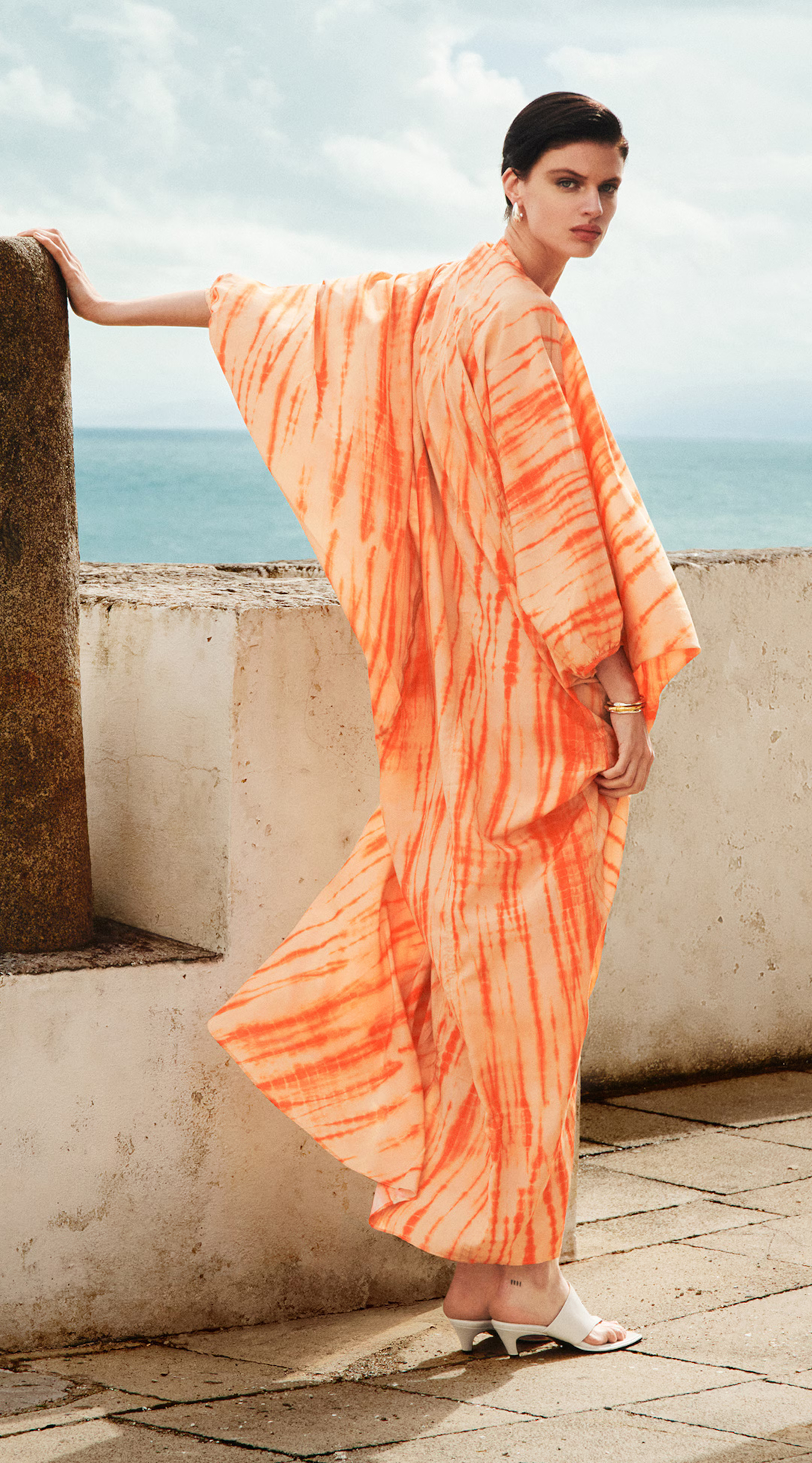
COS really nailed it with their new capsule collaboration by celebrating the art of shibori – and giving long-deserved recognition to Kazuki Tabata and his traditional workshop. Shibori, the Japanese term meaning to squeeze or wring, originates from the simple practice of resist-dyeing to create a mesmerizing array of colors, designs and patterns.
Emerging in Japan during the 8th century, its popularity grew exponentially in the city of Kyoto, in the country’s largest island of Honshu, where clean water and large surrounding rivers are said to have inspired many of its residents to start local shibori workshops. Centuries later, that includes Mr Kazuki Tabata, who prides himself on practicing Kyoto’s distinctive hand-dyeing methods through his maison, Tabata Shibori.
A former salary man specializing in sound engineering, Kazuki began his career in shibori after the passing of his uncle who worked in the family business as a traditional craftsman, which the Ministry of Economy, Trade and Industry certifies after at least 12 years of experience and succeeding written and practical exams. Kazuki, meanwhile, self-taught using the dyeing tools that were nearly thrown away, applying the technical skills of his formative studies in sound and lighting, its disciplines and aspects of collaboration, to inform his shibori creations. The artisan describes the compatibility between shibori dyeing and fabric as ‘necessary’, often favoring fibers such as cotton, linen and silk with character and depths best suited for effective dye penetration. Distinguished by the patterns or forms created from tying fabric, Kazuki specializes in methods such as kasa maki shibori, which resembles a wrapped umbrella, boshi shibori, resembling a hat, yukihana shibori, resembling snowflakes, and a unique technique known as tako boshi shibori, where the tied shape resembles an octopus. The dyes draw from traditional Japanese colours and hues found in nature throughout the four seasons.
Through this collaboration, the London-based brand and the artisan workshop co-created summer-perfect pieces for women and men that showcase exceptional craftsmanship while reflecting the rich cultural heritage and innovative spirit of Japan. The collection is available starting today!
Here are my favorite pieces from the capsule which you can shop now…
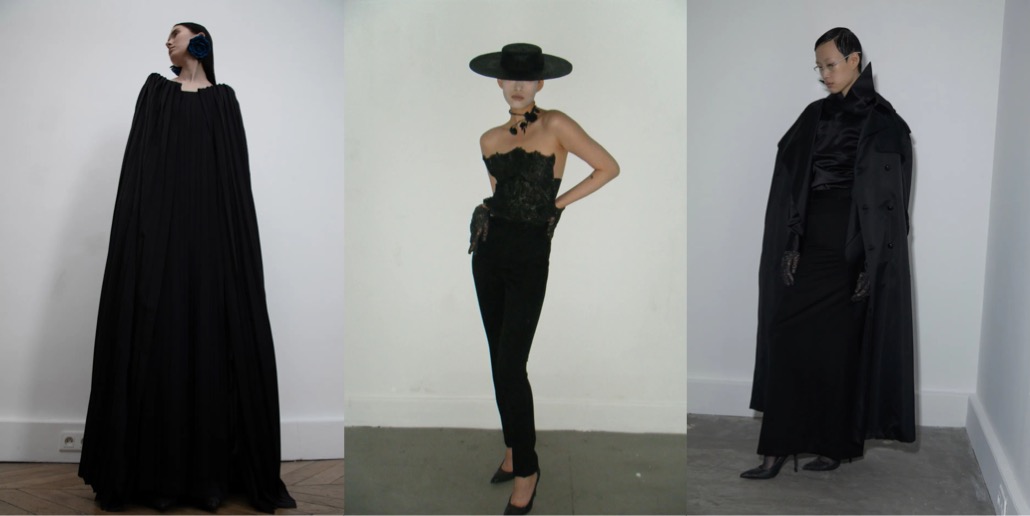
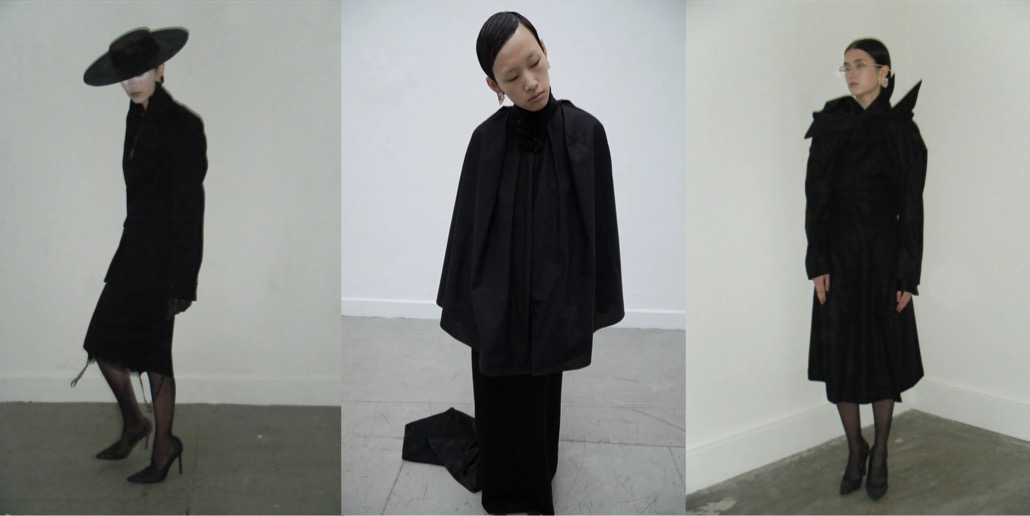
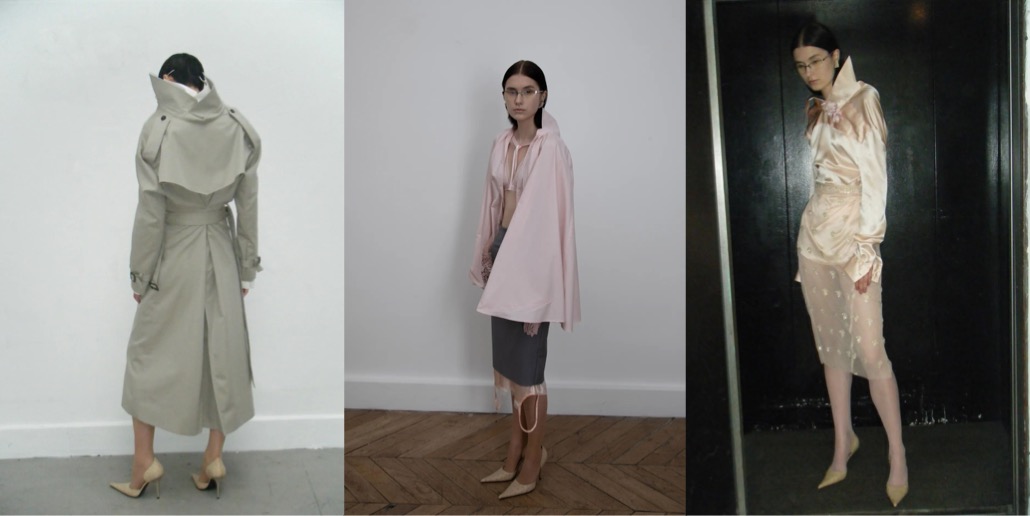
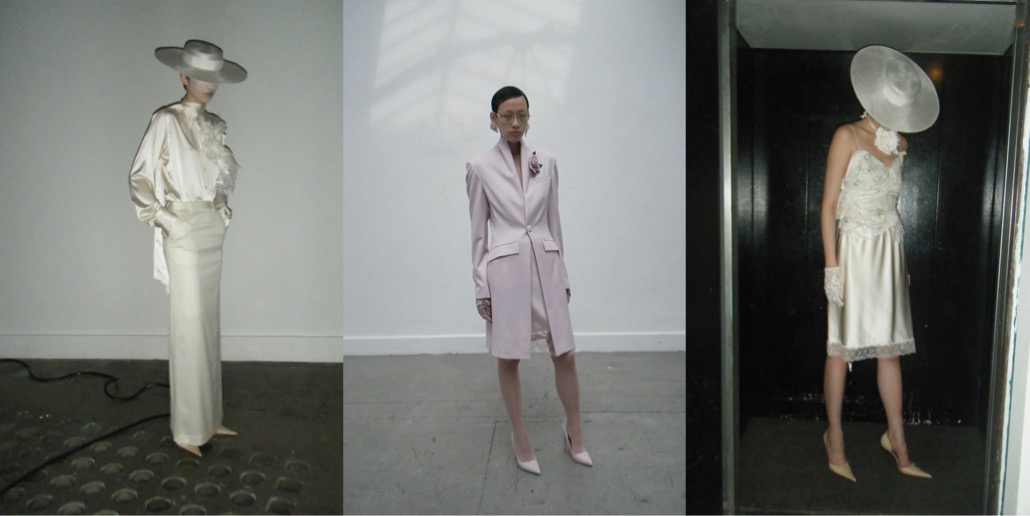
As we’re approaching 2023’s end, I wanted to spotlight one of the most intriguing emerging designers out there: Keisuke Yoshida. “I’ve had an image of this woman in my mind,” the Japanese designer said while explaining his new collection. “In my head, she’s wearing an outfit, and I can’t tell if it is a wedding dress or a mourning dress. But somehow, I know that she’s like a mother.” Last season, Yoshida’s imaginary maternal muse had been a strict, teacher-like figure with fabric clasped tight across her throat, but this time she’s come undone. Yoshida had engineered her transformation through feminine staples, using ivory silk blouses and soft, dusty pink tailoring that bared the chest, while lapels and collars were inverted or twisted so that they poked up in awkward directions, as though they’d been pulled on in a hurry. Old wedding dresses Yoshida had found in Tokyo were reworked into one-off corsets, lace gloves, and trousers, so that embellishments of pearls and sparkly lace glistered over hands or raced across the thigh, while broken ceramics served as earrings alongside seductive secretary specs. Best of all was a would-be office-appropriate pencil skirt, out of which peeked a silk camisole whose straps dangled upside down towards the ankles. Those theatrically spiky stilettos and wide-brim hats could well have evoked Irving Penn, or old photographs of Parisian couture from the 1950s, but what makes Yoshida’s work feel right for the moment are the strange quirks he sprinkles in to humanize everything, offsetting any old-world glamour or preconceived notions of feminine mystique to create something delicately twisted.
Collage by Edward Kanarecki. Don’t forget to follow Design & Culture by Ed on Instagram!
Hey, did you know about my newsletter – Ed’s Dispatch? Click here to subscribe!
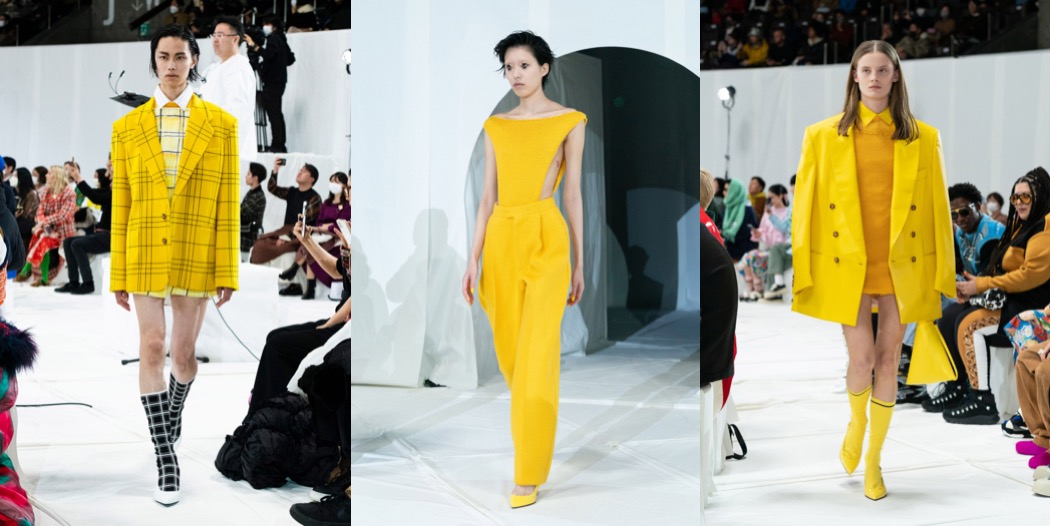
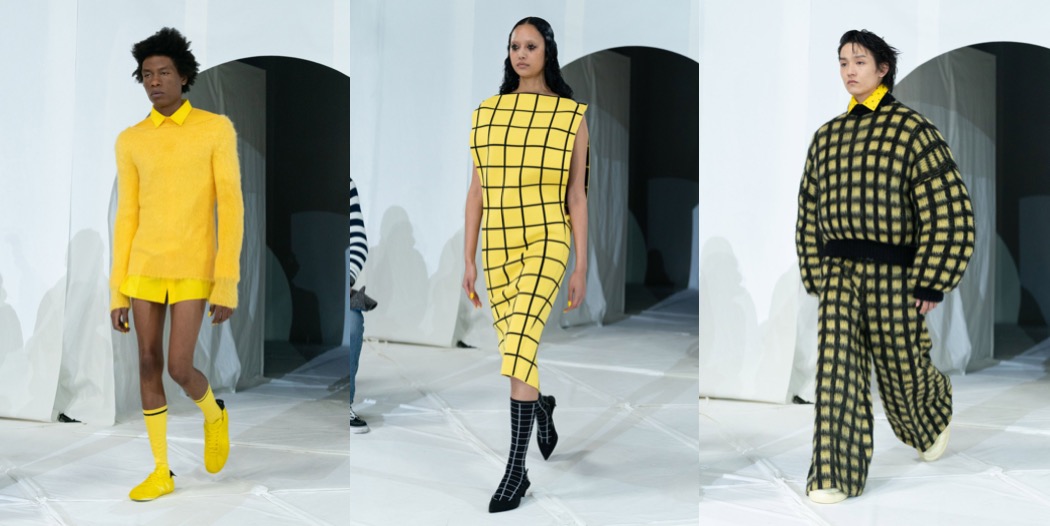
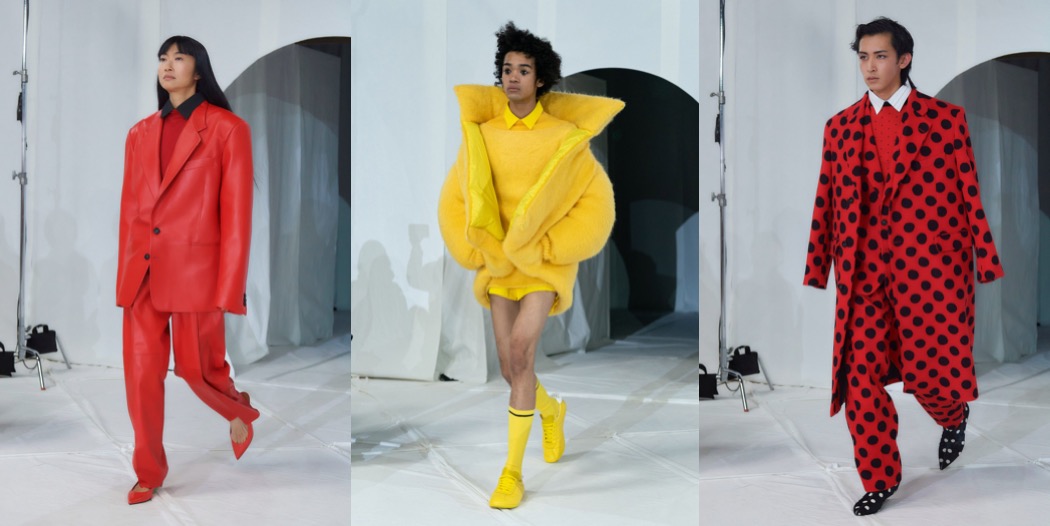
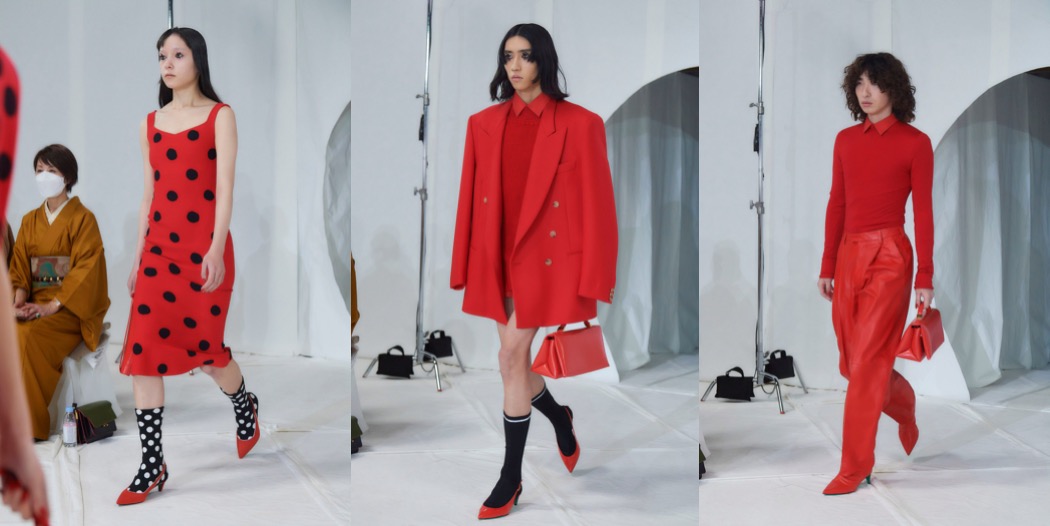
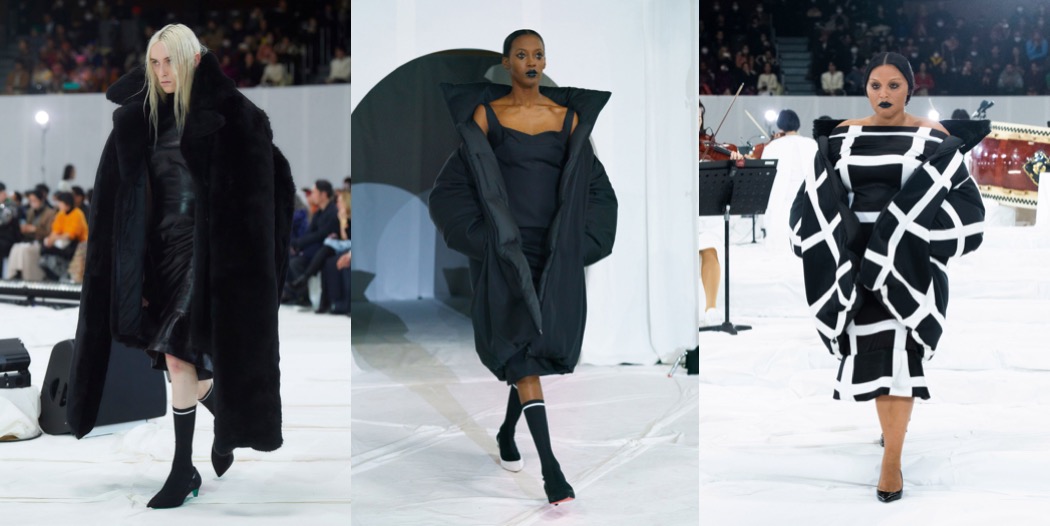
Marni‘s autumn-winter 2023 collection by Francesco Risso felt like a big shift. Not only because it was presented in Tokyo (Marni travels the world – last season, the brand opened New York Fashion Week), although that certainly became a new context for comprehending what this Italian label stands for today. The Yoyogi National Gymnasium, the fashion show’s spectacular venue, was built by the architect Kenzo Tange for the 1964 Summer Olympics. It’s a structure, as Risso pointed out, “both rigorous and intimate – it looks to the future while keeping a feel of enveloping protection, like if you were in a womb.” This way of balancing discipline and humanity, cutting-edge design and domesticity, connects with the soul-searching Risso has been doing on the meaning of making clothes. “Here in Japan I’ve found a profound sense of patience, of stillness, of respect, something that in the West I believe we’re losing.” He continued: “We’re surrounded by futility. After three years of pandemic, where we all have been vocal about the changes we wanted in the system, to slow down, etc., we’re back to square one. We are again devoured by the brutality of the algorithm.”Going back to the love he feels for his metier keeps him grounded. At the show, on each of the paper-covered seats, he left a handwritten letter whose opening line asked: “why do I make clothes?” For the Marni creative director, clothes are living creatures, they touch, breath, move; it’s a love dance, a sentimental relationship: “Because they’re our companions, and there’s more to them than just air kisses. I don’t know if I make clothes that people need, or if I make clothes that need people, or if I make clothes for the people that I urgently need to need the clothes that need them… What I do know is that today we need less and less clothes that are needless.”
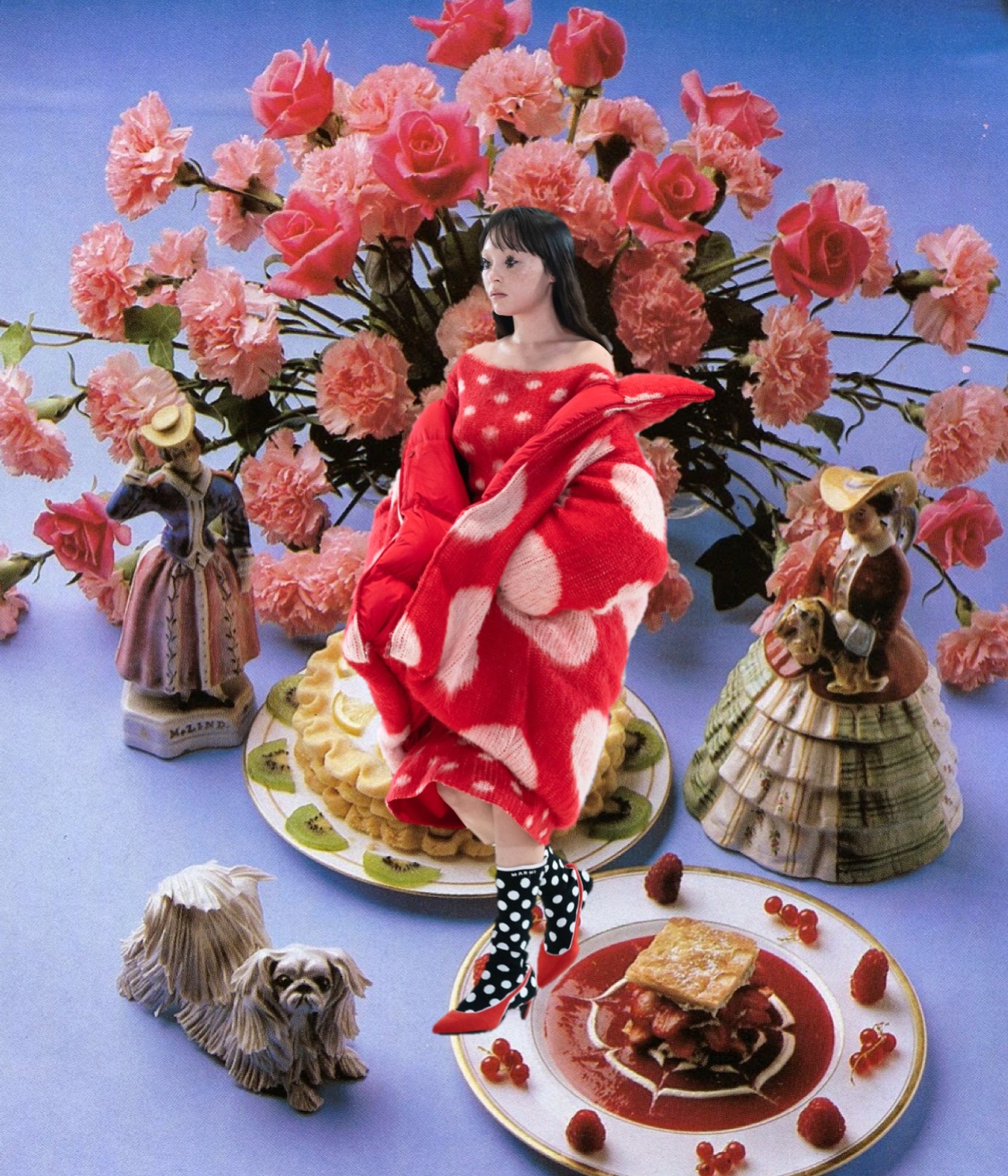
White is a non-color that speaks of absence, but also of clarity. It is a carte blanche on which new words are ready to be written. Wrapping the arena in white paper spoke of a desire for simplicity, for reducing noise and distractions. But Risso is no minimalist, and even if he preached rigor and linearity, the collection had presence, density, and punch. He traded his usual slightly bonkers decorations for starker, elemental graphics, and reduced the palette to a few saturated primary colors: yellow and red playing against white and black. Every look was an all-over proposition, and for both men and women in the mostly local cast (plus Marni favorites like Paloma Elsesser and Angel Prost), silhouettes alternated between slender and form-fitting and bulky and bulbous. Tailoring was offered in oversized versions, and knitwear, a Marni forte, had fuzzy mohair surfaces, as in the jumbo round-cut piuminos that were among the collection’s standouts. The swirling, magical motifs of sirens and unicorns of previous outings were nowhere to be seen, replaced instead by kinetic grids and optical checks, and by slightly Yayoi-Kusama-esque bouncing dots of various sizes. Rectangular tunics and angular apron dresses contrasted with form-fitting, heart-shaped bustier dresses that were kept neat rather than sensual. Cocoons in padded leather or wool conveyed enveloping, comforting warmth. “It’s a collection with one foot in tradition and the other in a not-impossible future,” he said backstage. “It’s a sort of rhythmic alternation of proud normality and proud creativity.”
Collage by Edward Kanarecki. Don’t forget to follow Design & Culture by Ed on Instagram!















 Design & Culture by Ed