That’s Hot. Nensi Dojaka SS22

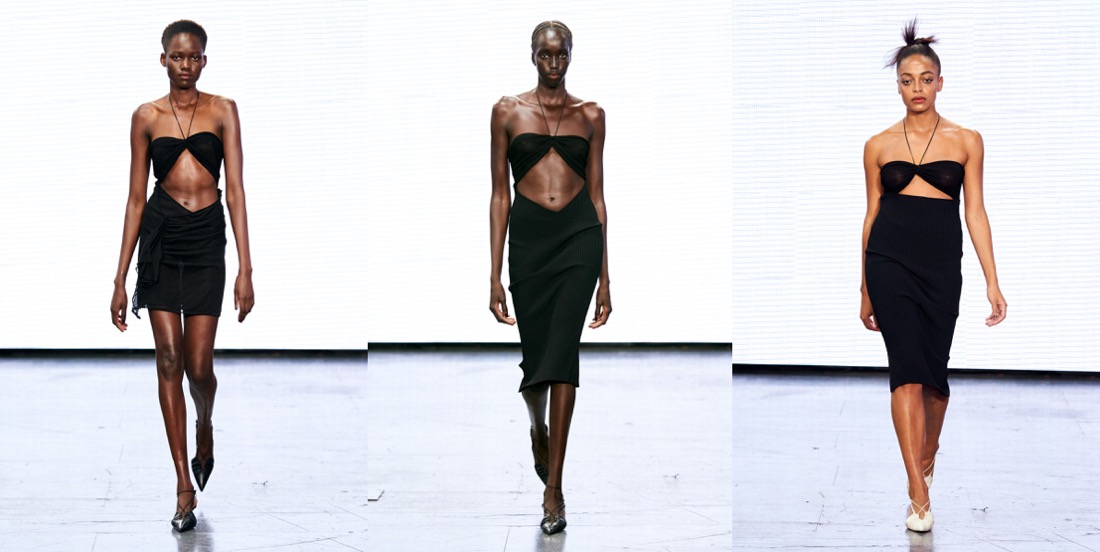
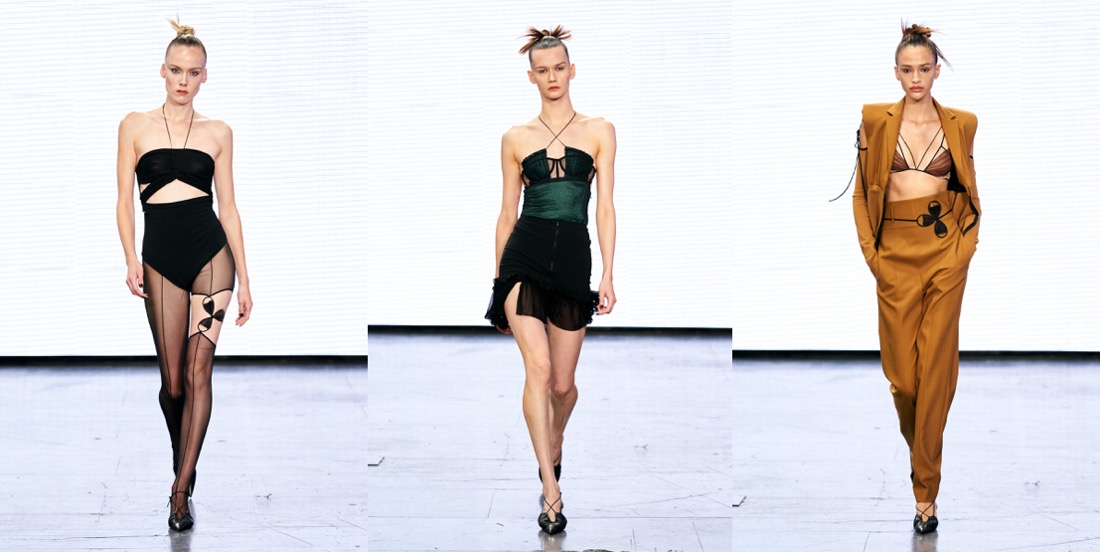
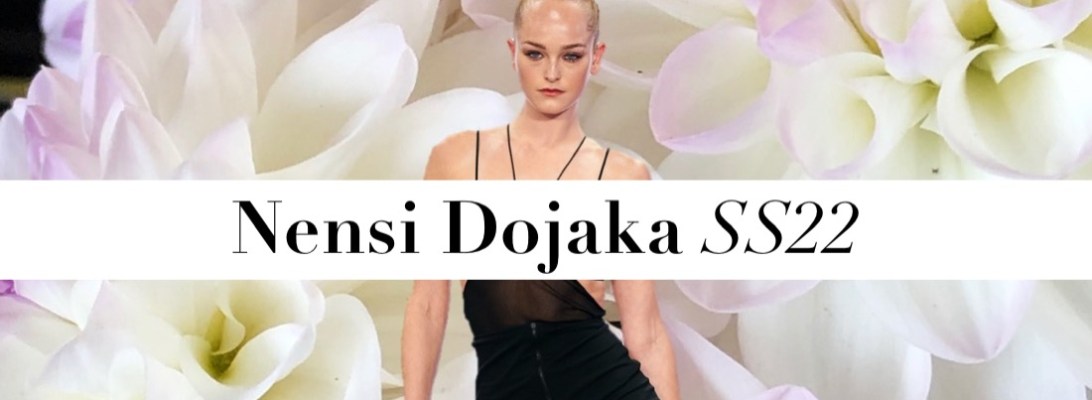
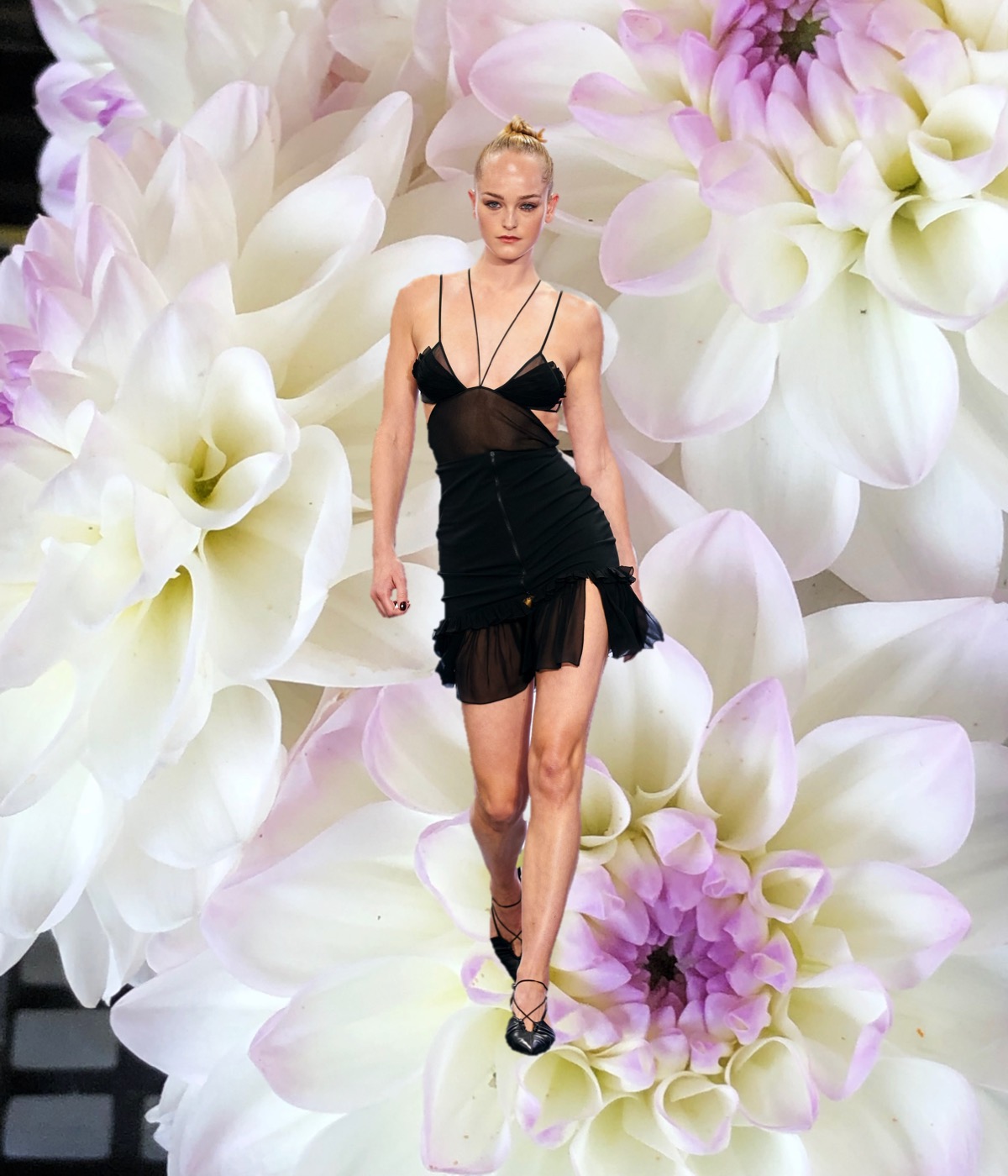
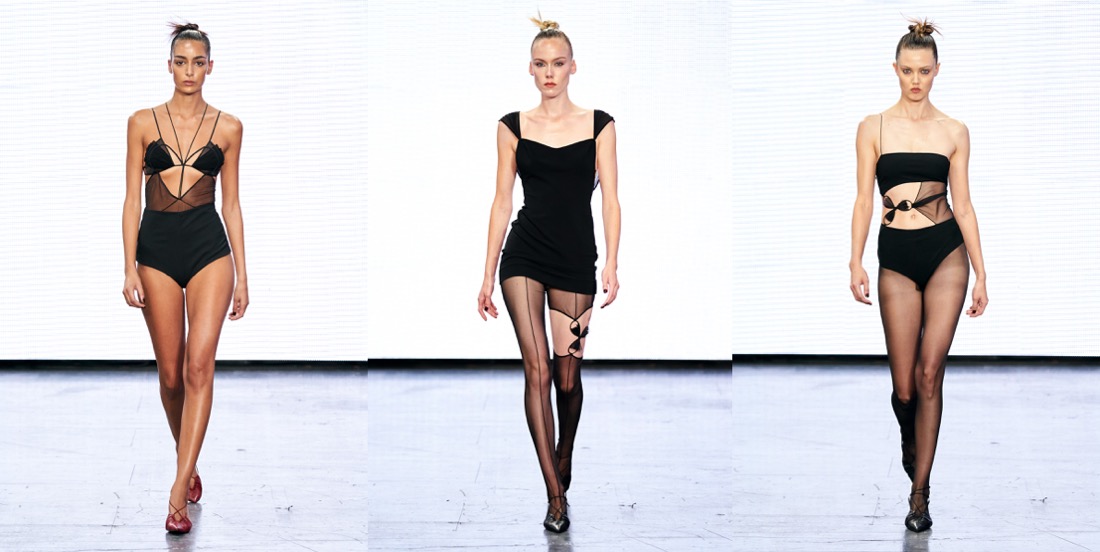
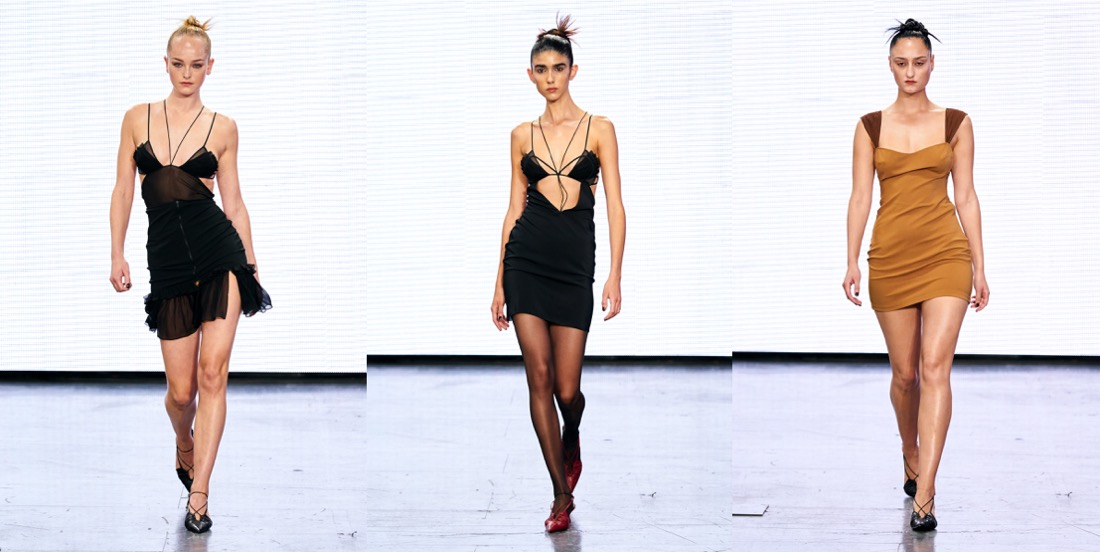
Hot Girl Summer all year long – that’s the key message from the first day of London Fashion Week. Nensi Dojaka is one of the freshest forces in womenswear for a long time to emerge from London. The creative directors of LVMH judged her to be that the other day, when they awarded her the 2021 winner of the LVMH Prize from an impressive field of global contenders. Dojaka has a lot of fans. Dua Lipa and Rita Ora are among them; like her, both have Albanian roots and have grown up in London. Dojaka has lived and studied in the city since she was 17 years old. First she learned the exacting art of lingerie technology at London College of Fashion, hence her fanatically perfectionist expertise in the minute calibrations of fitting bras and multiple, adjustable straps. She then progressed through the Central St Martins MA course, then to her first group outings with Fashion East. She had her first solo show yesterday – a collection which showed all the finesse she’s managed to evolve in dressing the female body in classily engineered nuances of reveal and conceal. Dojaka’s is a total look that’s arrived just in time to greet the pent-up longings of women who’ve spent too long in confinement and are looking for an exit from all-concealing smocks and whatever homewear descended to during lockdown. Here was her antidote: dresses topped with petal-like bras held on with minute rouleau straps to reveal plunging backs; high-waisted, super-fitted, tapered trousers and draped, twisted georgette tops. Tailored jackets, some of them detailed with separate sleeves, were tied on with slim black ribbons. Then the tights: who’s ever seen leg-wear like Dojaka’s hosiery, with a cut-out zone containing a tulle flower on one thigh, and seams running up the front? Her repertoire runs through pointy, strappy, kitten-heeled shoes, rib knit dresses, draped swimwear and bras. The fact that her business was essentially formed during the worst of the pandemic is testament to the down-to-earth realism of this hard-working young woman. She makes sophisticated, desirable, complex product that’s centered on the complex desires of her sophisticated female peers.
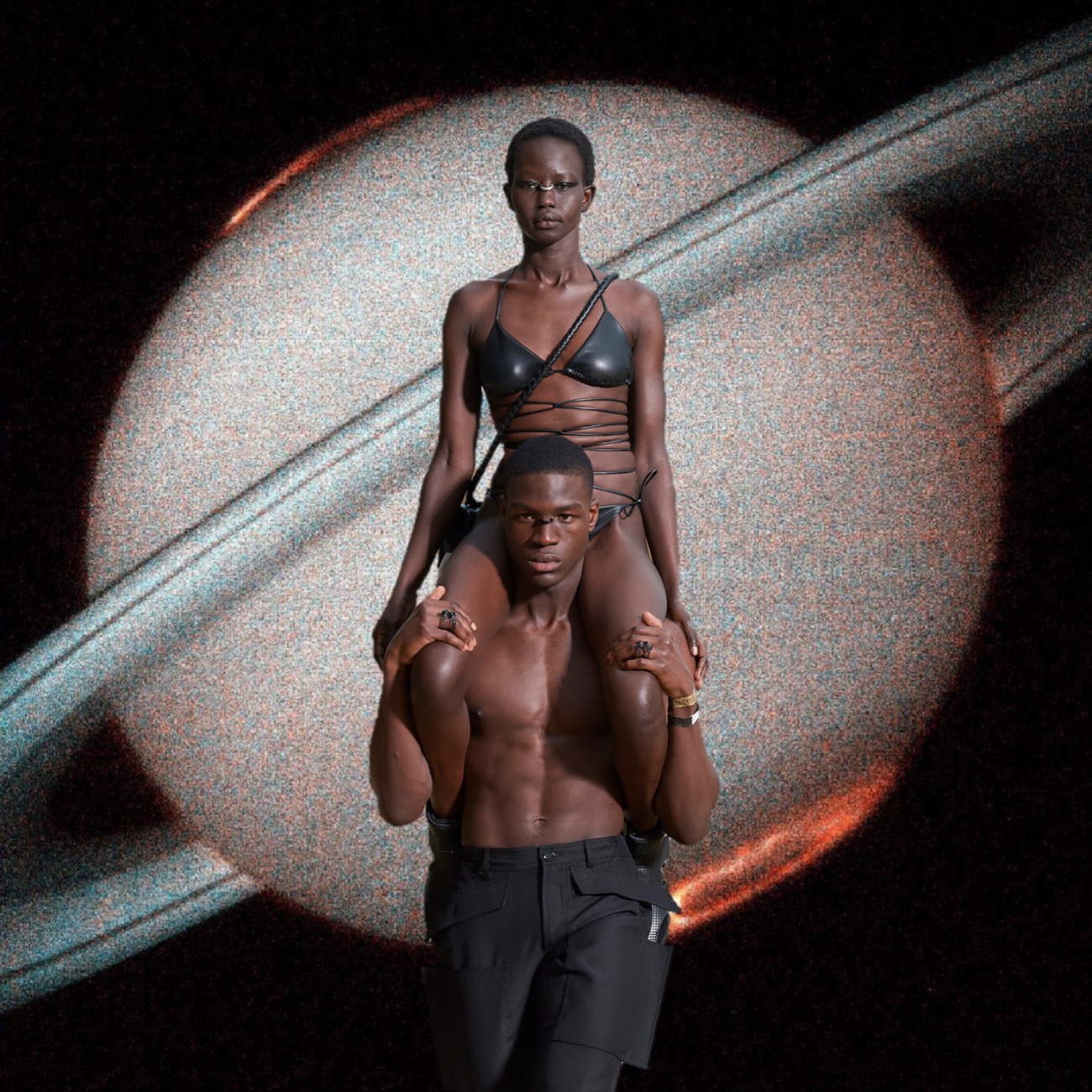
Collage by Edward Kanarecki.
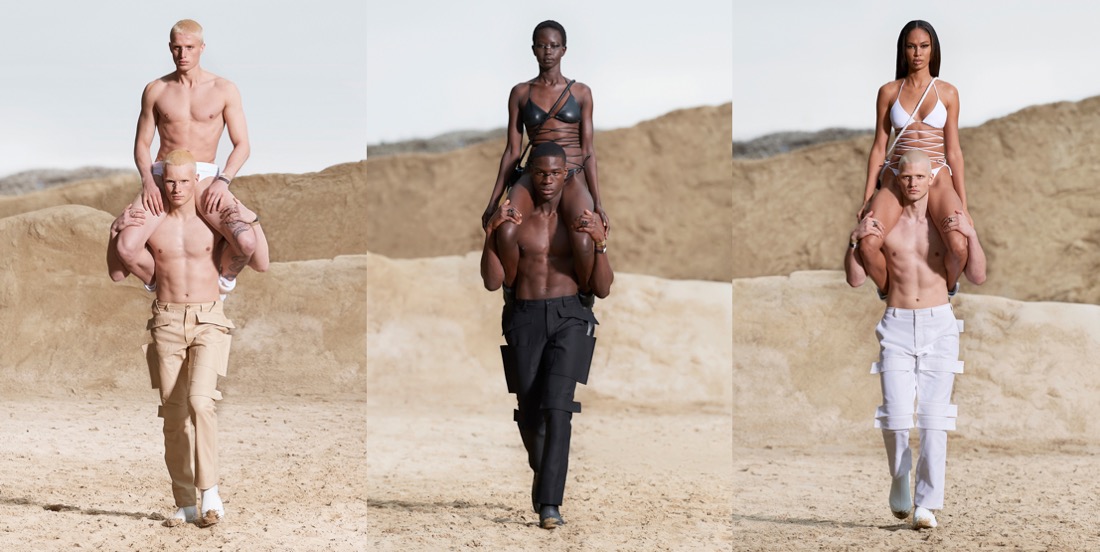
Men’s – Rave Energy. Burberry SS22

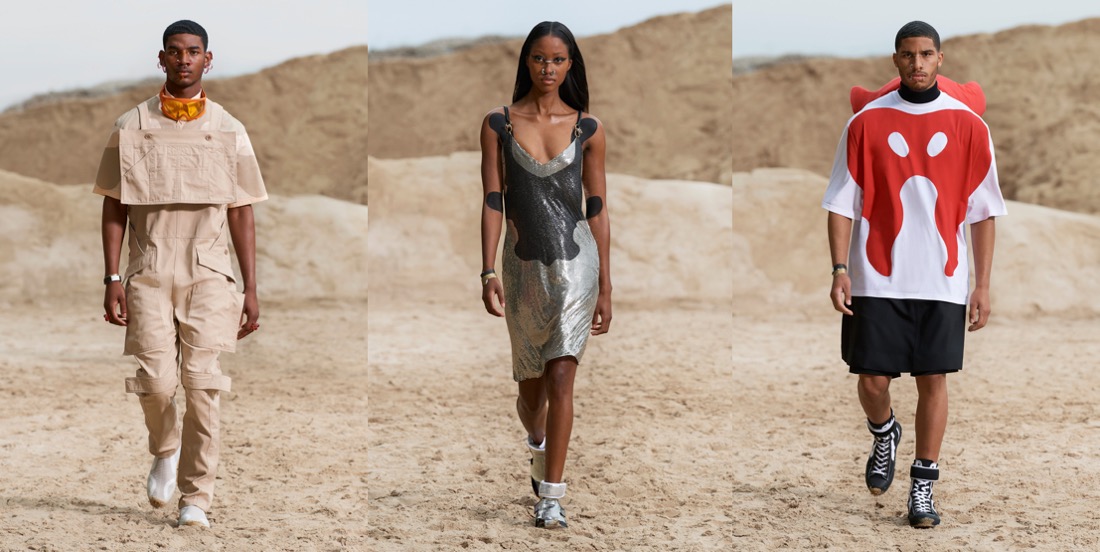
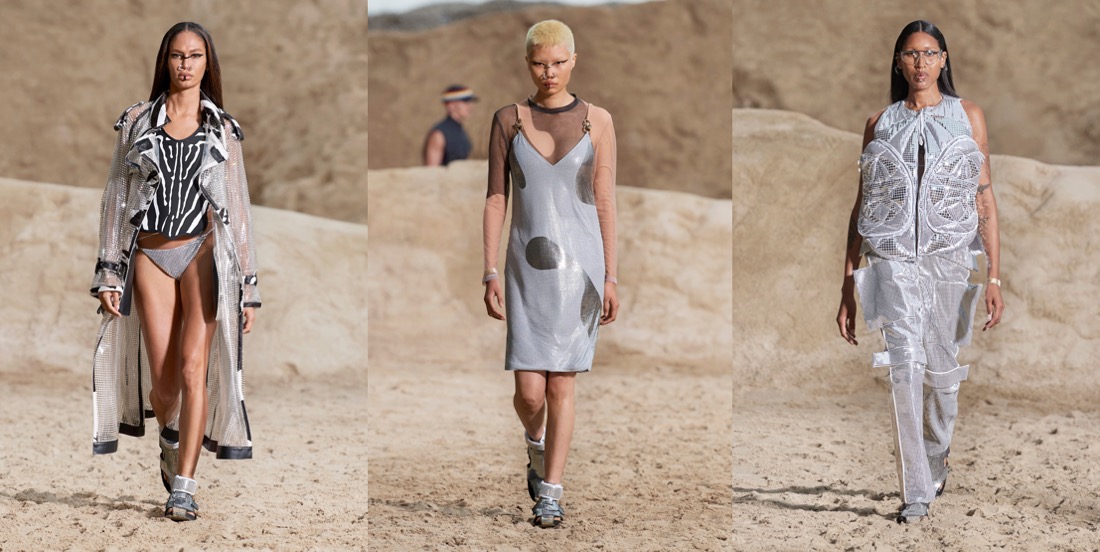
It takes time for a designer (even a very renowned one) to find his voice again. Riccardo Tisci‘s first seasons at Burberry felt overdone and unedited. But lately, starting from his spring-summer 2021 collection, it seems he finally feels confident with his role at the British house and knows what his vision for Burberry really is. The spring-summer 2022 line-up is quintessentially Tisci: dark, sensual, sharp. Filmed in an urban desert landscape by the Millennium Mills in East London’s Royal Victoria Docks, Tisci’s men’s collection distilled the aesthetic so distinct to his career into his most personal Burberry show to date. There were trench and carcoat references aplenty, but in its pure expression, this was Burberry learning Tisci’s language and not the other way around. He hacked the sleeves off outerwear and re-sculpted it into warrior form, refined the raglan lines of sportswear, and managed to make a halter-neck silhouette look hunky. Combatant chest plates continued those conversations, some reduced to just a ghostly outline on a T-shirt, while the exaggerated straps of workwear conjured visions of skeletons and rib cages, bringing back those delectable Memento Mori or Día de Muertos images Tisci’s work so often evoked in the past. Lifting each color of the Nova check, he covered the whole thing in a thick, luxe, dusty blanket of beige, white, red, and black, with sky blue nods to “the only thing we’ve been able to watch” while trapped lockdown. His interpretation of Burberry’s codes – deconstructed but refined – felt so authentic to his ethos, you wondered why he hadn’t taken this route sooner. “It takes time for a designer to find the right fit when you’re working in a company. For people outside, it seems like you just go there and…” he paused. “It’s an interesting process. The bigger the team, the more interesting and tough and difficult it is. So, it’s good that we’ve arrived here. After three years, the identity is getting clear.”The pandemic has also changed Tisci’s outlook: “I feel at home, even if I’ve been in lockdown. The world is going to restart, and for me, this was fresh. It’s what we want today: expression, freedom, physical freedom; to be ourselves. It’s punk in a positive way: breaking the boundaries.” Watching the world come back to life – “and the young generation pulling crazy looks again!” – Tisci was reminded of his early twenties when he escaped to India and had his eyes opened to another reality. “I remembered my first rave in India, with Shpongle, one of the best DJs in trance music,” he said, referring to the group that also scored the show, “partying in these open spaces, with all this nature, with all these young generations from around the world, being myself and expressing myself. I come from a poor family, but raves were somewhere I could express myself and be on the same level as everybody else.” Imbuing his collection with those memories of rave, it was as if that scene was once again giving Tisci a place to freely express himself.

Collage by Edward Kanarecki.
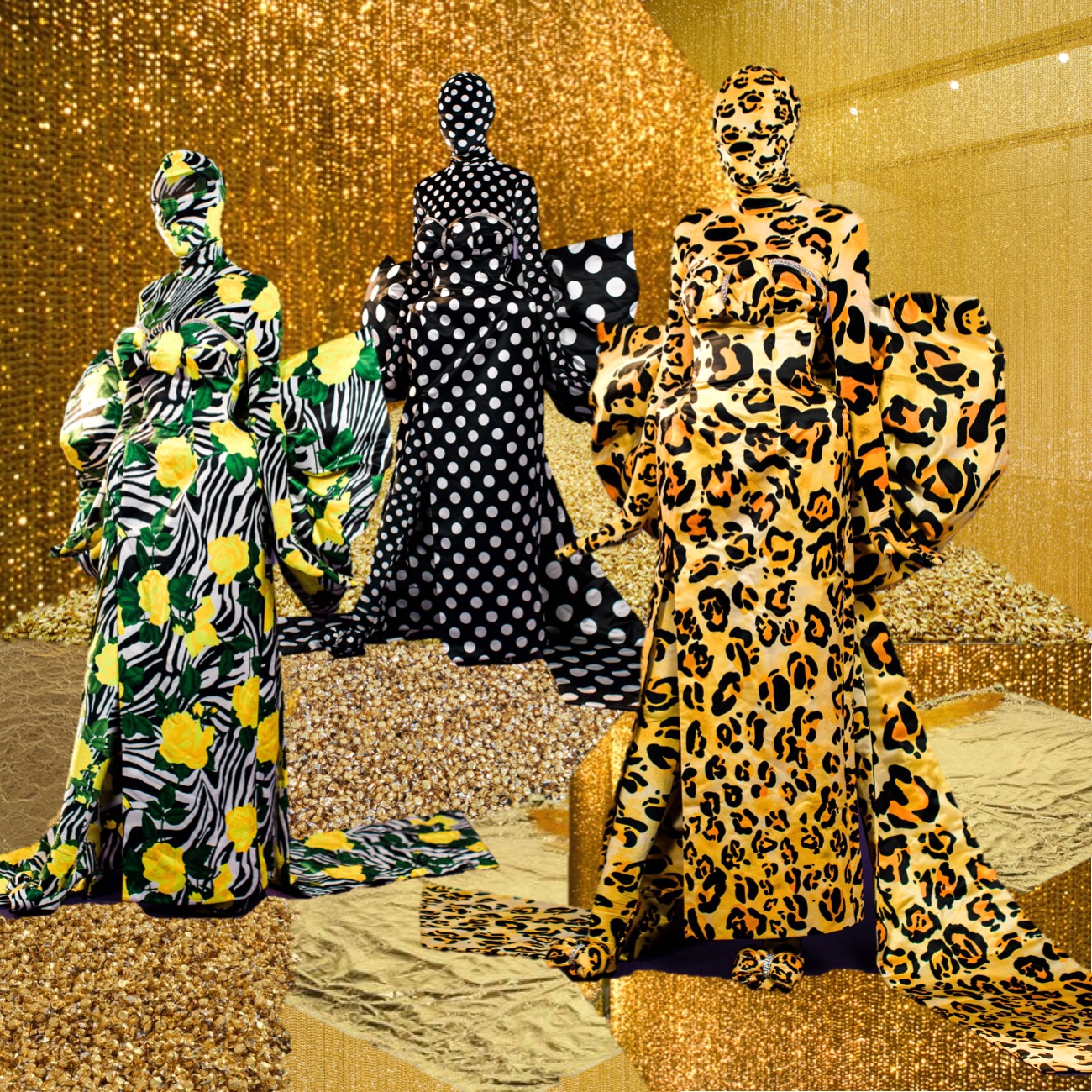
Fetish Couture & Big Dreams. Richard Quinn AW21

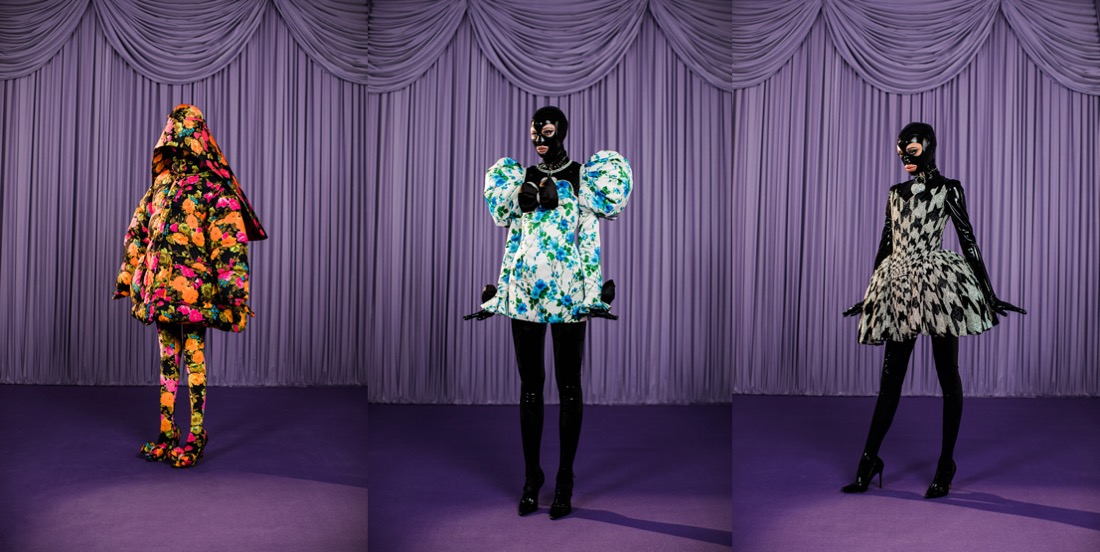
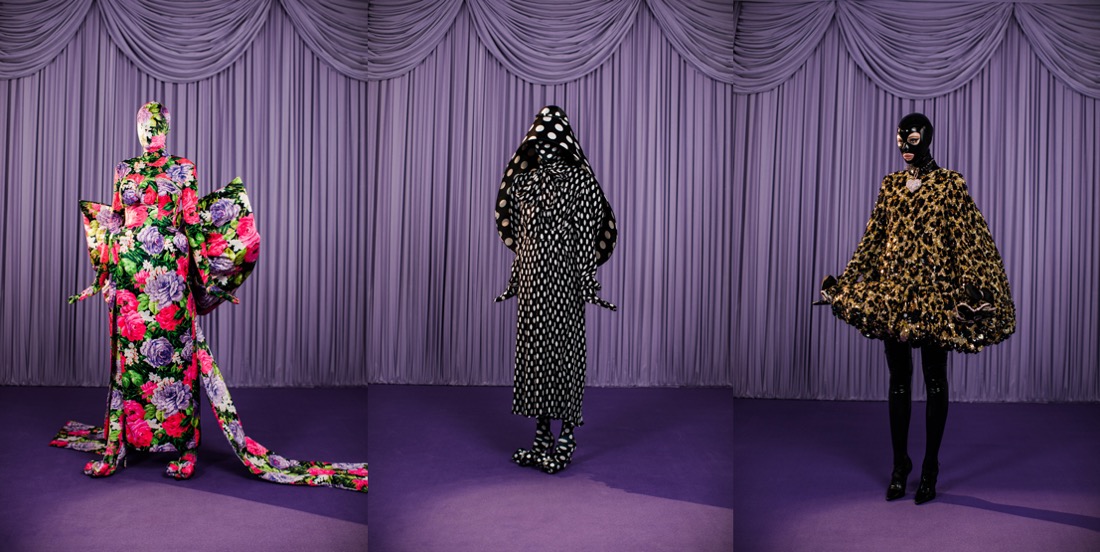
After a two season hiatus, Richard Quinn came back yesterday, and pulled off a mega-production collection, with a sort of badass Cruella energy. The autumn-winter 2021 line-up was released through a 25 minute long video fairy-tale, “an ode to Hollywood Technicolour”, full of haute fetish couture. “It’s bigger, a lot bigger than anything we’ve done before. I wanted to do something that was really creative, that was not a catwalk show, the usual“, the designer explained in the press notes. Latex gimp-suited cats and dogs, ballerinas and ballgowns, a story that spiralled from a red-light, nightlife London Soho-on-steroids scene through manic Alice in Wonderland and Cinderella-ish twists and turns – it had it all. All it took was a hundred people on a movie set – sets which were entirely printed by Quinn, including a blue-and-white flower-printed grand piano and three London black cabs printed with psychedelic ’70s daisies. The Lilies Cole and McMenamy and U.K. Drag Race’s favorite star Bimini Bon-Boulash made cameo appearances. “Because I wanted it to be a showcase of what we can do in London, even in a pandemic,” he said. The clothes? Well, the clothes appeared to be costumes, really, all the recognizable, blown-up Richard Quinn vintage haute couture pastiche shapes “with everything crafted to within an inch of its life,” as he put it. There were embroideries laden with pearls, bugle beads, sequins, and gemstones. A mini bride’s dress and matching groom’s bell-bottomed suit were sewn with gold crucifixes, padded love hearts, and tiny turtledoves. And on top of all that, he showed acres of printed pouf dresses, a whole wedding-turned-disco party packed with guys dancing in flowery suits among ball-gowned women. Quinn dreams big.

Collage by Edward Kanarecki.

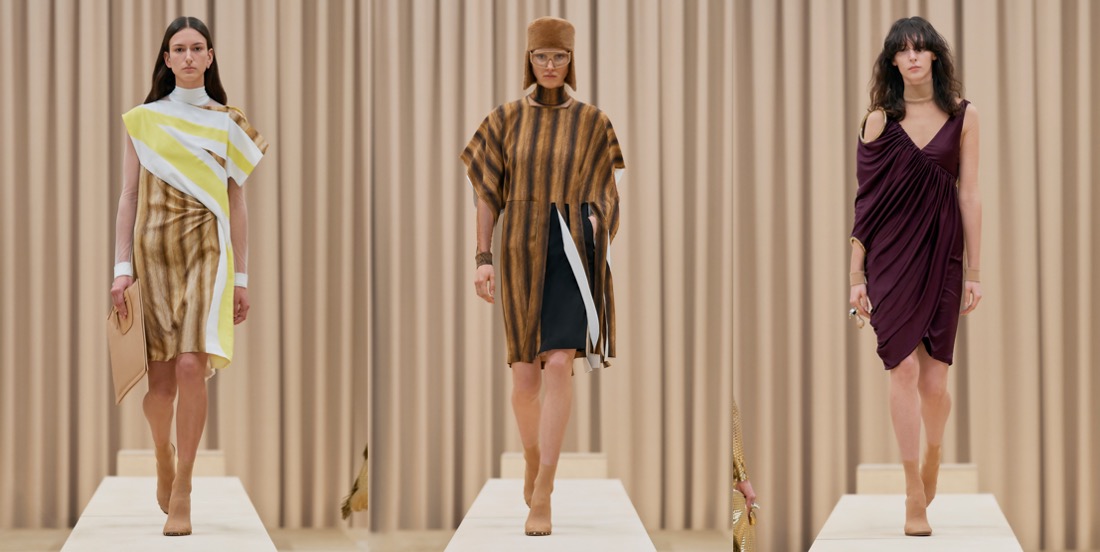
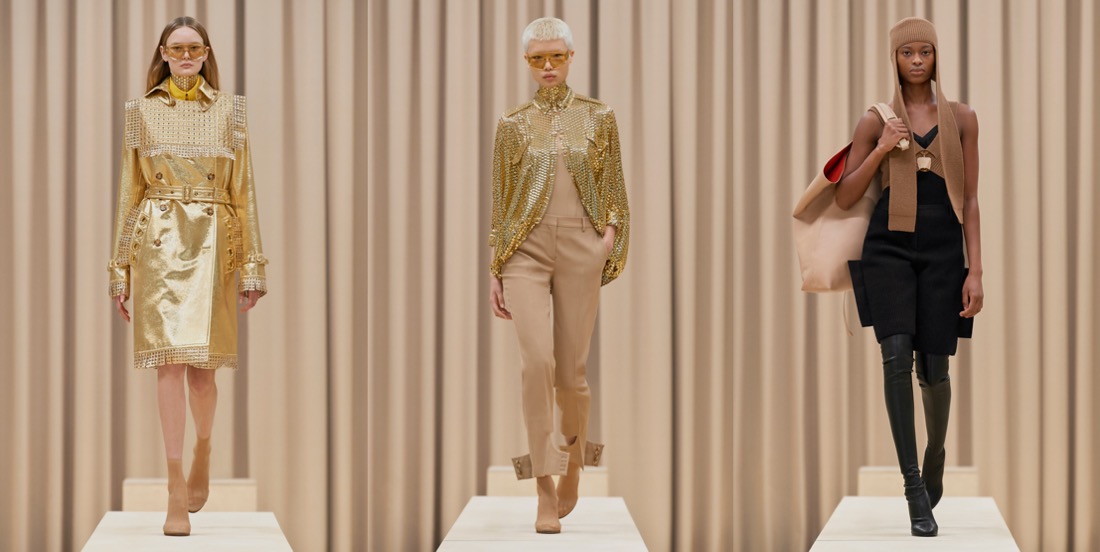
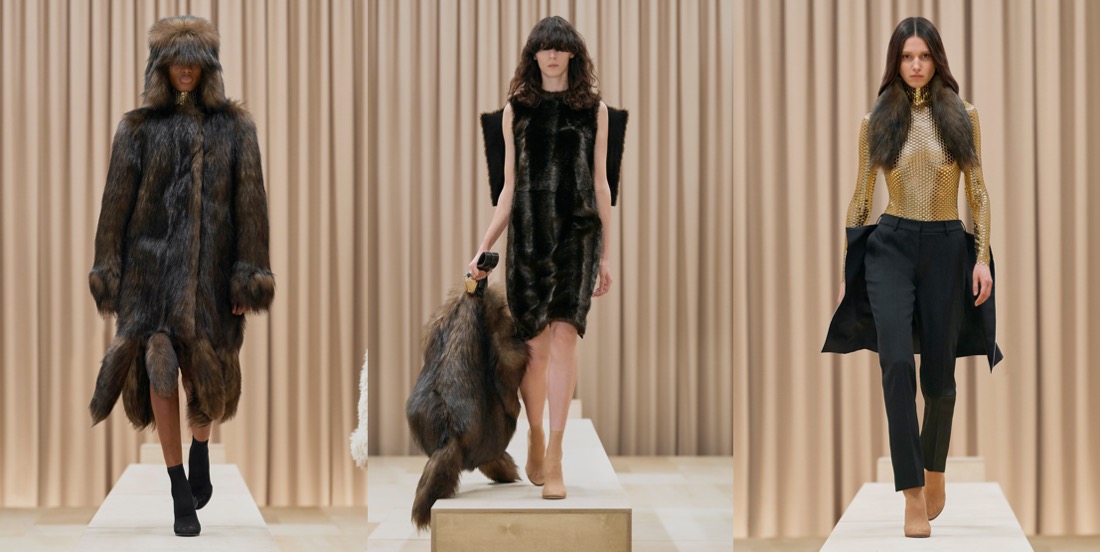
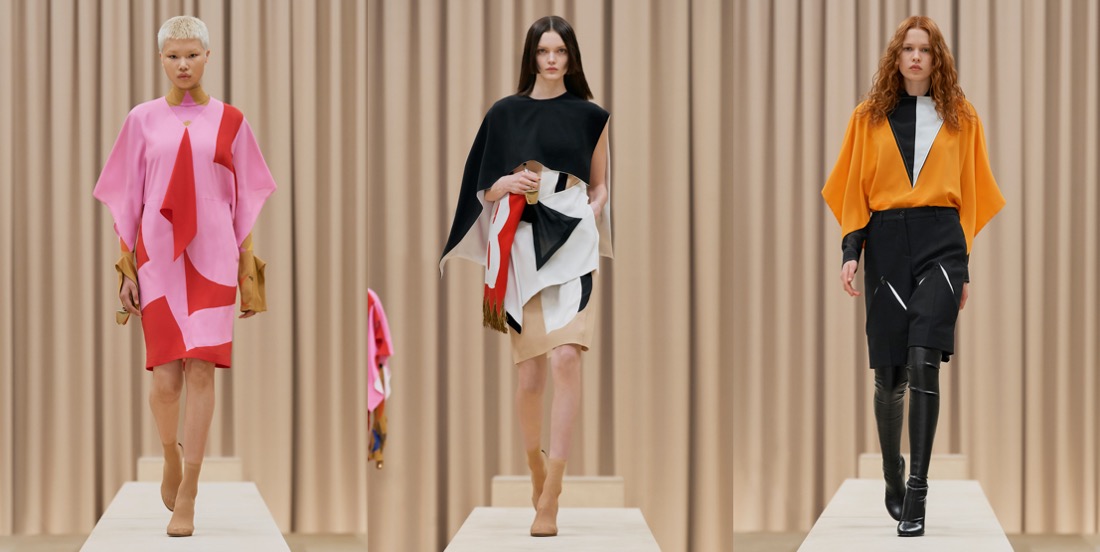
Femininity Now. Burberry AW21

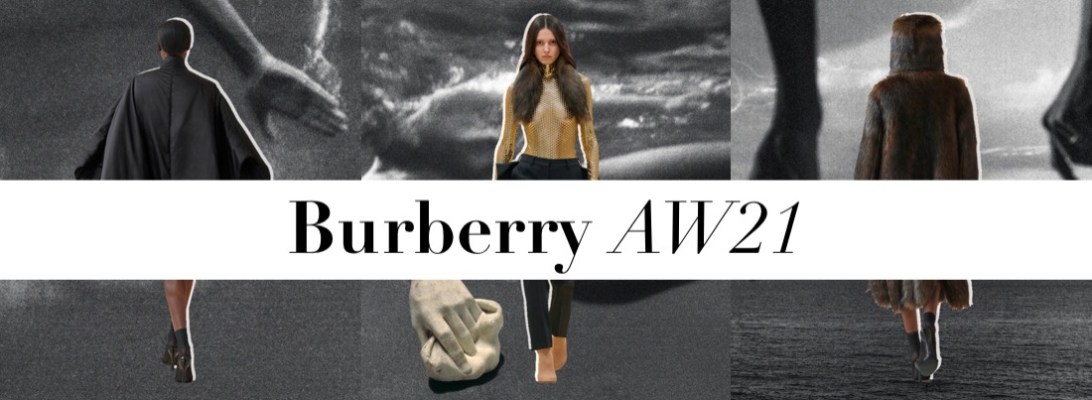
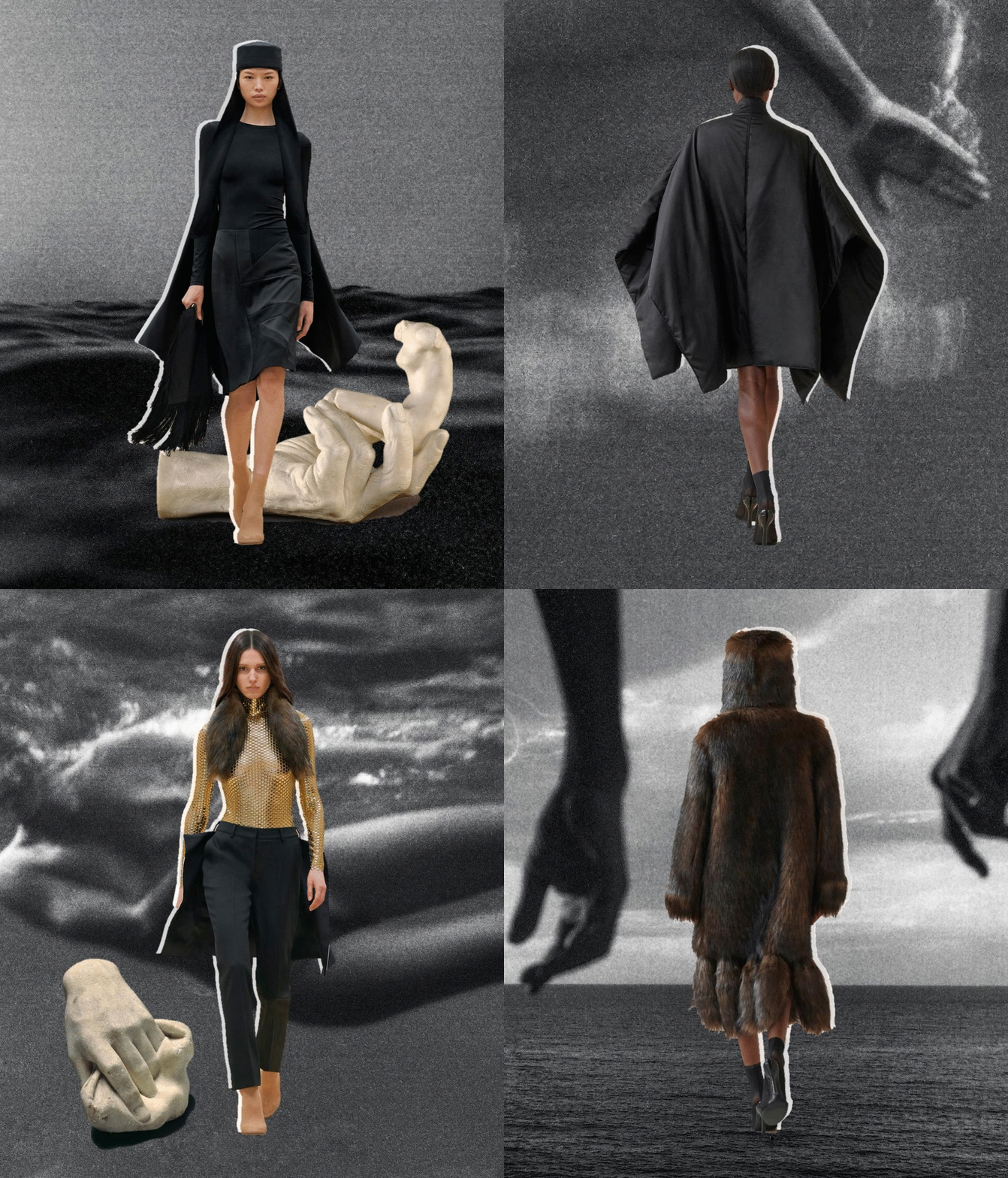
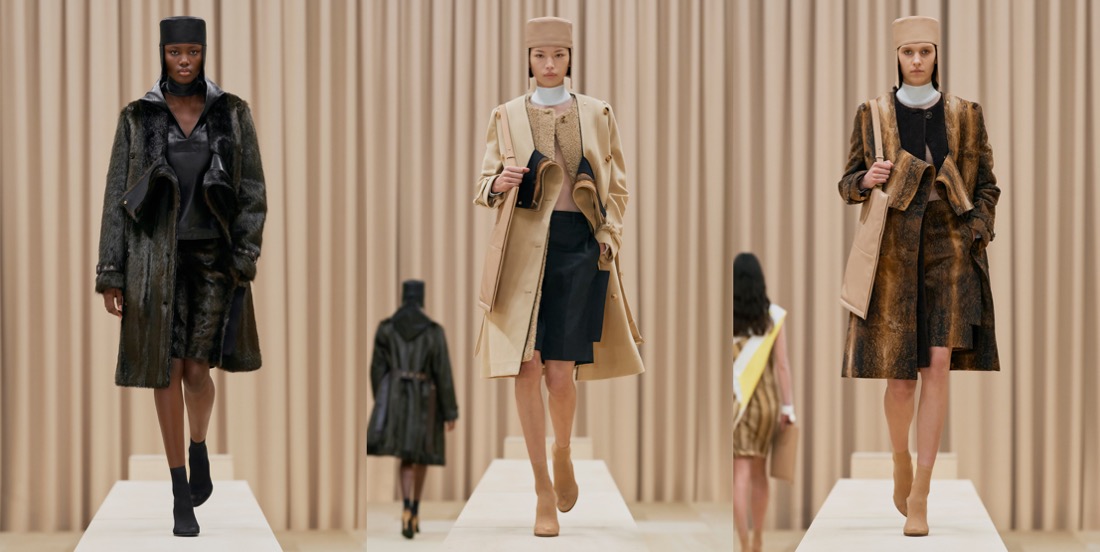
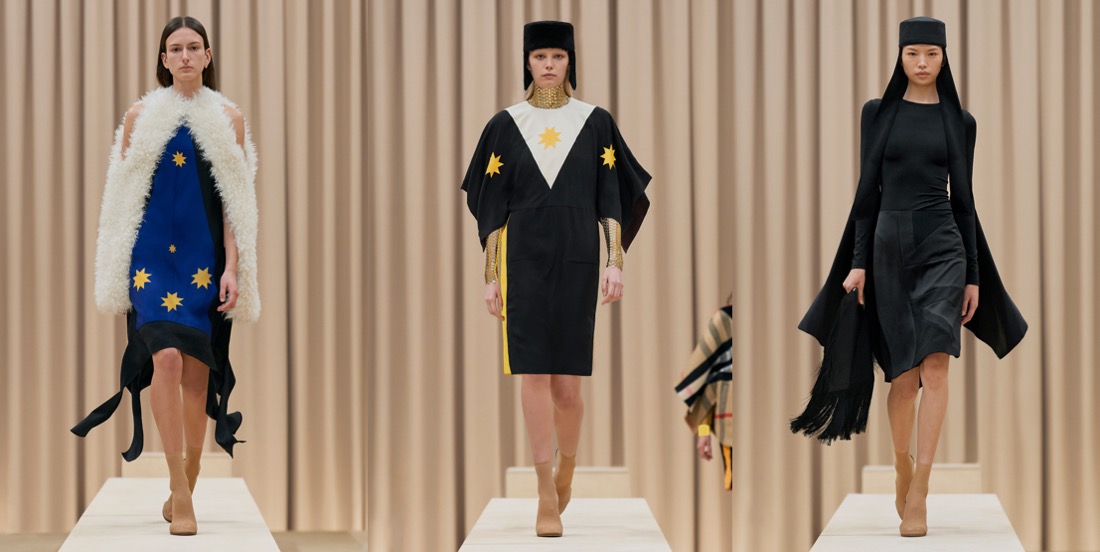
To some designers, the slowed down pace forced by the pandemic does wonders. Riccardo Tisci‘s latest collection for Burberry is his best yet for the British brand. The autumn-winter 2021 line-up reminds of Tisci’s early work at Givenchy: dark, well-edited, elegant, and perfectly balancing the feminine and the powerful. “Re-thinking a lot” was how he described his pandemic experience. “I had time to slow down. The fashion business is very fast. It’s a huge company. I was ticking boxes, and I was like, ‘Okay, stop.’ ” Rather than over-saturating his runway with multiple market categories and menswear, Tisci presented a focused women’s collection rooted in the ferocious and sensual but viable glamour that is his (slightly forgotten by the public) signature. “Slowly we’ve built an identity, and I realized my identity was very strong within the label,” he said, evaluating his tenure at the house. “It’s the most free collection I’ve done at Burberry.” Tisci expressed it through references to the clothes historically worn in nature, most specifically around the turn of the last century. “Through history, the costume of people going to the forest has been very ‘child-designed’: a naïve outline, but made much more sensual,” he said, explaining his approach to the idea. The ease and adaptability represented by those garments inspired dresses constructed as if from squares sewn together, and transformative takes on tailoring which could be de- and reconstructed by the wearer using closing techniques. There was an arts-and-craftsy character to the collection, backed up by manipulated flag and astronomy motifs and the lashings of eco faux-fur that drove home Tisci’s nature-centric message. His post-pandemic mindset had discovered a kindred spirit in the naturalist movements of the late 19th and early 20th centuries, which informed the collection. Fueled by the malaise of the fin-de-siècle, it was a time when instinct and whim were put above rationalism and materialism, when artists felt the call of the wild, and sought to de-program themselves from the rules of society. Before the show, Burberry released a video of a British-ly diverse crew of women reflecting on the meaning of femininity now. And the spoken-word show-opener by the British performer Shygirl, who starred as “Mother Nature,” was an homage to the waves of liberation and celebrations of identity washing over contemporary culture today. “It’s very sexy, I think, but without being vulgar. Femininity is something I really wanted to achieve at Burberry when I arrived, because it’s a very masculine company,” Tisci said, referring to the trench-tastic roots of the house. As with the progressive young generations to which his videos paid tribute, authenticity is key. For Burberry, it’s found in a menswear-y character that its female clientele probably expects. For Tisci, it’s the sensual and almost athletic glitz in which he excels. This collection showed that the two can co-exist on the same runway. As he said, “I feel like I’m starting to see my vocabulary at Burberry.” Finally.

“Live” collage by Edward Kanarecki.

Domestic Glam. Ashish AW21

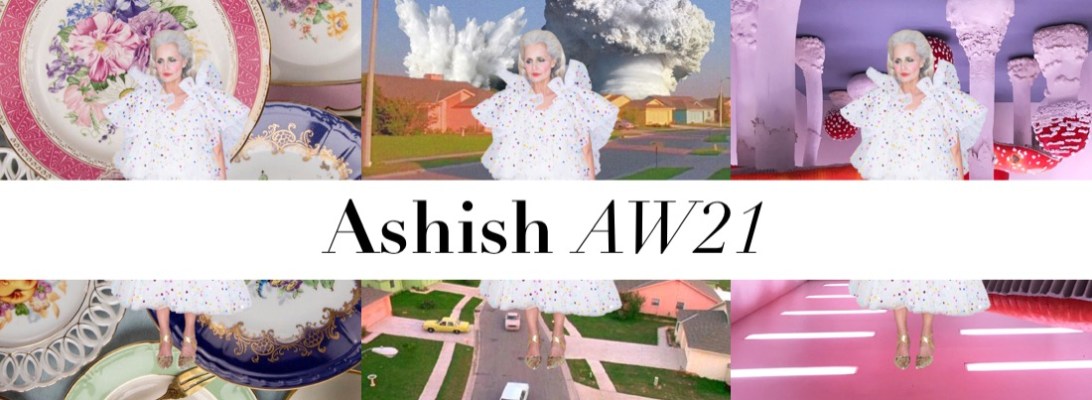
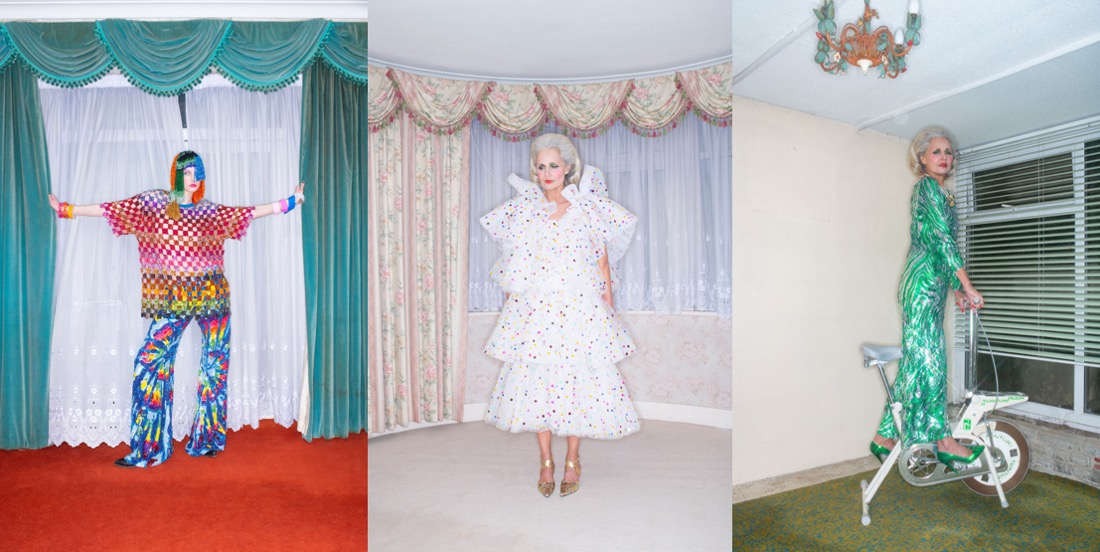
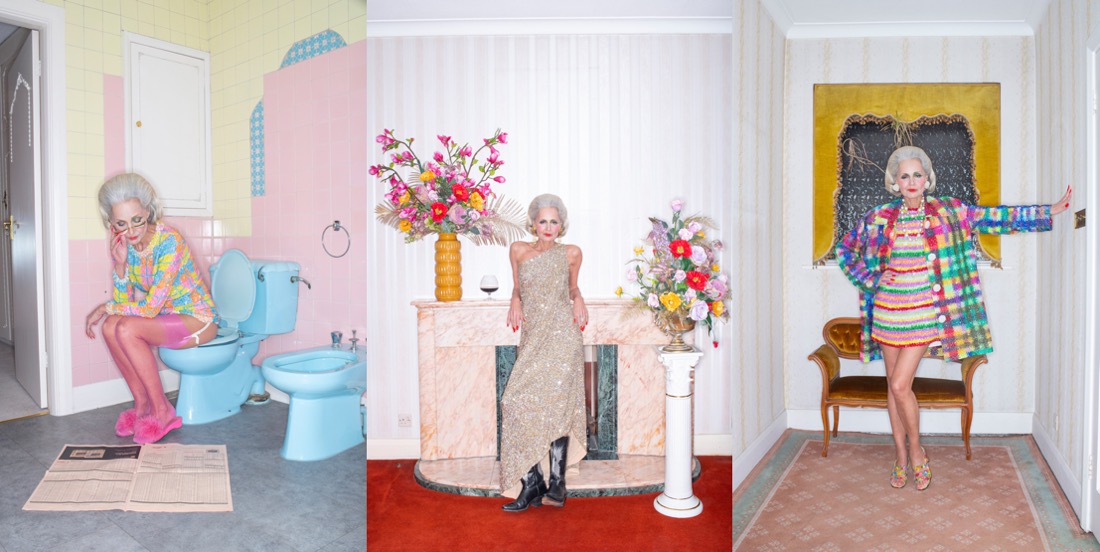
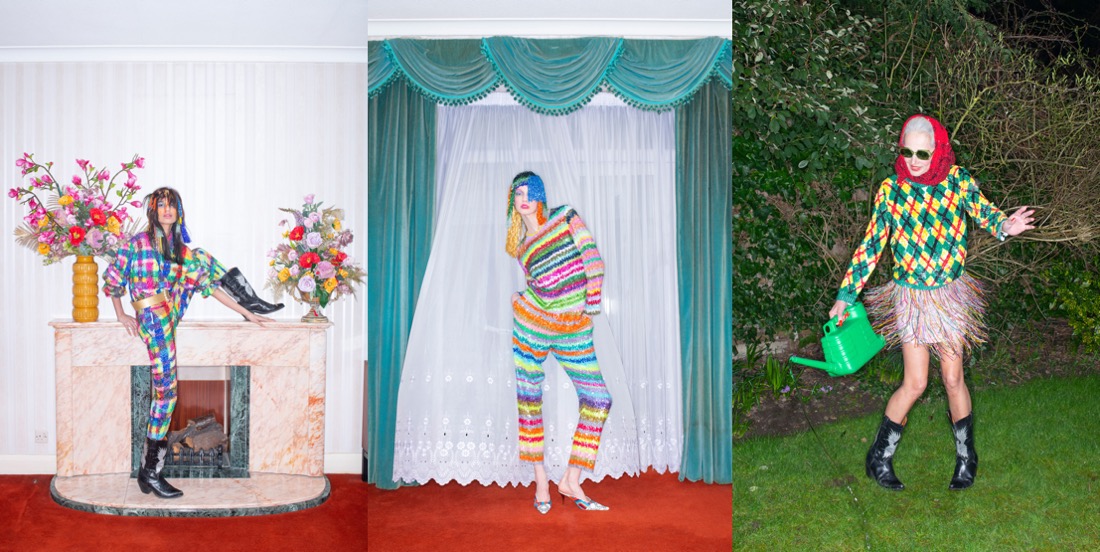
Brands and designers throw around the ‘stay-at-home-glam’ term for a year now, but most of the time it just feels forced and like a desperate attempt to sell eveningwear. However in case of Ashish‘ autumn-winter 2021, this notion of glamour in times of global pandemy is honest and at last makes sense. Ashish Gupta has the solution to fashion’s sweatpant-mania: simply offer garments that enable the consolatory comfort that we’ve grown fond of in isolation, combined with the communal joyfulness we’re aching to emanate. This collection fabulously demonstrates that comfort and joy can be mutually inclusive and mutually enhancing. When he was a student at Central Saint Martins, Gupta said he picked up this excellent line: “An evening gown should feel as comfortable as a T-shirt, and a T-shirt should feel as special as an evening gown.” And while he can’t recall where the line came from, he explained, “I’ve always carried it with me. So I always design my clothes to not be physically restrictive in any way. Even things that look body-con are cut on the bias and are super soft. Everything has pockets and zips, and there is never any corsetry; I think you should wear clothes you can slip out of very quickly and easily.” Shot in glamorous Finchley here in London, and impressively intricate to consider on the rail in Gupta’s house, this specific collection also seemed deeply easy to quickly get into, both as wearer and watcher. Gupta said the formula of its creation was to consider patterns and visible textures that have, through their history, the power to generate positive and comforting associations – “like when I think of tie-dye, I always think of beaches and holidays” – and then go to town on them via the sequin sequencer. The joyful result is the product of intense labor: a tie-dye long sleeve, for instance, took two Ashish employees two weeks to embroider by hand, once the exact order of sequins had been drawn and sorted. This collection also ran riotous gamut across the spectrum of so-called formalwear and so-called casualwear, two other categories whose perceived opposition seems increasingly anachronistic and redundant. Happily enhanced by these fantastic Sam McKnight wigs, this was a collection in which every piece of every look was made to enable joy and comfort in most conceivable circumstances. If these ’20s really are going to roar, Ashish is bringing the noise.

“Live” collage by Edward Kanarecki.