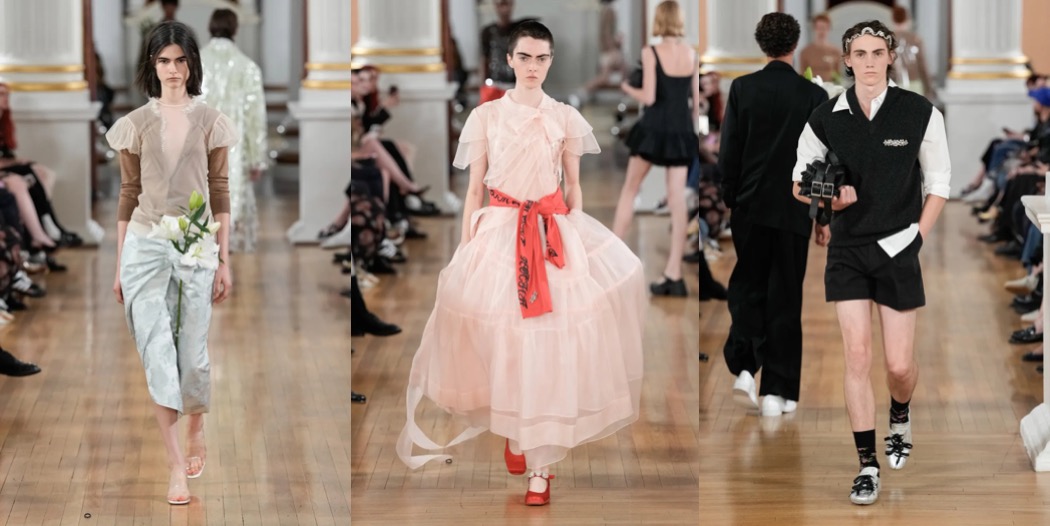
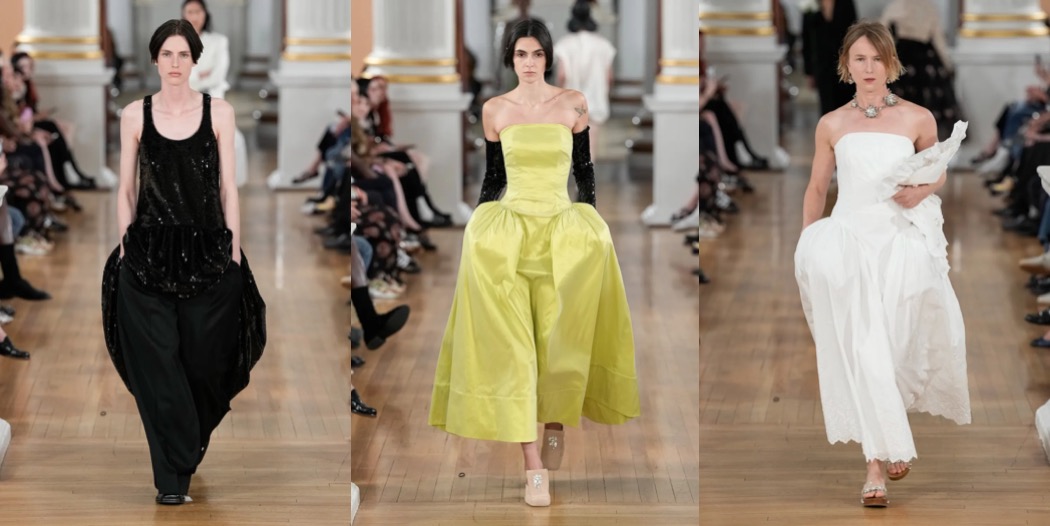
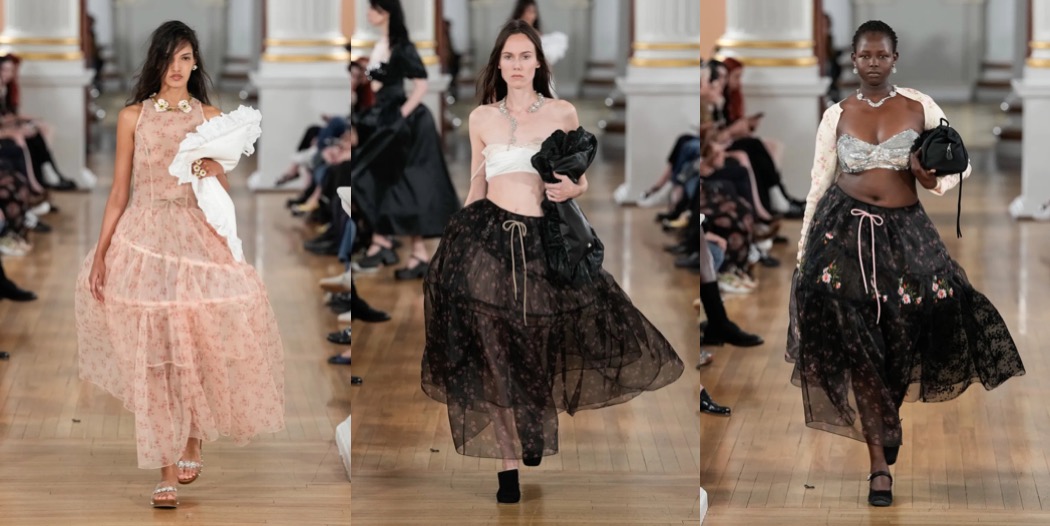
“It’s this slightly teenage, debutante feeling – when you’re on display and don’t really want to be there,” said Simone Rocha of her spring–summer 2026 collection. This season, the London-based designer marks 15 years of independent business, one deeply rooted in a women-centered vision.
Being “on display” carries many meanings for a contemporary fashion designer – especially a female one – and Rocha channeled that tension with a line-up that was at once vulnerable and resilient. Crinolined dresses swayed with a wonky gait; panniered skirts slouched loose and undone; draped tops tucked with flowers exuded an arty chaos. A black menswear suit, its jacket fitted with a built-in bouquet sash, struck a particularly cool note, amplified by the model’s crossed hands.
And the pillow clutches? Rocha’s eternal girl may drift through a dreamscape, but she is no Princess and the Pea.
Collage by Edward Kanarecki. Don’t forget to follow Design & Culture by Ed on Instagram!
Hey, did you know about my newsletter – Ed’s Dispatch? Click here to subscribe!
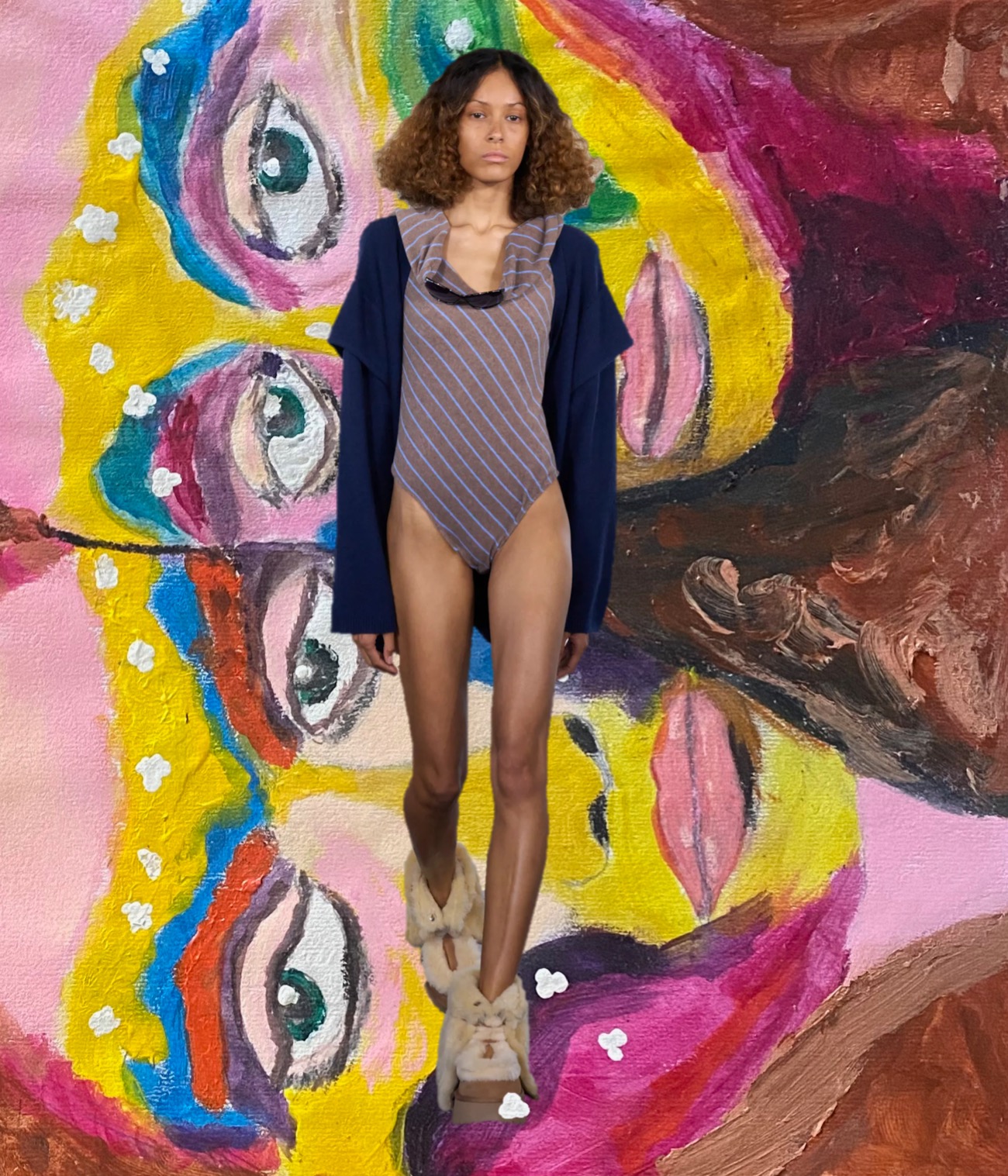
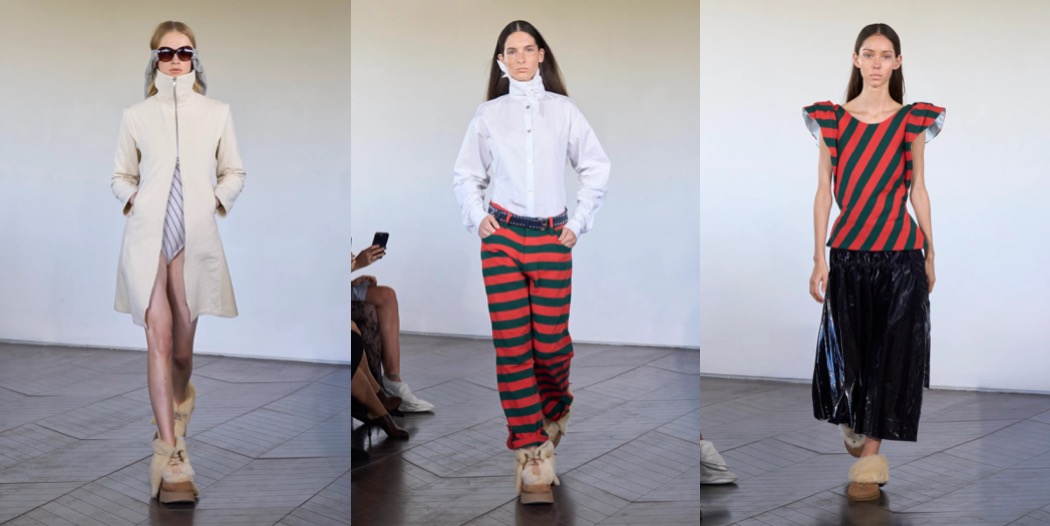
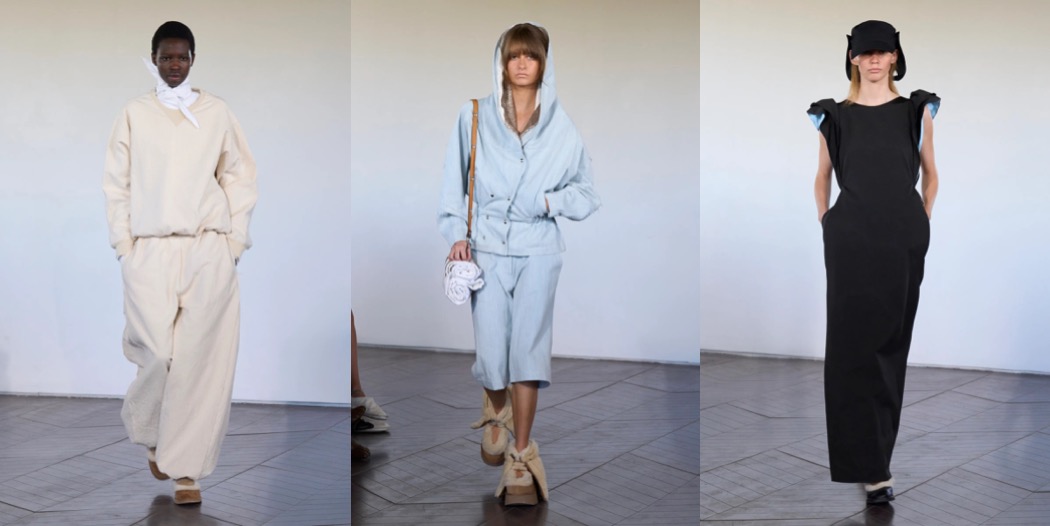
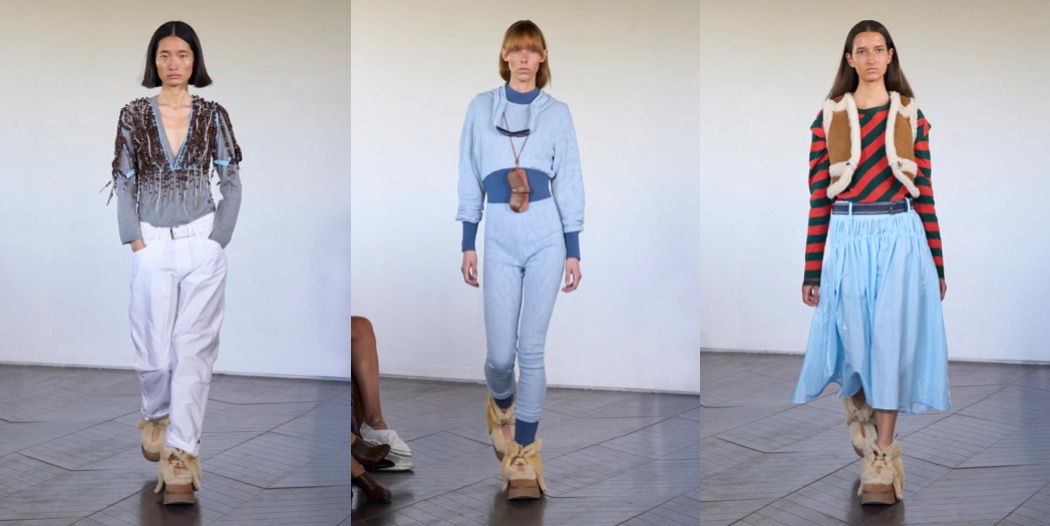
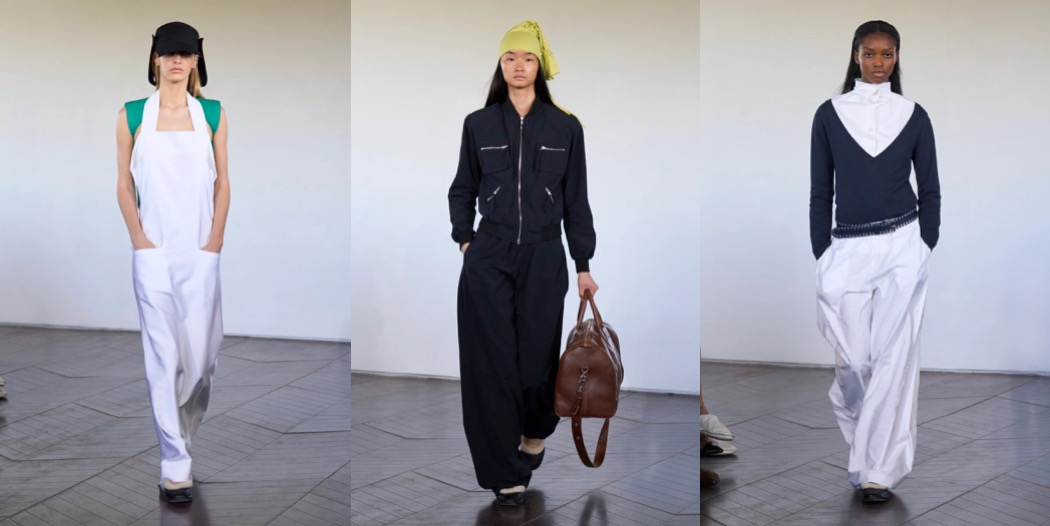
I’ll be frank – I haven’t really paid much attention to the past few days of London Fashion Week. So far, everything has felt a little out of place. That is, until today’s Talia Byre show, which I genuinely loved.
Talia Lipkin-Connor, the designer behind the brand, reminds me of Phoebe Philo – not in terms of aesthetics, but in energy. Like Philo, Talia creates no-nonsense clothes that endure, exude effortless cool, and resonate with women who aren’t necessarily invested in fashion.
Her spring–summer 2026 line-up featured utilitarian yet chic overalls, brilliantly cut trousers, and bold graphic stripes that gave the collection a striking sense of potency and urgency. The Talia Byre woman enjoys indulging in dressier touches – like a beautifully beaded V-neck sweater – but ultimately, she remains grounded (especially in those shearling-trimmed boots). It’s a matter of time till more clients buy into this brand.
Collage by Edward Kanarecki. Don’t forget to follow Design & Culture by Ed on Instagram!
Hey, did you know about my newsletter – Ed’s Dispatch? Click here to subscribe!
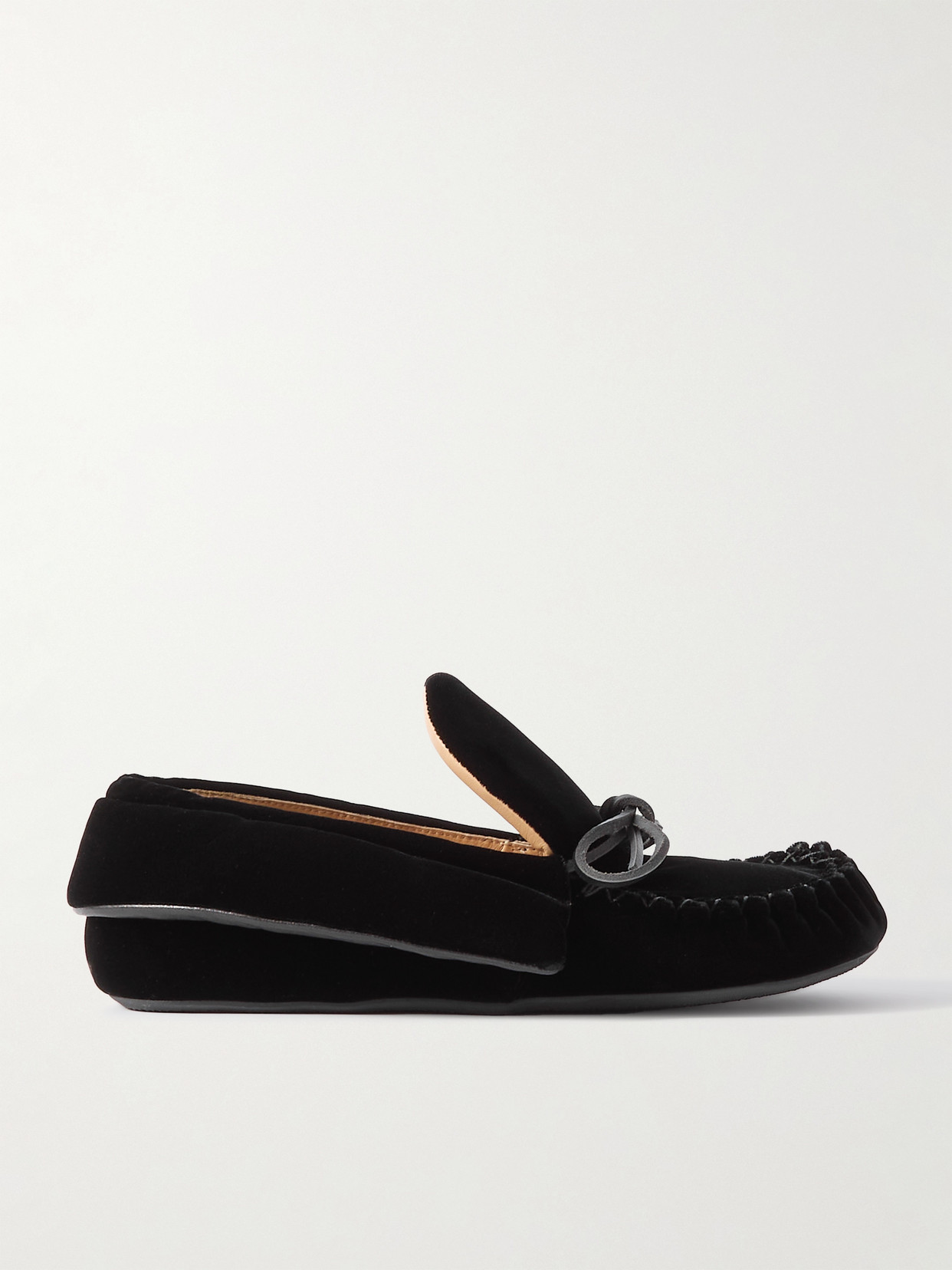
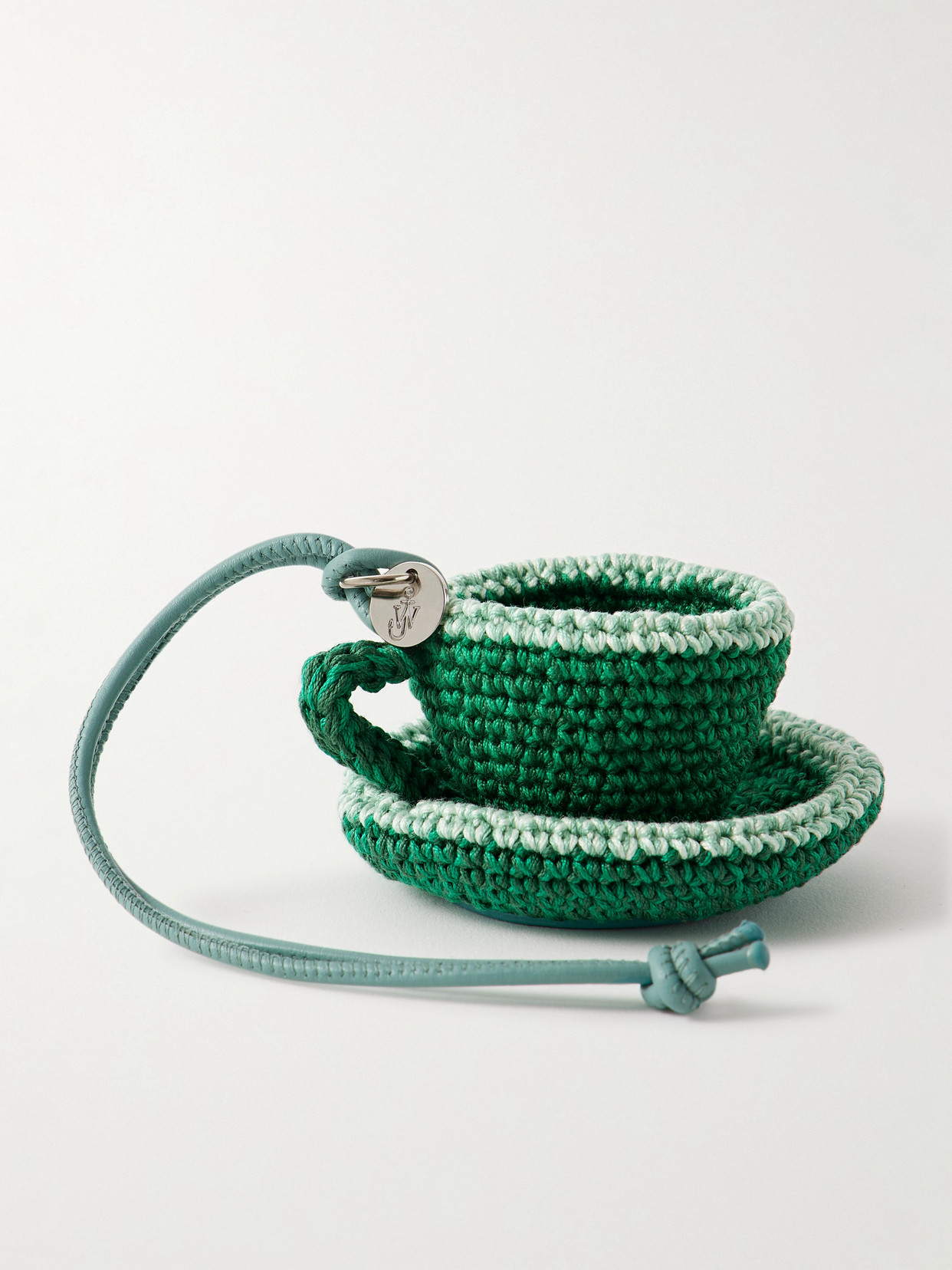
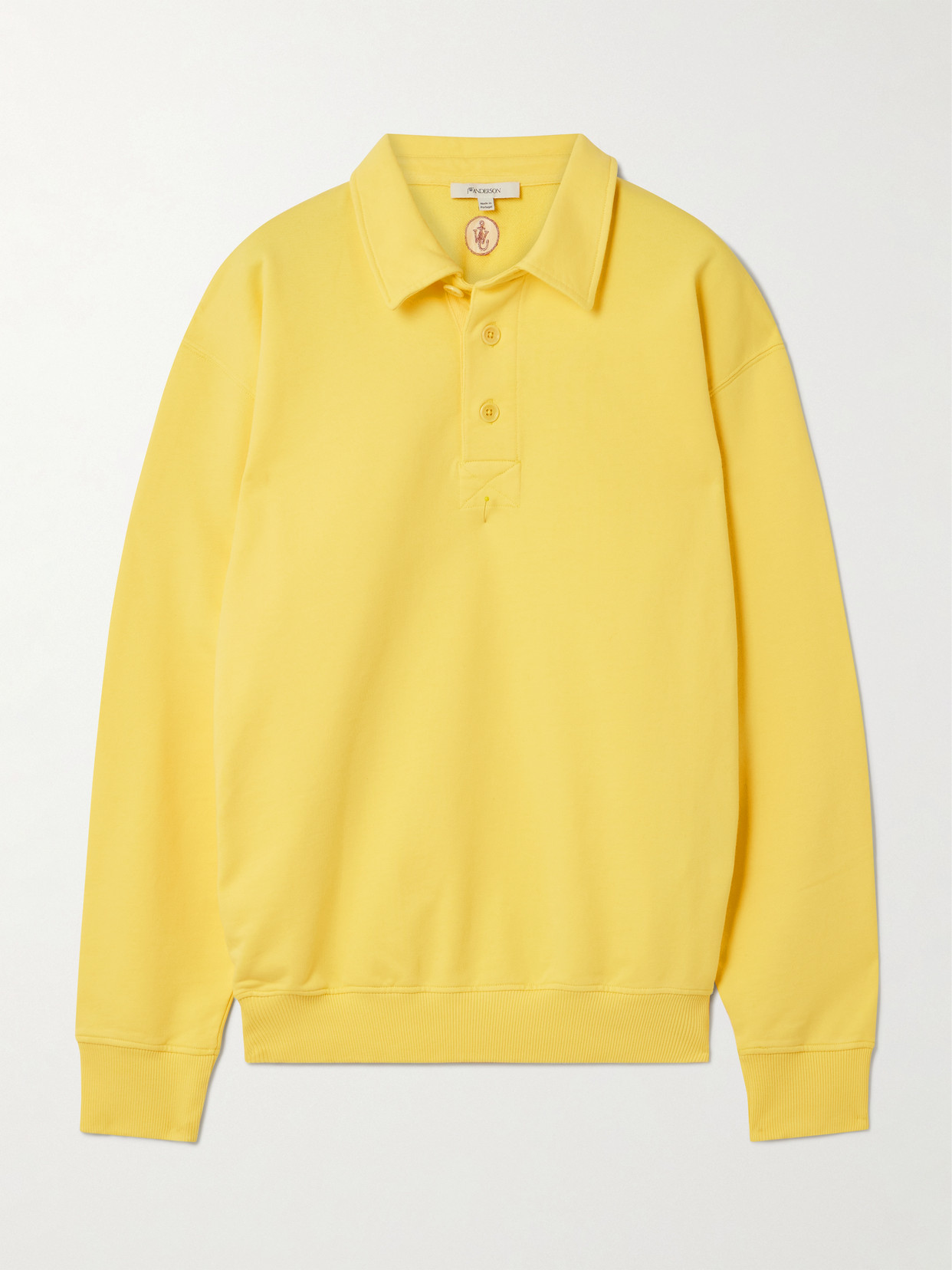
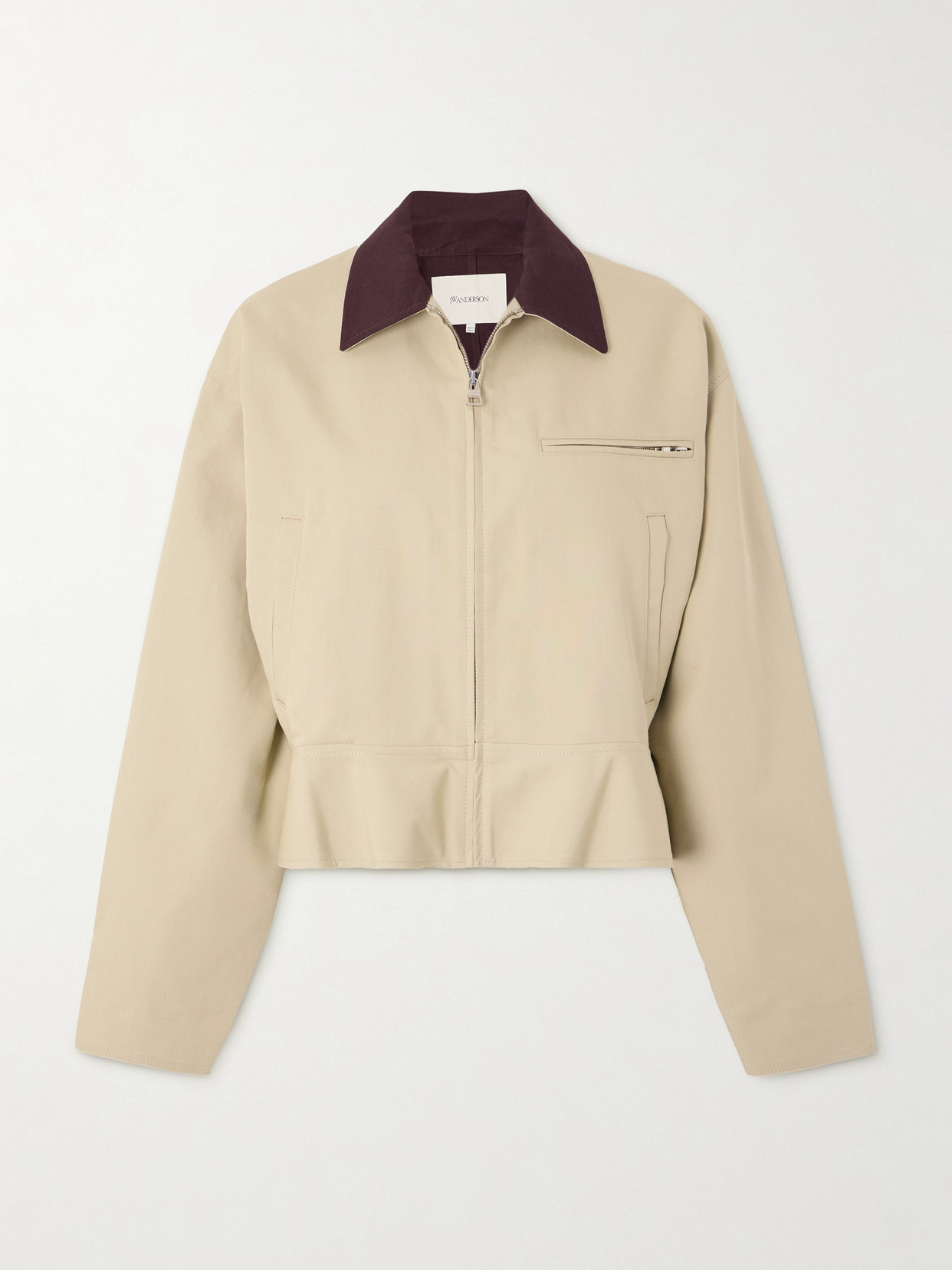
Come September, an utterly new iteration of JW Anderson will materialize. With a thoroughly-considered decision of stopping runway shows and fully rebrand brick-and-mortar shops (and open new ones across Milan, New York and London), Jonathan Anderson is about to revolutionize the way we think about fashion brands. “It’s going to be about: this is how I live. This is my world, what I collect, that’s part of me.” The designer – who’s now leading Dior – has created, as he likes to call it, a “blunt” environment where his own clothes – and others that are locally sourced – will sit alongside a plethora of things such as traditional Irish tea-towels, a Welsh blanket, hand-crafted stick chairs, a tiny still life by Gwen John, a set of restored vintage garden tools (instant must-have!), and even a selection of crotcheted, very British bird keyring charms. The stores will be restocked according to demand, and will of course offer all-time JW Anderson classics: argyle knits, cargo pants, witty denim, cheeky accessories. They are modeled in the latest lookbook by creatives the designer collaborates with and admires a lot: Luca Guadagnino, Bella Freud, Anthea Hamilton, Ben Wishaw and Pol Anglada, to name just a few. Anderson’s brave, bold, new IRL shop strategy will hopefully start a new wave of love and appreciation of brick-and-mortar experiences. Remember concept stores? They might be back very soon.
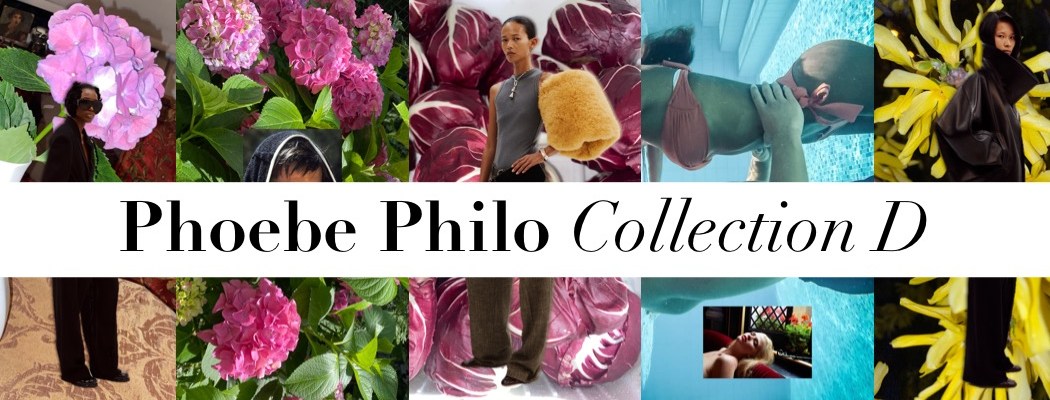
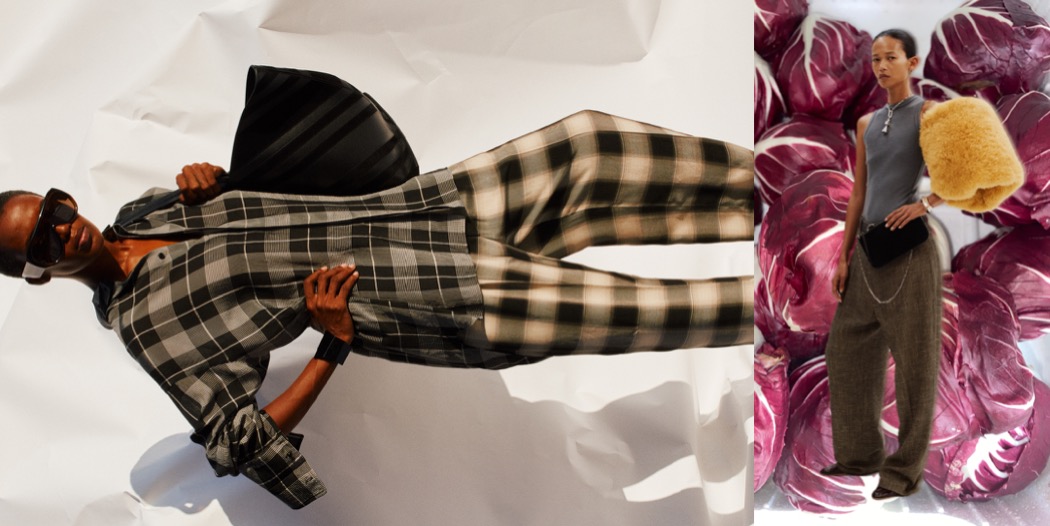
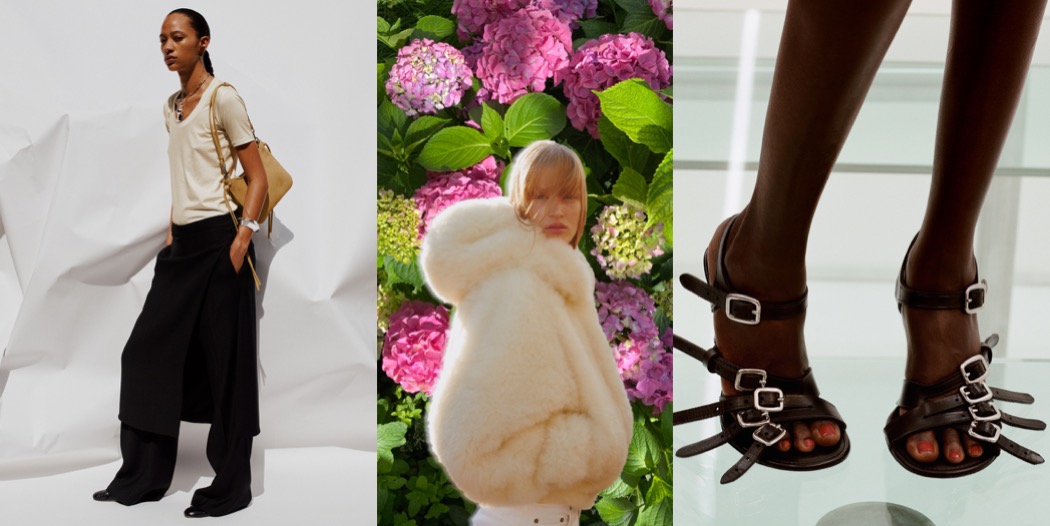
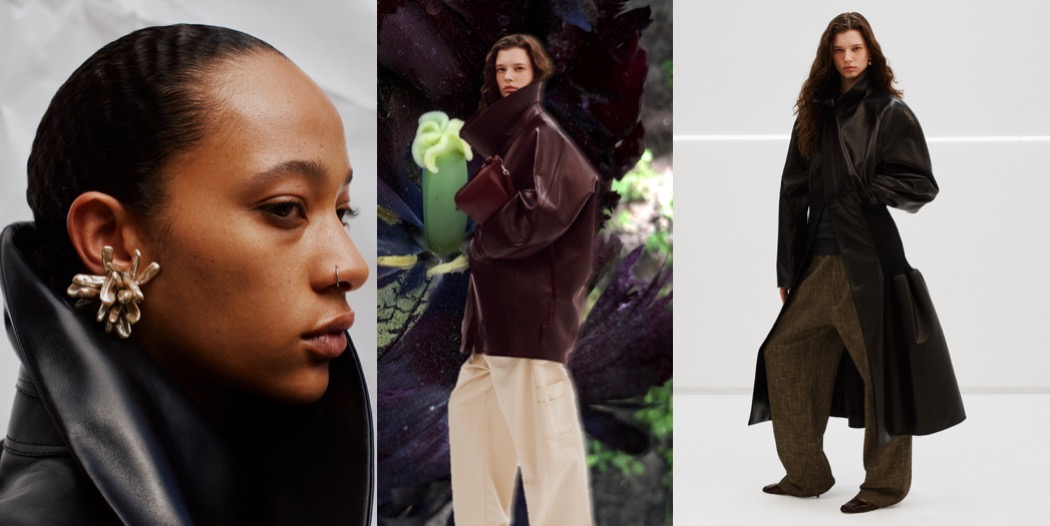
I was just about to (finally) start writing my Venice guide when I saw a new email in my inbox: Collection D. This could only mean one thing – Phoebe Philo had dropped the preview of her new collection on a random Tuesday, off-schedule, without warning. Sometimes, Mercury retrograde brings good things too.
Spontaneous things are the best things. Whether it’s travel, making art, or cooking, letting yourself act on an untamed impulse often delivers (and rewards with) the most satisfaction. It seems to me that Philo has relearned how to let herself go. Her latest collection marks a sharp departure from the strictness and control that defined her earlier namesake offerings. Even the lookbook’s warm lighting and the models’ relaxed poses signal a vibe shift, a mood swing into… joy. READ MY FULL REVIEW HERE.
Collage by Edward Kanarecki. Don’t forget to follow Design & Culture by Ed on Instagram!
Hey, did you know about my newsletter – Ed’s Dispatch? Click here to subscribe!
See the animated version of the collage on my Instagram.
I was chatting recently with a friend who works in fashion, and we both came to the conclusion that Ponte – Harry Pontefract‘s highly elusive brand-slash-concept – is the most exciting and subversive thing to emerge in quite some time. It’s just so daring, transgressive, and disruptive of all possible industry norms. And lead by a truly rare talent.
“Operatic” is how the designer characterized his autumn-winter 2025 corseted dress and matching stole crafted from the fleece of approximately ten sheep. The fleeces were hand-felted and stitched together, then meticulously brushed out over the course of a week by a dedicated hairdresser to achieve maximum volume and softness (Kristen McMenamy is wearing the striking piece in the latest issue of Double Magazine, lensed by Juergen Teller). Another look embraced precision and minimalism: a pair of jeans made from deconstructed garments, stripped of every stitch, grommet, and fastening, then starched into a crisp, paper-like form. “It was quite beautiful just to do something as generic as denim,” Pontefract noted, explaining that time will naturally alter the rigid silhouette, softening it into drapes – an evolution that mirrors nature’s own cycles. Time is an important theme for the designer. You don’t really hear about brands that so consciously reflect on how it’s clothes will change – or even deteriorate – over time.
Having worked with Jonathan Anderson, known for his fashion “glitches”, Pontefract offers a quieter, more introspective approach. His label is small, his designs intimate. Here, boundaries blur – between past and present, body and garment – in ways that are both lyrical and provocative. Consider, for instance, a strap-on tutu–belt bag crafted from 40 meters of tulle. There’s a palpable boldness in this work, both in concept and execution. “We don’t and shouldn’t make things just because we think they’ll sell,” Pontefract said. “And I think that’s quite freeing.”
Collage by Edward Kanarecki. Don’t forget to follow Design & Culture by Ed on Instagram!
Hey, did you know about my newsletter – Ed’s Dispatch? Click here to subscribe!














 Design & Culture by Ed