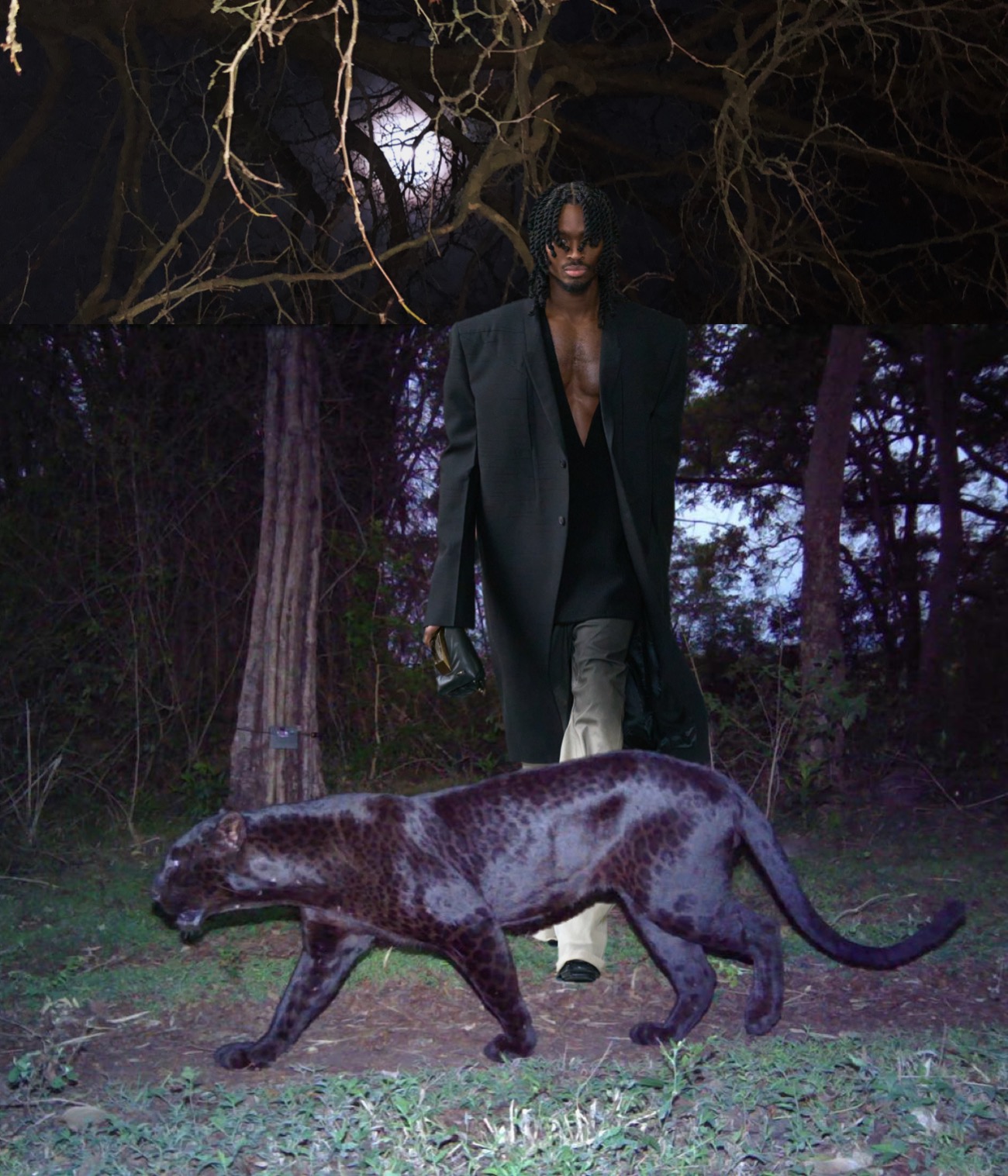
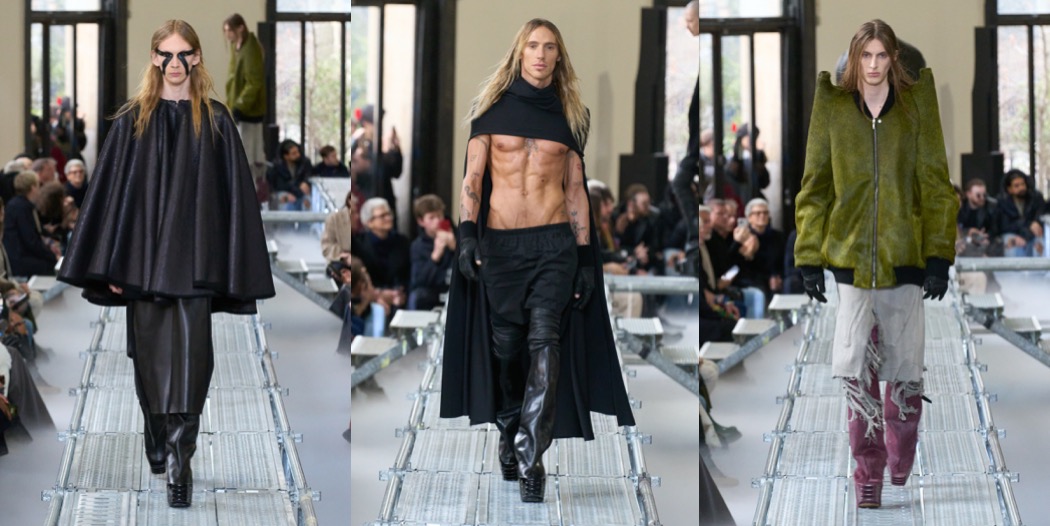
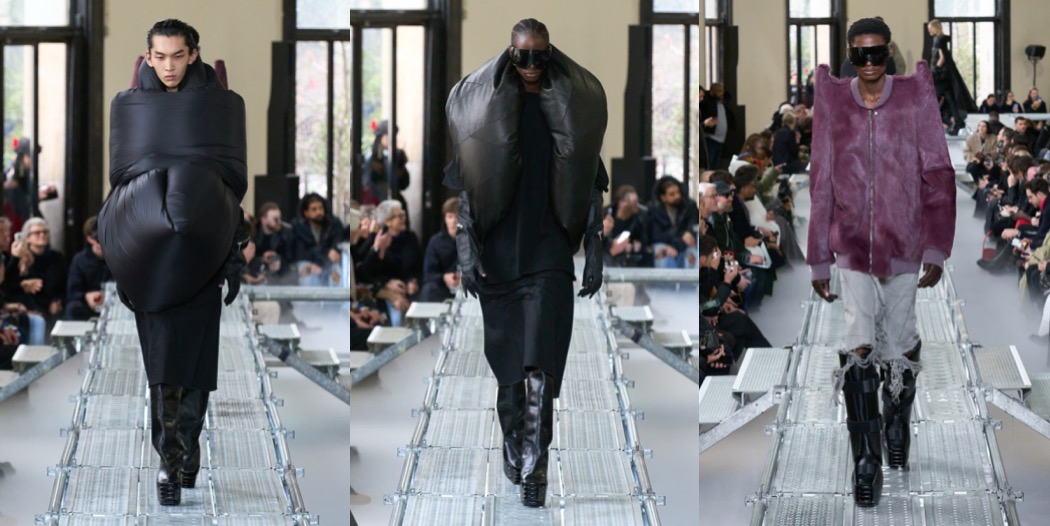
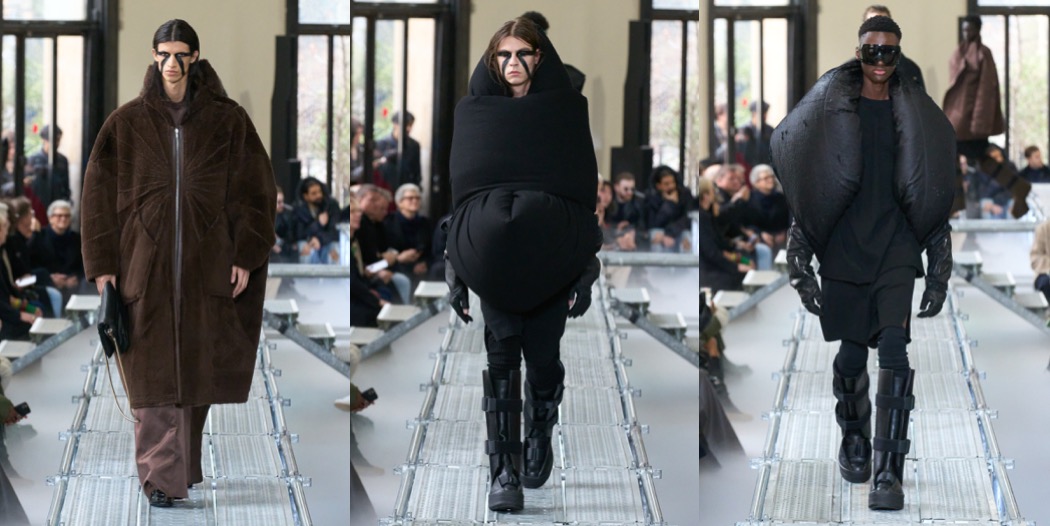
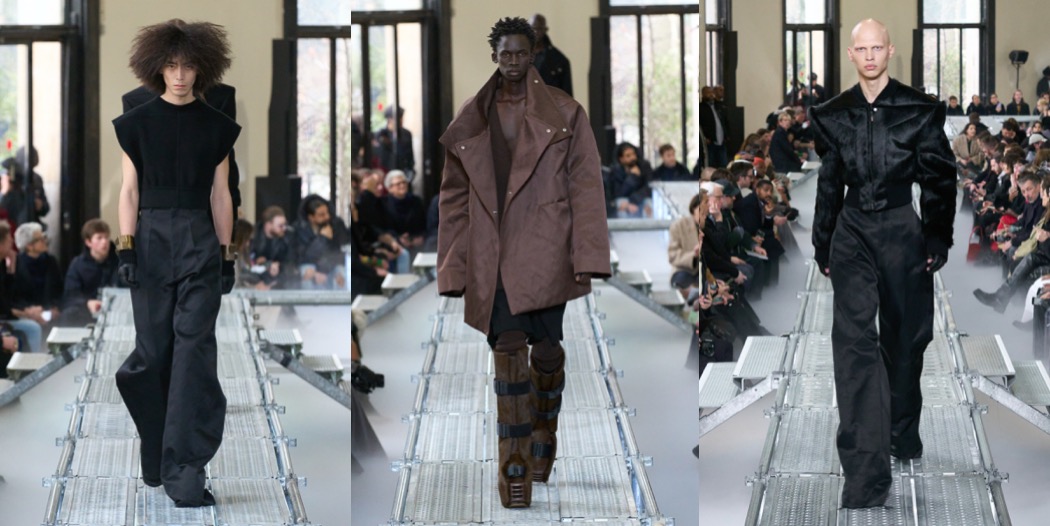
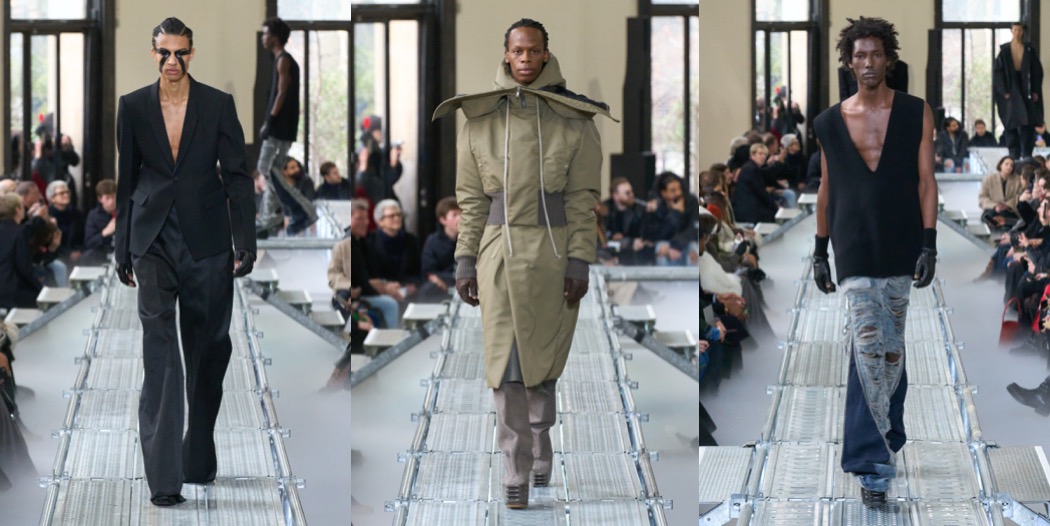
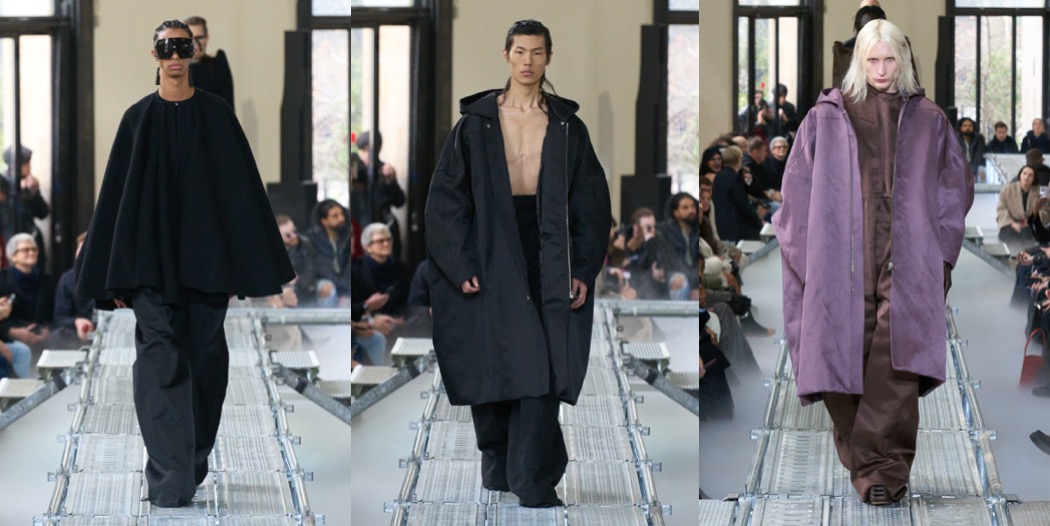
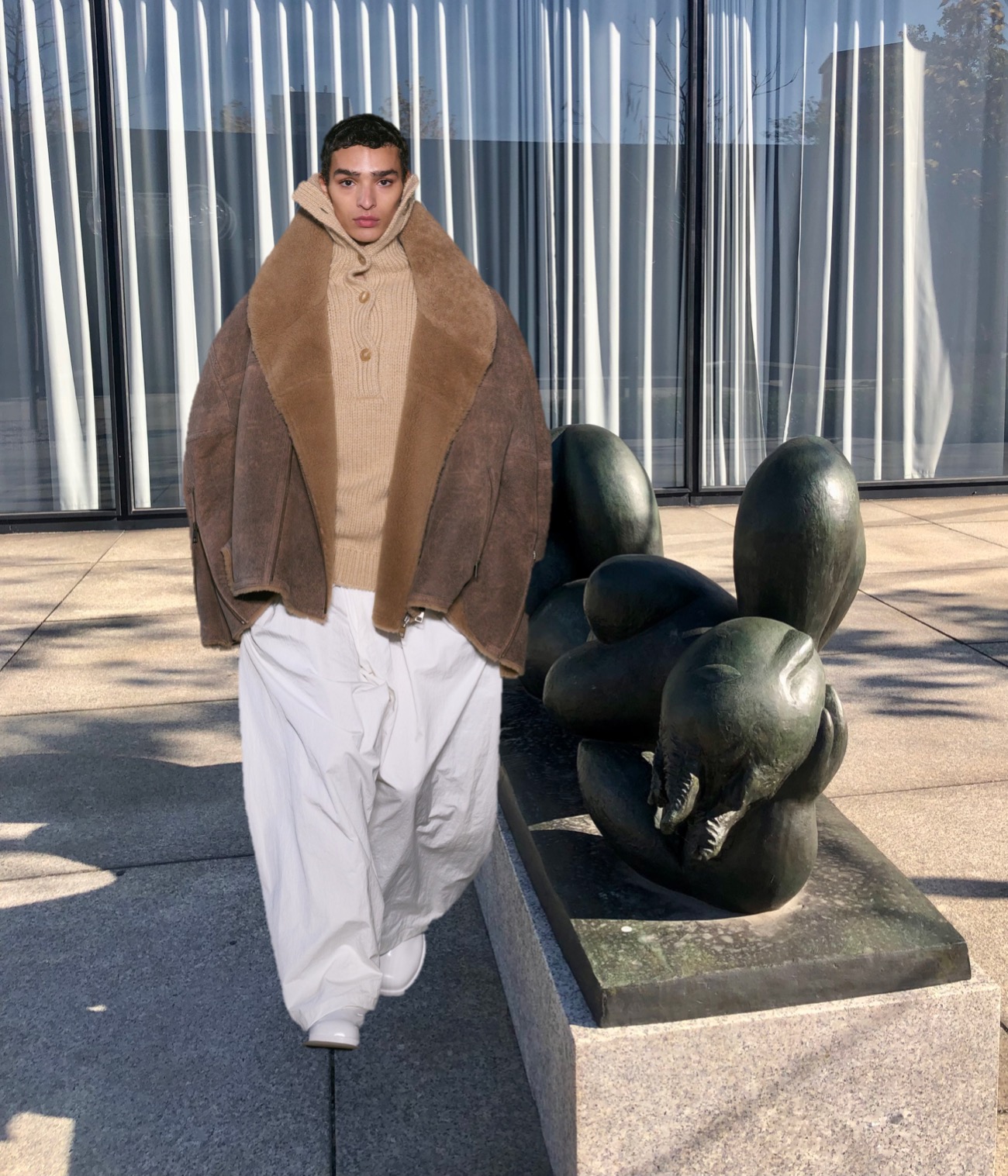
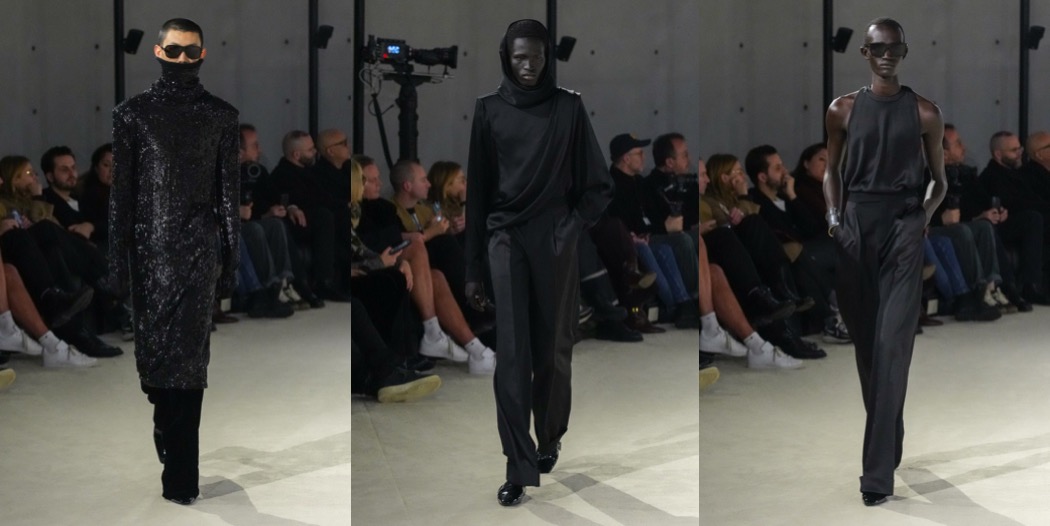
Rick Owens wanted to imbue his latest collection with an “elaborate modesty,” partially drawn from the British queen’s 19th century reign. Said the designer: “It’s a Victorian silhouette. There’s a prudishness. We remember that era so much for suppressing sensuality, but doing it in such an elaborate way that you couldn’t help but think about it.” Cloaks, skirts (some almost pencil), tightly gathered parkas, and voluminous pyramid-paneled shearlings that had a ladylike grandeur, heightened by the handbags, were the chief protagonists in Owens’s pivot to would-be primness. A further act of withdrawal, of self-containment, was played out in the ‘donut’ padded pieces – wearable soft furnishings – into which some models were inserted. “That’s me trying to reduce garments to the simplest shape I could. They’re literally duvet donuts. They’re like the fog machine of clothes – dumb and super-simple.” There was much more in this collection to relish, including many fine denim and cow-hide spike shouldered jackets, and the increasingly amazing pieces that Owens’s team is crafting from pirarucu. Because the runway was raised around a meter or so we got an eyeful of the footwear, which included a powerful new orthopedic variation of his glamorous platform boots. However the central tension rested in Owens’s urge to consider modesty in a collection that was as typically laden with sexuality as ever. There is always a sly irony secreted in this designer’s gothic bombast, a space where he posits questions despite, or more likely because of, the lack of an easy answer. And there is a highly autobiographical element too. He said: “I’m indulging in the exercise of taking my misdirected uncertain youth and reshaping it as a 61 year old man at the height of my powers. Being able to revisit that and create what I wanted life to be then, it’s so fun.” This comment led me to propose that Tyrone Dylan, who has now opened so many of Rick’s shows, has become a sort of personified cipher for Owen’s idealized youth. “Absolutely! Tyrone is like an idealization of that kind of vitality that I don’t think I ever actually really had – although I probably had moments of it. But I’m able to really project it on him. And also, you know, having him open each men’s show it’s sending a message about values; about not having things be so disposable. It’s about loyalty, about family, and about how my personal life is completely connected to what I put out there.”
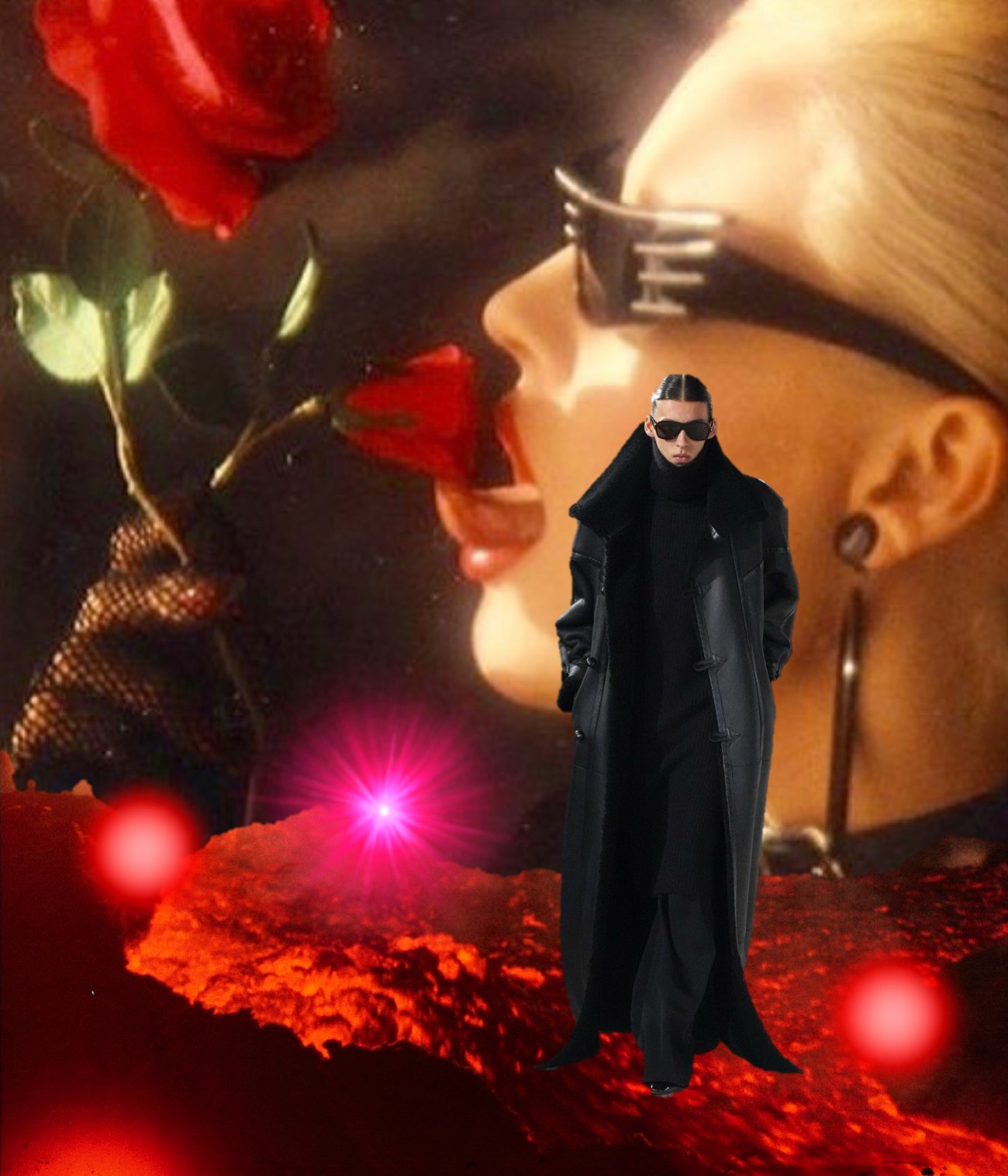
Collage by Edward Kanarecki. Don’t forget to follow Design & Culture by Ed on Instagram!
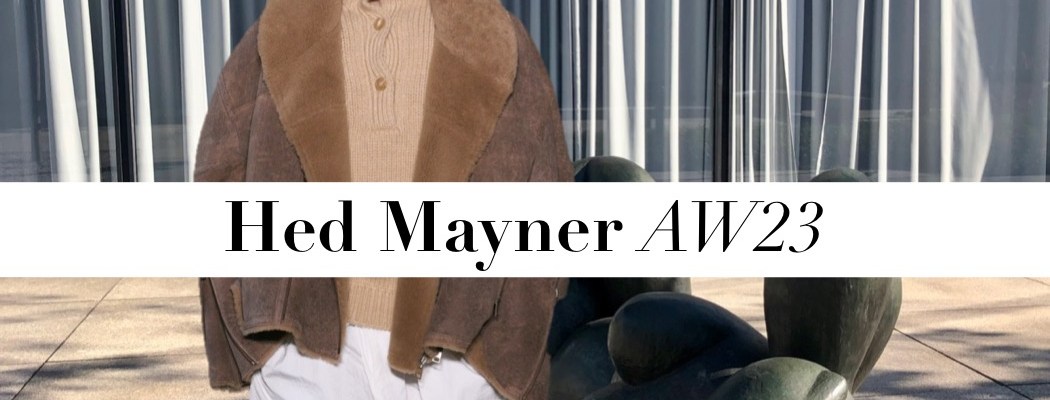
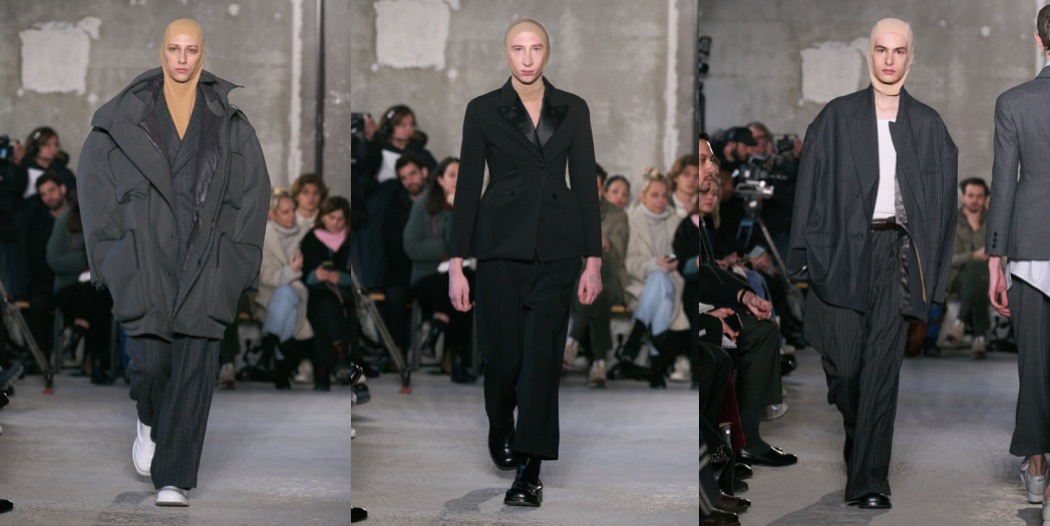
Hed Mayner, the designer from Tel Aviv who captivates the Parisian crowd for a couple seasons now, loves a big silhouette. He is known for blowing up conventional clothes to XXXL size, creating garments that are both timeless and absolutely poetic. In his autumn-winter 2023, Mayner has some of the most desirable pieces of the season: denim cargos pants meet gargantuan wind-jackets, an exquisitely tailored jacket that comes with unisex pinstriped skirt, thick cashmere socks worn over cashmere leggings, beige balaclavas… in general, it’s a more utilitarian vision, one that lets in some non-chalance and spontaneity to the designer’s world. The look featuring a faux-fur coat, white tank-top and leather pants is to die for, too. For the first time, Mayner is dipping into the footwear realm, partnering with Reebok on a set of remixed Classic Leather sneakers. The resulting shape epitomizes the Hed Mayner ethos: the shoes are washed and then flattened by hand to create a loose, lived-in shape, some with a deconstructed tongue that wraps the upper. The off-the-radar designer, gatekept by the industry insiders, is about to blow up.
Collage by Edward Kanarecki. Don’t forget to follow Design & Culture by Ed on Instagram!
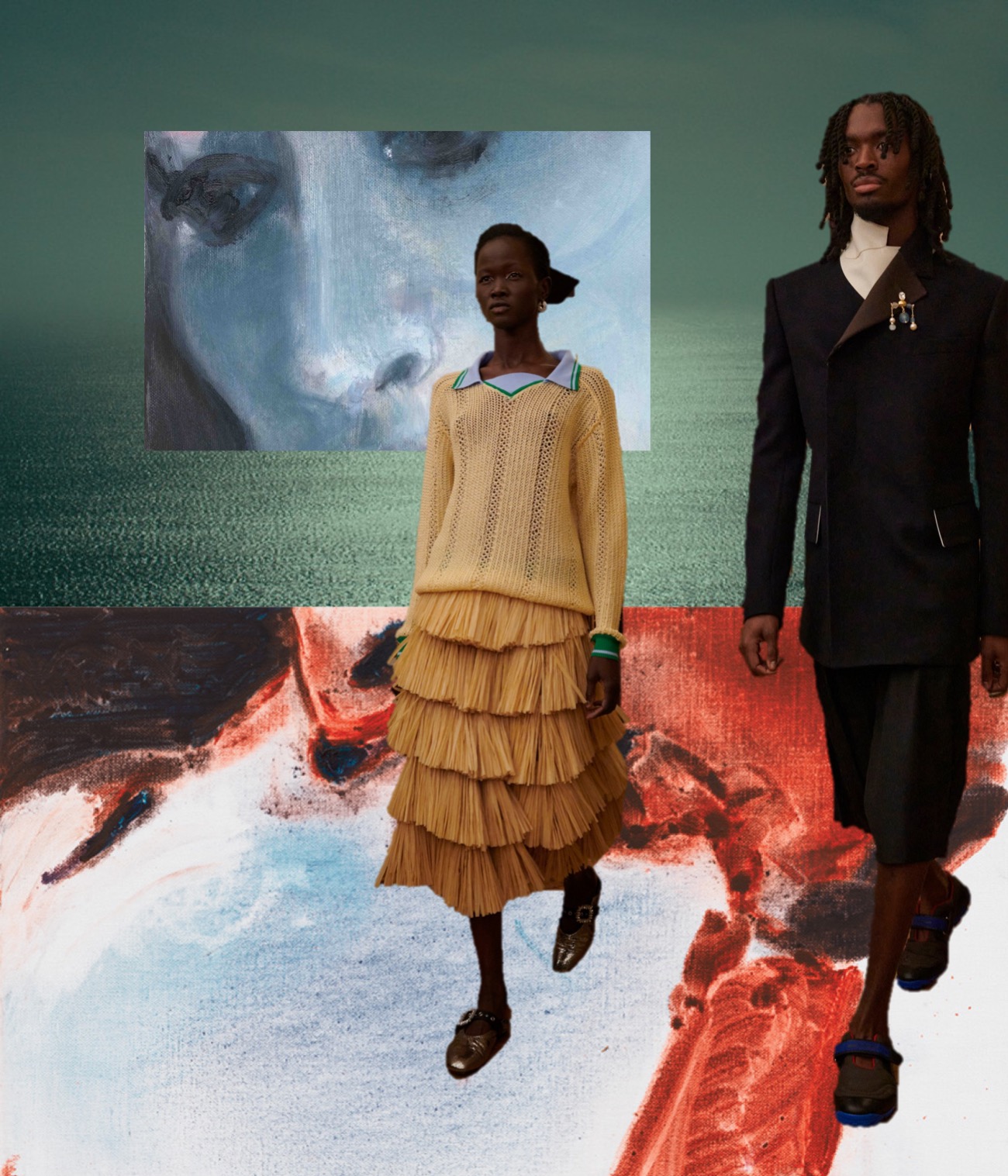
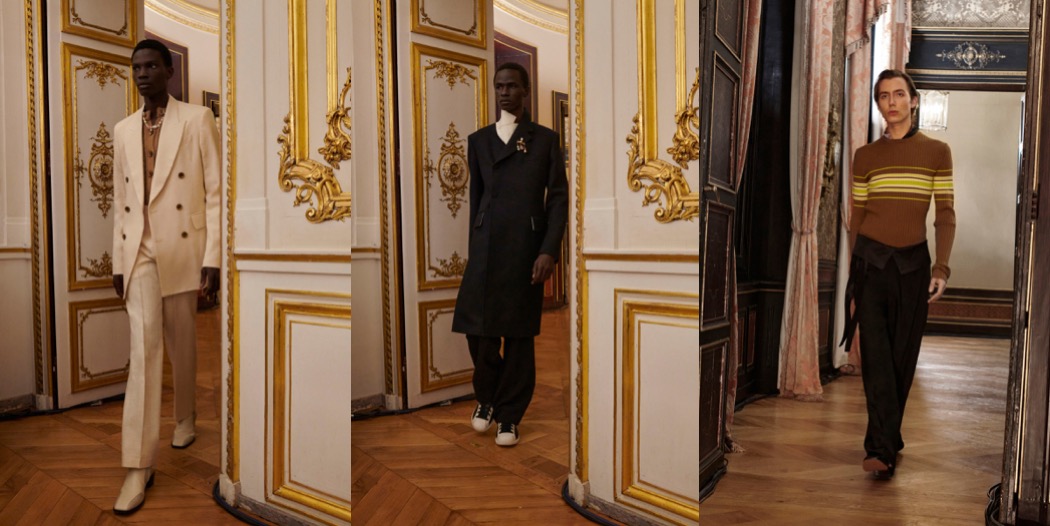
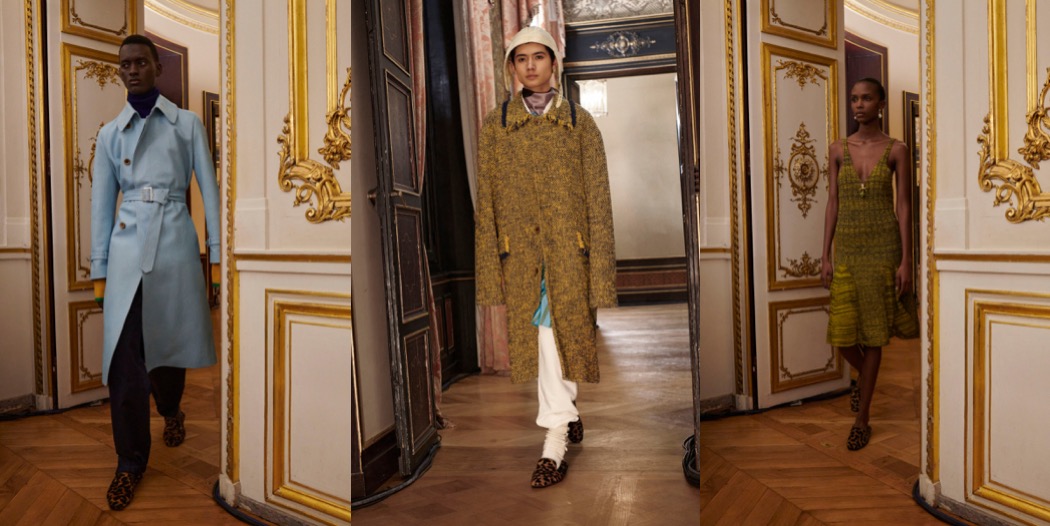
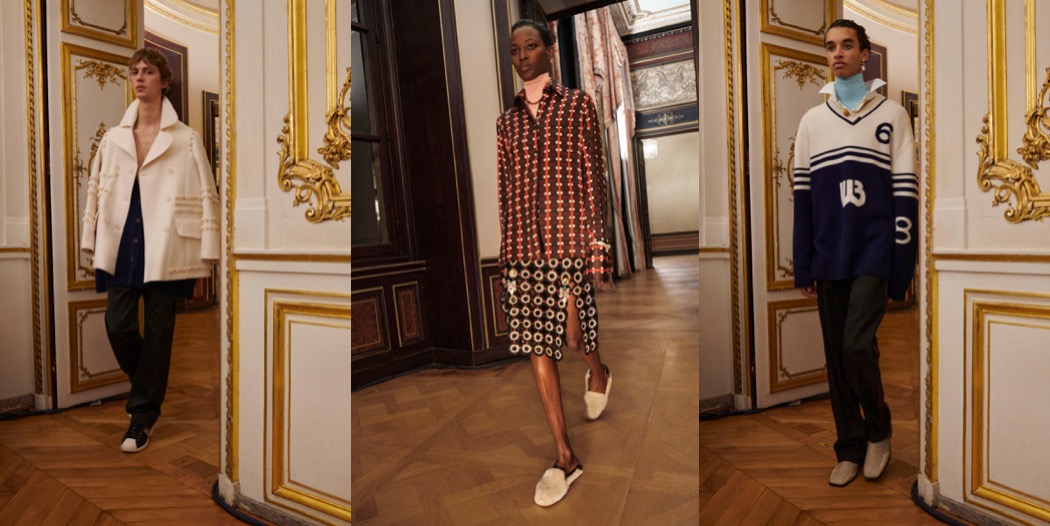
For autumn-winter 2023, Grace Wales Bonner delivered one of the best collections of the season. “Somehow, I feel like being away from home, in somewhere like Paris has this romance and grandeur about it.” Wales Bonner‘s show took place in an historic suite of salons at the Hotel D’Evreux. This hallowed site is at the very corner of the Place Vendome, the heart of haute French luxury. It couldn’t have been a more intentional choice of backdrop for the aspirations of this most studied of young designers, who often repeats “bringing an Afro-Atlantic spirit to an idea of European luxury” as her mantra. Her abiding mission to elevate “Black male style; a very refined approach to masculinity” took on the Parisian sojourns of the American writer and intellectual giant James Baldwin, the fabulously wealthy young Maharaja and Maharani of Indore, and fanned out to admire the showgirl, style-maker and activist Josephine Baker. By immersing herself in their worlds, she said she found herself transported, not so much by the idea of literal references of costume as by the uplifting effect of the cultural atmosphere. “Thinking about what Paris as a place gave them license to do and express. This idea of freedom of self-expression, to define yourself.” Paris, she speculated, “may create space to have more license to be expressive.” The award-winning jazz trumpeter Herman Mehari stood in the middle of the apartment and played as a procession of sophisticated “Black flanuers” threaded its way through the rooms. First out was a strikingly precise black tailored coat with half its upturned collar in white. On its breast was pinned a brooch – one of several composites of baroque pearl and Ghanaian bead jewelry that studded the show with a sense of the ceremonial. Wales Bonner’s knack is for drawing her own clever intellectual line between past and present. Saturated as her pieces are with cultural symbolism, she always takes care that the way they’re put together is wearable and relatable. You could see that knack of hers as you scanned down an outfit – say, a precision cut tailored jacket, worn with cotton utility-type trousers and babouche slippers. Babouches walked the parquet in many variants; twinkling silver and sparkly and with Mary Jane straps on the toes for women. She also knows how to elevate the ordinary, or the generic, to give it her own stamp of cachet. Cowrie-shell decoration has been in her repertoire from the very first; now she deployed it as lines of embroidery on an oversized ecru peacoat, white on white. Half- French classic, half Wales Bonner classic. The leveling up, the equality of craftsmanship across cultures is also what Wales Bonner is about. Her casual wear has her intellectualism coded into it too. When you’re wearing a Wales Bonner collegiate jacket with the words Sorbonne 56 sewn onto it, you’re referring to the First Congress of Black Artists and Writers in Paris, to which James Baldwin was a delegate. When sporty, there are also genuine cultural connections. Wales Bonner’s designs for the new Adidas soccer kit for the Jamaican team was showcased.
Collage by Edward Kanarecki. Don’t forget to follow Design & Culture by Ed on Instagram!
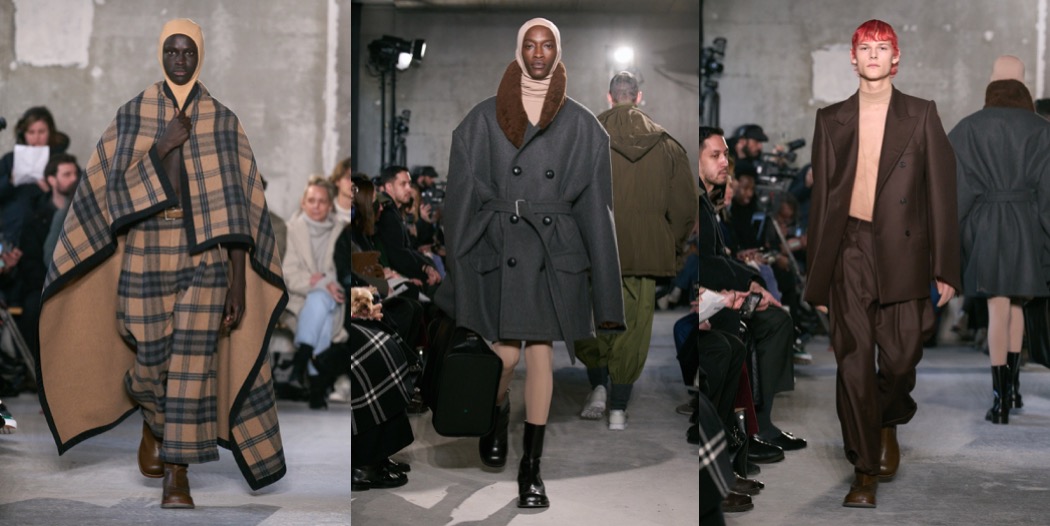
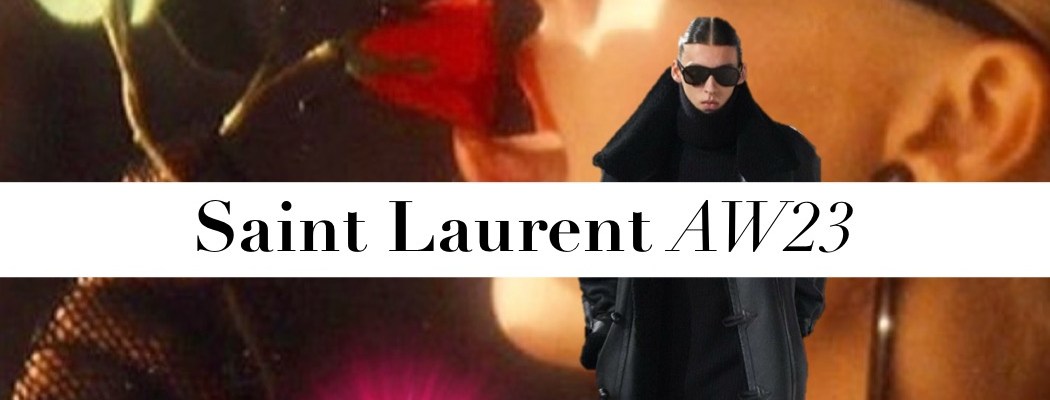
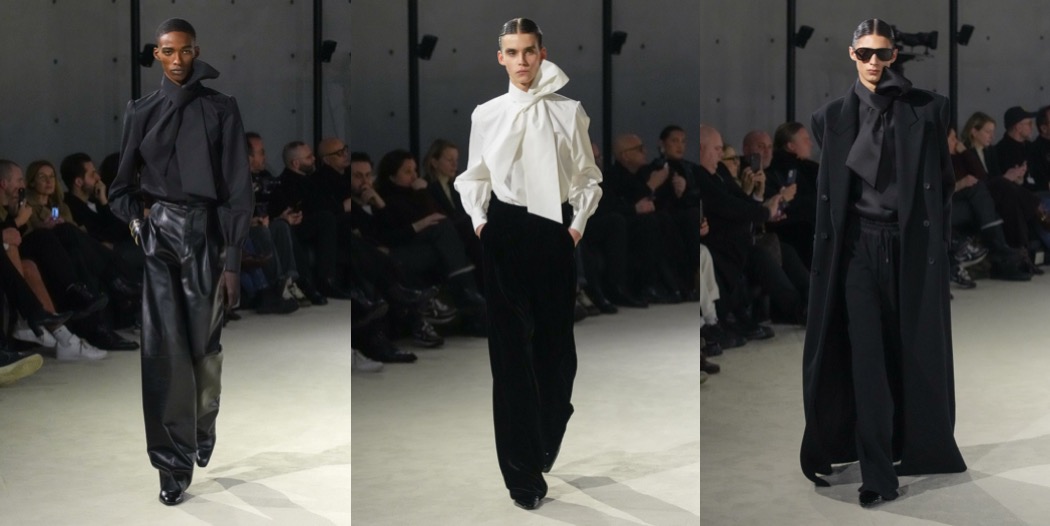
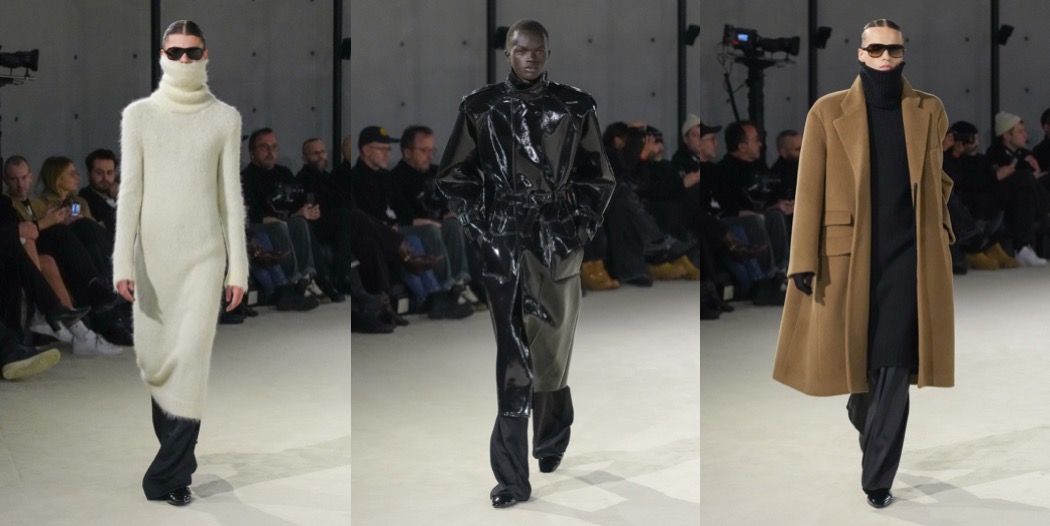
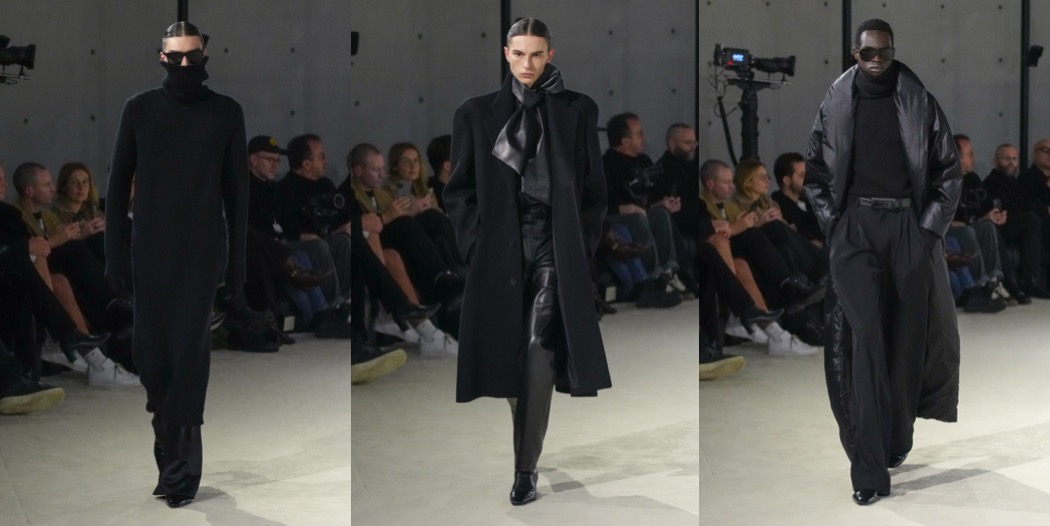
For the last couple of seasons, Anthony Vaccarello has been delivering his best womenswear collections for Saint Laurent. He’s starting to refine (and redefine) the menswear line as well. Long, tall, lean – those were the words that spontaneously shot to mind while the designer was sending out the autumn-winter 2023 collection that swept away the gendering of clothes with every passing flick of its floor-grazing coat-tails. At Saint Laurent, it was instantly very clear: Vaccarello has been building on the dramatically attenuated silhouettes that have been striding out at his women’s collections recently, and their transference into menswear is now complete. “I really want them to be almost one person,” he said. “So women could be the men, and the men could be the women. No difference. I want more and more to put them at the same level. No distinction.” While the audience reclined on a circular banquette, sipping Champagne at the perimeter of a beige center-stage, it was equally apparent that Vaccarello was speaking about his idea of what drop-dead elegance means to people of his own generation. In material terms, that translates to dark, vertical, narrow coats; black leather and velvet; necks exaggeratedly tied in flourishing bows or sunk funnel-necks; the cool, tailored swagger of Smoking jackets, the cache-coeur drape of tops and chest-revealing cowl-front silk shirts that plunge into wrapped cummerbunds. Whereas what was for “her” was pioneeringly co-opted from “him” by Yves Saint Laurent in the 1960s and ’70s, now Vaccarello has reversed the process in the 2020s. Of course, the codes of the house offer endless gifts to play with on the menswear scale: patent block heels, adaptations of the pussy-bow see-through chiffon blouse, a hint of the North African draped hood. Vaccarello did all that, with a confidence and conviction that is all his own. What’s progressive about it is the way he’s pushed past anything that might be categorized as “blurry,” “fluid” or “neutral.” In the bigger scheme of fashion, his contribution is bringing exactly the opposite qualities to rethinking clothes and gender: what Vaccarello deals in is rigor, precision, and a brilliant ability to cut. It was a true Saint Laurent on-brand orchestration (with a little help from Charlotte Gainsbourg, who while wearing a black velvet tuxedo played on the piano in the middle of the Bource De Commerce venue), for sure, but a resonantly relevant step forward for the designer too.
Collage by Edward Kanarecki. Don’t forget to follow Design & Culture by Ed on Instagram!
This Milan Fashion Week, the three Italian brands known for exquisite tailoring and eternal elegance – Brioni, Giorgio Armani and Zegna – have really nailed it with absolutely gorgeous collections filled with investment pieces and simply beautiful garments. You can’t go wrong with the classics!
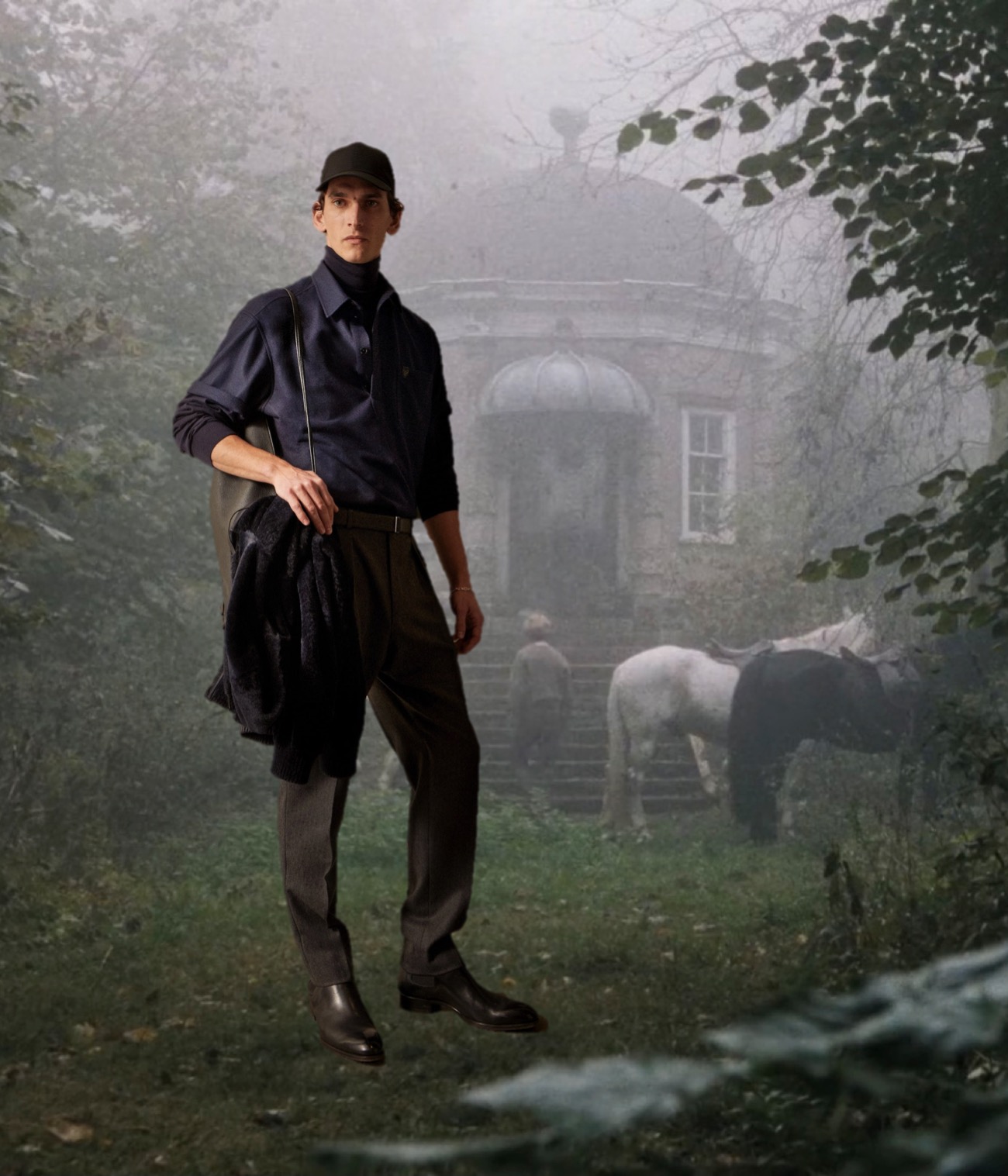
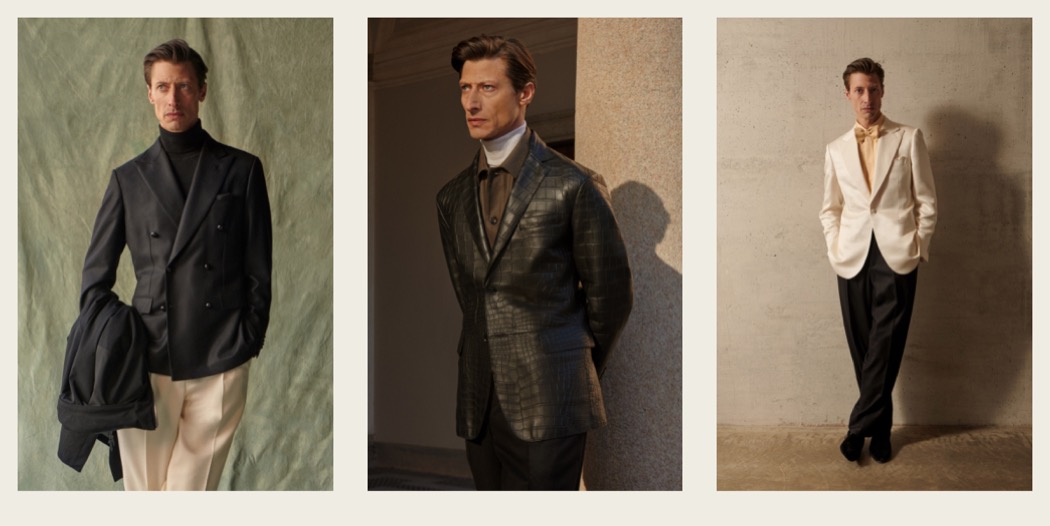
Brioni’s Norbert Stumpfl declared this season: “I have the most excellent team of artisans behind me, and what they are able to achieve is a dream come true for me”. He has every reason to feel so elated, as what Brioni stands for is an idea of luxury which is as refined as it is private and understated. “As a designer, I don’t need to scream,” he said. Every season, the unbelievable quality of fabrications and execution seems to reach new heights, a sort of limitless research whose results never cease to amaze. For autumn-winter 2023, cashmeres were proposed in varieties so weightless, a whisper probably would be heavier. Vicuñas and alpacas were more ethereal than a passing cloud; deerskin, suede and nappa were as soft to the touch as the skin of a newborn. Going through a Brioni collection makes for an almost preternatural sensorial experience. The same sense of rarity and sophistication was expressed in the subtlest of color sensibilities, with tones so suave they brought to mind Caravaggio’s chiaroscuro. No wonder Brioni is a Roman house: if there’s a place where the light is glorious, resplendent of every possible hue from gold to amber to topaz, that’s Rome. Stumpfl captured it in the sensuous fall palette, which emphasized the ease and fluidity of the soft tailoring that Brioni masters. This season, the play on proportion was subtle as usual, with a tad more room for enhanced comfort in longer jackets, fuller trousers, lighter and rounder shoulders. “Brioni’s style is almost invisible, not overpowering,” said Stumpfl. “It gives you comfort and confidence at the same time. We definitely enjoy spoiling our customers.”
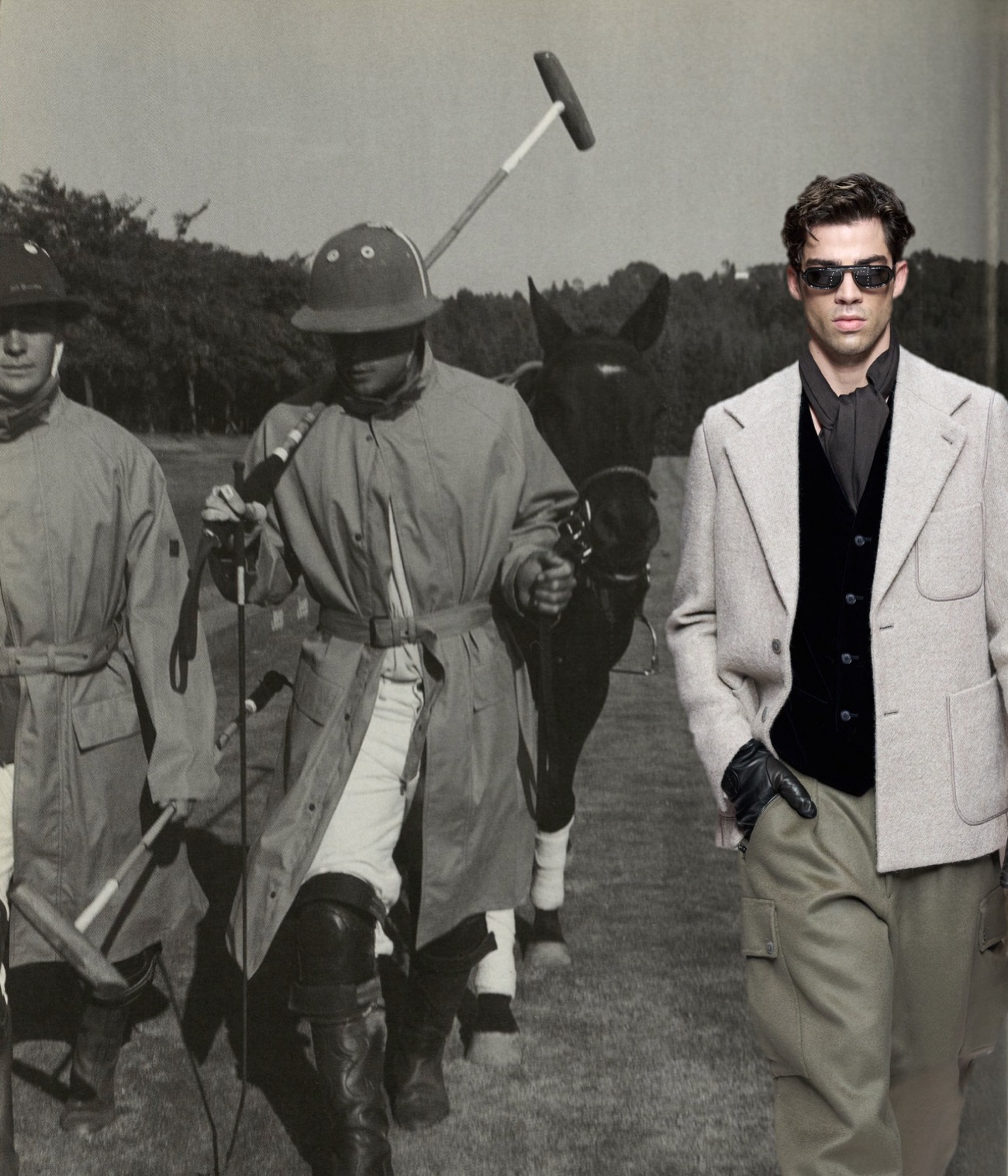
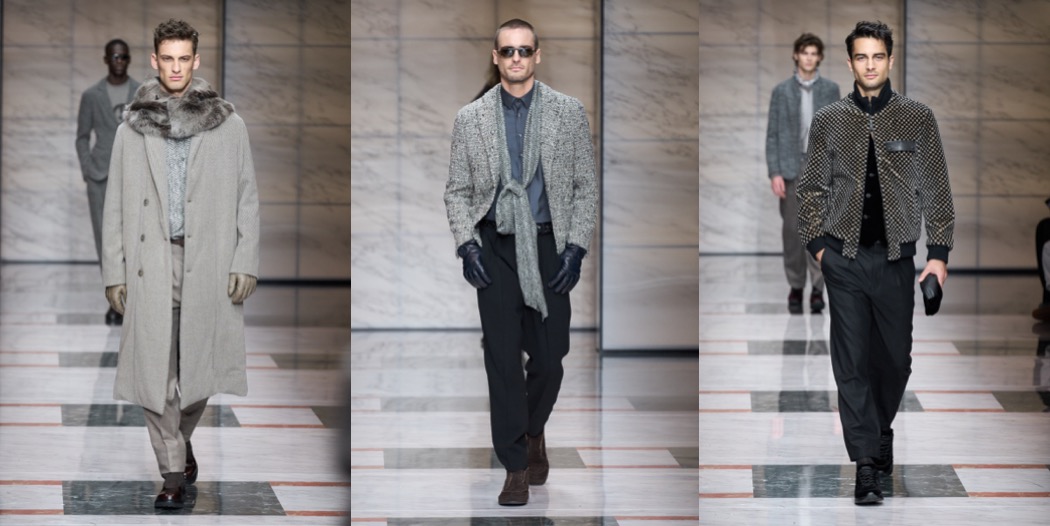
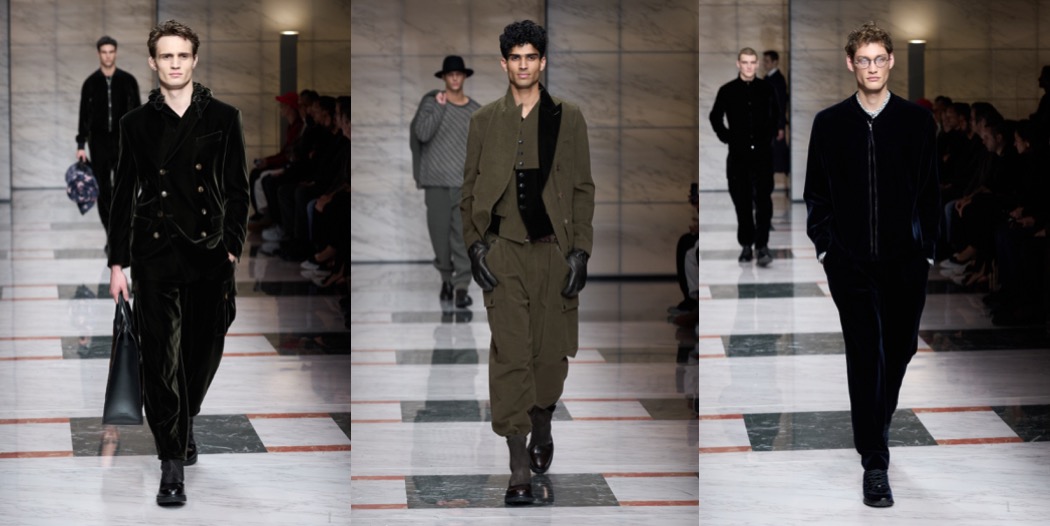
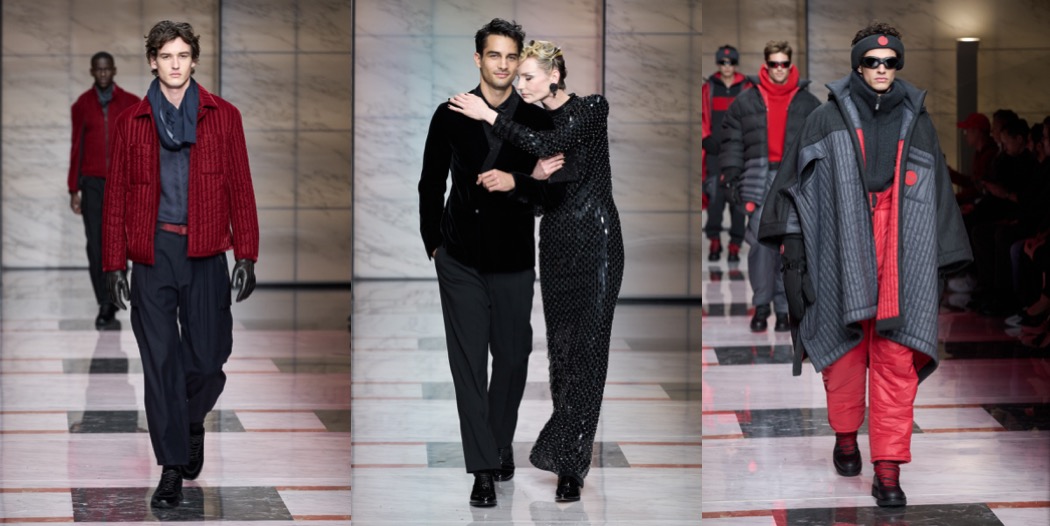
Shortly before Giorgio Armani’s now traditional runway show sports-diffusion interlude, Milan’s 88-year-old master menswear architect discreetly showed his hand. Out came two three-piece suits, one blue and the other black, in a silky looking material whose movement suggested they were almost certainly shot through with technical ingredients. Each was delicately to (the point of imperceptibly) crinkled with raised rivulets of irregular lines. As later confirmed in the notes, this was a Giorgio collection that took subtle inspiration from the architecture of Milan. The narrow paneling in leather bags, lightly padded jackets, a mixed-material sweatshirt, and even some of the ski pieces reflected the ground-floor rustication you will see in many of the city’s pre-war buildings. The geometric gridding and zigzags worked into jacquard knits mirrored the many beautifully marble-inlaid communal spaces in buildings across the city. And the richly textured gray wools, velvets, and cashmeres used in the opening sequence were this collection’s equivalents of the finely carved gray stone doorways through which you must pass to see them. This was the conceit, but it was not overplayed. You gradually suspected that the audience was positioned as his portieri, or doormen, in order to observe a steady procession pass the runway threshold dressed in a manner characteristic of Armani’s this-season conception of Milan-born menswear. That contemporary version naturally related back to his mid-’70s conception of it, but the refurbishment was full of fresh pleasures and unusual touches. Business or casual, evening or day, and post-ski weekend too, almost every inhabitant- arguably except for the pair in full length faux-fur animalia coats and wraparound sunglasses – were patently inhabiting Armani’s architecture of style.
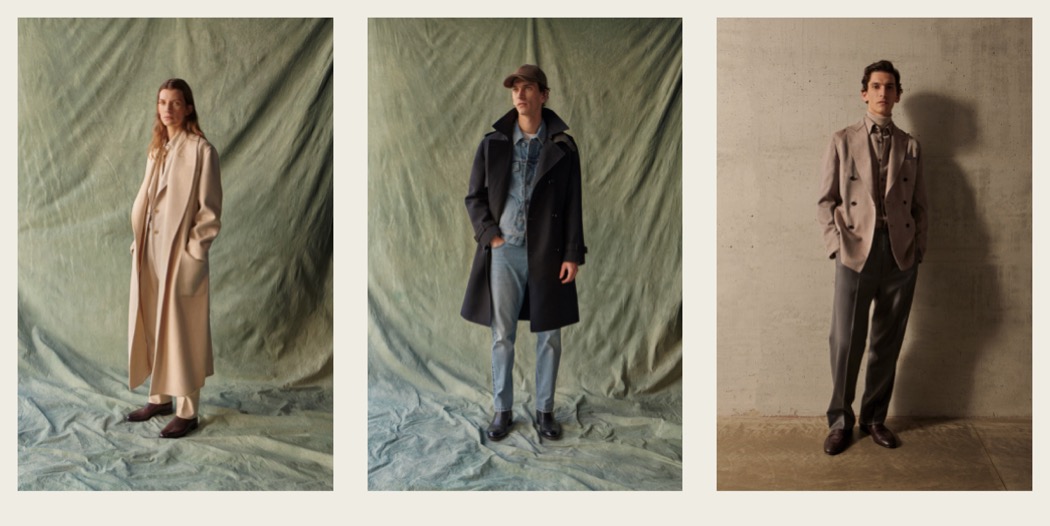
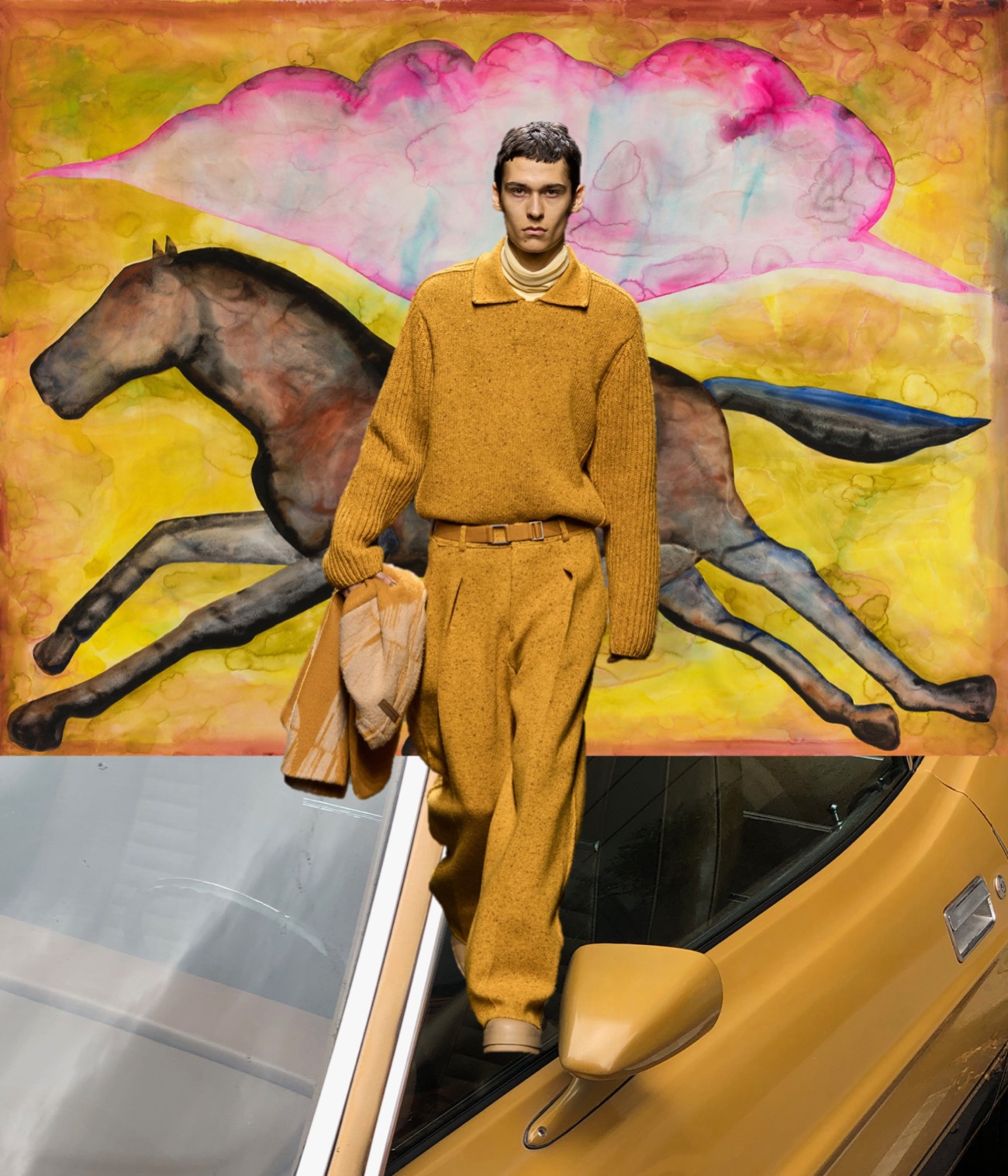
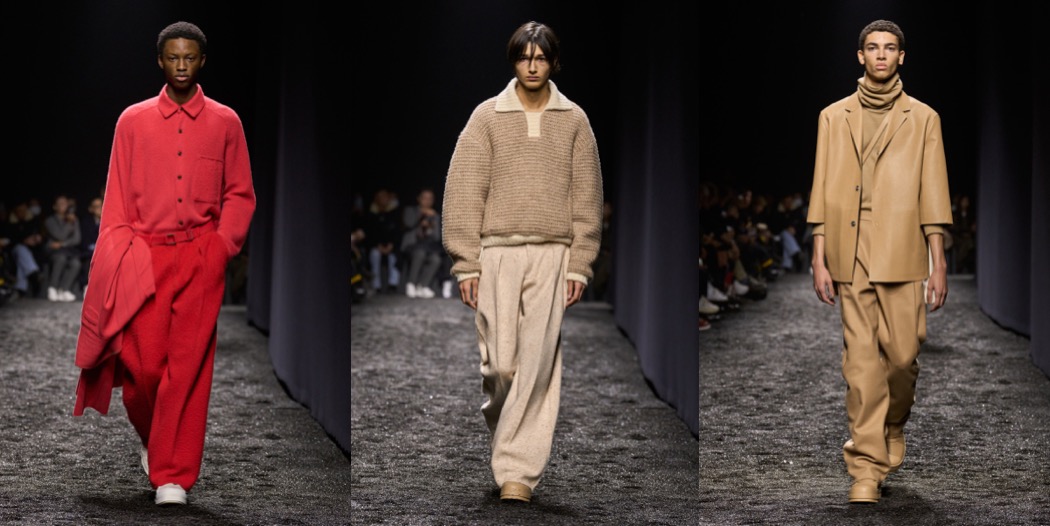
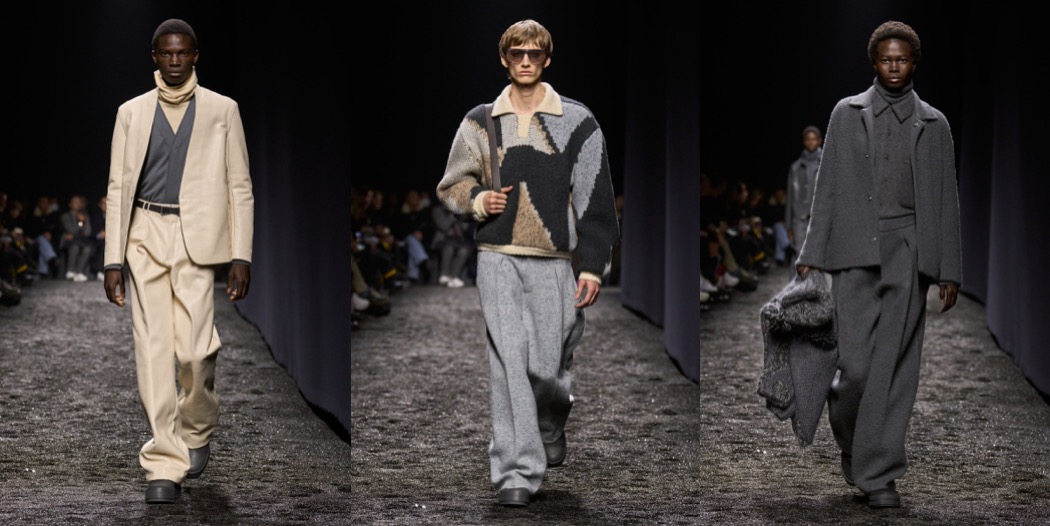
Alessandro Sartori’s lifelong study of fabric development and tailoring means that he is possibly uniquely qualified in his depth of technical knowledge as a fashion house creative director. And as the captain of Zegna, which has long been committed to vertical integration and material innovation, he is also uniquely placed to push forward the hardware of fabrication while developing his own fashion software. These attributes synced in a Zegna show that displayed the complementary relationship between both. Starting with the technical – without getting too technical – Sartori named the collection the Oasi of Cashmere as a nod to the house’s century old nature reserve as well as his ambition to broaden the fiber’s traditional application as yarn in knitwear in order to apply it in multiple fabrications. Those successfully achieved by Zegna and its owned-affiliates today included bobbled casentino, fluffy pile, sturdy bouclé, hardily rain-resistant wool-like melton, light flannel, and so many more that the house asserted that a full 70% of the runway garments here were cashmere. The remaining material was mostly recycled Zegna ‘Use The Existing’ wool, which was the chief protagonist especially in an opening gray section that employed chore coat, “tailored” (but construction free) jacket, and short-sleeved jacket as template shapers of top-half silhouettes. There was also a strong raw-hemmed collarless jacket in more recycled wool, this time undyed. Another early highlight included a hand-folded and painted leather jacket padded with down worn over a cashmere casentino shacket. The designer’s thriving template is currently based on a strong and consistent silhouette combining a wide leg-shape and a more form-fitting top half (at least when not layered with outerwear). Now the house is broadening its offer – without diluting quality – to give Zegna-heads infinite opportunity to add new elements to their wardrobe that will work in tandem with the old. Another upcoming opportunity – teased in look 21’s shirt and carried overcoat – will come when he reveals the fruits of a two-years-in-development collaboration with Greg Chait, of The Elder Statesman, in Paris next month.
All collages by Edward Kanarecki. Don’t forget to follow Design & Culture by Ed on Instagram!