Imbued With Meaning. Bode Pre-Fall 2022

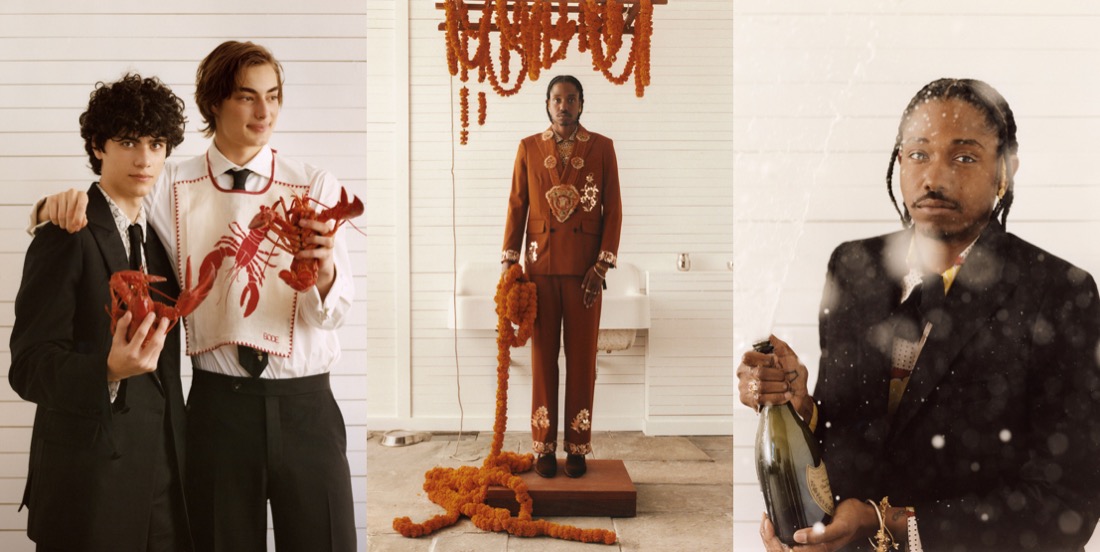
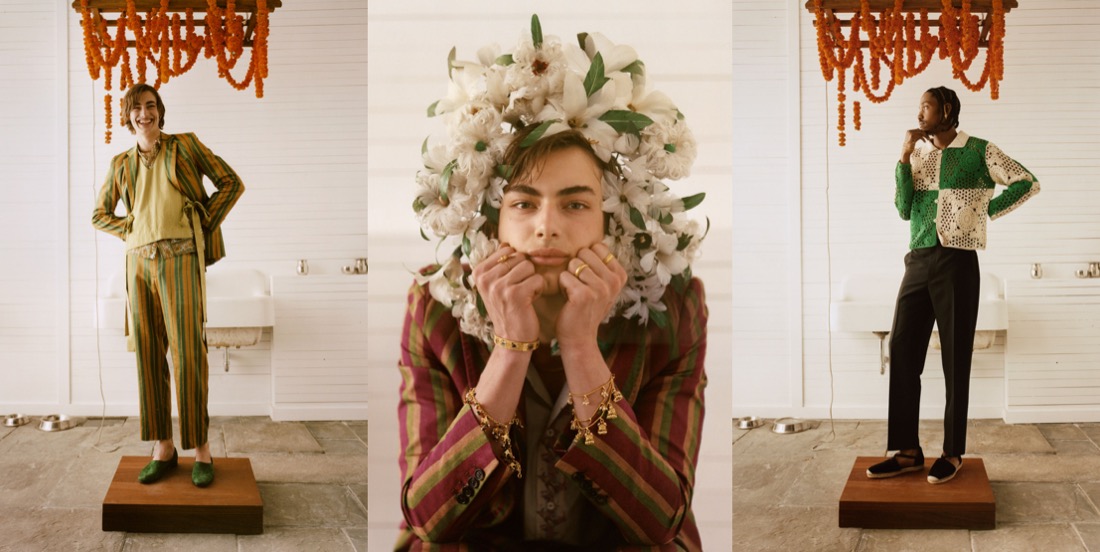
At the New York-based brand Bode, Emily Adams Bode Aujla’s collections have always been rooted in the persona. The lived histories of friends, family members, and even places all hold keys that unlock the fantastical trove of embroideries, embellishments, prints, and colors that have established Bode as one of the most exciting new American labels on the scene. For pre-fall 2022, now hitting the stores, however, Adams Bode Aujla turned inward, looking for inspiration to her own wedding to her longtime partner and collaborator Aaron Aujla, which took place in their newly purchased home upstate and brought together Punjabi traditions from his upbringing as well as ones from her mixed Southern/East Coast heritage. “The foundation of Bode is personal narrative and our emotional relationships to materials and material culture, so the wedding is very much an epitome of that relationship,” Adams Bode Aujla explains. “From a more pragmatic side, I love dressing people for weddings. A lot of the fabrics that we sell lend themselves really well to weddings: lace, eyelets, details like pearl buttons, working with people’s family histories and their initials and embroideries, so it kind of made perfect sense to make this a holistic idea.” She estimates she made over 250 pieces for their friends and family to wear to their nuptials, including matching tuxes for the groomsmen and dresses crafted from piano shawls for the bridesmaids, along with the various outfits she and Aaron wore throughout the four-day festivities.

The most obvious way the wedding influenced this collection is in the emphasis on formal wear, something that she has dabbled in since opening the Bode Tailor Shop next door to her Manhattan flagship. There are classic shapes like tuxedo jackets and tails done in traditional black and white that will find wide an audience, but it was the Bode-fied versions that had the most appeal: a dark brown three-piece suit embellished with gems in the shape of flowers, a linen marigold single-breasted suit with tonal fringe appliqués and vintage marbles decorating the sleeve vent. The colors she used – “depression-era” green, tobacco brown, and purple, and marigold – all held personal meaning for the designer and her husband. It’s her exploration of what formalwear silhouettes can be that is really exciting. A lightweight tropical wool wrap jacket with a gathered waist may resemble a traditional women’s blouse on a hanger, but when worn over a crisp button-down shirt and matching trousers, it transforms into a smart alternative to the structured suit, lending an air of ease and comfort. A similar feeling was evoked by matching sets of shirts and trousers, inspired by Aujla’s penchant for pajamas. “He wears pajamas even with a tux,” Adams Bode Aujla explained. “It was really important to him that he had [them], especially for morning prayer.” Here they run the gamut of materials and fabrications, from simple versions done in white cotton voile to intricately embroidered styles. The concept of “home” was also present in the collection through the use of crochet fabrics and embellishments, as in a white shirt covered with brown popcorn chenille, which is typically found in bedspreads, and a matching shirt and trouser set appliquéd with animal shapes in various prints, which was a reproduction of a baby quilt originally made from feed sack scraps. “During the Great Depression, companies were noticing that women were making clothing from feed sacks and grain sacks, so they started printing on the fabrics to encourage people to do it.” Adams Bode Aujla is keen on the importance of research and preserving history through the things that she makes, tracking down names and provenance. “When we do historical reproductions, we can tell that narrative in a much broader scale, and it got me thinking about how you can encourage people to preserve something, not just by mending o repairing things like that, but preserving it in the idea that they’re preserving culture and the techniques,” she said. It’s easy to see how Bode has found success; her customer understands that when they buy one of her designs, they are buying a little piece of history for themselves, a shirt (or pants, or a jacket) imbued with meaning and ready to be passed on to the next generation.
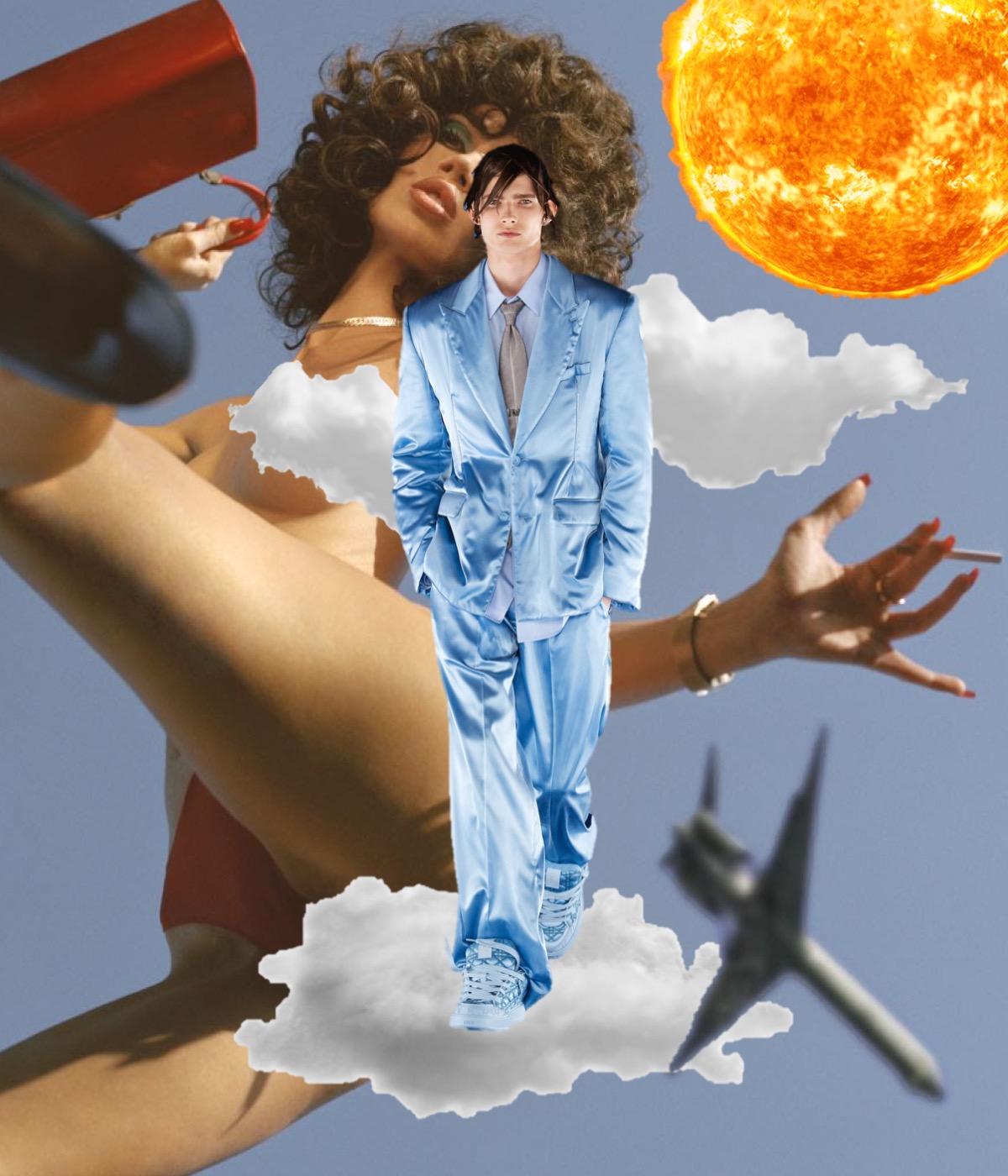
Collage by Edward Kanarecki.

NET-A-PORTER Limited

ERLification. Dior Men Resort 2023

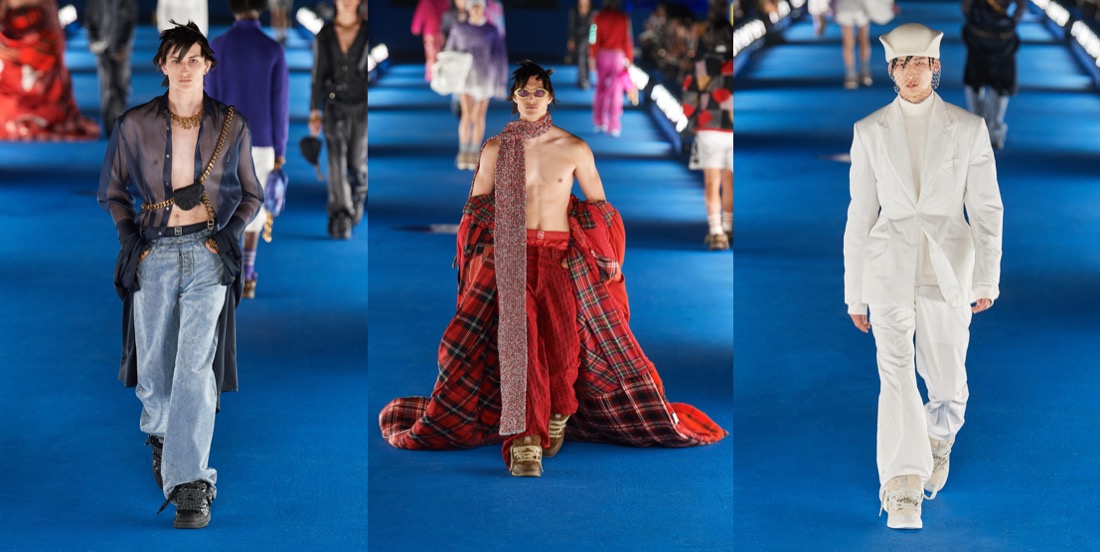
You could see the crest of a 30-foot blue nylon wave from several blocks away on Pacific Avenue in Venice Beach, part of the impressive ocean-themed runway set design that was constructed for Dior Men’s show last night. With Californian designer Eli Russell Linnetz of ERL signed on as the house’s latest guest designer, it made sense that creative director Kim Jones would choose to show the capsule collection against the backdrop of this well known Los Angeles beachfront. “I grew up in Venice Beach, I came to this street all the time,” said Linnetz speaking at a preview before the show. “This was basically my backyard.” Linnetz’s story is straight out of Hollywood. A film student turned designer, he cut his teeth in Kanye West’s artistic studio, directing videos for the likes of Teyana Taylor. Since launching his ERL brand in 2018, his fanbase has swelled year on year and includes the likes of A$AP Rocky and Hailey Bieber. He’s also one of several bright young finalists up for this year’s LVMH Prize. “We have lots of people in common,” said Jones, explaining that the pair were introduced by mutual friends and started the conversation over DM about a year ago. When Jones arrived at ERL HQ in Venice Beach to work on the capsule, their creative chemistry was almost instant. “I was 99% excited at the idea, 1% scared that I would lose myself, just because Kim has such a strong vision of the world and his collections are so refined and striking. My world is so much more chaotic,” said Linnetz. “But the second Kim came to the studio, it felt easy, seamless.” 

The pair used Linnetz’s date of birth, 1991, as a jumping off point for the collection, mining the Dior archives for clothes created that year. “I think people would assume that I would be more into the Galliano archive because it’s so theatrical, but actually through my research I become more interested in diving into something that hadn’t been touched before,” said Linnetz. They landed on the maximalist elegance of Gianfranco Ferré’s designs for the French House, the kind of opulent tailoring you might have seen sauntering down Rodeo Drive at the time. Cue the opening look, a gently padded silk satin suit in Dior’s signature dove gray created with the lining twisted inside out and worn with wide-legged pants puddling over chunky skater sneakers. It was a sweet marriage of Parisian executive realness and SoCal cool, or what you might call “California Couture,” a slogan that appeared on at least a few cozy turtleneck sweaters.  Several of ERL’s quirky design flourishes were filtered through a sophisticated lens. There were baggy skater boy shorts galore, only done for evening with an eye-catching beaded trim. Clearly Linnetz and Jones had a lot of fun dreaming up the accessories. According to Linnetz, the pillbox hats worn backwards with beaded veils were a cheeky nod to Jackie O. Strung on a heavy duty gold chain and worn across the body, the tiny tinsel saddle bags were a very elevated take on the classic skater keychain wallet that are bound to be a hit with Dior Men’s streetwise fashion guys alongside those ingenious sneakers. The yin-yang motif Linnetz is known for got a look in too and was rendered in an intricate embellished wave on a gray marl hoodie. “It’s interesting to see how Kim works because he really approaches everything like a film director,” said Linnetz. “And that’s very familiar to me.” In a sense the bigger picture here felt decidedly fresh, an example of what can happen when two creative minds from seemingly different ends of the fashion spectrum – and different sides of the world – come together to exchange ideas and find common ground. In the new fashion landscape, playing it safe hardly feels modern. Exchanging ideas in a freewheeling way is the new wave. 

Collage by Edward Kanarecki.

NET-A-PORTER Limited

Men’s – High School Lovers. Alled-Martinez AW22

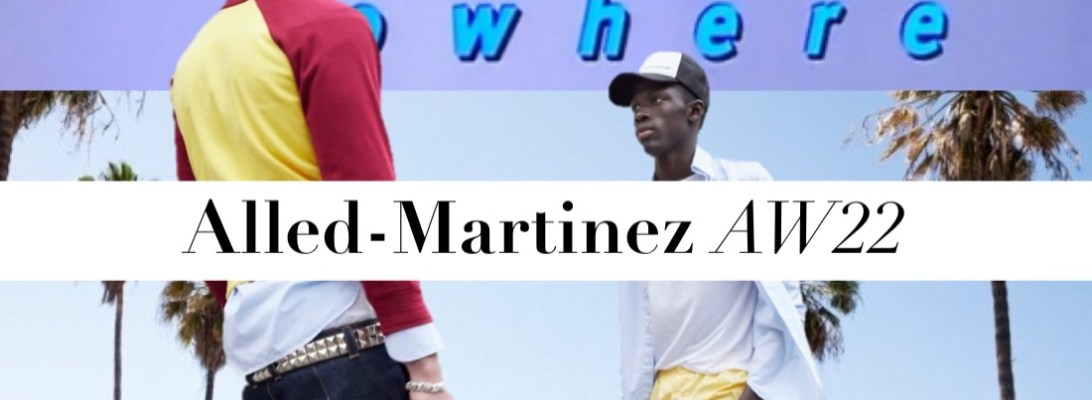
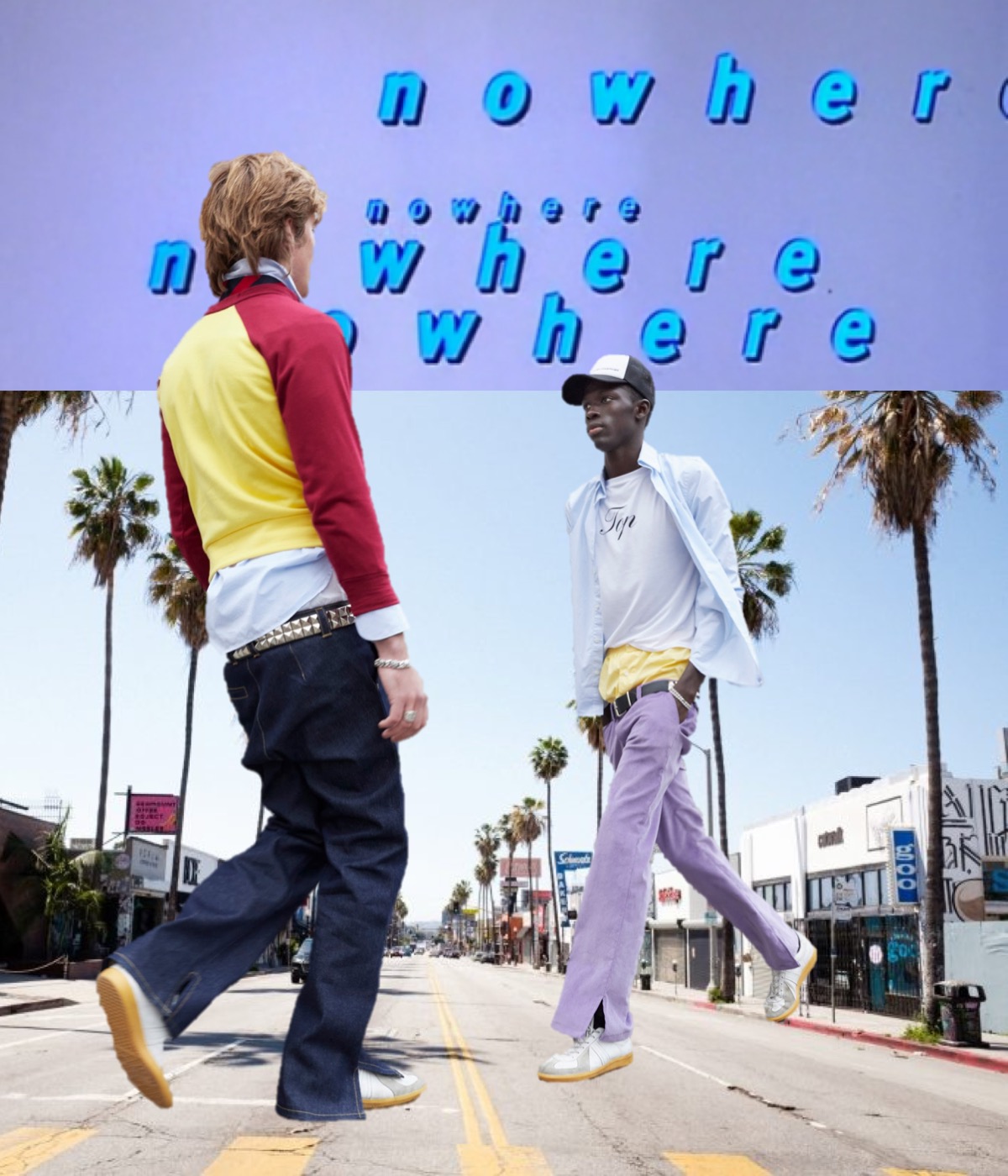
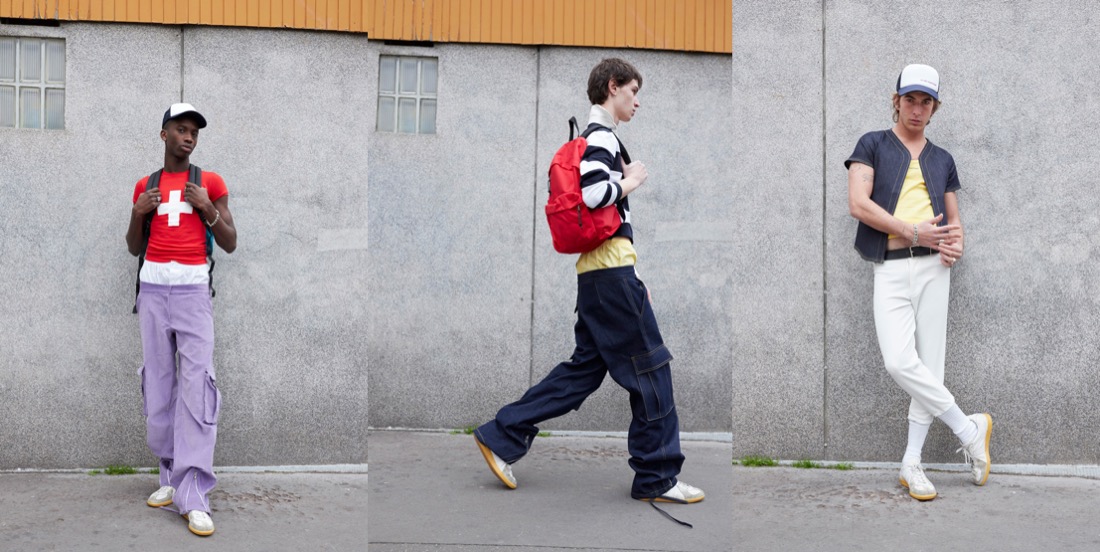
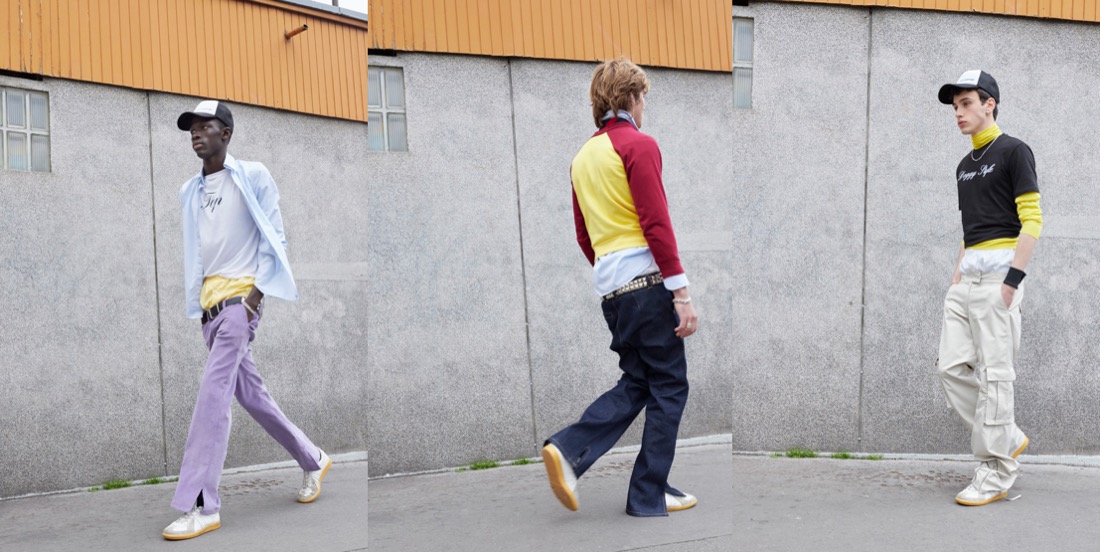
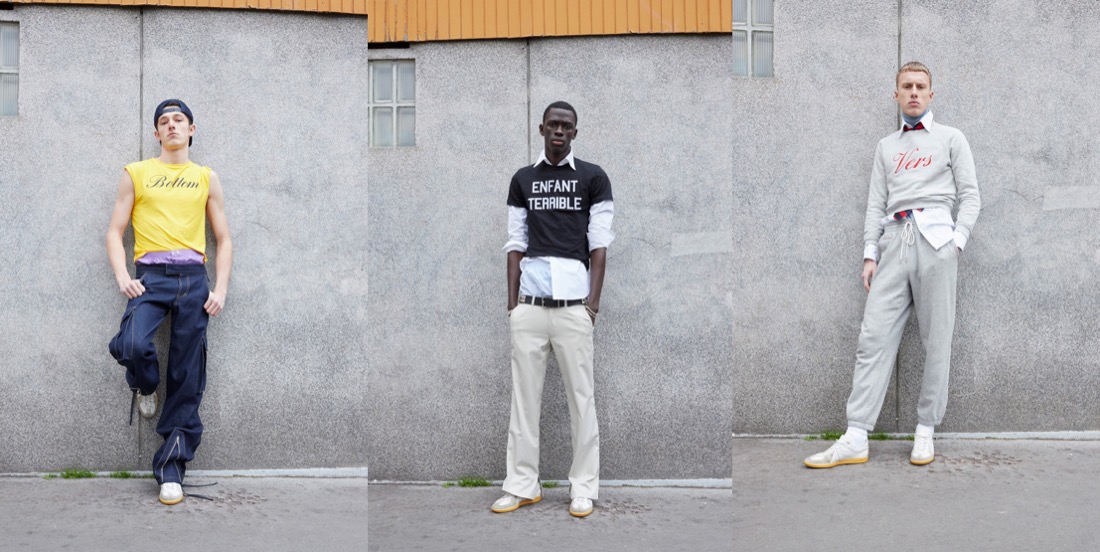
Ending this menswear season with one of the emerging Parisian brands, Alled-Martinez, which after last season‘s success continues to celebrate and embrace queerness. After telling a story of love and tragedy between two men, Archie Alled-Martinez takes a less melancholic approach for autumn-winter 2022. “I was wondering what would it be like to have been openly gay during high school,” he told Vogue, “and how difficult it was for people in my generation to be themselves growing up. When I go online now and see all these queer kids, it warms my heart.” Alled-Martinez translated the high school codes of the early aughts into his garments. There are tiny tees, and tinier, tighter trousers, and perhaps most symbolically laden for those actually in high school in the aughts, jeans shrugged down so low that boxer shorts peek out from the waistband. Bruce Weber’s Abercrombie hunks come to mind, but Alled-Martinez has a more approachable look—think of this like a Hollister fever dream. Furthering the theme, he’s made tees that say Top, Bottom, and Vers. The star of this season, though, is Alled-Martinez’s film. Beautifully directed by Pau Carrette, the film chronicles a boy’s high school loves and losses. The designer plays a track and field coach, while guys run around in their tiny A-M outfits. Unlike many of the other fashion films we’ve seen during the two-years-and-counting pandemic, this one actually has a plot and resonates beyond fashion.

Collage by Edward Kanarecki.

Men’s. Nigo Knows. Kenzo AW22

Kenzo might be finally be back on the right track with a new creative director. For his sharp debut, Nigo (the legend behind A Bathing Ape) invited the fashion crowd and some big names – Pharrell Williams, Shygirl, Tyler, The Cretor, and of course the couple of the moment, Kanye West and Julia Fox – to Galerie Vivienne in Paris. It was here in 1970 that a small gallery unit with cheap rent was snapped up by 31-year-old Kenzo Takada, who had arrived circuitously from Tokyo five years previously with the dream to emulate Yves Saint Laurent and become a fashion designer. The brand’s founder’s collection was cut and sewn fabrics brought from a Montmartre market. As Kenzo later recalled: “I was looking for some kind of identity as an outsider, so I wanted to bring something very Japanese into it, and that meant textiles with a lot of color and pattern.” By 1993, when he sold his company for $80 million to what would become LVMH, Kenzo had developed that formula to become one of the most beloved and distinct designers operating in Paris. He sadly passed away in late 2020 after being laid low by Covid, but had continued to work on new projects until shortly before. But the brand without its creator has struggled to stay relevant for years. Yes, there was that period, starting a full decade ago, when the Kenzo-coded tiger sweatshirts produced under the Carol Lim and Humberto Leon went from cool to hot to way overcooked. After they left in 2019, Felipe Oliveira Baptiste delivered some interesting and criminally underrated collections, but sadly they just didn’t resonate with the customers. Nigo’s creativity and clout – and of course his personal passion for and parallels with Kenzo – make him a serendipitously synchronized recruit for LVMH. His autumn-winter 2022 line-up celebrates Takada, redefines what Kenzo’s true aesthetic is, and has some really, really good clothes to offer. The key poppy print was redrawn and applied in silhouette on washed denim workwear, by velcro patch to hats, plus on waistcoats, midi-skirts, camp collar shirts and more. The cutely kawaii stuffed animal scarves, knit and fleece, were another revival. The conversation between cultural clichés was highly enjoyable: for every souvenir jacket with a map of France on the back there was a beret (always best in burgundy) stitched with the year of Kenzo’s founding. Not at all ironic, however, were the beautiful high kimono jackets in navy, gray and olive. The bibbed gingham aprons worn over suiting were apparently adaptations of a specific Japanese garment worn during the tea ceremony. This intriguing cross-section of cultures is exactly what Takada used to in his collections, always with grace and consideration.

Nigo is of the generation raised during Japan’s obsessive absorption and reinterpretation – often more beautiful than the inspiration – of the Ivy League original into American Casual and Yankee variants. During the preview he’d commented fascinatingly on the difference between building a collection with European factories (which he said created garments more “clean” than he’d wish for) compared to Japanese (who can make it “dirty”). For this reason he’d insisted all the denim in this collection hail from his homeland, even if the top-stitching on his undyed indigo was a little too “clean” to be exactly perfect. Tightly observed post-Ivy, post-Yankee, come-to-Paris pieces here included the varsity jackets and unwashed dungarees. Shortly before the show, Williams said: “The coming together of Nigo and Kenz – it’s symbolism, right? None of us would miss it. Nigo is the father of so many things that we’ve all looked up to, and that have meant so much to all of us.” Of the collection he added: “So it’s like 1950s and ’60s clothing remade in the ’80s, you know, but through the lens of the 2020s.” Which was a pretty perfect summation of this first page of a fresh chapter in the story of the house of Kenzo.

Collage by Edward Kanarecki.
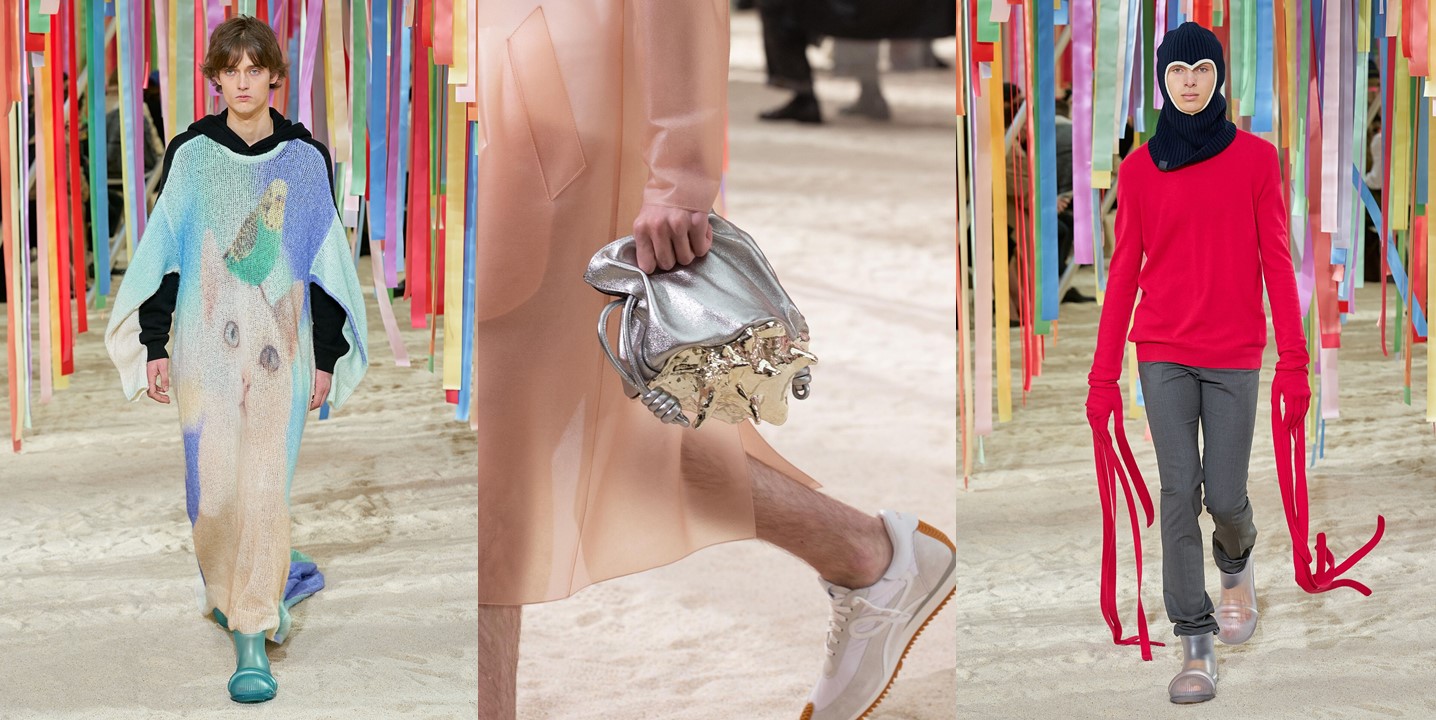
Men’s – New Surrealism. Loewe AW22

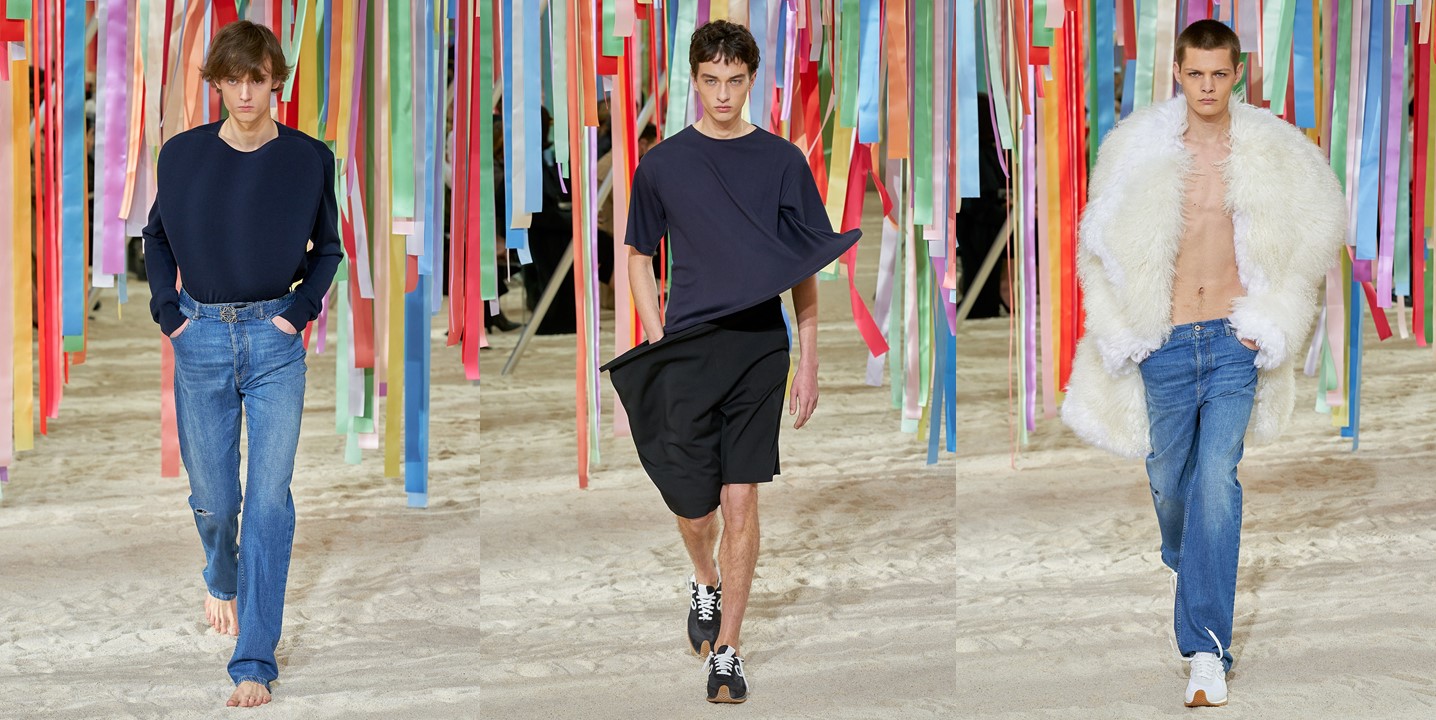
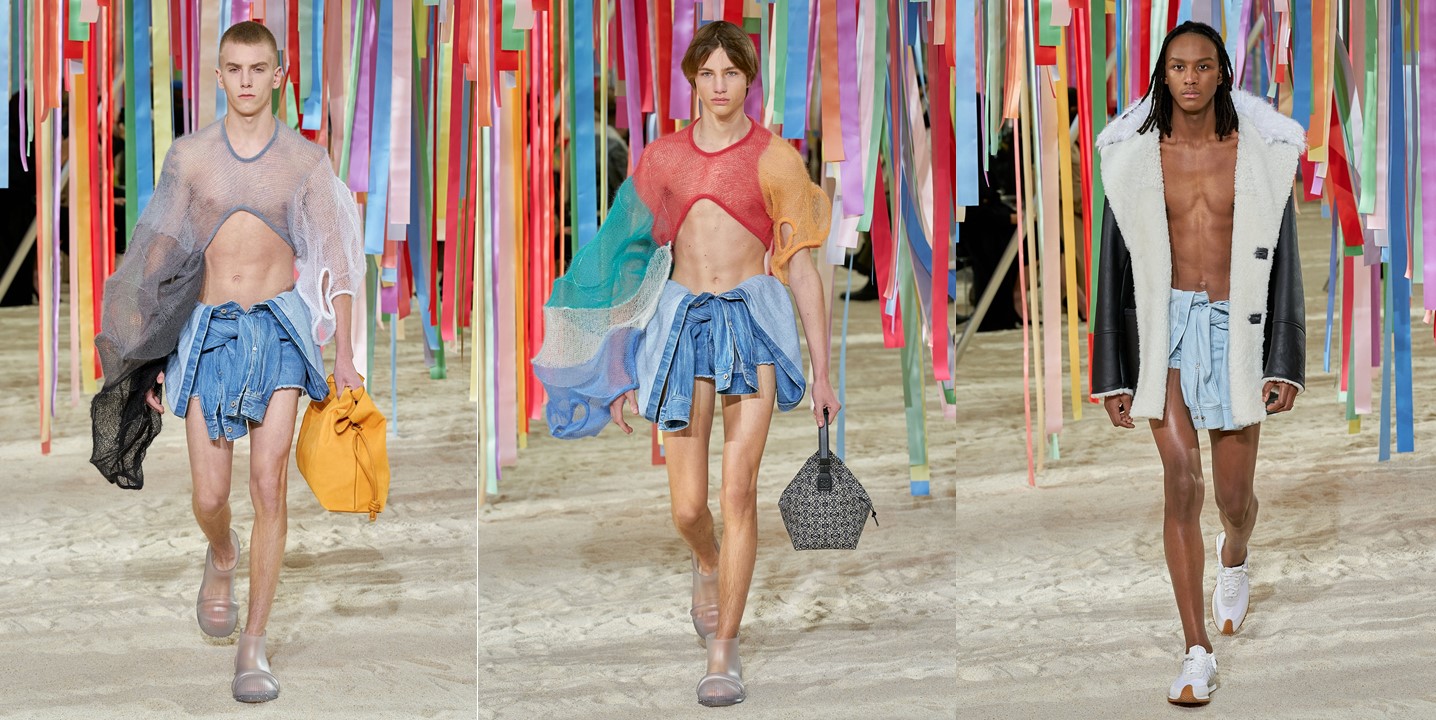
When Jonathan Anderson referenced “metaverse” in his J.W. Anderson collection last week, he said, “I was using it more in an ironic way. The idea that it doesn’t really do anything.” For all its brilliant and hilarious techy surrealism, his Loewe collection was not a wardrobe for the metaverse. In fact, it felt a lot like it was trolling the very idea of our digital lives lived on phones, and the hoopla whipped up around trendy concepts like the metaverse. If our attraction to VR and AR and whatnot is founded in the idea of possibility, Anderson’s collection was a twisted take on how these imaginings translate into real life. He illustrated it in decidedly normal things made abnormal. Shorts were embellished with sparkles that looked like raindrops, as if it had rained crystals. A wool coat had a gilded stain on its lower back “as if you sat on a park bench and it was gold.” Coats and tops were punched with big bathroom eyelets like you’d digitally dragged your most mundane morning surroundings into your wardrobe. Shoes looked like bags, and transparent coats were actually made of leather. Meanwhile, a series of garments satirized our relationship with technology. The sleeves and lapels of a furry coat had fiber optic lights inside them creating the illusion of wetness, the illuminated waistband of trousers made them seem like they were floating, and the entire frame of a coat was lit up. “It’s the idea that you become backlit because everything on a phone is backlit,” Anderson said, referring to the way we see things on our phones and the way our screens light up our faces. Balaclavas with heart-shaped peepholes played on the idea of digital frames. Similarly, the orbital hem of a shirt and the waistband of shorts were bent in separate directions so it looked like you’d skewed them in FaceTune. It evoked the DIY editing accidents you sometimes spot in people’s selfies where the person looks like a supermodel while the retouching process has turned the background into an abstract painting. We all follow someone like that. And those t-shirts and jumpsuits with faces and bodies printed on them like optical illusions? They were worn by the models who posed for them, distorting and reshaping their physiques the way we do it on those beautifying apps.

Anderson’s collection was an exercise in the surreal, but a post-digital era take on the genre, which he said was more “psychotic” in an existential way. “Who are we? Where are we going? Is it real, is it not real? Are we in that moment? Do we believe what we say?” In a world where we’re more fascinated with creating a metaverse than improving the real one, those were good questions.

Collage by Edward Kanarecki.