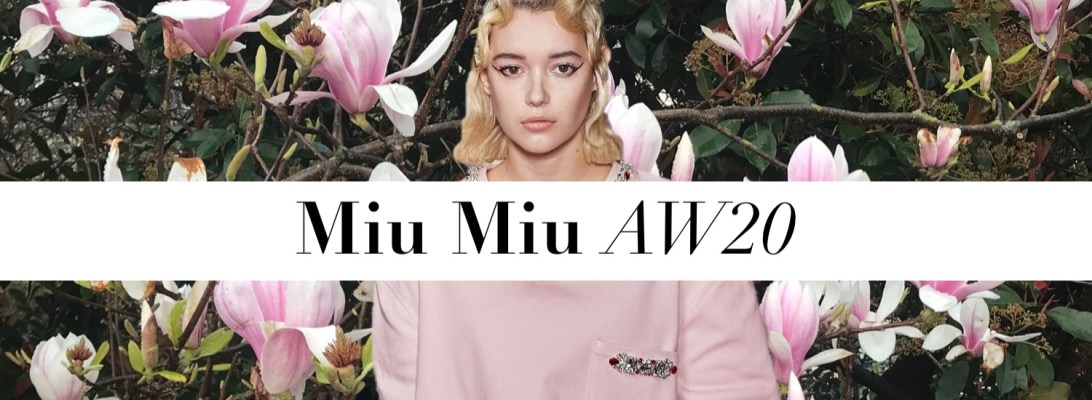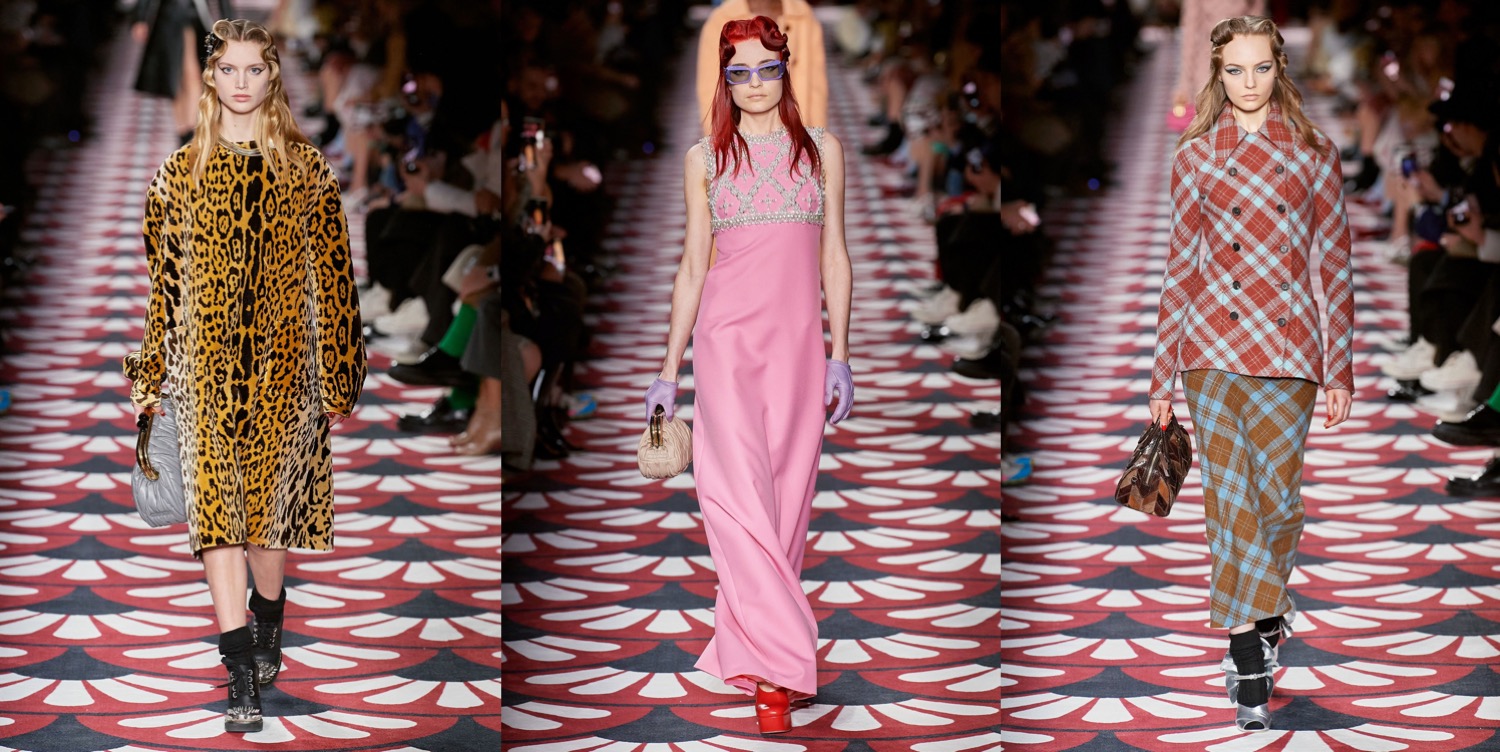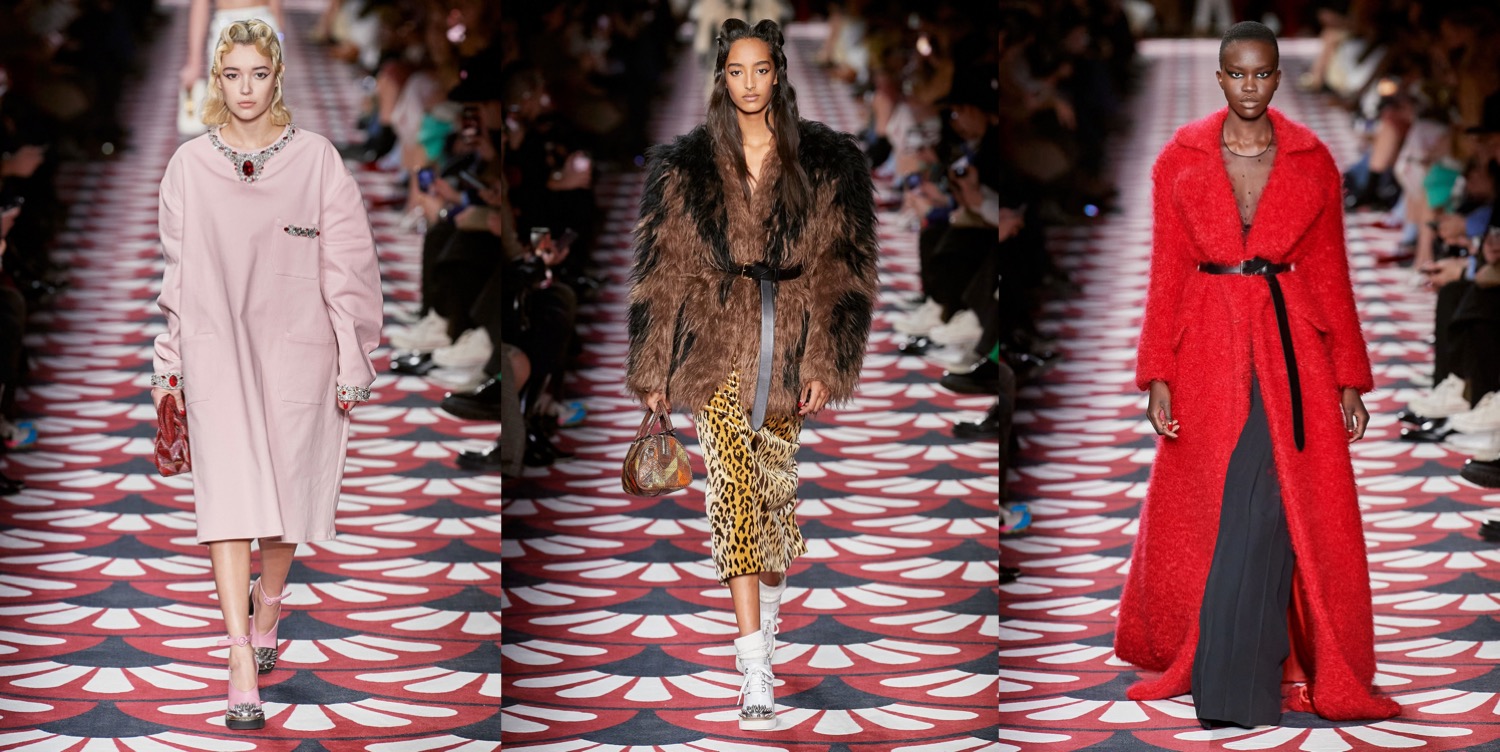
Toying With Elegance. Miu Miu AW20

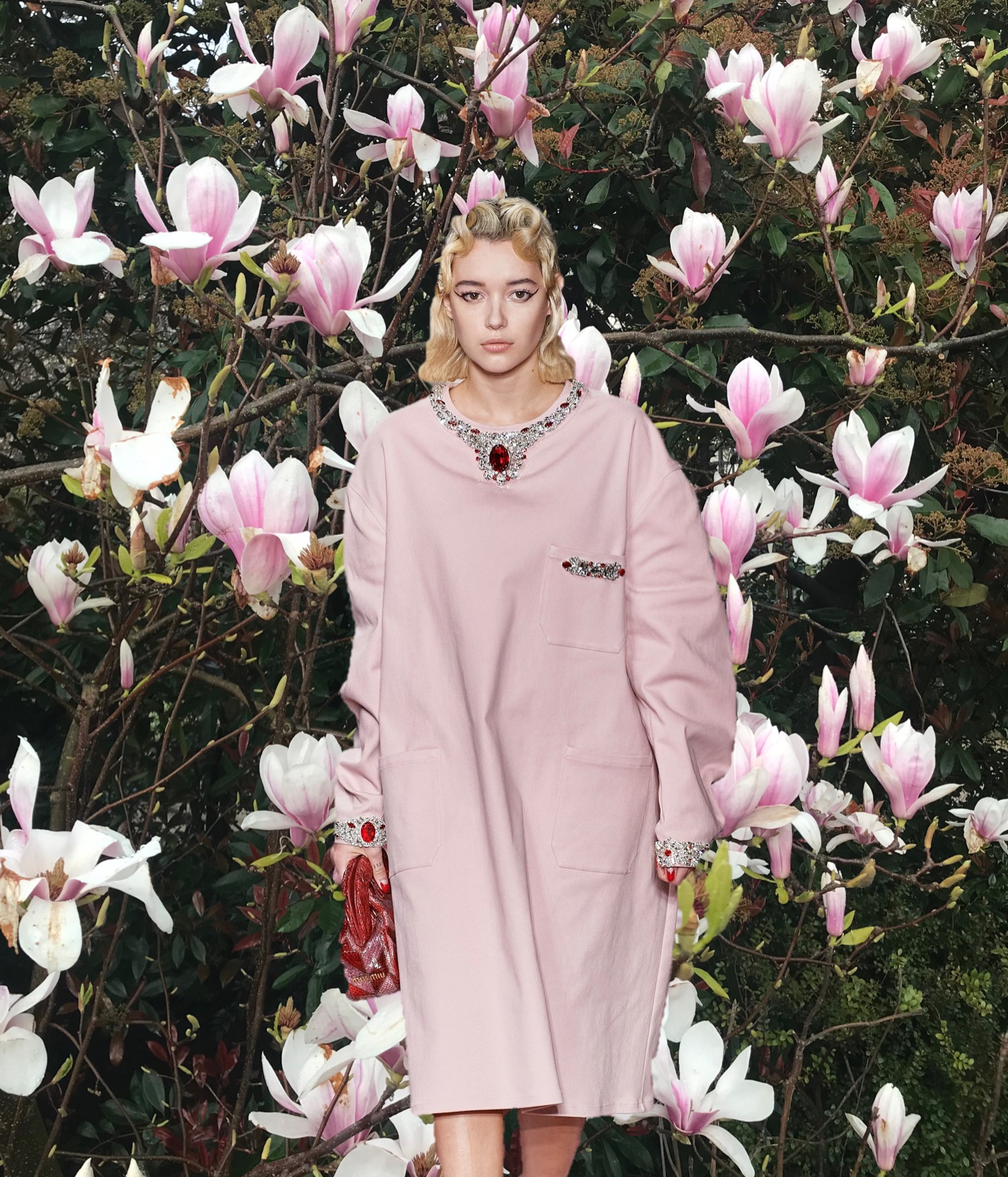
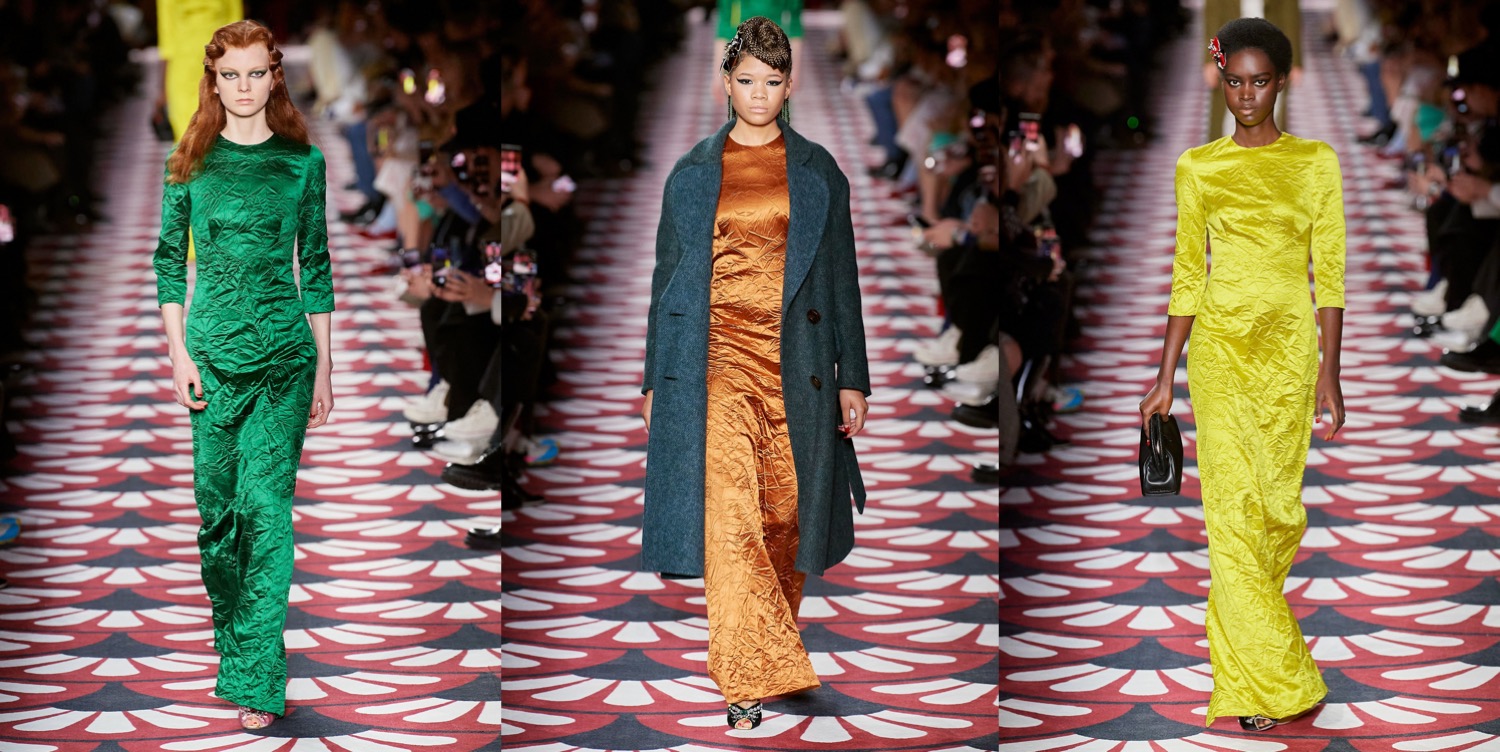
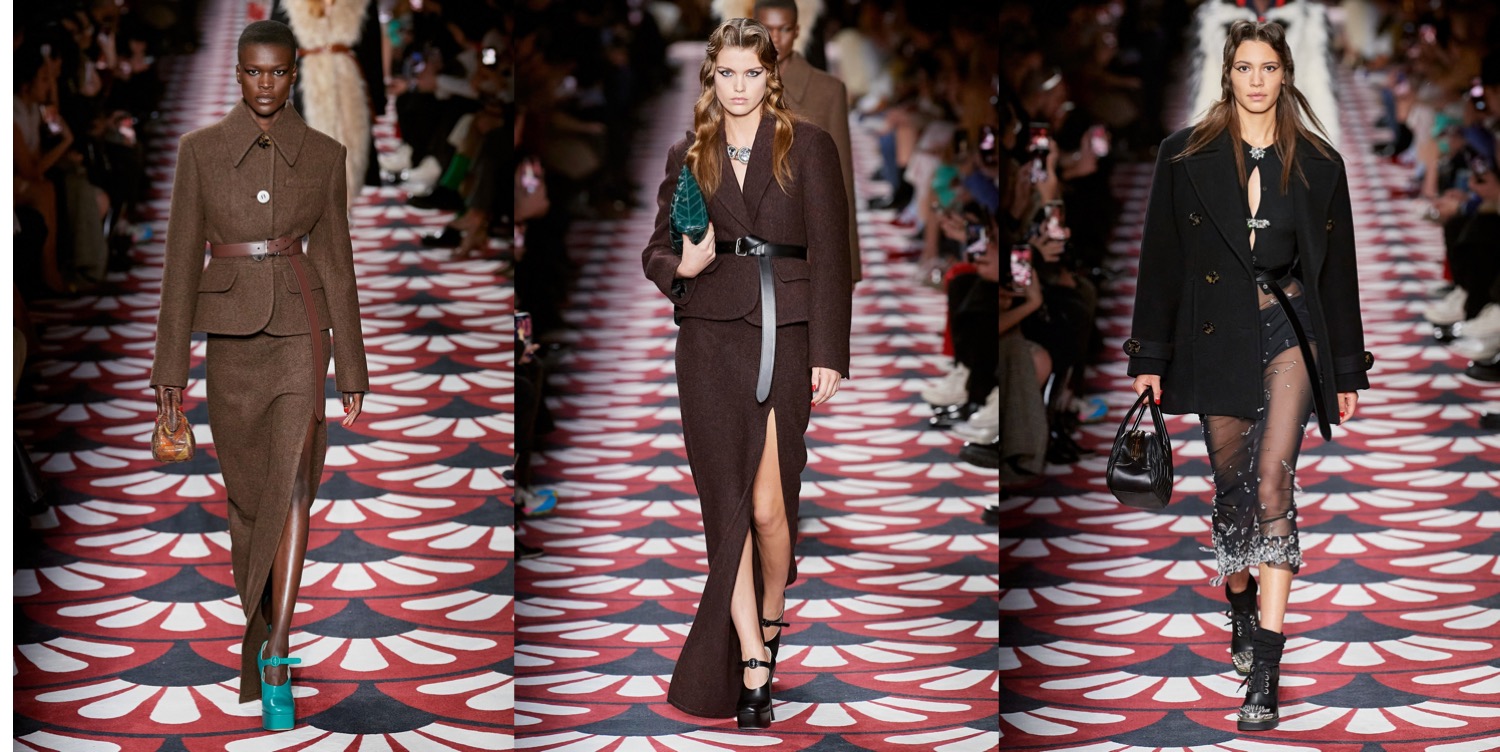
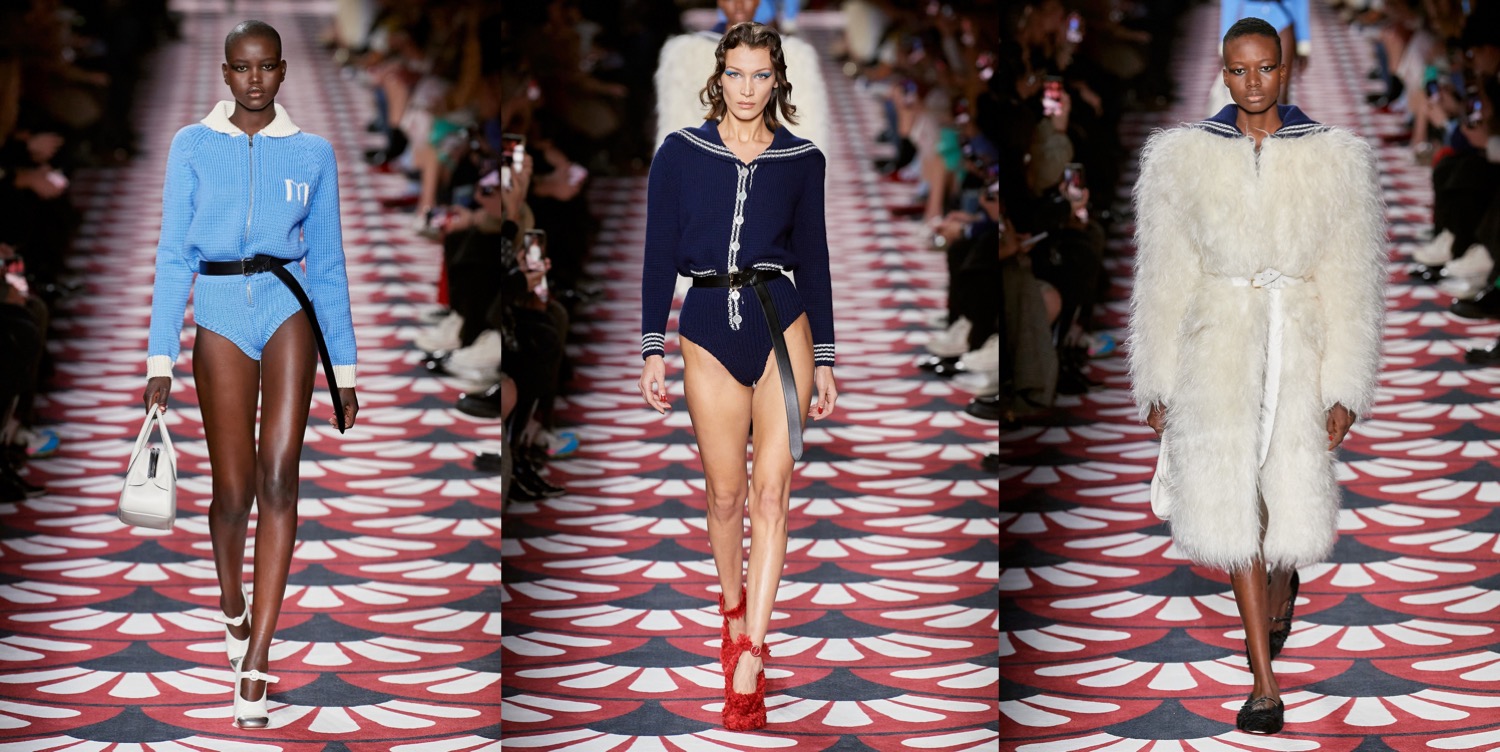
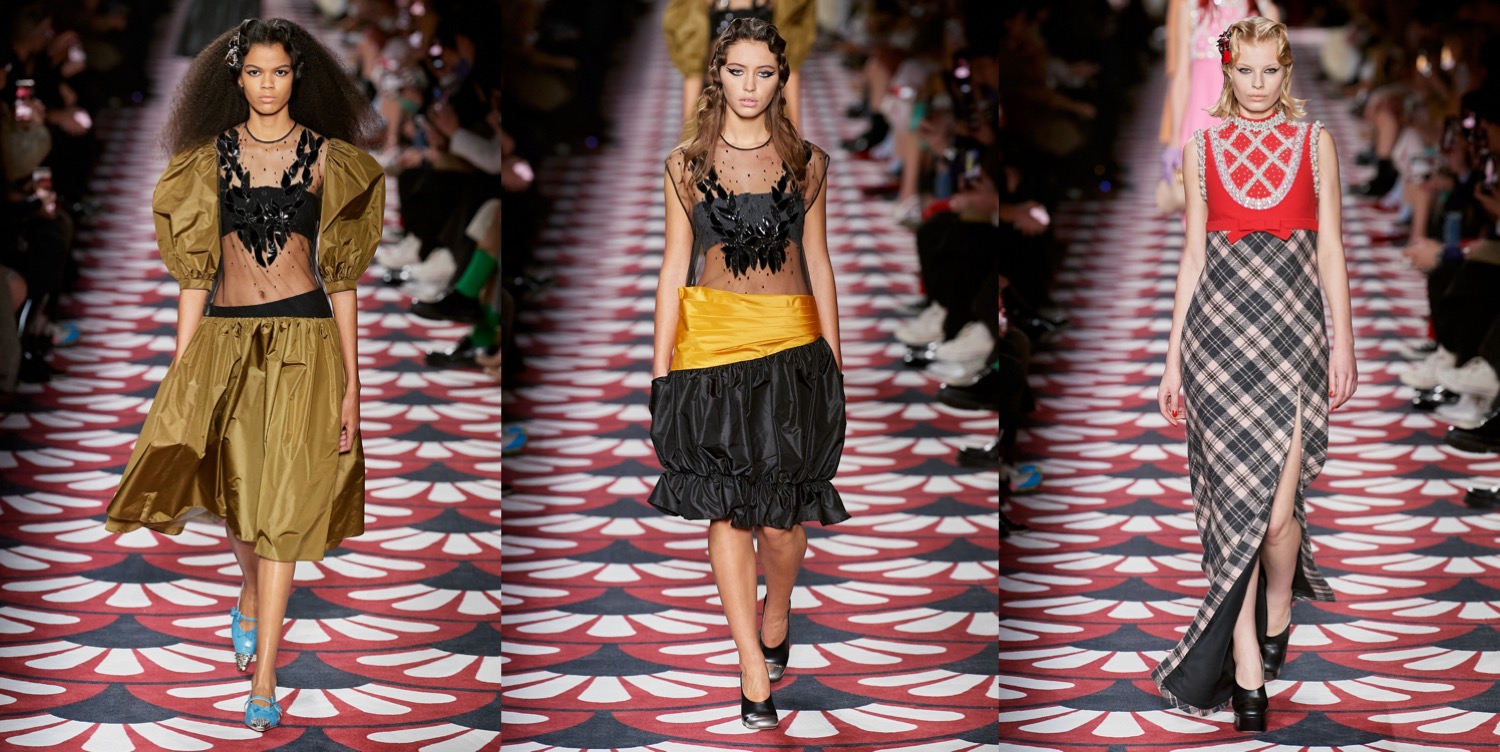
Miu Miu‘s autumn-winter 2020 collection didn’t entirely click for me. Maybe it was the uncomfortable looking, 1940s-inspred hair. Or the suffocating retro feeling that feels completely cut from reality. Or it’s the current, global circumstances that just don’t really match the collection’s early 20th century party girl mood. “Toying With Elegance” was the title of the line-up, an allusion to the childlike joy that comes with getting dressed to the nines. Miuccia Prada had the show opened with a charming cameo: Storm Reid, the 16-year-old actor of Euphoria fame, who wore a persimmon crushed-satin dress and tweed overcoat. The rest of the collection rotated around the idea of matching a festive dress with a big coat. Extra-long proportions lent a sense of irreverence to the sweet empire-line dresses in saccharine shades that were replete with bows and crystal embellishments. The most convincing pieces were the leg-baring little black dresses that had frothy taffeta sleeves and colorful nipped waistbands – they made you think of Miu Miu’s archival “girl”. Especially spring-summer 2008, which was all about that easy, flirty look. The rest was kind of forced.

Collage by Edward Kanarecki.

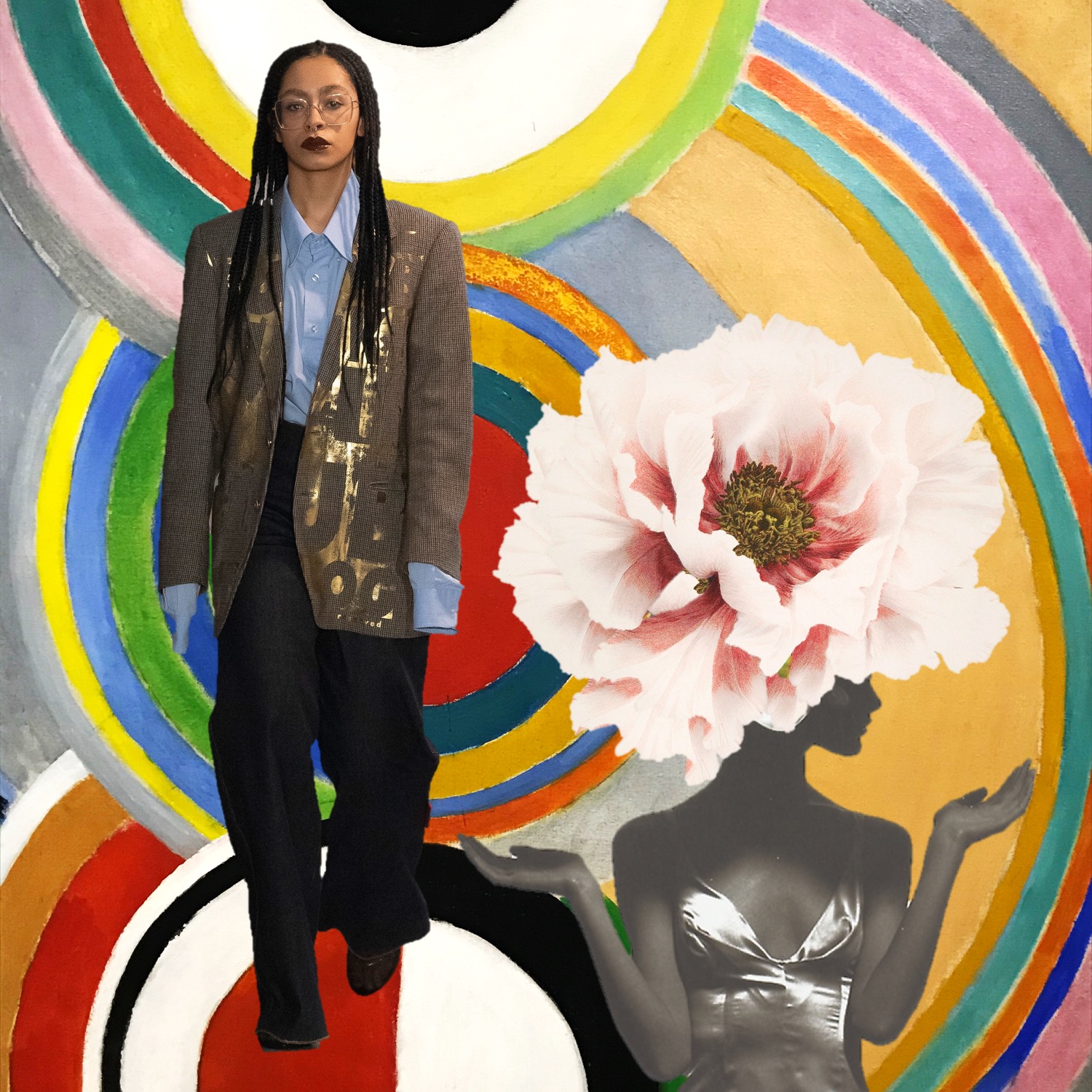
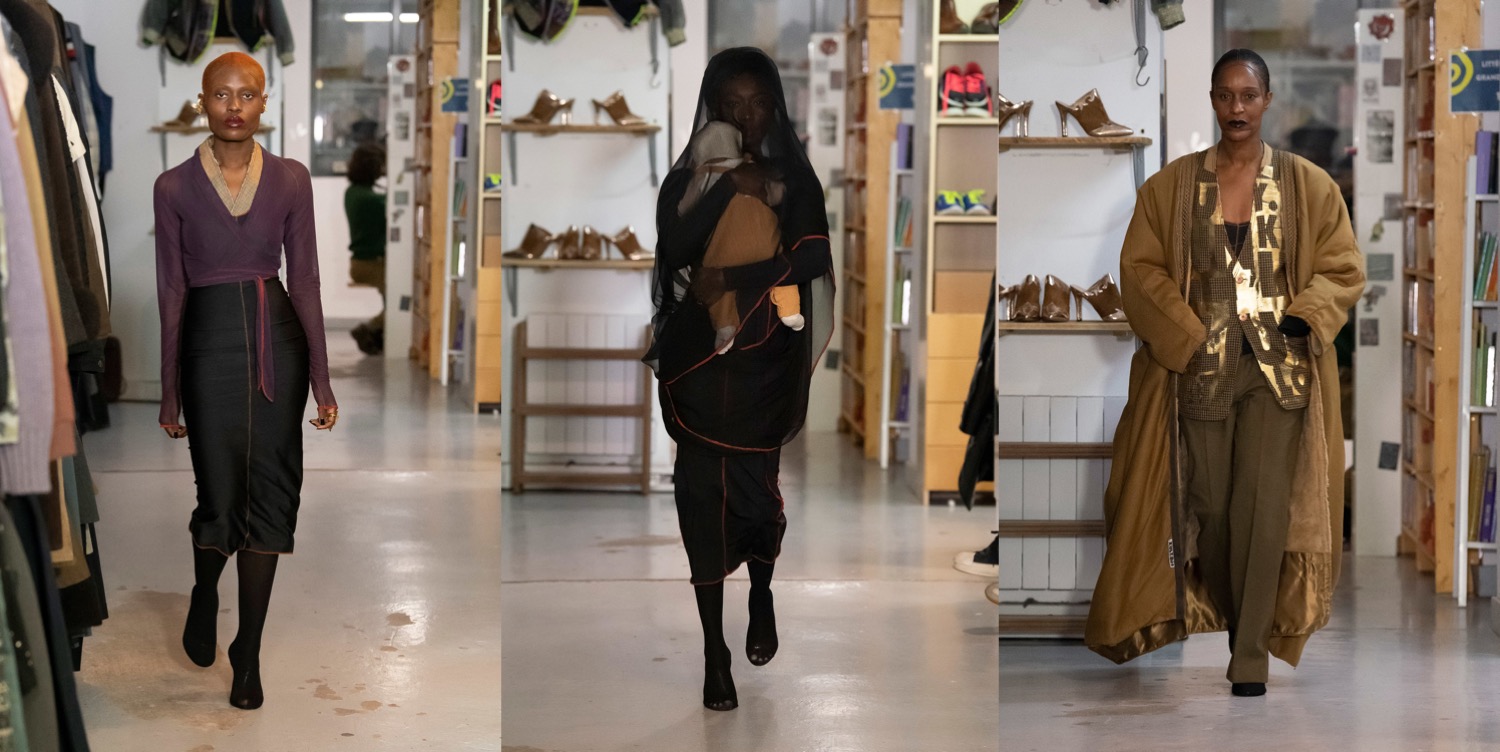
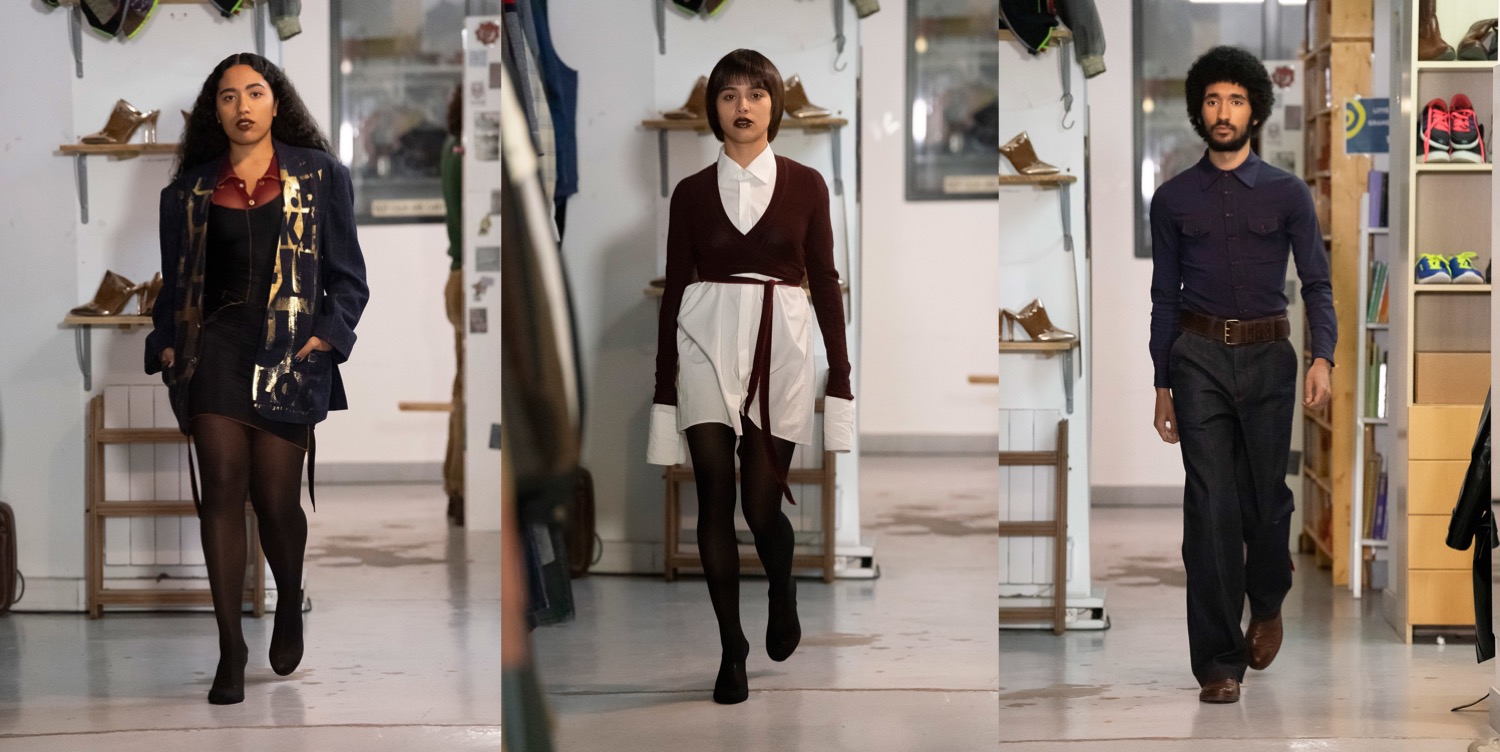
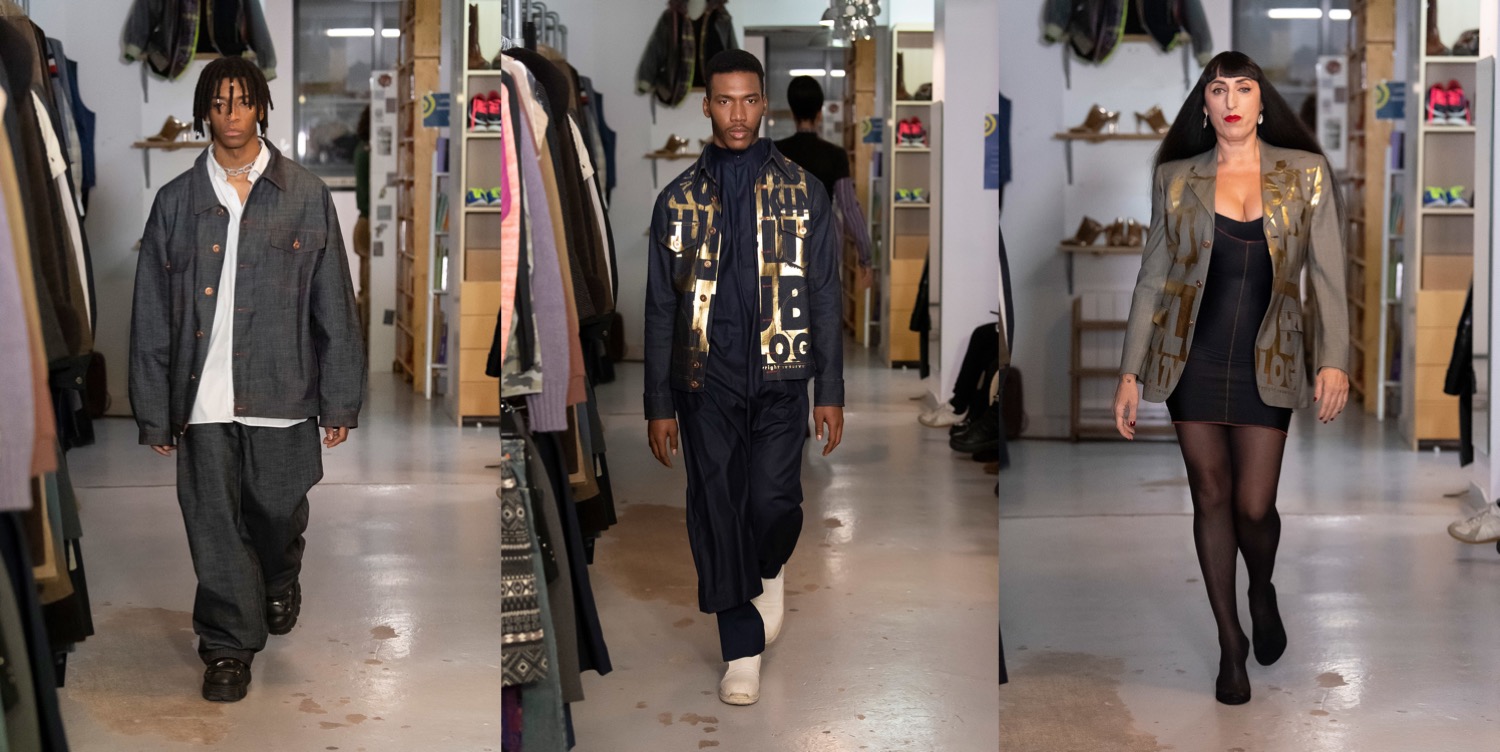
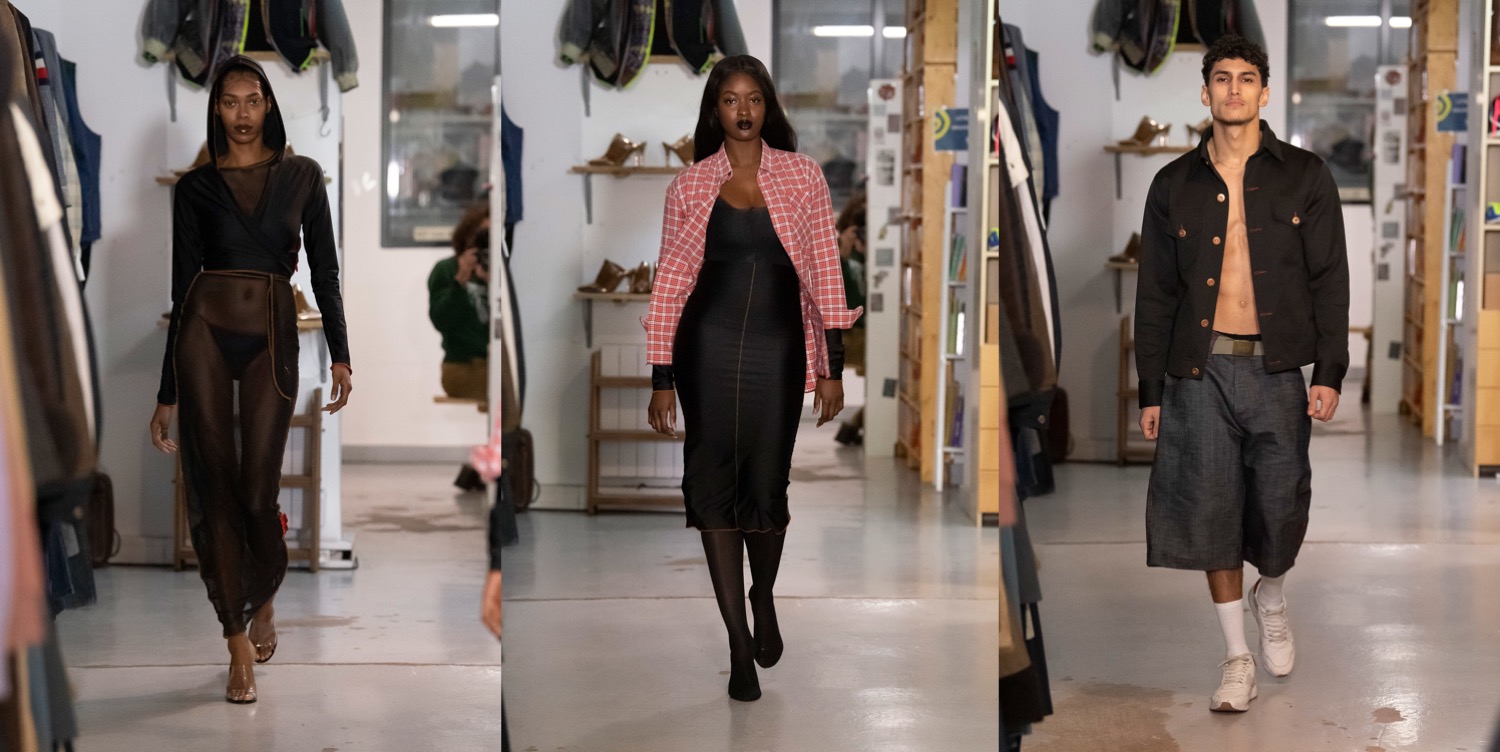
Essentials. Xuly.Bët AW20

Lamine Kouyaté‘s Xuly.Bët is back on track – with a location switch from New York to Paris, where his family and children are. Born in Mali and raised largely in France, the designer launched his Xuly.Bët (a Wolof/Senegalese expression that means “keep your eyes open”) label in 1989. His guerrilla approach to shows complemented his bricolage technique and use of salvaged and repurposed materials – so yes, everything’s that’s rightly trending in the emerging times of sustainable fashion. Lamina’s comeback collection was staged in a charity shop in Paris’ 2nd arrondissement. Showing in Paris also meant some of his longest-term collaborators, like Rossy de Palma and Michelle Elie, were there, bopping down the catwalk between the 1970s office decor and bins of baby onesies. The autumn-winter 2020 line-up offers smart, yet properly odd take on everyday wardrobe. Those are essentials that stun with their functionality and sophistication. A little black dress made of a fractured pieces of stretch jersey and red seaming, paired with a veil that holds a tiny baby inside. Jeans cut precisely large and with clunky buttons. Trench coat made from 100% recycled materials. Wool blazers with hand-printed letters in gold. After the groovy show, Kouyaté was asked how it felt to be the first to be upcycling all the way back in the ’90s. He demurred, saying he wasn’t the founder of the movement, but he was certainly one of its earliest supporters. “It says something positive,” he said of upcycling textiles. “We have to.” Stores like Dover Street Market or Matches, place orders at Xuly.Bët’s.

Collage by Edward Kanarecki.

Liberated. Chanel AW20

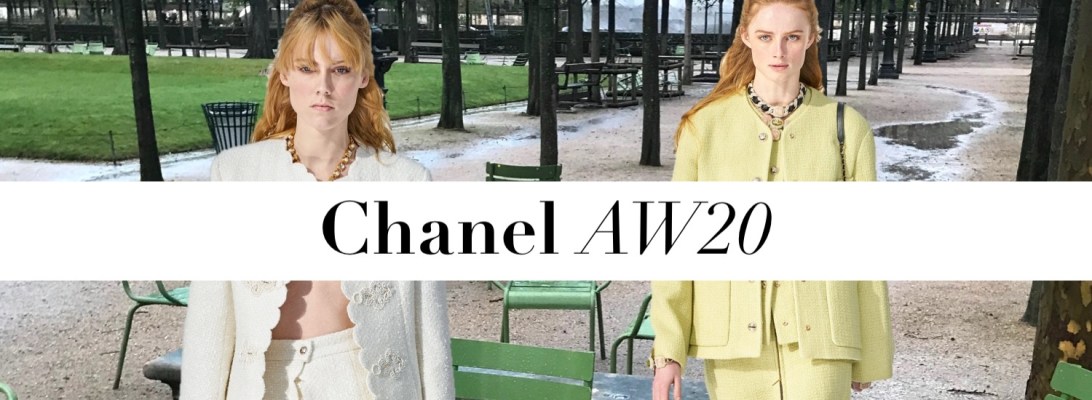
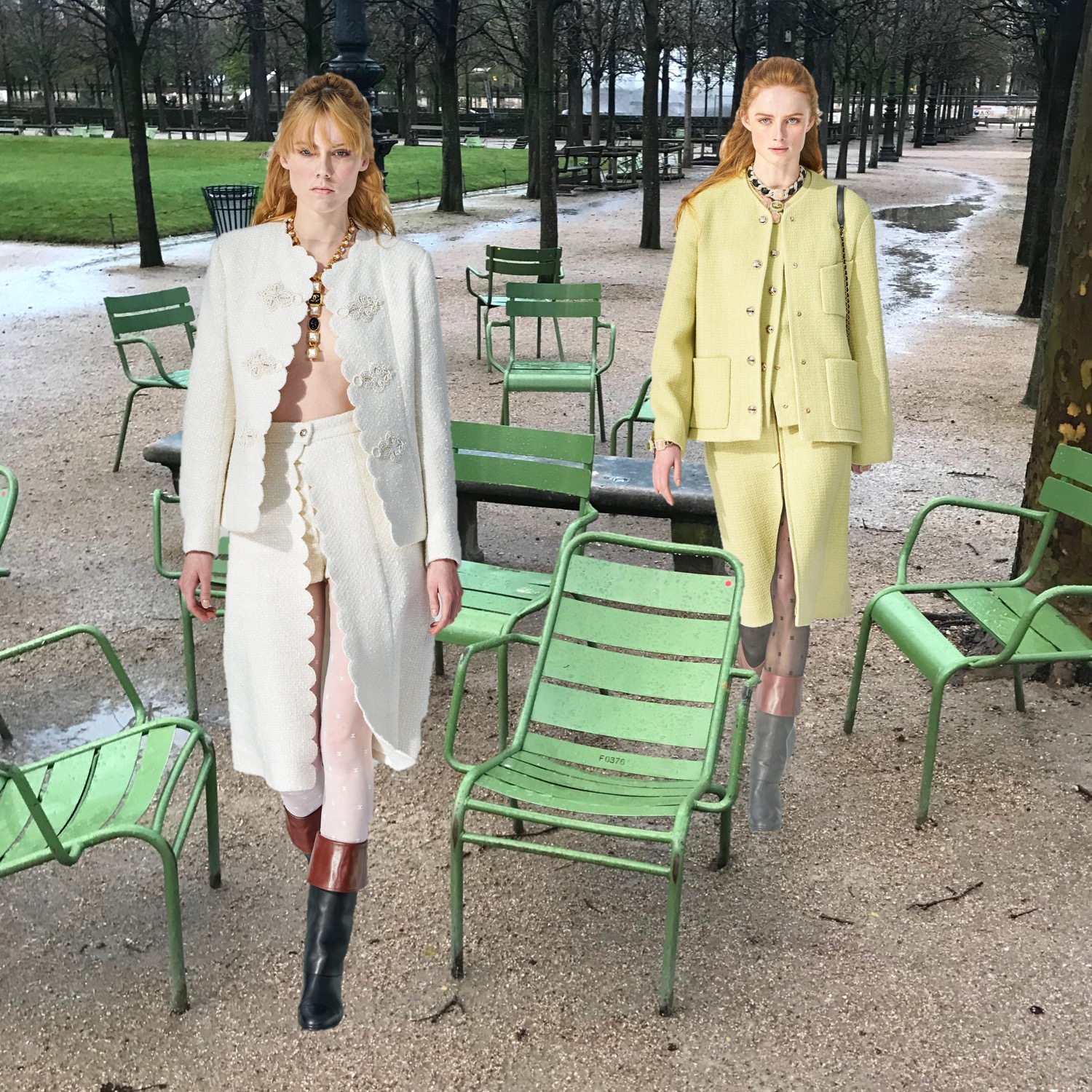
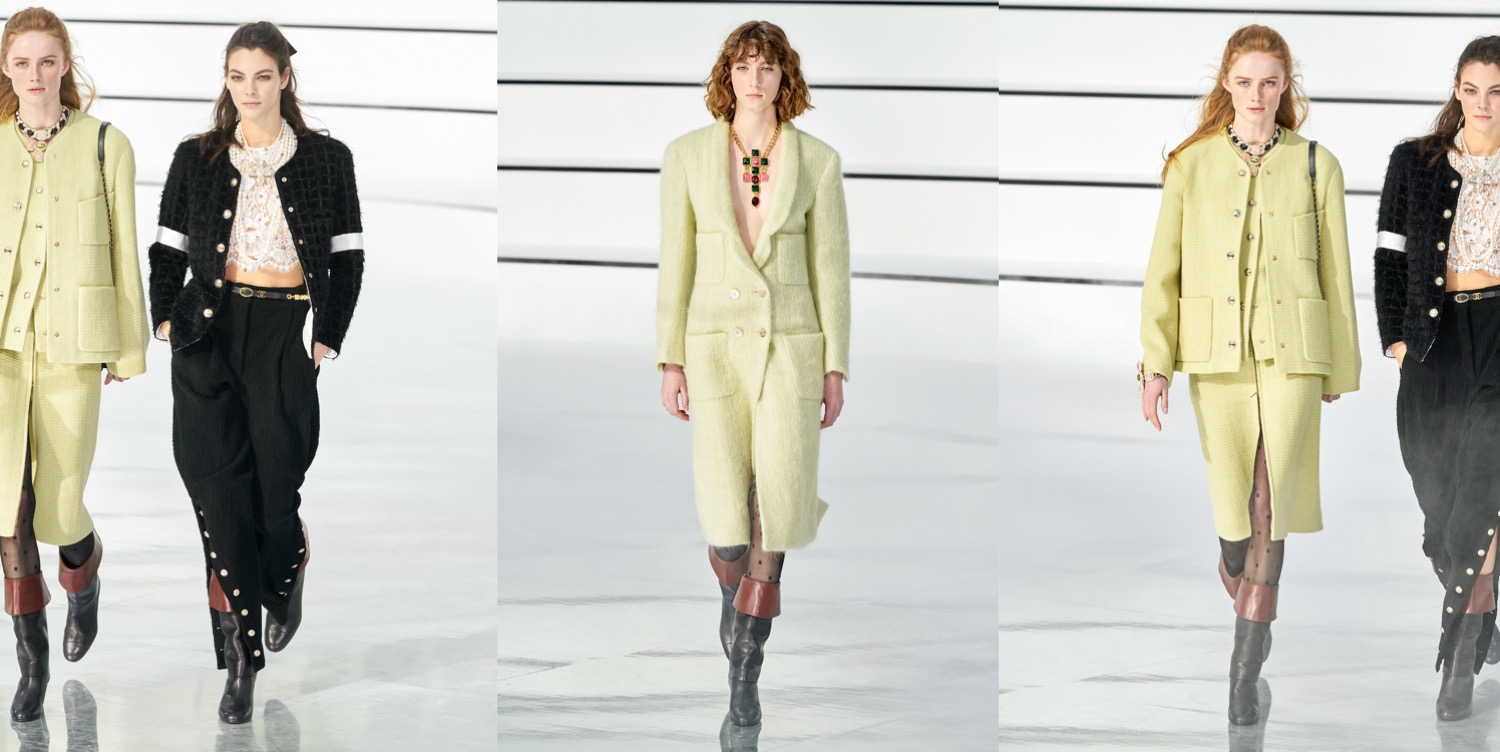
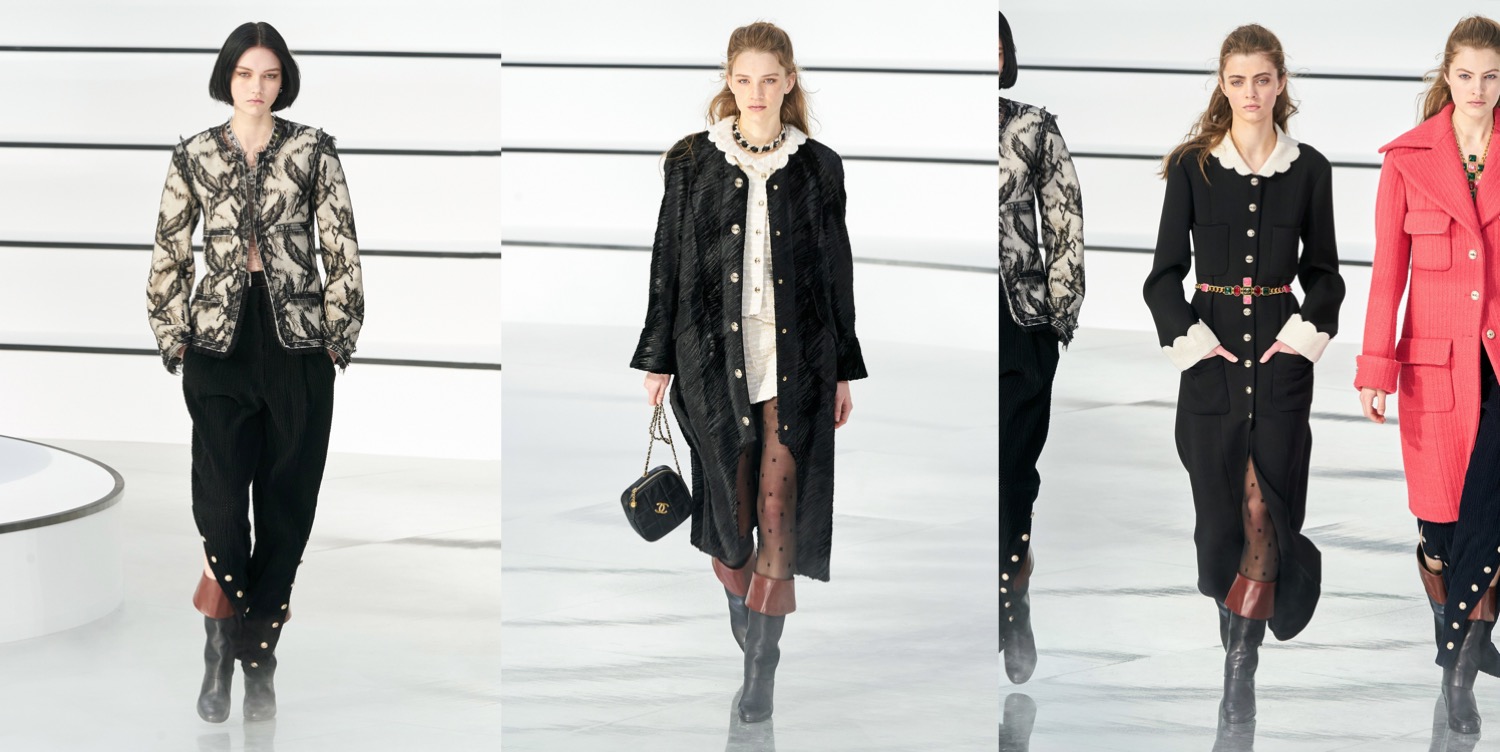
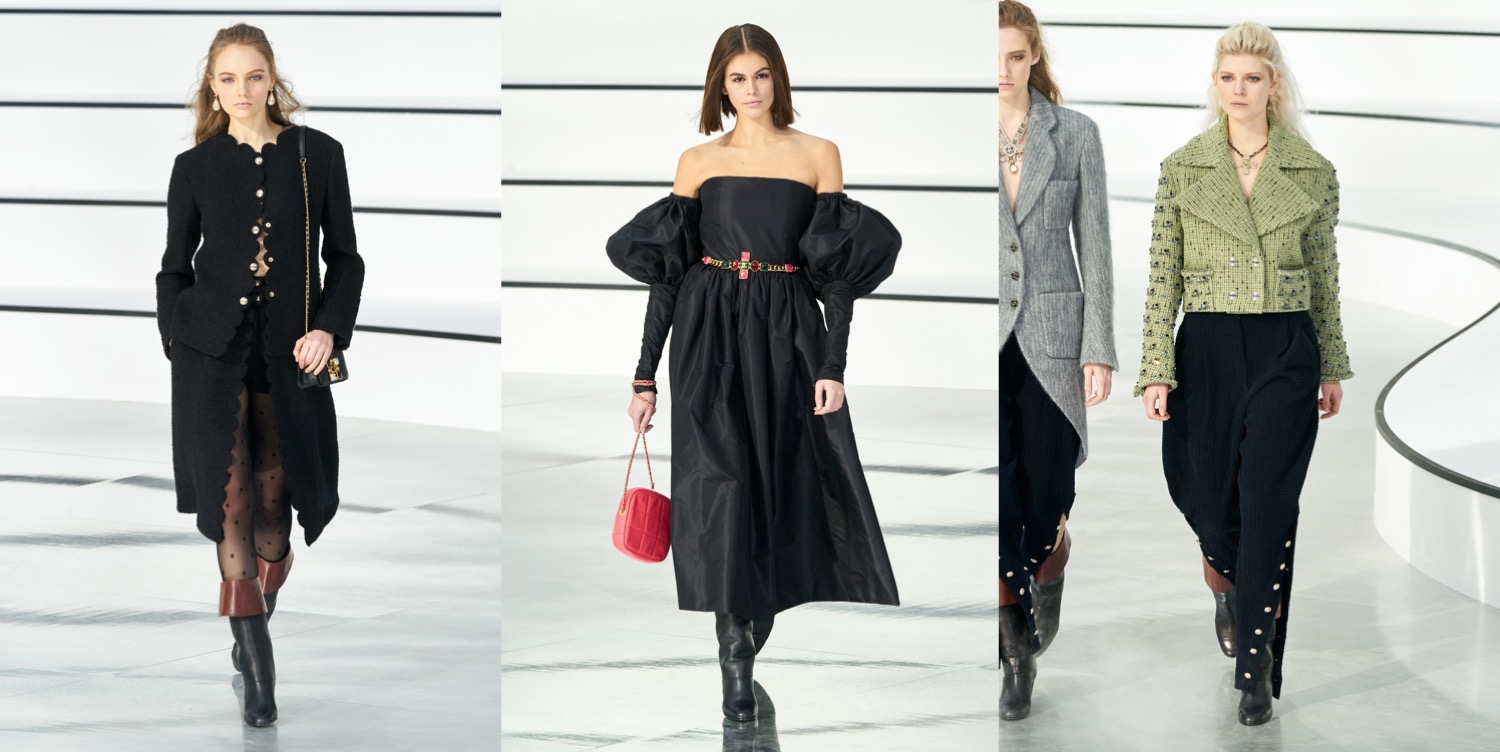
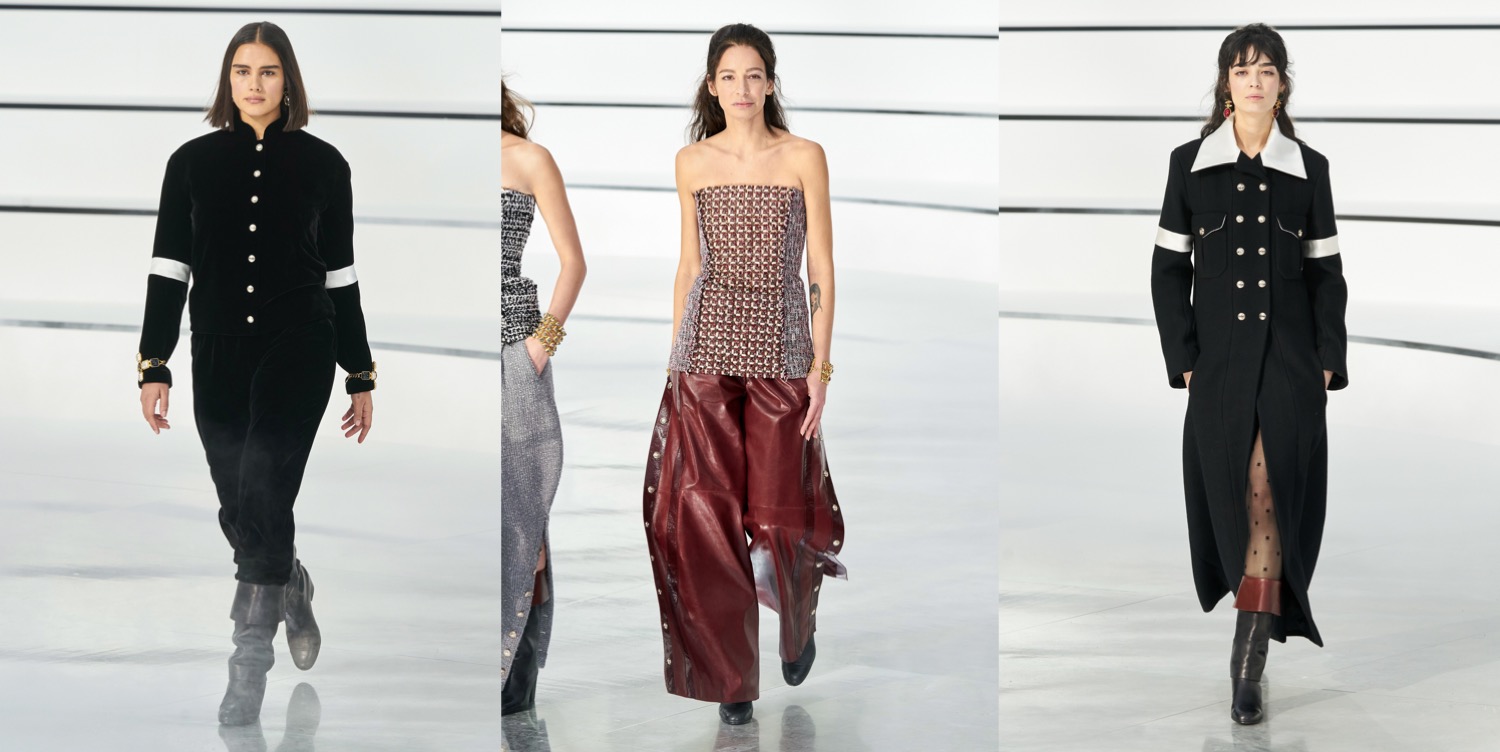
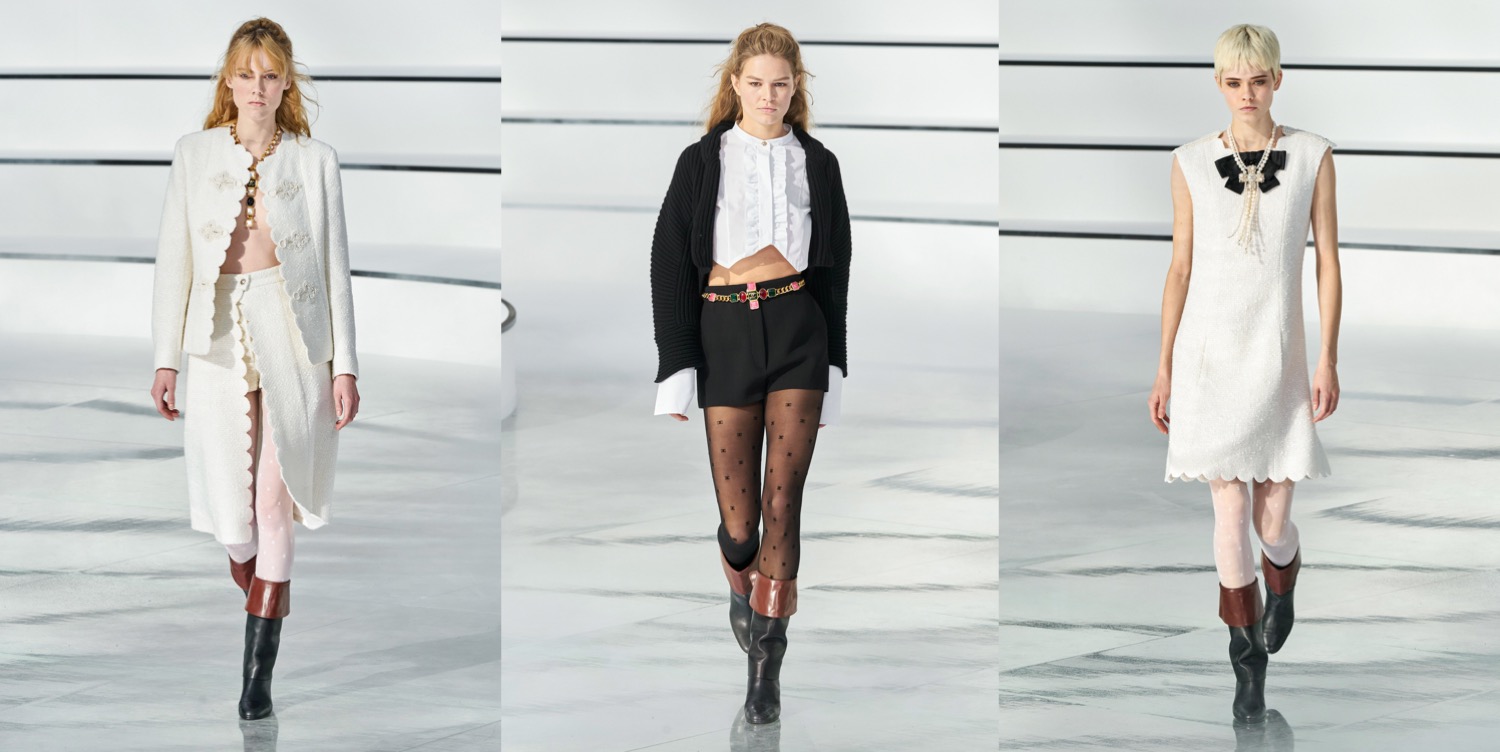
Many critics are really tough on Virginie Viard. Ok, sometimes some of the styling sucks. There’s too much of CC logo on her designs. But then, I can’t remember the time when the Chanel woman felt so liberated. Viard creates intimate, personal fashion for a brand with a format this big that sometimes her vision gets trapped or misunderstood. However, her autumn-winter 2020 collection was her most confident outing yet. “Freedom!” declared the designer backstage. Viard explained that she was talking about the sort of wind-in-the-hair freedom that a horse rider feels as their steed bounds through the landscape. That idea of liberation translated into a collection of unforced, woman-friendly pieces that embraced the house codes at the same time that they reinforced Viard’s own pragmatic instincts for comfortable, no-nonsense glamour. Viard took her inspiration from a 1980s photograph of Karl Lagerfeld and his sometime muse Anna Piaggi, both dressed in the height of Edwardian-revival finery. In that image, Piaggi is shrouded in a veiled Death in Venice hat, and Lagerfeld wears a morning-dress-stripe jacket and vest, a floppy black silk cravat, jodhpurs, and a pair of sturdy riding boots – an image that for Viard represents “strong romance.” Viard reinterpreted Lagerfeld’s chunky-heel boot and styled it with every single outfit in the collection, from a thickly knit cardigan worn with a cropped white cotton evening dickey and micro shorts to liquid black velvet evening gowns. The collection didn’t have 100+ looks (which was a big relief), the setting was minimal, and it all felt consistent, yet easy. Some girls came out in pairs or groups of three, and it was refreshing to see them smiling and chatting to each other like friends, wearing unpretentious clothes that seemed to have stepped right out of their wardrobes to make sense for modern lives.

Collage by Edward Kanarecki.

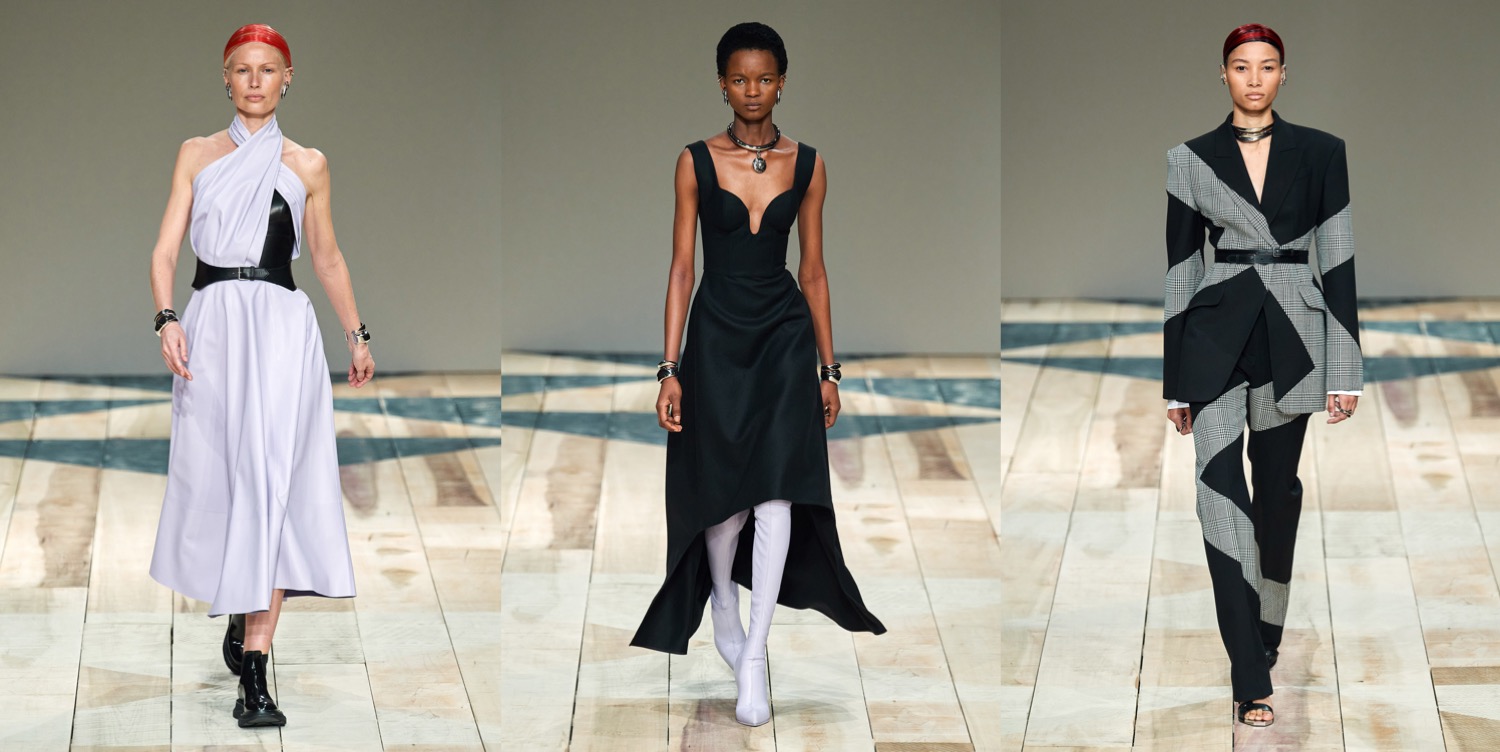
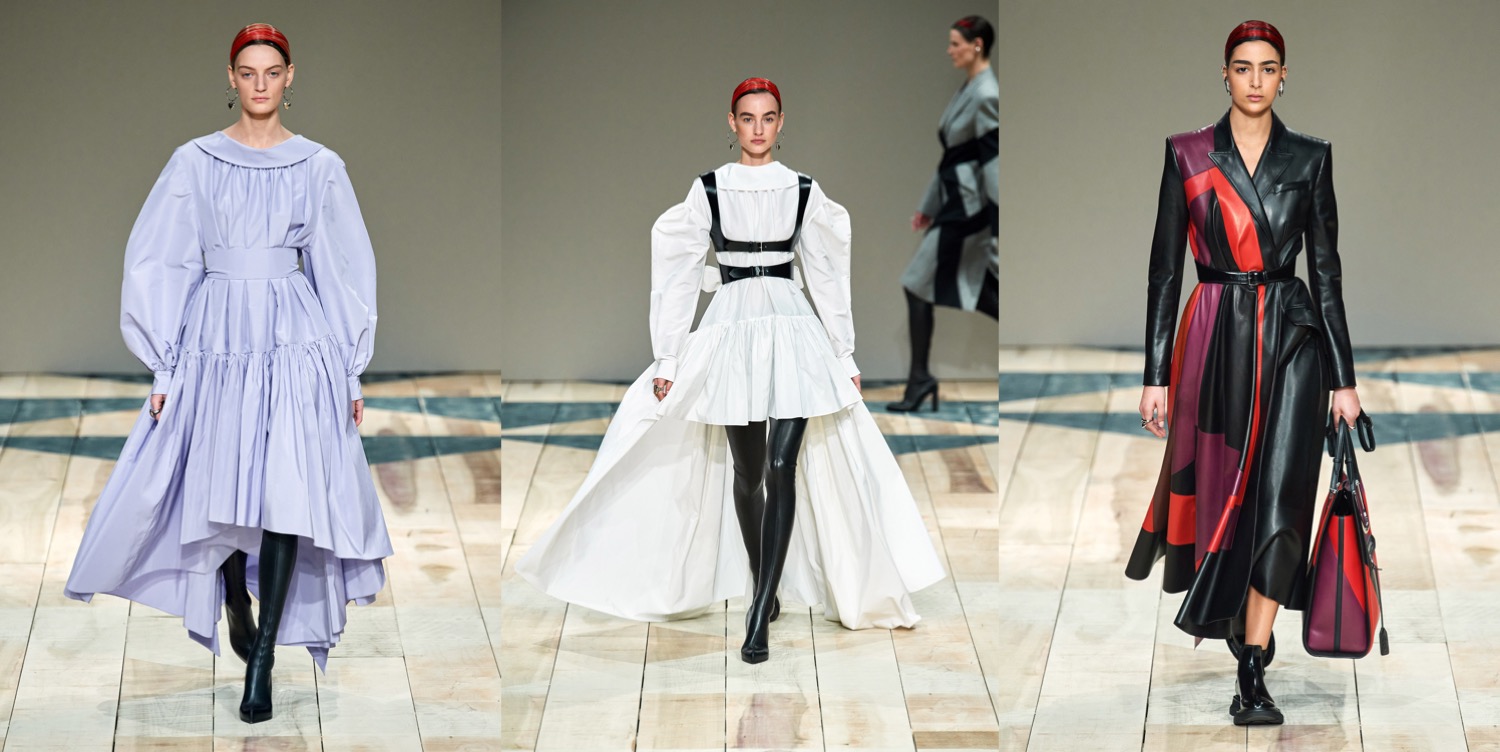
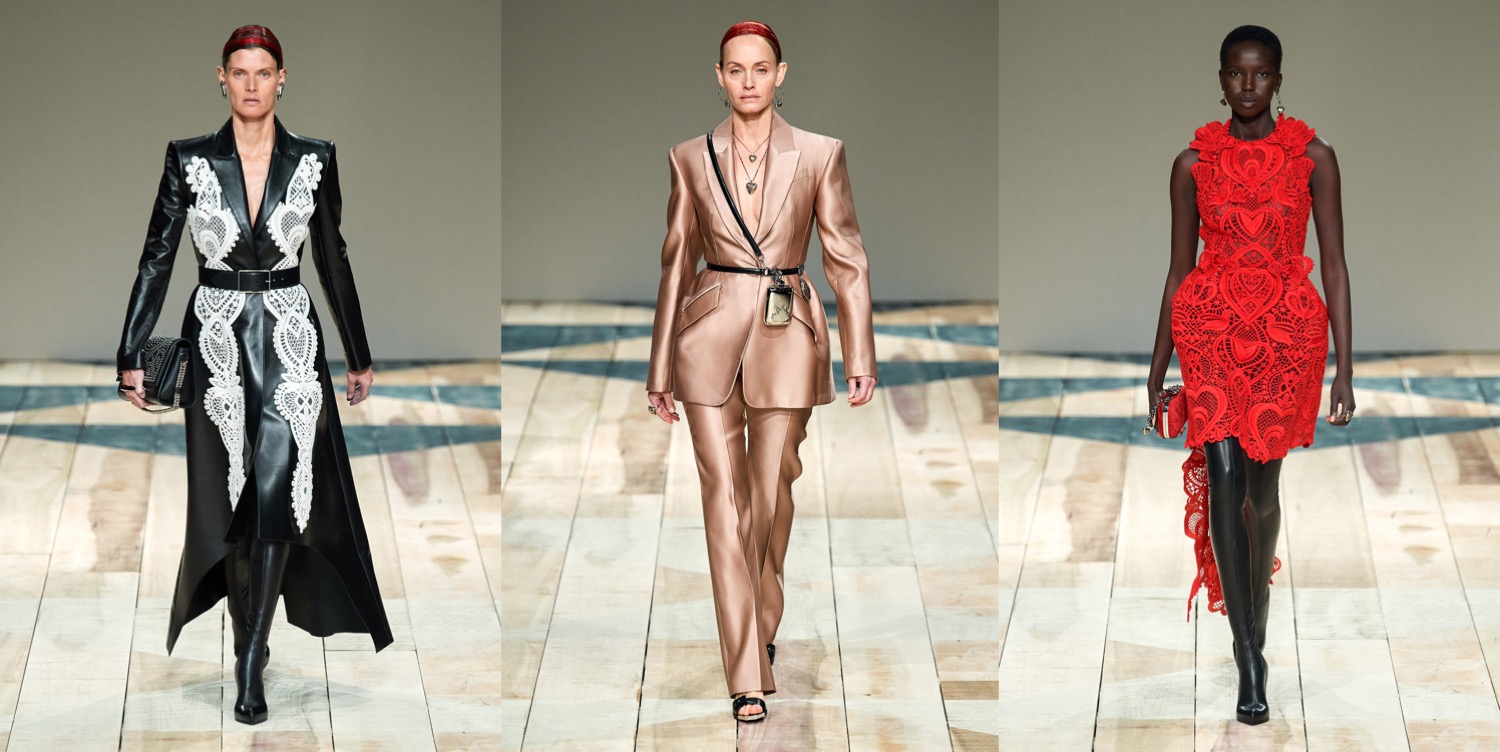
Beauty and Strength. Alexander McQueen AW20

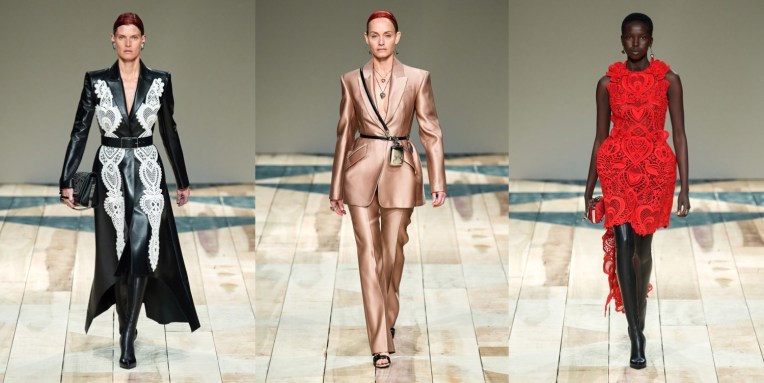
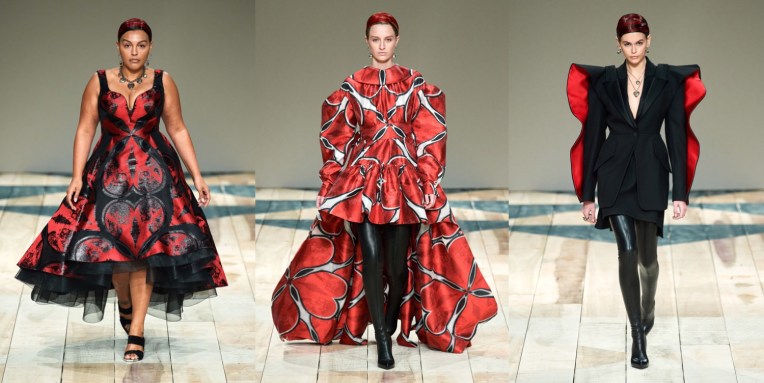
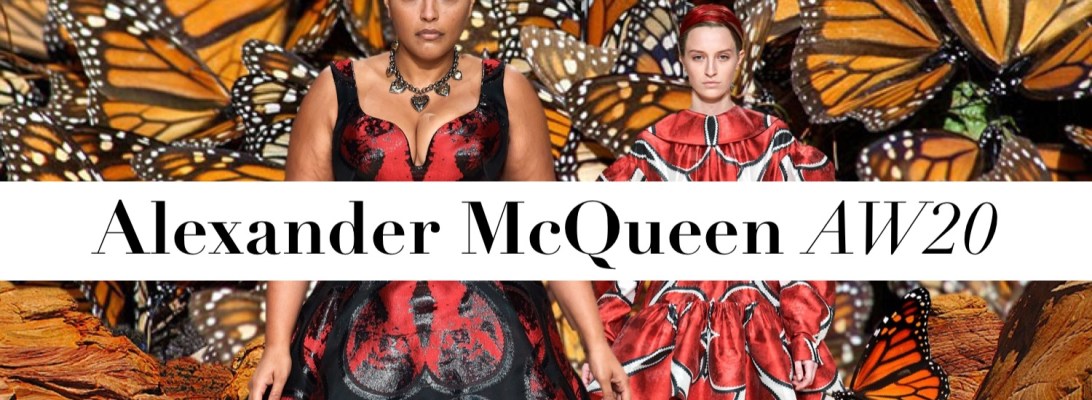
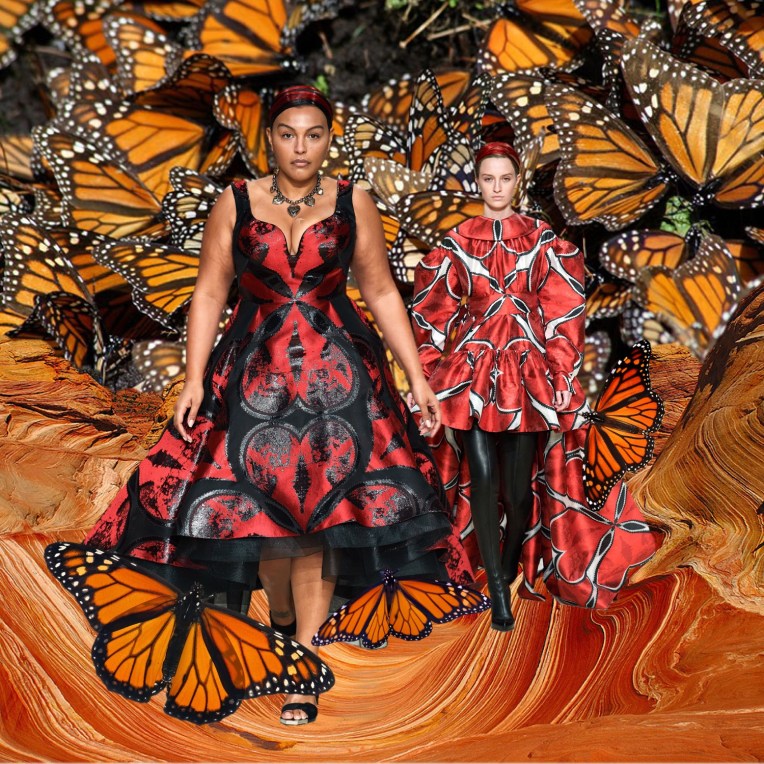
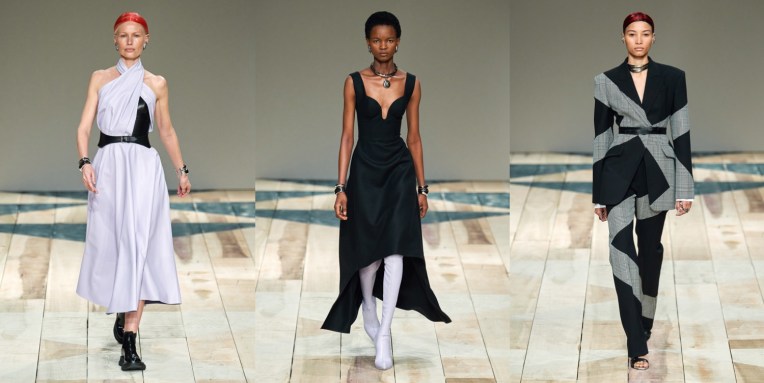
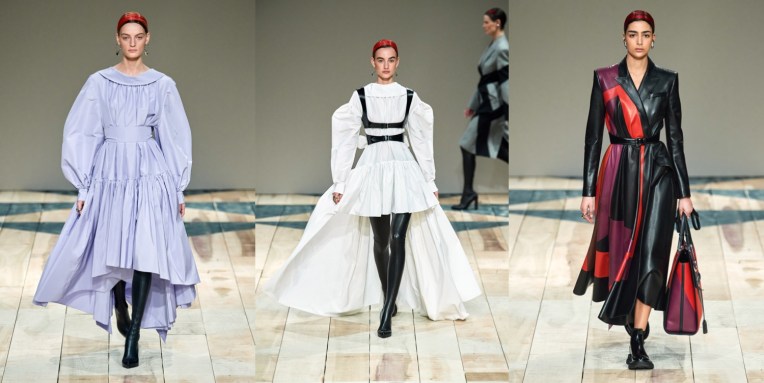
I usually don’t mind for Sarah Burton‘s Alexander McQueen. But this season, I felt a spark about her work. The  collection opened with the sound of birdsong and echoing children’s voices. Then, the McQueen warrior women marched relentlessly on, in sharply tailored frock coats and slim-leg pantsuits gripped by belts jangled with jewels that included tiny silver hip flasks and metal-bound notebooks. For the closing, a finale of fairy-tale evening dresses of frothing net and embroidery suggestive of medieval folk tales. “What do you talk about in a time when there’s so much noise?” queried Burton during a press talk. “I wanted this collection to be really grounded, bold, and heroic,” she answered herself. “I feel like you need to be heroic.” Burton’s poetic adventure for autumn-winter 2020 began with a visit to Wales, the storied Celtic land of myths and creativity. At St. Fagans National Museum of History in the capital city of Cardiff, the first thing that caught her eye was the Wrexham Tailor’s Quilt, fashioned at night over a 10-year period from 1842 by a tailor using recycled scraps of the woolen cloths he had used to craft the uniforms he made by day. With its scenes from the Bible and allusions to the Industrial Revolution that was threatening the very idea of handcraft at the time, it is a powerful object, “a narrative of someone’s life,” as Burton said. Taking her cue from this inspirational starting point, she worked on sharp-seamed, graphic tailoring that incorporated upcycled wool flannels from previous McQueen seasons woven in British mills and set in dramatic geometric blocks that suggested flags or heraldic pennants. The Victorian tailor’s startlingly contemporary imagery was reflected in prints and complex intarsia treatments. Alexander McQueen himself used antique patchworks as a source for some textile treatments in his spring 2004 “Deliverance” collection, and Burton and her team found further quilt inspiration in the collection of the dealer Jen Jones, including more examples made from scraps of traditional men’s fabrics and others in soft blush pinks also used for the elaborately stitched but unseen petticoats that Welsh women once wore to buoy up their plain, utilitarian skirts. That complex handwork was replicated in dimensional jacquard weaves used for a coat with the allure of a 1940s diva’s dressing robe, or as a deep border to counterpoint the severe tailoring of a shapely black jacket. Fabric innovations also included dégradé treatments that changed from solid to sheer (taffeta to chiffon, or dense to spiderweb fine-gauge knit), suggesting strength and fragility in one garment. The famed Welsh blankets, meanwhile, represented for Burton the idea of “protection and wrapping and caring and kindness”. The idea was powerfully suggested in a surprisingly tender 1930s photograph Burton had pinned to her inspiration board, depicting three Welsh miners in their formal Sunday-best suits, with their respective infant children held by blankets wrapped around them and improvised into papooses “so that they had their hands free to work,” as Burton pointed out. Summing up: it’s a line-up of beauty dressed in confidence and strength.
Collage by Edward Kanarecki.

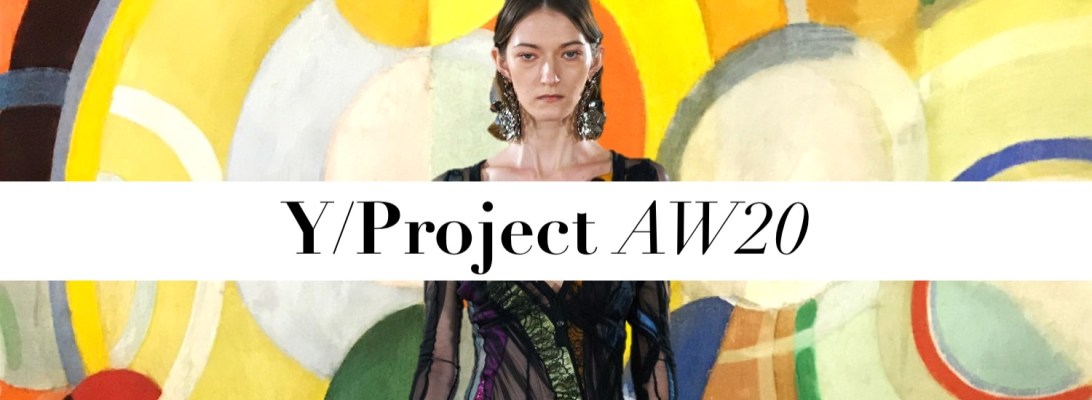
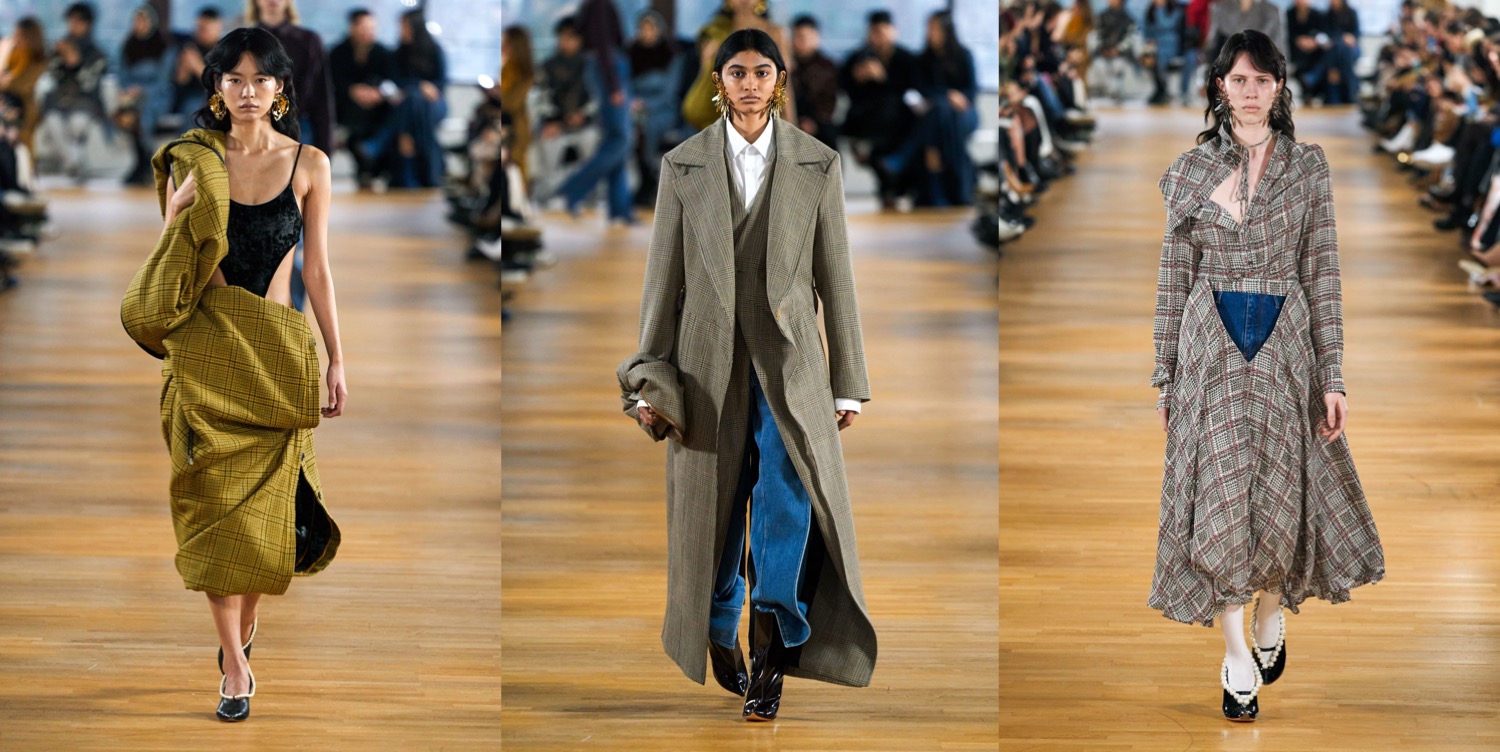
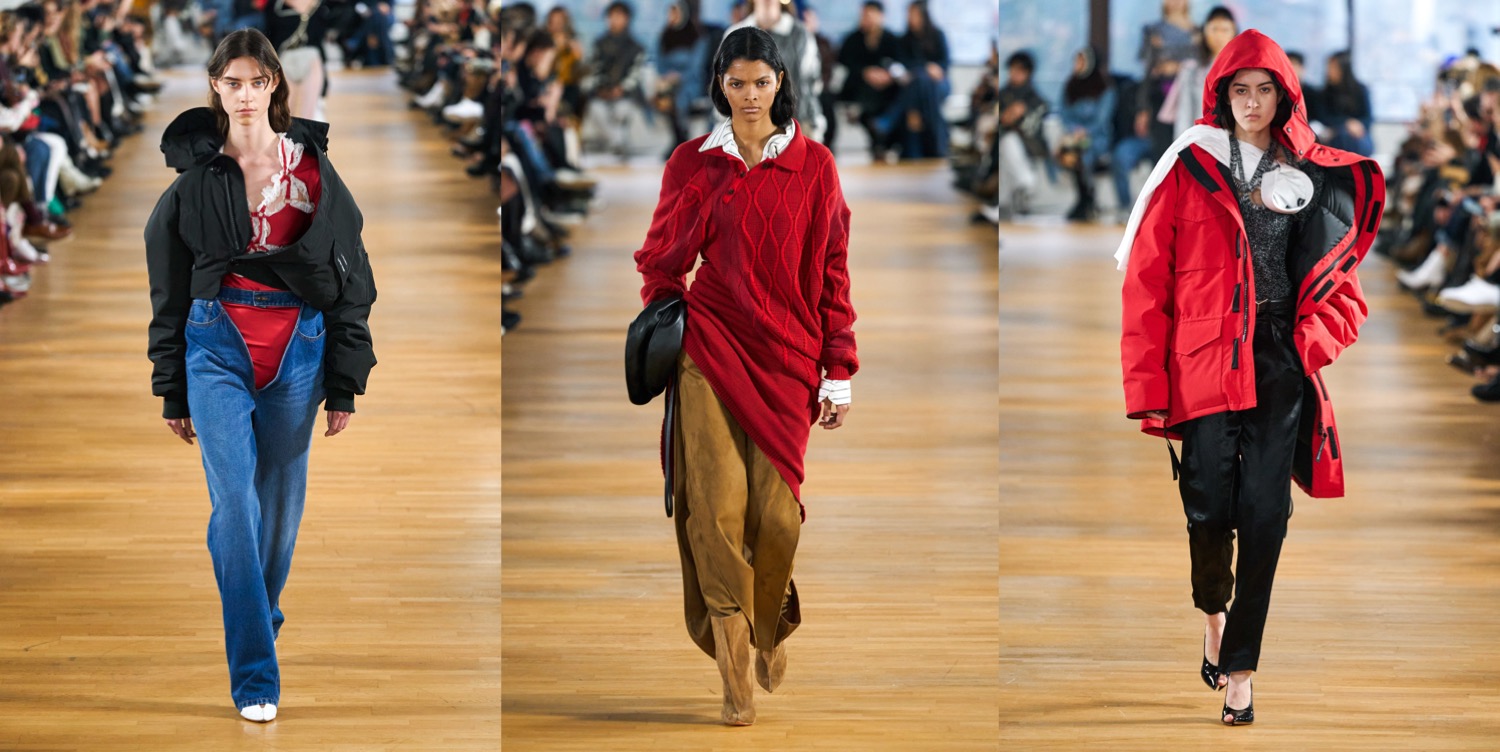
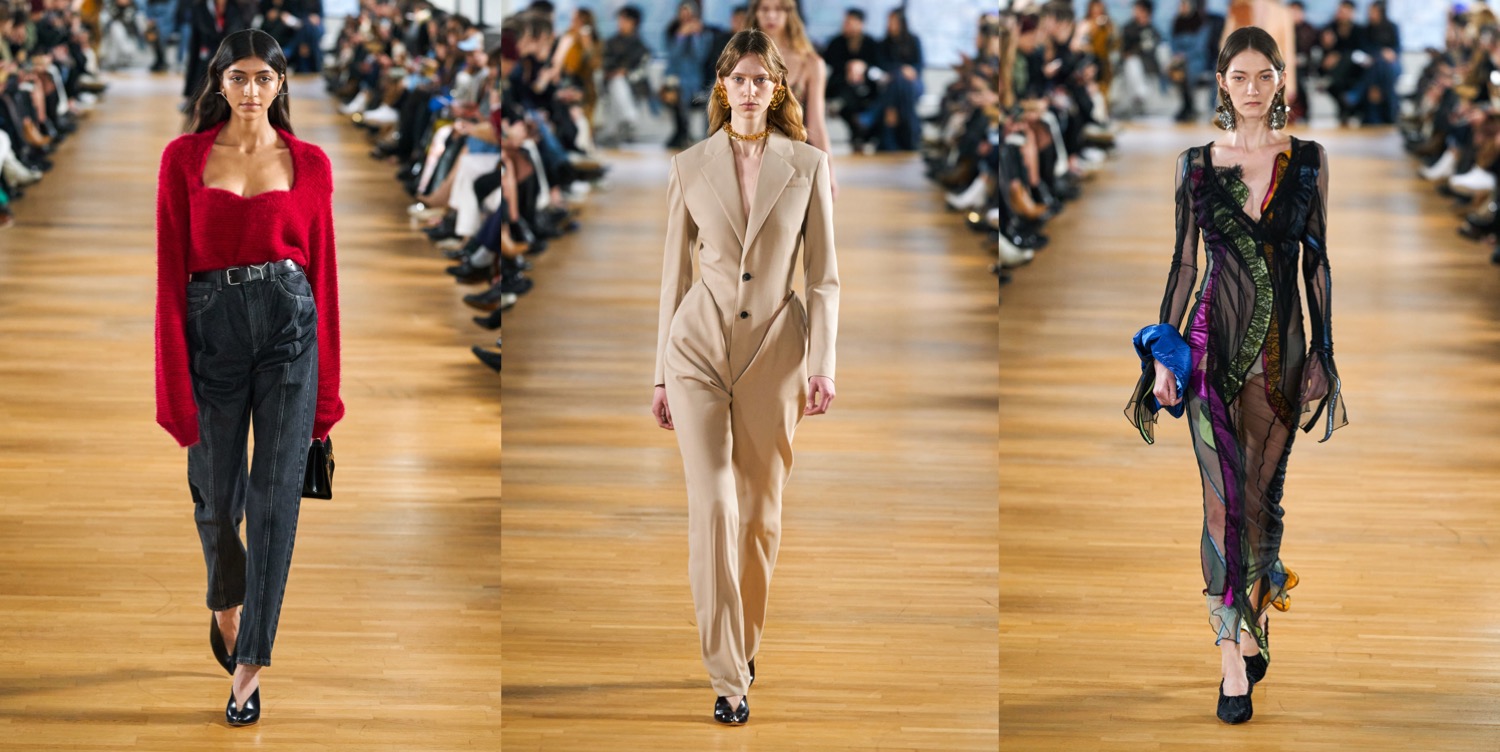
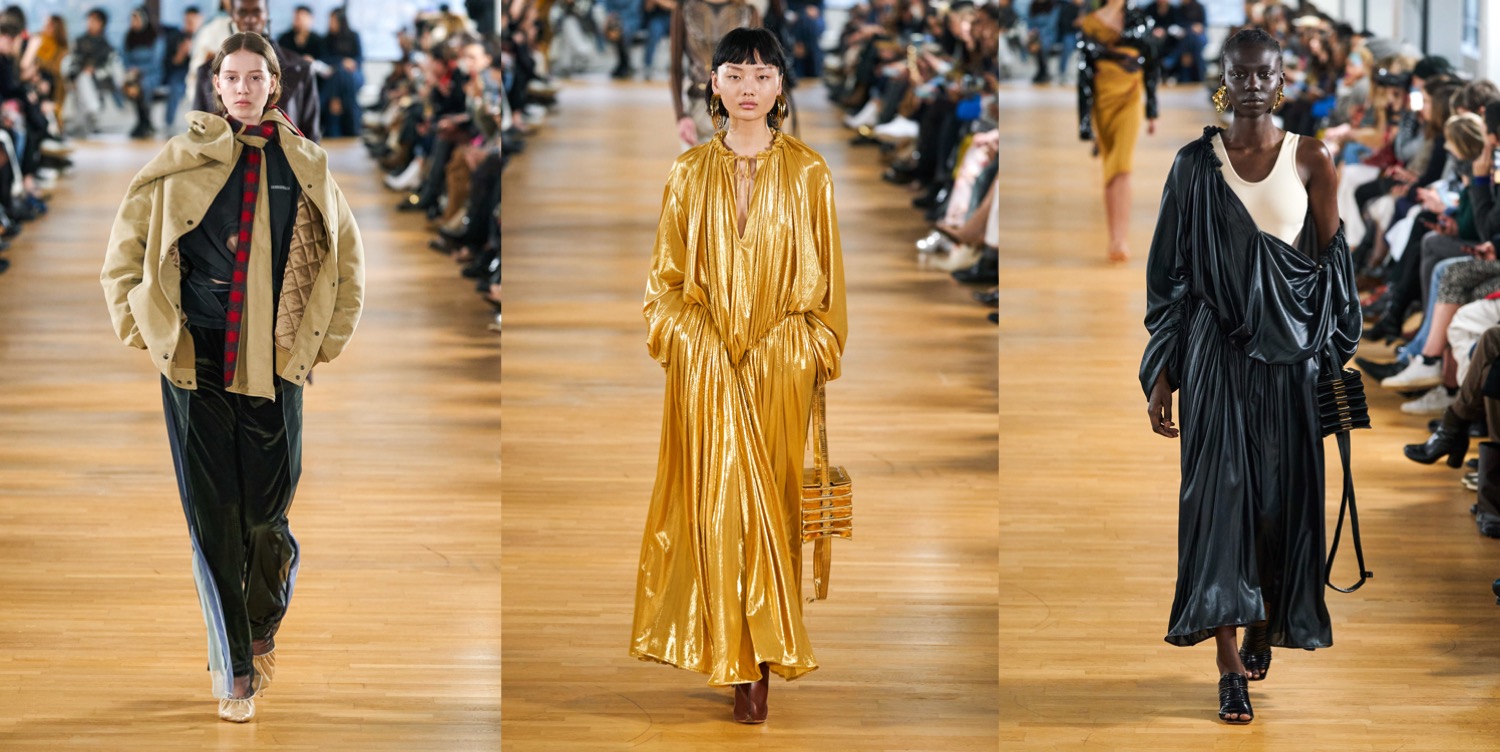
Twists And Turns. Y/Project AW20
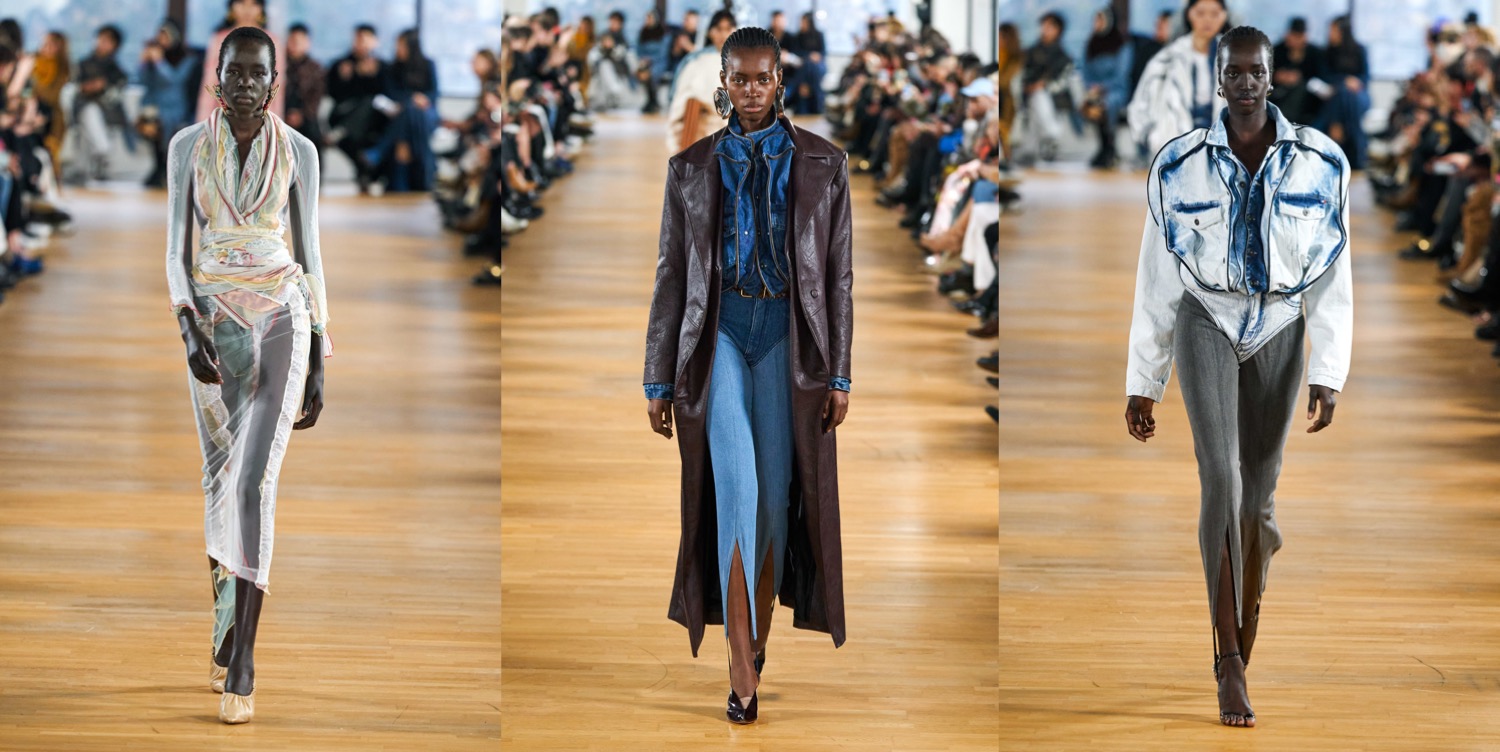
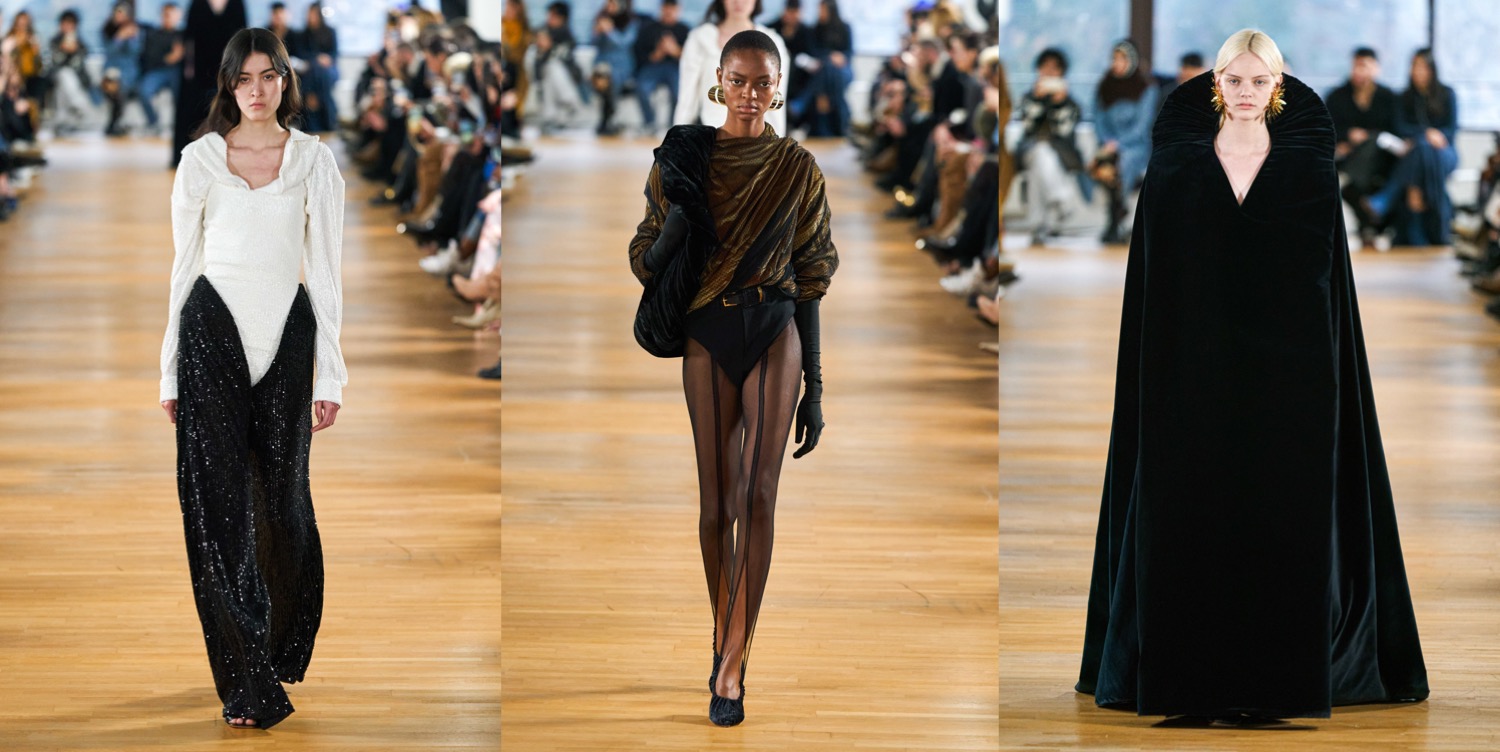
Y/Project‘s creative director Glenn Martens is known to walk the tightrope between good taste and bad, usually pulling from a grab bag of wide-ranging pop cultural and historical references. In his hands, fashion moments from the early 2000s can easily bump up against those from the 1500s. The designer has borrowed from the architecture of Elizabethan armor to refigure the classic blue jean in the past, and for autumn-winter 2020 he took that risqué, deep-V silhouette into more refined territory. His version of a classic tuxedo was elongated along the body, with a blazer turned bodysuit that fit neatly between each suspended trouser leg (as Martens explained, a hidden belt and secret cycling shorts were responsible for the floating effect on these pants). In Y/Project’s collections, it’s the subtle twists and turns that stand out the most. Martens has perfected his askew approach to tailoring, as evidenced in the sleek opening look. But in general, it seems to me that Martens’ work starts to get repetitive: it used to spark more intrigue in his previous seasons. Maybe it’s just a phase.

Collage by Edward Kanarecki.