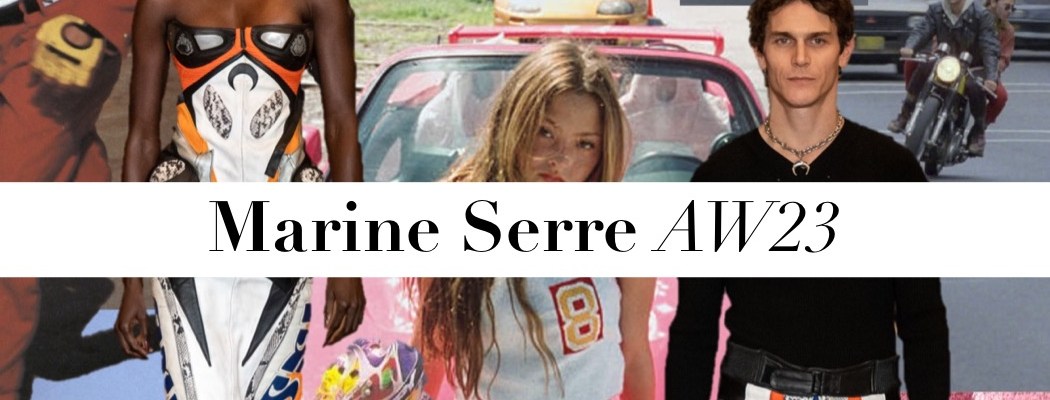
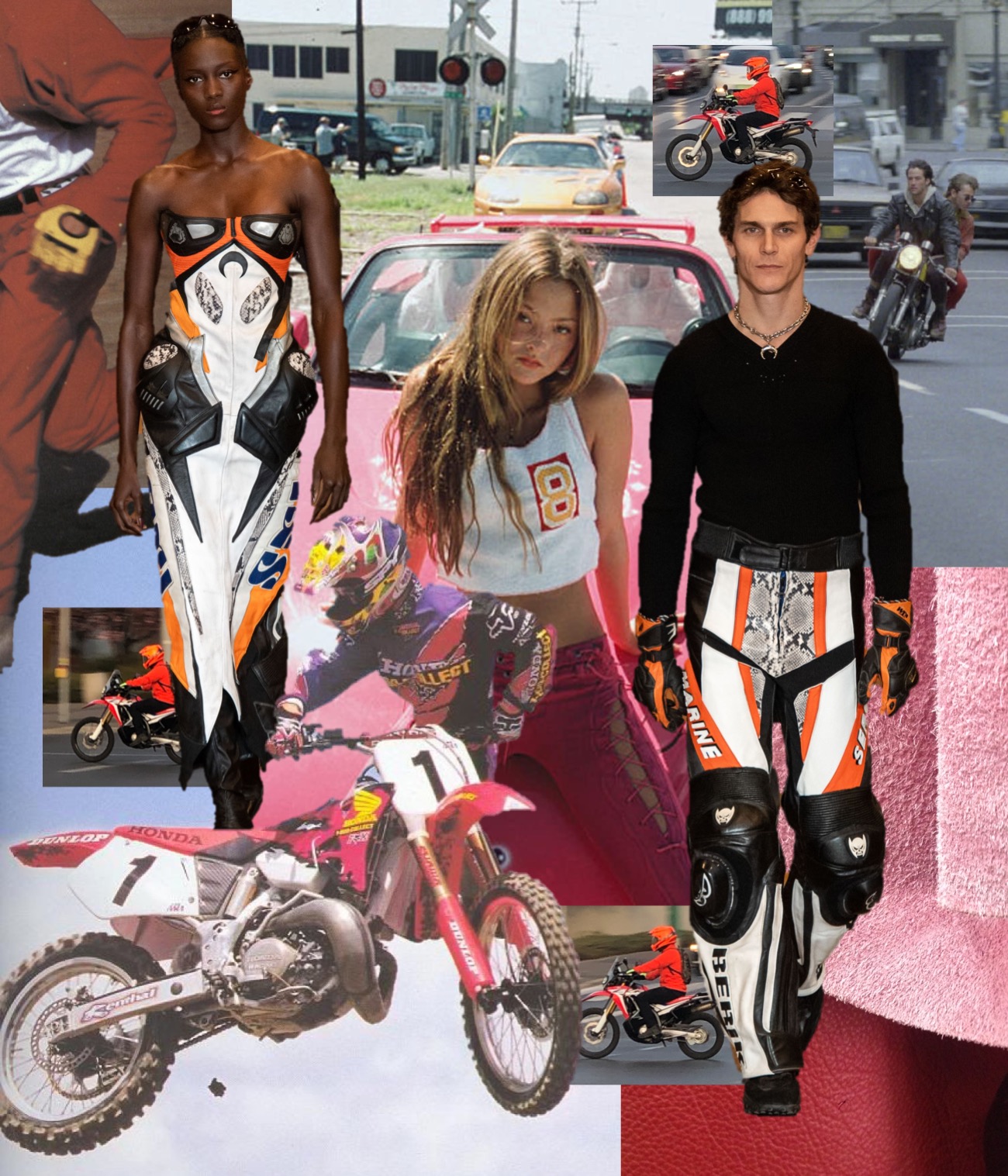
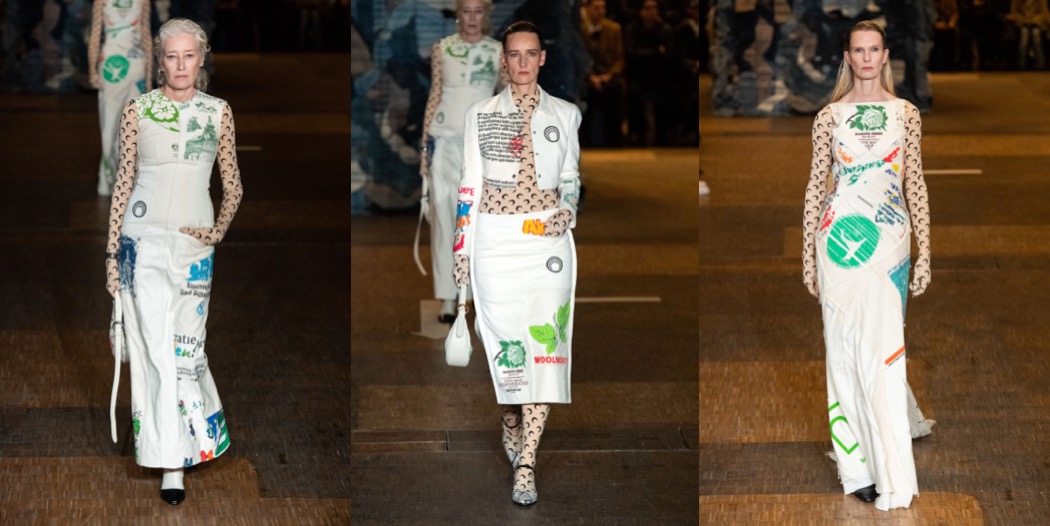
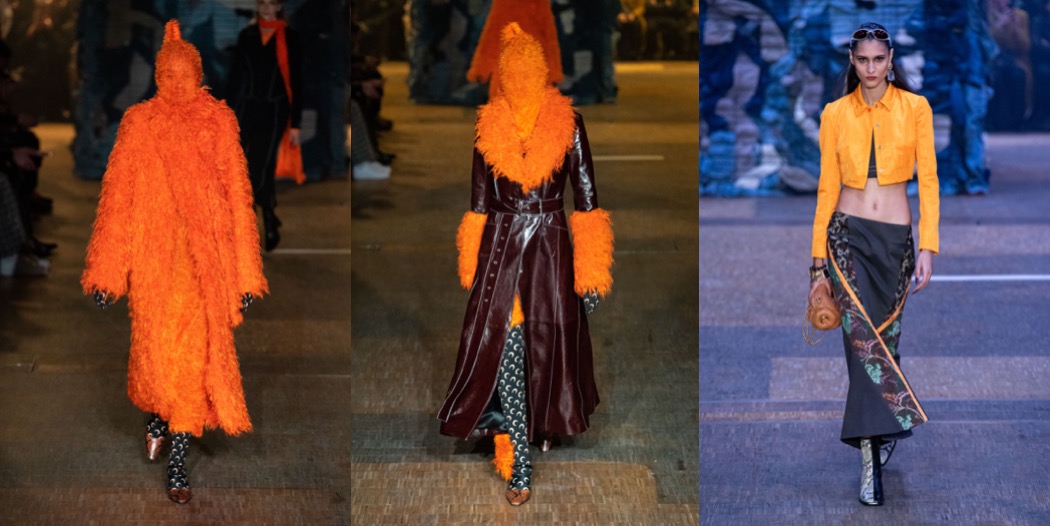
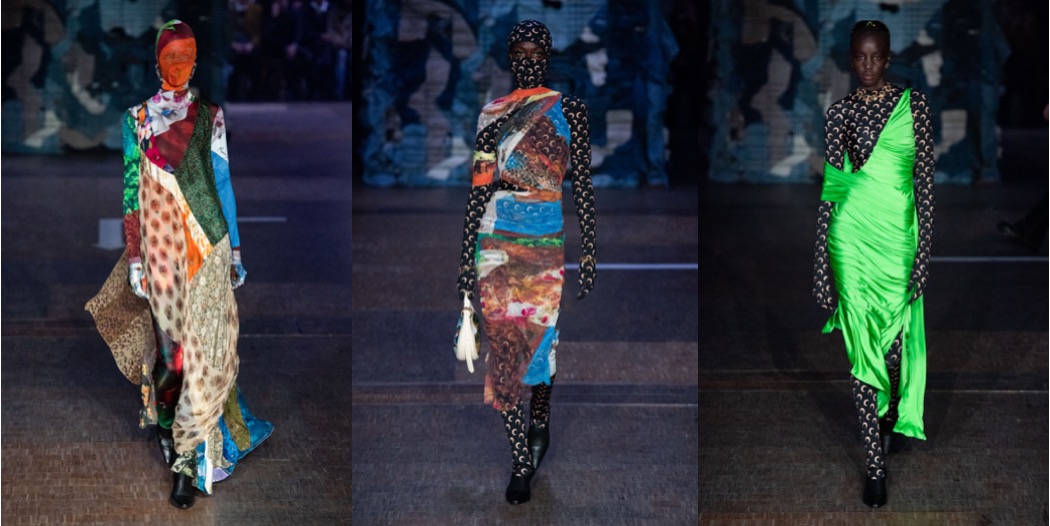
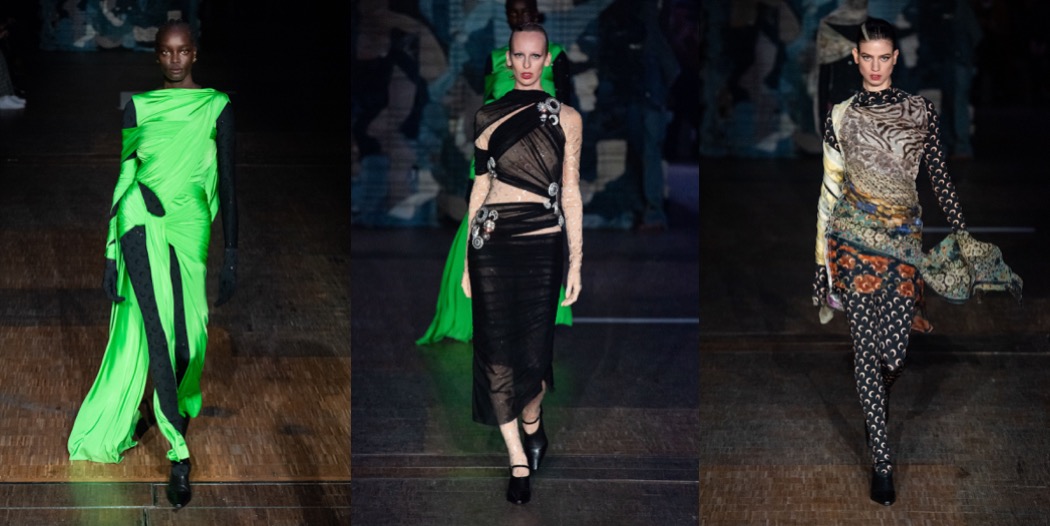
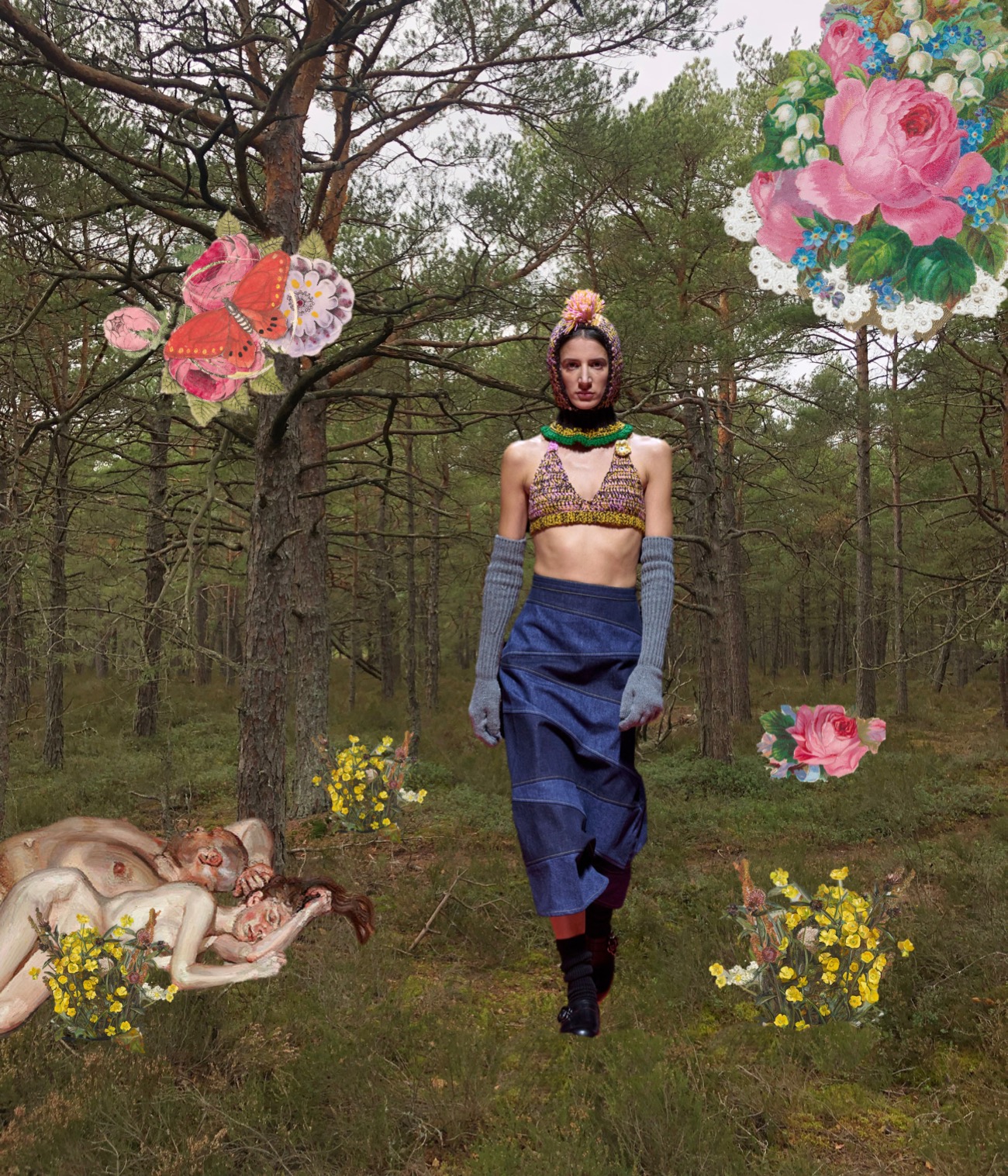
“Nothing is created. Everything is transformed. To love is to repair. It must be simple. We are repaired, we are reused… We are restitched, we are re-embroidered…”. So went the poem – written by Marine Serre – at the beginning of her public-facing autumn-winter 2023 fashion show. In the heavily light-produced outing, Serre systematically set about showing what she could do with deadstock materials. The first eight looks or so were crafted from the totes, and included the cropped jacket silhouette that would ricochet across the collection. The next set was denim, and featured Caroline Issa who wore a siren silhouette denim dress with Serre’s new moon breast inserts. Other looks featured jewelry fashioned from upcycled cutlery. Then we pivoted to motorcycling gear, recycled. Although the motocross trend is widespread (all thanks to Rosalia’s seismic success of Motomami), Serre is a designer who owns that aesthetic, regardless if it’s trending or not. Next we hit knit: Look 20, on a proudly body-positive model, featured a patchwork “lozenge” knit fashioned from 15 or so pullovers. After that were upcycled or chemical-free processed leather looks which sometimes came with some pulled-pile knit trims that understandably set their models in unplanned directions when used as face coverings. A series of sophisticatedly faux-sophisticated moon monograph pieces followed. We were getting to the climax now, building tension with a swathe of house moiré looks interspersed with tapestry topped couture shapes and reclaimed upholstery fabrics. Then a series of pieces fashioned from strips of material, specifically scarfs, that were amongst the most compelling here. This was another highly effective and affecting collection from Serre.
Collage by Edward Kanarecki. Don’t forget to follow Design & Culture by Ed on Instagram!
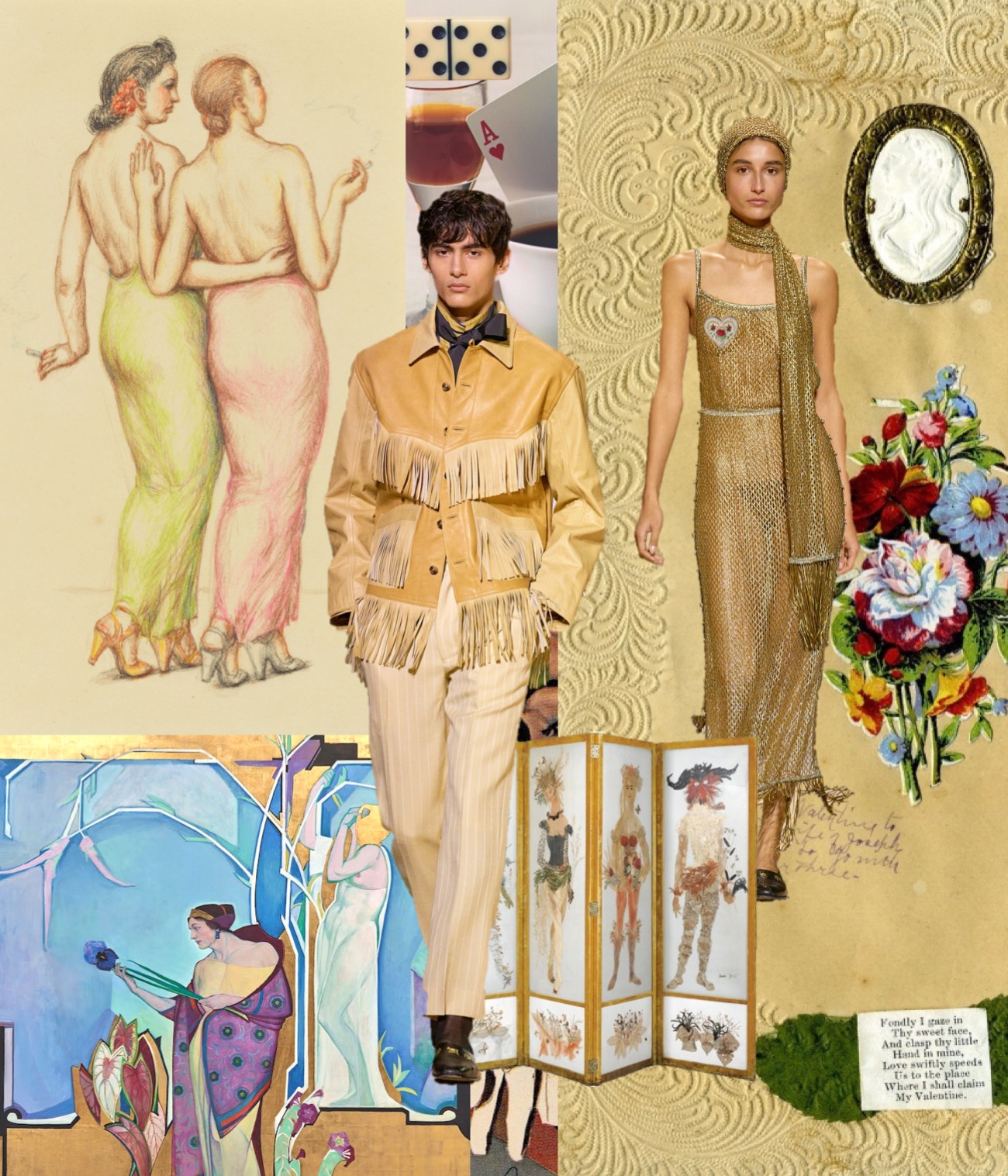
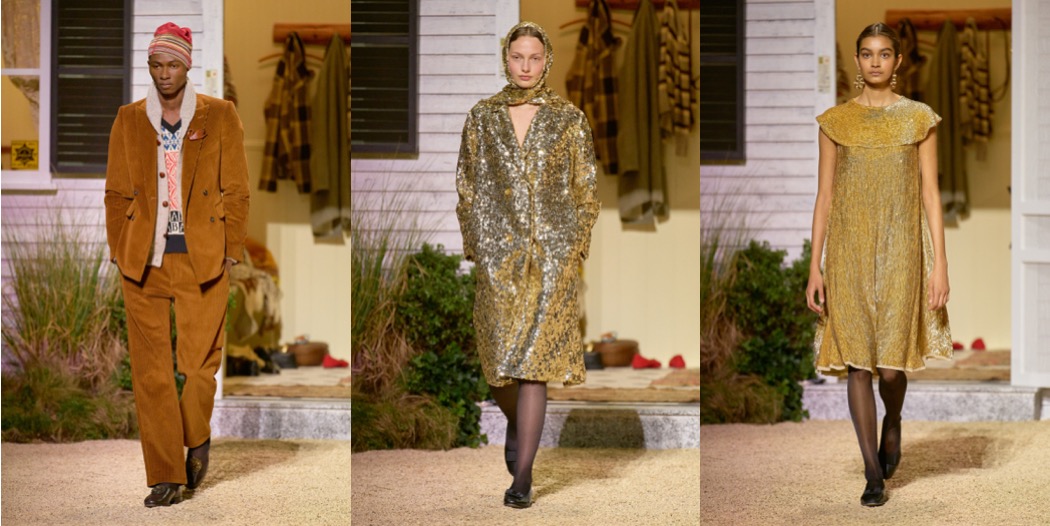
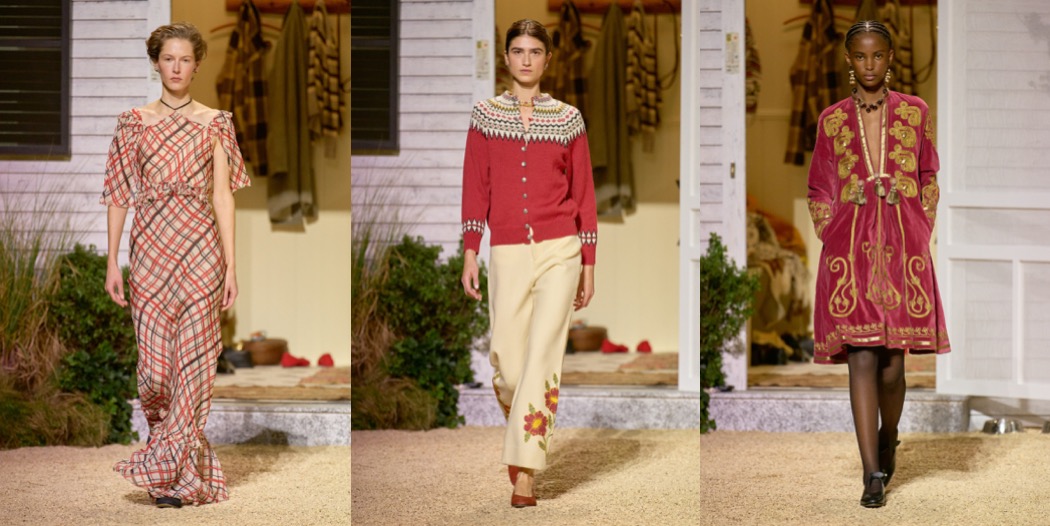
For autumn-winter 2023, Bode is back on the runway, and back in Paris. But there’s also a debut coming from Emily Adams Bode Aujla: a gorgeous womenswear line. At the Theatre du Chatelet, her American family storytelling took place. The models came out of the house and walked stage left, close enough so that every detail of the embroidery and embellishment could be appraised close up. There was a lot of it, and it looked great, from edging men’s suits to decorated with gold and green beads flapper dresses. The Bode program notes spoke about how the designer looked for inspiration to her mother’s side of the family – the four Rice sisters. Janet, her mom, had a college job in the 1970s on the Crane Estate at Woods Hole, Massachusetts, with a 90-year-old lady who kept to the old social formalities of her class, and would descend for dinner in dresses which went back to the 1890s through the 1940s. Somehow, that story got mixed up with Emily’s memories of family life, from every day dressing to celebrations over the years. By the time a dress came out that was clearly a Christmas tree, hung with baubles, the Parisian crowd was won over. Most of all, the success of the show was to prove what a range Bode has as a brand. The gliterry shimmy dresses apart, she also pulled out some drop-dead American-glamour 1930s/‘40s evening dresses in emerald green sequins or red velvet. On top of that, her all-gendered, novelty-type knits are already real stand-outs in stores. If Ralph Lauren is looking for a successor, Emily Bode Aujla is the right person to reach out to.
Collage by Edward Kanarecki. Don’t forget to follow Design & Culture by Ed on Instagram!
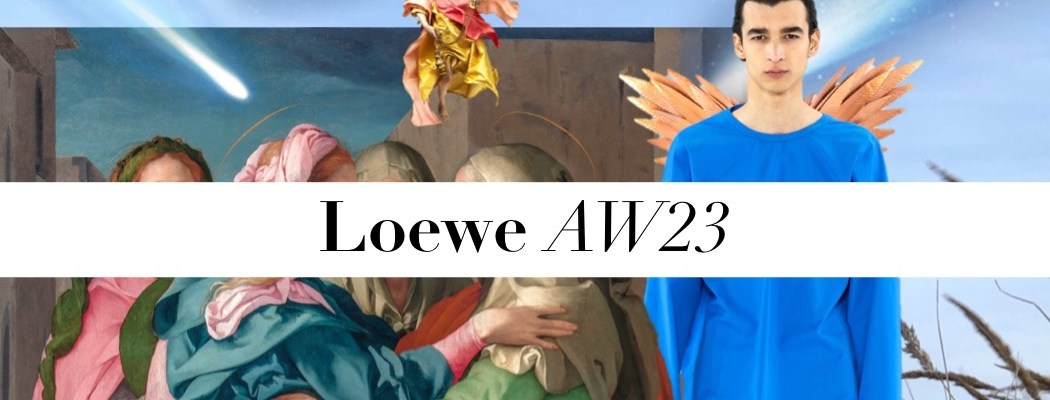
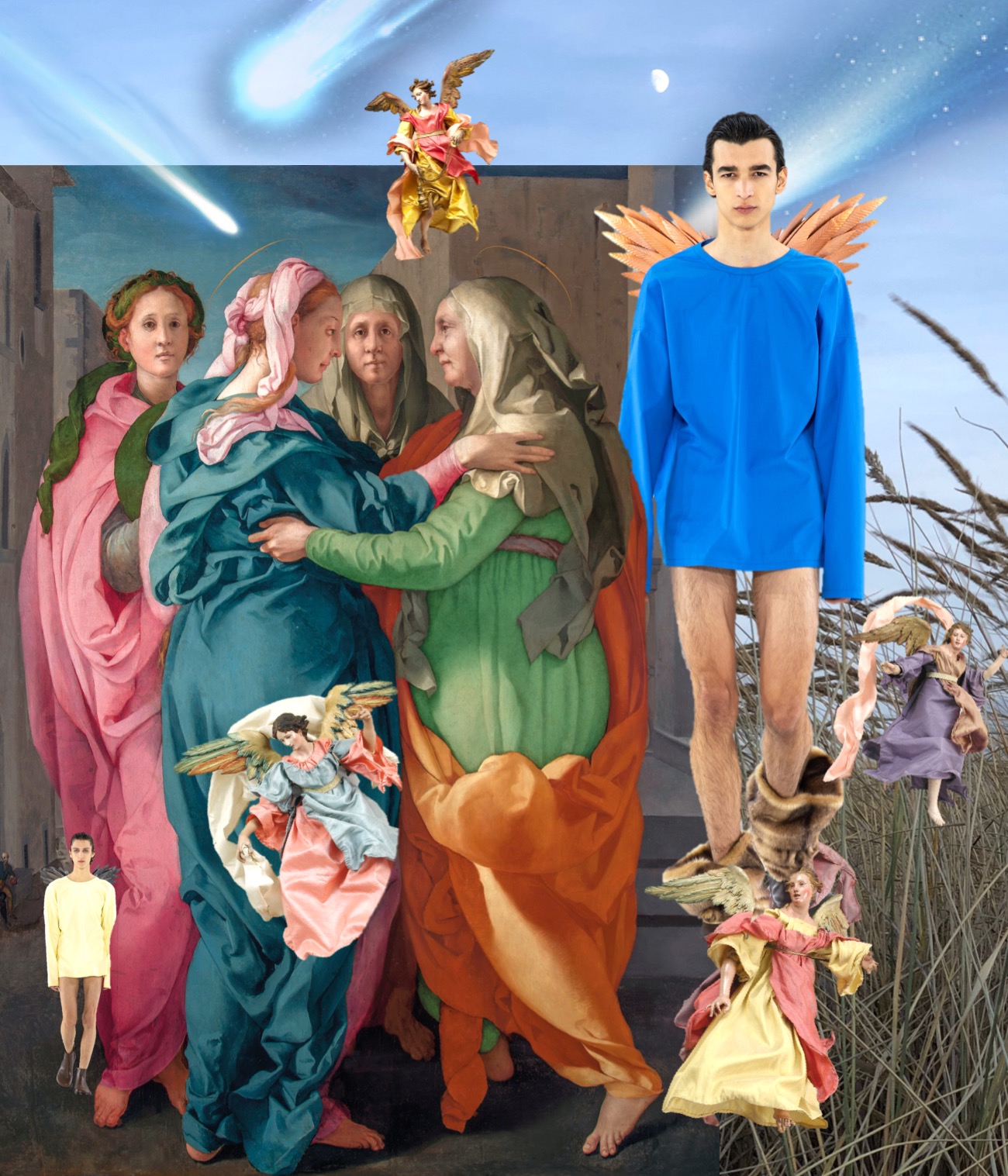
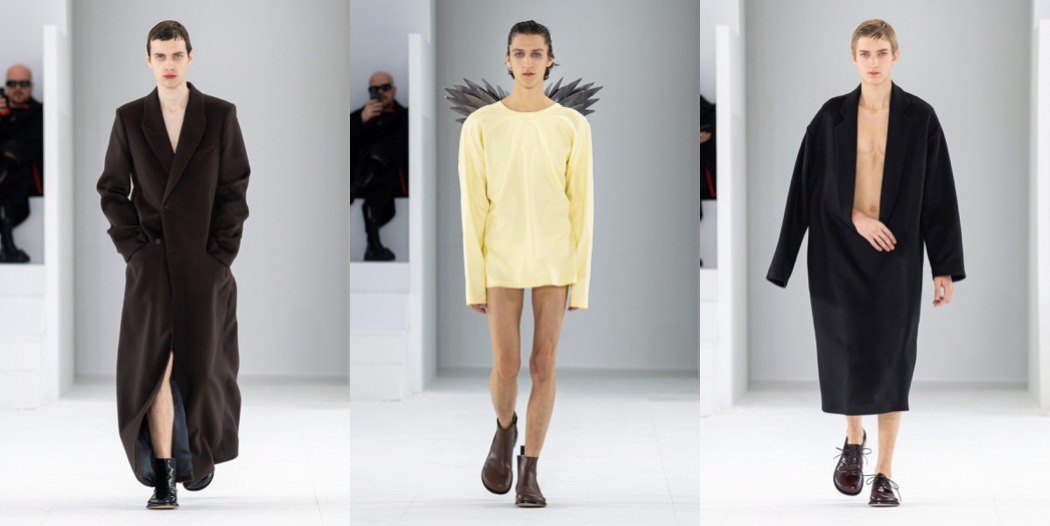
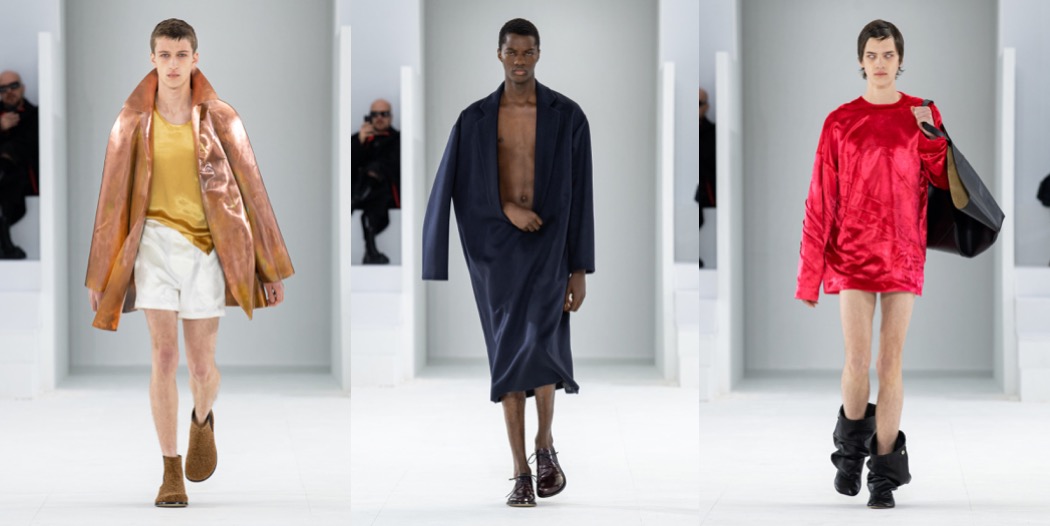
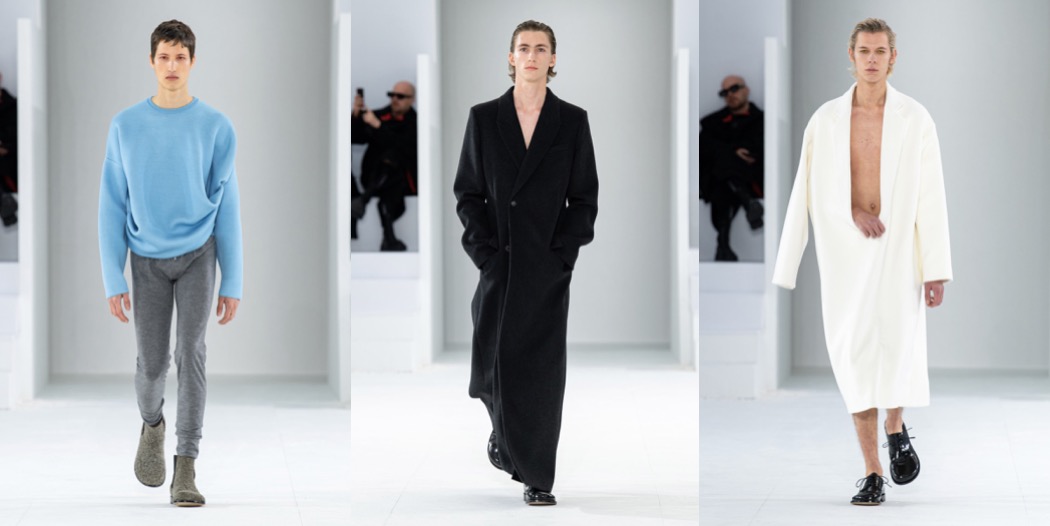
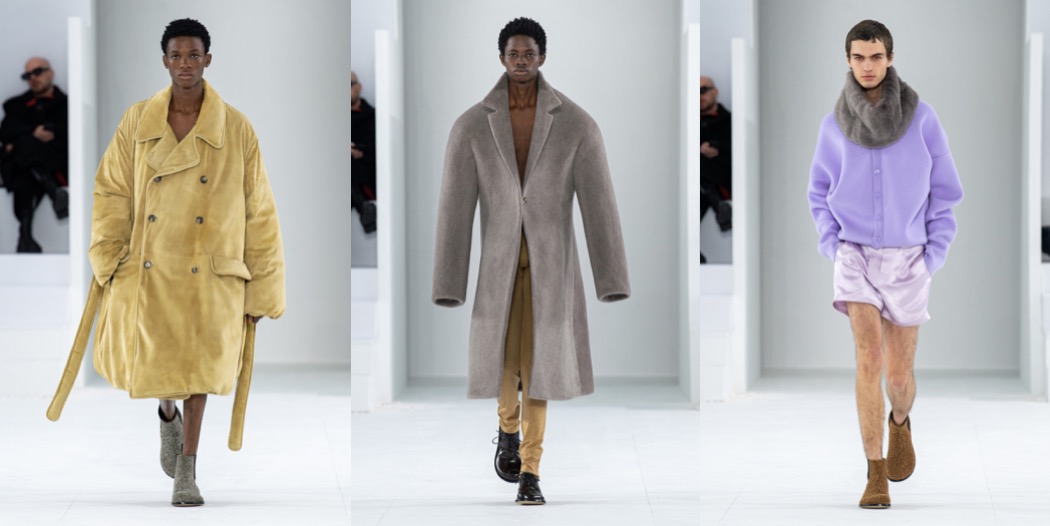
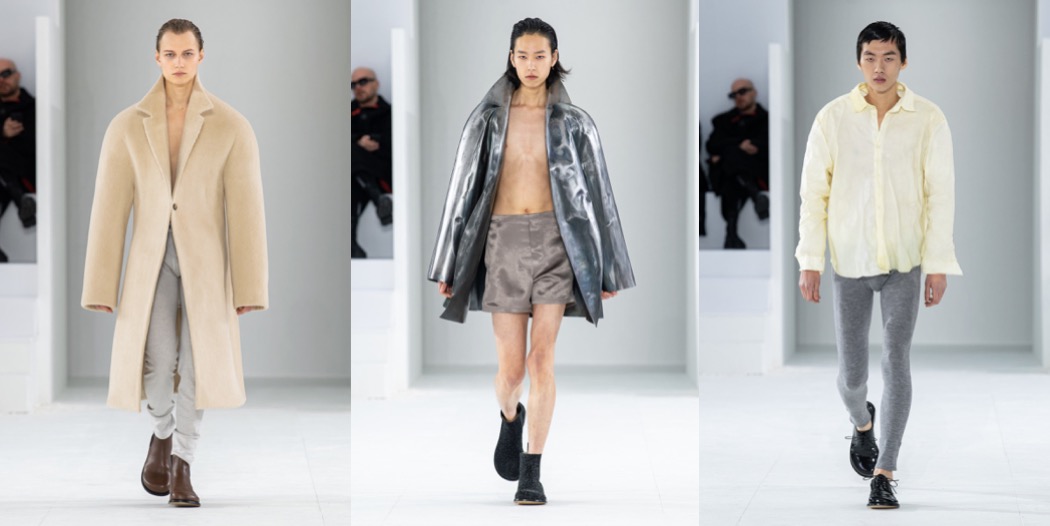
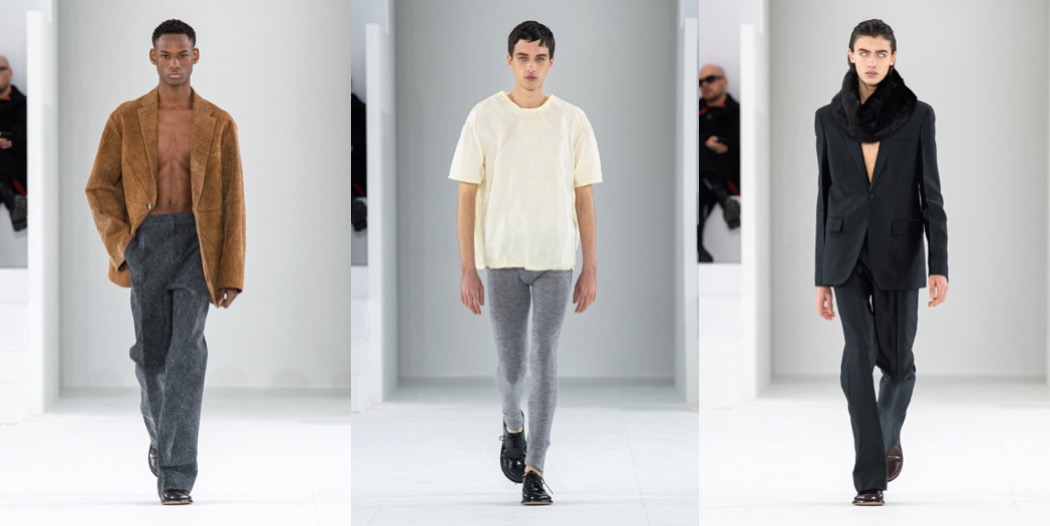
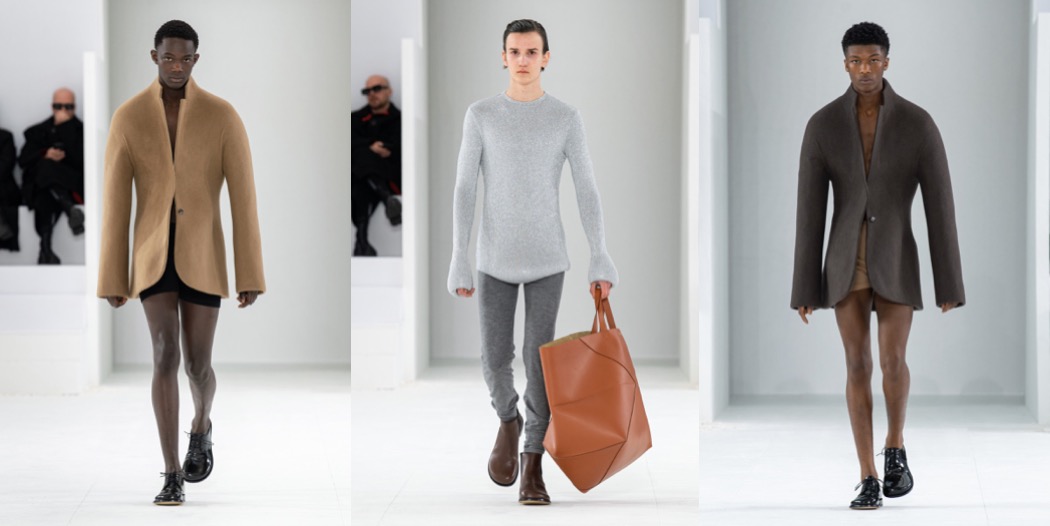
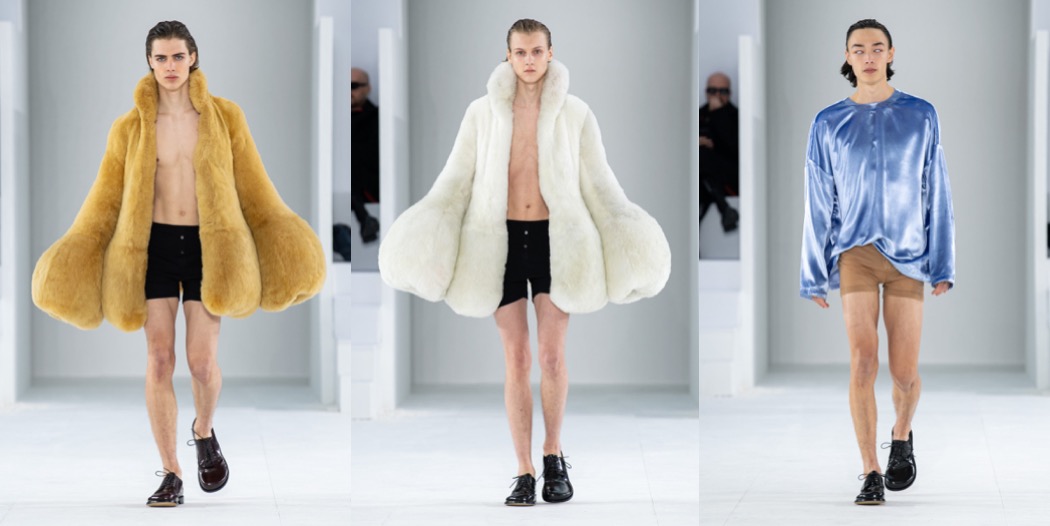
Season after season, Jonathan Anderson keeps on delivering the most innovative, technically mind-blowing, disturbing – in a way great art feels! – and unexpected collections for Loewe. His autumn-winter 2023 line-up for the brand is the most brilliant and thrilling outing we’ve seen this entire menswear season. “I do feel like less is more. But in a new way,” said the designer. “I don’t think we’re heading into modernity like it was. It’s not like ’90s modernity; there’s something more peculiar happening.” For Anderson, clothes are the main objects of consideration – not the runway venue (a white cube showcasing artworks by contemporary artist Julien Nguyen became the perfect, harmonious backdrop), not celebrity appearances (it’s not easy to make the collection itself more attention-seizing than Timothee Chalamet and Taylor Russel sitting in the f-row). This designer is one of the vanishingly few in the luxurysphere who believes that it’s enough to put clothes, and deep-thinking about them, first. It’s reached the point where it feels radical, avant-garde. “I think – I hope – that we’re going into a period where it is about being uncomfortable in design,” he added. “That we are trying to find something new.” This conversation was in his debrief, after a menswear show that proved, par excellence, that there’s nothing more absorbing and mentally exciting than simply being able to react to the meanings of what’s before you. And to witness configurations of stuff you’ve never quite seen before.
In Anderson’s world, the subject of clothes is multi-layered but startlingly focused on clarity; what be called “a reductionist act.” His collection was about exaggerating the materiality of fashion fabrication into the realms of pure-lined 3D sculpture – full metal jackets beaten by artisans from copper and pewter; stand away structured coats molded by hat-makers. What he’d done with the short, back-fastened shirts is quite a riddle. Some of them were rigid, wrinkled vellum – the work of traditional book-binders. Others were delicately made in hammered silk, a match for the boxer shorts, worn with nothing but leather ankle-boots. “I wanted the idea of something which is quite sensual underneath, with something quite hard,” said Anderson. Some of the boys wore angel wings. That’s where the reference spun sideways into the multiple art-historical/homoerotic sensibilities that focus Anderson’s vision. Partly, it was about resurrecting to modernity the iconography of old masters painters, specifically, the work of the French romantic allegories of Prud’hon and the link Anderson has made with Nguyen. His digital artworks – referencing traditional painting techniques – of Nikos, a Loewe model, were blown up in the center of the stage. What might end up sounding complicated was as distilled and to-the-point as could be. Anderson glorified Loewe’s craft skills in leather goods in textures of suede and shearling, shaved into sensuously tactile bulbous silhouettes in this show. But equally as head-turning were his pared-back, brilliantly on-the-money Loewe desirables: long, slimline coats in leather, and the reiterated wool shapes with deeply plunging cowl necklines. They were worn with a gesture—one arm out, crooked in a way which played on the mind like a memory of classical portraiture. Simple, but way out of the ordinary. Anderson felt that arriving at that coat had hit the quintessential mark. “Sometimes, by getting that one look, it helps you to create a narrative throughout the show,” he said. “There’s something in that it says everything and nothing at the same time“.
Collage by Edward Kanarecki. Don’t forget to follow Design & Culture by Ed on Instagram!
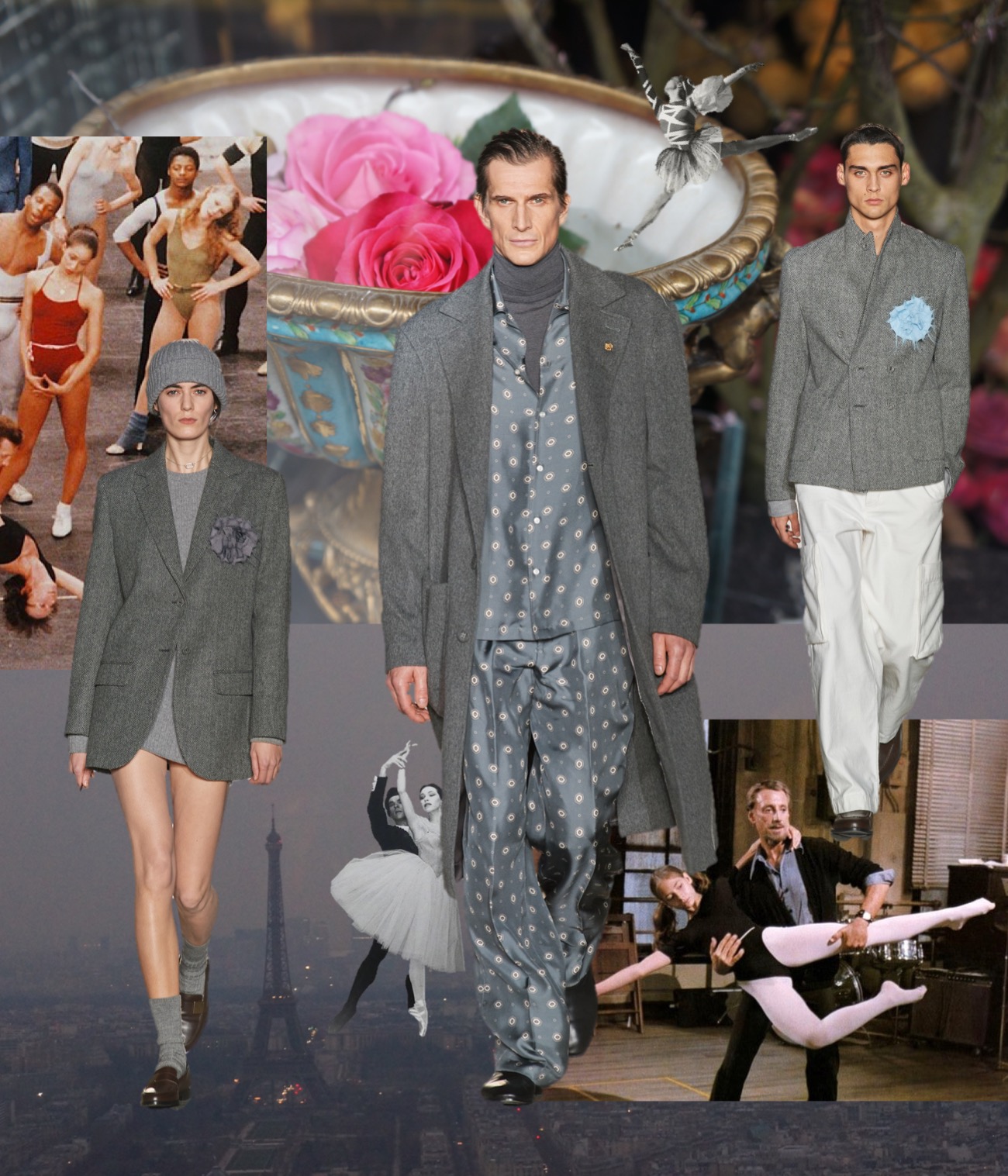
I gasped a couple of times while browsing the Officine Générale autumn-winter 2023 collection. Those were gasps of utmost awe with Pierre Mahéo‘s take on the eternal French style, which is a combination of restrained elegance and exploration of the idea of uniform. For this designer, consistency of dress is a form of elegance that he not only studies but has practiced for decades. He’s always admired people who, by choice, design, default, or whatever, stay true to their own style. He, too, continues to wear, and cherish, a timeworn pea coat. “It’s about a sentimental relationship to clothing,” the designer offered backstage before the show, recounting how last autumn, when his team was brainstorming this collection, he realized he wanted to just focus on the two colors he’s been wearing himself for the past 30 years or so. “I don’t want to change things, I want to perfect them,” he said. Monochro-Mania therefore took shape as an ode to blue and grey, the two elemental colors of every Parisian wardrobe. For Mahéo, it was an essential exercise in exploring why he does what he does: why those colors, why he reinterprets them season after season, why continuity makes him happy despite the fashion pendulum’s inevitable swings. And, especially, expressing many things with a spare vocabulary, “in the same way that Serge Gainsbourg famously stuck to five pieces of clothing.” For the new season, the Officine Générale uniform might be a simple-looking T-shirt in wool jersey, layered over another and paired with matte wool trousers that are slightly more ample than they were last season. Here and there, Mahéo slipped in some iconic references, variously a military-inspired jacket that nods to the olive one worn by Al Pacino in Taxi Driver; a steel gray velvet jacket – perhaps worn with a touch of pink – that plays on Wes Anderson’s register; or a style of cape long favored by Prince. Here and there, a swirled print cropped up on a shirt and trouser, or a blue silk flower on a shirt (obsessed!). On the runway, the clothes gave an overall impression of reassuringly chic Rive Gauche style. Love it.
Collage by Edward Kanarecki. Don’t forget to follow Design & Culture by Ed on Instagram!
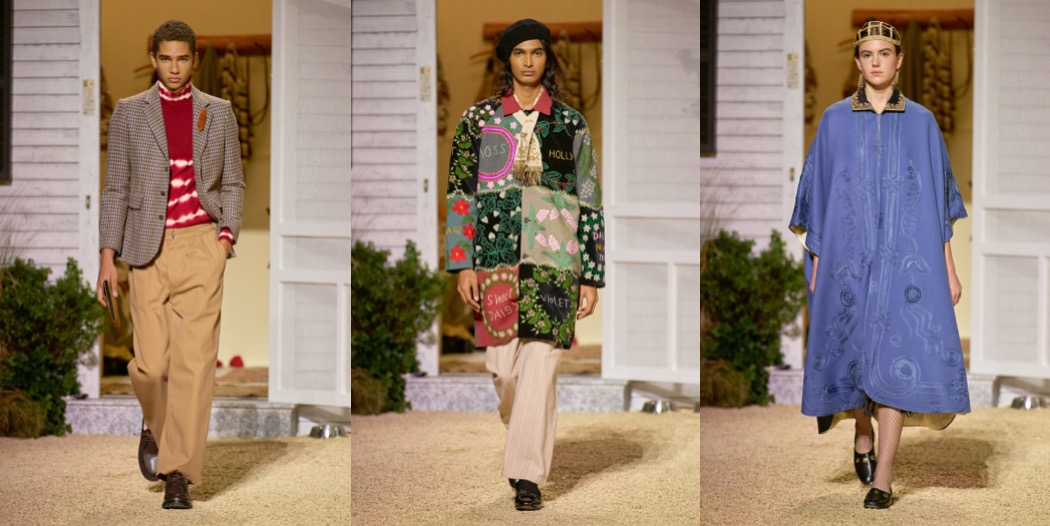
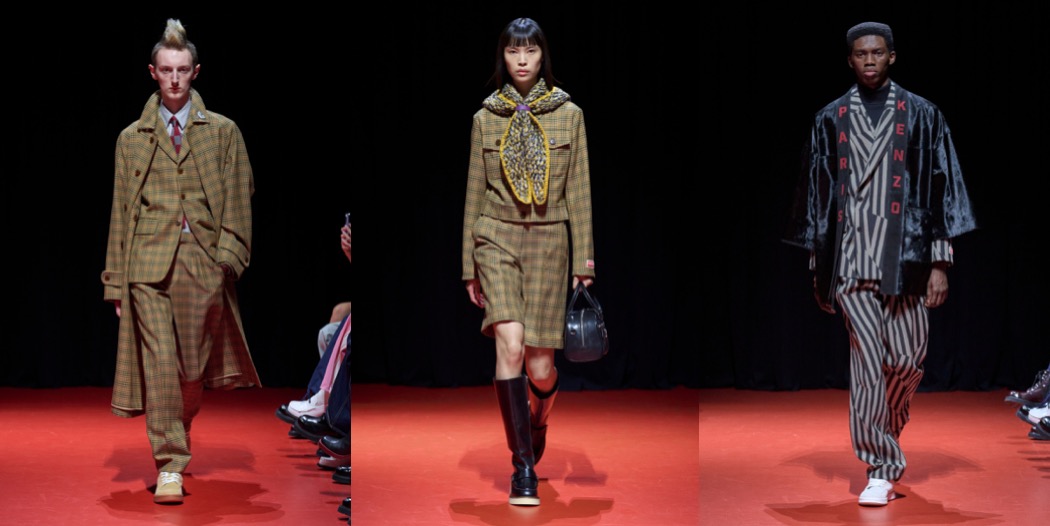
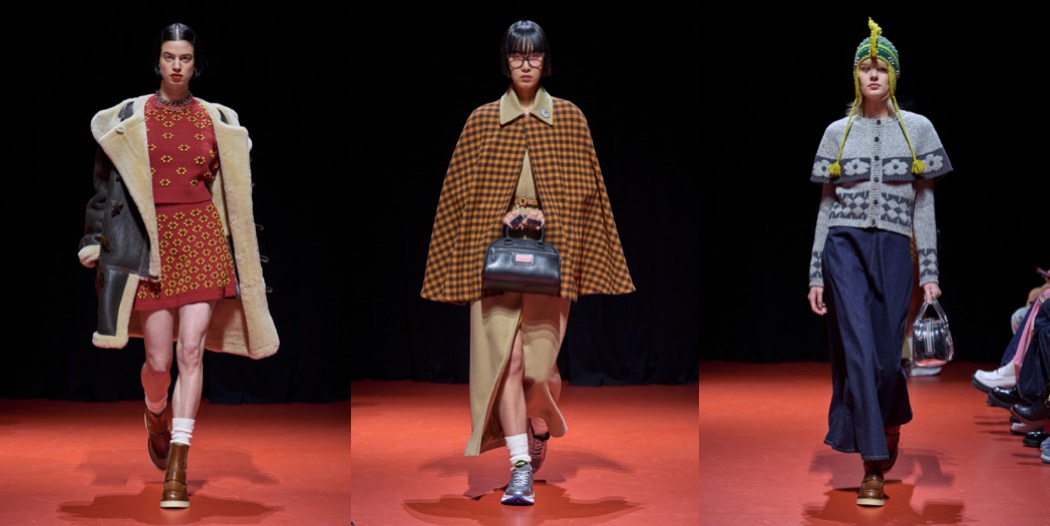
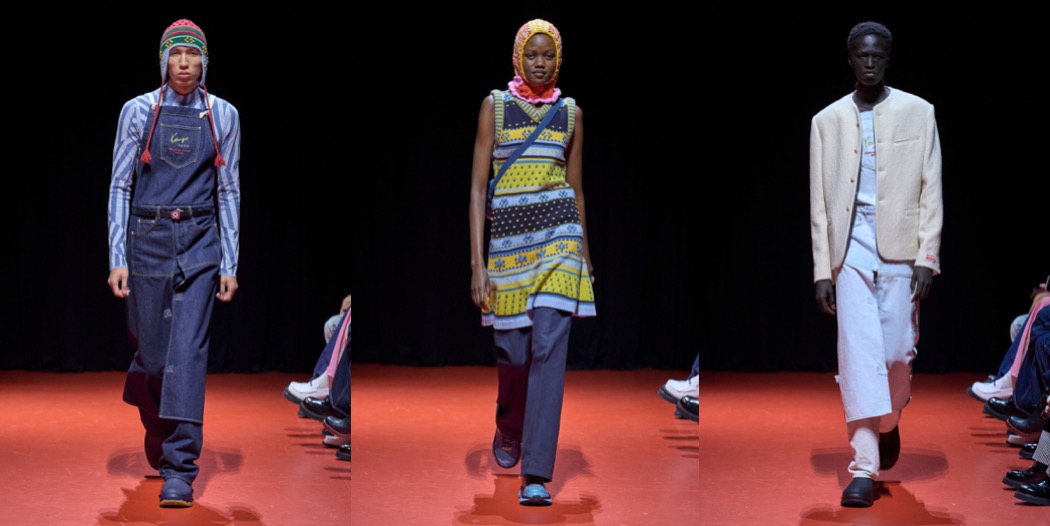
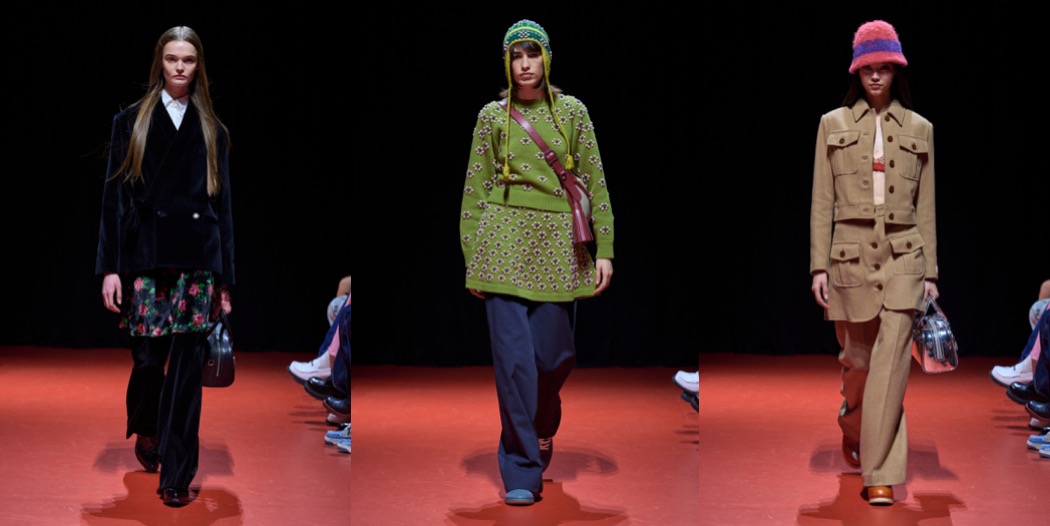
It’s a year since Nigo‘s debut collection for Kenzo. In his third season for the brand, the designer began to bring himself more forcefully into the picture, which doesn’t mean there was no sight of Kenzo Takada’s spirit. Nigo went for a Beatles-inspired wake, developing a collection that was deeply rooted in mod culture but which also enveloped Kenzo’s and his own through that deeply impressive Japanese capacity to brilliantly editorialize clothes. English country couture and its mod unravelling played against Japanese tailoring, kimono inspired, above hakama-style traditional dress trousers. There was, Nigo conceded happily in a preview, a strong dose of post-Pirates Vivienne Westwood in the underlying instinct to remix through disruption. The stitched patterns were sourced, Nigo said through his translator, from the etching used on sashiko jackets traditionally used to practice Kendo. But it was all wrapped up with other factors; US workwear, UK punk, post-military (in an incredible khaki goldfish-embroidered kimono bomber look), contemporary workwear and more. The only criticism was that Nigo’s mastery of the feminine aspect seemed unsure: it was either menswear-sourced templates or frills and shirring: reductive.
Collage by Edward Kanarecki. Don’t forget to follow Design & Culture by Ed on Instagram!














 Design & Culture by Ed