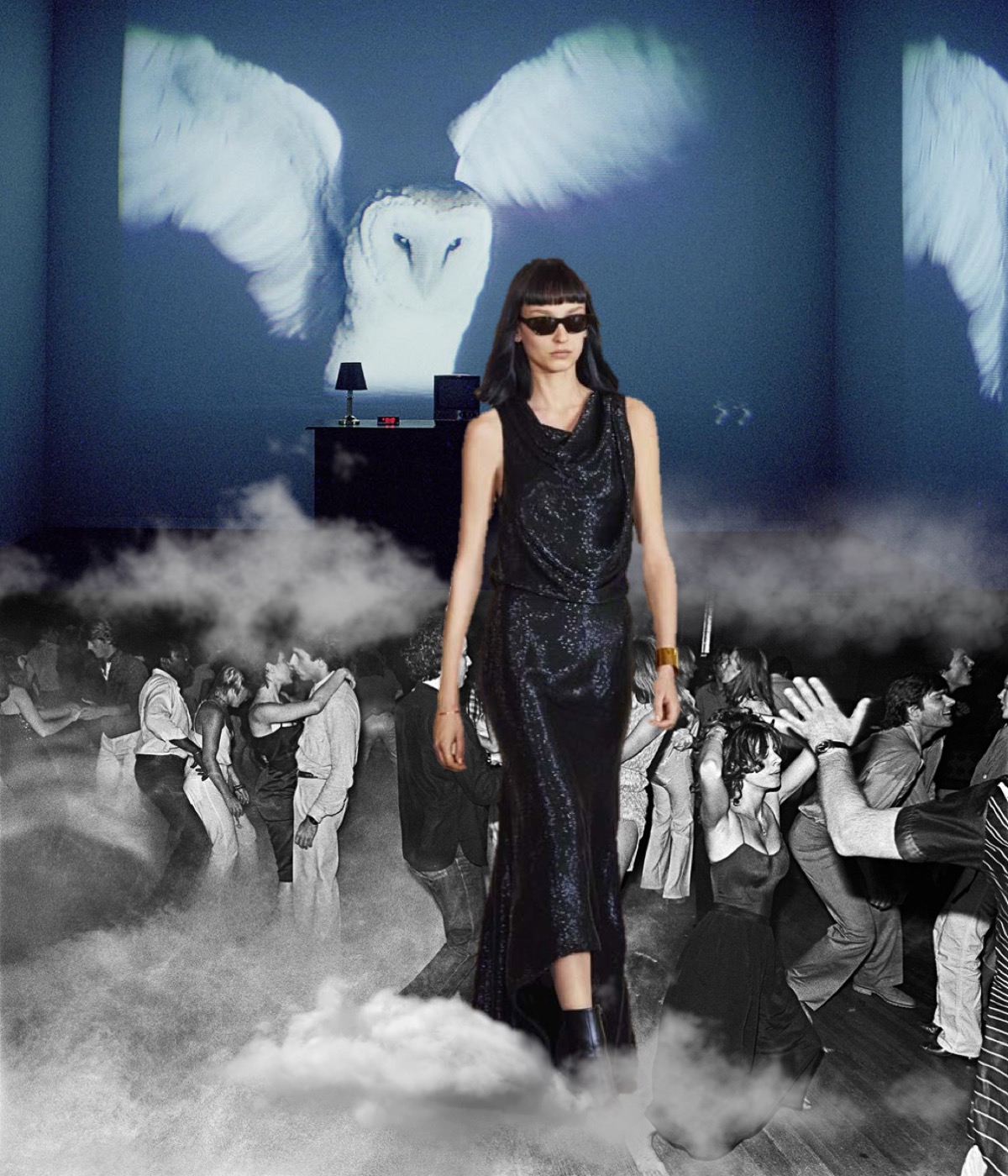
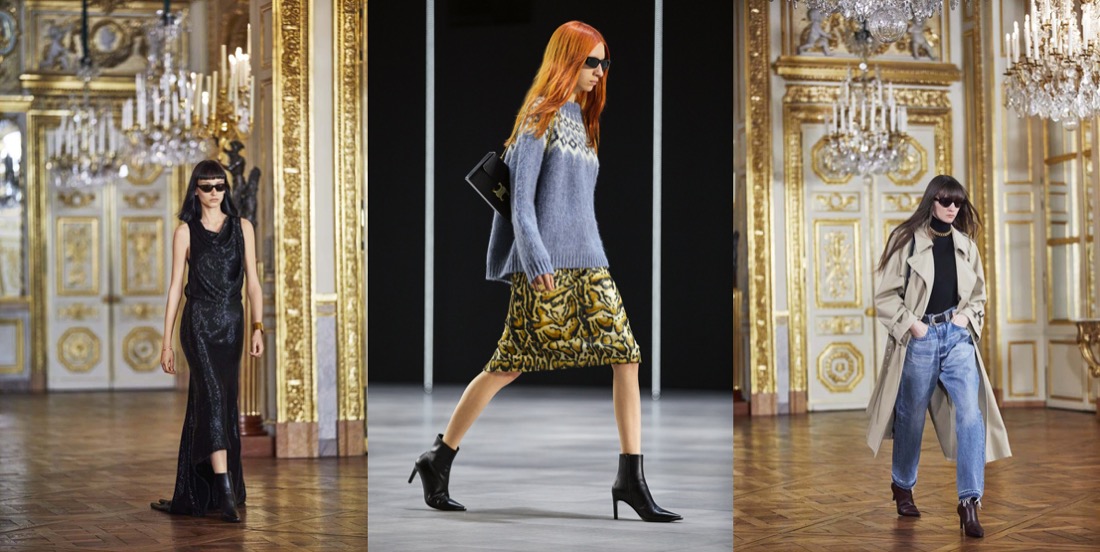
Last week, Hedi Slimane has presented his autumn-winter 2022 collection for Celine, which he chose to stage in two historical monuments in Paris, the Hôtel de la Marine and the the Hôtel National des Invalide. Entitled “Dans Paris“, the show was filmed by Slimane, off the usual Paris Fashion Week schedule and starred Kaia Gerber. Looking at the first half of the collection, you’d be forgiven for thinking that Slimane opted to pare down any notion of extravagance – a tricky feat given the opulent settings. Strolling below the golden ceilings came jeans and everyday wardrobe staples like a cream roll-neck jumper, a jersey zip-up and an oversized grey hoodie so large it extended into a dress. As club sounds pulsated louder throughout the show (provided by NYC-based artist Hennessey), as did the clothes, seemingly coming alive with every beat. Suddenly, sharp heels, sparkly party dresses and gold embellishments weaved their way into the line-up of everyday wear. But, like the dark corners of any sexy, exclusive Parisian nightclub, these pieces weren’t thrust in faces, rather intermingled with the simpler pieces. As usual with Slimane’s Celine, it’s not about novelty, but refining the timeless (and quintessentially Parisian) wardrobe.
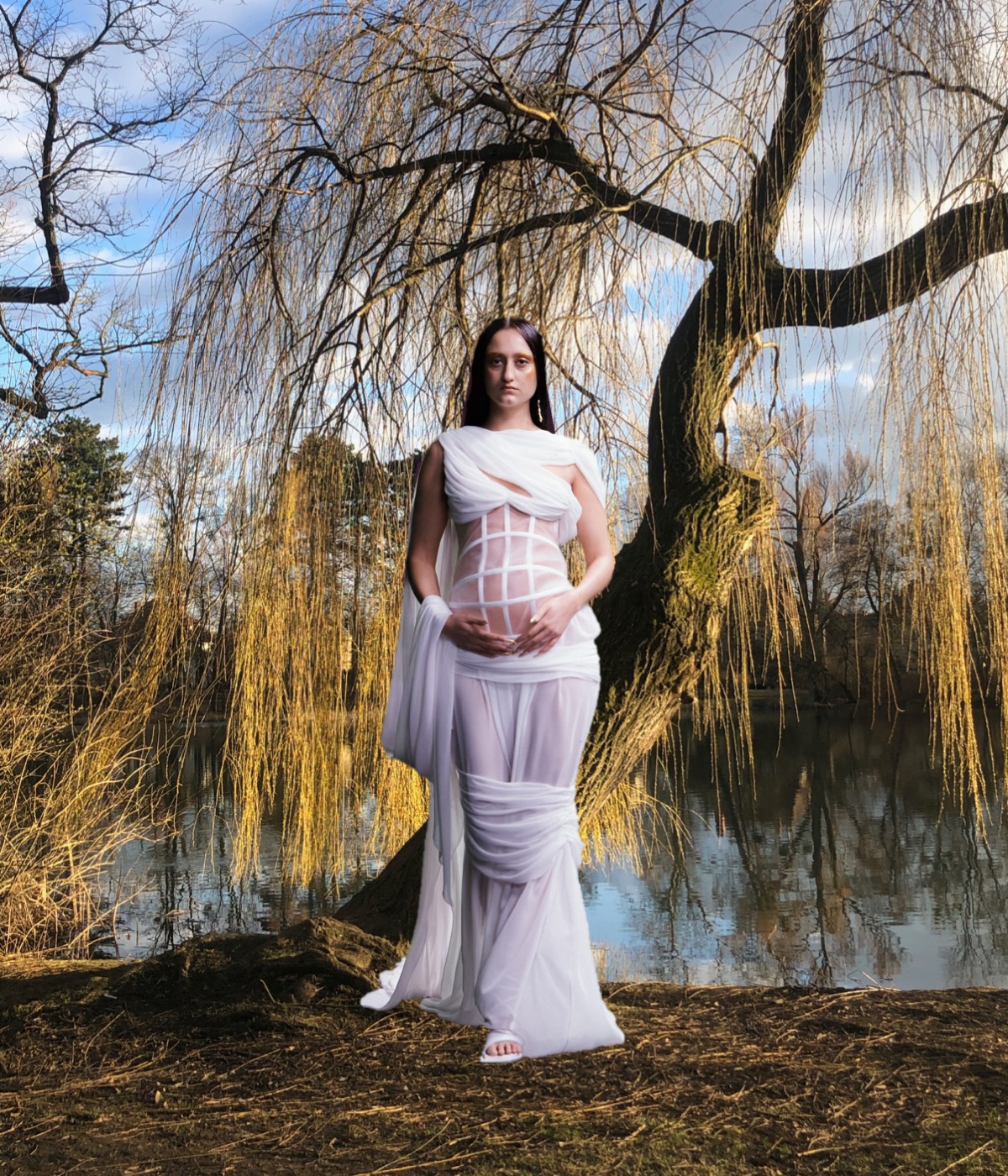
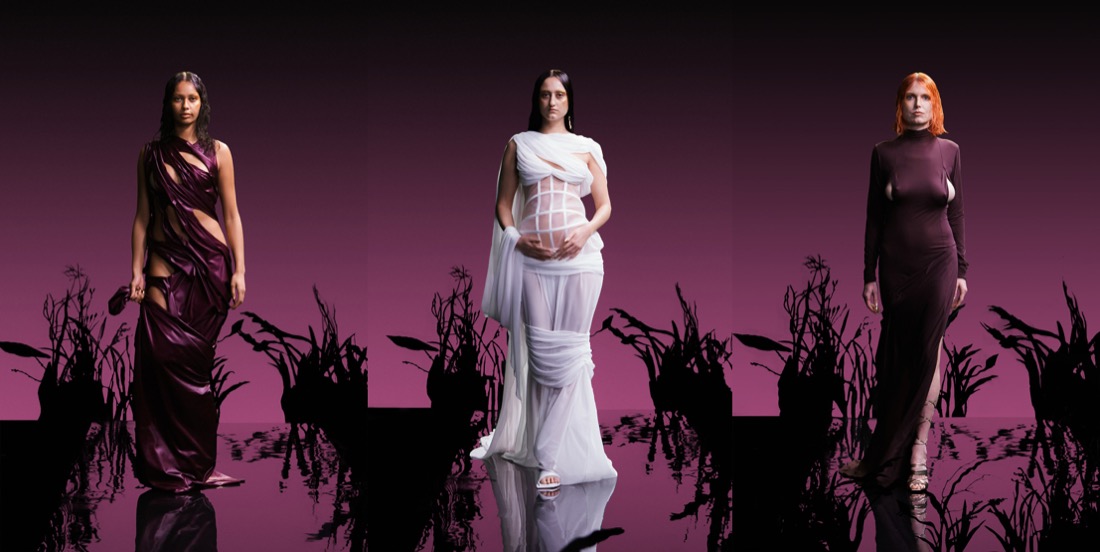
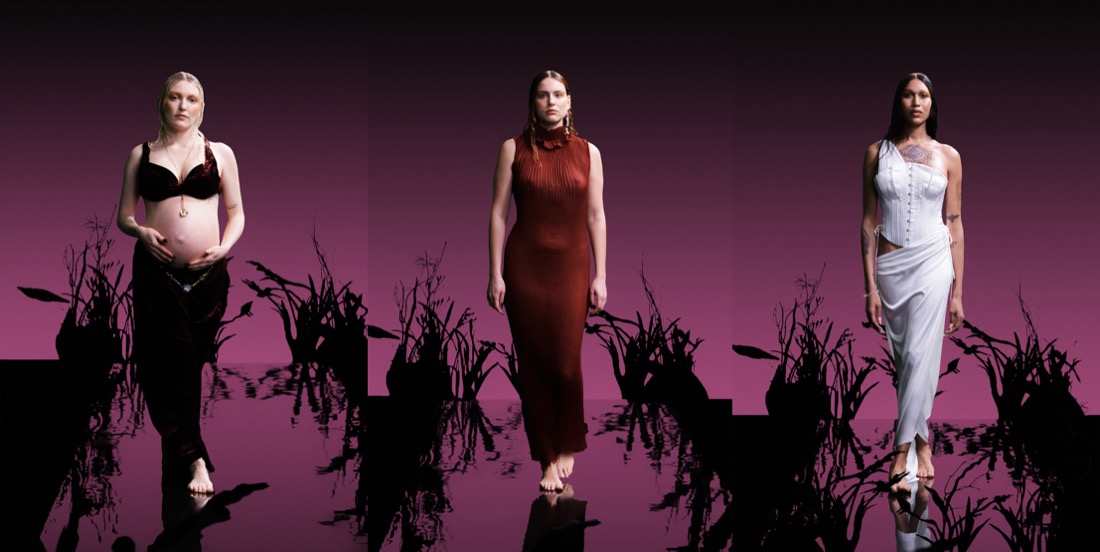
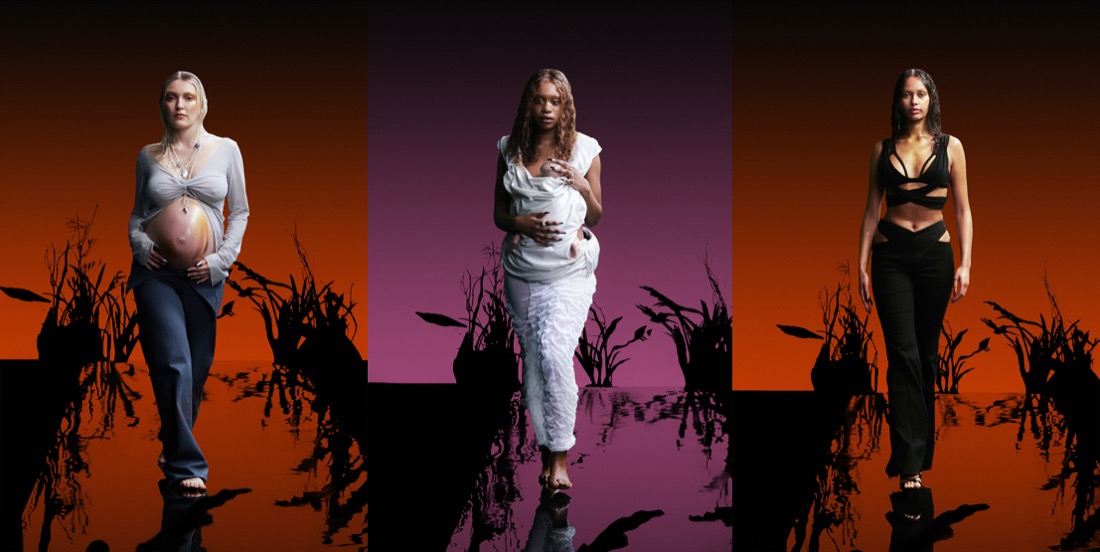
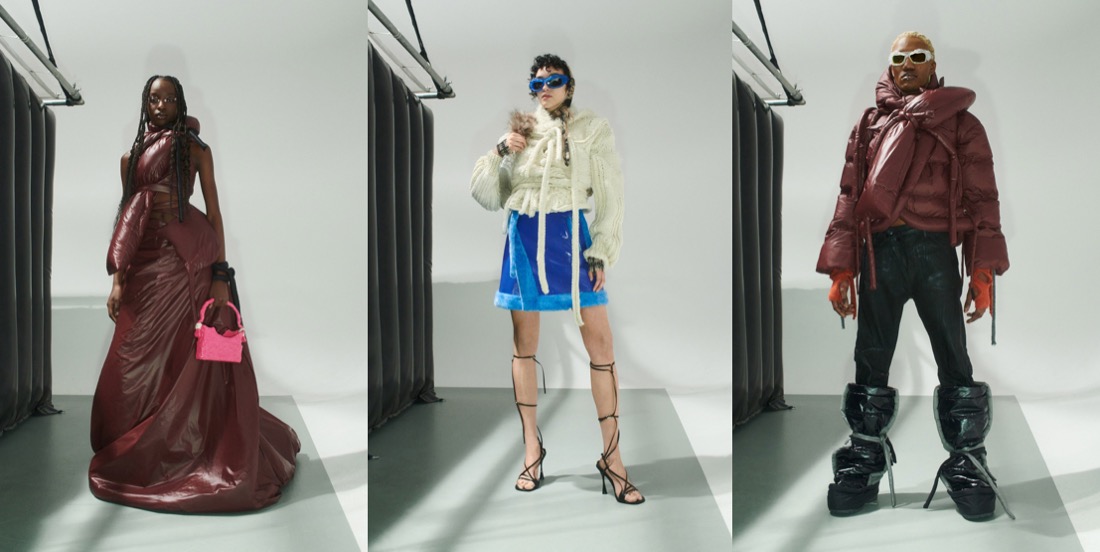
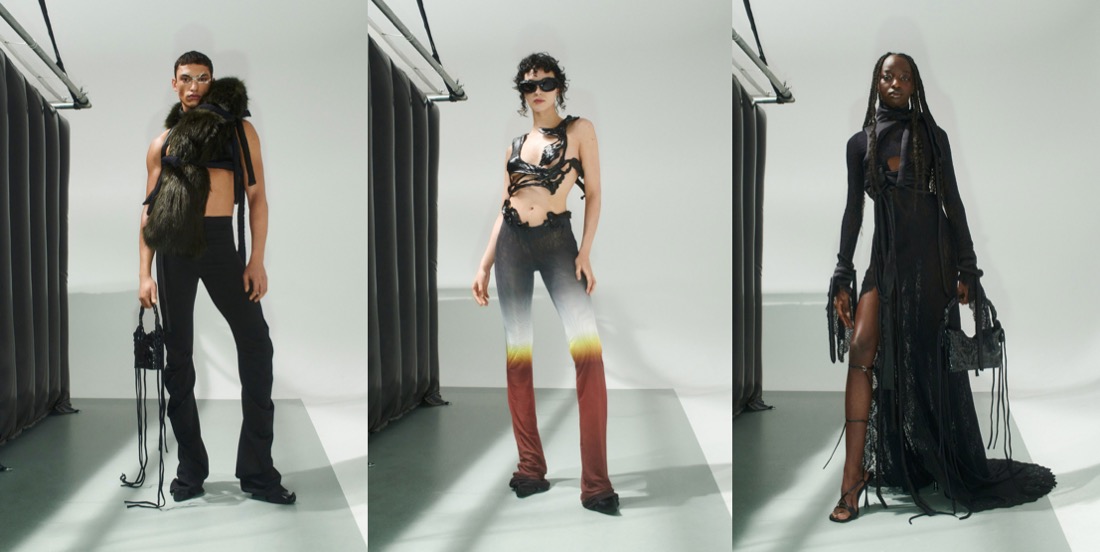
Dimitra Petsa’s sensual clothing is all about the female form, and rather than change her ideas for the seasons of the year, she changes her design tack to better suit the seasons of a woman’s life. Pregnancy and all its stages was her inspiration for autumn-winter 2022, specifically the myth of Persephone and the relationship between a mother and daughter. “When she was with her mother, Demeter, she was a daughter,” Petsa says, “but when she was in the underworld she was a queen.” That spooky regality plays well with Di Petsa’s aesthetic, her sensual sirens slinking about in wet look dresses and revealing corsetry. But for every exciting aesthetic note Petsa hits she is also a designer who truly considers and cares for a woman’s body. This season the vast majority of the collection is designed to be worn during and after pregnancy. Corsets and trousers unclasp at the nipple and the waist to allow for breastfeeding or a growing mid-section, and most tops are structured to work for Hot Girl Summer or New Mom Spring, with straps, folds, and drapery built in to work for breastfeeding. “I am so interested in the way a woman’s body inflates and deflates, I really wanted to have clothes that accommodate these changes,” she says. But for every smart and gracious choice she makes to accommodate a woman’s life, she is also thinking about the environment and protecting traditions. Her materials are mostly dead stock or recycled and she engaged Greece’s oldest pleating studio to make a new kind of long slinky Fortuny pleat à la Petsa. For a designer with such a specific taste, her collection has the potential to break boundaries about what clothing can do and how it should be made. Rihanna, who has us in awe with her revolutionary pregnancy style since January, should definitely go for one of Petsa’s designs during her due date!
It’s so heart-warming to see that AZ Factory continues to exist and convey its founder’s legacy in fresh and innovative ways. Alber Elbaz had just launched AZ Factory when he succumbed to Covid last April. His vision for his new brand encompasssed body-positivity, sustainability, and tech, but at its heart were the women he hoped to dress. “We’re not here to transform women; we’re here to hug them,” he told Vogue Runway at the time. He had only a few months to establish a new way of doing things at the Richemont-backed company, but a year later the brand is staying true to those founding principles, and then some.
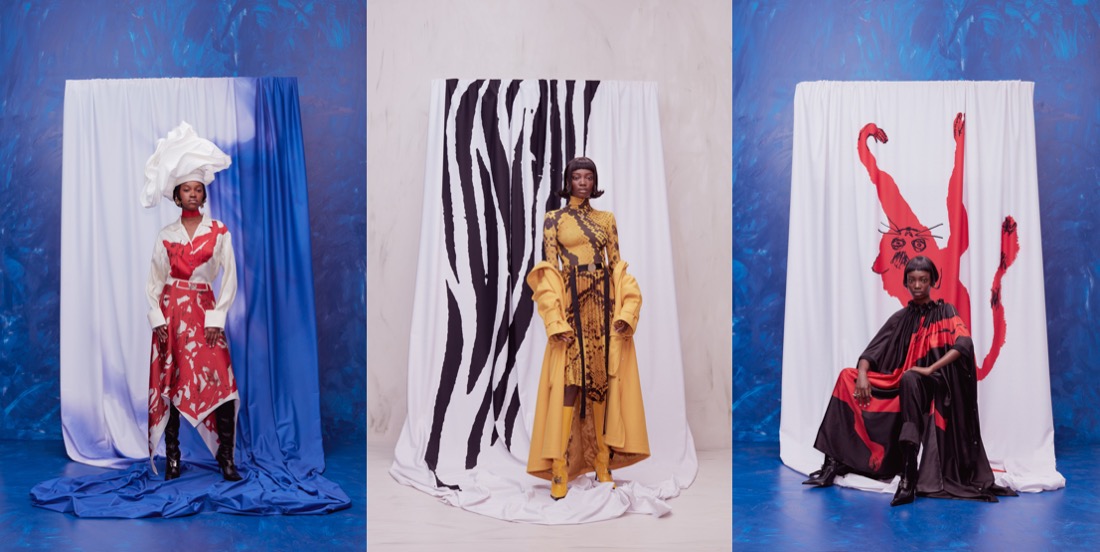
Early last month, as an exhibition of the tribute collection “Love Brings Love” featuring contributions from 44 designers opened at the Palais Galliera in Paris, AZ Factory announced it would be inviting a rotating series of talents, “Amigos” in brand parlance, to create collections for the label. The first Amigo was to be the 28-year-old South African designer and LVMH Prize winner Thebe Magugu. His collection will have two store drops this year. Magugu never had the chance to meet Elbaz in person, but he was acquainted with his work growing up in Johannesburg. “My favorite childhood memory is my mom saving enough money to buy satellite television,” he remembers on a Zoom call. “Funny enough, the first channel that came on was FTV [Fashion TV]. Lanvin shows played on repeat, and that’s how I was first introduced to the work of Alber.” Magugu’s collection stays true to the sensibility that Elbaz was nurturing at AZ Factory, but it’s equally representative of his own aesthetic.
You’ll note that Magugu’s logo, a “sisterhood emblem” depicting a pair of women holding hands, features as a belt buckle detail on the handkerchief hem pleated skirts he specializes in, and again as stainless steel hardware in a cut-out at the neckline of a dress in the engineered knit that Elbaz had been developing. The look Magugu designed for the “Love Brings Love” tribute to Elbaz, an ode to a white silk shirtdress he made for Guy Laroche, one of his pre-Lanvin postings, reappears here, only with a hem that looks like it has been dipped or smudged. Moreover, Magugu sees the African continent as the link between himself and Elbaz, who was born in Morocco. “The question I posed to myself and the design team here is, ‘What if Africa was the birthplace of couture?’ I think about that a lot. The things that make up luxury – the idea of time spent creating something, the storytelling, passing something on from generation to generation – are really the same as you find in African craft, as well. We’re best known for our storytelling and our work with our hands. I thought that was a very interesting intersection that we could explore with the collection.” The intersection is most apparent in a pair of ruched-neck caftans, a typical silhouette in Morocco, printed with paintings by the Paris-based Algerian artist, Chafik Cheriet, whom Elbaz commissioned before his passing. “They really encapsulate both of our worlds,” Magugu says. “They’re playful and something that a lot of people can find themselves in with that slight African regality that I wanted to have when we started the project.”
As much as it was a melding of their sensibilities, Magugu says he picked up new skills through the process. At his own brand he typically starts by sketching, but at AZ Factory there’s more of an emphasis on draping on the mannequin. “It was an interesting challenge for me, but ultimately very beautiful.” He also learned more about Elbaz himself through the process. “In interviews I noticed how kind he was and when I got to AZ Factory I got confirmation from the team. It wasn’t a TV facade. The more I grow into the industry the more I find that kindness can lack in a lot of ways. So that’s very special to me.”
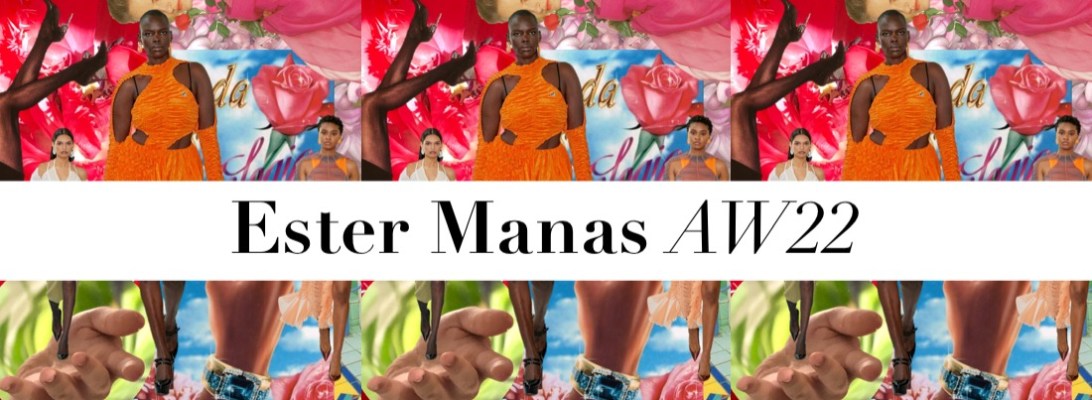
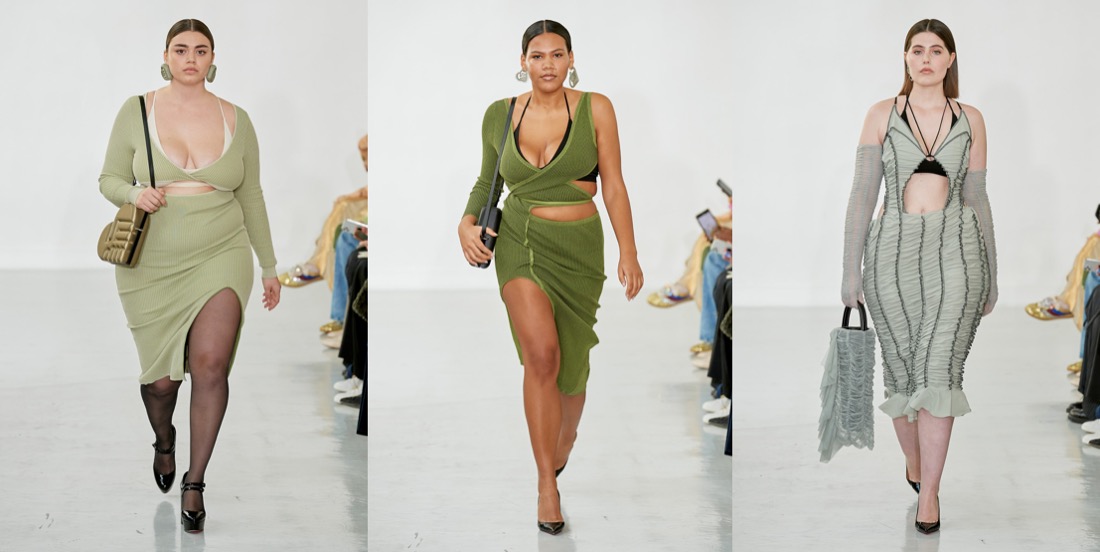
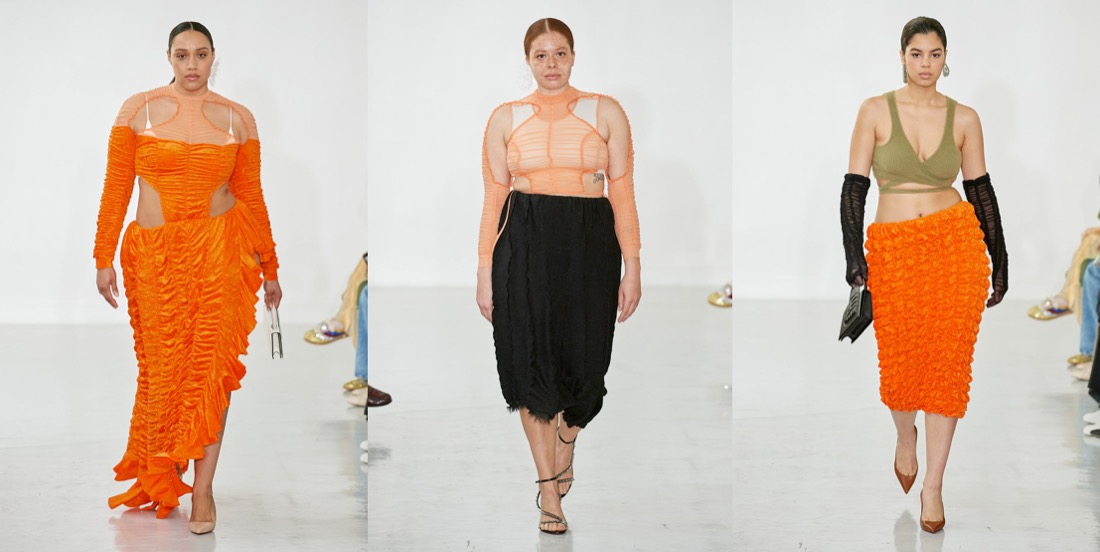
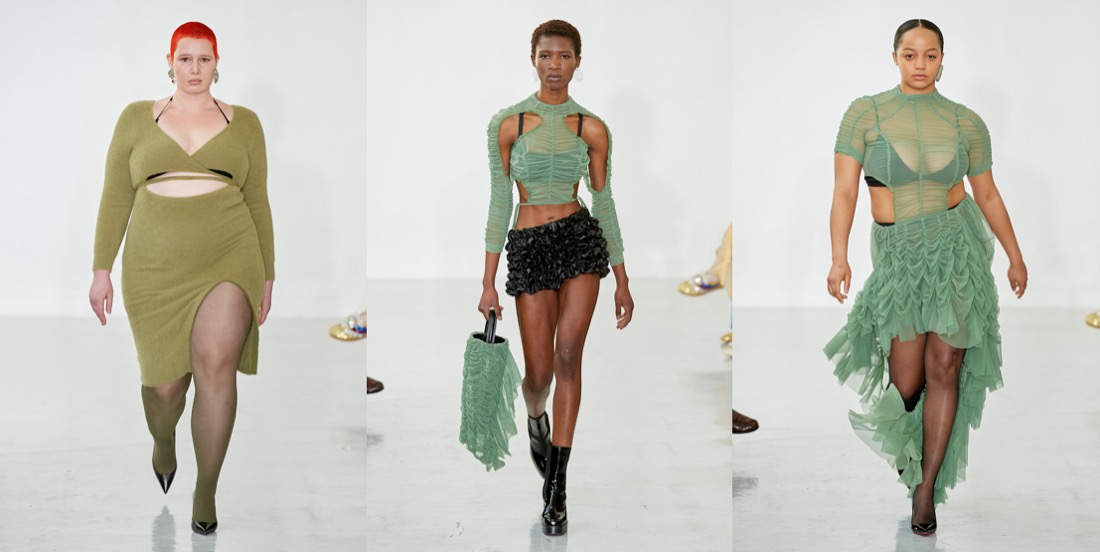
The body-positivity movement has been slow to gain ground in Europe – at least on the narrow platform that high fashion provides. But here came Ester Manas with her voluptuously gorgeous crew of women friends and models to demonstrate – from every angle – how it’s done in the middle of Paris Fashion Week. Manas used a brilliant phrase for her design mission: “I am making clothes to welcome everyone.” This was during a euphoric post-show backstage scene, in which all the young women who had worn Manas’ vivid, ruched, asymmetric, knitted, curve-and-skin celebrating clothes were crowding around to thank the designer. Autumn-winter 2022 was Manas’s second physical season. She’s French, her partner Balthazar Delepierre is Belgian, and they live and work in Brussels. Two years ago, she made it her mission to pursue the issues around designing inclusively size-wise. “I’m big, and always I fit on myself first,” she said. “A lot of brands have a curvy girl on the catwalk now – but the reality is, you cannot find a good size in the store afterwards. I mean – just an image, nothing more. But with us, I try to give the dream a reality.” The key to making everyone feel confident and secure is Manas’s research process – spending time with women of many shapes, understanding what works both technically and emotionally. “It’s like we became a family,” she exclaimed. “And they looked so fierce!” She has evolved ruching techniques which add in extra fabric, producing spiraling effects, and cutouts which hold securely and flow elegantly and sexily where they should. The other facet is her knitwear. Vibrant and subtle by turns, her color palette, ranging from orange and violet to moss-green, is entirely chosen from what is available, avoiding the use of virgin materials as much as she can. “We search warehouses and factories where you can find them. Eighty percent of the collection is deadstock or upcycled.” She was brimming with optimism after the show. Watching Manas, the model industry is finally beginning to wake up to what it’s missing. “I mean, we have a pretty good casting director, and last time we had twenty percent of my own friends, mixed with some girls we met who were new faces, but there were really no girls on agencies,” said Manas. “But this season when we went back, we had choice!”
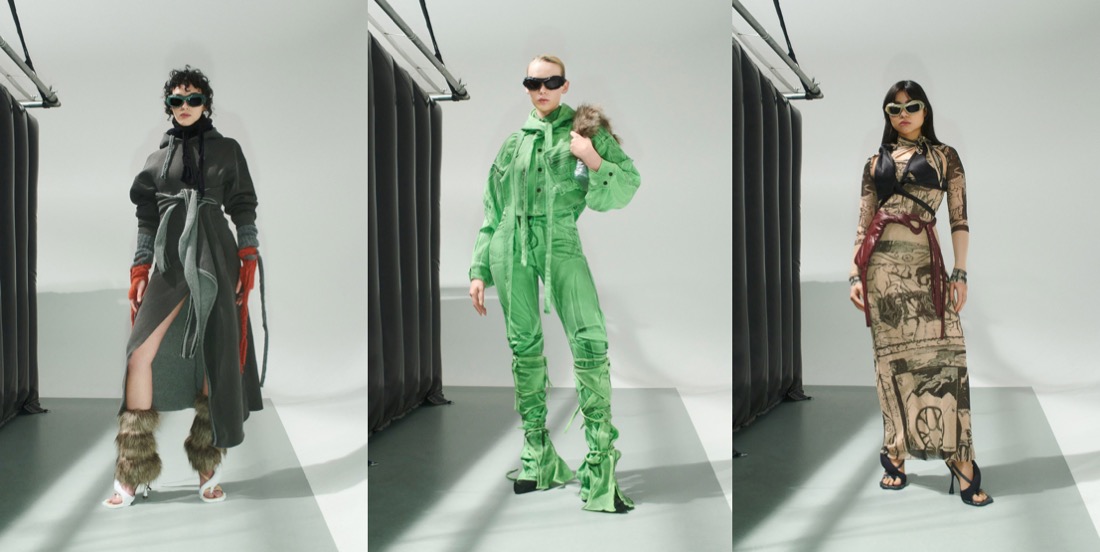
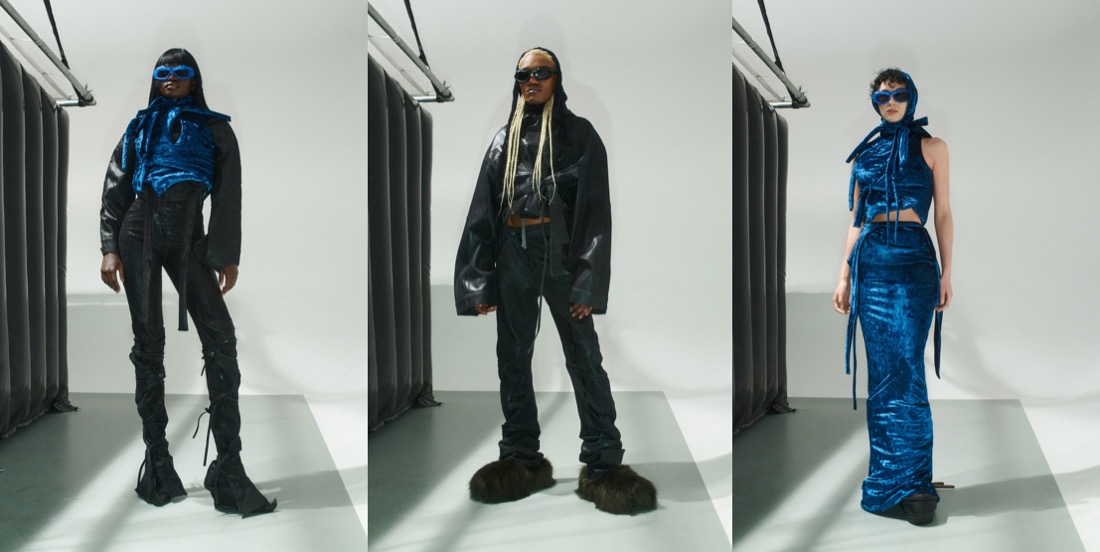
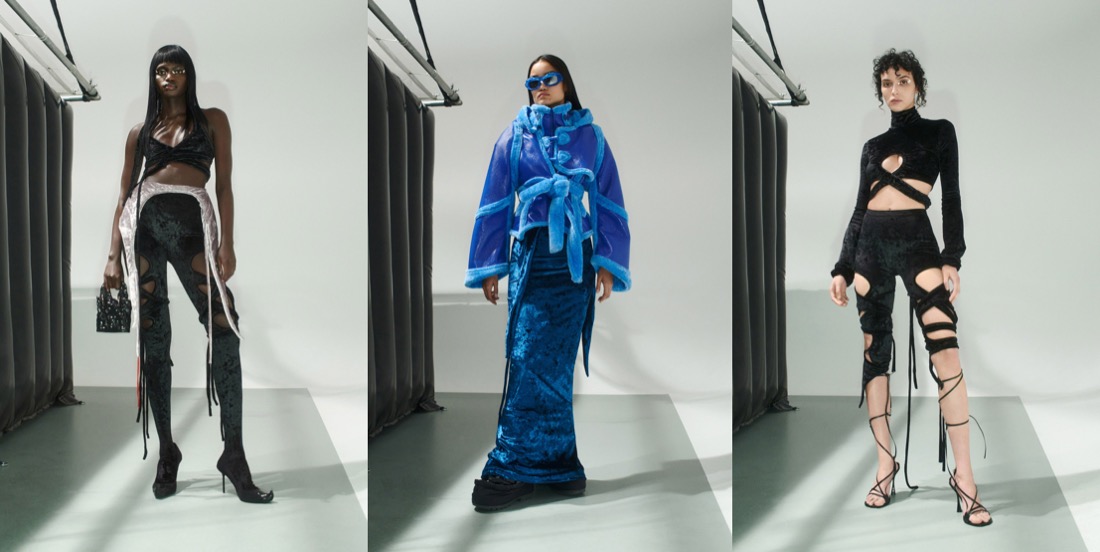
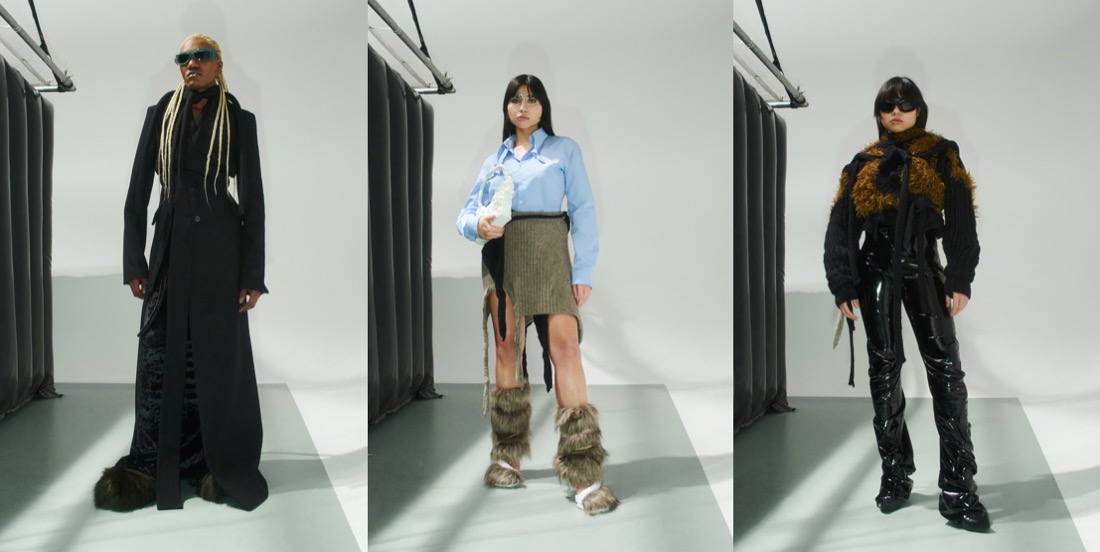
Christa Bösch and Cosima Gadient’s autumn-winter 2022 Ottolinger collection challenges what prettiness or functionality mean in our digital age. This season, they continue with themes begun during the pandemic: bulbous, hefty knotted tops; long, trailing flare trousers with tons of stretch; and chunky outerwear either cropped or belted with a shearling rope at the waist. The shapes almost look virtual, rejecting the natural laws of gravity or glamour. Finding new ways to take up space, now modes of projecting the body, is the duo’s stated mission with their fall line. There’s enough clingy body-con stuff out there already; enough sexy and seductive. The designers have tapped into a new aesthetic that is more organic, bordering on biological. And they have worked for two years to perfect their language of lumpy, bumpy bad gals, partnering with a women’s collective of hand knitters for a white cardigan and bringing on new knitwear production to make filmy post-apocalyptic layers. It’s not all fashion for philosophy’s sake: the designers have also introduced their first bag “that can actually hold something!” said Gadient with a laugh before the show, demonstrating the use of their new slimy shoulder bag, large enough for a phone, wallet, and maybe even a Nintendo Switch. The show was held at an Esports Arena in Paris, where guests watched a video on personal monitors before the models came out, and heard for the first time Azealia Banks’ latest banger, “Rule The World“. In addition to pushing their garments to a steady, intriguing place, Bösch and Gadient also contribute to play in the digital world. It’s a smart move and they will surely be among the first to define the new aesthetic language of Web3 and beyond.

















 Design & Culture by Ed