More Than A Muse. Max Mara SS23

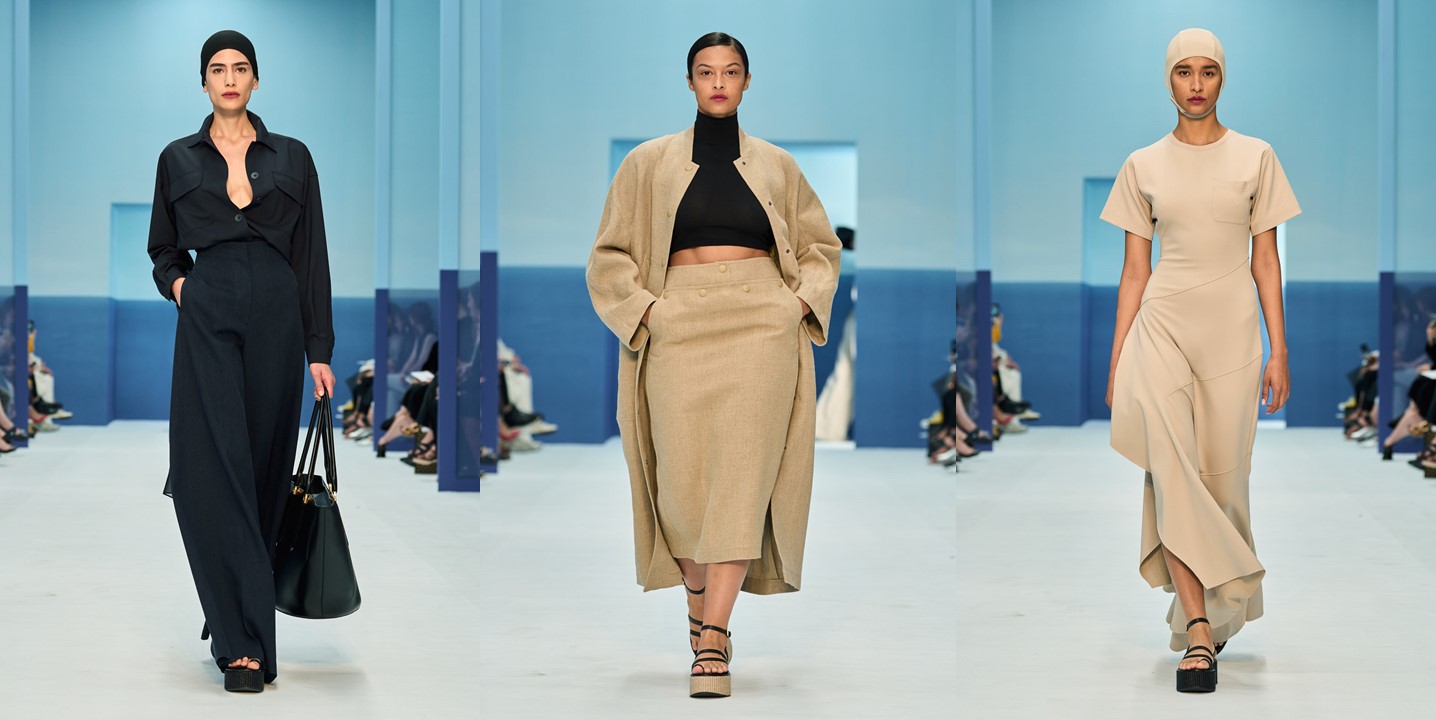
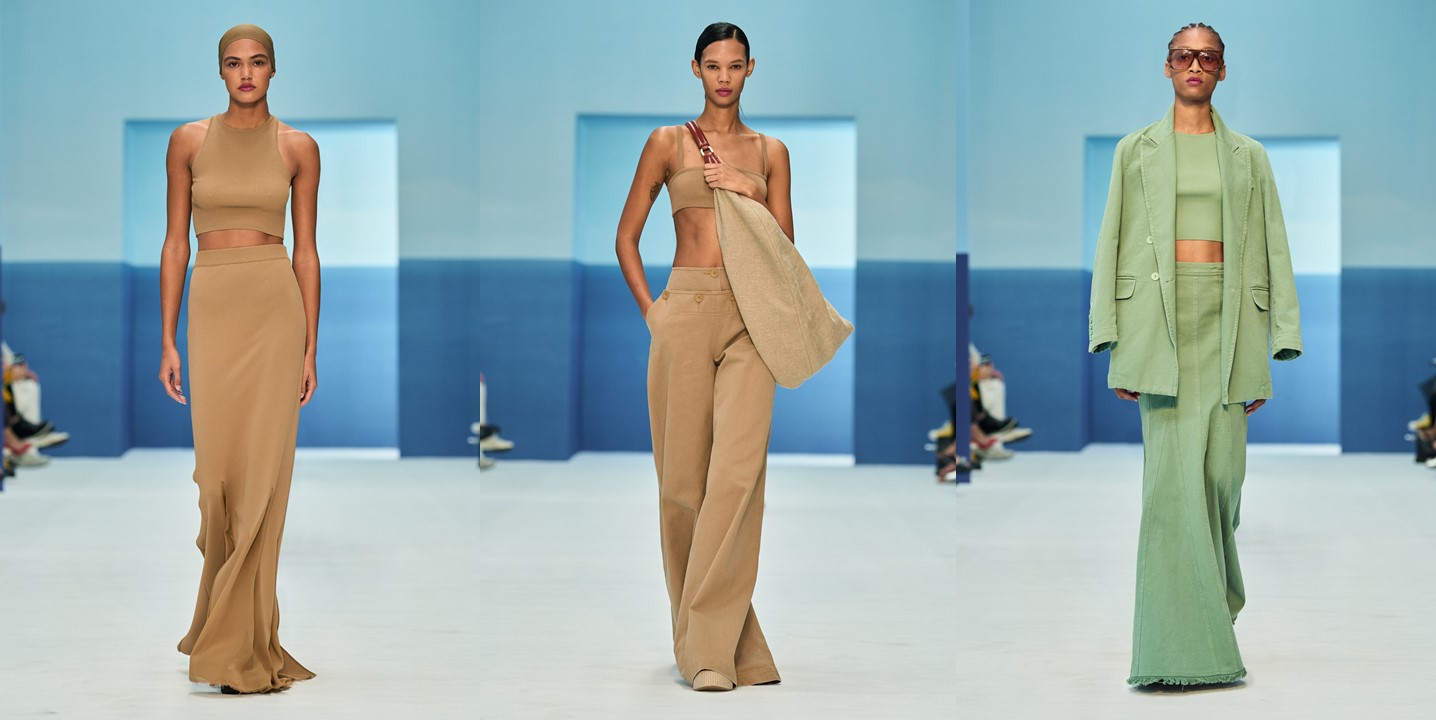
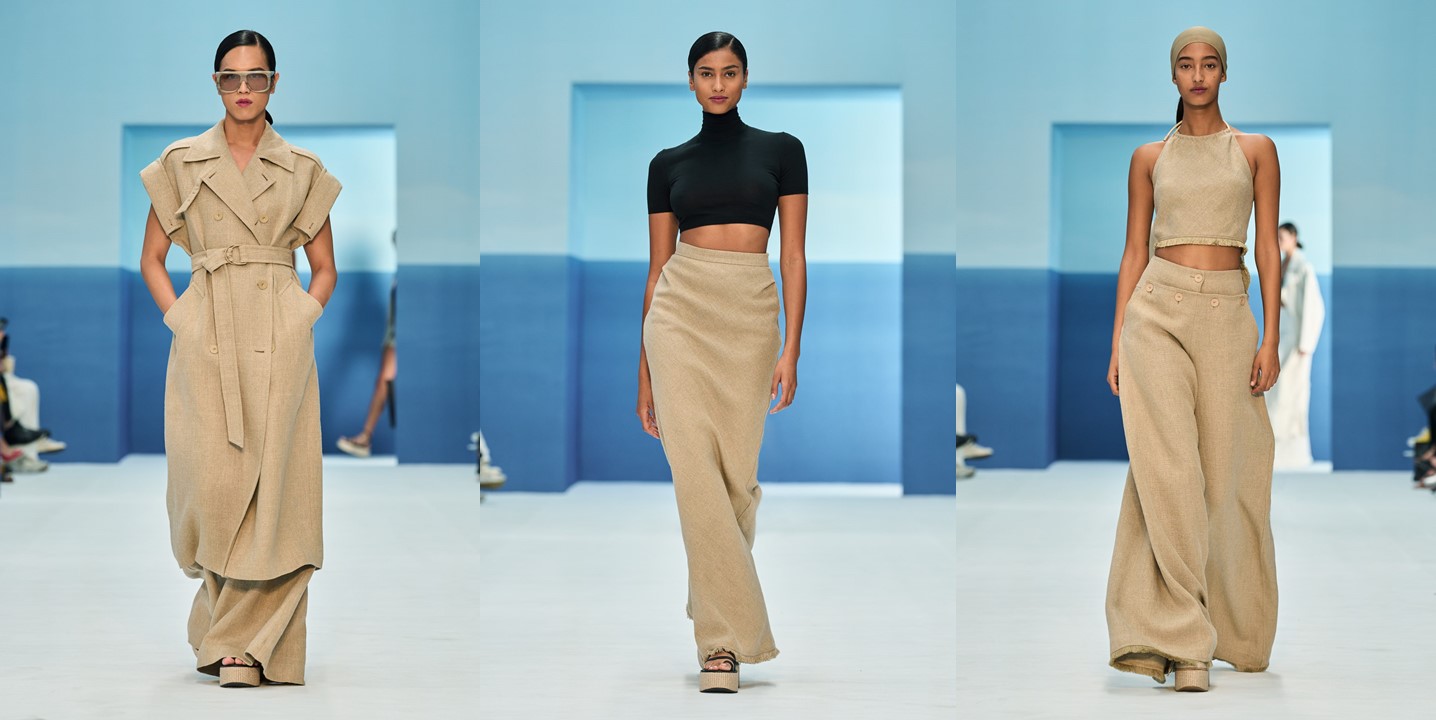
It’s quite shocking how good Max Mara is latey. Ian Griffiths is becoming the patron saint of overlooked and underestimated historical “muses.” Following his resort reassessment of fabulous-’50s Lisbon radical Natália Correia, for sping-summer 2023 Griffiths turned his restorative eye two decades earlier. It focused on Renée Perle, a lover and much-snapped subject of early alpha-photographer Jacques-Henri Lartigue. “But she also painted all these self-portraits that were absolutely panned by the critics,” said Griffiths. Then there was Eileen Gray, who designed her own feminocratic ideal of the modernist house, the Villa E-1027 in Roquebrune-Cap-Martin, France, in 1929. This was much coveted by Le Corbusier, who painted murals in its interior while staying there and was sometimes even wrongly credited with its wonderful design. As Griffiths suggested, both women were cast as muses – objects of masculine inspiration – rather than artists who were themselves inspired. The irony in the benevolently meant result of Griffiths’s rehabilitation mission was that while seeking to recast Perle’s and Gray’s place in history he was also to a degree reinforcing it. For there they were behind him as he spoke, fabulously frozen in time but pinned to his mood board like butterflies. Griffiths’s excavation of these histories allowed him to pitch this collection as a redemption song, but it also provided the designer, whose college tutor in the 1970s was Ossie Clark, to engage with gusto in the fashion conversations that echo between the 1930s and that decade. Yet it would have been remiss for a collection predicated on elevating unacknowledged female cultural protagonists to reject the full-blown “feminine,” and this was delivered in swooping backless dresses worn with doorframe-wide sun hats and a trio of swimwear-inspired citrus looks topped with Esther Williams–worthy swimming-cap hats. A closing bunch of hand-drawn floral gowns and separates, sometimes hitched to trailing bow-tied strips of organza, drew the veil on another dreamy Max Mara meander.
Collage by Edward Kanarecki.
Don’t forget to follow Design & Culture by Ed on Instagram!
NET-A-PORTER Limited

Identity. Fendi SS23

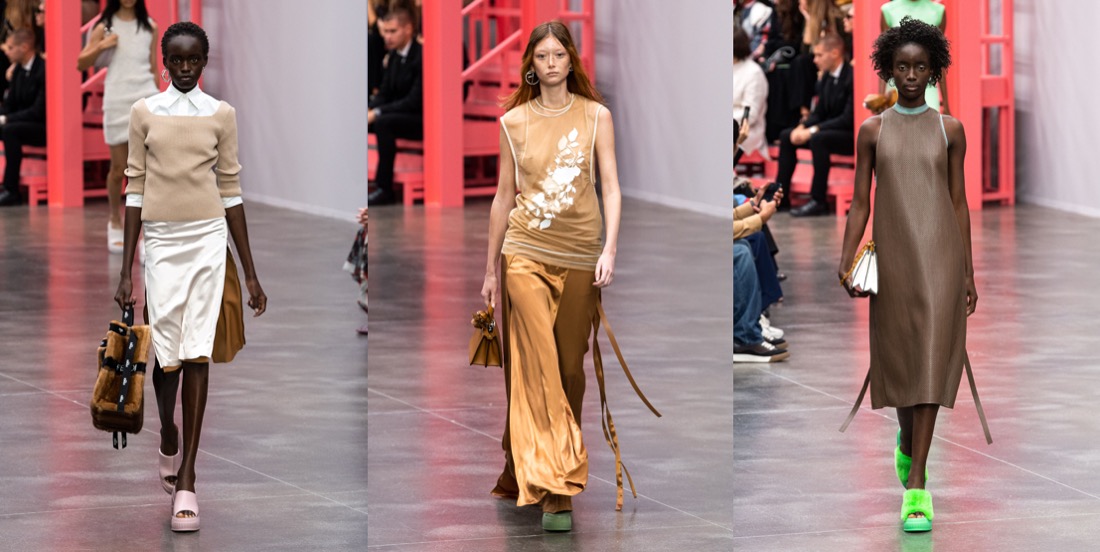
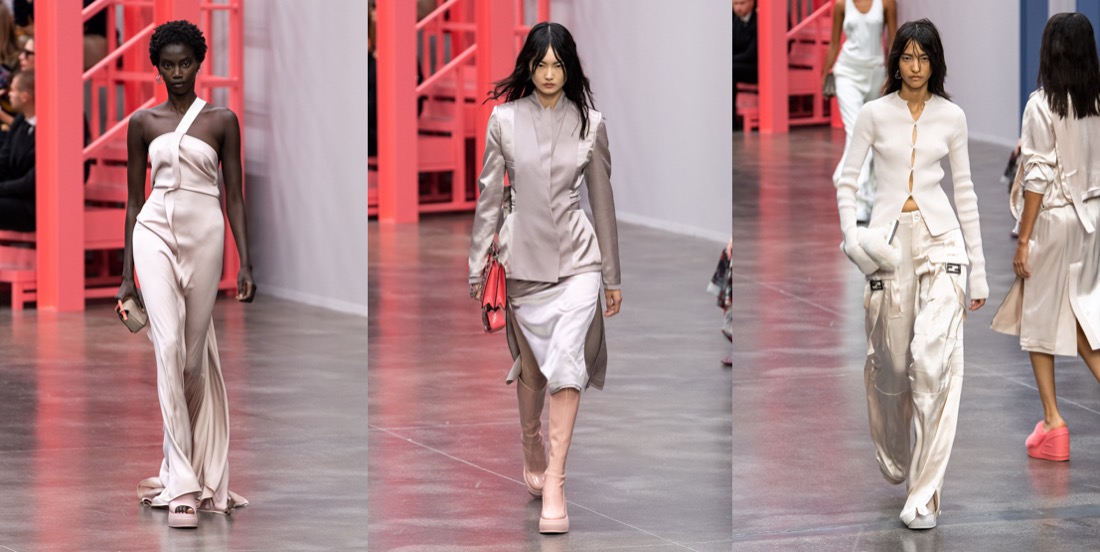
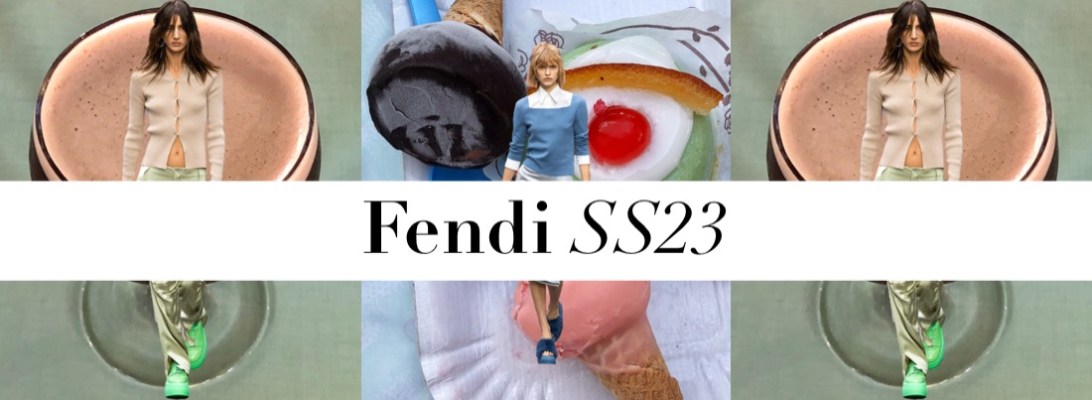
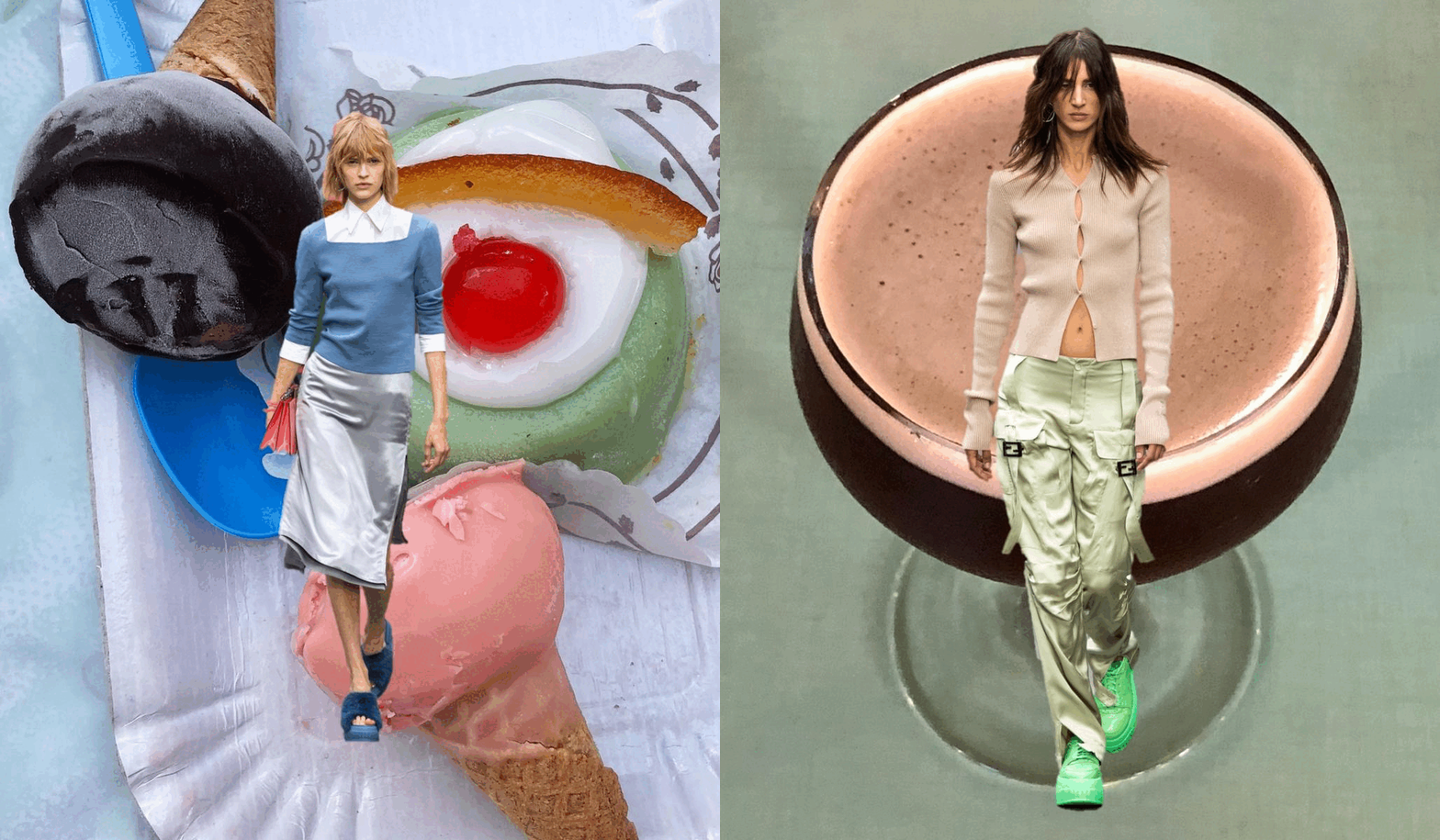
With Kim JonesFendi, there are ups and downs. The resort 2023 fashion show, which opened New York Fashion Week and celebrated Baguette’s anniversary, was a high. The spring-summer 2023 collection which opened Milan Fashion Week wasn’t entirely bad, but it was… mediocre. One might easily mistake it with a brand like Max Mara or Sportmax. And Fendi isn’t really a brand that fits this profile, lifestyle-wise. The collection’s shots of color, in green and blue and fiery red, were, as Jones said, purposefully projected across a clothes-scape of the neutrals that are key to the Fendi identity in order to generate new freshness to the jolt of recognition. The double-F logo first drafted by Karl Lagerfeld in 2000 was used all over the line-up. Its graphic geometric severity contrasted with the silhouetted botanical relief that Jones said had featured in a ’96-vintage Lagerfeld outing for the house. This featured on pieces including a laser-sliced leather vest and sheer, organza, Fendi-brown racerback dresses and tops. Obi-belt detailing and the inverted masculine tailoring were respectively nods back to the most recent Jones for Fendi Couture collection, and then autumn before that. Explaining this, Jones unpacked part of the process that will allow him to produce 11 collections this year (he thinks) and probably 12 collections next year. He said: “I program it so that if you put fall and then Couture and then this in a row the brand makes sense. And then there will be another to build upon it after this.” Noting that Jones also does four collections a year at Dior Man (plus all the creative direction), this entire statement sounds, well, terrifying.

Collage by Edward Kanarecki.
Don’t forget to follow Design & Culture by Ed on Instagram!

NET-A-PORTER Limited

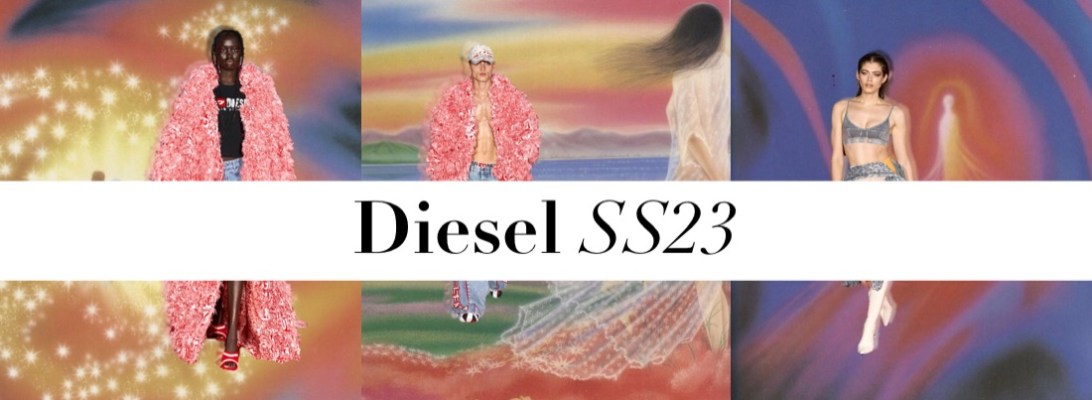
Big Things. Diesel SS23

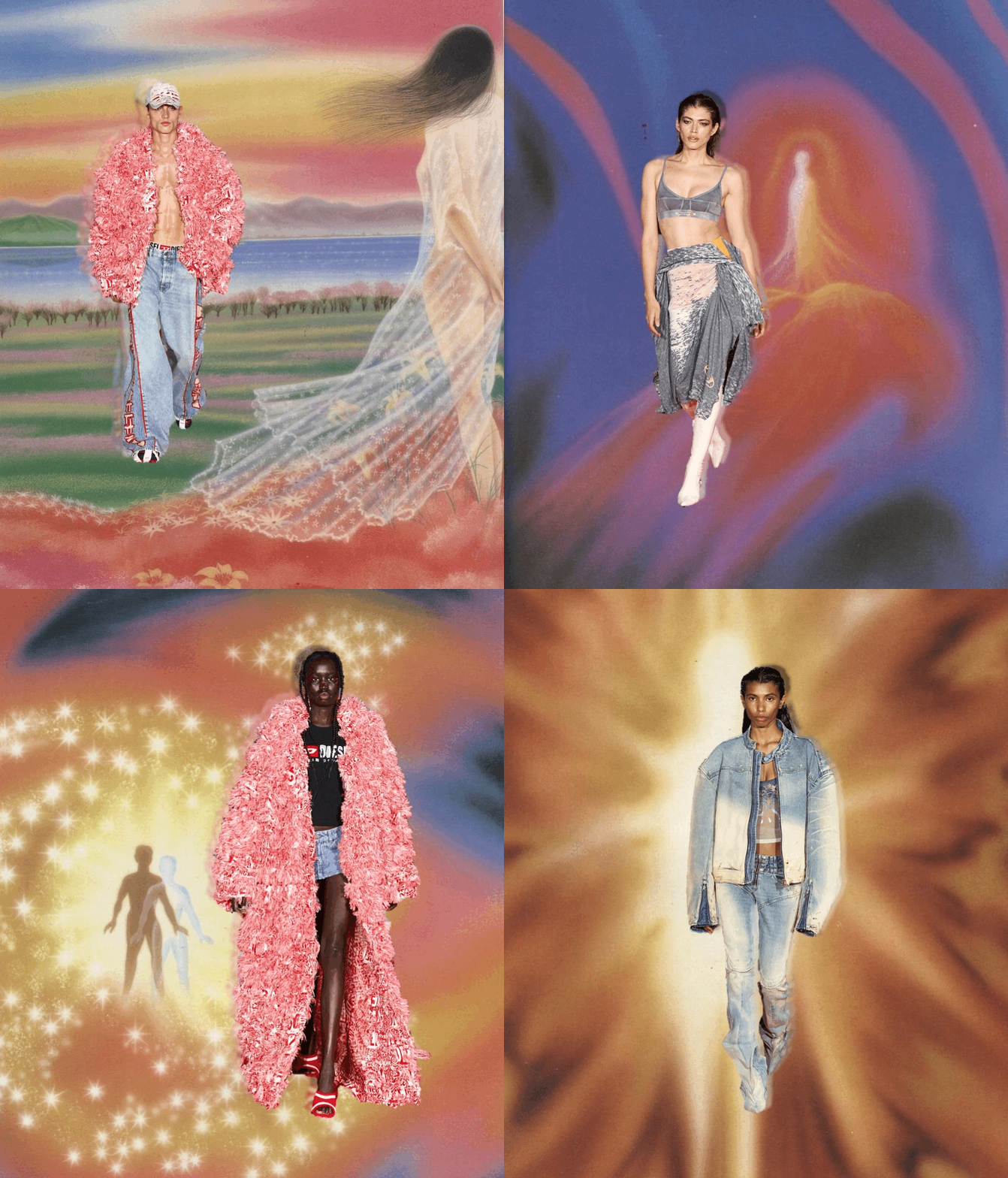
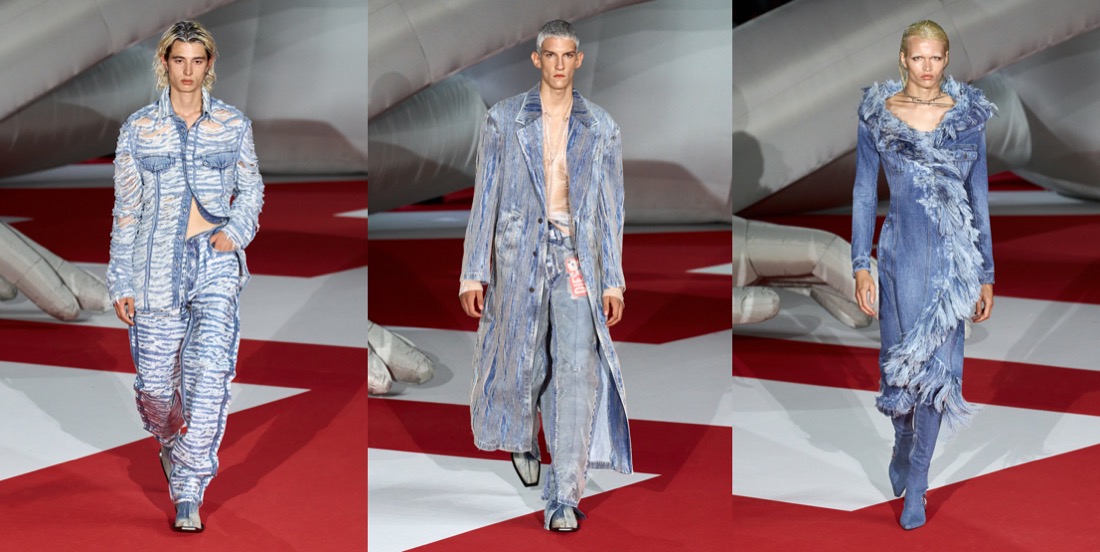
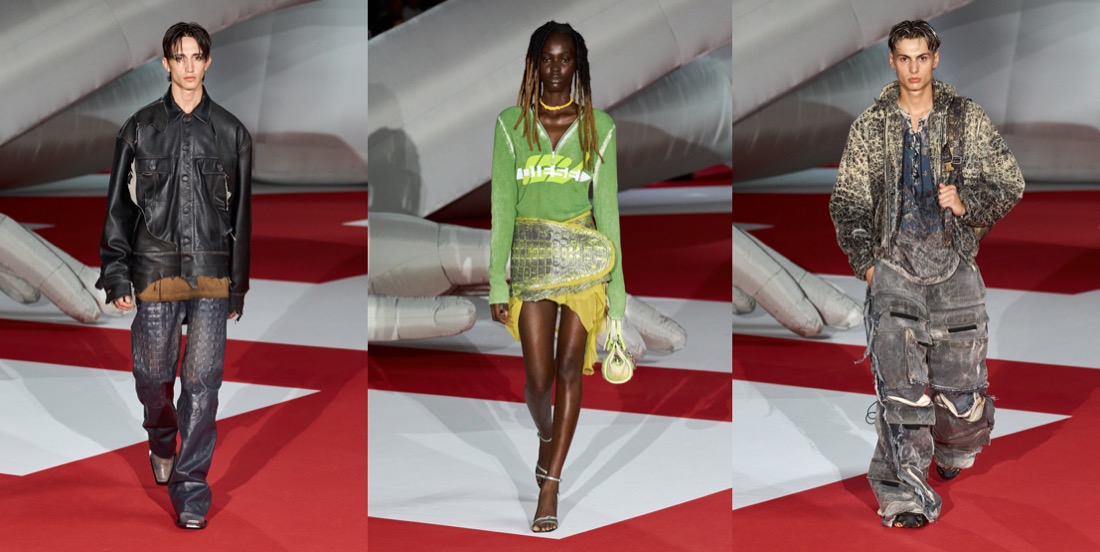
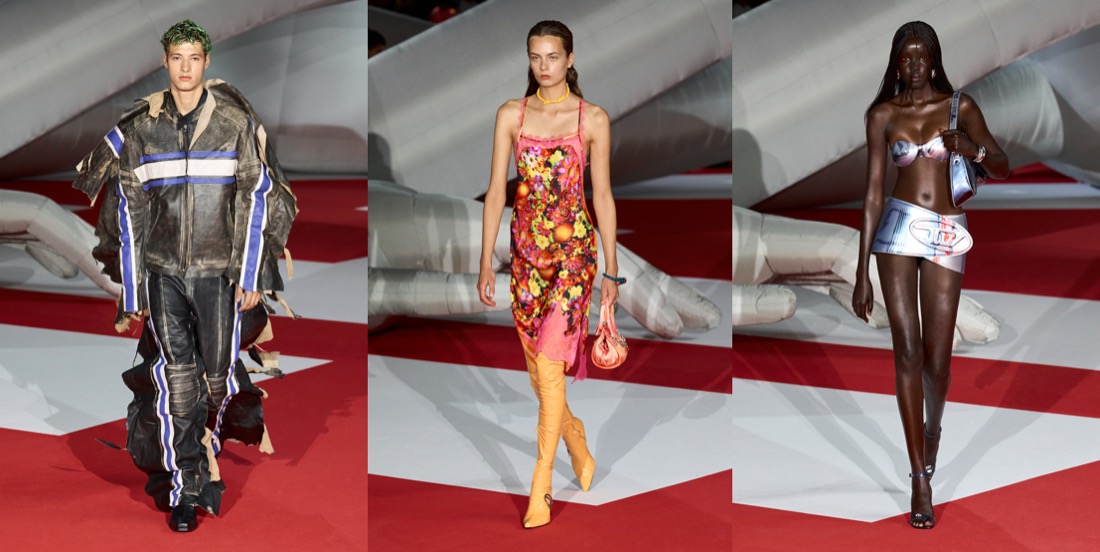
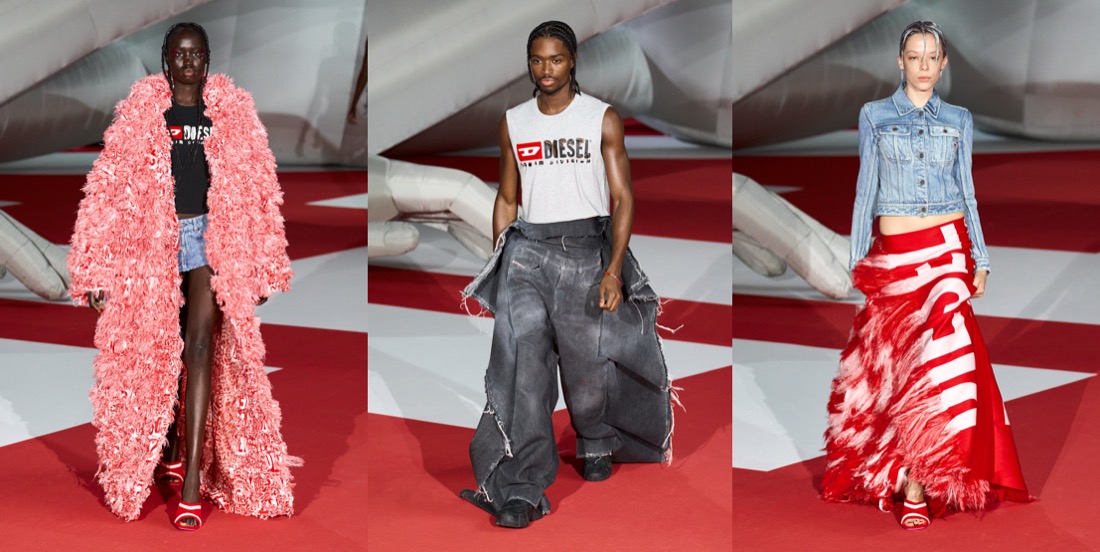
The energy at Diesel‘s spring-summer 2023 fashion show was… big. The brand’s creative director, Glenn Martens, claimed that the four inflatable human figures that straddled both each other and the middle of the monumental runway had been certified by Guinness World Records as the largest ever recorded. It was difficult to get an overview, but from my angle they appeared erotically intertwined. That Martens’s invitation came for the second season in a row accompanied by a sex toy – this time a big glass butt plug – further stimulated suspicion that this was their position. Another big statement was the number of people who could attend the show: about 3,000 people had bagged their free tickets online, while a further 1,600 were reserved for students. Most of the 200-ish remaining were there to work or influence. Since his first season at Diesel, Martens has been charged with revitalizing and democratizing Diesel. Fittingly enough, this is partially driven by Renzo Rosso’s ambition to take his company public. Whatever the motivation, this stadium show was powerful evidence of Diesel’s new audience.

Martens said the collection was divided into four chapters: denim, utilitywear, “pop,” and “extravaganza.” He added: “This is my recipe for Diesel; the four ingredients that I insist upon. Because this is only my second show here, and I think we need to keep showing it.” He said one overlying characteristic of the collection was distress: “All of the pieces are ‘imperfect’ through treatment and design. This is something I like, but it also goes back to that democratic instinct. We know Diesel is a brand for anyone who wants to relate, whoever they are, however they feel; everyone is individual and no two people are the same. Plus the piece is supposed to look ‘broken’ so that you can live with it forever – it is unbreakable.” Diesel’s denim expertise was on full display in this offering. It came layered in tulle, interwoven with lace and organza, or spliced into corsetry. The washes and treatments were manifold: Encrusted with croc-print overlays, reverse-sun-faded, garment-dyed into multiple colors. There was denim jersey and knit denim and flocked denim and fringed denim. Utilitywear included a two-tone olive bomber-and-pants menswear look and a long washed cargo dress, plus a series of nomadically postindustrial ragtag jersey ensembles – streetwear for the postapocalypse. Pop delivered acid-toned racer-back or spaghetti-strap minidresses sometimes garlanded with florals and contrast-colored lace. There was a hilarious black leather moto ensemble that seemed like it had previously been made to fit two wearers at once – back to those conjoined figures – before the second wearer had cut himself free to escape. Martens’s Velcro-fastened strap miniskirt returned in silver, as risky as before. A frayed logo jersey tank top and boob tube – both logo-printed and worn over some trompe l’oeil double-bonded denim pieces in black – signaled the extravaganza. This included two exploded bouclé coats made from torn and tufted Diesel-print fabric and a final, triumphantly tattered house-logo-print skirt south of a trucker.

Collage by Edward Kanarecki.
Don’t forget to follow Design & Culture by Ed on Instagram!
NET-A-PORTER Limited

Labour Of Love. Richard Quinn SS23

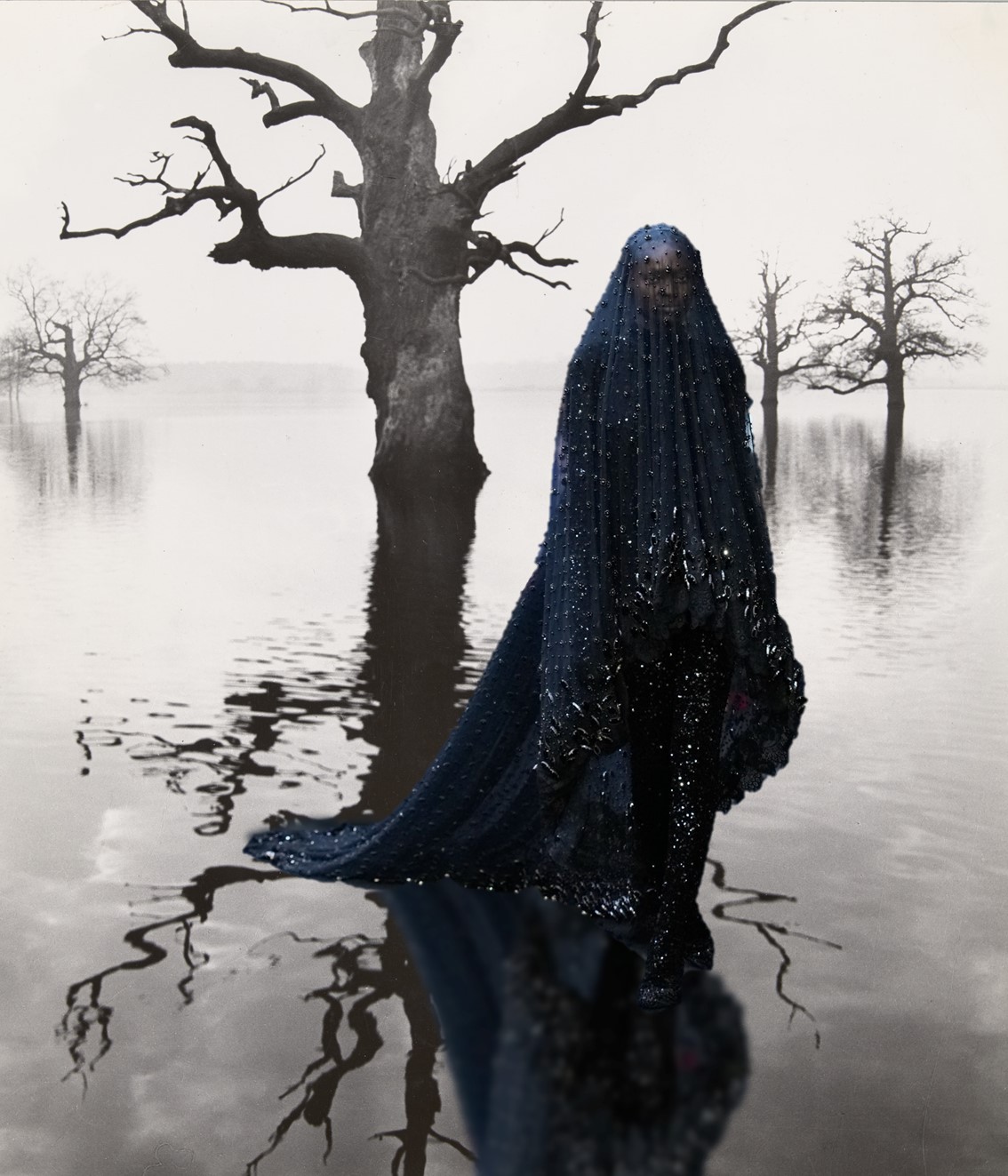
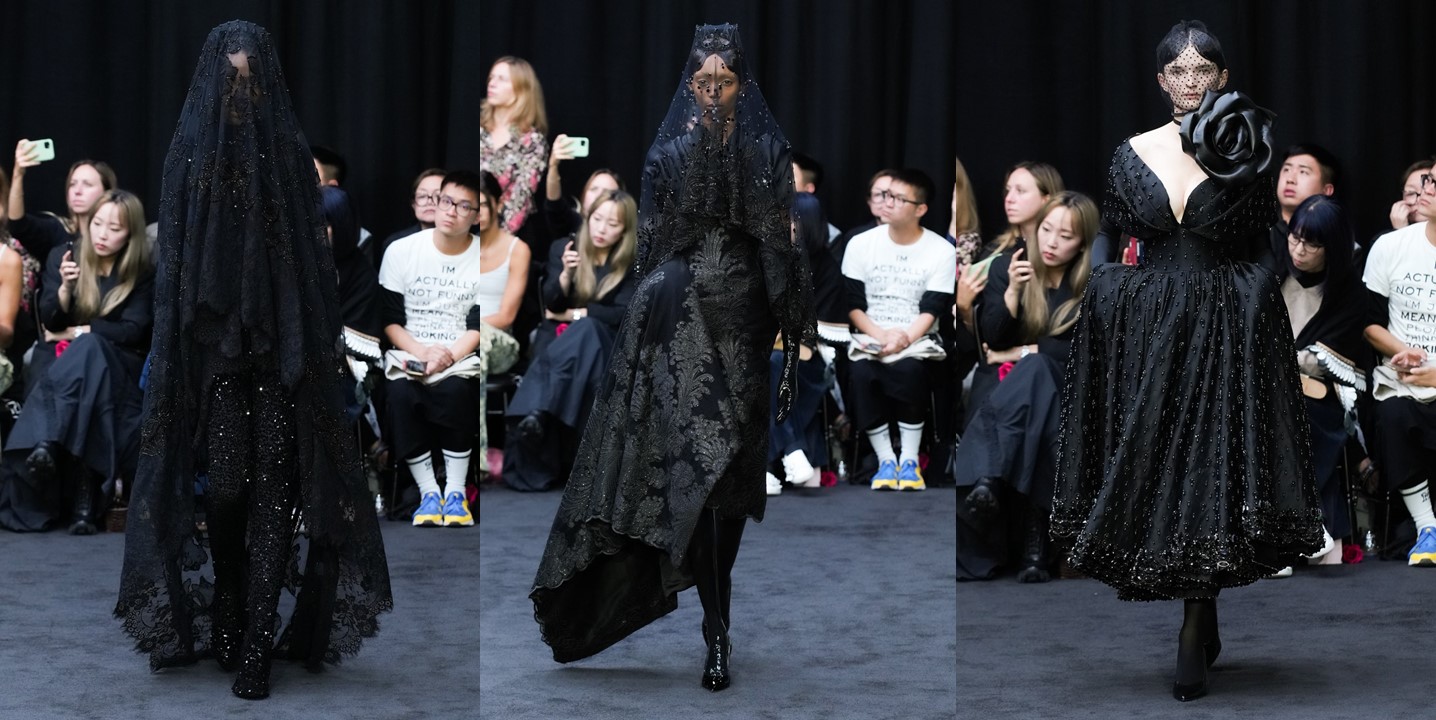
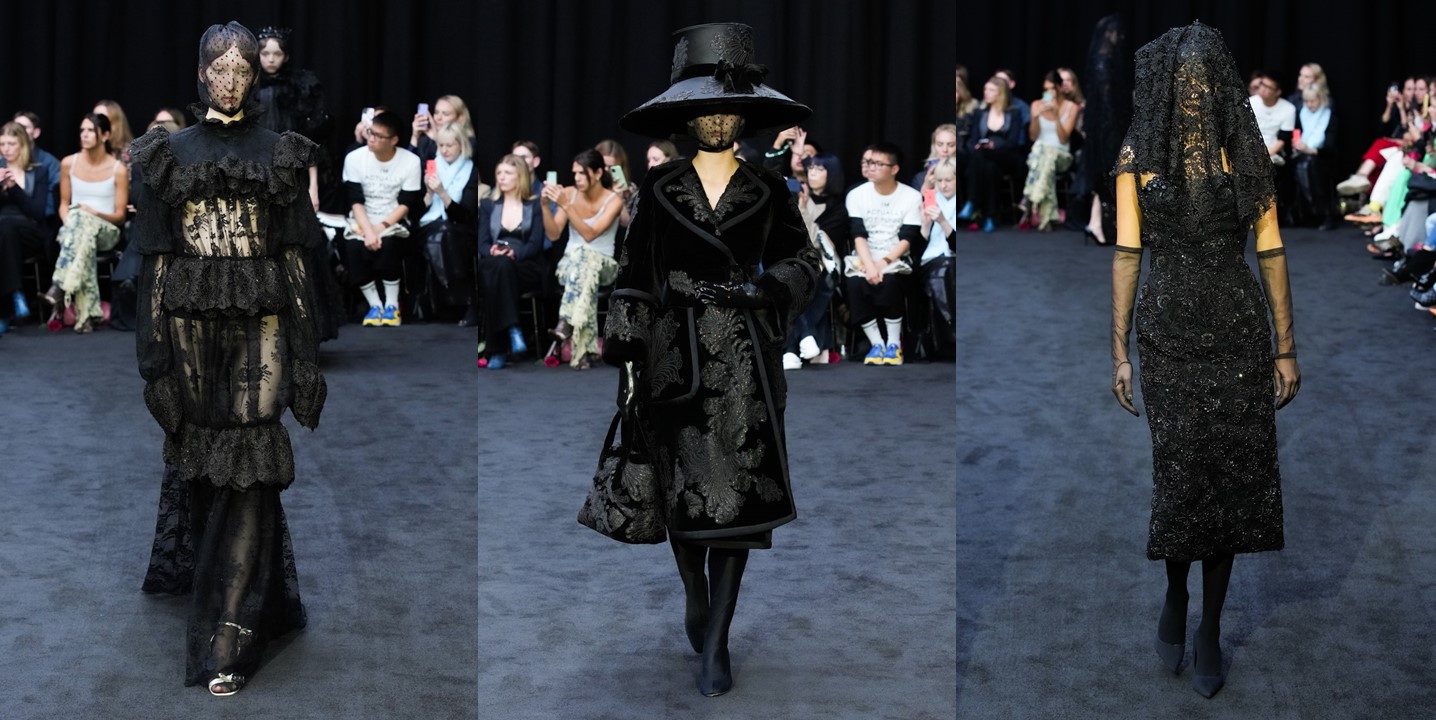
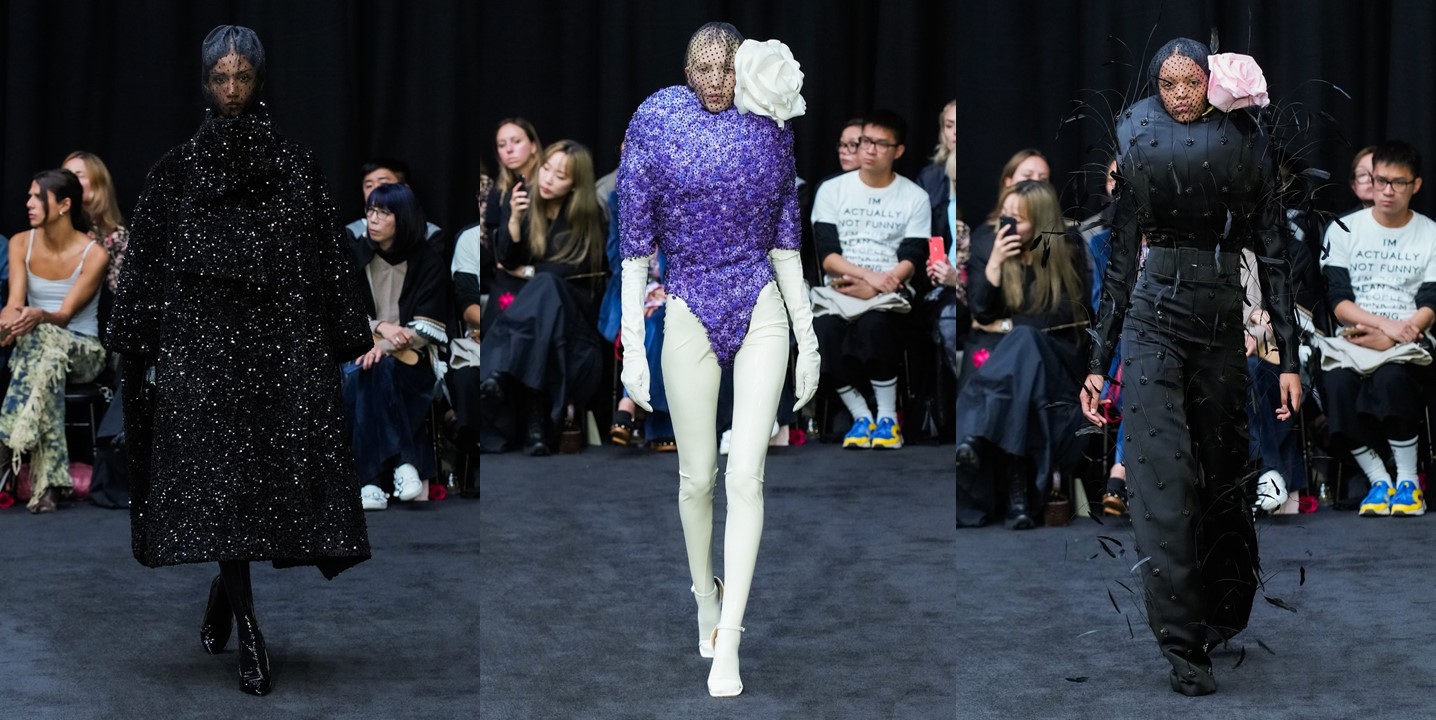
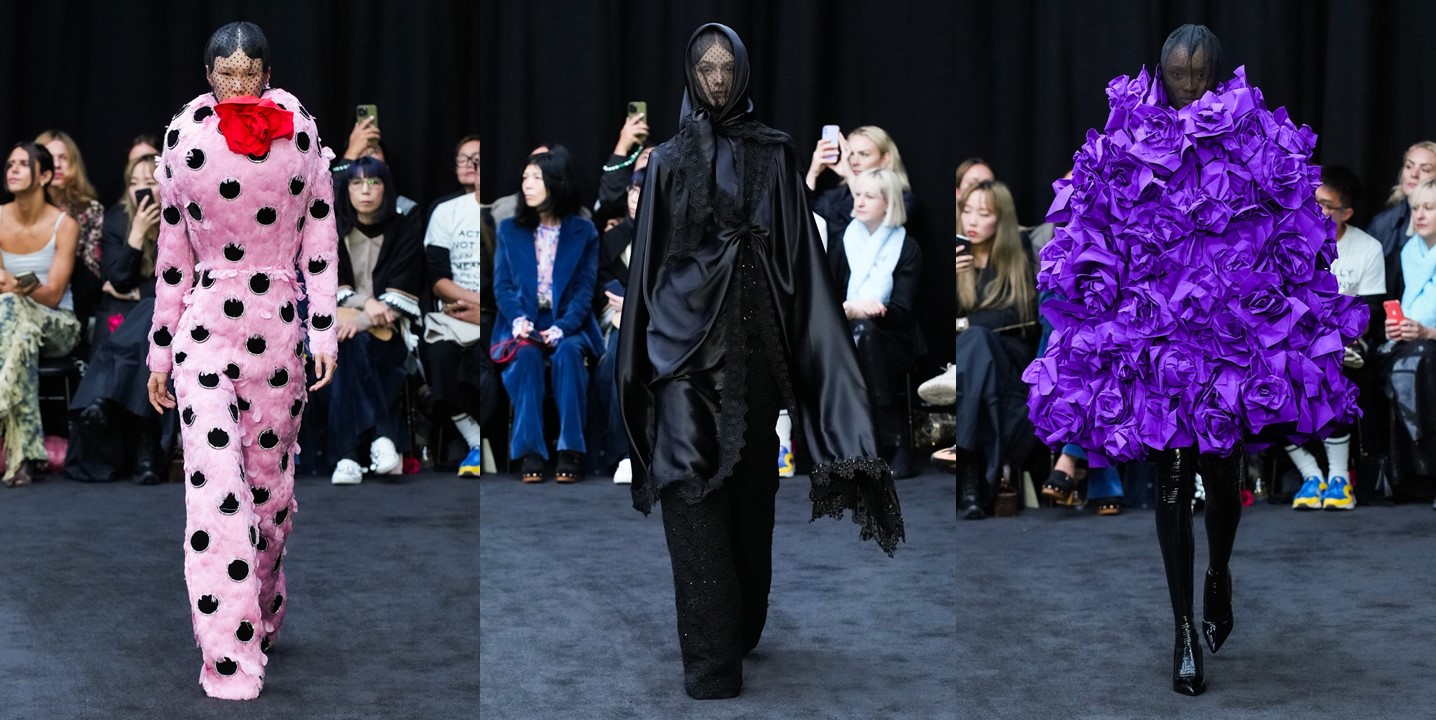
Richard Quinn offered and very fitting a moving show as for London Fashion Week’s finale – an unprecedented kind of fashion week, done during national mourning. The designer’s response to Queen Elizabeth II’s death pushed him of colorful, multi-floral prints to prove, in tribute to her, that he can also make as elaborately and extensively in black. The first 22 looks, many heavily veiled in black lace, were made by Quinn and his core team of six, and 20 show-time helpers, day and night, in the 10 days since the Queen died. “It was almost cathartic for us to put all of our emotions of mourning into it,” he said. “We wanted it to have that kind of real craftsmanship, the beauty of royalty, and to try to turn all of the shapes and embroidery that we do into that kind of that idea of uniform dressing up they did when her father [King George VI] died.” Quinn, of course, owes more of a debt to the late Monarch than any other designer in London fashion history, since she came to his debut show in 2018 and presented him with the first annual Queen Elizabeth II Award for Design, her legacy for emerging fashion designers in Britain. He changed the set he’d planned, draping the walls in black and playing fragments of video footage of her young days on screens inset on a suspended central installation. Quinn pulled out all the stops on multiple silhouettes for that section: black swing coats, his translations of fitted 1950s formal dresses, vast capes in lurex, a velvet tunic dress with a big glittering jeweled brooch. All the model’s faces were either completely obscured in floor length lace veils, or masked in point d’esprit netting. Under one, a tiny black crown was visible.

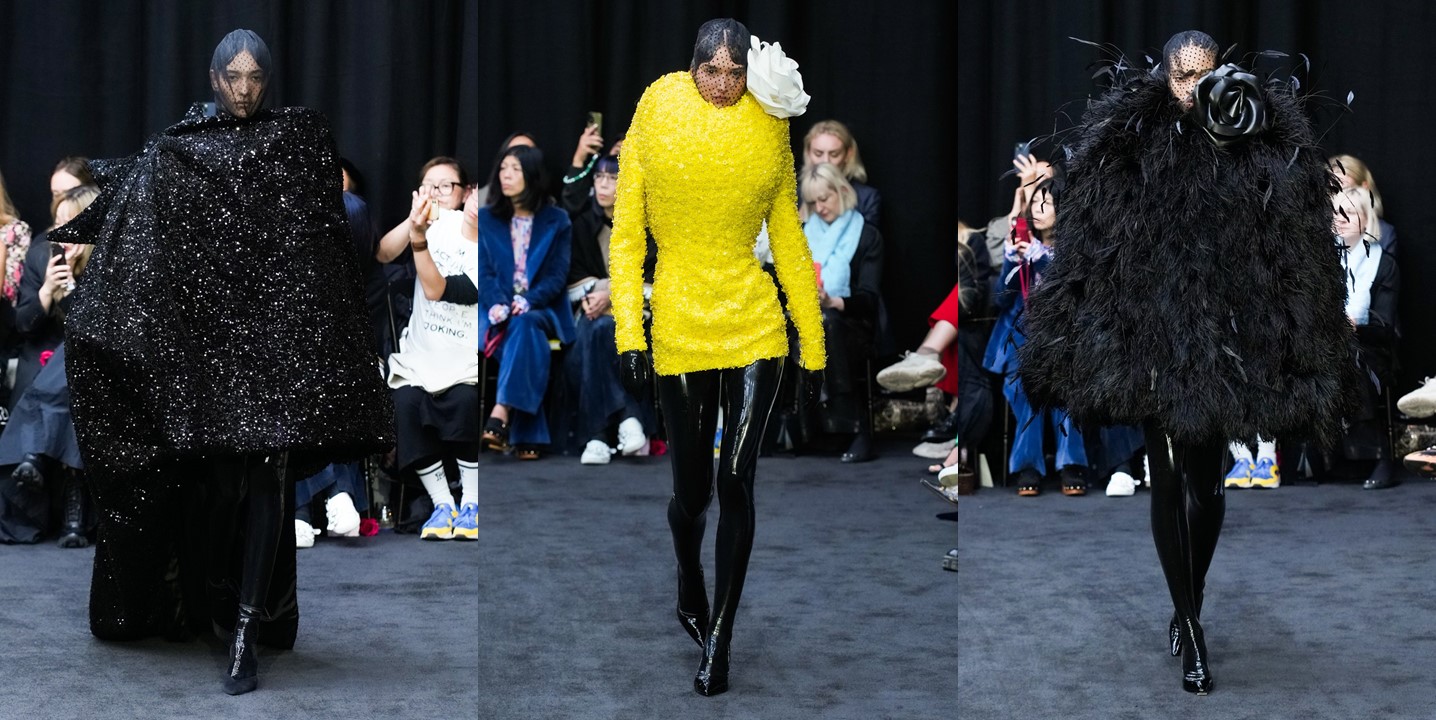
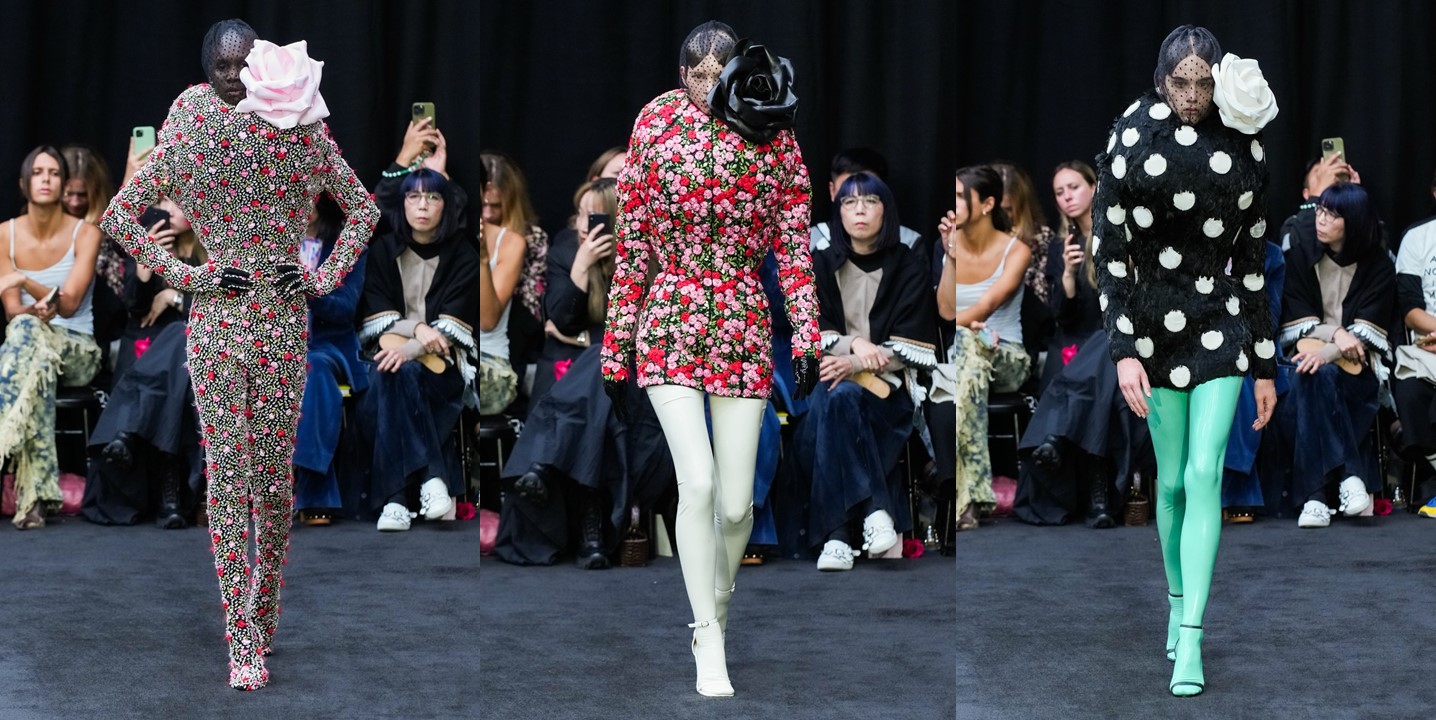
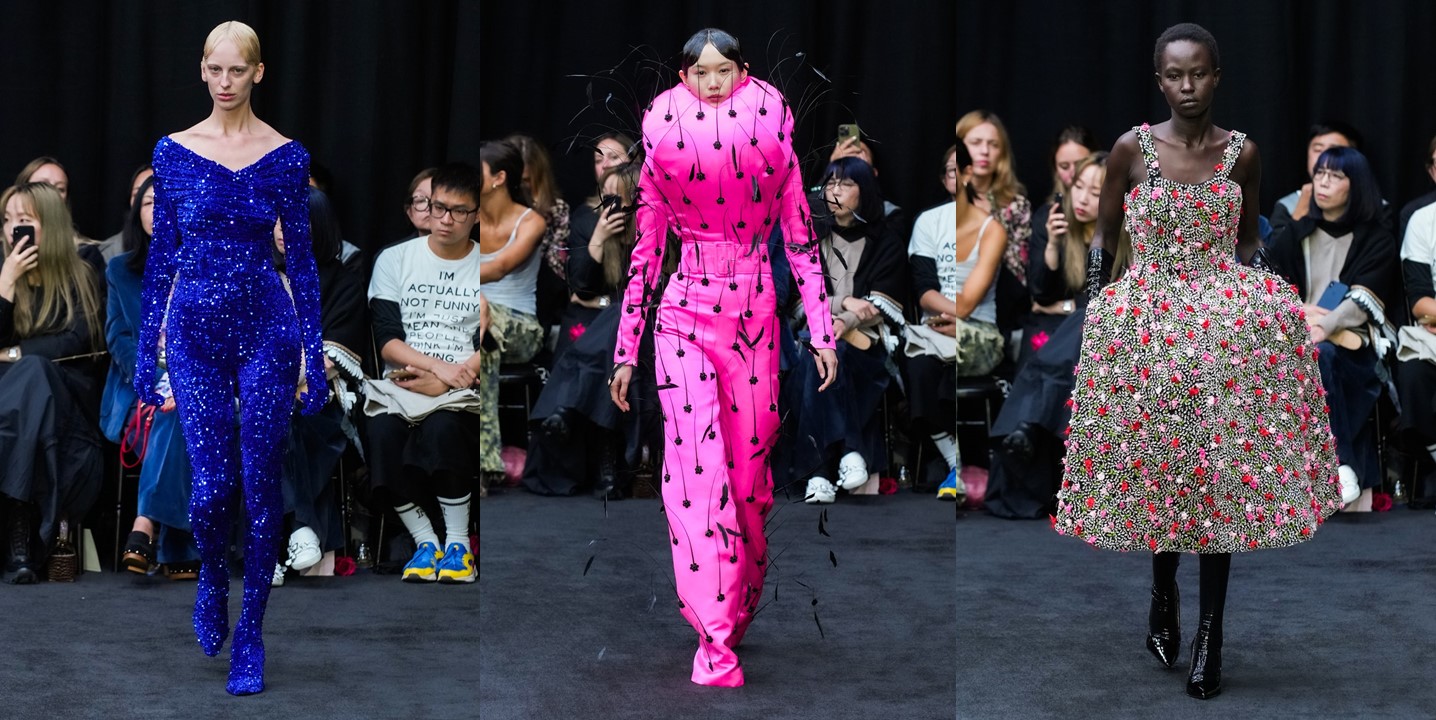
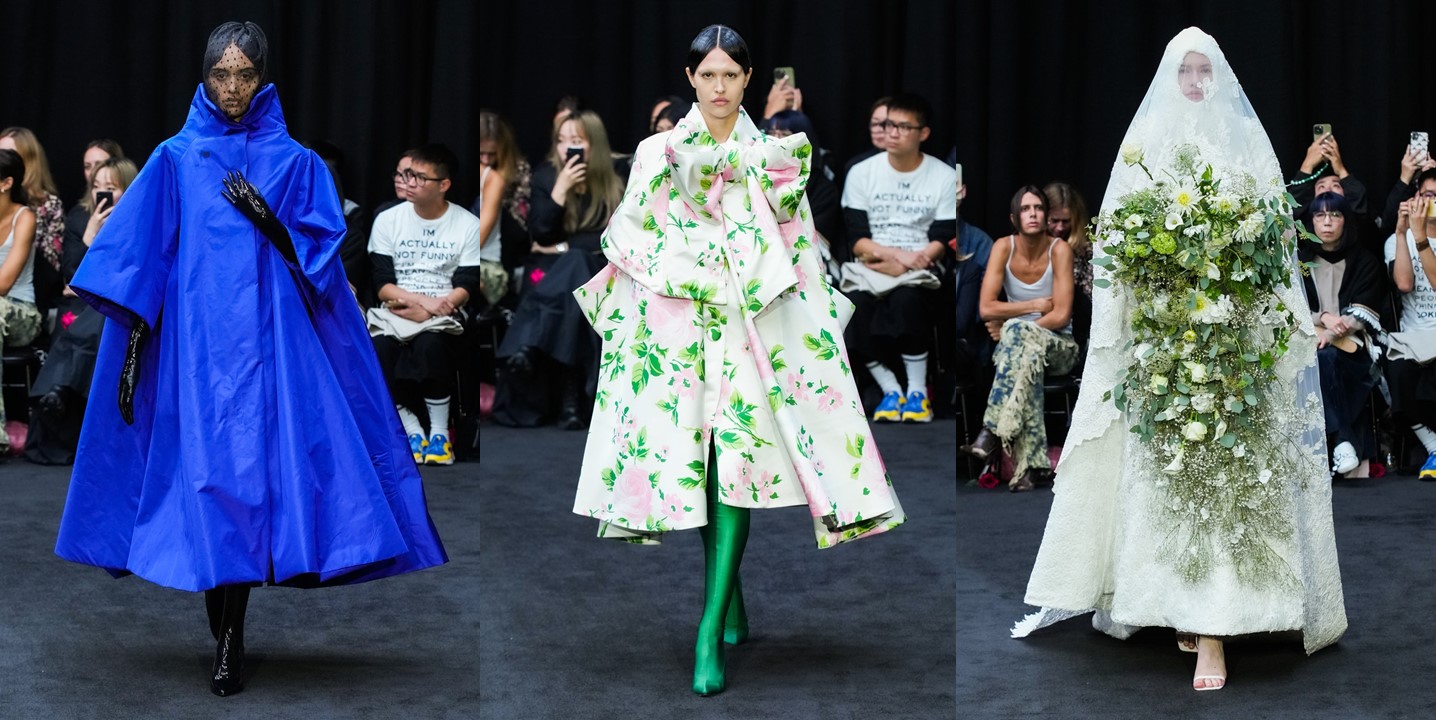
And then, well, it was on with part two: the show that should have been. That had been intended by Quinn to be spun around a concept about public surveillance. There were CCTV cameras bristling from the central ‘chandelier.’ The Queen video screens switched to live footage of the audience. Then came renderings of multi-colored bulbous-topped bodysuits, his signature floral coats, feathered polka-dot embroideries, a pair of short bejeweled capes. Understandable if that part didn’t have the chance, or the atelier-power to fully make its point. All the young minds and hands at Richard Quinn had been devoted to proving they were equal to showing up for an historic moment. The black put it in the shade, in a good way. The finale however, brought back the lace veil in a hopeful way: a bride, in white, with a huge spray of flowers. Weddings have become a mainstay of his business since Elizabeth II gave him his first boost. He can thank her for that, too.

Collage by Edward Kanarecki.
Don’t forget to follow Design & Culture by Ed on Instagram!

NET-A-PORTER Limited

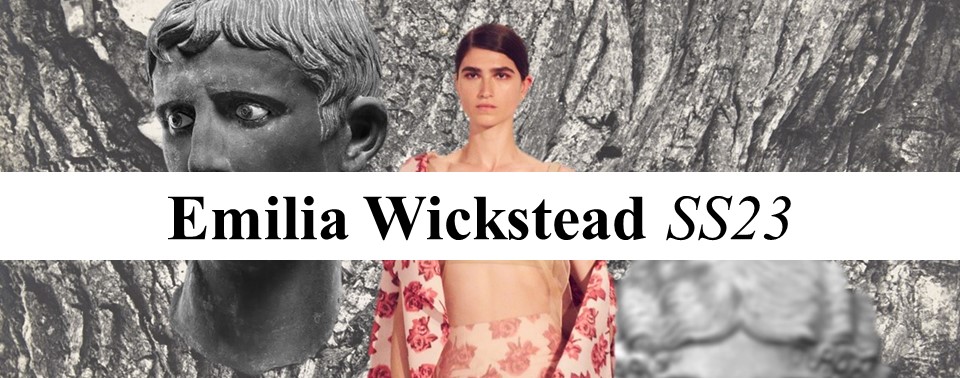
Sharp Femininity. Emilia Wickstead SS23

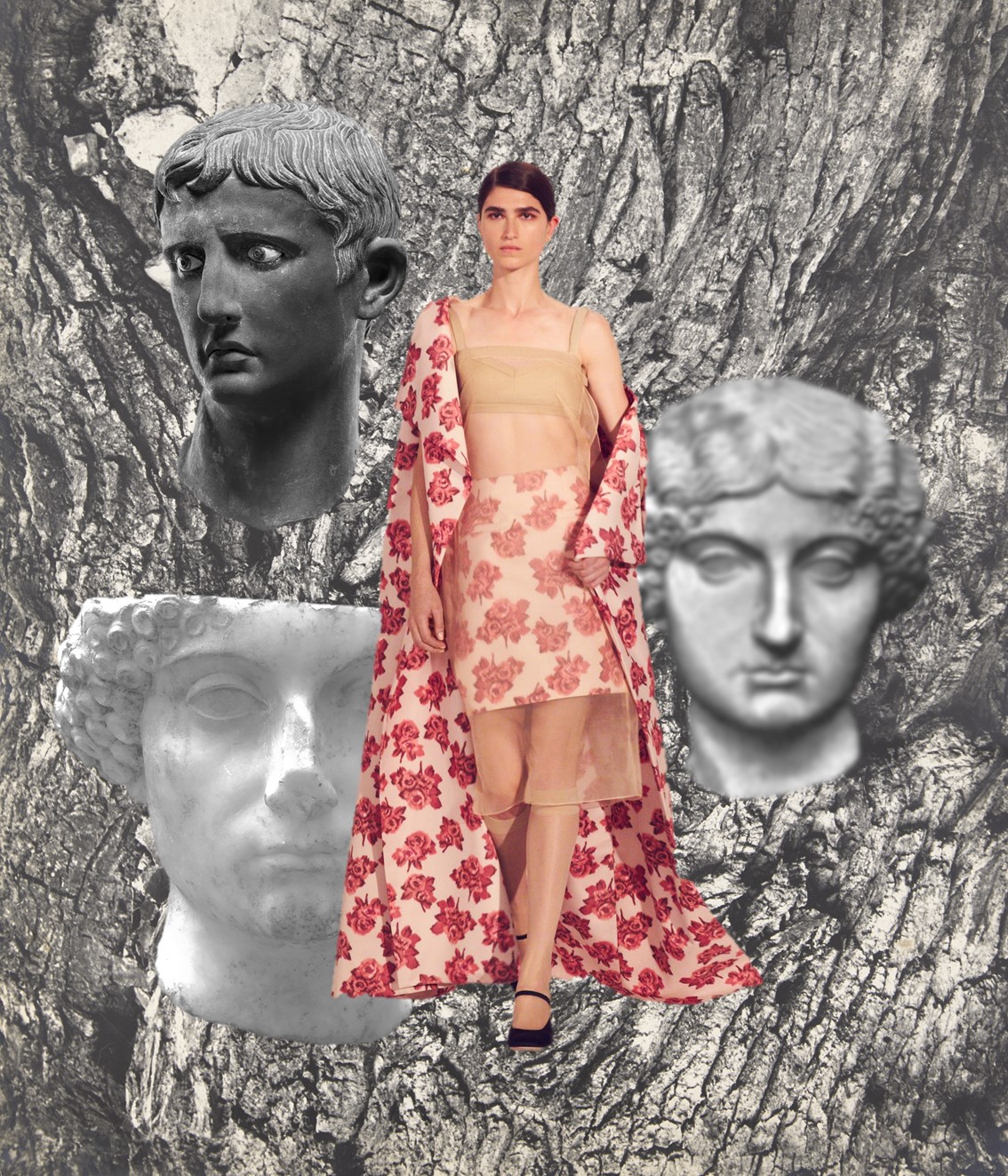
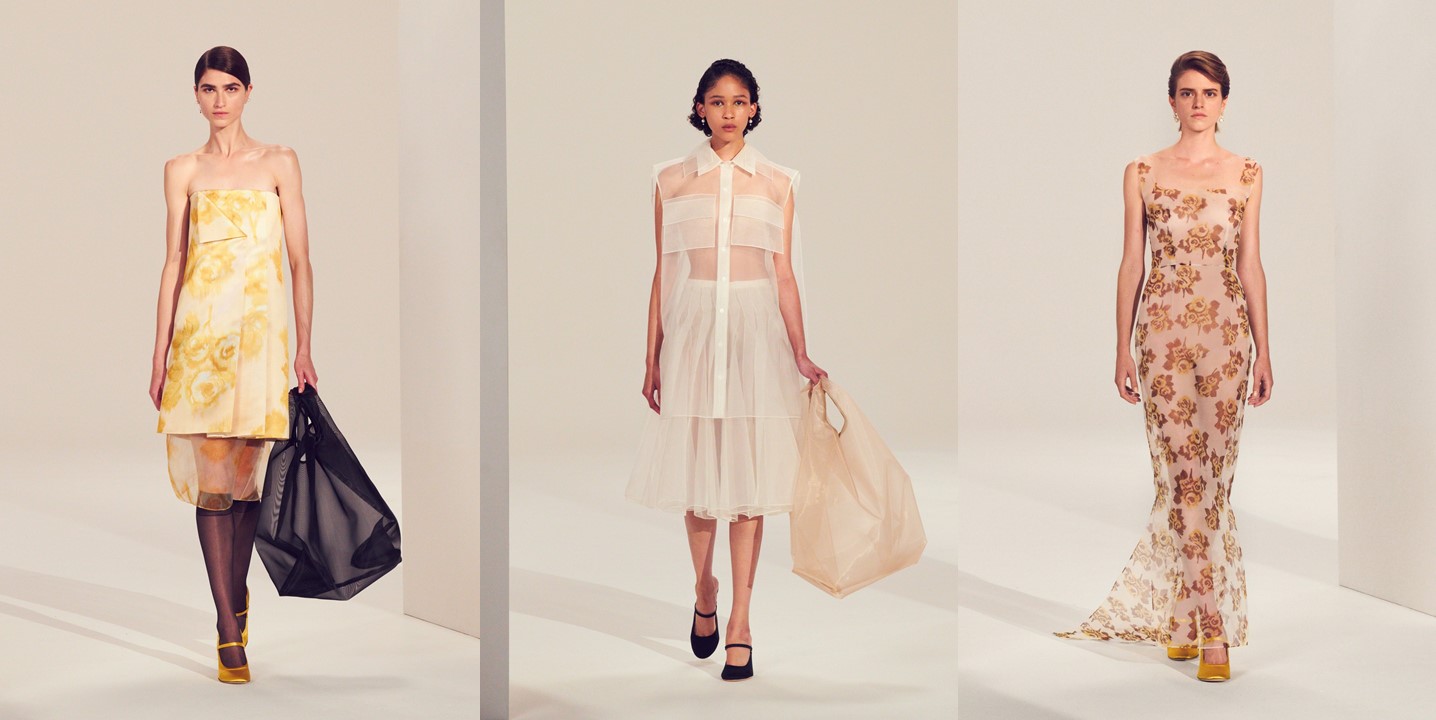
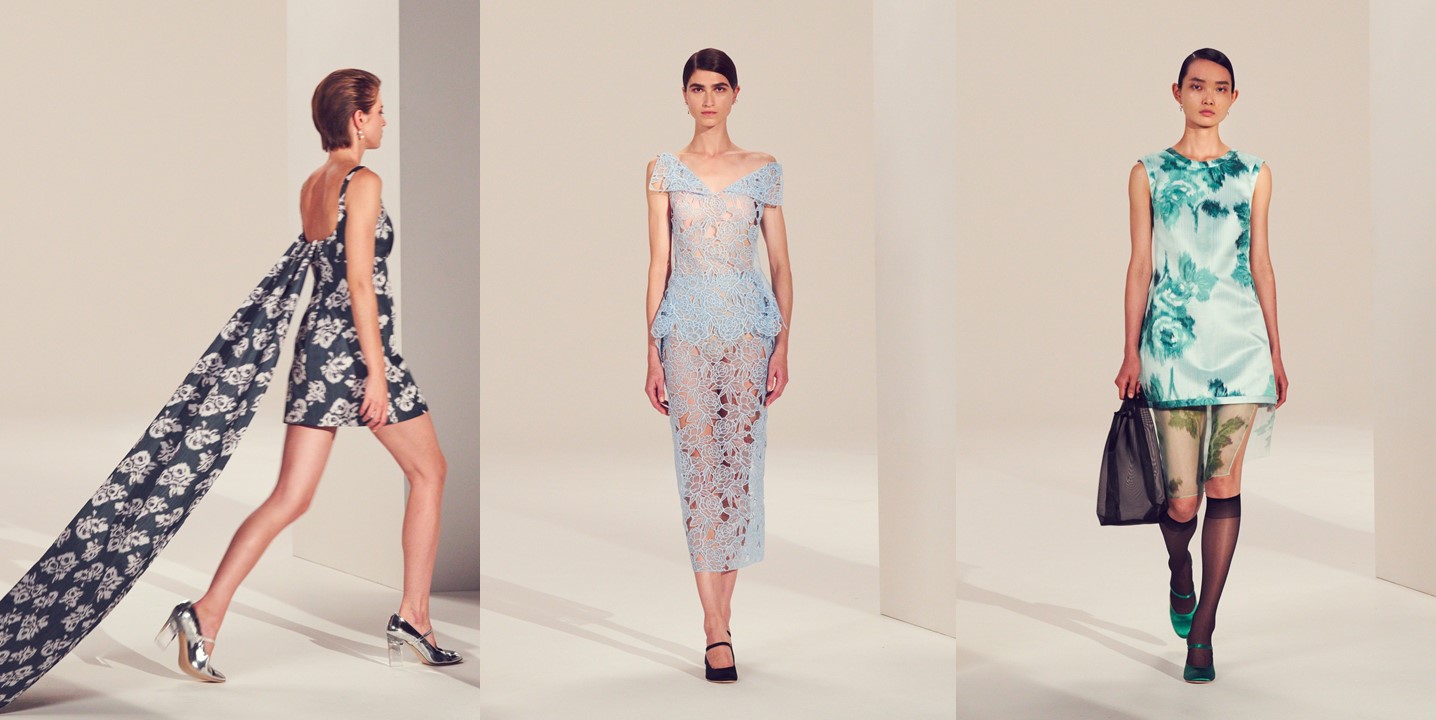
When Emilia Wickstead began researching ideas on uniforms and the work of visual artist Man Ray, it didn’t take long to join the dots to the spirit and style of Lee Miller, a regular reference point on Wickstead’s mood boards. “She’s the consummate polymath: artist, muse, model, surrealist, journalist, Vogue photographer, and the first female war correspondent,” said Wickstead. As the London-based designer explained, this collection touched on the many facets of Miller’s career but at the forefront of it all was her determined independence and freedom to move across those different worlds. At its most obvious, the idea of uniform was evident in oversized shirting with neat boyish collars and utilitarian flap pockets, rendered glamorously in sheerest organza, and beige wide-leg trousers in silk satin, not workaday cotton. Miller’s sensuality and her love affair with Man Ray were explored via off-the-shoulder shapes, a glimpse of underpinnings, and a feeling of unraveling – of fabrics peeling away. One of the most interesting references was how Wickstead approached Miller’s pioneering photography techniques. Miller and Ray discovered solarization, a process that gives photographs a ghostly, glowing, and surreal quality. Wickstead took this as a way to experiment with prints. Her painterly florals on silk were blurred and became further distorted overlaid with printed organza; the effect, she noted, was as softly focused as a Vaseline-smeared lens. Pleats were also warped – either stitched back or falling in rebellious folds rather than rigid, linear formations. This was a collection with all kinds of shapes and silhouettes, from rigorously fitted and immaculately tailored to easy and loose, from ultrashort to long and narrow gowns with trains. Others were full and floor skimming. Overall it was feminine and formal but with a spicy undercurrent of edge and modernity. It’s this clever and precise balance that ensures Wickstead’s clothes don’t veer too far one way or the other.

Collage by Edward Kanarecki.
Don’t forget to follow Design & Culture by Ed on Instagram!

NET-A-PORTER Limited