Essentialism. The Row SS23

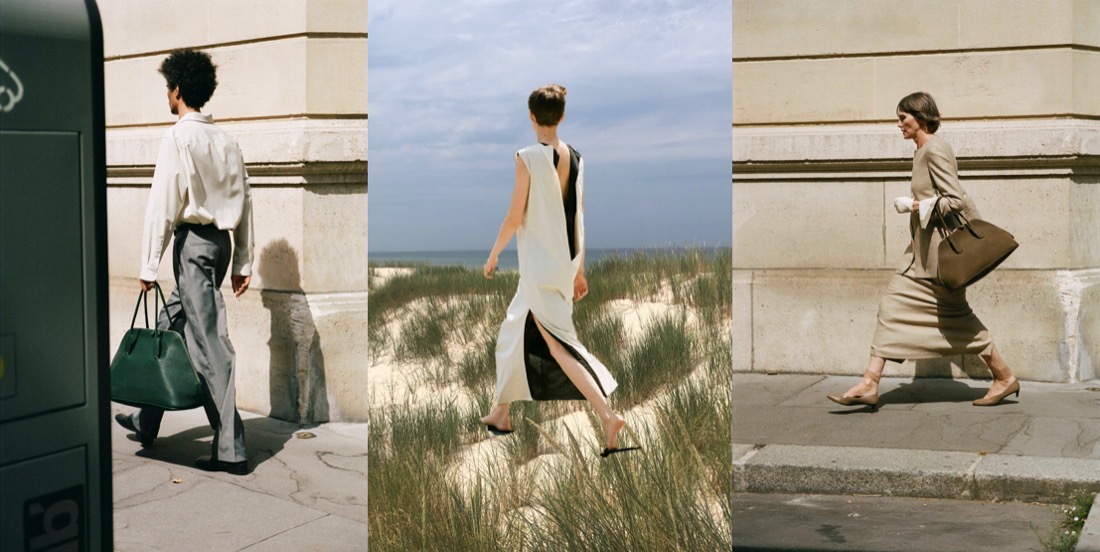
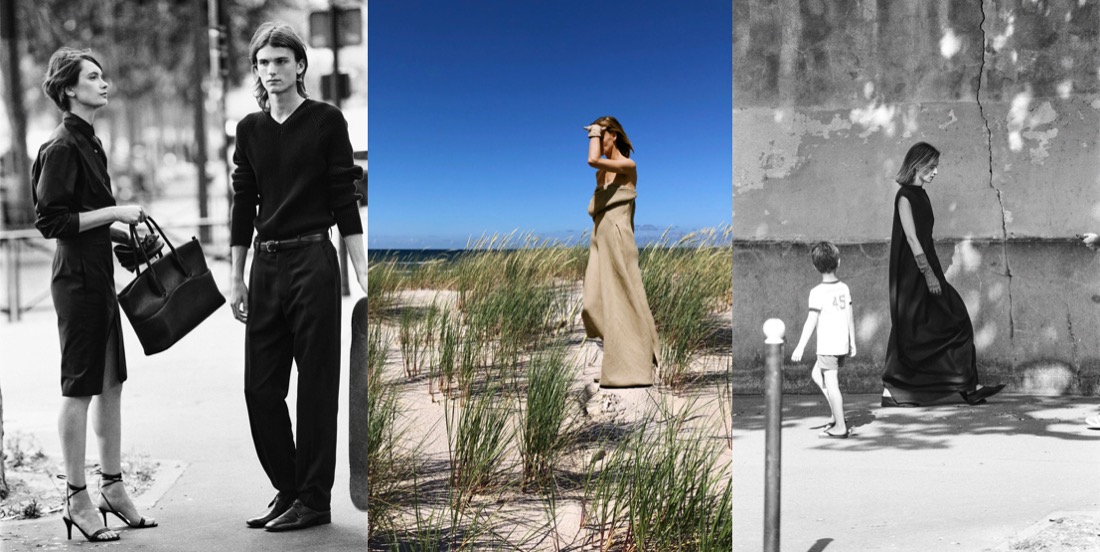
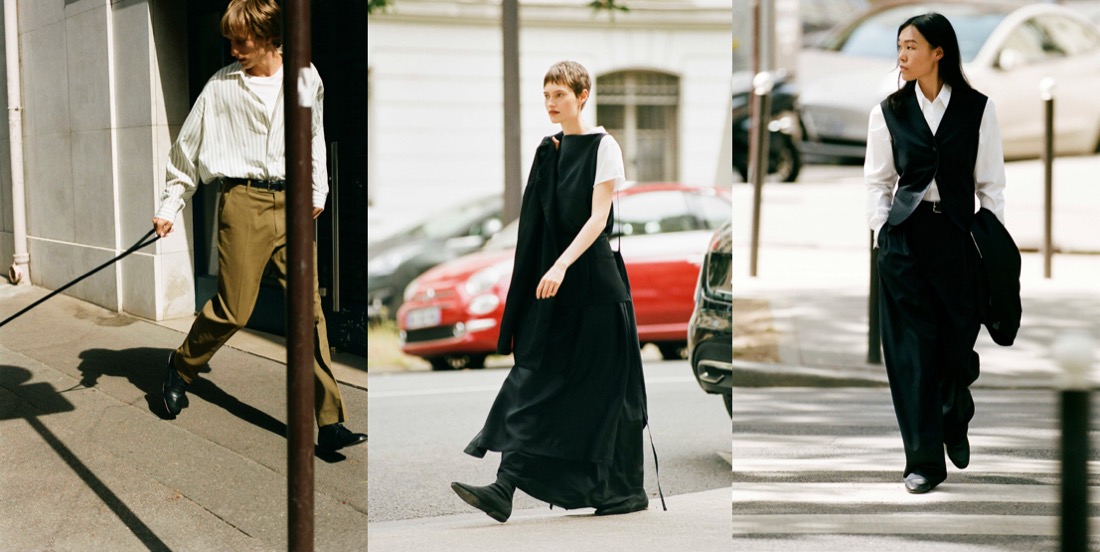
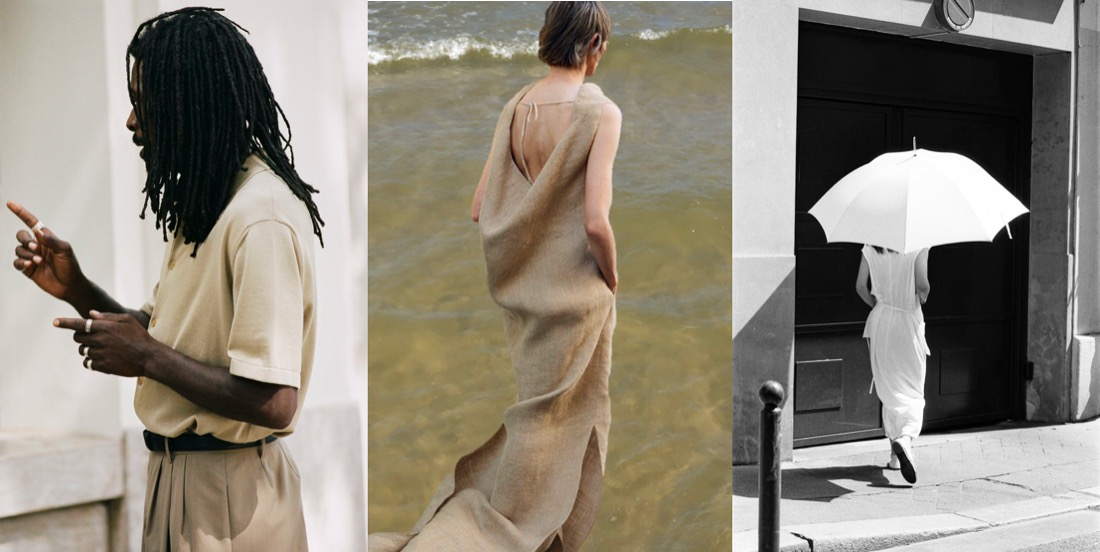
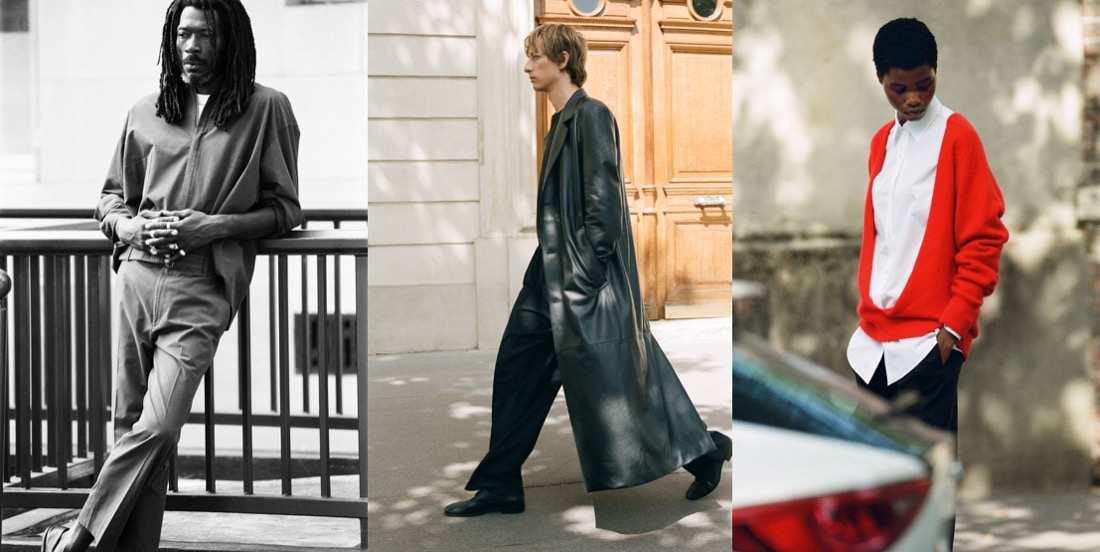
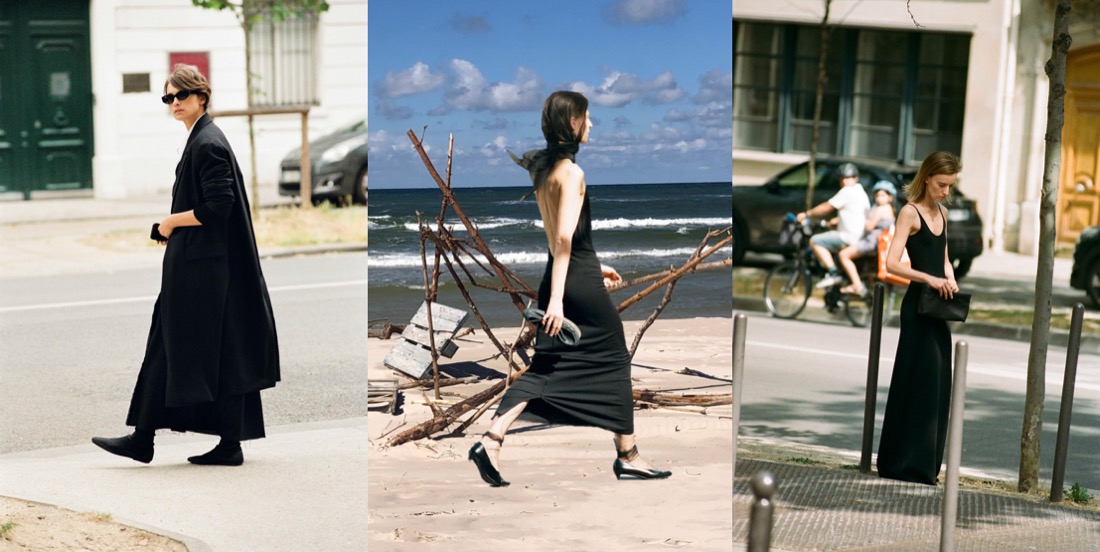
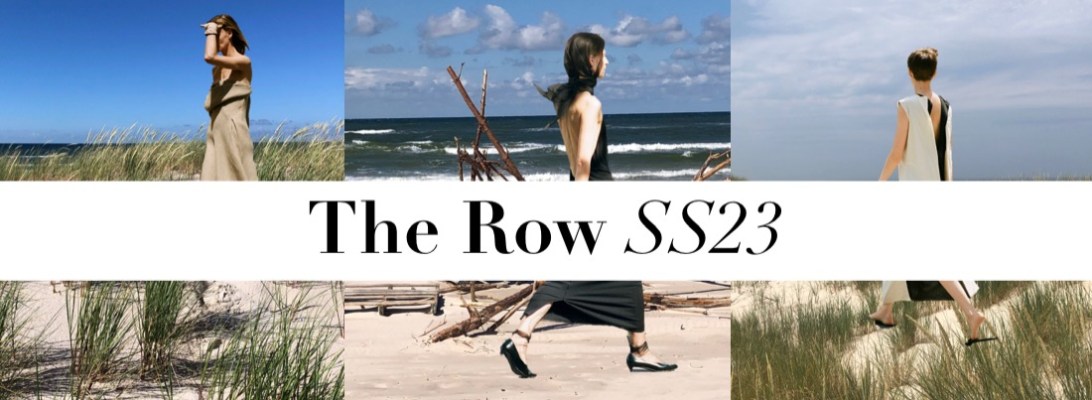
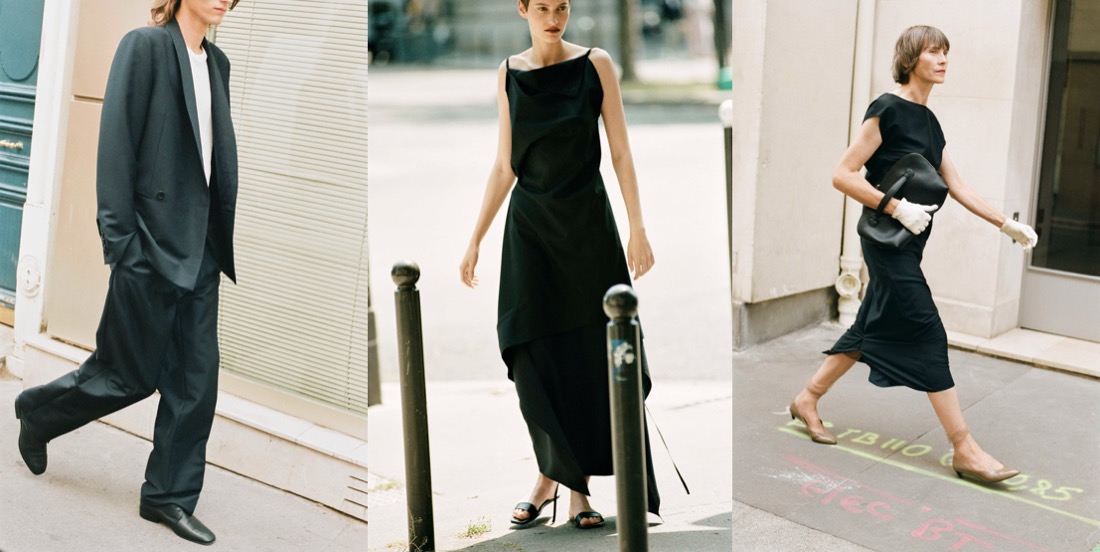
While we quickly forgot most of the valuable lessons we told ourselves the pandemic had taught us, it does seem to have affected one aspect of our lives: our approach to clothes shopping. Somehow our choices now feel less fussy, less complicated, more essential. Granted, essentialism has always coursed through the veins of The Row. This season, Ashley and Mary-Kate Olsen took it to sublime heights. Shot in the streets of Paris and presented in the Galerie Seguin, their spring-summer 2023 collection portrayed the daily lives of their customers and the way we adapt to changing scenarios throughout the day. Whether it’s different levels of formality – office hours, lunch dates, evening events – or the inside-vs.-outside temperature differences we all increasingly have to deal with in a climate change reality, the clothes we actually wear now have to imbued with certain functions and assets to actually work in our everyday lives. That fact informed a collection of more-than-meets-the-eye garments founded in considered fabric choices and functional design. Putting lightness at the forefront, the Olsens structured suits and dresses in luxurious, breathable linens, while linen trench coats came with fabric coatings that made them feel outerwear-y without defeating the purpose. A number of pieces were instilled with day-to-night folding techniques, allowing the wearer to transform their level of formality. The train of a jute dress, for instance, could be folded into the dress itself and buttoned or let out for the full dramatic effect, the hoods of coats were detachable, and the sleeves of a black dress could be unhooked by way of tiny closures. As an ironic nod to the wardrobe issues we all deal with in the heat, a leather skirt was adorned with creases as a form of texture.

The idea of essentialism also informed the Olsens’ level of details and decoration, or rather lack thereof. Everything was made as minimal as possible but without compromising the sense of drama that made this collection a fashion proposition. They cut away necklines to create plunge shapes, disguised hems and pockets, and removed zips and buttons. In menswear, they gave super-light unlined suiting the structure you usually only get from lining through the kind of fabrication that makes The Row worth its price tag, and proposed the kind of luxe oversized shirts and loose-fitting knits that made you want to invest in a new wardrobe for a changed climate. Heavenly…
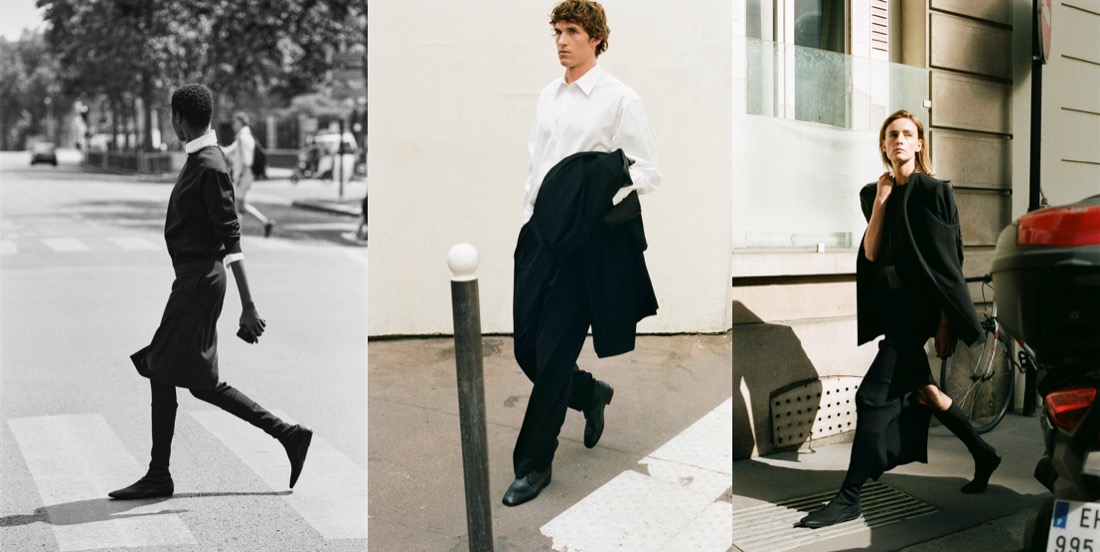
Collage by Edward Kanarecki.

NET-A-PORTER Limited

We Have Art Not To Die Of The Truth. Marc Jacobs AW22

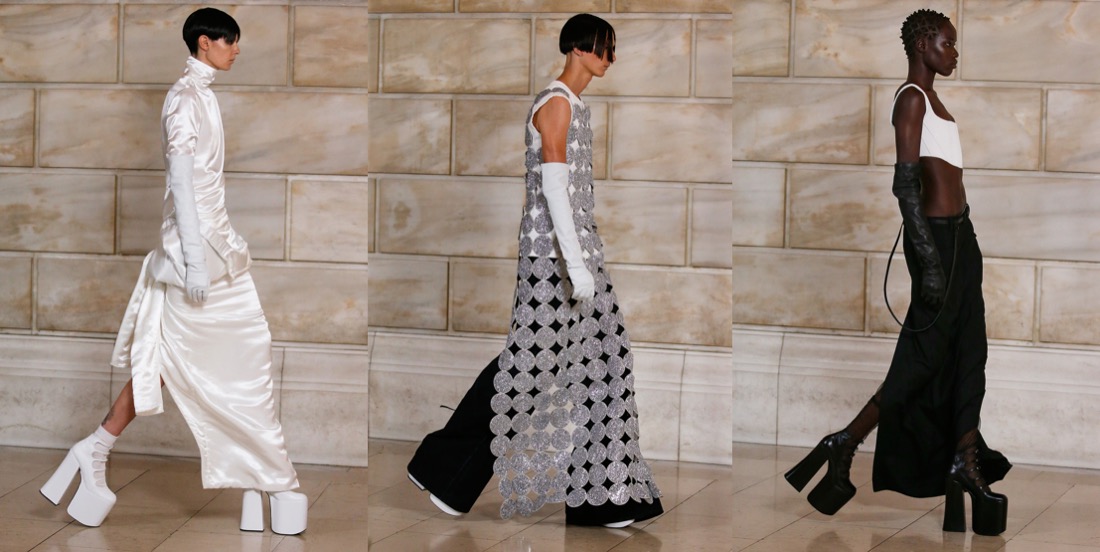
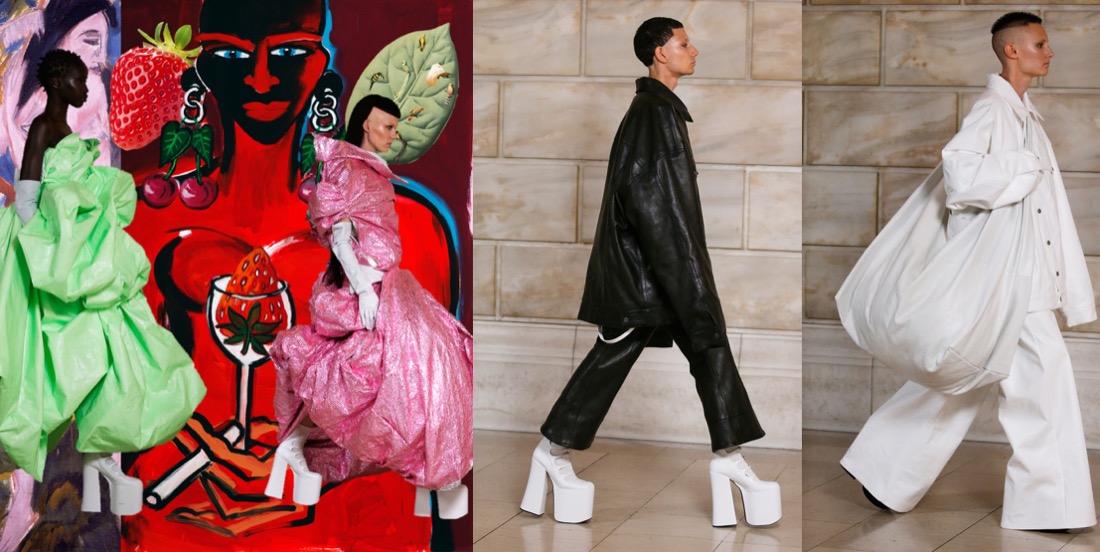
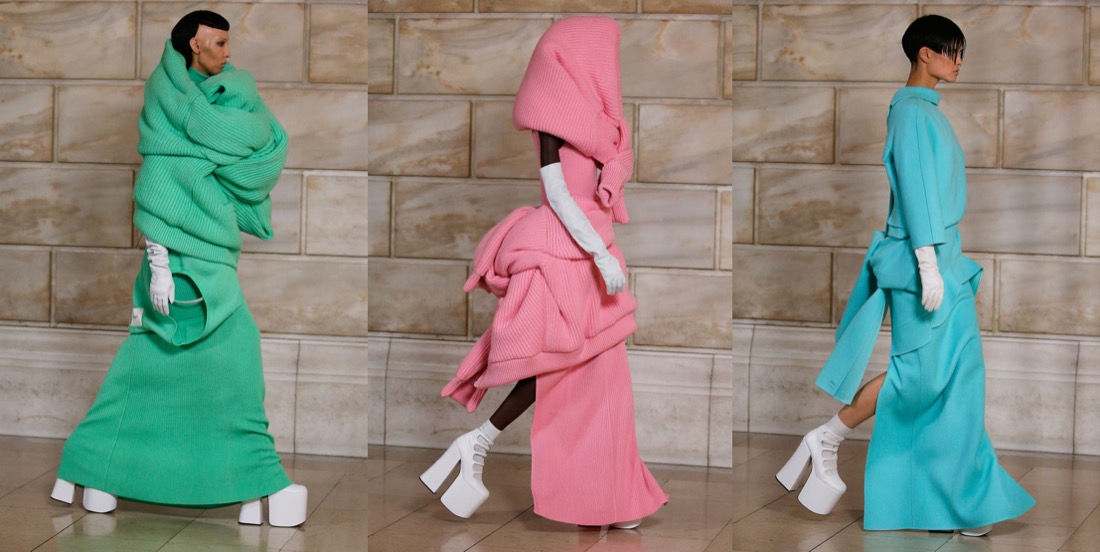
We have art not to die of the truth.Marc Jacobs quoted Friedrich Nietzsche in his show notes. Confronted with a rogue Supreme Court determined to strip women of their reproductive rights, with Clarence Thomas threatening to attack gay marriage next and even to make contraception illegal, fury may give way to despair. But that’s not where Jacobs is at. “Creativity is essential to living,” his statement read. A year ago, most of us were looking ahead to a brighter 2022. Last June, Jacobs channeled that energy into a dynamic collection. That brighter future hasn’t really materialized, as we’re all too aware. Covid keeps coming back in successive waves, Russia continues its atrocious invasion in Ukraine, and in America the will of the majority has been hijacked by the minority. Nevertheless, Jacobs persists. Supersizing jeans and jean jackets, or treating denim to surface treatments that made the all-American classic look more like French couture. Adding so much stuffing to ribbed knit sweaters they could double as pillows. Toying with Gilded Age bustles – evoking them by wrapping jackets around the waist. And cutting ball gowns of exuberant volume in unexpected, even strange fabrics. His materials list included, but wasn’t limited to, foil, glass, paper, plaster, plastic, rubber, and vinyl. Interspersed with that excess, however, there was spareness. Jacobs lowered the waistlines of column skirts and cropped flares to bumster levels and accessorized them with barely-there bejeweled bikinis or the sparest of bustier tops. A pair of suited looks in black weren’t quite minimal, but they came close, a reminder of his talents as a tailor. As for the three matching looks at the beginning of the show in gray, hospital green, and lavender – were they Jacobs’s version of scrubs? Given the recent moves by the Supreme Court, it was hard to think otherwise. Adding to the dystopian vibe: the models’ hairdos, which were “shaved” on the sides with bumper bangs in a style that called to mind Sean Young’s Blade Runner replicant. And yet. All this was paraded out in the Public Library with opera gloves and sky-high white or black mary jane platforms. Dressed up in spite of the circumstances. Or maybe because of them? Definitely because of them. Marc Jacobs is a fighter, whose medium happens to be fashion. Knock-out F-A-S-H-I-O-N.

NET-A-PORTER Limited

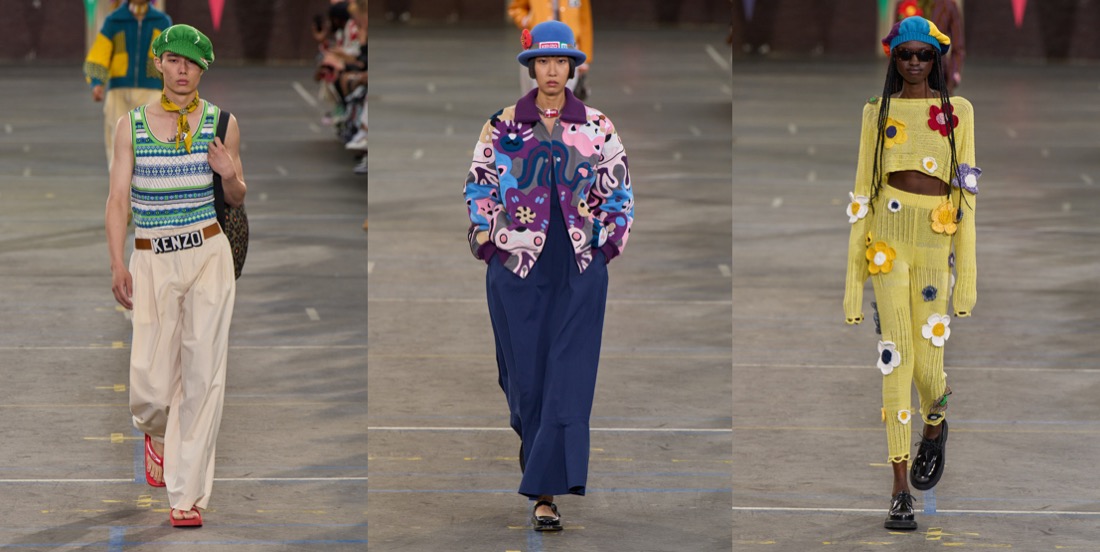
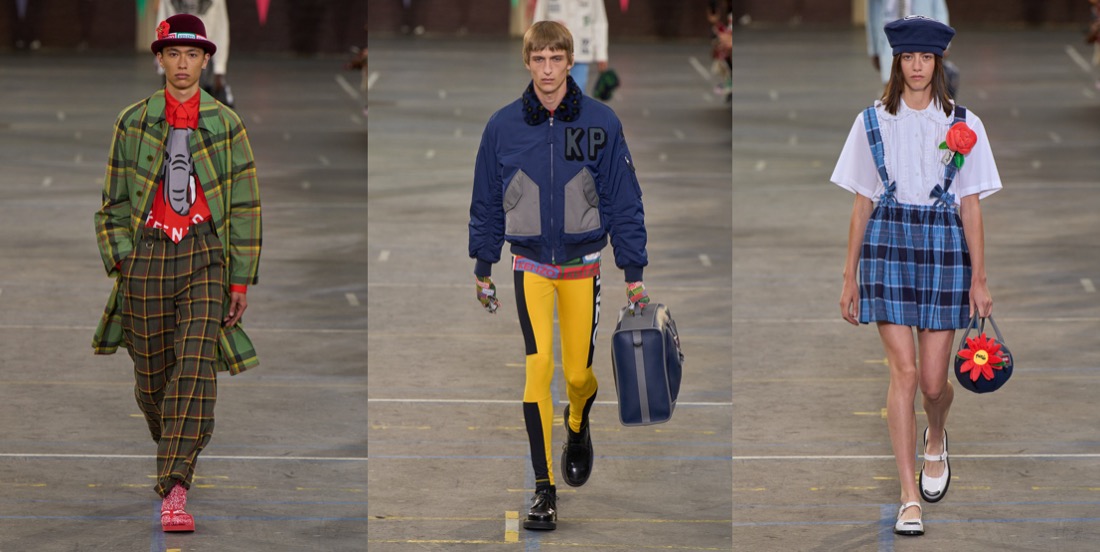
Graduation. Kenzo SS23

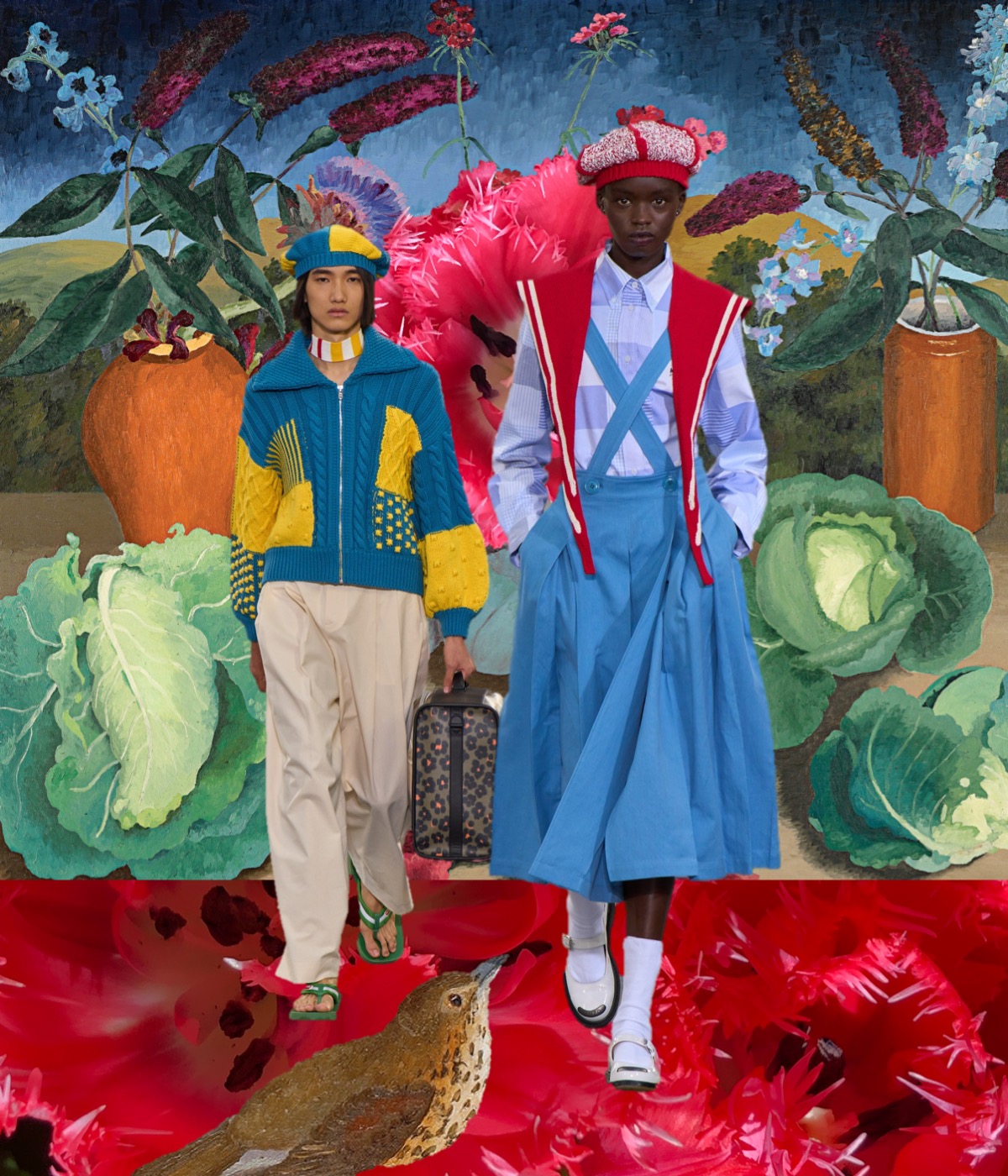
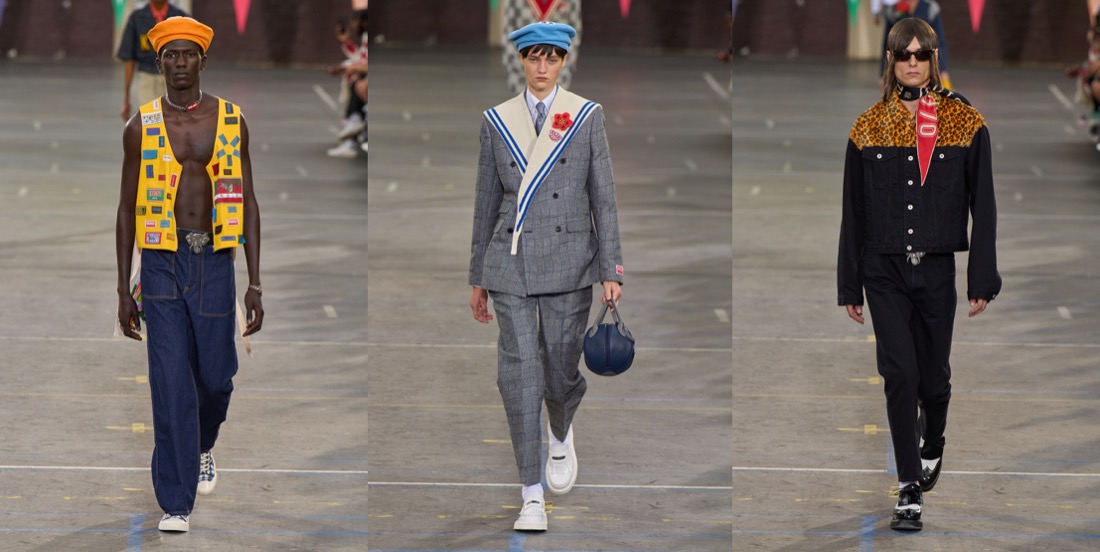
This sophomore collection by Nigo for Kenzo marked a double graduation. The first was that Nigo is increasingly finding the levels and detail of denim (now all sourced from Japan) and workwear production here much more aligned with his expectations as a connoisseur, thanks to evolution within Kenzo. Secondly, a graduation is what this show was staged to remind us of. Nigo said he’d used the concept of a passing out ceremony – inspired by a 1980s show by Kenzo Takada based on a sports day – in order to present an otherwise diverse group of dressed characters under the same banner: this was Kenzo’s class of ’23. Nigo is still understandably steeping himself in the archive of the house’s founder. Waistcoats came patched with an array of long-defunct labels that were reproductions of original Takada-era graphic designs. Similarly the patched naif animalia pieces were based on an archive design. And the womenswear especially – with the notable exception of a wabash and hickory striped denim liner dress in look 19, and look 16’s fabulous unwashed swing skirt – seemed deeply rooted in Takada’s oeuvre. Although this was a continuation of last season’s collection, a new interjection was the armada of naval inspired pieces. As well as literal-ish sailor wear, the maritime scarf was ingeniously integrated into the house’s revived tailoring as jacket lapels. The maritime aesthetic is deeply embedded in contemporary Japanese dress – just look at the school uniforms – but it also served as an interesting point of connection in a collection that was produced by a French house, conceived by a Japanese designer, and which took fundamental points of inspiration from Americana: conceptually, these were much-traveled clothes. This was a collection with pan-generational appeal that spanned continents and cultures: word is that the sales are already reflecting the new wind Nigo has brought to Kenzo.

Collage by Edward Kanarecki.

NET-A-PORTER Limited

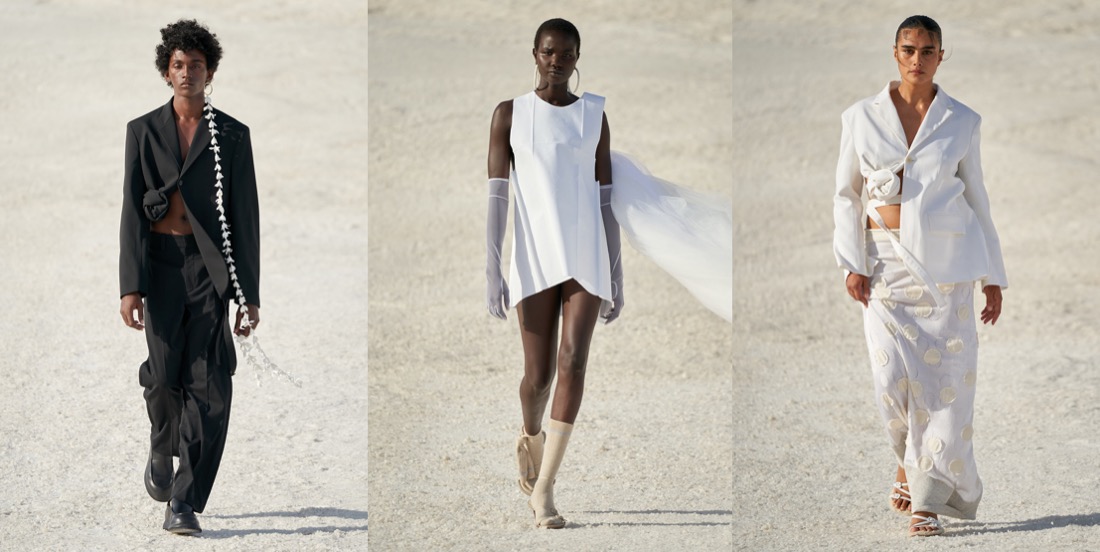
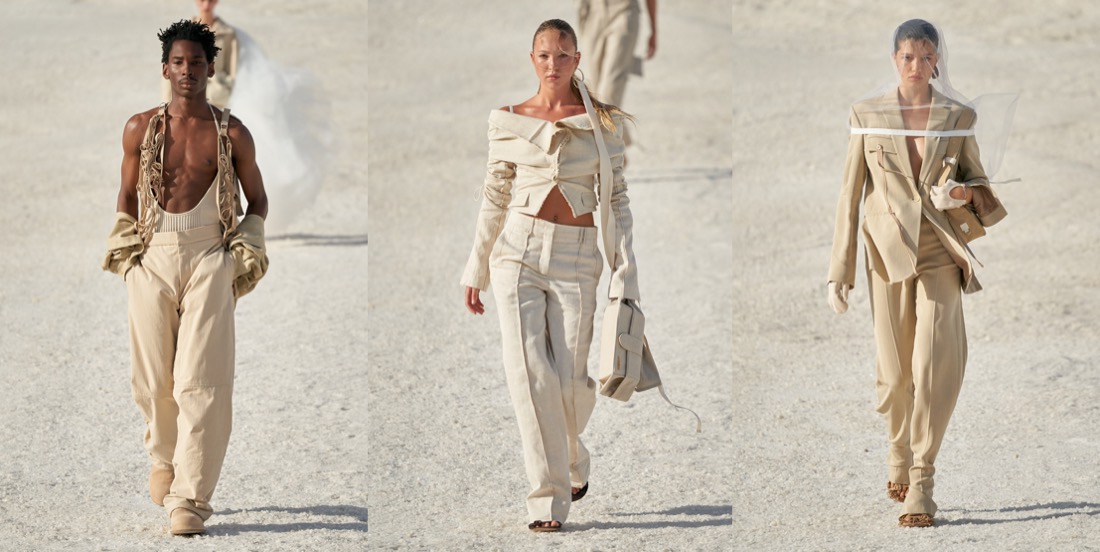
Le Papier. Jacquemus AW22

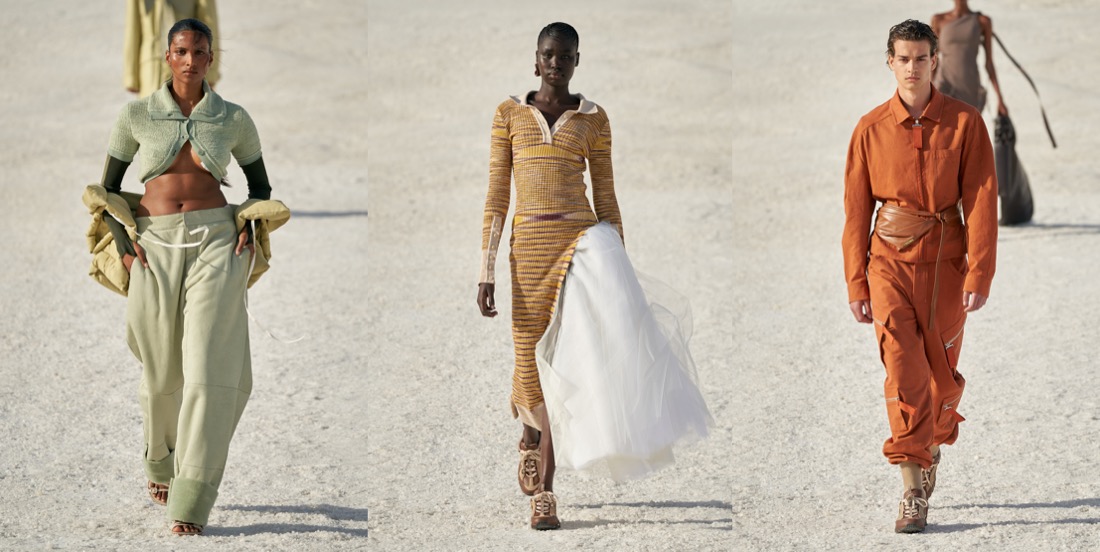
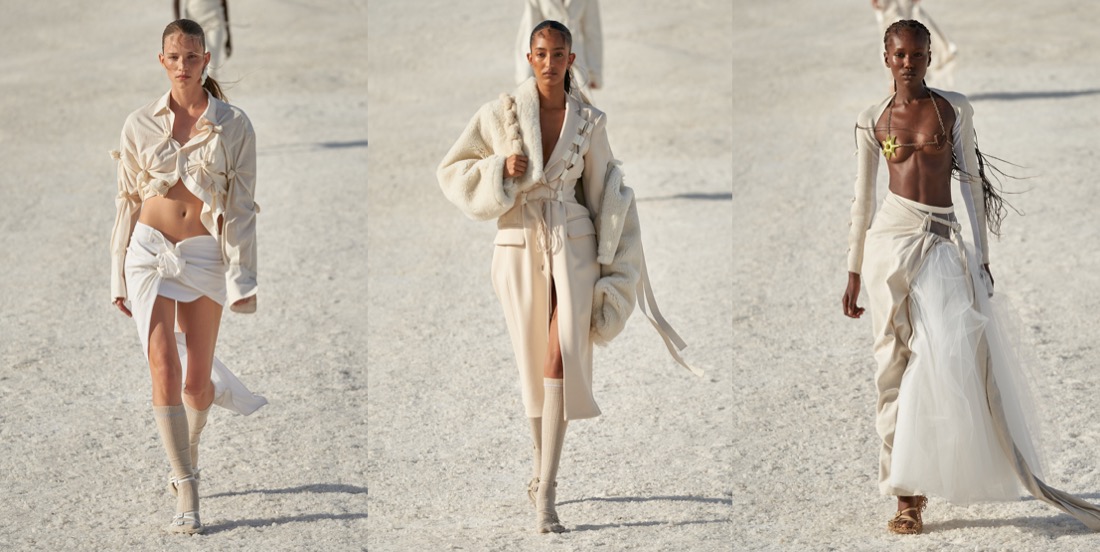
After a show in Hawai’i with mostly local guests, Simon Porte Jacquemus landed in the salt mountains of the Camargue park in the South of France for his beautiful autumn-winter 2022 collection. The guestlist in France was far longer than the one for his Pacific trip, with trainfuls of international buyers, press, stylists, and models arriving through the Avignon station hours before the show. After car rides and bus rides they arrived at the otherworldly location at dusk, the Rhone and the sea crashing into the harsh terrain. Several remarked that it looked like being on the moon: clear water, icy salt, lilac sky. Between the mountains of salt, Jacquemus had carved out a runway that wound down a hillside. His models descended from the top of the mount, their trains whipping in the wind, their tulle veils blowing up into clouds, looking like chic extras in Dune. Once the looks were on eye-level the reality became clearer. Working with a brute hand and humble-yet-lovely materials, Jacquemus was repositioning his brand and his look away from the Pop vibes of recent years and towards something more finessed. “I started working on the collection with the obsession to restart from nothing, like a white page,” he said. The first two things he filled his page with were ideas of comfort and couture; “every couture,” he elaborated, talking about fusing the security of a blanket or pillow with the easy drama of a pleated ball skirt or cocoon jacket. His impending nuptials, set to take place in the South in two months, also influenced the scene: the show began with two models hugging and dancing. At 61 looks, that white page of ideas filled up quickly. Shearling coats, puffer vests, and cargo pants are what Jacquemus does best for men, and here he had loosened up the shapes for a more serene spirit, adding his new Humara sneaker in collaboration with Nike. For women, his simplest ideas are best, like a white tulle midi dress with a piece of burlap-colored canvas tied around its front for a pure, maidenly look. Jacquemus’s body-baring pieces are a good counter to the Lycra cling-couture of other Parisian houses: the diaphanous white dress Mica Arganaraz wore is unimpeachably pretty. Luxe ball skirts over trousers and a little white tulle explosion coming out the side of a black tuxedo dress added a little swoosh to the Jacquemus strut. In many ways, the collection was a harkening back to where Jacquemus started. His crafty couture of the mid-2010s defined that moment’s irreverent, bourgeois arty look – think of his polka dots of autumn 2017 or his prairie girls of the previous spring, clothes that were cute, cheeky, and surprisingly elegant. Jacquemus’s new take relies a lot on drama, but of volumes and precarious straps and cinching that may not translate as easily into a real life away from the Space Age salt mountains. It won’t deter him. “I want to be the name of my generation,” he said post-show, implying that whatever big fashion jobs might be available, he is not in the running. “I want to work for Jacquemus – and Jacquemus is a big house.” He stopped playing by the fashion system’s rules, but the fashion industry still wants him.

Collage by Edward Kanarecki.

NET-A-PORTER Limited

State Of Soul. Marine Serre SS23

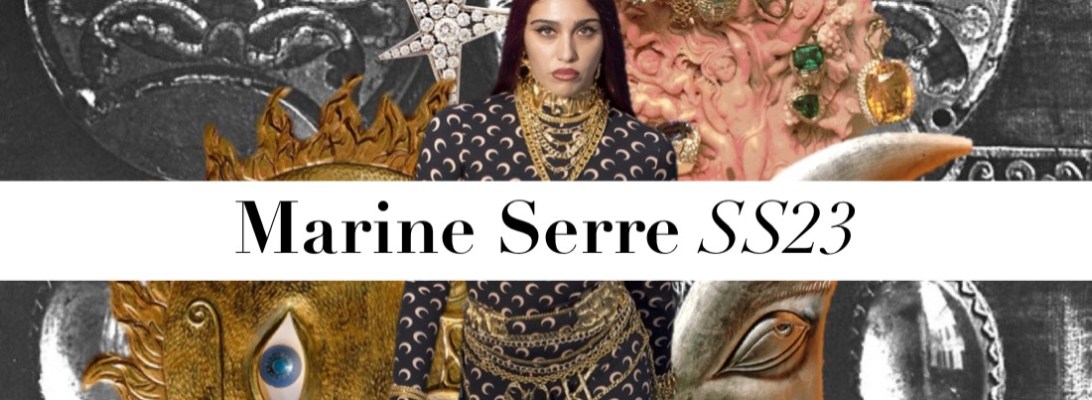
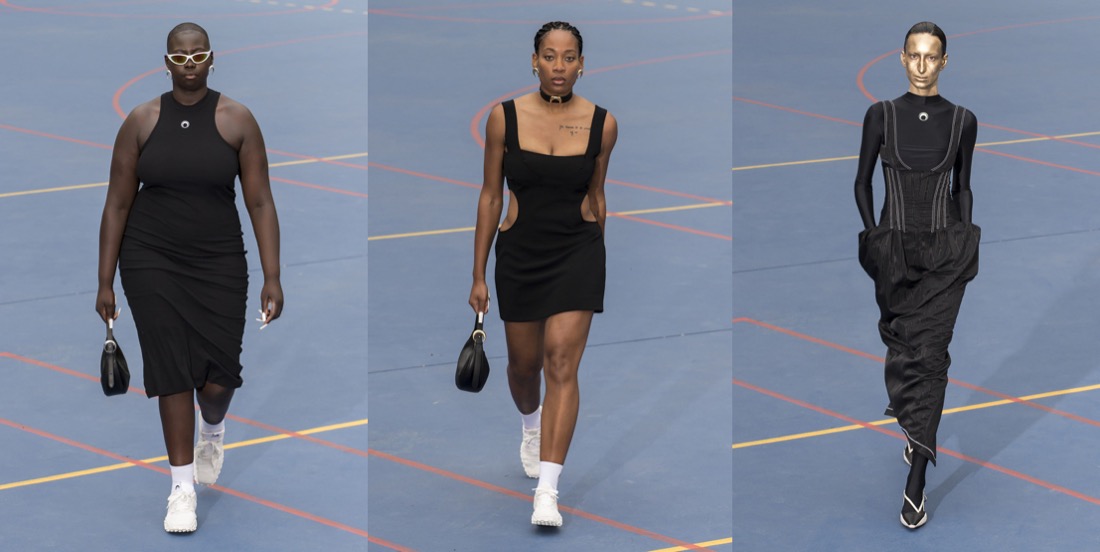
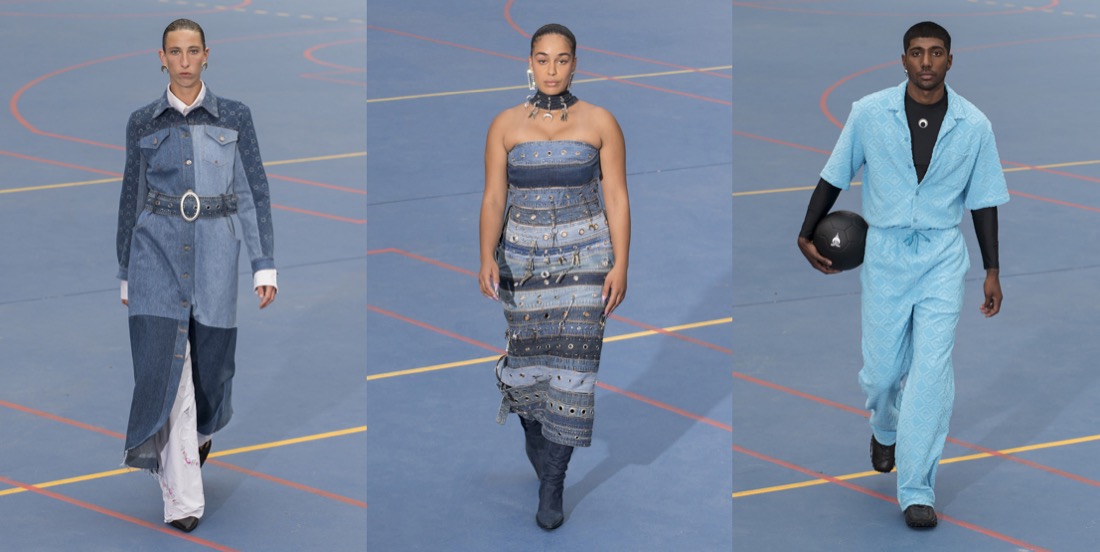
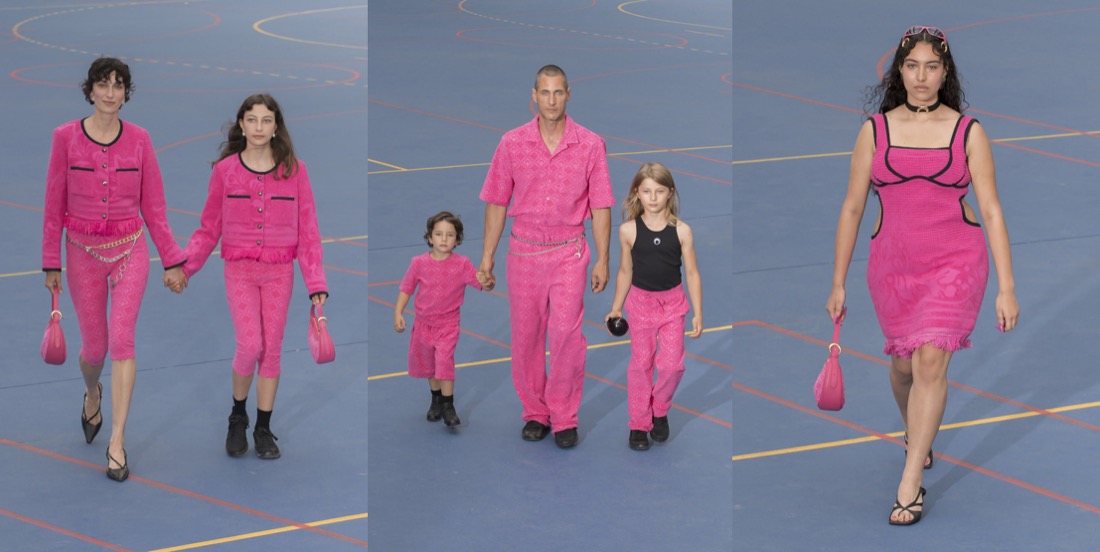
It’s about being present. Putting down your phone. Being with your friends and people you love. Seeing the sun go down and feeling the wind and having a party. Not just a 10-minute show. With all these people coming, I just wanted to give them a good time and to feel like a community – and honestly I think that was really here. So this is what State of Soul means.” This is how Marine Serre explained her show title and concept shortly after that show had ended. The sun was indeed setting, and hundreds of guests, almost a thousand in fact, who had scored public tickets for the show were streaming into a party area where dancing would continue long into the night. When fashion designers elect to hold late night shows on the edge of Paris it is often borne of a wearisome creative insecurity – they wish to make the audience suffer for their art in order to feel reassured they have clout. This was entirely different. Serre was trying to reshape the fashion show in sync with the values transmitted by her brand; inclusive, ethical, positive, human. The show acted as opening ceremony for this gathering of the Serre community, upcycling the concept from sporting jamborees like the Olympics. The models, both professional and amateur, included athletes, families, friends, and a smattering of celebrities including Jorja Smith and Lourdes Leon. The idea of this being in theory a menswear event seemed laughably irrelevant, merely the result of Serre’s canny decision to choose the balmiest fashion week of Paris’s calendar to try this experiment in. The models walked the 400 meter circuit around us in groups that reflected the phases of the collection. The swimwear, made from recycled fibers, had been on offer for a while, the designer said, but never before in a show. Patched denim looks featuring Serre’s crescent moon mark segued into a section of bodycon pieces crafted from shaved pink terry, which on a mother and daughter were worn against two Chanel-esque jackets. This made you wonder whether Serre had even knocked on the door of Paris’s couture fashion week, given the huge amount of handicraft here. That was perhaps most exemplified by the piped dresses made of upcycled towels in green and pink. The fit was so excellent that I wondered if the fabrics had been treated in some way to add stiffness. These were followed by patched dresses made from upcycled T-shirts and a series of witchily alluring silk looks, some featuring prints of the upcycled jewelry pieces that were also part of the collection. Shoes included Serre’s own sneakers and molded sole pumps. “I always try to break the boundary of what the system is wanting you to do. It was the same with the upcycling. Everyone was telling me it was not going to work. I said ‘OK, but let’s try.’ The thing is, if no-one is trying to change the rules then they will never change… In the industry we tend to forget that.

Collage by Edward Kanarecki.

NET-A-PORTER Limited