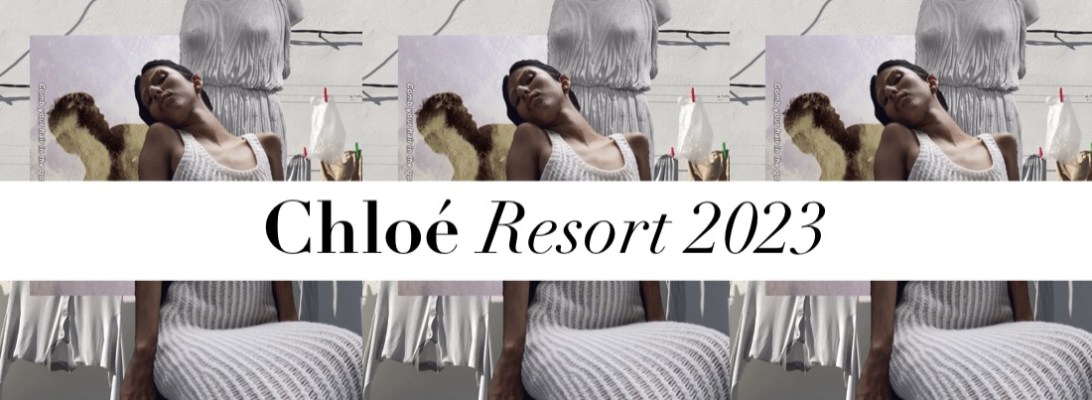
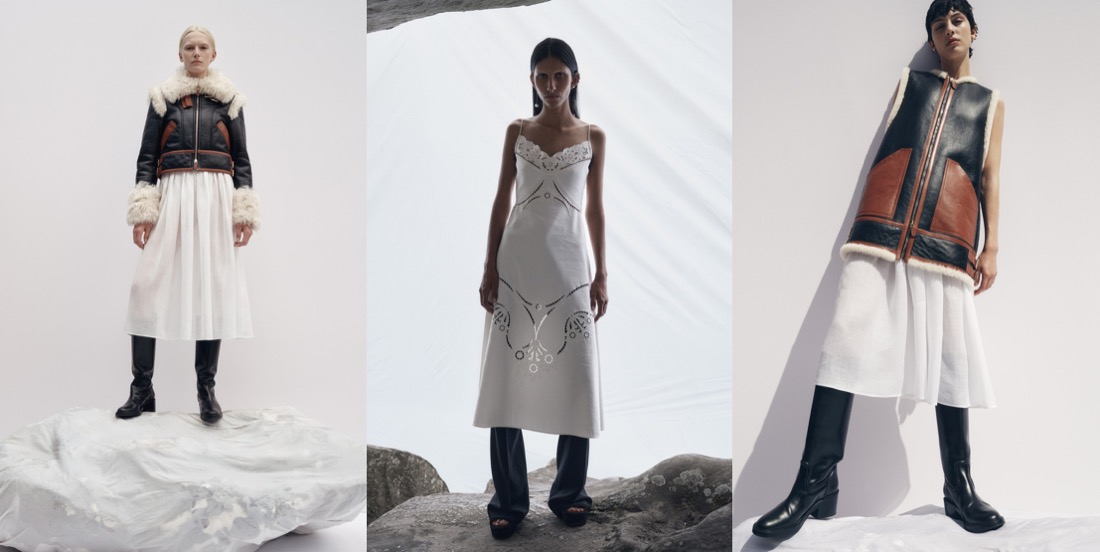
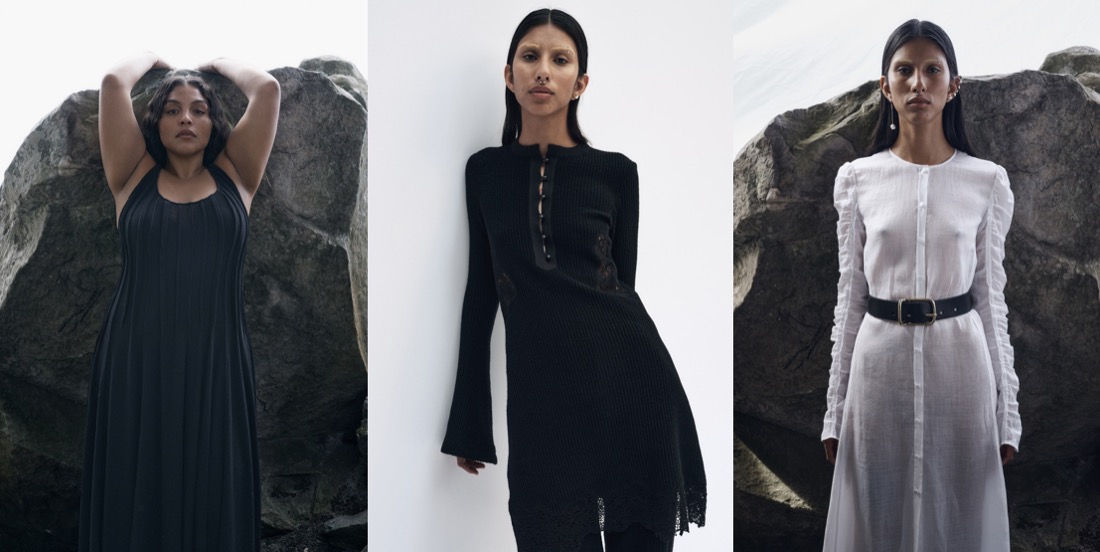
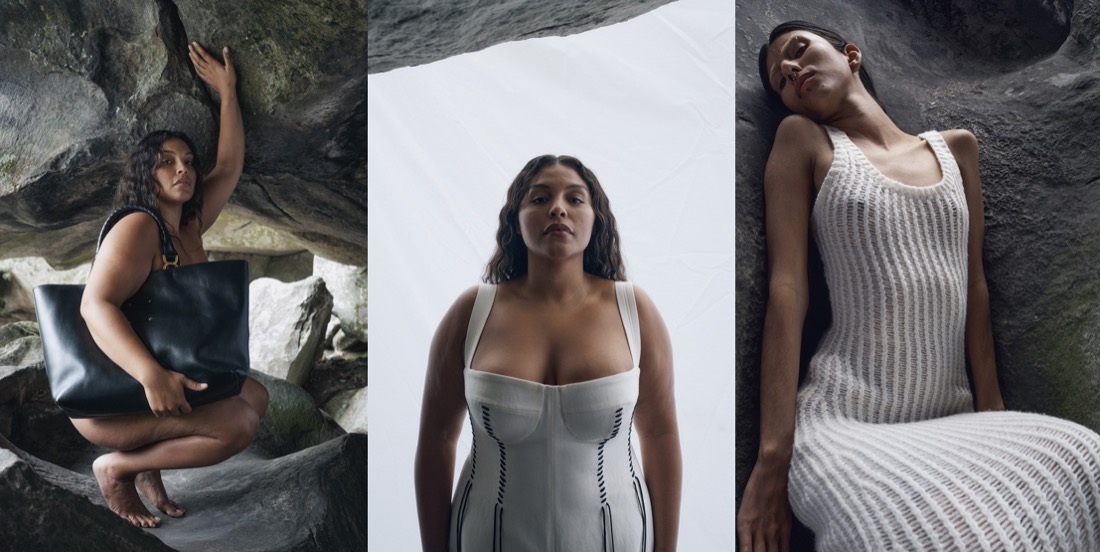
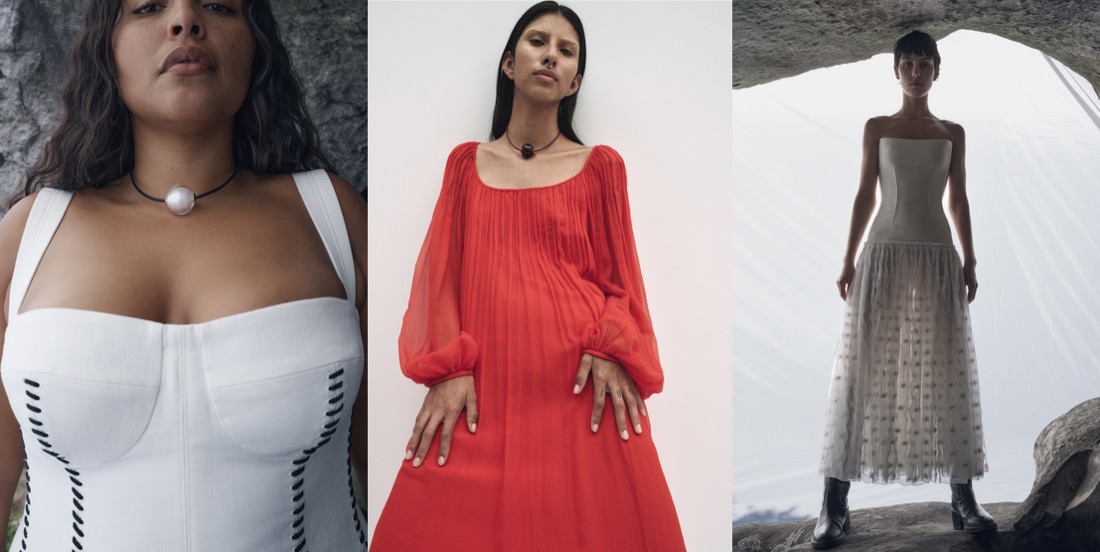
To create a responsible brand in the 2020s entails more than choosing sustainable materials and cutting down on manufacturing and shipping costs. As Gabriela Hearst, the creative director of Chloé sees it, building awareness into the marketing plan is part of the process. “The problems fashion has are the problems that all industries have,” she said. “The world’s energy supply is 85% from fossil fuels, and if we don’t eliminate that situation we’re really walking into suicide. All these alternate energy sources – wind power, solar panels – don’t have the capacity.” Fusion, Hearst explained, could make up the difference as we wean ourselves off of oil. “In a nutshell,” she said, “fusion is how stars are made. It’s the energy that moves the universe.” She promised “a much bigger experience of it,” at the Paris show in September. Here, the fusion lesson consisted of broderie anglaise and laser cut leather in the form of stars and a night sky palette of strictly black and white, save for a single red dress with a scoop neck and full poet sleeves. She credited Joel Cohen’s recent adaptation of The Tragedy of Macbeth for the corset shape of dresses accented with knotted leatherwork evocative of medieval chainmail, and leather jackets and vests patchwork paneled like armor. The novelties this season were twofold. First, she collaborated with Barbour, the British outerwear company renowned for its waxed jackets, on a trench ruffles details and on a poncho, a shape she has a soft spot for. The denim corset dress, duster coat, button-front vest, and a-line skirt are the results of a project Hearst dreamed up with the California jeans expert Adriano Goldschmeid. They’re composed of 87% recycled cotton and 13% hemp; that’s an earth-friendly equation. The only thing that Heart could work on – and that’s something she started last season – is her aesthetical direction for Chloé. Should this brand really be all about minimalism? Monastic and prim? There’s no need for another Jil Sander or The Row.
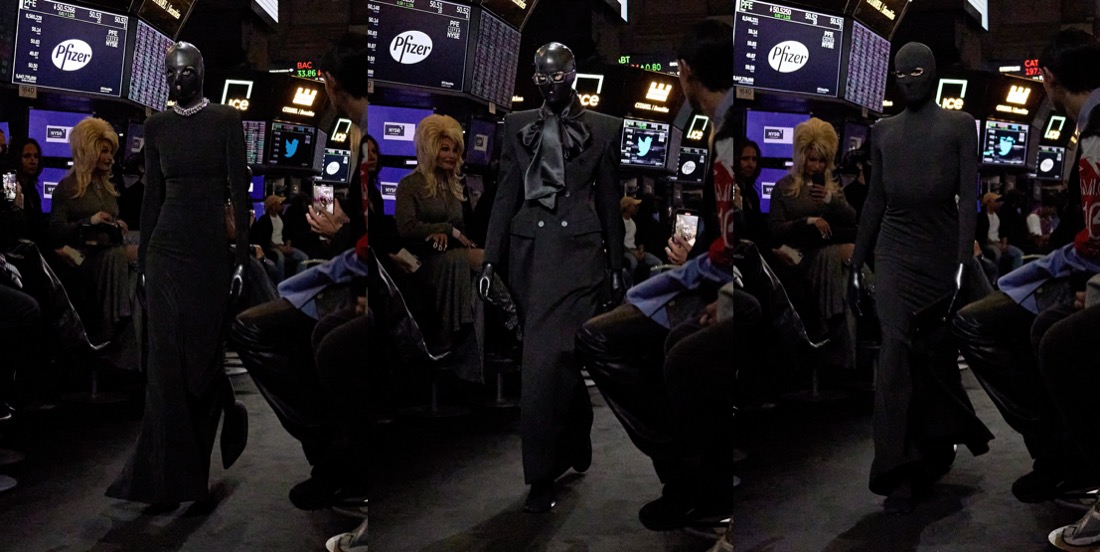
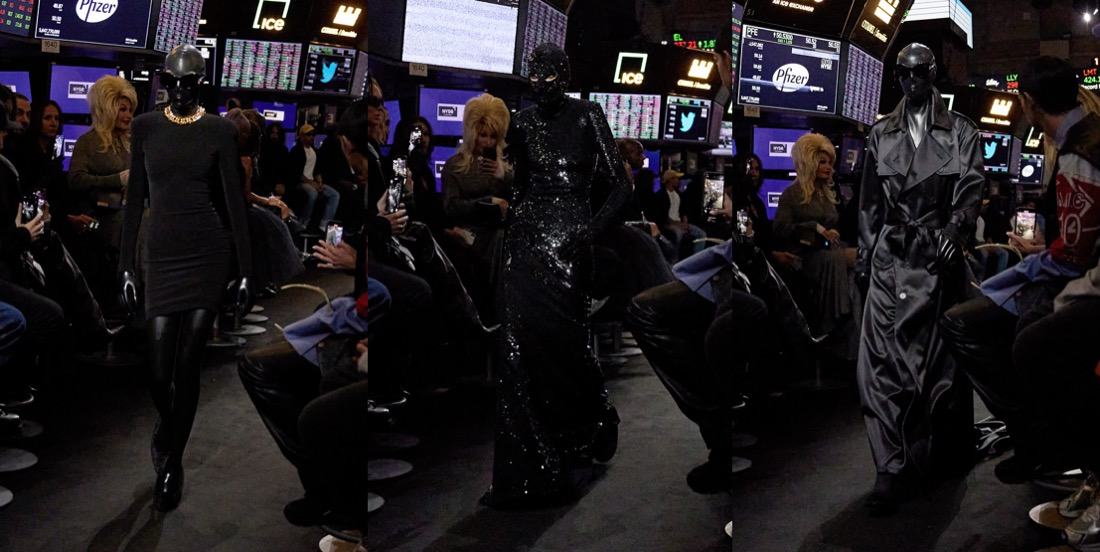
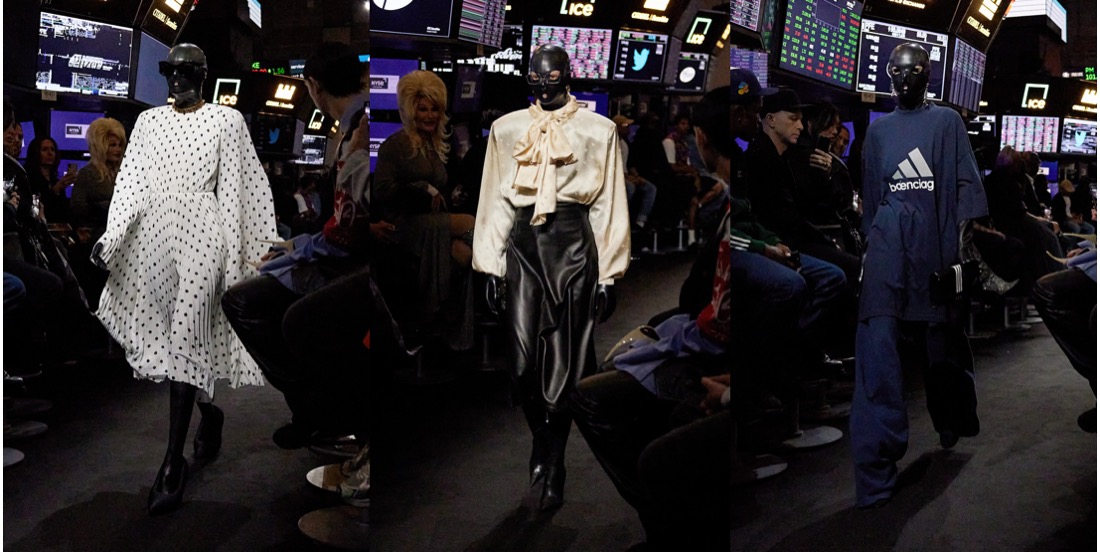
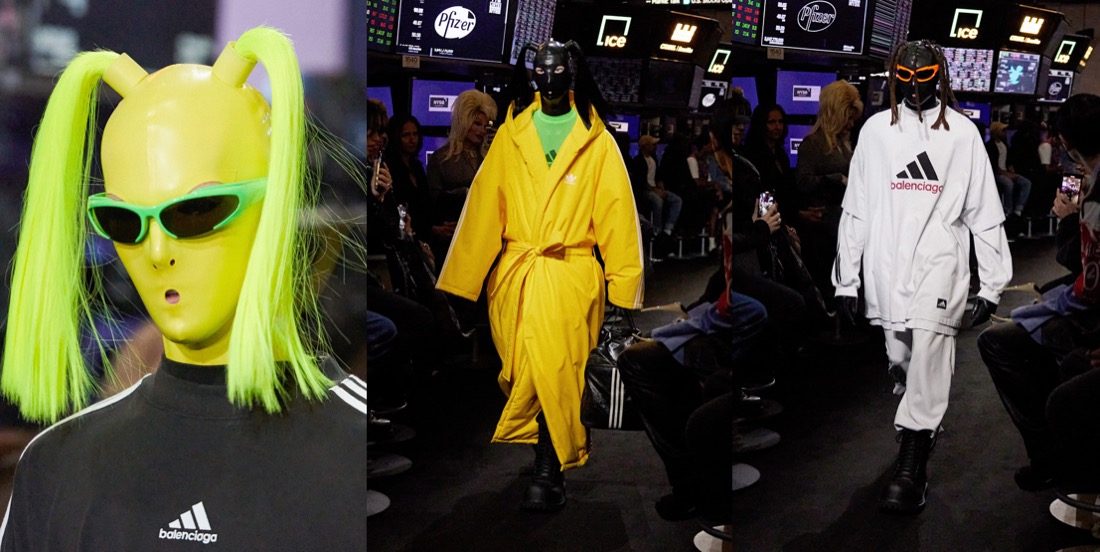
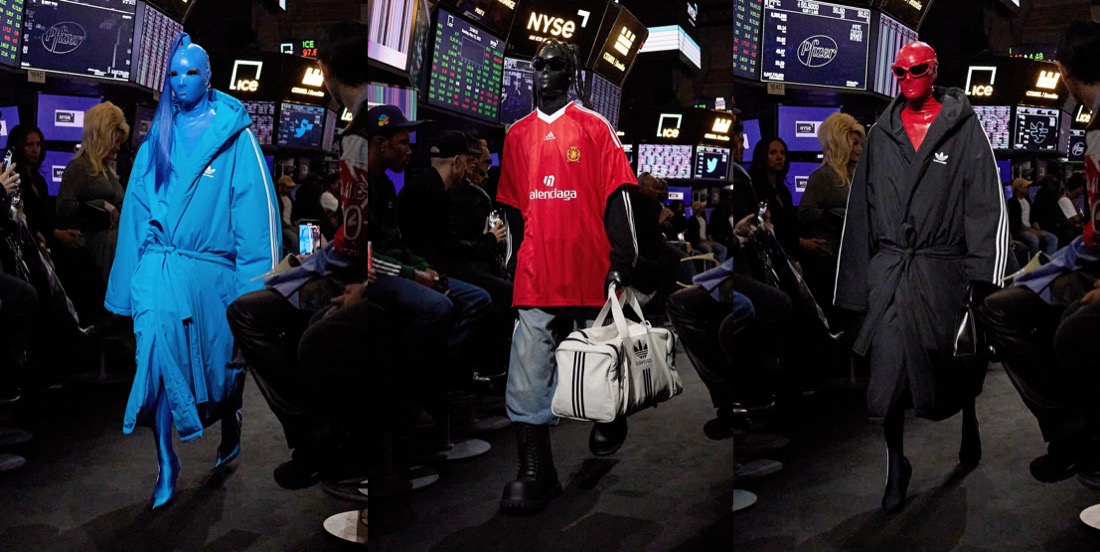
As the Lana Del Rey song goes, “Money is the reason we exist, Everybody knows it, it’s a fact (kiss, kiss)“. With a heavily ironic sense, that’s what Demna meant with his resort 2023 Balenciaga show, which was presented last week in New York. Not just anywhere – the show began with the ringing of the opening bell at the kingdom of capitalism, the New York Stock Exchange. The floor traders had been replaced by Pharrell Williams, Kanye West, Chloe Sevigny (and her husband Siniša Mačković), Megan Thee Stallion, Frank Ocean, and the city’s Mayor Eric Adams. The loaction couldn’t be more unsettling: Wall Street has taken quite a hit these past few weeks; headlines about a looming recession abound. But that suits the Balenciaga creative director just fine. Demna has never shied away from darkness or menace, and this show was no exception. Latex bodysuits fully obscured his models’ faces; they were corporate raiders of a different kind. “We have to trigger emotion,” he said backstage, wearing a face-obscuring mask of his own. “We live in a terrifying world, and I think fashion is a reflection of that… I think it was quite urgent, a quite urgent show.” The invitation was a fat stack of fake 100s. It’s a mistake, though, to consider the collection or its presentation as a critique of capitalism. “The most important kind of challenge for any kind of creative is to make a product that is desirable, to create desire. That’s what fashion should do,” Demna said.
To keep desire thrumming for its diverse audience, which is the point of these mid-season collections, the show was divided into three parts. It started with the introduction of a new “Garde-Robe,” or wardrobe, of what Demna described as “upscale classic garments.” The offering, he said, was inspired by the relaunch of the house’s couture collection last year, which was built on a foundation of tailoring. “I realized we were missing this segment of the classic wardrobe,” he explained. Classic here meant suits and overcoats, cut in the oversized, drop-shoulder shape Demna favors, and which have become hugely influential at all levels of fashion in the wake of that couture debut. Voluptuous silk jacquard pussybow blouses à la Melanie Griffith in Working Girl acted as accompaniments. The second element of the collection was eveningwear in the form of second-skin sequined gowns and silk trench dresses with trains whose supreme elegance wasn’t undercut by the pneumatic padded pumps they were worn with. In contrast, the super-sized lace-up boots that were paired with many of the show’s other looks and modeled by Ye in the front row were memeably outlandish in their proportions. Part three showcased Demna’s collaboration with Adidas. If he was trying to shake off the image of Balenciaga as a maker of high-class hoodies with Garde-Robe this section drove home the continued dominance of the sportswear category. There were tracksuits, scaled up t-shirts, boxer’s robes, and track dresses, all bearing adidas’s iconic stripes, a modified trefoil logo, or the Balenciaga name spelled in its partner’s lowercase typeface. Much of it was available to buy or pre-order on Balenciaga.com directly after the show. Set against the background of a glitchy stock market and an imminent system crash, this Balenciaga show was confident, versatile, and dangerous. But also how simple, yet so genius. That’s Demna all over.
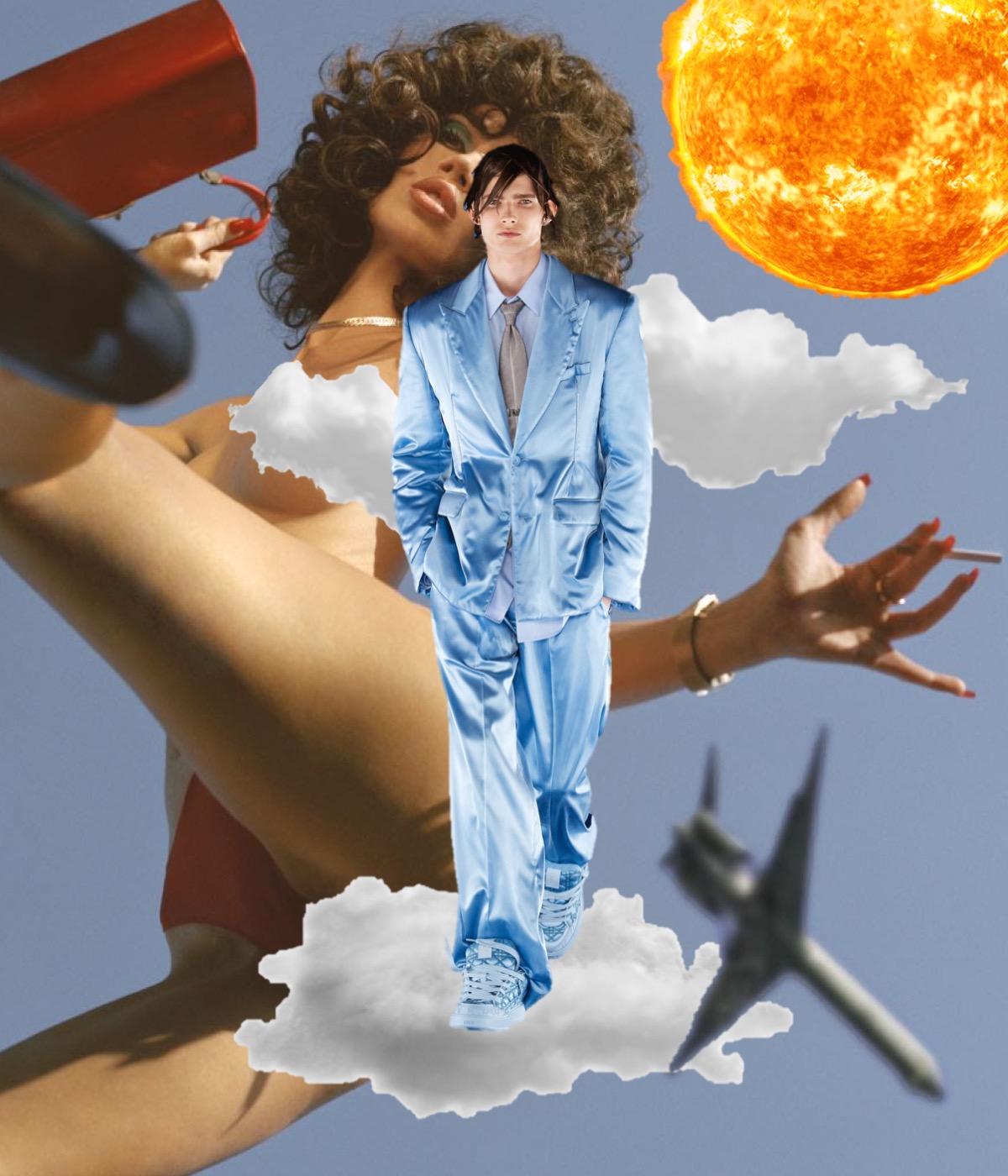
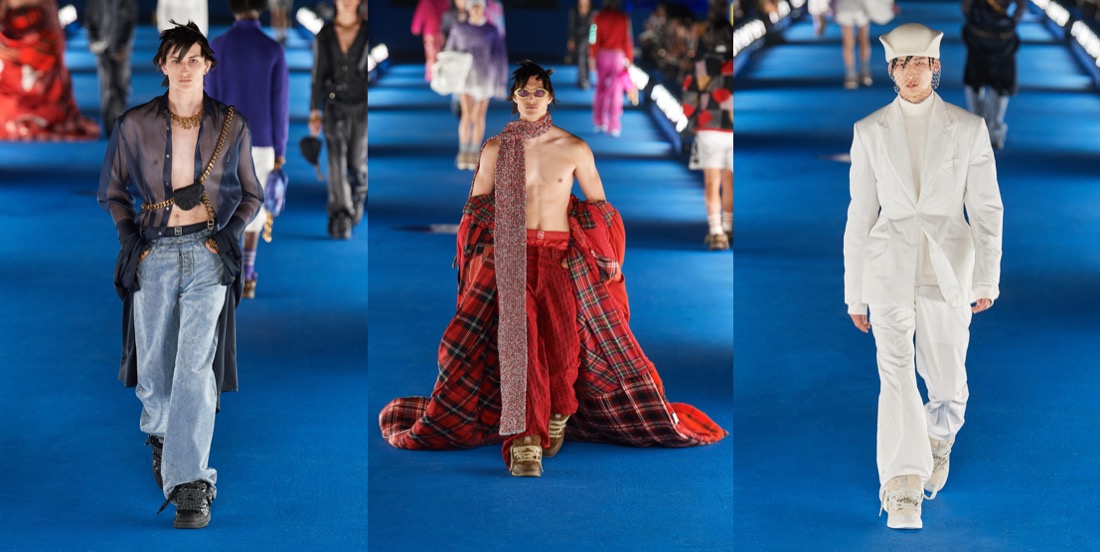
You could see the crest of a 30-foot blue nylon wave from several blocks away on Pacific Avenue in Venice Beach, part of the impressive ocean-themed runway set design that was constructed for Dior Men’s show last night. With Californian designer Eli Russell Linnetz of ERL signed on as the house’s latest guest designer, it made sense that creative director Kim Jones would choose to show the capsule collection against the backdrop of this well known Los Angeles beachfront. “I grew up in Venice Beach, I came to this street all the time,” said Linnetz speaking at a preview before the show. “This was basically my backyard.” Linnetz’s story is straight out of Hollywood. A film student turned designer, he cut his teeth in Kanye West’s artistic studio, directing videos for the likes of Teyana Taylor. Since launching his ERL brand in 2018, his fanbase has swelled year on year and includes the likes of A$AP Rocky and Hailey Bieber. He’s also one of several bright young finalists up for this year’s LVMH Prize. “We have lots of people in common,” said Jones, explaining that the pair were introduced by mutual friends and started the conversation over DM about a year ago. When Jones arrived at ERL HQ in Venice Beach to work on the capsule, their creative chemistry was almost instant. “I was 99% excited at the idea, 1% scared that I would lose myself, just because Kim has such a strong vision of the world and his collections are so refined and striking. My world is so much more chaotic,” said Linnetz. “But the second Kim came to the studio, it felt easy, seamless.”
The pair used Linnetz’s date of birth, 1991, as a jumping off point for the collection, mining the Dior archives for clothes created that year. “I think people would assume that I would be more into the Galliano archive because it’s so theatrical, but actually through my research I become more interested in diving into something that hadn’t been touched before,” said Linnetz. They landed on the maximalist elegance of Gianfranco Ferré’s designs for the French House, the kind of opulent tailoring you might have seen sauntering down Rodeo Drive at the time. Cue the opening look, a gently padded silk satin suit in Dior’s signature dove gray created with the lining twisted inside out and worn with wide-legged pants puddling over chunky skater sneakers. It was a sweet marriage of Parisian executive realness and SoCal cool, or what you might call “California Couture,” a slogan that appeared on at least a few cozy turtleneck sweaters. Several of ERL’s quirky design flourishes were filtered through a sophisticated lens. There were baggy skater boy shorts galore, only done for evening with an eye-catching beaded trim. Clearly Linnetz and Jones had a lot of fun dreaming up the accessories. According to Linnetz, the pillbox hats worn backwards with beaded veils were a cheeky nod to Jackie O. Strung on a heavy duty gold chain and worn across the body, the tiny tinsel saddle bags were a very elevated take on the classic skater keychain wallet that are bound to be a hit with Dior Men’s streetwise fashion guys alongside those ingenious sneakers. The yin-yang motif Linnetz is known for got a look in too and was rendered in an intricate embellished wave on a gray marl hoodie. “It’s interesting to see how Kim works because he really approaches everything like a film director,” said Linnetz. “And that’s very familiar to me.” In a sense the bigger picture here felt decidedly fresh, an example of what can happen when two creative minds from seemingly different ends of the fashion spectrum – and different sides of the world – come together to exchange ideas and find common ground. In the new fashion landscape, playing it safe hardly feels modern. Exchanging ideas in a freewheeling way is the new wave.
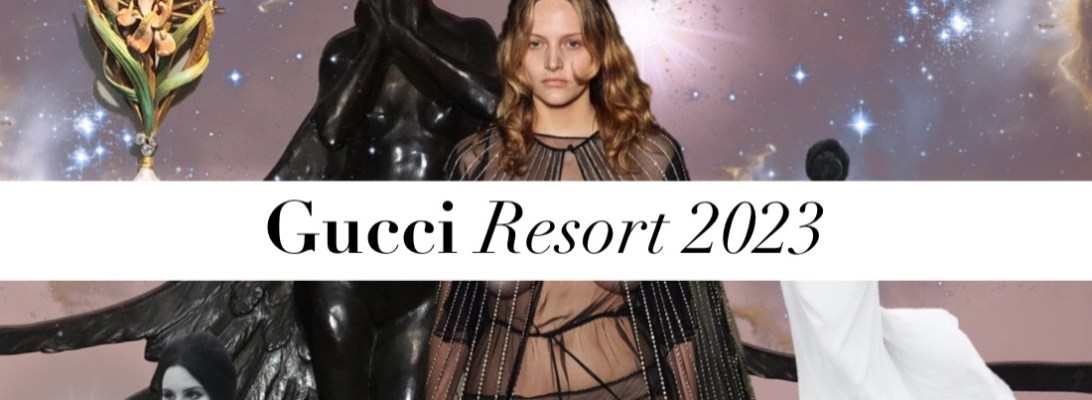
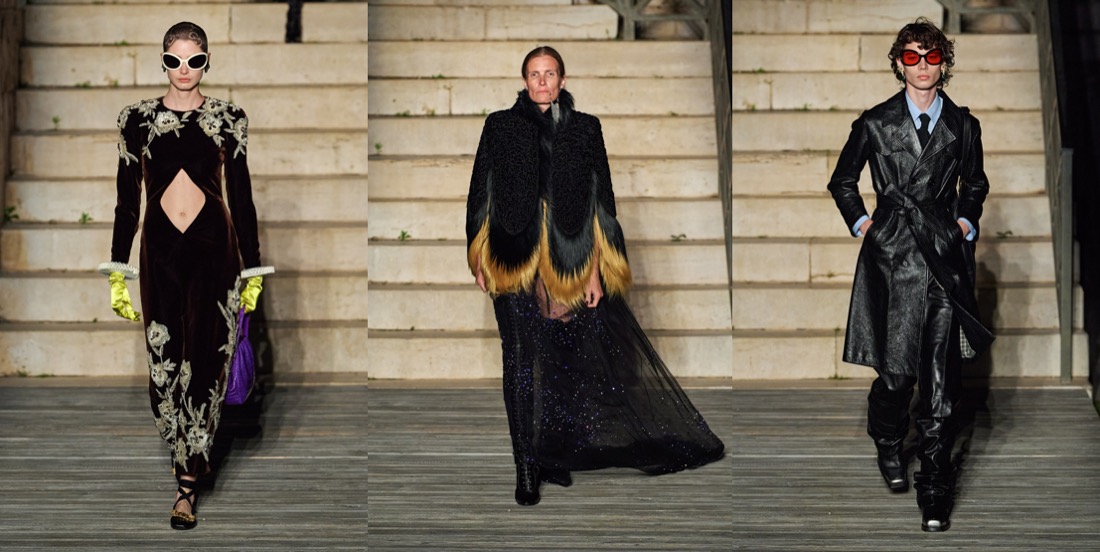
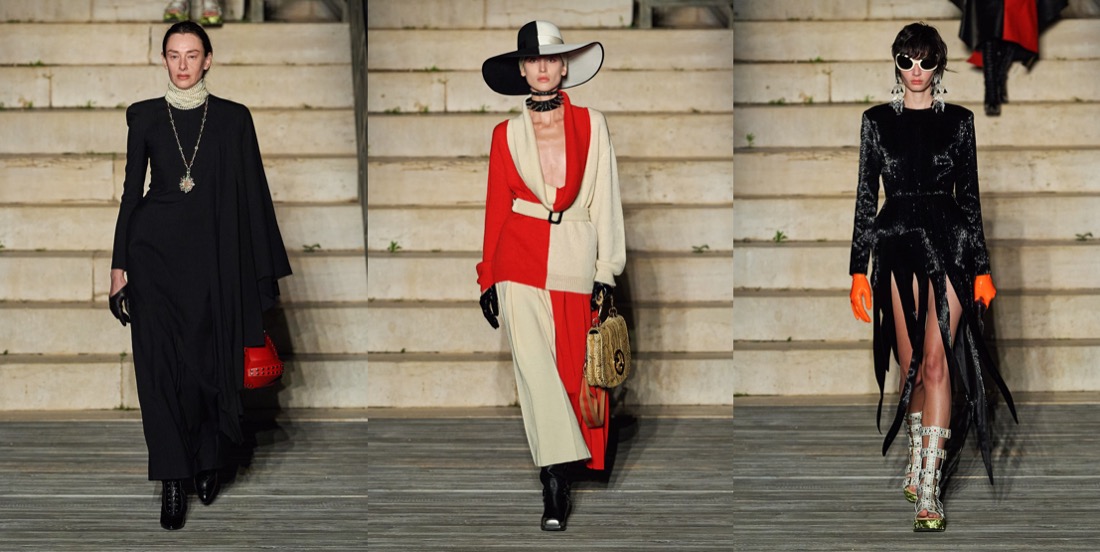
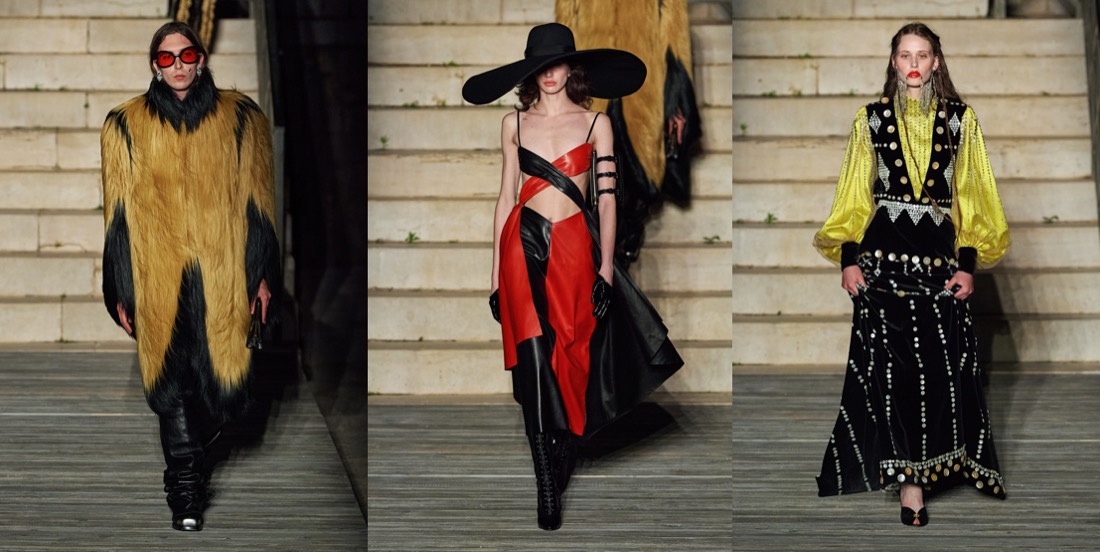
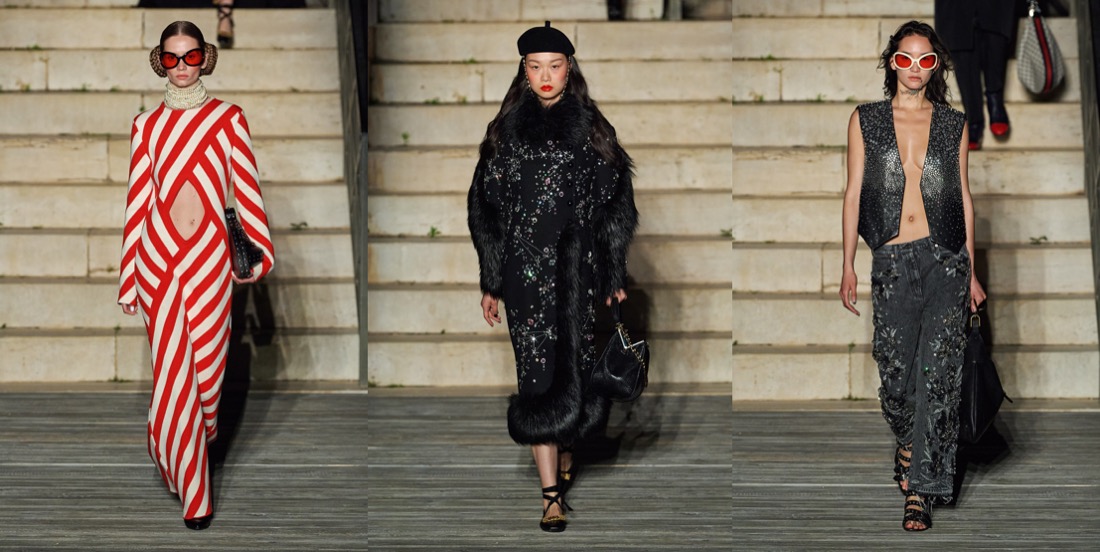
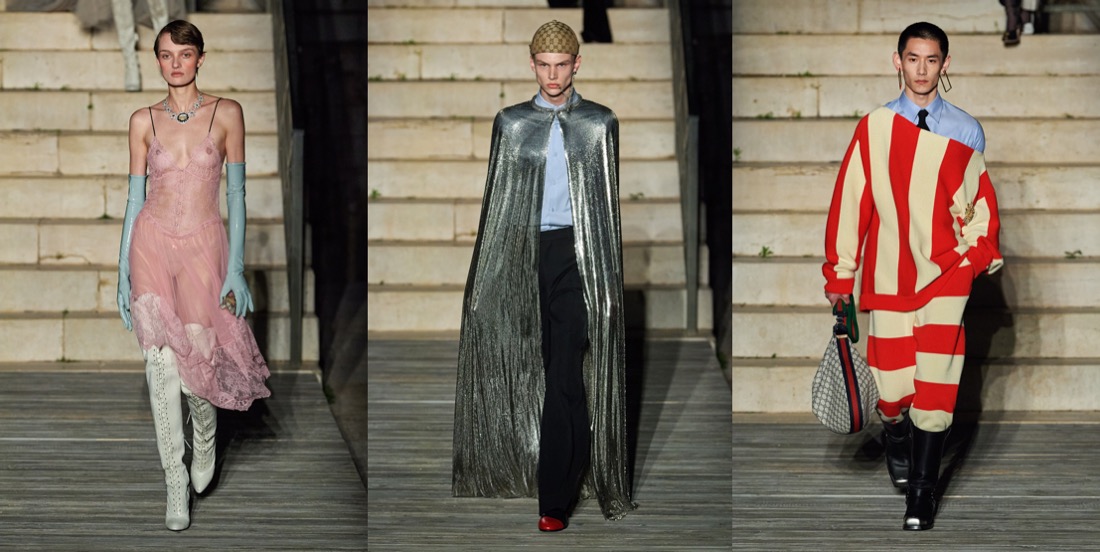
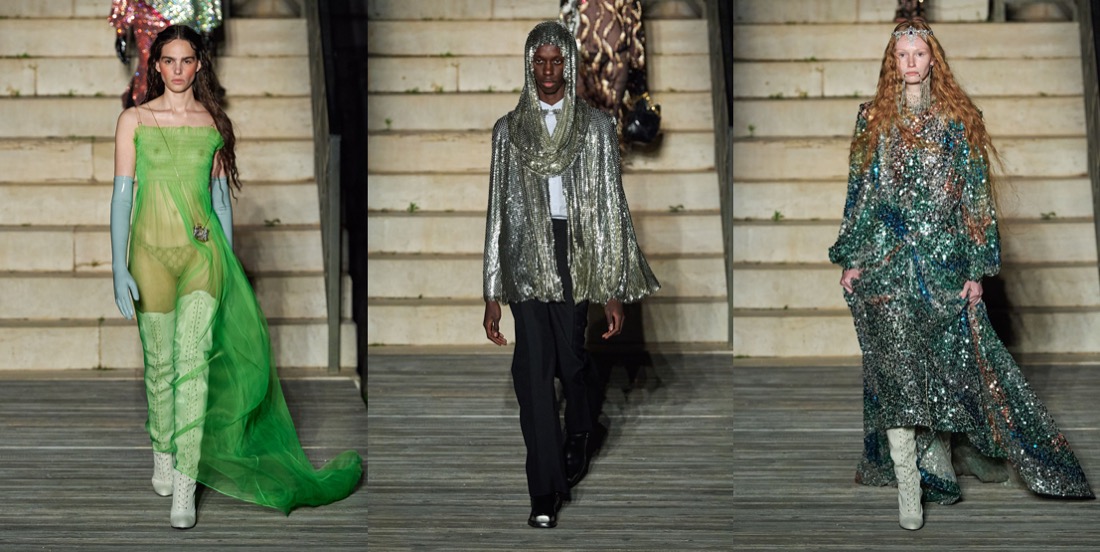
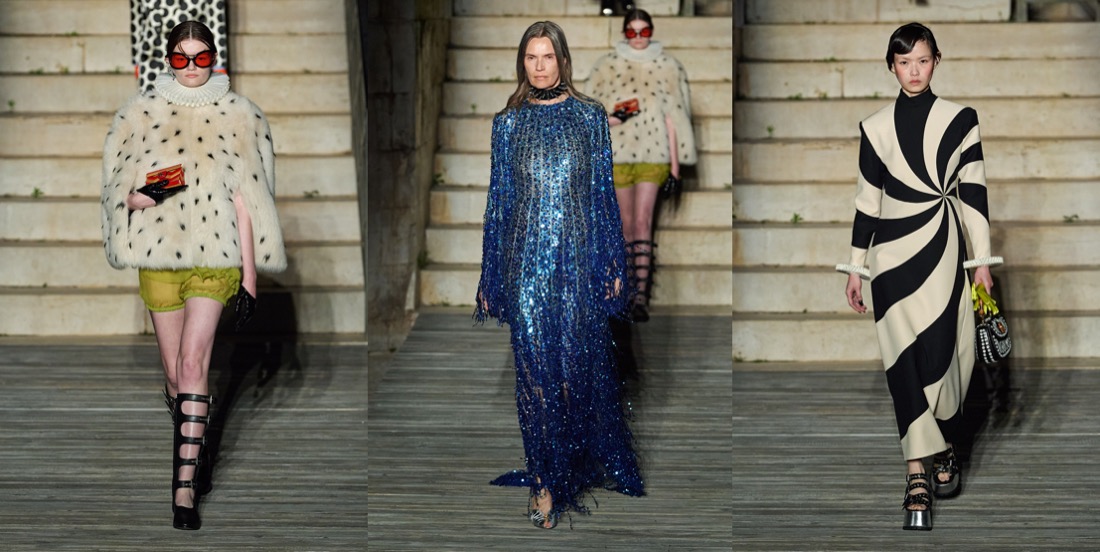
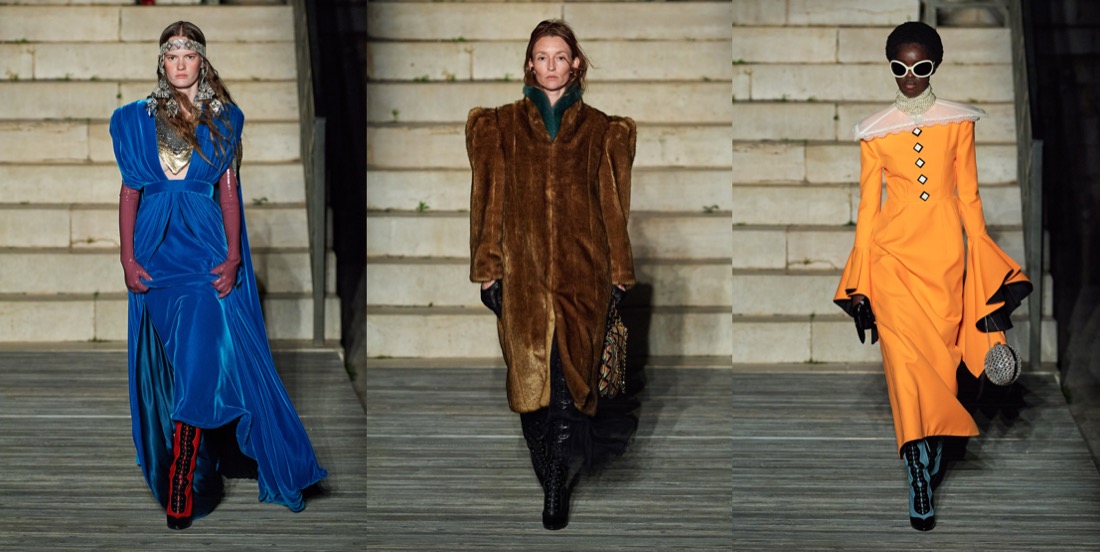
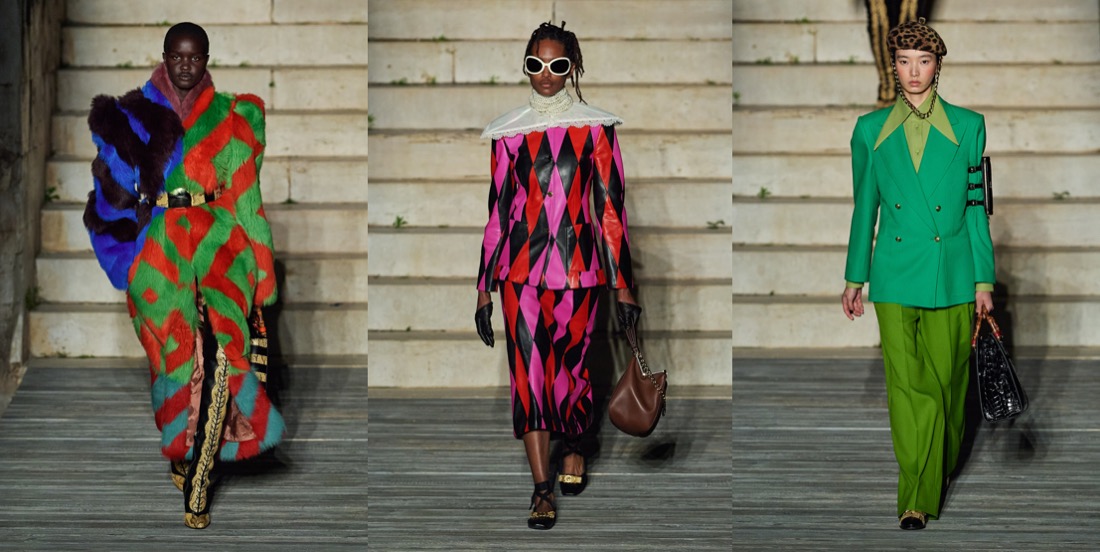
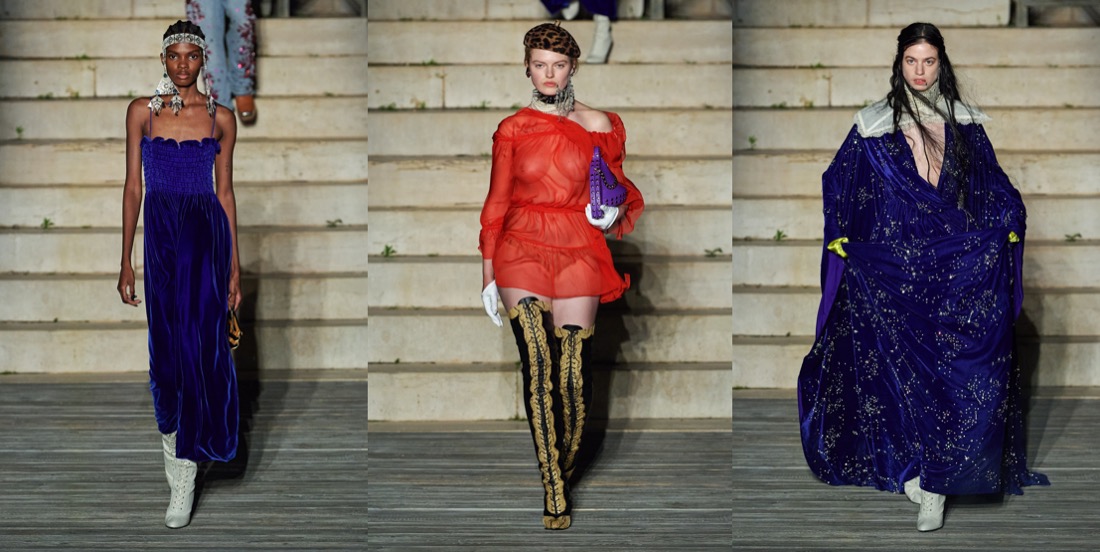
Once upon a time (last Monday), a tribe of cosmic goddesses and priests landed in Puglia and inhabited Castel del Monte – the extraordinary, 13th century castle that actually looks like an alien spaceship. All thanks to Gucci and its resort 2023 fashion show event. Alessandro Michele’s line of reasoning has never been linear. The collections he creates are prismatic affairs, as visually diverse as they are infused by meanings sometimes impervious to easy deciphering. His fascination for layered references and his love of history make him a collector of objects and memories, an archivist of galaxies of images. Not surprisingly, he called this collection “Cosmogonies“. At Gucci, Michele has brought his collections to places of esoteric, disquieting charm – the Promenade des Alycamps in Arles, an ancient necropolis, or Rome’s Musei Capitolini overlooking the Fori Imperiali, where archeological remains give off vibes of splendor and decay. But as far as magical thinking goes, Castel del Monte surely upstages his previous settings. In the castle’s timelessly edgy construction, the number eight was obsessively repeated as an arcane bearer of meaning. It goes without saying that Michele was drawn to the genius loci of this rather setting. “I was looking for a place which gave grace to the mythological,” he explained. “It’s a site where measurements and proportions cross each other as if by magic – the same way measurements of collars and jackets can be somehow magical.” For Michele, the mystery of Castel del Monte resonates with the enigmatic genesis of his creativity, “which operates through the need of putting together constellations of signs and symbols.” Michele’s collections seem to be part of a complex, well orchestrated flux of consciousness, gelled into attractive visual dénouements. While widely Instagram-compelling and immediate, they’re often substantiated by high-falutin, erudite citations. The idea of “cosmogonies of constellations” was born after a reading of German philosopher Hannah Arendt’s essay on Walter Benjamin, whose library was confiscated by the Gestapo, leaving him unable to access to the eclectic network of other people’s thoughts that nurtured his entire oeuvre.
Michele has often built on the tension and vitality of the past to write his own version of the present. “Clothes are mediums, strata of languages,” he said. “Today, ‘making fashion’ doesn’t mean just being a tailor, or chronicling just a one-dimensional narration. Putting together a collection has to do with talking about your idea of the world, because fashion is deeply connected to life and to humanity. Fashion isn’t just a hieroglyph that only élites can understand. It’s about life, it speaks a multitude of idioms, it’s like a huge choir from which nobody has to be excluded. It’s like being at sea, in the ocean, and casting out someone or something is not being fair to the complexity of life.” The designer’s journey this season manifested in a show intended “as a rave,” he explained, where his skills as a costume designer were boosted by the theatricality exuded by the location. “I thought the castle shouldn’t be kept shrouded in silence, but had to be lived and celebrated as it probably was when it was built, a sort of California, the Silicon Valley of the time.” Under a serendipitous full moon, his constellation of characters paraded around the fortress, lit by projections of stars and galaxies. While the idea of cosmogony was only tangentially translated into actual shapes or decorations, the designer’s recurrent theme of metamorphosis was hinted at through unobtrusive prosthetic insertions in some dresses, and also by an unrelenting, flowing panoply of divergences. Chatelaines and go-go girls, demure bourgeois ladies and spectacular nocturnal creatures, long-limbed lovers of bondage sheathed in thigh-high, laced-up stiletto-boots and romantic heroïnes swathed in yards of velvet—it was a feast of coherent discordances, tied together by historical references (portrait collars, plissé gorgets, crusaders’ capes, trains, and medieval crinolines) and by the “incendiary shimmer,” as he called it, of luminous textures under the light. “Women have often worn constellations on their bodies,” Michele said in a sort of conceptual pirouette. “Just think of Marilyn Monroe’s famous last dress studded with crystals; she looked like the beautiful tail of an impalpable comet.” What comes around goes around, but no one performs past-to-present magic quite like Michele.
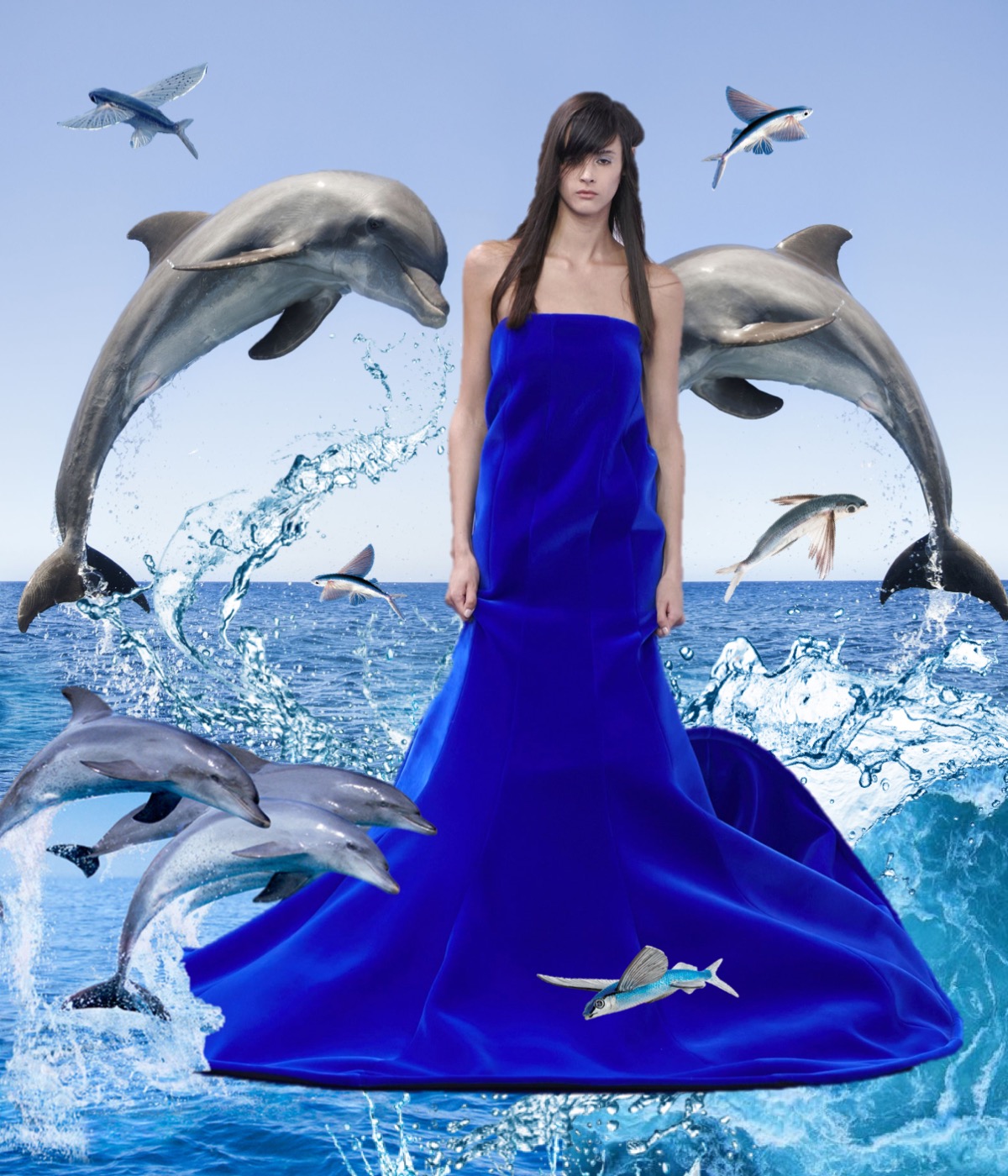
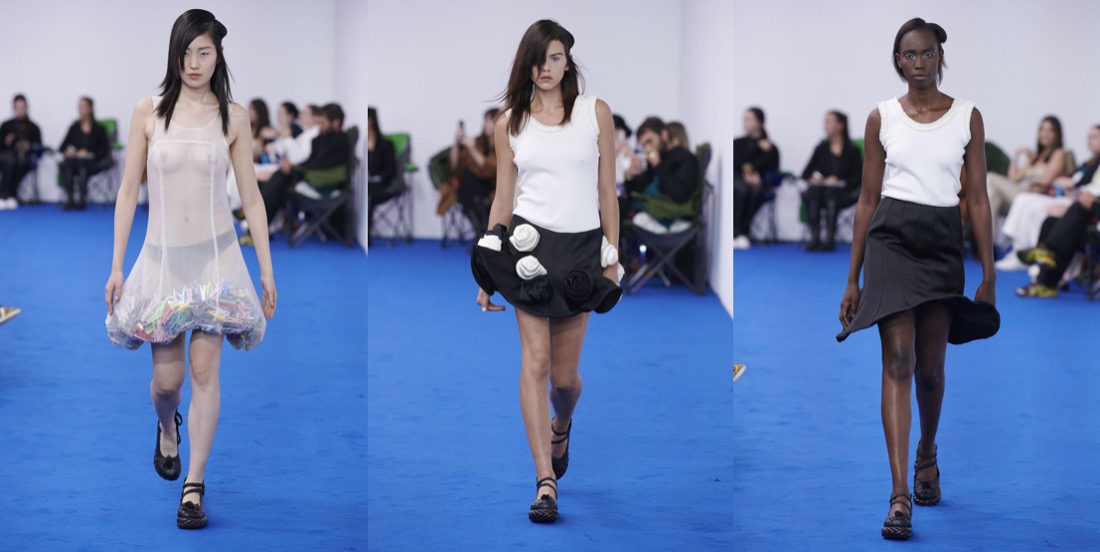
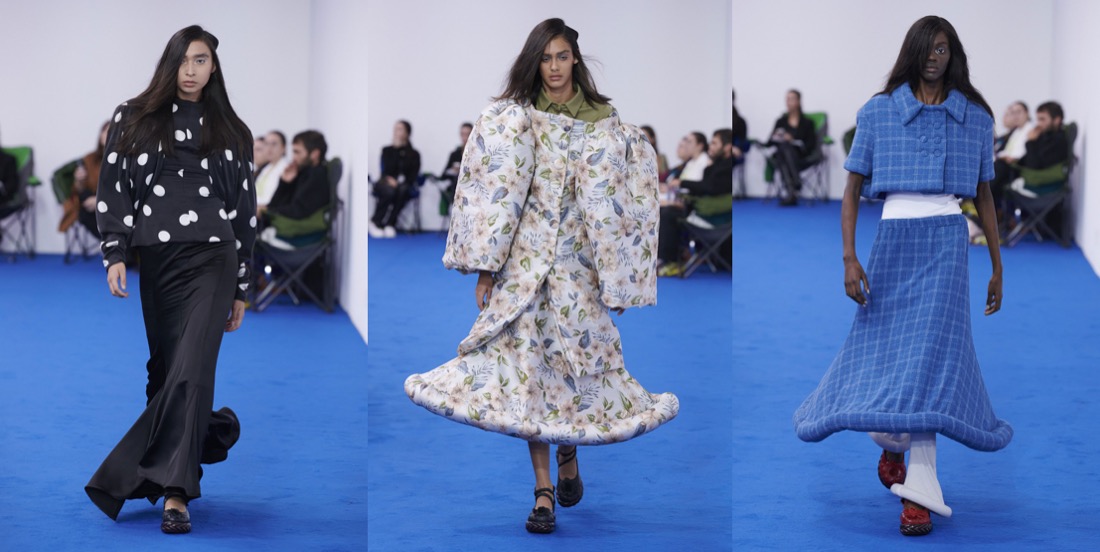
During the Australian Fashion Weeks, I always look forward to Jordan Dalah’s collections. His resort 2023 show was ‘camp’ – not in the Susan Sontag way, but in the literal way. Guests arrived to find comfortable camping chairs instead of the expected benches, while the modern ensembles saw Dalah embrace colour and the beauty of the outdoors. The transparent dress with pegs inside the hems saw an unconventional take on classic Australian backyard imagery, and was a highlight for many. Dalah possesses the distinct ability to combine Australian optimism, raw materials and fearless innovation with European craftsmanship and distinct elevated aesthetic – a skill which can be attributed to his time at Central Saint Martins. The collection saw Dalah expand on his existing vocabulary of voluminous silhouettes, signature hemlines and avant garde expressionism by returning to his Australian roots with designs that are fit for prêt-à-porter release. The collection’s “statement” look came in the form of two ultra-wide, flowing maxi dresses with lengthy trains. It’s delivering nothing short of high-fashion meets grand couturier meets avant garde editorial realness.


















 Design & Culture by Ed