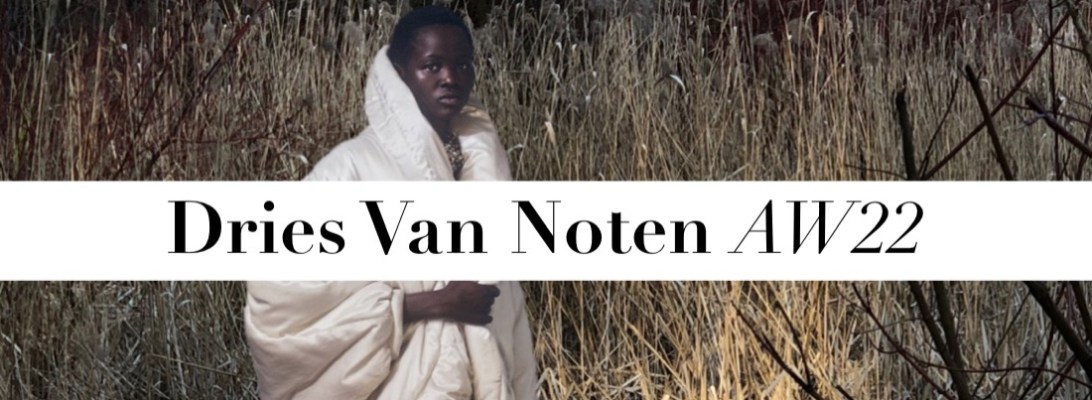
Experience. Dries Van Noten AW22

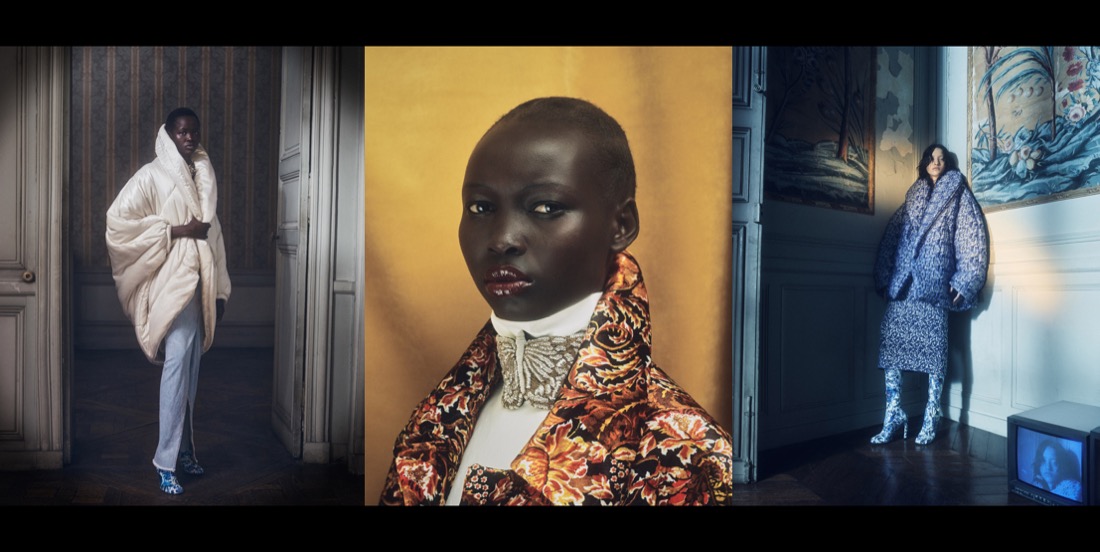
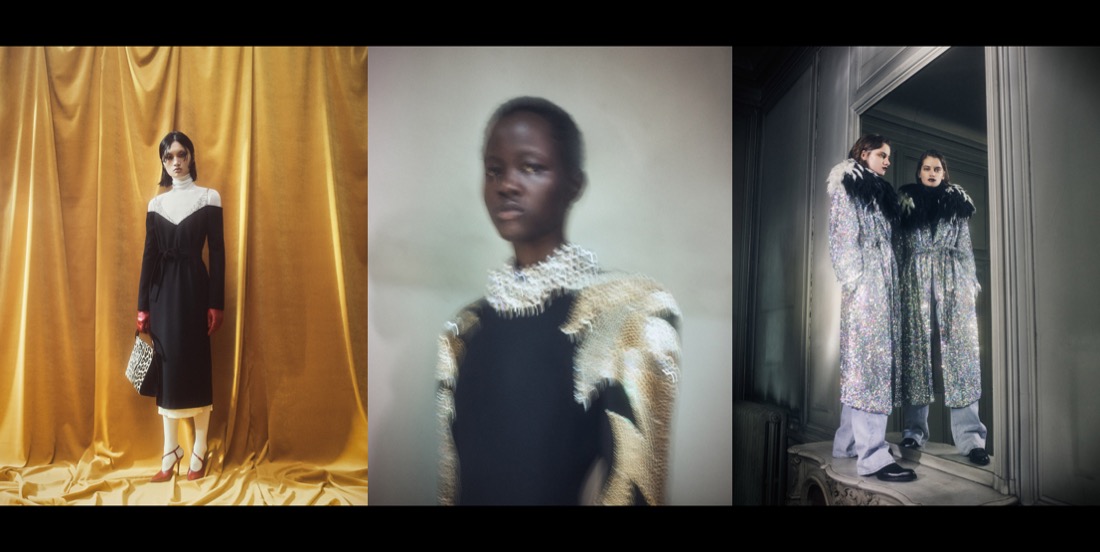
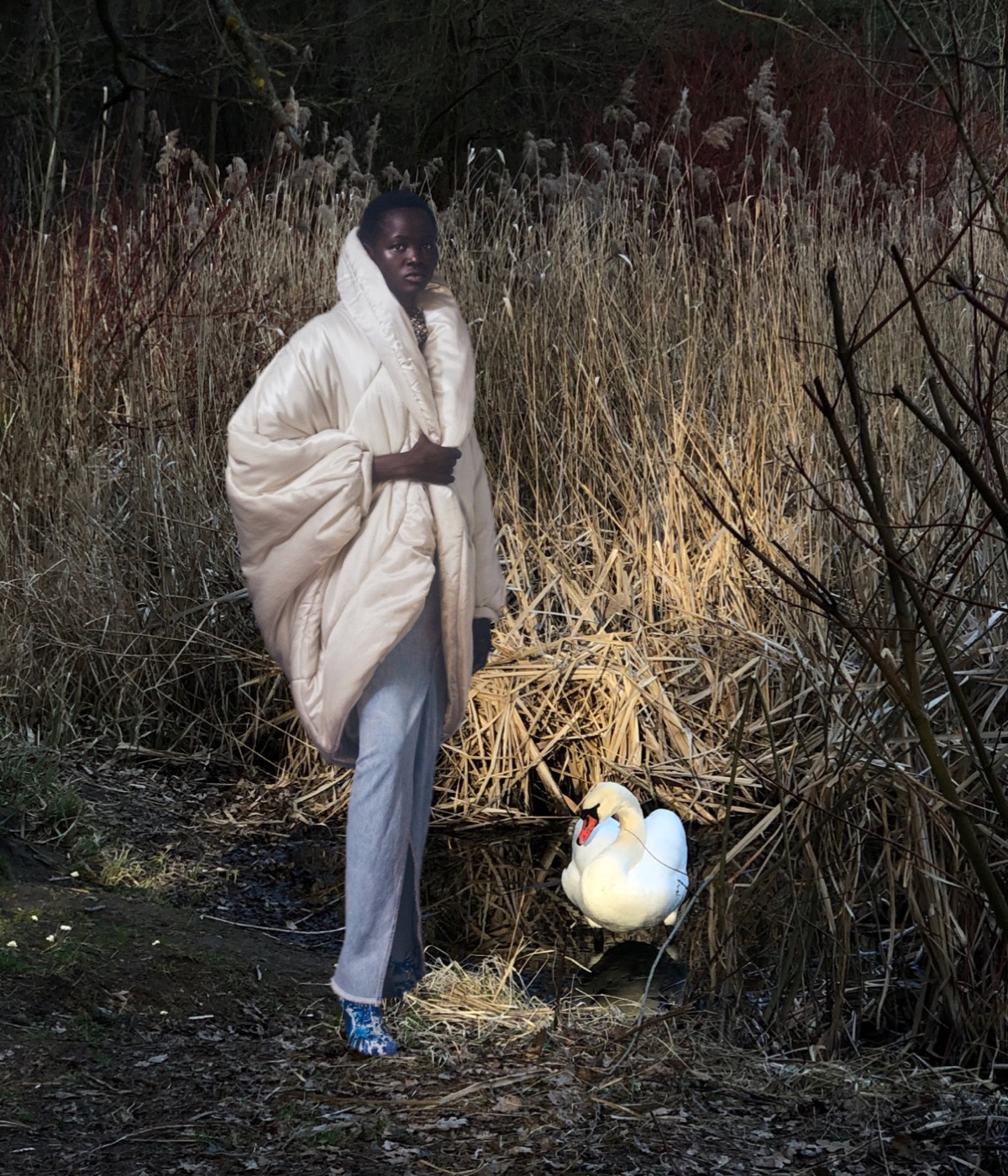
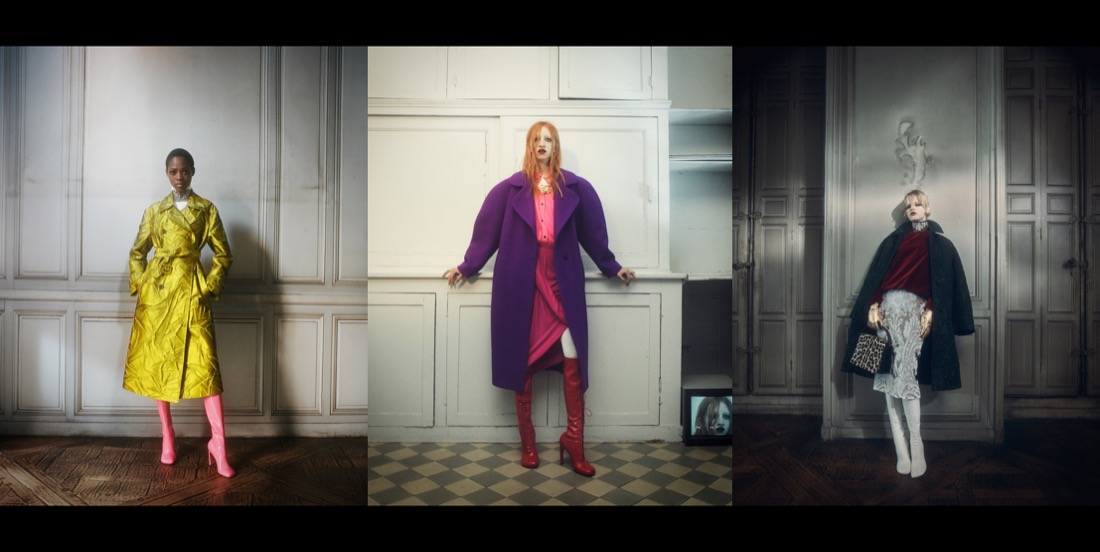
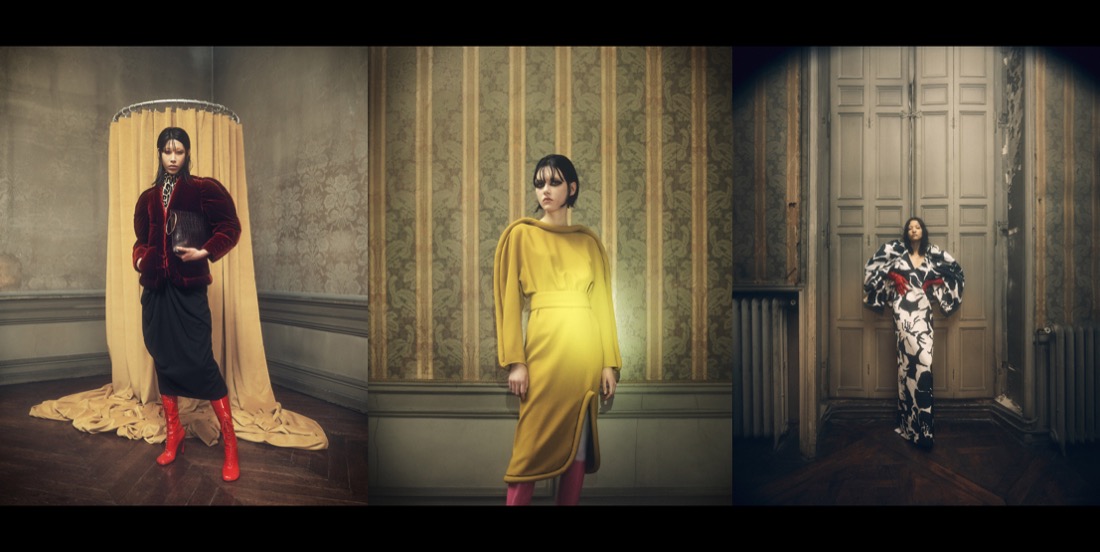
Dries Van Noten still hasn’t returned to the runway format. But this season, he delivered a full experience. For autumn-winter 2022, the Belgian designer hosted a mannequin presentation at the dilapidated Hotel de Guise (in this mansion belonging to an old French family, the clock apparently stopped 50 years ago). Grouped in paneled rooms, the liveless models were staged in various scenes: as if in conversation, leaning watching over bannisters, lurking in a bathroom, glimpsed in a closet, standing on tables or suddenly, disconcertingly, seated on the attic stairs. In other words: this was Dries Van Noten in his element, curating an interior environment instead of a fashion show. It was the perfect setting for absorbing the novel shock of suddenly being able to see and touch the richly layered textures of his collection again – and to sense a distinct frisson of darkness and perversity in the air. The event was also a launch of Van Noten’s perfume and lipstick line, which in the end made even more sense. The invited editors could completely immerse in Dries’ world, from the garments to the senses. What about the new season clothes? They all looked sumptuous: the animal print coat layered over deep crimson silk-velvet trousers; glam holographic sequins with denim trousers and a wildly nubbly wool scarf; 1940s dresses dripped with lines of stones and additionally enriched with opulent, vintage-style jewelry.
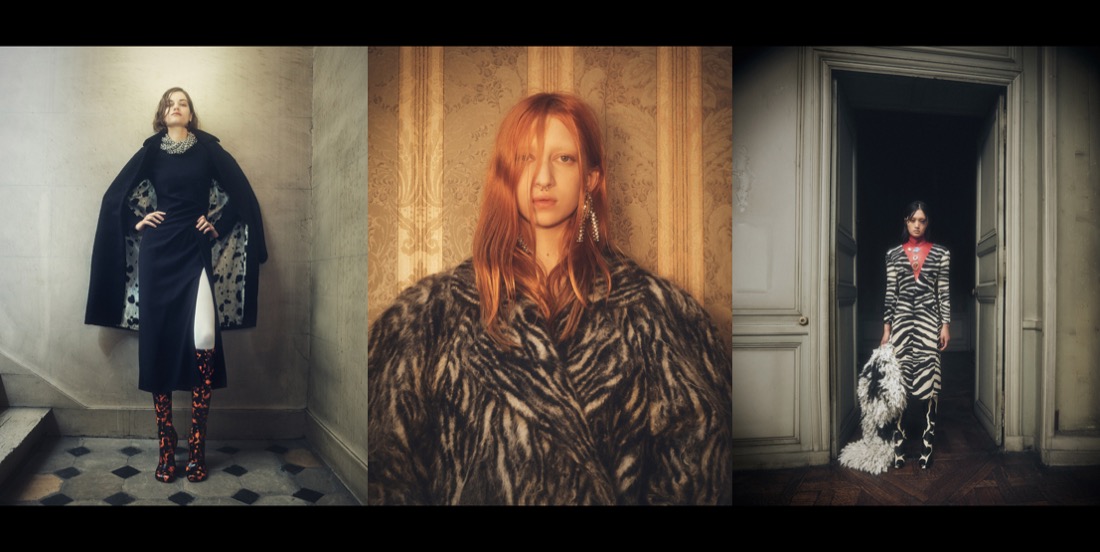
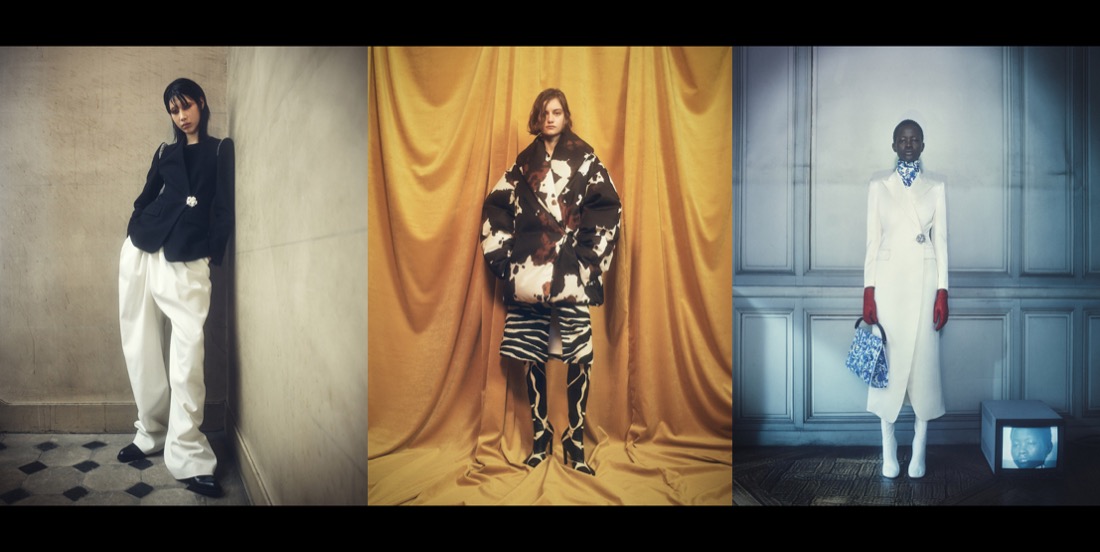
Had he found himself designing more intensely, more richly, during the closed-in times? “No.” Van Noten replied. “It is always like this. You just never see it when it’s up on a runway.” He’s been one of the increasingly few hold-outs against convening physical shows this season – and one of the few who really adapted to exercising the creative possibilities of fashion filmmaking. Using the half-way house of this expressive presentation was something else, fully playing into his multiple talents as a curator of exhibitions, antique interiors aficionado, gardener (which connects with the perfumes) and being the Belgian guy with the Antwerpian memories of alternative parties in the ’70s and raves in the ’90s. He makes a very good point: “I think it’s that whole tactile moment. It’s not that I don’t want to go back to fashion shows, because I think it’s another thing, but this is really nice to experience. This way of presenting creates closeness; the fact that you can explain things, touch things, see things. You can stage it so that you can tell more stories than in a fashion show. So for me, it was a very interesting way of thinking.” So, to the “story.” Van Noten had been researching the work of Carlo Mollino, the Italian architect and photographer whose life spanned surrealism and the ’70s. “After he died, erotic Polaroids he had taken of women, nude and semi-dressed, were found in his apartment.” Look them up, and you find how Van Noten had come up with the maxi-coat shapes, the leather chokers, the ‘kinky’ lace-up boots. He also put his finger on another popular ’70s cult object – a down-padded, Charles James-like jacket with a deep tubular edge. Puffy volumes gone glamorous, circle shapes and other extreme geometries are part of the avant-garde news from Paris. Somehow, while staying within his own world, speaking to his own customers and bringing his whole character to creating his beauty/lifestyle lines, Dries Van Noten still has ways of clocking what’s happening outside.
Collage by Edward Kanarecki.
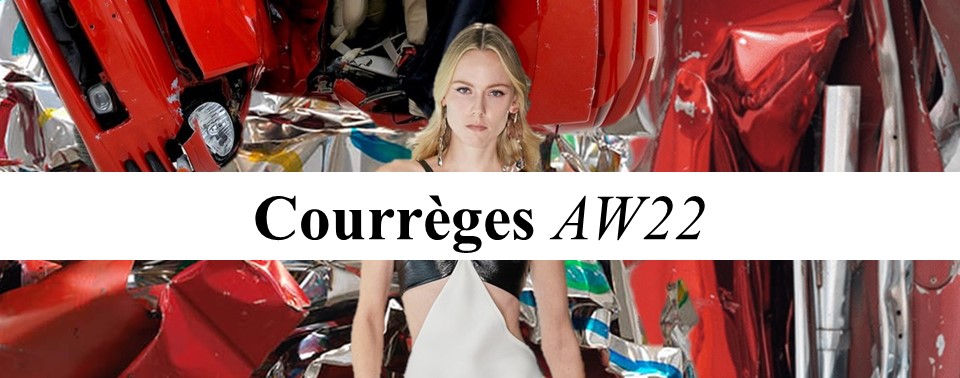
Crash Course. Courrèges AW22

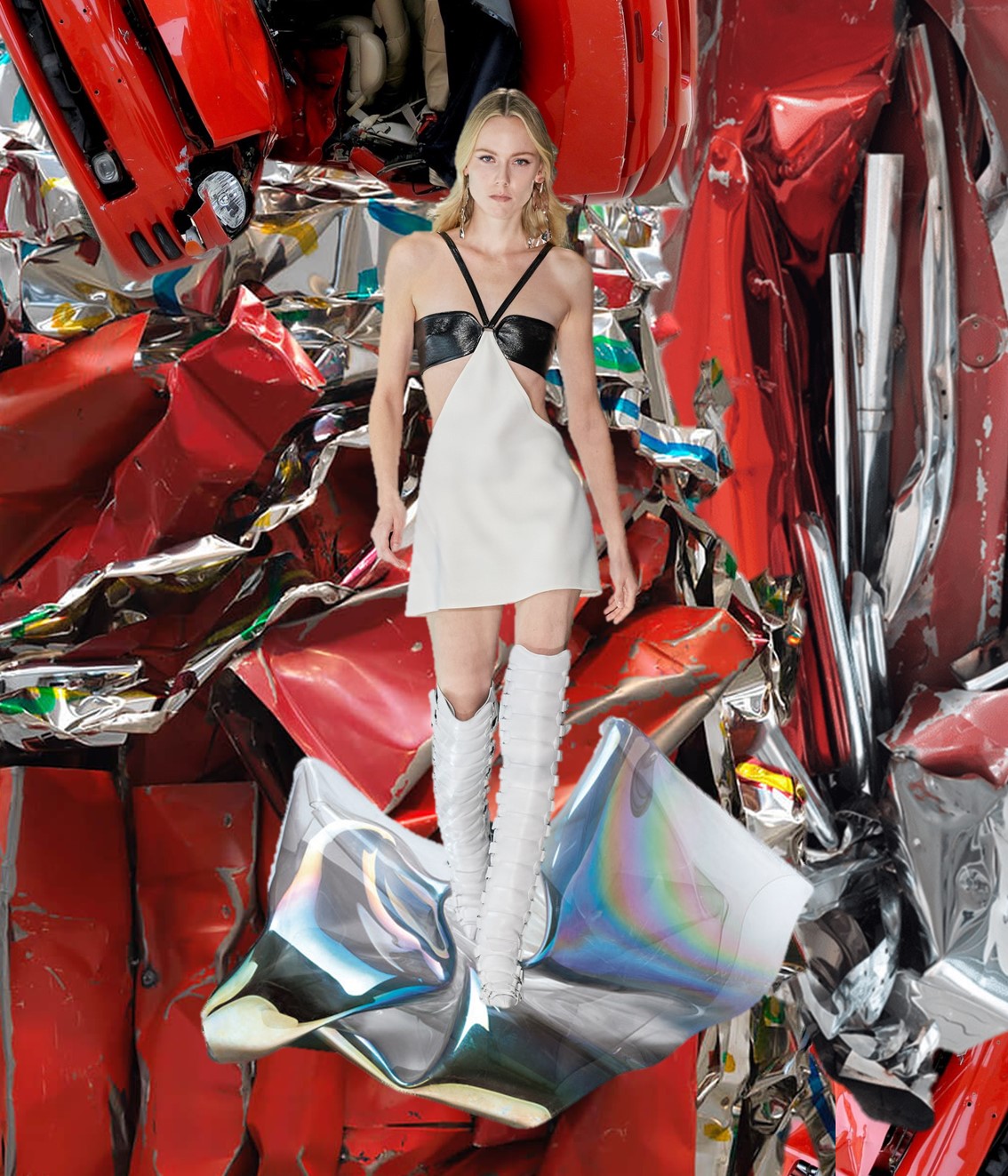
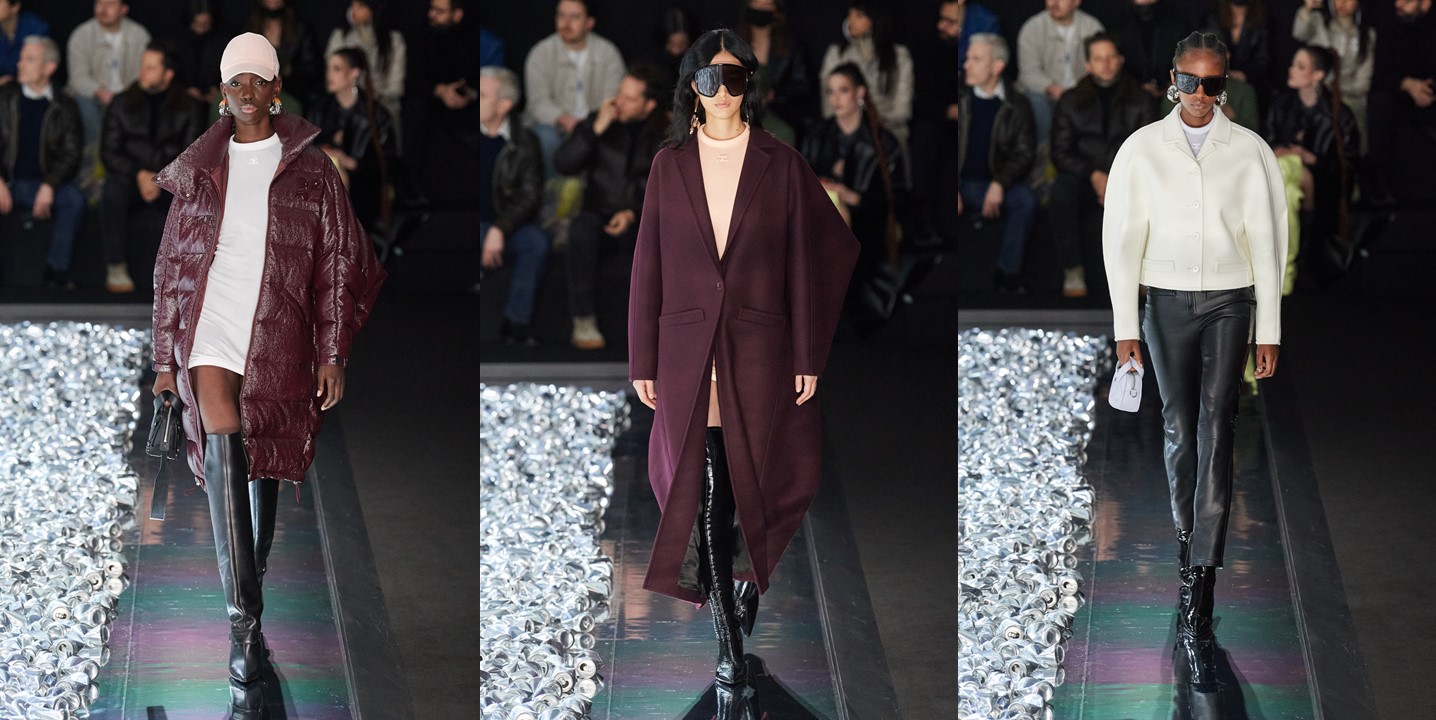
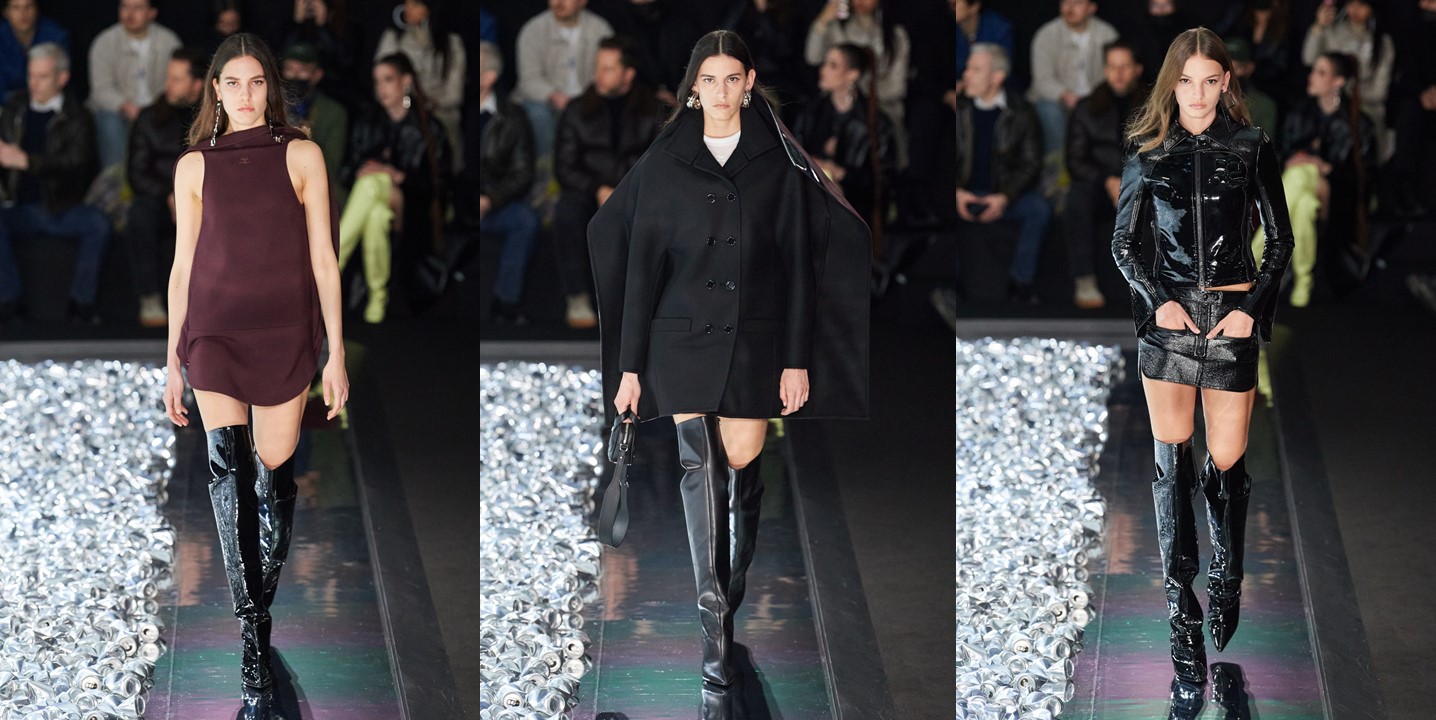
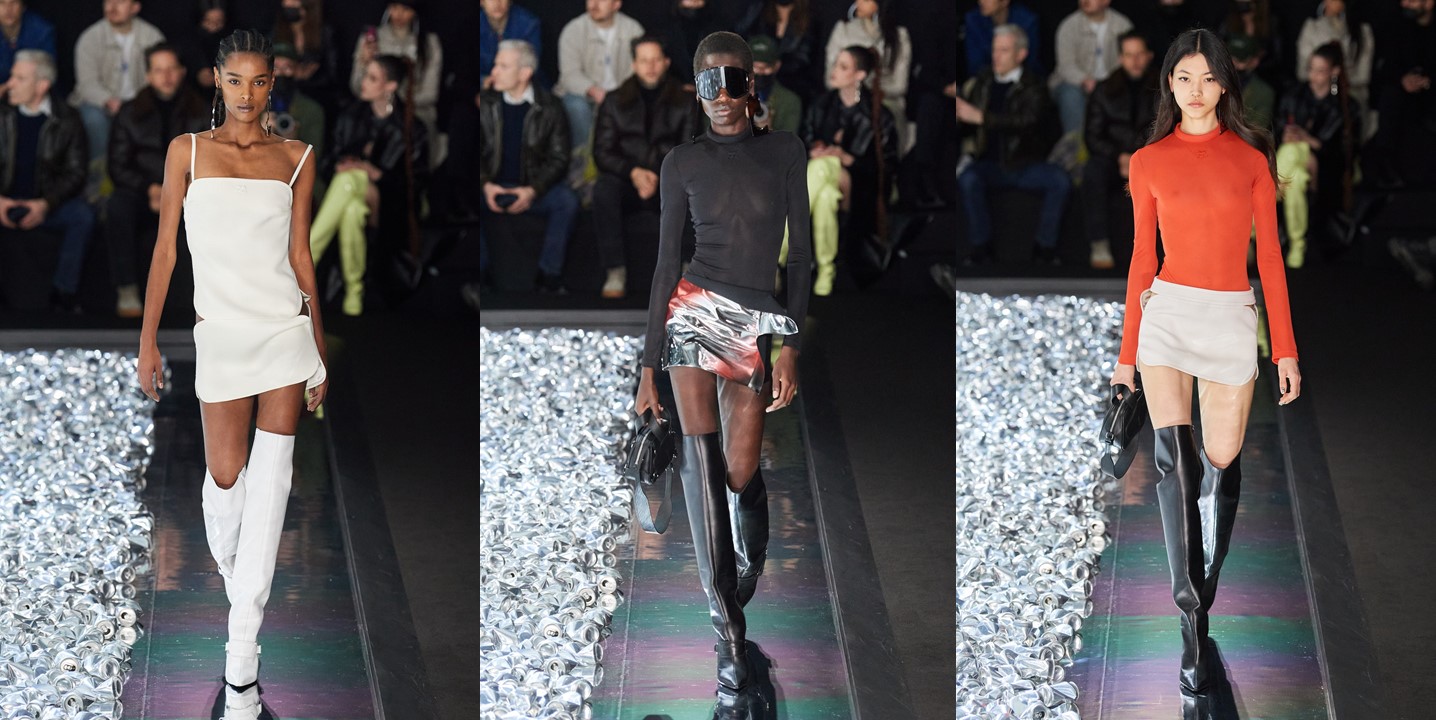
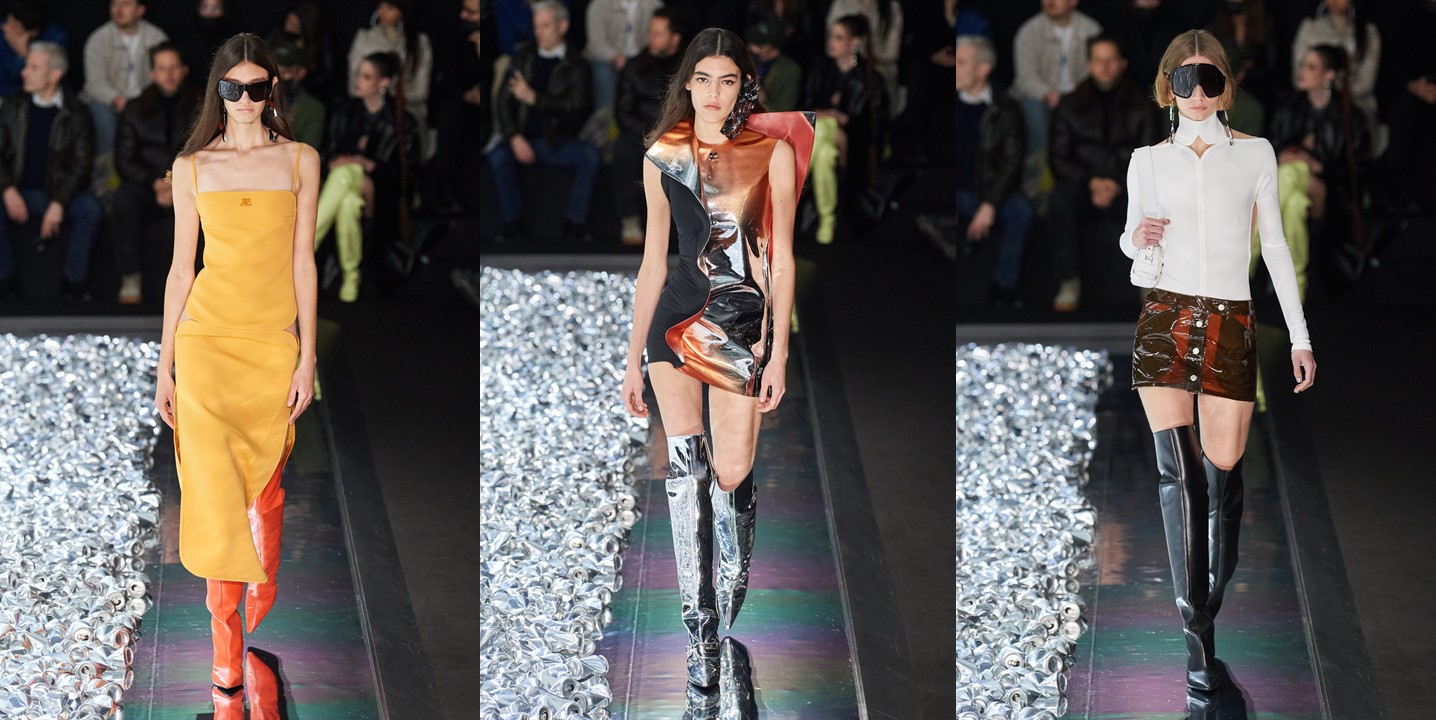
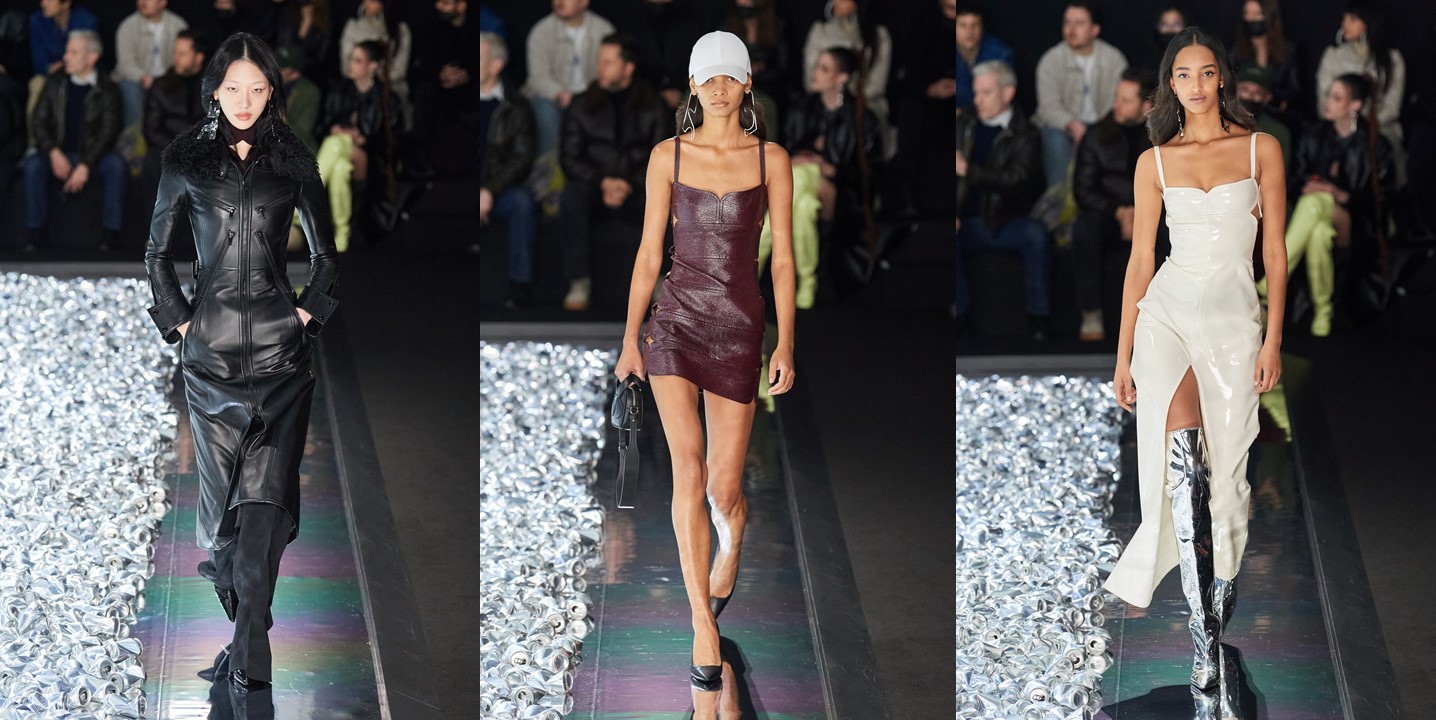
Nicolas di Felice discussed what sparked his latest Courrèges collection: it was the discovery, after much Googling, of a circa 1973 brand video set not in a Paris salon but in a car junkyard. Di Felice liked it for the way it challenges assumptions about Courrèges. Yes, the house founder André Courrèges was a couturier, but he was also plugged into the street. Di Felice is negotiating that divide quite fluently a little more than a year into his run at the brand. The first step was hooking a young Paris crowd on his minimal, sexy basics. These nod back to Courrèges’s Space Age stylings without being overt; it’s helped that di Felice’s arrival here coincided with the return of mini lengths. You see those minis on showgoers this season, along with his updates to the snap-front vinyl jackets that are another brand signature. Mission completed as for Courrèges’ commercial thriving. Now, having caught the industry’s attention, di Felice is playing with more experimental shapes – and here it gets a bit more difficult and demanding. There was a strapless shift dress made from two circles sewn together and a couple of others whose backs were large fake leather squares spray painted to conjure the vibes of that 1973 junkyard – body-con bi-stretch jersey in front, avant-garde in back. Jackets and coats exhibited the same inventiveness. In addition to circles and squares, he made some with large triangular sleeves, including a vinyl puffer whose proportions looked new. These were experimental cuts, but not complicated, he made a point of clarifying. “I really have an obsession with simple patterns, they start from geometric shapes.” Back to the body-con – Di Felice reproduced the geometries of John Coplans’s paintings on shiny vinyl dresses as streamlined as those triangular-sleeved coats were voluminous. The diamond-shaped cut-outs that climb up their sides could become as recognizable as the house’s curvy AC monogram. Di Felice has got the brand-building aspect of the modern creative director’s duties down and now he’s trying to make the brand not just merch, but actual fashion.

Collage by Edward Kanarecki.
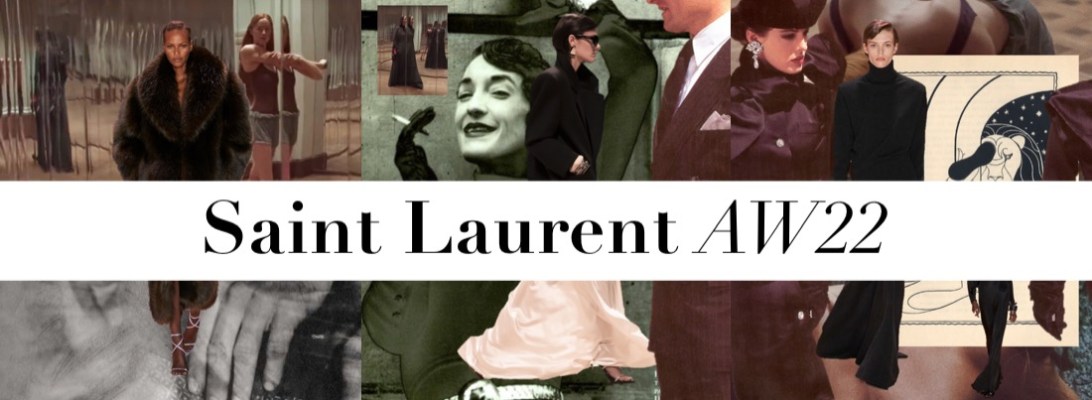
Sublime Symphony. Saint Laurent AW22

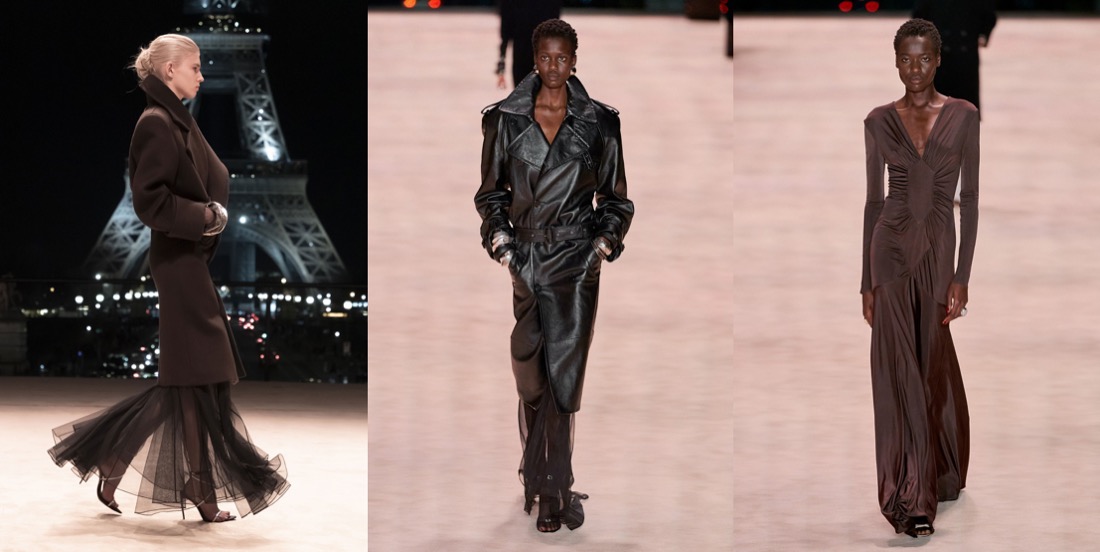
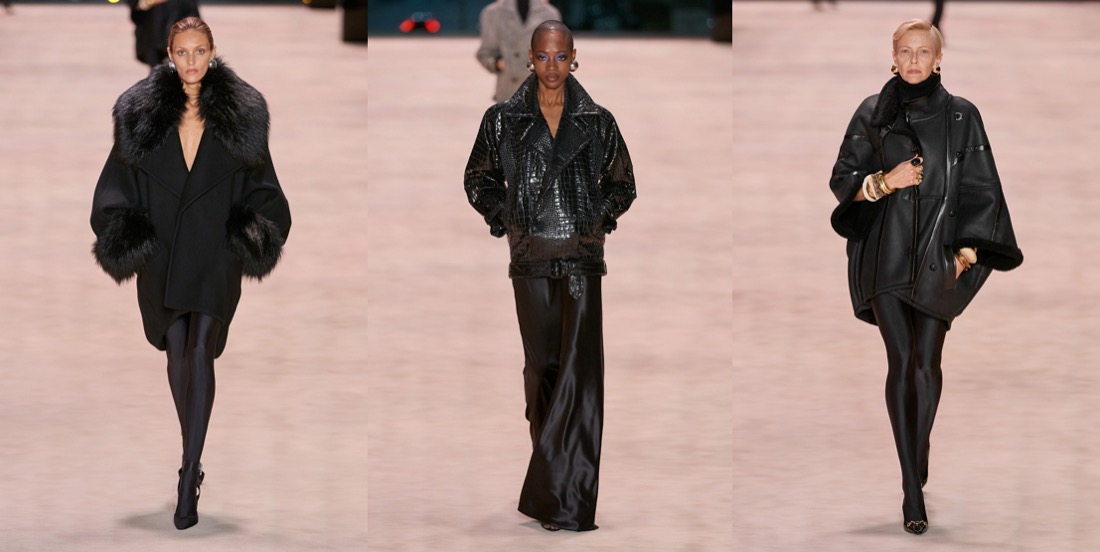
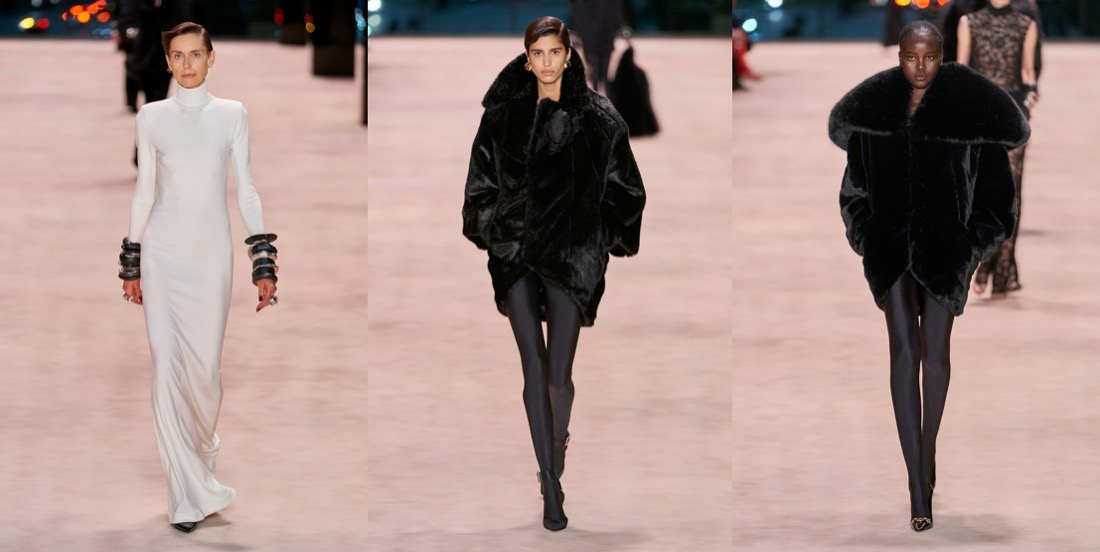
Anthony Vaccarello delivered one of the most beautiful, sensational and elegant moments of the entire fashion month. His autumn-winter 2022 collection for Saint Laurent was sublime, a true symphony of chic, refinement and grace that even Yves himself would applaud. What will be remembered most? Purely the sight of a woman in a long, silvery bias-cut dress, with a perfect black low-buttoned double-breasted black peacoat over it, her hands thrust into the pockets. She opened the show. And then the line-up of flawless black tuxedos and a single, narrow black tux coat which came at the end. Of course, there was a lot more in between: fake fur coats and bombers; amazing overcoats with big (not too big) shoulders; narrow leather coats; elegantly nonchalant cocoon-back profiles. Then the punctuation of something as simple as an ecru floor-length turtle neck T-shirt dress, worn with deep stacks of dark wood and silver bangles on each arm. And the high glamour of 1930s and 1980s evening jackets with big bands of faux fur running around them.

More than anything, all of this went to show how Vaccarello has got himself in charge of the Yves Saint Laurent aesthetic, relaxed into it. That’s no mean feat – the sheer magnitude and magnificence of Saint Laurent’s oeuvre is mightily intimidating. In the face of it, the temptation as a designer is either to rebel against it with super-short shorts, slit skirts, breast-exposure and everything Saint Laurent didn’t do (which Vaccarello did at one time) or to just be too reverential. What the job really calls for is someone who knows enough about the playbook of Saint Laurent to be able to honor its quality, but also has enough confidence to be nonchalant about using it. Vaccarello hit that point of maturity with this show. In his own accent, with his own taste. With, yes, maybe something of his Belgian-born sensibility coming through: vague echoes of that period of deconstructed minimalism, the monochrome colors, saving the air of being easy to wear, but then again, bringing it up to the level of the modern Parisian elegance that we all dream about. The collection was emotionally-charged, as it was a powerful tribute to Vaccarello’s father, who has passed away recently.

Collage by Edward Kanarecki.
All About Love. Vaquera AW22

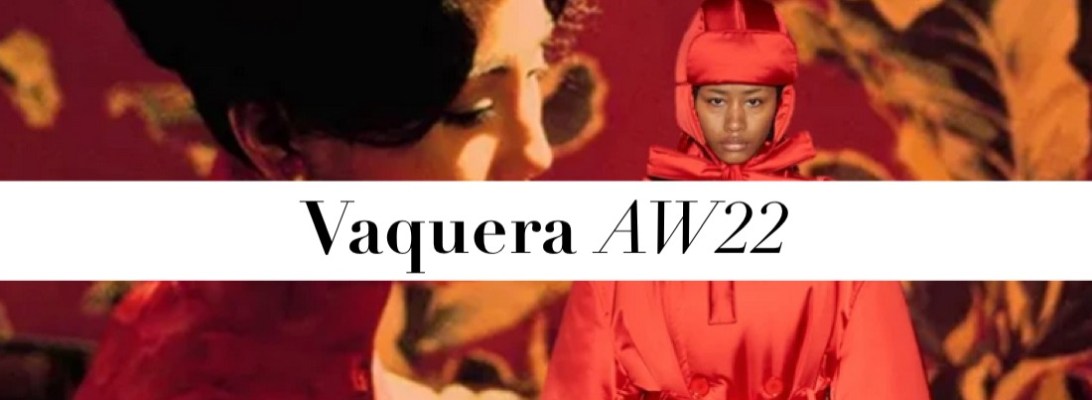
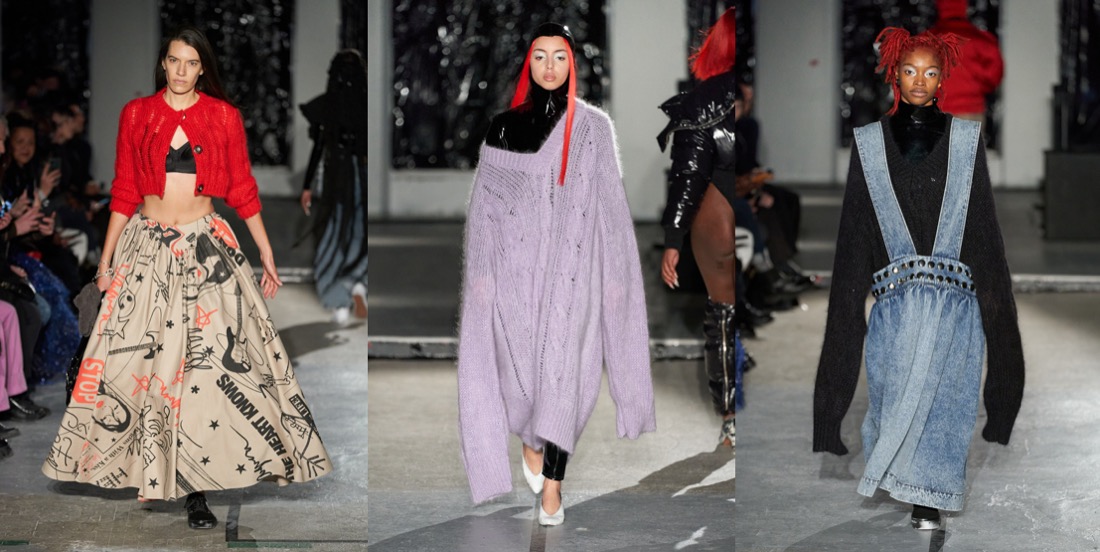
Fashion fan fiction” is how Patric DiCaprio and Bryn Taubensee used to describe Vaquera: tribute clothes for a world obsessed with referential dress. Bringing their runway show to Paris and showing at Dover Street Market’s 35-37 space for autumn-winter 2022 is the ultimate fashion fan fiction come true. Now instead of idolizing runway legends from afar, these American designers have “started becoming the people who we idolized,” said Taubensee. Their craftsmanship has been on a steady uptick since linking with Dover Street Market Paris in early 2020, and this season they’ve made padded moto jacket puffers, tinsel-like sequin dresses, and airy angora knits that feel as high quality as they look. Bags have been developed for the second season and footwear is a collaboration with Vans alongside the same vintage shoes the brand has used for six years, repainted each season to coordinate with the collection. Love, in fact, was the driver for the Vaquera this season. Romance was never really a feeling one got at their all-bass, hurried catwalks back in New York, but a transatlantic journey, coupled with ideas of Maggie Cheung’s sensual performance in 1996’s Irma Vep, has made the Vaquera tone gentler. Now their big ruffles seem less campy, more tender. Their plaid skirts and schoolgirl jumpers feel like the clothes of teenage crushes, and their suiting is covered in professions of love. Even a hair clip reads YOU inside a jet black heart. The brand’s signature teddy, elongated into a dress, is now translucent and trimmed in white lace, an invitation to come closer, to see, and to be seen.

Collage by Edward Kanarecki.

Characters. JW Anderson AW22

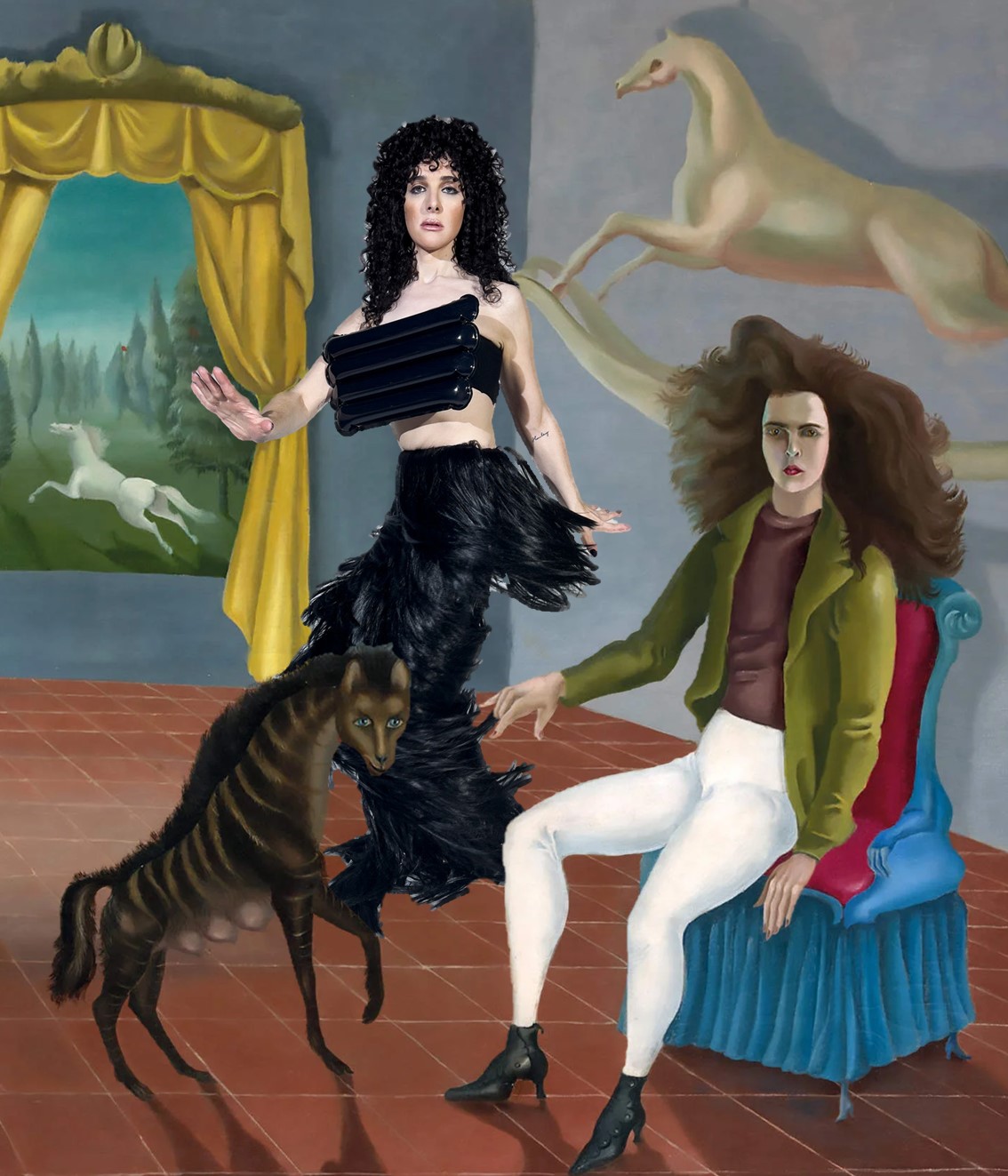
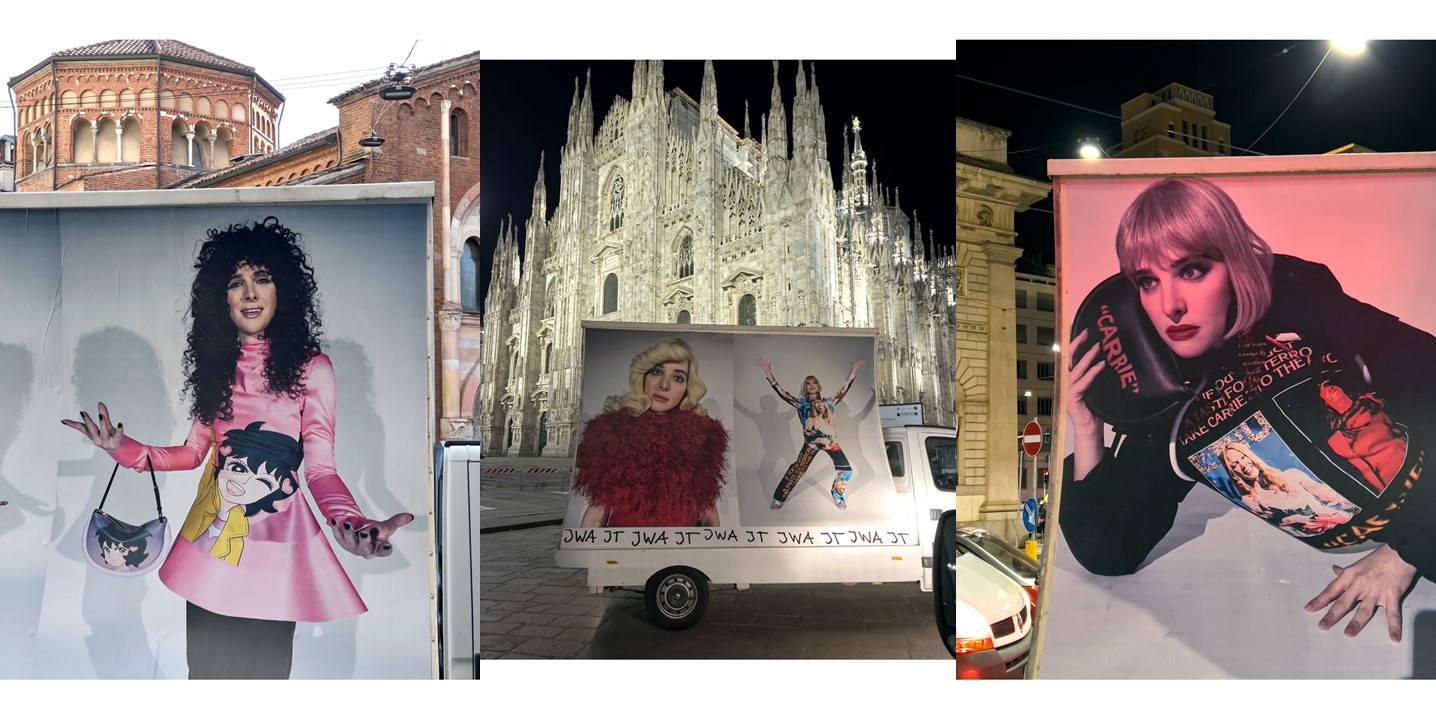
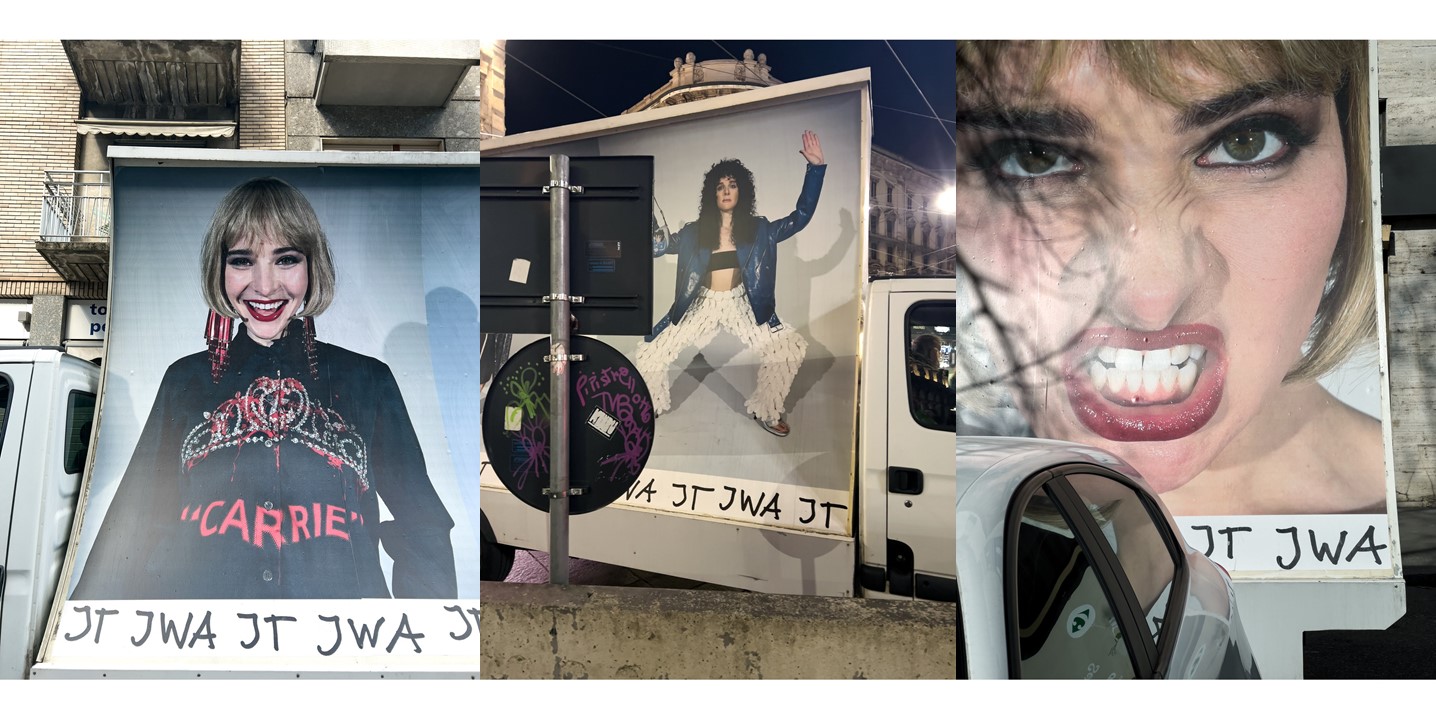
Jonathan Anderson left London and showed in Milan this season… to some extent. In the latest in his series of ingenious pandemic alternatives to putting models on a runway, he made a surprise intervention in public. “We have dozens of trucks with billboards of the collection images circulating Milan all day. Juergen Teller is out photographing them with people at gas stations and other stops. Content becomes content. Image becomes pictures of pictures. Fashion becomes part of the landscape”, the designer explained. As a device for creating a widely seen, soon to be endlessly Instagram-replicated public spectacle, it’s just the latest of JW Anderson’s super-smart manipulations of media – right in the middle of the Italian city where the institution of the fashion billboard has been part of the competitive pride of fashion week for years. And this, simply with one photographer and one model, his friend Hari Nef impersonating four pop-cultural ‘characters’ in a Cindy Sherman-esque, and a fleet of truckers. “We don’t have thematics any more. We’re doing bite-sized, light-hearted things like this,” Anderson said. “We have a young demographic, and we’re a small contemporary brand. With all the multiple issues we’re facing – going from one crisis to another crisis – there has to be learning from that. New types and ways of doing things.” Since the pandemic hit Anderson has been acing communication by playing with printed matter in delightful ways. He’s also re-focused his own-brand strategy on “two main seasons, and two experimental ones. So this is one of those experiments.”

Rolled out (literally) around Milan were pictures designed simultaneously to provoke lots of fun and push Gen-Z memory-buttons. “We’re playing with this media paradox in pop culture where there’s this constant going to the past, and bringing it forward. So things are just as valid as they were, but in a different context.” One set is around the movie posters for Carrie – original graphics from Sissy Spacek’s classic 1976 horror role as the awkward teenager who turns out to have gory telekinetic powers of revenge at the school prom. No random choice, that: “I feel like that movie is such an influence on teen TV series being made now,” Anderson acutely observed. Apart from the obvious T-shirt, sweatpant, and pajama-set graphics, there’s a one-shouldered silver silk satin prom dress. Quite ingeniously, it’s photo-printed all around the hem with “hyper realistic” balloons from Carrie’s own prom.

Collage by Edward Kanarecki.