Domestic Glam. Ashish AW21

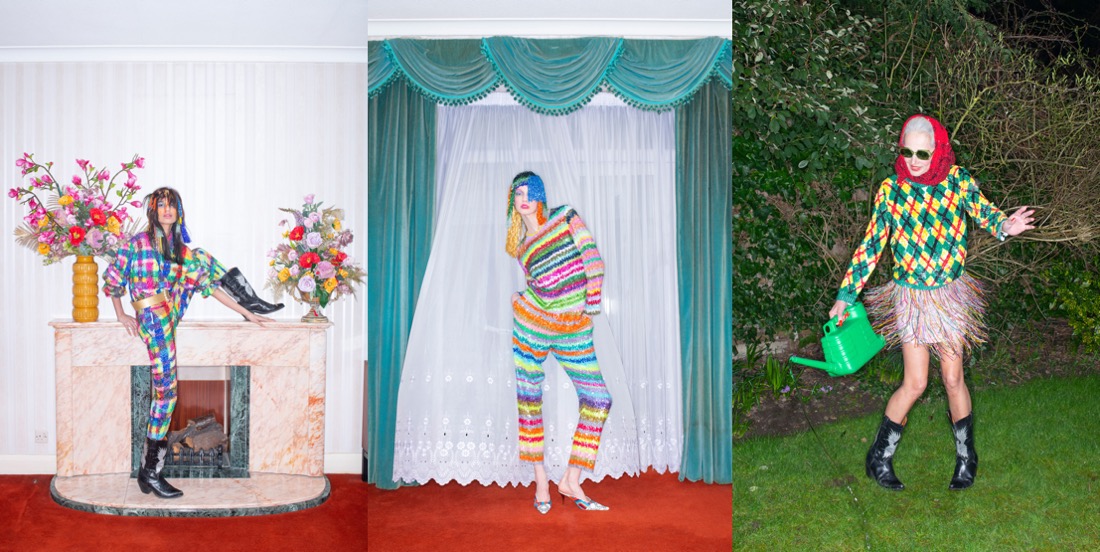
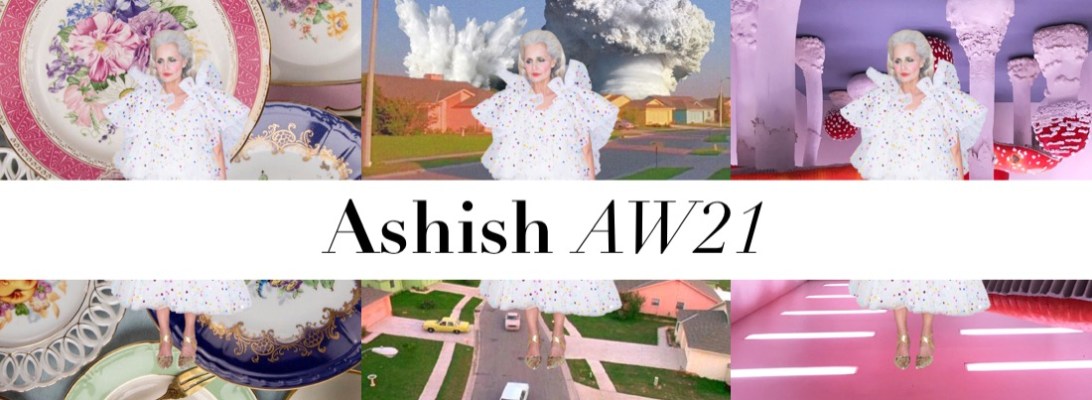
Brands and designers throw around the ‘stay-at-home-glam’ term for a year now, but most of the time it just feels forced and like a desperate attempt to sell eveningwear. However in case of Ashish‘ autumn-winter 2021, this notion of glamour in times of global pandemy is honest and at last makes sense. Ashish Gupta has the solution to fashion’s sweatpant-mania: simply offer garments that enable the consolatory comfort that we’ve grown fond of in isolation, combined with the communal joyfulness we’re aching to emanate. This collection fabulously demonstrates that comfort and joy can be mutually inclusive and mutually enhancing. When he was a student at Central Saint Martins, Gupta said he picked up this excellent line: “An evening gown should feel as comfortable as a T-shirt, and a T-shirt should feel as special as an evening gown.” And while he can’t recall where the line came from, he explained, “I’ve always carried it with me. So I always design my clothes to not be physically restrictive in any way. Even things that look body-con are cut on the bias and are super soft. Everything has pockets and zips, and there is never any corsetry; I think you should wear clothes you can slip out of very quickly and easily.” Shot in glamorous Finchley here in London, and impressively intricate to consider on the rail in Gupta’s house, this specific collection also seemed deeply easy to quickly get into, both as wearer and watcher. Gupta said the formula of its creation was to consider patterns and visible textures that have, through their history, the power to generate positive and comforting associations – “like when I think of tie-dye, I always think of beaches and holidays” – and then go to town on them via the sequin sequencer. The joyful result is the product of intense labor: a tie-dye long sleeve, for instance, took two Ashish employees two weeks to embroider by hand, once the exact order of sequins had been drawn and sorted. This collection also ran riotous gamut across the spectrum of so-called formalwear and so-called casualwear, two other categories whose perceived opposition seems increasingly anachronistic and redundant. Happily enhanced by these fantastic Sam McKnight wigs, this was a collection in which every piece of every look was made to enable joy and comfort in most conceivable circumstances. If these ’20s really are going to roar, Ashish is bringing the noise.
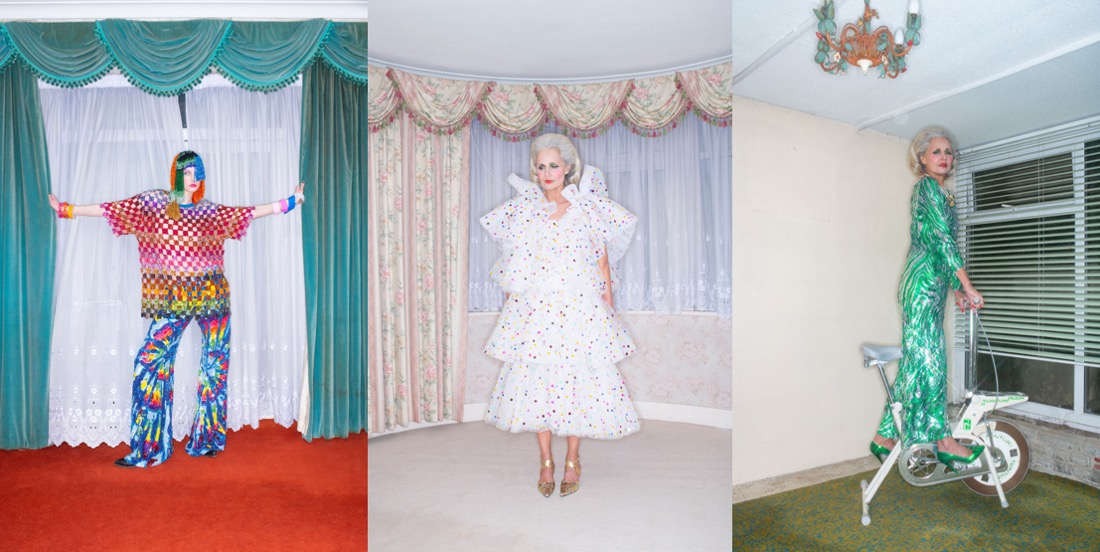
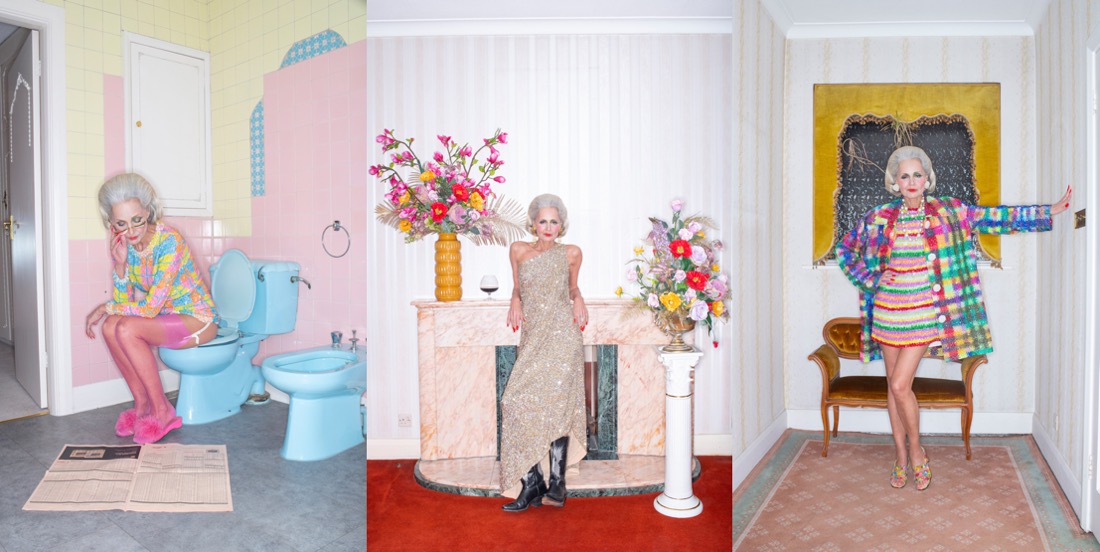
“Live” collage by Edward Kanarecki.

Walking Amulets. Stella Jean AW21

Stella Jean is the pioneer of ethical fashion, long before it became the new standard in the fashion industry. Moreover, Jean doesn’t shy away from controversy or important causes. She has been a fierce spokesperson bringing awareness of racial inequalities in the Italian fashion system to the fore, pushing the industry to answer tough questions and to bring about effective change. In her practice as a fashion designer, her commitment to celebrating multiculturalism and the creative contribution of minorities and marginalized communities in her collections goes back a long way. Her label was actually born out of her desire to pay homage to her Haitian-Italian roots. For autumn-winter 2021, she partnered with the Food and Agriculture Organization of the United Nations (FAO). Through its Women’s Committee, she teamed up with the Mountain Partnership Products initiative (MPP), which provides technical and financial support to small communities of producers and artisans in remote rural and mountain areas around the world. Jean was introduced to the work of Kyrgyz women from Barskoon, a settlement at 1,750 meters elevation in the northeast of Kyrgyzstan. The area is known for inlaid felt carpets and wall hangings traditionally handcrafted by women, using techniques passed down from generations. “When I saw all that beauty, the richness of the colors, the symbology, the history behind this culture, I was blown away,” Jean told Vogue on a Zoom call from her home in Rome. “These women are custodians of a naturally circular economy, totally equitable, and with the lowest environmental impact.” Jean connected remotely with the Topchu artisanal collective there with MPP’s support. Working with a local designer based in Bishkek, she came up with a capsule collection of five pieces featuring Kyrgyz embroidery in felt work. Jean chose simple shapes that can be easily replicated; artisans in Italy cut the patterns and sent them to Kyrgyzstan, where they were embroidered by the Topchu women. Once embroidered, the pieces were sent back to Italy to be assembled. “From next season, the collective can work on the patterns as they wish, creating new items that can be sold and bear profit,” she explained. “The patterns are not mine; I don’t own them. And the beautiful felted decorations have only been loaned to us – they’re theirs. The Kyrgyz women can source textiles locally, producing independently from outside partnerships. We’re not their saviors. We just have to accompany them, and then let them go find their own path. I think this a healthy, participatory way to look at globalization.” Jean integrated the Topchu collaboration into her collection beautifully, while also continuing to support a network of women artisans in the Umbria region, who made specially commissioned pieces, like a fabulous fringed wool poncho handcrafted with imaginative 3D ornamentations. For their part, the Kyrgyz artisans worked on simple wardrobe staples, energizing them with their vibrant decorations in saturated colors. The capsule comprises five looks: A sweeping hooded cape and a slim city coat in Prince of Wales checks were both embroidered with colorful motifs of birds and flowers in a mountainous landscape, and an oversized striped cotton shirt was decorated with long-legged herons. The pièces de résistance were two gorgeous skirts – one fitted, the other cut in a trapeze shape- both embroidered all over with the Shyrdak motifs traditionally handcrafted on felt carpets. “Their symbology is ancient,” said Jean. “It brings prosperity and good luck. Those skirts, they’re almost like walking amulets.

Collage by Edward Kanarecki.

Somebody In California Loves You. Raquel Allegra AW21

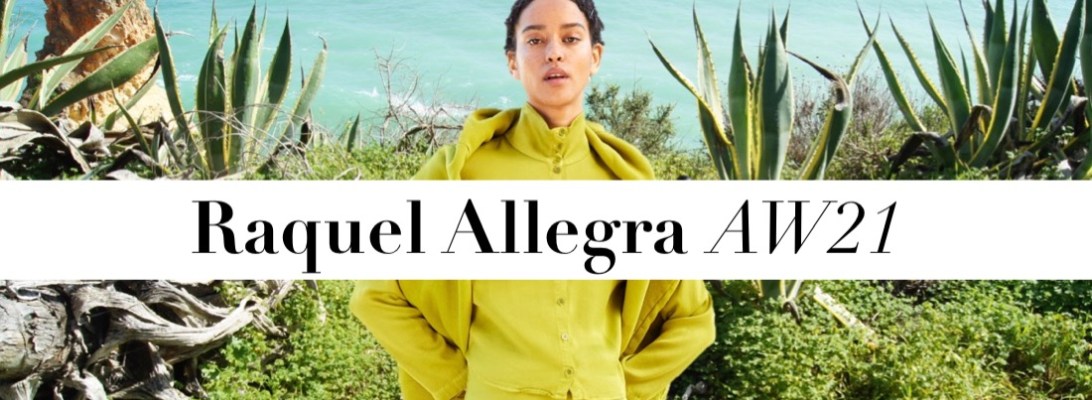
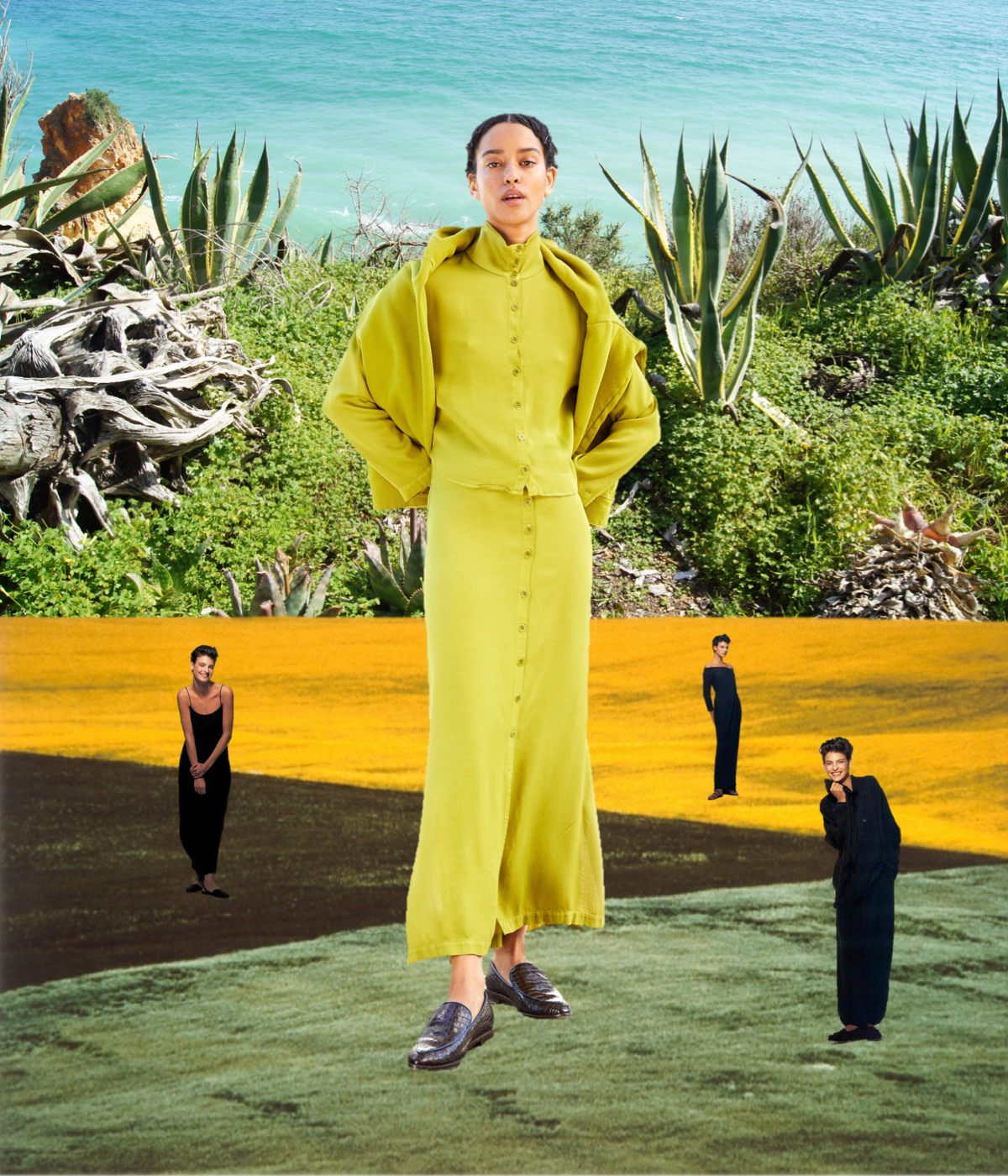
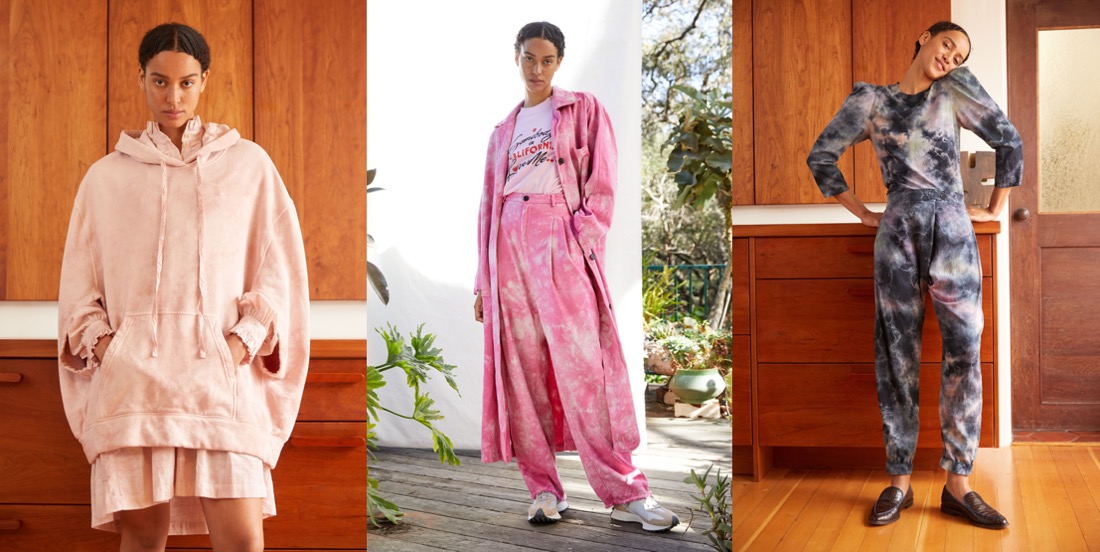
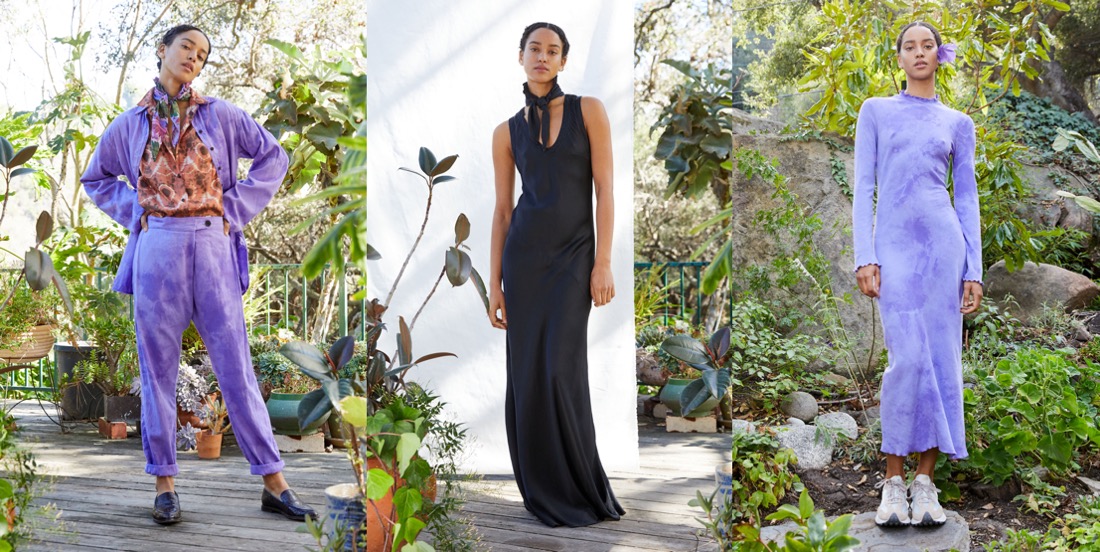
Looking at her autumn-winter 2021 collection, it’s visible that Raquel Allegra has been spending most of lockdown in her garden – it’s the attitude, easiness and colours that say it all. You can even glimpse it in her look-book, filled with lush trees, towering leafy plants, succulents, and flowers growing every which way. Allegra has always strived to feel in communion with her surroundings, but the pandemic awakened a new urgency to bring this more fully into her work. “Human nature: We are of nature, not separate,” she wrote in a letter about the collection. Her artful clothes were a comfort to women stuck at home this year, but it’s easy to imagine wearing them out in nature too, whether you’re gardening in one of her tie-dyed jumpsuits or spending a week in the woods with a duffel of jersey separates and zero cell service. For autumn, she paid closer attention to how her clothes may unintentionally impact those surroundings – namely after they’re already in your closet. Going forward, nearly all of her garment tags will read “machine washable,” not “dry-clean only,” in an effort to avoid the toxic chemicals involved in the dry-cleaning process. Not many brands consider that. Now, her customer can choose her own detergent, ideally a nontoxic one. Allegra said the shift was just as much about streamlining our lives; dry-cleaning is simply a hassle, and it often inspires us to wear our favorite things less often than we’d like. Allegra’s clothes are ultrasoft, but they aren’t meant to be precious; she wants you to wear them every day, wash them when you need to, and repeat. The collection had a great balance of “masculine” and “feminine” details and silhouettes, with hoodies and mannish trousers on one end and sleek, sensual tank dresses on the other. A clever ruffled kerchief lent a bit of Victorian charm knotted over sweatshirts and blazers. And after the year we’ve had, who isn’t craving a little color? Allegra’s new season colour palette is super inspiring, from the shades of lilac to zesty yellow. The t-shirt with “Somebody in California loves you” is another favourite. Topanga coolness!

Collage by Edward Kanarecki.

Cosmic Goddess Power. Mugler SS21 (2)

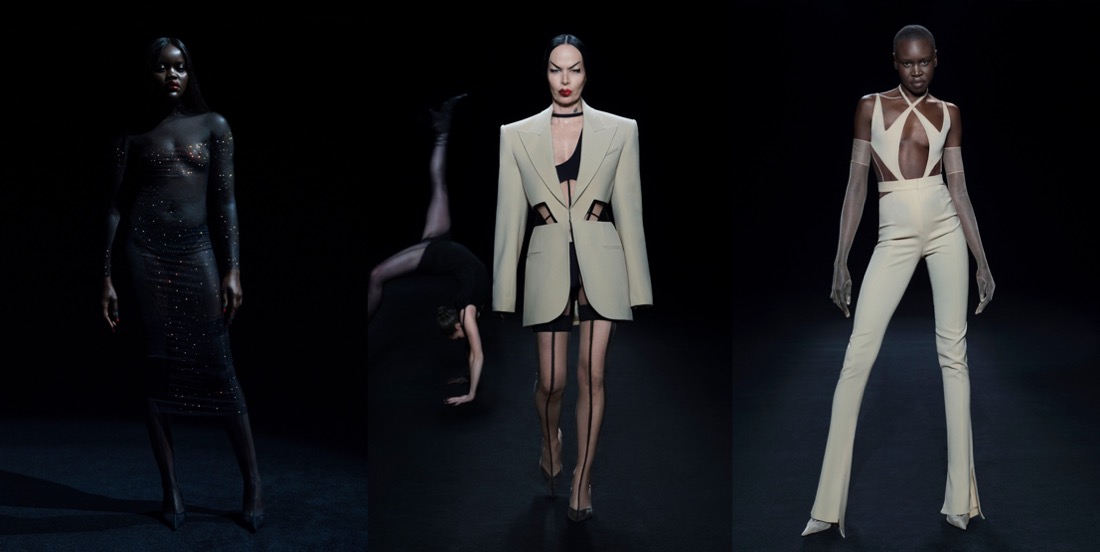
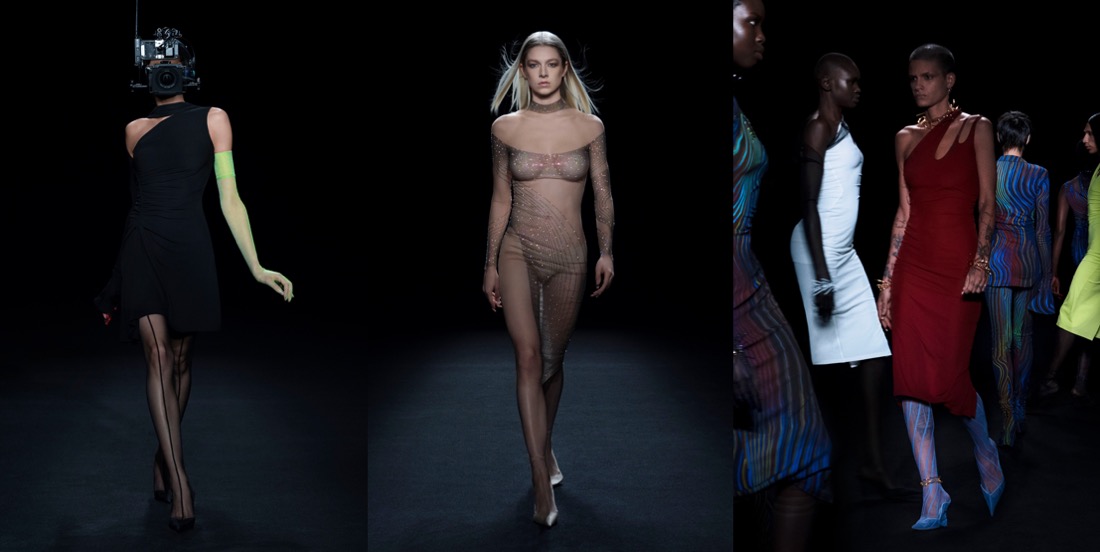
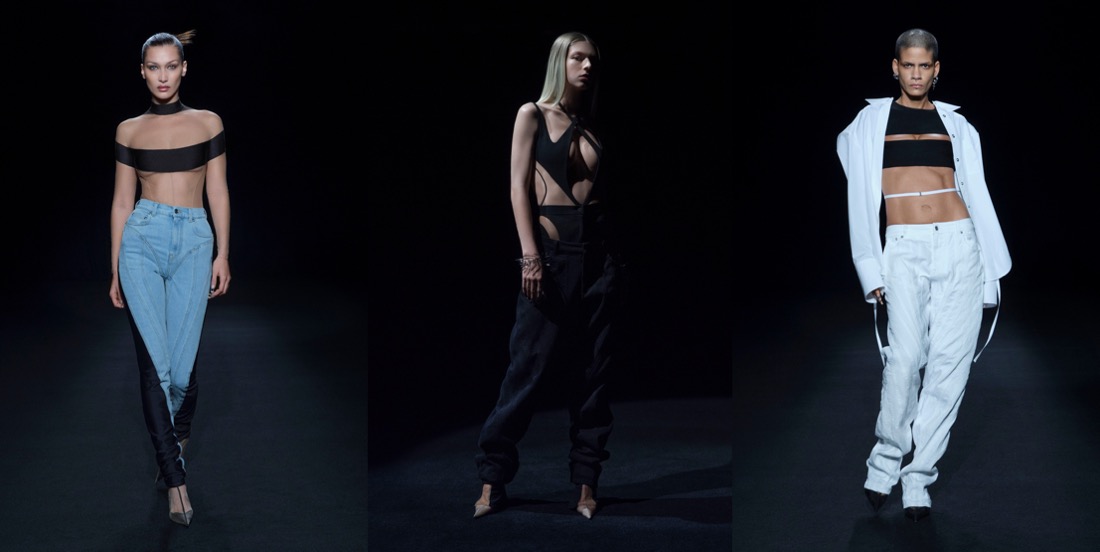
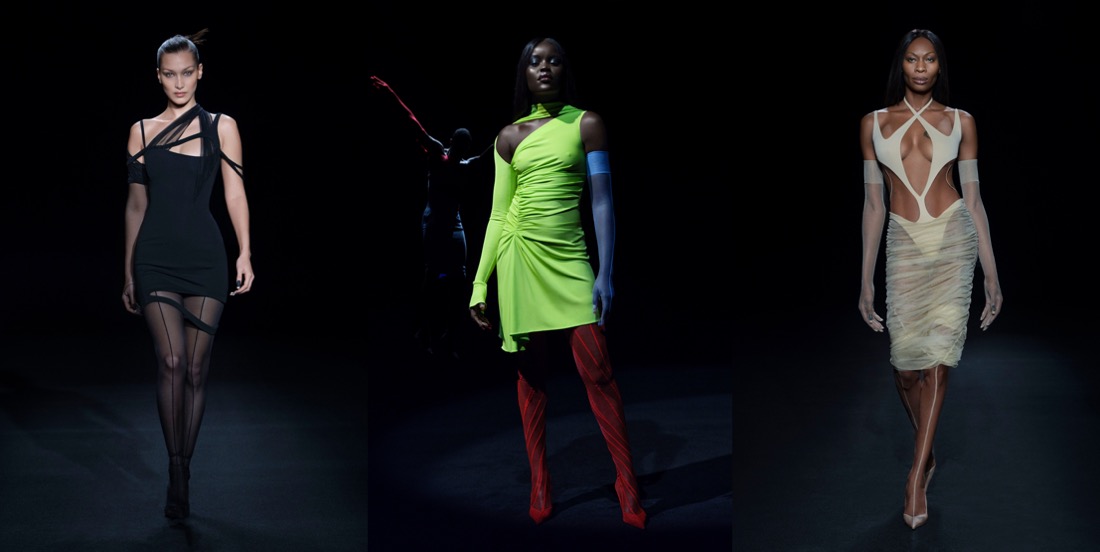
Cosmic goddess power hits the Earth – that’s how one might discover Casey Cadwallader‘s brilliant Mugler collection for spring-summer 2021 (part 2). “It’s important to do the jaw-dropping scandalous stuff; that’s what this house is built on. But it’s also about trying to address an interesting day-to-day wardrobe too,” Cadwallader said. Well, about as “day” as Mugler will ever get. “A lot of young people want to buy Mugler now. I’m trying to do the right thing for the right price,” he explained, pointing to expressive pieces made from recycled Lycra that won’t empty that demographic’s wallets. He’s also thinking a lot about how to elevate sportswear; combining sport with lingerie. Take, for example, the graphic, gravity-defying top that Bella Hadid wears, the one that looks like it’s supported on nothing more than a wing and a prayer, but is in fact a smart combination of fabric technology and illusion. It’s made from a super-stretchy mesh that not only sculpts and smooths the body but also completely disappears against any skin tone. “The idea of shape-wear is built into these garments; there is a lot of attention on fabric technology,” Cadwallader said. “For me, all bodies need to be designed for, not just skinny bodies, although, even skinny bodies sometimes have a bigger butt or boobs and…the clothes help you out with that instead of making you feel bad for having them. I’m celebrating different body shapes.” Cadwallader is having fun making these videos, too. “Should a hyper-charged Hunter Schafer jump off a box onto the runway to drum and bass music? Yes!” he exclaims, of his nine-minute film directed by Torso Solutions, which also stars Kembra Pfahler, Alek Wek, and Dominique Jackson. “I’ve always wanted models to break into dance on the runway or to do something, but when it’s a live show it’s very risky. The runway can be intense and scary, and the audience is often exhausted, but when you’re doing a film you can mess around, play, and edit.” Like deciding to “rewind” and present the whole show backwards, as he does here. The best news? Having just moved the house to a see-now-buy-now model, it’s all available to buy right now.

“Live” collage by Edward Kanarecki.

Joyful Motion. Kenzo AW21

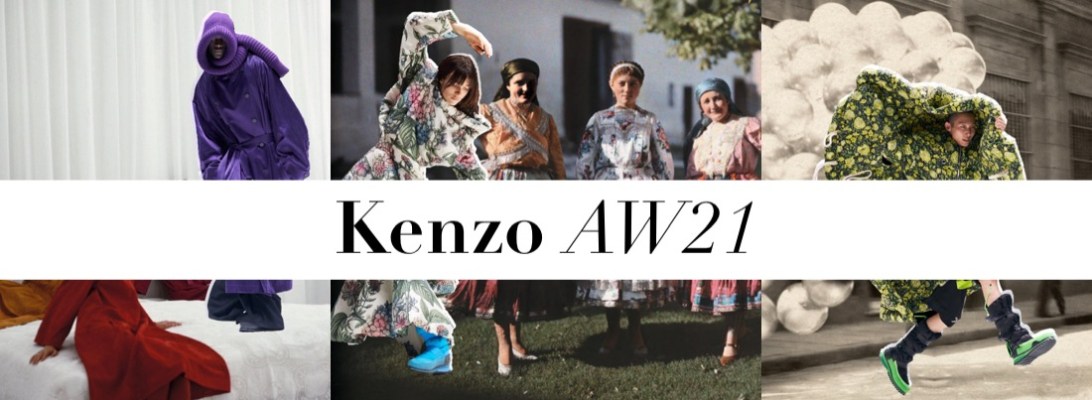
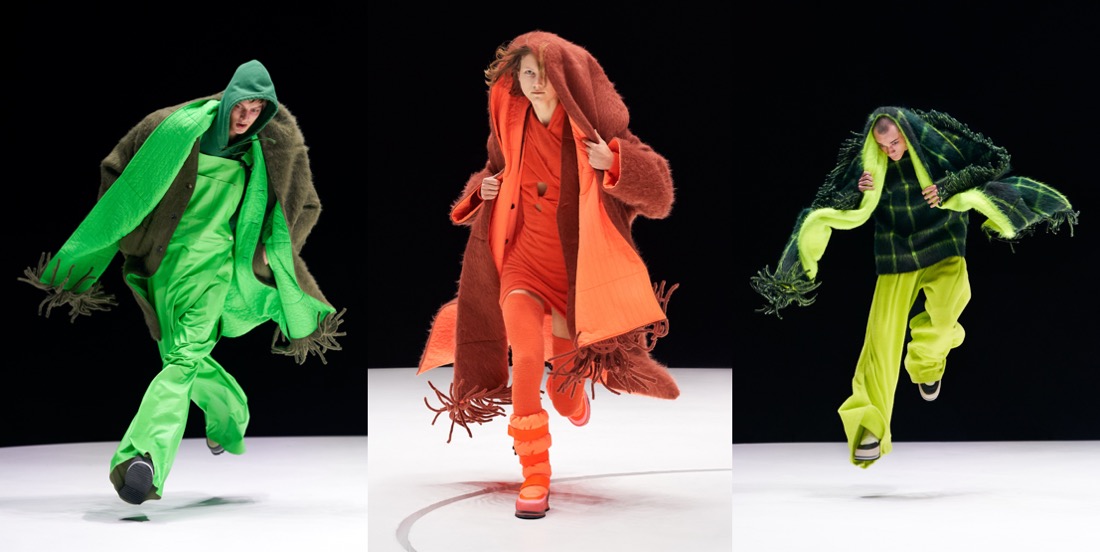
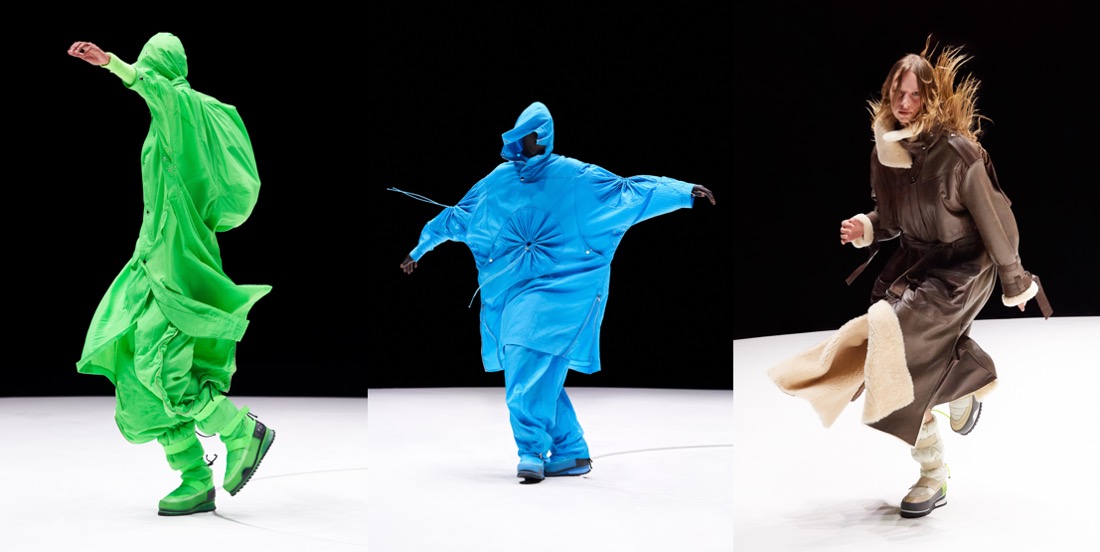
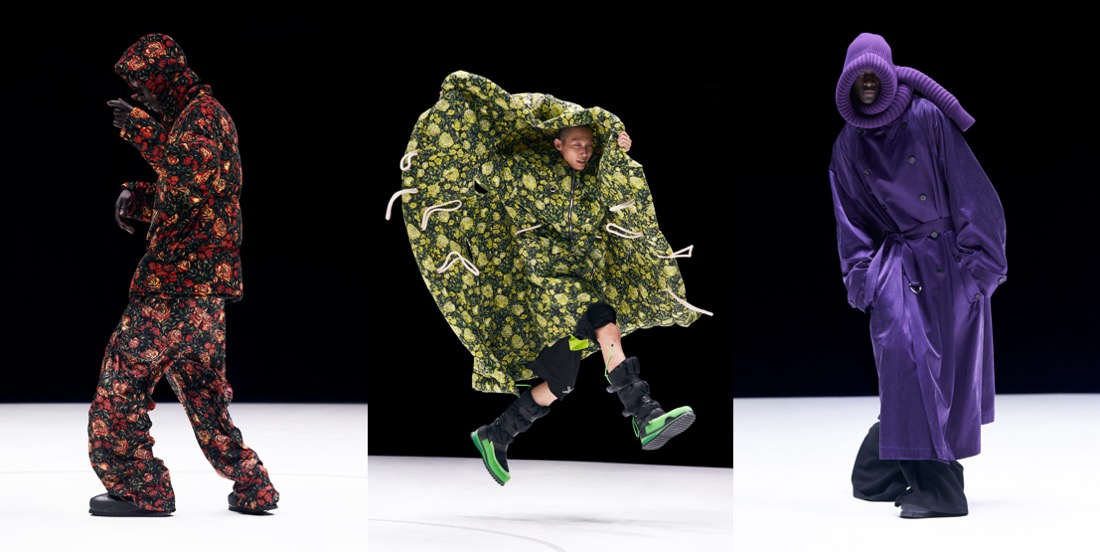
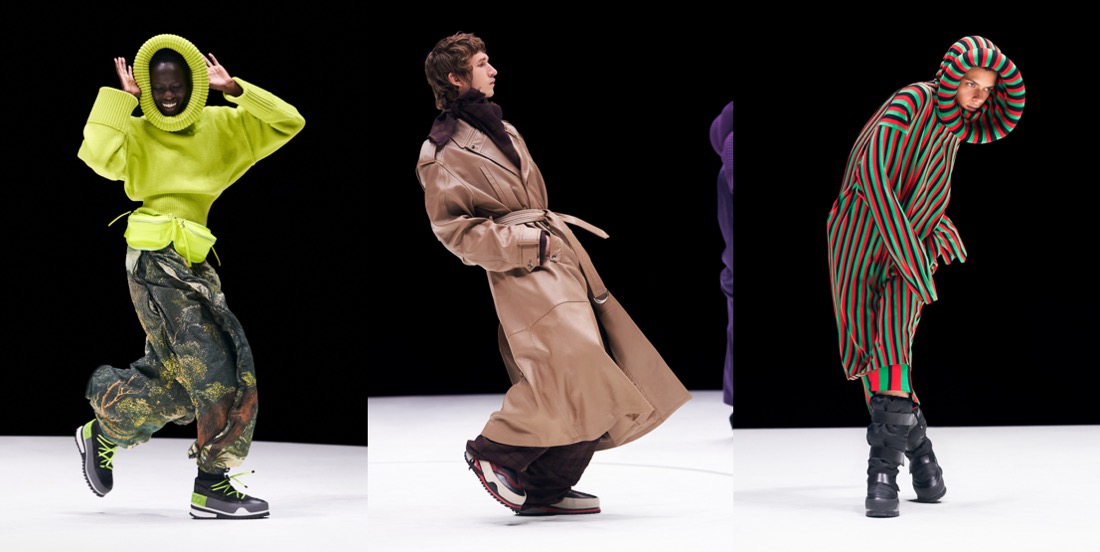
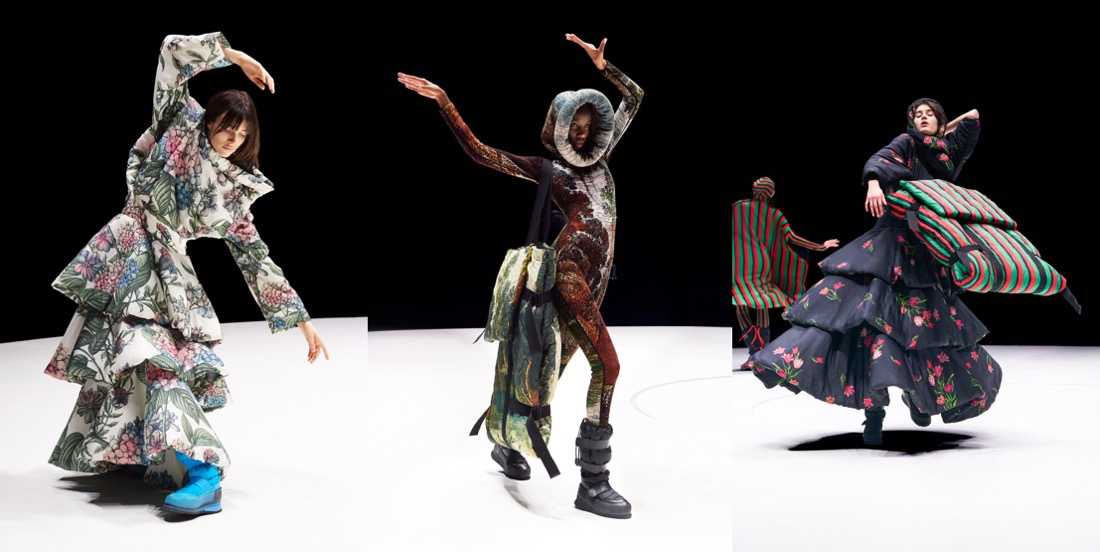
With Felipe Oliveira Baptista, Kenzo is finally back on track. Forget ‘Tiger’ sweatshirts and endless logos – Oliveira Baptista wants to position the brand among the serious ready-to-wear brands, like in the Kenzo Takada days. “Intuition is a banned word at fashion houses these days. It’s as if there’s no space for it. But there was a lot of that in him,” Oliveira Baptista told Vogue, reflecting on the legacy of Takada, who died in October last year aged 81. Sticking to those values, the autumn-winter 2021 collection is dedicated to Takada, yet at the same time, Felipe didn’t reissue a single garment or print from the master’s greatest hits of the 1970s and ’80s. Instead, the designer paid tribute by evoking the founder’s presence through intuitive ideas. Silhouettes riffed on Takada’s most memorable moments through the spherical and orbital, the folkloric, and the cross-cultural. Balancing, as he does, the artisanal with the durable and sporty, Oliveira Baptista simplified and contemporized materials, turning Takada’s geometric lines into a kind of streetwear for a 21st-century Kenzo. Throughout, he painted the garments in the things the founder loved most: pansies, tulips, hydrangeas, and stripes. Honestly, it could have been one of Takada’s shows, shot in the Cirque d’Hiver, where he often presented his collections, with an original soundtrack by Planningtorock (listening it on repeat!) and models dancing in a harmony of shapes, colors, and patterns. Close-up, it was bursting with new life in a performance-y, vivid way. Refreshingly, Oliveira Baptista’s work for Kenzo doesn’t show many signs of pandering to a social media-driven shopping culture as his predecessors.  Before he started working on the collection, Oliveira Baptista was given access to footage of all the old Kenzo shows, which had been undergoing restoration at the time of his arrival. “In the first two seasons, I had only seen the photos and the clothes themselves, so I was struck by the magic of the shows: the intuition, the freedom, how the clothes were always moving. It made me want to portray the movement, the comfort, and the freedom these clothes give you. That’s very much what Kenzo stood for,” he explained. All those things felt like good timing for a post-lockdown proposal. Felipe is looking forward to digging into ‘true’ Kenzo even deeper in the next months. “He was quite revolutionary. When he first arrived in Paris, the way he was cutting clothes and playing with color was so different from the European way of constructing garments. That immediately gave women and men a new freedom of movement,” the designer said, reflecting on Takada’s fashion. “It’s not that he doesn’t have the place he deserves, but sometimes what he’s done is overlooked. The idea of extreme comfort in a very strong look feels very now. He did that first. It’s a very rich legacy.

“Live” collage by Edward Kanarecki.