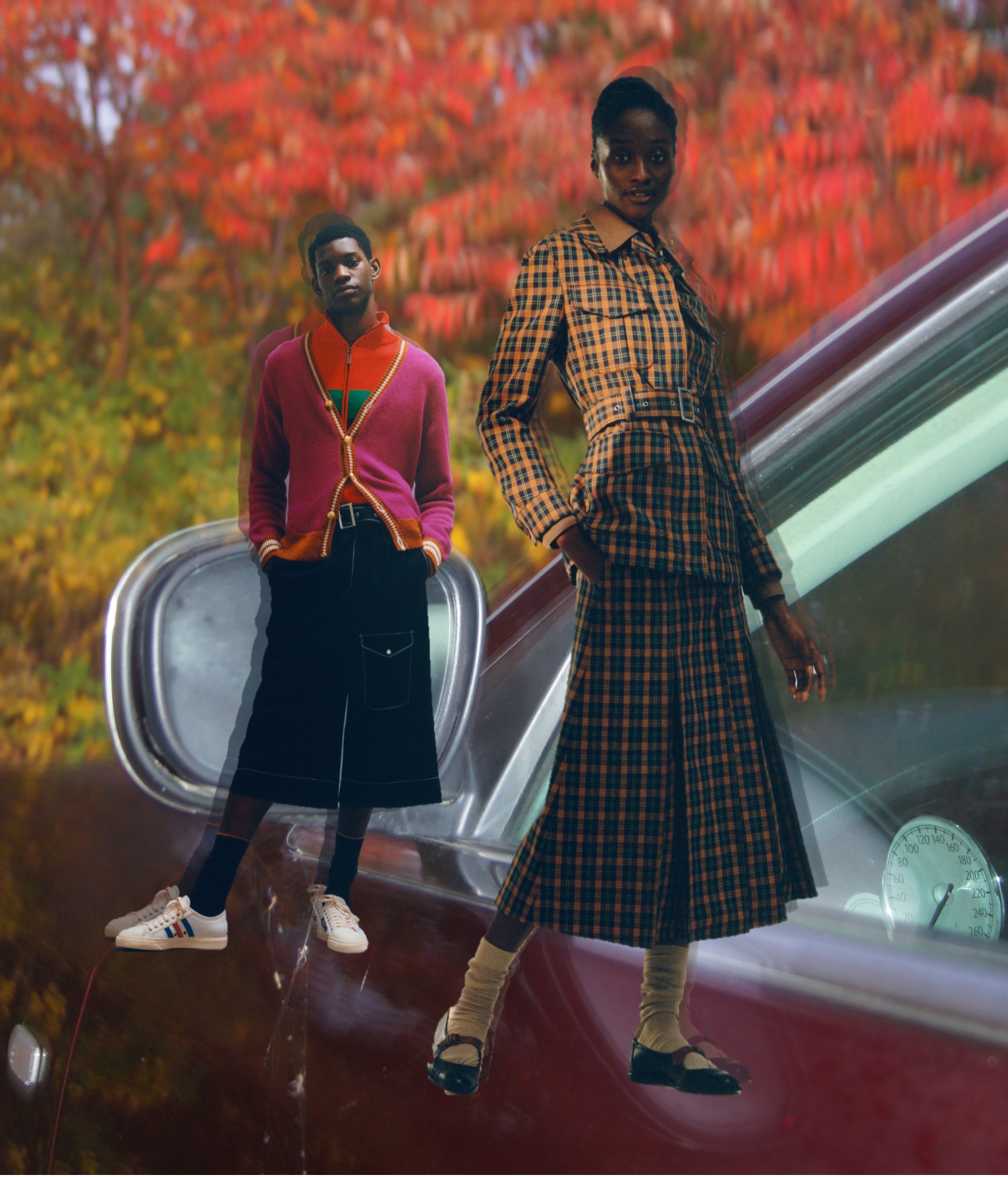
Worlds Between Worlds. Wales Bonner SS21

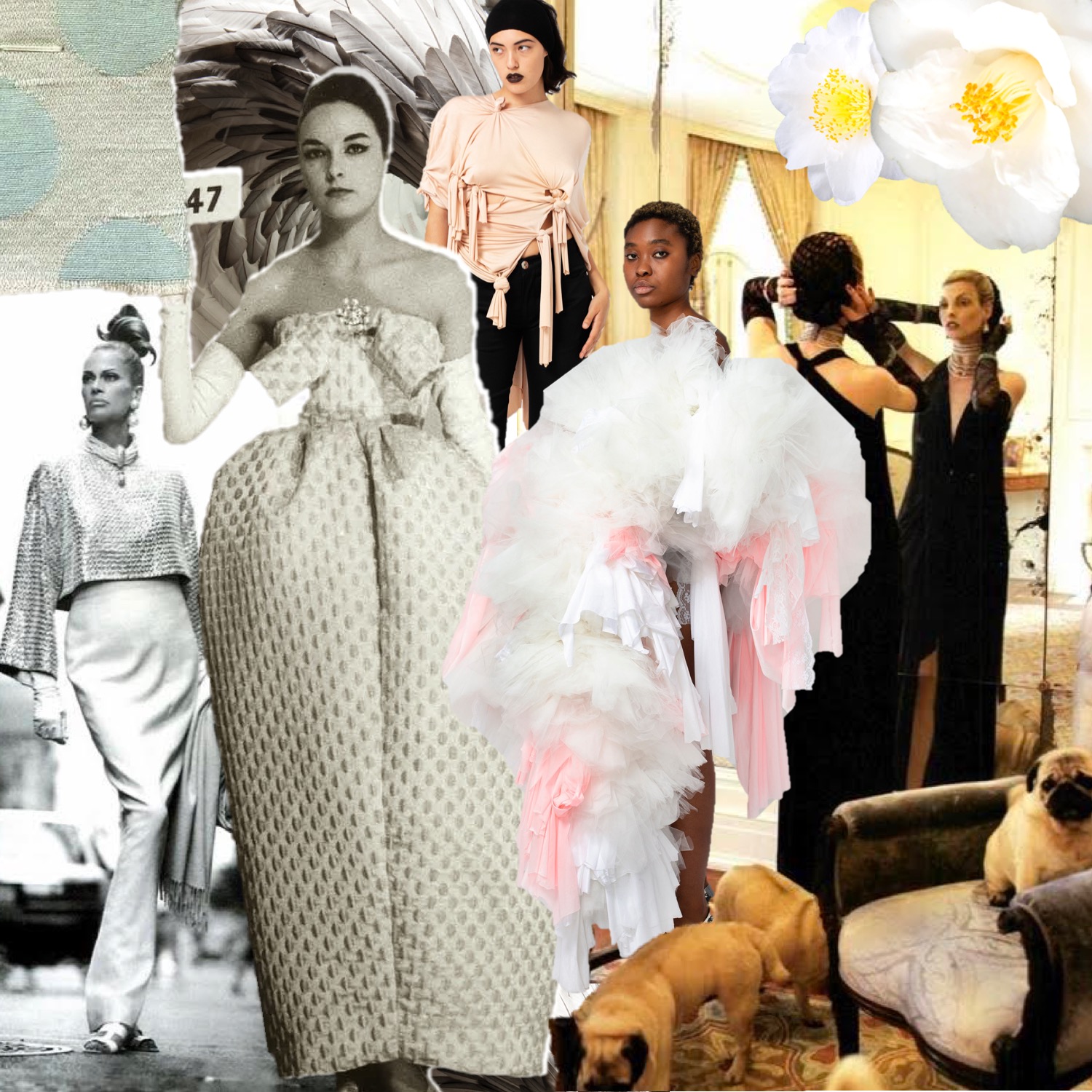
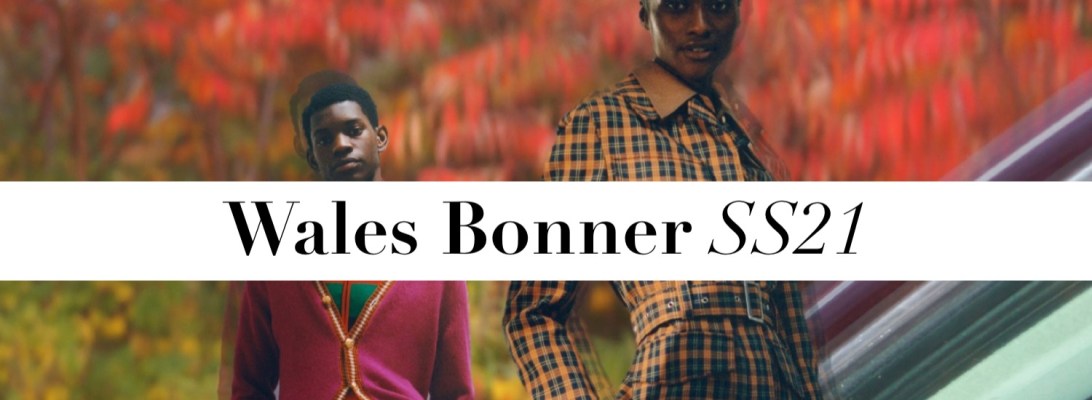
With digital shows and presentations, it’s quite difficult to geo-locate, and while Wales Bonner is a London-based label, it’s presenting spring-summer 2021 as part of Paris Fashion Week. What Grace Wales Bonner has been proposing throughout her career is a concept that has now, finally, come toward the forefront of fashion: exploring Black culture and aesthetics with the same nuance and consideration that has long been afforded Eurocentrism. This season, alongside a look-book photographed by Sean and Seng, the designer remotely worked on a film with director Jeano Edwards to present an immersive, intimate snapshot of Jamaica, and has created a digitally available zine to further expand on her research process. There is a piece in it written by Mahfuz Sultan, where he describes the importance of “Grace’s poetic interstices, the worlds between worlds, where Africa, India, and the islands touch as if on a dance floor…at least for those of us who, like Malik Ambar or Aimé Césaire, have spent our lives on the postcolonial circuit, flickering in and out of other stories as shades, exiles, ephemera.” It is that illumination that has forged a pathway for London’s array of emergent non-white designers: a flourishing generation following in her footsteps and narrating their own histories and identities. “There’s always been a continuity to the way I’ve worked, because I’ve expressed who I am and my position quite clearly since I started,” Wales Bonner says. Now, she continues: “When people expect me to have some point of view on what’s been happening…well, I feel I’ve tried to show that over the past five years. There are certain things we’ve always known. It’s more that now, other people are catching up.” This season that sense of continuity, and of Wales Bonner applying her microscope to regularly marginalized narratives, was more explicitly visible than ever. Instead of taking a new era as her starting point, she zoomed in further on her deeply personal autumn 2020 offering: an exploration of Lovers Rock and the second-generation Jamaican community of 1970s London. While last season was situated in Lewisham, and within the wardrobes of her father and his friends in late-1970s London, this time she located her perspective in early-’80s Jamaica. “It’s been a really wonderful exercise to be able to go into more depth and reflect on research over a more extended period,” she notes. Having visited Kingston just before the pandemic hit, Wales Bonner had already begun her research. An exhibition on dancehall culture at the National Gallery of Jamaica, alongside a meeting with curator Maxine Walters, had directed her toward figures like reggae icon Augustus Pablo who’d wear “incredible shirts with amazing, elongated cuts, which felt very British.” During a trip to Bob Marley’s house, now a museum dedicated to his life, she was struck by a pair of World War II military trousers he’d cut into football shorts: “a connection to Britain transformed, and then integrated into his lifestyle.” “While the first collection was about viewing the Caribbean community from a British-centric perspective, this one is thinking about a similar community in a completely different place,” she explains. “I was interested in British clothes that ended up in the Caribbean and were transformed by how people put them together and their context.” While she notes that the diaspora wore their heritage “exaggerated, extreme, and brighter, showing their connection to Jamaica in a louder way” on the island, particularly among its dancehall musicians, she discovered that there was a more pronounced emphasis placed on the aesthetics of Britishness. “There was a classicism that was celebrated and romanticized,” she continues. “There was a certain sense of sophistication of having something European.” So the shirt-making traditions of Jermyn Street, or the Savile Row tailoring that has long been one of her fixations, found new resonance in a striped nightshirt she describes as “the Stockwell dashiki,” or a “Kingston caftan” in tailoring wool. Flashes of jockey silks, or near-luminous knit cardigans, injected a proud flamboyance; a woven jacquard jacket, developed from West African wax textiles, translated bold 1970s geometrics into the Wales Bonner world. Her womenswear, which has often taken a preppier tone than her men’s, relaxed into ribbed knitwear with handcrafted crochet stripes, or a fringed, flowing dress, but a checked box-pleated skirt suit retained her particular take on feminine formality. “The collection is called Essence, and in a way, I was taking this time to reflect on what is essential within Wales Bonner,” she says. “How do I reflect the brand DNA in everything that I do?” That sentiment was echoed in Wales Bonner’s partnership with Adidas Originals, which has only been integrated in glimpses before, but took center stage this season, yet, rather than appearing like a commercial collaboration, seemed rooted in synchronicity. The brand’s research team, she explained, were able to source a wealth of archival imagery for her, documenting how dancehall musicians had once worn their wares and so the narrow cuts of track pants, or the crops of tailored jackets, have a particular historicism to them. “It’s about reworking pieces from the archive but with a more elegant, or craft sensibility,” she notes of the crochet three stripes, the hand-finished football boots, or the satin finish of fabrications. “What I do is quite subtle, but it’s about attention to detail.” Such a statement could operate as an explainer for Wales Bonner’s practice—and, as it ever has, in 2020 her approach shines.
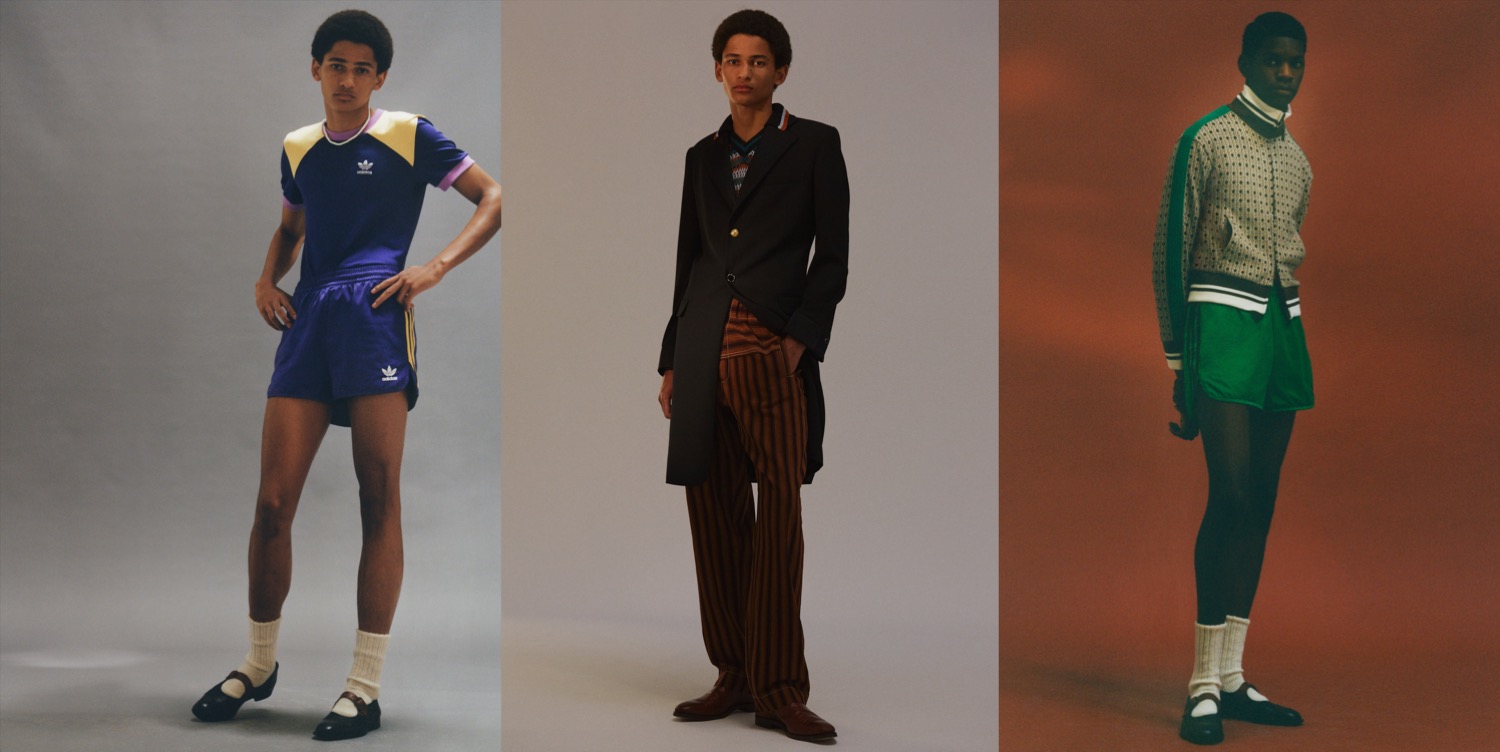
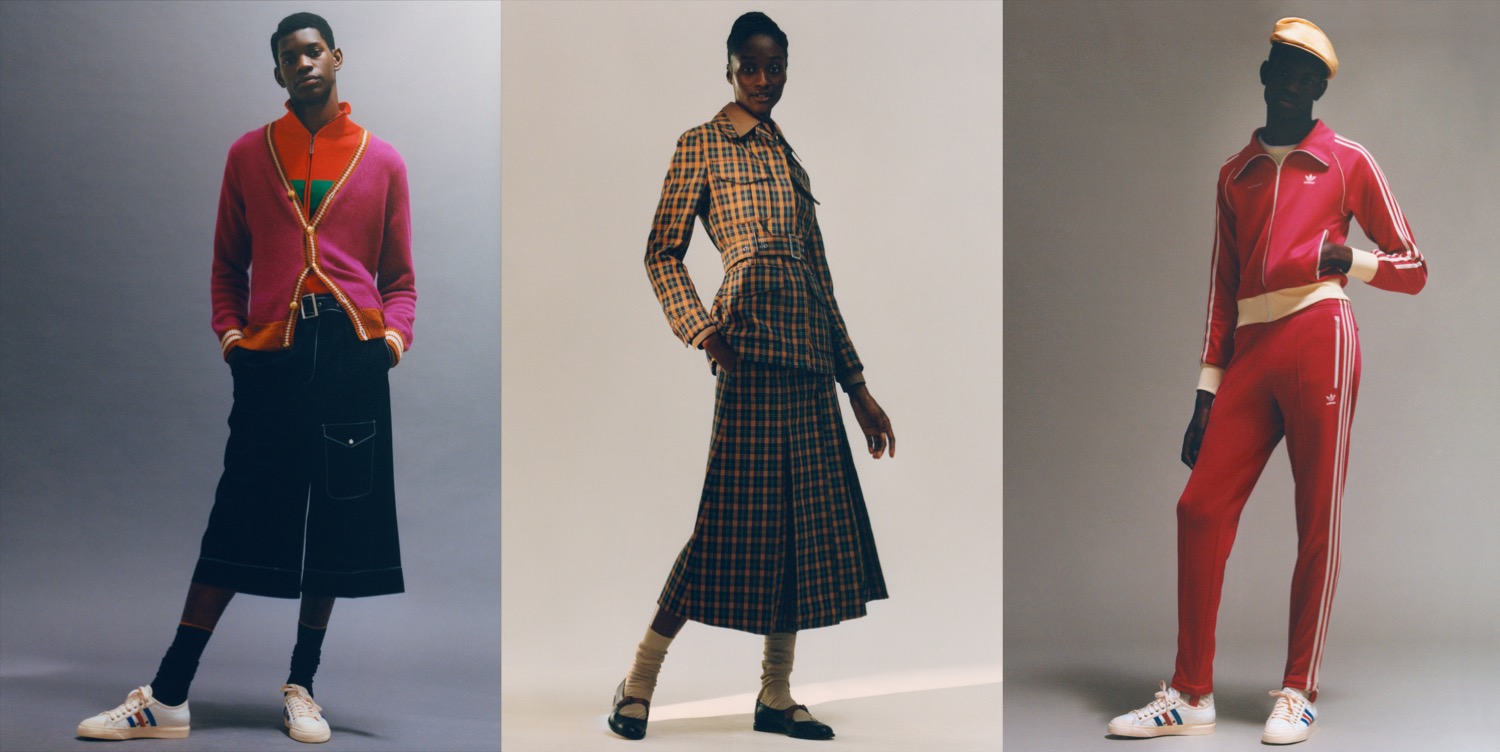
Collage by Edward Kanarecki.

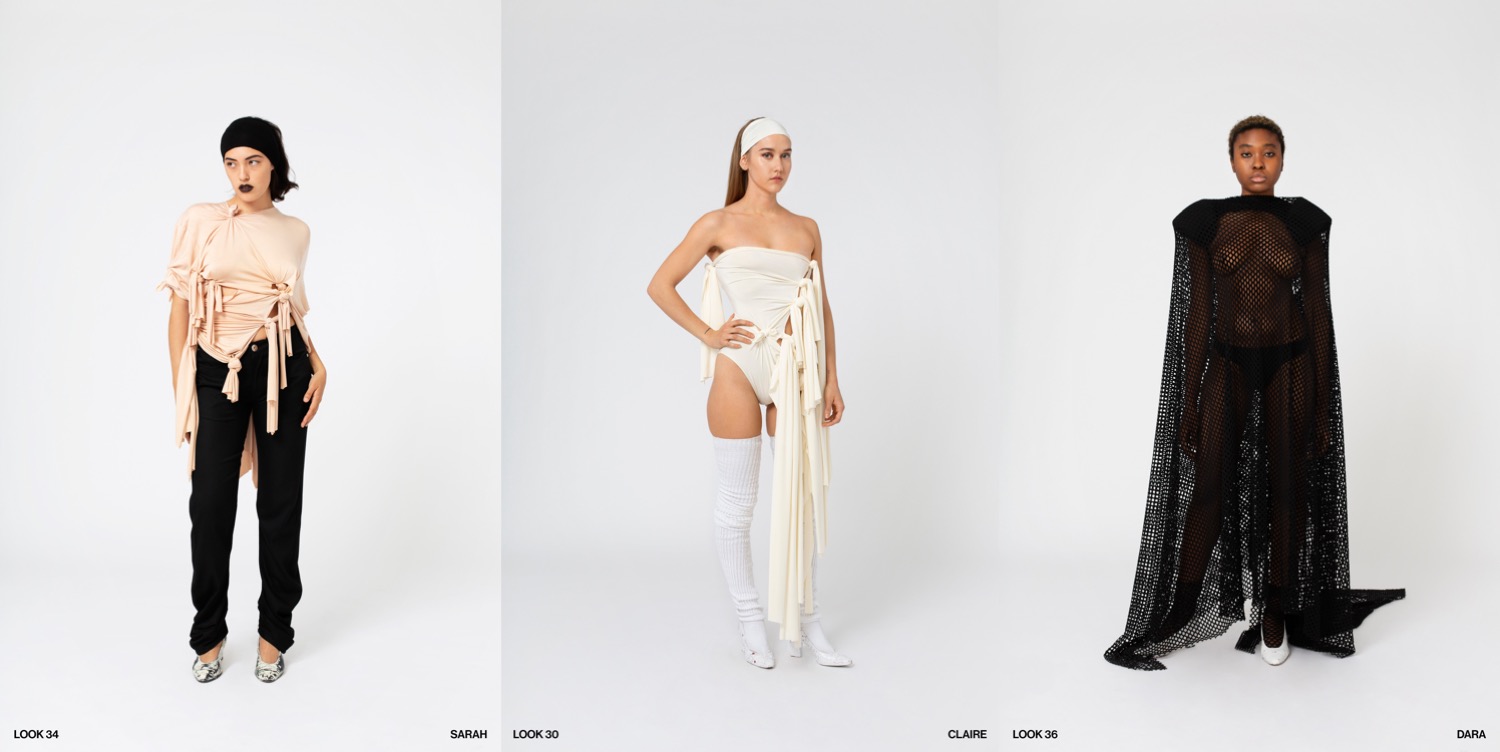
Contemporary Elegance. Vaquera SS21

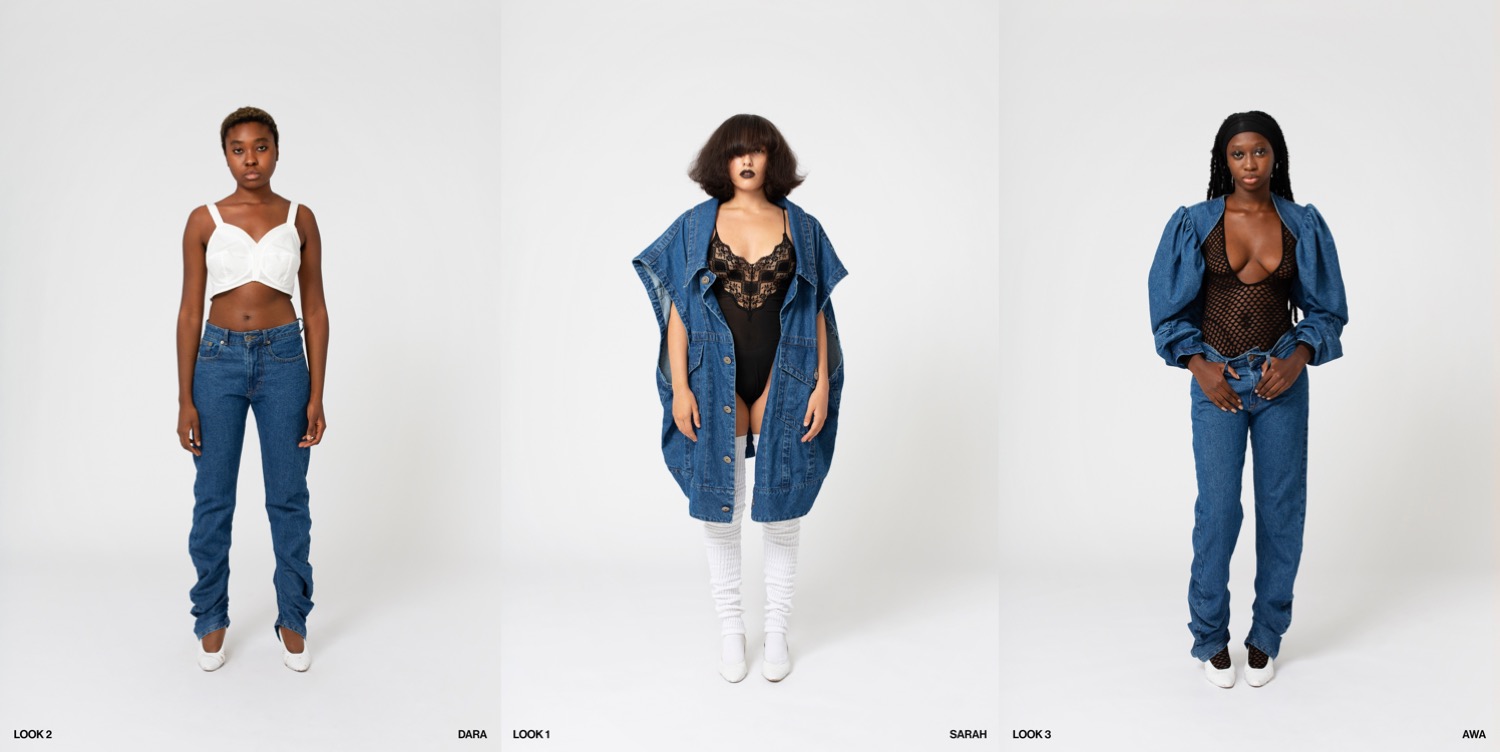
Although digital-live Paris Fashion Week has officially started today, there are still some great collections coming from New York. One of them is Vaquera, a line-up that ironically muses on different kinds of elegance, created by Patric DiCaprio, Claire Sullivan and Bryn Taubensee. Over the summer, one of the most “outsider” brands out there got suddenly certified by the upper echelon of fashion – but not the most common one, though. After hosting their autumn-winyter show back in February, Dover Street Market added Vaquera to the roster of brands it supports through its Paris showroom slash incubator. DSM will help with production and handle all sales and distribution, “the backend stuff that takes us away from being creative,” as DiCaprio put it. The point of the arrangement is that with DSM handling the commercial side of the business, the Vaquera trio can focus on creativity. But the partnership has already impacted how they’re channeling that creativity. “Knowing they’re going to be there on that side helping us with sales was really inspiring, for me at least,” DiCaprio continued. “We were like, ‘Let’s make this skirt perfect and the fit really nice and make these fabrics really good so they look good in their showroom.’” Their new collection is a sort of codifying of the Vaquera ethos and aesthetic. Wearability has been emphasized without forsaking too much of their hold on weird. So side by side there are washed denim jeans cut to fit both guys and girls and a Little Bo Peep cosplay outfit in white canvas and croc-stamped vinyl. Mixing with twisted bankers stripe shirts and oversized suiting is a tutu explosion in an amorphous body-obscuring shape of the kind you might see on a Comme des Garçons runway. “We were inspired by what we want to wear, what our friends are wearing, who we’re with,” Sullivan elaborated. “That’s so much of what Vaquera is: context, reference, culture. What do you wear, what do I wear, how do we make it Vaquera?” In certain neighborhoods of New York this summer it wasn’t unusual to see women wearing their bed clothes on the street, one of the many impacts of months in lockdown. In the look-book, that translates from innerwear to evening-outerwear. What makes it Vaquera is that all genders sample the retro bra tops and the satin and lace teddies affixed to T-shirts. New, never-average, edgy elegance for whoever feels it.

Collage by Edward Kanarecki.
The Secret of Life is in Art. JW Anderson SS21

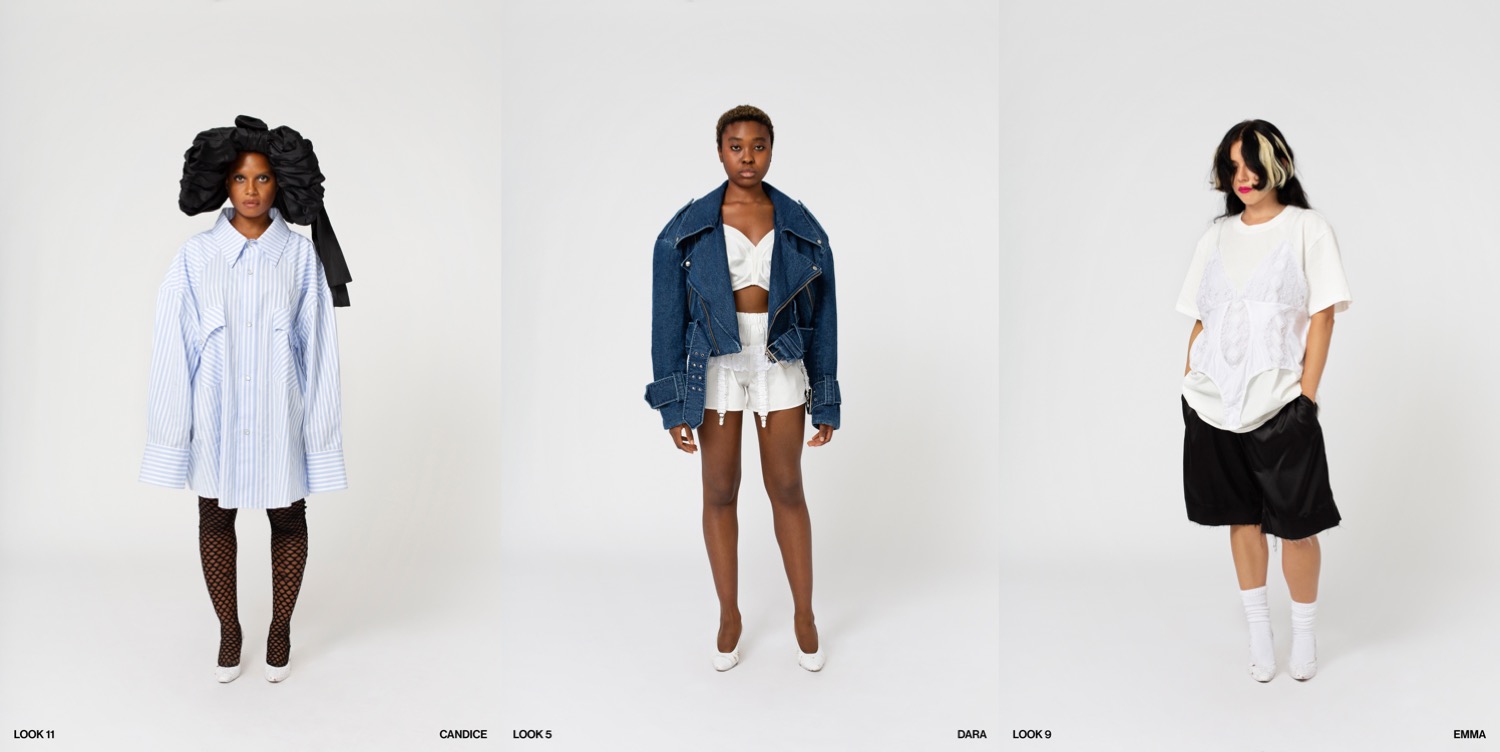
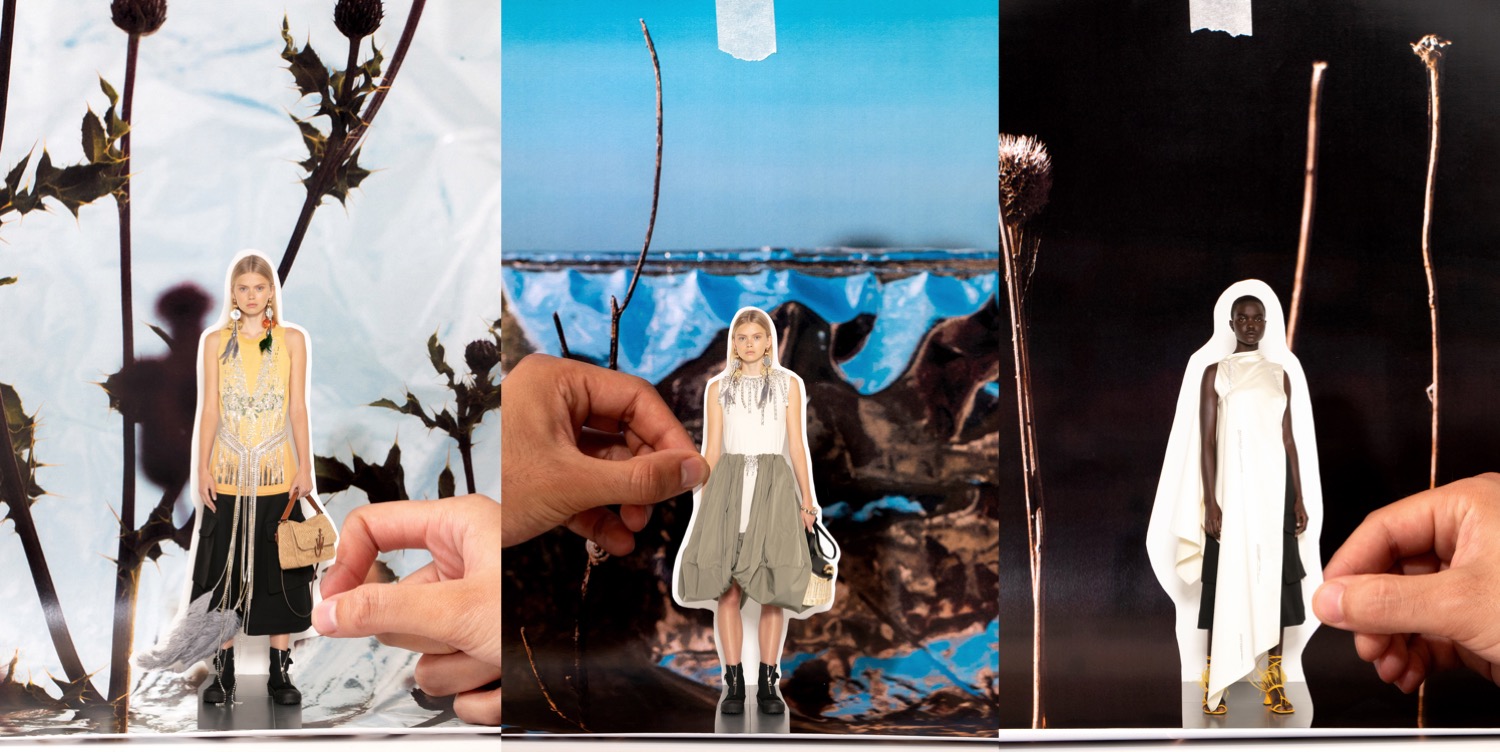
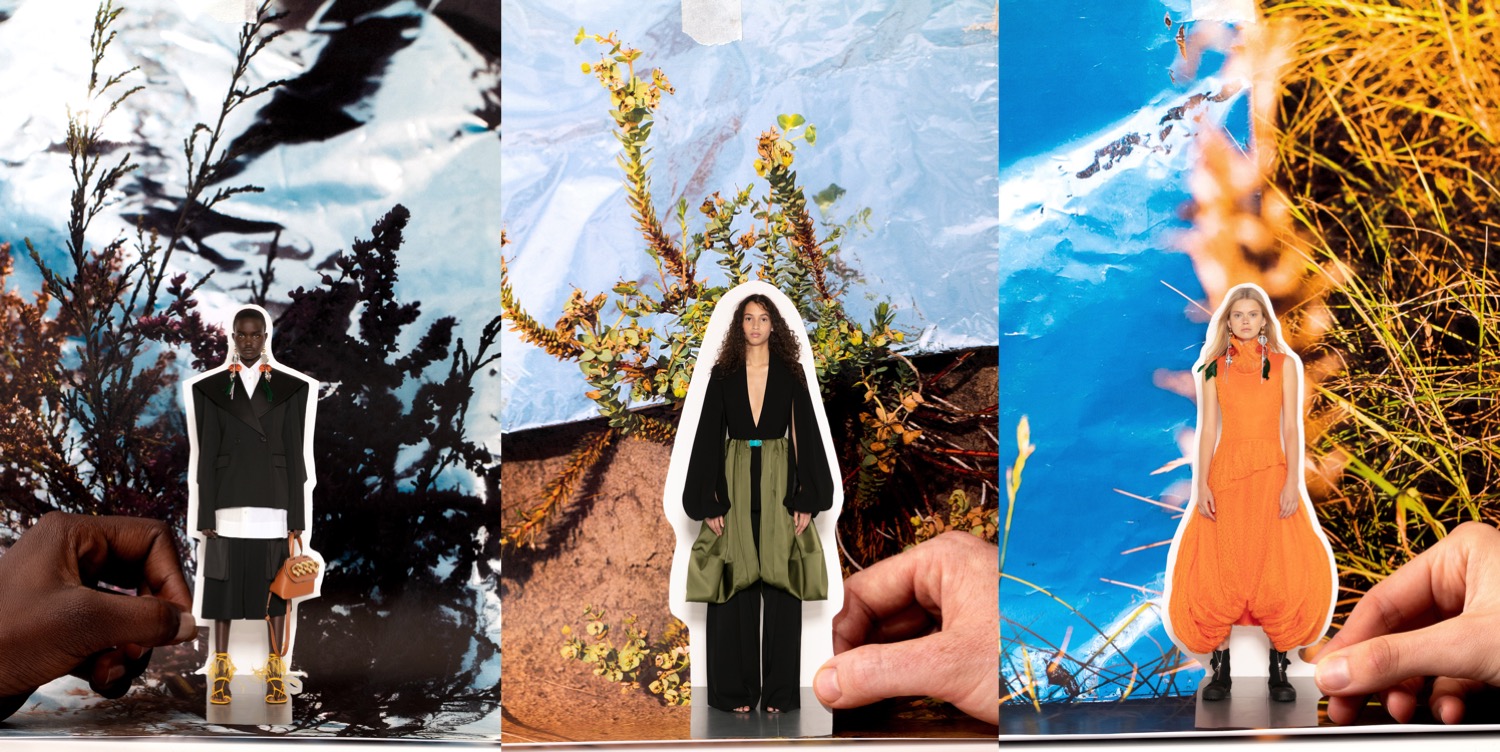
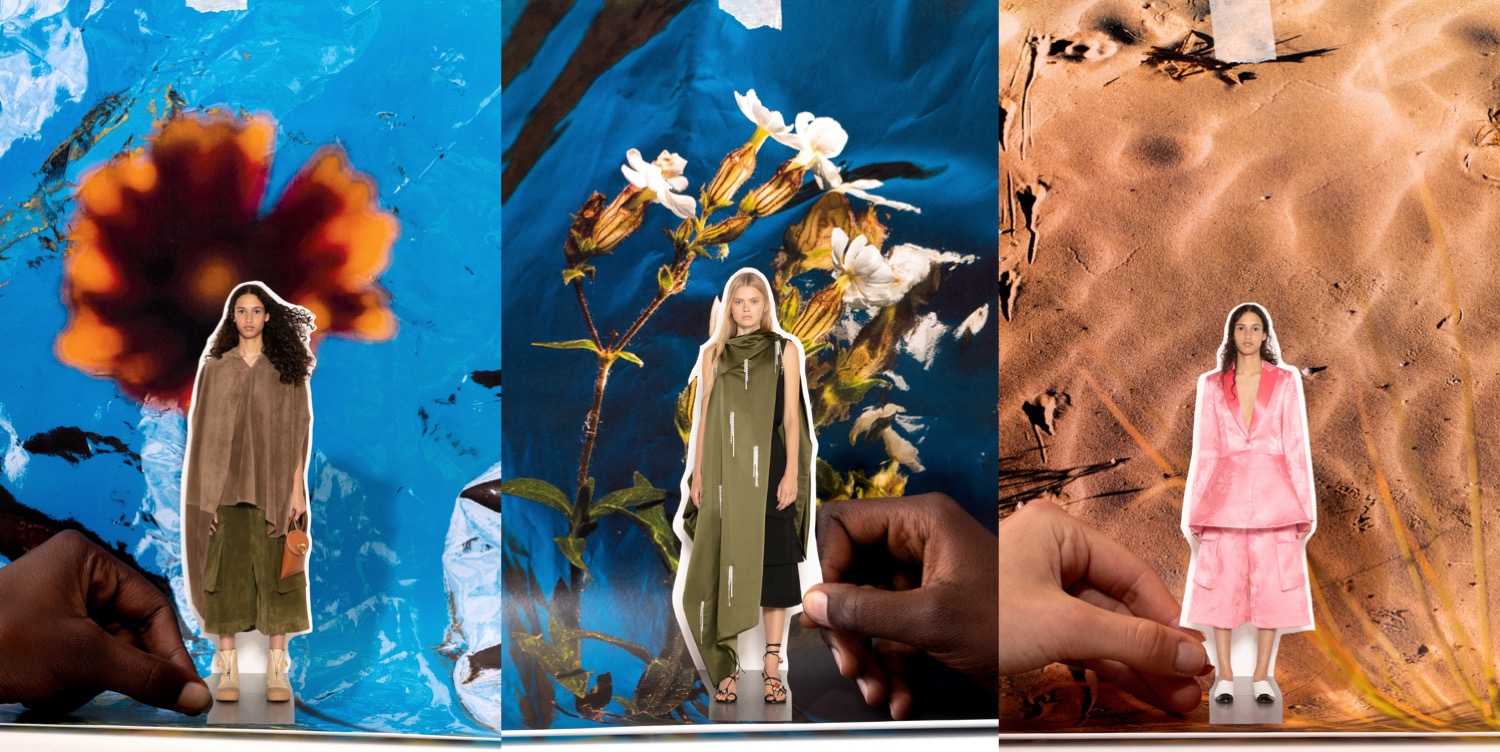
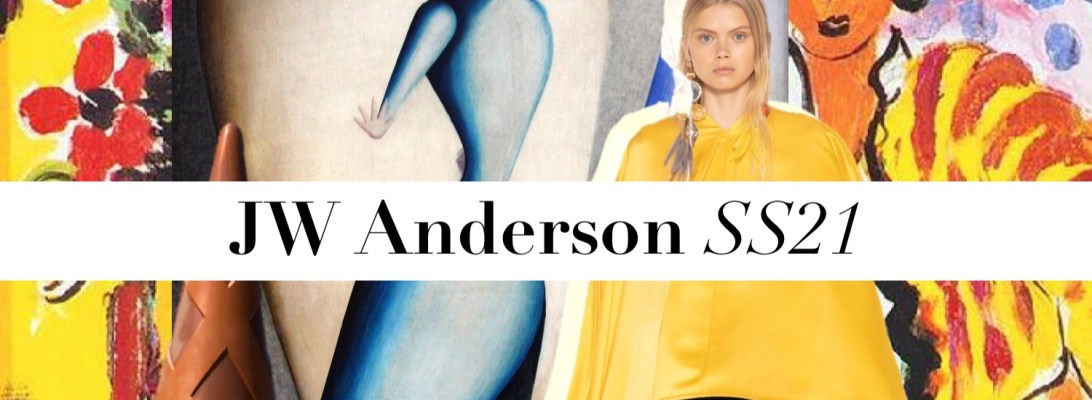
This is one of those JW Anderson collections that need no special explanations or expansive moodboards. It’s just so, so distinct to Jonathan Anderson‘s edgy style codes, that you can’t mistake it with anything else, really. Instead of a livestreamed fashion show, the press received a package wrapped in Oscar Wilde quotes: a book of papers and prints, and artful photographs all screwed together – and an enclosed gold coin, embossed with another Wilde quote (“the secret of life is in art”). Wilde proved both the literal and metaphorical means to unlock this collection, because, according to Anderson, “he was able to criticise the world but embrace the poetic reason within it; to look at the political, artistic, environmental landscape of his time and have a dialogue with it”. Equally, the writer’s affinity for the one-liner, he continued, felt particularly resonant during a period when that mode of communication reigns supreme. “This government has come up with so many – and I thought, how radical Wilde would be now with his ability to summarise a moment. Right now, people’s attention spans are very short, so things need to be very concise. And the clothing had to read like that, too: something easily digestible like a tuxedo, but with a puffball skirt belted onto it.” This collection was, essentially, an array of JW Anderson one-liners – not basic, but signature. “You know the look and you know that this girl belongs in this house,” he said of a loose-fitted pleated suede top layered over a panelled handkerchief skirt, or a white satin peplum blazer paired with matching cargo shorts. There was jewellery – enormous oversized earrings based on birdcage mirrors, or bejewelled brooches – which could transform almost anything into the spirit of the season and a wealth of easy-to-wear sophistication. But, alongside the fluid cuts likely to be required throughout spring-summer 2021, there was some exceptional tailoring, too. “It was important to grab onto that, onto things like the way in which we’ve explored tuxedos over the past five years, and really nurture it”, Anderson continued. Goodie!

Collage by Edward Kanarecki.
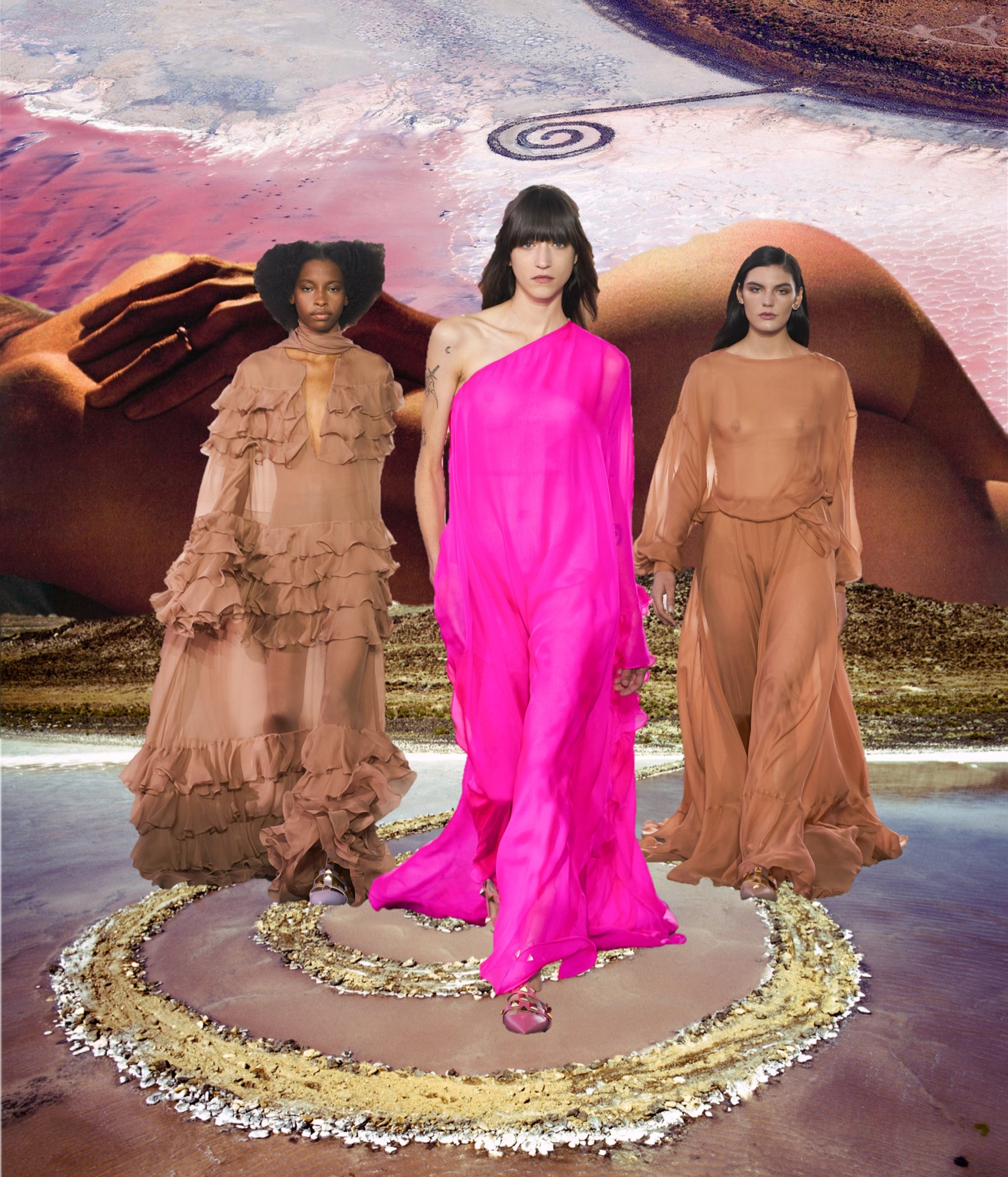
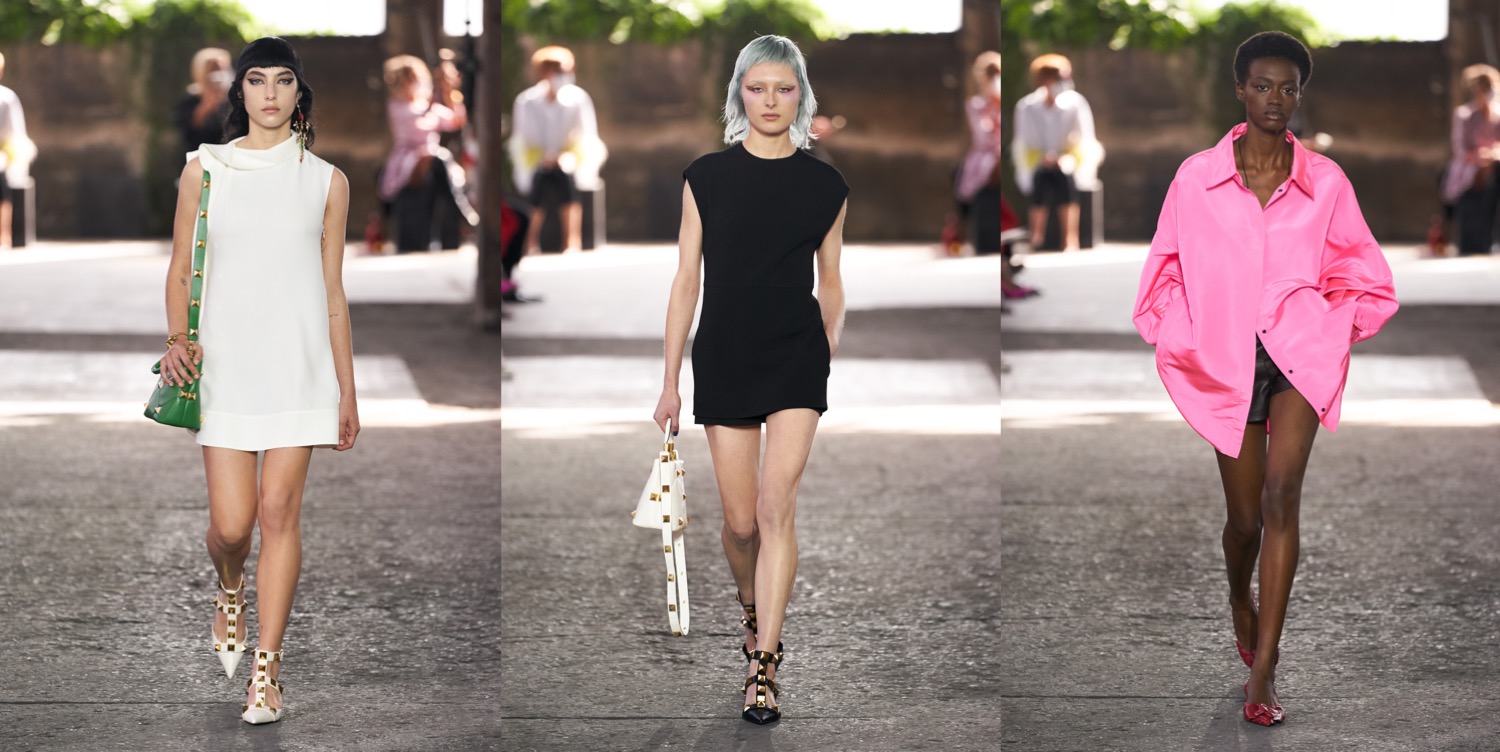
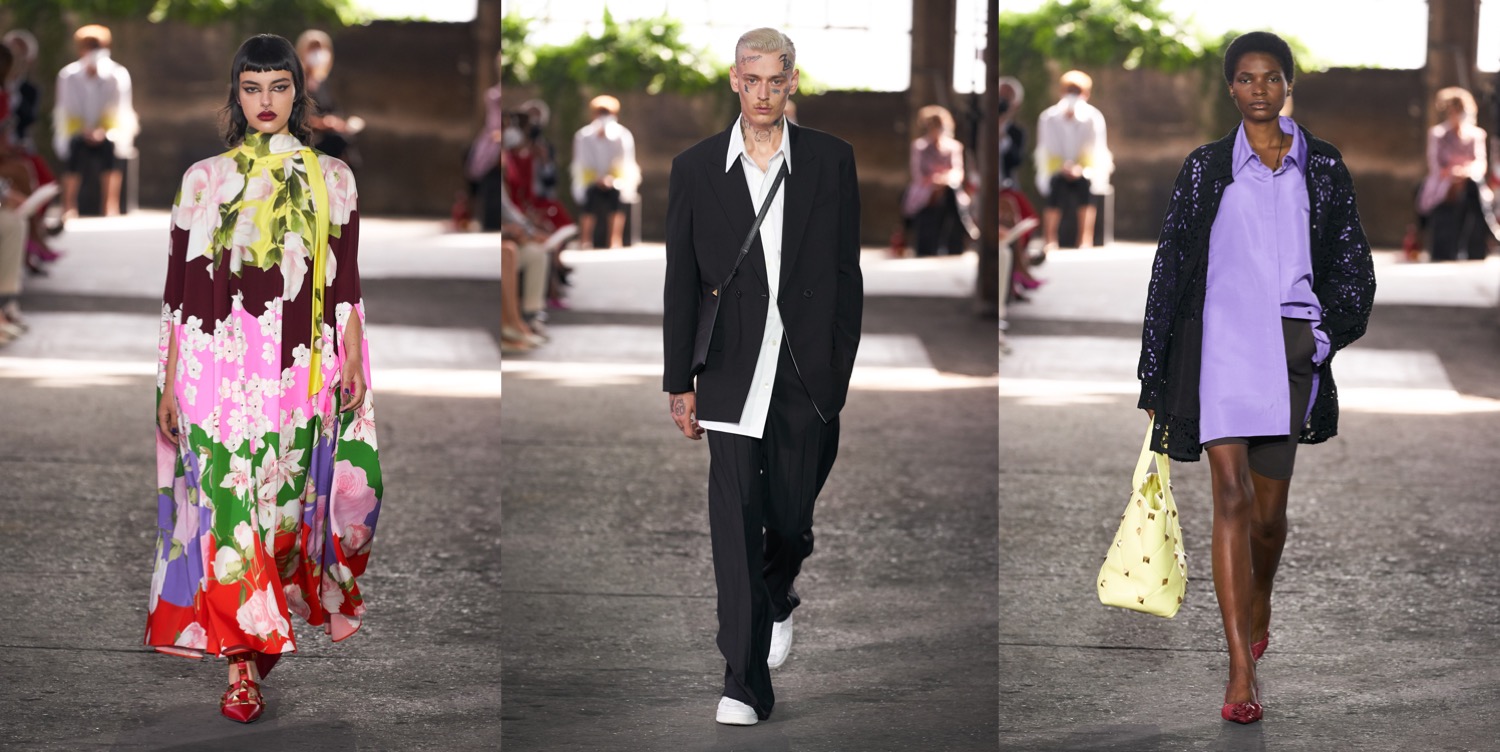
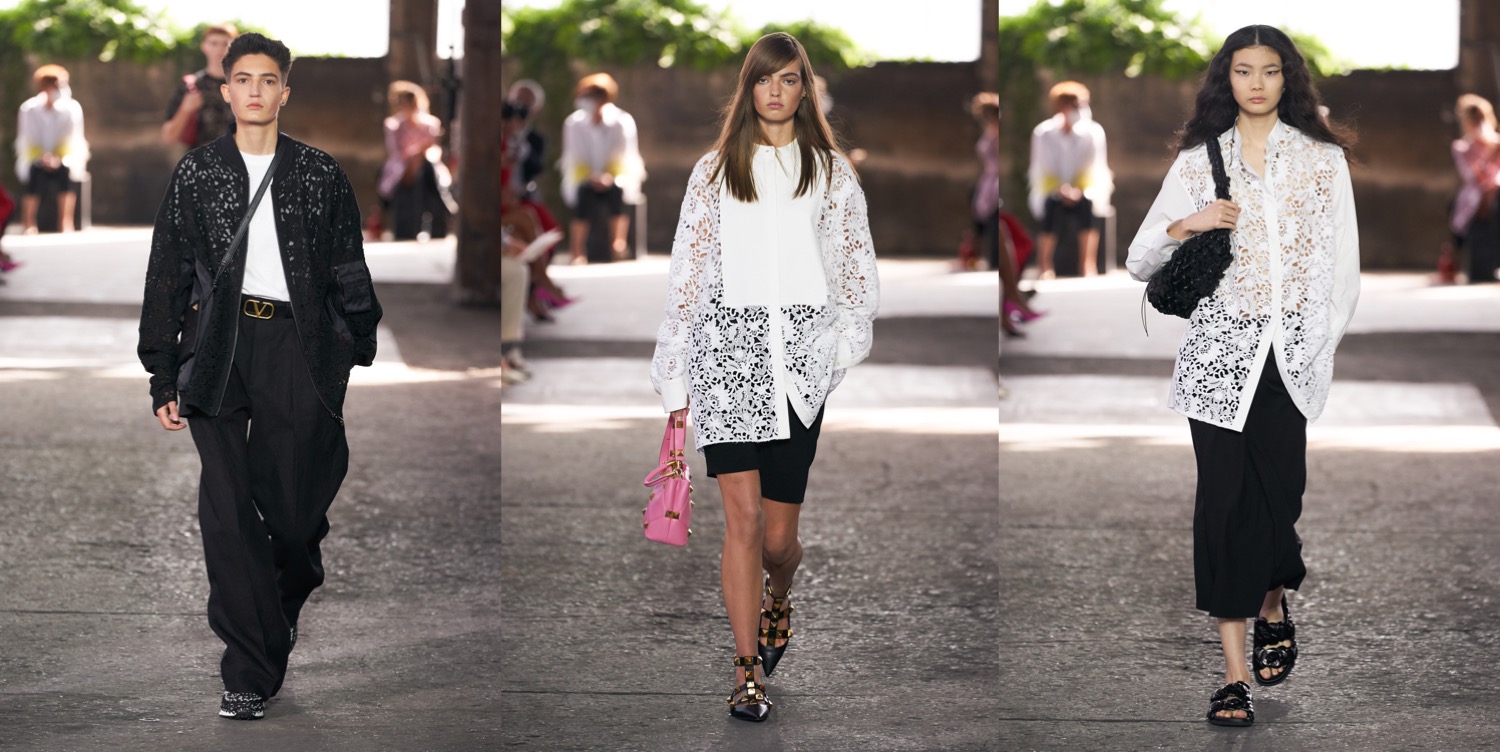
Radical Romantic. Valentino SS21


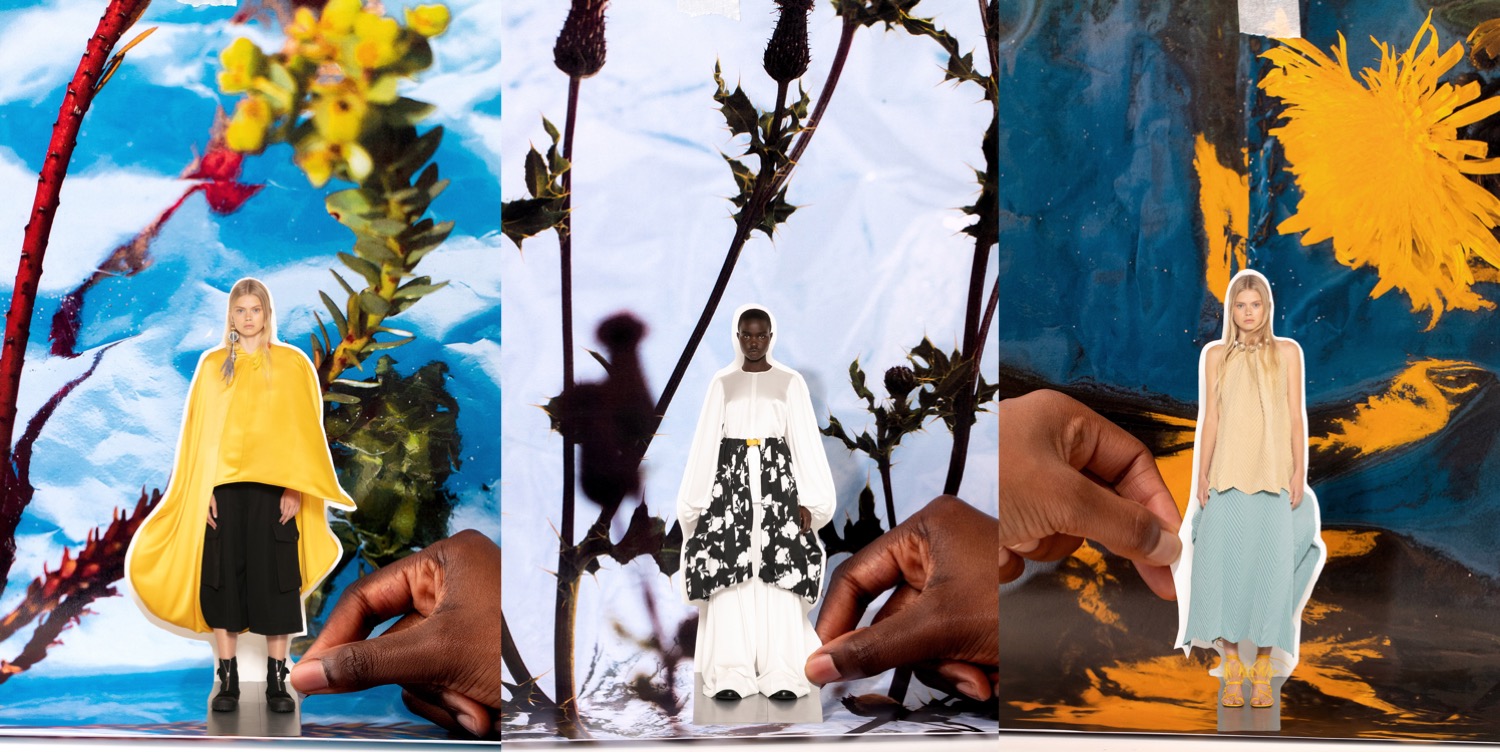
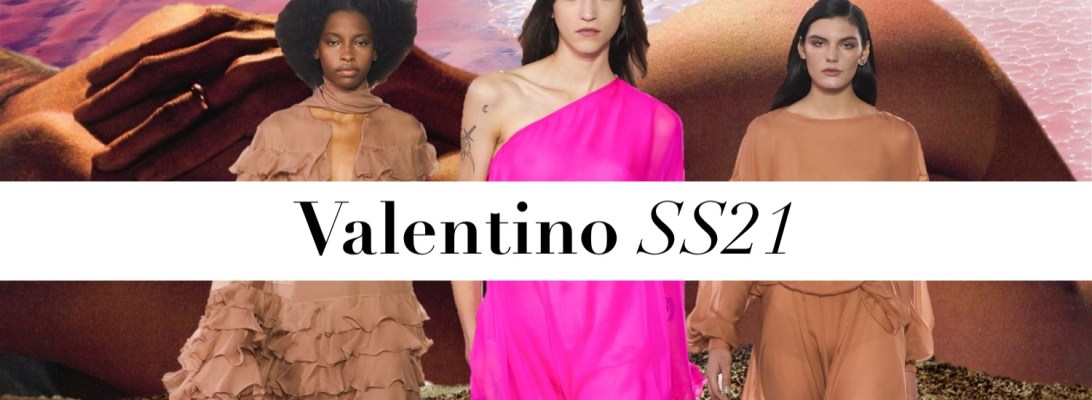
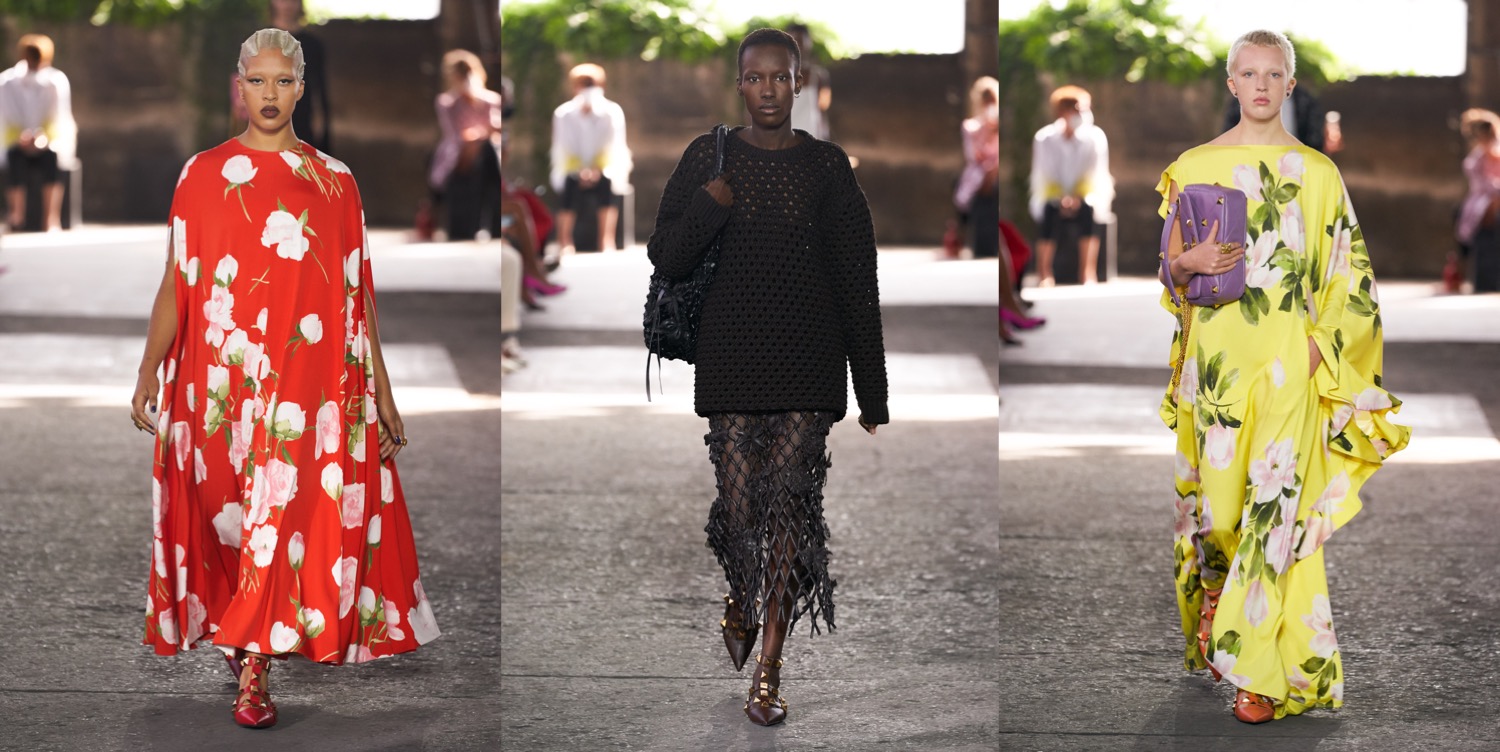
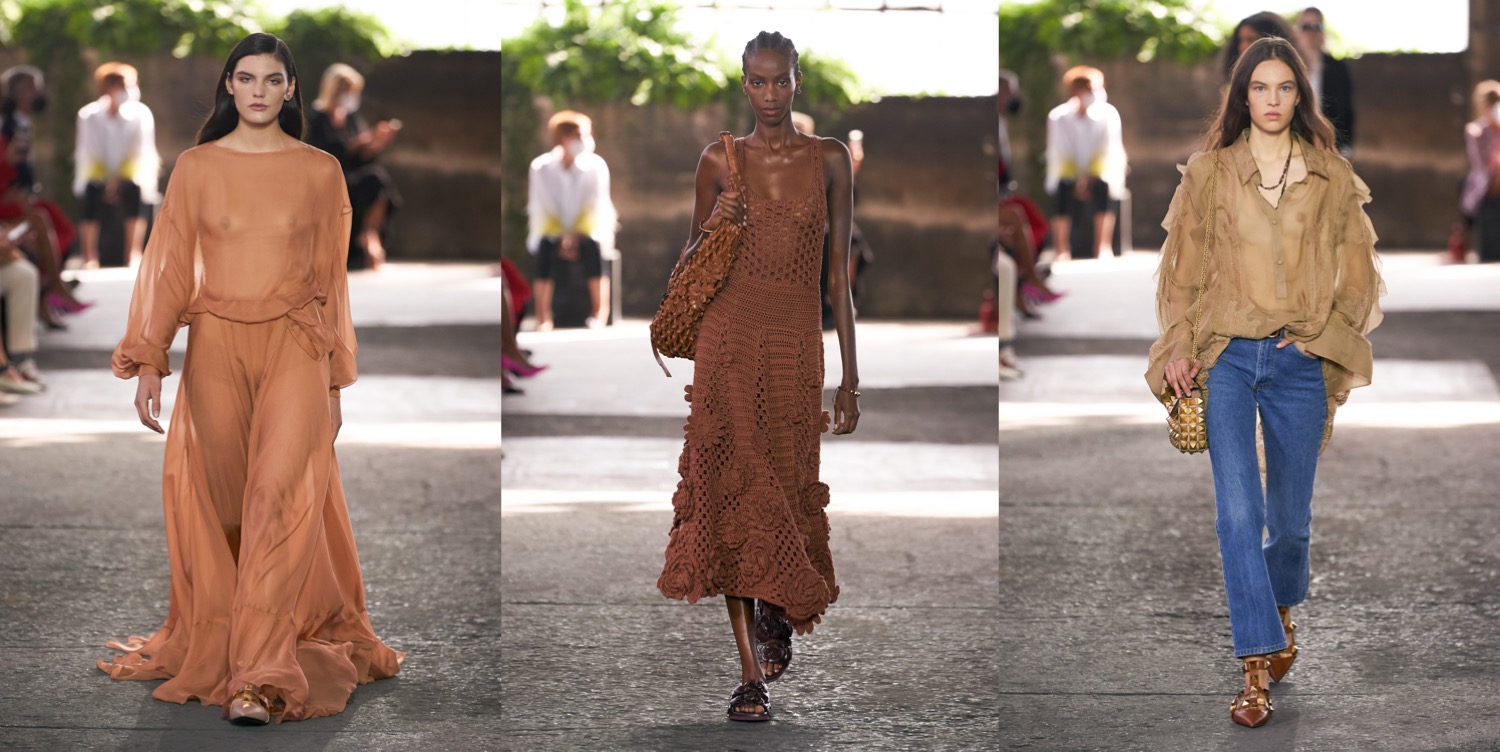
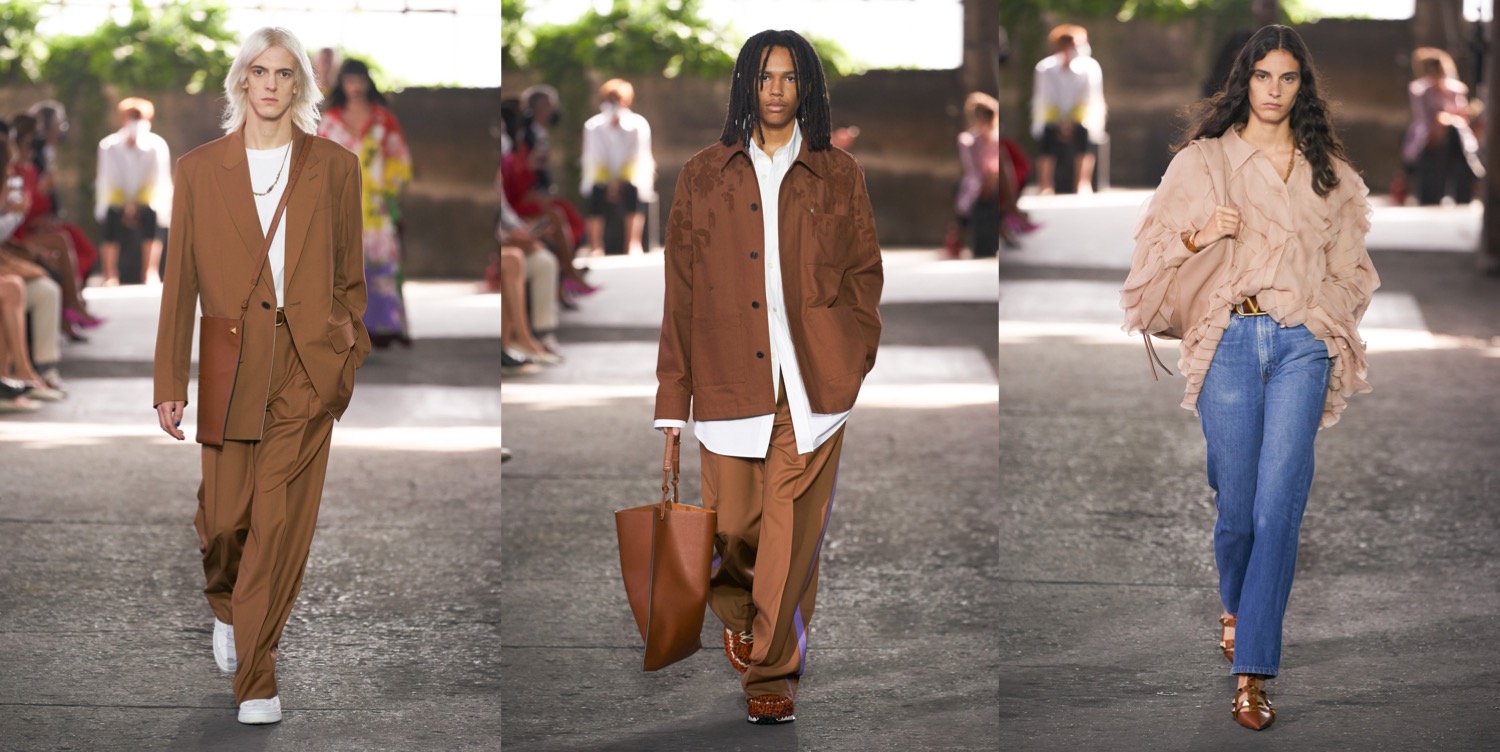
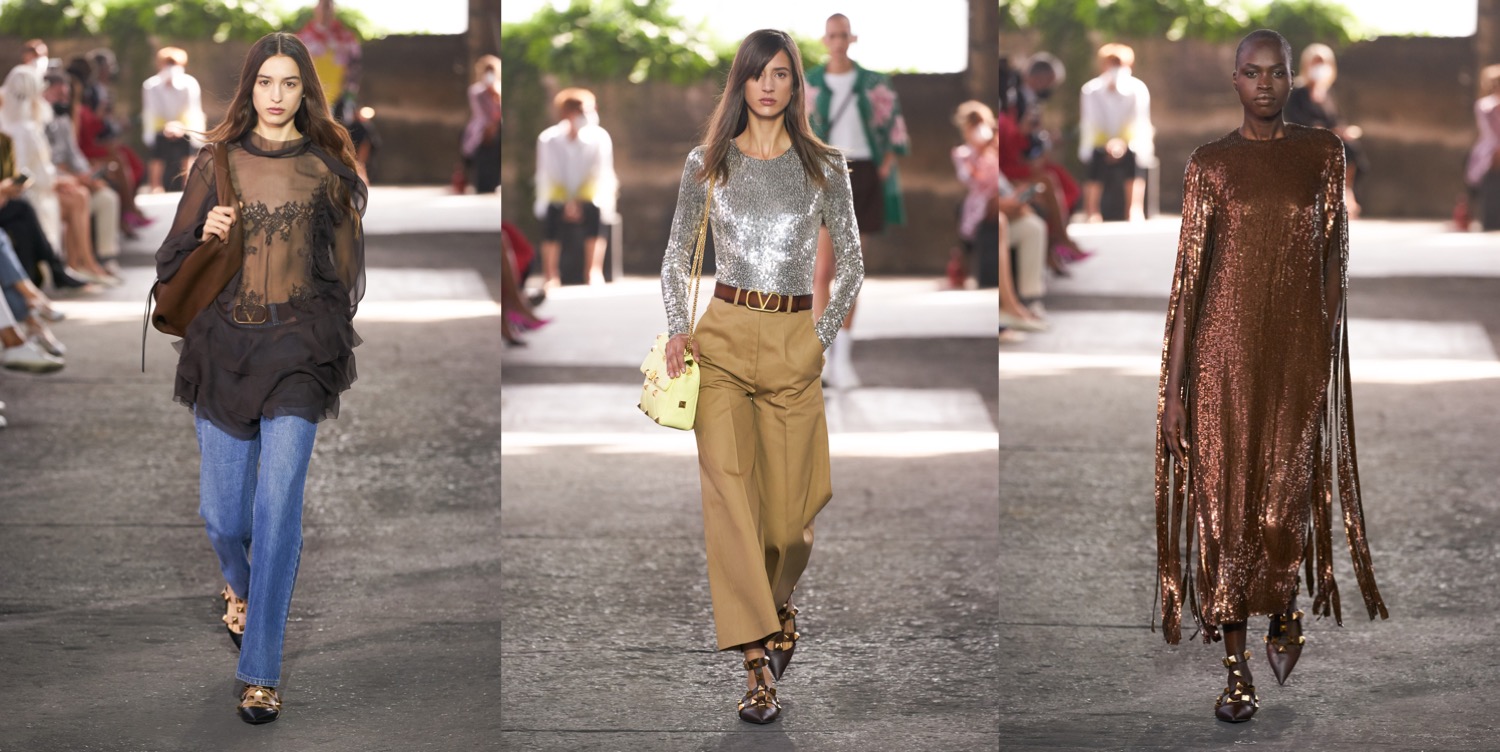
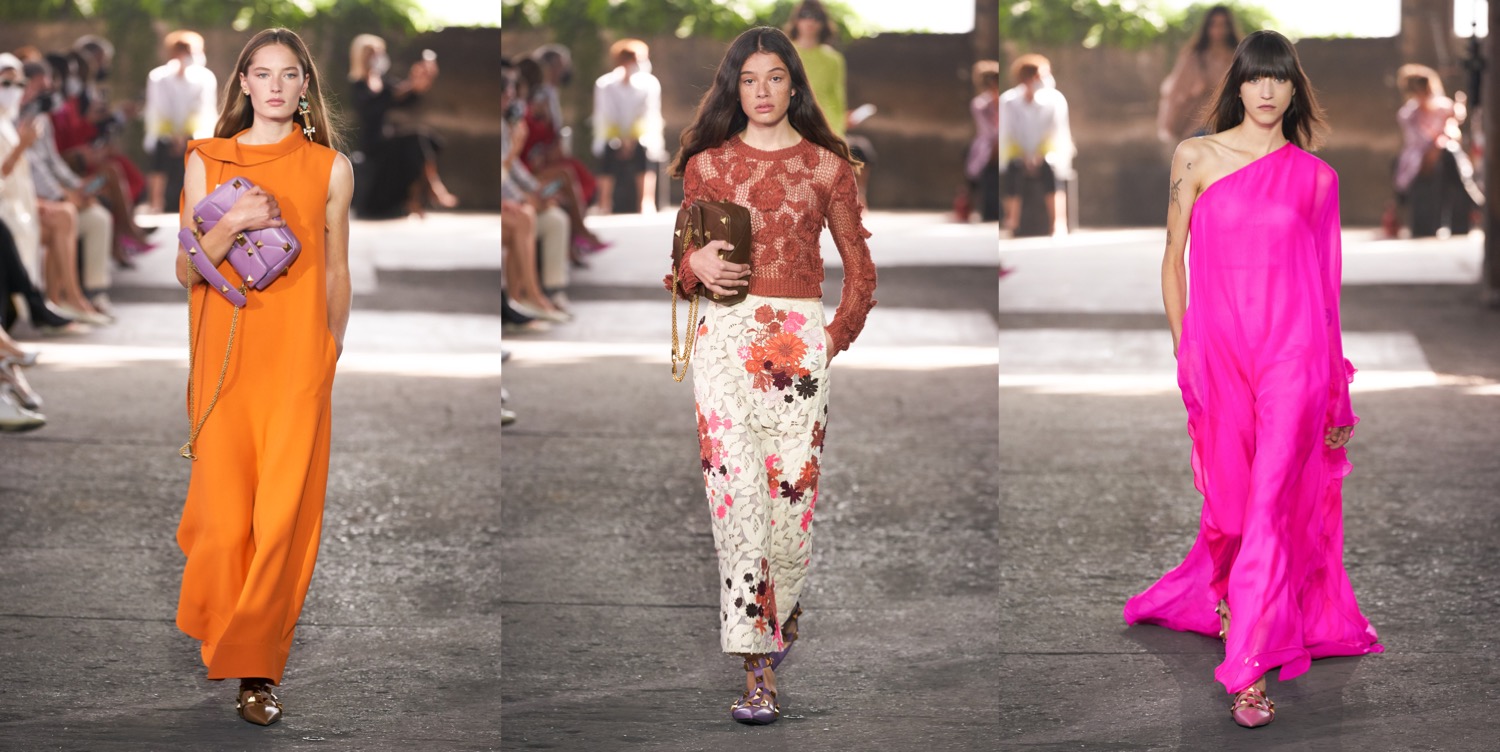
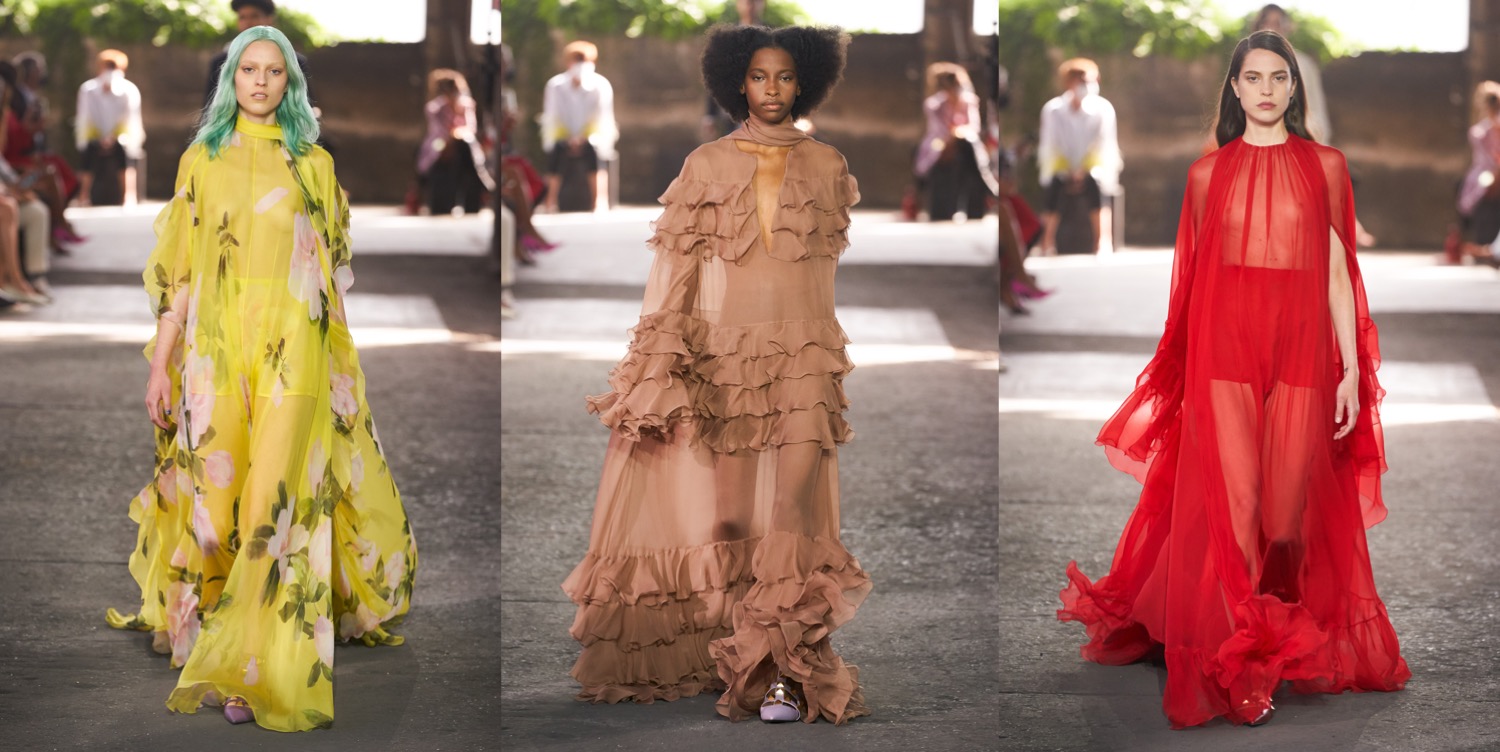
There was something truly powerful about the feeling conveyed by Pierpaolo Piccioli‘s Valentino spring-summer 2021 collection. It was so heartfelt, sincerere, honest. The line-up was presented for the first time in Milan, not in Paris, which in a way also changed the aura. In a declaration of support for the Italian fashion system and making the most out of the difficult circumstances the pandemic has forced upon us, Piccioli opted for an act of bravery – and bravura. He decided to decamp from the ornate Parisian fabulousness of the Salomon de Rothschild salons for the powerful industrial rawness of Fonderie Macchi, a metallurgical foundry active in Milan from 1936. “In this moment, sticking to an old mindset for me just wasn’t an option,” he said at the post-show press conference. Choosing a venue at odds with Valentino’s typical optics, so deep-rooted in couture, signaled the bold stance Piccioli was taking in the re-definition of the house’s stylistic codes – a process he called re-signification. “I focused on working more on Valentino’s identity than on its aesthetics,” he reflected.  As always with Piccioli, his approach was as instinctual as it was sophisticated; he’ll go down as one of fashion’s romantic visionaries, able to orchestrate moments of true creative enjoyment, both emotional and visually elevated. Romanticism was actually much on his mind while working on the collection. He called it radical. But what does it mean being a radical romantic today? “For me, it rhymes with individuality, with the freedom to express our very own identity and diversity,” he answered. Being romantic means also not following the rules, embracing idealism, being rebellious- fighting for a better world. Believing that things can change: “Fashion for me is a way to talk about the values that matter today,” he said. “The true acceptance of diversity. Tolerance and kindness. This is the world I want to tell through my work as a designer.” If aesthetics can actually suggest something about one’s life, then the collection’s street casting was a celebration of the many diverse-looking people Piccioli wants to include in his narration. Each look was individual, thoroughly chosen according to the personality of the character, young men and women coming from different backgrounds and walks of life. Yet from a fashion standpoint, the collection looked more toned down than usual: streamlined and with fewer of the decorative flourishes and certain hyperbolic gestures of couture. Lace, macramé, crochet, and embroideries were among the textural couture accents reworked here with a crafty, more palpable ‘human’ touch. Both the women’s and men’s lines shared shapes, volumes, and fabrics; the same wardrobe staples were often proposed in identical versions for both genders. Progressing from linear, almost minimal looks, the collection flowed into the ethereal evening options that have become synonymous with Valentino style; here the sophisticated shapes of caftans and cape dresses were designed with fluid, efficient precision. Highlighting a somehow reductionist approach, the only print was a vibrantly-hued floral revival of an archival dress: a glamorous yellow number famously worn by Anjelica Huston and lensed by Giampaolo Barbieri in 1972. Arrangements of wildflowers and plants filled the vast industrial set in a powerful installation by Japanese plant artist Satoshi Kawamoto; Piccioli envisioned it as a disruptive element of beauty inspired by guerrilla gardening’s practice of growing delicate plants in gray concrete spaces – another romantic act of urban resistance. The flowers had a story of their own: originated in eight different countries, they were grown in a nursery in Milan, where they’ll be returned after the show. Piccioli is the modern-day master when it comes to turning fashion shows into emotionally charged moments of visual seduction. Music always serves his purpose well. This time, he entrusted the singer, songwriter, and producer Labrinth to perform stirring renditions of some of his hits. It all worked together in a delightful way.

Collage by Edward Kanarecki.
Soft Pragmatism. Salvatore Ferragamo SS21

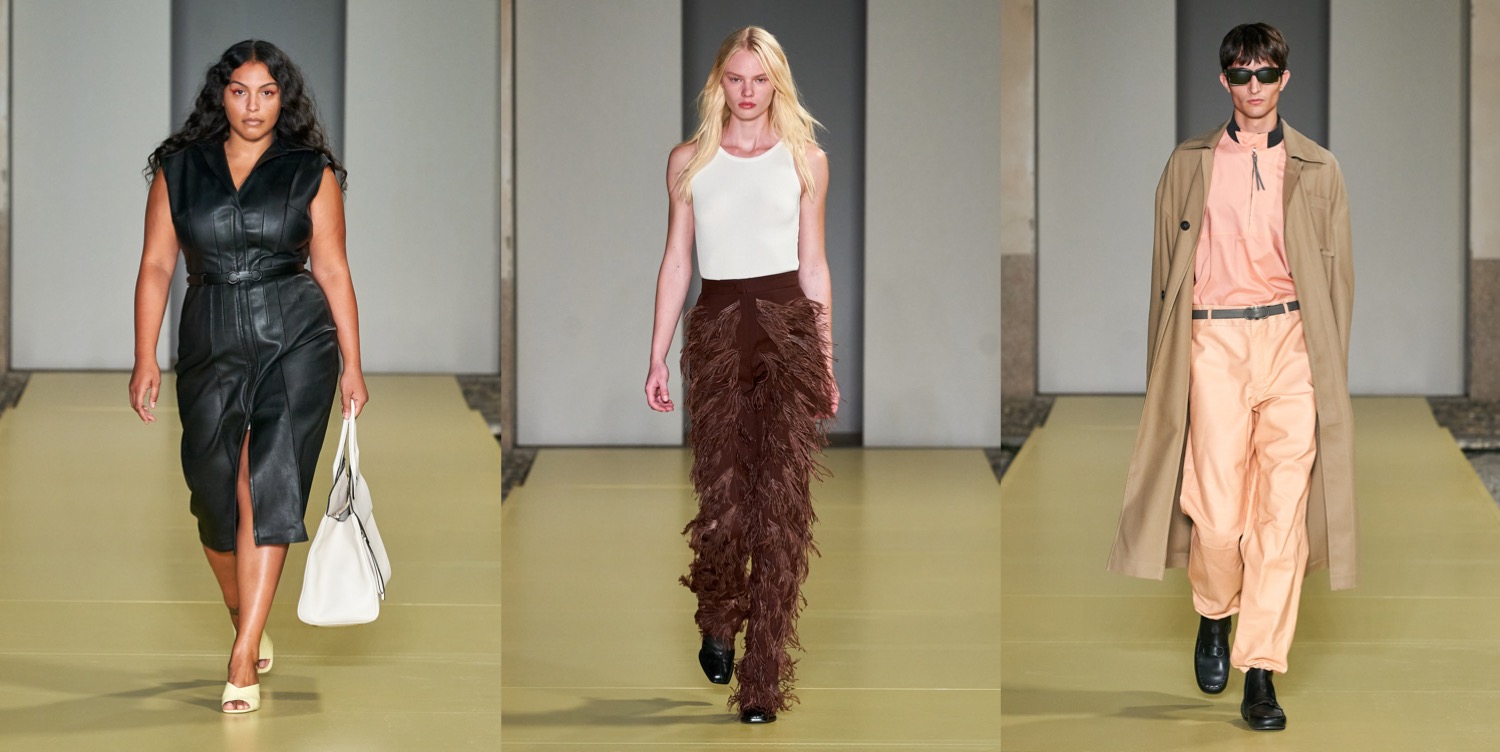
As I wrote earlier this week, it’s really all about pragmatism versus escapism this season. Designers seem not to even look for a balance between the two – they are either this or that, period. And in Milan, we see this division the most clearly. During lockdown, with time on his hands and having exhausted all of Netflix, Salvatore Ferragamo‘s Paul Andrew went on an Alfred Hitchcock binge. The Birds, Marnie, and Vertigo were at the top of his best-of list; he found out that the same obsession was also shared by director Luca Guadagnino, who in his film Io Sono l’Amore apparently referenced a lot of Hitchcock – the gestures, the lighting, the poses; a certain high-class look of enigmatic sophistication. Andrew wasn’t sure at that lockdown time if and when he would be able to stage a real show, so he decided to go for a short movie instead. Asking Guadagnino (I adore him!) to work together on a project for the spring collection was just in the cards – and a thrilling opportunity. The film, shot in an eerily empty and utterly Hitchcockian Milan at the beginning of August, opened Salvatore Ferragamo fashion show, which was staged in the open air in the hectagonal colonnaded courtyard of the late Baroque period Rotonda della Besana. Backstage before the show, Paloma Elsesser was looking intently at one of Andrew’s moodboards, wearing an hourglass black leather number that could’ve come straight out of Kim Novak’s wardrobe in Vertigo. The dress signaled a more sensualist, high-gloss direction for the designer; he tried his hand on less oversized proportions, favoring instead a shapely, more feminine, form-fitting silhouette. The color palette, inspired by the chromatic quality of Technicolor, also added a hint of sensual vibrancy, and visual punch. “That’s my favorite, Tippi Hedren’s green,” he said, pointing out a neat little tailleur with a waisted jacket in eau de nil; it would’ve actually looked slightly bourgeois, if not for the off-kilter intervention of a fluid sarouel, replacing the more conventional pencil skirt. While sticking to the refined linearity he has envisioned for Ferragamo, Andrew punctuated this collection with impactful highlights – think a seersucker checkered fabric with a tactile finish; thick knitted and knotted pieces with an artsy flair; quivering feathers sparsely scattered on straight cotton pants or on a pinafore. The co-ed collection was edited down by Andrew to just 30 looks, which was surely beneficial to conveying a convincing rhythm and a focused message. “Less but better, it’s our way forward,” he said. “I’m really into it.” The Andrew/Guadagnino connection also proved a winning creative combination, to be hopefully continued in the future. “Lockdown has been dark, surreal, and mysterious, like a Hitchcock movie,” chimed Andrew. “But strangely, like in a Hitchcock movie, the ending is always somehow beautiful. I’m trying to celebrate the beauty that is going to come out of it.

Collage by Edward Kanarecki.