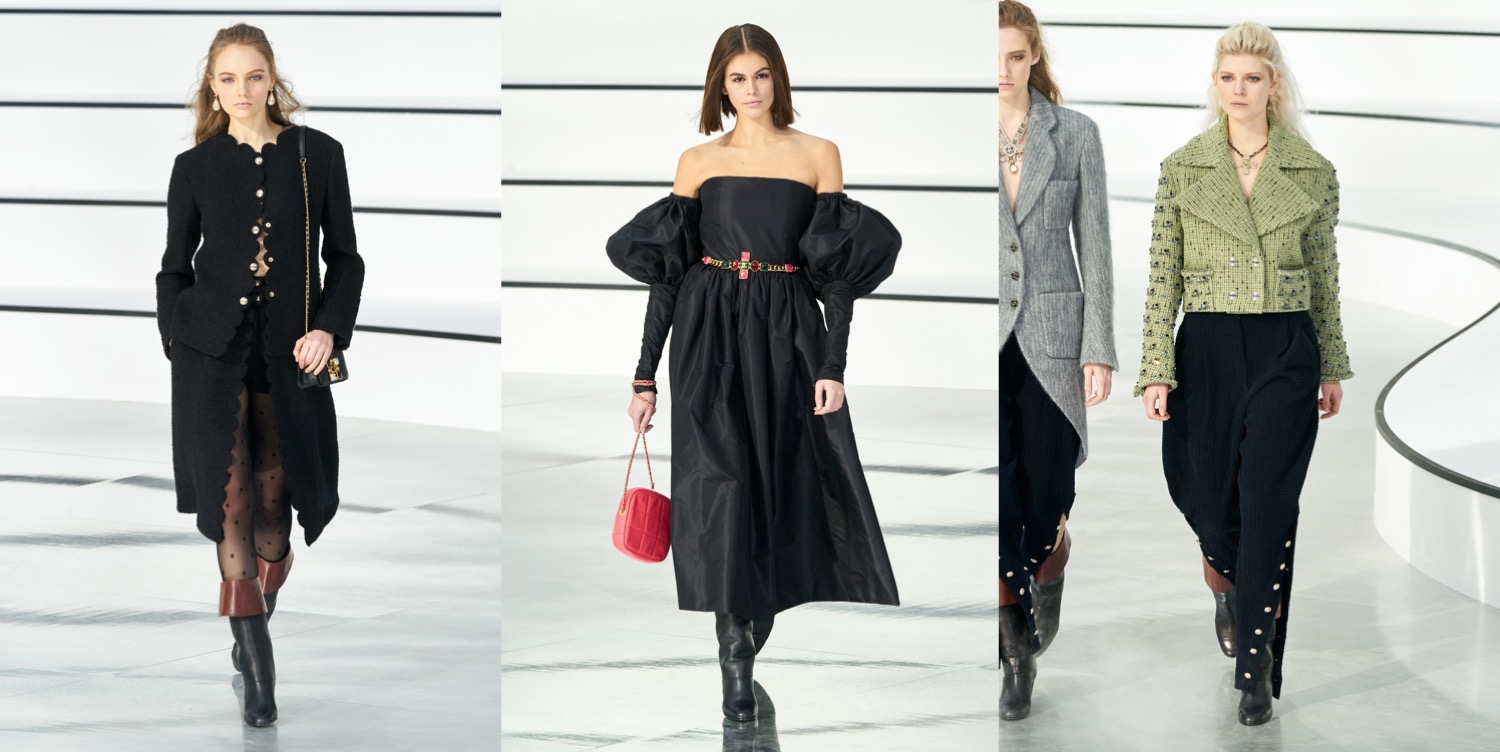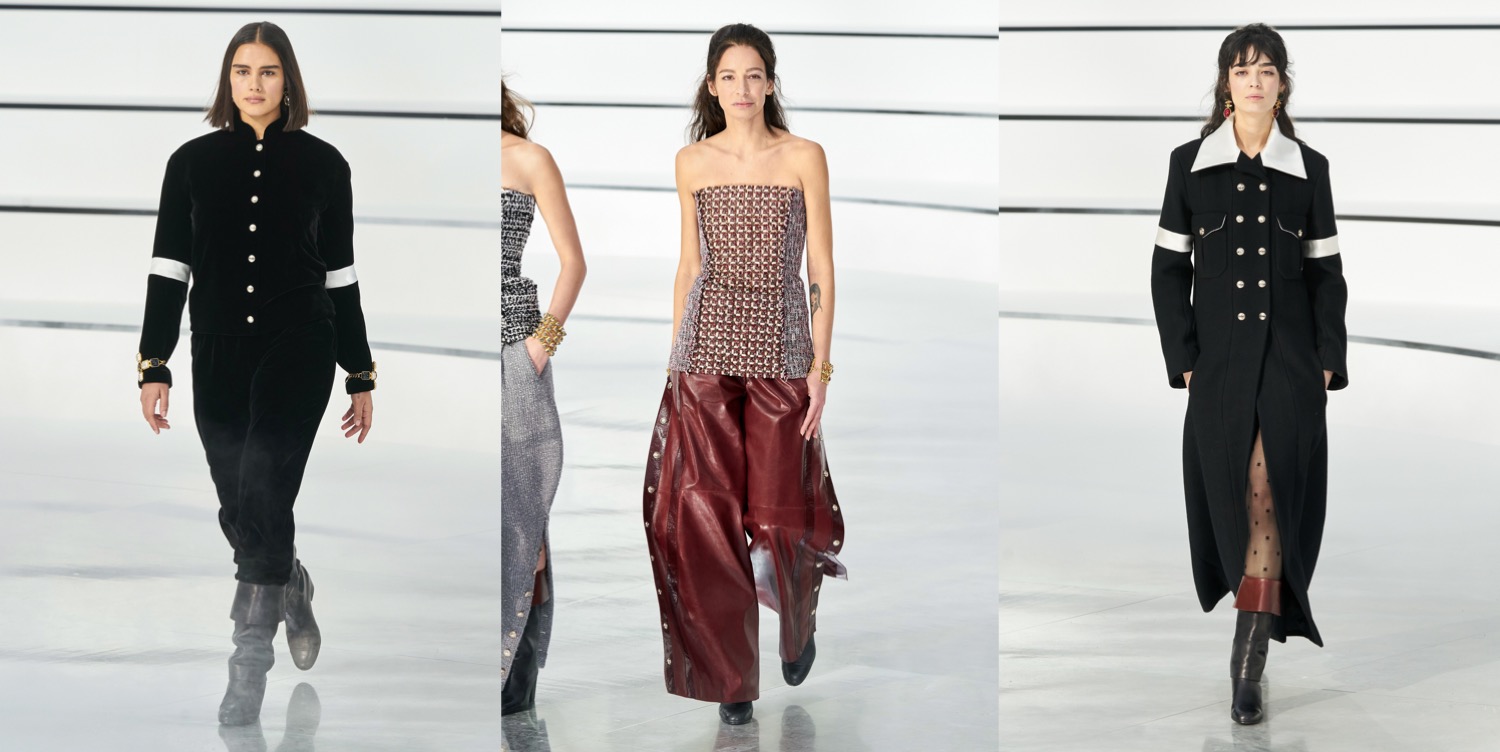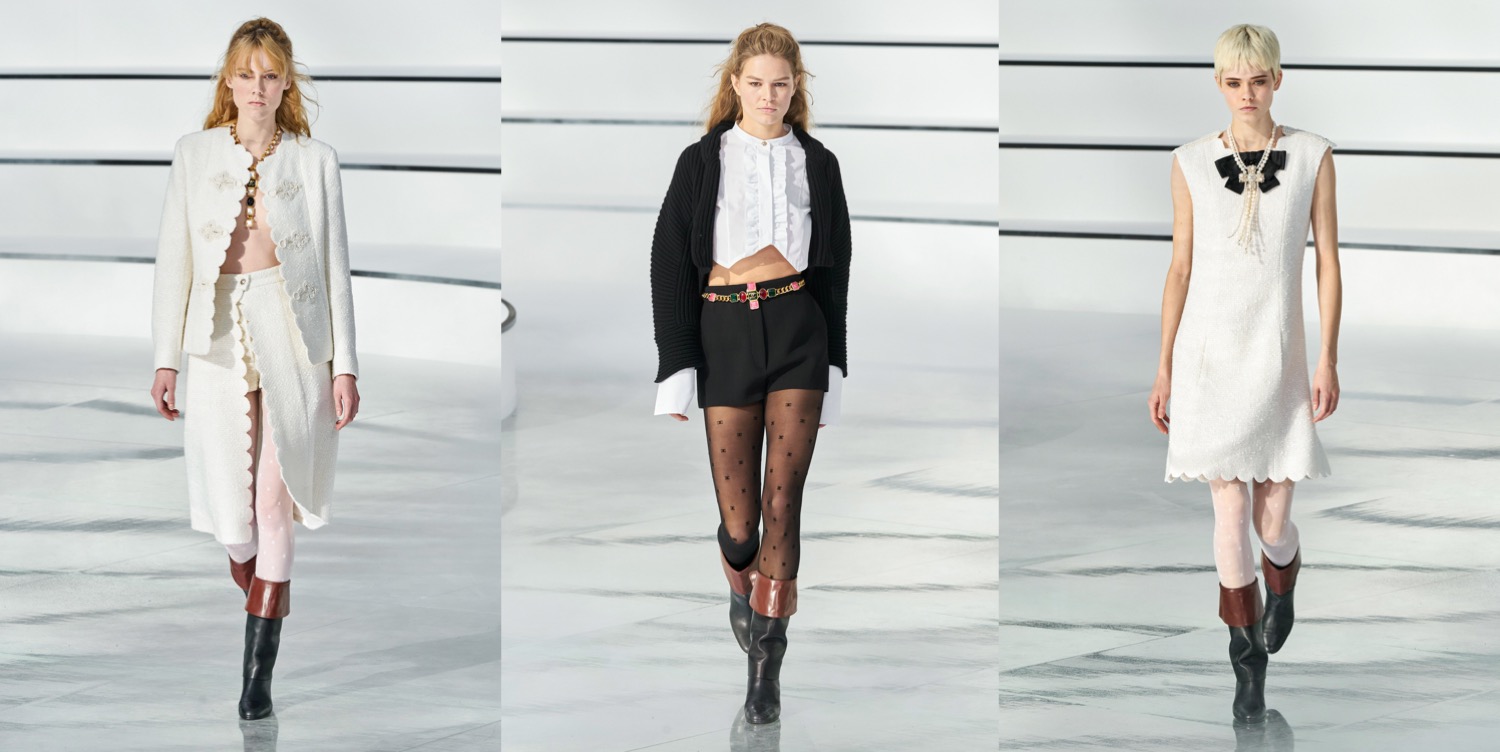
Liberated. Chanel AW20

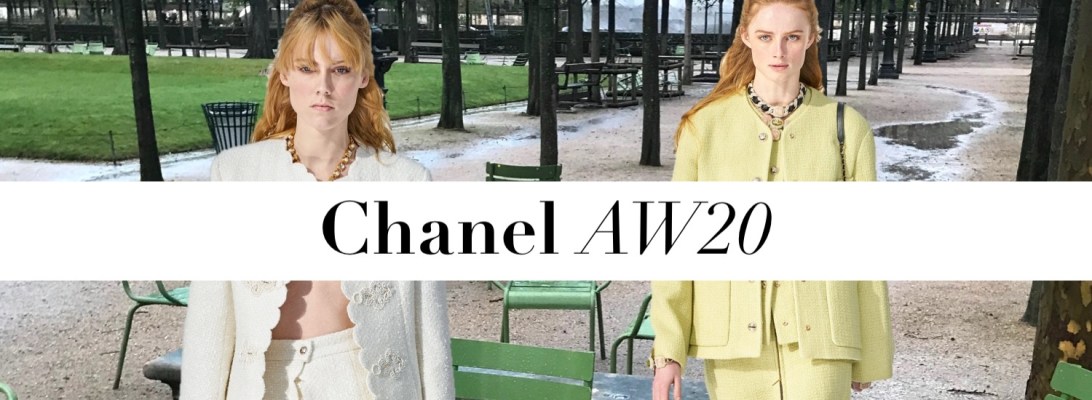
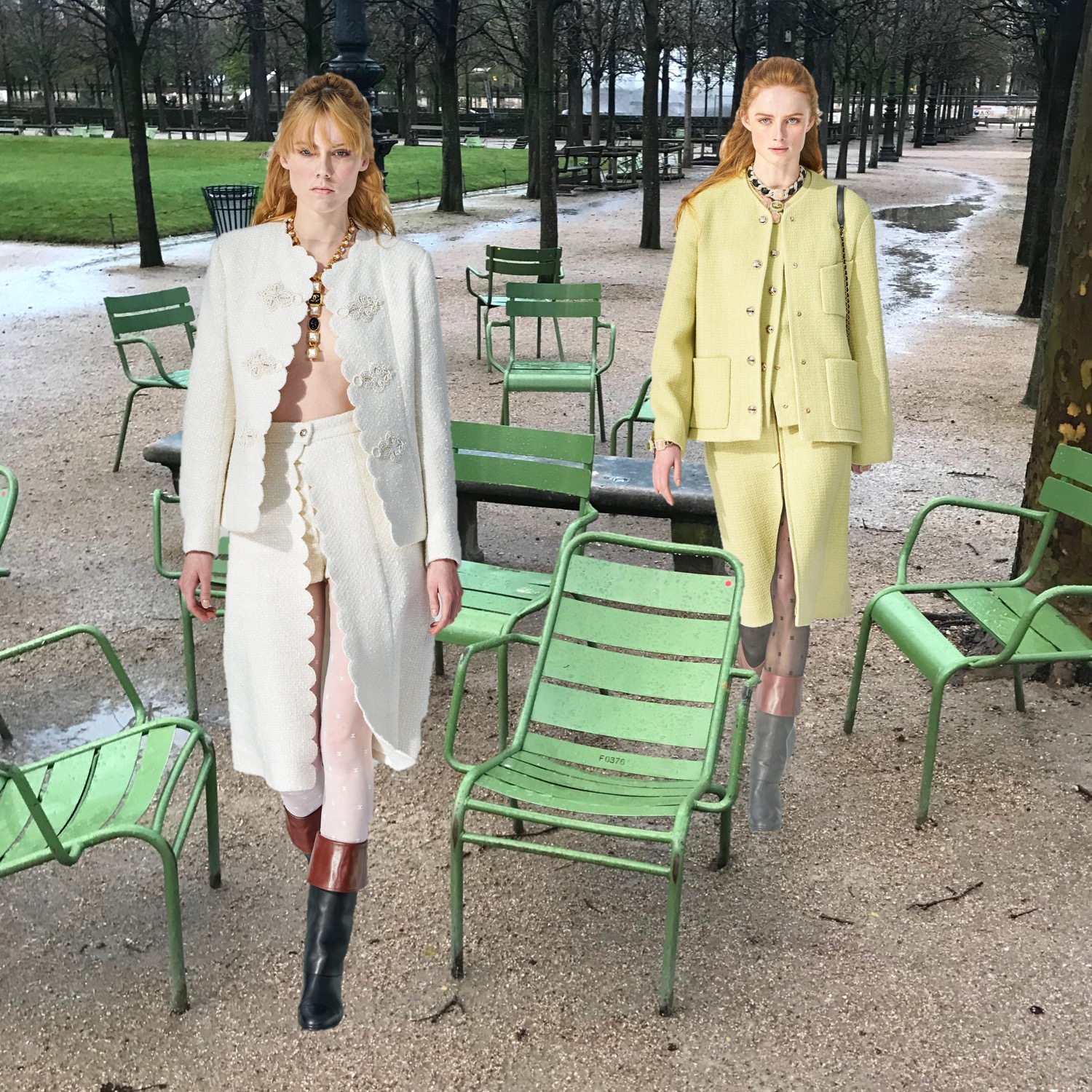
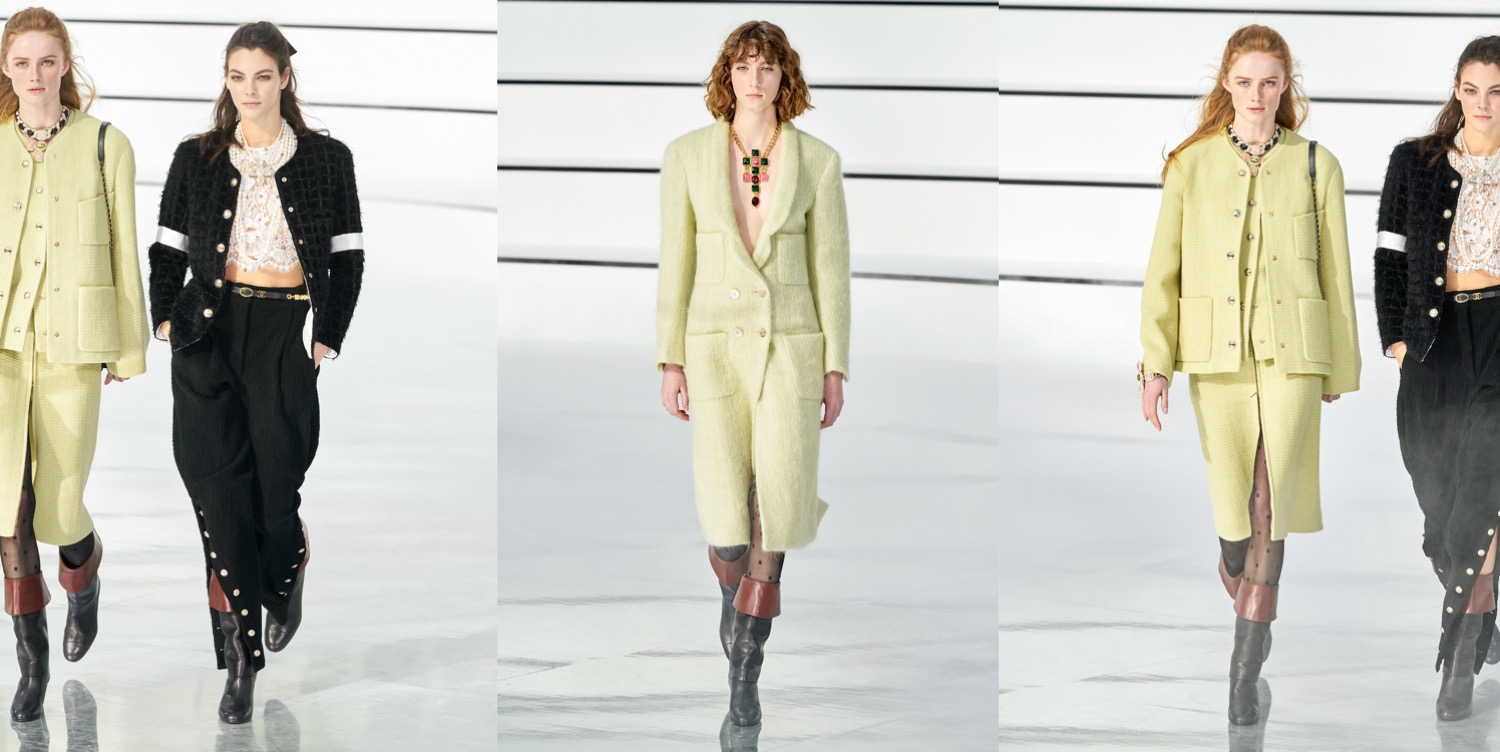
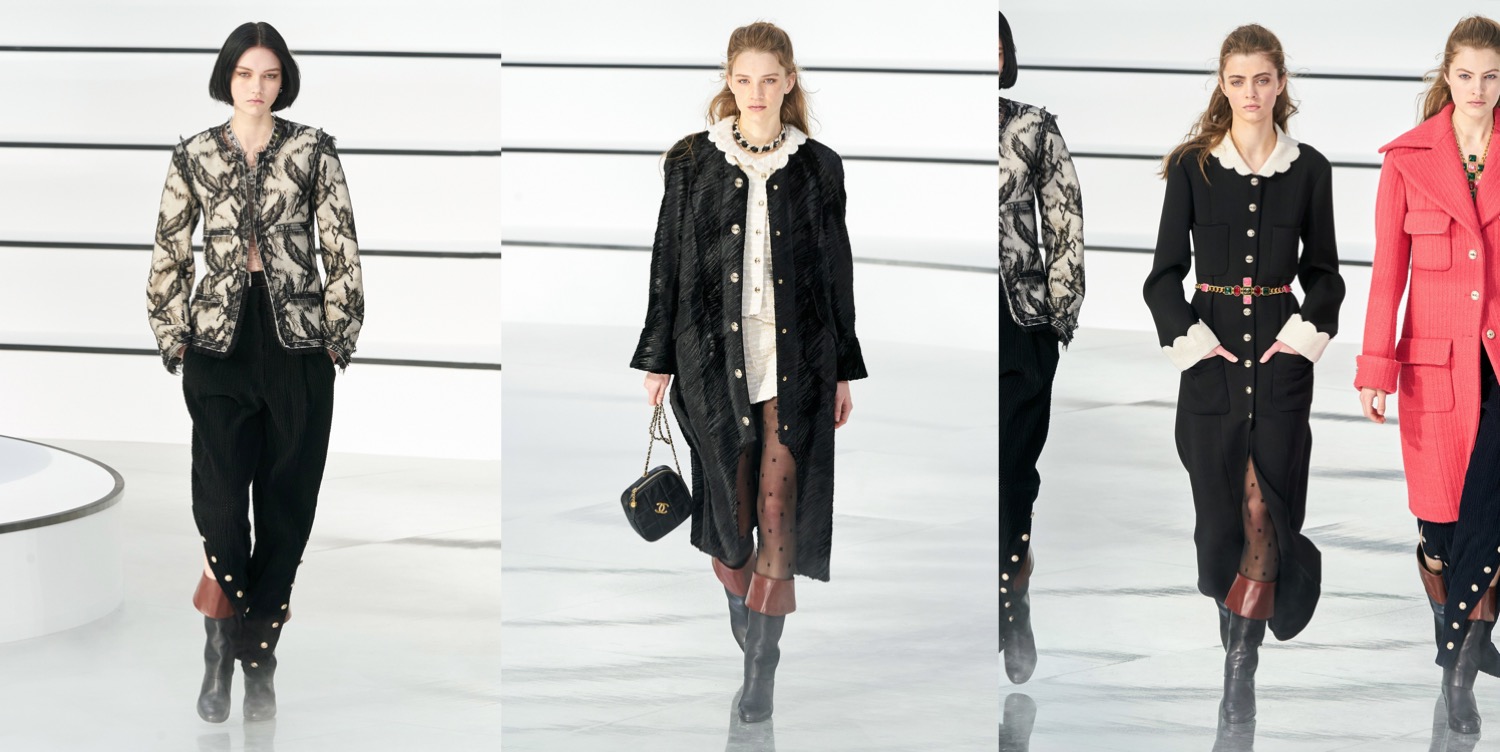
Many critics are really tough on Virginie Viard. Ok, sometimes some of the styling sucks. There’s too much of CC logo on her designs. But then, I can’t remember the time when the Chanel woman felt so liberated. Viard creates intimate, personal fashion for a brand with a format this big that sometimes her vision gets trapped or misunderstood. However, her autumn-winter 2020 collection was her most confident outing yet. “Freedom!” declared the designer backstage. Viard explained that she was talking about the sort of wind-in-the-hair freedom that a horse rider feels as their steed bounds through the landscape. That idea of liberation translated into a collection of unforced, woman-friendly pieces that embraced the house codes at the same time that they reinforced Viard’s own pragmatic instincts for comfortable, no-nonsense glamour. Viard took her inspiration from a 1980s photograph of Karl Lagerfeld and his sometime muse Anna Piaggi, both dressed in the height of Edwardian-revival finery. In that image, Piaggi is shrouded in a veiled Death in Venice hat, and Lagerfeld wears a morning-dress-stripe jacket and vest, a floppy black silk cravat, jodhpurs, and a pair of sturdy riding boots – an image that for Viard represents “strong romance.” Viard reinterpreted Lagerfeld’s chunky-heel boot and styled it with every single outfit in the collection, from a thickly knit cardigan worn with a cropped white cotton evening dickey and micro shorts to liquid black velvet evening gowns. The collection didn’t have 100+ looks (which was a big relief), the setting was minimal, and it all felt consistent, yet easy. Some girls came out in pairs or groups of three, and it was refreshing to see them smiling and chatting to each other like friends, wearing unpretentious clothes that seemed to have stepped right out of their wardrobes to make sense for modern lives.
Collage by Edward Kanarecki.
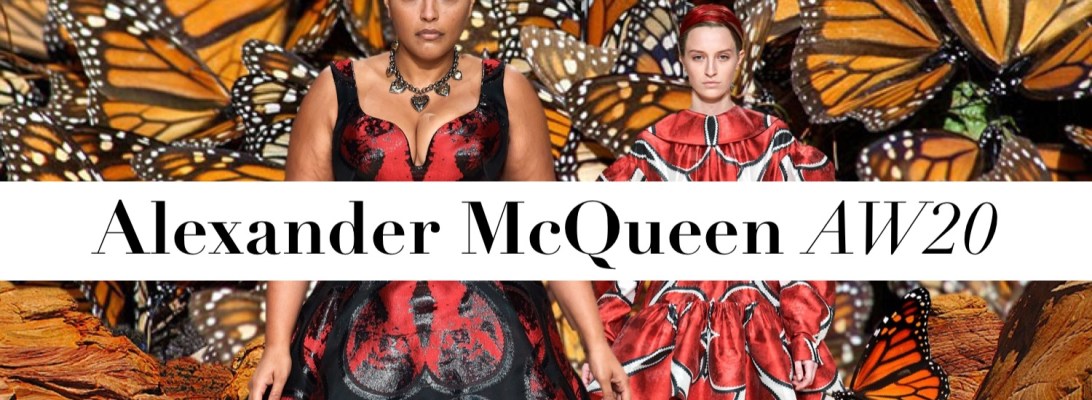
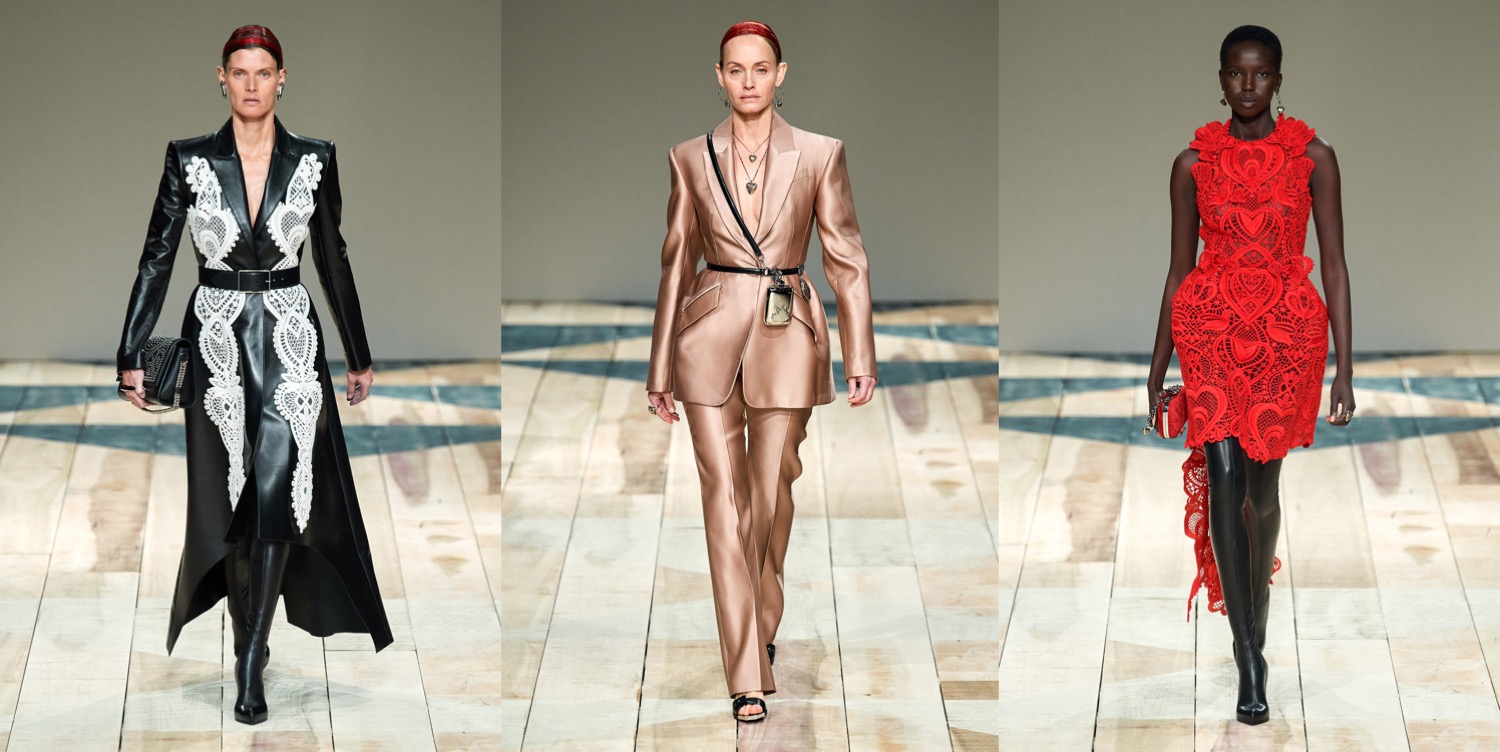
Beauty and Strength. Alexander McQueen AW20

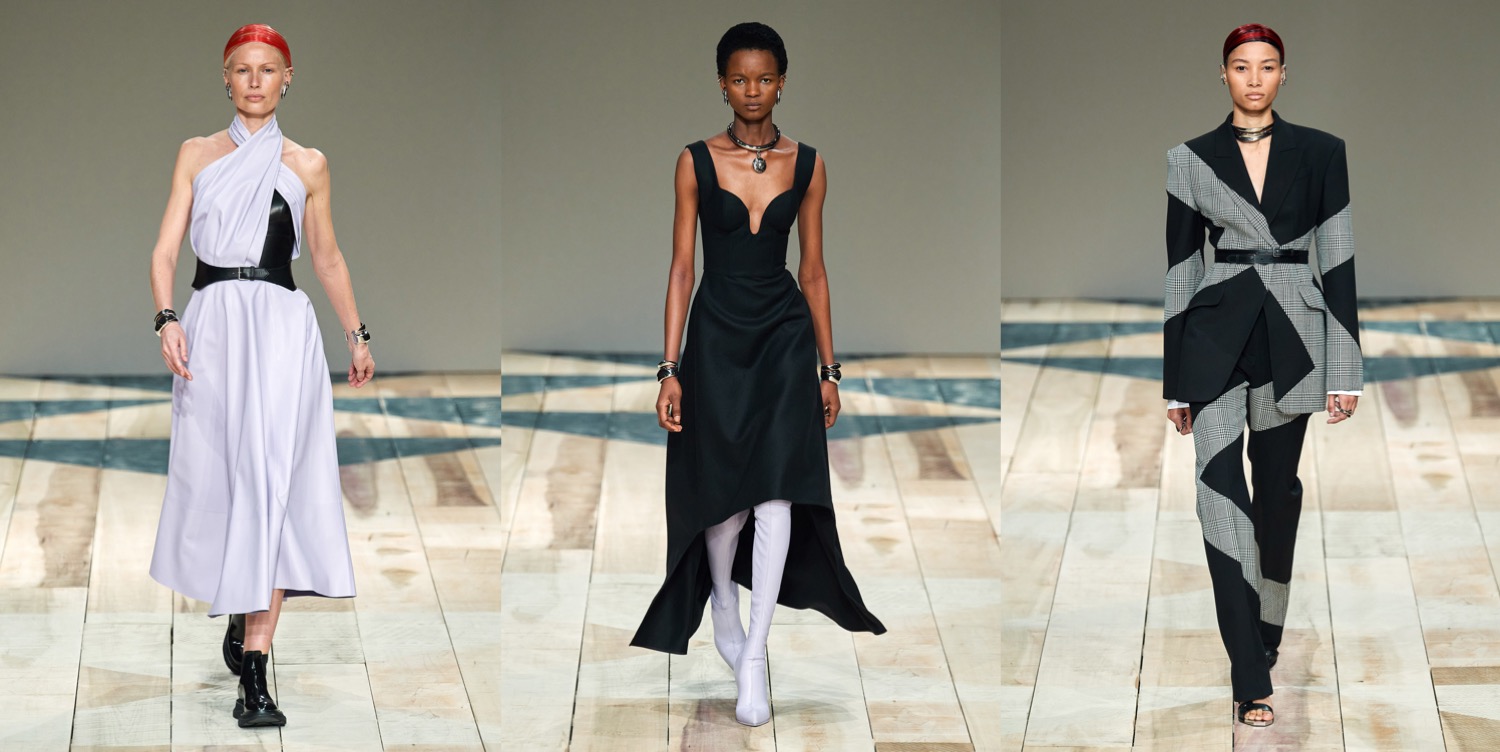
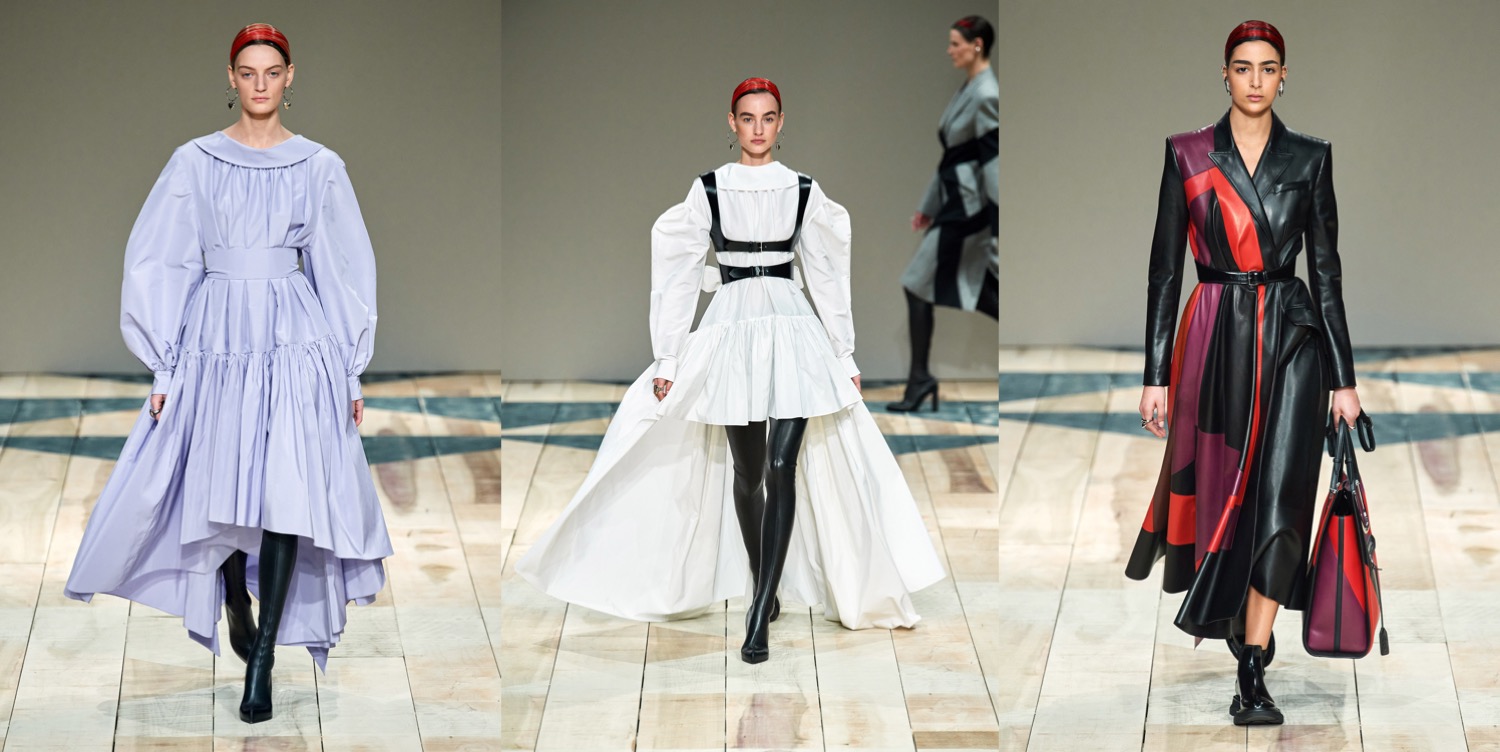
I usually don’t mind for Sarah Burton‘s Alexander McQueen. But this season, I felt a spark about her work. The  collection opened with the sound of birdsong and echoing children’s voices. Then, the McQueen warrior women marched relentlessly on, in sharply tailored frock coats and slim-leg pantsuits gripped by belts jangled with jewels that included tiny silver hip flasks and metal-bound notebooks. For the closing, a finale of fairy-tale evening dresses of frothing net and embroidery suggestive of medieval folk tales. “What do you talk about in a time when there’s so much noise?” queried Burton during a press talk. “I wanted this collection to be really grounded, bold, and heroic,” she answered herself. “I feel like you need to be heroic.” Burton’s poetic adventure for autumn-winter 2020 began with a visit to Wales, the storied Celtic land of myths and creativity. At St. Fagans National Museum of History in the capital city of Cardiff, the first thing that caught her eye was the Wrexham Tailor’s Quilt, fashioned at night over a 10-year period from 1842 by a tailor using recycled scraps of the woolen cloths he had used to craft the uniforms he made by day. With its scenes from the Bible and allusions to the Industrial Revolution that was threatening the very idea of handcraft at the time, it is a powerful object, “a narrative of someone’s life,” as Burton said. Taking her cue from this inspirational starting point, she worked on sharp-seamed, graphic tailoring that incorporated upcycled wool flannels from previous McQueen seasons woven in British mills and set in dramatic geometric blocks that suggested flags or heraldic pennants. The Victorian tailor’s startlingly contemporary imagery was reflected in prints and complex intarsia treatments. Alexander McQueen himself used antique patchworks as a source for some textile treatments in his spring 2004 “Deliverance” collection, and Burton and her team found further quilt inspiration in the collection of the dealer Jen Jones, including more examples made from scraps of traditional men’s fabrics and others in soft blush pinks also used for the elaborately stitched but unseen petticoats that Welsh women once wore to buoy up their plain, utilitarian skirts. That complex handwork was replicated in dimensional jacquard weaves used for a coat with the allure of a 1940s diva’s dressing robe, or as a deep border to counterpoint the severe tailoring of a shapely black jacket. Fabric innovations also included dégradé treatments that changed from solid to sheer (taffeta to chiffon, or dense to spiderweb fine-gauge knit), suggesting strength and fragility in one garment. The famed Welsh blankets, meanwhile, represented for Burton the idea of “protection and wrapping and caring and kindness”. The idea was powerfully suggested in a surprisingly tender 1930s photograph Burton had pinned to her inspiration board, depicting three Welsh miners in their formal Sunday-best suits, with their respective infant children held by blankets wrapped around them and improvised into papooses “so that they had their hands free to work,” as Burton pointed out. Summing up: it’s a line-up of beauty dressed in confidence and strength.

Collage by Edward Kanarecki.
Twists And Turns. Y/Project AW20

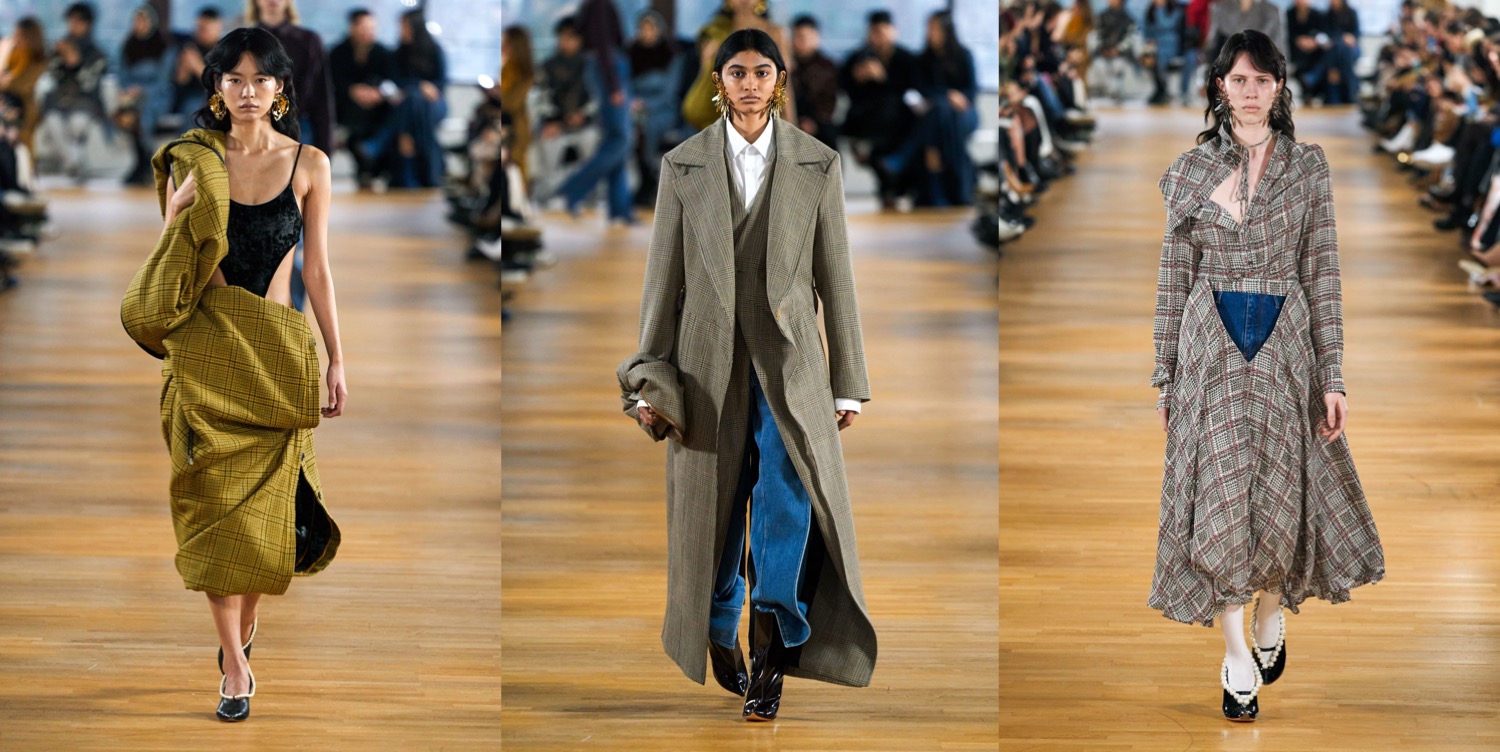
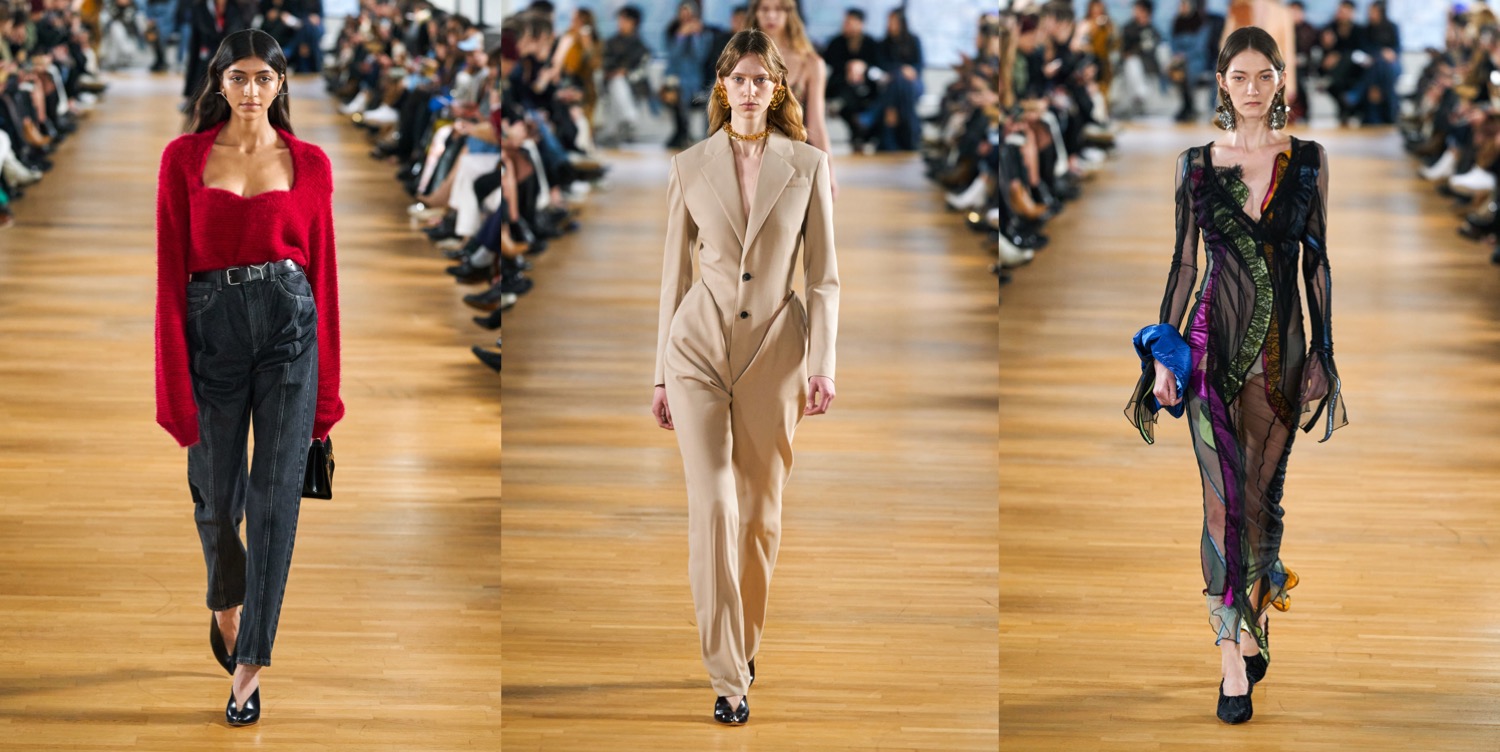
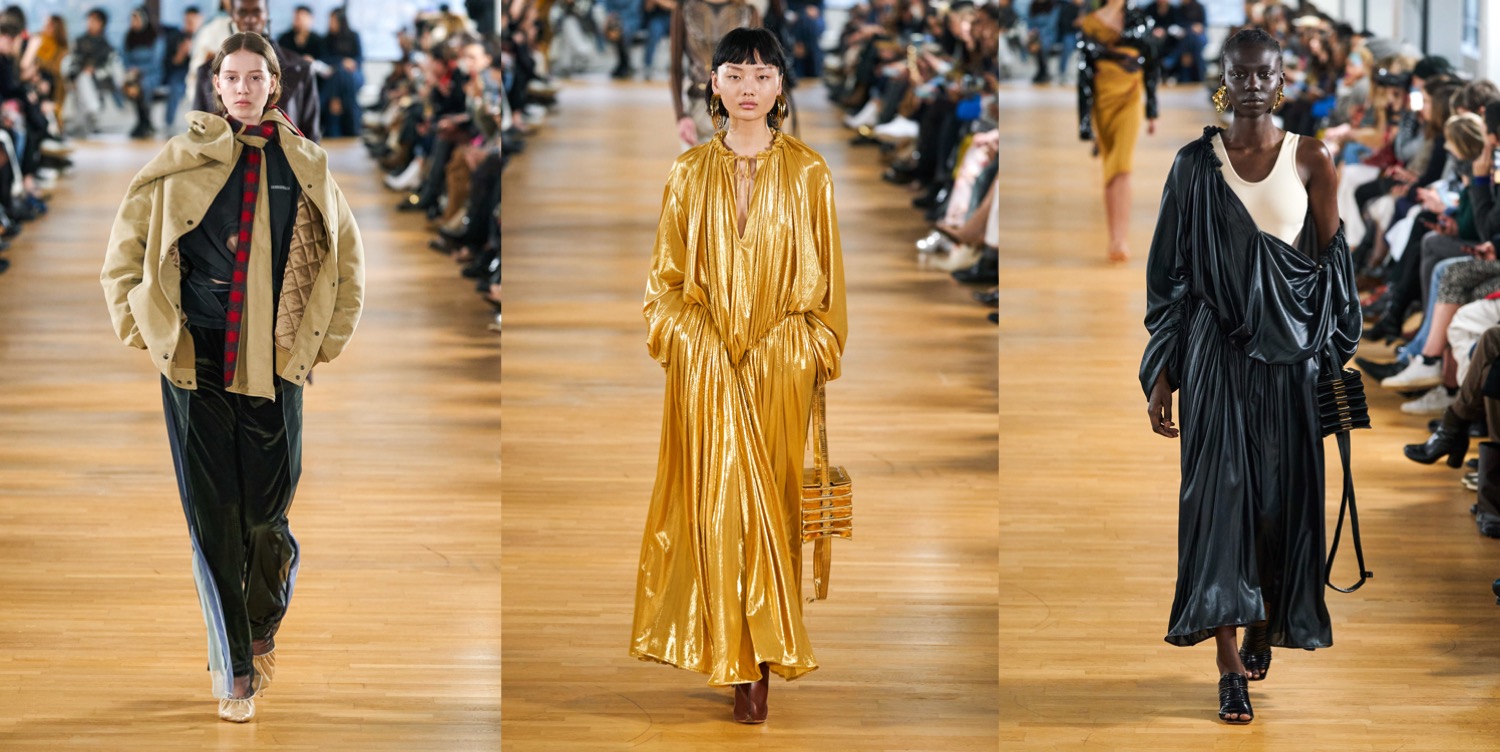
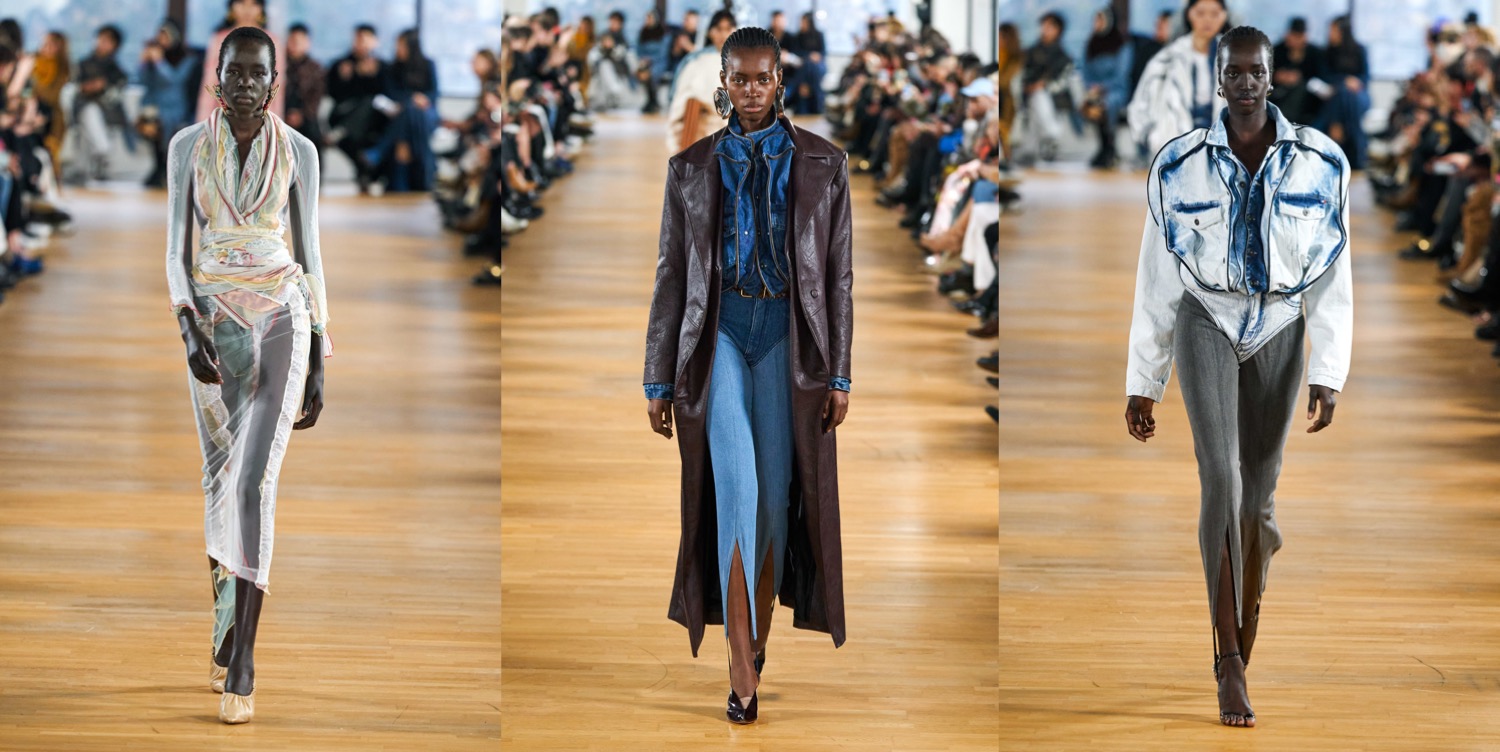
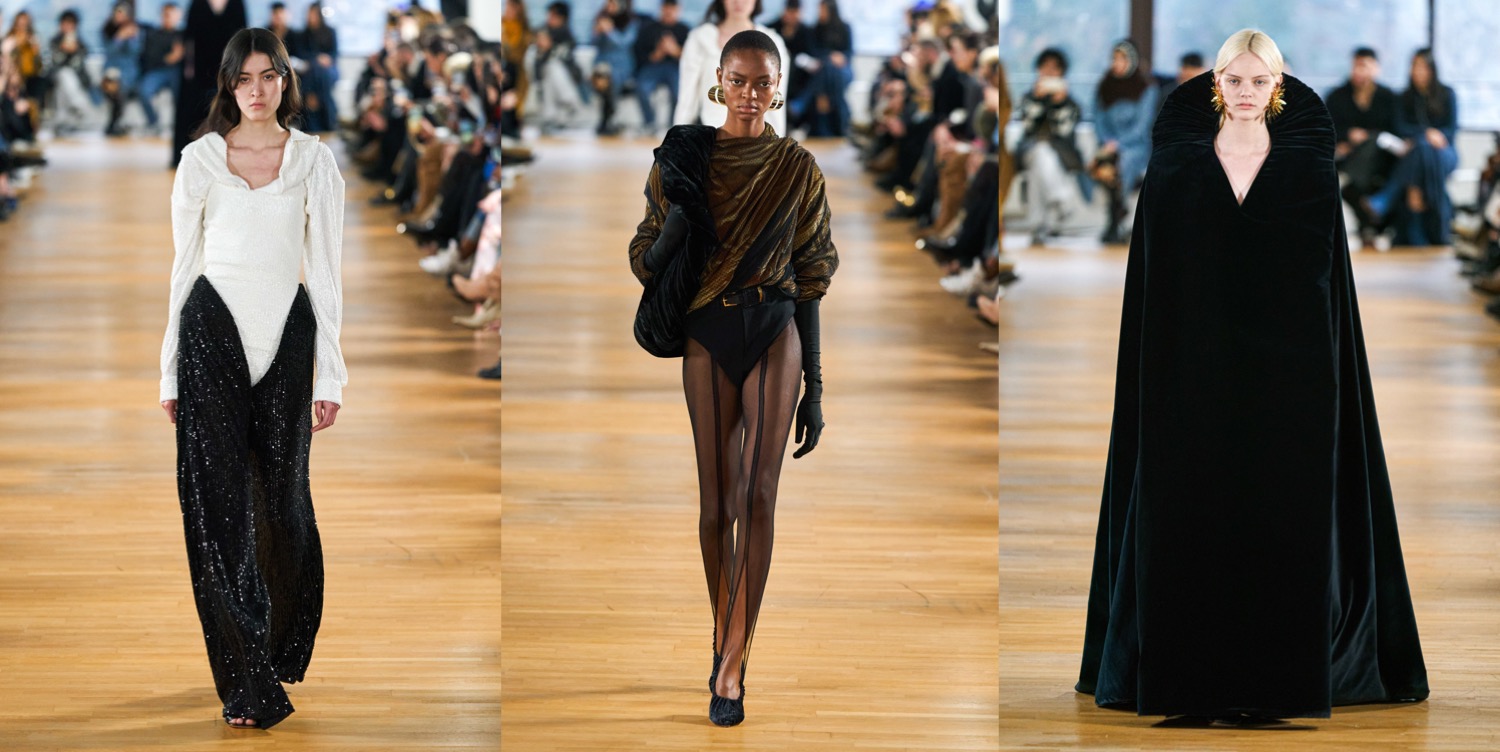
Y/Project‘s creative director Glenn Martens is known to walk the tightrope between good taste and bad, usually pulling from a grab bag of wide-ranging pop cultural and historical references. In his hands, fashion moments from the early 2000s can easily bump up against those from the 1500s. The designer has borrowed from the architecture of Elizabethan armor to refigure the classic blue jean in the past, and for autumn-winter 2020 he took that risqué, deep-V silhouette into more refined territory. His version of a classic tuxedo was elongated along the body, with a blazer turned bodysuit that fit neatly between each suspended trouser leg (as Martens explained, a hidden belt and secret cycling shorts were responsible for the floating effect on these pants). In Y/Project’s collections, it’s the subtle twists and turns that stand out the most. Martens has perfected his askew approach to tailoring, as evidenced in the sleek opening look. But in general, it seems to me that Martens’ work starts to get repetitive: it used to spark more intrigue in his previous seasons. Maybe it’s just a phase.

Collage by Edward Kanarecki.
In Consistence We Trust. A.P.C. AW20

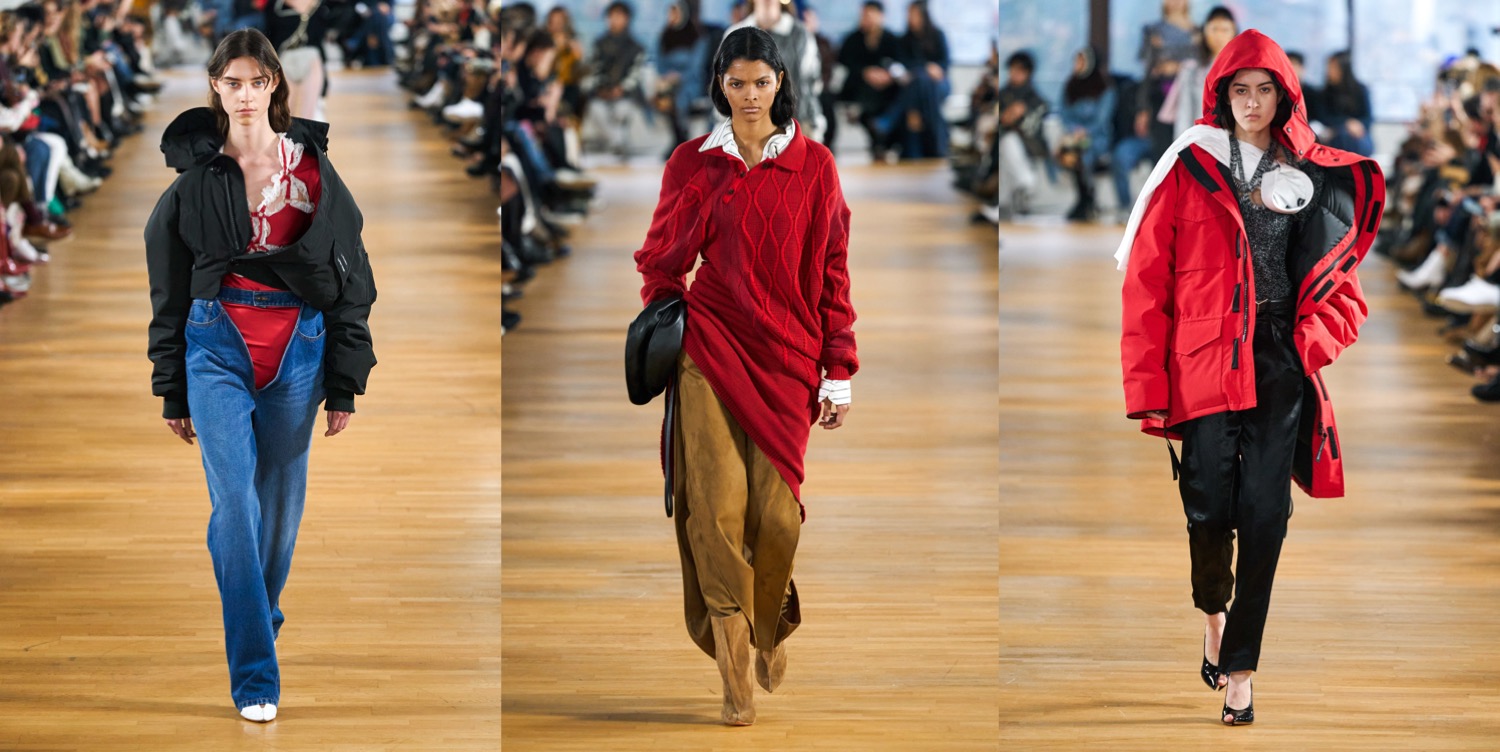
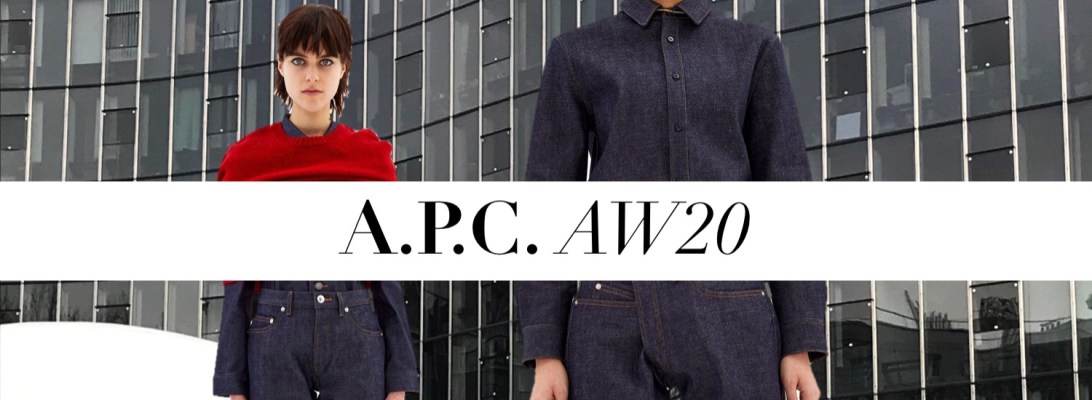
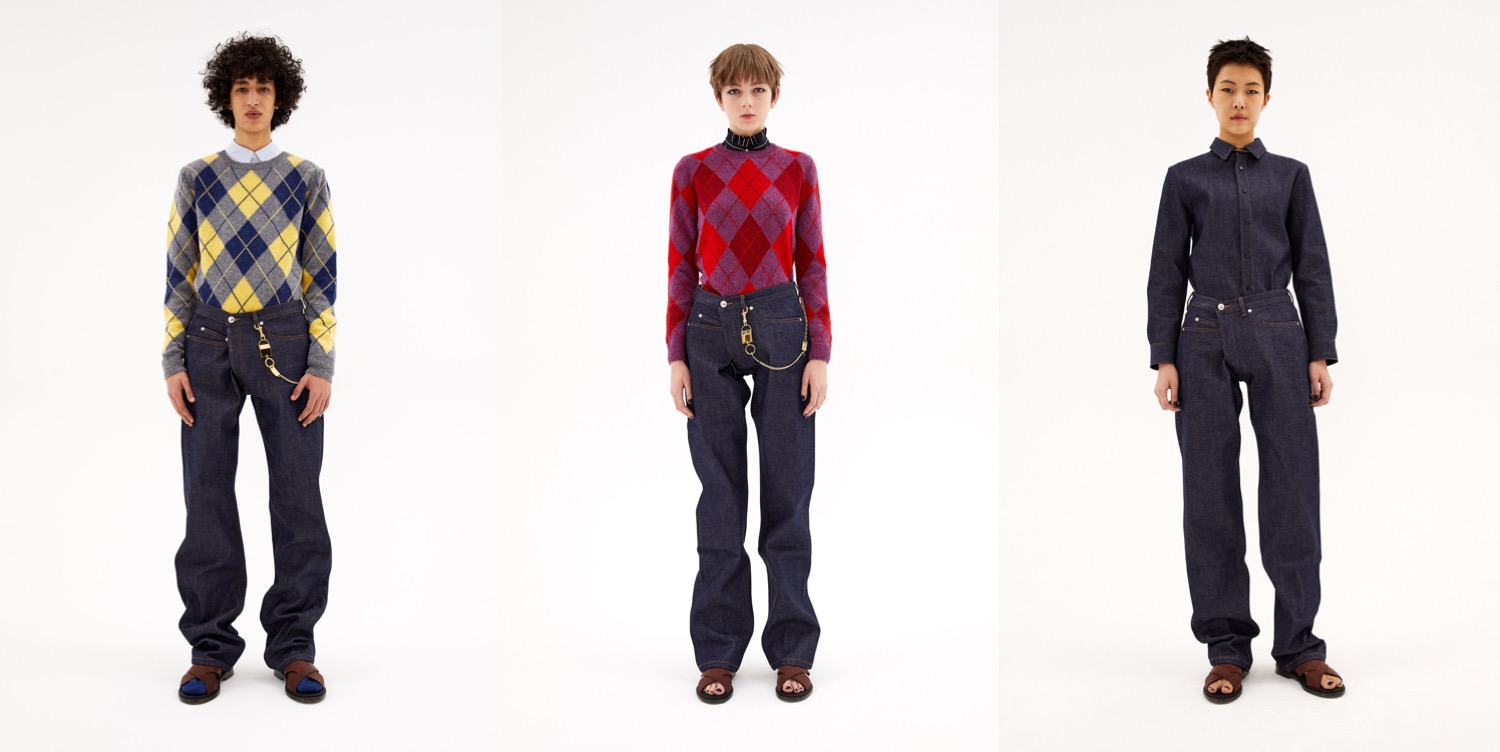
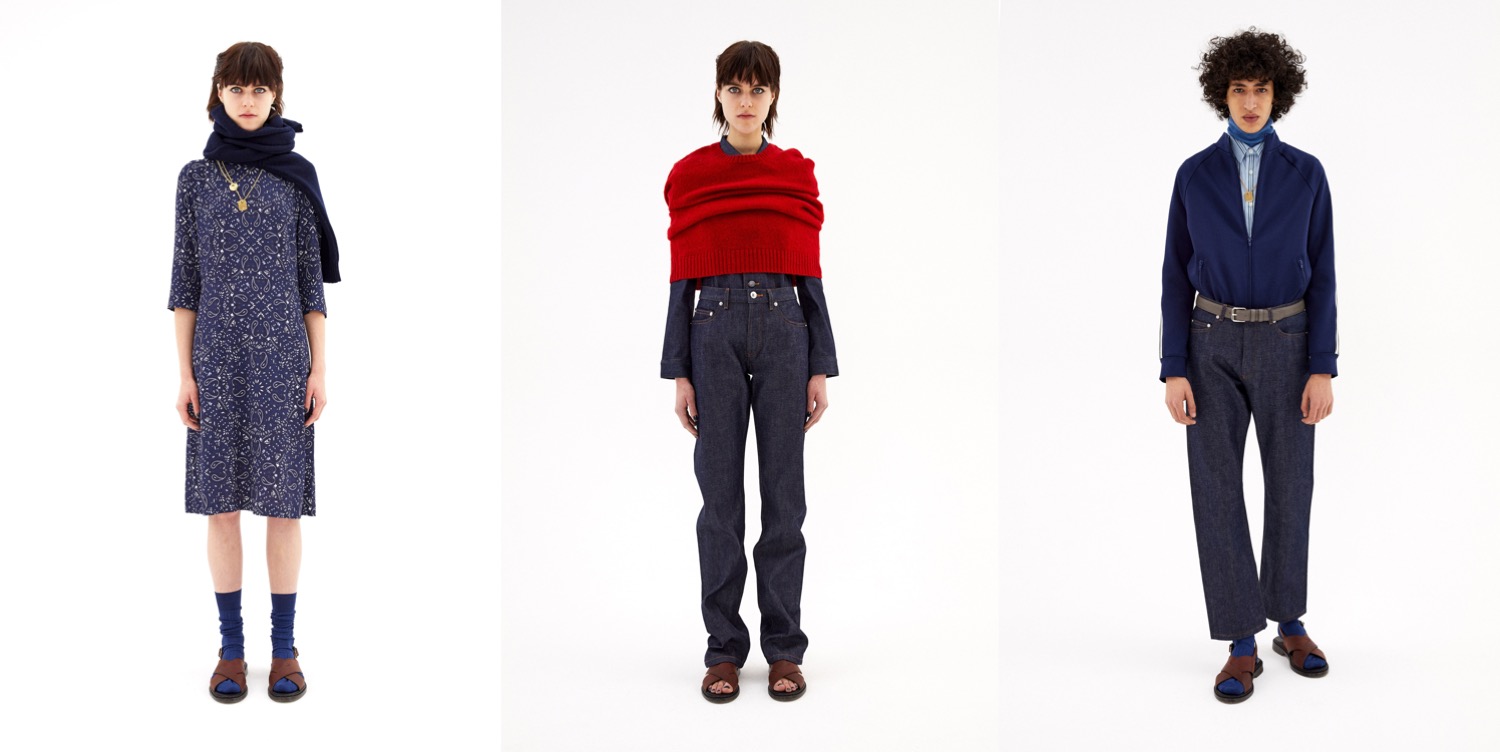
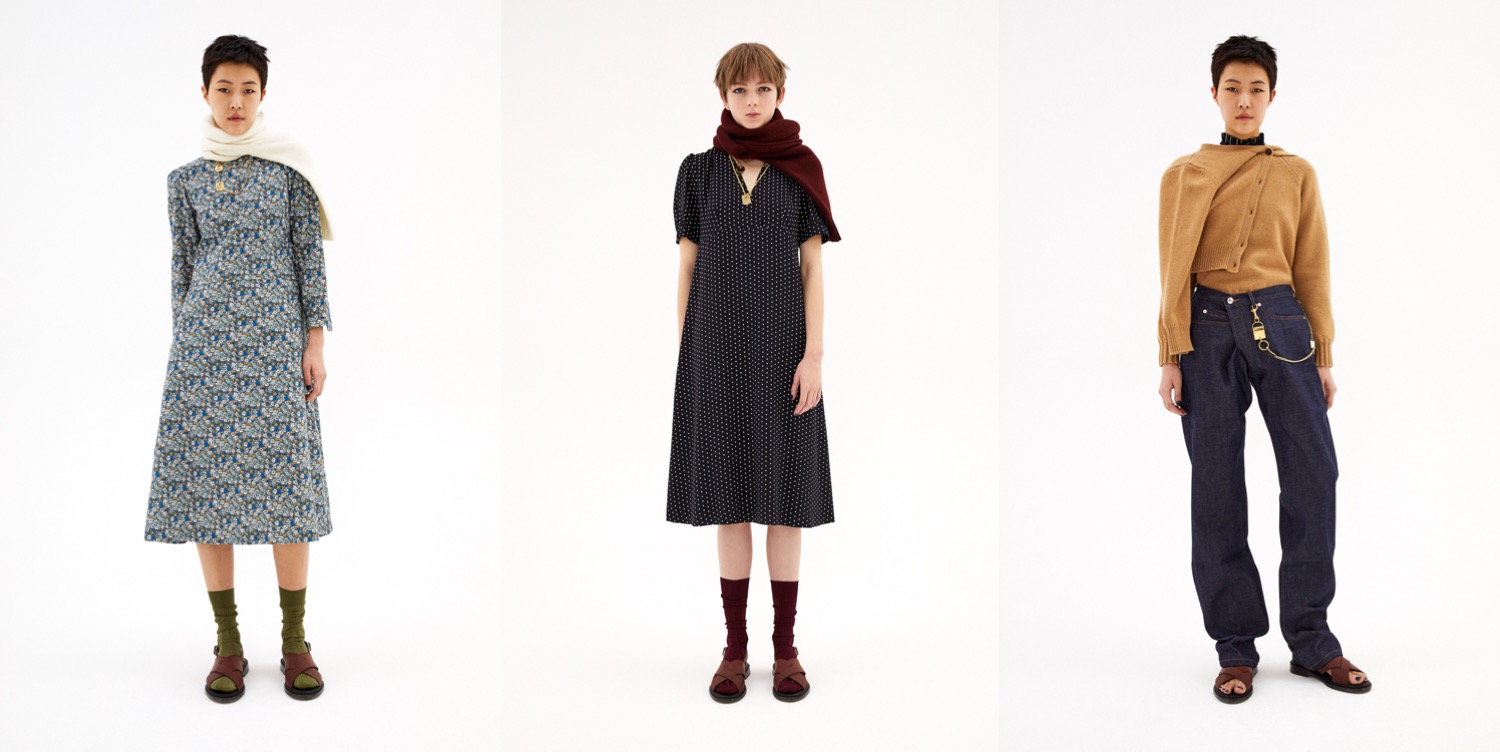
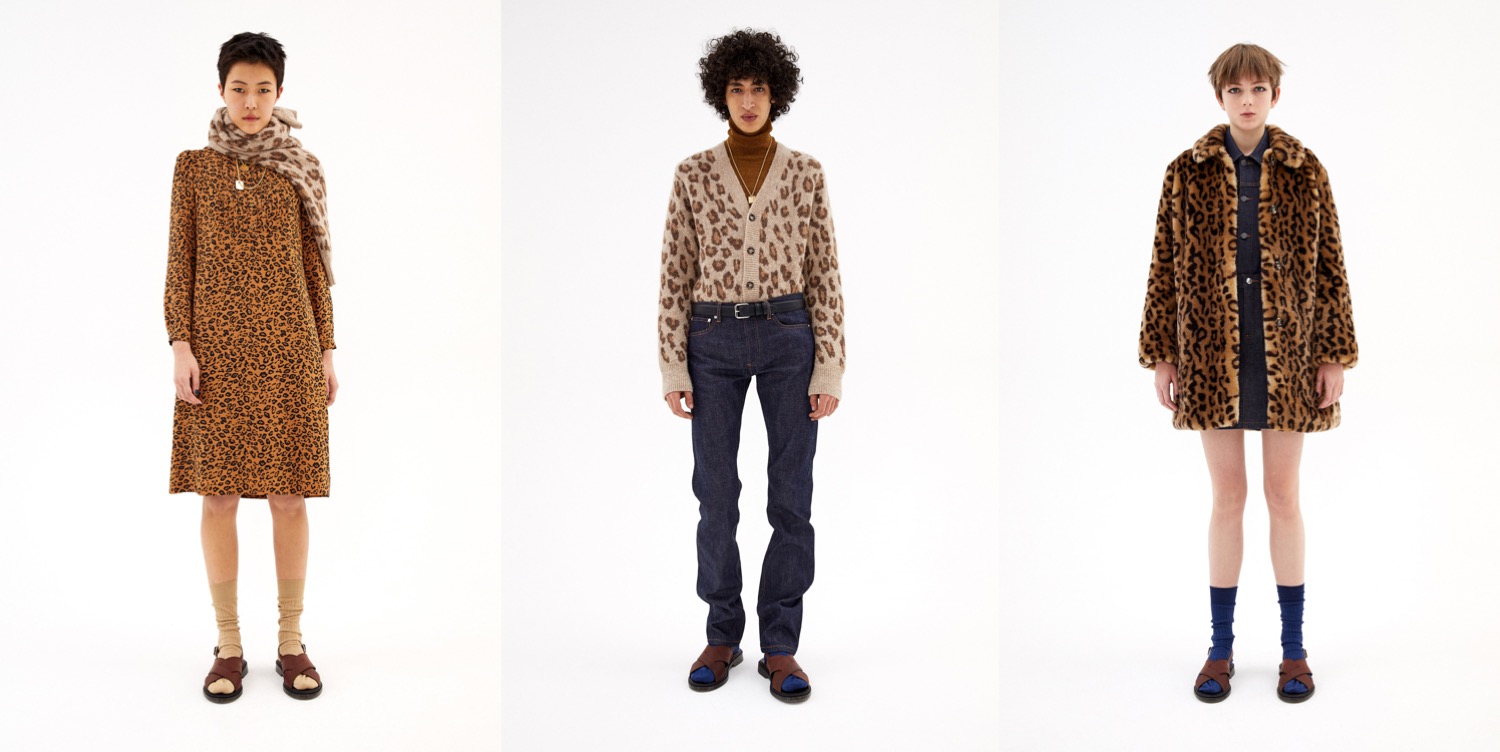
Jean and Judith Touitou presented their autumn-winter 2020 collection as look-book shoot instead of runway – the event was cancelled due to the coronavirus concern. A.P.C. is about product consistence, so don’t expect abrupt newness. However, this season, the styling had changed. The model in look 1 wore a pair of size 35 jeans – Jean’s own size, he said – in which the button and button hole were moved off center to accommodate for the extra fabric. She’s probably more like a 25. Boys got the same oversized treatment. On a back pocket, a white cardboard information label peeked out with washing instructions. Most of the time the jeans were accompanied by a wool sweater, tied as a scarf. Additionally, there were some lovely printed midi-dresses and minis, very thrift-Parisian-chic that rules among the locals. What about the rumour saying that Jean is selling A.P.C. “I don’t want to, I don’t need to,” he said. “I have total freedom, I have a good life. I’m not 14 hours in the studio. No, no. I’m okay.” Thanks God.

Collage by Edward Kanarecki.

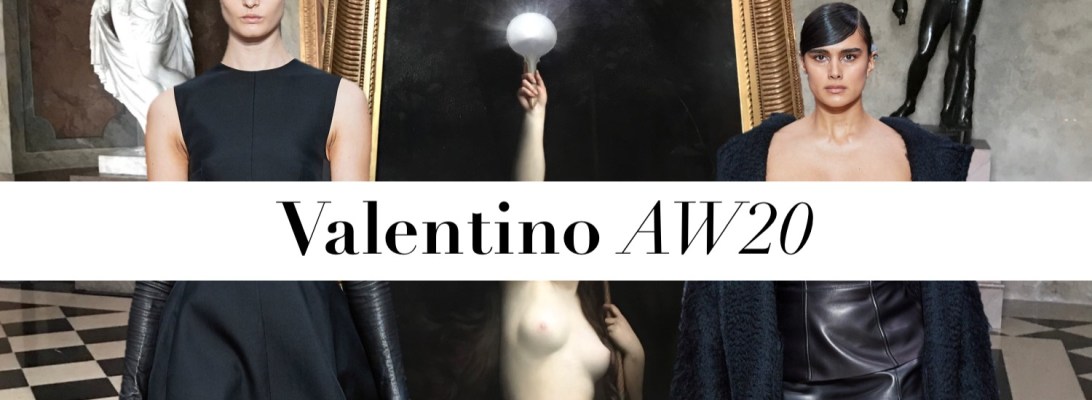
Dark Elegance. Valentino AW20

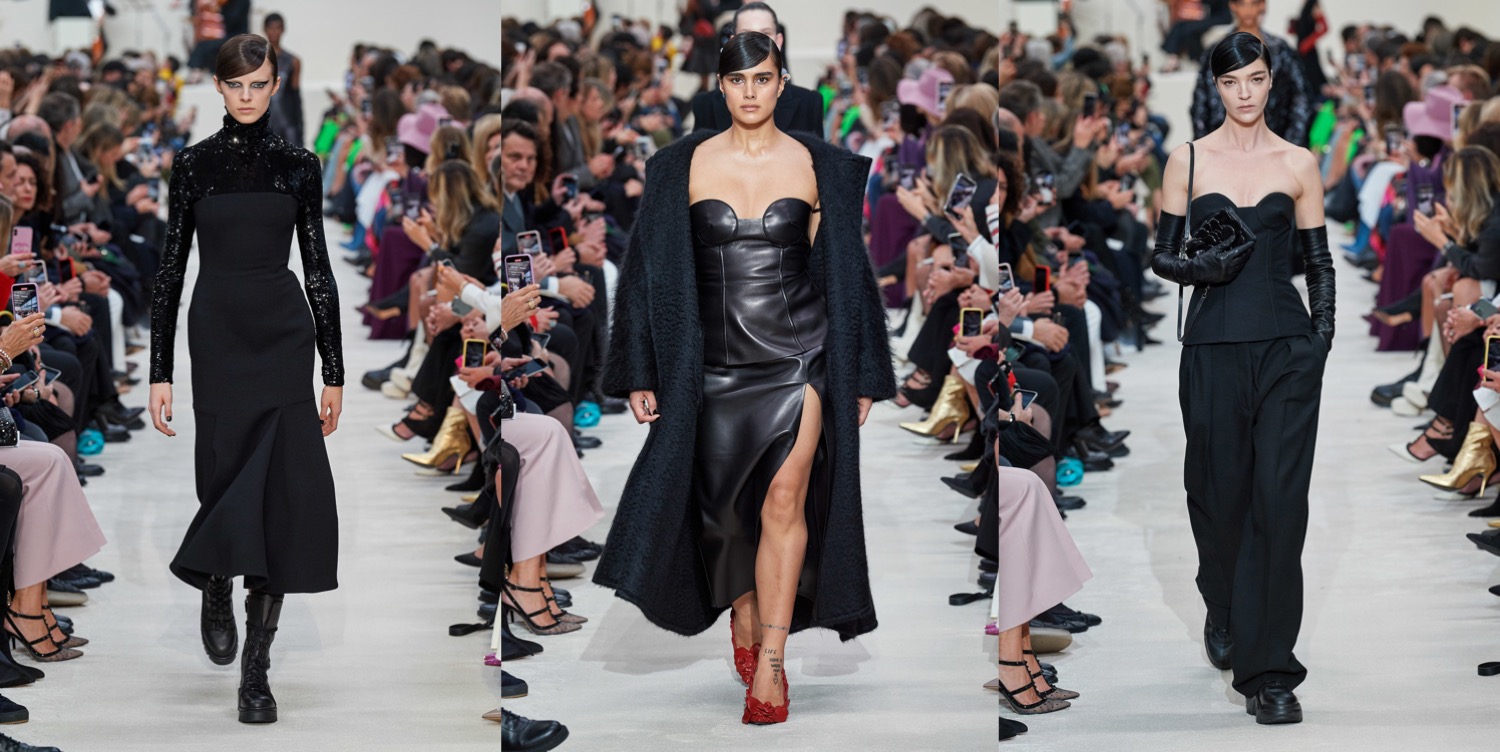
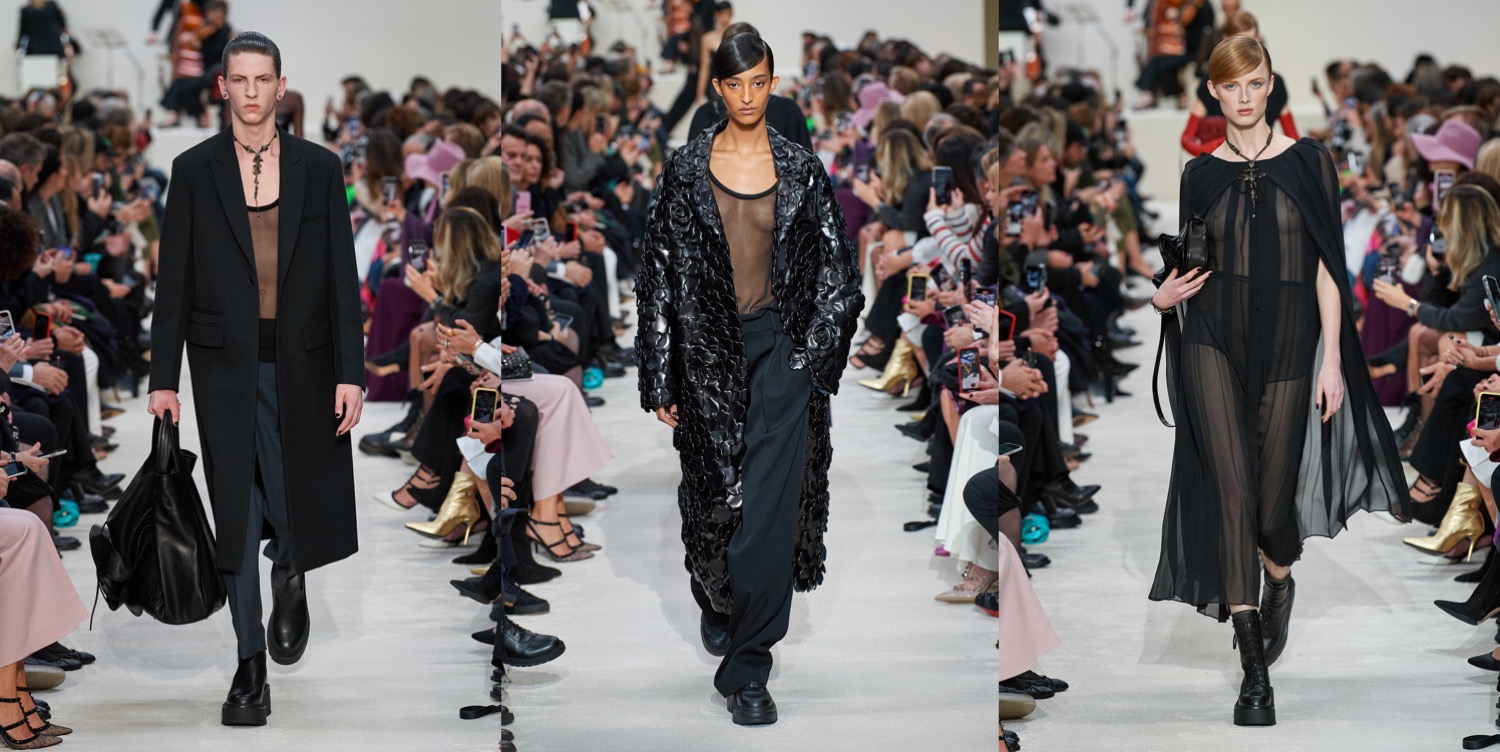
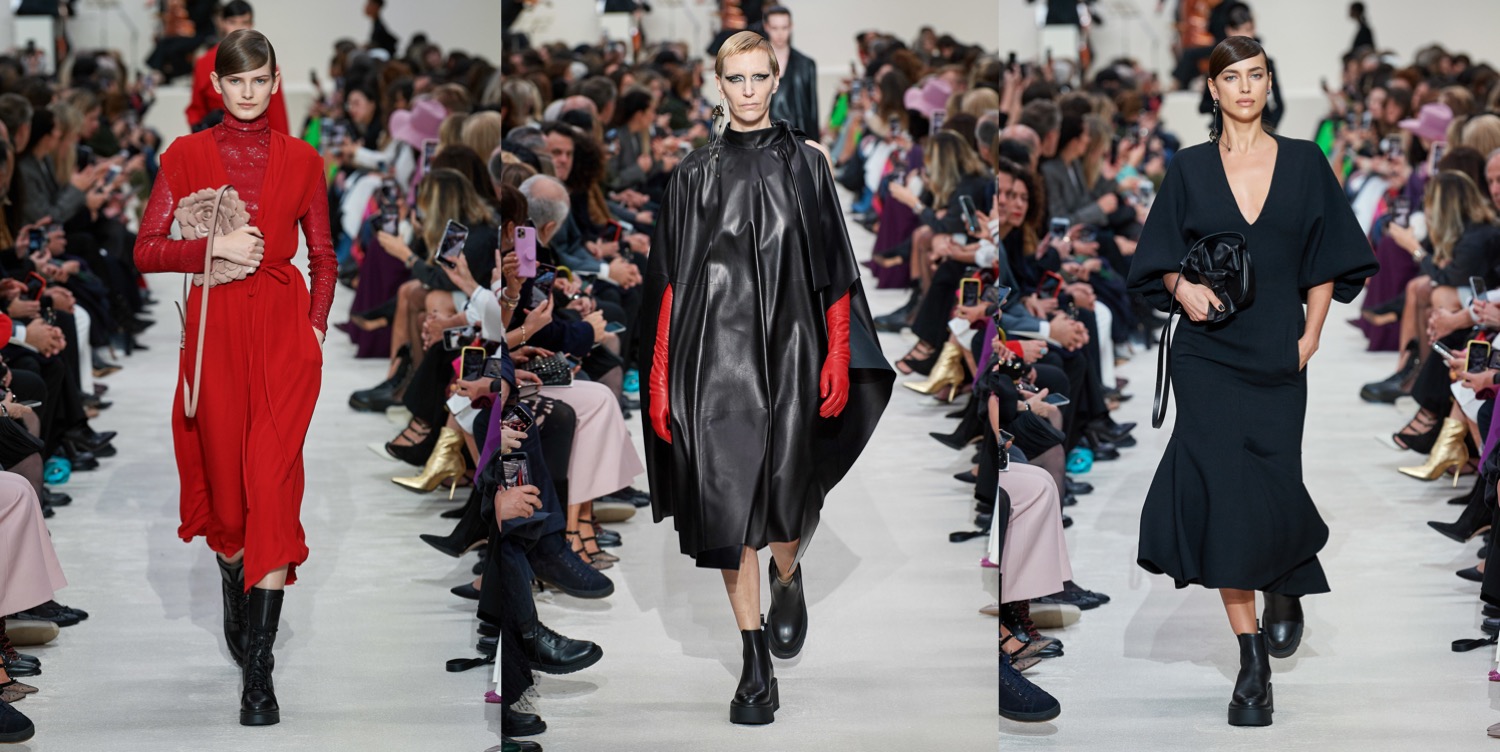
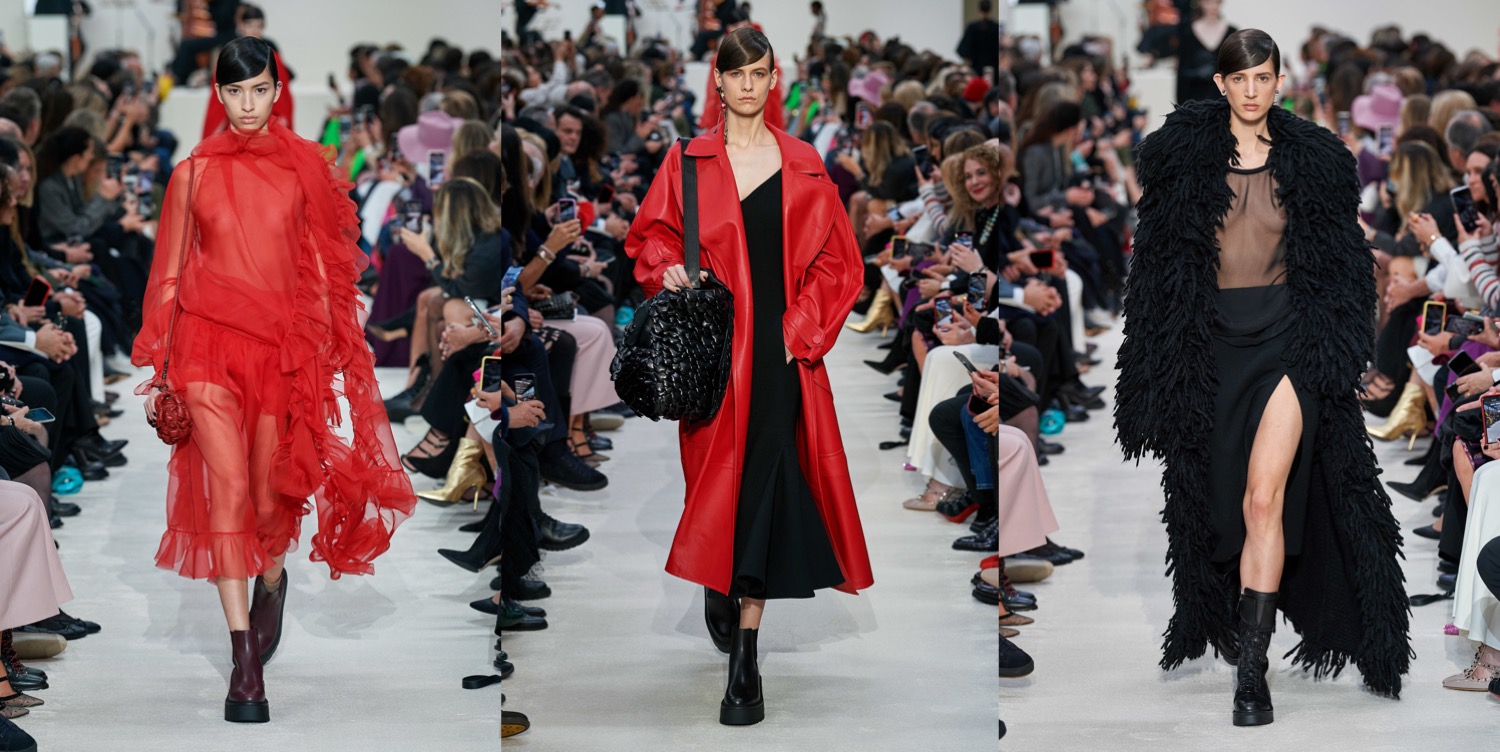
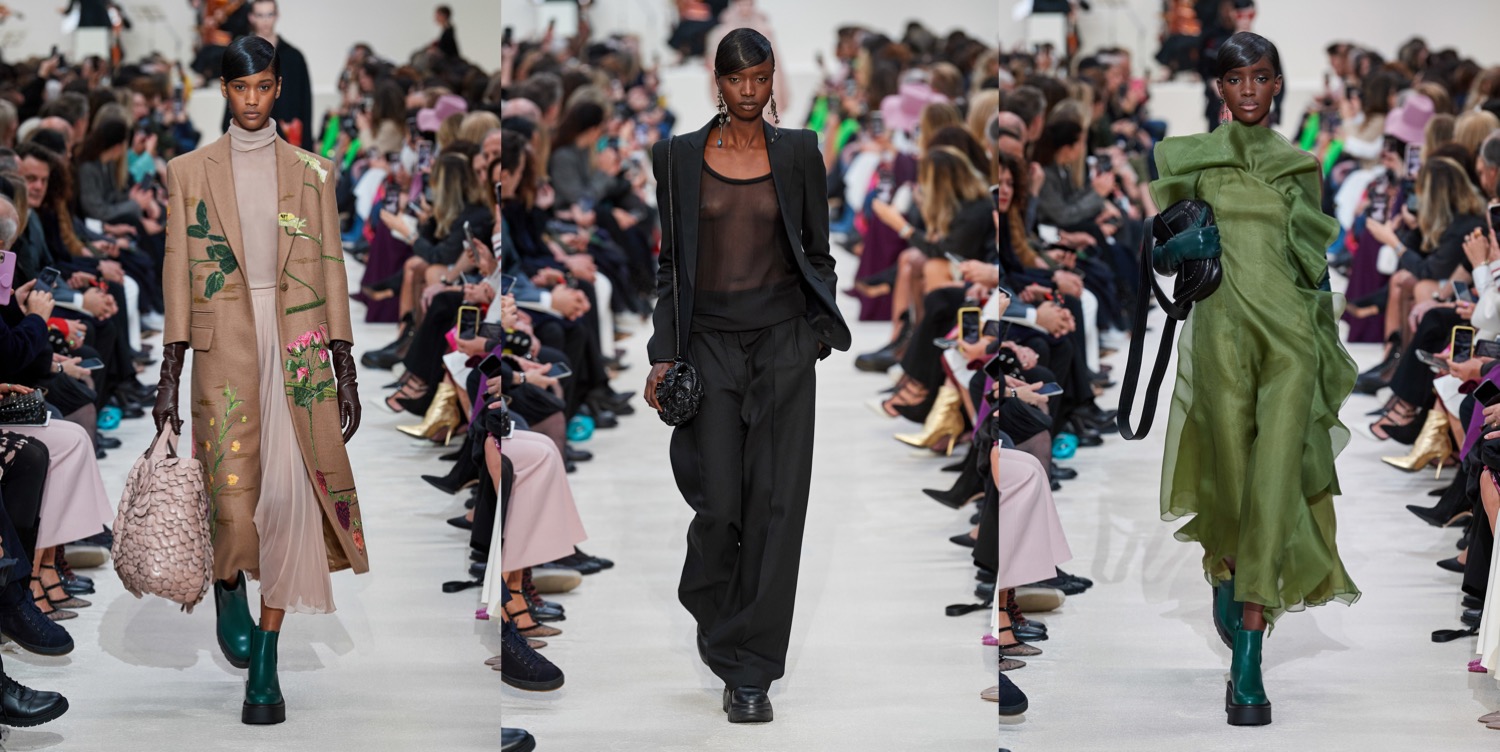
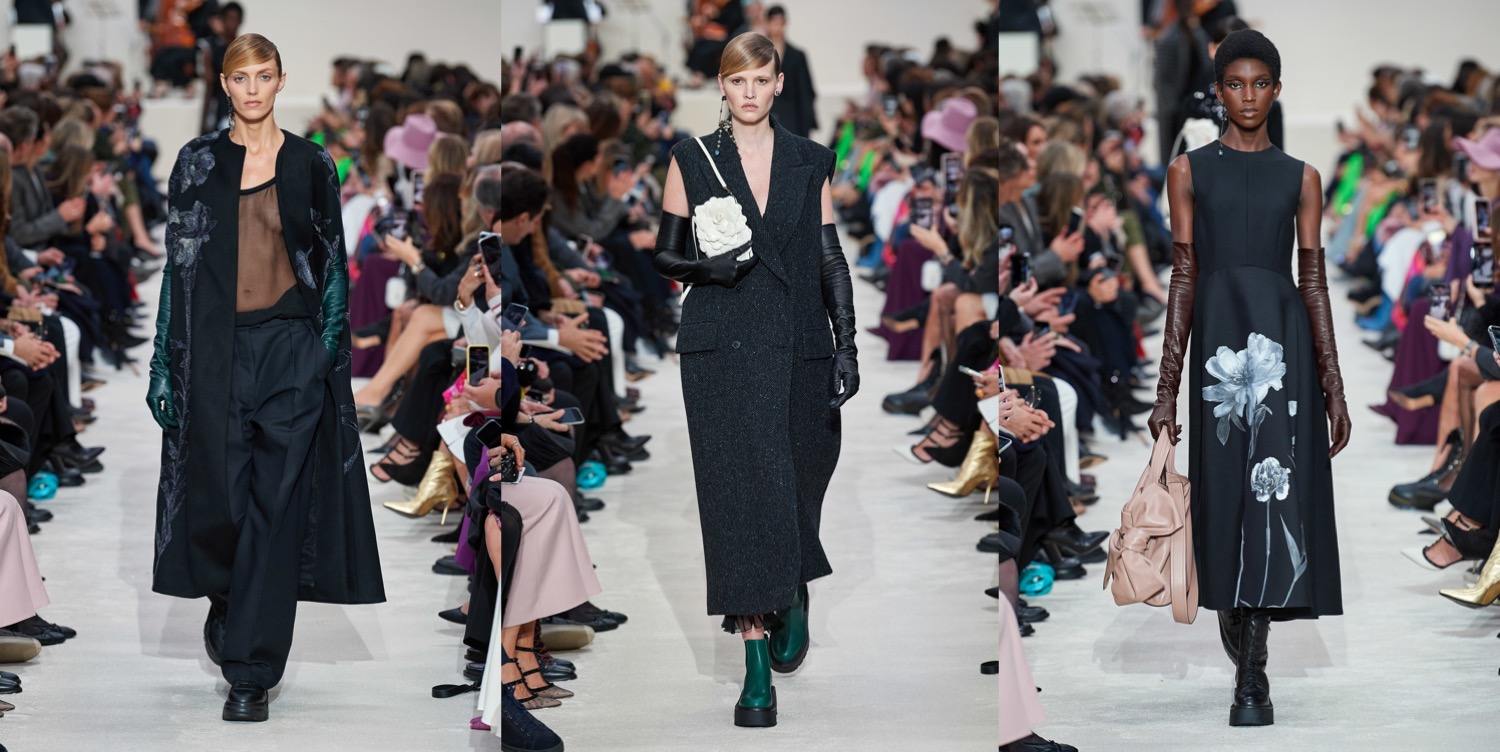
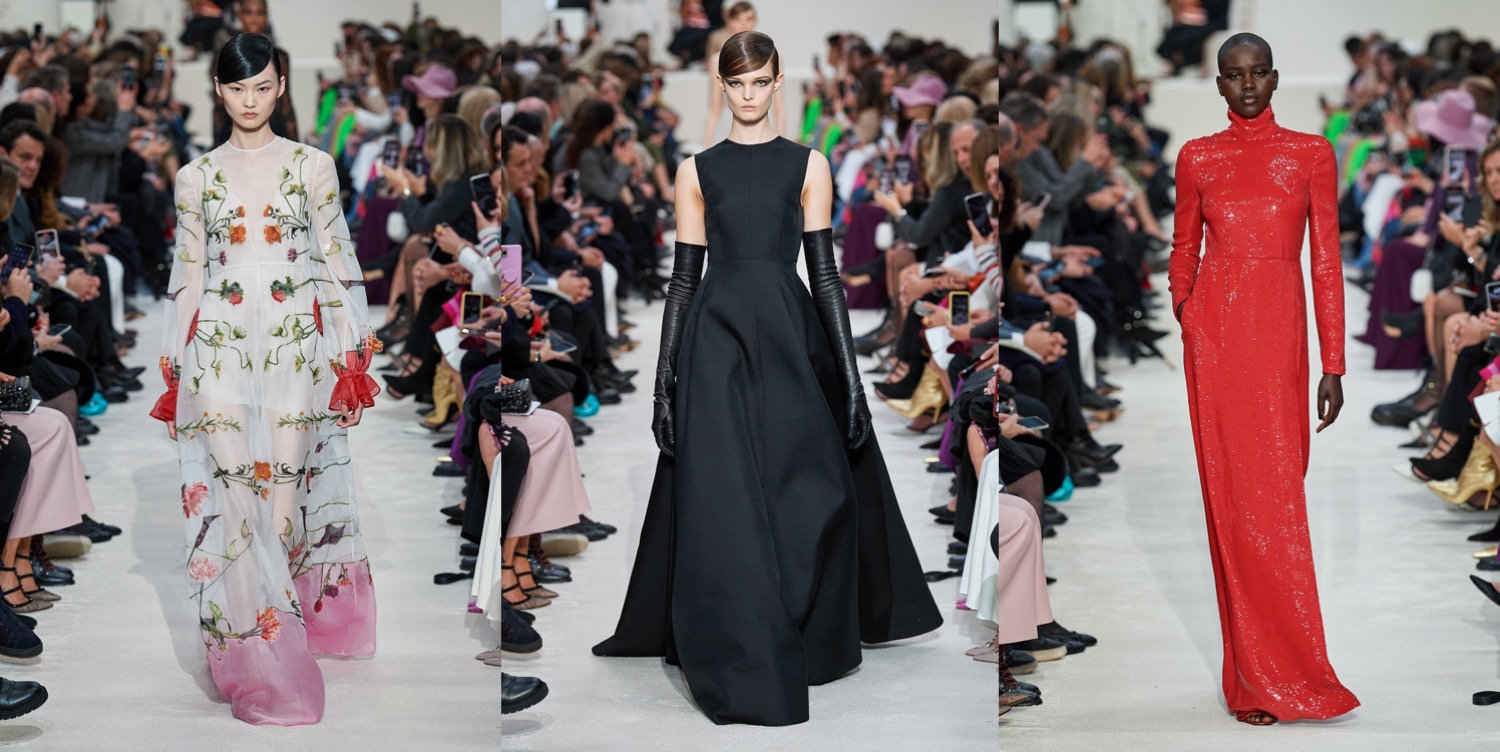
Pierpaolo Piccioli makes impressive couture for Valentino, that’s a fact. But ready-to-wear? I wasn’t sure about that until his autumn-winter 2020 collection, which is so, so sublime. And, surprisingly, dark. Well, there’s no wonder why. The future feels even more unknown and uncertain with coronavirus spreading in entire Europe (reality check: my university got closed down till the end of March for safety reasons…). Designers in Paris seem to state: black is the new black (just look at the apocalyptic Balenciaga). Asked afterward if he was feeling newly serious, Pierpaolo Piccioli said, “No, but fashion must be relevant.” As it turned out, Piccioli had a different kind of relevance on his mind, though. Over the last several seasons, he’s worked harder than most at bringing a new sense of inclusivity to his shows. In his new collection, he pushed his project further along. There were trans models in his cast and curvier-than-usual types too (a revolution is finally coming). He also had male models in the lineup. Backstage Piccioli said, “what I wanted to do was a portrait of a moment with no categories. Fashion has to record and embrace big changes in the world. We have to encourage tolerance and equality.” One way he went about illustrating his message was to strip away the color and quite a bit of the embellishment that we’ve become accustomed to at his Valentino. The show opened with a black mid-length belted cashmere coat and sturdy flatform boots. It wasn’t until look 26 that we saw a dress in full color, though eventually Piccioli did work his way around to many pieces in Valentino’s house red, as well as herringbones, leopard spots, and evening sequins for both women and men. And of course Adut Akech’s closing, sequinned gown. He said that the other way he tried to get his point across about a world without boxes was by putting guys in girls’ clothes and vice versa. The coat that opened his men’s show last month was worn by a female model here. Pierpaolo’s vision of inclusivity came dressed in sober, yet refined elegance. Simply speaking: it’s beautiful.

Collage by Edward Kanarecki.