Men’s – Neo Archetypes. Salvatore Ferragamo AW20

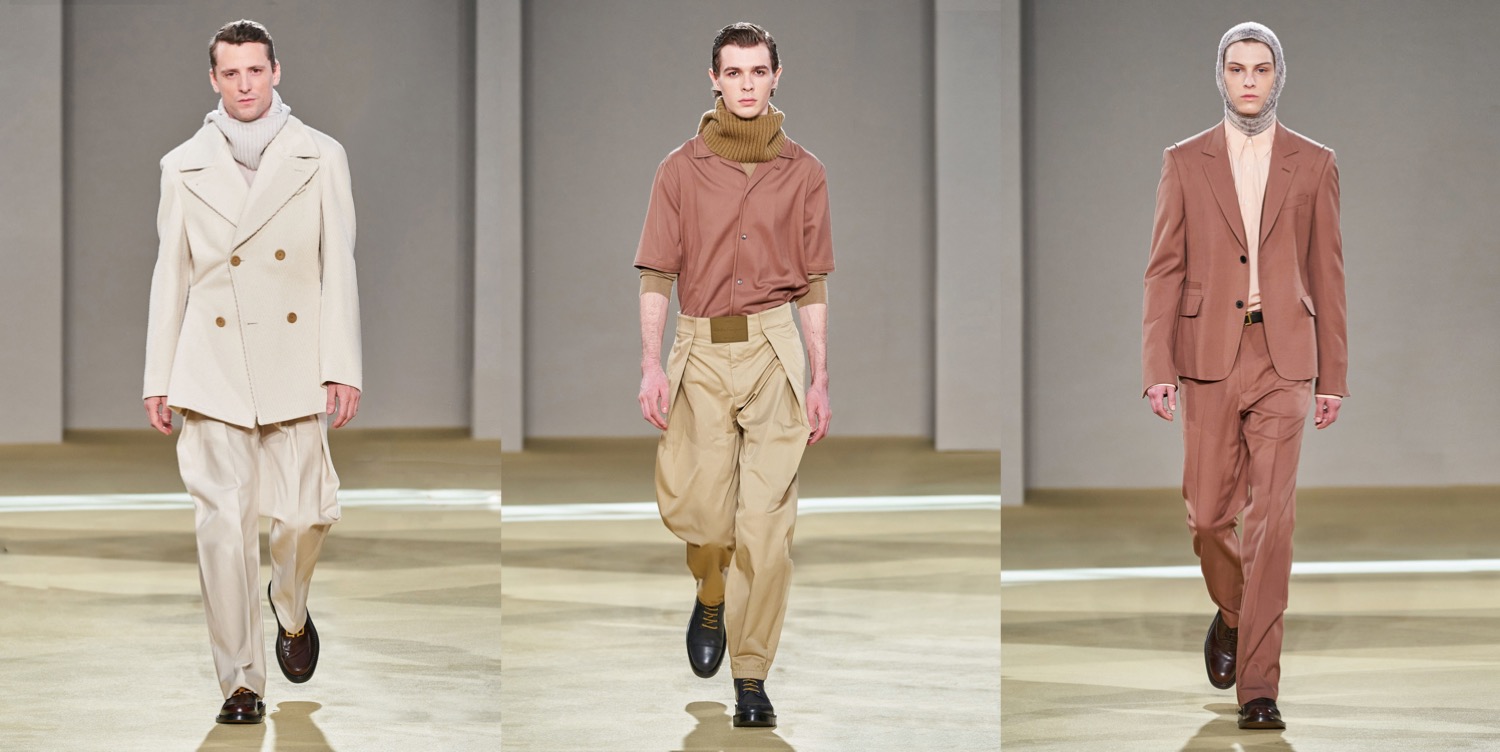
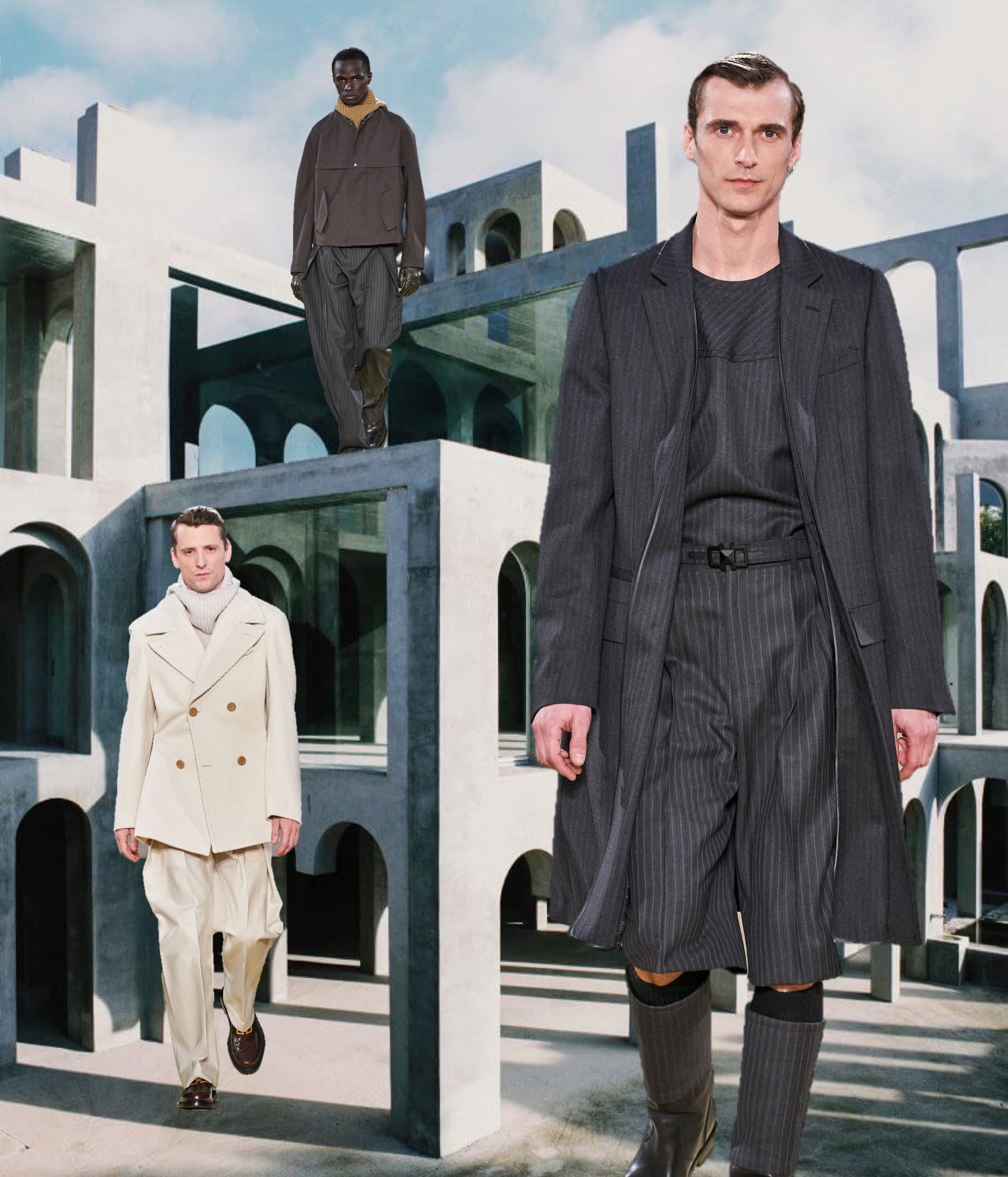
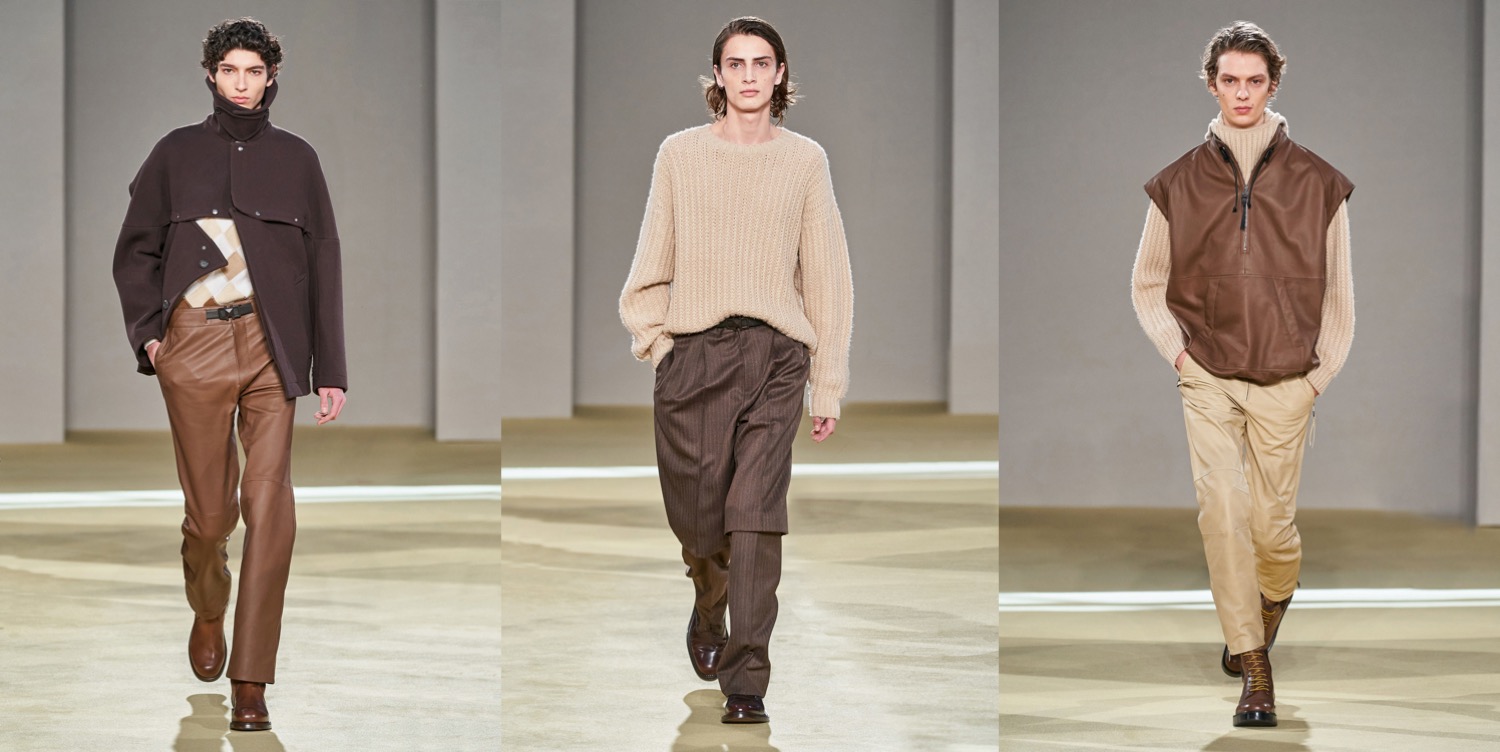
The only thing I disliked about Salvatore Ferragamo’s autumn-winter 2020 for men was the ‘millenials’ talk – isn’t using this marketing term slightly outdated? Still, Paul Andrew’s collection was really good. The peculiar way young guys address masculine archetypes was apparently revealing for him. “Millennials break down archetypal references, mixing them into new categories that defy categorization,” Andrew said. He identified six different alpha-male paradigms of masculinity: the businessman, sailor, surfer, race car driver, soldier and biker. These served as canvas to create new masculine style species, mixed together into a freeform hybrid. “Once upon a time, men identified more clearly with these categories,” said Andrew. “If a surfer wanted to go to Wall Street, he surely didn’t know what to wear. Today you might be easily wearing surfer-style pants with a tailored jacket.” Maybe that’s a bit of an exaggeration. Still, he has a point. If you sum up a sailor & businessman archetype, what do you get? Answer: A perfectly tailored peacoat in the finest herringbone Scottish tweed. If you’d like to add a bit of your inner 1980s California surfer to the mix, you’ll wear a matching pair of oversized shorts over the trousers of an impeccably tailored pinstriped suit, a three-piece extravaganza fit for a new breed of businessman & ocean man. Or else, the soldier & surfer combo could result in a daring twist on the camouflage pattern, inspired by a Hawaiian shirt and reworked in military colors. Probably, less words would work even better for this inventive line-up.

Collage by Edward Kanarecki.

Men’s – Apocalyptic Party. Marni AW20

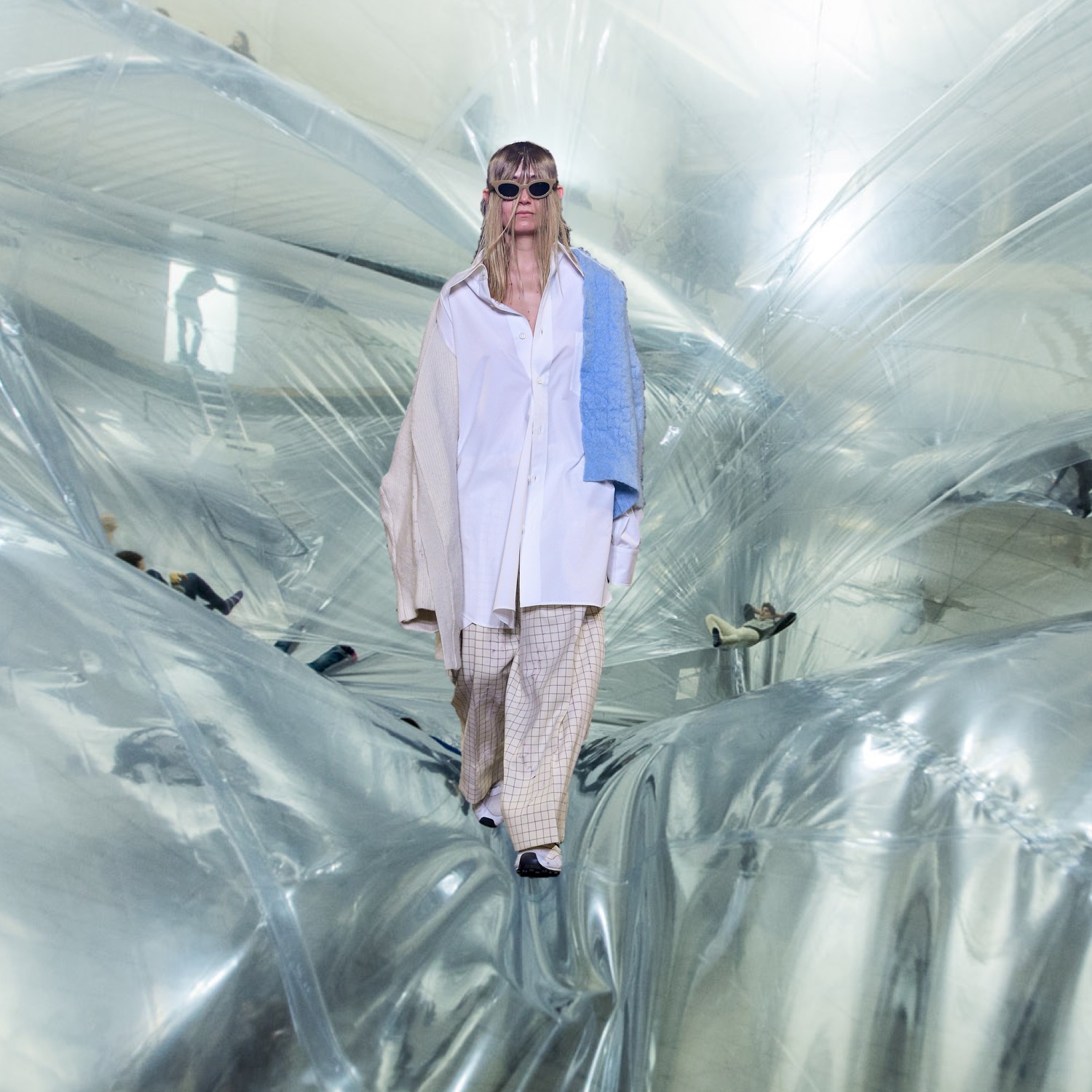
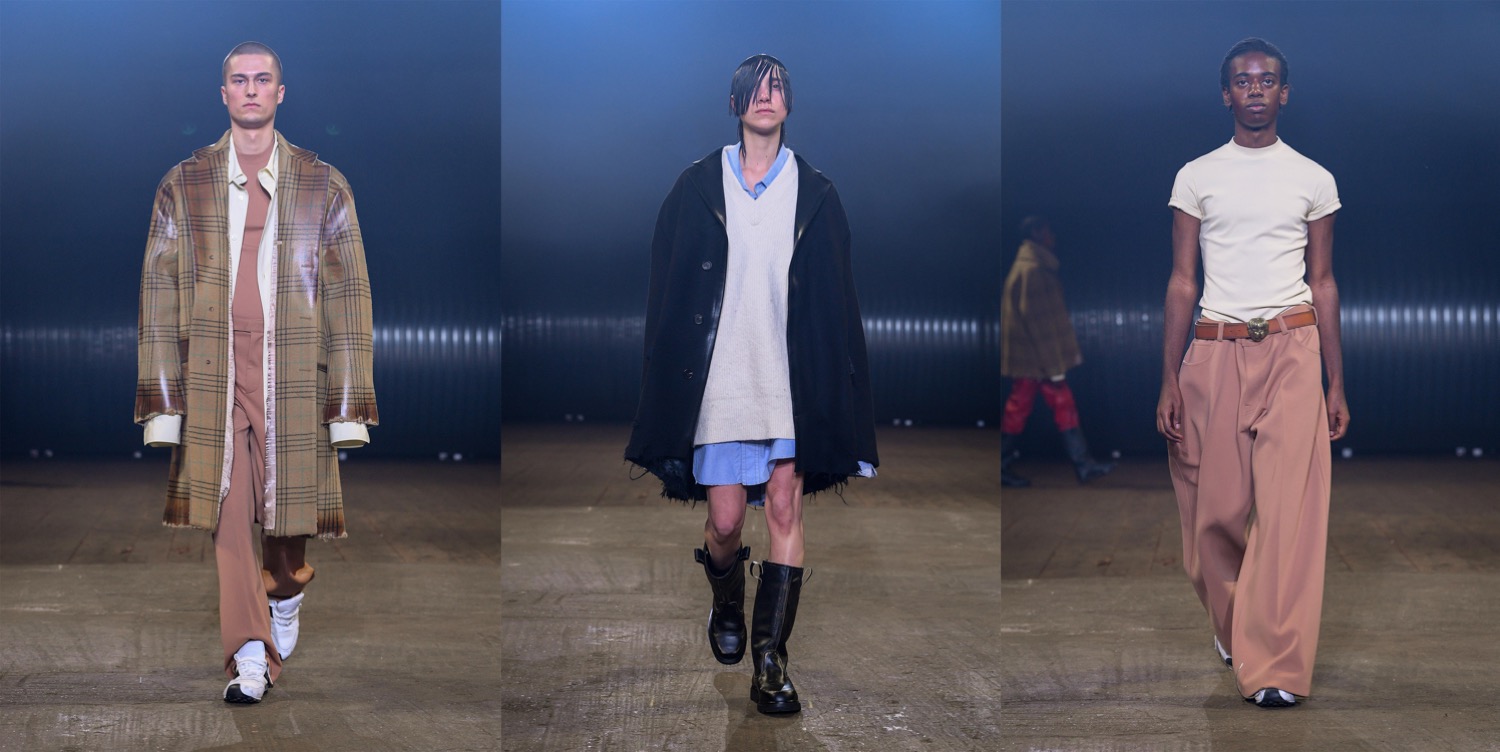
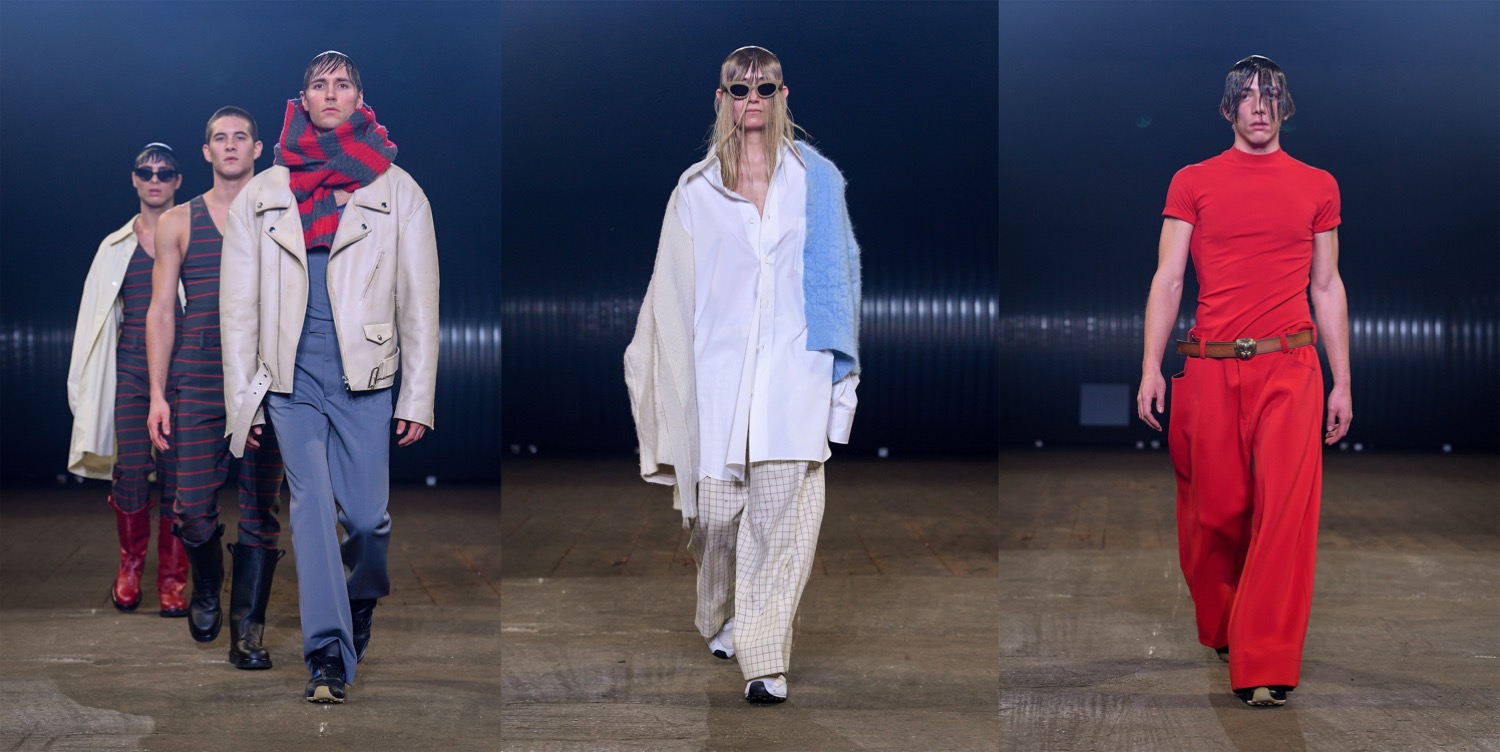
The audience was directed to a cavernous dark space, trespassing similarly dark tunnels outlined with thin, colored neon lights. The tunnel opened onto a pitch-black space with a labyrinthine neon-lit floor layout, with barely perceptible human silhouettes scattered around. The audience was kept standing. The Marni troupe (which was actually a dance collective, directed by Italian choreographer Michele Rizzo) emerged in slow-motion from obscurity as if in hypnotic trance. Awakening from their sleepy state, the dancers started moving and swaying to trance music, holding onto their spots as if glued to them. Then they started moving about at a snail’s pace. Then the beat and the energy changed abruptly and the Marni-clad collective started marching about as if propelled by a sudden urge, circling around in manic mode, until the pace wound way down again. This was no longer a fashion show, but an art performance. No wonder why focusing on the clothes was challenging. But still, the show wasn’t here to conceal the clothes. The fashion repertoire was highly eclectic, as usual from Franceso Risso. Tailoring mixed with big, slouchy shapes. Coats were bisected, jackets were dilated, sweaters fragmented and juxtaposed. Scraps of fabric were pieced together in patchworks. Nothing seemed to make sense – yet all coalesced beautifully into Marni’s stylish madness. But there’s no Marni show without a piece of Risso narrative. “It’s a dance which takes us to the end of love. The end and the beginning of love. I was thinking about Edgar Allan Poe’s ‘The Masque of The Read Death’ and about Prince Prospero,” said the designer. The story goes that Prince Prospero locks himself in an abbey with a crowd of friends for a masquerade ball, attempting to escape the plague. The Red Death infiltrates the abbey with exterminating results. “Today it was our court of Prince Prospero’s noble friends dancing to the end of love and locked in our castle,” continued Risso. “They are a collective in a never ending party, wearing multiform uniforms… objects with a life of their own, heirlooms, something we have to protect.” It’s not the first time when the designer goes apocalyptic. Theory aside, back to the clothes: they were made from assemblages of old scraps of fabrics and leftovers of 1950s deadstock. Risso’s poetic way of addressing new methods of creating and producing clothes (recycling, upcycling, assembling, reusing!) is a consistent approach, which still seems to be missing at other luxury brands. A big yes to this collection.

Collage by Edward Kanarecki.
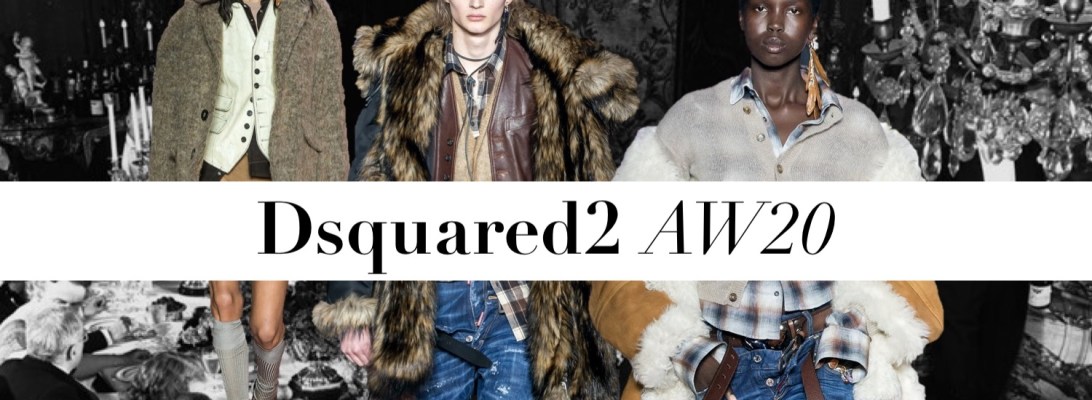
Men’s – 25 Years. Dsquared2 AW20

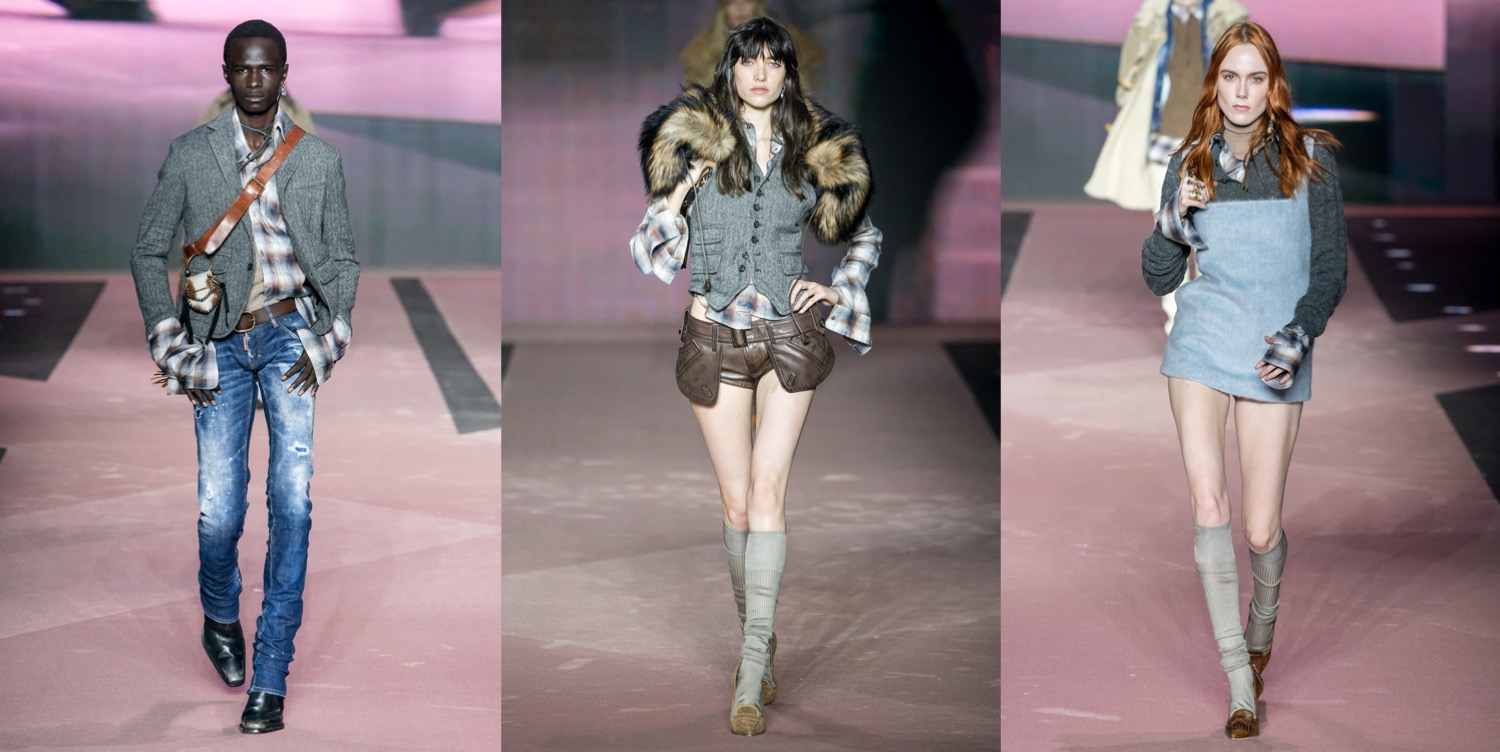
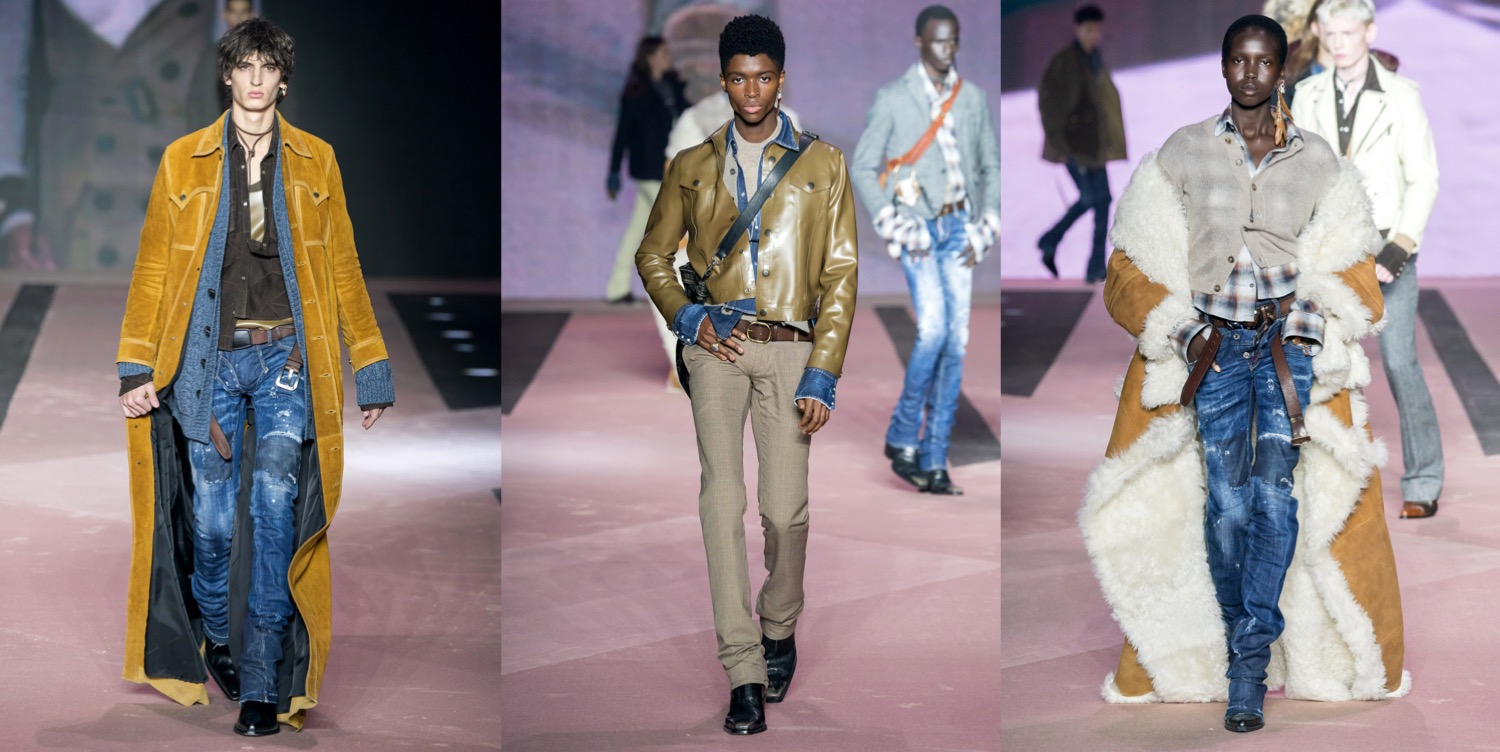
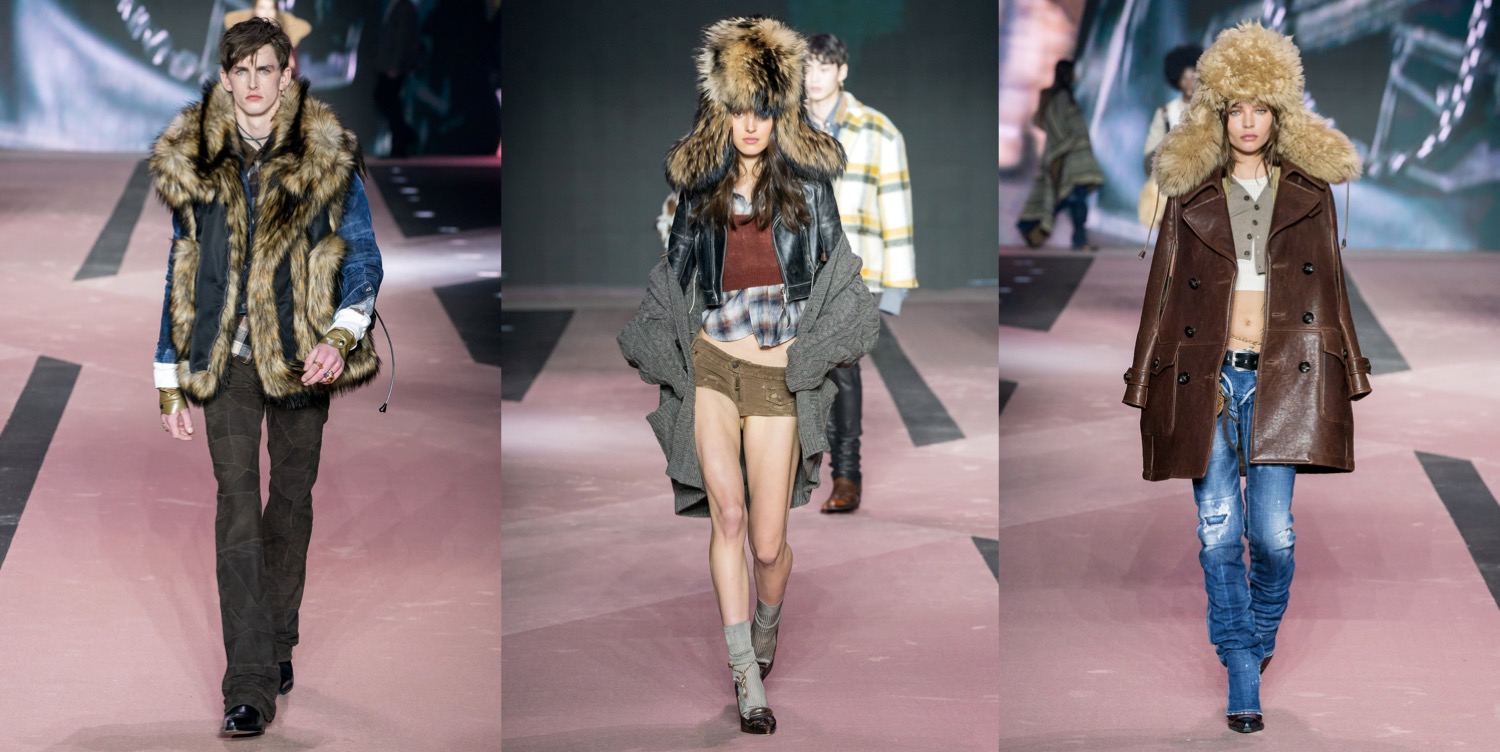
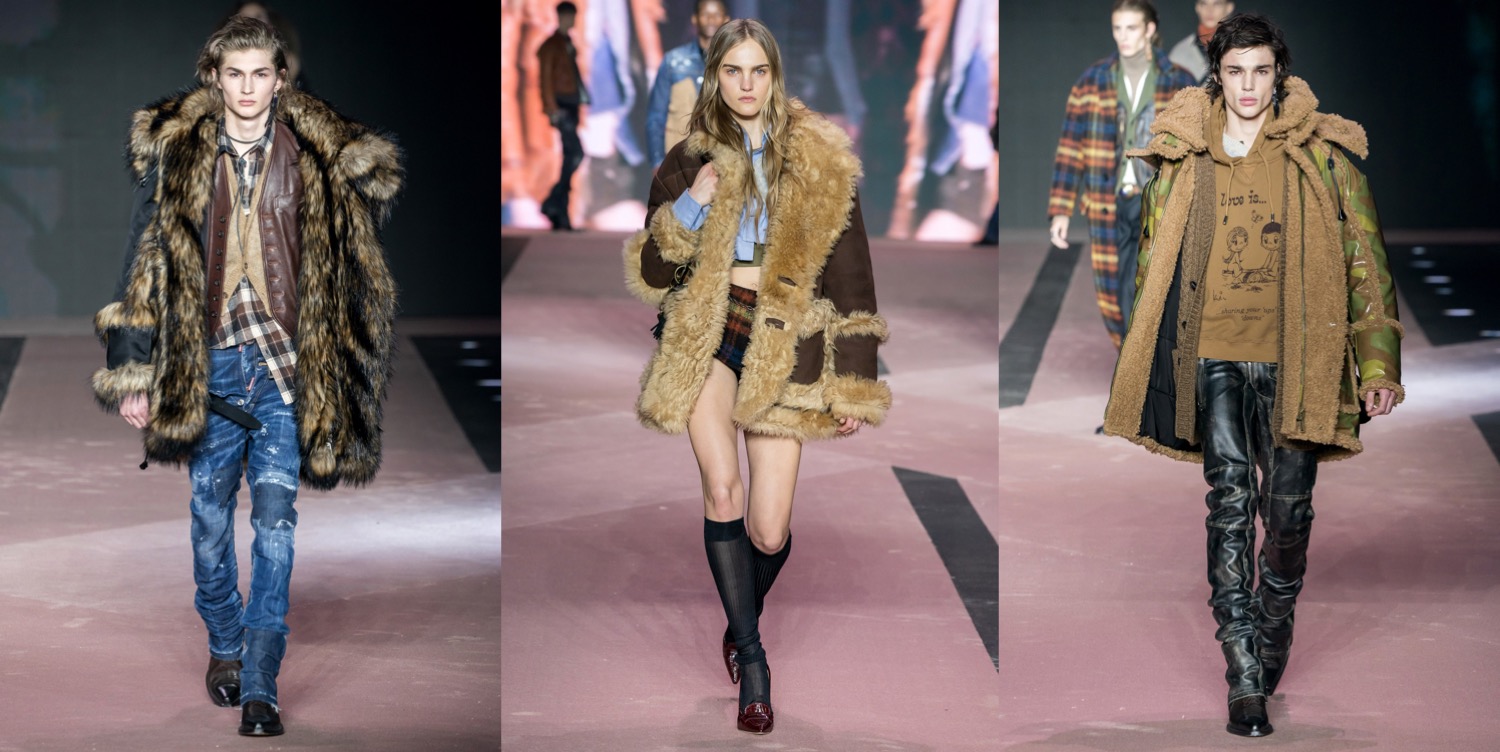
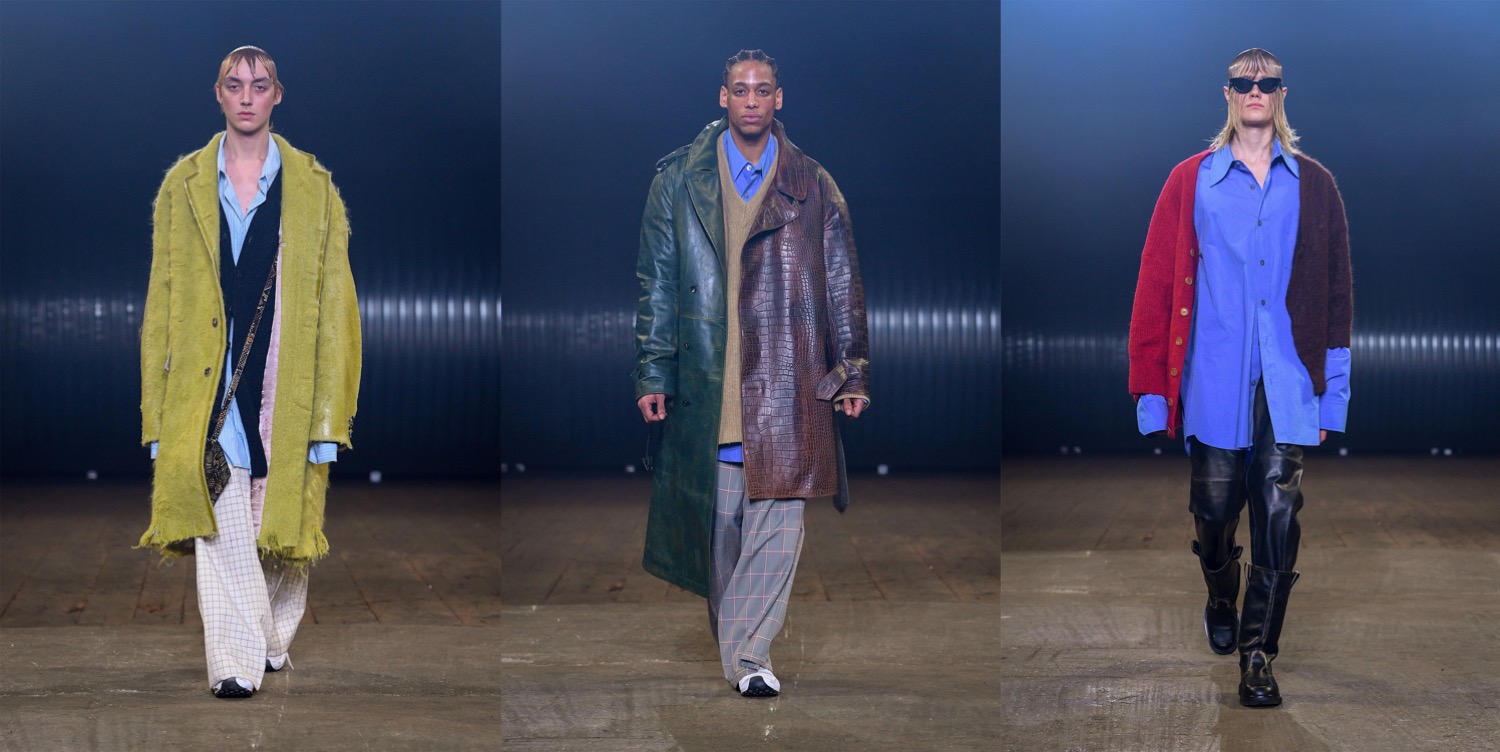
While I can’t recall Dsquared2 catching my attention in the last few years, Dean and Dan Caten‘s men’s autumn-winter 2020 show – simultaneously being their 25th anniversary show – was something the label needed: sharp, naughty and distinctly Dsquared2. The collection paid homage to the label’s past – think whild, shouty, at times crappy 2000s fashion. Probably the oversize knit blanket coat was a nod to Naomi Campbell’s first look at their notoriously great autumn-winter 2003 airplane show. There was Western-inspired style they conceived for Madonna’s “Don’t Tell Me” video. The collection was also all about sultry pioneer vintage. The silhouette was narrow at the bottom (tight kicked pants and jeans for boys, bare legs for girls topped by under-butt skirts) and volumized above (big shearling jackets, fake-fur fringed herringbone overcoats, a great waxed horseman’s long coat). Also, when was the last time ripped denim and plaid shirts looked so hot? One might wonder if the beginnings of 2020s should look back at 2000s fashion in such a literal way. But it’s Dsquared2, it’s a glossy, loud, non-stop after-party.

Collage by Edward Kanarecki.

Men’s – Pure and Forever. Jil Sander AW20

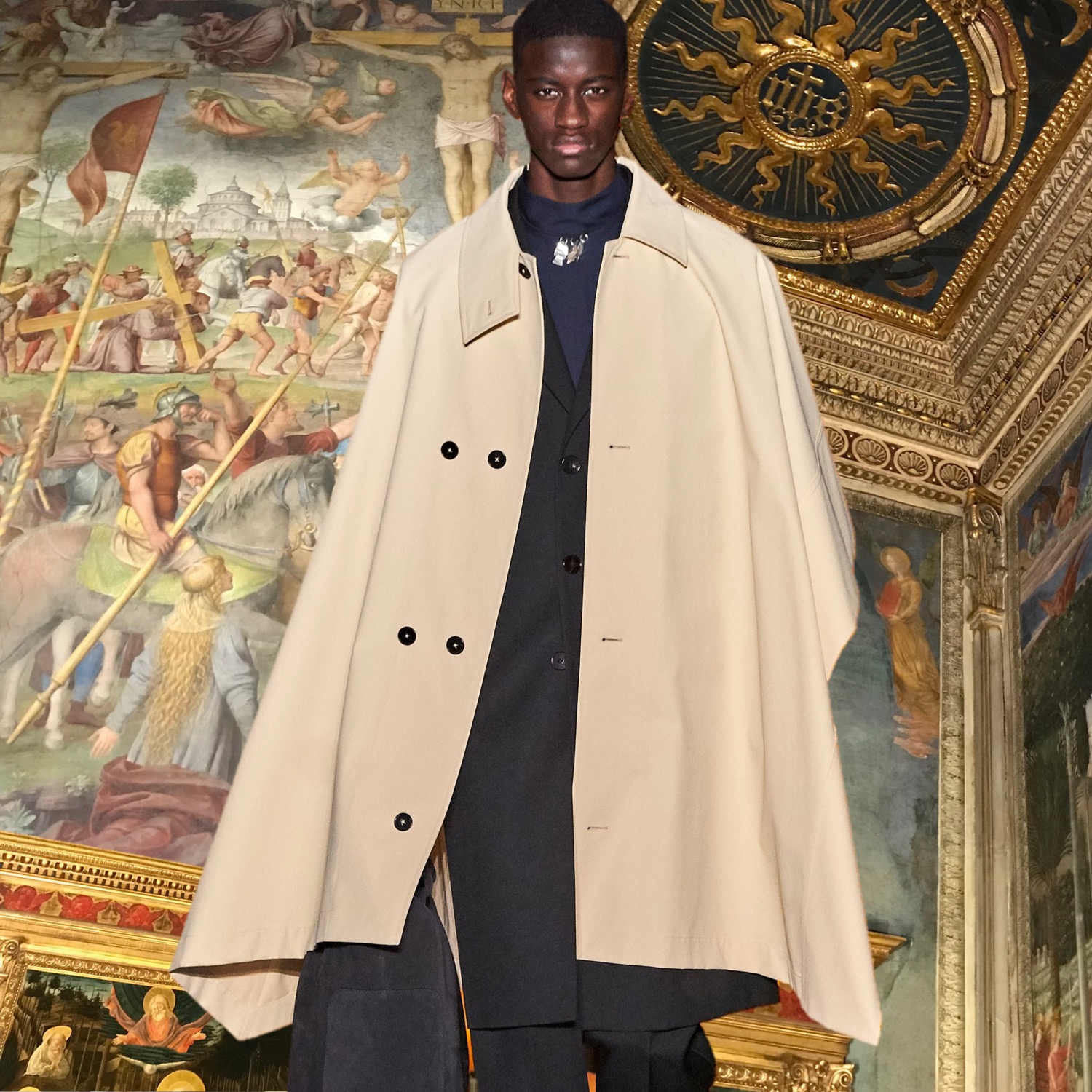
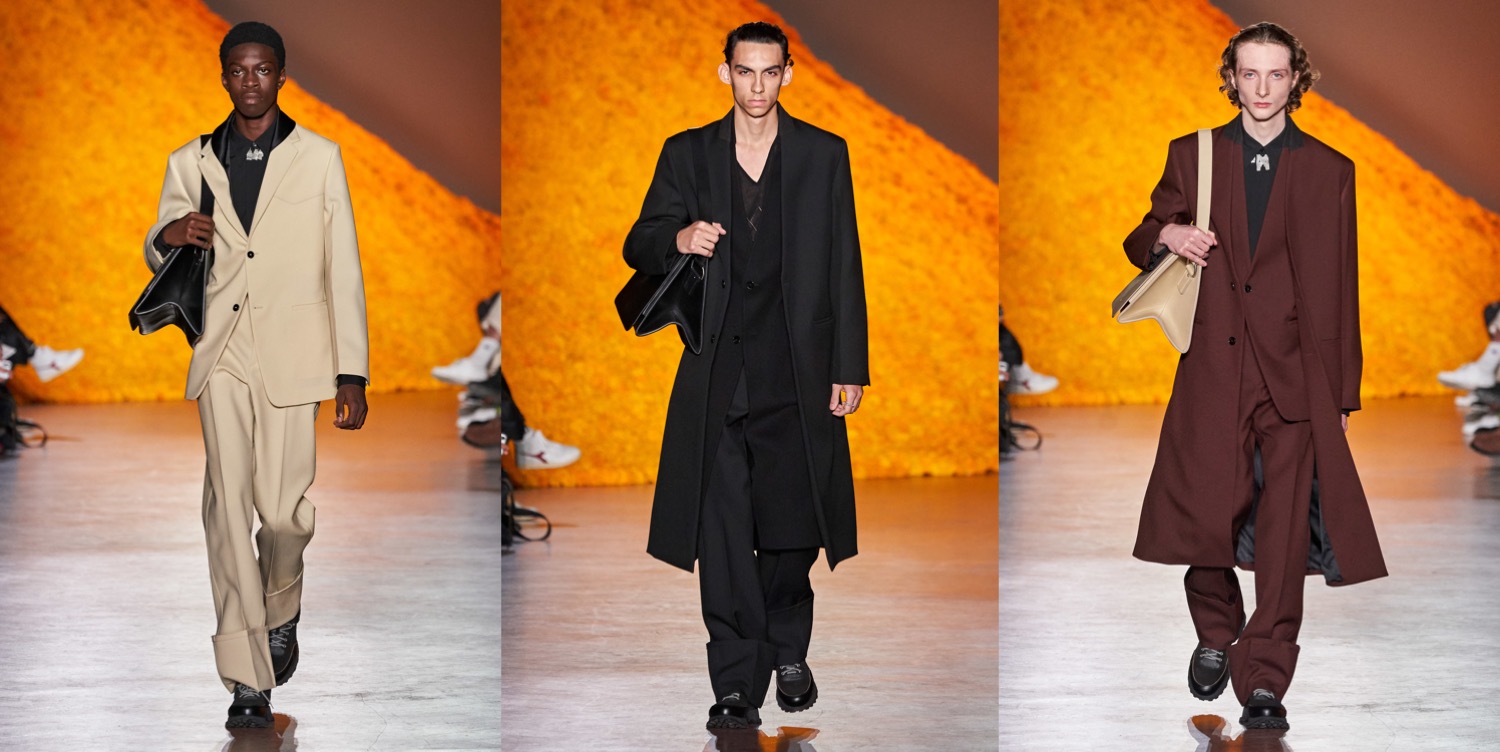
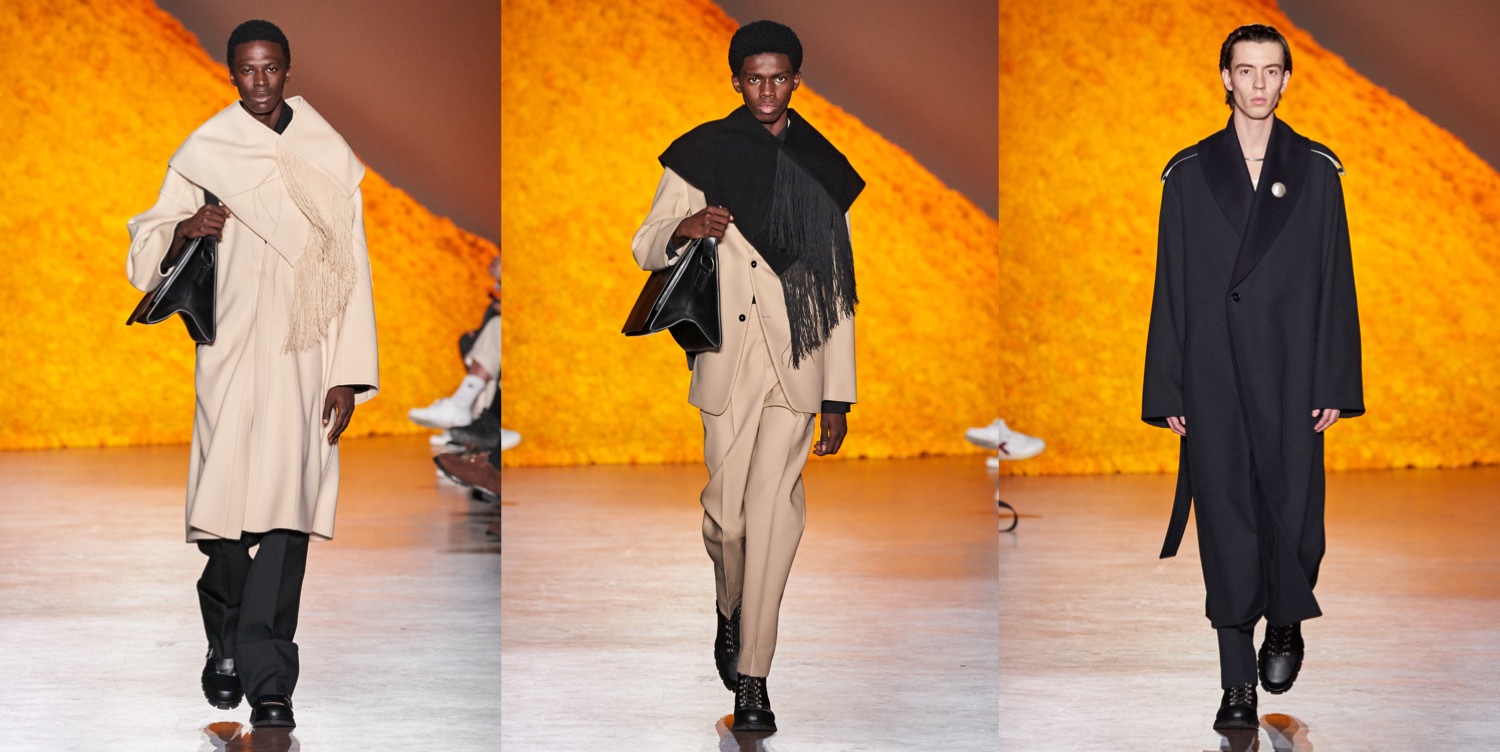
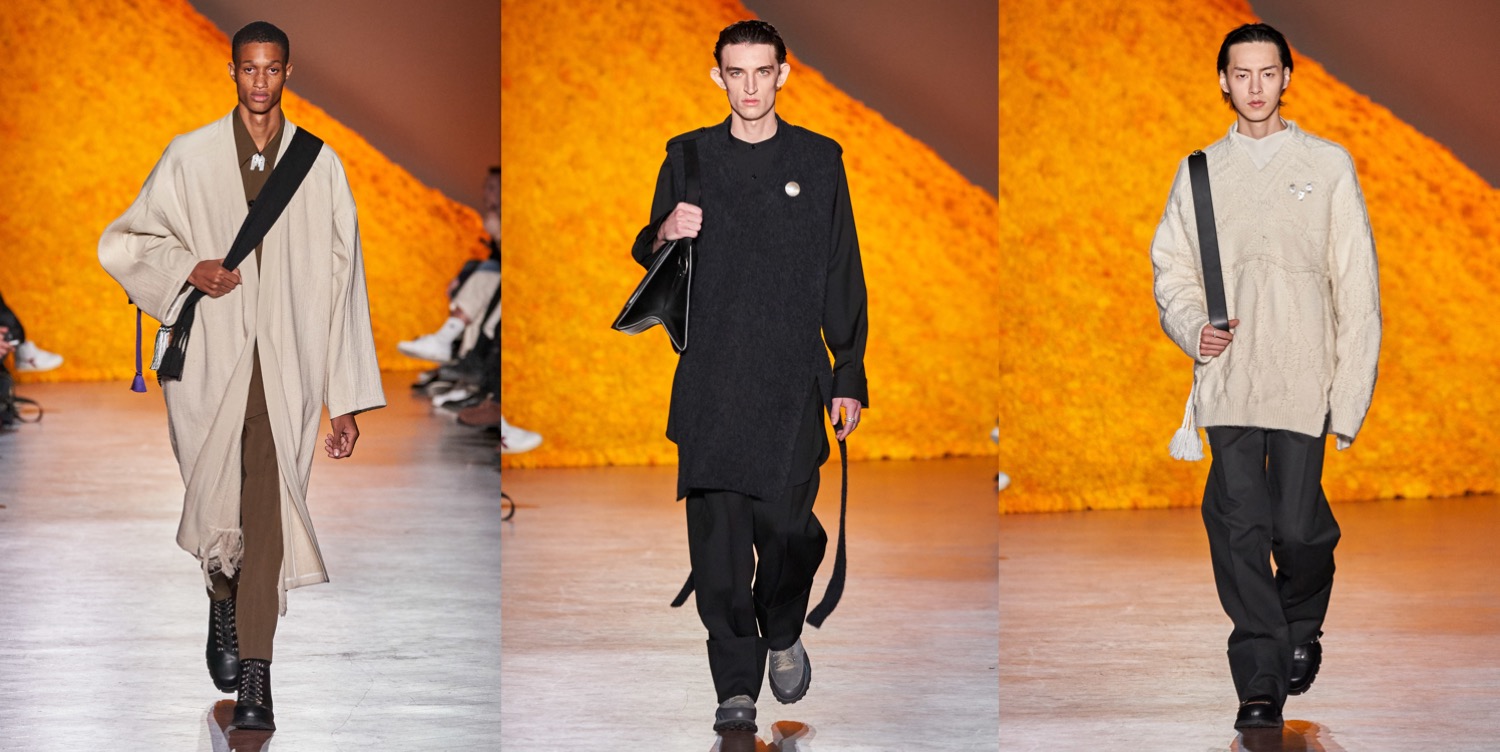
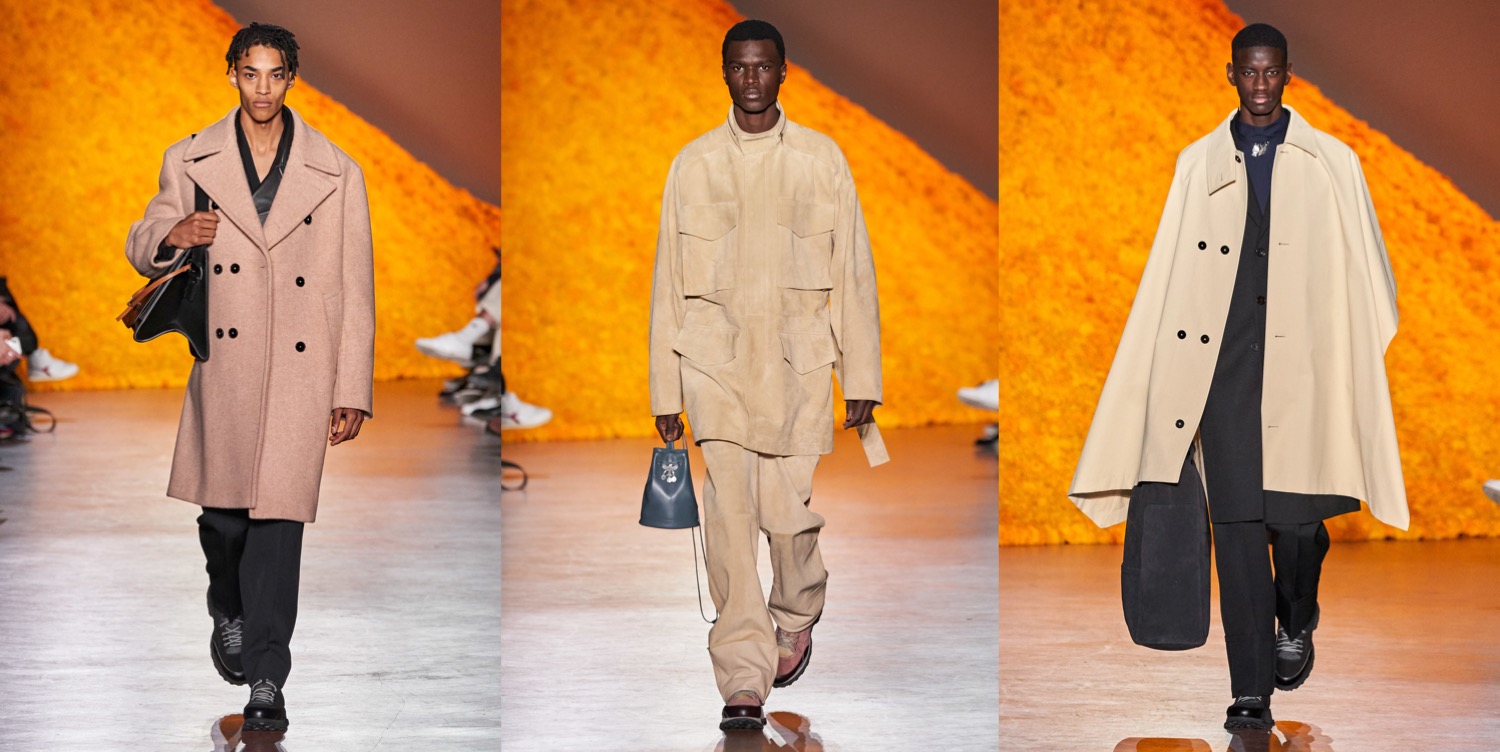
For the autumn-winter 2020 season, Lucie and Luke Meier presented their men’s Jil Sander collection at Pitti Uomo in Florence. In the complex of the Santa Maria Novella, where the show was staged (accompanied by three huge heaps of marigolds), stands an ancient pharmacy dating back to the 13th century in which balms and salves have been concocted from calendula for generations. This created a connection to the fine silk tassels – confession box Catholic, but here mostly in monochrome – that sparked thoughts of local historical attire, as did a carefully roughened white habit that passed in the collection. Still, the Meiers don’t need references to stand behind their clothes. Lucie spoke of wanting to make garments with lifetime appeal (“cherishable clothes”). The Shetland knitwear, the fantasic, over-sized tailoring, the ornamental, yet subtle beaded details on the coats – those are clothes that will stay with you forever and never get out of fashion.

Collage by Edward Kanarecki.
Men’s – Lovers Rock. Wales Bonner AW20

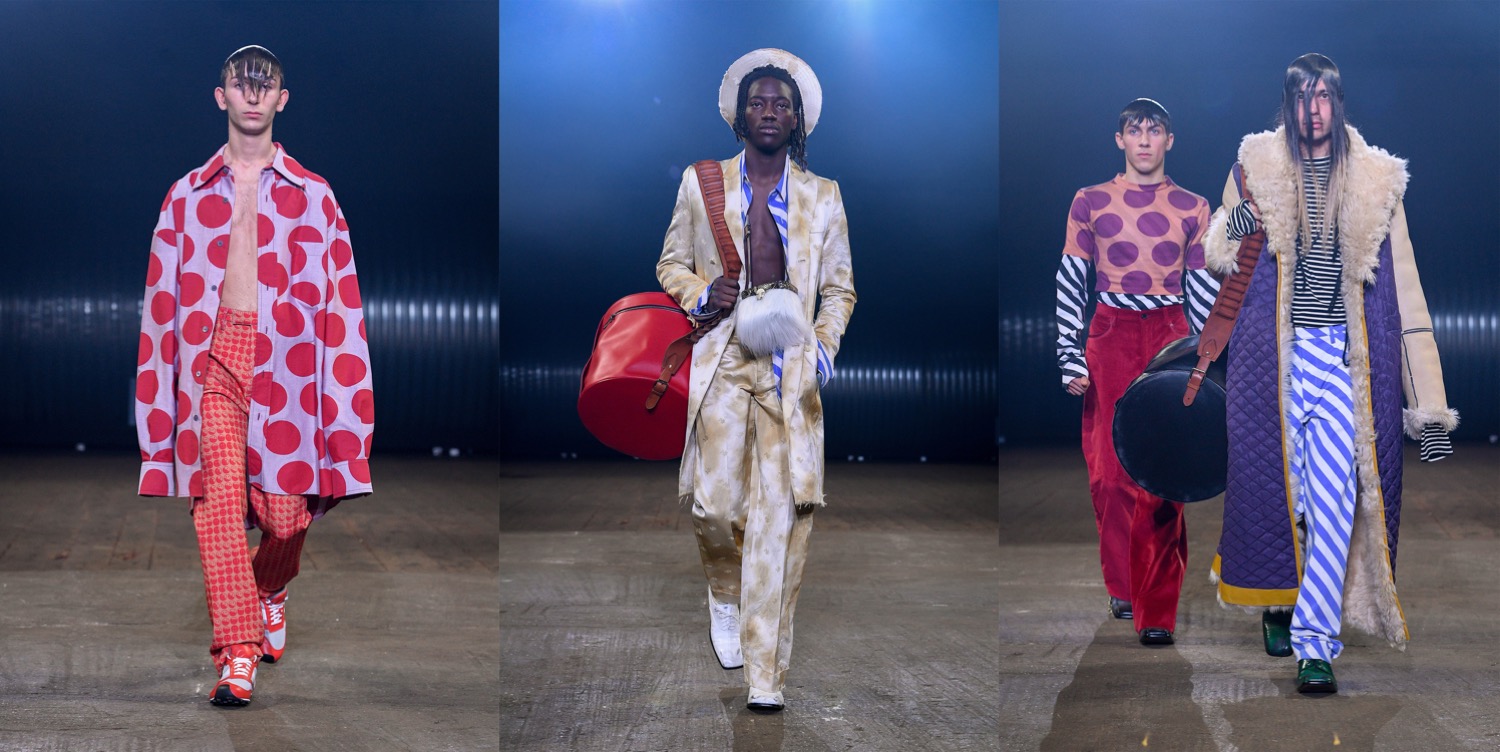
For her autumn-winter 2020 show in London, Grace Wales Bonner had friends and audience members sitting at tables around a dance floor, joining her celebration of Lovers Rock, the specifically British Afro-Caribbean music scene sprung from underground London house parties in the ’70s. “Lovers Rock was created by second generation Jamaicans in this country, their own kind of sweet mix of reggae and soul,” the designer explained. “It’s a reflection of my family on my father’s side. My grandad came from Jamaica in the 1950s. My dad used to work on Lewisham Road, and I found these documentary photographs by John Goto of teenagers at Lewisham Youth Club in the ’70s.” What fascinated and touched Wales Bonner was how kids of her dad’s generation wore clothes which referenced Jamaican style and Rasta flag colors, woven into a “a fun mix-up” of standard English smartness, “irreverent, but always elegant.” There was a denim tailored coat lined with velvet; a women’s look featuring  a corduroy patchwork matching shirt and skirt color-blocked in red, yellow, green, and black; slim-fit ’70s track pants; and “the kind of Adidas trainers Bob Marley would have worn.” The full repertoire of Wales Bonner’s refined tailoring was on display as well: tweedy suits, separates and coats, worn over body-hugging sweaters and roll-necks, with a stronger representation of womenswear in combinations of blazers and full pleated skirts. The self-knowledge Wales Bonner has gained over the years means she knows who she is and what her brand stands for by now. “It’s coming up for five years,” she summed up to the press. “I’m looking back and consolidating. For me, my approach is elegant, designed, and crafty—about what’s the perfect suit? Now I want to build the business.”

Collage by Edward Kanarecki.