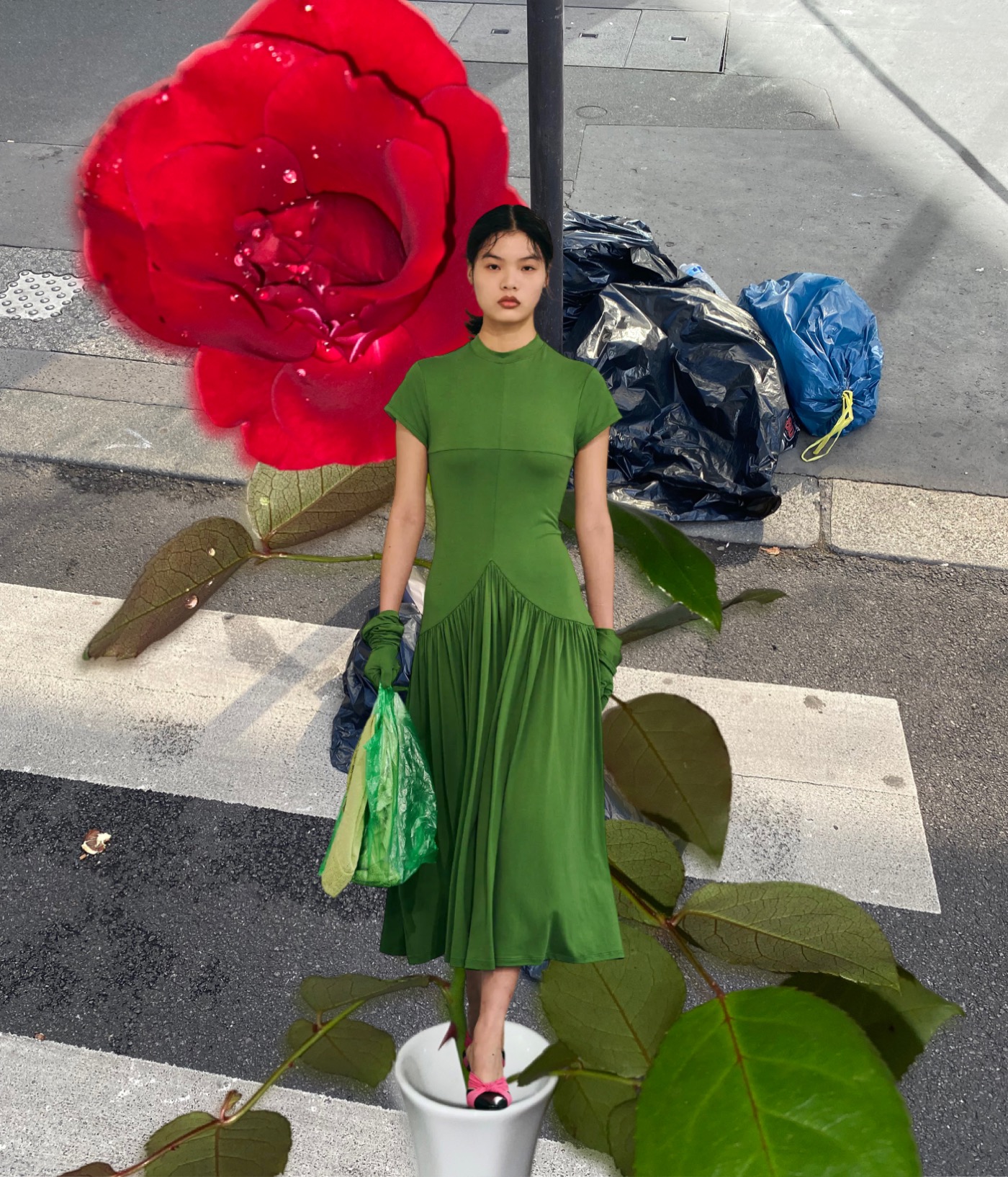
Flow. Samuel Guì Yang SS26

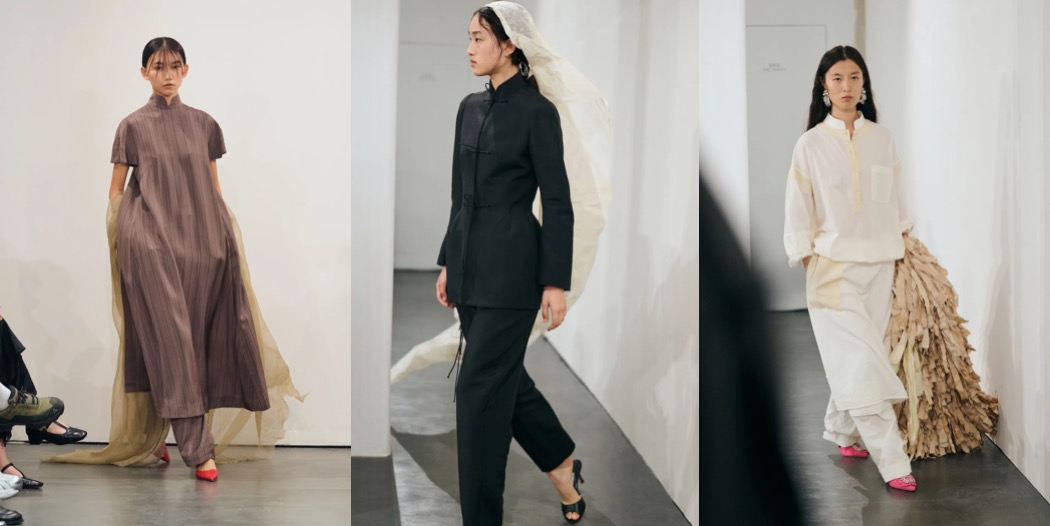
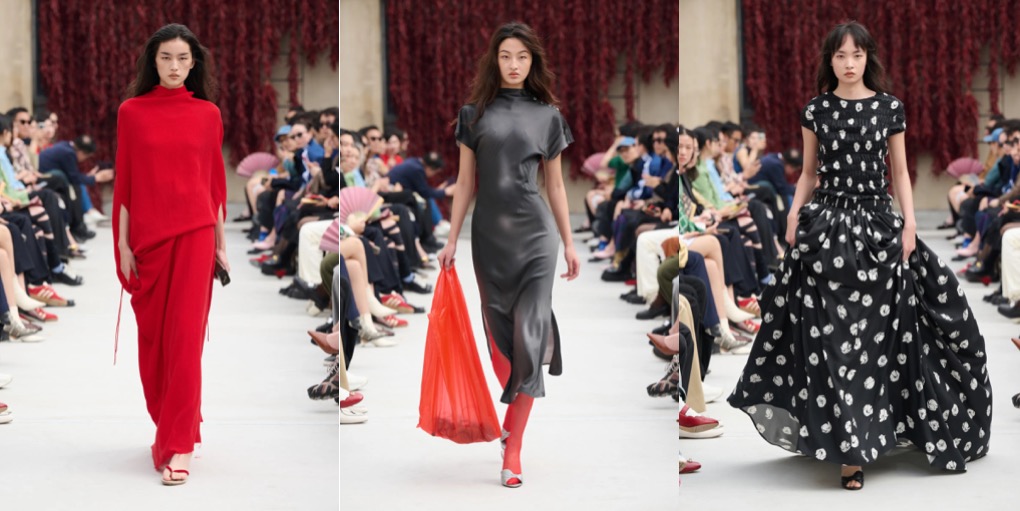
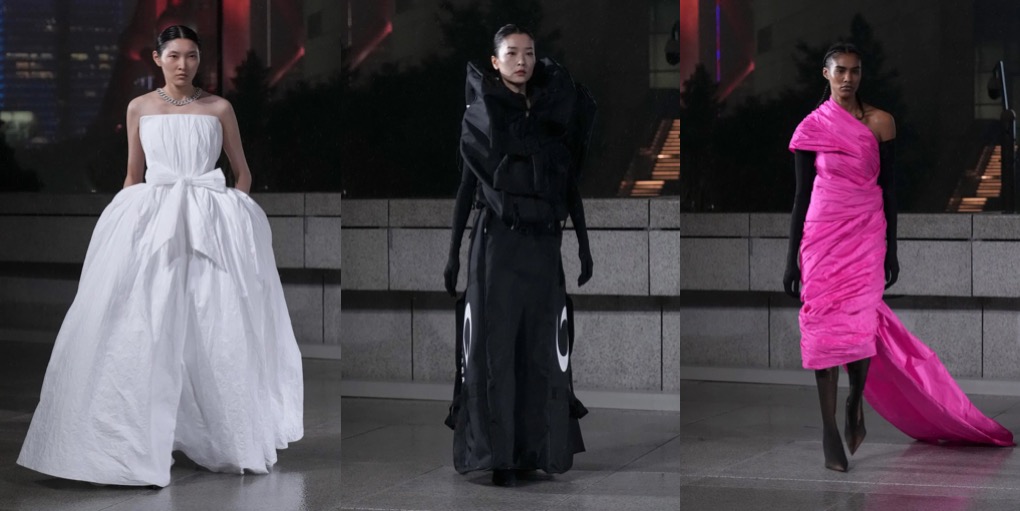
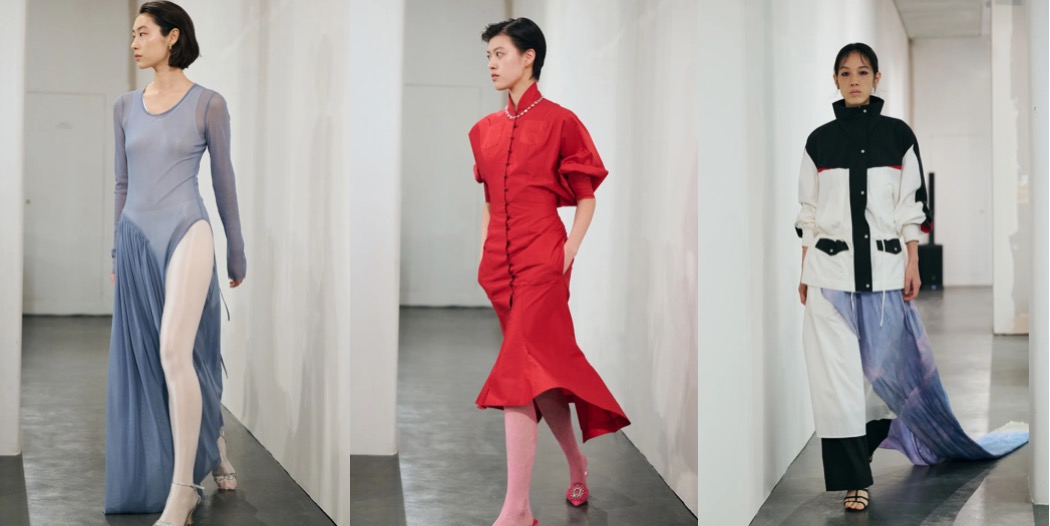
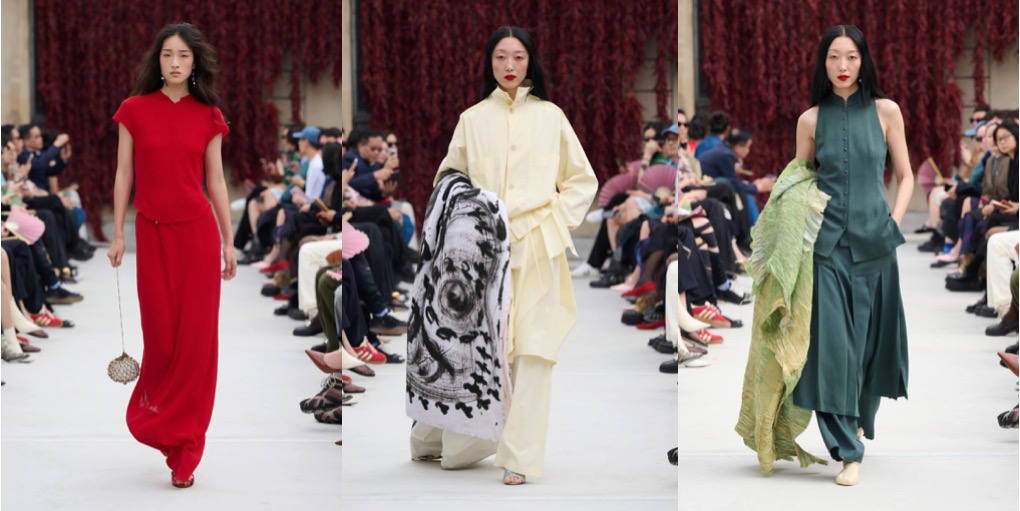
Samuel Guì Yang is a brand you should keep your eyes wide open for – and it has already been around for a decade. Founded in London by Samuel Guidong Yang and Erik Litzén, yet showing in Shanghai, the label continues to redefine the East-meets-West aesthetic with both nuance and novelty. Their clothes are best described as “flowing“: they move smoothly around the body, appear light and billowy, and carry an instinctive quality, as if they were born from the classical elements – earth, air, fire, and water. The duo’s spring–summer 2026 collection focuses on volumes that envelop the wearer in a poetic gesture: a ballgown-like apron, a grand shoulder drape, dramatic wraps, and even a veil cascading down from a baseball cap. It’s become something of a tradition that the models on Samuel Guì Yang’s runway are always carrying something – a pillow-like XXL clutch, a transparent shopping bag, a fringed shawl, a beautifully wrapped bundle. This is a woman who lives a real life, and she runs errands. The designers also offer a distinctive interpretation of the cheongsam, the traditional Chinese figure-hugging dress that instantly evokes Wong Kar-wai’s “In the Mood for Love“. In Samuel and Erik’s hands, the dress’s construction is reimagined most notably through oversized sleeves, with its influence also echoed in parachute-like blousons and jackets.

Collage by Edward Kanarecki.
Don’t forget to follow Design & Culture by Ed on Instagram!

Hey, did you know about my newsletter – Ed’s Dispatch? Click here to subscribe!
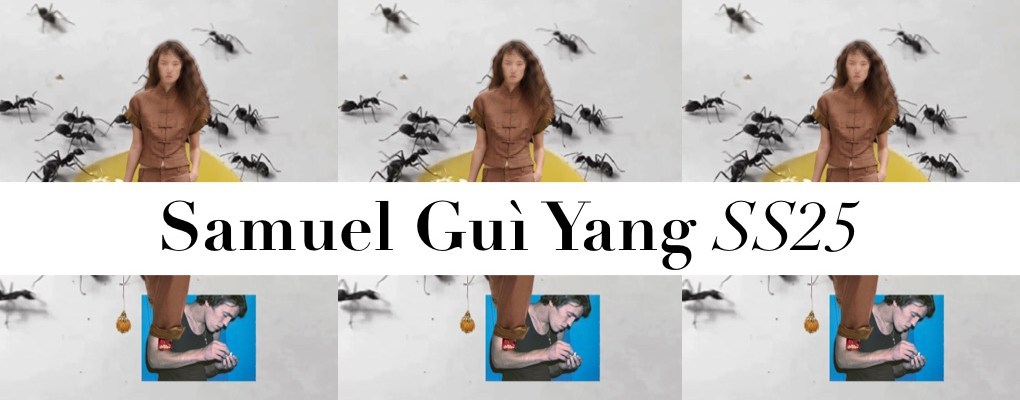
East Wind. Samuel Guì Yang SS25

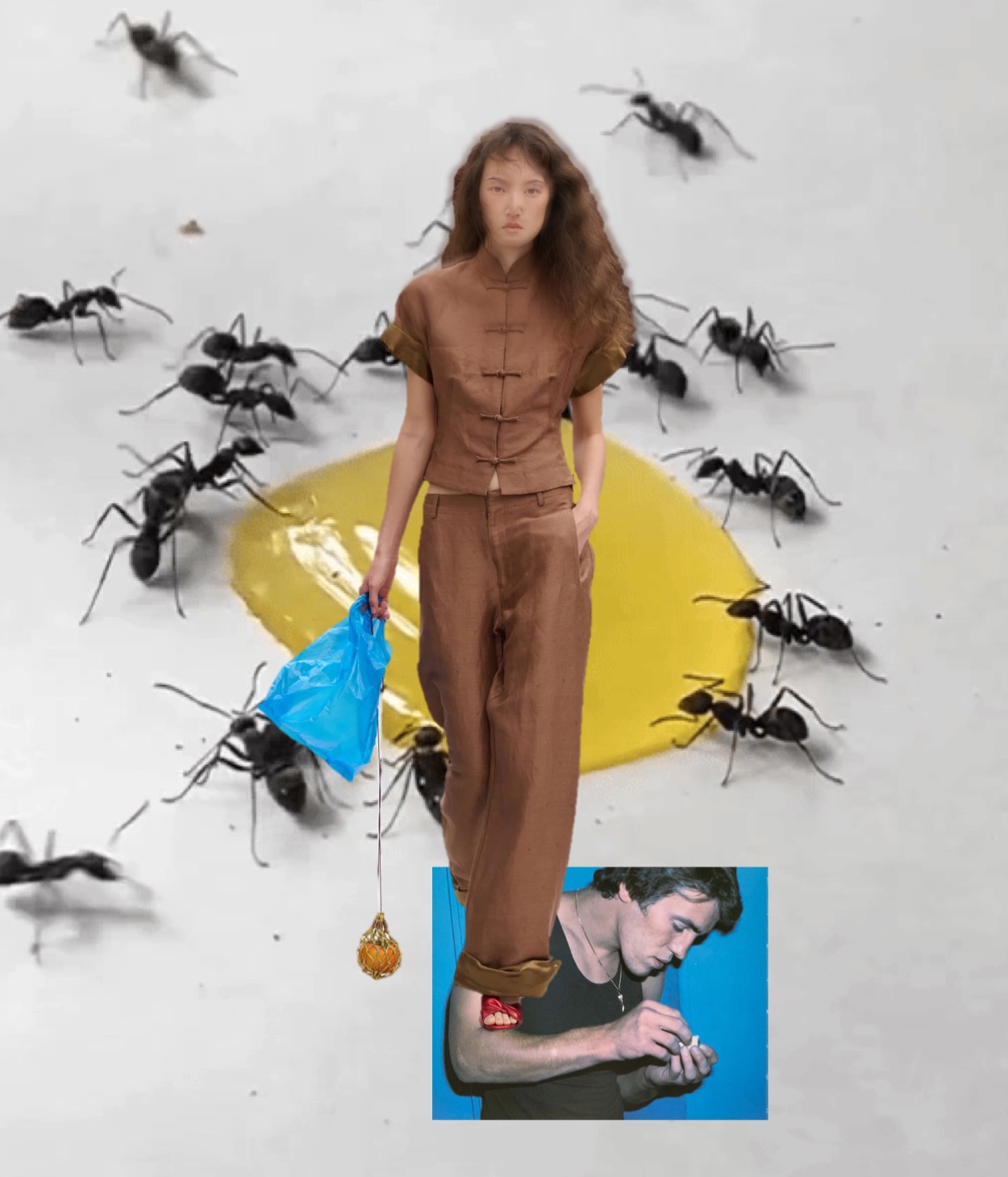
Shanghai is steadily becoming the new player (replacing Copenhagen) joining the Paris, Milan, London and New York constellation of fashion weeks. One brand that caught my eye and I sincerely loved this season is Samuel Guì Yang. Lead by Samuel Yang and Erik Litzén, the “East Wind” collection was as powerful and transforming as the symbolical title suggests. Airy crepe shirts and silk-linen trousers were layered on top of each other or worn under tailoring and bomber jackets, all riffing off traditional Chinese styles. A burgundy maxidress recalled the cheongsam, only it was knit in a loose gauge yarn that revealed the shape of a soaring swallow when stretched against the body. Then, Yang and Litzén made a pair of exquisite crumpled silk sheaths they hand-dyed and hemmed with tiny beads. You could see the DIY workmanship in the sometimes uneven dye, which added a charming patina to the collection. “This is how we dress, it’s how all people dress, really,” said Litzén of their incorporation of more artisanal and sometimes ancient elements, “combining something older with something new.” As they say, you need to understand the past to create the future. The one this duo is shaping looks very bright.

Collage by Edward Kanarecki.
Don’t forget to follow Design & Culture by Ed on Instagram!

Hey, did you know about my newsletter – Ed’s Dispatch? Click here to subscribe!
NET-A-PORTER Limited

Haute Consumption. Balenciaga Resort 2025

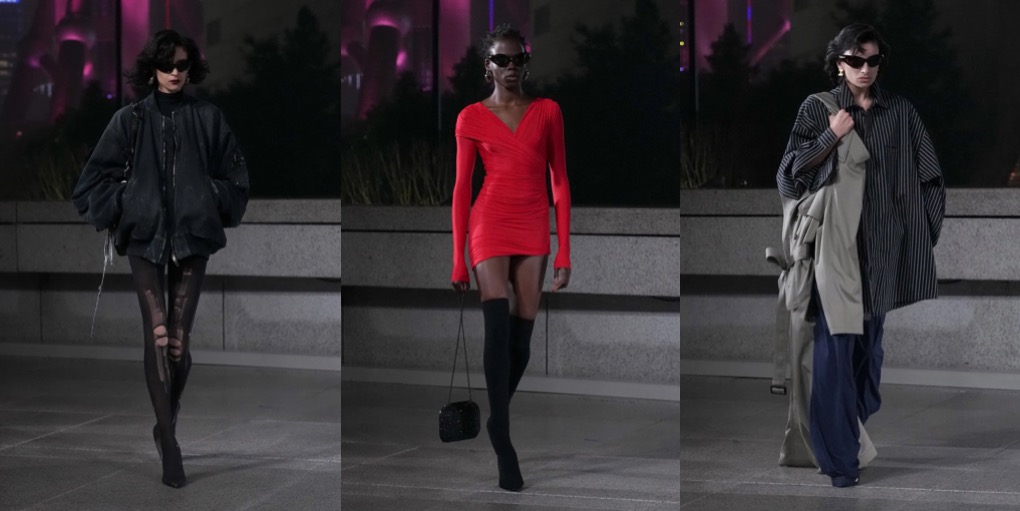
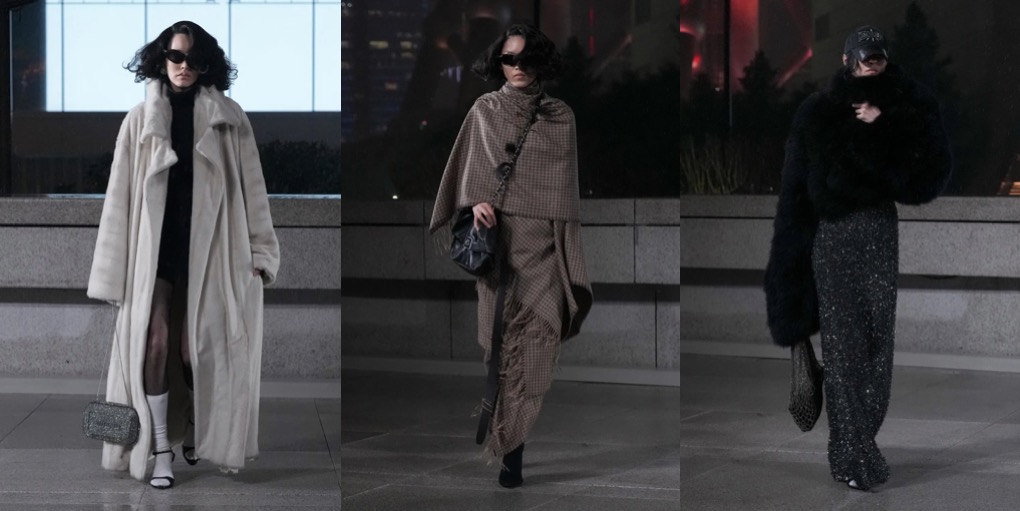
Balenciaga went to Shanghai for resort 2025, and while looking at the show unfold on Museum of Art Pudong’s riverside pier, I couldn’t help but wonder: are the far-fetched destination cruise shows as exciting as they used to be a decade ago? The heavy rain that started pouring on the show’s evening was the actual star of the event. It brought a sense of grit and urgency to the rather very schematic Demna collection. It mostly consisted of his Balenciaga classics: all-black, all-goth apparel, a bit of bourgeoisie chic (seen through a “Shanghai noir” lens) and Cristobal Balenciaga couture riffs in the larger-than-life eveningwear. There were extreme platform “metalhead” boots, worn with overlong coats that would have dragged well along the floor if not for the extreme creepers. “I made this collection on a very instinctive level of what I like, what excites me, what creates desire in me,” he said. “Where I’m bringing Balenciaga with this show is finding a new type of balance between all these different facets of my aesthetic and style.” But isn’t that already a routine at the brand?

At least the final series of experimental semi-couture and couture dresses had something to say. They orbited around the idea of materialism and (over)consumption – ironic, noting that China has over fifty Balenciaga stores in total. A cocoon column-like dress was pieced together from travel bags, another was cut from gift packaging gold foil, and a third was made from Tyvek paper, a subtle nod to one of China’s inventions. The closing gown was constructed from a collection of pink plastic bags over a decade old, the strips cut by hand and pierced with wires to create feathers that resembled a piece from the house’s archive. While Demna’s ready-to-wear collections lag lately, I so can’t wait for his haute couture show later in the summer.

Just five Balenciaga pieces I’m obsessed with at the moment…

ED’s DISPATCH:


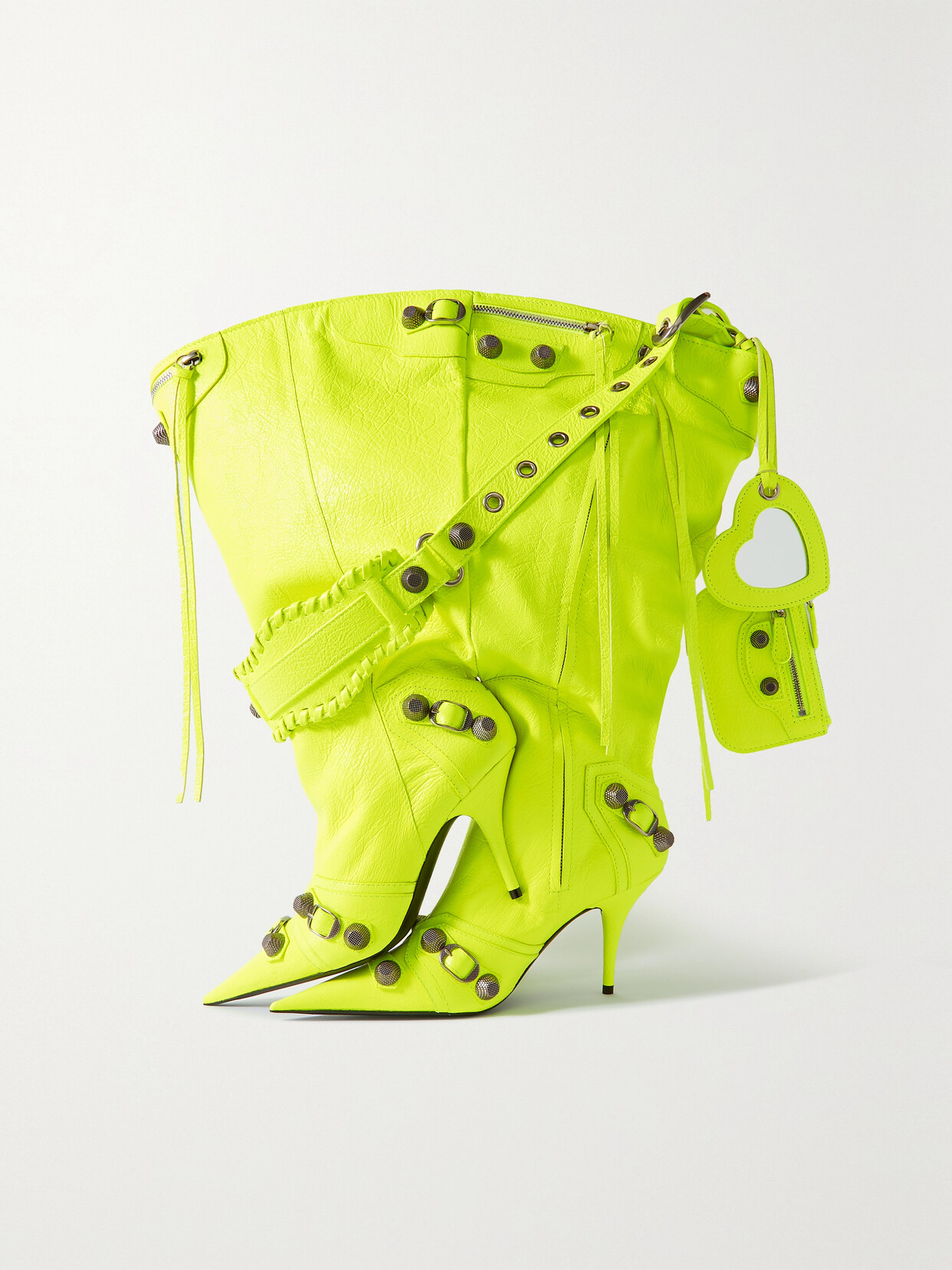
Balenciaga Le Cagole Boot Crinkled-leather Shoulder Bag


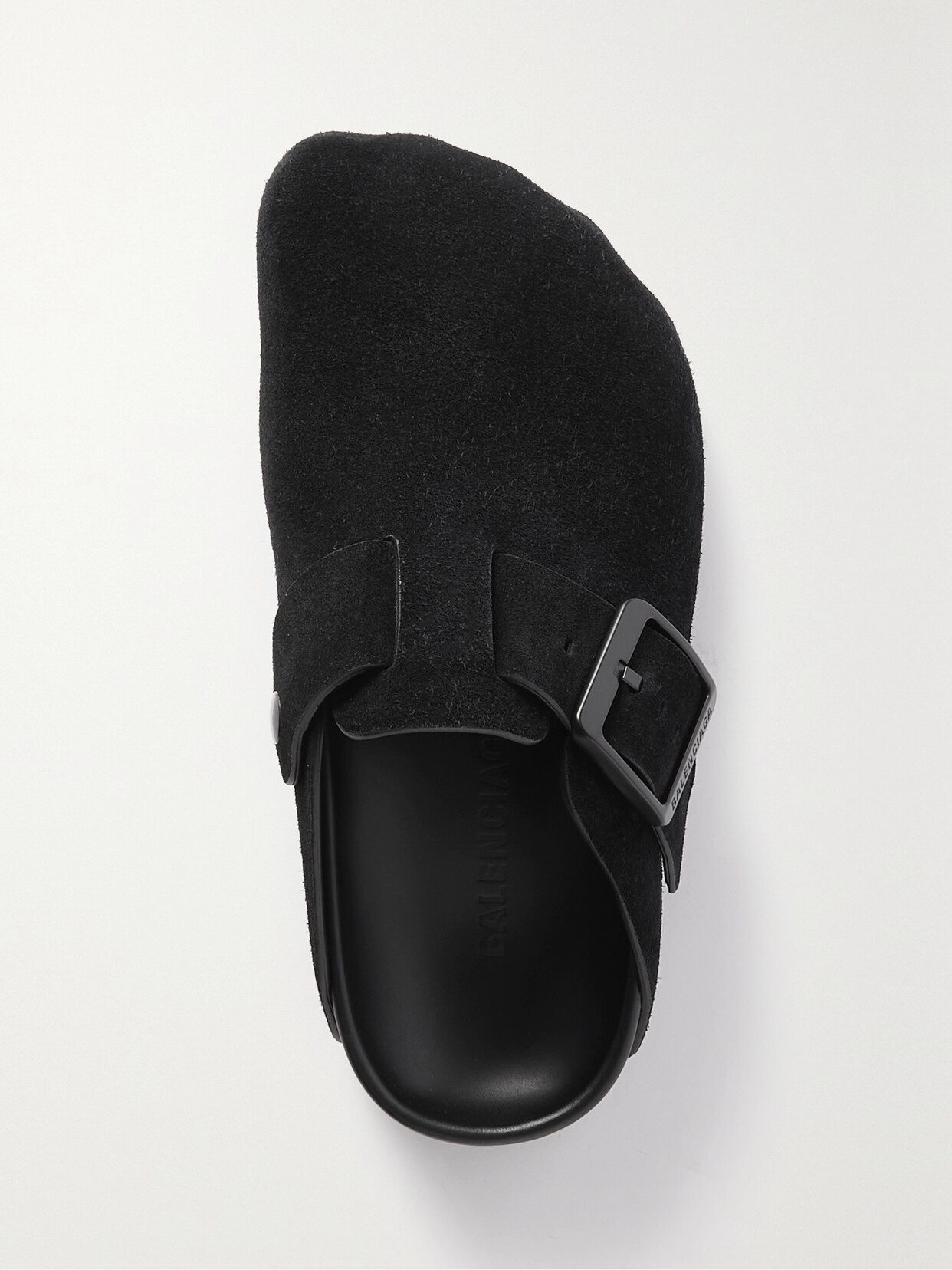
Balenciaga Sunday Suede Clogs


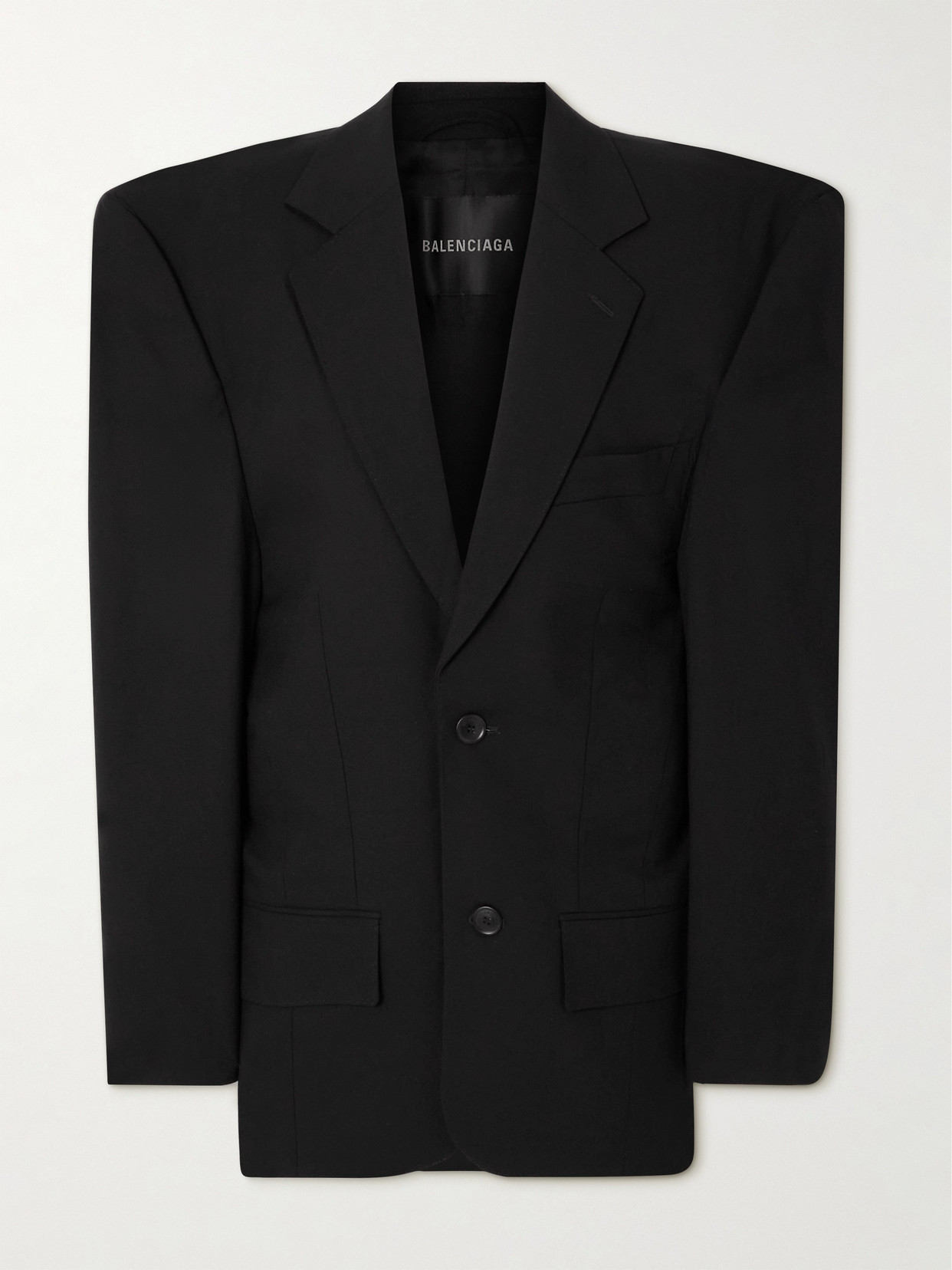
Balenciaga Oversized Wool Blazer


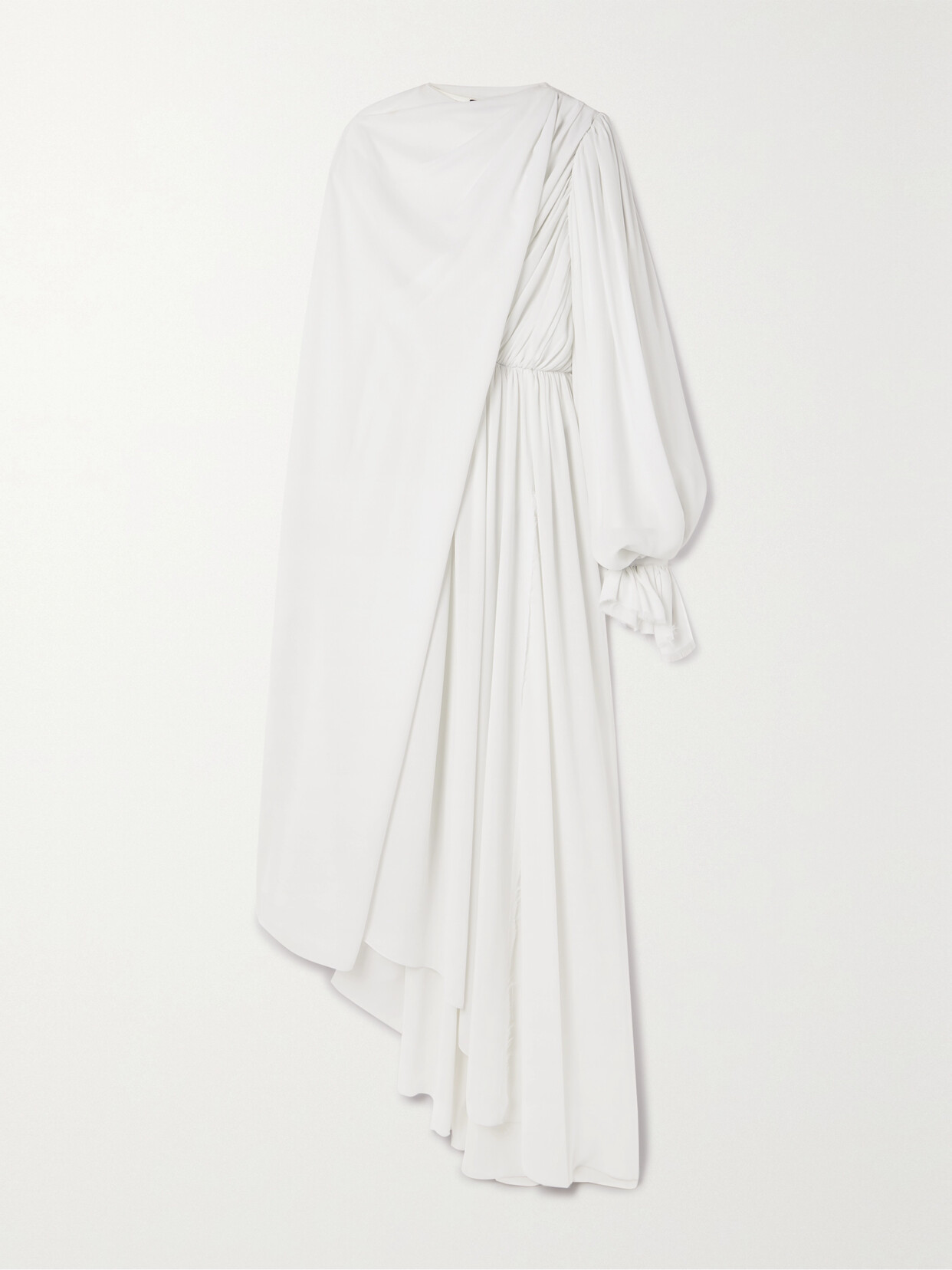
Balenciaga Asymmetric Draped Cape-effect Pleated Crepe Dress


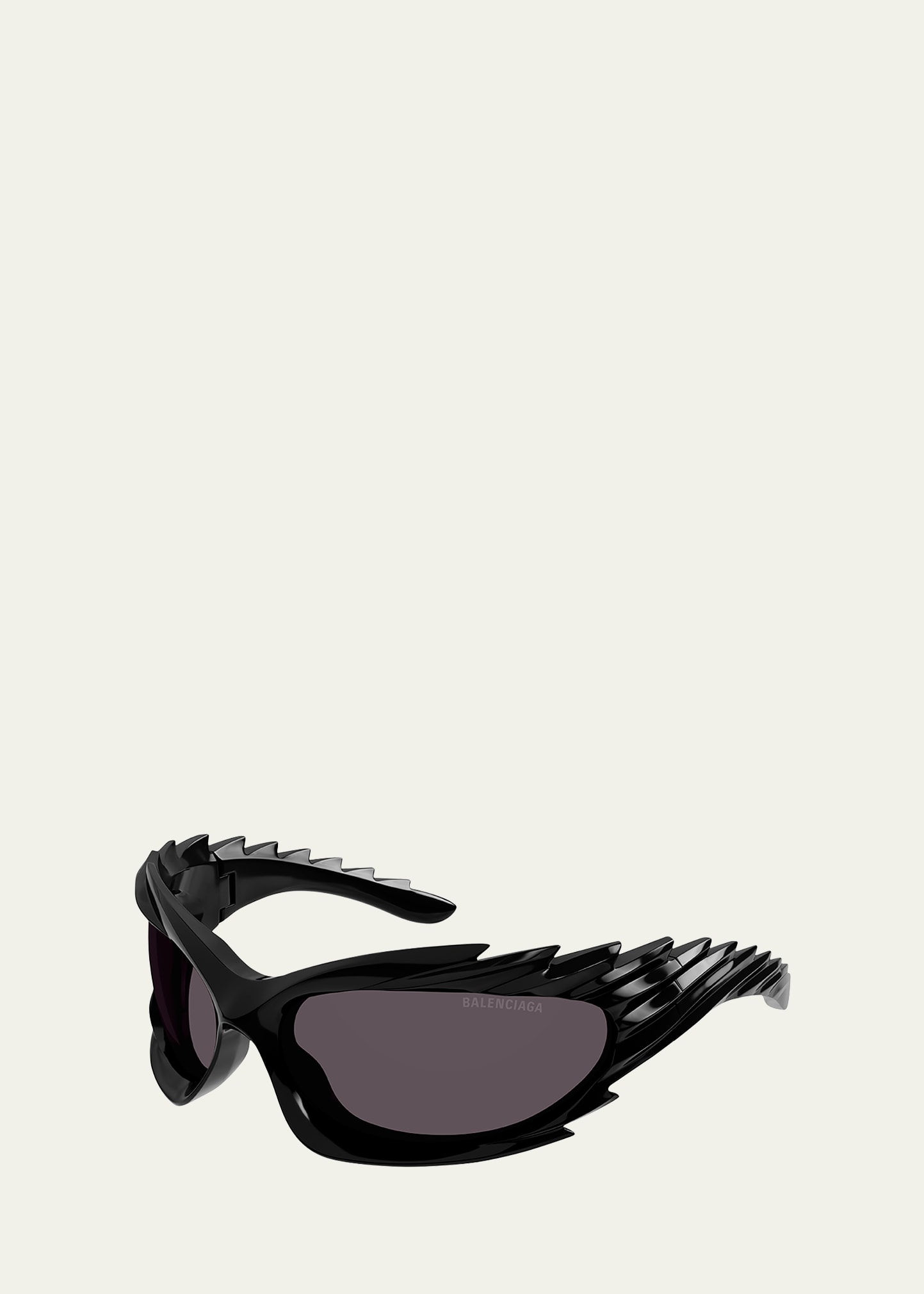
Balenciaga Wrap Injection Plastic Cat-Eye Sunglasses

Collage by Edward Kanarecki.
Don’t forget to follow Design & Culture by Ed on Instagram!

Hey, did you know about my newsletter – Ed’s Dispatch? Click here to subscribe!
NET-A-PORTER Limited

Air Flower. Susan Fang SS22

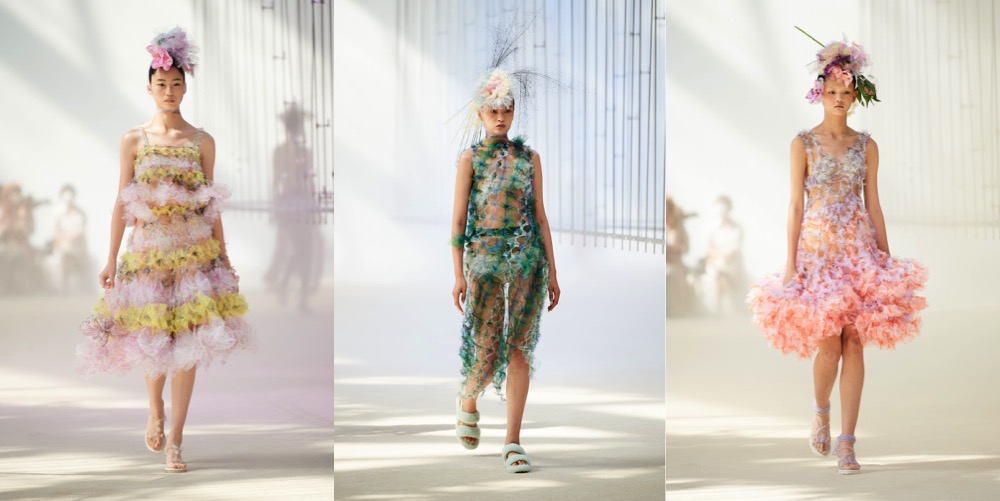
After a week-long blog pause caused by a major computer crash, I’m back! I planned to write about Susan Fang‘s enchanting spring-summer 2022 collection a week ago, but then my Mac’s hard drive went dead… luckily, it all ended well. Fang is a highly emotional designer in tune with the tenor of our times. Shown on a lightly misting runway in Shanghai back in October, the collection took texture to extreme and radical new places: she’s created a new material technique of folding tulle she calls “air flower” inspired by broken flowers and sliced fruits that repeats across the body in open-weave, netlike dresses, tightly latticed minis, and explosive, ombré poufs. The pieces are instantly appealing in both a visual way and in a sensory one, thoughtful to the bodies inside them and the observers taking them in. The exuberance and joy in each of Fang’s pieces belies an underpinning of sadness, though; like the best Dutch still life or memento mori, her frilly garments mark a passing of time or encapsulate the multiplicity of time itself. She quotes Einstein’s Dreams, a 2004 novel by Alan Lightman about the creation of the theory of relativity: “Suppose time is a circle, bending back on itself. The world repeats itself, precisely, endlessly.” Her work is almost precise, marked by engineering and repetition, but it’s never without a thoughtful touch. When she speaks about regenesis, self-love, and progress, you get the sense she operates in that special place between science and art. Place Susan Fang on your fashion radar!

Collage by Edward Kanarecki.