What’s Hot (12.7.22)



Amada mia, amore mio! Ah! ah!
For Valentino’s spectacular autumn/winter 2022 haute couture show, creative director Pierpaolo Piccioli returned to Rome, where Valentino Garavani founded the storied maison back in 1959. Otherworldly bodies descending from the Spanish Steps in the golden evening sun, the romantic voice of Labrinth echoing from beneath the Trinità dei Monti… well, that was a scene. “I start from the finale, always,” Pierpaolo Piccioli said during a preview in Paris days before the show. “What I have in mind is these liquid, colourful drops coming down from the Steps, the volumes light and in movement.” He titled his show The Beginning: a return to the city where Valentino Garavani founded his maison, a place that has moved with the winds of change since the dawn of time. Like Piccioli’s Valentino, Rome’s codes may remain the same but its values are in eternal evolution. That was the sentiment behind a show he envisioned as “a conversation with Valentino” across the past, the present and the future. Piccioli had been dreaming of doing a show on the 18th-century steps. “It’s very personal. The last time Valentino did a show on the Spanish Steps was in the 1990s. It was a different moment in fashion. It was about lifestyle and the perfection of beauty, the glamour, the supermodels,” he reflected. “I wanted to get the spirit of Valentino – the joie de vivre – because I think it’s the only way of making beauty resilient to the time. On the other hand, there’s a picture I want to deliver, which is different from what it was 45 years ago. It’s the picture of what we live in. The Spanish Steps are the same, the atelier is the same, and in the end, clothes are clothes. I like to keep the rituals of haute couture. But the real difference is in the casting – in the humans – that can tell stories and witness a different moment in this world. I want to empower them and give them a voice and the opportunity to tell their own stories.”

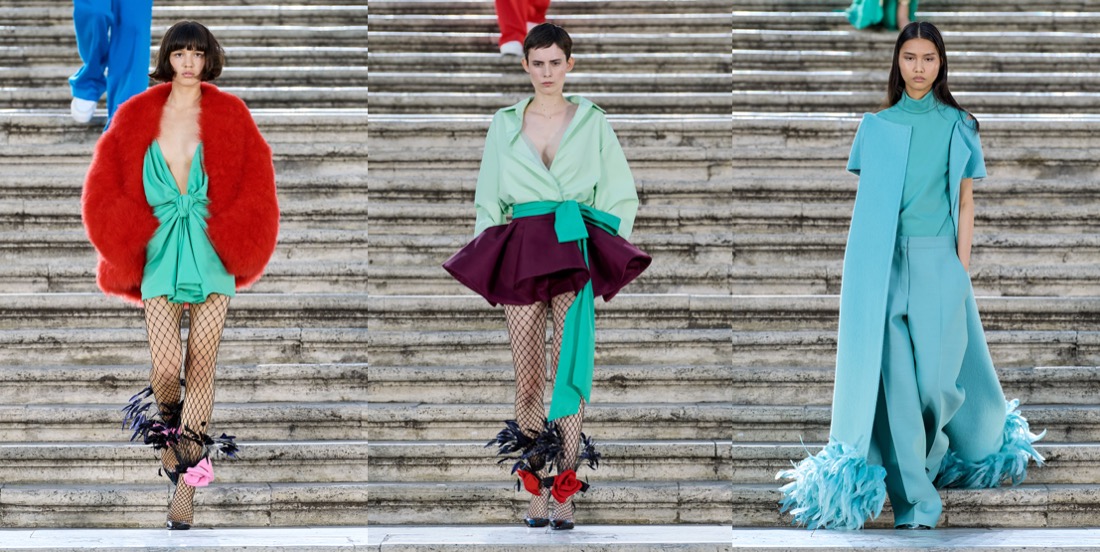

Piccioli’s approach to the show manifested in a collection that didn’t just poeticise the decades-long legacy of Valentino Garavani, but his own contributions to the house. Rather than pursuing newness, he reflected on what Valentino stands for after 14 years under his own artistic directorship (and 23 years as an employee). Unless you’d spent those years under a rock, you’d immediately recognise the resplendent volumes of his dresses, suits and coats, the hypnotising hues of his gem colours, and the drama of his plumed headpieces bouncing like jellyfish in the stream of the Roman evening breeze. “I wanted to do a reflection about how much of myself is in Valentino, and how much of Valentino is in my identity,” he said. “It’s everything I’ve already done but in a different place.” Piccioli’s era at Valentino has followed a time of political divide when the progressive values he fights for – the diversity, inclusivity and self-expression represented in his casting – are contrasted by a rise of reactionary ideas that has only become terrifyingly evident with recent American Supreme Court rulings. In that sense, moments like the Spanish Steps show – these grand gestures of beauty – are a kind of activism on his part. It may be wrapped in majestically coloured taffeta, three-dimensional geometric plumage painstakingly made to evoke Roman mosaics, or voluminous hand-sequined suits, but at the core of Piccioli’s haute couture is a dream that cuts deeper than mind-blowing craftsmanship. “I believe that it’s my responsibility as a fashion designer to bear witness to the times we’re living in,” he said. “I think that beauty has the power to break through, touch people and their conscience. Taking a radical posture through a strong narration and through images of a world that’s changing has an impact, and gives visibility to values that have to be protected. I believe fashion can be political.” With the likes of Naomi Campbell and Anne Hathaway on the front row the show was testament to the global impact of the new age of haute couture that Piccioli has spearheaded in recent years. But as illustrated by the people who joined them – Valentino’s co-founder Giancarlo Giammetti, Piccioli’s family, and their dog Miranda – it’s a success achieved through a grounded approach to the industry, to the mainstream fame he has gained, and everything that comes with it. At the heart of Piccioli’s progression-driven age of Valentino are a realness, friendliness and ease that remain his greatest assets.

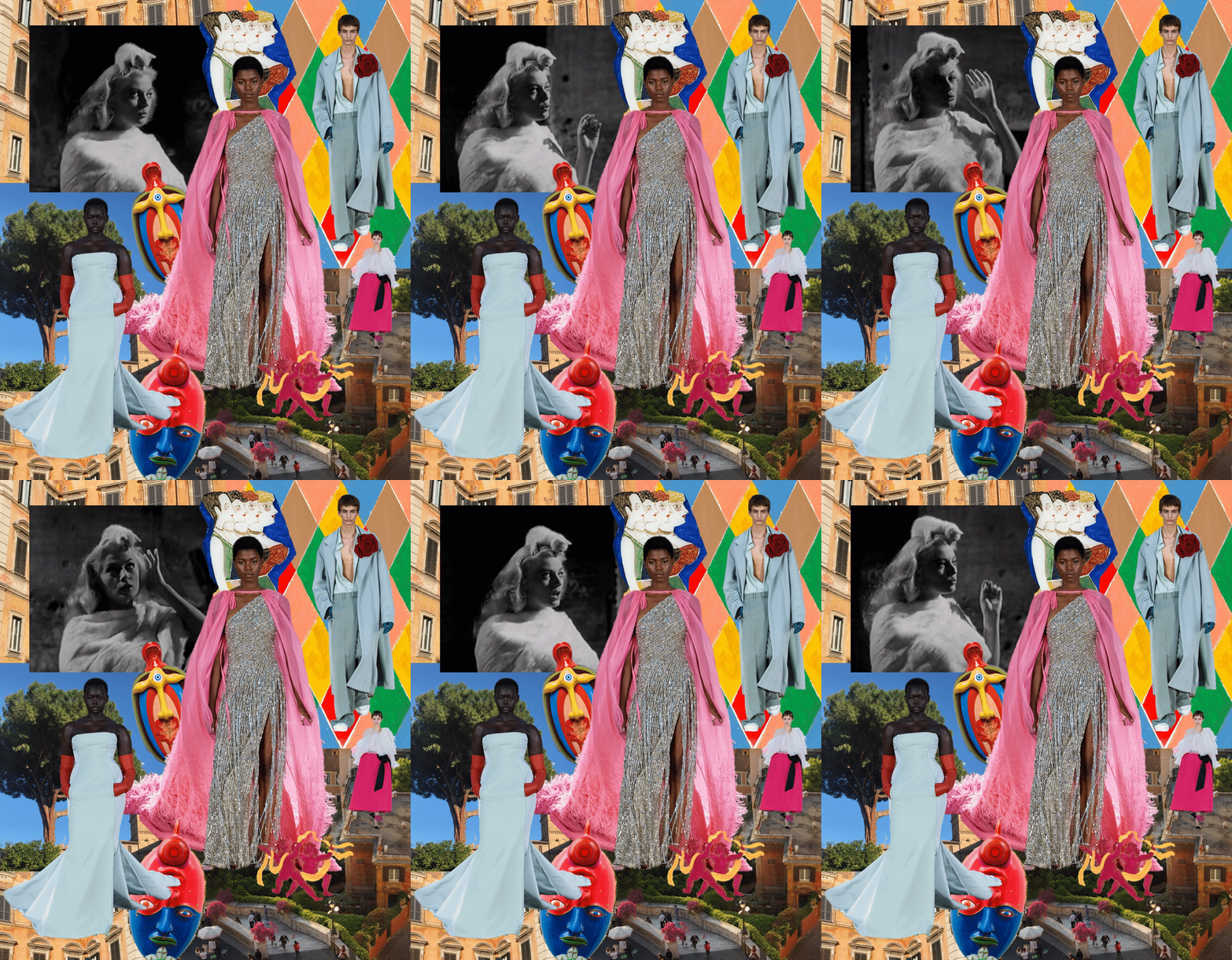


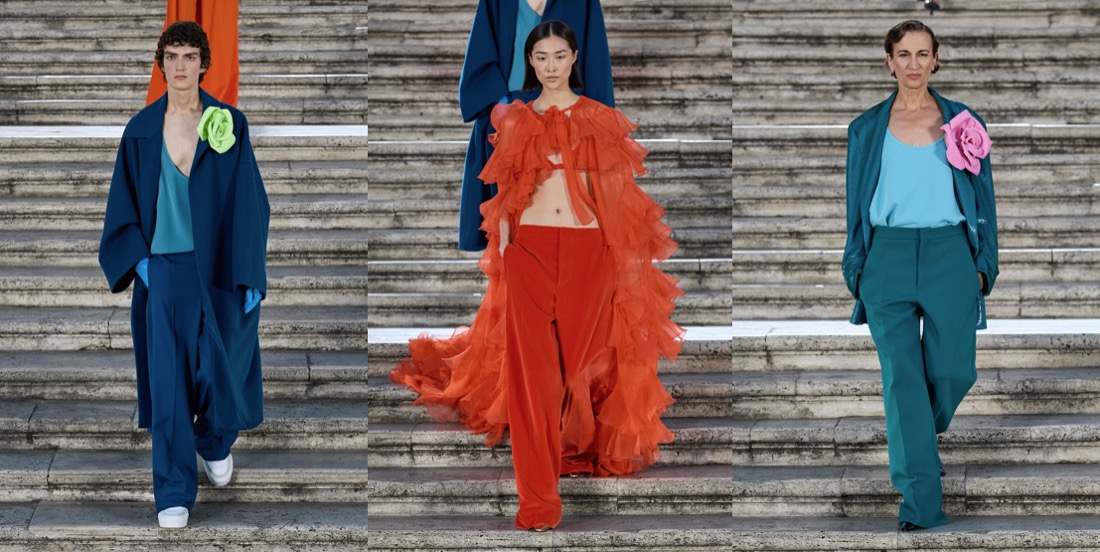


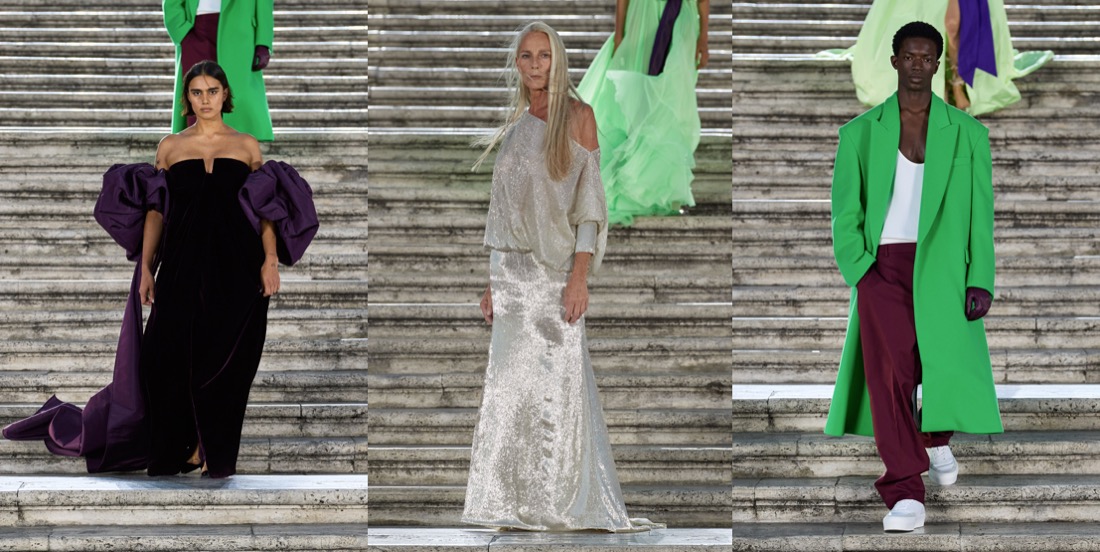
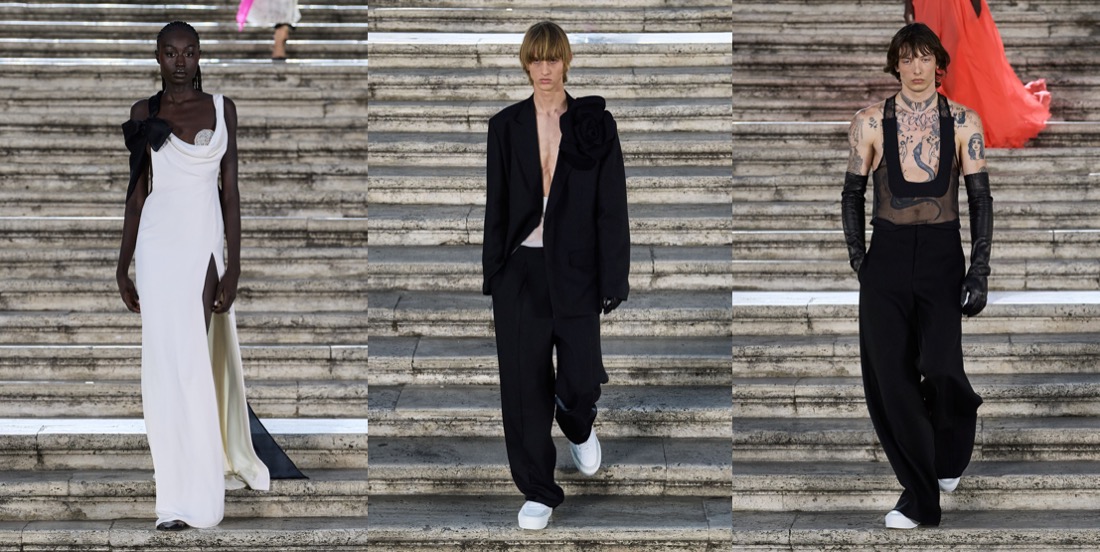
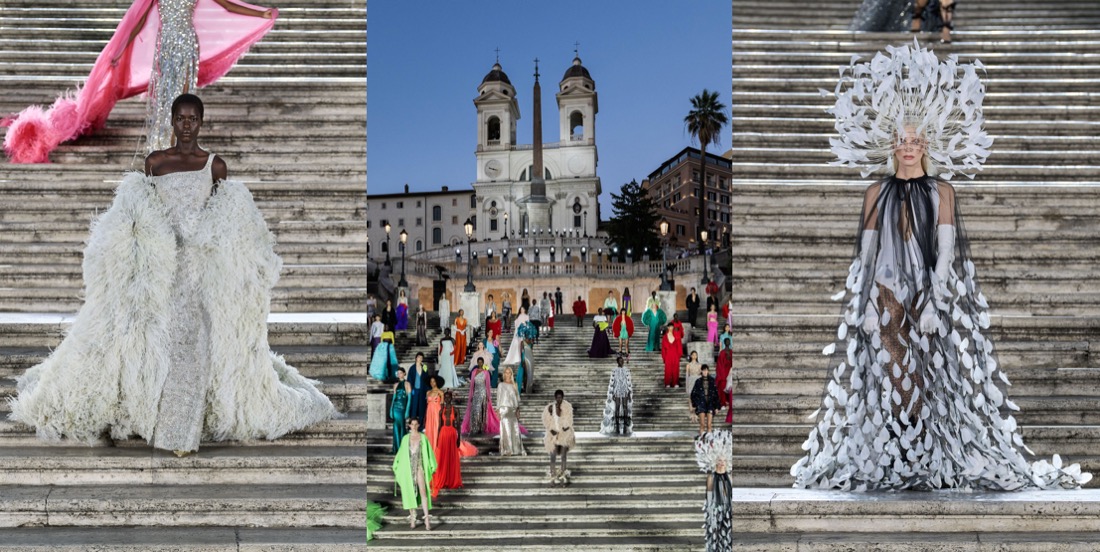
Collage by Edward Kanarecki.

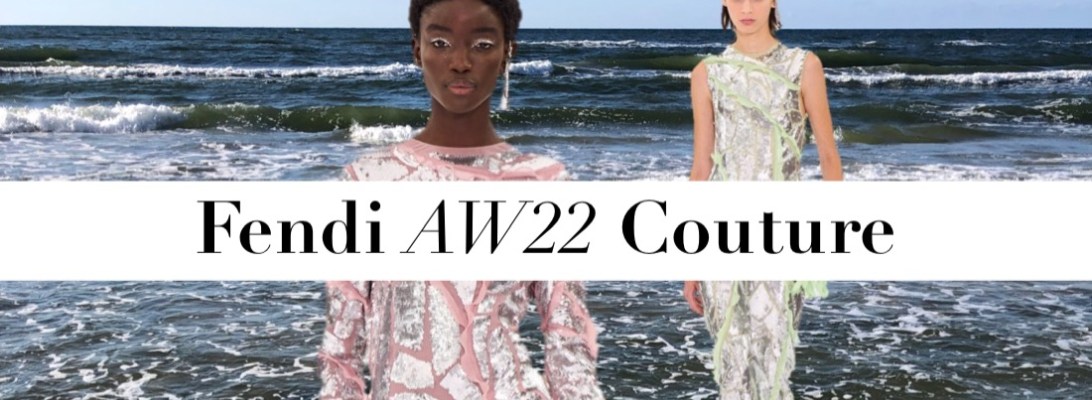

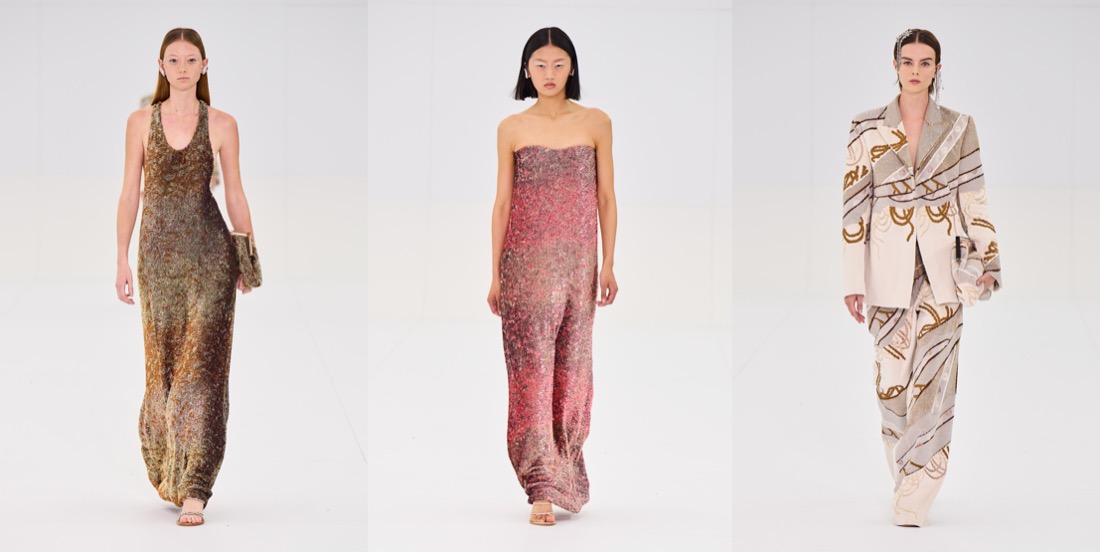
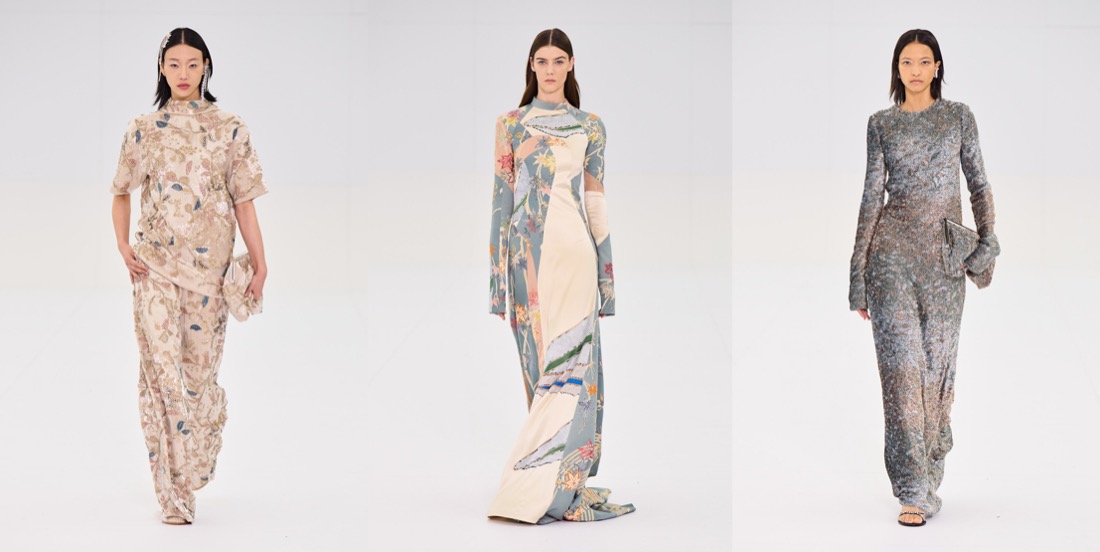
This haute couture season, it seemed that the collections’ backdrops were as important as the clothes. Immense theatralization of the fashion show was a recurring theme, from Schiaparelli to Margiela. So it was quite refreshing to see the total white-cube space as Fendi’s venue. But did Kim Jones‘ couture line-up stand up for itself? “Luxury is the ease of a t-shirt in a very expensive dress.” Karl Lagerfeld coined this permanently true aphorism – one of the sparkling fashion quotes he dashed off in a zillion interviews. Kim Jones didn’t drop it into backstage conversation about his Fendi haute couture collection, but he might’ve, since essentially what he sent out met the Lagerfeldian standard of t-shirt-y elegance; a show of uncomplicated, minimal dressing realized in the most expensive of materials. For starter, a trio of Max-Mara-like looks, two tailored trouser suits and a long turtleneck sweater dress with a slashed skirt and sash in a Vicuna brown. Then came tailoring, and a molded bustier in paler shades of slightly pink-tinged beige: Fendi’s specialty calf leather. And then, calmly on with the abbreviated lines of the t-shirt dressing. There were slim tank dresses, made of rolled metallic bugle-beads, asymmetrical long-sleeved patchworks of Japanese silk kimono fabric commissioned by Jones from traditional makers in Kyoto, and beaded deco-style pajamas. Jones explained in a preview that the pair of outstandingly lovely shimmery silver sequinned bias cut slip dresses had been made from swatches Karl Lagerfeld had commissioned which had been archived and never used. For the finale there were a few spicier, sheer “nude” dresses. In overall, it all looked like a proper couture collection. Not sure it felt like a Fendi one, though, even with all the subtle Lagerfeld references.




Collage by Edward Kanarecki.
 Design & Culture by Ed