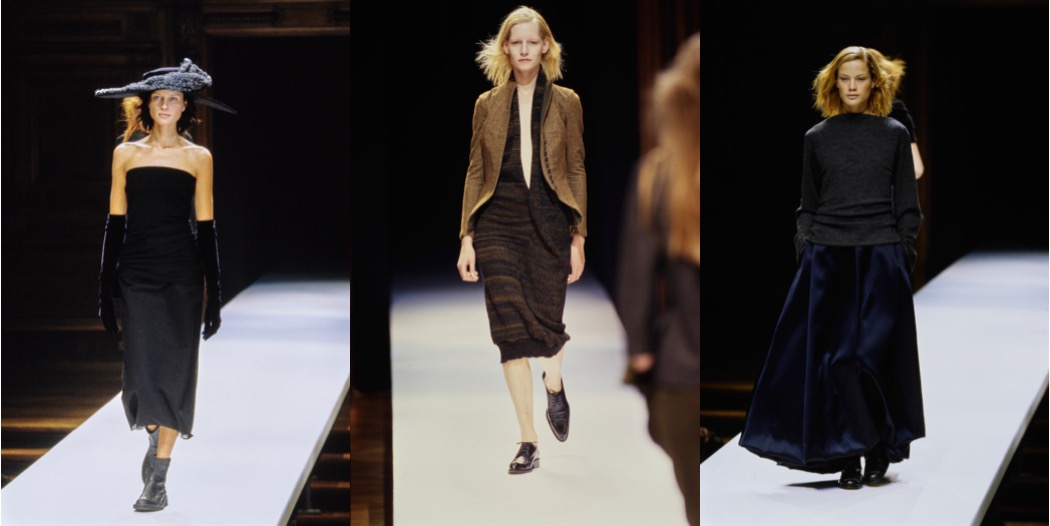
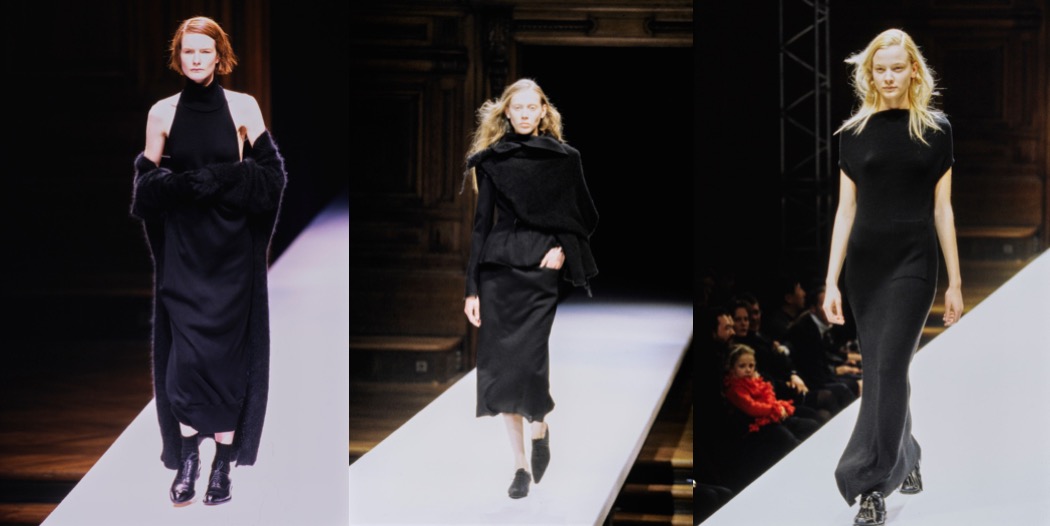
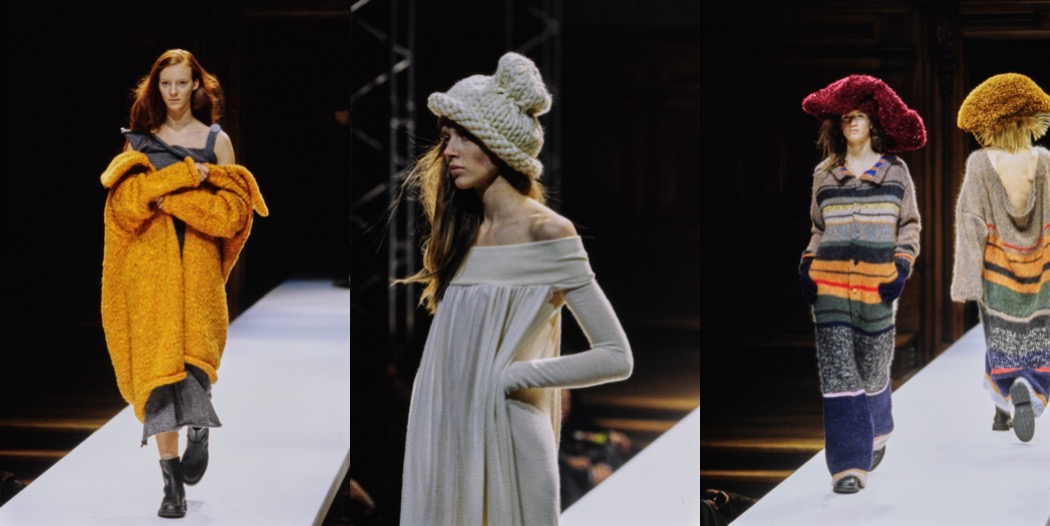
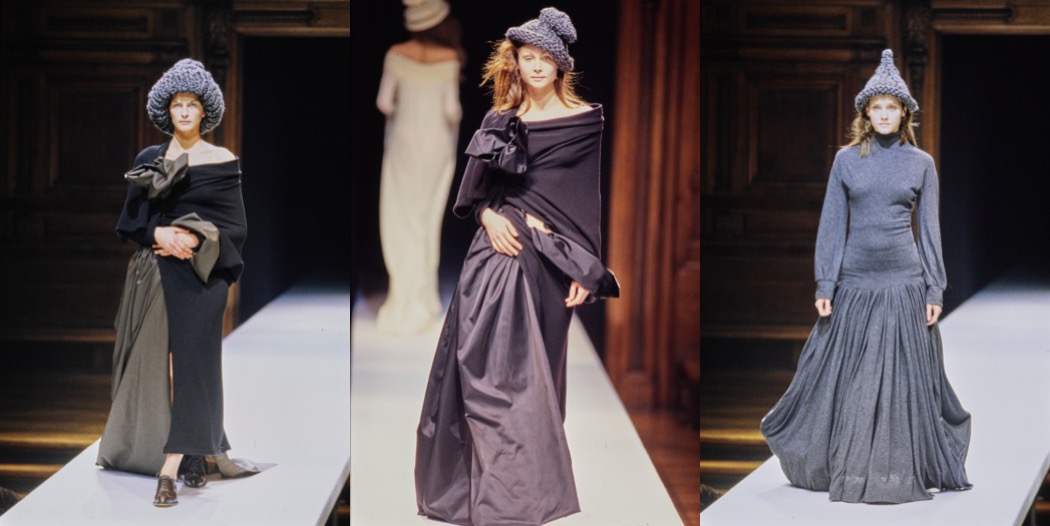
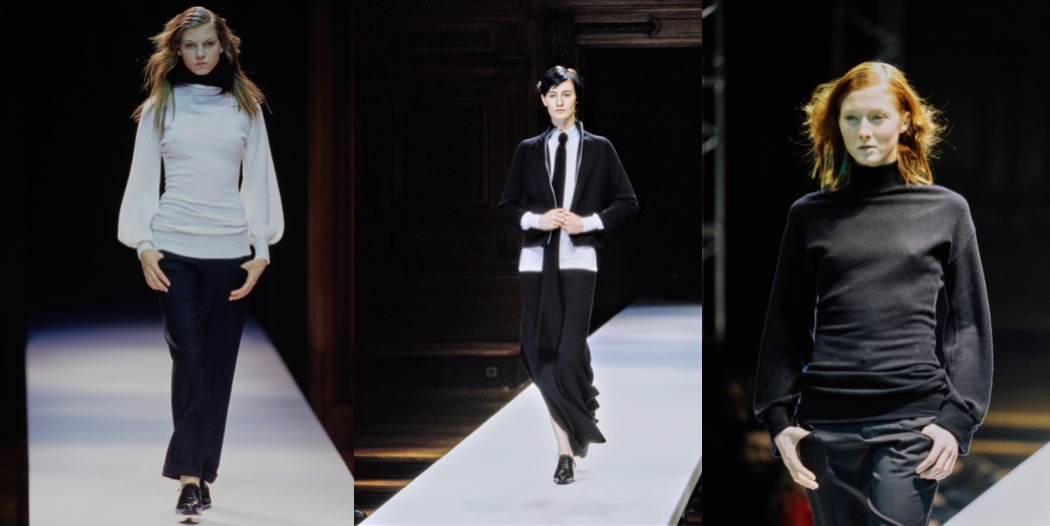
Quiet, The Winter Harbor. Yohji Yamamoto AW98

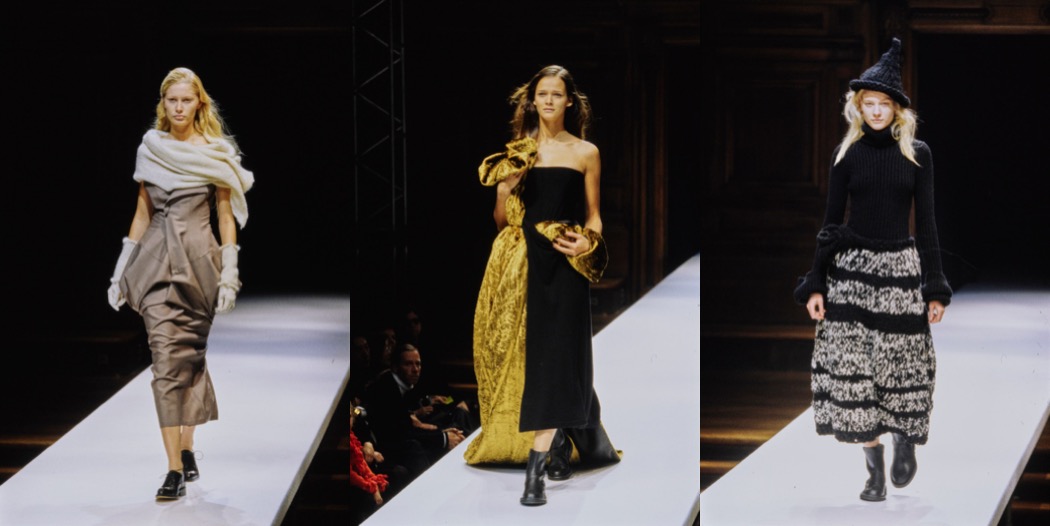
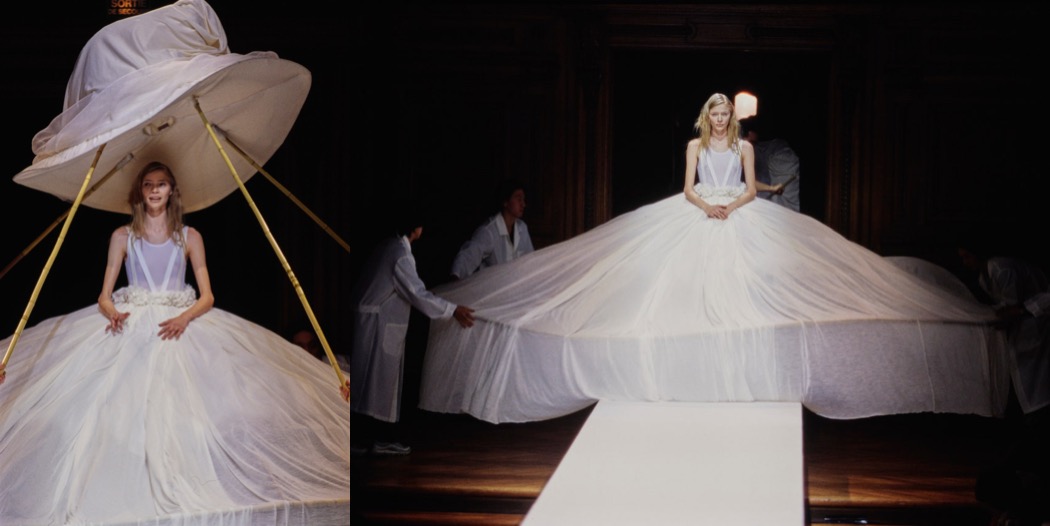
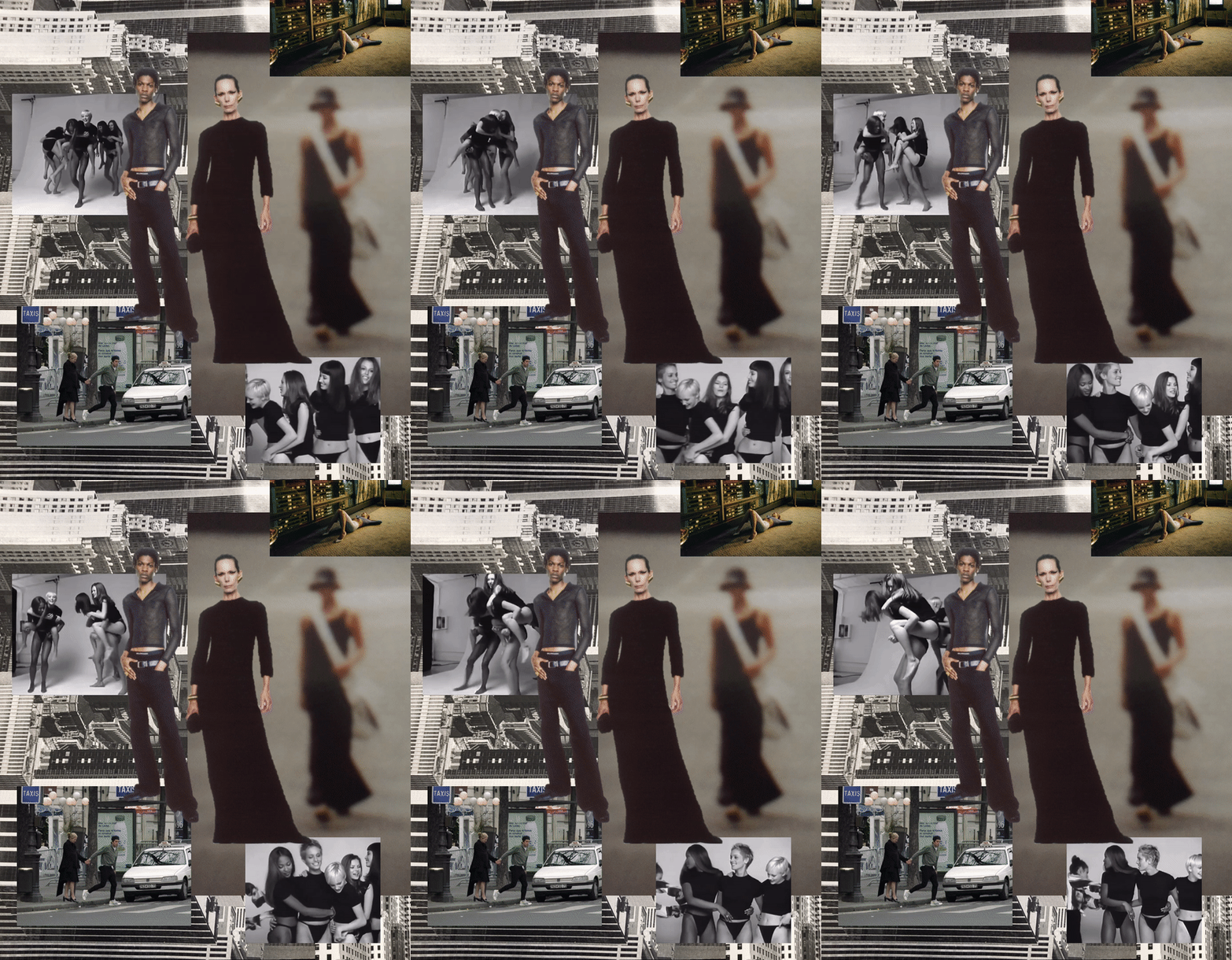
You could say that Yohji Yamamoto‘s sublime autumn-winter 1998 lineup was about stretch. There were a lot of knits, both of the loving-hands-made-at-home variety and luxurious jerseys. Yamamoto explored the draping possibilities of the latter, but he also combined jerseys with more static woven materials. Post-show the designer told The Daily Telegraph that his idea was “to experiment with the ‘delayed’ reaction of certain fabrics contesting the movements of the body.” With the exception of the finale, bridal look, this was a relatively sporty show, even when it came to dressing for evening. To highlight that, Vogue photographed Angela Lindvall leaping through the Irish countryside in a knit ball skirt and ribbed turtleneck from the collection (obsessed). For the most part Yamamoto’s historicisms referenced the 20th century (the cargo-pocket peplums looked like a pre–World War II silhouette) rather than earlier periods. The caged finale gown, with its hyper-exaggerated 19th-century proportions, was the exception – and exceptional in every way. It was even accessorized with Doc Martens. Sally Brampton, reporting on the show for The Guardian in 1998, recounted that “the bride billowed down the catwalk in a cream skirt so huge that journalists in the front rows had to duck down below the skirt, only to discover a bamboo cage strapped around her waist with canes radiating out from it. Four men held up the vast My Fair Lady picture hat that floated like a snowdrift over her.”
Collage by Edward Kanarecki.
Don’t forget to follow Design & Culture by Ed on Instagram!
NET-A-PORTER Limited

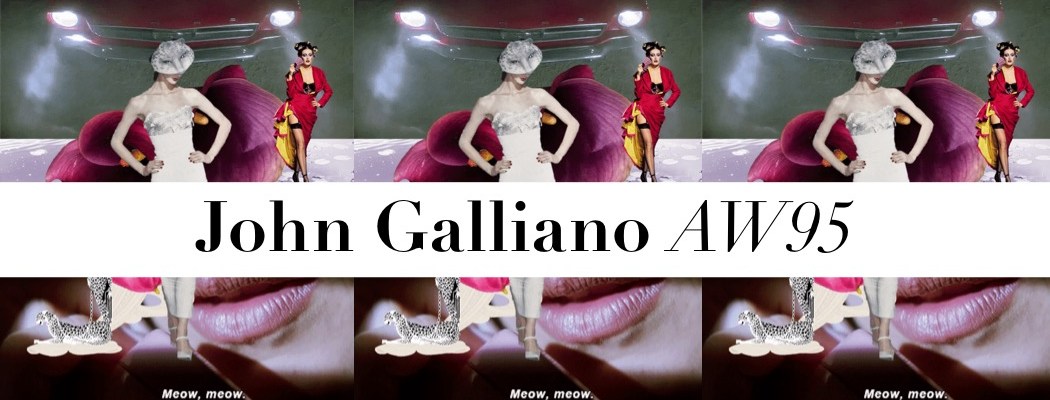
Undying Love. John Galliano AW95

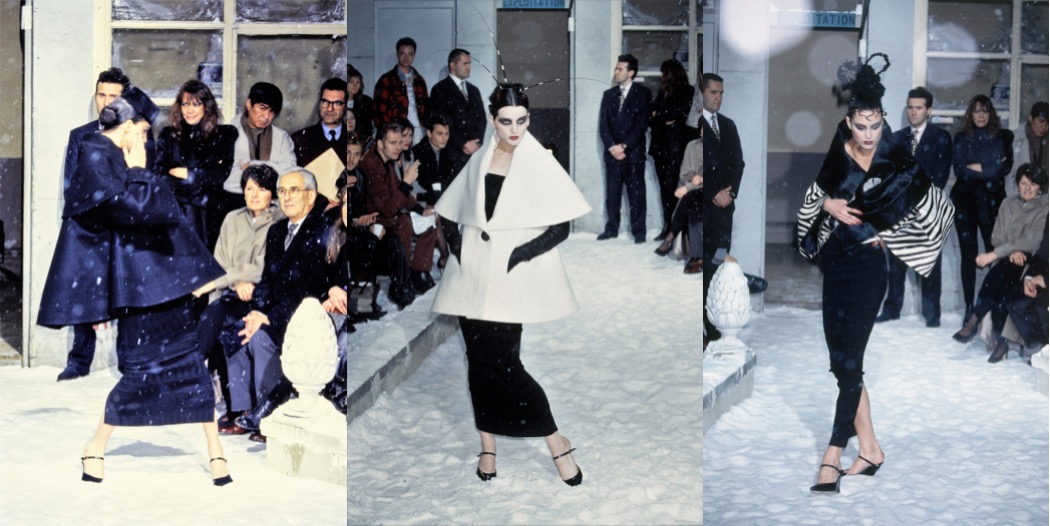
The festive time lets you look back at some fashion history in a relaxed, pleasurable way. After all the food, gift unwrapping, Christmas table talks and re-watches of both “Home Alone” films, I indulged myself in the beauty of John Galliano archives. And one of his pre-establishment collections just felt so right in this moment. Galliano’s autumn-winter 1995 “Dolores” collection marks a pivotal moment. It was essentially his last as an indie designer. About four months after this presentation, Galliano was named the creative director of Givenchy; a year later he transferred to Christian Dior and his namesake brand was acquired by LVMH. The Dolores of the show title was the actor Dolores del Rio. The invitation to the presentation consisted of pages from the heroine’s “tortured correspondence from the Rose of Alhambra hotel to her lover, Jaime, aboard the ocean liner Berengaria, along with a lock of hair and a broken locket,” reported The New York Times. Arriving at the venue, guests were ushered onto a snow-covered rooftop set littered with scows and populated by burly sailors. One of them, the report continued, “with bare feet and red manicured toes leaned against a chimney reading a book called Killer in Drag.” Perhaps most exuberant were the flamenco dresses, which allowed Galliano, who was born in Gibraltar, to iterate on his own heritage. There were ruffled numbers cut on the bias in shades of lavender and fuchsia, and peinetas (hair combs) took the place of tiaras. The Catholic imagination was also at work. A model in a whisper-light dress of virginal white carried a rosary and was followed by a shipmate wearing an ersatz crown made of prayer cards. Wearing a silk fuchsia number with a tulle bolero, Kate Moss kissed Johnny Depp seating in the front row. Another real love story of this collection was that between a man and his scissors. Galliano romanced the cloth with a technical savoir faire that was awe-inspiring. The carnation dress worn by Carla Bruni was not only cut on the bias but seamless, thanks to the floral inserts. One of these dresses is in the collection of The Met’s Costume Institute, and the catalog description notes that Galliano used the carnation “as a symbol of undying love.” What more is there to say?

Collage by Edward Kanarecki.
Don’t forget to follow Design & Culture by Ed on Instagram!

NET-A-PORTER Limited

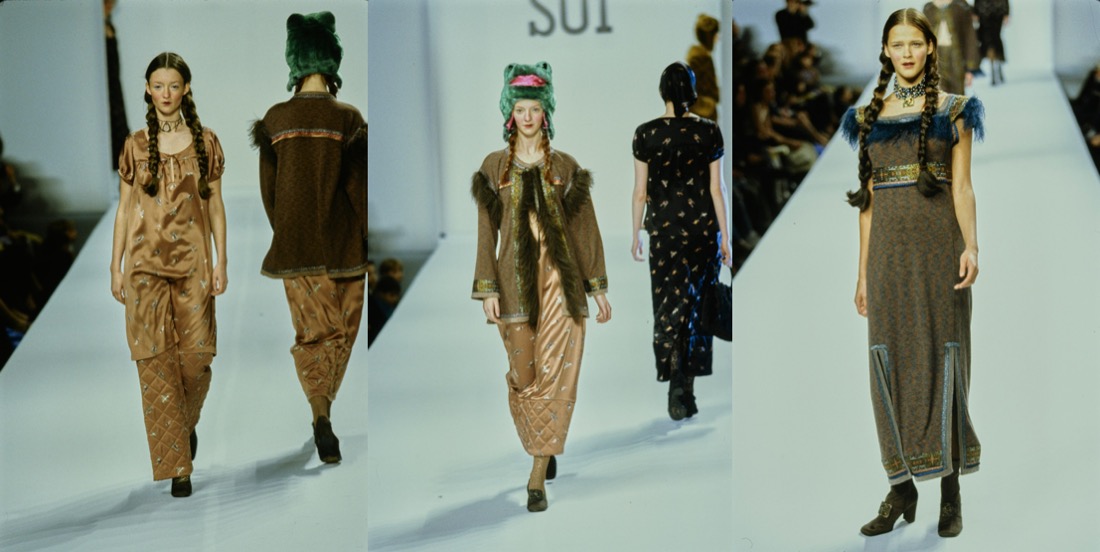
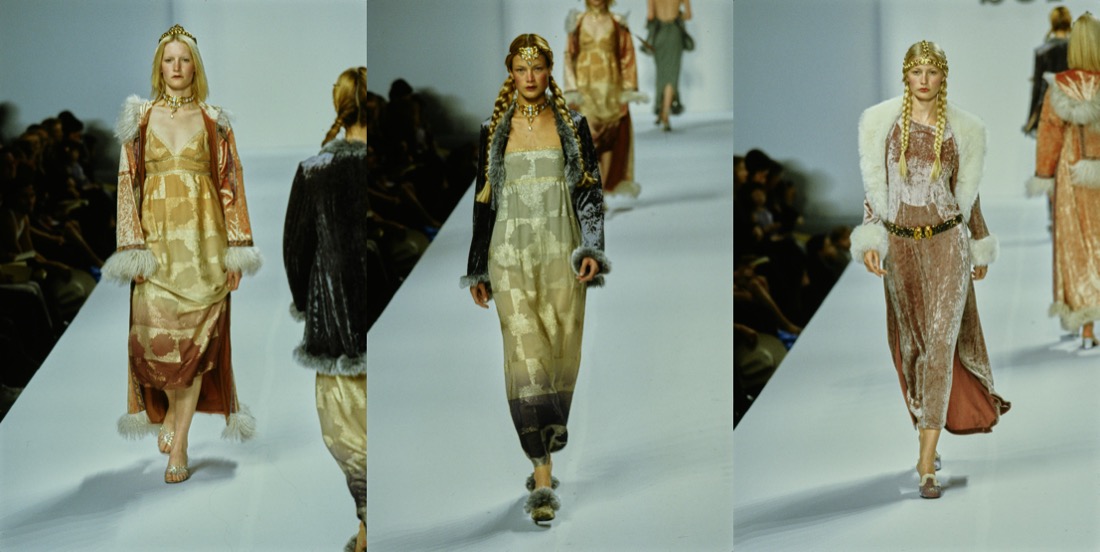
Witchy & Whimsy. Anna Sui AW98

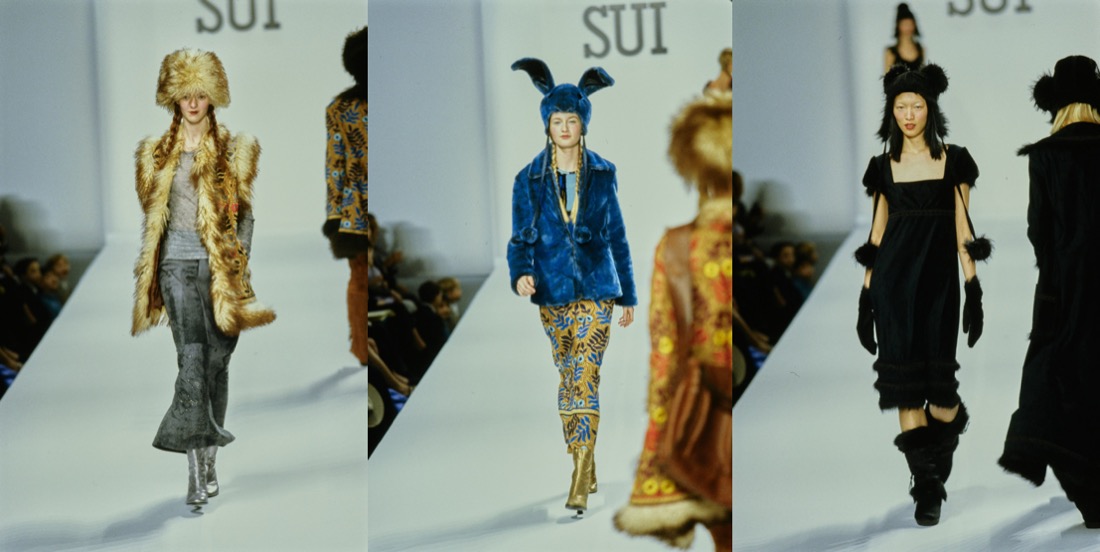
Anna Sui‘s charming 1990s and early 2000s collections made the kids who these days love and embrace the arty-crafty, slightly goofy, very witchy, highly whimsical aesthetic – which got additionally intensified by such it-girls like Ella Emhoff and, of course, the power of TikTok. The autumn-winter 1998 line-up by Sui seems to capture all things which are suddenly (re)loved in 2022. The collection was inspired by fairy tales, but also nodded to all the great illustrators of the 1900s. At the time, the designer had seen an exhibition in London about the Victorian fairy tale illustrators that included Arthur Rackham and Kay Nielsen. “It was the most incredible and really moving exhibition that I had seen in a long time, and I just kept looking at those pictures, so then I thought, OK, I’ll do a collection like that“, she recalls to Vogue. The runway looks were all like a kid’s version of dress-up – “with the cowboy with the big badge, and oversized hat, and chaps that were all studded” – as if you were taking stuff out of the trunk and putting it on. All the animal hats and everything came from looking at Walter Crane drawings of frogs and bears. “I just thought it’d be really fun to do it almost from a kid’s perspective and make those into faux fur hats, so I called the milliner James Coviello and said, ‘We have to make these teddy bear hats.’ And I showed him a picture of one of the girl bands at the time that had knocked the stuffing out of a stuffed bear and made a hat out of it. I said, ‘Let’s do a fairy-tale version of this.’” And then, with Erickson Beamon, Anna came up with the crowns, which became instant hits. In the collection, there was also a whole series of the fairy-tale princess looks. “I just loved the frosted velvet that we made all those dresses out of. It was a stretch velvet in these frosted colors and then we trimmed everything with faux fur. There was a lot of it throughout the collection. The show opened with those black and ginger folkloric dresses trimmed with faux fur fringes. And then we did inside out faux fur, like there’s that jacket that Amber Valletta’s wearing, which we trimmed like Lapland clothes.” Looking at the collection today, it just feels so amazingly dreamy and so, so desirable. Every single look is relevant – especially in contemporary times where all aesthetics and subcultures become one big, eclectic melting pot.

Collage by Edward Kanarecki.

NET-A-PORTER Limited

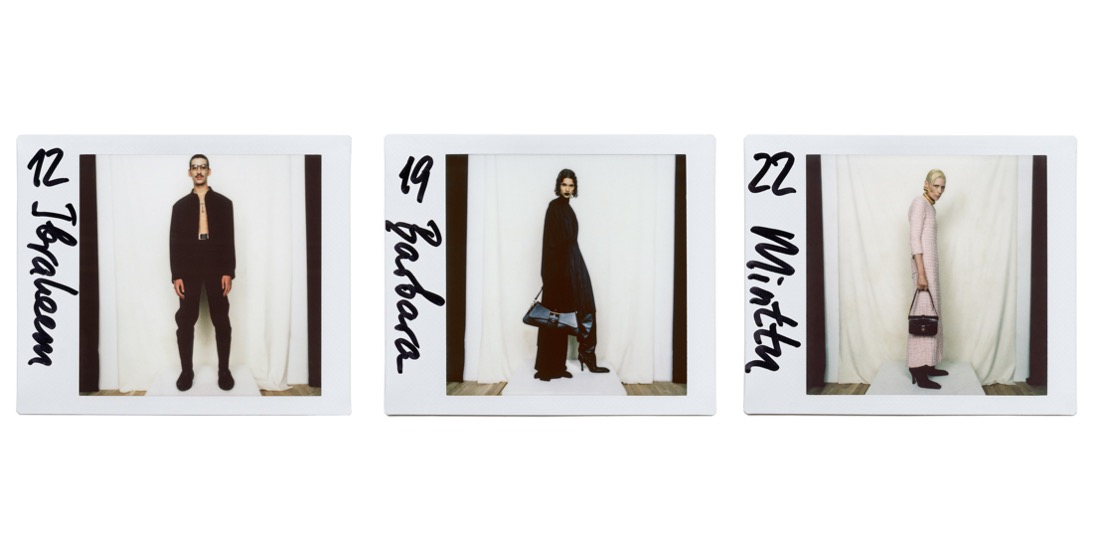
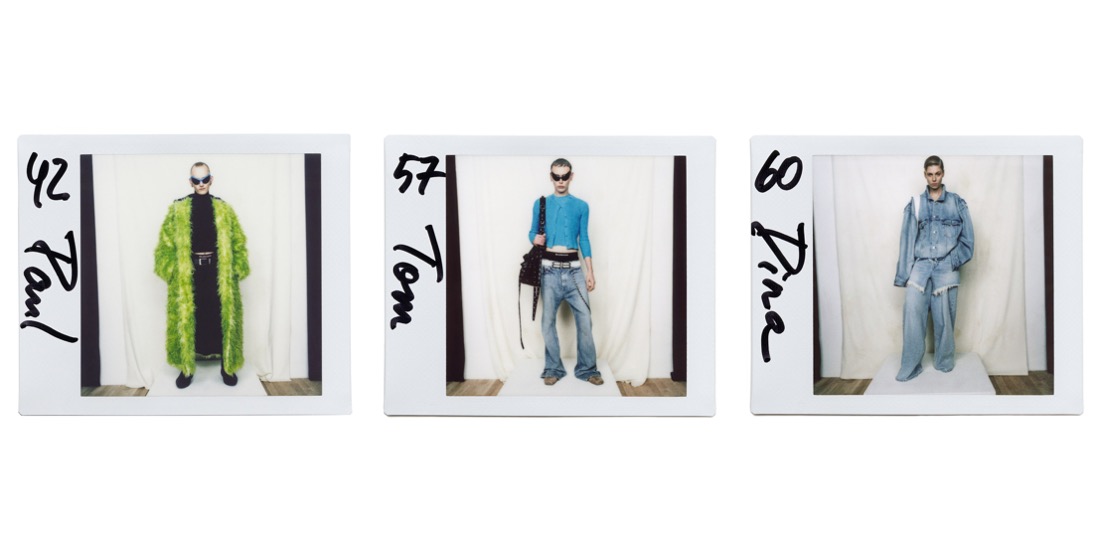
On The Lost Tape. Balenciaga Pre-Fall 2022

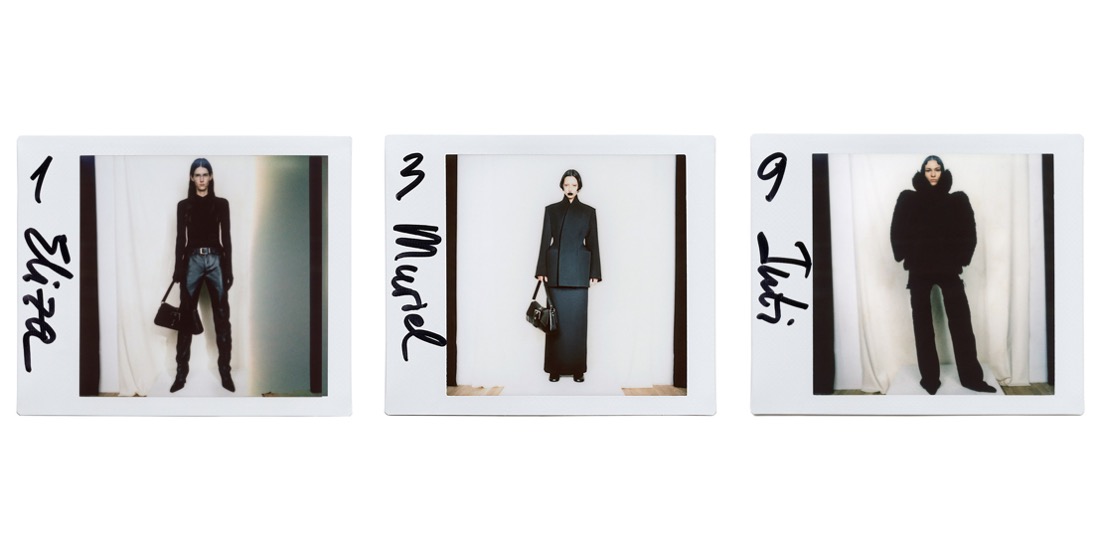
And just like that (no pun intended!), Demna (note: from now on, Demna (Gvasalia) uses only his first name, distinguishing an artist title from a birthname and therefore separating creative work from personal life) does it again. He’s the modern-day fashion genius, we know it by now. Also, good bye to the Y2K trend – the 1990s are back. The Balenciaga pre-fall 2022 presentation comes in the form of a message from the past about what could have been and never was. It recalls a time when clothing that was alive with raw ideas – anti-fashion, deconstruction, and monochromatic minimalism – could be found anywhere from an industry spectacle to the active underground. “On The Lost Tape“, a fashion show is characterized by the people and things that defined this late-90s era, filmed using a VHS camera by the one & only Harmony Korine. The collection symbolically fills a gap from Balenciaga’s forgotten years. Raver and post-grunge silhouettes are pushed to their limits. Proportions are played with, creating new silhouettes and evolving others, including Balenciaga signatures like the Basque waist jacket and the track suit. Front-to-back pieces are studies of classic suiting and tweed dresses that question closure placement, reverse-engineering constructions to become tailored. Ultra-stretchy knits make these and shrunken twin sets easy to put on. Vintage slip dresses are disassembled and pieced back together. Five-pocket jeans are cut up to create a three-piece silhouette that can be worn as a miniskirt, pants, or XL thigh-high boots. Fluid tailoring gives a deconstructed suit an unlined raglan sleeve, in the collection’s Belgian avant-goth tones. A Couture-like bell-shaped puffer’s detachable bow can be used as a scarf. Wrap closures use DIY ways of fastening, like oversized safety pins. And what’s the designer’s dream 90s look? “Me, my favorite looks are the flared raver jeans with the crop tops,” he told Vogue and chuckled wistfully. “Couldn’t wear it now, but reminds me of gay Soviet Georgia underground clubs.” Worth adding: Demna’s commitment to responsible production continues, represented this season with 89.6% certified sustainable plain and printed ready-to-wear fabrics as well as pieces of upcycled leather used in garments and accessories.

Collage by Edward Kanarecki.