

Alexander Wang
What’ Hot (6.10.14)

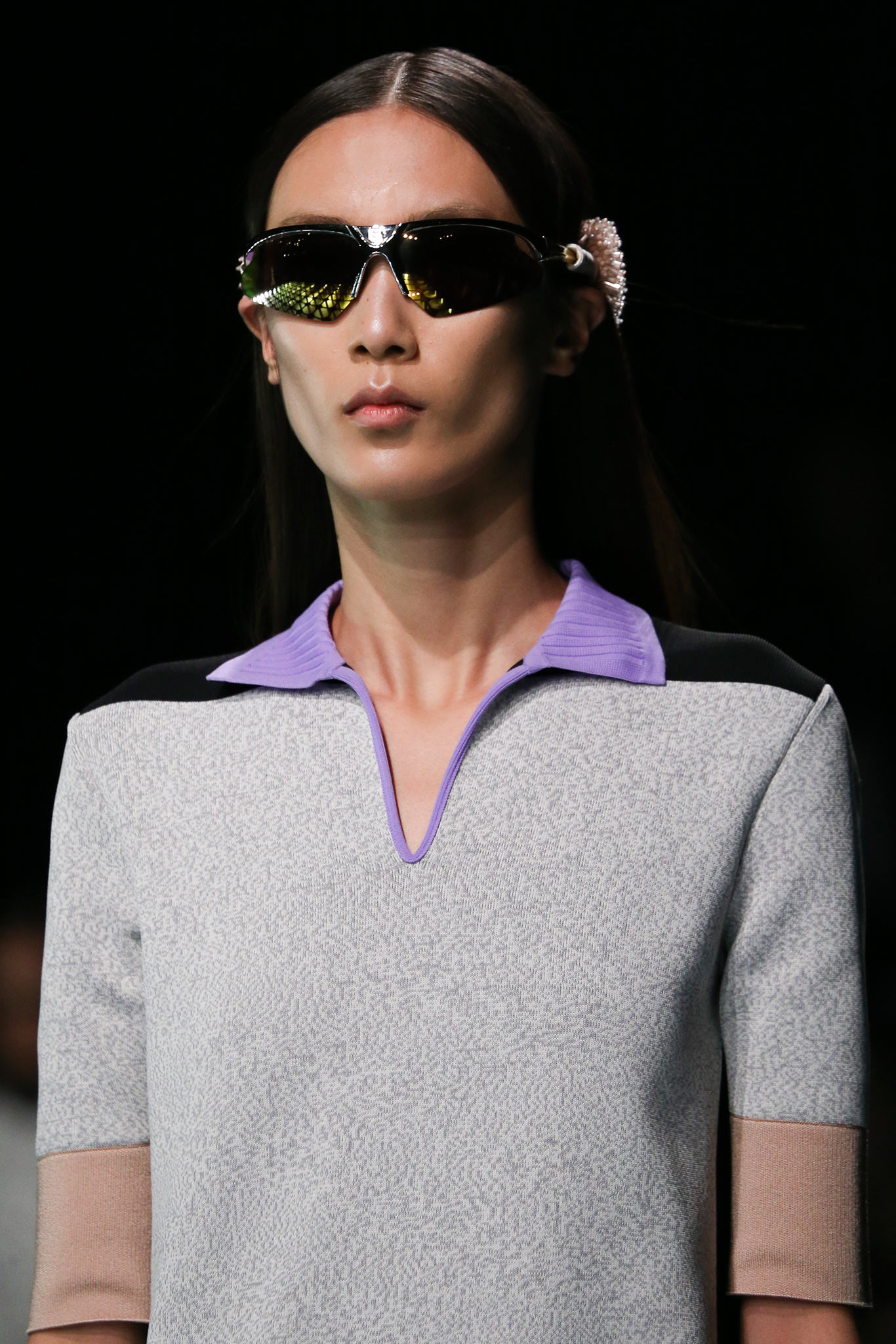
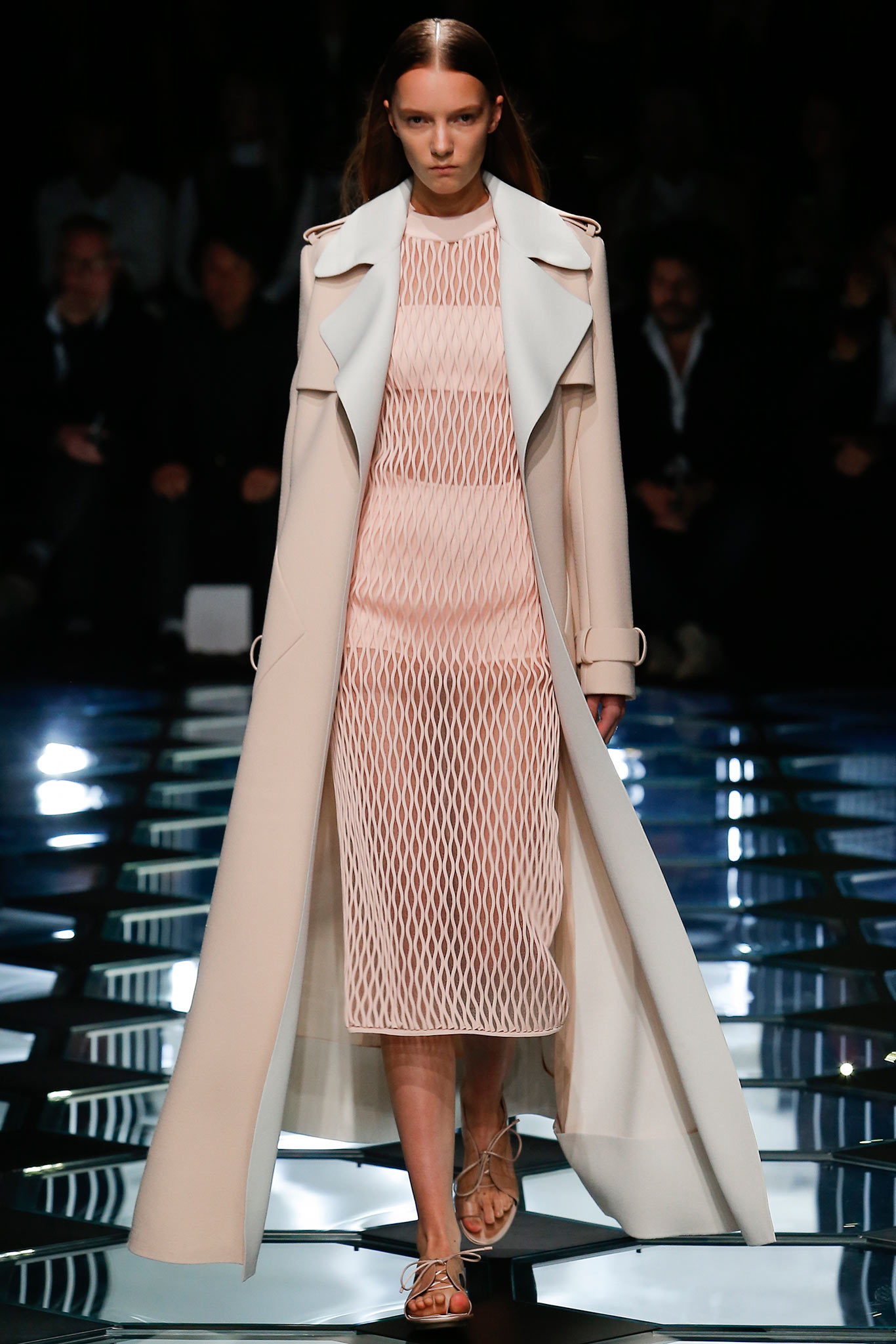
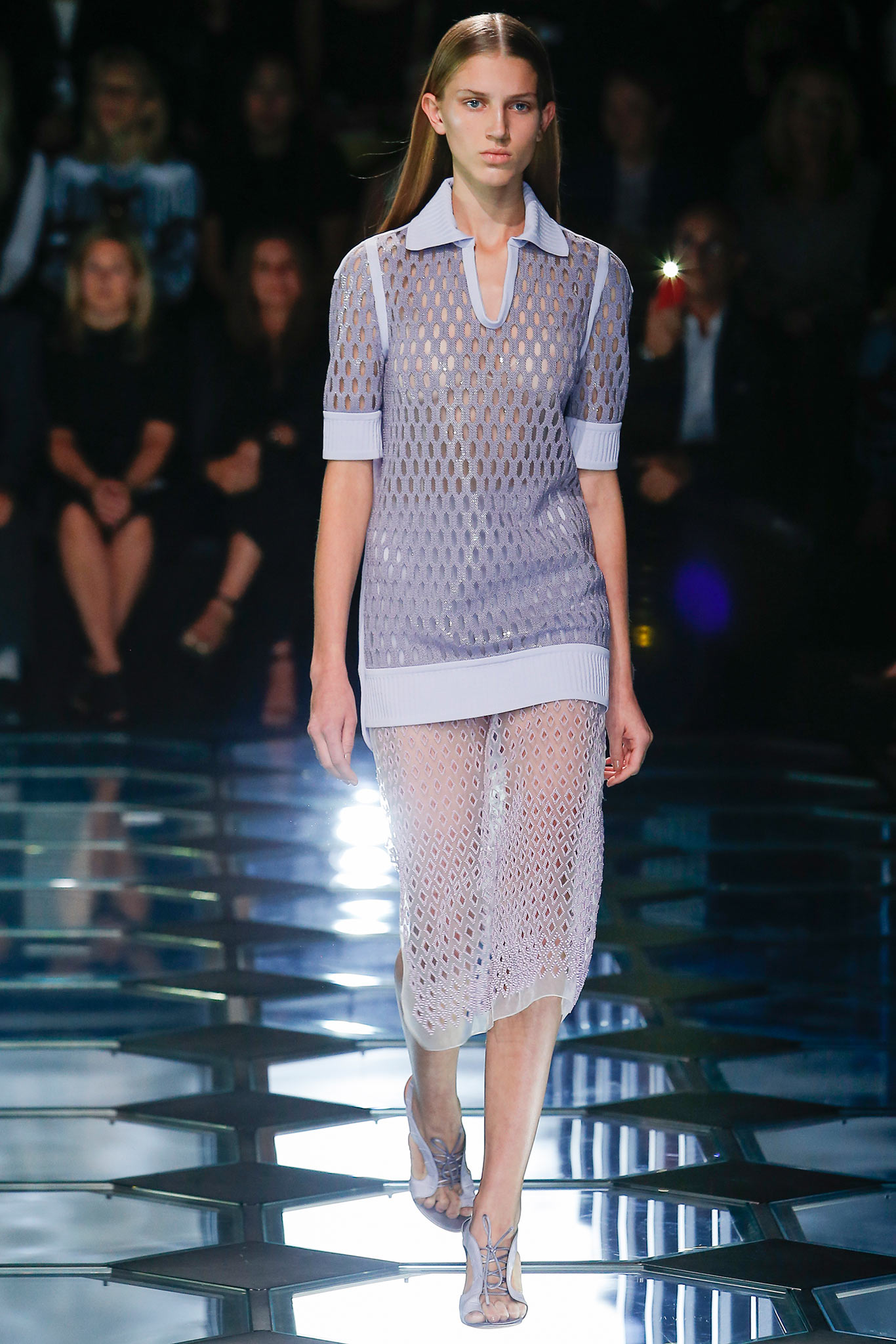
Matrix. Balenciaga SS15

New 8 p.m. time slot, new Palais de Tokyo location, and a state-of-the-art glass and grid-work runway under which dry ice machines pumped smoke. And the new mood appears: matrix and sci-fi. Narrow glasses, long, dark power coats, mesh and cosmic embroideries. At a glance, it was tempting to see signs of Wang’s early work in New York—the way he blended sport and the street. But that’s only part of the story. Wang was in Paris this summer during the Tour de France, and it was the world of cycling—the competitors’ second-skin kits, the shoes that clamp into pedals—that influenced the built-for-speed feeling of this collection. Silhouettes were lean and athletic: the pants leggings-tight, shirts clingy, and dresses cut like a glove. As you might know, from the beginning of Wang’s career at Balenciaga, I didn’t really feel “him” here. But this is the first collection (since AW13) which I pretty much enjoyed. And those lilac elements are simply too good to be true.



Cultural Fashion

Fashion and culture always had a power, if joint together. So no wonder why the artsy trend for fall’14 are so strong- we’ve got Bauhaus architecture, we’ve got Russian films and we’ve got dadaism- an art movement of the European avant-garde in the early 20th century. Many claim Dada began in Zurich, Switzerland in 1916, spreading to Berlin shortly thereafter but the height of New York Dada was the year before, in 1915. One of the most famous dada artist is Hannah Höch. The collage art movent which had a lot of grey, khaki and solemn colours, got spotted at Celine, Carven and Haider Ackermann this season.
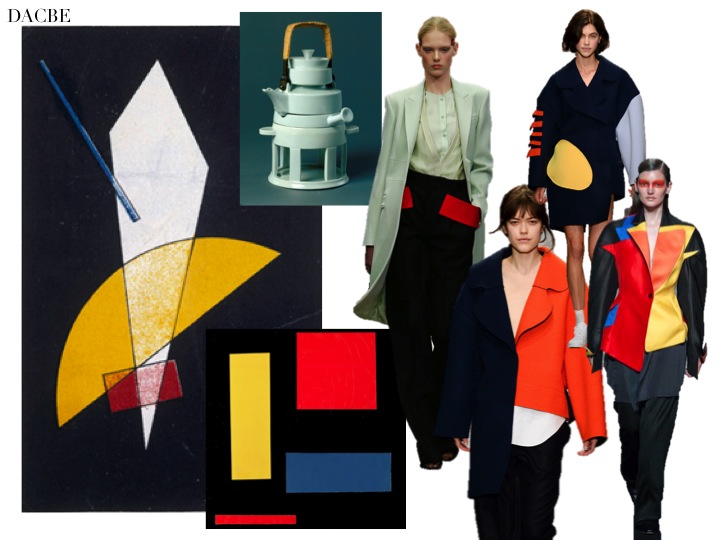
Weimar was another artistic movement, but this time coming from Germany. With Bauhaus at it’s roots, Weimar was popular for it’s geometrical forms, strong colours and minimalism. The rectangular pockets from Givenchy are totally Weimar, isn’t it? And these Jacquemus coats and bold, Thomas Tait dresses…

Bauhaus! art school in Germany that combined crafts and the fine arts, and was famous for the approach to design that it publicized and taught. It operated from 1919 to 1933. At that time the German term Bauhaus – literally “house of construction” – was understood as meaning “School of Building”. It’s most famous graduate? Mies Van Der Rohe. But nowaday, it’s Prada, Balenciaga, Alexander Wang, Dior and Acne, who does the symetrical silhouttes and metallic “constructions” in their designs (best example- that Prada wedge).
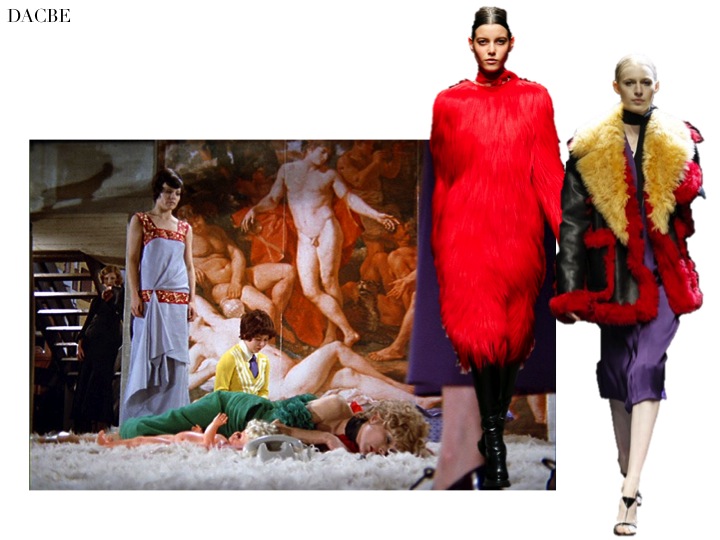
If talking of cinema, Miuccia Prada learnt by hard all the scens of The Bitter Tears of Petra von Kant. This German movie from 1972 has an all-female cast and is set in the home of the protagonist, Petra von Kant (Berliner fashion designer). It follows the changing dynamics in her relationships with the other women. It’s very sensual, and the clothes and mood perfectly match into Prada’s AW14.

The Place of Meeting Can’t be Changed is a Russian movie, which has it’s plot happening in 1945, Moscow. The fashion here strongly reflects Nicolas Ghesquiere’s debutant Louis Vuitton collection. The higlighted collars, masculine jackets, v cuts, floral prints and tweed are all very, very 40’s.
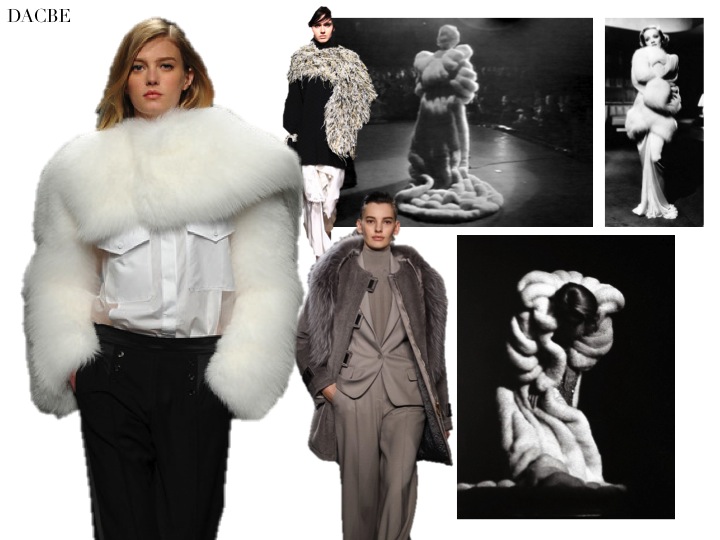
Aah, Marlene Dietrich! The famous singer and actress, all-time fashion icon! Her flawless gowns and love to non-chalant fur is strongly visible in the moodboards of such designers like Jason Wu, Rodebjer and Ports 1961. In other words, lady-like, chic and effortless.
What’s Hot (29.8.14)
 Design & Culture by Ed