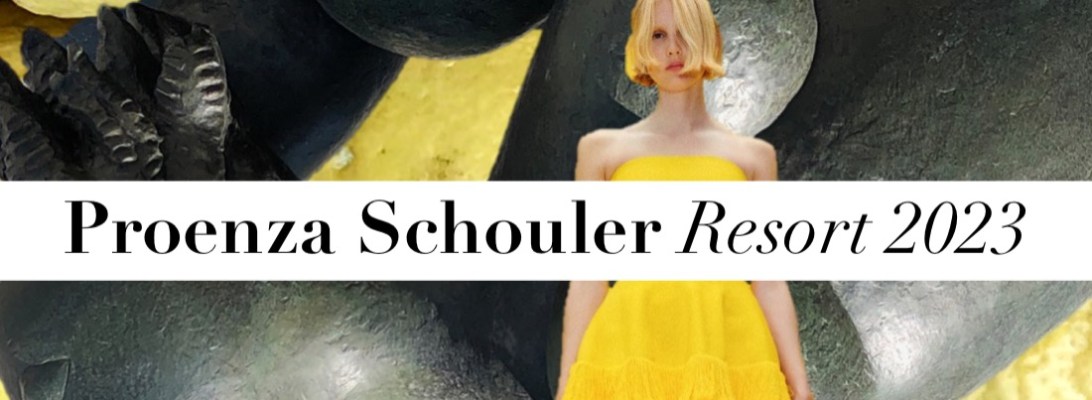
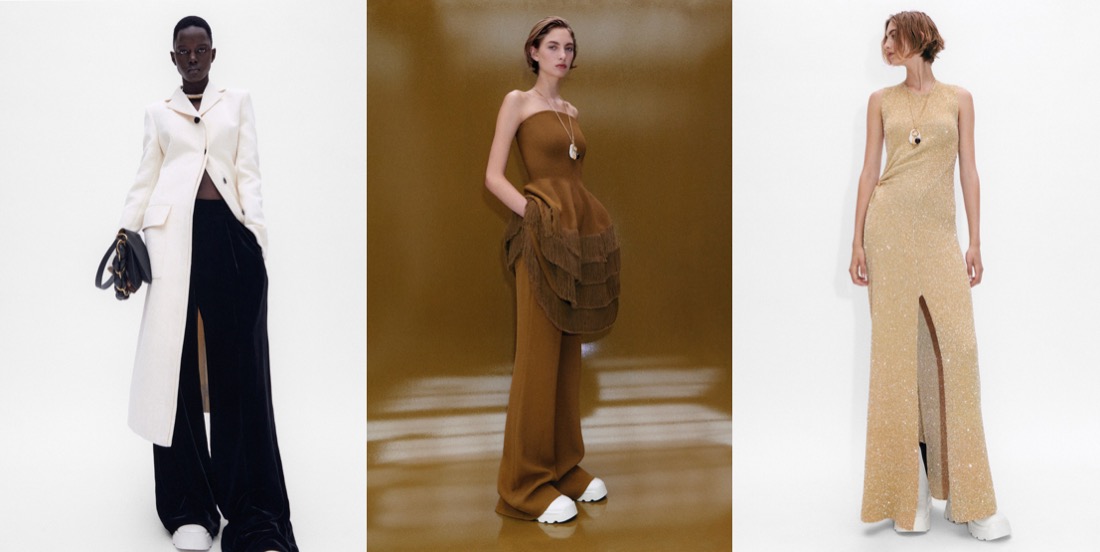
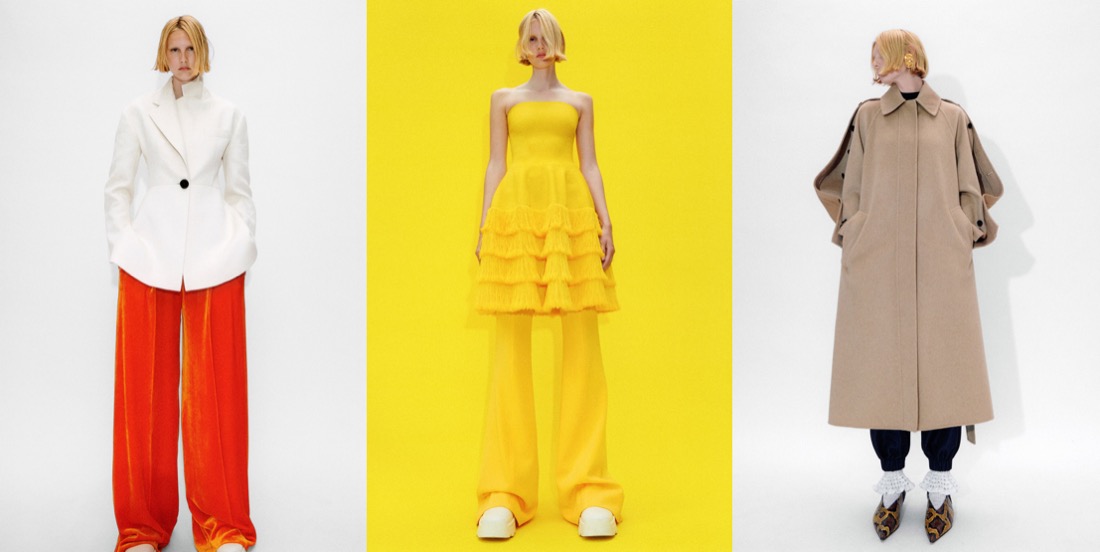
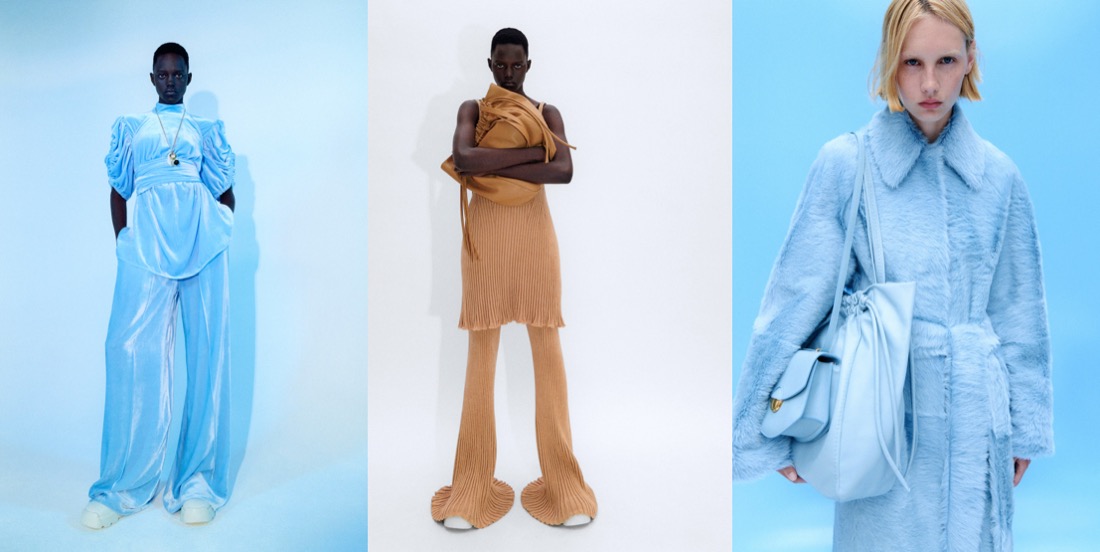
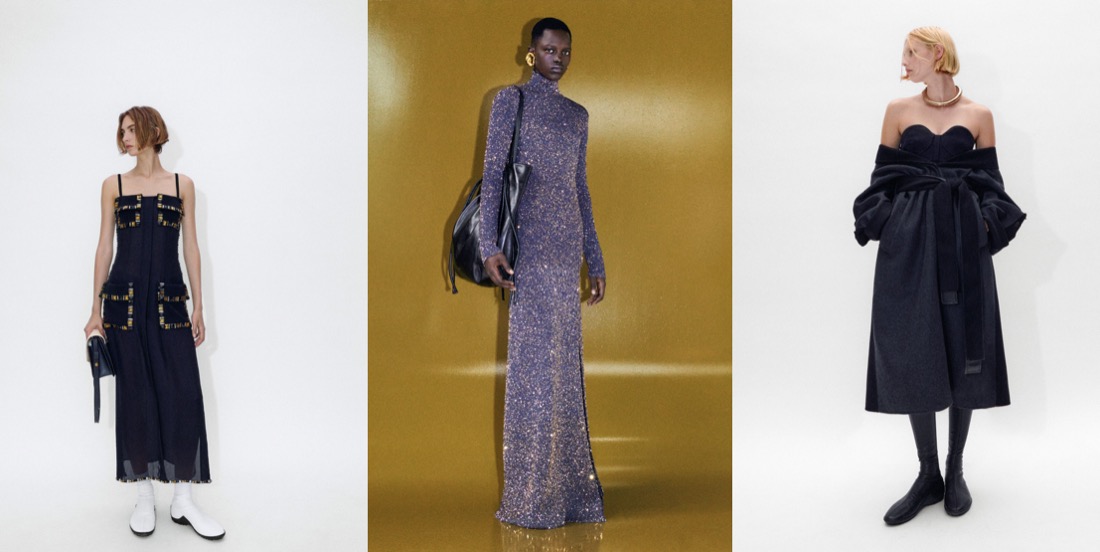
In the pre-seasons, the Proenza Schouler duo leans into experimentation. A scroll through Resort 2023 images makes it clear that Lazaro Hernandez and Jack McCollough are strongly attracted to texture and hand-feel. In addition to the innovative spongy sequin knit (“The sequins are baked into the actual yarn itself, so when you knit it up, they’re all embedded. It looks like Lurex, but it’s a beautiful, piece of knitwear“), they used silk velvet for slip dresses and matching sets, a three-dimensional ribbed knit for coordinating cardigans and flares, and a short hair shearling on a belted coat. The saturated colors of the velvet and shearling especially added to their appeal. After texture, their other preoccupation here was shape. It’s tempting to see 1940s proportions in nipped-waist jackets and full skirts whose sculptural hems were reinforced with horsehair. The track pants and frilly ankle socks paired with a different nipped jacket are another, cheekier way to go about it. On the subject of shape, they revisited the corset tops that were the building blocks of their earliest collection. “Old Proenza vibes,” Hernandez said, but updated in suiting fabric for a touch of surprise. And that’s the direction the designers should continue to embrace.
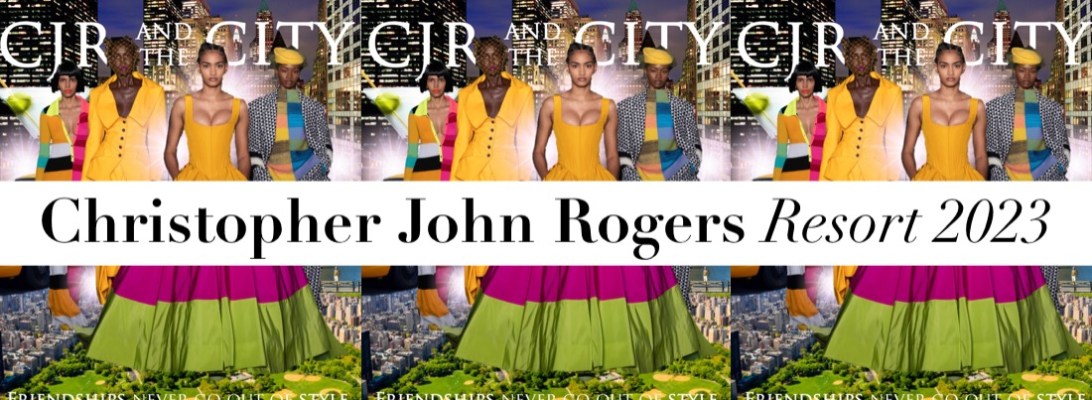
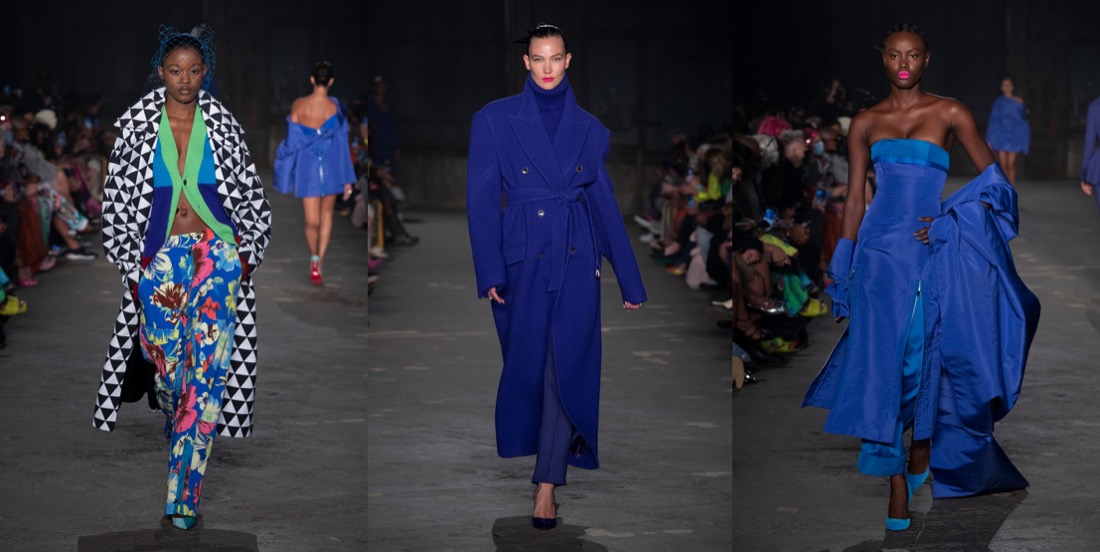
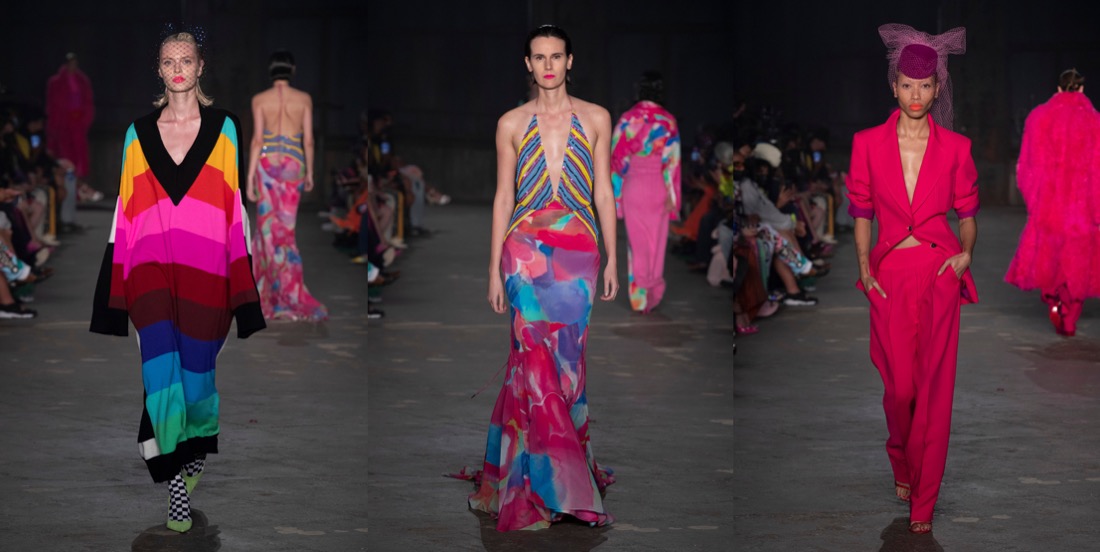
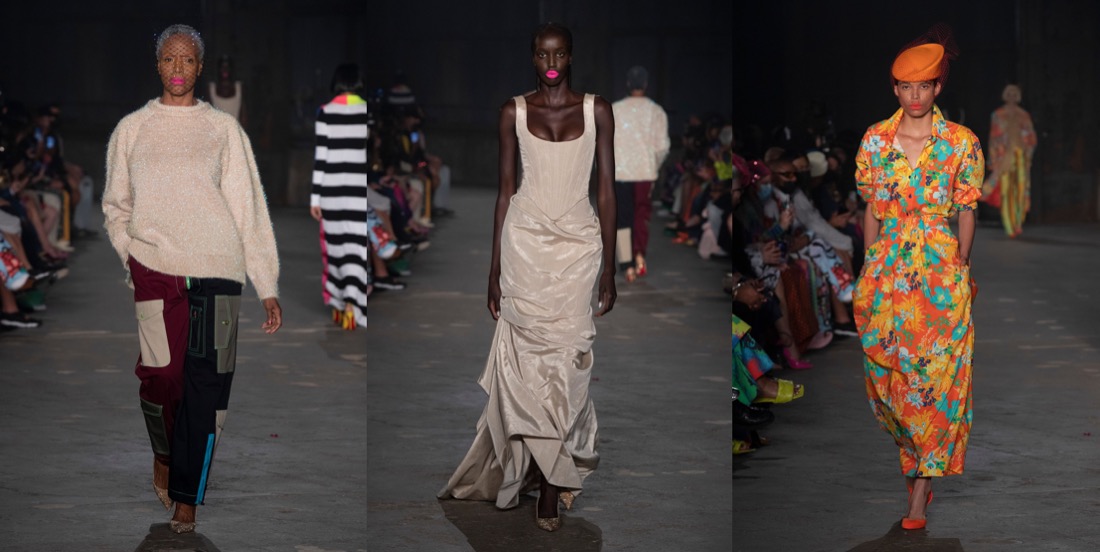
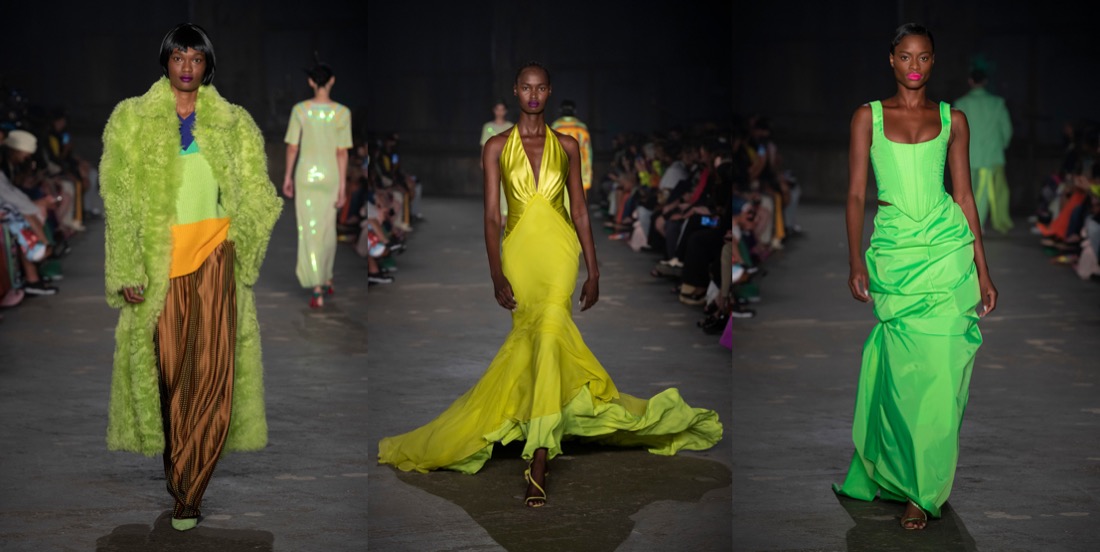
Joy, pleasure, exuberance. As the world has turned back on post-pandemic, designers have strived to channel those sensations in their clothes. For Christopher John Rogers, all that seems to come quite naturally. He sprang down the New York runway, leaping and pirouetting and soaking up his standing ovation. This was Rogers’s first IRL show in over two years. So backstage after the show there was a feeling of making up for lost time. Rogers exchanged hugs, wiped away tears, and posed with what looked like all 55 of his models. Of his collection, he said, “I wanted to say that everything can exist together, everything makes sense if you will it to. I like the idea of multiplicity and that so many things through one specific scope can shine.” Karlie Kloss kicked things off in a purple coat, whose oversized, double-breasted proportions were extroverted in the extreme. Tailoring played a starring role, but Rogers is agnostic about silhouette. Single-breasted pantsuits exuding masculine swagger mixed with other more feminine shapes boasting dropped lapels, back gathers and drapes, and, in a couple of cases, pantaloons. He cut trenches in bold floral prints, whose colors were picked up in bright shearling dusters. Even without the benefit of runway shows Rogers has made some of the most clockable fashion of the last couple of years. That’s down to his extraordinary color sense and eye for graphic pattern, both of which were on ample display in this collection’s array of striped knits, which he juxtaposed in more-is-more fashion with checkerboard separates. From start to finish, this show brought the drama, but there are a few special numbers worth mentioning. Among them: a floral print 1930s-ish tea dress and a gown in madras plaid silk shantung. And here’s betting he’s already getting calls for the bustier dress with a sunflower yellow bodice and wide horizontal stripes of coral, fuchsia, and citrine circling its ball skirt.
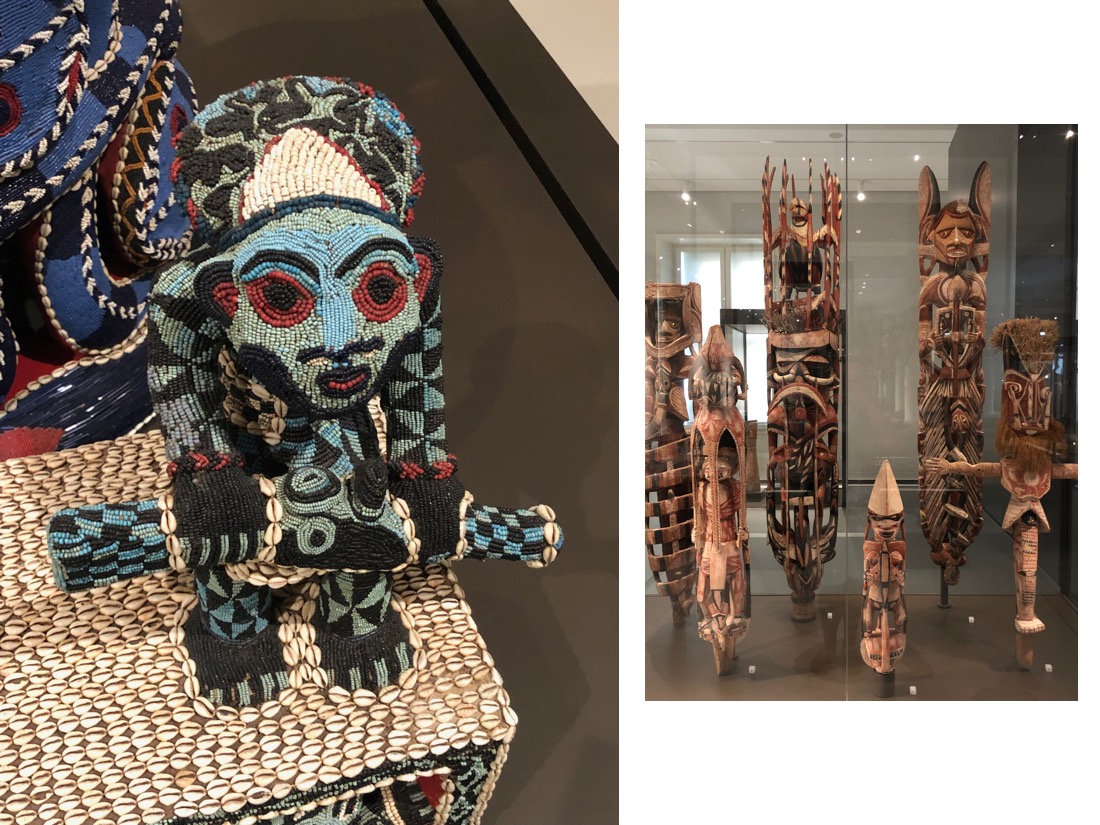
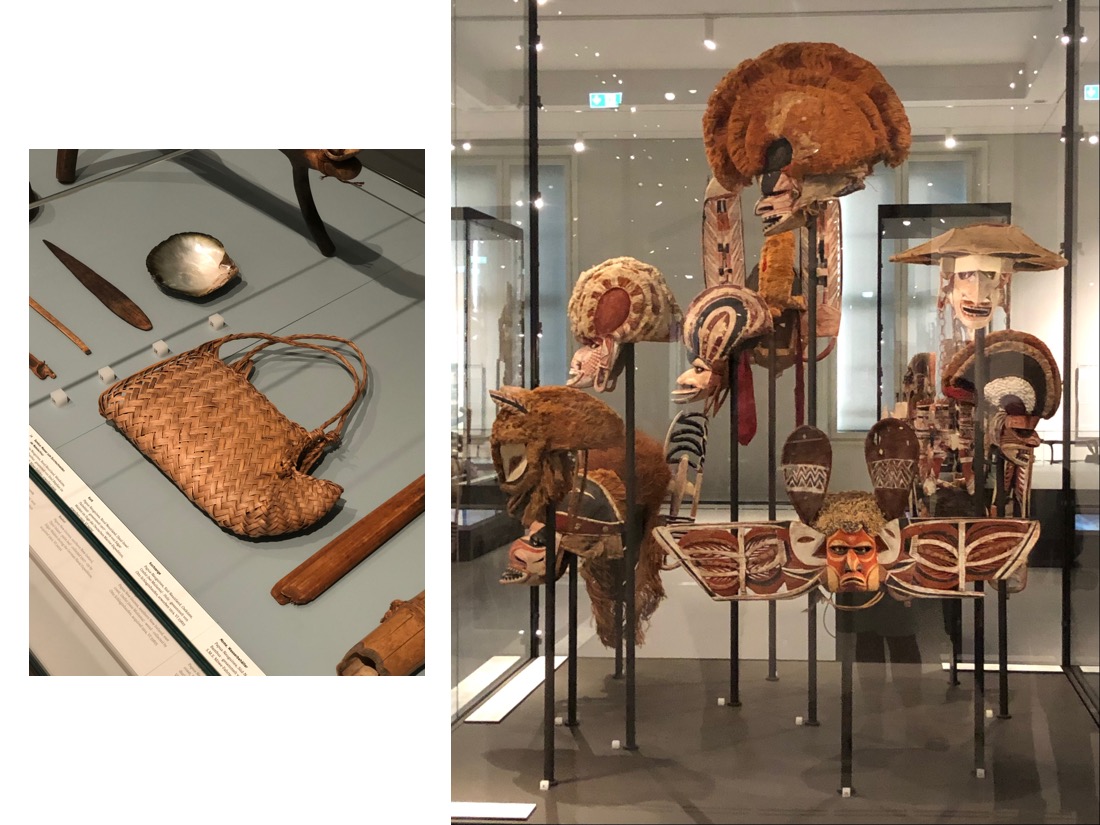
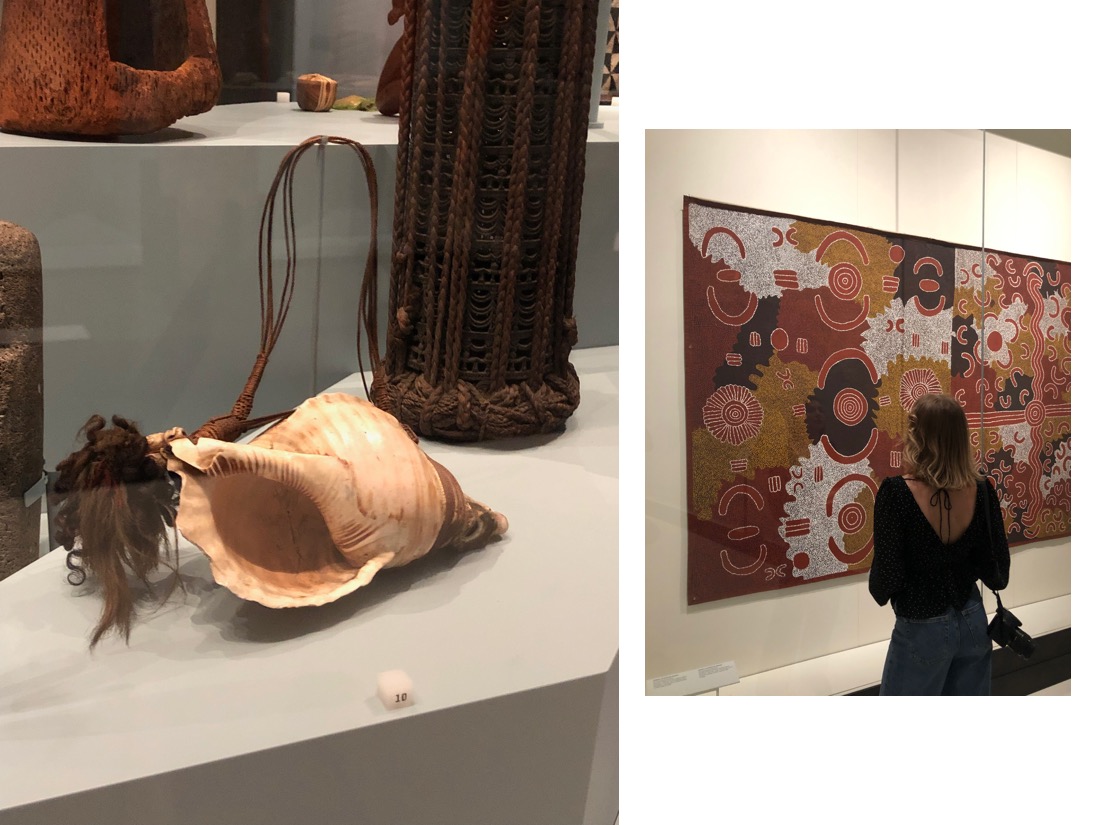
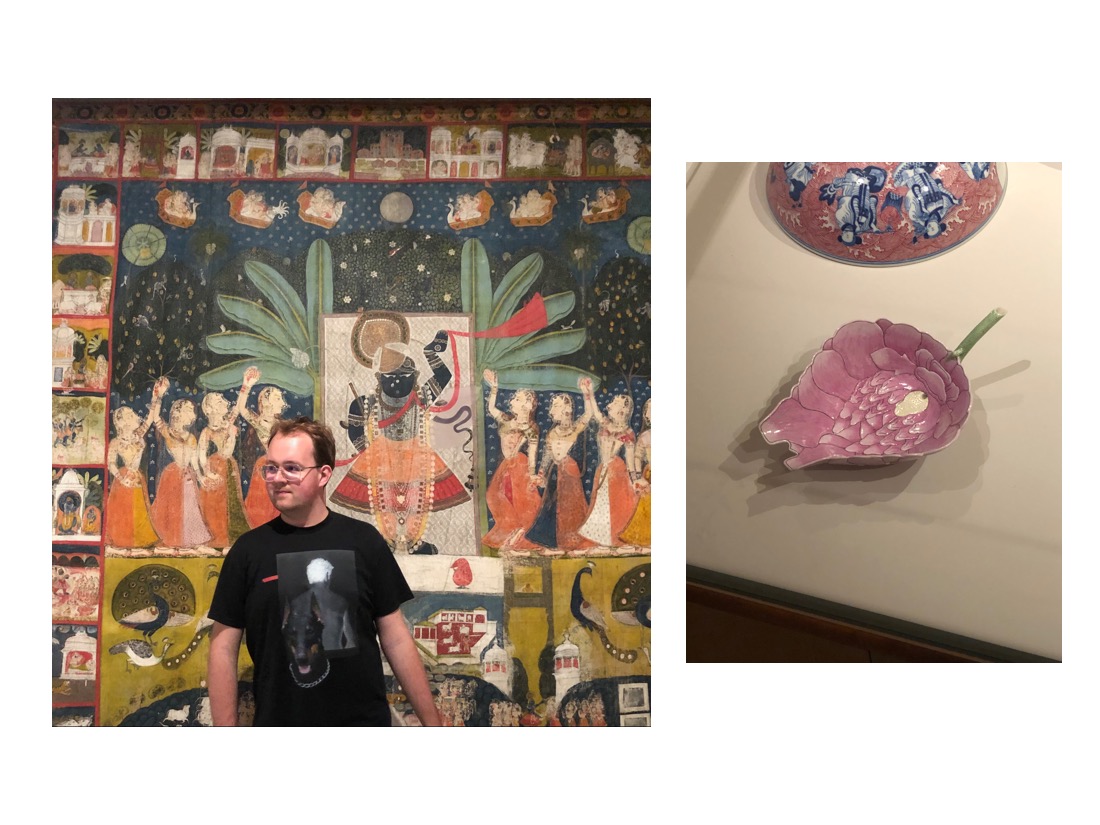
Artistic carvings from Oceania, wooden figures and masks from Cameroon, a Japanese teahouse and sounds from around the world: the exhibitions from the Ethnologisches Museum and the Museum für Asiatische Kunst in the brand new Humboldt Forum offer an eclectic view into the past and present cultures of Africa, America, Asia and Oceania. Around 20,000 archaeological, ethnological and art-historical exhibits offer multiple perspectives on universal themes of humanity. Media installations as an introduction to the exhibitions, Schaumagazin exhibition spaces filled with a varied selection of objects, areas for cultural education, spaces designed by international architects and works of contemporary art pose questions about the history of the objects and place the collections in the context of our present-day world. Definitely worth a visit when in Berlin!
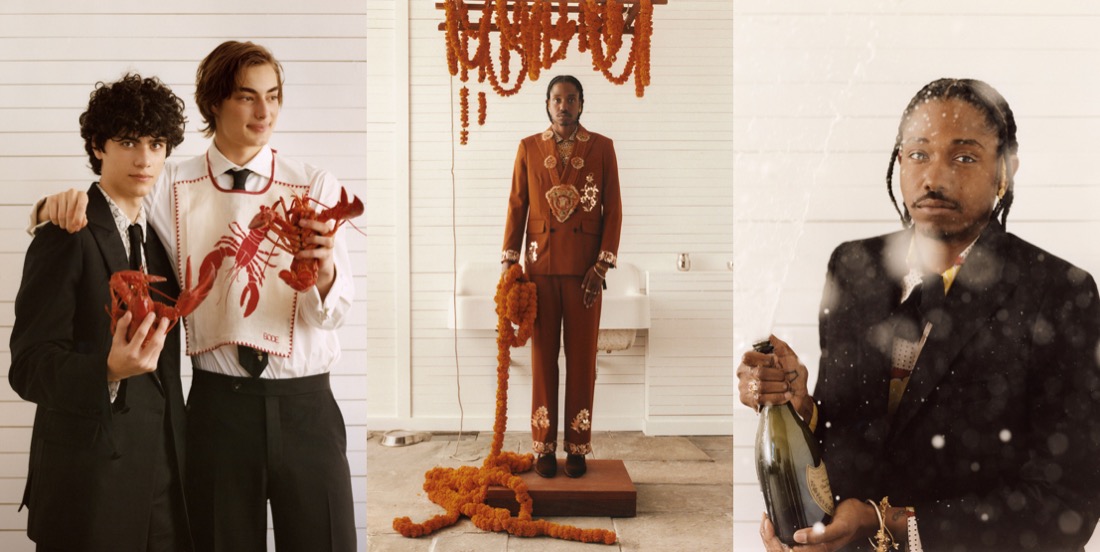
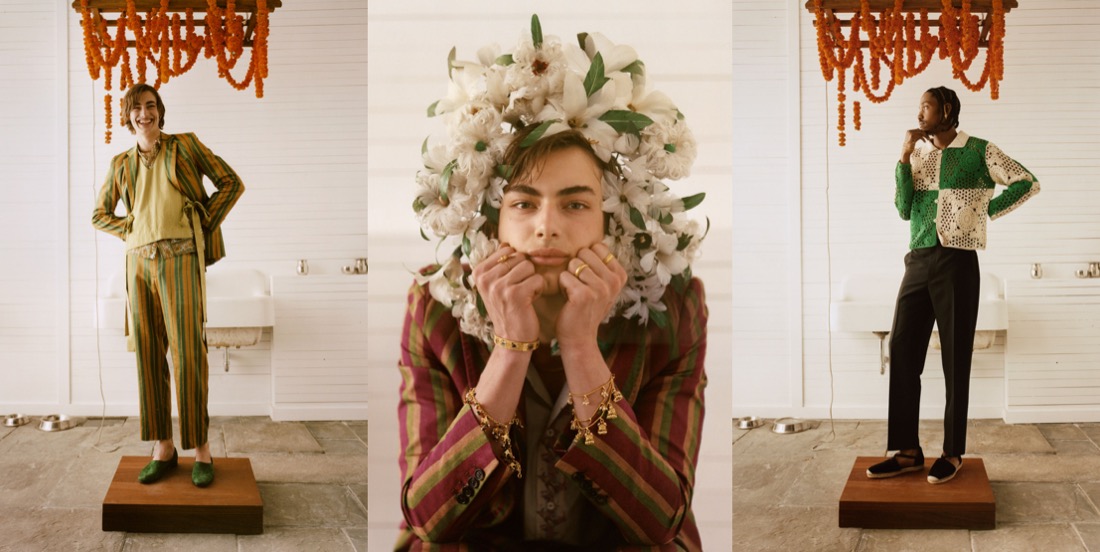
At the New York-based brand Bode, Emily Adams Bode Aujla’s collections have always been rooted in the persona. The lived histories of friends, family members, and even places all hold keys that unlock the fantastical trove of embroideries, embellishments, prints, and colors that have established Bode as one of the most exciting new American labels on the scene. For pre-fall 2022, now hitting the stores, however, Adams Bode Aujla turned inward, looking for inspiration to her own wedding to her longtime partner and collaborator Aaron Aujla, which took place in their newly purchased home upstate and brought together Punjabi traditions from his upbringing as well as ones from her mixed Southern/East Coast heritage. “The foundation of Bode is personal narrative and our emotional relationships to materials and material culture, so the wedding is very much an epitome of that relationship,” Adams Bode Aujla explains. “From a more pragmatic side, I love dressing people for weddings. A lot of the fabrics that we sell lend themselves really well to weddings: lace, eyelets, details like pearl buttons, working with people’s family histories and their initials and embroideries, so it kind of made perfect sense to make this a holistic idea.” She estimates she made over 250 pieces for their friends and family to wear to their nuptials, including matching tuxes for the groomsmen and dresses crafted from piano shawls for the bridesmaids, along with the various outfits she and Aaron wore throughout the four-day festivities.
The most obvious way the wedding influenced this collection is in the emphasis on formal wear, something that she has dabbled in since opening the Bode Tailor Shop next door to her Manhattan flagship. There are classic shapes like tuxedo jackets and tails done in traditional black and white that will find wide an audience, but it was the Bode-fied versions that had the most appeal: a dark brown three-piece suit embellished with gems in the shape of flowers, a linen marigold single-breasted suit with tonal fringe appliqués and vintage marbles decorating the sleeve vent. The colors she used – “depression-era” green, tobacco brown, and purple, and marigold – all held personal meaning for the designer and her husband. It’s her exploration of what formalwear silhouettes can be that is really exciting. A lightweight tropical wool wrap jacket with a gathered waist may resemble a traditional women’s blouse on a hanger, but when worn over a crisp button-down shirt and matching trousers, it transforms into a smart alternative to the structured suit, lending an air of ease and comfort. A similar feeling was evoked by matching sets of shirts and trousers, inspired by Aujla’s penchant for pajamas. “He wears pajamas even with a tux,” Adams Bode Aujla explained. “It was really important to him that he had [them], especially for morning prayer.” Here they run the gamut of materials and fabrications, from simple versions done in white cotton voile to intricately embroidered styles. The concept of “home” was also present in the collection through the use of crochet fabrics and embellishments, as in a white shirt covered with brown popcorn chenille, which is typically found in bedspreads, and a matching shirt and trouser set appliquéd with animal shapes in various prints, which was a reproduction of a baby quilt originally made from feed sack scraps. “During the Great Depression, companies were noticing that women were making clothing from feed sacks and grain sacks, so they started printing on the fabrics to encourage people to do it.” Adams Bode Aujla is keen on the importance of research and preserving history through the things that she makes, tracking down names and provenance. “When we do historical reproductions, we can tell that narrative in a much broader scale, and it got me thinking about how you can encourage people to preserve something, not just by mending o repairing things like that, but preserving it in the idea that they’re preserving culture and the techniques,” she said. It’s easy to see how Bode has found success; her customer understands that when they buy one of her designs, they are buying a little piece of history for themselves, a shirt (or pants, or a jacket) imbued with meaning and ready to be passed on to the next generation.
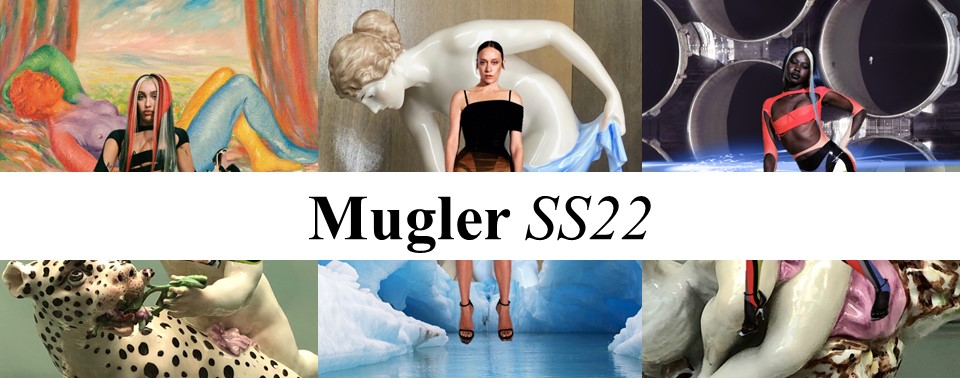
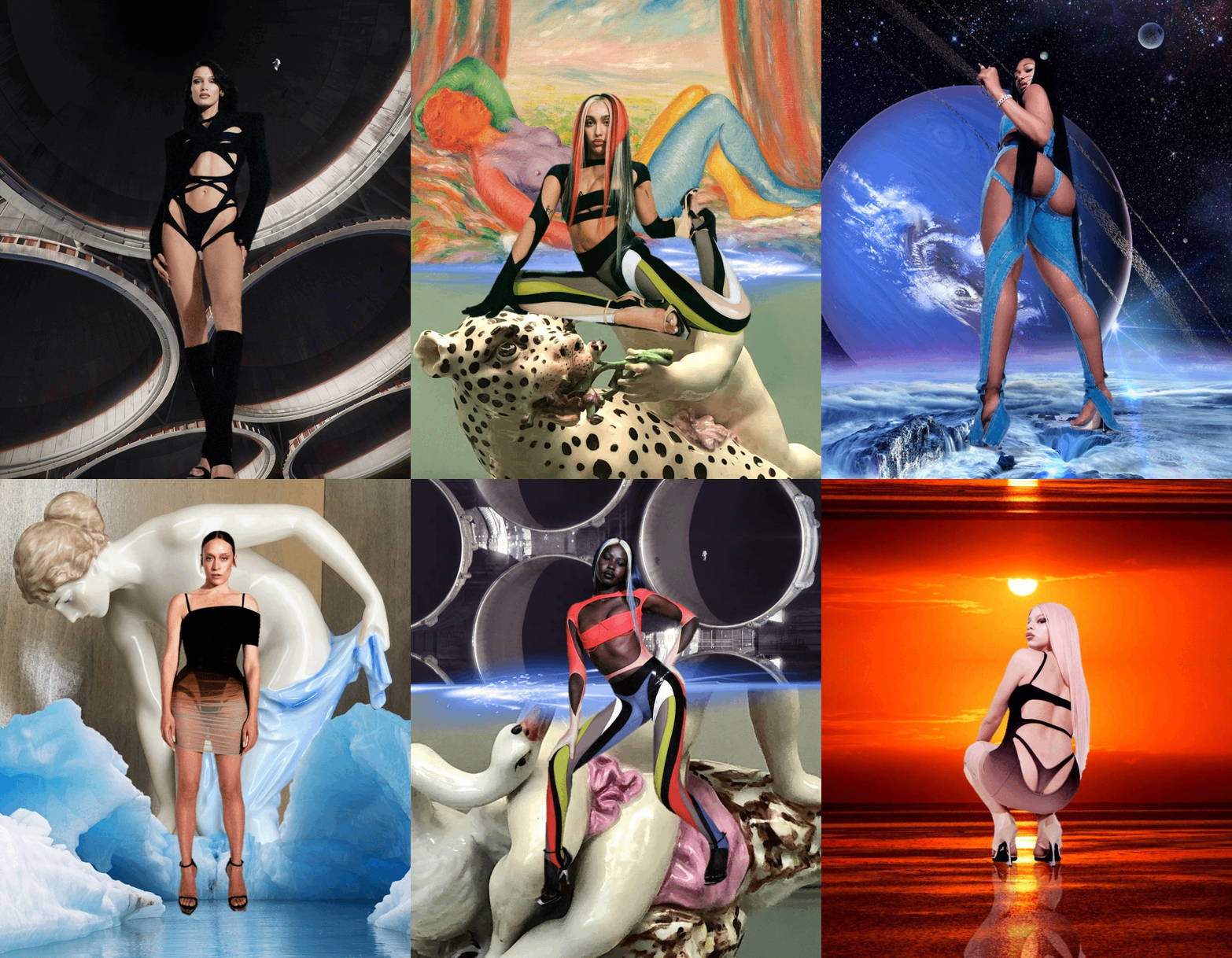
For spring-summer 2022, Casey Cadwallader reunited with Torso Solutions for the final installment of a trilogy of Mugler fashion films. Filmed in Los Angeles, the mind-bending video features a variety of vignettes that blend trippy glitches with the Mugler fierceness. There’s Megan Thee Stallion on a billboard; Chloë Sevigny doing a dip and turning into Barbie Swaee; Shalom Harlow and Amber Valletta sharing a kiss; and two Bella Hadids. He also recently co-directed a music video for Megan and dressed Sevigny for her wedding after-party, both of which came about, he says, after working on this video. Four years on, Cadwallader has settled in. “In the beginning I was very serious and worried about everything, but there’s this need to be irreverent with Mugler,” he says. He’s leaning into that irreverence, and the video captures it by balancing irony and seriousness in a URL-era continuation of the shows Mr. Mugler put on. Less runway, more performance.
The collection is a strong exploration of his signature elements. Ombre body-con dresses suspended from sculpted collars referencing a 1998 haute couture dress feel fresh and directional. The denim is sharper and more aligned with Cadwallader’s shapewear, partly due to the transparency of the house’s “illusion tulle.” The fabric is a riff on Mr. Mugler’s segmented tailoring, which he made with fishing line. It has replaced Lycra in the denim and is being applied to the bodysuits. “This is the most bare collection I’ve done,” Cadwallader said with a laugh. “After this I’m going to dial it in a little bit.” A tied tailored jacket stands out. It can be worn criss-crossed or with the lapels pulled apart, as styled on Dominique Jackson. Versatility is something he makes a point of. “Not only is there a variety of people in the world, but there’s a variety within each person,” he said. “One can feel like they want to flaunt themselves at 10 p.m. and feel conservative at 10 a.m., or feel masculine at 10 a.m. and feminine at 10 p.m. I want to make clothes that can serve that.” The bareness might make his clothes feel niche, as if they were made exclusively for the stages they’re often seen on, but it’s this what makes them special. Who doesn’t want to feel like a pop star, at least part of the time? In today’s saturated market, niche is a great place to be. Cadwallader said he’s aware of the critique that “things look the same” in his collections. “But that’s what a signature is!” he said, laughing. “Everything is evolving over time and eventually we’ll work into more things.” As to what those will be, only he knows, but he said he’s “ready for some volume.” Also, he’s already thinking about his next video. “At a show you have, say, 500 people, but these videos…10 million people see them.” Social media has become key for fashion conversations, and with this format Mugler has leveled show-going editors and at-home spectators. “There’s this entertainment value and joy-giving to people that I don’t want to give up on. I feel a commitment to that now, so to bring it back to a closed room and keep people out is not an option for me.”


















 Design & Culture by Ed