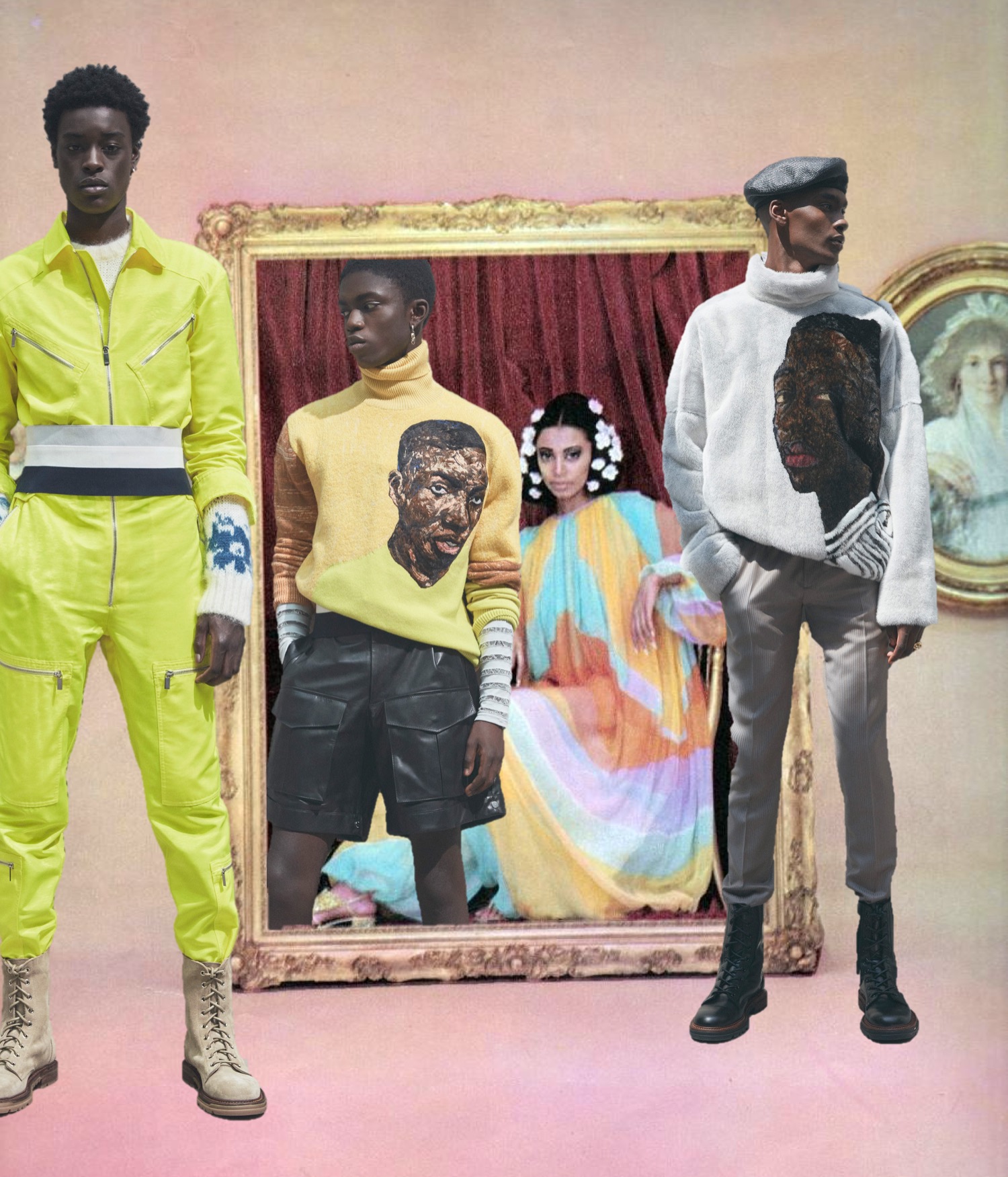
Men’s – Kim Meets Amoako. Dior SS21

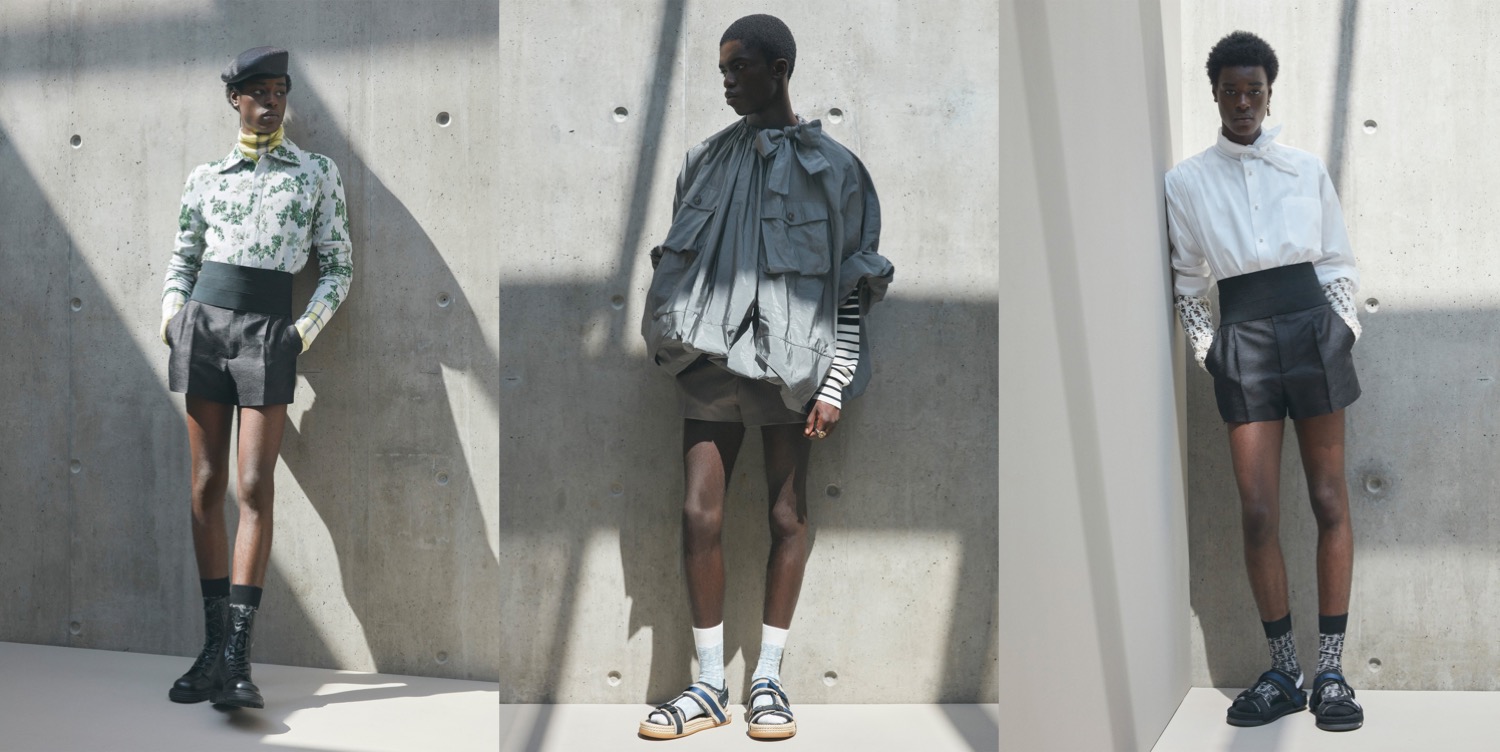
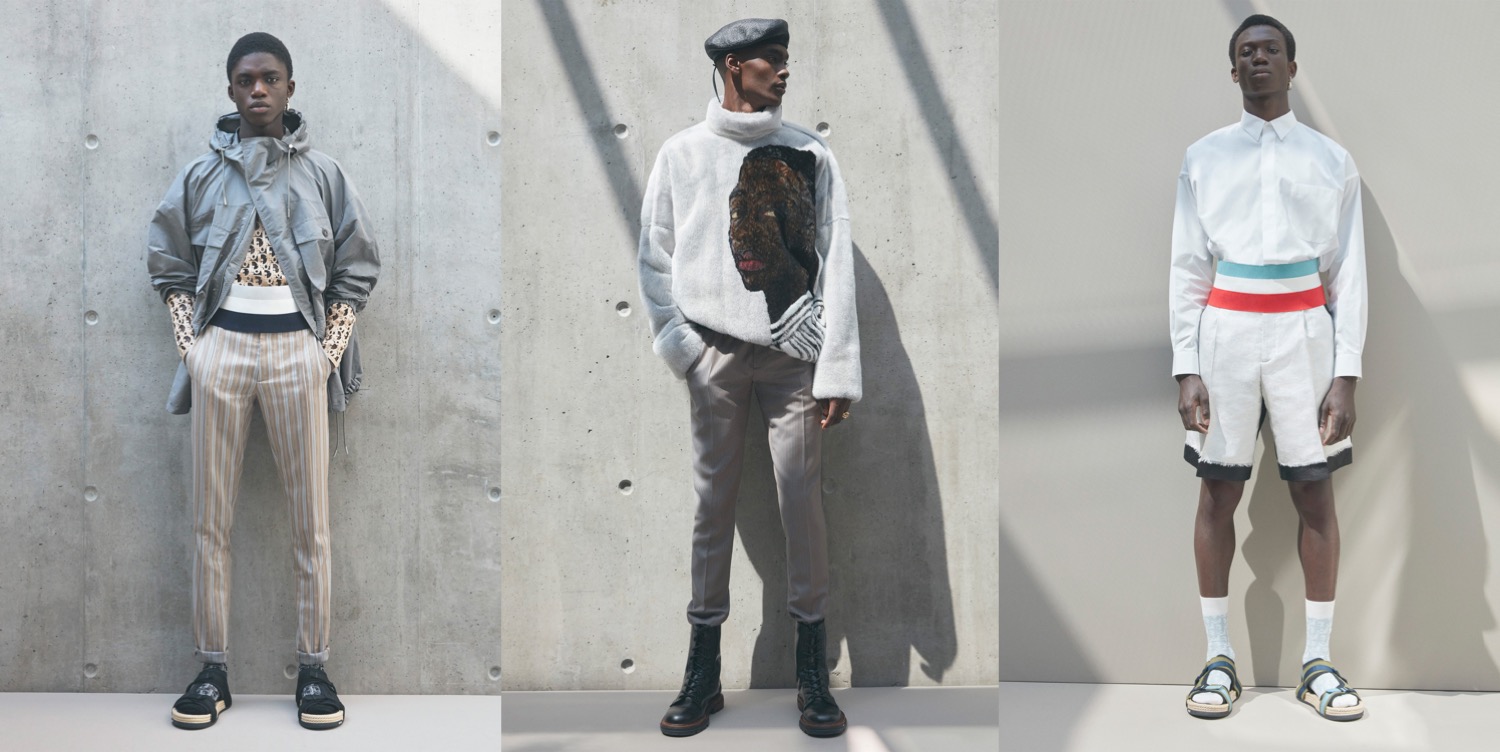
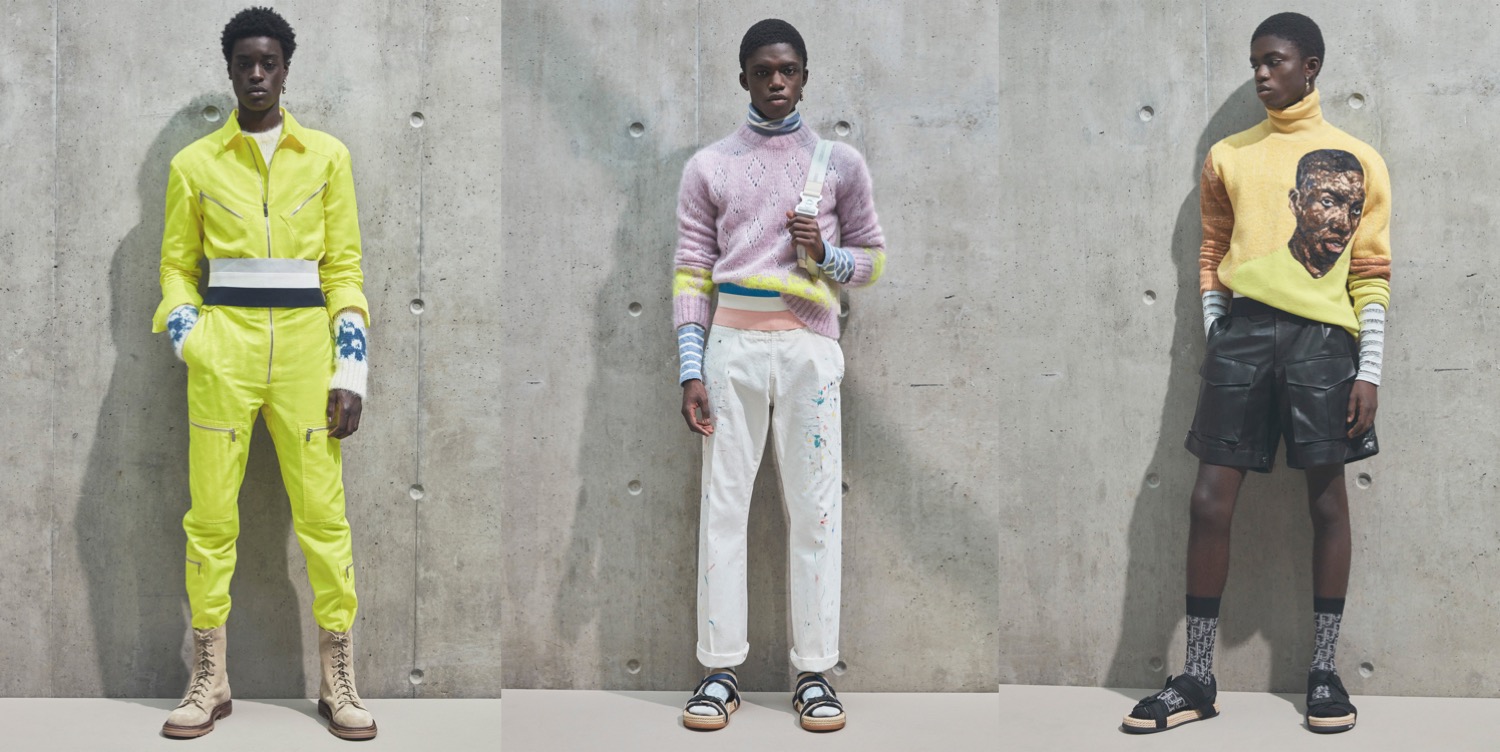
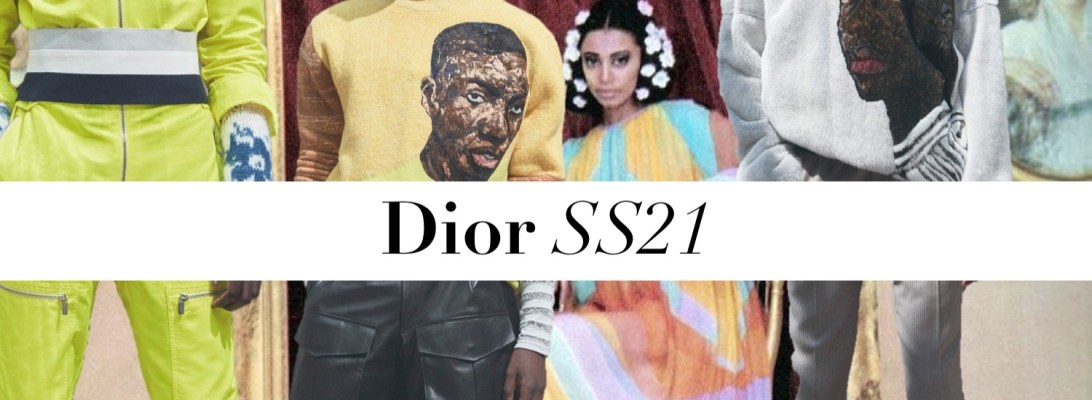
While the digital fashion month of men’s spring-summer 2020 collections is full of sleepy look-books, there are some line-ups that make my heart skip a beat. I was quite on fence with Kim Jones‘ menswear at Dior, but the new collection is brilliant. And it redefines the word “collaboration” in 2020. Jones invited the 36-year-old Ghanaian artist Amoako Boafo, whose stunning huge-scale portraits of Black subjects – partly richly finger-painted – have a skyrocketing reputation in the contemporary art world. “It’s a portrait of an artist who I greatly admire,” Jones said. “[The gallerist] Mera Rubell introduced me to Amoako last year in Miami. I really loved his work and wanted to work with him because of my own links to Africa. He lives between Vienna, where he studied, Ghana, and Chicago. So we sat down and discussed.” The first results – a collection fusing Boafo’s art with Dior artisanship, a look book, and a documentary film shot at the artist’s studio in Accra and at Jones’ home in London- are launched in a more intimate, in-depth and intelligent way than could possibly have come across in front of the usual roar of the crowd and show hustle of the Paris collections. In the video, Boafo is in his studio in Ghana as he paints and describes how he captures friends and family, “and people who create spaces for others to exist.” He speaks about the flat colors he uses to silhouette his figures, and, he explains, “how fashion inspires my work. I tend to look at characters who have that sense of style.” Friends hanging at Boafo’s place are wearing pieces from the collection, and the artist is working in a faded wallpaper print Dior Men shirt, whose pattern has bounced back in a creative arc from portrait to garment. The collection is smaller and more edited than it would have been – which actually works better than nearly 100 looks shows Dior has every season. Jones was working out of his Notting Hill house with a small team and long distance with Dior ateliers in France to get it done over the past months. The result: clothes saturated with uplifting color and print, which pinpoint Boafo’s signatures within the language the designer has established for a Dior man. Celebrating and platforming Boafo’s work for a luxury fashion market meant, among other things, transferring the tactile energy of his finger-painted heads into two intensely embroidered sweaters. The pattern from a semi-sheer fil coupé jacquard shirt sprang from a close-up Jones had taken of Boafo’s brush work. He also lifted subtle inspiration from haute couture – the gray taffeta blouson being a renewed, more youthful and summery iteration of the opera coat which opened his last show.
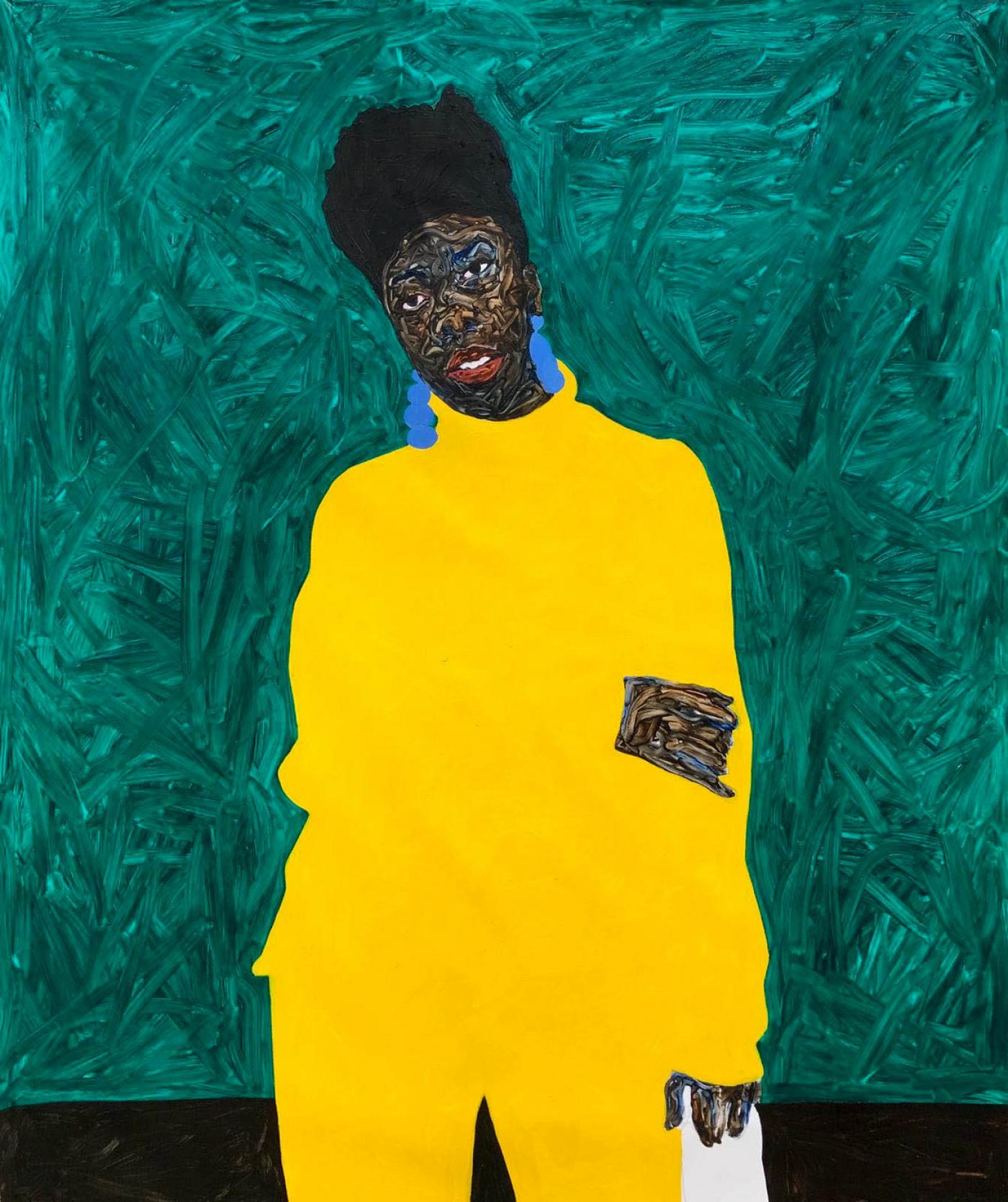
Still, even without the Black Lives Matter uprising which is fundamentally changing the way all institutions are being interrogated now, a collaboration like this was always going to demand detailed explanation. This one is tooled differently from the usual artist-brand collab. Behind it is an exchange with Dior which was stipulated by Boafo. “He said he didn’t want a royalty [for himself], but help to build a foundation for young artists in Accra,” Jones said. A donation made by Christian Dior (the sum was not specified) backs up Boafo’s activism. In using the leverage of his market power to lift up African art and artists, he is one of the new generation of Black artists who believe in the transformative empowerment of cultural education. In May, Boafo raised $190,000 (three times the estimate) with an online auction of his painting, Aurore Iradukunda, to benefit the Museum of the African Diaspora in San Francisco. The initiative will consist of a building that will host Boafo’s studio, a residence, and an artist-run gallery, supporting young artists in Ghana and their studio practice. “The change needed right now is to support young people through college and training to give everyone equal opportunities,” Jones said. The focus of this project is close to his heart, and, he says, to part of his own upbringing as the son of a hydrogeologist who worked throughout the continent. “We moved to Ethiopia when I was around three years old, spent time living there, and then moved around east Africa and then Botswana. I’ve kept going back for the rest of my life.” Underlying his motivation – using Dior’s fashion broadcasting capabilities to enlighten a broad audience about the vitality of contemporary African art, as well as facilitating a project with cash – is a quieter salute to Jones’s father, who recently passed away. “The fact that we are working with Amoako Boafo, from Ghana, which was one of my father’s favorite African countries is,” he said, “a fitting tribute to the man who introduced me to Africa and the world.

Collage by Edward Kanarecki; artworks by Amoako Boafo.

Men’s – Humanity and Craft. Loewe SS21

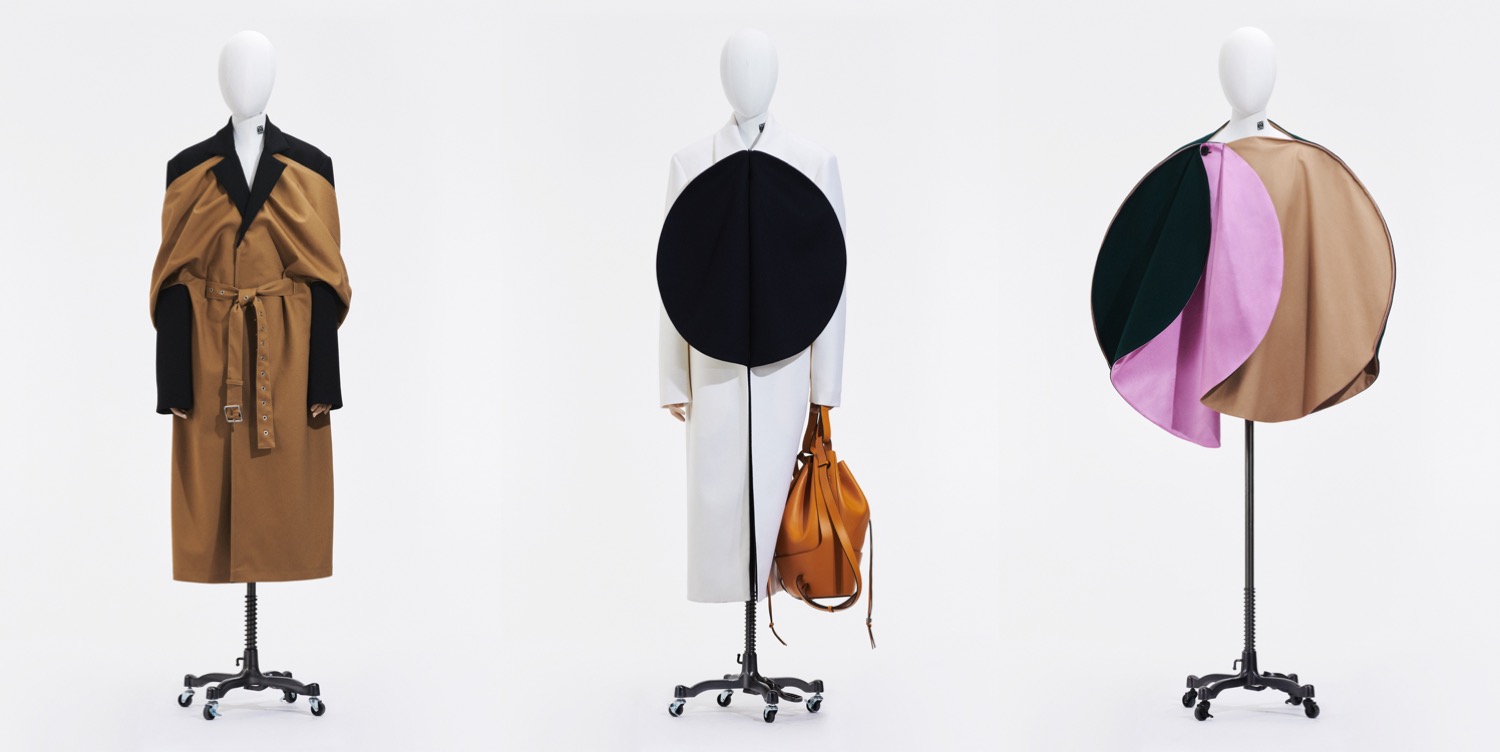
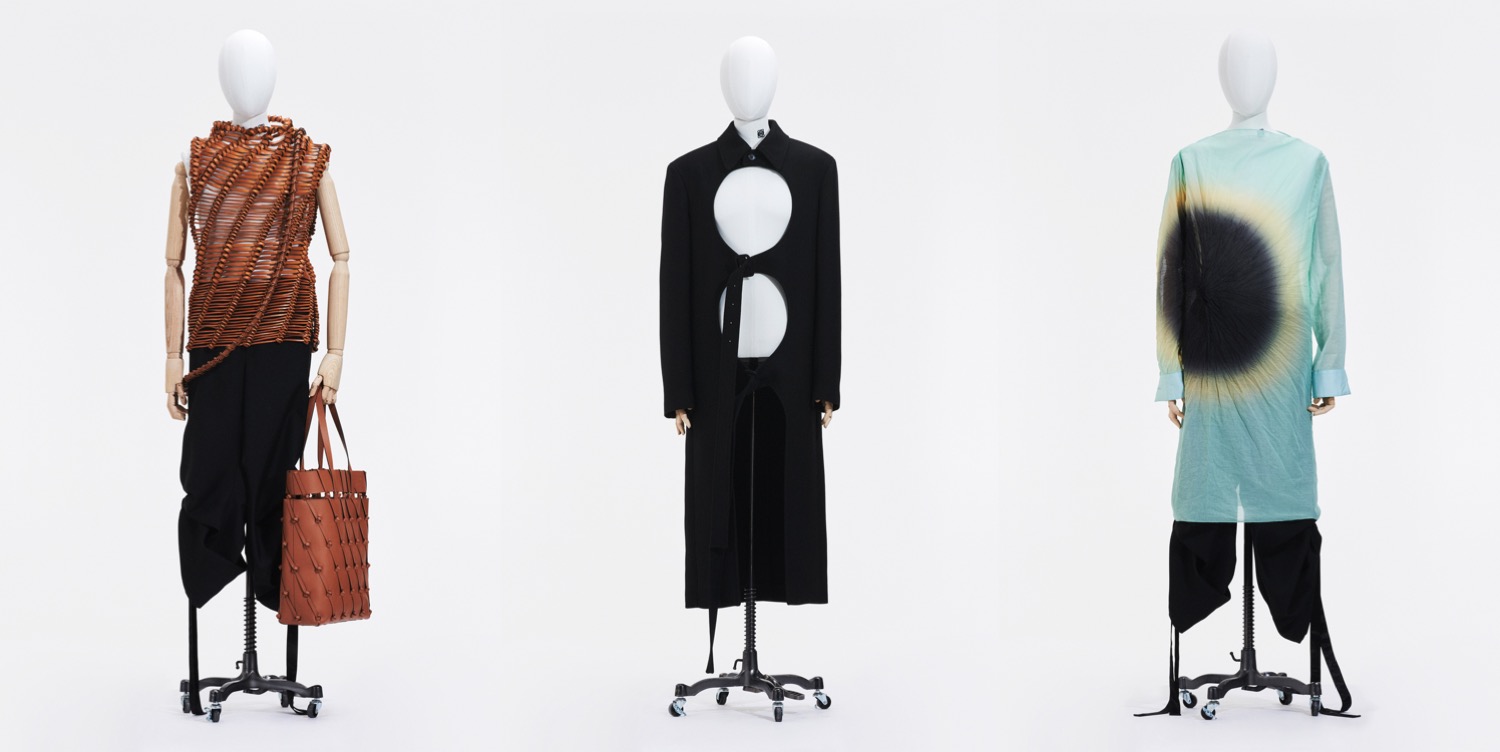
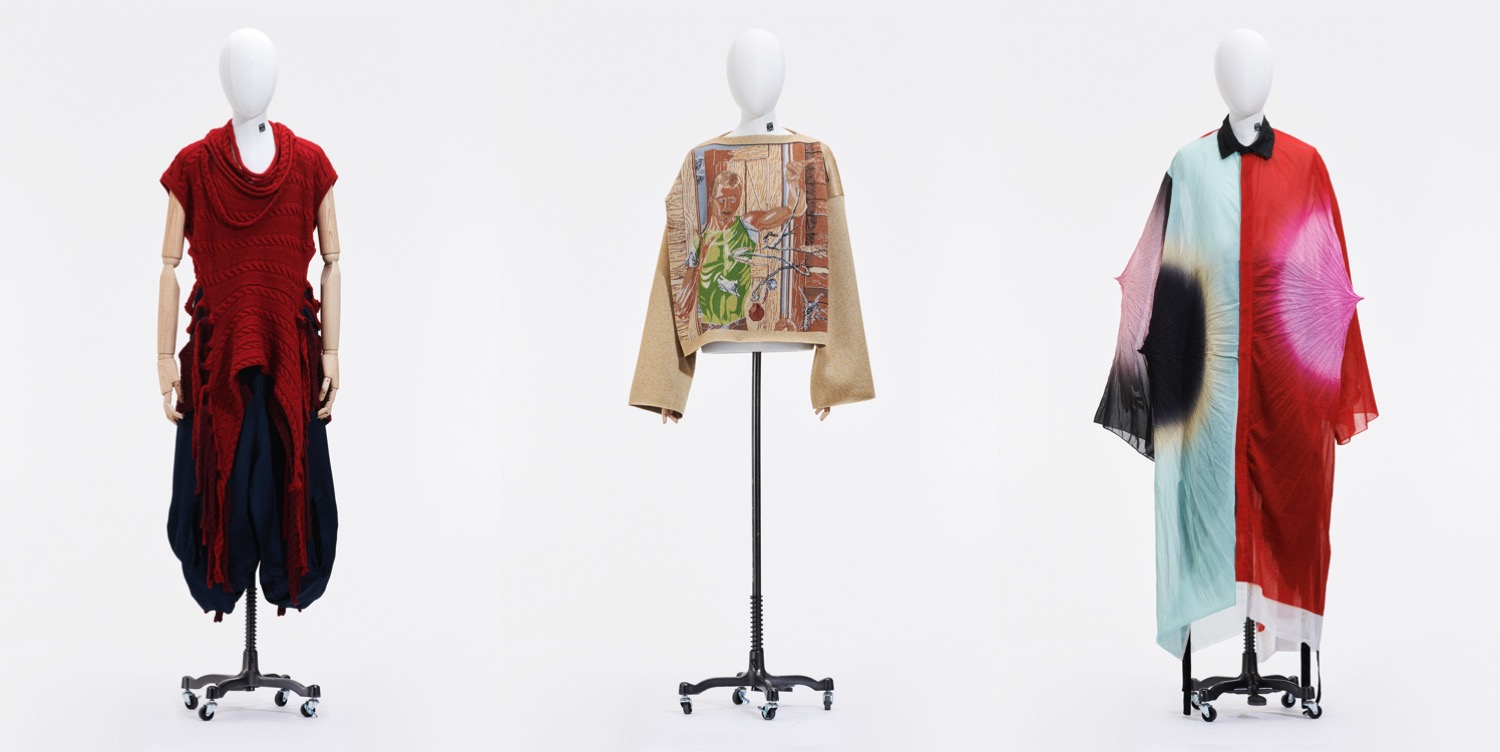
What Jonathan Anderson orchestrated yesterday around the launch of Loewe’s men’s spring-summer 2021 collection (and women’s pre-collection) felt like a long-needed quantum leap into the new world of open-ended possibilities. Where would a designer who’s always talked about Loewe as ‘a cultural brand’ and his links with artists and artisans go? How can the truth of tactility and emotion be felt when digital is the only option? On one level, what he came up with felt like dipping into a 24-hour Jonathan Anderson-curated worldwide live summer festival of arts, crafts, and conversations on Loewe’s Instagram page and website. “My whole thing is to do something in each time zone,” he told Vogue from his London home via Zoom. The program rolled from Beijing time onwards, connecting with (amongst others) crafts-collaborators Kayo Ando, who showed the art of Shibori, paper artist Shin Tanaka from Japan and the basketweave artist Idoia Cuesta in Galicia, Spain. There was music curated by Adam Bainbridge (aka Kindness), who showcased a calming ‘medley’ comprising different versions of Finnish musician Pekka Pohjola’s Madness Subsides, performed by Park Jiha in Korea, performer and producer Starchild, French-Malagasy pianist and bandleader Mathis Picard, and American harpist Ahya Simone. Lots more roved through live chats between Anderson and the actor Josh O’Connor, and, later, a conversation with contemporary textile artists Igshaan Adams, Diedrick Brackens, Anne Low, and Josh Fraught. And on another level, there was the Loewe Show-in-a-Box, a cache of paper-art discoveries delivered as a tactile substitute runway experience to the doorsteps of the industry insiders (it was a grander follow-up to the JW Anderson show-box he sent around last week). Inside was a pop-up show set, a flip-book of photos of the clothes on mannequins, a paper-pattern of one of the garments, print-outs of sunglasses to try on, textile samples, a set of paper pineapple bags and looks to stick together to make your own 3D ‘models,’ and a pamphlet listing Anderson’s art history inspirations. Slipped alongside was a packet of cut-out paper portrait silhouettes he’d had made of Loewe staff members. “I like that they’re kind of immortalized in this moment,” he said.

What about the collection? With their sculptural volumes, twisting, looping, and wrapping forms, the line-up read as Anderson’s push to convey the 3D presence of garments through the limitations of a flat, 2D medium of communication. Some of his references had been taken from El Greco and Velázquez, and his absorption of high Spanish art in the Prado in Madrid; others from his admiration of Issey Miyake’s pleats, and from wanting to showcase the painstaking handcrafts his collaborators bring. The leather-workers helped him evolve a basket-weave top and a soft, suspended bag that folds itself around one side of the body like an apron. The Japanese Shibori print radiates from the side of a tunic.“I have actually really enjoyed this process. It has made me be way more humble about who I am in this industry,” he concluded. “If I look at before the pandemic, I was slightly struggling. I was going out to prove that we are doing something. I think what’s been good about doing this is that I’m closer to the people who make the bags, to the pattern cutter.” Holding it all together in the digital space is turning out to mean more sharing of the glory, less behind-closed-doors mystique, more proof of the humanity, time and ingenuity that goes into making things, he believes. “I think that fashion now has to get rid of all the layers and just say, ‘This is what this brand does, and we’re going to do it with conviction.’ It has to be real. I think it’s bigger than the collection. I’m really proud of it because it’s very honest, it’s our humility. And it’s actually about finding that I love what I do.”

Collage by Edward Kanarecki.

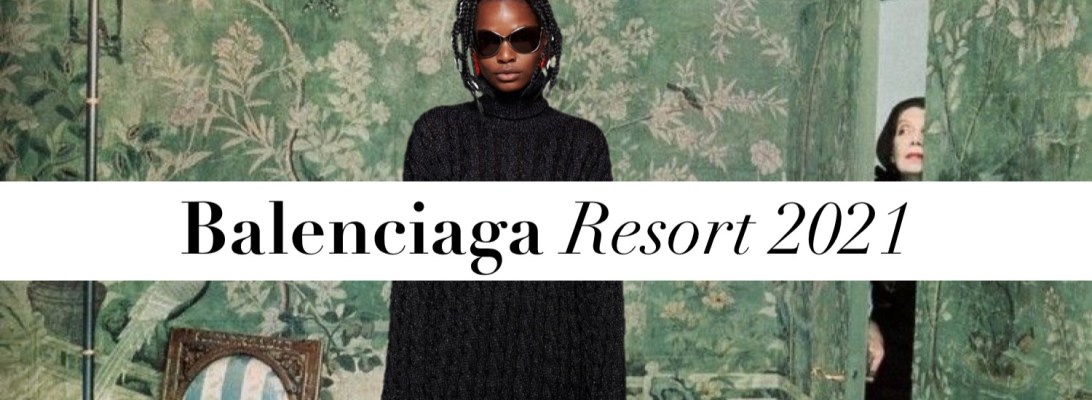
Dress for Yourself. Balenciaga Resort 2021

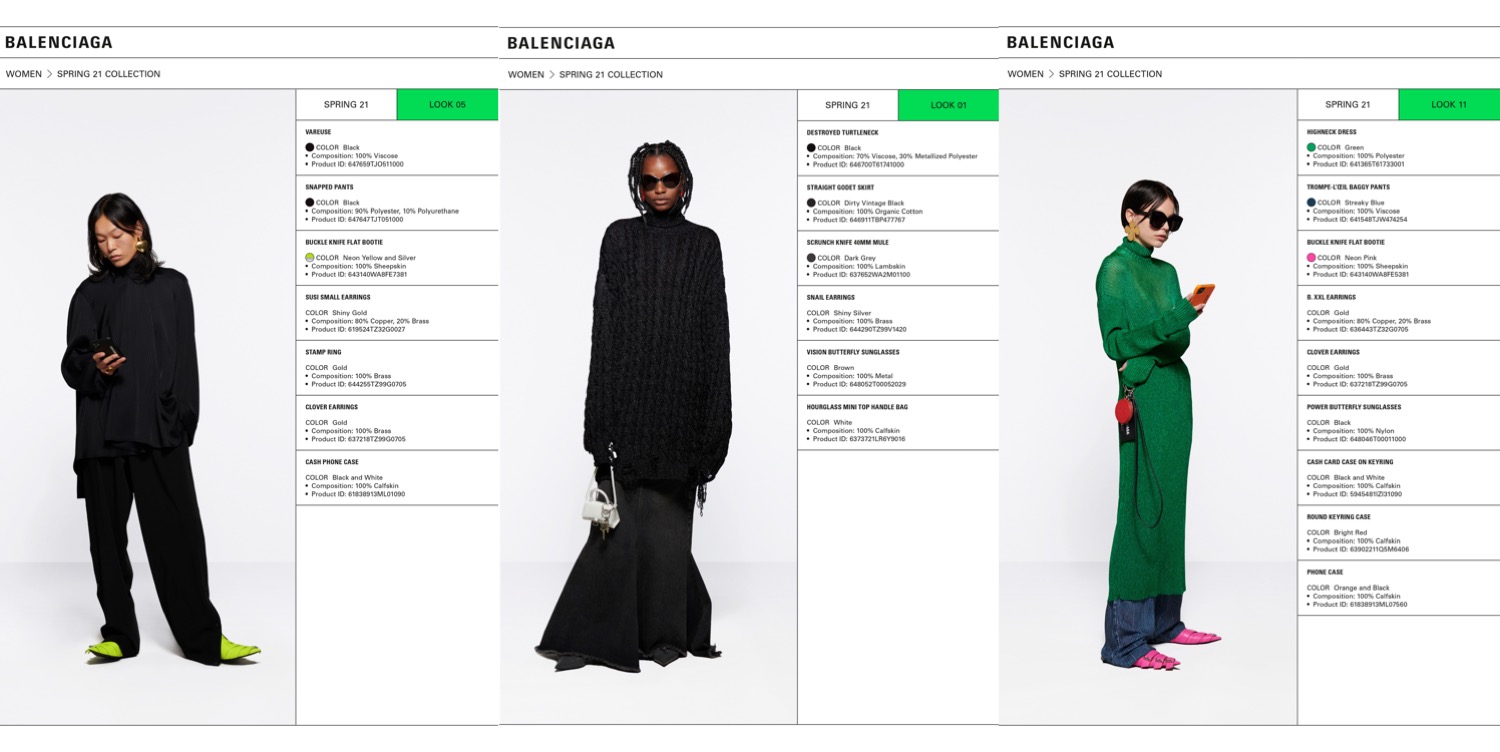
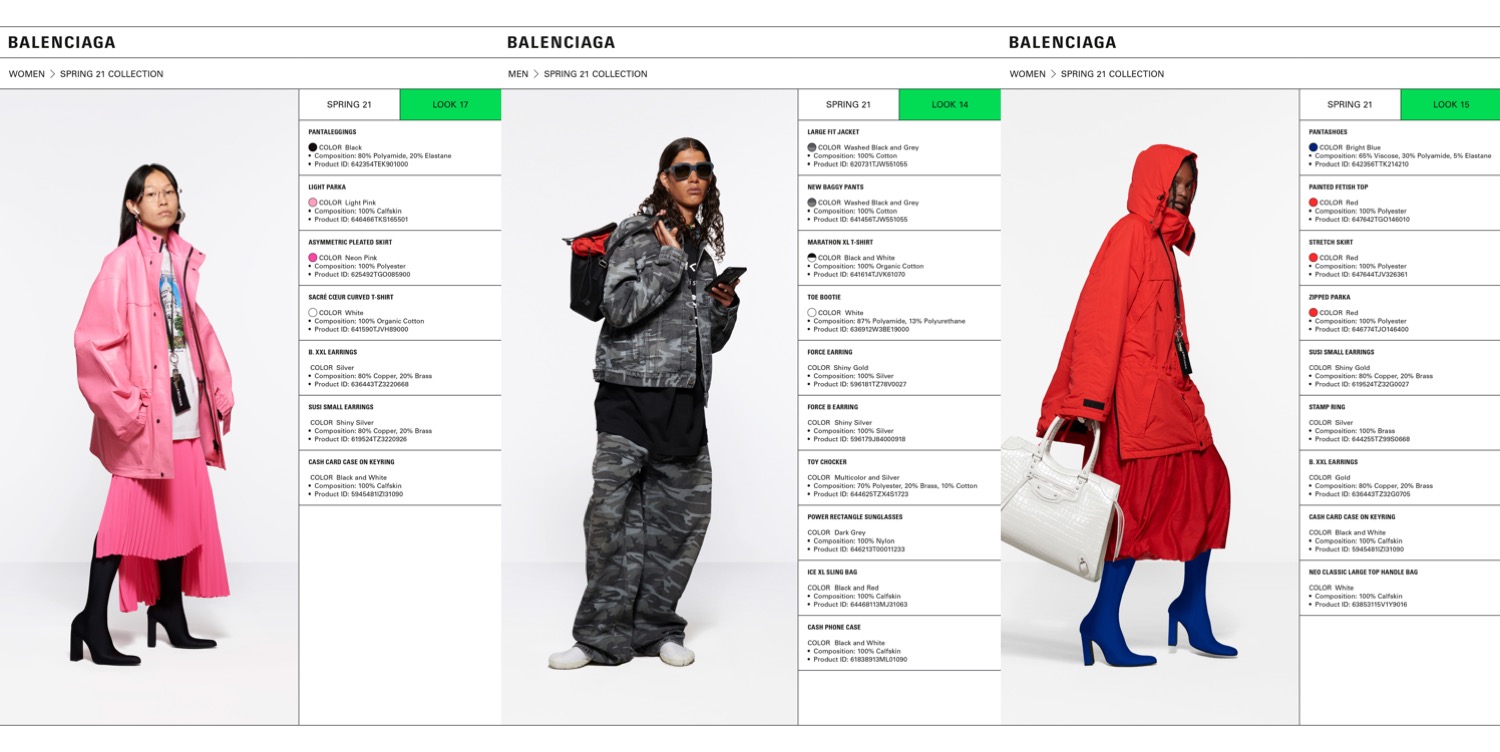
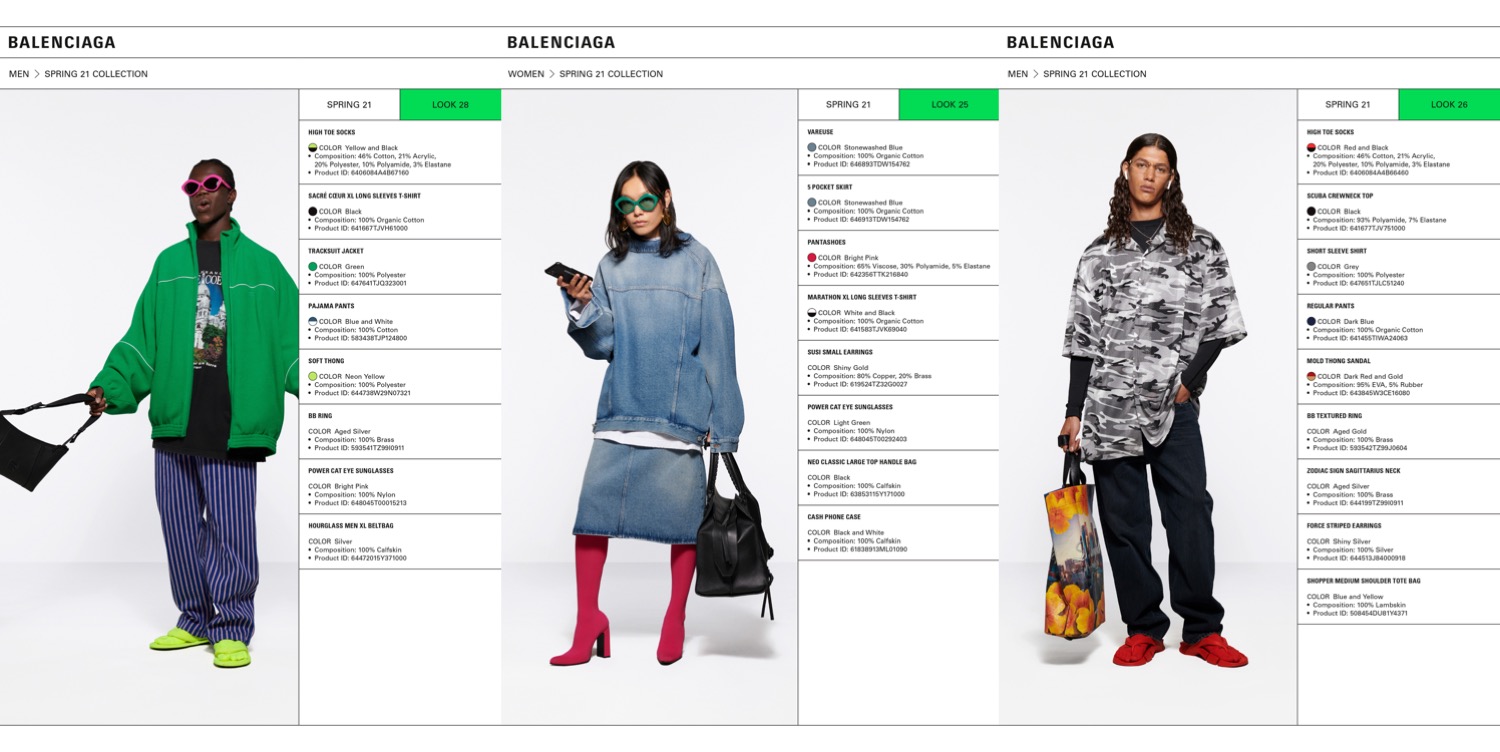
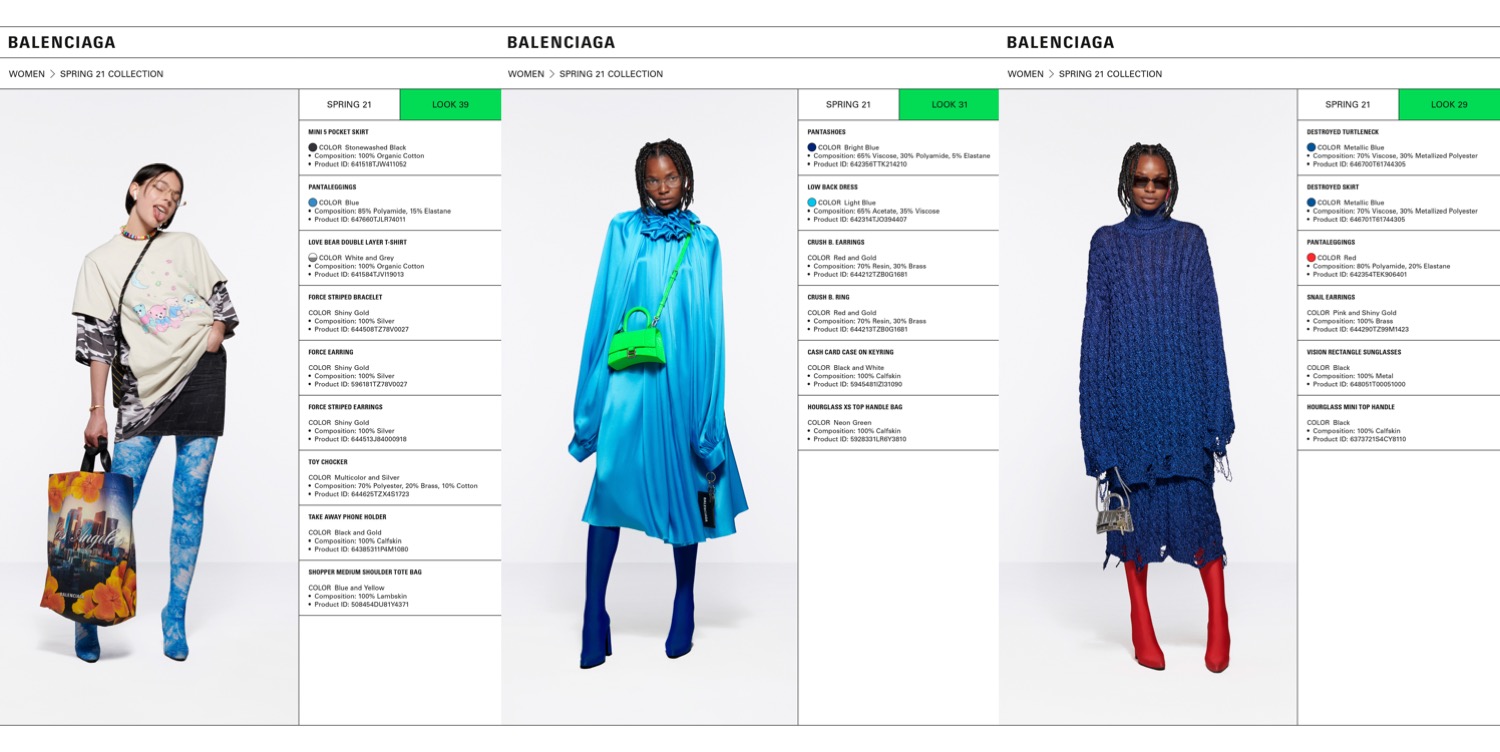
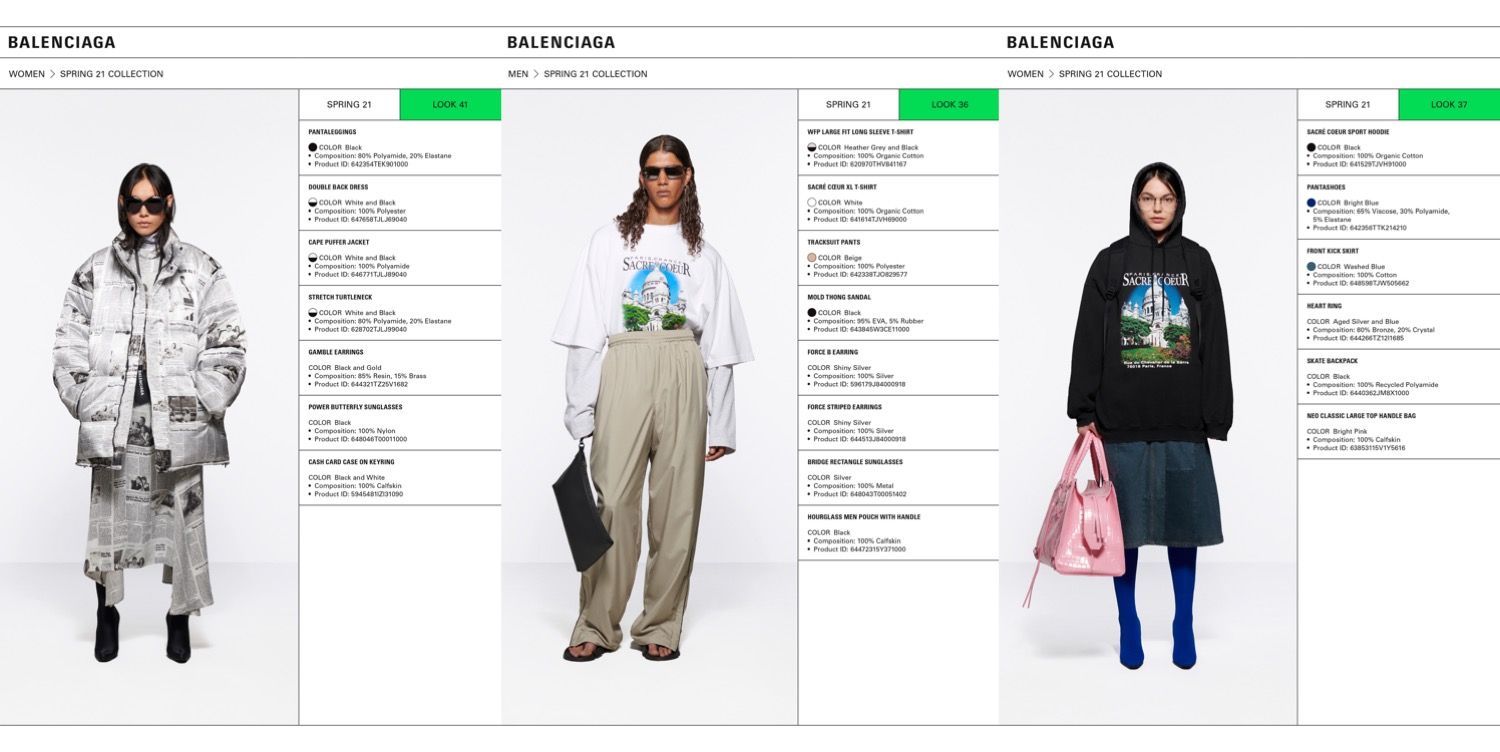
The latest Balenciaga show by Demna Gvasalia was unforgettably apocalyptic (and ironically realistic), with the first two rows of seats in the amphitheater submerged underwater and scenes of climate apocalypse on the screens above. All eyes will be on him in October – I really, really can’t wait to see how will the designer recycle all that happened in 2020 so far. In the meantime, for resort 2021, Gvasalia and his team came up with a clever, low-concept way to showcase the collection, playing up the lack of IRL appointments by including in these photos all of the line sheet information an e-commerce buyer might glean in a showroom, virtual, or otherwise – all the way down to the garments’ and accessories’ material compositions and product IDs. Gvasalia admits that Balenciaga’s pre-collections aren’t really about newness. The pre-seasons are chances to elaborate on what he calls the house’s “archetypes,” pieces like oversized car coats and parkas, the tea-dress, logo denim, all kinds of tracksuits, hoodies and t-shirts, and cult accessories (think the “Knife” panta-shoes). This time around, the styling was done completely on-screen. “It was an experiment in showing you don’t always need the new,” Gvasalia told the press. “Fashion has become a race, running after novelty, and more and more. And here we did the opposite. We looked at what we have and asked what we can do with it so it looks different for the customer.” And how did the confinement affect – or inspired – Gvasalia? “The theme,” he continues, “was dress for yourself. In this lockdown we understood what’s important for people who like fashion and like to dress up: You do it for yourself first and foremost. Working from home started with me wearing boxer shorts and pajama pants: very lazy. I thought, I don’t have to make an effort to make my look every morning, but then I started getting depressed. When I started to dress up every morning, it changed my whole mood, I started to feel good about myself. This is the task that fashion has,” Gvasalia concludes, “to bring this excitement or goodness to the person wearing it. That’s the least we can do.

Collage by Edward Kanarecki.

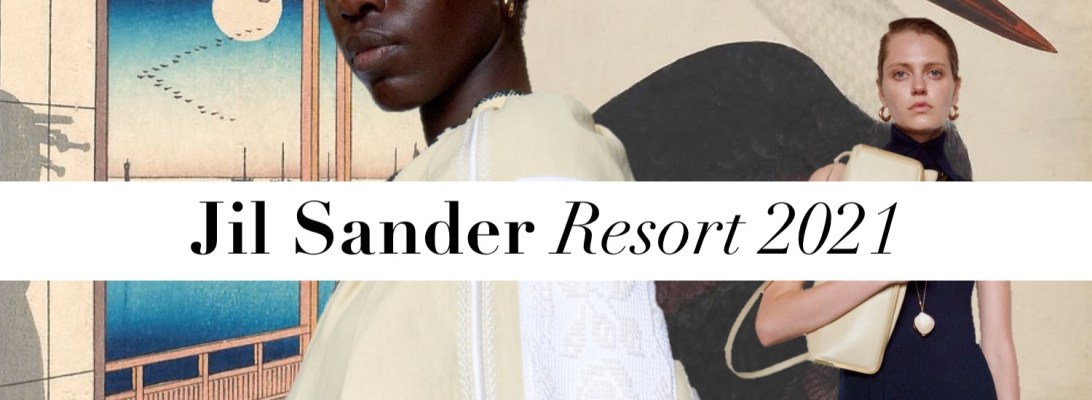
Thoughtful. Jil Sander Resort 2021

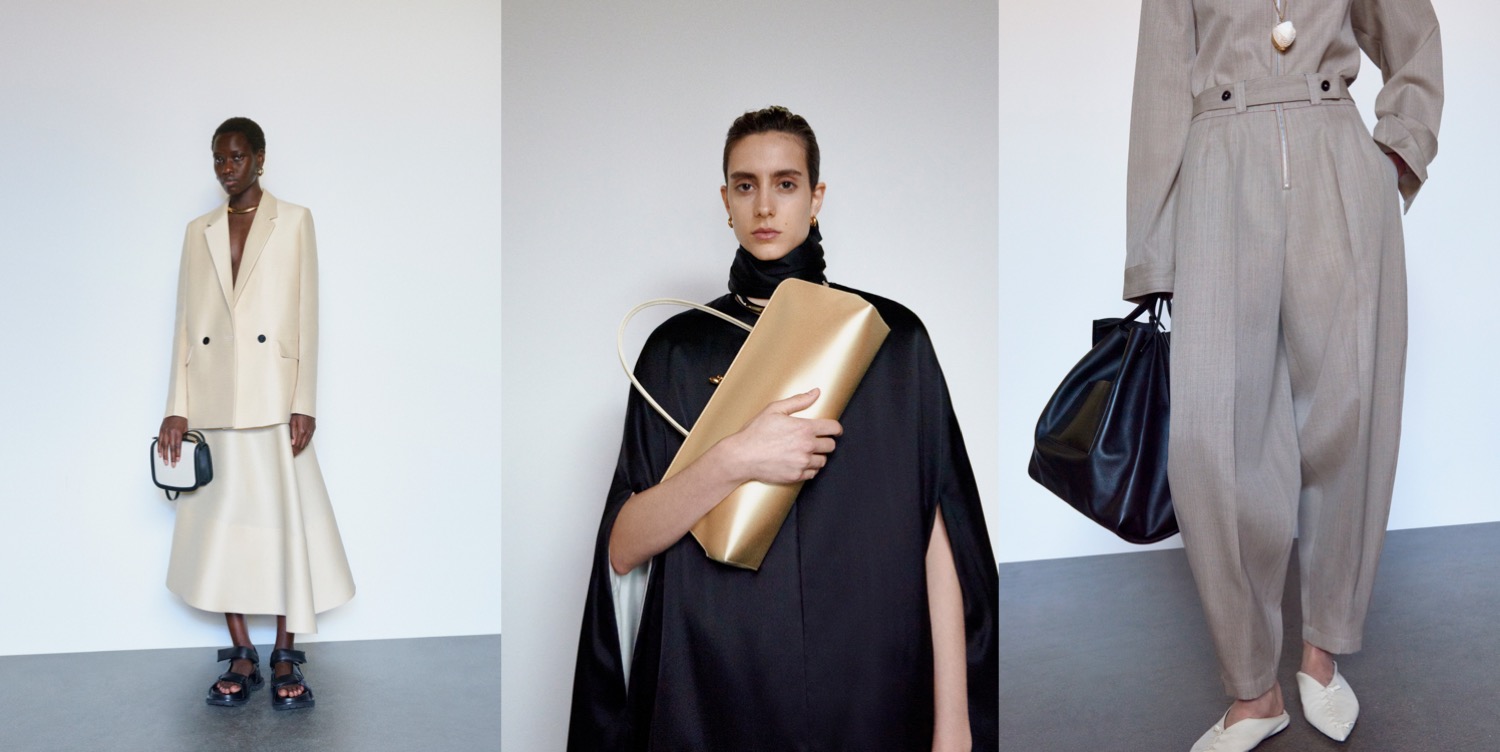
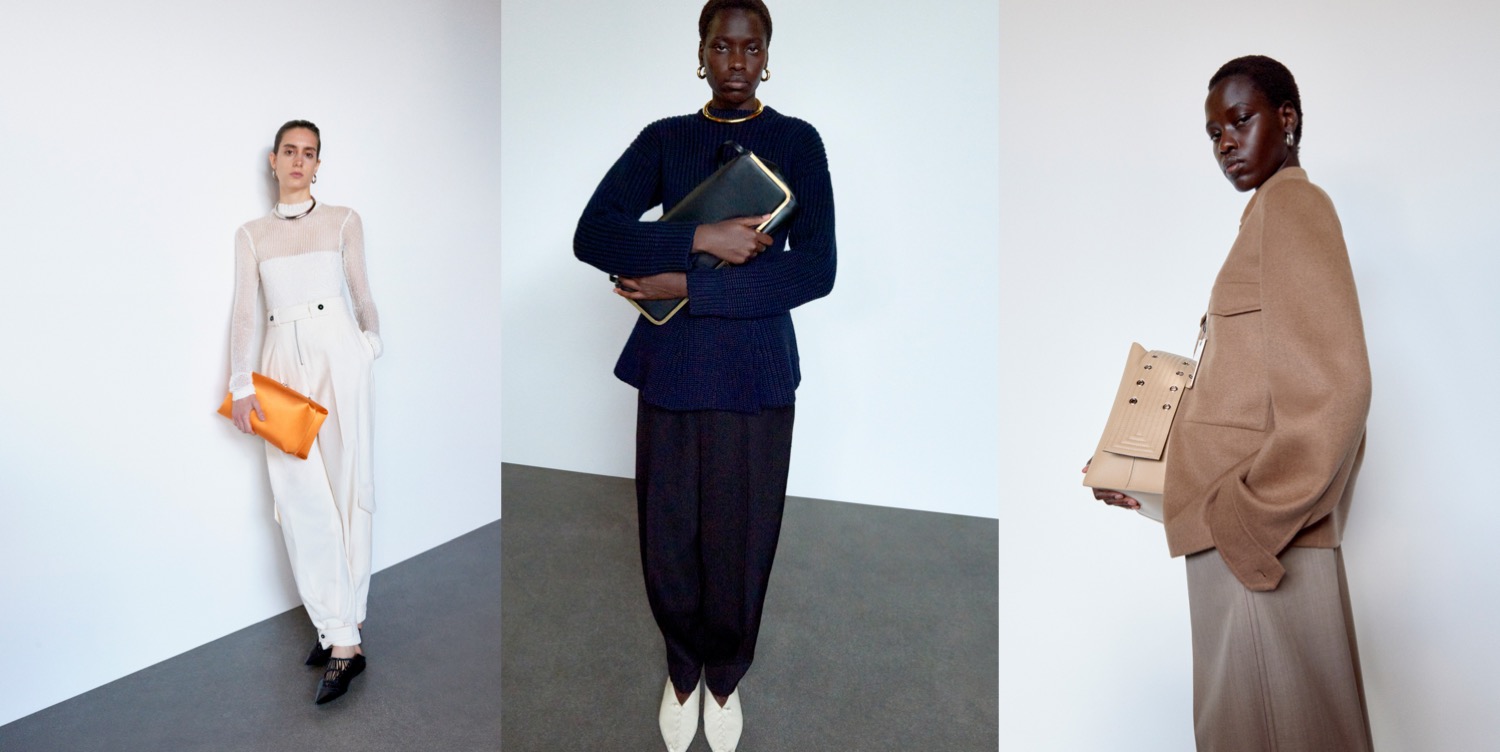
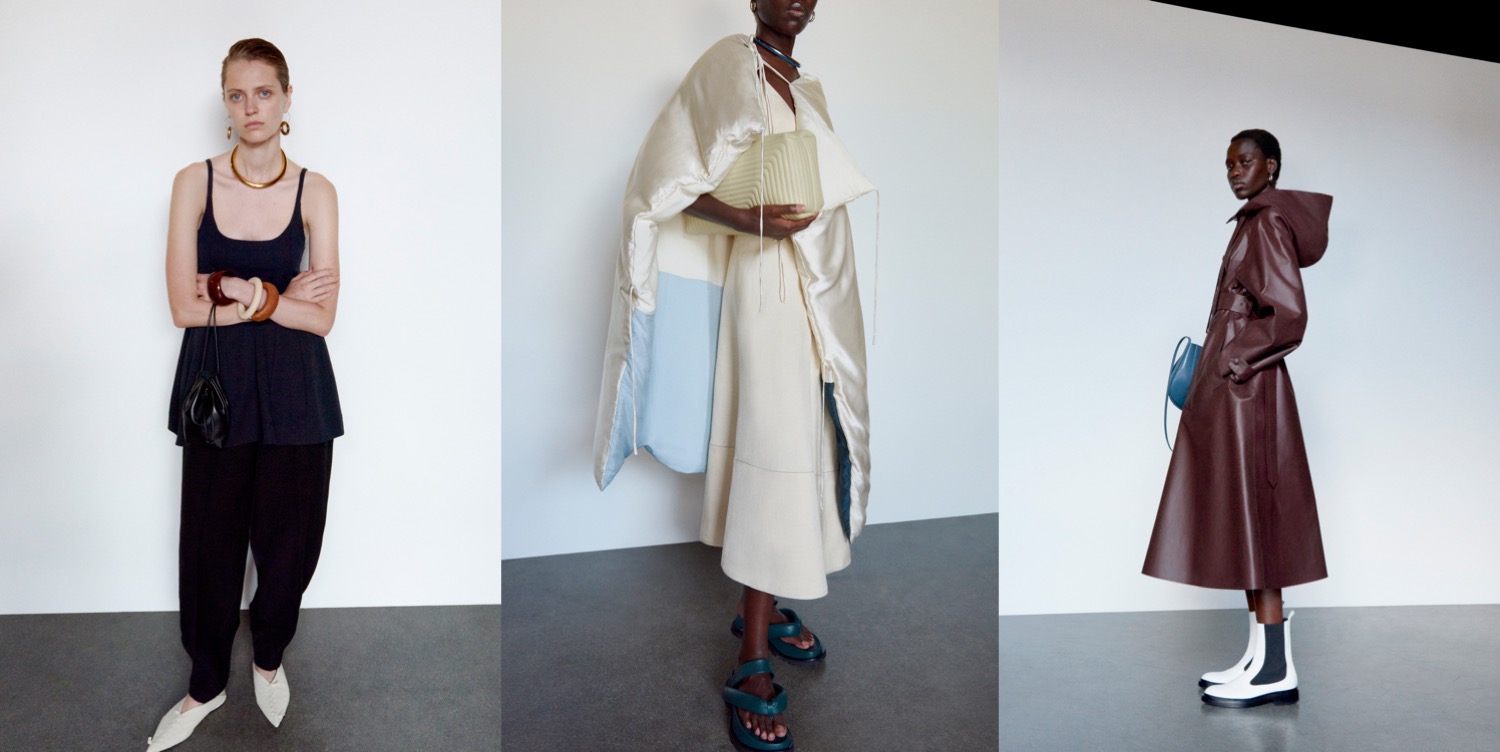
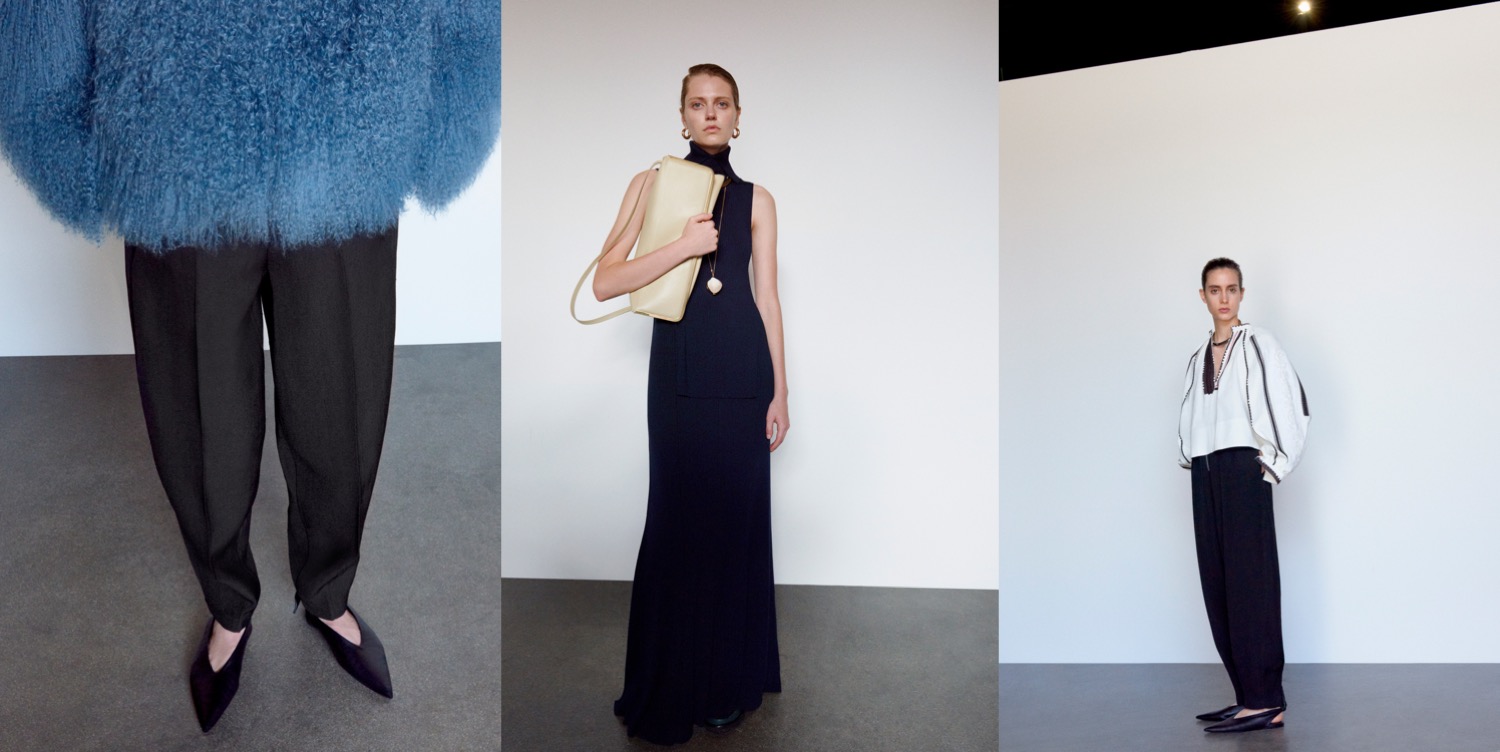
If the pandemic has made us consider a more thoughtful, responsible approach to fashion consumption and an appreciation for the consistency of values expressed by a labels’ ethos, then Jil Sander’s Lucie and Luke Meier could find themselves in a good position. “In a certain way, the pandemic has just reaffirmed what we believe in,” they said during their resort presentation, held at the brand’s showroom in Milan. “This tragic situation has made people take a long, hard look at themselves, their habits, their values. It’s what we’ve done. We really still find that our path is a good one; our philosophy hasn’t changed.” The Meiers have built their fashion credentials around a care for quality, creating pieces that stand the test of time while being of the moment, with an emphasis on great execution. The human touch of craftsmanship is paramount to their aesthetic – just take a look at a clean-cut, pleated dress in butter yellow linen with embroidered jacquard inserts appliqued on the peasant sleeves, all woven by a family in Sardinia with traditional local techniques. For resort, the designers favored pure silhouettes, together with their flair for style opposites: strong proportions and sensible fabrics; a masculine sharpness of cut and delicate choice of colors. Shapes were kept sculptural but softer than usual; suiting was given a chic modernist feel, as in a sharp-cut masculine blazer in cream wool silk gazar paired with a circle-cut, cone-shaped asymmetrical matching skirt. Contrasting the restraint the designers favor, a comforting, pillowy padded blanket cape in high-shine white silk satin with baby blue inserts was thrown languidly over a feminine double-cashmere sleeveless dress. Meiers’ conceptual approach to the brand is all about consistency: “We don’t think that the Jil Sander woman really changes,” they said. “She cares about really good design, beautiful fabrics, pieces that are very well made; all these elements are now becoming more important than ever. People will probably consume less but better; they still want to treat themselves to a beautiful piece.

Collage by Edward Kanarecki.

Serendipity. Lauren Manoogian Resort 2021

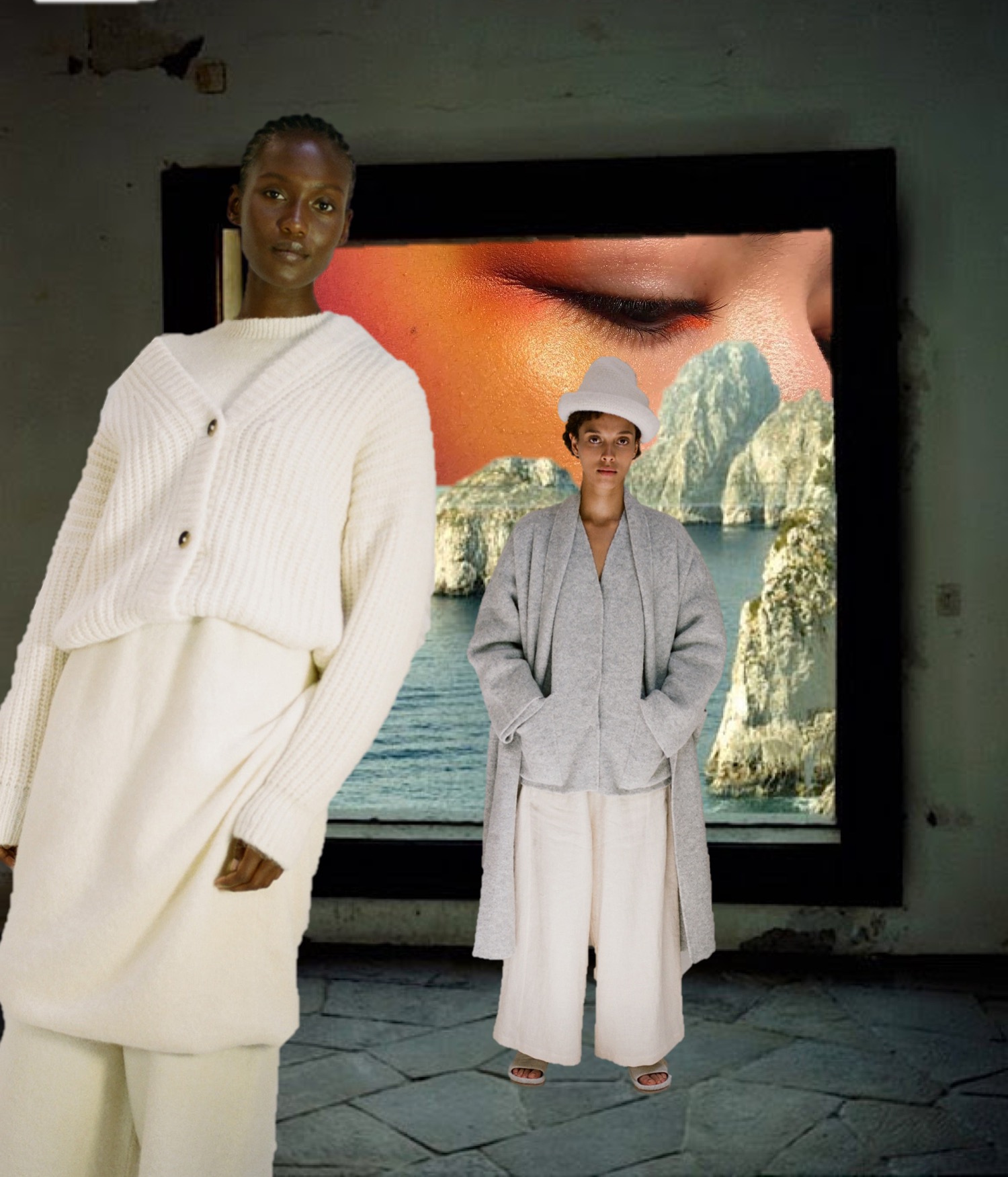
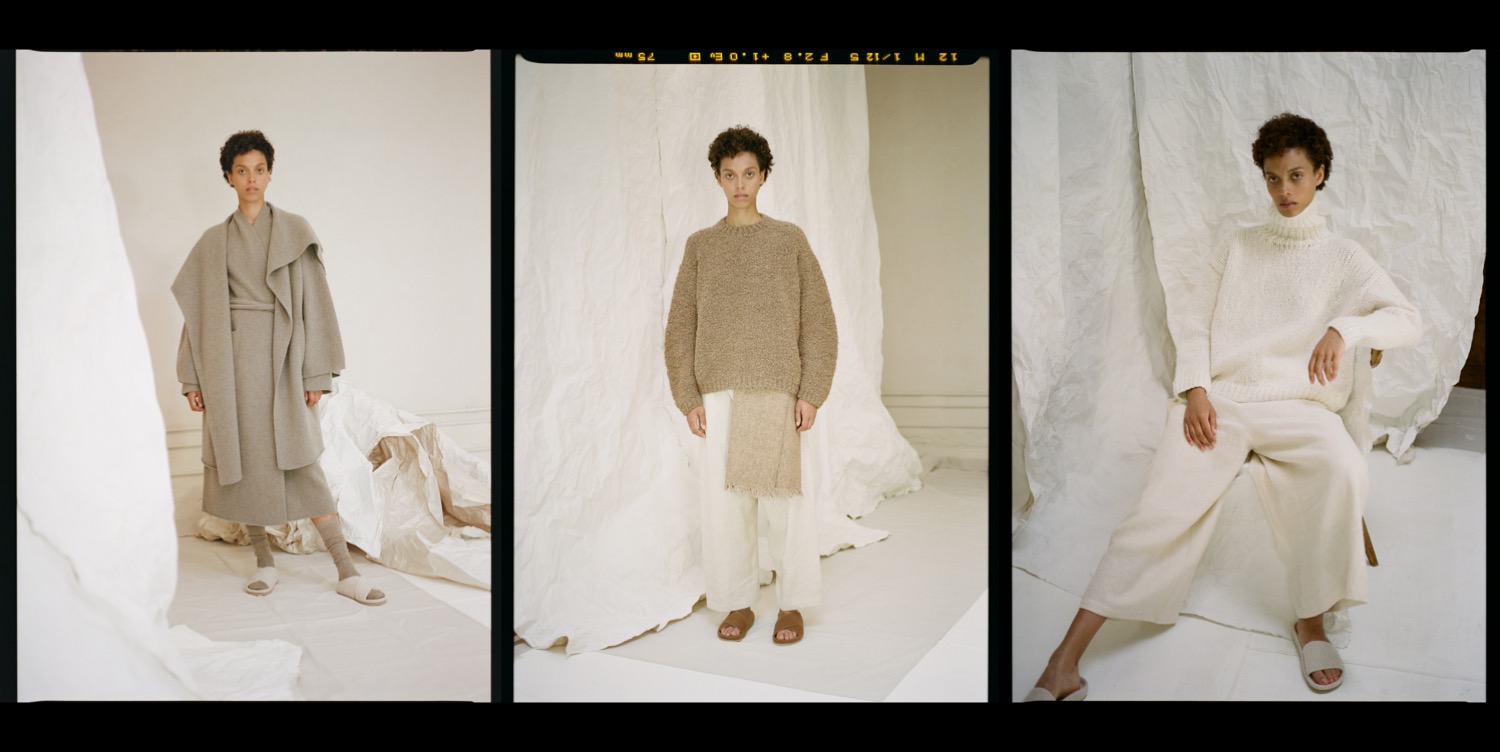
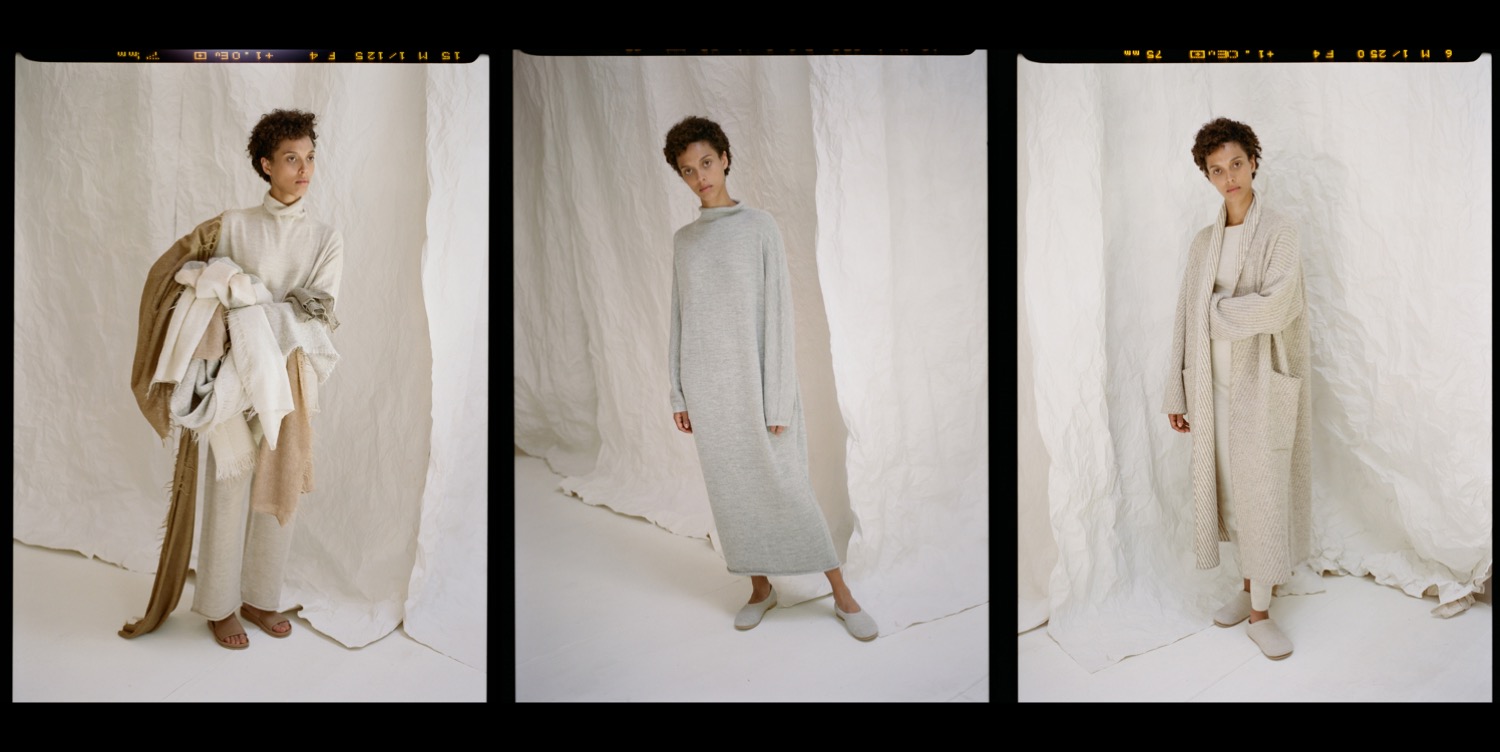
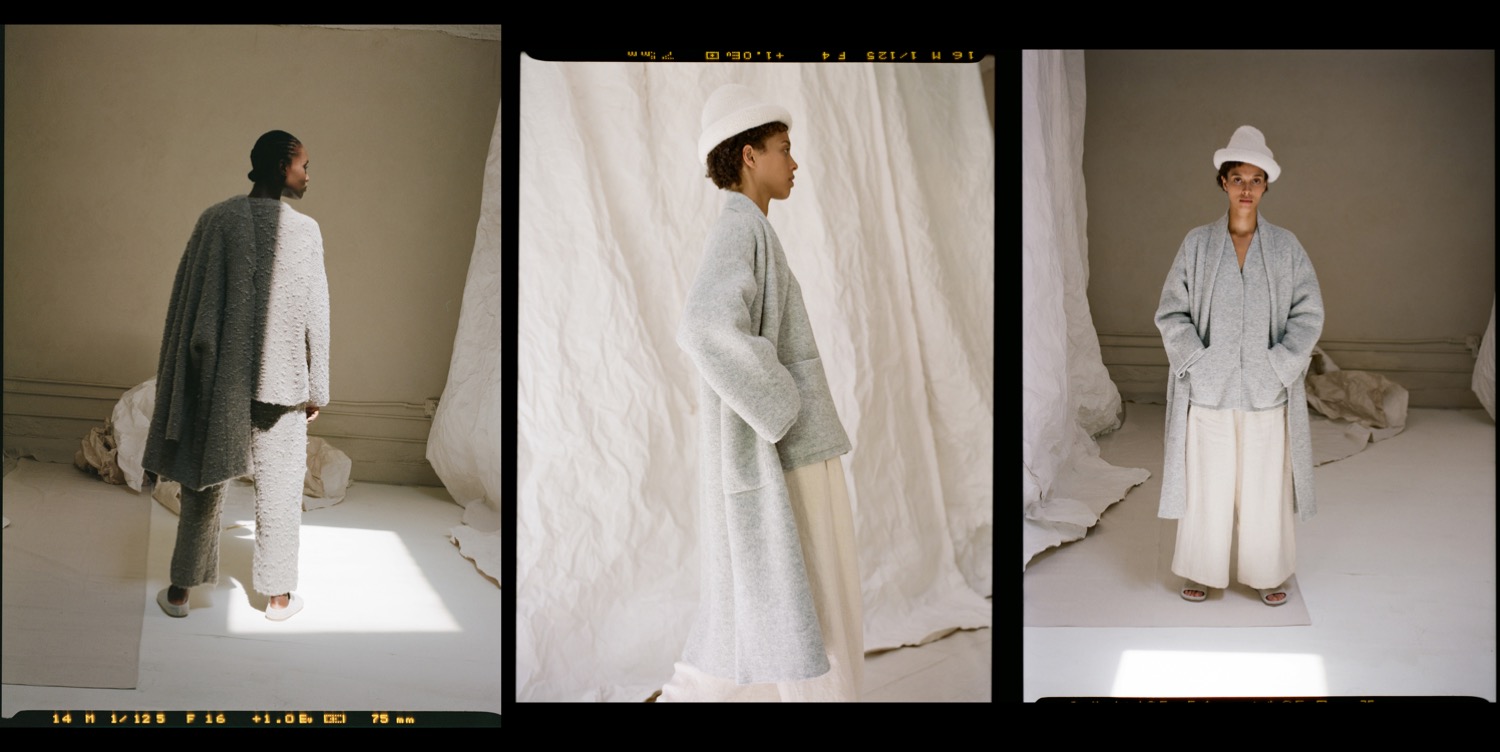
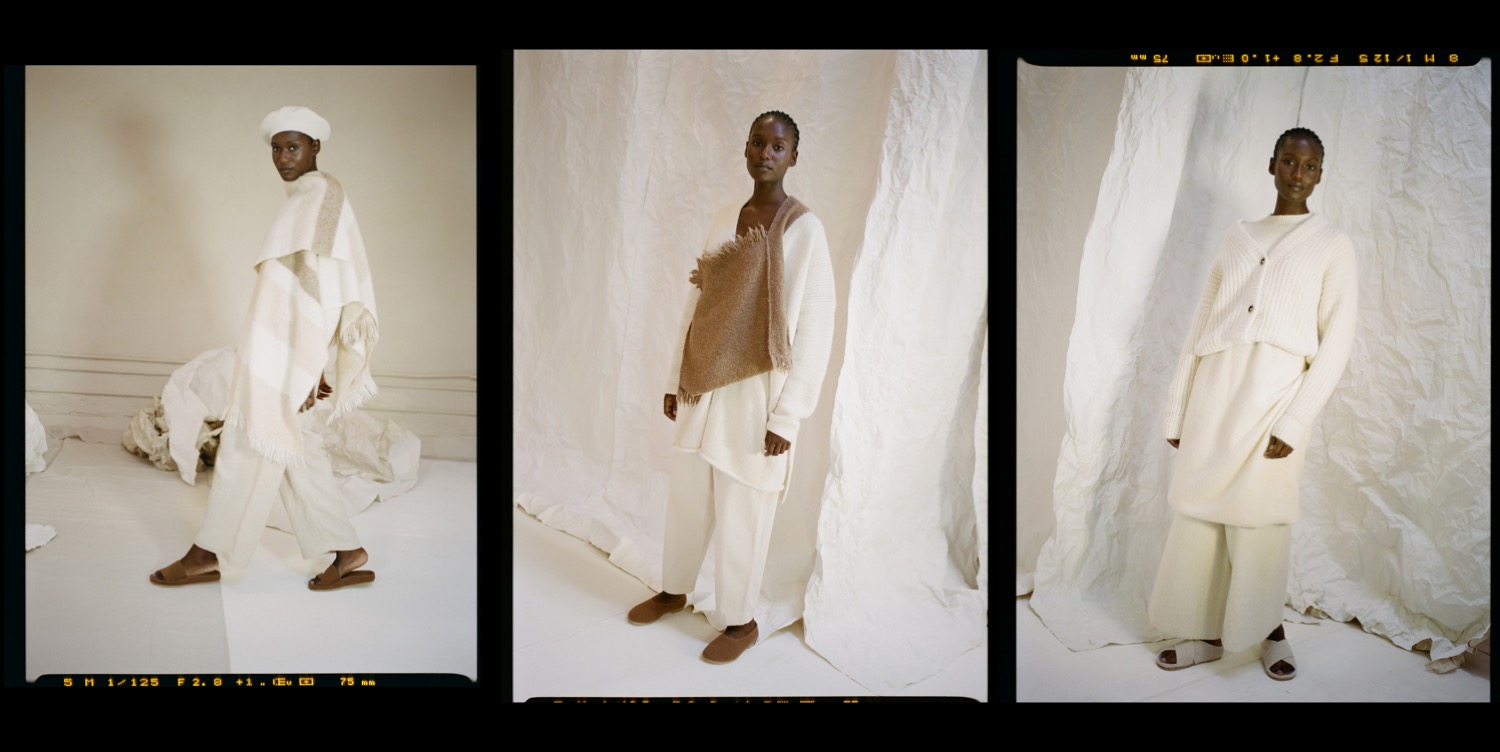
Switching from digital couture to one of the most heavenly labels in New York – Lauren Manoogian. For resort 2021, the designer’s earthy, tonal, and textural designs go side by side with her sculptural, wabi-sabi knits and accessories. Due to the pandemic, Manoogian was confined to her studio in Brooklyn and as such, her lineup, based on some greatest hits and forgotten gems from her archive, had to be captured with a more localized, low-key approach – no architectural backgrounds as usual. She hired two models, one that came in the morning and one in the afternoon, and photographed the clothes inside the studio with natural light and a backdrop made from items she picked up at the local hardware store. The finished images are unretouched, further emphasizing the organic look and feel of Manoogian’s new pieces. Soft blue and gray turtleneck dresses and bouclé blanket capes looked right at home in the serene, natural setting of Manoogian’s at-home studio. So too did the roomy, oversized trousers, cozy cardigans, and voluminous robes. Manoogian’s designs are grounding and unfussy but still striking, ideal for uncertain times like ours. The knis really speaks for itself, simple and timeless.

Collage by Edward Kanarecki.