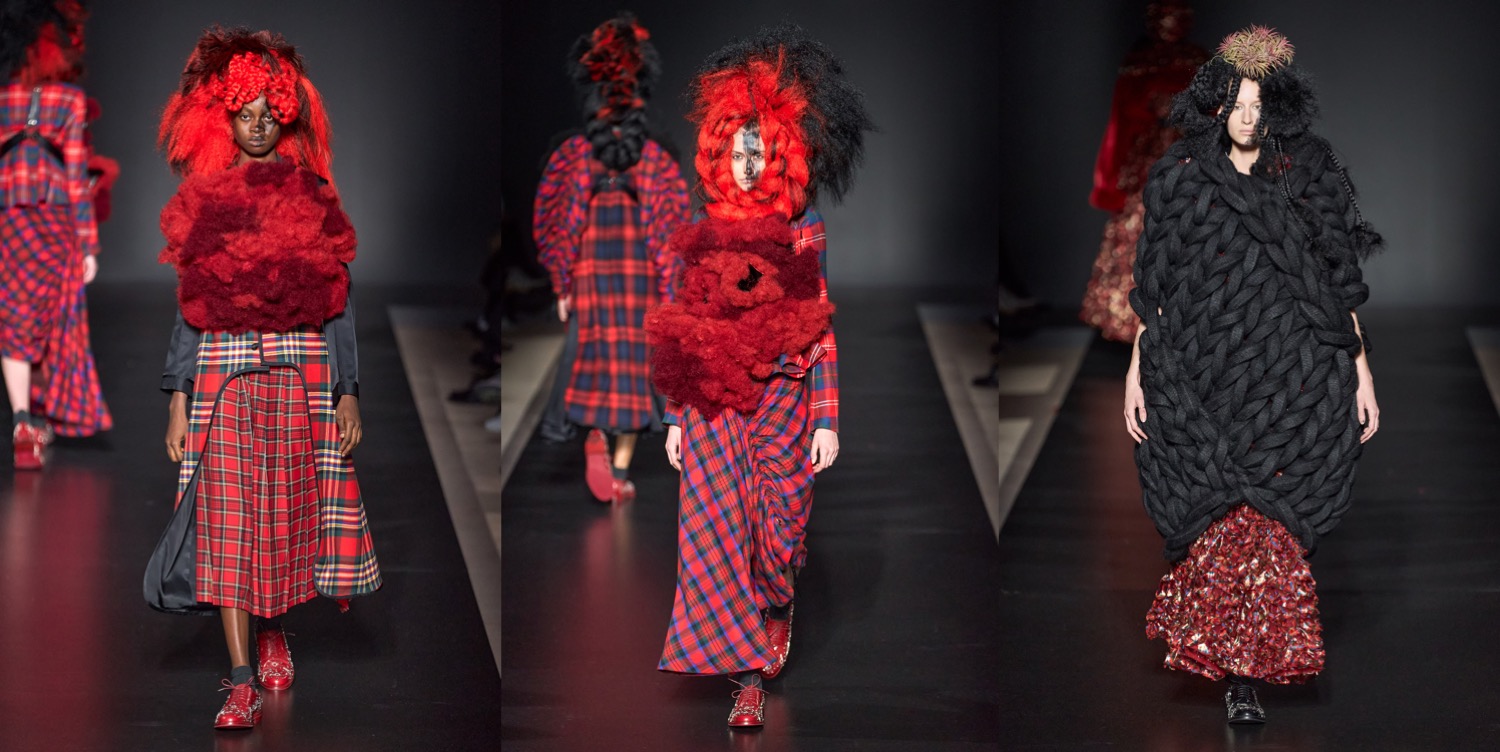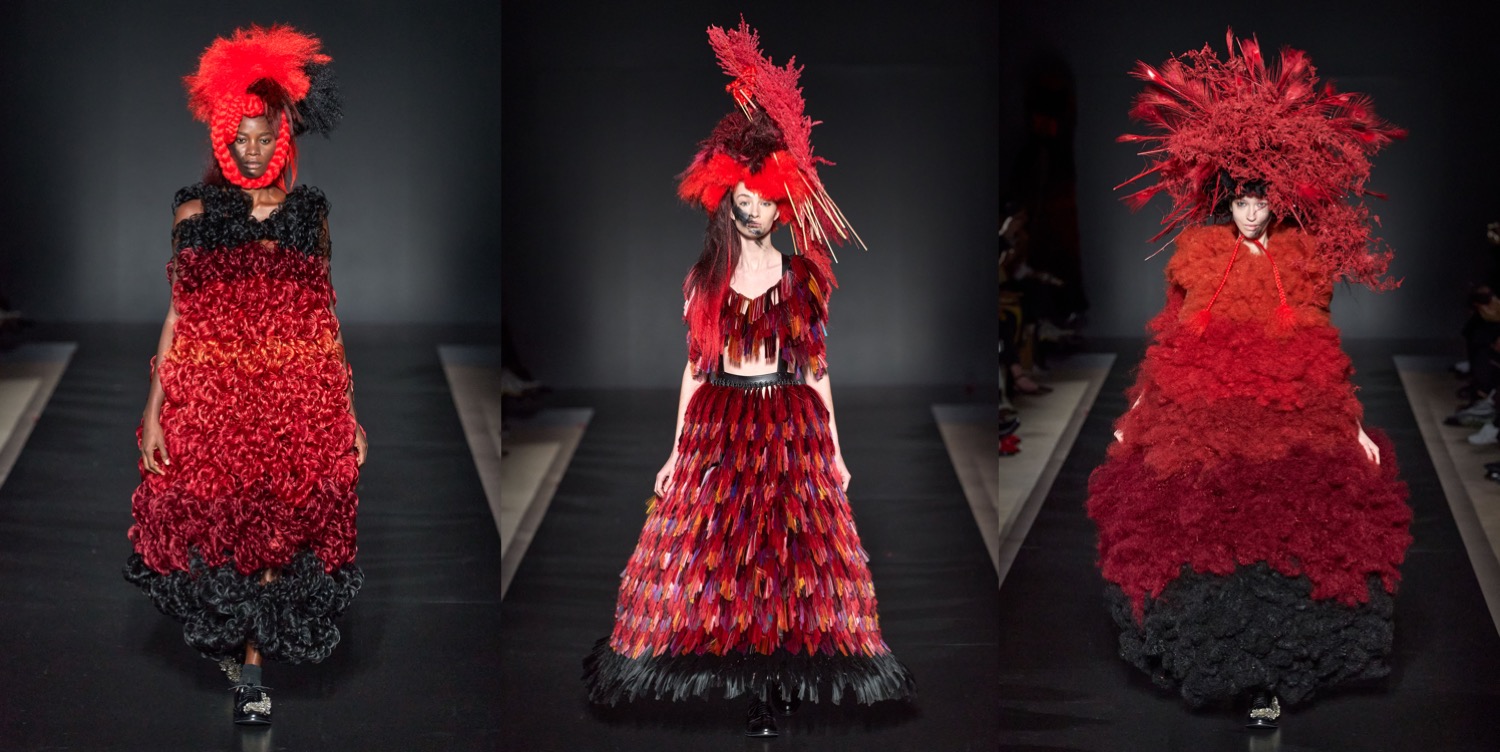
Hyper Expression. Noir Kei Ninomiya AW20

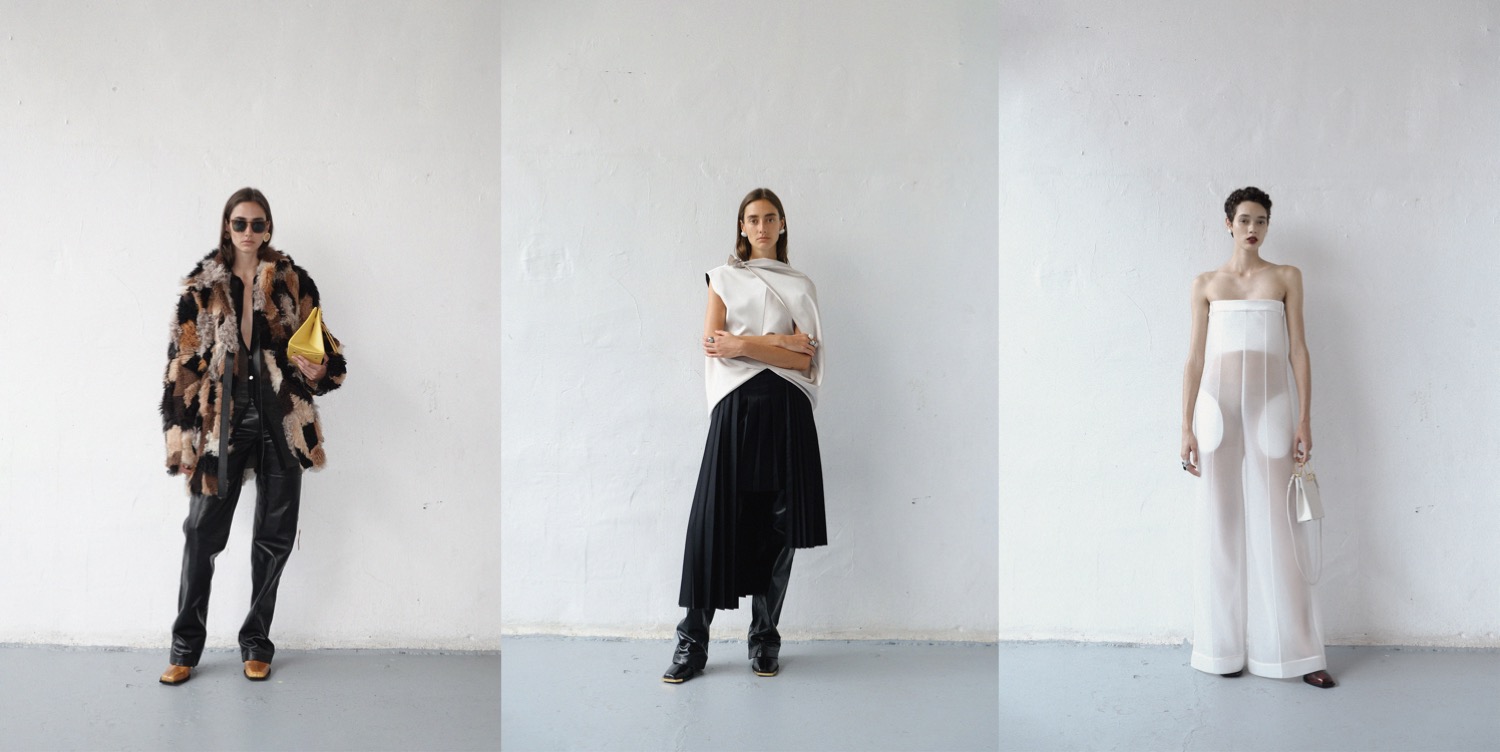
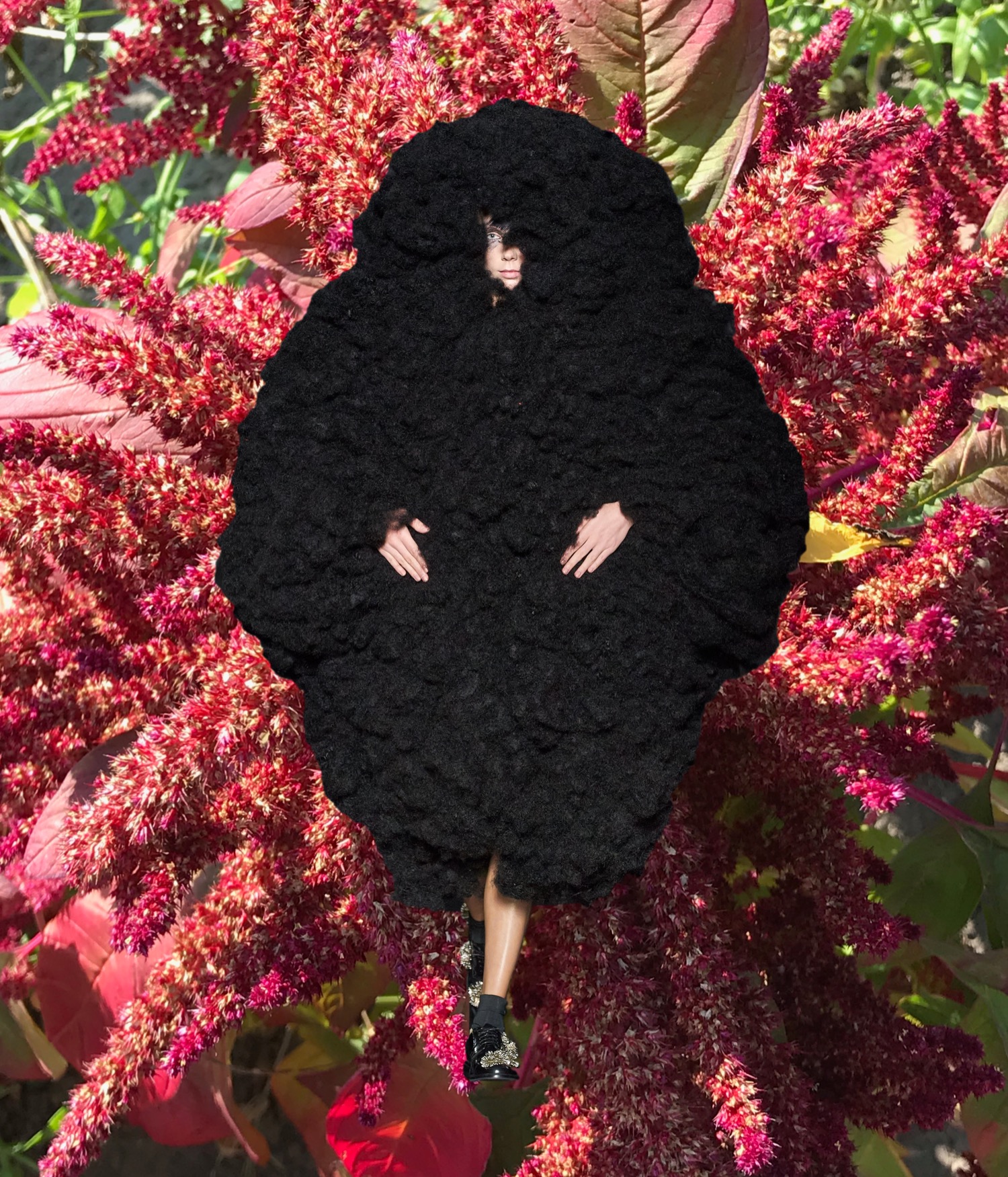
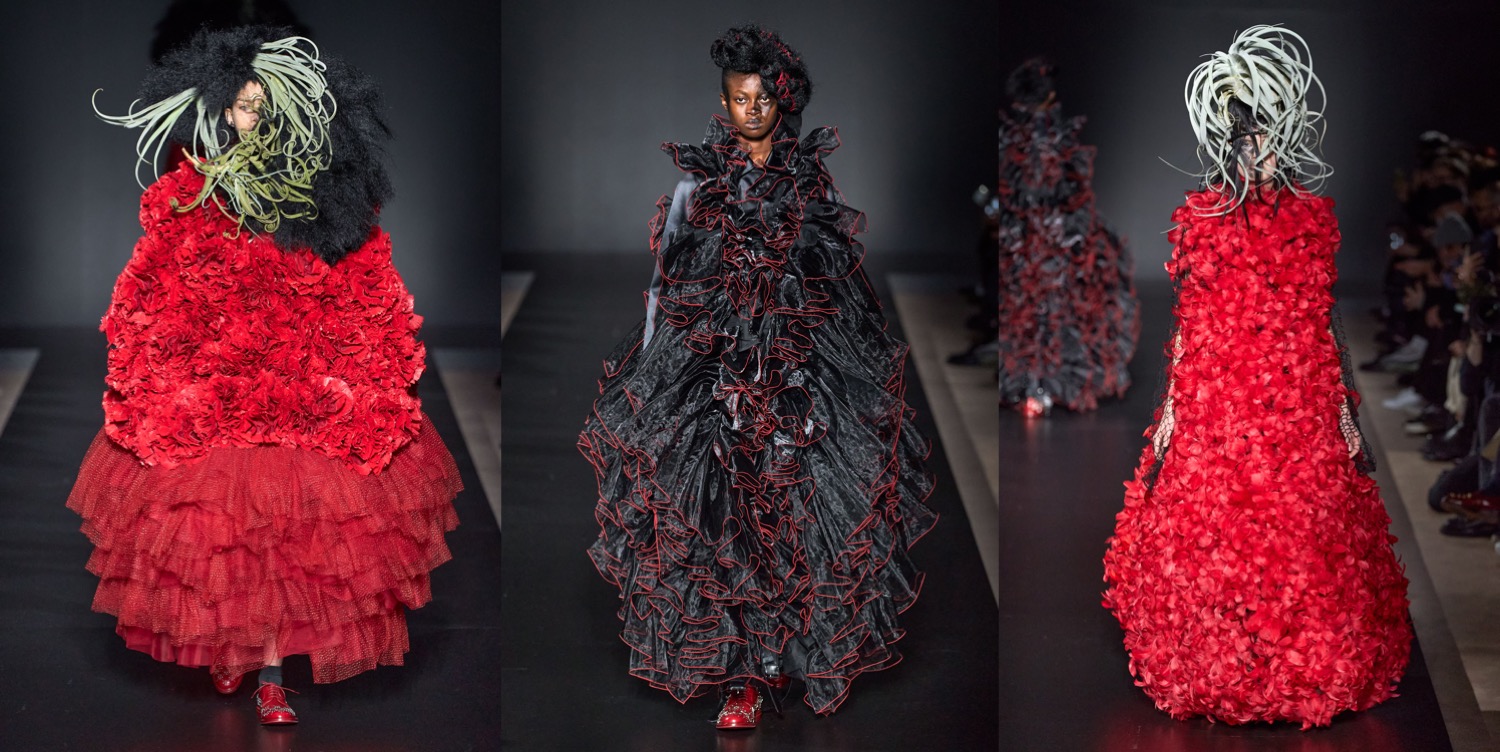
Today in the morning, out of the blue, I thought to myself: I need to look at Noir Kei Ninomiya‘s autumn-winter 2020 collection. I’ve got no idea how I missed it in my Paris fashion week coverage last March, but I’m happy to catch up on it. This collection was extraordinary. Ever since he first appeared during spring 2016, Ninomiya has slowly expanded his stitch-free wearable sculptures, building grander and ever more unsettling architectures. This season he again pushed forward into new territories, while working for the first time with Icelandic installation artist Shoplifter (aka Hrafnhildur Arnardóttir) as well as his long-standing floral art collaborator, Makoto Azuma. The magic of creative collaboration delivered something quite unforgettable. Shoplifter (an artist whose chosen material is synthetic hair, her works include the cover of Björk’s 2004 album, Medúlla, and the mind-blowing installation in the Icelandic pavilion at last year’s Venice Biennale) added a fresh element to the interplay between Ninomiya’s materials and Azuma’s botanicals, specifically exaggerated hair extensions that made the silhouettes look and feel even more organic and out-of-this-world. In his usual enigmatic manner, Ninomiya had said this collection was mostly about the color red, in that as paint it can be mixed to create black. The metallic woven check fabric that was folded and whipped like air-filled ice cream around the body vaguely resembled a florist’s bouquet wrapping. The fronds of palm, succulent, tuber, and bamboo that nuzzled and nudged their way through and around Shoplifter’s hairy extensions created an impression of human and plant grafted together and slowly devouring each other. Ninomiya’s materials included golden wires that furled like unearthly waratahs around the wearer; interconnected safety pins built into pearl-linked globes or an entire dress; red feathers; strips of rivet-connected red tulle; and lengths of brass-colored steel wool frayed, then wrapped in transparent PVC and braided to resemble enormous Viking wigs. Those safety pins (also gracing a fine new shoe collaboration with Church’s) and the tartan section signified a punk undertone also present in the guitar: Ninomiya’s usual biker jacket motif was retired for the season, but he hit the fringe trend via a couple of apocalyptically enormous black pieces. The closing titanic fuzzball was at once hilarious and ominous – part dark cloud, part hyper-expressed protective aura, all Noir.
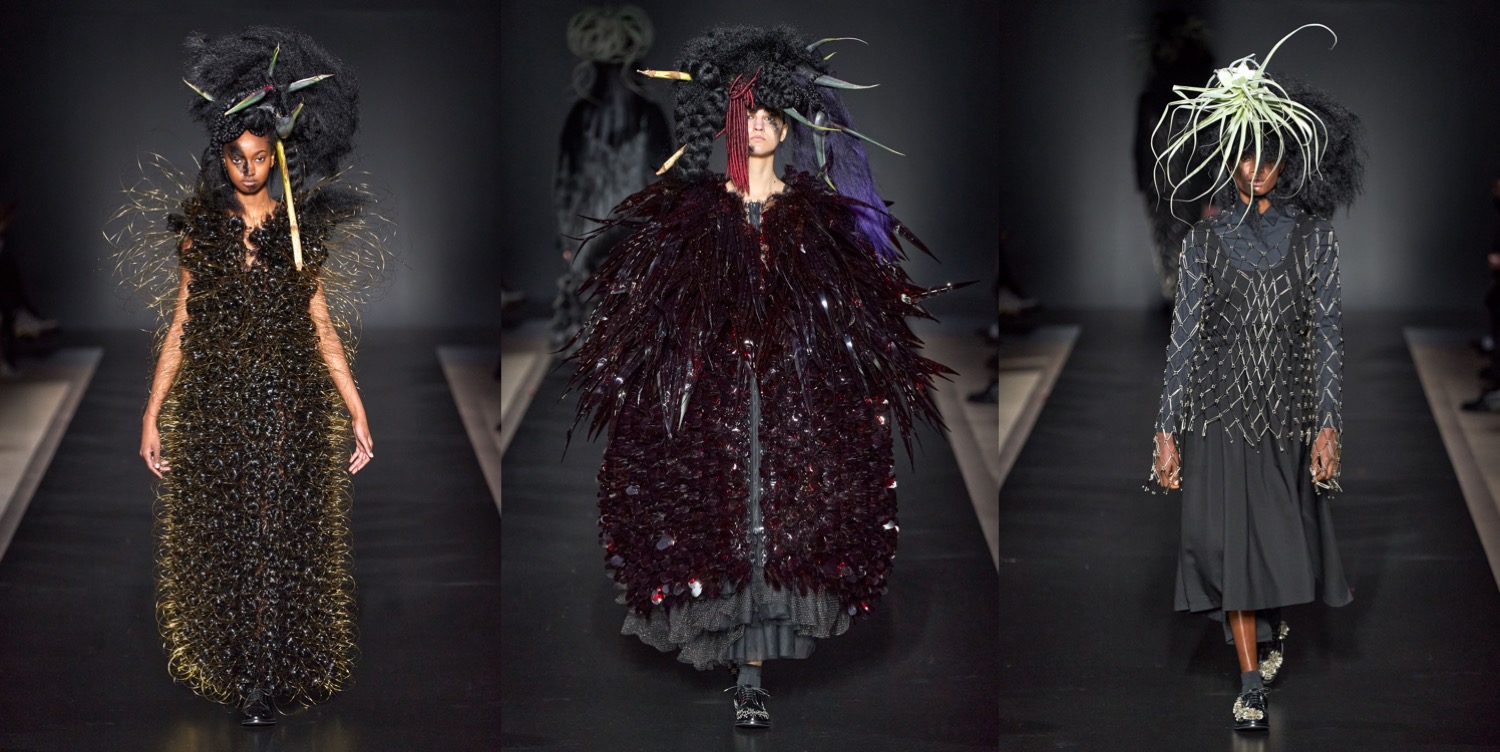
Collage by Edward Kanarecki.

Dries Dreams

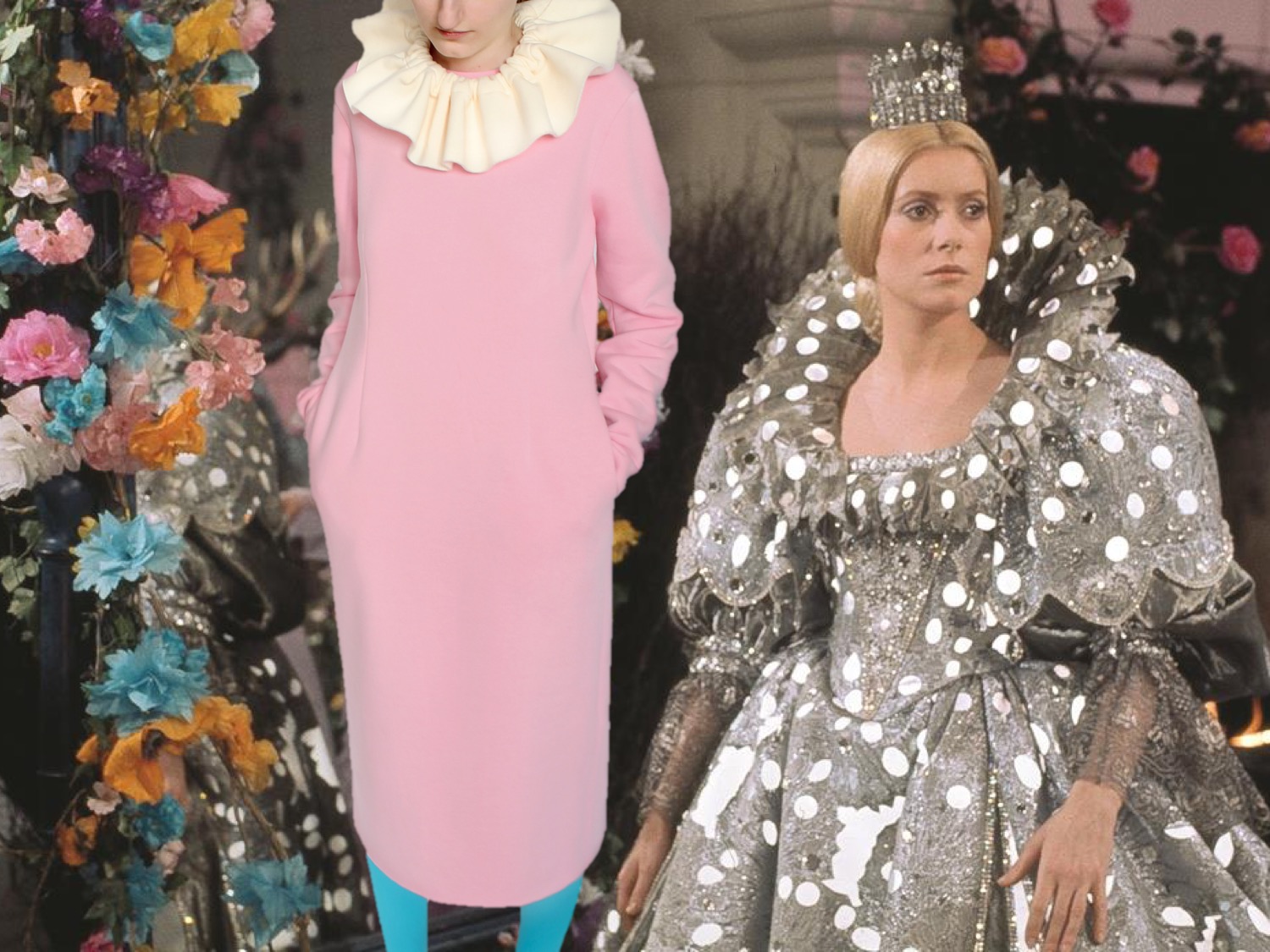
Yesterday I had a second glace at Dries Van Noten‘s autumn-winter 2020, a truly magnificent line-up, and just like that, from one collage I’ve ended up with an entire story. After last season‘s collaboration with Christian Lacroix, it was clear that Dries would somehow continue with this over-the-top energy. The designer was thinking about “nocturnal glamour” and particularly the dressed-to-kill creatures of the glam 1970s and high 1980s, whom he glimpsed from afar as a young man in Antwerp, in the form of the high-gloss photography of the makeup artist Serge Lutens. Maybe she was heading for a night at the most trendy club in Paris (well… corona is out in the wild, but let’s dream!). Or maybe that was her, wending her way home in daylight, with a plaid coat shrugged over her glitter. “It’s about going out, enjoying life – having fun, that’s very important!” he remarked back in March. “I thought of this party girl. Something mysterious. Something dark. But I questioned how far it could go, while staying contemporary.” His solution was to partially casualize the glamour by applying his melee of acid green and fuchsia jungle prints to fluid pajama shapes, and adding ’90s grunge–influenced plaids and hip-tied shirts to the mix. Equally head-turning: a dress in a violent purple, streaked with silver embroidery. The look-book photos by Tommy Ton additionally convey the vibrance of the collection. Now, here are my favourite looks, immersed in the subverted world of the Expressionists and Symbolists…

All collages by Edward Kanarecki.

Colour On. Nina Donis AW20

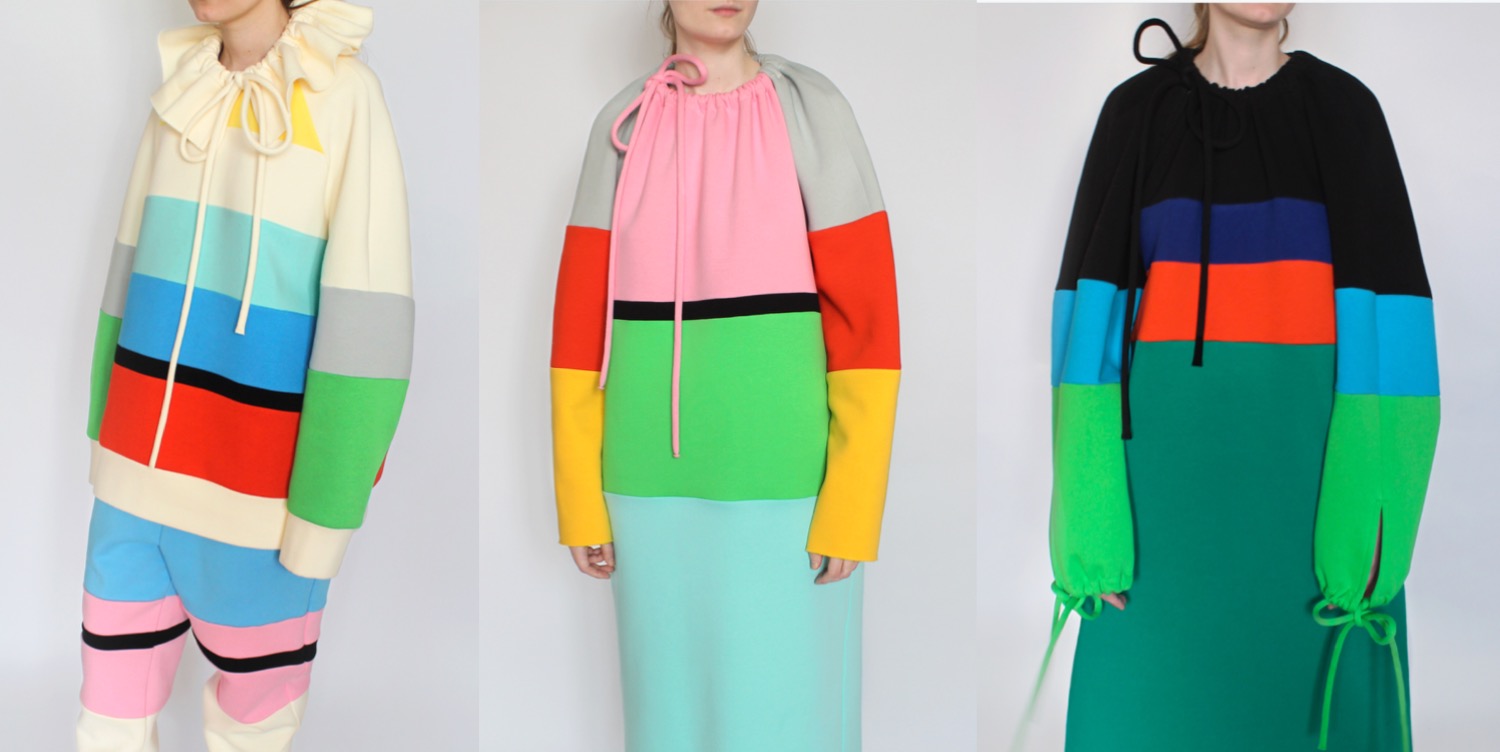
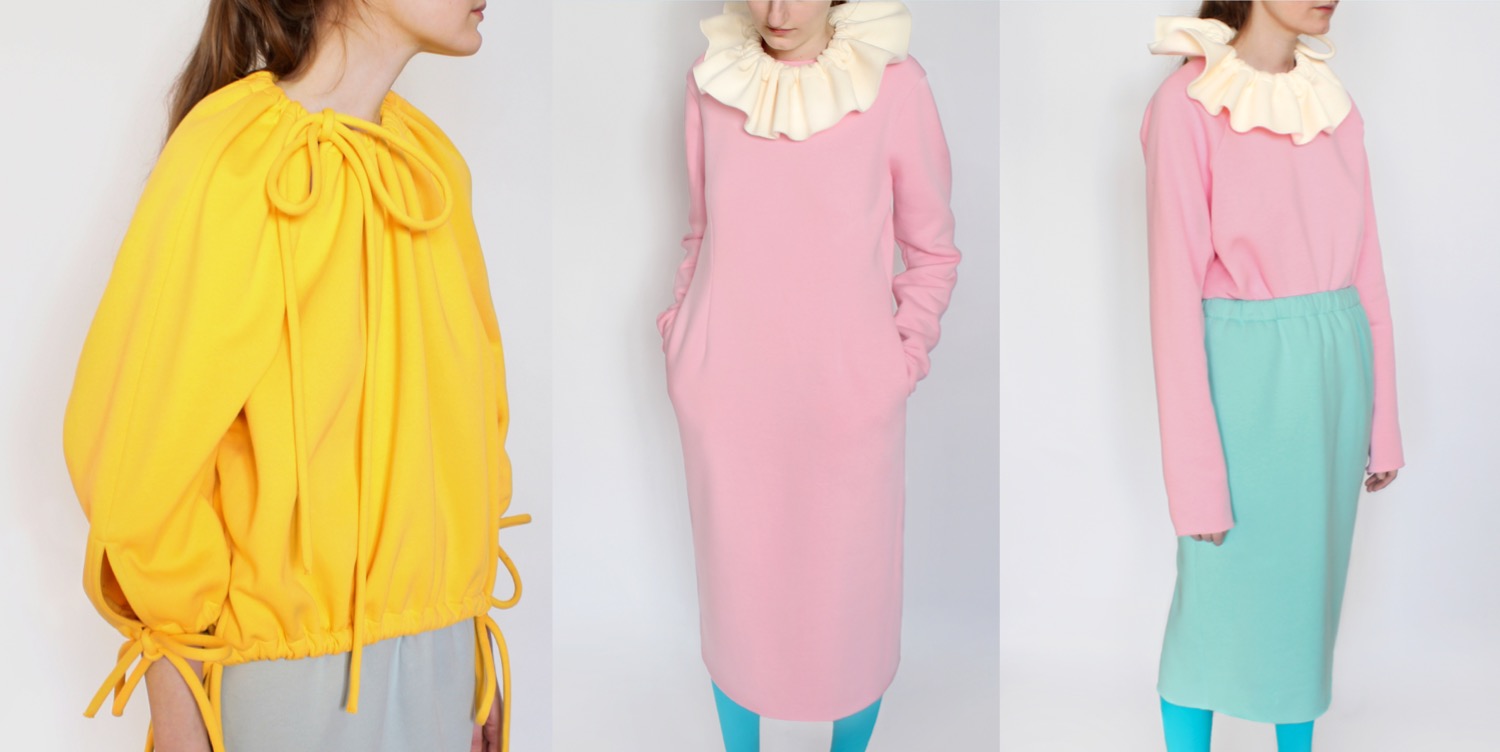
Donis Pouppis and Nina Neretina’s Nina Donis label is legendary within the Russian fashion industry. The duo met in the late 1980s while in university for textiles and started their own line, which they officially launched in 2000. The two went on to show at London Fashion Week for several seasons, but Moscow felt more like home. Now, the pair splits their time between Pouppis’s childhood home of Cyprus and the Russian capital, where the brand has amassed a dedicated following. As inspiration, they often look to Russian motifs, like Olympic uniforms and Russian traditional dress. For autumn-winter 2020, one might note a colour palette as bold as the one of Kazimir Malevich (or Pantone matching system). The duo were as well inspired by Jamie Julien Brown’s totem installations (the striped pieces!) as well as historic collars seen in El Greco’s portraits, deconstructed into verstaile accessories you can wear over a sweatshirt-dress or minimal knit. The collection’s must-have? Definitely here for the voluminous, yellow blouson with exaggerated bows down the sleeves. If you want to see more of Nina Donis, click here!

Collage by Edward Kanarecki.

Adaptability. Peter Do SS21

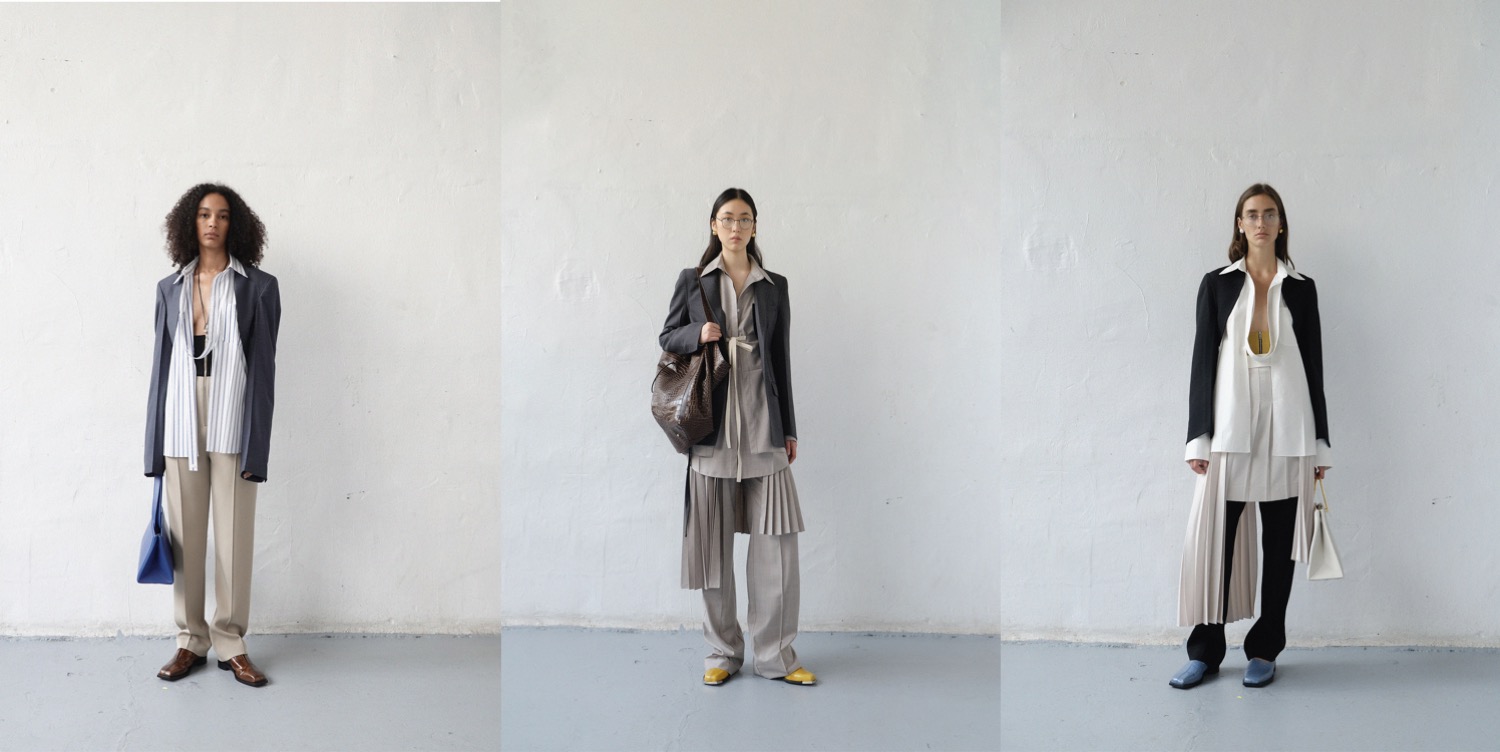
Gradually, first collections made entirely in lockdown are trickling in. Peter Do, the New York-based designer whom I follow since his time as studio designer at Céline, doesn’t show in the regular schedule, and this season his plan was a presentation in Paris (during men’s spring-summer 2021 collections back in June). Of course, this couldn’t work out, so he released a look-book and short video. The 2020 LVMH Prize finalist and nominee for this year’s CFDA emerging designer award is evolving, style-wise, as well as improving his signature pieces. Adaptability has been one of the hallmarks of his label since its launch two years ago. An early best seller was an adjustable jacket that separated into a bolero and a backless waistcoat. This season, he applied the concept to a technical silk dress that easily converts to an elegantly draped cape-back evening top. In this strange moment, if you are capable of spending on designer clothes rather than on the home improvements, a two-in-one that will play exceptionally well on Zoom screens is a smart bet. His chic long dresses in T-shirt jersey, including one that can be worn back to front with a tank underneath, show off a softer sensibility than this tailoring-focused designer has displayed before. Do told Vogue he was eager to break his own codes and “respond to what happens.” Also, it’s worth mentioning the accessories collaboration with Medea, a brand that makes those cool, leather “shopping bag” bags. For Peter Do, the label came up with bold colours and new sizes. One thing I don’t entirely feel in this line-up is the styling. Actually, some of the looks are over-styled, and it’s a bit hard to comprehend the garments. But then, Peter Do’s clothes are all about flexibility, so it’s really the matter of how you want to wear his clothes.

Collage by Edward Kanarecki.

Re-New. Maryam Nassir Zadeh Resort 2021

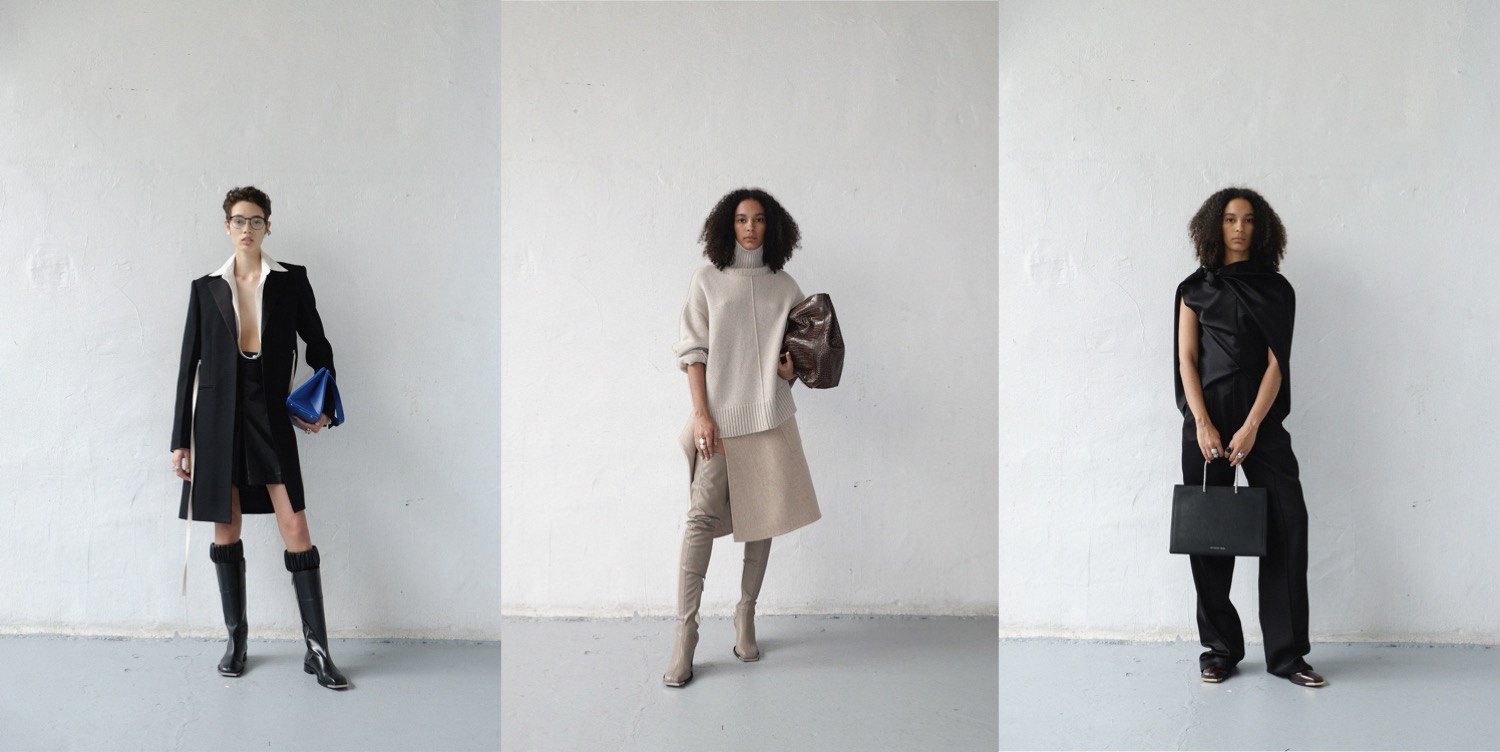
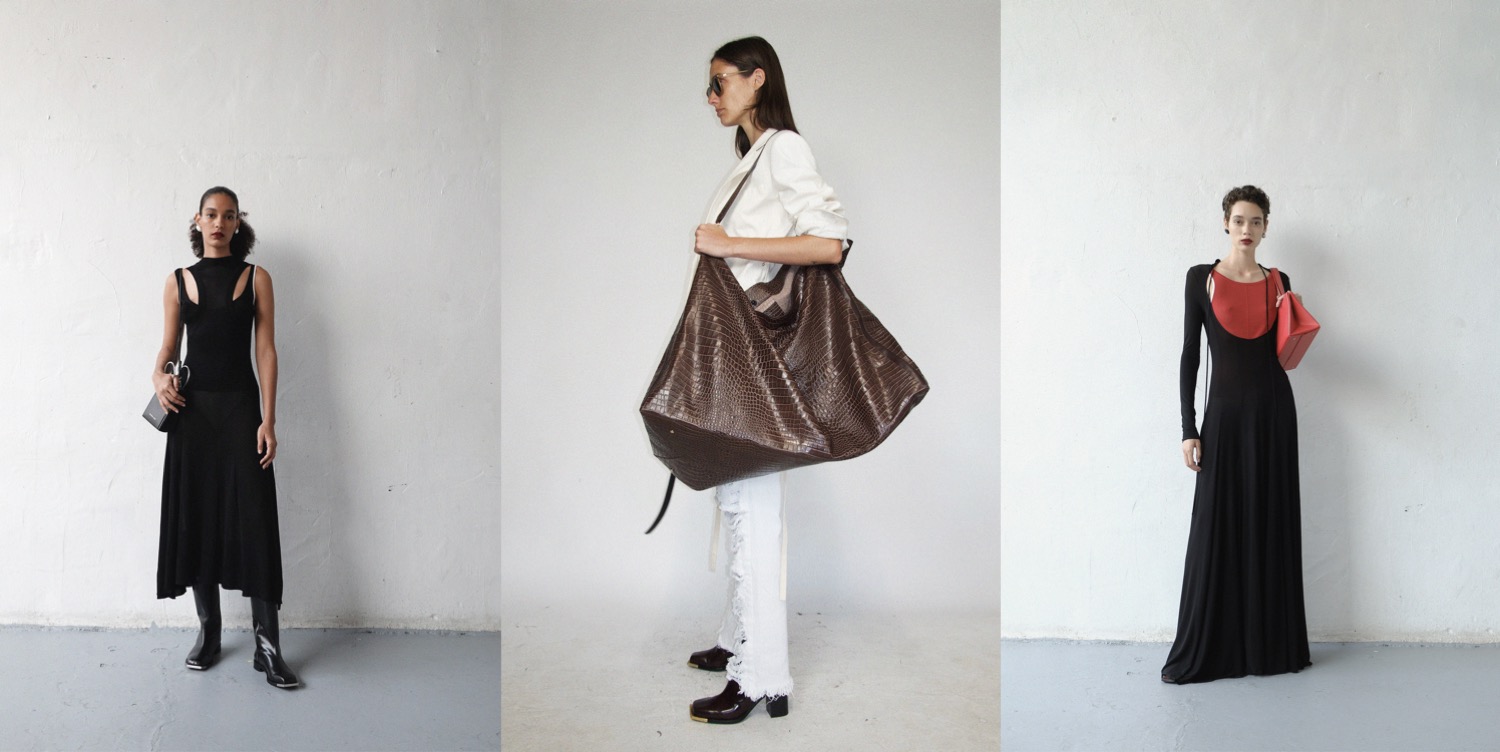
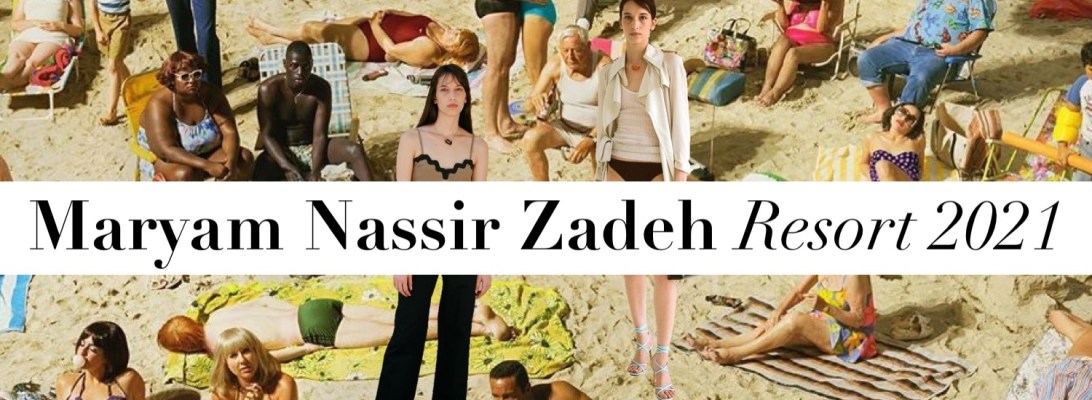
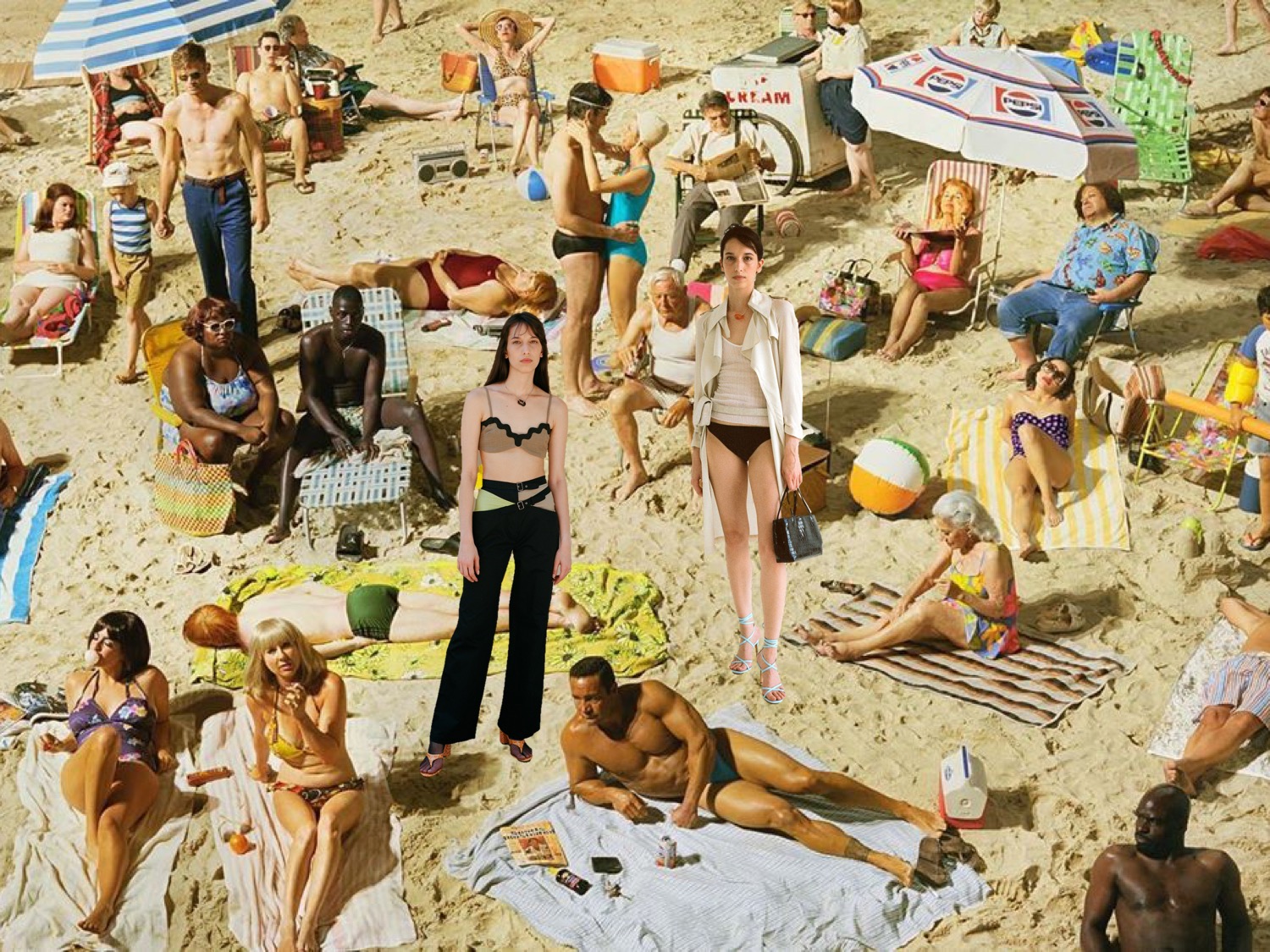
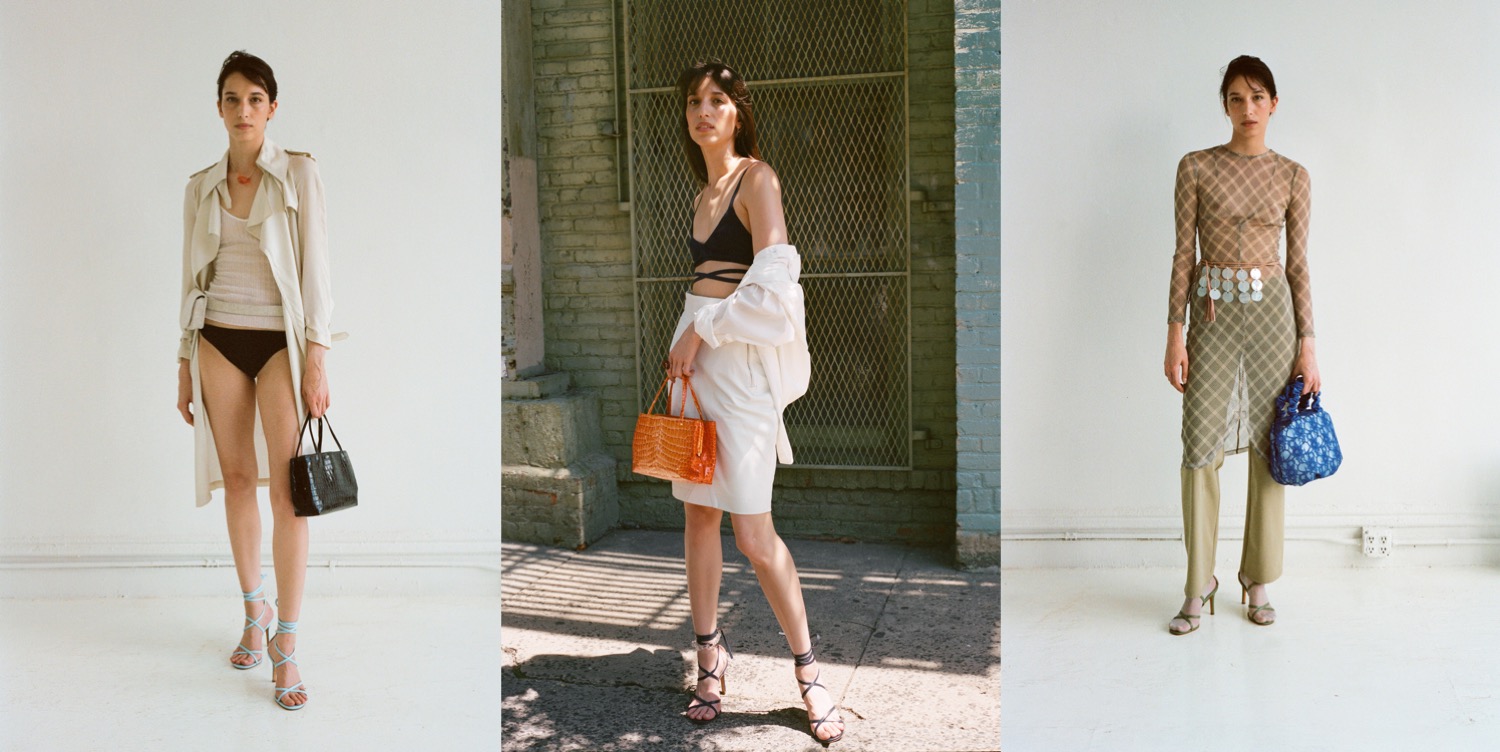
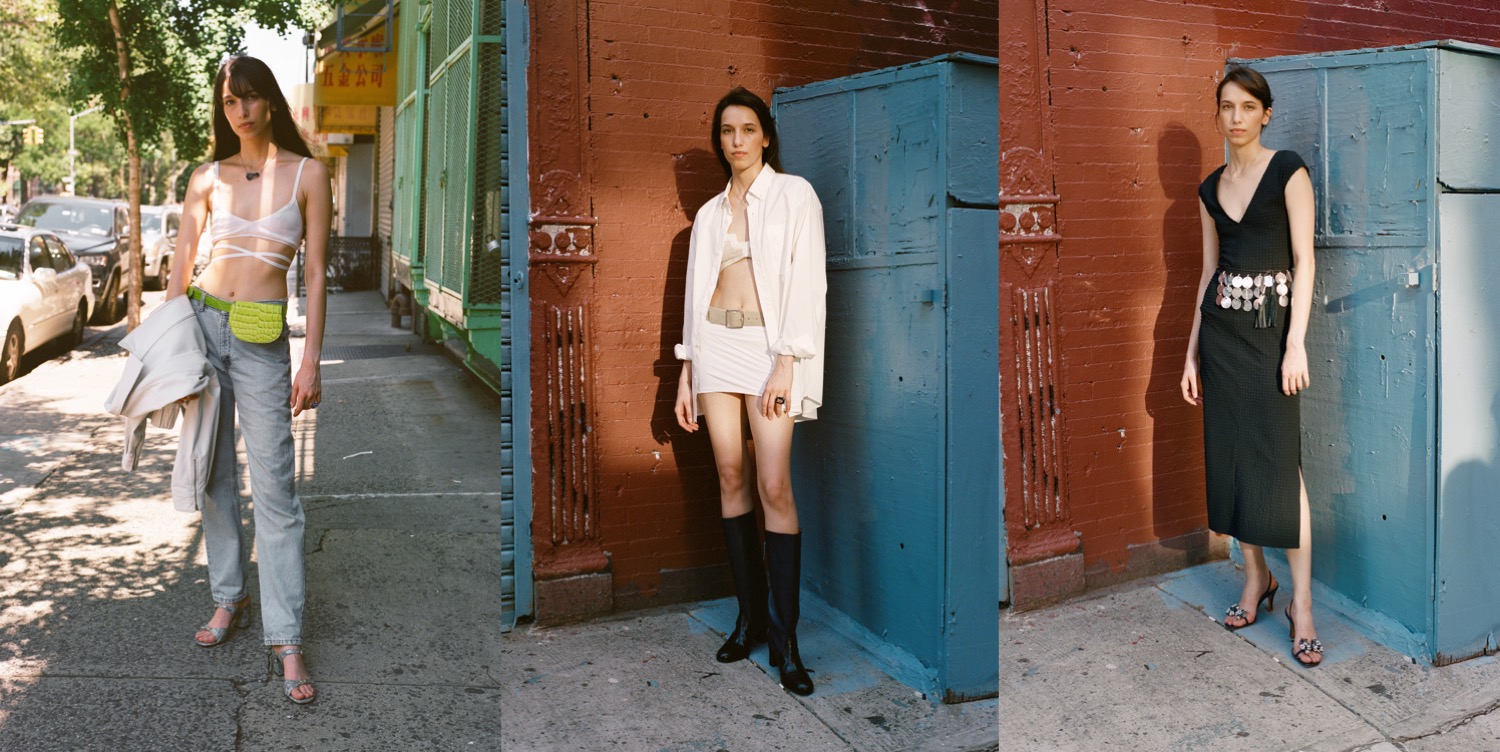
If there’s one thing you should read this weekend, it’s Irina Aleksander’s strikingly sharp and realistic feature for The New York Times on how the fashion industry collapsed, even before coronavirus became the new normal. I still believe that in the end, we will want to wear something else than just sweatshirts and sweatpants. But one specific part of this text seems to be so easy to comprehend that it’s unbelievable that the industry has never caught up with this concept: clothes aren’t food. They don’t rot after a week, neither after six months. According to Aleksander, some brands have in plans to push the unseen and unsold 2020 collections to 2021 to avoid losses. As simple as that… and yet, there’s one big obstacle. “The fascinating part is that in order to do that – to give that aged inventory value again – requires killing fashion, that nebulous deity that says something is ‘in’ this year and not the next”. So, to make it work, it’s not just about the designer – who would definitely love to take a break from everything to refuel – but the corporate floor and the customer. We should learn to slow down with that love for the “new” and appreciate what’s “now” – or at least, try to take a second look at it. To my surprise (as I already thought way back in spring that it’s a logical step to make for a lot of brands out there), for the resort 2021 season, Maryam Nassir Zadeh is probably the only designer who actually did this. She actually made old… new. Here’s how. Zadeh didn’t cut a single new garment. Instead, she put together a “hand-picked” collection of items from the past, reimagined and recontextualized for now. Years and seasons collapse in many of the looks: a white button-down from autumn-winter 2020 was styled with an ivory leather skirt from spring-summer 2020; a pair of striped shorts circa spring-summer 2019 were paired with a autumn-winter 2020 knee-high boot, redone here with a black lace shaft. Bikinis and strappy bras, often styled alone as tops nodded to her swim-heavy spring-summer 2018 show. Well… that’s brilliant! Maryam resurrected these items not just because they deserve a second look or feel newly relevant, but also because it seemed like a more sustainable way of doing things. In their walk down memory lane, Zadeh and her team only chose pieces they knew they had enough leftover fabric to make. They didn’t want to invest in making new patterns or ordering silks and wools from Italy: “It isn’t even just about sustainability in recycled materials, it’s about sustainability of time,” Zadeh told Vogue. “We never have enough time to order new fabrics from Italy, and the turnaround times [between collections] are so short.” And back to the collection: it’s quintessentially MNZ. Her sensitivity to what’s “in the air” means we will all soon be obsessed – and other brands as well. On the list are: shorter hemlines, colorful silk button-downs, men’s shirts and tailoring, anything lace, and retro embellished belts, styled here as “spice ups” on otherwise simple jersey dresses. “There’s a real personality and style to the collection,” Zadeh said. “It’s easy and wearable, but still special, because we’re mixing these strong basics with novelty accessories.” In the past, Zadeh has described that MNZ balance as “odd elegance”, and that’s still true for her eponymous label. Take notes everybody.

Collage by Edward Kanarecki.