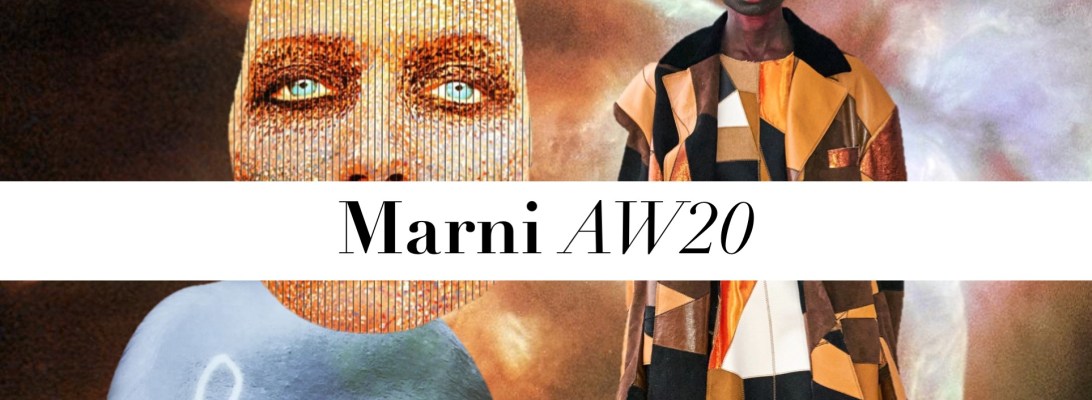
Assemblage. Marni AW20

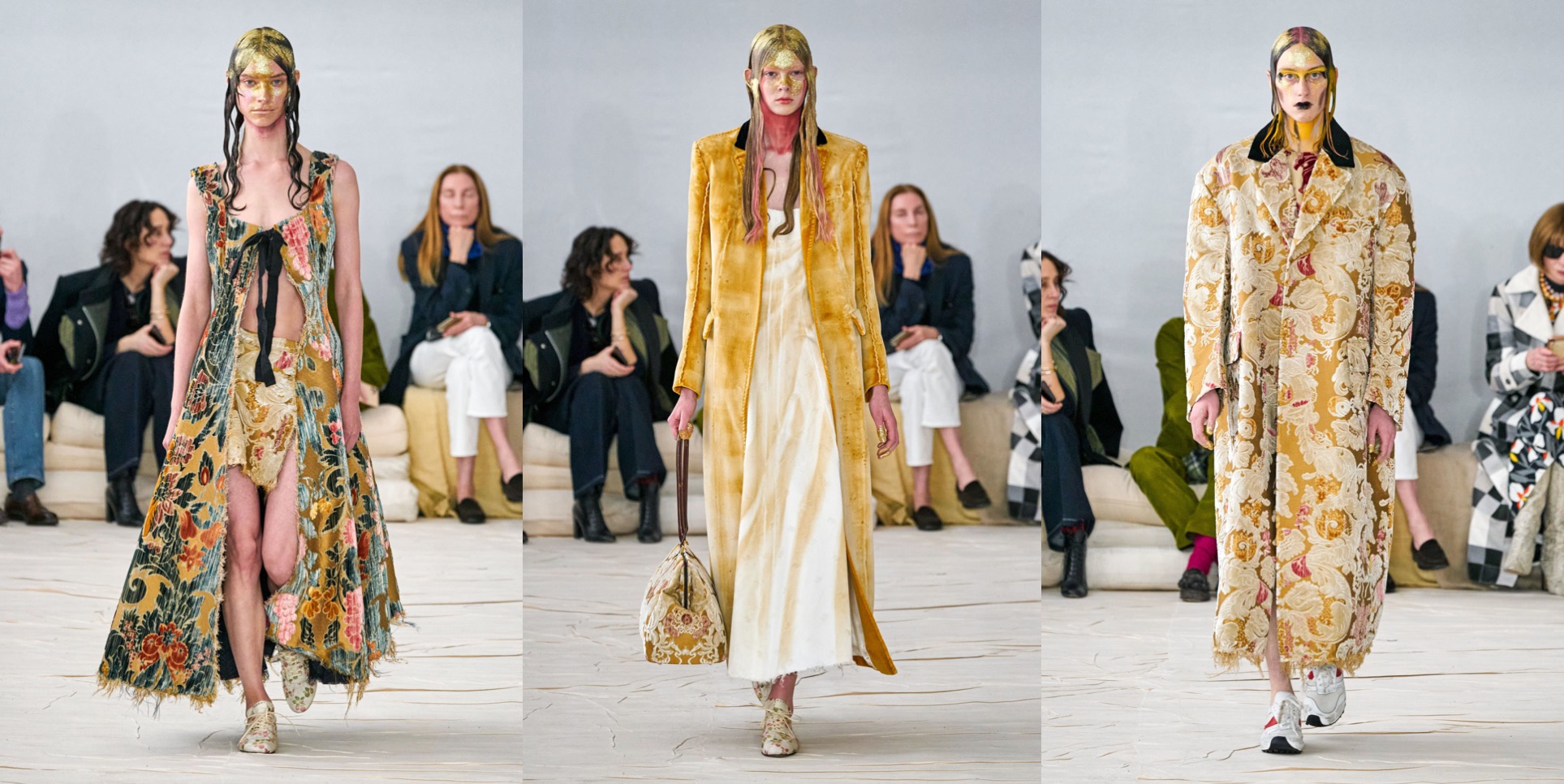
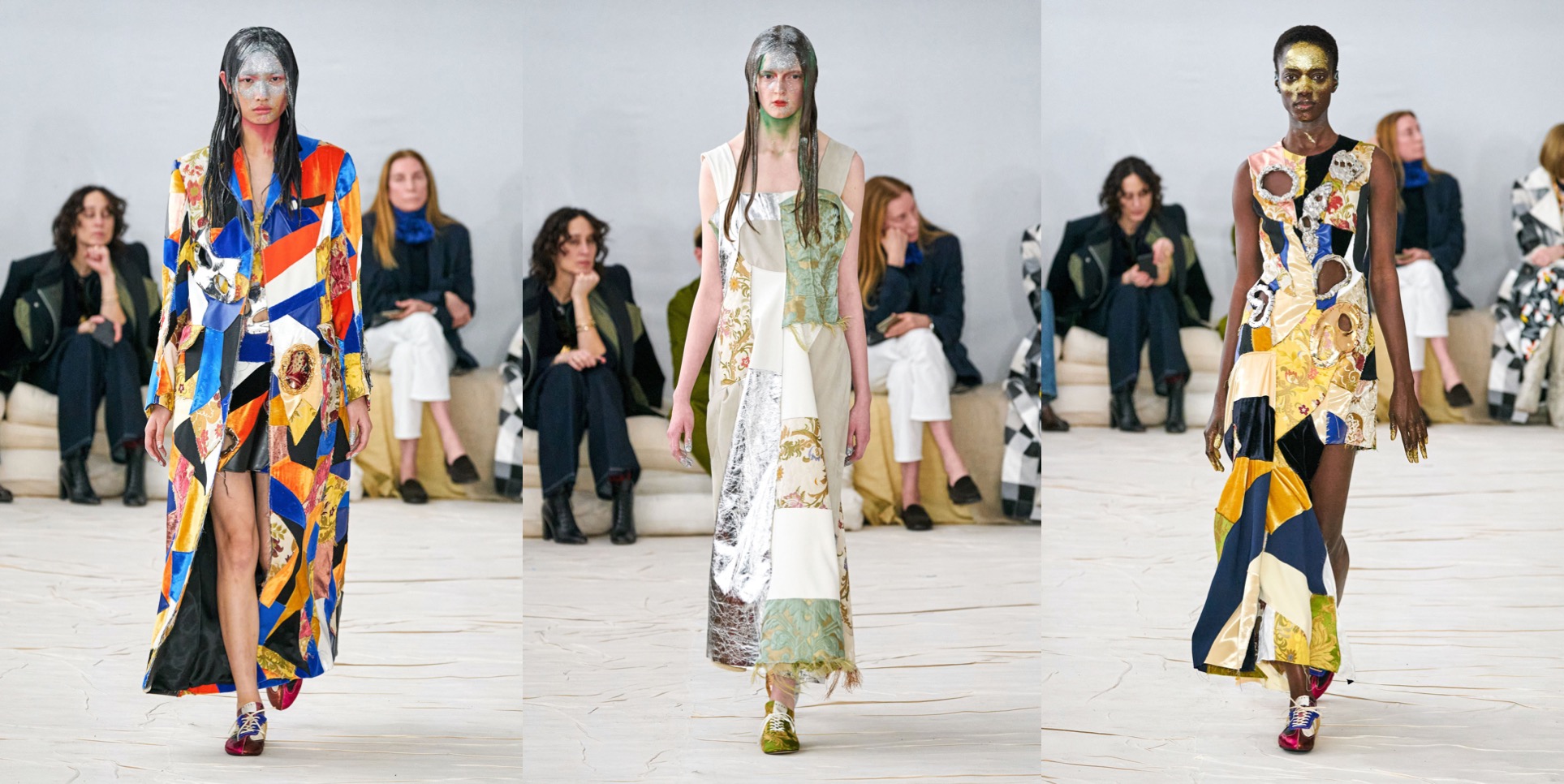
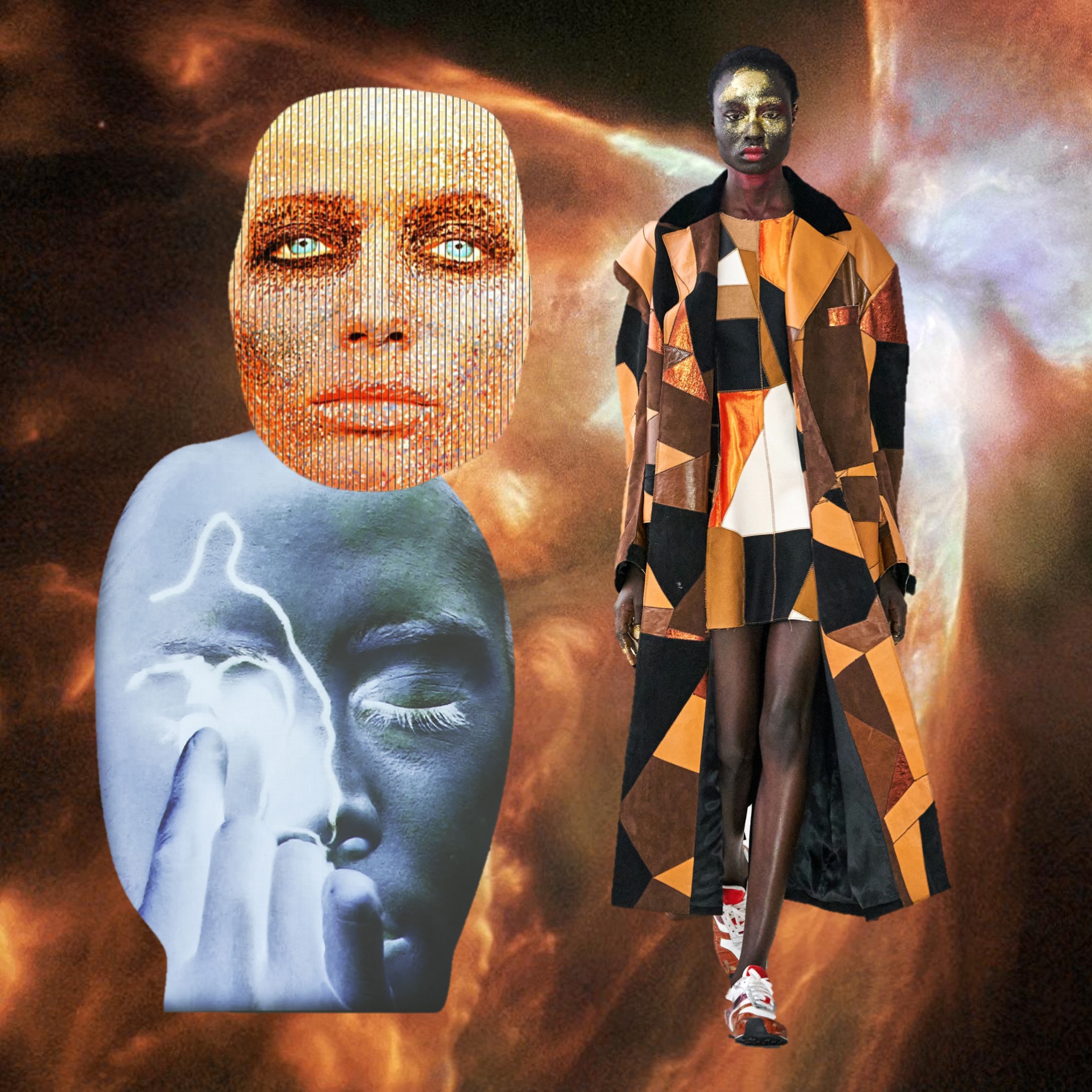
While the topic of sustainability seems to be utterly dormant in Milan, at least you’ve got Marni‘s Francesco Risso that takes some steps in order to address it. The collection used what appeared to be fragments of existing garments: take the cardigan dresses created from several different pieces of knitwear, each element linked with the crude stitchery of a child in a craft workshop. The remnant scraps produced in their manufacture, Risso noted, had been regenerated to create smaller elements such as the purses shaped like Victorian carpetbags or the old-fashioned wrestlers’ shoes. Risso described the effect as DIY, and the deliberate naivete continued with the magnificent finale pieces made using scraps of humble cotton fabric patchworked together with shards of cut velvet woven by hand in a factory in Venice on looms that were originally designed by Leonardo da Vinci – a vanishing, time-consuming craft that Risso understandably wants to “protect and exalt.” “They are basically our new furs,” he said of these precious garments. The collection, as the designer explained, was “collaged from the beginning to the end – from macro to micro to fractal. It’s about putting together remnants.” Julien d’Ys gold and silver dust make-up and lacquered hair on the models added even more spark to Risso’s wearable assemblage. Gorgeous.

Collage by Edward Kanarecki.
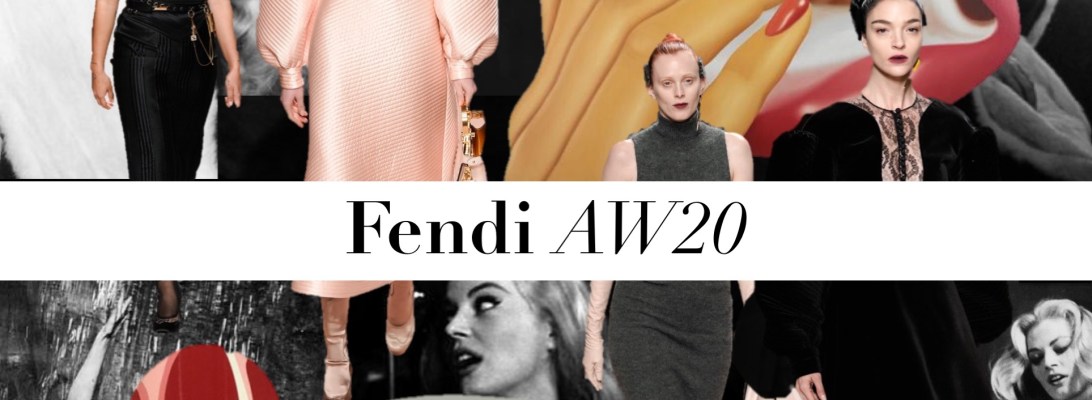
From The Boudoir To The Boardroom. Fendi AW20

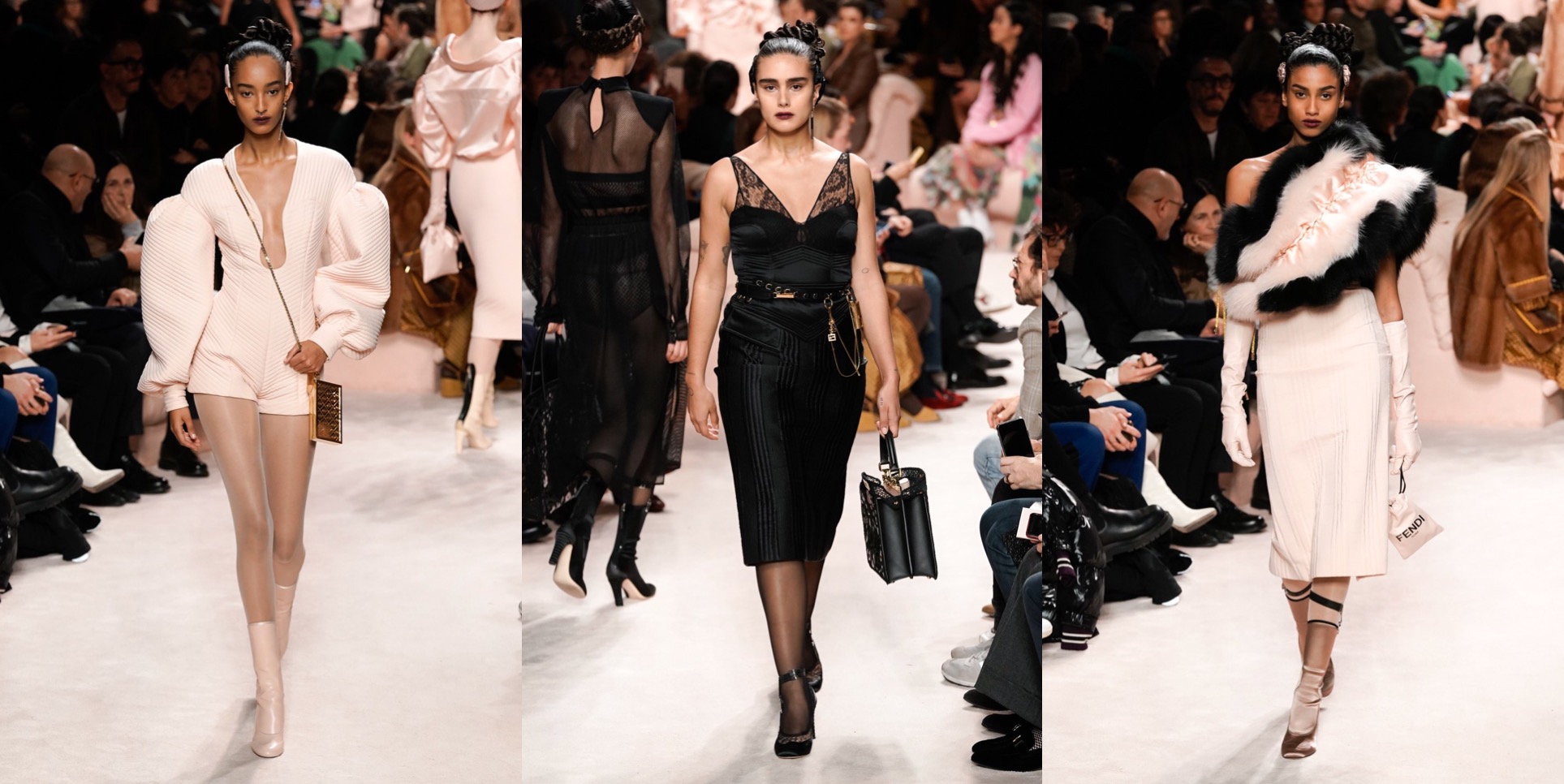
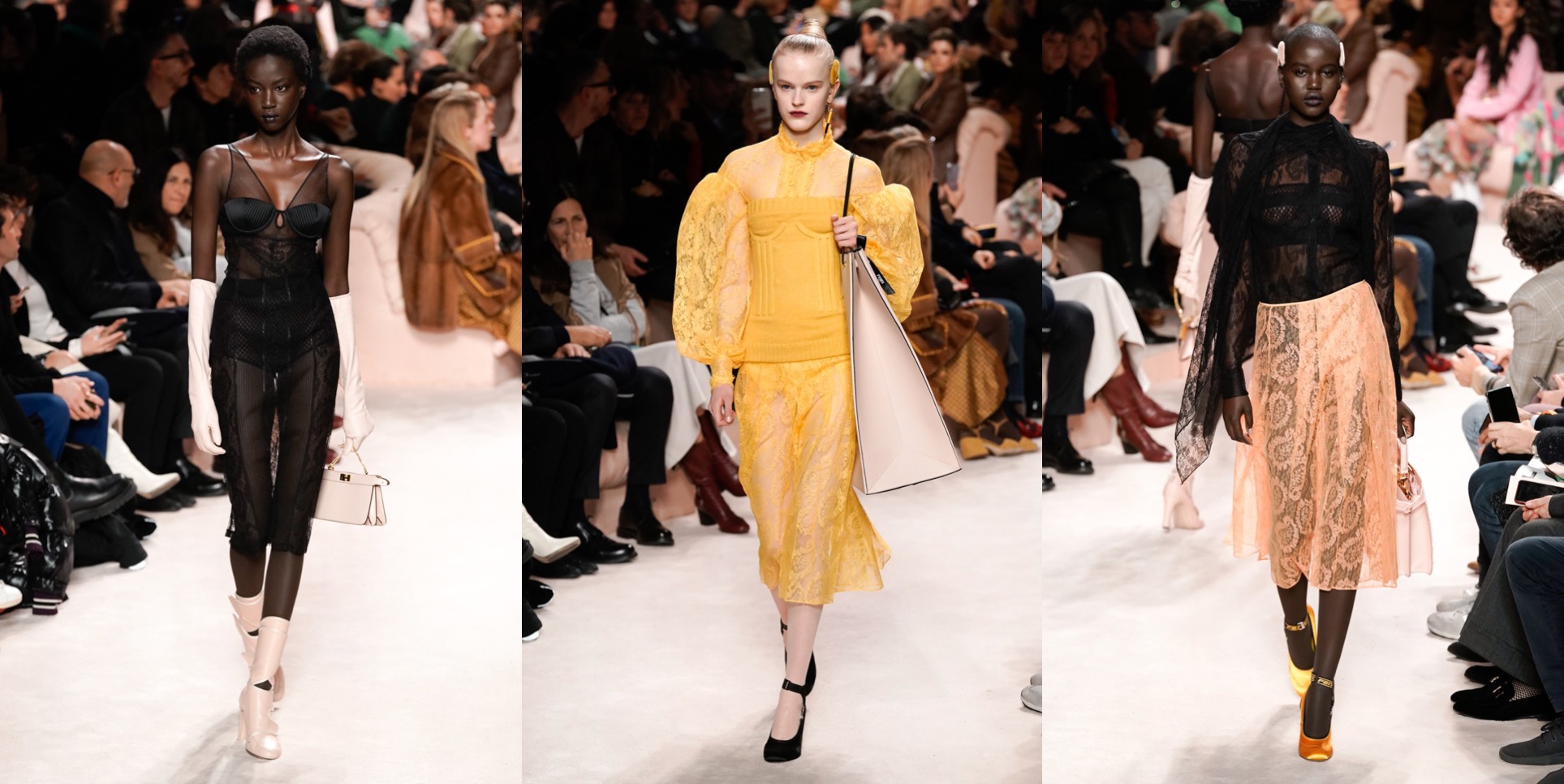
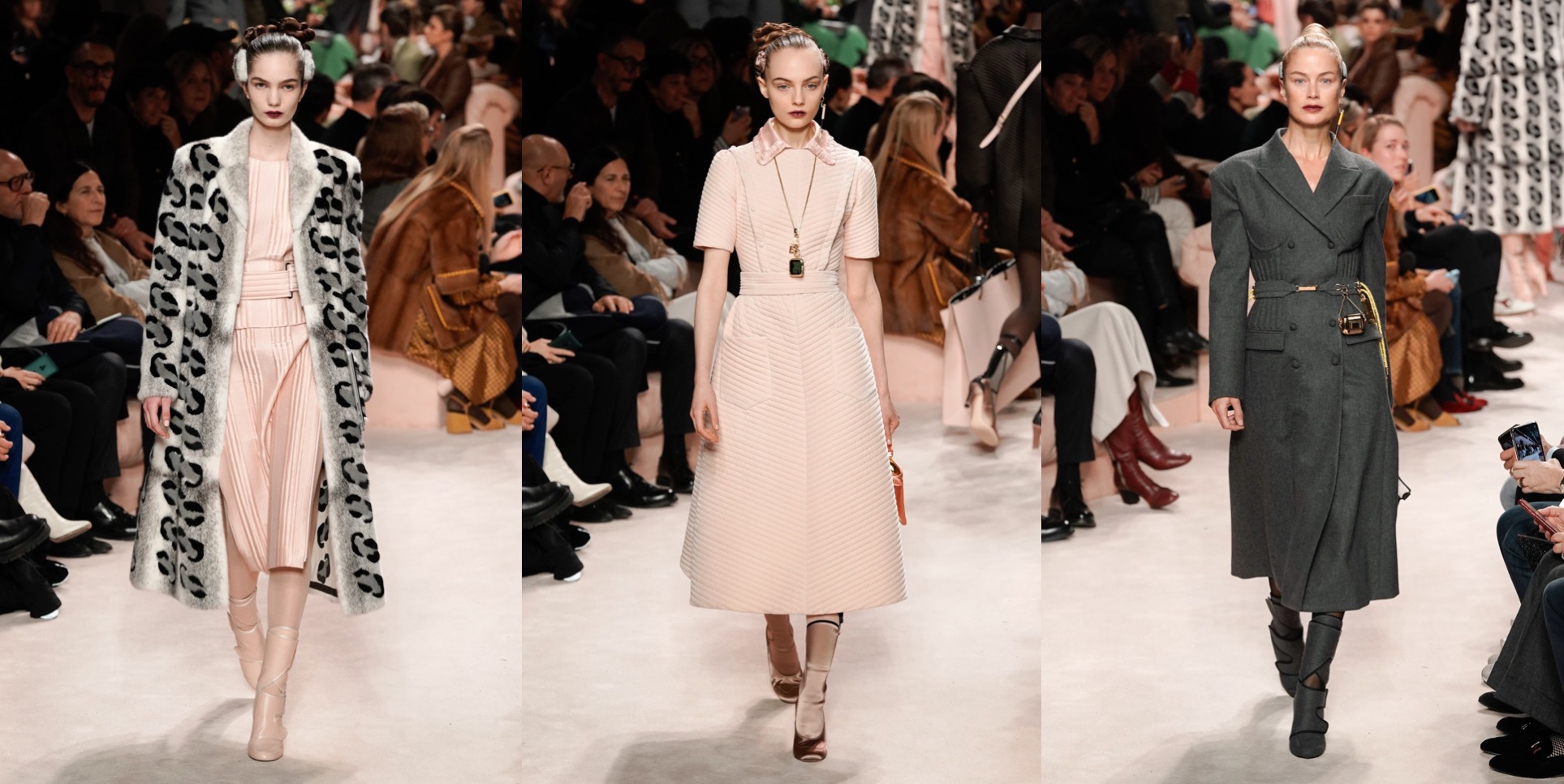
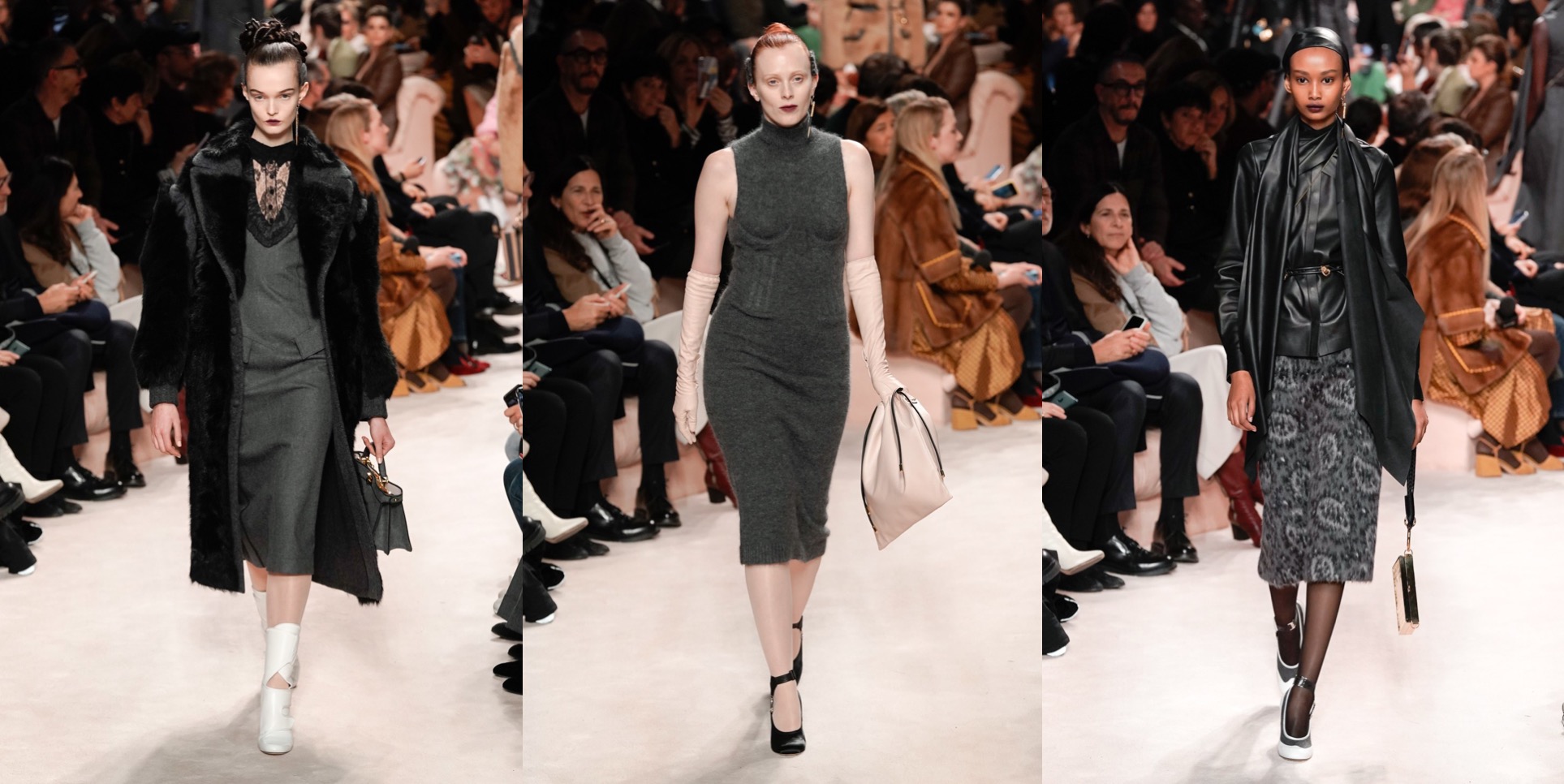
I really loved Fendi’s autumn-winter 2020 collection. First, no sight of F logos all over the place. Second, Silvia Venturini Fendi nailed the femme fatale look making it simultaneously powerful and confident. Third, the collection’s model casting is a revolutionary moment for Milan, which is considered the most „conservative” of all four fashion capitals. Jill Kortleve and Paloma Elsesser became the first ever so-called “plus size” models to walk a Fendi runway. They looked incredible. And there were also the „veteran” models: Karen Elson (she had completely elevated her grey knit look), Liya Kebede, Carolyn Murphy and Jacquetta Wheeler. Silvia found it frustrating to always present shows whose casts were defined by the sample size.  “Especially because you talk to me and I am not really a prototype of that shape. So it’s liberating for me to portray these clothes in a different way, on different sizes.” Yes, two models in a cast of 50 girls seems not much, but still. Big hopes that this isn’t just a one-season thing. Back to the clothes for a moment. Fendi mentioned liberation, and that was the spirit of a show presented on a curvy, pink upholstered runway. The spectrum of that freedom ran from the liberatedly libidinous to the glass-ceiling smashing, or “from the boudoir to the boardroom” as the show-notes put it. The pieces combined executive chic with a sexual tweak. This was a collection that embraced the double standards of male-eye categorization and short-circuited them via disassembly and disguise: dressing up for self-gratification rather than that of others. Silvia Fendi and Miuccia Prada are the only two pre-eminent female designers in Milan. This season, both of them make significant statements on women and femininity.

Collage by Edward Kanarecki.
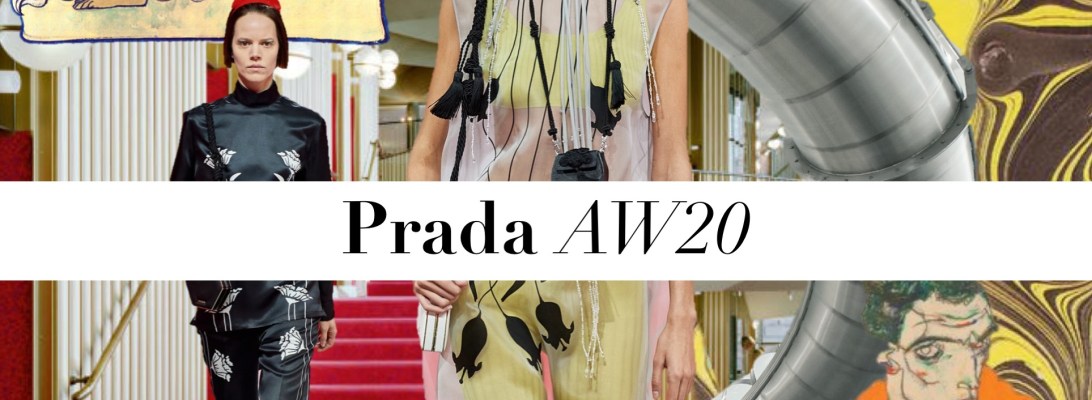
The Contrasts. Prada AW20

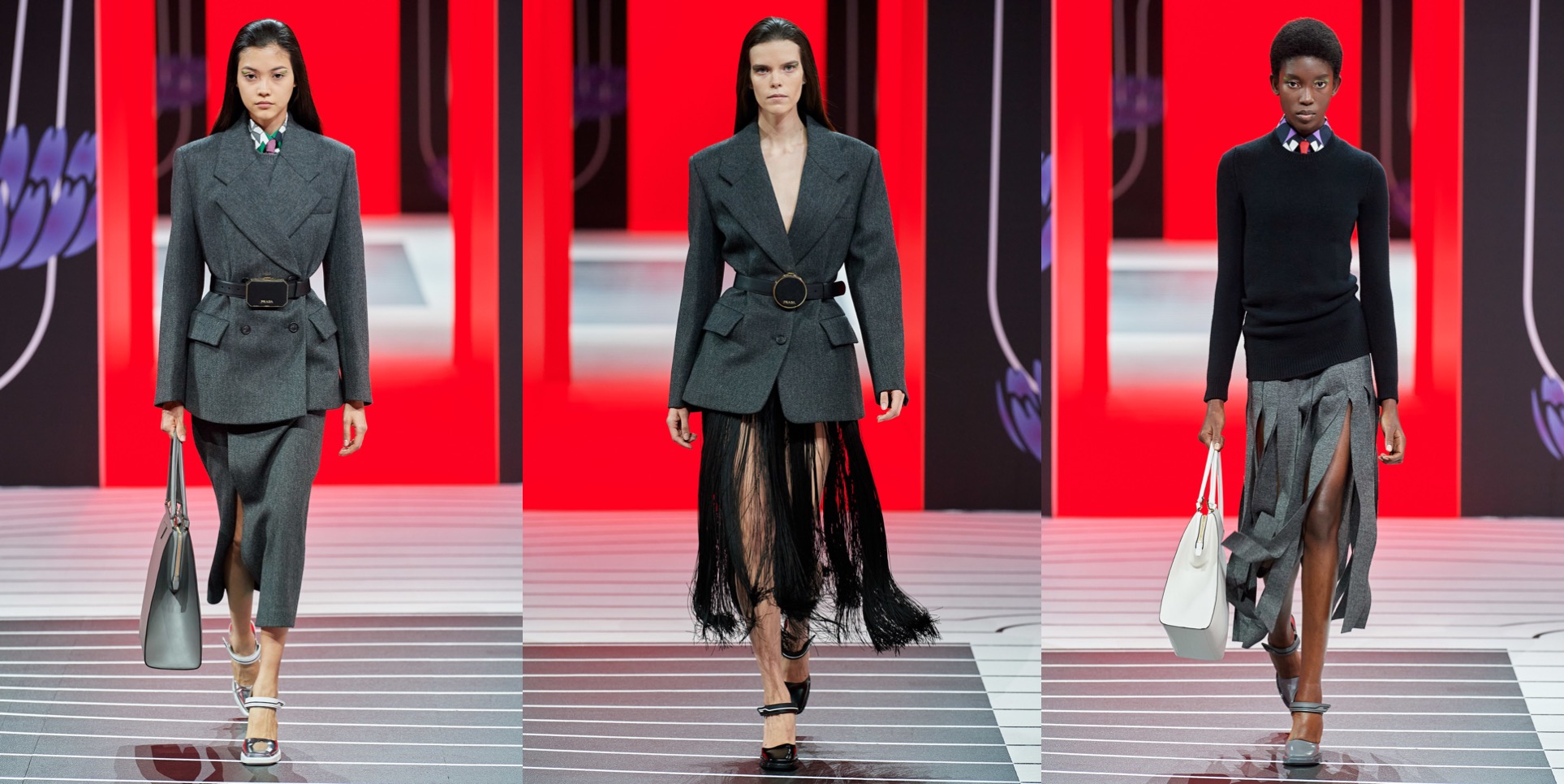
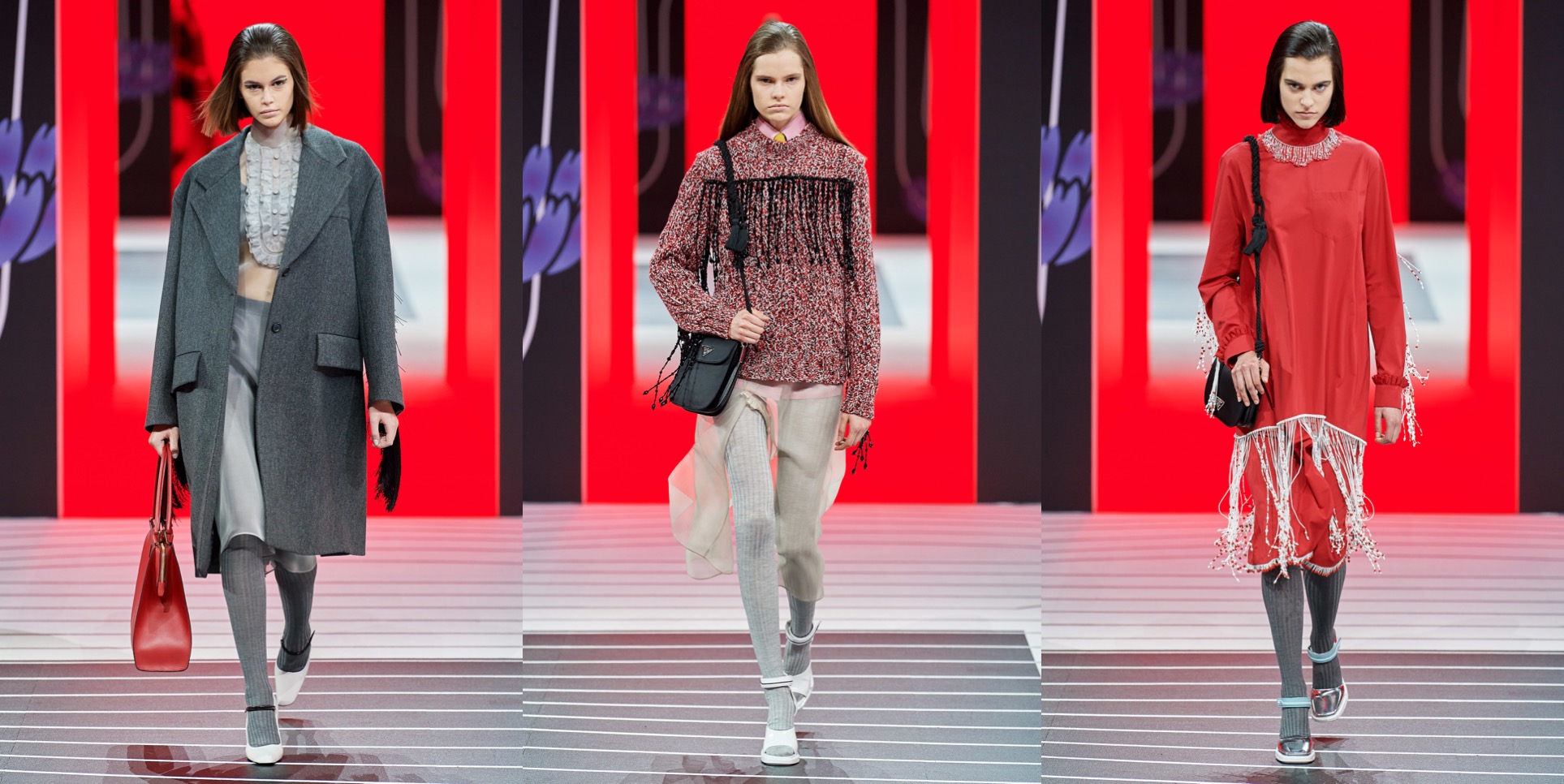
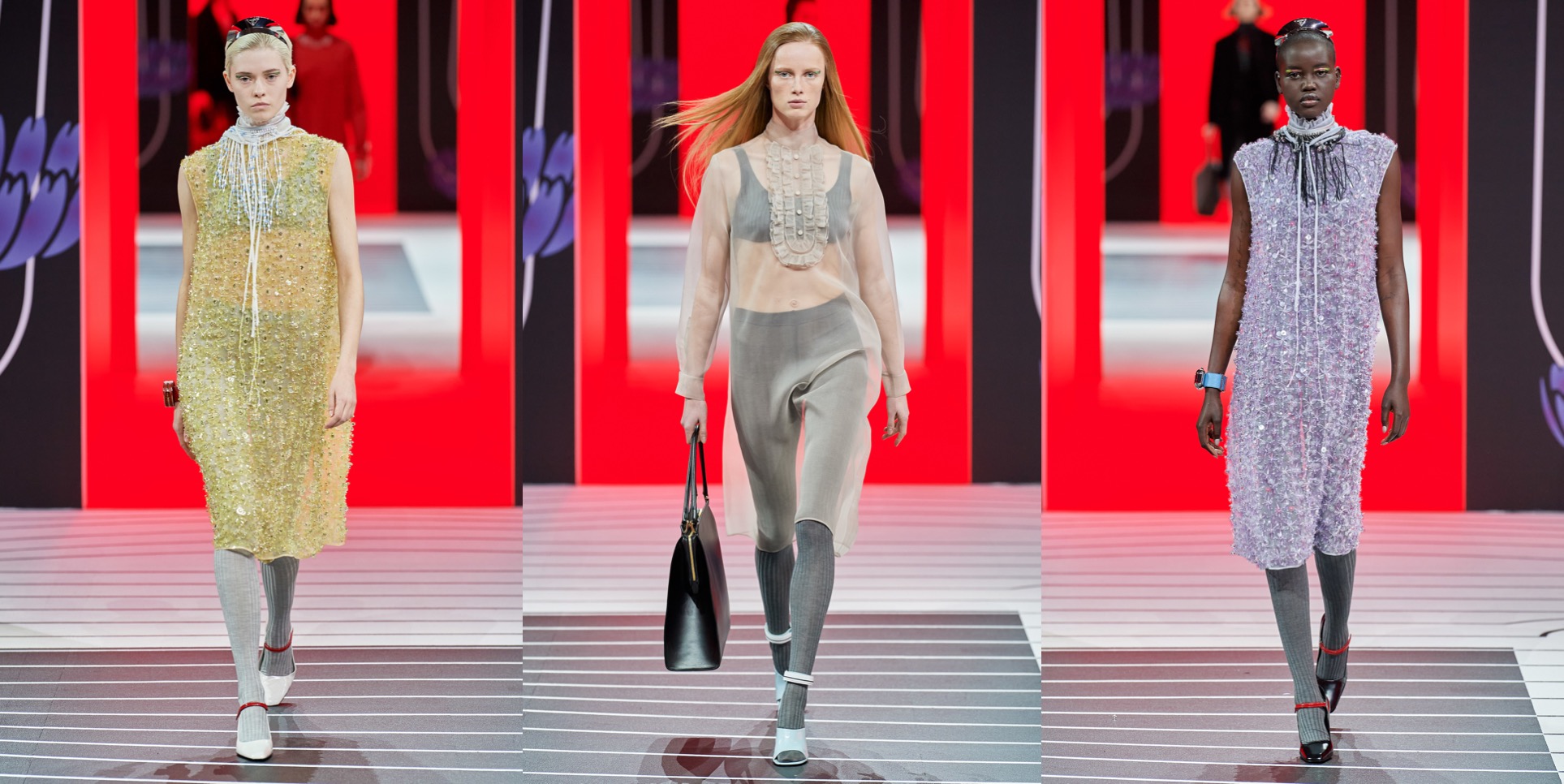
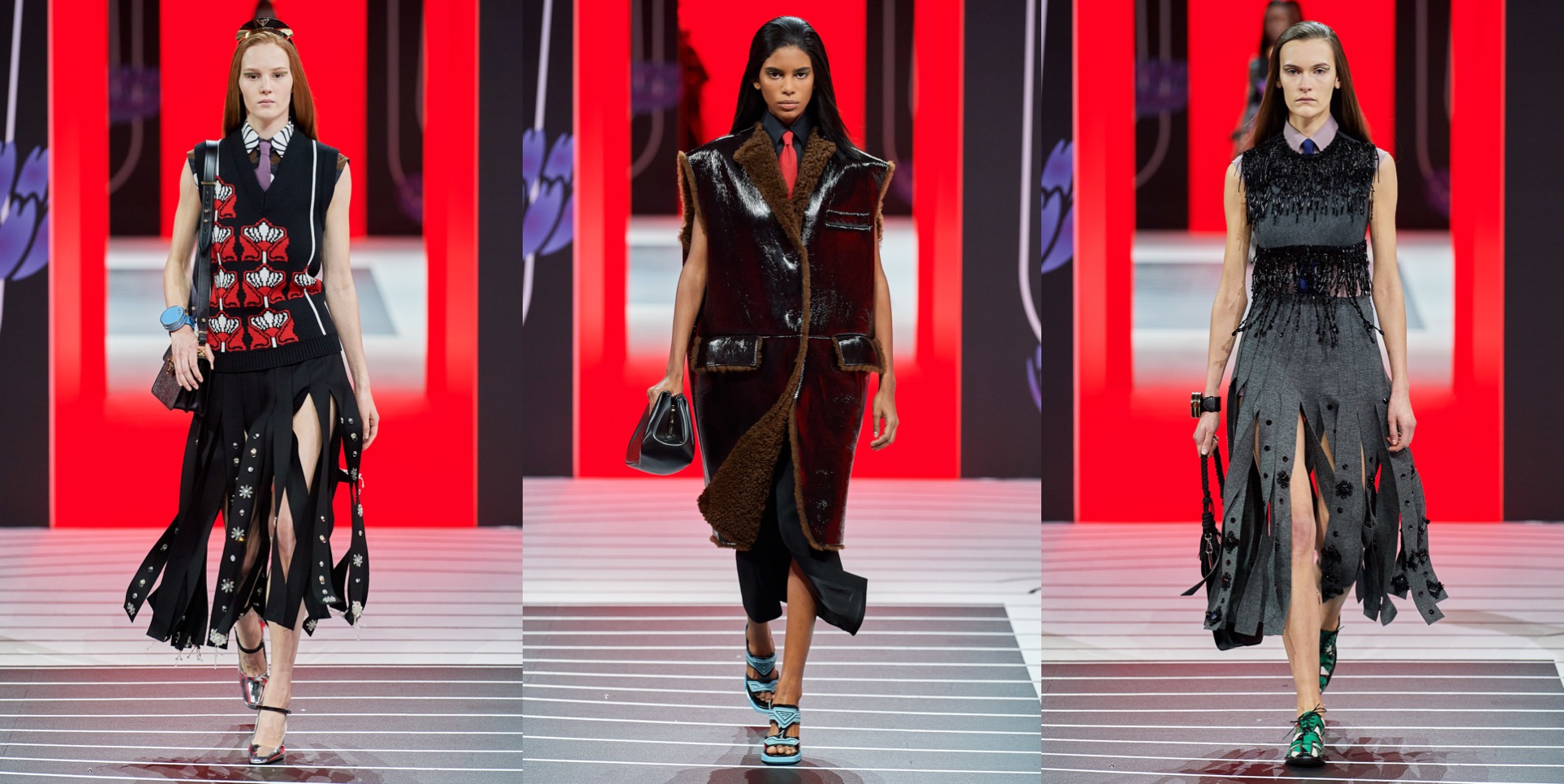
This season, Prada was about contrasts, which actually create an equilibrum. “We can be strong and feminine at the same time… women carry the weight now.Miuccia Prada was insistent: delicacy and frivolity are not antithetical to power. Finally somebody said that out loud, in the language of fashion. Beads, silks, fringes, the “clichés of femininity,” as she described them, accompanied pieces traditionally considered masculine. A boxy belted jacket was paired with a fringed skirt, while classic bib-front shirts were glammed up with skeins of crystals suspended from the shoulders. Basketball jerseys got a similar treatment, elongated to the knee and then accessorized with ropes of beads and sneaker-boot hybrids. For Prada-ists, this collection is a great retrospective of some of Miuccia’s big hits – especially autumn-winter 2017, autumn-winter 2015, spring-summer 2014 and autumn-winter 2009 – which were patchworked into something new. Prada’s vocabulary is so wide and distinct that there’s no wonder why she is bringing some ideas back to her work.

Collage by Edward Kanarecki.
The Ritual. Gucci AW20

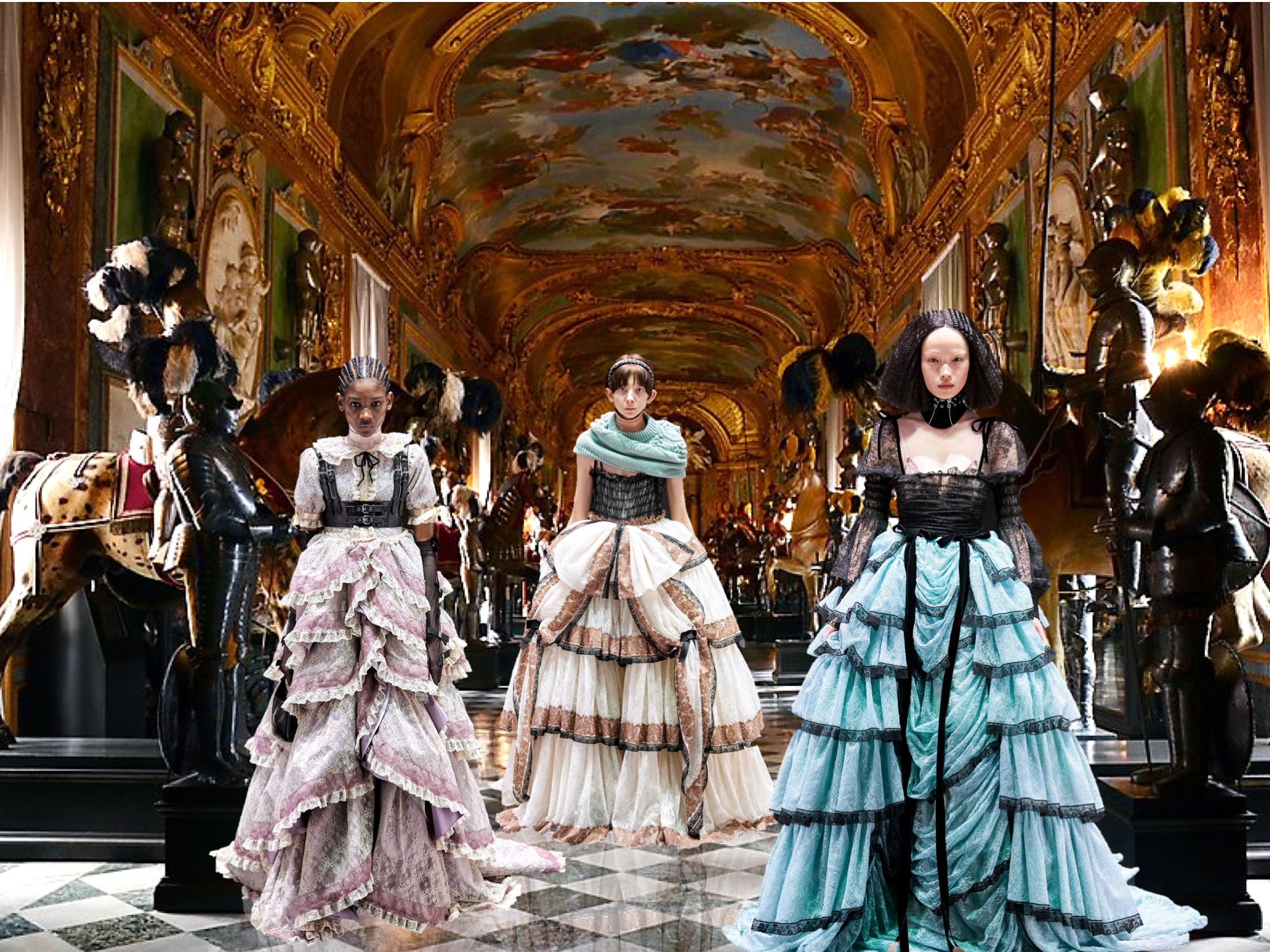
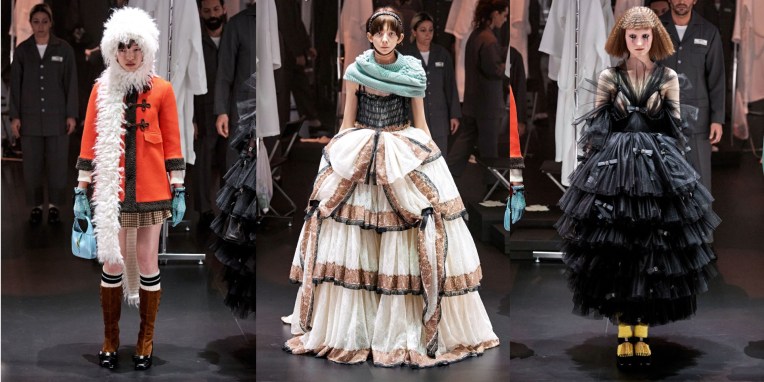
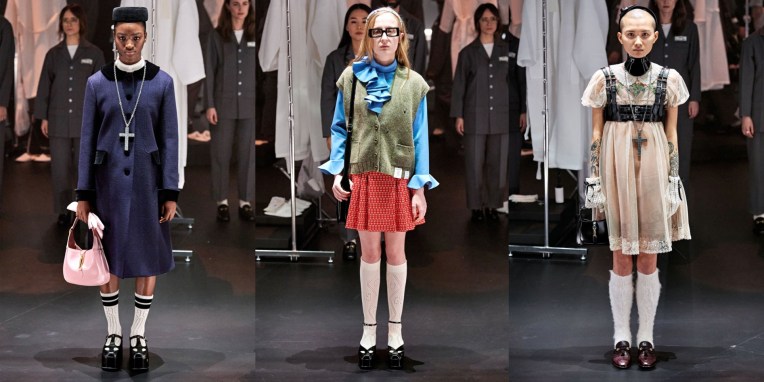
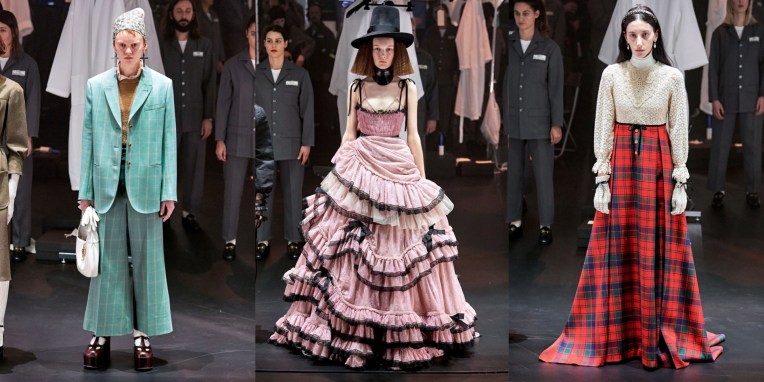
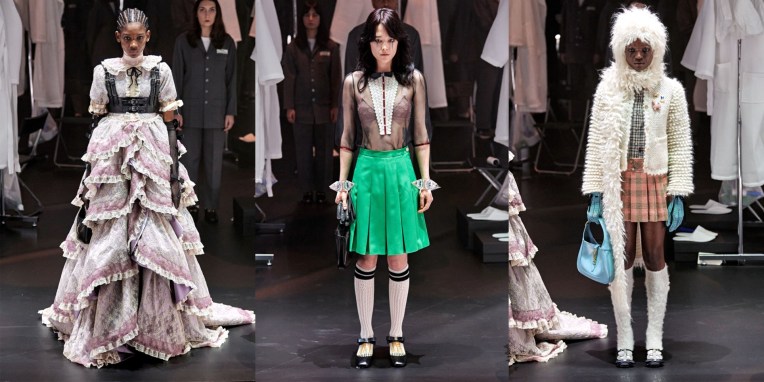
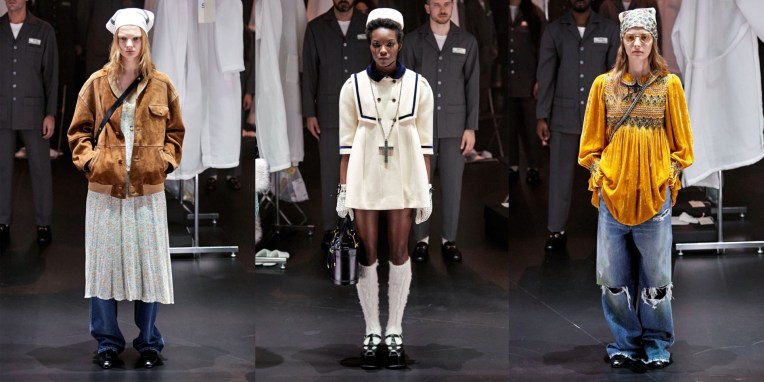
For a good start of Milan fashion week, at the very beginning of the Gucci show, the curtain was pulled back on the frenzied sort of preparations that typically happen backstage of any runway presentation. On a rotating carousel, bathrobe-clad models were quickly trussed and styled by fleets of dressers in gray Gucci smocks before taking their place along the stage’s edge. The vintage-feeling clothes, which included big hats and opera gloves, were no less theatrical – there were frilly baby-doll dresses, bell-bottom suits in pastels and baroquely ruffled ball gowns, inspired, said Gucci’s Alessandro Michele, by the idea of a mother dressing her child for a special occasion. What truly appealed to me in this show is Michele’s embrace of the dress-up ritual. It can be spontaneous, planned, conscious or unconscious, one day you can look like Janis Joplin, another be a goth lolita, and then on Friday be the S&M-version of Marie Antoinette. The opening look perfecly showed the theme of the collection: a confused-looking model in one of those gowns, with a chunky knitted sweater over her head.

Slajd1-kopia 5Slajd2-kopia 8Slajd3-kopiaSlajd4Slajd5Slajd6-kopia

Collage by Edward Kanarecki.

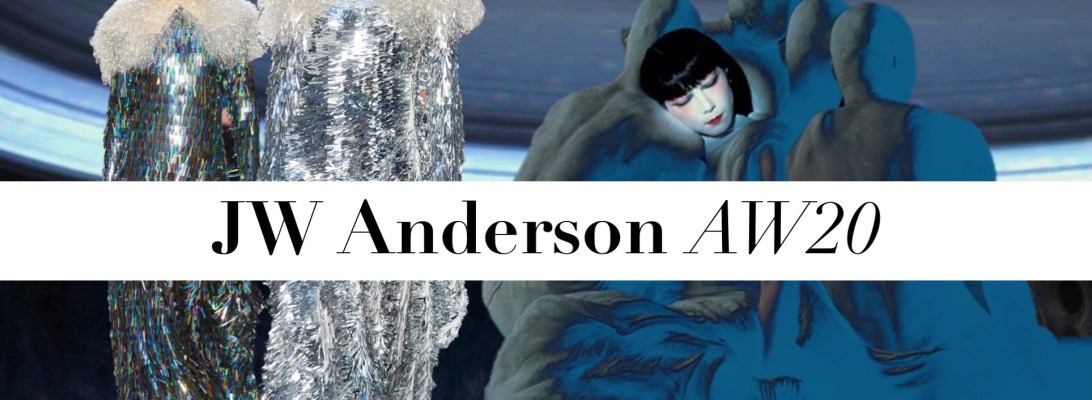
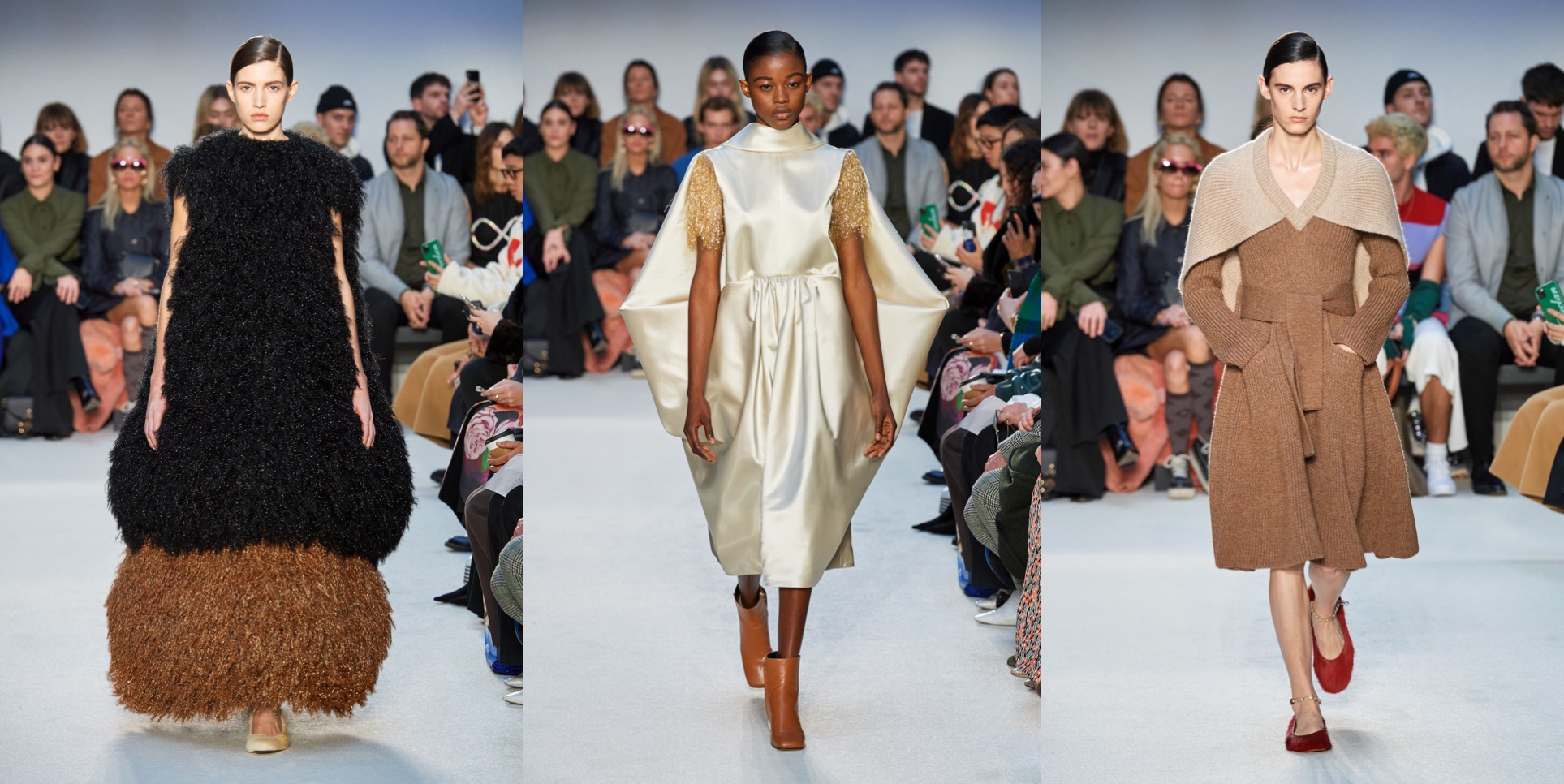
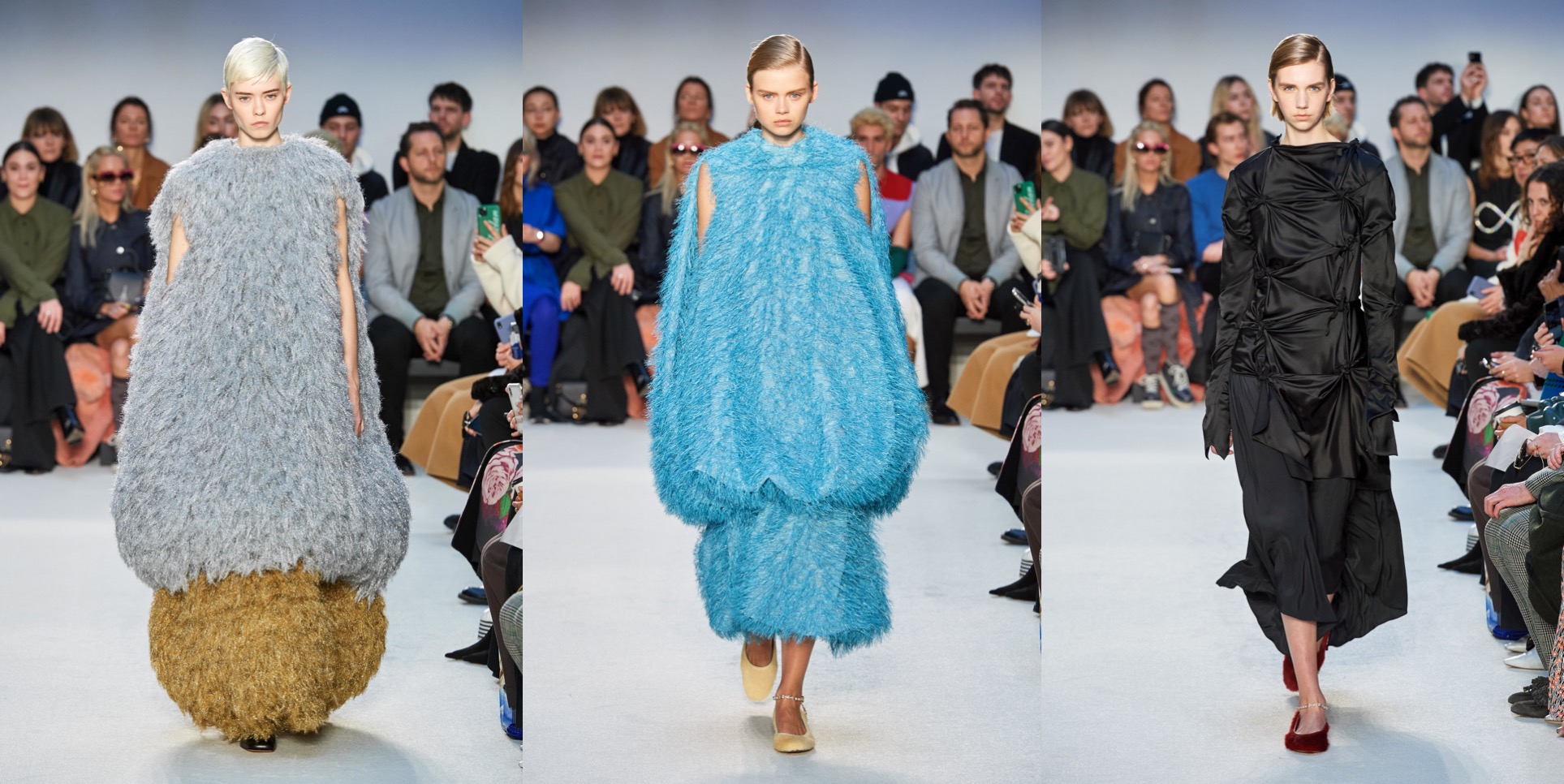
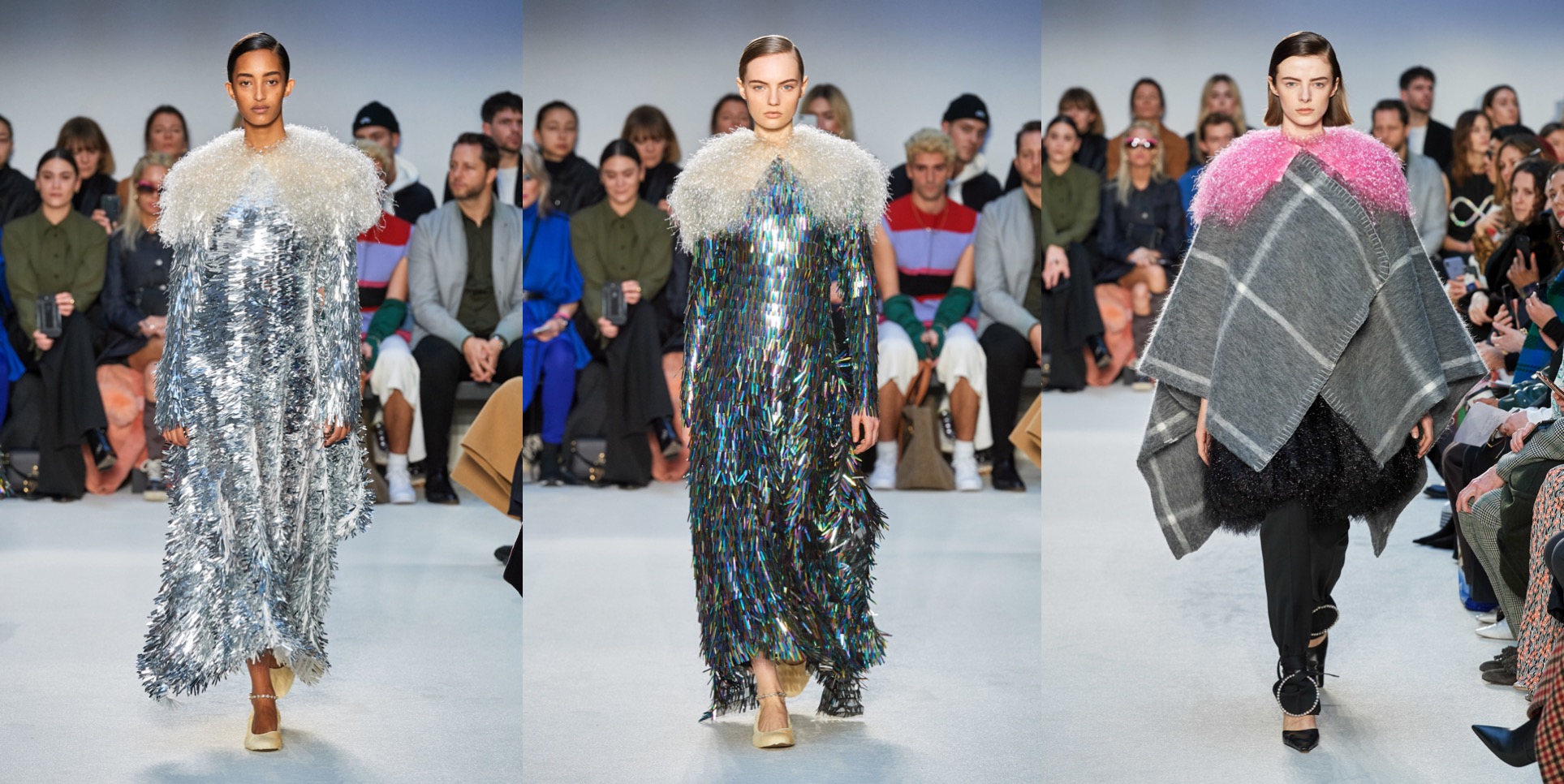
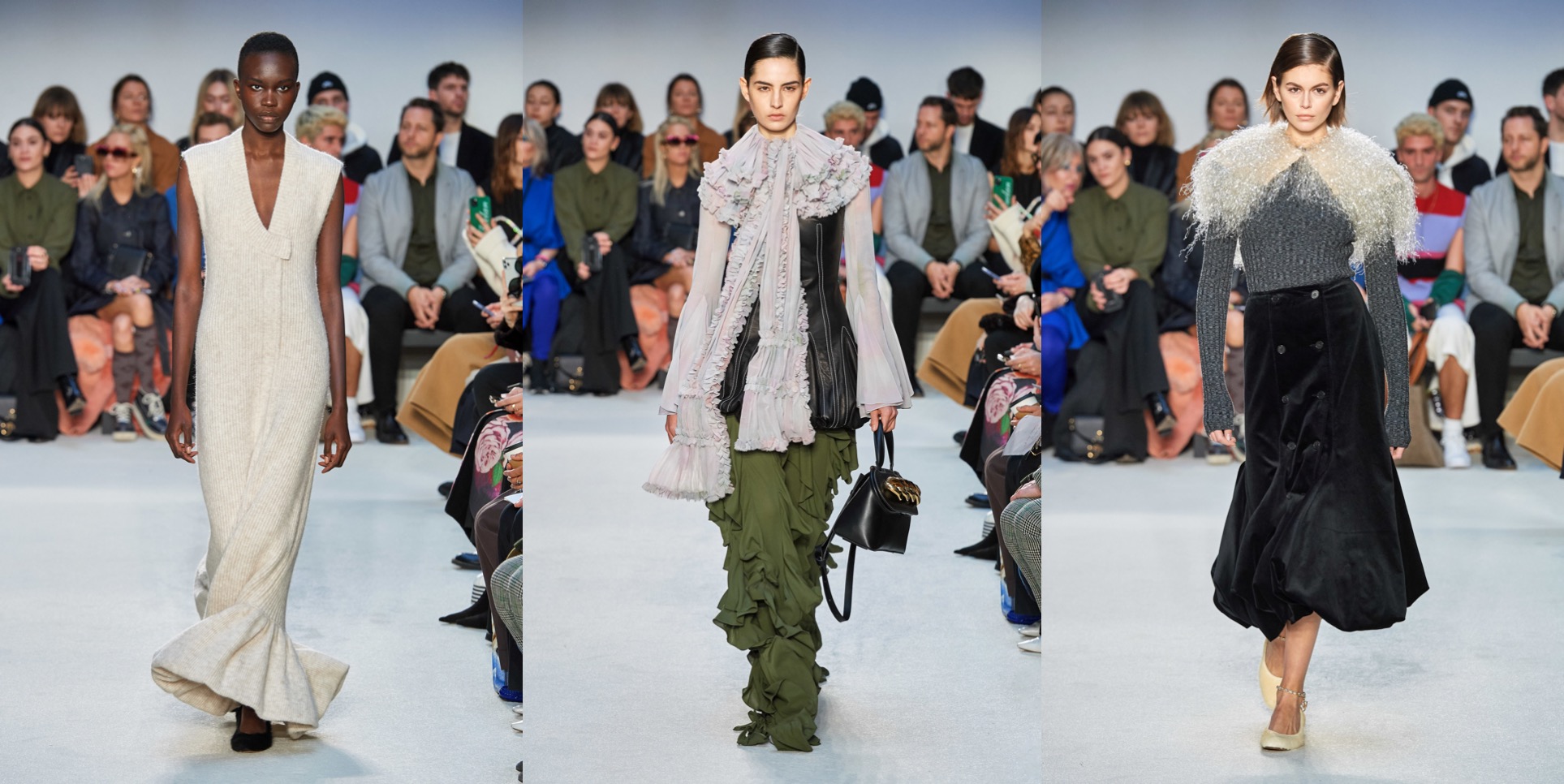
Nouveau Chic. JW Anderson AW20

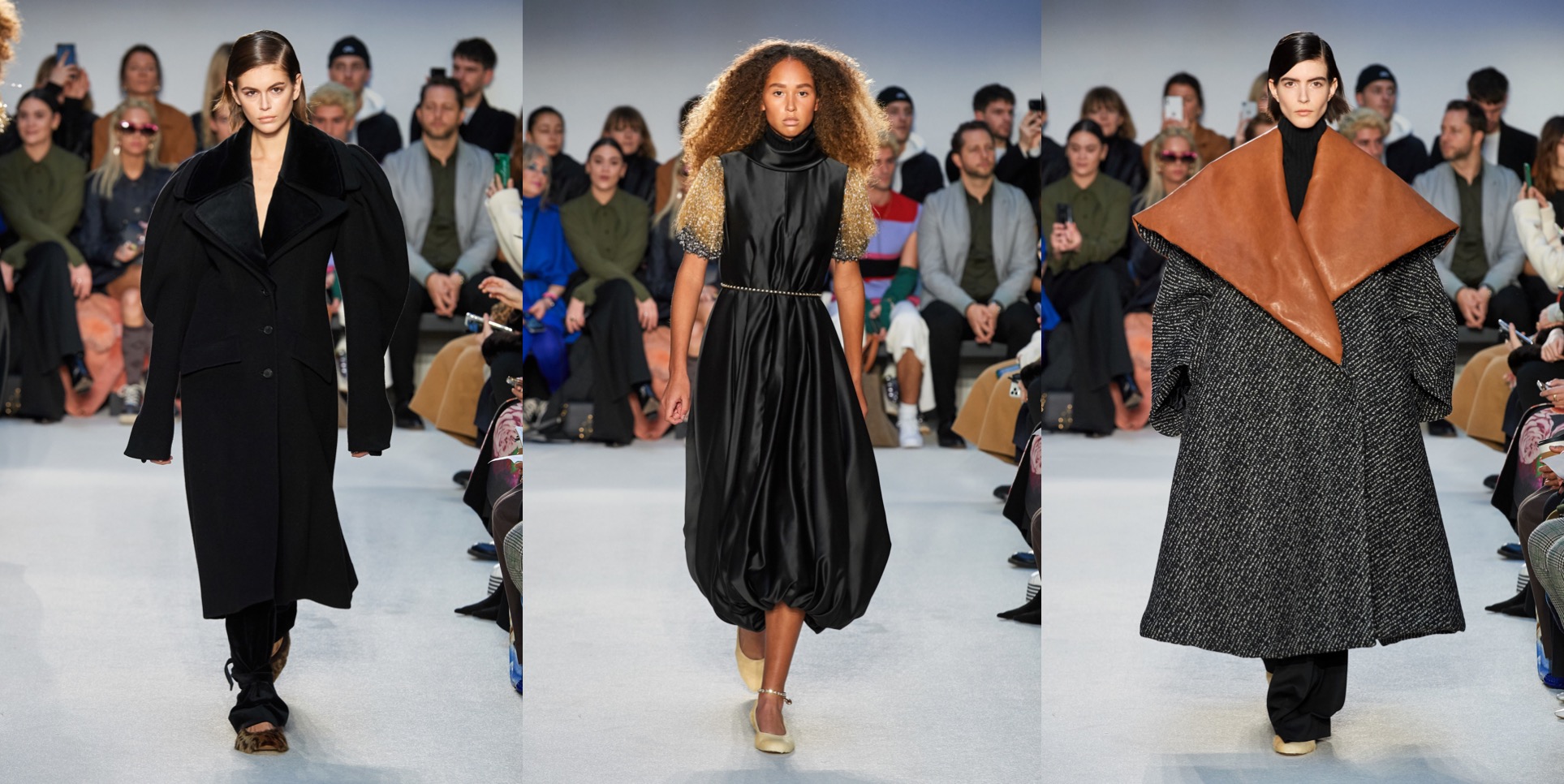
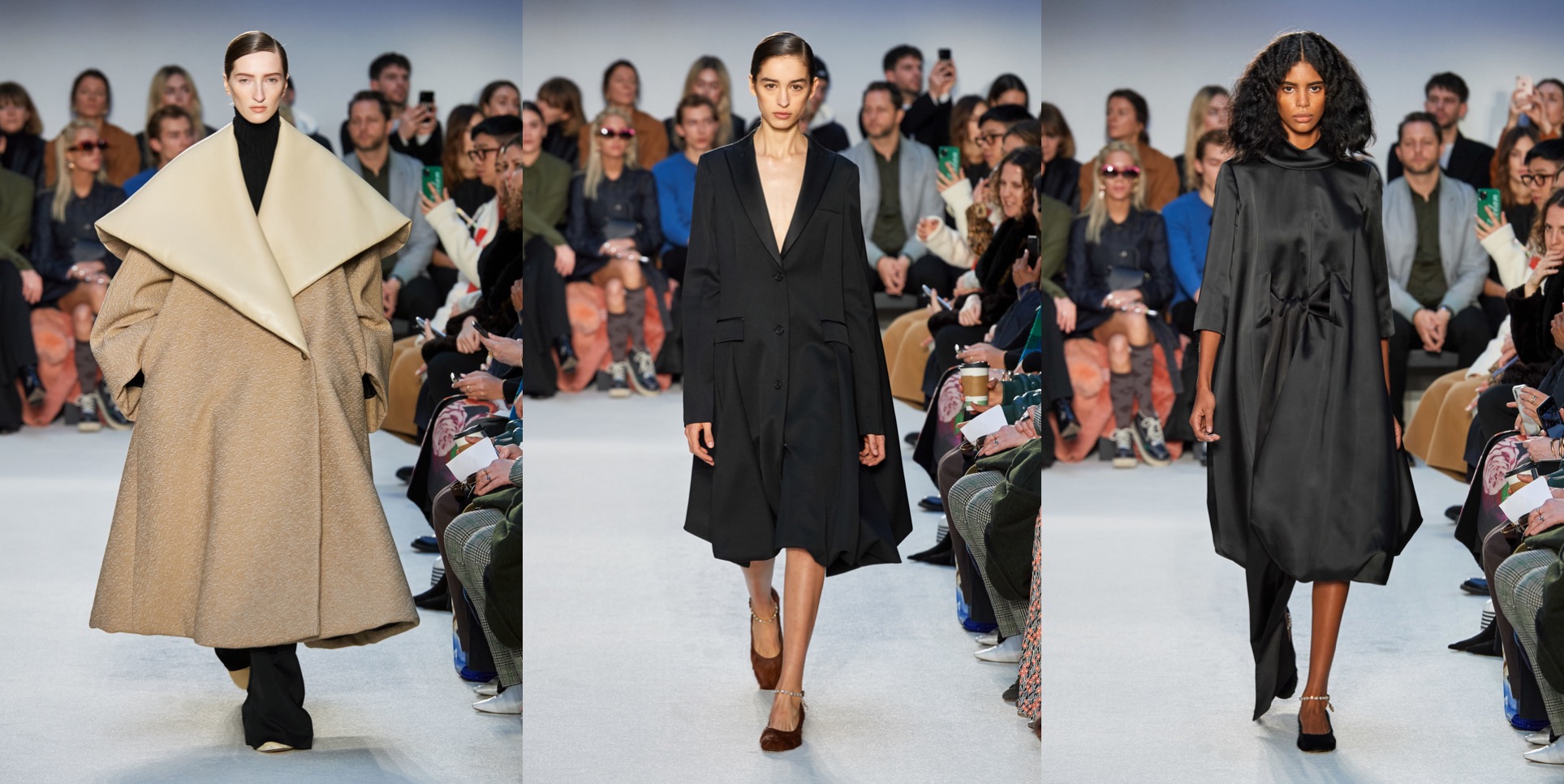
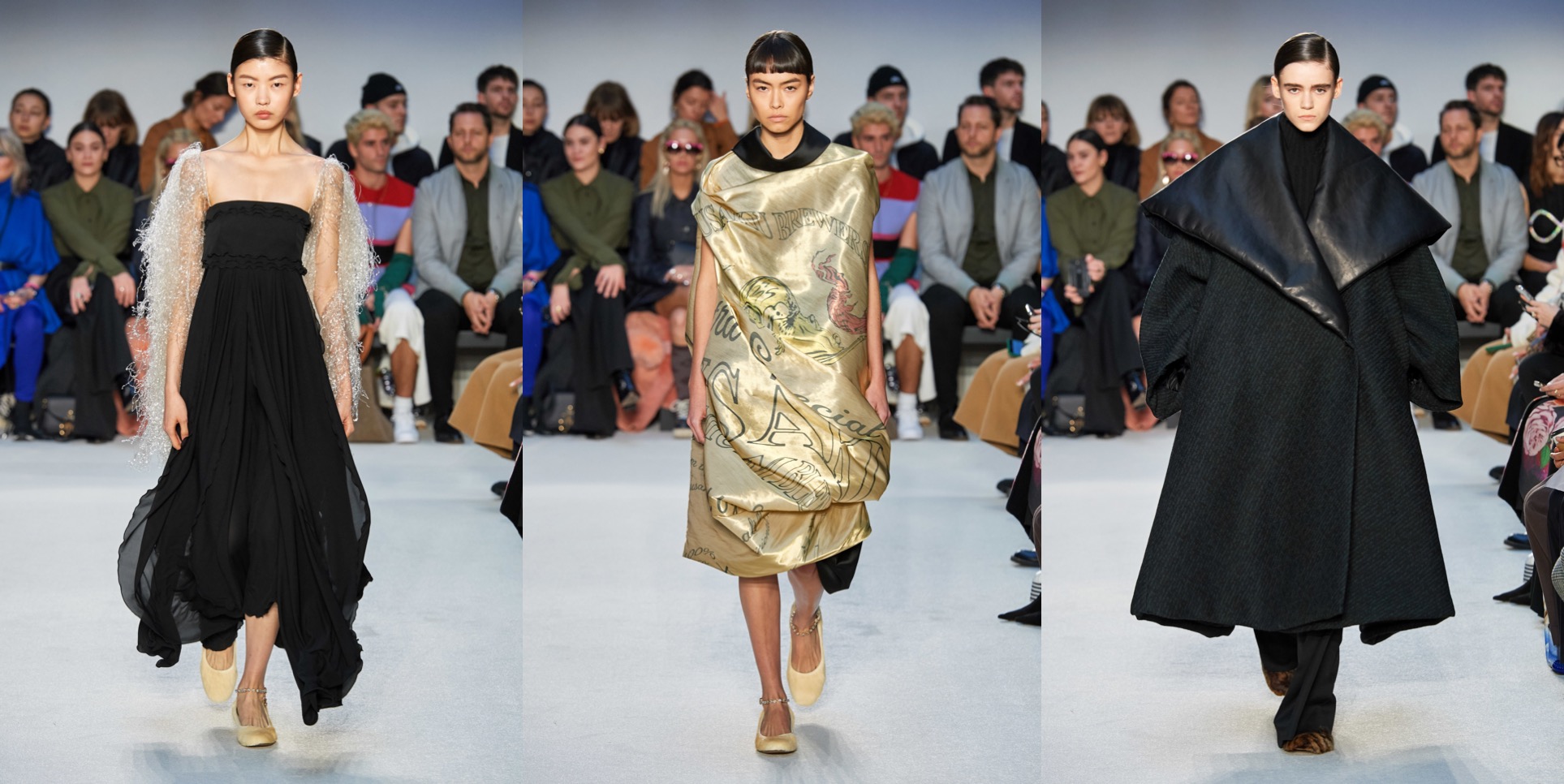
JW Anderson was brilliant! “Nouveau chic” was the term Jonathan Anderson coined for his autumn-winter 2020 collection. The designer mentioned he’d been thinking about what it takes to enter a room – and clothes are the first (and the best) communicators. The ability to take up space with a strong silhouette is part of that – starting with the impression one can make with a fabulous coat. There were three iterations of huge trapeze shapes in tweed, camel hair, and black wool: blown-up classics with generous leather shawl collars that will catch attention wherever you are. This season, not only the couture silhouettes stunned, but as well the innovative, sci-fi direction of the fabrics. It came with a puff of what Anderson called “antique celluloid” around the shoulders. It was part of the experimental theme that played around the sleeves of a series of black dresses. In a strapless version, it fell like an angel-wing cape around the model’s arms. The simpler offering was delightful as well. Take rib-knit dresses with caped shoulders or a shawl-collar black tuxedo suit. Now I can’t wait to see what Anderson cooked up at Loewe for this season…

Collage by Edward Kanarecki.