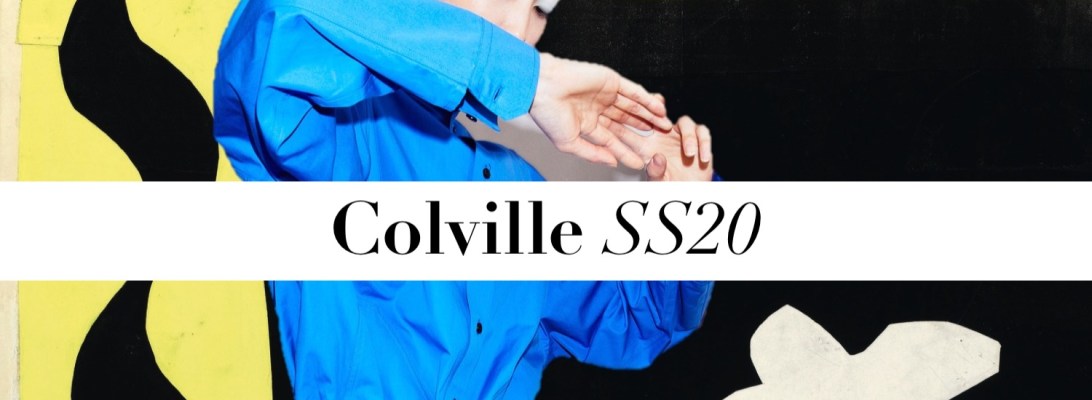
Bold And Sustainable. Colville SS20

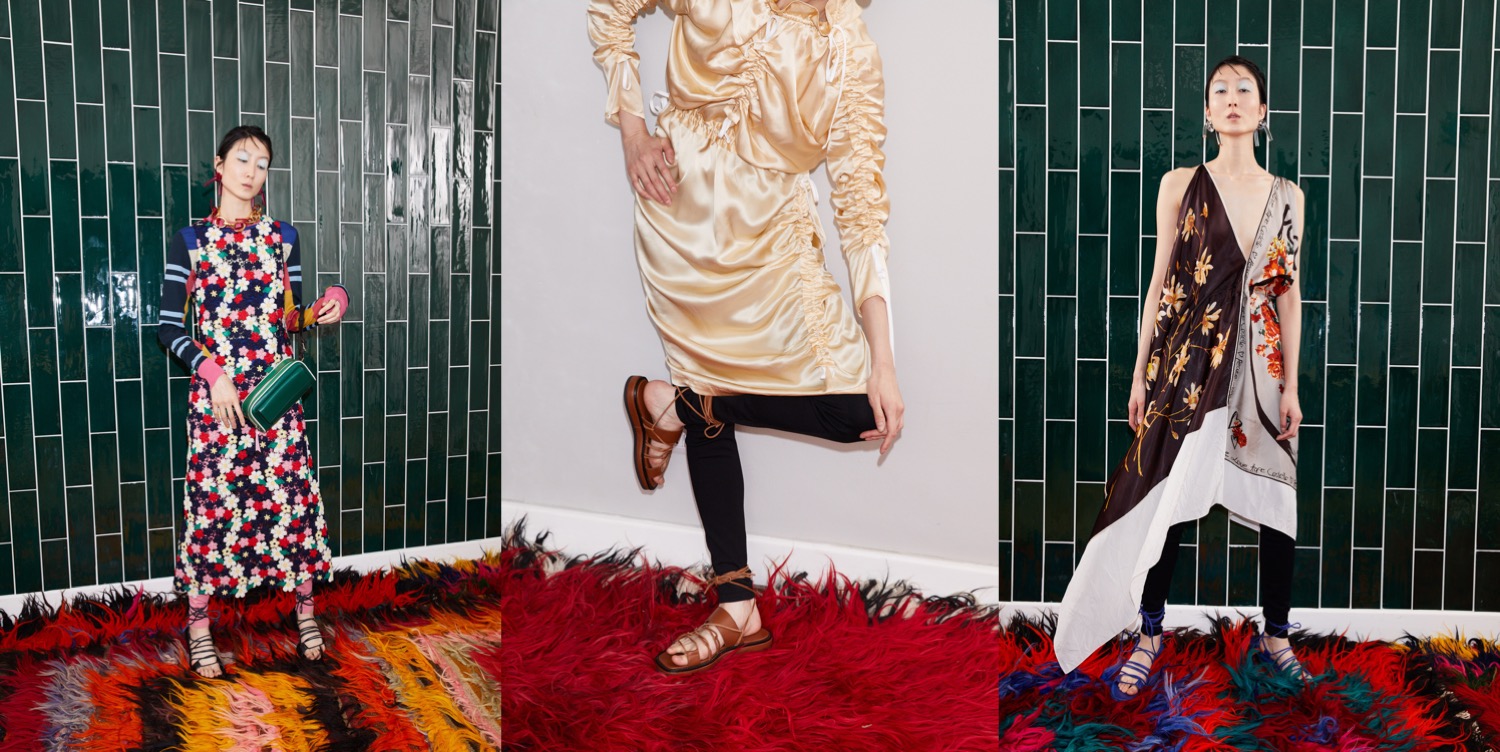
 Co-founded by Molly Molloy, Kristin Forss and Lucinda Chambers, Colville – the London/Milan-based brand – is independent, off-kilter and too cool for the traditional fashion industry. Colville is the creative encounter between three different minds and three personal points of view. The trio have worked together at Marni, while Chambers was Consuelo Castiglioni’s longtime stylist and is famous for her sense for eclectic layering. Their spring-summer 2020 collection involved working collaboratively with a Colombian women’s group on charming woven bags, and they’re sourcing vintage silk scarves and old shell jackets from the ’90s and turning them into graceful dresses and  sleeved shrugs. Social responsibility and upcycling are buzzwords that fashion companies use as their marketing ploy. But for Colville, this isn’t a trend. Molloy, Forss, and Chambers are really, truly close to the product. Those are clothes to be worn, cherished, mixed and matched. Clothes that are bold and brave, considered and careful, sensitive and detailed. Colville designer have a soft point for bold floral prints and off-kilter silhouettes (if you worked with Castiglioni, that’s an inheritable trait), like an upside-down shirt whose sleeves drape below the hips and a trompe l’oeil skirt that looks like a folded-over dress. The collection as well features amazing raincoats made from boat sails. Keep this brand on your radar next season, if you’re looking for truly sustainable, bold fashion.
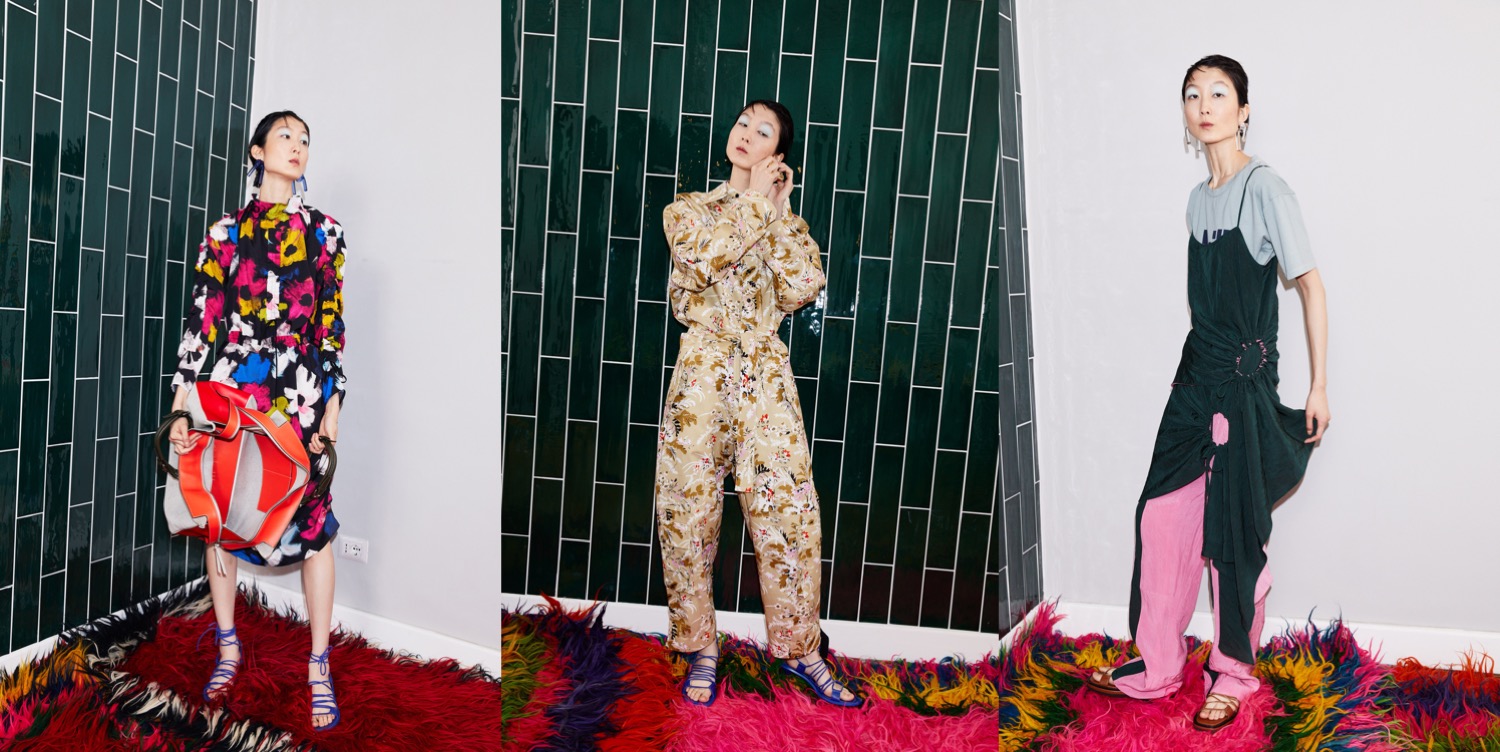
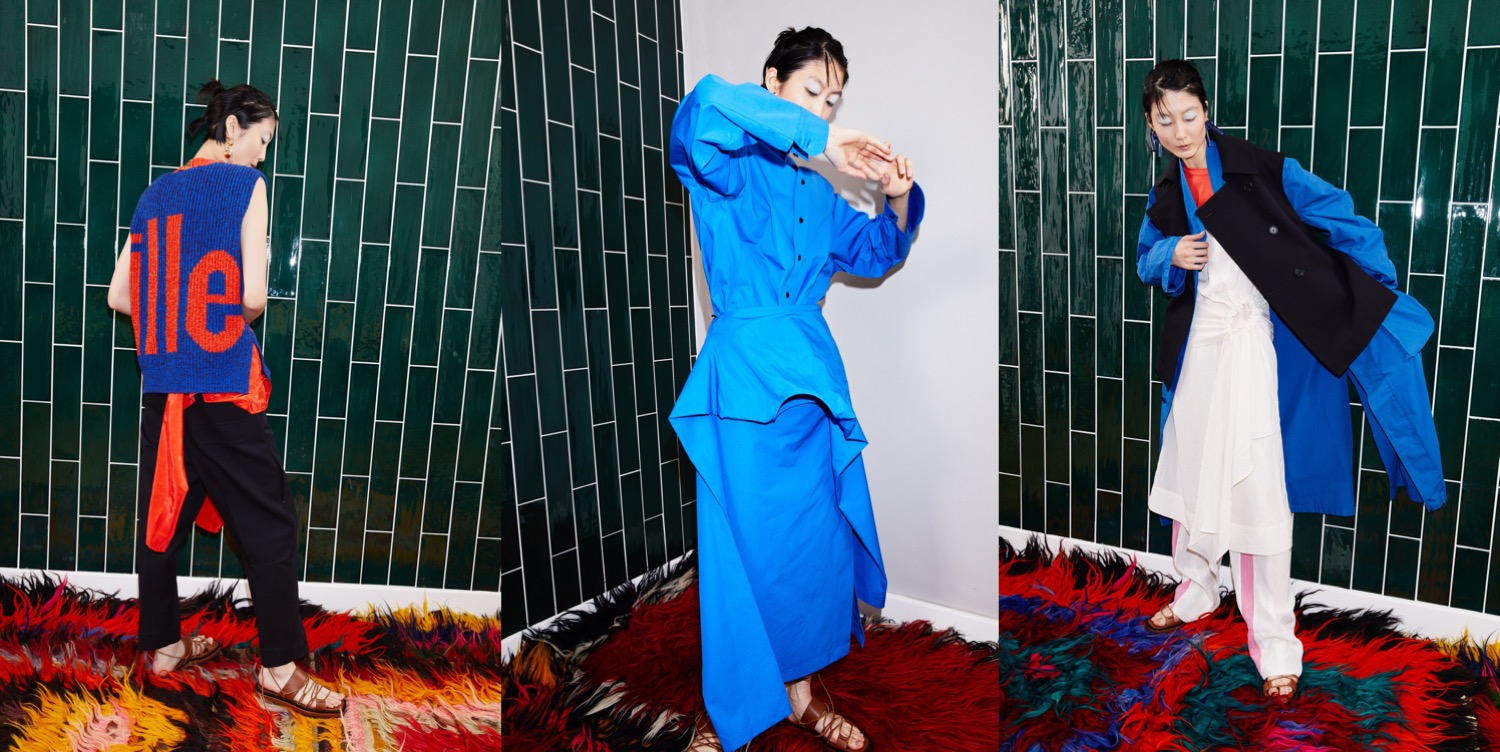
Collage by Edward Kanarecki.
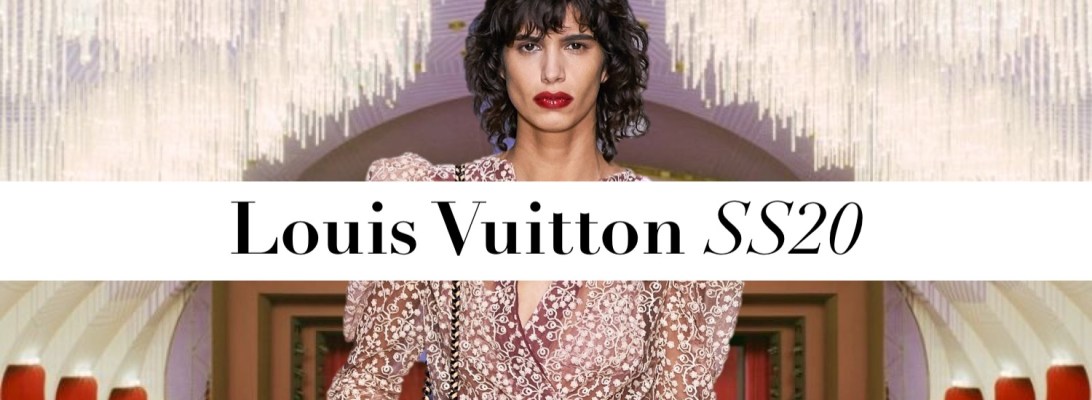
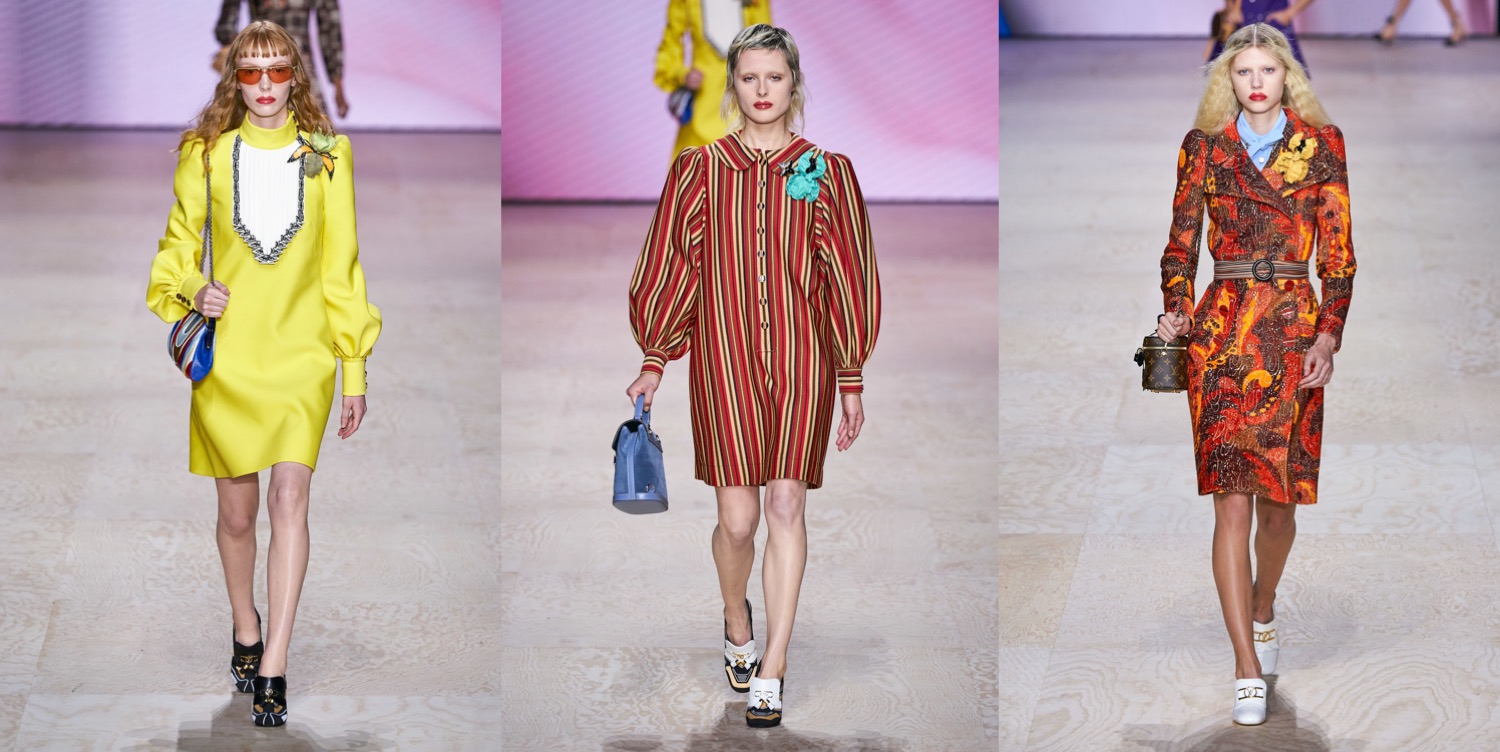
Belle Époque Today. Louis Vuitton SS20

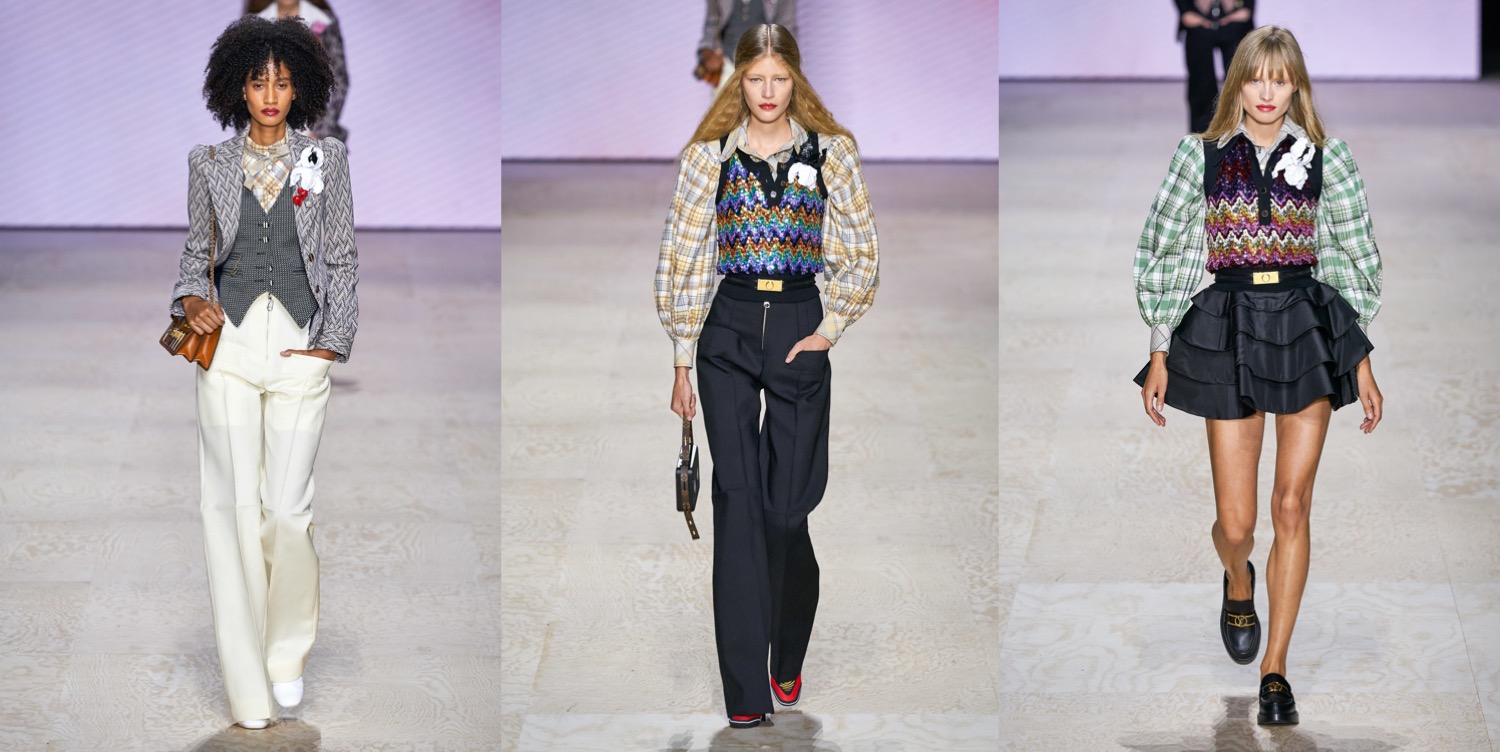
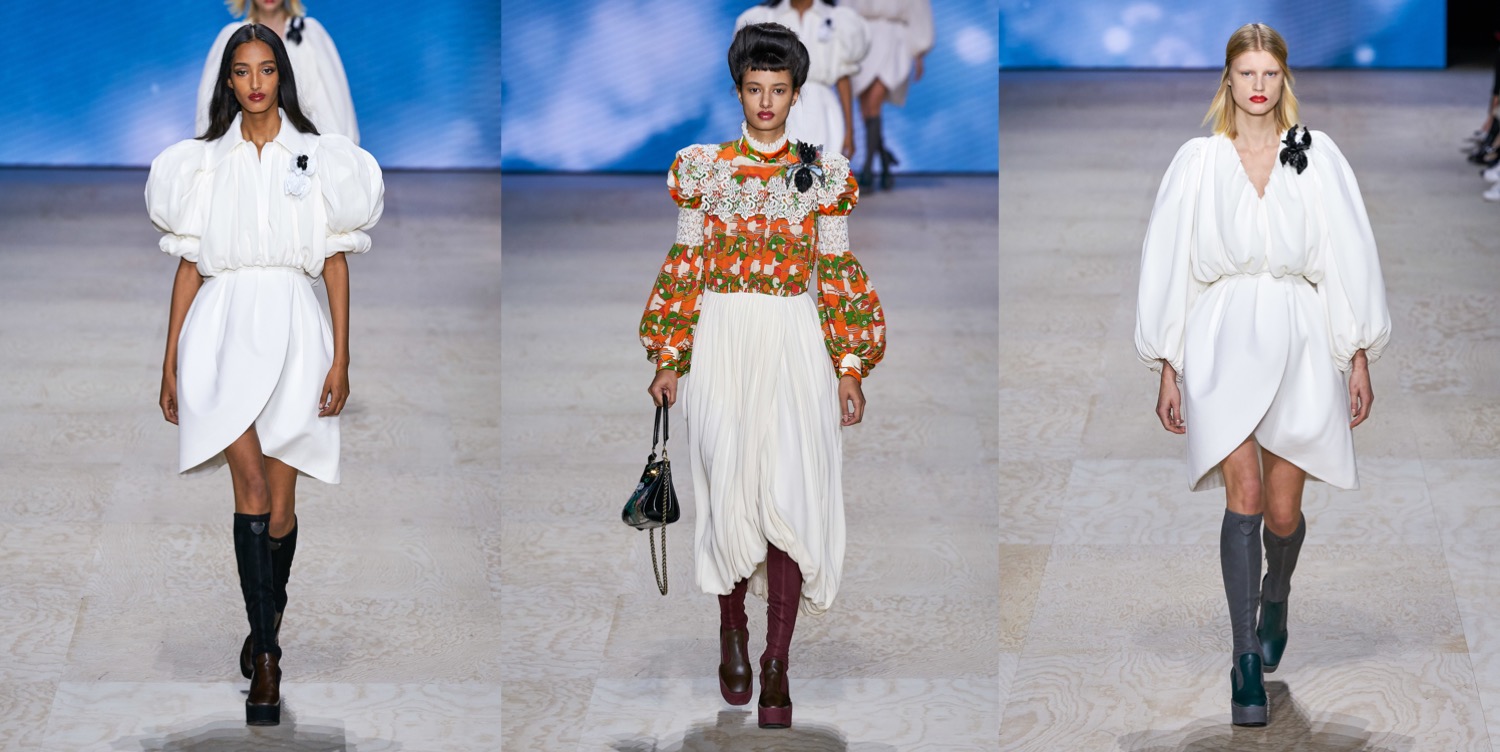
And here is the last collection of Paris Fashion Week: Louis Vuitton. It’s been a season of joyful nostalgia and bold dressing, and Nicolas Ghesquière ticked both boxes with his line-up. For spring-summer 2020 Ghesquière took us to Belle Époque–era Paris after his last season‘s venture to the 1980s. “It’s a part of French history that’s very interesting in art, as well as culturally, in terms of emancipation of women, and, of course, in literature with Proust,” he explained. It’s also a period that more or less coincided with the birth and rise of the house of Louis Vuitton. In the late 1800s, advances in construction and technology ushered in a new era of travel for the elite, to whom Monsieur Vuitton sold his  monogram trunks. There were many Belle Époque references in this collection: the pouf sleeves of shirts; the iris boutonnières, each one different; the Gibson Girl hairdos, and all the Art Nouveau touches, from the psychedelic swirls of a green jacquard coat to the painterly flowers on dresses to a little leather jacket hand-painted with angelic faces. In a way I miss the times when Nicolas did future-wear: we’ve got Gucci, Paco Rabanne and a bunch of other labels that dig in the past for references. Still, the huge screen that featured super-futurist Scottish musician SOPHIE performing an extended version of “It’s Okay to Cry”  while the models walked the runway somehow matched with the clothes’ historical background. And this sort of time-spanning eclecticism is very Ghesquière.

Collage by Edward Kanarecki.

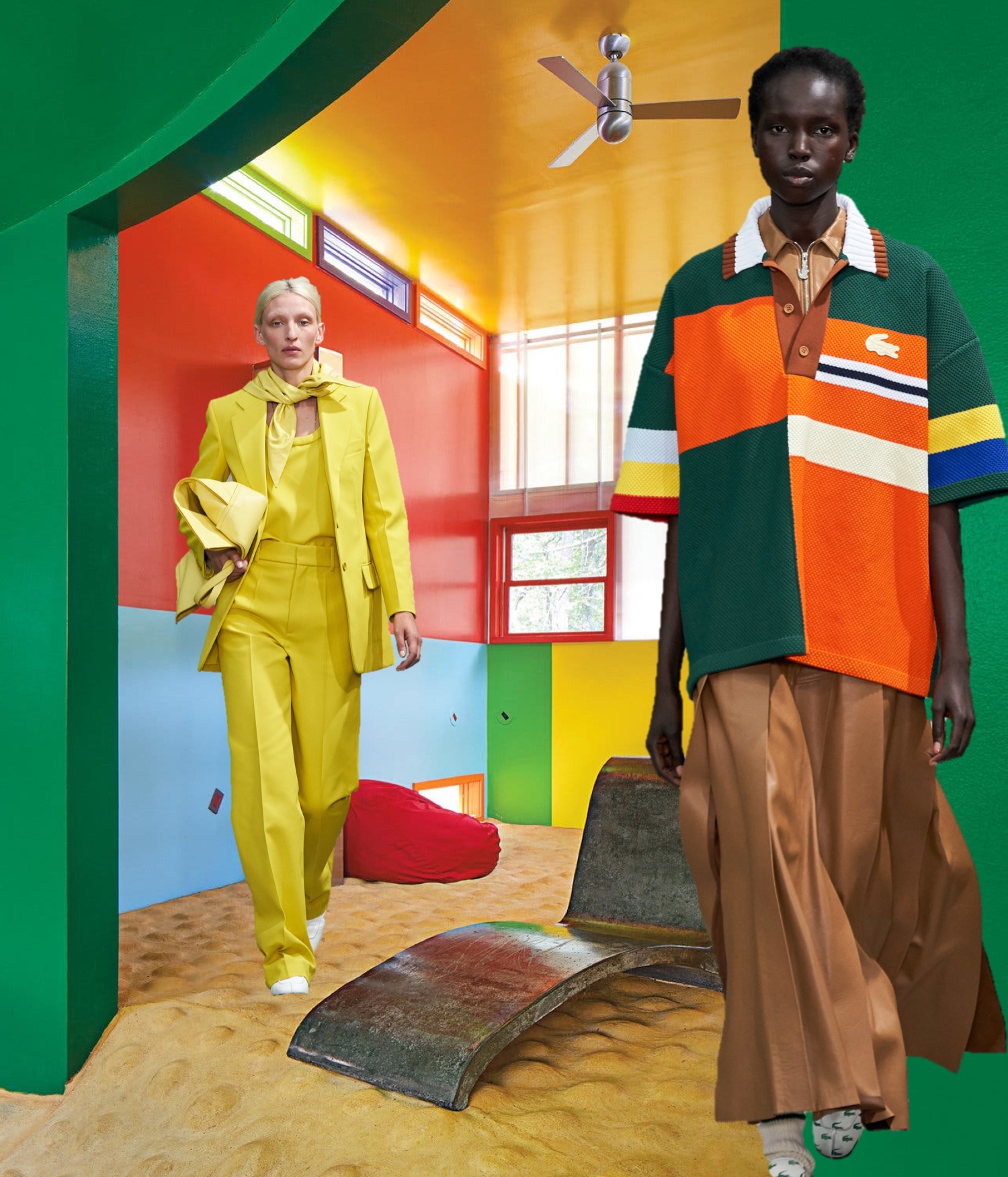
Getting Better. Lacoste SS20

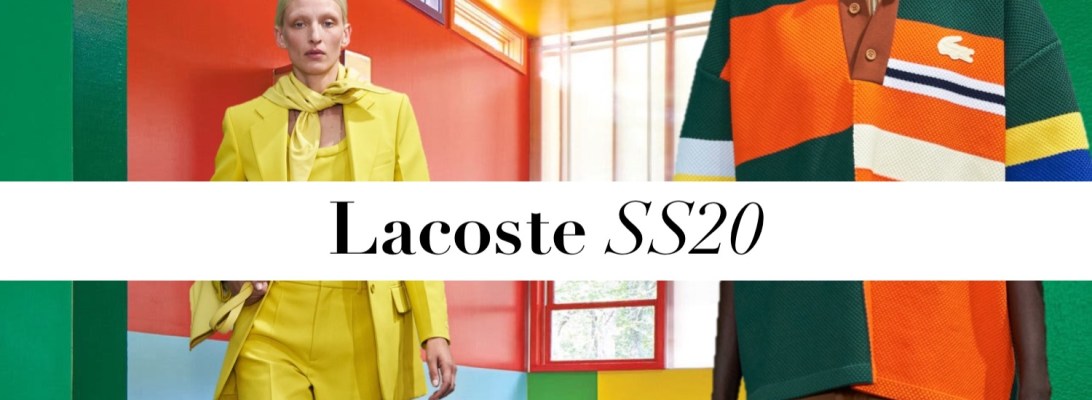
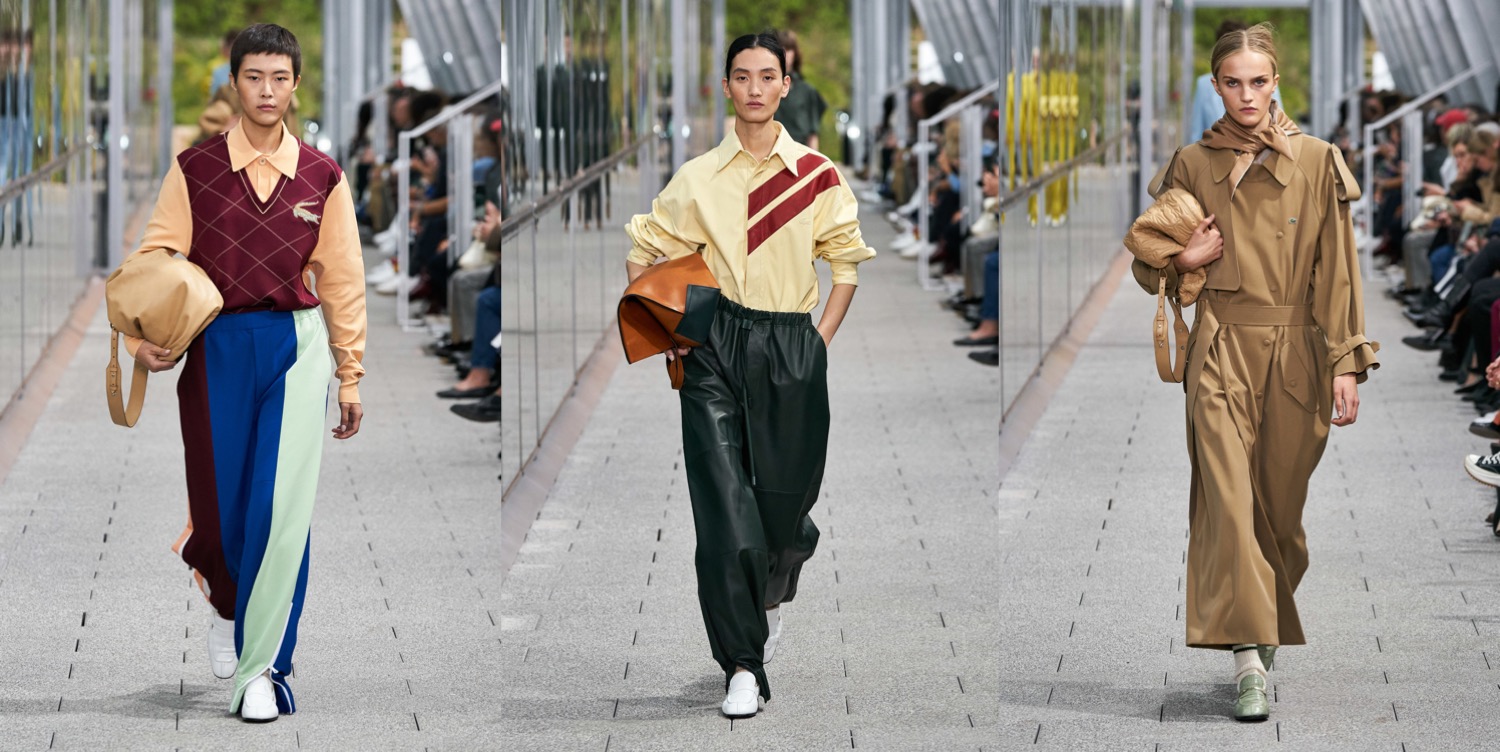
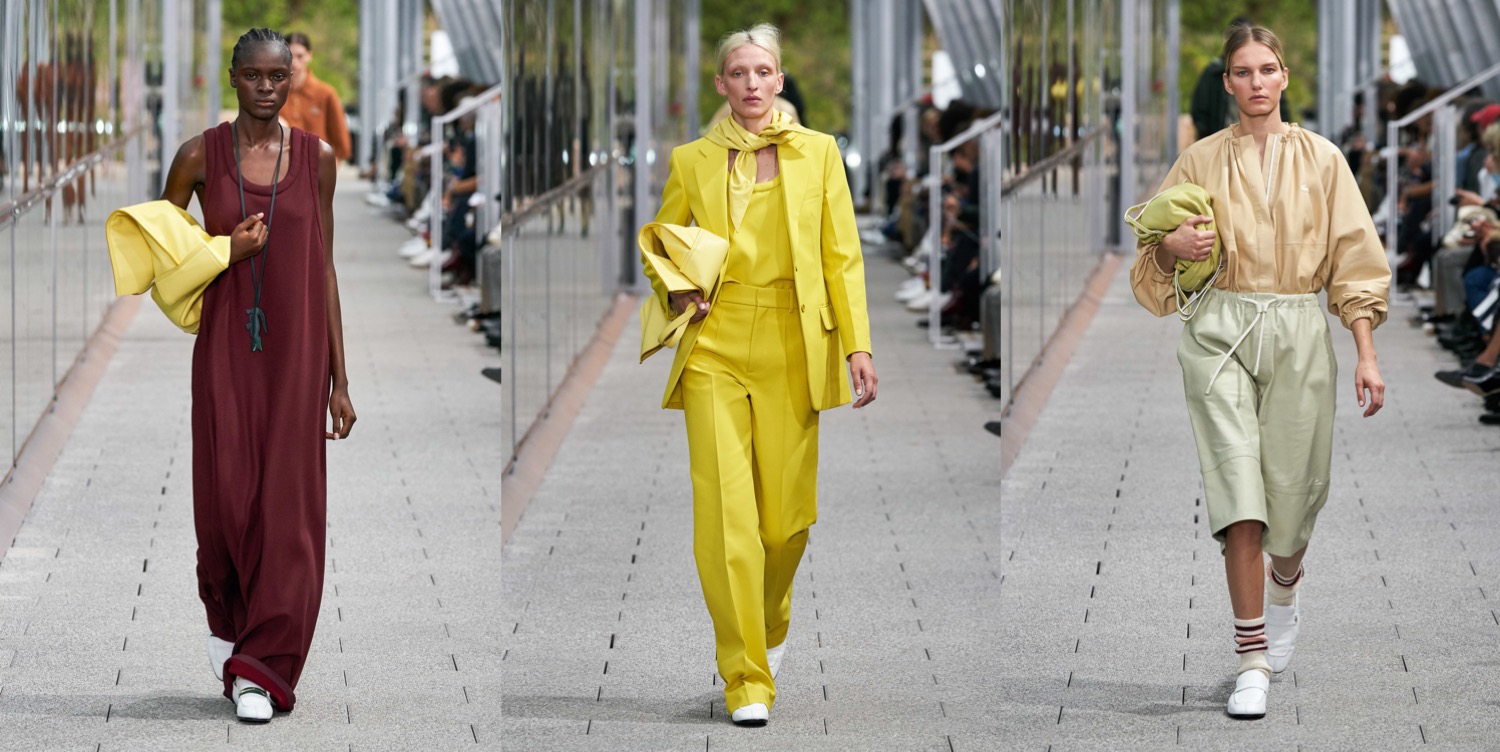
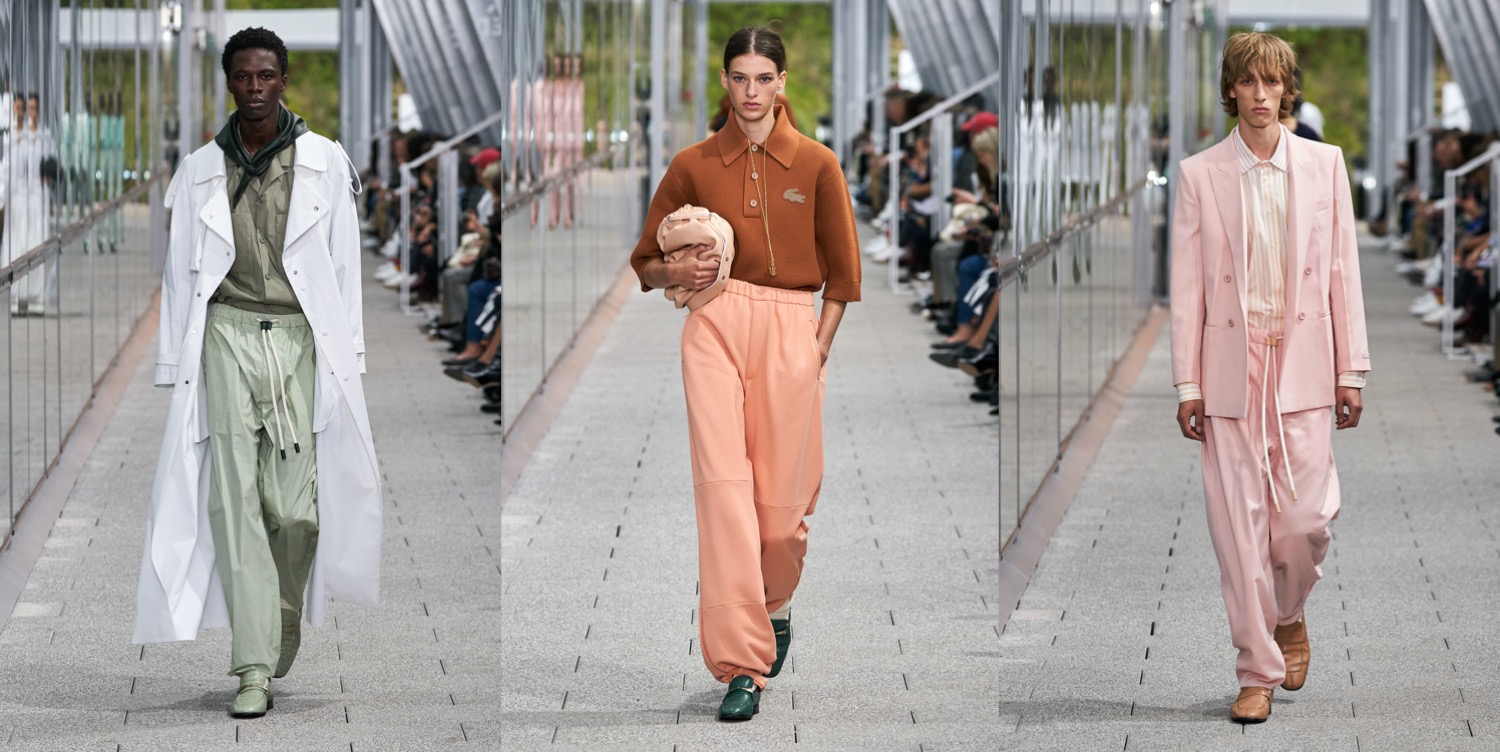
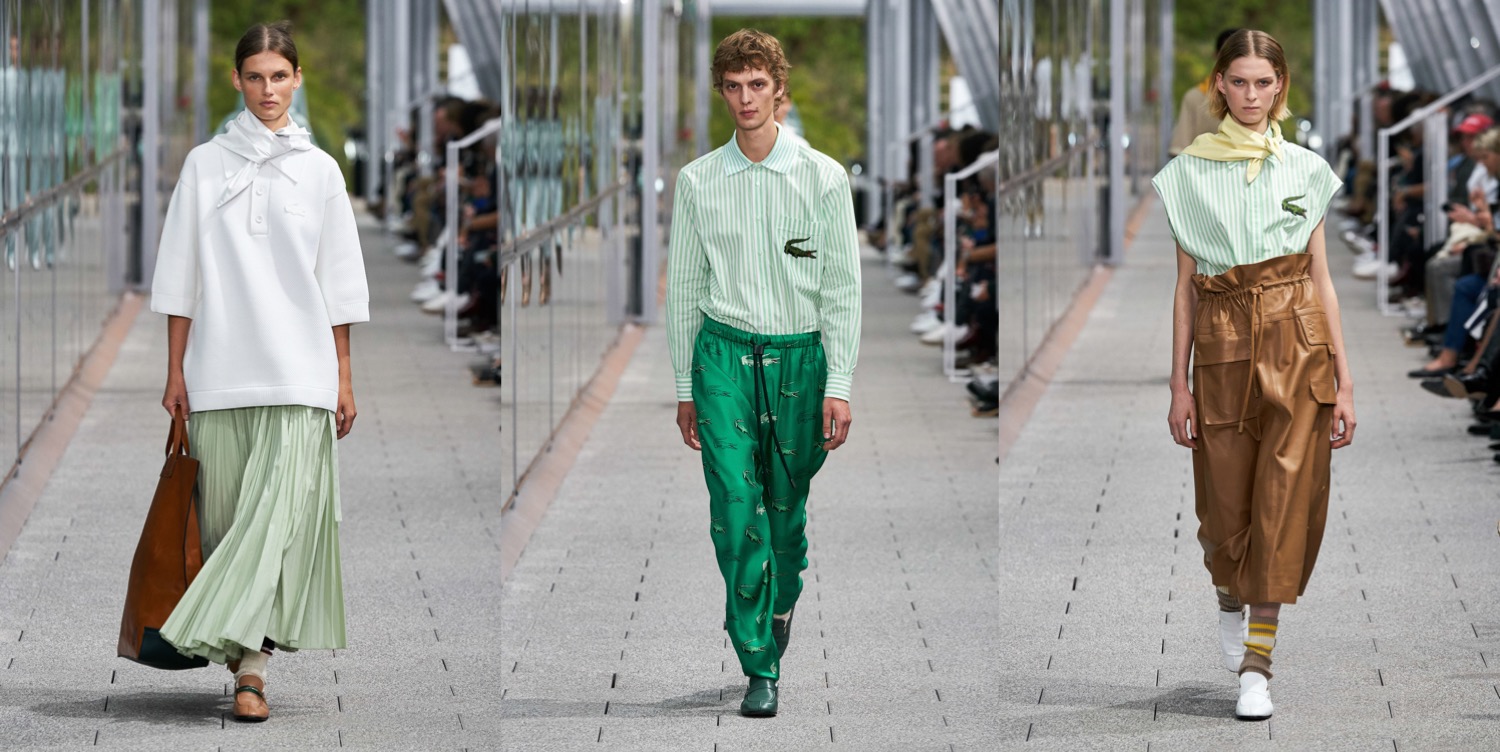
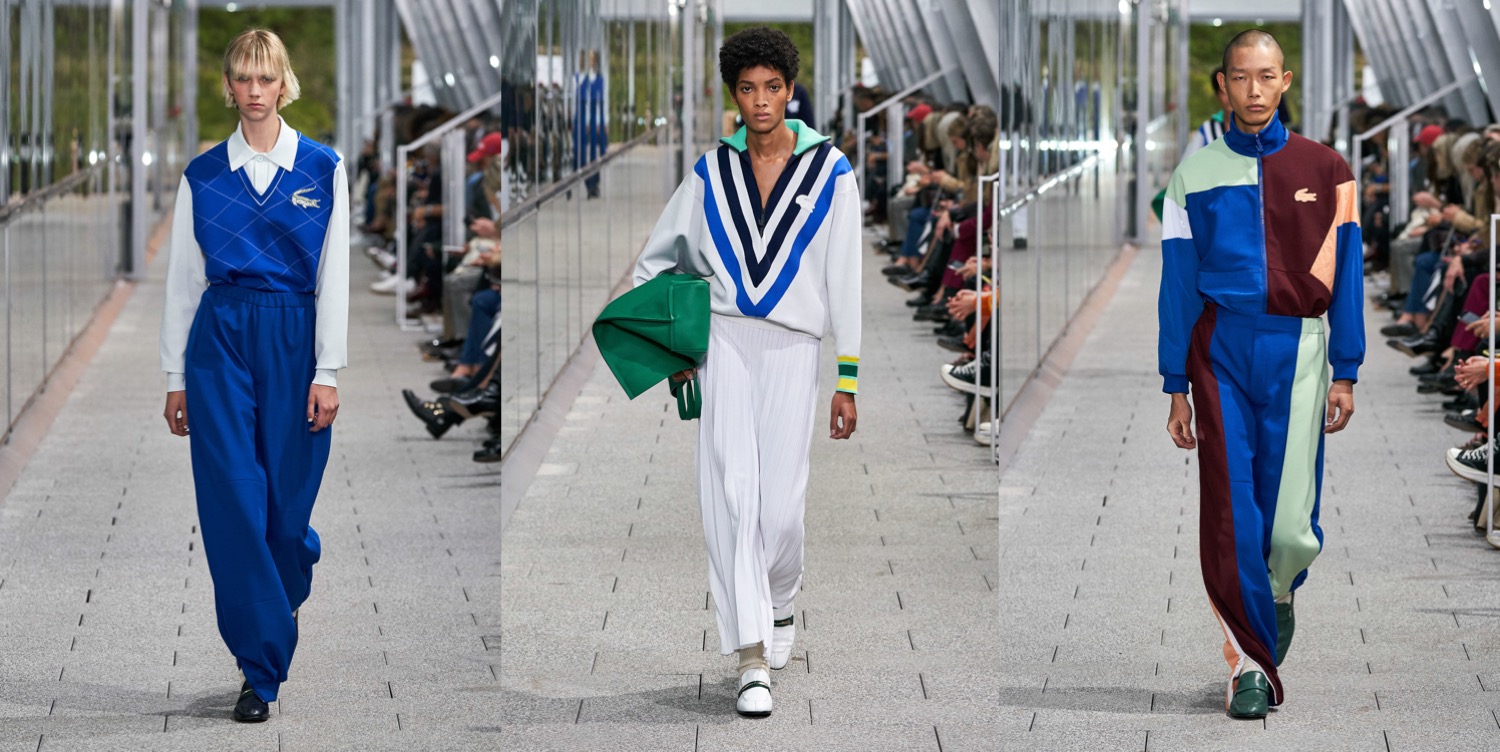
Louise Trotter‘s second collection at Lacoste proves that she knows how to direct the label. The brand is more than a tennis brand, yet its origin lies in tennis, so it was right to present the line-up at the Court Simonne-Mathieu in Paris’s Roland-Garros tennis complex. Trotter upped her focus this season by presenting a collection of clothes which, beyond the crocs stitched onto that trench or onto the sleeve of a yellow suit or printed on the silk pants, conveyed both the spirit of Lacoste and its athletic luxury convincingly. The oversized short-sleeve shirts in graphic color block were a take on the famous preppy pique shirt Lacoste sells. Obviously, Trotter’s version is much more appealing than the original Lacoste design you see at hotel resorts. We known Louise’s aesthetic from her time at Joseph, so seeing lots of minimal leather was no surprise: slouchy rib-hemmed pants and a leather neckerchief styling were great. The leather-collared polo shirtdress is another highlight. Another takeaway from the collection is green poplin dress and a white pleated skirt look. With the help of Suzanne Koller’s styling, Trotter’s Lacoste is heading for a win.

Collage by Edward Kanarecki.

Chic Remaking and Altering. Miu Miu SS20

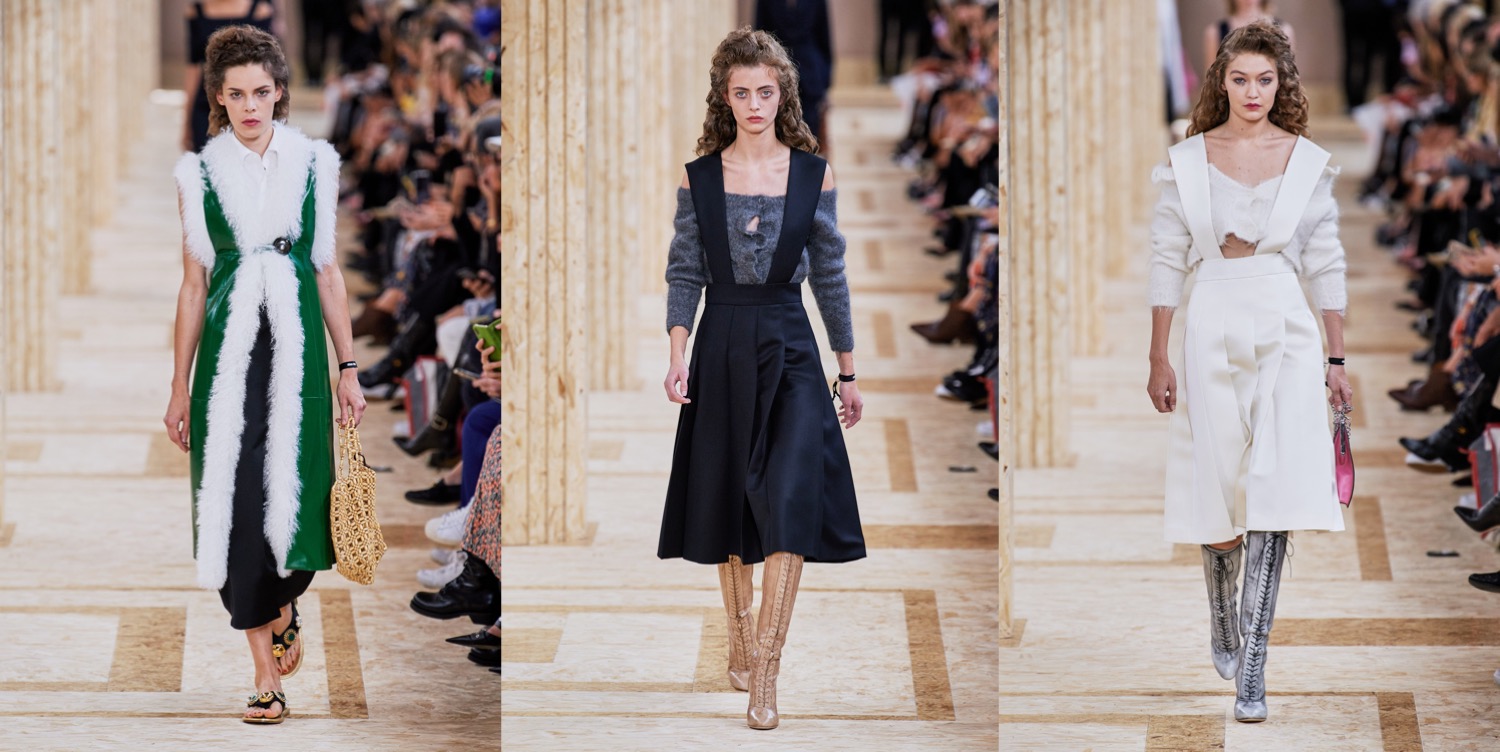
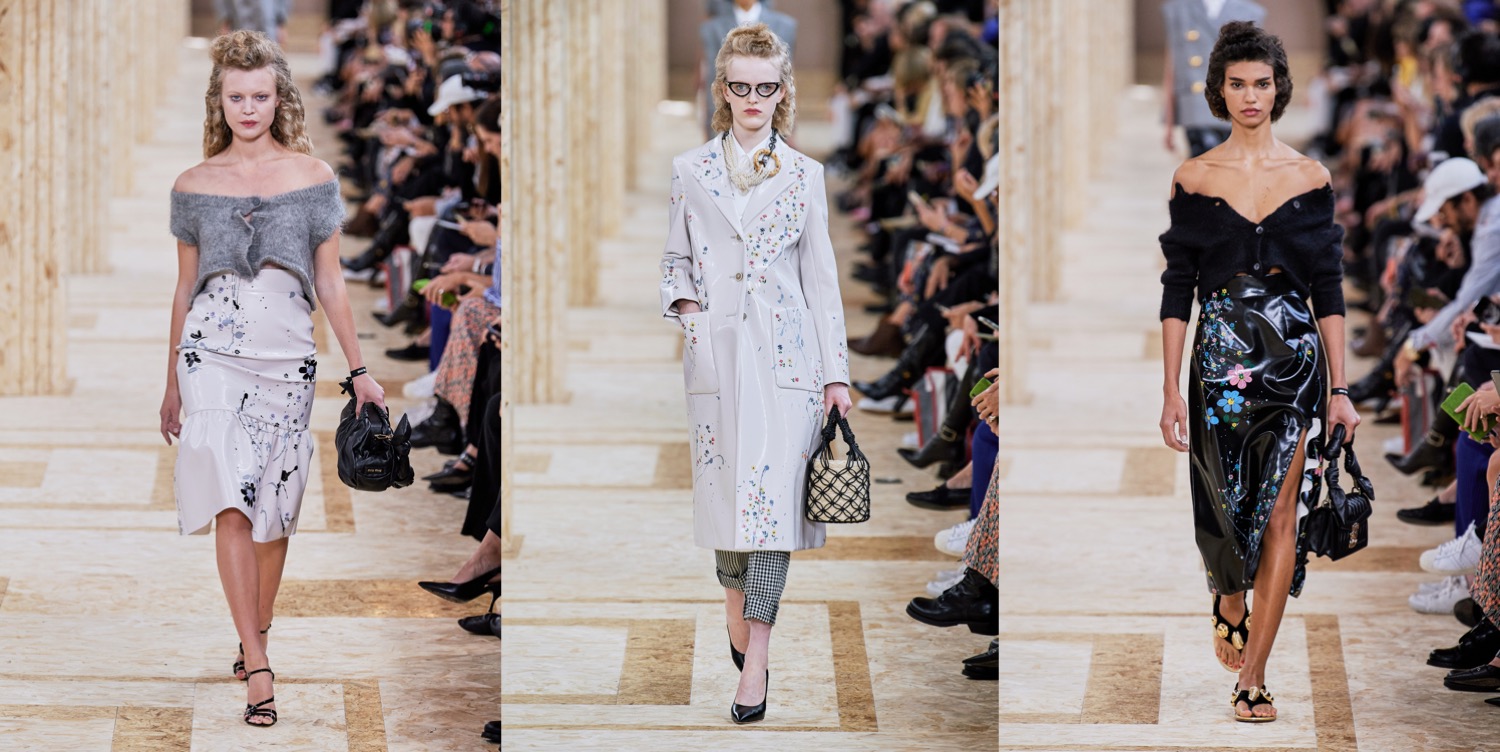
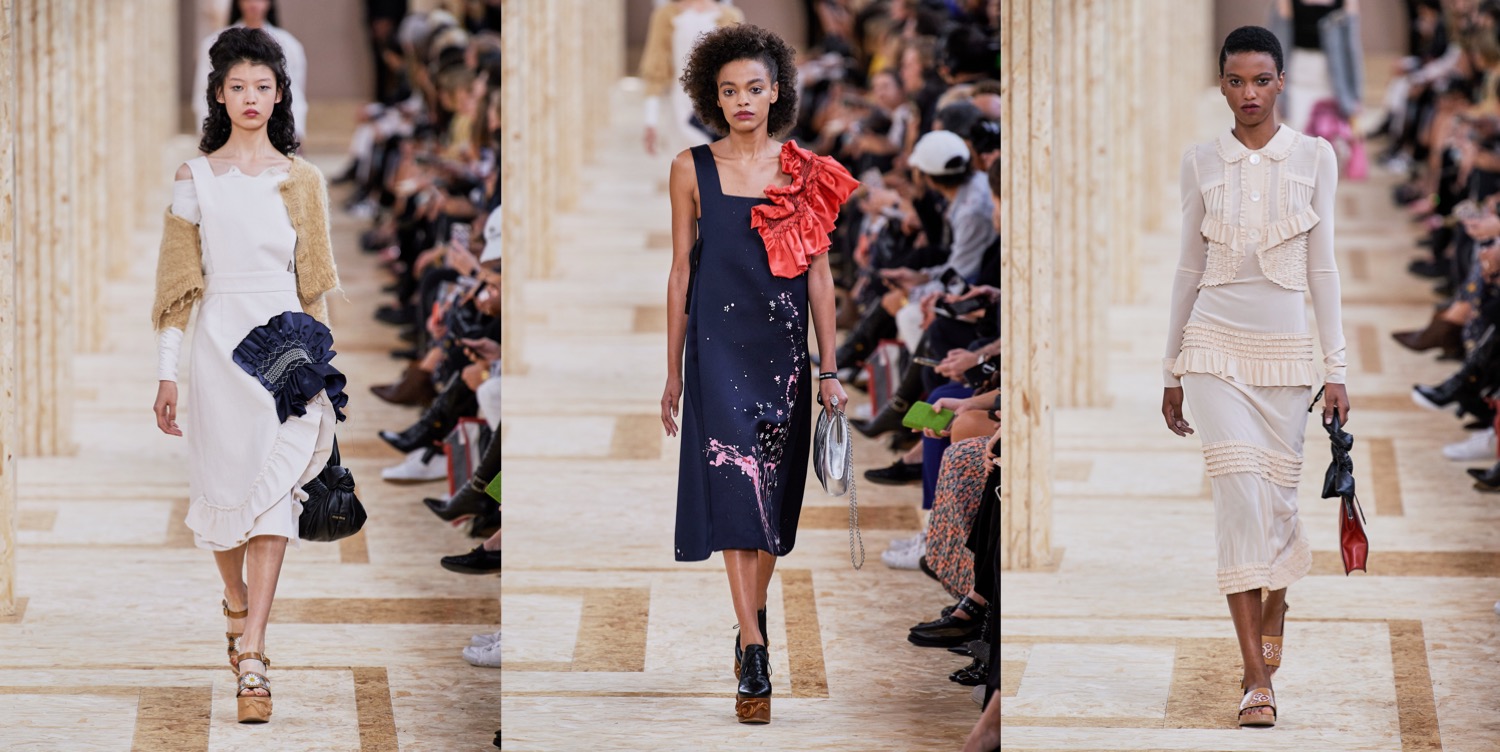
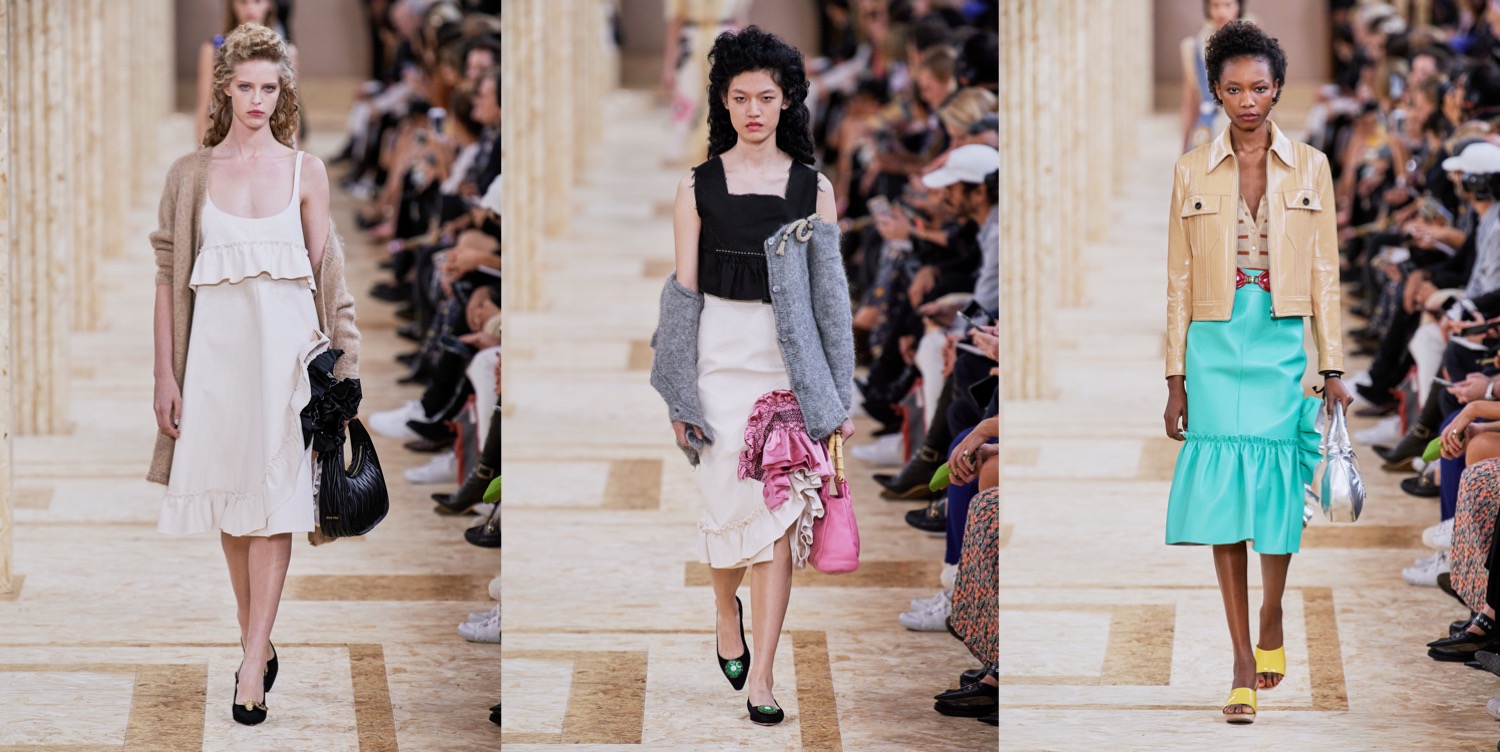
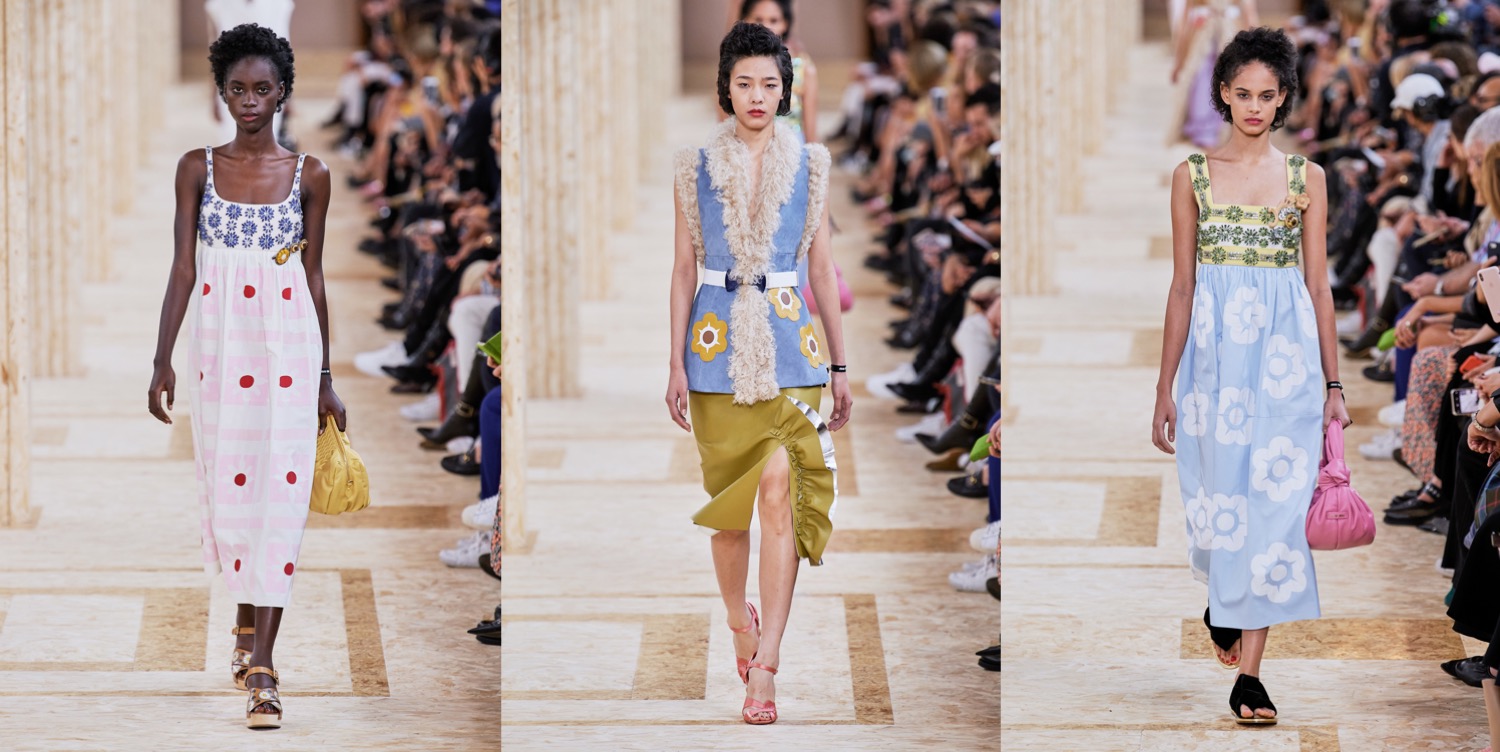
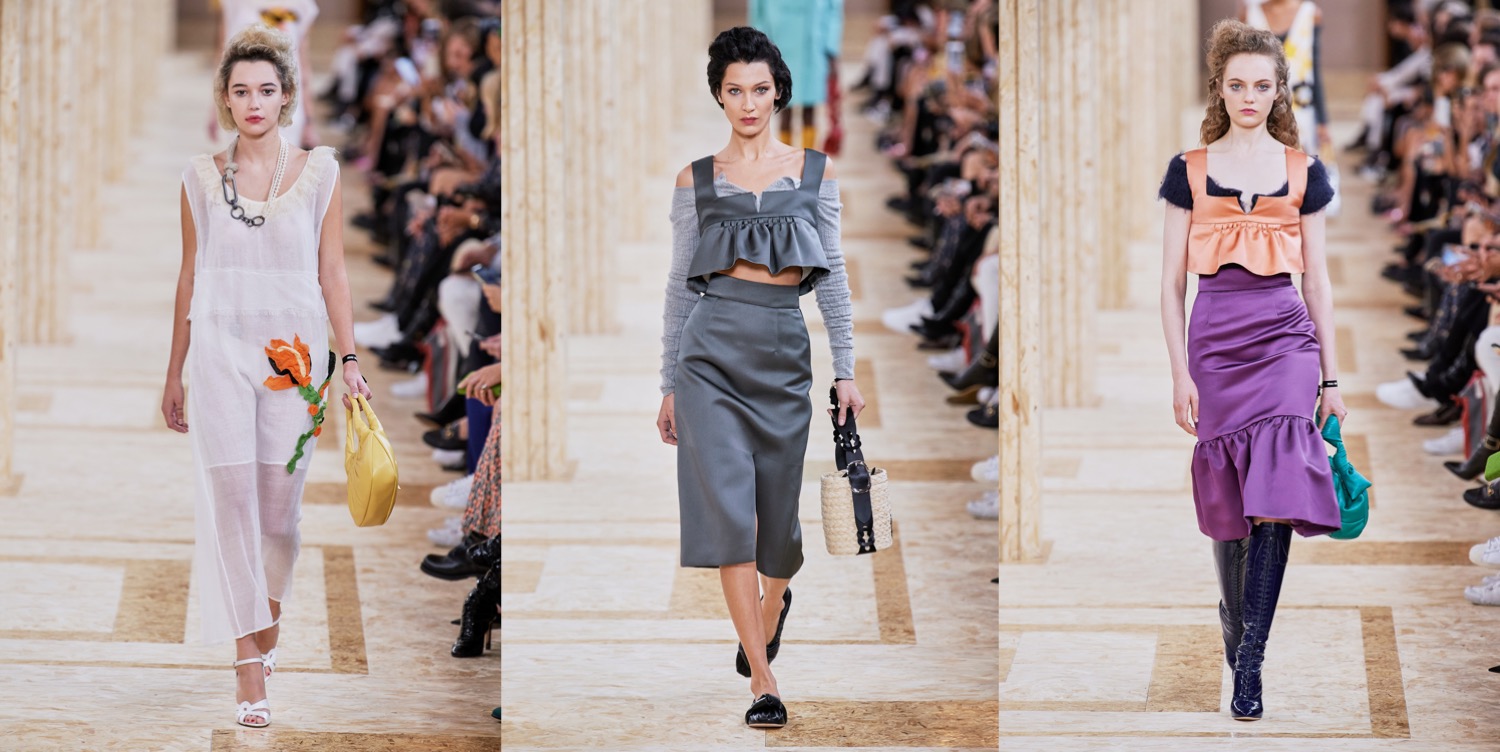
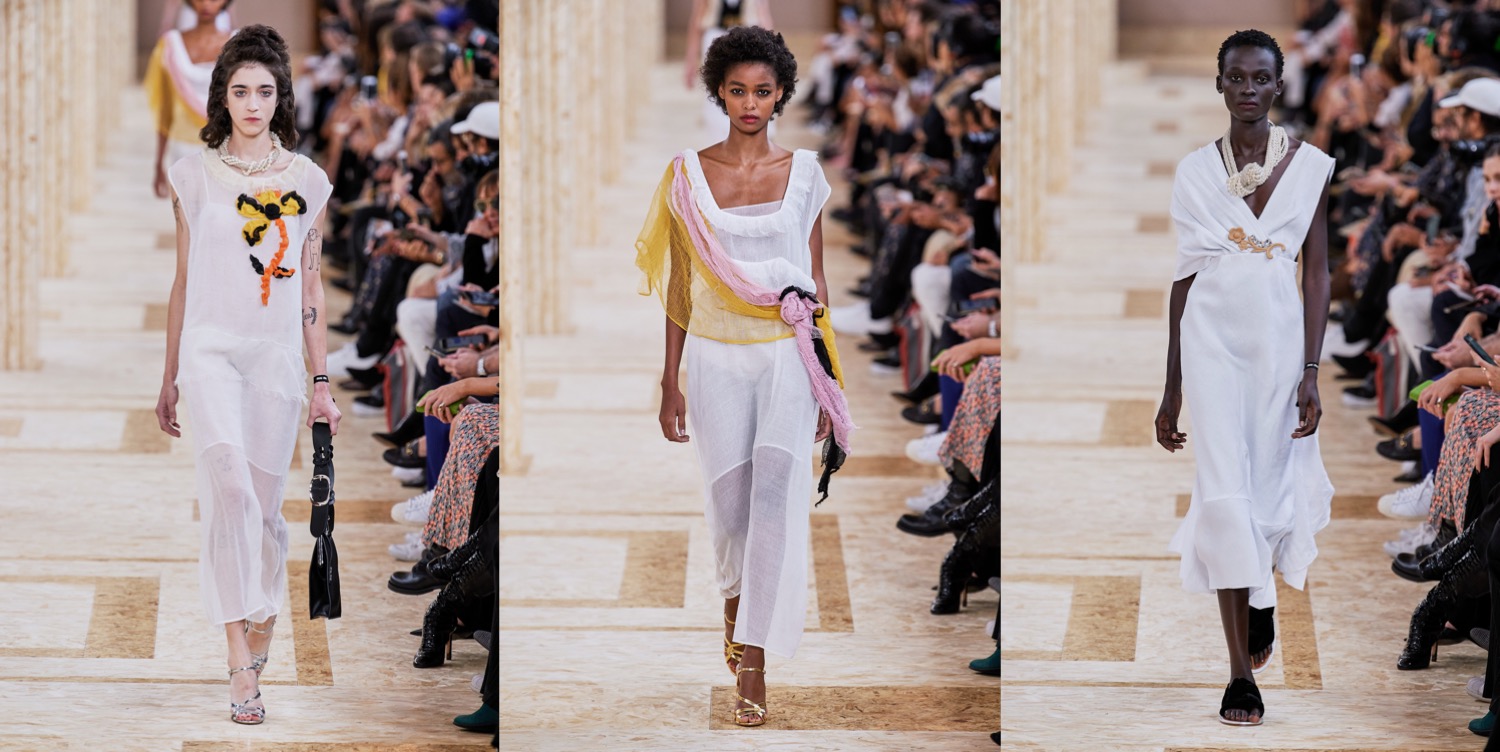
After taking a second look, I really liked Miu Miu‘s spring-summer 2020 collection. Miuccia Prada has always said that her impulses for the label are much more spontaneous than at Prada. This was the main idea behind the line-up. “Something raw, simple, naive, not a big deal” was how the designer herself summed up the collection. The idea of altering, remaking, and sex-ifying a wardrobe comes through in off-the-shoulder knitwear and eclectic details. The runways was graced by girls who seemed to have altered the buttons on their coats; made new summer dresses by patching the top of a satin cocktail dress to a printed curtain; decided to add a flounce to a skirt or a shoulder strap with a bit of spare fabric; painted the flowers on their leather coats themselves. The vintage-y and D.I.Y. style is big this season, and Miuccia nails it effortlessly.

Collage by Edward Kanarecki.
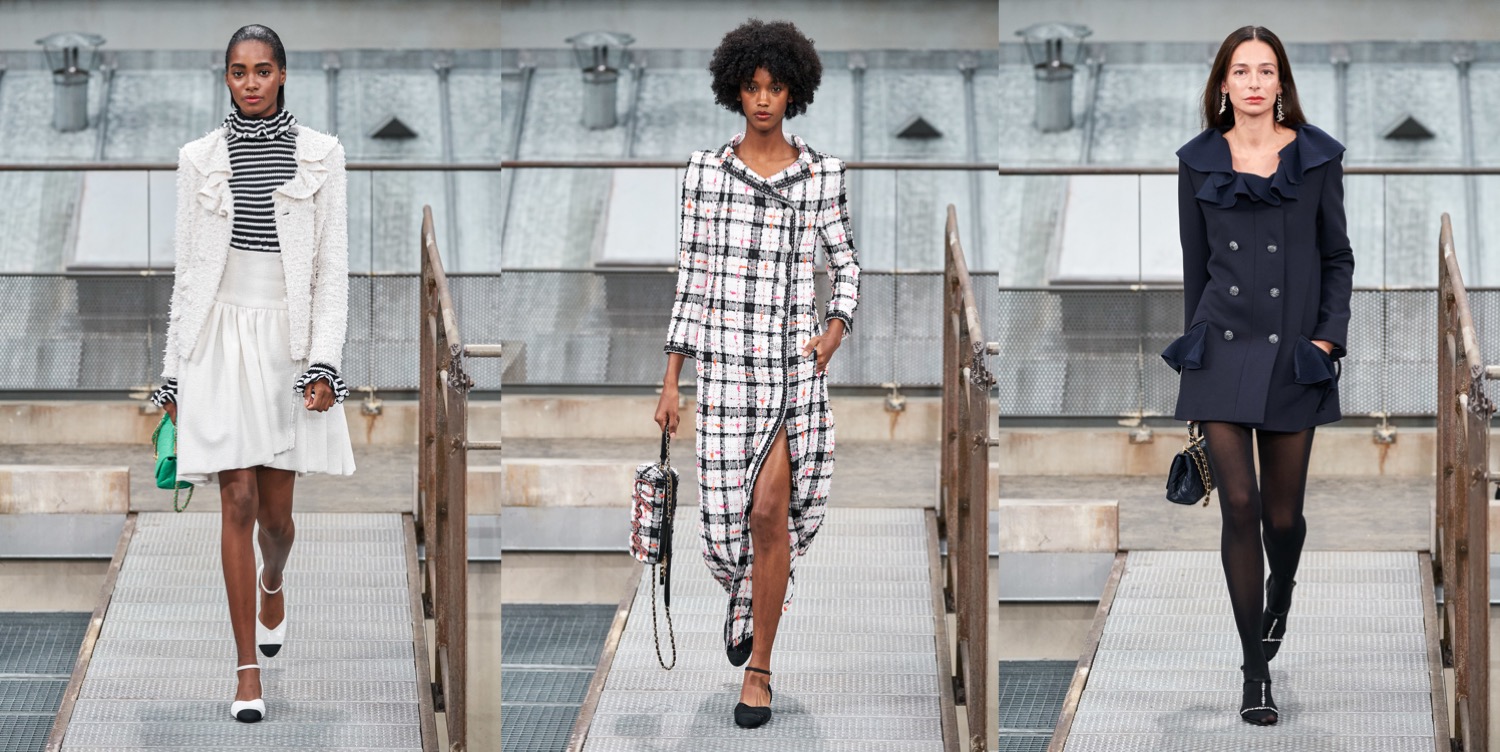
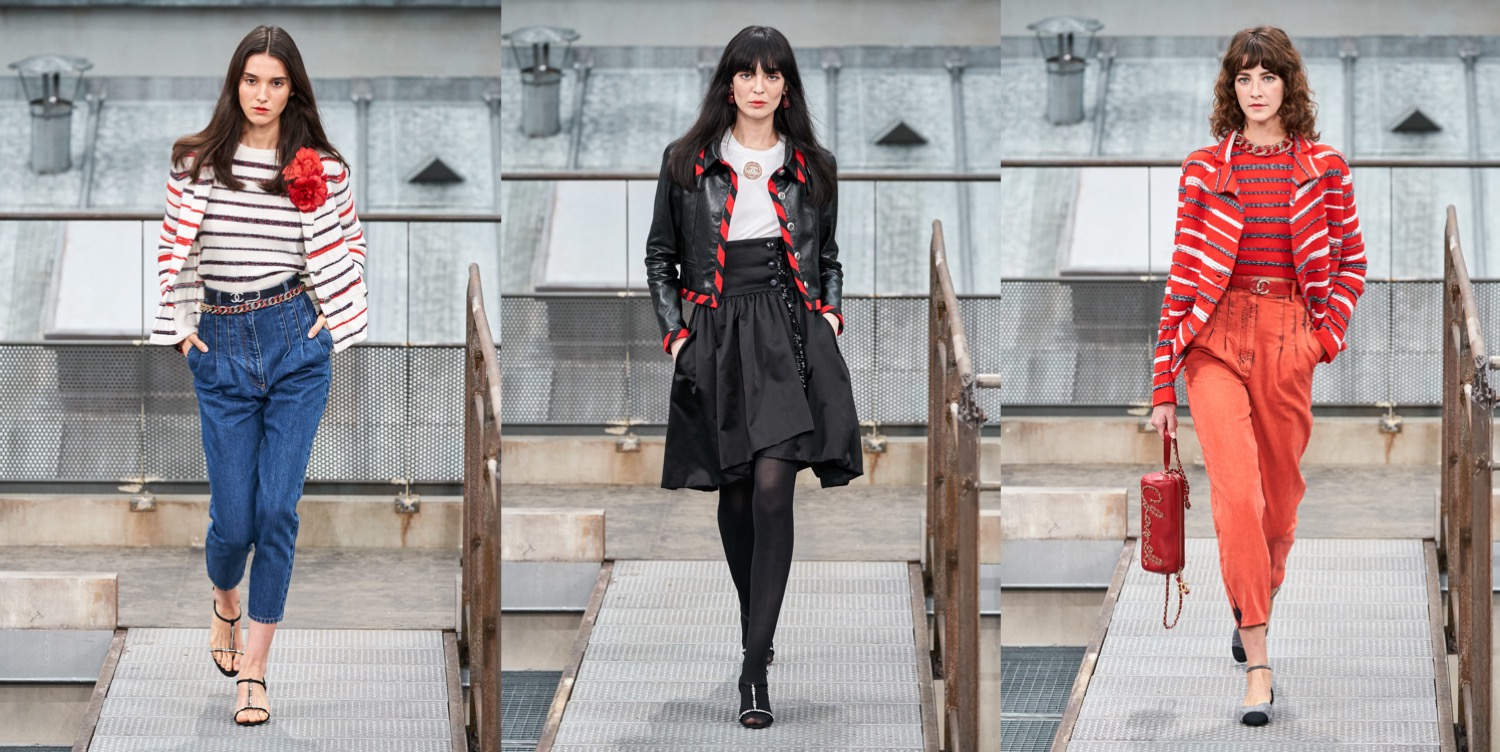
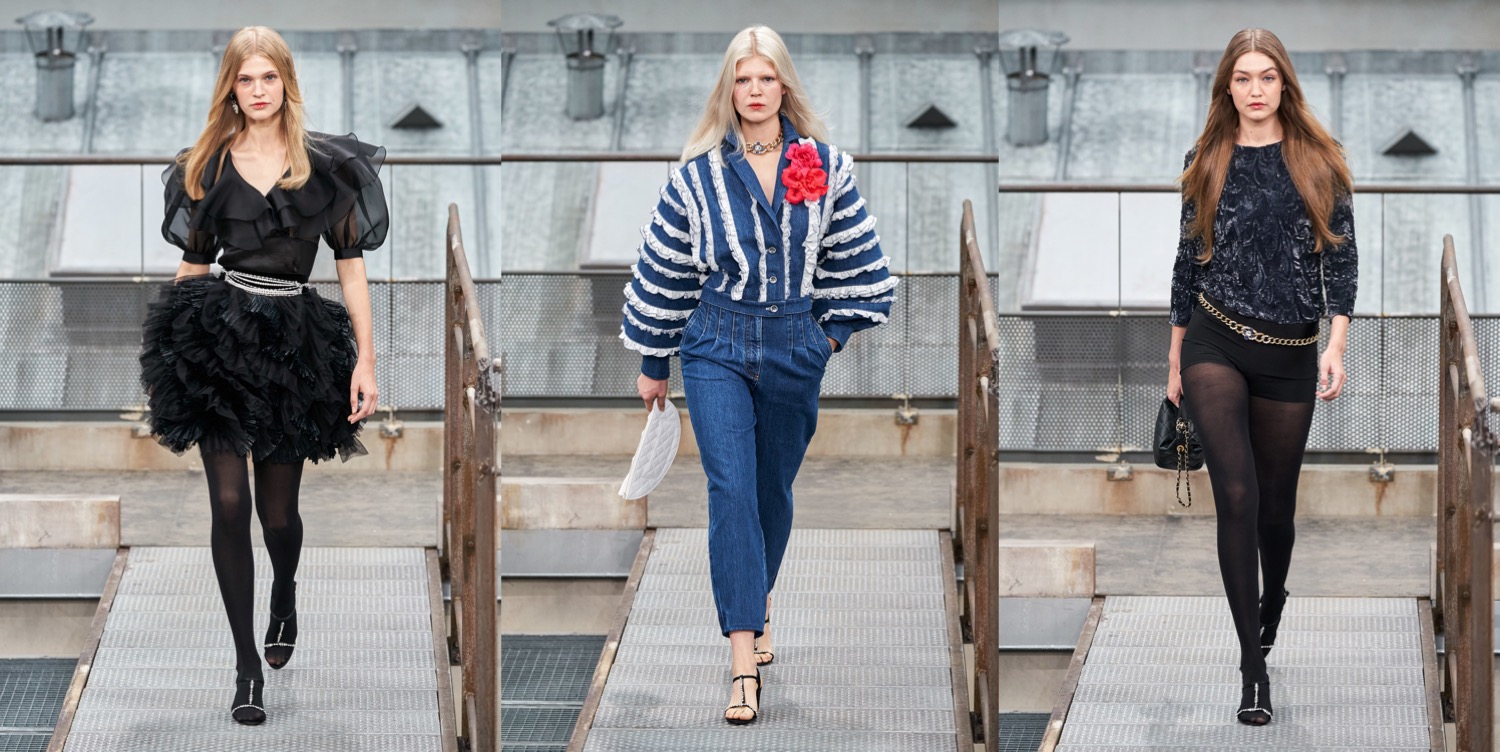
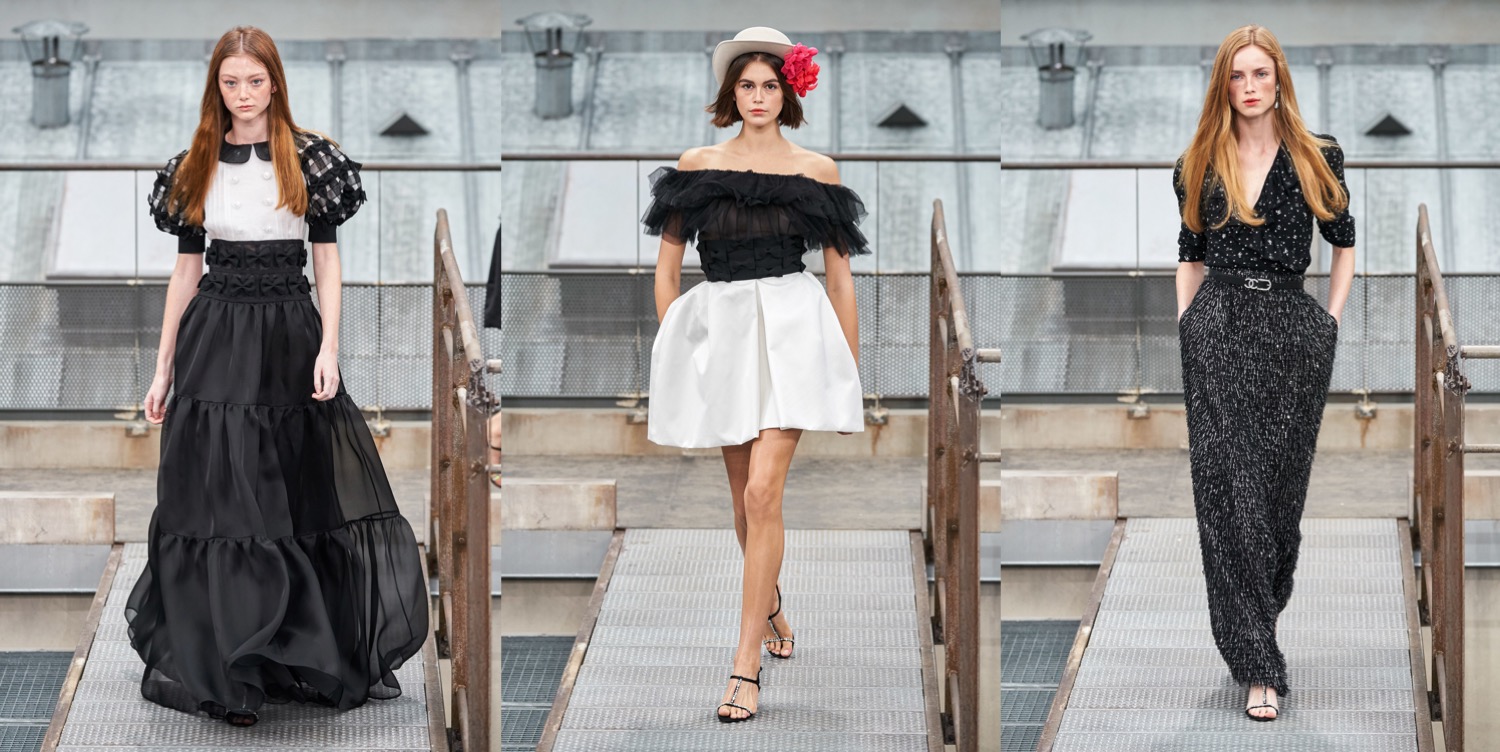
Nouvelle Vague. Chanel SS20

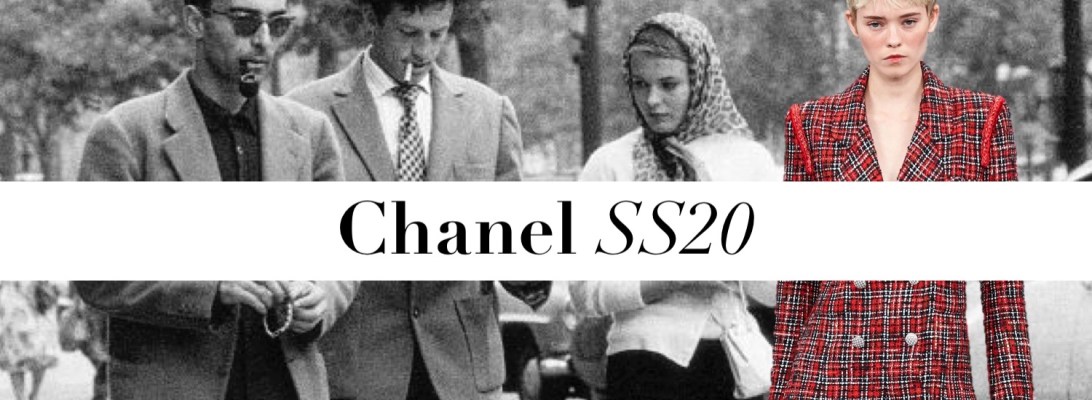
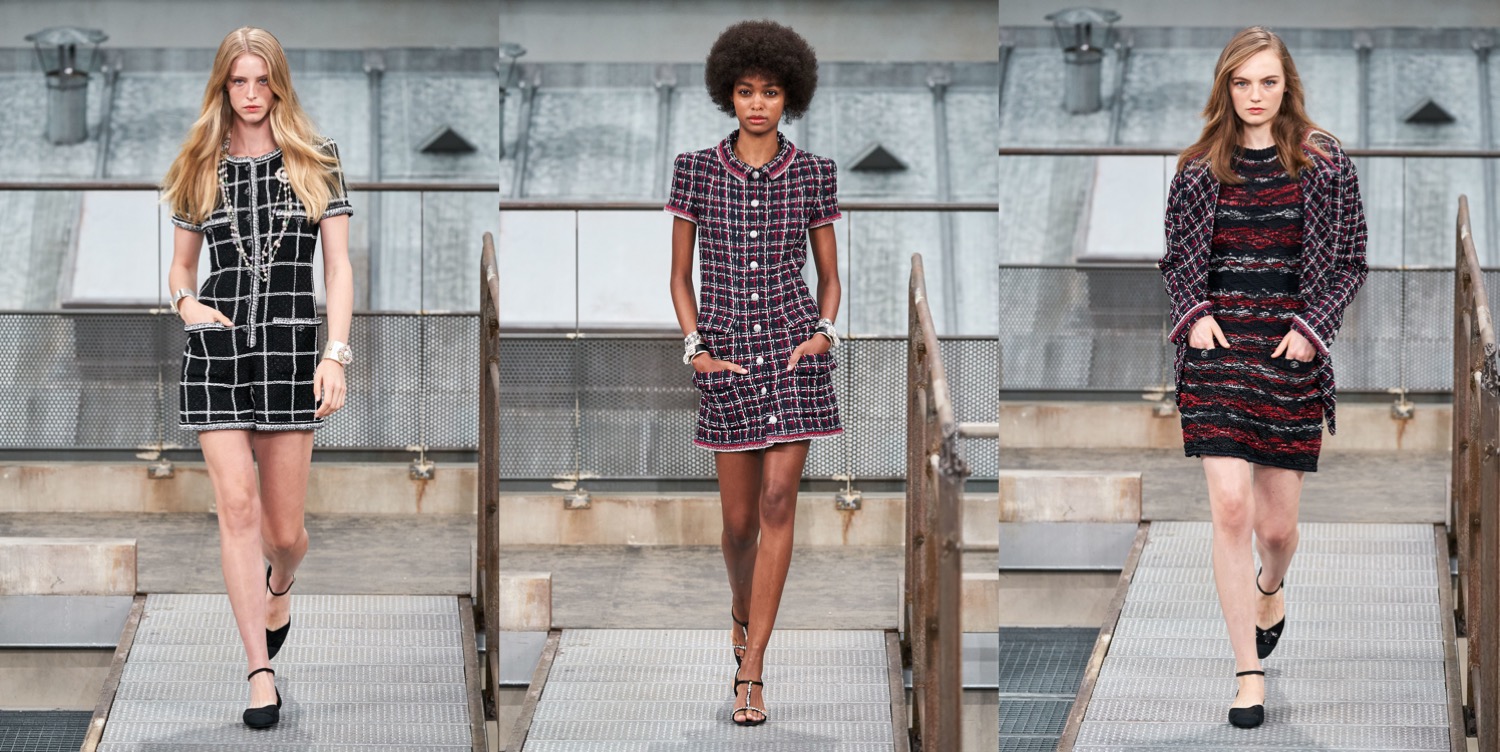
The first model who opened Chanel‘s spring-summer 2020 show, Maike Inga, looked like Jean Seberg from Jean-Luc Godard’s Breathless film with her blond pixie-cut and long-sleeved, red tweed dress. Other models had their hair undone and seemed to be make-up free. The collection’s faux setting – a stereotypically Parisian rooftop landscape with dove grey sky in the background – added up to the mood of French New Wave (‘La Nouvelle Vague’) mood. Virginie Viard‘s first ready-to-wear collection for the brand feels like a Parisian postcard, but comparing to Karl Lagerfeld’s emphasis on creating memorable moments, it’s much more low-key. There’s something comforting about her take on Chanel: it’s simple, not show-y and far from any sorts of excess. At some point, the line-up made you yawn with its monotony – too many nearly identical tweed mini-dresses and Chanel logo prints. The eveningwear lacks spark and excitement as well. My favourite look was the most casual one: a breton stripe top, a matching jacket, high-rise denim pants and flats. Very Chanel. But I wonder whether Viard’s easy, approachable and at times flat vision for Chanel will do.

Collage by Edward Kanarecki.