Twelve years ago, in his final show forBalenciaga, Nicolas Ghesquière referenced Spanish culture with finesse and grace by revisiting the famous, stiff ruffles from a Cristobal Balenciaga dress circa 1968. This was one of the greatest Ghesquière collections ever, and an absolute sublimation of his tenure at the brand. In 2024, the designer returns to Spain again, physically, and with Louis Vuitton. The Hypostyle Room of Antoni Gaudi’s Park Güell in Barcelona was a fitting background for Nicolas’ off-kilter take on Velazquez, Goya, as well as the legendary filmmaker Luis Bunuel – even though the results felt a bit heavy-handed (which was never the case at his Balenciaga). The resort 2025 collection began with a parade of tailored, mostly neutral looks, all worn with straw gaucho hats and mirrored racing shades. Ghesquière said that the first exits were modeled on the sailor’s traditional vareuse – note their wide collars – but their broad shoulders and upside-down triangle shapes borrowed equally from the 1980s silhouettes of his youth. By the end, though, the strictness of his jupe tailleurs and coat dresses was replaced by the voluptuous drape of silk skirts and trousers, their chiaroscuro folds of silk nodding in the direction of the Spanish masters he referred to. The white cloak made you immediately think of the architectural habits of priests captured by Francisco de Zurbaran. Meanwhile, pops of polka dots and ruffles nodded more to the culture of flamenco, than Balenciaga’s heritage. When Ghesquière comes to work, he delivers collections that have all these Easter eggs to decipher.
Collage by Edward Kanarecki. Don’t forget to follow Design & Culture by Ed on Instagram!
Hey, did you know about my newsletter – Ed’s Dispatch? Click here to subscribe!
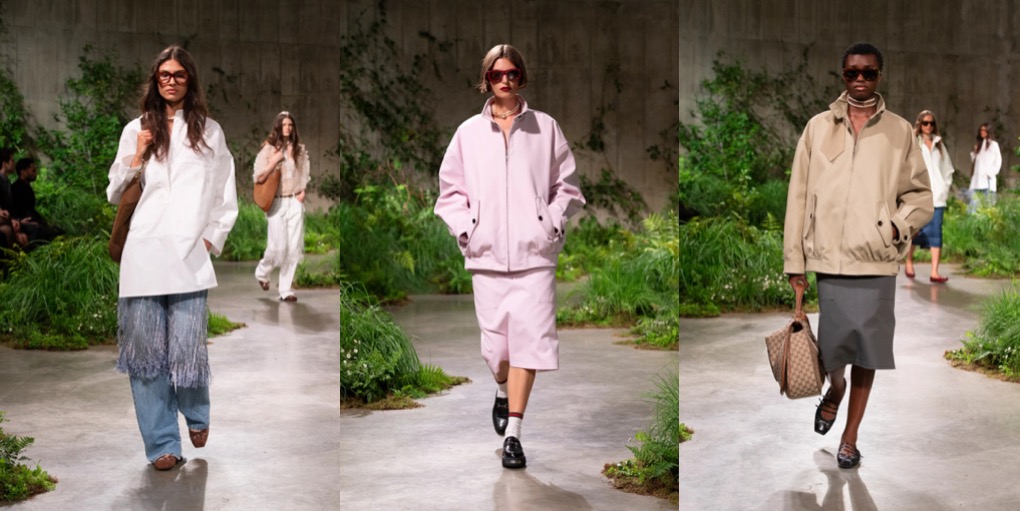
It’s really interesting to observe how badly Sabato De Sarno‘s Gucci tries to force everyone into thinking the brand – in its current situationship – is a “feeling“. You rather catch feelings, especially the good ones, instinctively and spontaneously. Genuinely. Not when somebody signals it in such a straightforward manner. De Sarno’s first resort collection traveled from Milan to London, and it aimed to somehow tell a story that connects the city and the Italian brand. I didn’t grasp that press release blah-blah at all. Just like I didn’t entirely get the point of the location – Tate Modern – and the plant-filled runway setting. If you want to position a brand as an art-loving platform, instead of stripping a London museum to bare walls and place tons of greenery inside, why not focus around some actual artworks that are contextually or emotionally close to the designer?
And now the clothes. Yes, resort 2025 is in some way better than De Sarno’s previous attempts, because at least it’s not repeating three styles throughout 50 looks. And there’s finally some range in terms of style. But here’s where the real problem starts. If not for the eventual Gucci logos and appearance of Jackie and Blondie bags, it’s really difficult to catch where the actual Gucciness is hiding in this collection. Not to mention De Sarno’s footprint which still feels blurry and indistinct. Some of these 1970s-inspired looks gave hints of Miu Miu and Coach. The pleated finale dresses could easily be Victoria Beckham (ironically a designer who often has trouble with finding her own voice – at least the eveningwear is emblematic!). The denim part of the line-up felt like the many iterations Pierpaolo Piccioli used to deliver at Valentino (where Sabato worked at before Gucci). Some of the outerwear and pieces covered with sequin-embellished checks could equally have a Burberry tag on and no one would question that. What was most confusing however were the vintage-y pussy-bows that instantly made you think of Alessandro Michele’s highly-memorable debut for Gucci, an instant breakthrough for not only the stagnating brand at the time, but 2010s fashion in general. Their presence seemed to say that there’s a large Gucci client base that wants that kind of style back as they don’t identify themselves with De Sarno’s reductive minimalism. So… I think Gucci fails to be a (good) feeling. Especially in times when the demand for luxury is decreasing and people investing in fashion want ingenuity and authenticity.
Collage by Edward Kanarecki. Don’t forget to follow Design & Culture by Ed on Instagram!
Hey, did you know about my newsletter – Ed’s Dispatch? Click here to subscribe!
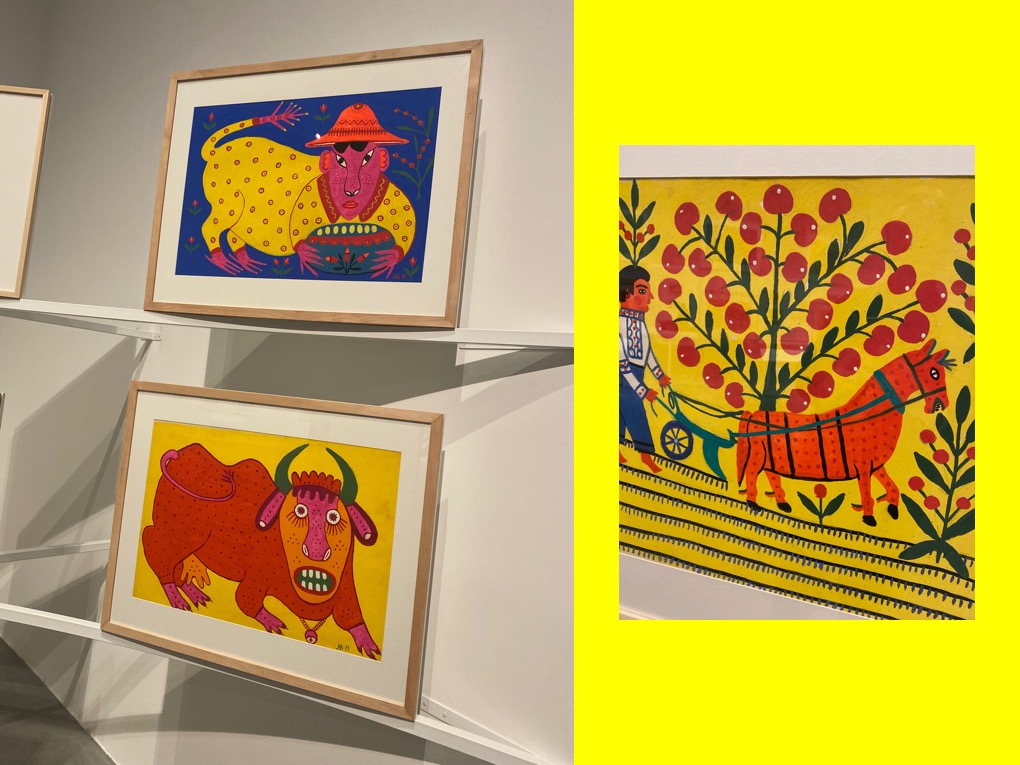
Maria Prymachenko (1909–1997) is an icon of Ukrainian art. Her oeuvre has helped shape Ukraine’s cultural heritage. The exhibition “A Tiger came into the Garden” at Museum of Modern Art in Warsaw is the first presentation of the artist’s work in Poland of such breadth. The gouaches shown here, from 1982-1994 period, derive from the private collection of Eduard Dymshyts, and are a selection from among hundreds of works by Prymachenko.
For over six decades, Maria Prymachenko created art in the village of Bolotnya in the Polesia region, midway between Kyiv and Chernobyl, an area she never left. She survived the Holomodor, the Second World War, and the nuclear disaster at Chernobyl, and lived to see an independent Ukraine. She was “discovered” as a folk artist in 1935 and hired as an embroiderer at the Central Experimental Studio at the Museum of Ukrainian Art on the grounds of the Pechersk Lavra in Kyiv. Her works were shown at the First Republican Exhibition of Folk Art in Kyiv in 1936, and then at the World Expo in Paris in 1937 and in numerous European cities, including Warsaw, Prague and Sofia. She was a painter, embroiderer and ceramicist, and an illustrator of children’s books. She became a professional folk artist. Starting in the 1960s, she led an art school in Bolotnya. She continued creating art until the end of her life.
Following Russia’s invasion of Ukraine, Prymachenko’s works have taken on particular relevance, in part due to their anti-war message. In 2022 the Local History Museum in Ivankiv, not far from Bolotnya, was burned down, although some of her paintings there were rescued. The Maria Prymachenko exhibition at MSN Warsaw is a continuation of efforts to promote broader knowledge of Ukrainian culture.
In her work, Prymachenko depicted the connections between humanity and nature, drawing on folk traditions of Polesia, rich in symbols and metaphor. She painted people, animals and plants in her everyday surroundings. Her images of the world built on observations of the everyday life of Bolotnya undergo a magical transformation—they do not so much portray reality as undergird it and exert a positive influence on its fate, casting a spell. One of the motifs in her painting is fantastic creatures and birds, both mythological and inspired by pagan beliefs.
Her characteristic bestiary, containing numerous depictions of “humanized creatures” in an archaic composition with heads forward and bodies in profile, comprises numerous elaborate allegories, often expressing moral judgments, mocking human vices, or celebrating the delights of everyday life.
Prymachenko’s recognizable style involves a decorative line, and flat, intense patches of colour. Initially she used watercolours, but in time only gouache (watercolours mixed with chalk). In her work, language is another transformational force. Prymachenko often gave her works poetic, descriptive titles, which sometimes help decipher the paintings, or serve as dedications or wishes, as well as modified quotations from folksongs (“I give sunflowers to those Who love to work on the land And love all people on earth; I give red poppies to people, So they won’t be no-good slobs, But love the holy land And work on it“).
The garden mentioned in the title of the exhibition represents nature, which coexists harmoniously with humans, and in exchange for their work gifts them with all its bounty, while the tiger symbolizes the mysterious, fantastic and wild (“The tiger came into the orchard And rejoiced That the apple trees have borne fruit, Apples aplenty“). It may also point to efforts to represent the element of danger. After the Chernobyl disaster, Prymachenko also created a series of works connected with nuclear threat and war (“Nuclear war – May it be cursed! May people not know it, And shed no tears!“). Through the power of her surrealistic imagination, sense of humour, and also a certain dose of optimism, her works are dominated by a humanistic message and a vision of harmonious coexistence of the human and non-human worlds. Prymachenko’s dream was that “people would live like flowers bloom.”
Curator: Szymon Maliborski; co-curator: Eduard Dymshyts. The exhibition is open until 30.06.
Collage by Edward Kanarecki. Don’t forget to follow Design & Culture by Ed on Instagram!
Hey, did you know about my newsletter – Ed’s Dispatch? Click here to subscribe!
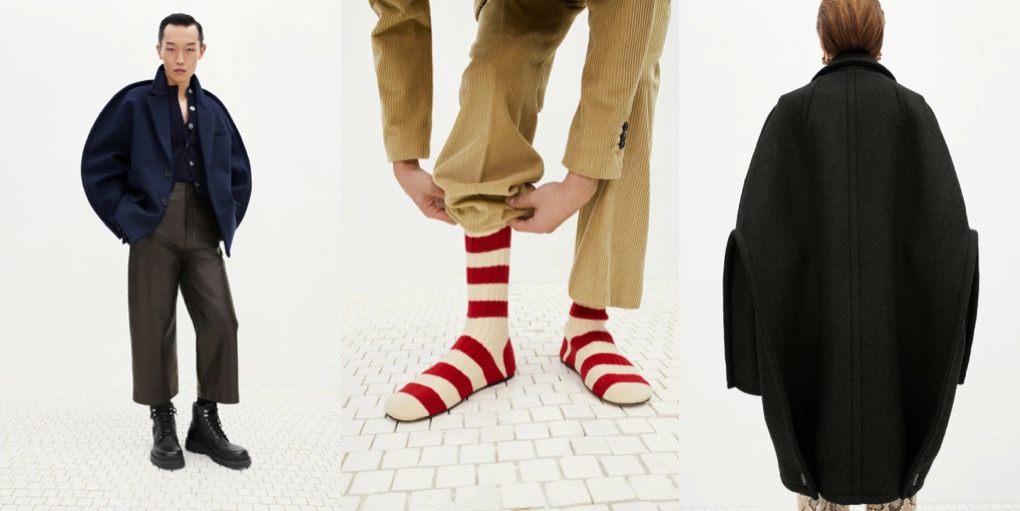
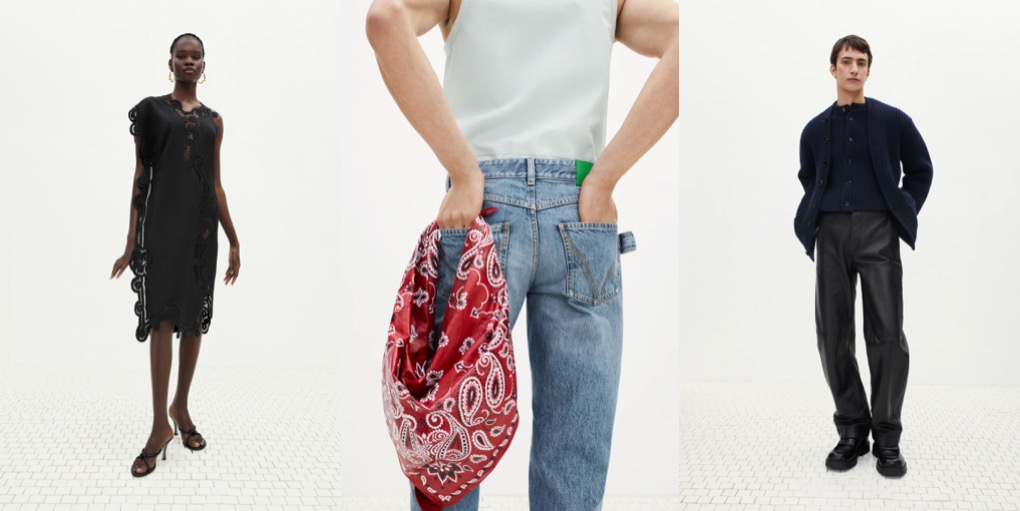
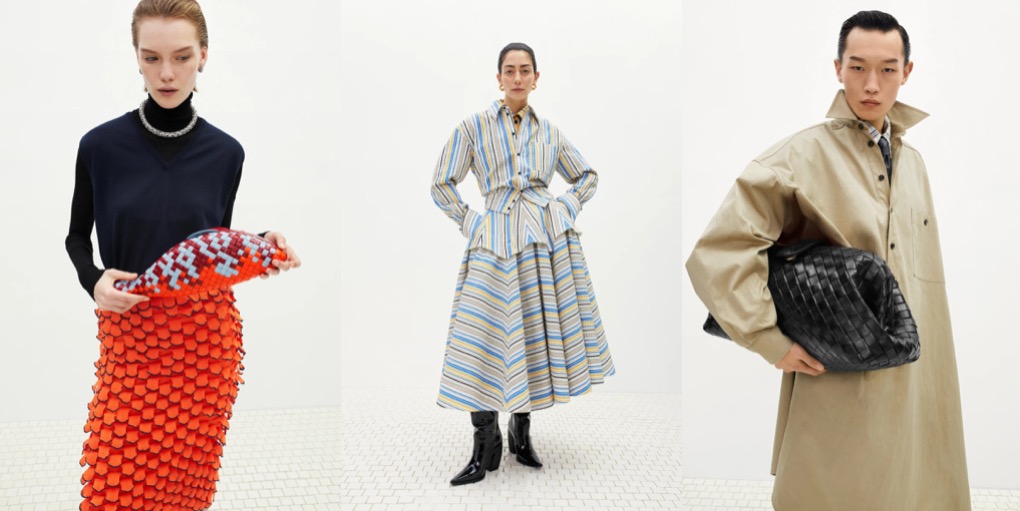
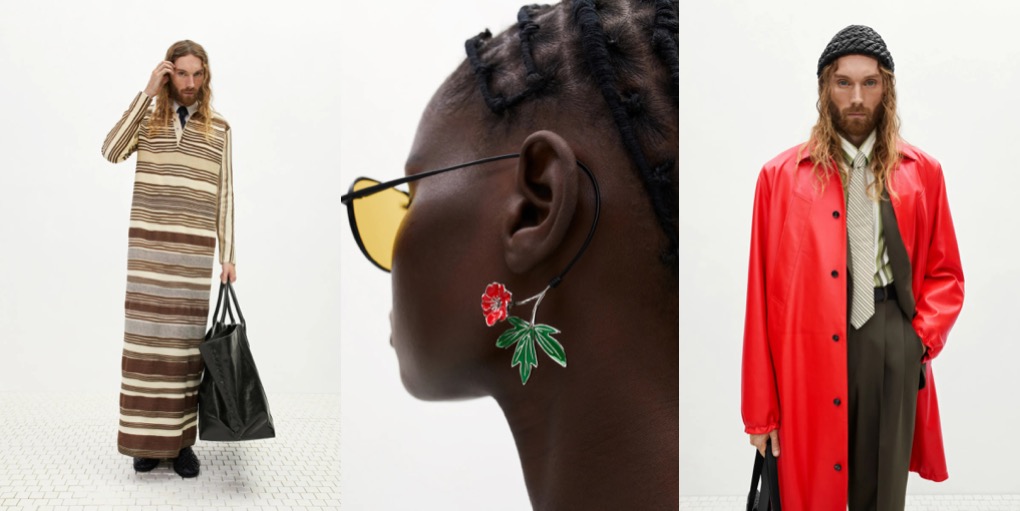
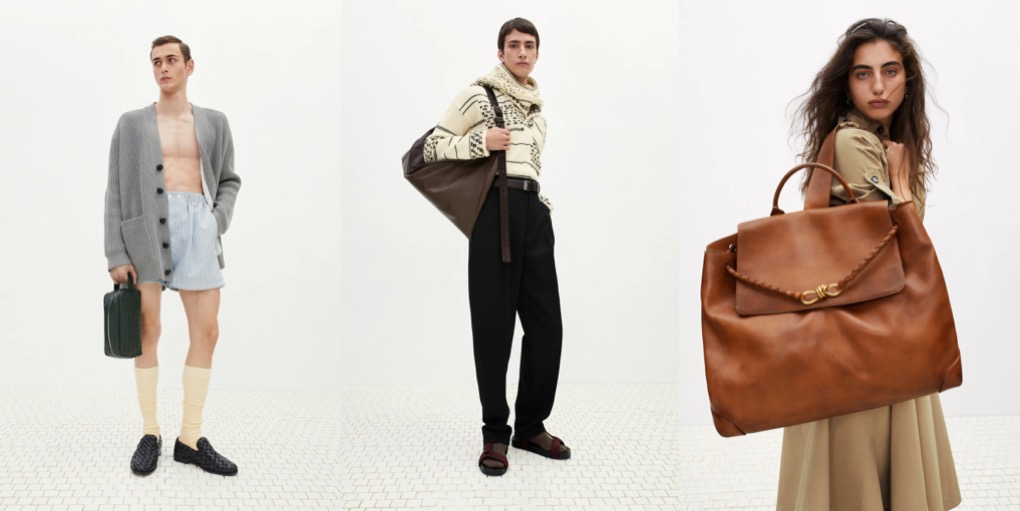
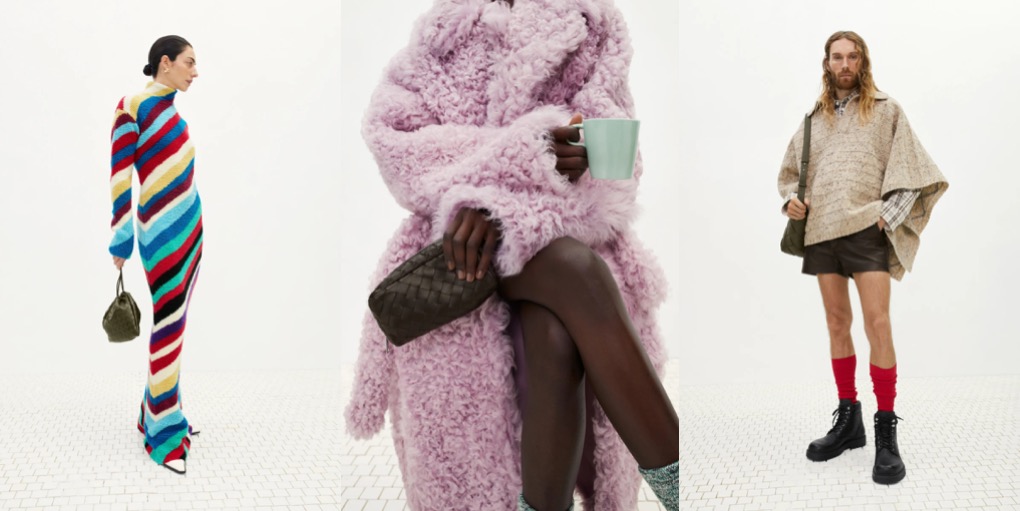
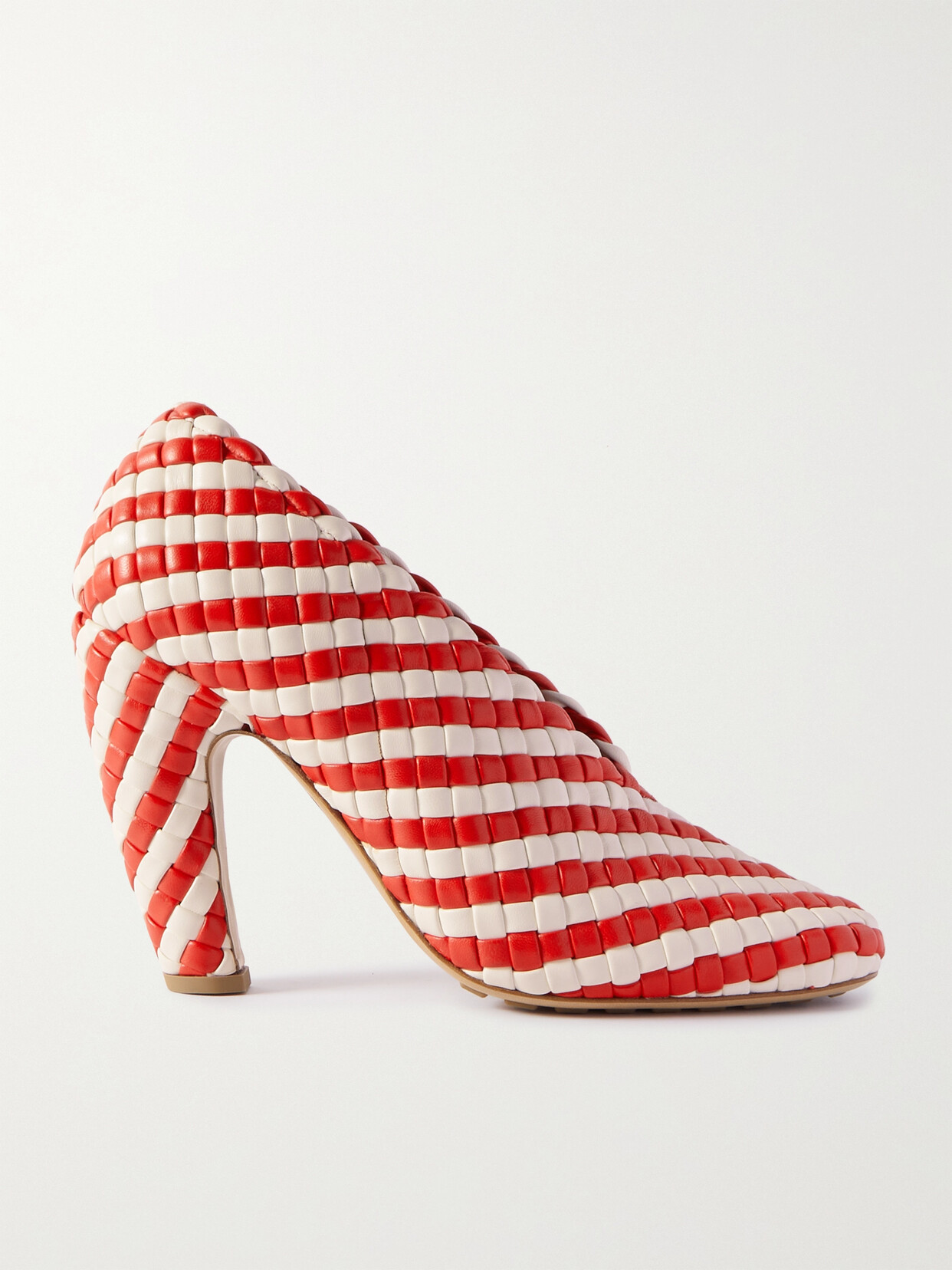
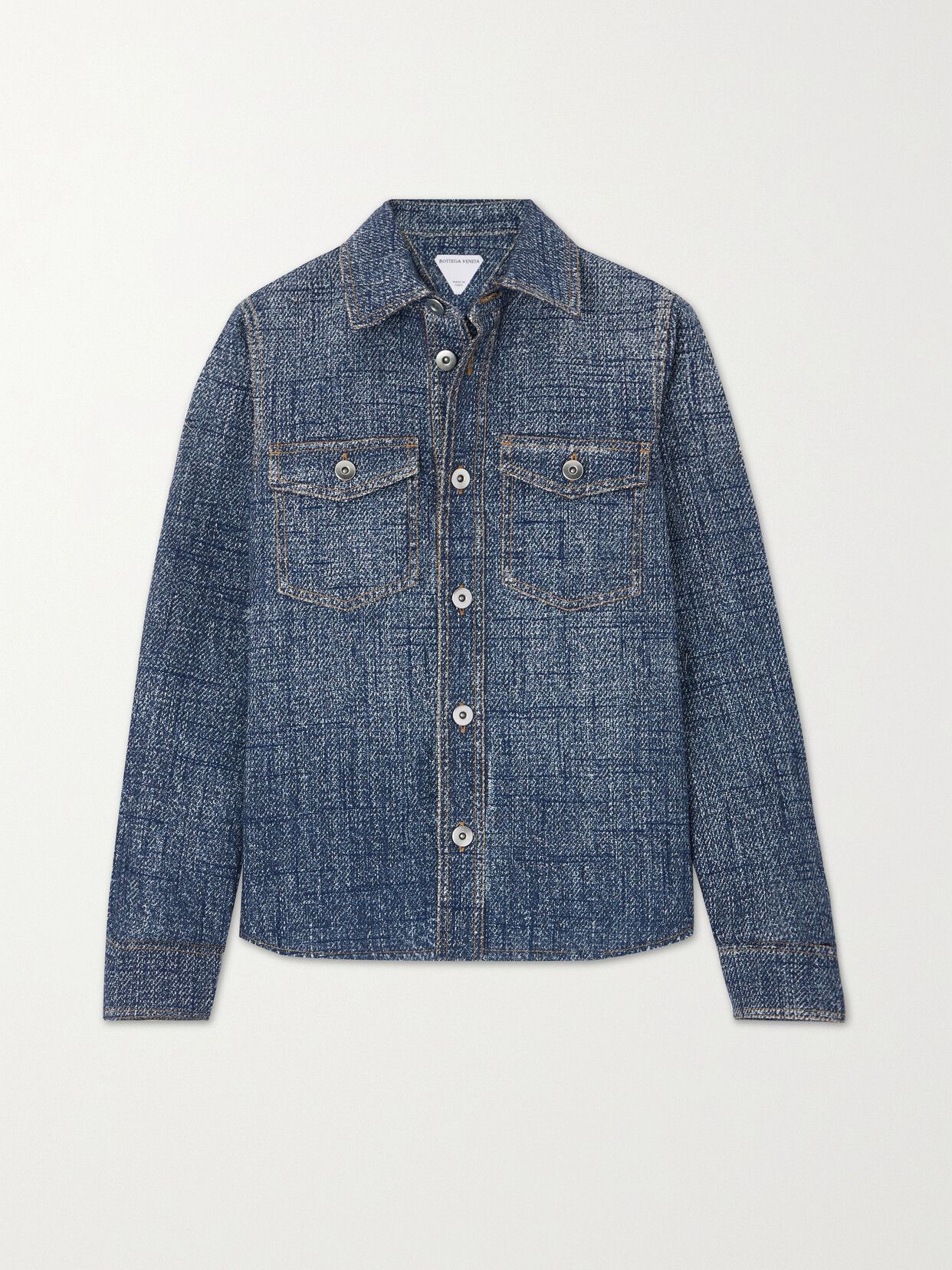
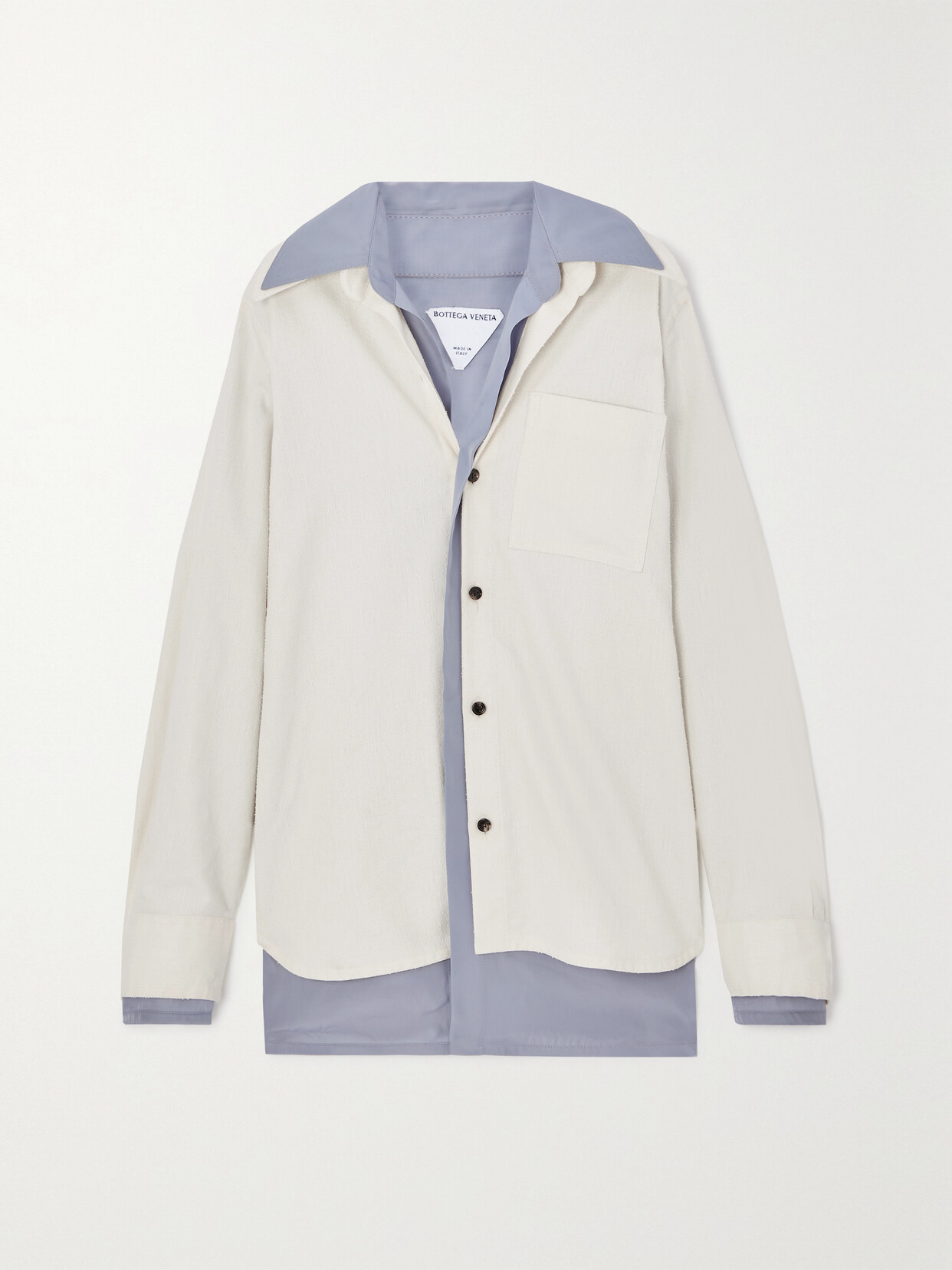
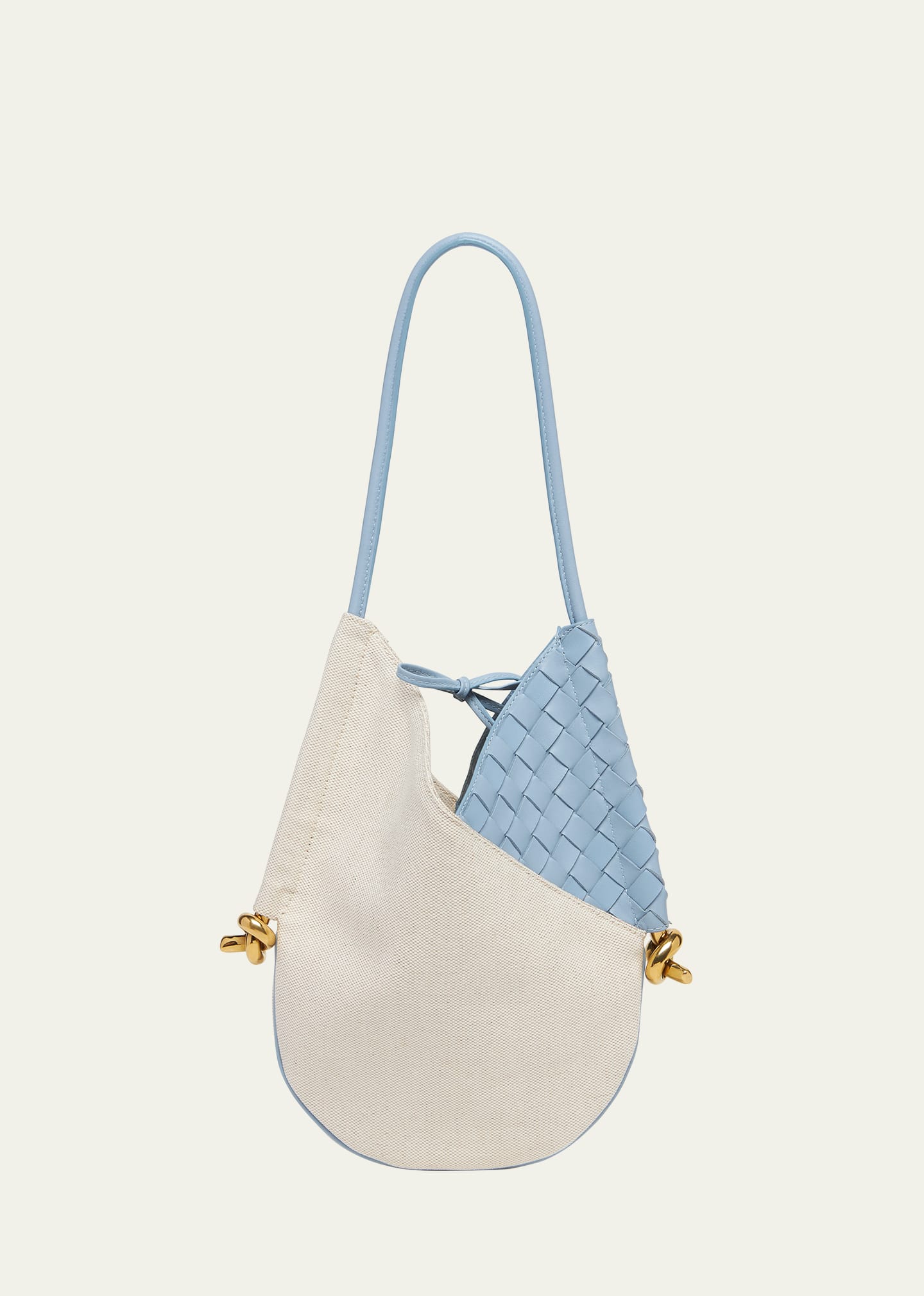
Bottega Veneta has released a stunningly stimulating, pre-fall 2024 collection. It’s so evident that Matthieu Blazy found his groove at the brand: his last runway shows are delightful to the senses. But it’s the pre-collections that really validate whether a designer has formed their vocabulary for a house, and Blazy definitely knows what his direction is. While other brands try to propose total looks and stay in one aesthetic lane, the Belgian designer rather pursuits the idea of style that’s diverse and truly authentic. Bottega Veneta isn’t a brand that intentionally creates Instagrammable products – even though social media is increasingly raving about Blazy’s take on the brand. People are catching up with his celebration of humanity which is conveyed in the striking artisanship Bottega stands for.
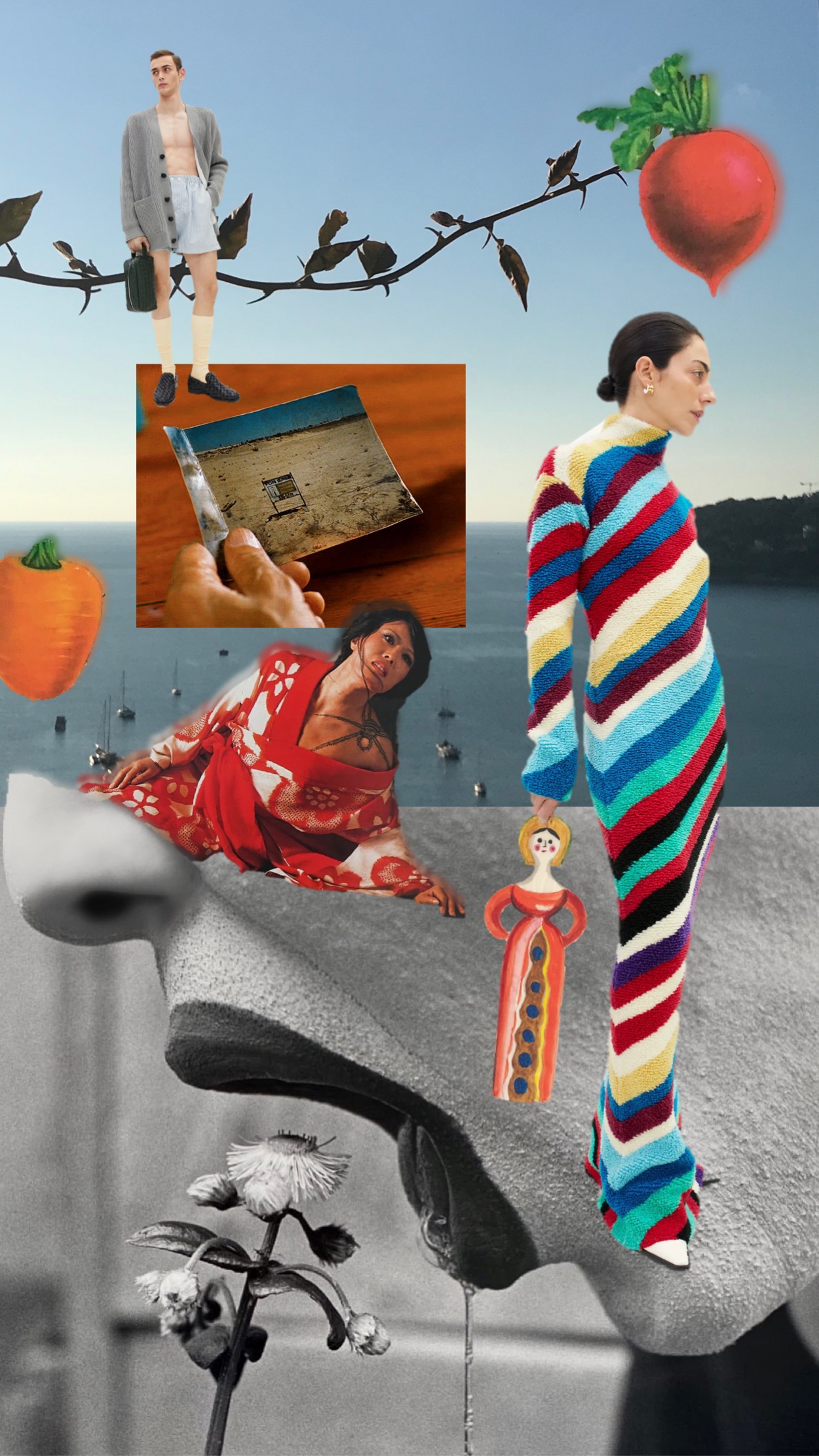
For pre-fall, “the initial talk I had with the team was what would’ve been the ready-to-wear of Bottega when they started to make the bags in the late ’60s and ’70s. Of course, the idea was almost to work on something anachronic – we don’t want to go too literal, it was the idea of a modern time traveler.” The development process involved lots of photo research, including in old Interview magazines – “Andy Warhol loved Bottega,” he explained – to see “how people layered and mixed and matched.” It led to results like the suede skirt layered over suede pants, and the trim crewneck and striped collar shirt tucked belted gray jeans. The spirit he was channeling was “bourgeois, but decontracté,” he suggested, pointing to a checked button-down worn with a leather bomber and a khaki twill pencil skirt, and another checked button-down with a full skirt. There is much more to restlessly drool over in this lookbook: the pastel pant suits, the colorful suede intrecciato separates, the homoerotic-coded bandana bag, and a vibrant horizontally striped knit dress with the nubby pile of a carpet. Each piece is a wearable, meaningful artwork – that might be the ethos of Blazy’s Bottega Veneta.
This Ralph Lauren collection had to grow on me for a moment. But when I saw Anok Yai in her finale look, consisting of a cowboy hat and stunning body-skimming sequined gown, being applauded by the all-American designer – who himself wore a blue western shirt, a pair of well-worn jeans and grey New Balance trainers – I was like “wow, this is it“! The pre-fall 2024 collection, which Ralph presented a couple of days ago in New York, is a reminder that he’s a great designer. One of the greatest. A living legend. “The woman I design for has a beauty that comes from an inner confidence,” he noted in his press release. “My collection is inspired by that woman, her sense of timelessness, her individuality – a style that is forever.” The show’s opening song, Billy Joel’s “Just the Way You Are,” seemed chosen to call attention to that constancy, as did the first model Christy Turlington, whose career began in the 1980s on Lauren’s runway. Turlington wore neat tailoring, a tie tucked into the waistband of her trousers, with an RL 888 leather tote in the same shade of buff gray as her clothing. Neckties and power suits were recurring sights on the autumn runways; for Lauren they’re not seasonal affectations, but rather pieces that he’s returned to over the years, sharpening and fine-tuning them. City sophistication and red carpet drama are essential parts of his repertoire, as well. These were represented by a chunky cardigan and cocktail dress combo (so good), the pinstripe jacket he threw over a silk charmeuse shirt and long skirt in gunmetal gray. Yes to all that, forever.
Here are a couple Ralph Lauren classics I fancy a lot…