Très Cool. Coperni AW22

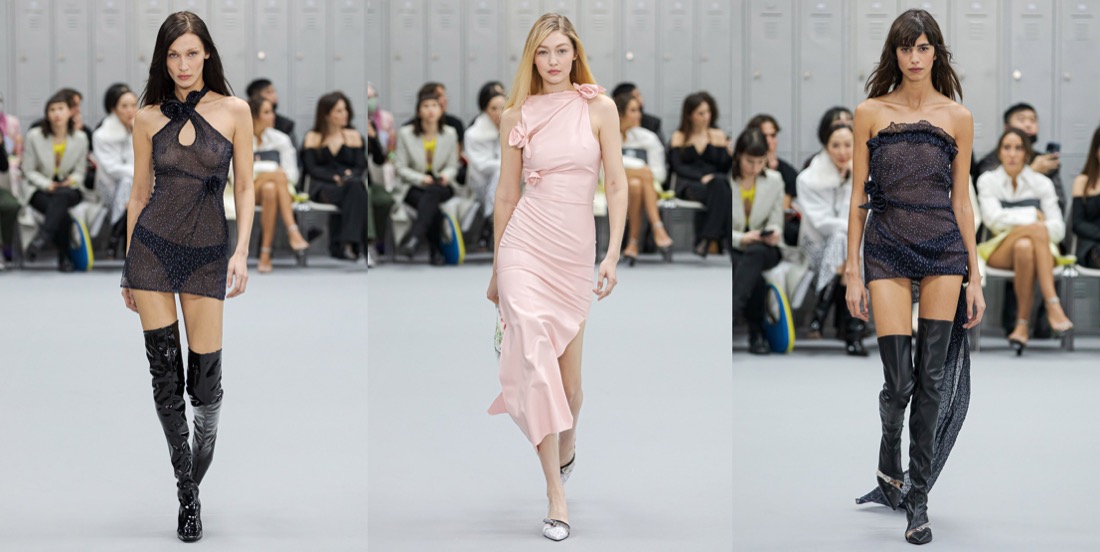
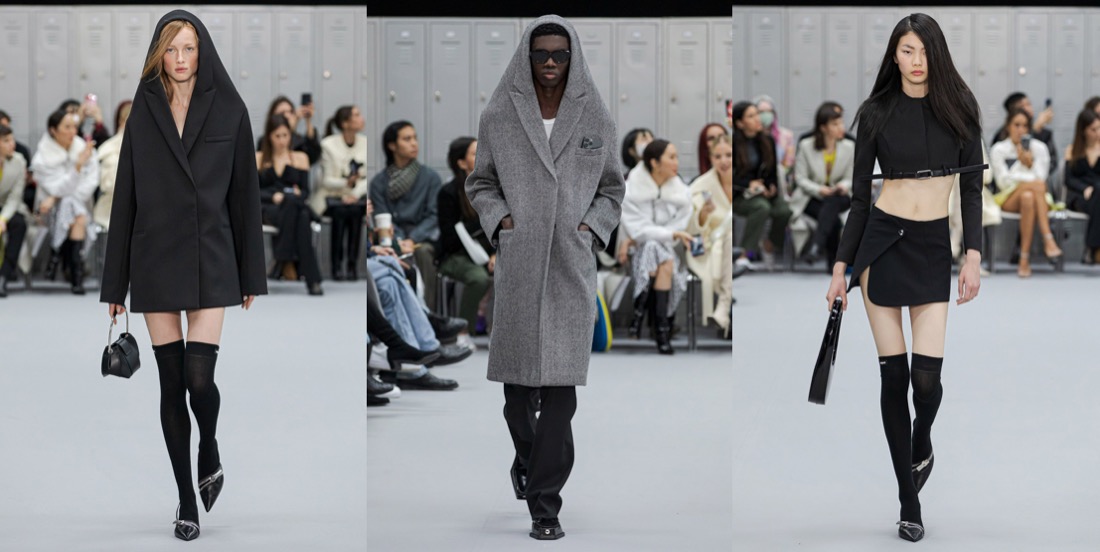
Coperni ate it up this season! This is definitely my favourite collection coming from Arnaud Vaillant and Sébastien Meyer‘s Parisian label so far. The hoodie-lapelled blazers, overcoats and fleeces that you see Coperni’s It-model cast wearing so coolly here represented a challenging design brief for Vaillant and Meyer’s tailoring atelier to achieve: they had to look good worn both up and down. As Vaillant showed on his phone pre-show, the women of that atelier – named Cap Est Sarl – sent the designers pictures of themselves wearing the prototypes as that development progressed towards runway-readiness in the last few weeks. “They are so cute, always trying the pieces before sending them – I love them,” said Meyer. Added Vaillant: “They are in Ukraine, in Kyiv: we hadn’t heard from them for a few days. They are safe for now. And we dedicate this collection to them.

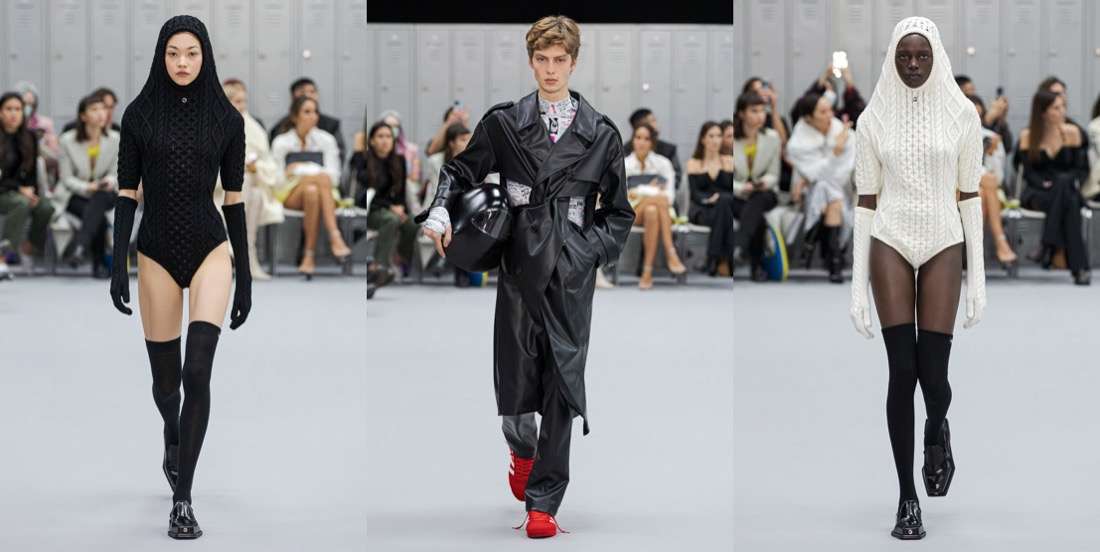
This show placed this collection within the pressure cooker arena in which the insecure adolescent chrysalis is forged into the self-aware young adult butterfly: high school. On a runway framed by school lockers and to an excellent faux-radio broadcast of upbeat disaffection the models first emerged as laconically withdrawn, cloistered in those hooded pieces of generically reinvented tailoring. These did indeed work with the hood/lapel worn back off the head. Other cleverly twisted takes on tailoring were the disassembled jacket crop tops and miniskirts and a twist-fronted Le Smoking jacket with cut outs at the midriff whose construction translated finely into menswear fleeces and trench coats. A waistcoat, sometimes cut in a crystal pinstripe, also incorporated a hood that came with cute little Batman ears. Aran knit short-sleeved bodies featuring that hood and a circular cutout at the back were eccentric takes on a preppy knitwear mafia staple. Jeans and leather pants that were worn as gaiters cut to just above the knee were a funny riff on low-waistband rebellion. Upcycled Adidas Gazelles and zip-decorated pumps aside, notable footwear included chisel toed articulated soled derbies whose vectored shape was inspired by the Tesla Cybertruck prototype. Coperni’s emblematic Swipe bag appeared in blown glass: calamity was avoided when the model carrying it caught her heel on the runway and pitched forward before pulling off a graceful recovery. We shifted towards the big butterfly-emerges moment – prom night, of course – via a grungily pretty asymmetric dress in white French velvet worn with those Adidas, and a super clever minidress made entirely of upcycled ties. Prom queen candidate gowns substituted tulle for rose strewn latex and a dancefloor’s worth of who’s-sorry-now sheer minidresses. This was an extremely witty collection that was very cleverly conceived by the designers – and wonderfully cut by those Kyiv craftswomen.
Collage by Edward Kanarecki.
There Is Hope. Acne Studios AW22

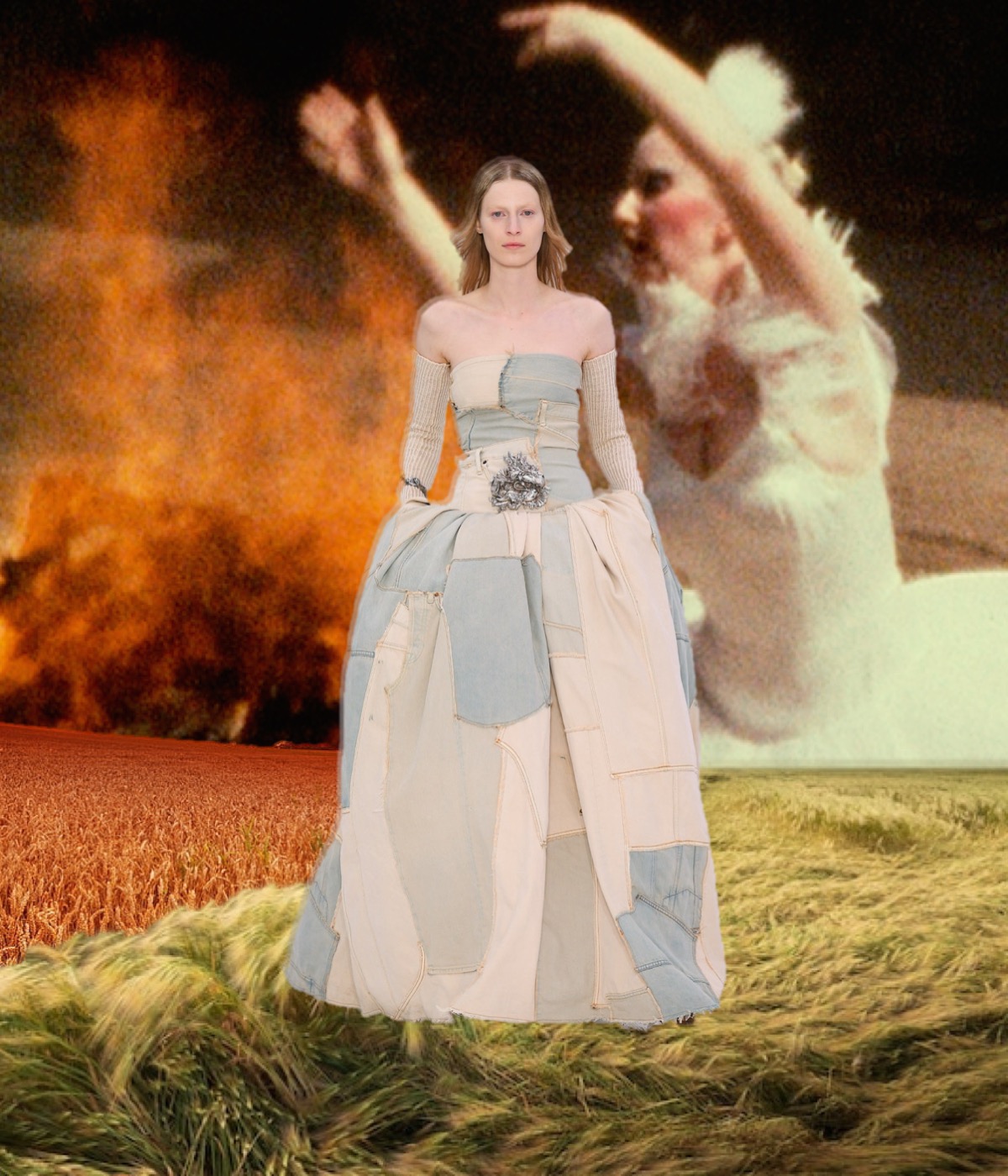
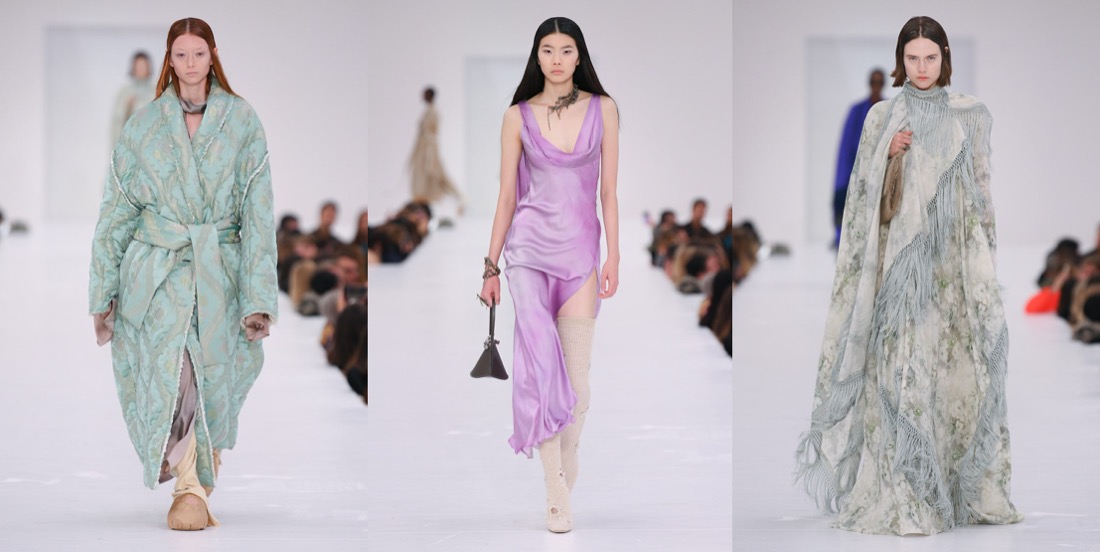
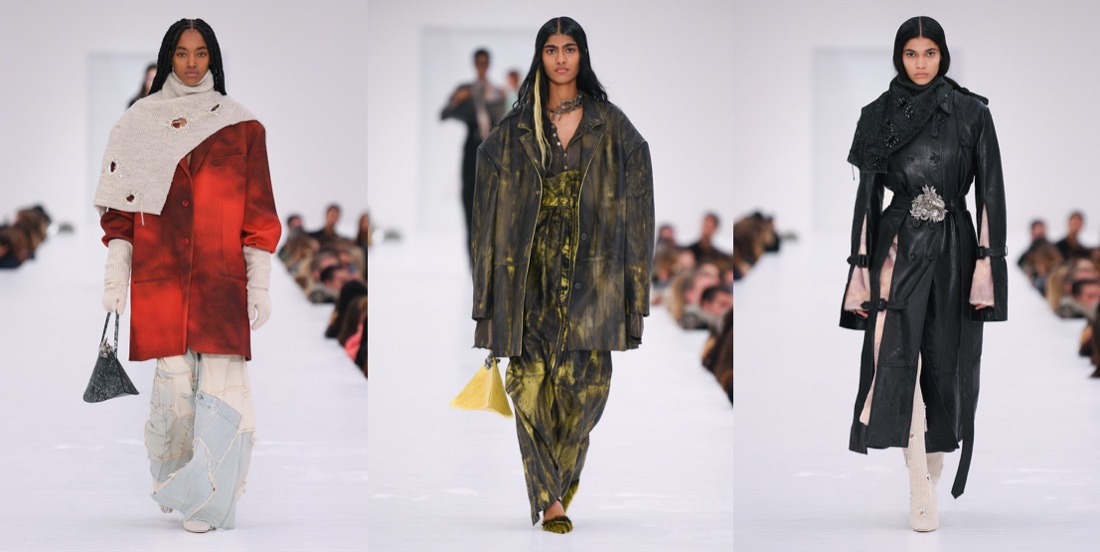
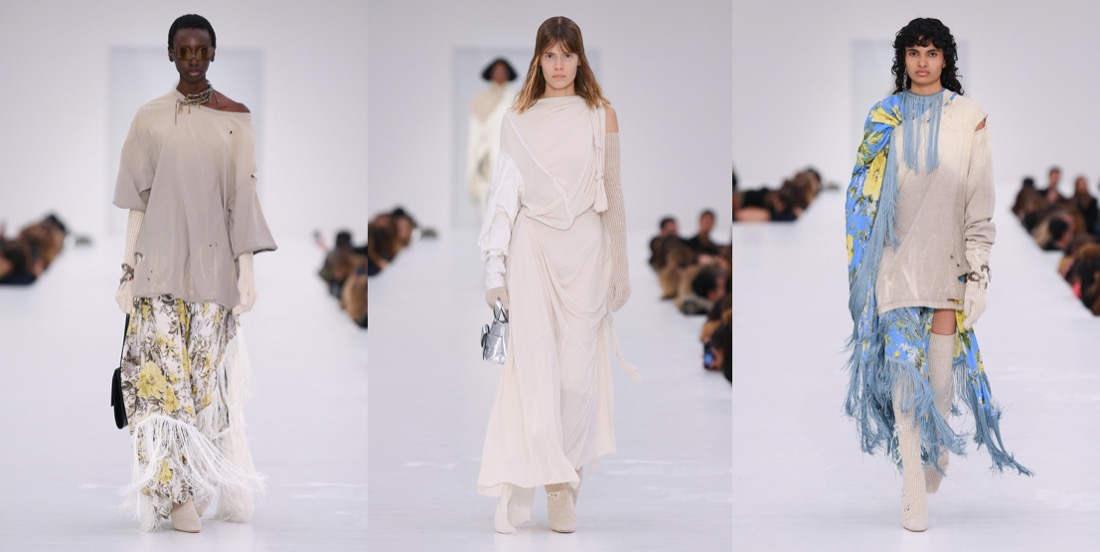
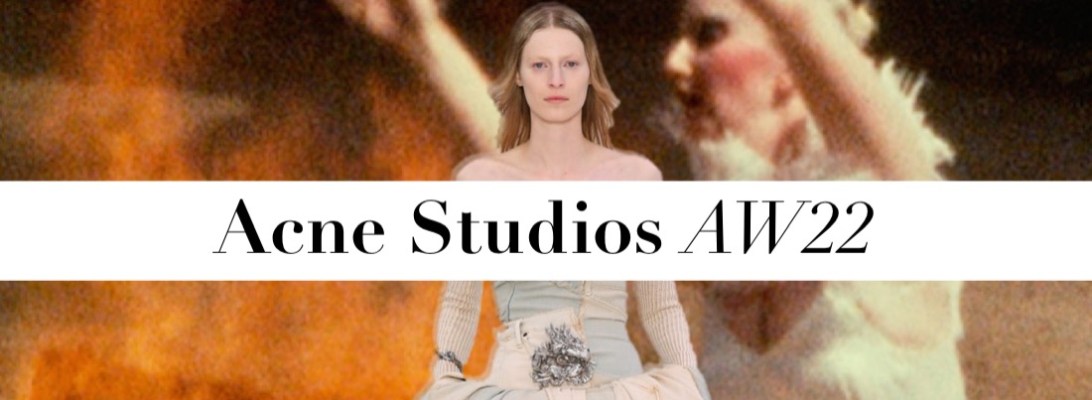
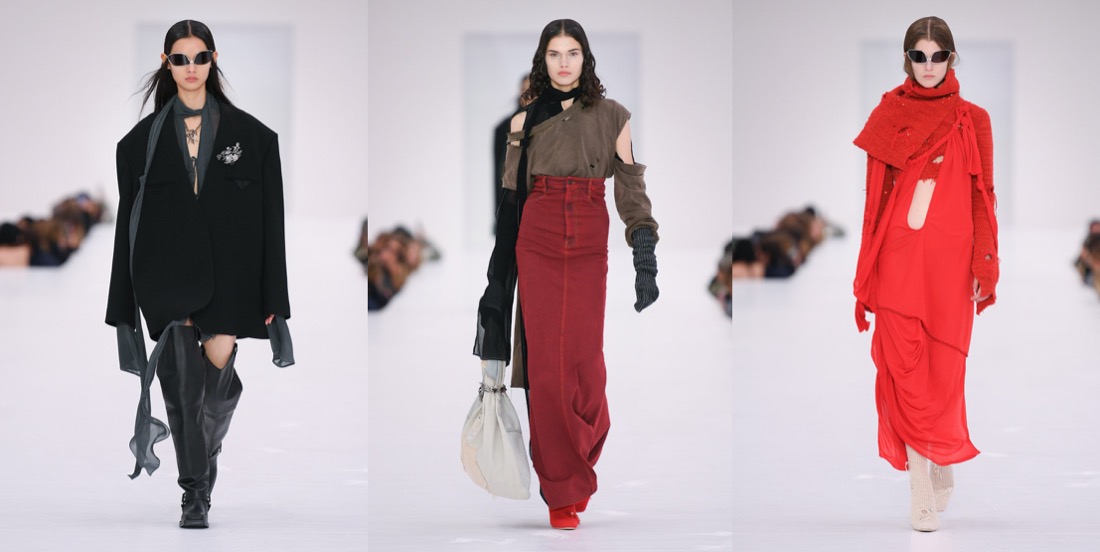
This was one of Acne Studios‘ strongest collections in a while. It had some very surprising turns (eveningwear!), it had an inspiring sustainability factor, and it somehow captured what fashion can be in turbulent times. But lets start from the beginning. When Jonny Johansson was a teenager still at school he lobbied his mother to get him some Levi’s 501s. Mrs. Johansson resisted, bought Swedish, and came back with two pairs of denim pants that she’d snagged from H&M for the same price as one pair of red tags. “She said this is the best choice,” Johansson sighed backstage. At the same time, however, Mrs. J also picked up a jacket which Jonny initially was not into – but which he decided to have a go at turning into something he liked. “It needed to be shortened and then I added a belt. I went into school wearing it, not knowing if people would notice it, or notice that it was home-made – which was not cool,” he said today. None of Johansson’s schoolmates reacted either way. Well, just look at him now. This collection leaned into Acne’s denim heritage in front of an influence-loaded audience with great effect. Upcycled patched denim paperbag skirts, an upcycled patched denim crini dress, and the opening look, a wide-leg garment dyed denim skirt, all paid homage to the single medium that was chiefly responsible for this multi-hyphenate success. Against this he played denim’s natural co-conspirator, leather, via a series of double-breasted trench coats reduced to slit-skirted armless dresses, sometimes also overdyed. Other notable elements included tuft-lined and sometimes-quilted regal blanket dresses in grandma florals, crystal embedded rib-kit socks over shoes, grungily faded jersey separates, layered fringed curtain dresses, and repeated returns to the post-Talking Heads boxy blazer in overdyed leather that was another early Acne signature. As tattered and ragged in its delivery as it was complete in its conception, this was an Acne collection that seemed more comfortable with itself than some of Johansson’s previous ventures. The show was accompanied by an original live performance by musician and composer Suzanne Ciani, a pioneer of electronic music who embraced the liberating technologies of synth to transform the way we listen to music today. As a last-minute change, the finale soundtrack reminded one of a war battleground rattle. The nomadic silhouettes walking on the elevated runway with these disturbing sound sensations in the background felt like a hopeful vision: in the end, the good overcomes the evil.

Collage by Edward Kanarecki.

Experience. Dries Van Noten AW22

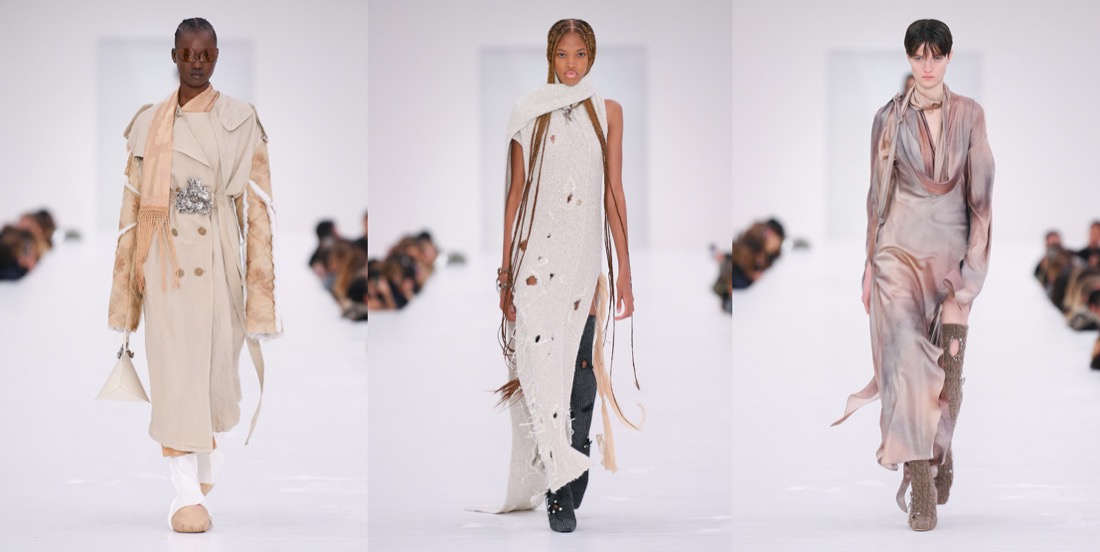
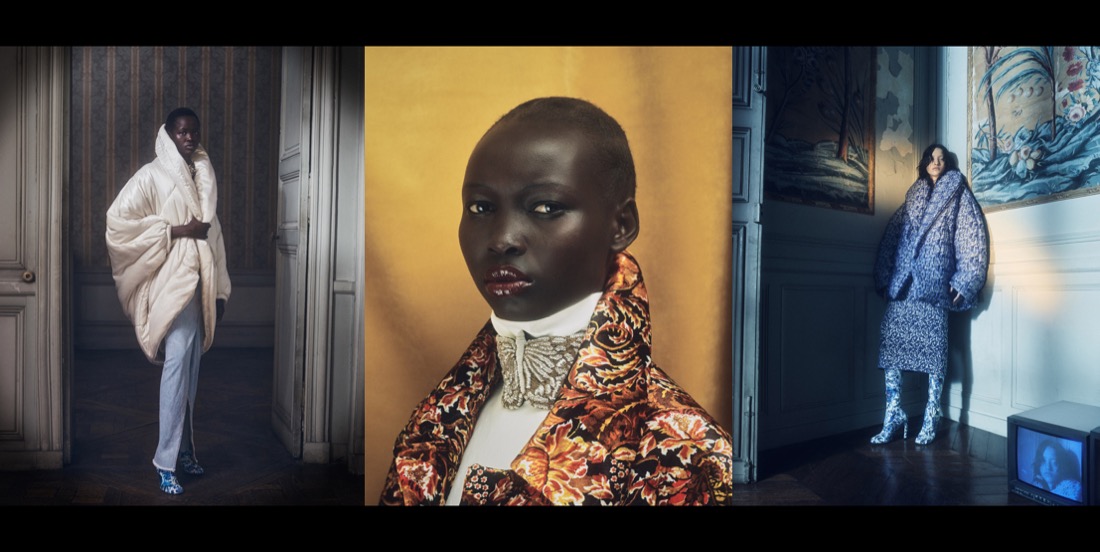
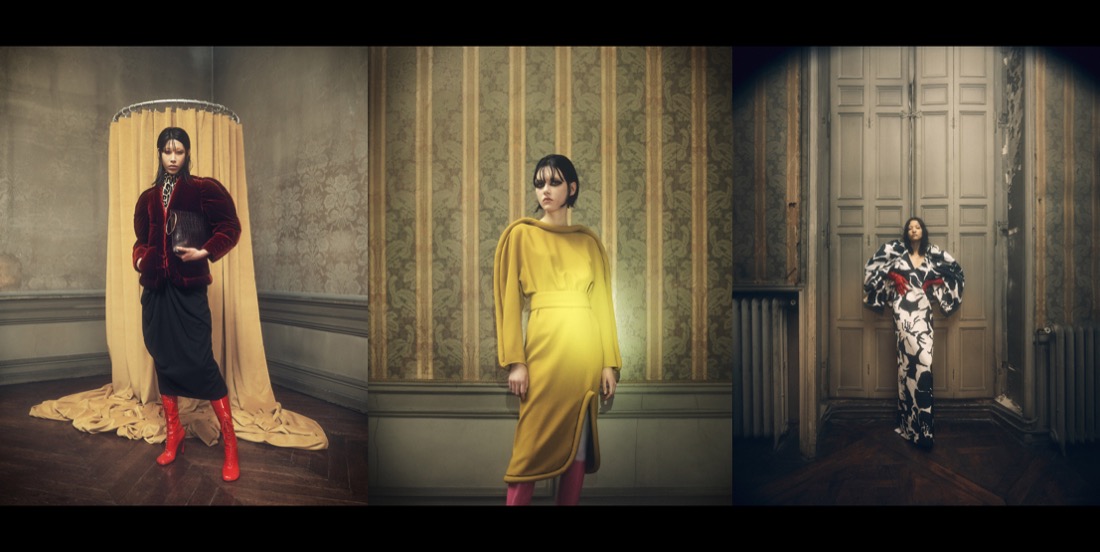
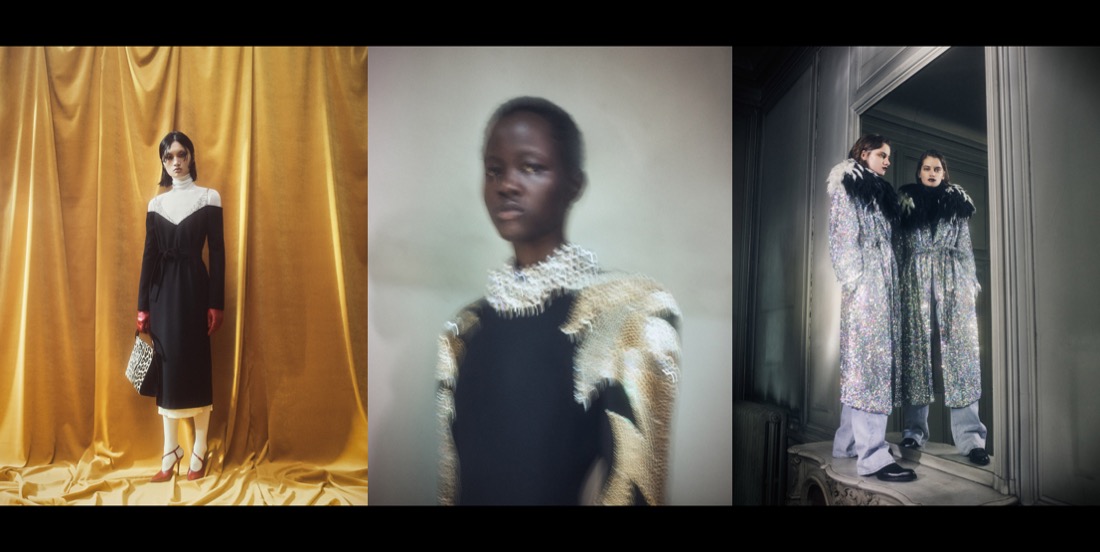
Dries Van Noten still hasn’t returned to the runway format. But this season, he delivered a full experience. For autumn-winter 2022, the Belgian designer hosted a mannequin presentation at the dilapidated Hotel de Guise (in this mansion belonging to an old French family, the clock apparently stopped 50 years ago). Grouped in paneled rooms, the liveless models were staged in various scenes: as if in conversation, leaning watching over bannisters, lurking in a bathroom, glimpsed in a closet, standing on tables or suddenly, disconcertingly, seated on the attic stairs. In other words: this was Dries Van Noten in his element, curating an interior environment instead of a fashion show. It was the perfect setting for absorbing the novel shock of suddenly being able to see and touch the richly layered textures of his collection again – and to sense a distinct frisson of darkness and perversity in the air. The event was also a launch of Van Noten’s perfume and lipstick line, which in the end made even more sense. The invited editors could completely immerse in Dries’ world, from the garments to the senses. What about the new season clothes? They all looked sumptuous: the animal print coat layered over deep crimson silk-velvet trousers; glam holographic sequins with denim trousers and a wildly nubbly wool scarf; 1940s dresses dripped with lines of stones and additionally enriched with opulent, vintage-style jewelry.

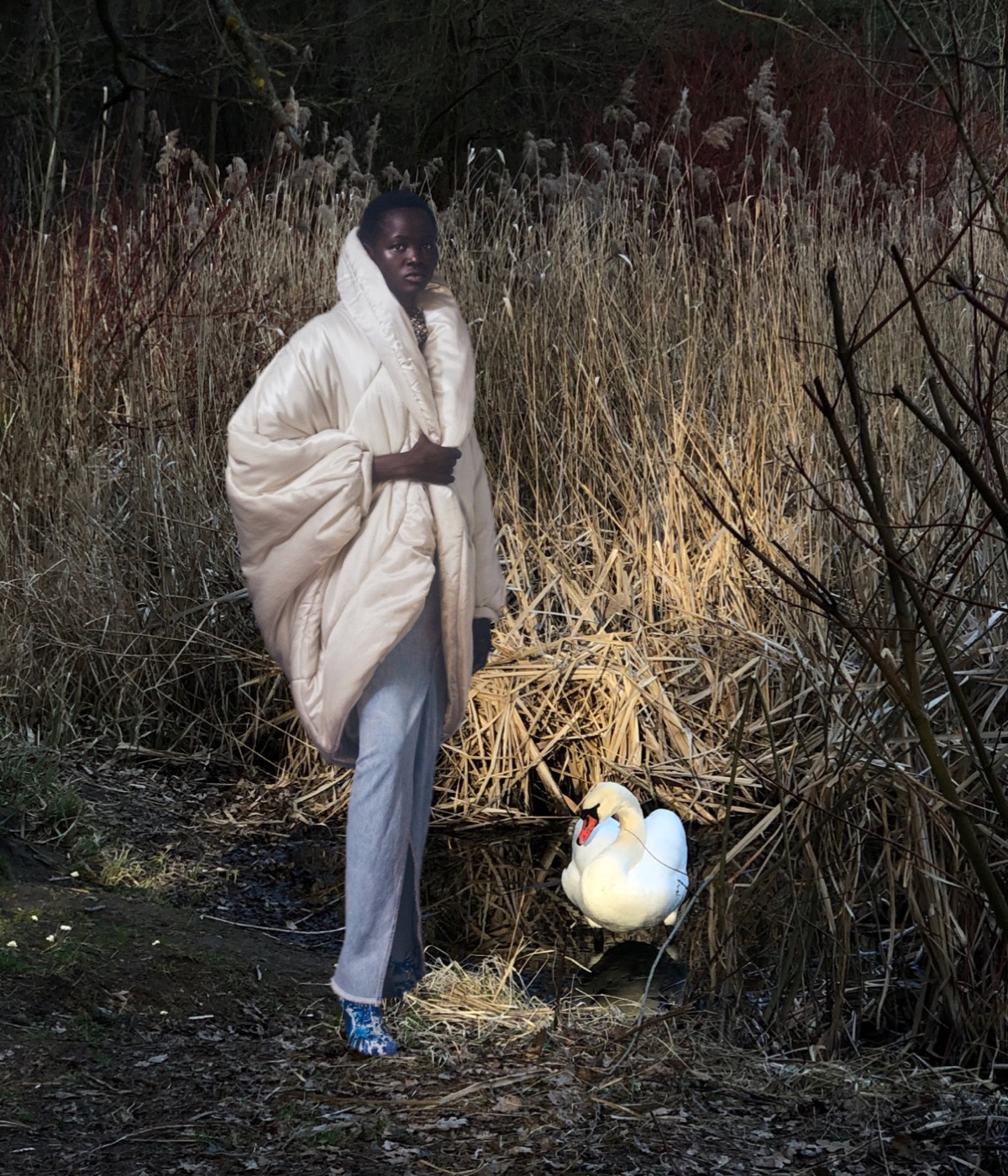
Had he found himself designing more intensely, more richly, during the closed-in times? “No.” Van Noten replied. “It is always like this. You just never see it when it’s up on a runway.” He’s been one of the increasingly few hold-outs against convening physical shows this season – and one of the few who really adapted to exercising the creative possibilities of fashion filmmaking. Using the half-way house of this expressive presentation was something else, fully playing into his multiple talents as a curator of exhibitions, antique interiors aficionado, gardener (which connects with the perfumes) and being the Belgian guy with the Antwerpian memories of alternative parties in the ’70s and raves in the ’90s. He makes a very good point: “I think it’s that whole tactile moment. It’s not that I don’t want to go back to fashion shows, because I think it’s another thing, but this is really nice to experience. This way of presenting creates closeness; the fact that you can explain things, touch things, see things. You can stage it so that you can tell more stories than in a fashion show. So for me, it was a very interesting way of thinking.” So, to the “story.” Van Noten had been researching the work of Carlo Mollino, the Italian architect and photographer whose life spanned surrealism and the ’70s. “After he died, erotic Polaroids he had taken of women, nude and semi-dressed, were found in his apartment.” Look them up, and you find how Van Noten had come up with the maxi-coat shapes, the leather chokers, the ‘kinky’ lace-up boots. He also put his finger on another popular ’70s cult object – a down-padded, Charles James-like jacket with a deep tubular edge. Puffy volumes gone glamorous, circle shapes and other extreme geometries are part of the avant-garde news from Paris. Somehow, while staying within his own world, speaking to his own customers and bringing his whole character to creating his beauty/lifestyle lines, Dries Van Noten still has ways of clocking what’s happening outside.

Collage by Edward Kanarecki.

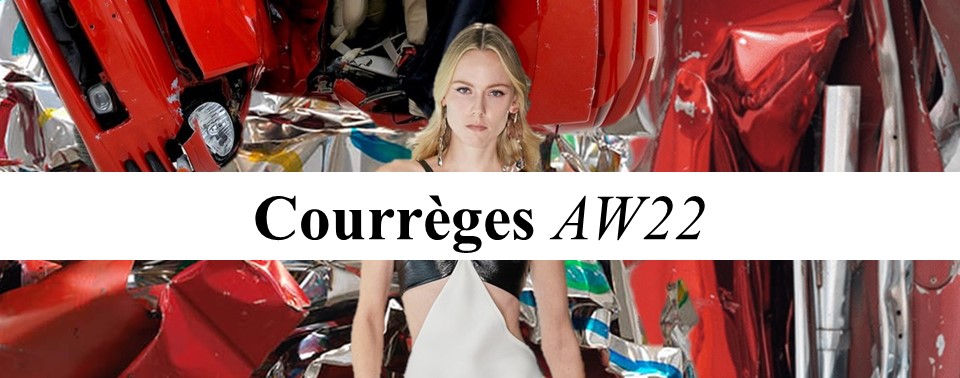
Crash Course. Courrèges AW22

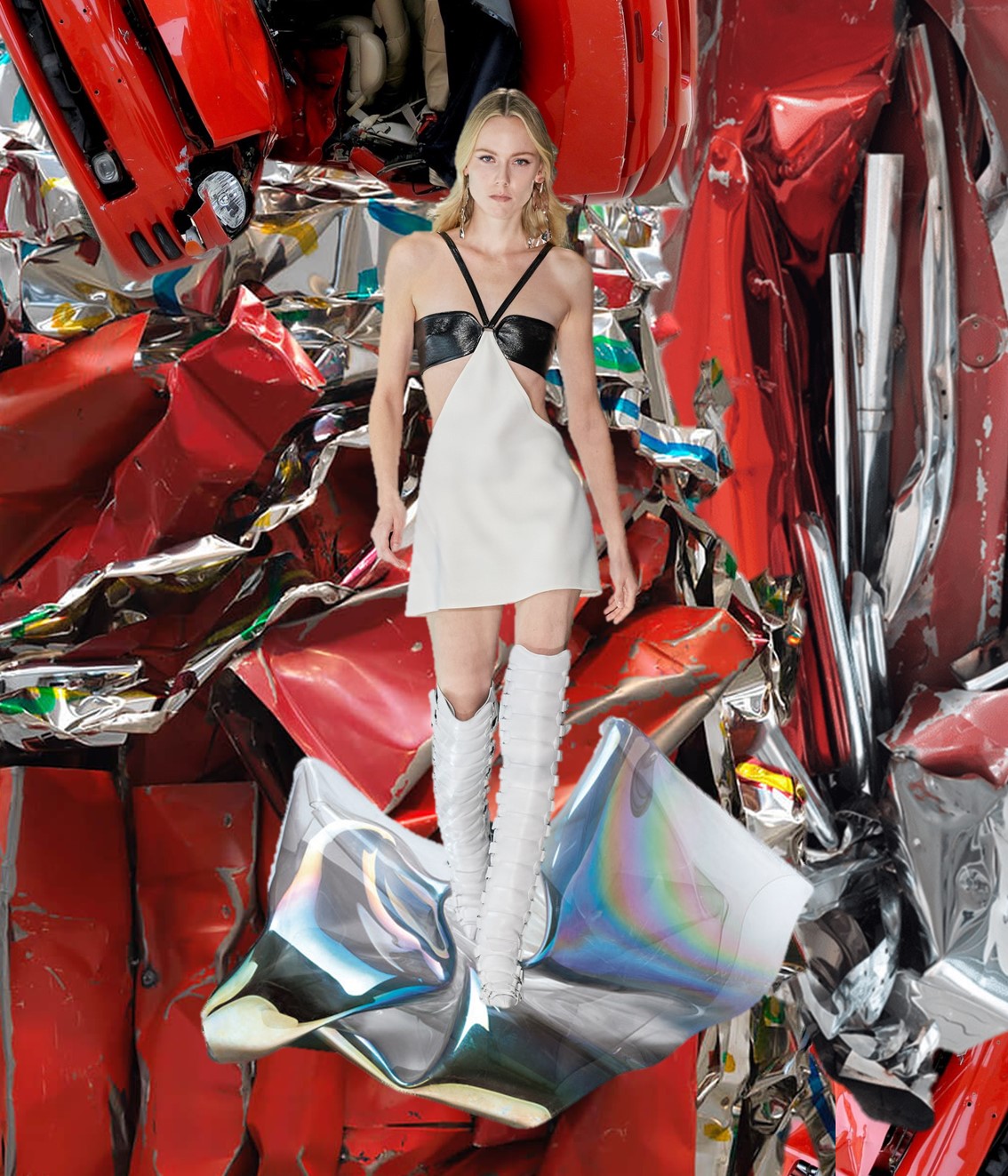
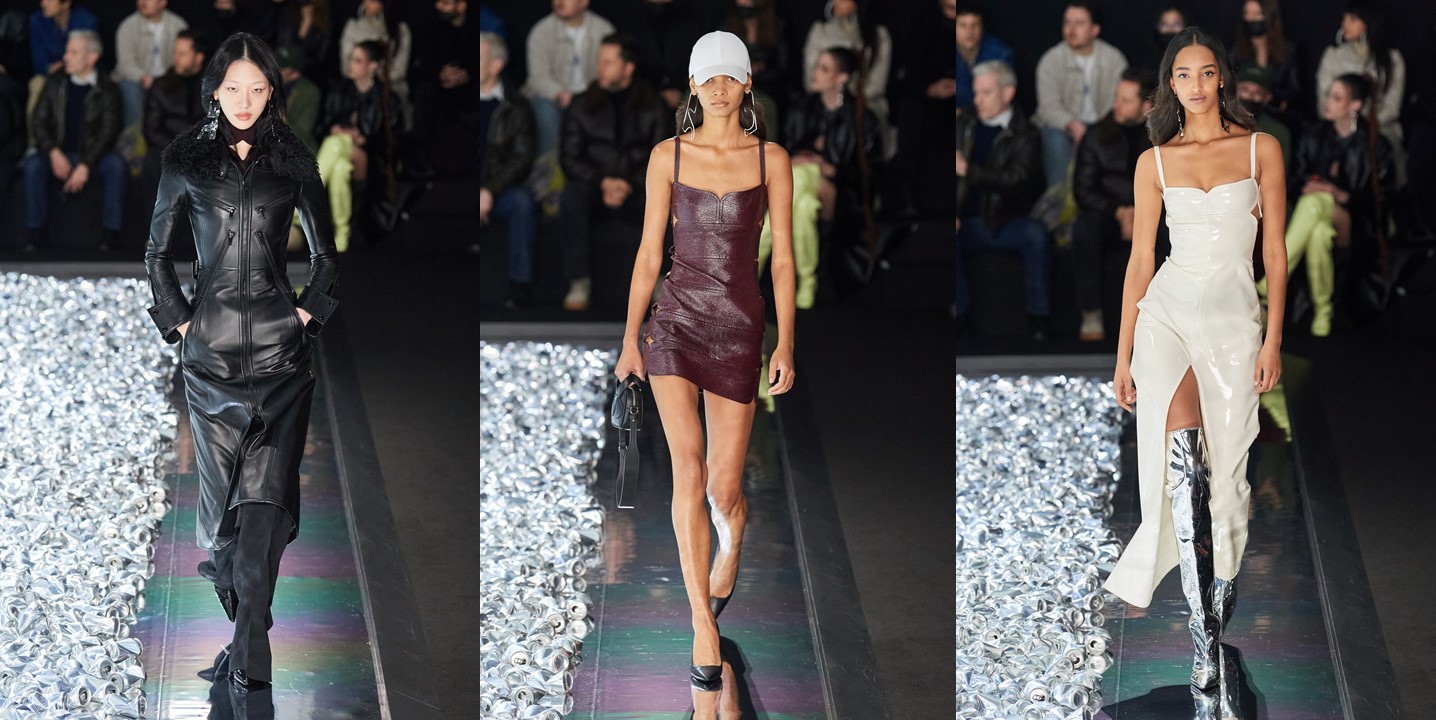
Nicolas di Felice discussed what sparked his latest Courrèges collection: it was the discovery, after much Googling, of a circa 1973 brand video set not in a Paris salon but in a car junkyard. Di Felice liked it for the way it challenges assumptions about Courrèges. Yes, the house founder André Courrèges was a couturier, but he was also plugged into the street. Di Felice is negotiating that divide quite fluently a little more than a year into his run at the brand. The first step was hooking a young Paris crowd on his minimal, sexy basics. These nod back to Courrèges’s Space Age stylings without being overt; it’s helped that di Felice’s arrival here coincided with the return of mini lengths. You see those minis on showgoers this season, along with his updates to the snap-front vinyl jackets that are another brand signature. Mission completed as for Courrèges’ commercial thriving. Now, having caught the industry’s attention, di Felice is playing with more experimental shapes – and here it gets a bit more difficult and demanding. There was a strapless shift dress made from two circles sewn together and a couple of others whose backs were large fake leather squares spray painted to conjure the vibes of that 1973 junkyard – body-con bi-stretch jersey in front, avant-garde in back. Jackets and coats exhibited the same inventiveness. In addition to circles and squares, he made some with large triangular sleeves, including a vinyl puffer whose proportions looked new. These were experimental cuts, but not complicated, he made a point of clarifying. “I really have an obsession with simple patterns, they start from geometric shapes.” Back to the body-con – Di Felice reproduced the geometries of John Coplans’s paintings on shiny vinyl dresses as streamlined as those triangular-sleeved coats were voluminous. The diamond-shaped cut-outs that climb up their sides could become as recognizable as the house’s curvy AC monogram. Di Felice has got the brand-building aspect of the modern creative director’s duties down and now he’s trying to make the brand not just merch, but actual fashion.

Collage by Edward Kanarecki.
Sublime Symphony. Saint Laurent AW22

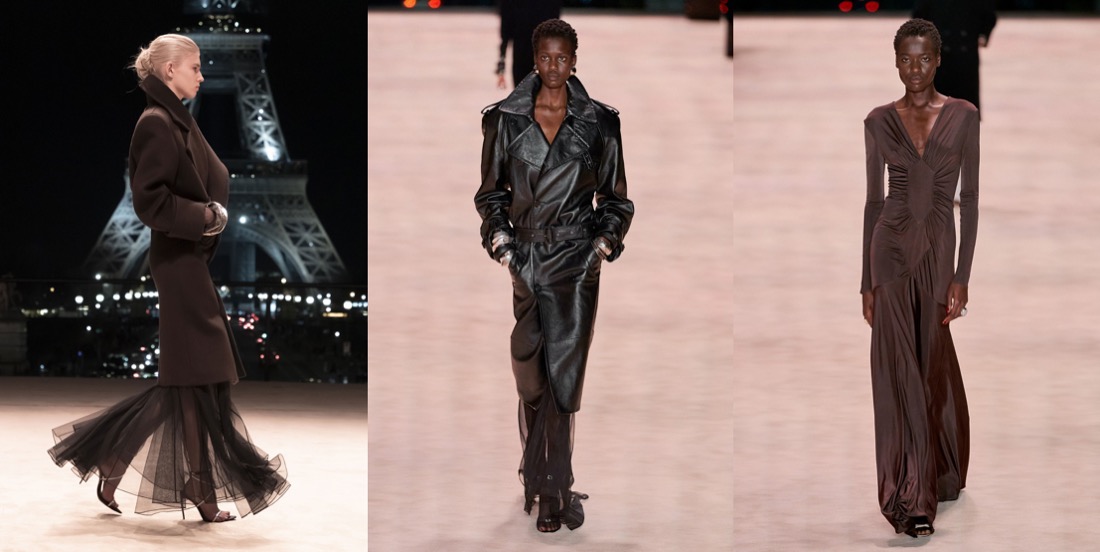
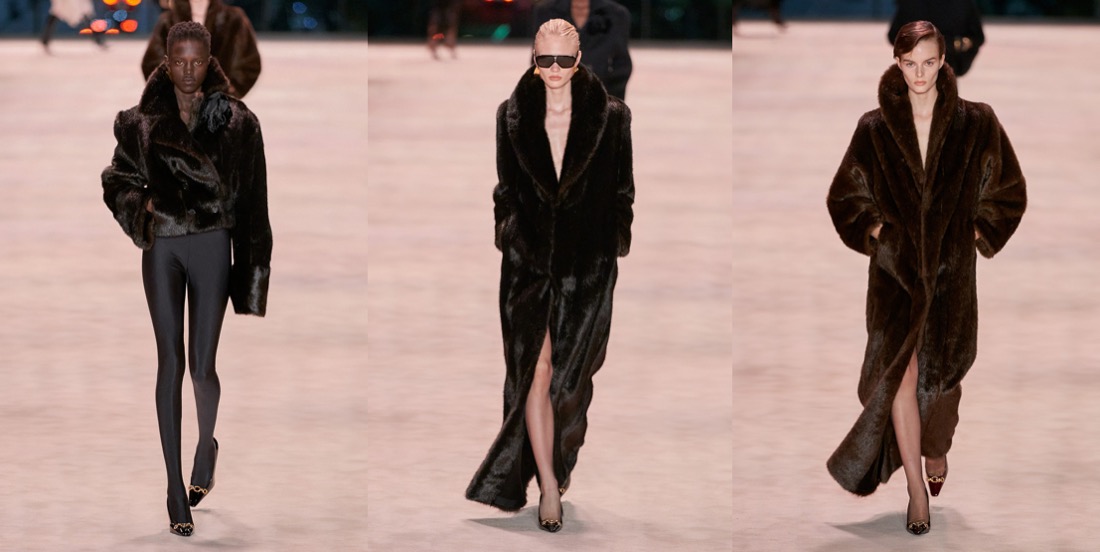
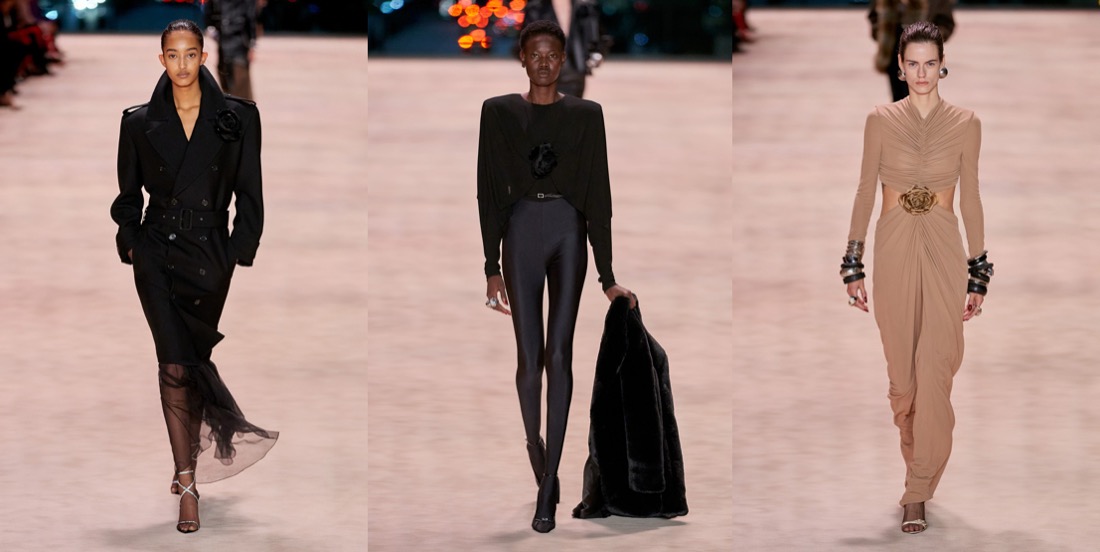
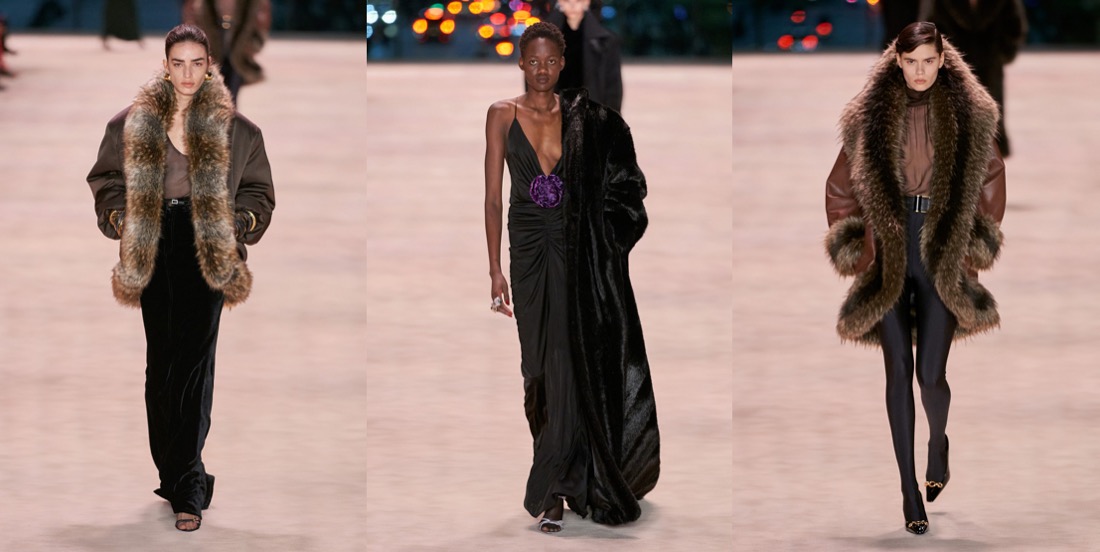
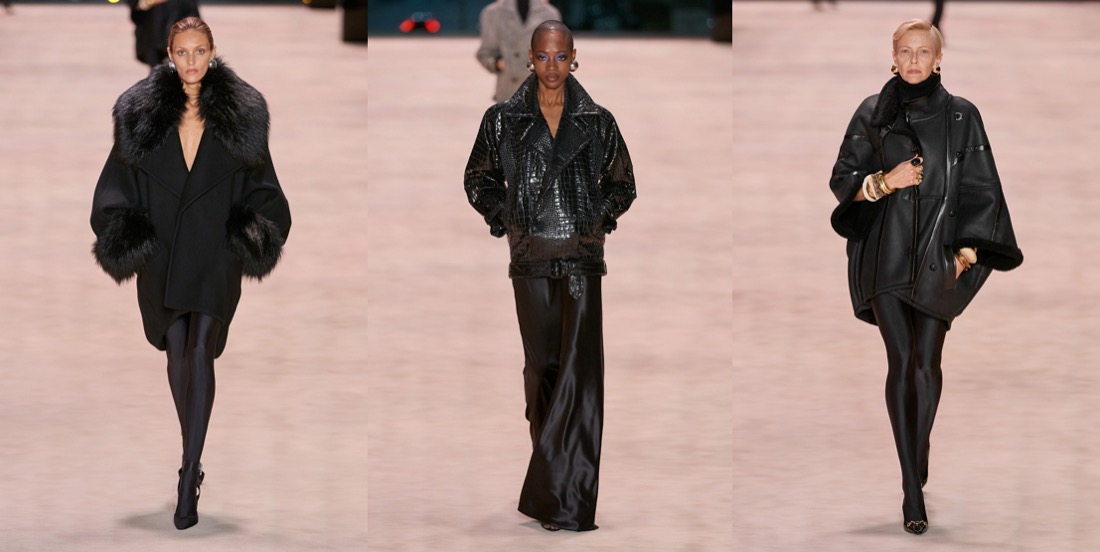
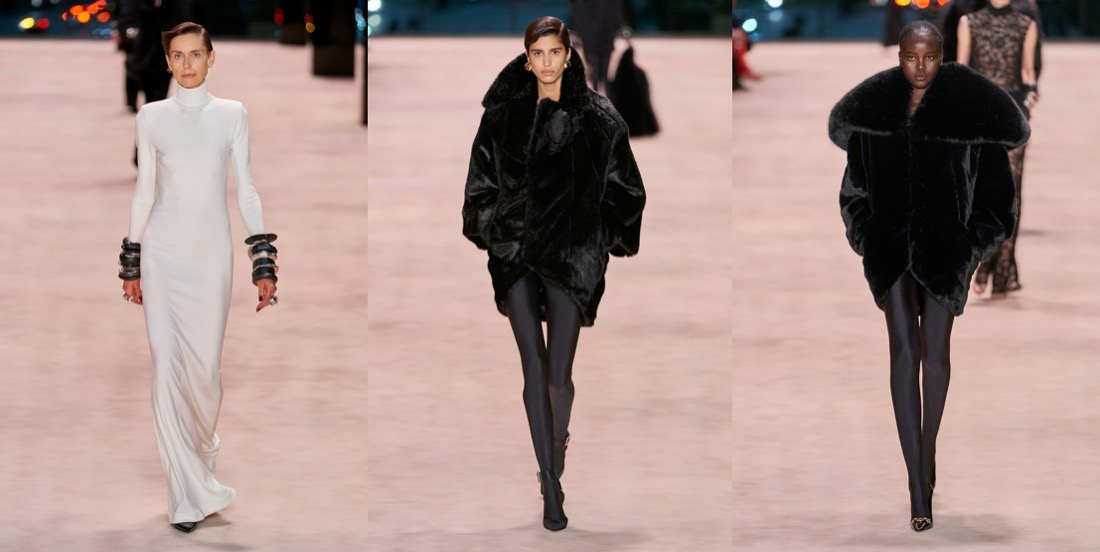
Anthony Vaccarello delivered one of the most beautiful, sensational and elegant moments of the entire fashion month. His autumn-winter 2022 collection for Saint Laurent was sublime, a true symphony of chic, refinement and grace that even Yves himself would applaud. What will be remembered most? Purely the sight of a woman in a long, silvery bias-cut dress, with a perfect black low-buttoned double-breasted black peacoat over it, her hands thrust into the pockets. She opened the show. And then the line-up of flawless black tuxedos and a single, narrow black tux coat which came at the end. Of course, there was a lot more in between: fake fur coats and bombers; amazing overcoats with big (not too big) shoulders; narrow leather coats; elegantly nonchalant cocoon-back profiles. Then the punctuation of something as simple as an ecru floor-length turtle neck T-shirt dress, worn with deep stacks of dark wood and silver bangles on each arm. And the high glamour of 1930s and 1980s evening jackets with big bands of faux fur running around them.

More than anything, all of this went to show how Vaccarello has got himself in charge of the Yves Saint Laurent aesthetic, relaxed into it. That’s no mean feat – the sheer magnitude and magnificence of Saint Laurent’s oeuvre is mightily intimidating. In the face of it, the temptation as a designer is either to rebel against it with super-short shorts, slit skirts, breast-exposure and everything Saint Laurent didn’t do (which Vaccarello did at one time) or to just be too reverential. What the job really calls for is someone who knows enough about the playbook of Saint Laurent to be able to honor its quality, but also has enough confidence to be nonchalant about using it. Vaccarello hit that point of maturity with this show. In his own accent, with his own taste. With, yes, maybe something of his Belgian-born sensibility coming through: vague echoes of that period of deconstructed minimalism, the monochrome colors, saving the air of being easy to wear, but then again, bringing it up to the level of the modern Parisian elegance that we all dream about. The collection was emotionally-charged, as it was a powerful tribute to Vaccarello’s father, who has passed away recently.

Collage by Edward Kanarecki.