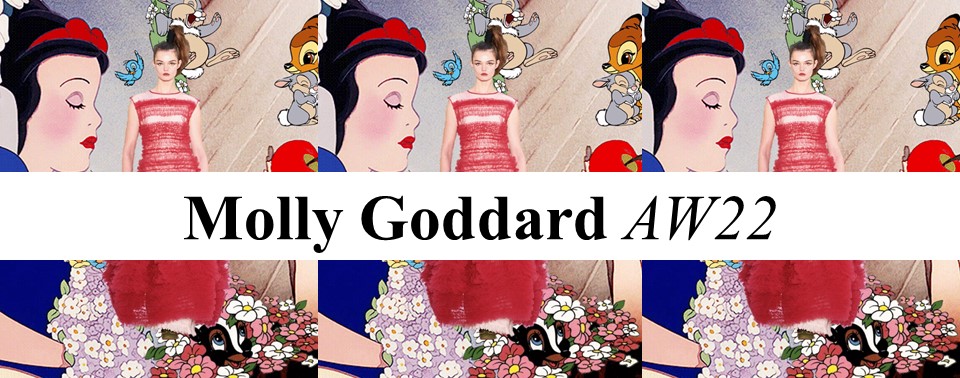
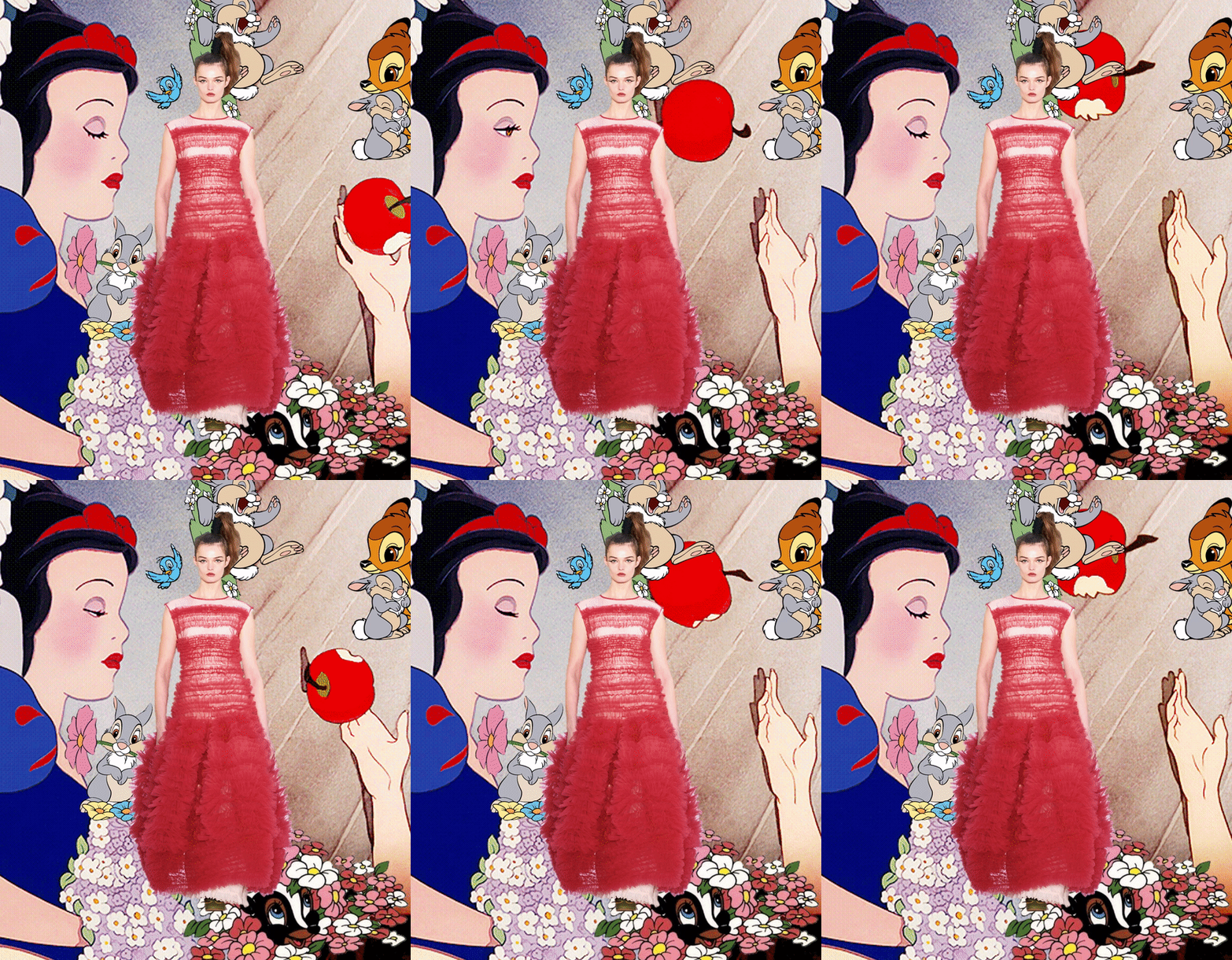
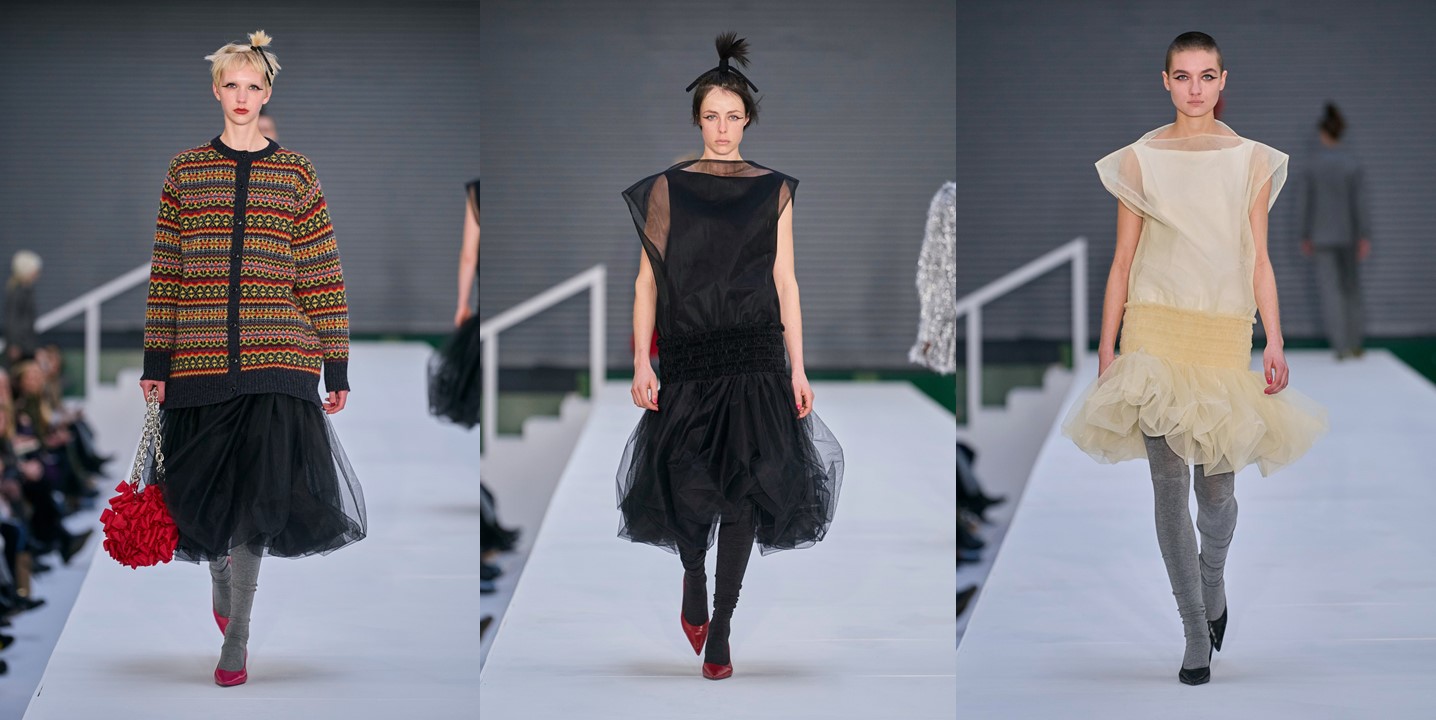
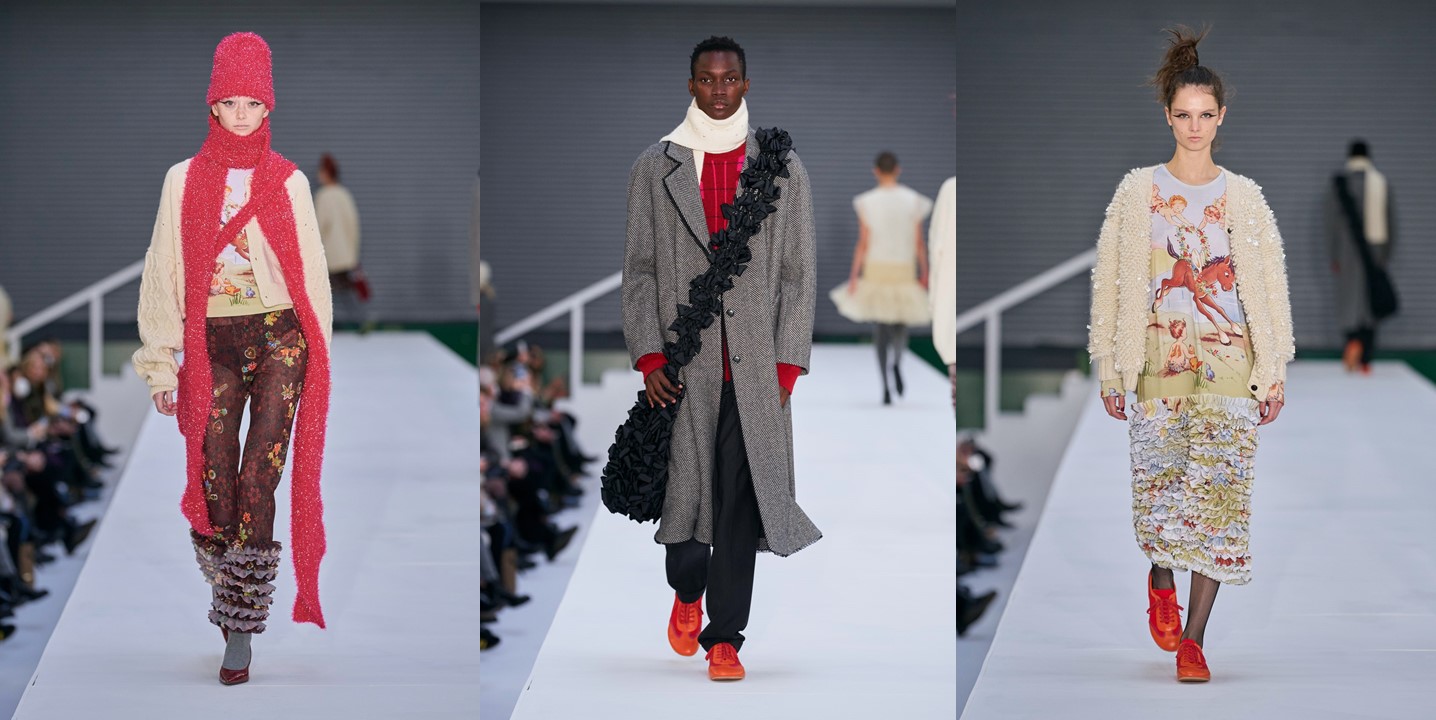
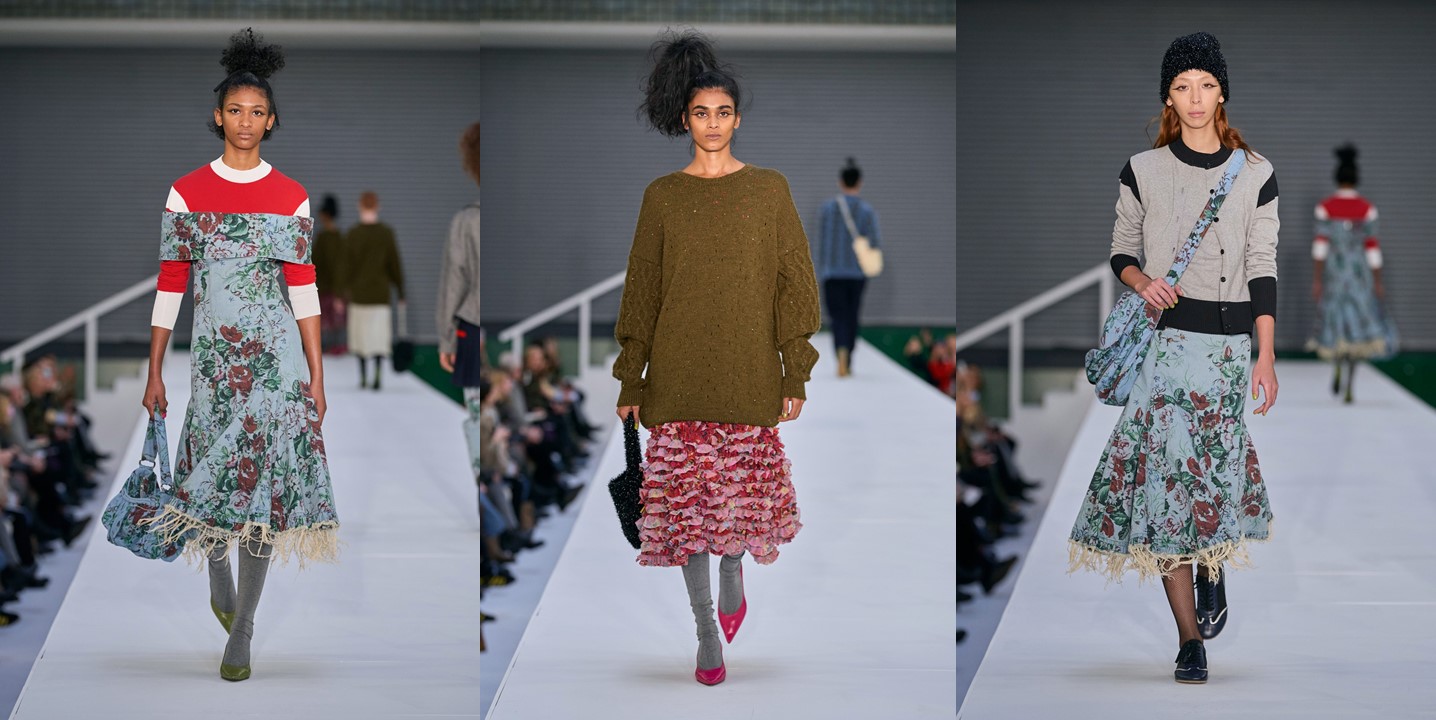
Returning to the runway with a full-scale, fabulous line-up, Molly Goddard gave London Fashion Week big hair and even larger-than-life silhouettes. Growing up around Ladbroke Grove – just a stone’s throw from Portobello market – proffered a lot of great people watching for a young Goddard. For autumn-winter 2022, the designer drew on the homespun fashion and army surplus that became hallmarks of a youth spent West, but supersized the silhouettes and doubled down on texture. With high hair backcombed to look artfully undone by Gary Gill, Goddard’s girls and boys were the cool kids you’d want to hang out with were you roaming around Golborne Road now. This season, supersized sweaters feature heavily because Goddard loves the “silhouette of below-the-bum jumpers”. Also grazing models’ behinds are this season’s skirts, which are barely bigger than belts. “I love miniskirts on men, women, anyone,” notes Molly, before adding that she’s in the mood for dancing this season. Well, who wouldn’t want to go to a ball in one of these delicious, multi-ruffled gowns? In other words: still true to Molly Goddard customers who apparently can never get enough of her ruffly net party dresses, but this time with more in the way of sensible outerwear to combat the weather in the streets and plenty of cozy layers.
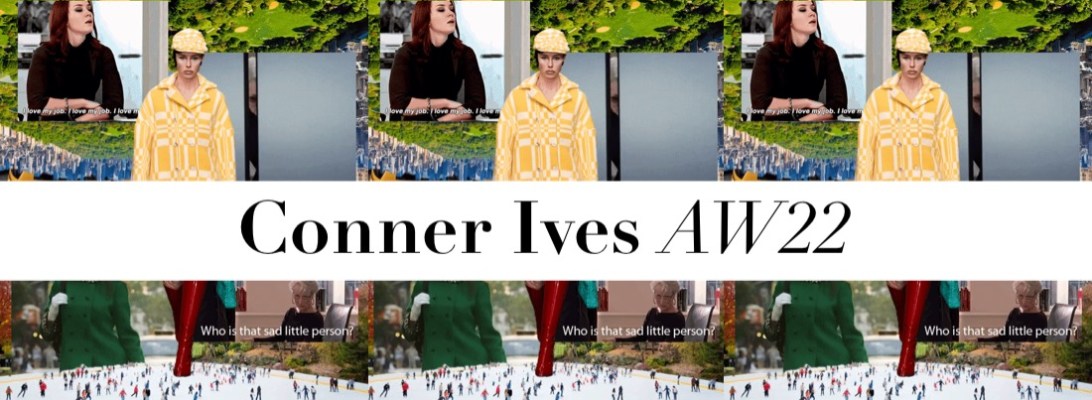
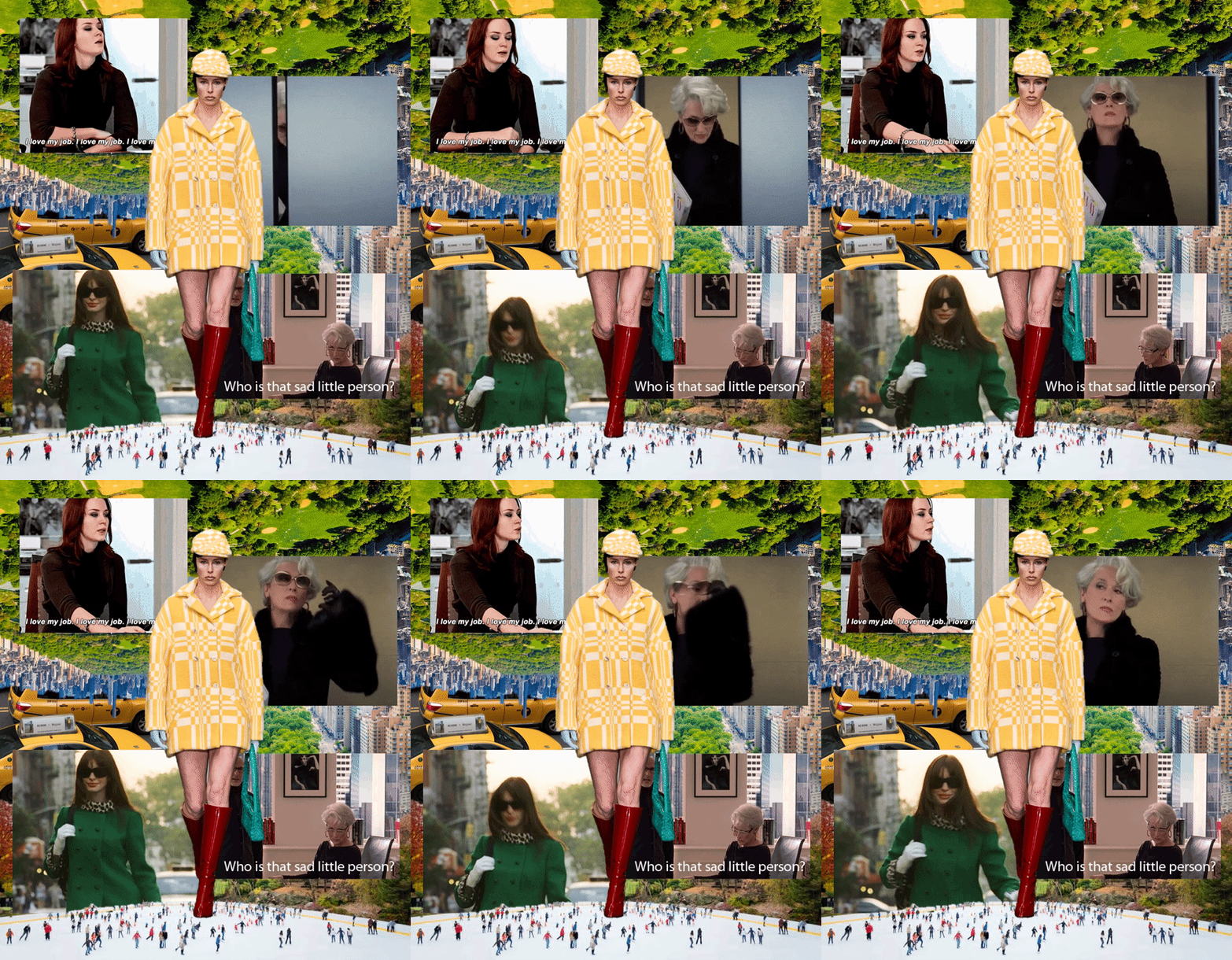
It’s really fascinating how designers in London look at the lexicon of all things Americana. Matty Bovan‘s take tackled toxic masculinity and deconstructed American pop culture. Conner Ives‘ autumn-winter 2022 runway had a more humorous approach towards the American Dream, as the designer made a strong statement about the sentiment of new American style. He drew directly from American archetypes and aesthetics: Jackie O, Andy from The Devil Wears Prada (!), contestants from America’s Next Top Model, and even the models from Isaac Mizrahi’s iconic film Unzipped. “It sounds really cheesy, but honestly, this is something I’ve dreamed about doing since I was five years old.” It was a big rite of passage indeed for the young American alum of Central Saint Martins – a boy who grew up in Bedford, New York, logging onto Style.com and watching Tim Blanks’s Fashion File interviews. In 2021, he graduated – in the misery year when no student was able to have a final runway show. Though that proved no barrier to being able to build up a retail market for his reclaimed patchwork T-shirt dresses, getting picked out by Andrew Bolton for a purchase that put a design of his in the Metropolitan Museum of Art’s Costume Institute and getting invited to the Met gala, and being selected as a runner-up in last year’s LVMH Prize competition.
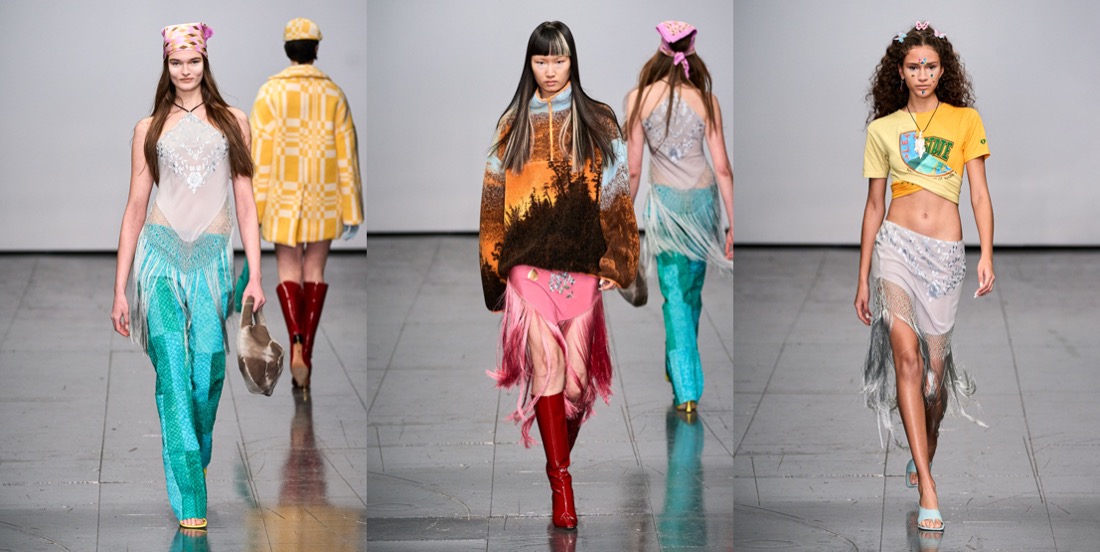
If Central Saint Martins teaches one bottom-line rule, it’s always the individualistic insistence on students being true to their identities. That’s a lesson that Ives has patently taken as gospel. His show said that in every look, each one systematically named after Y2K pop movie/reality show actors, actual girl clique leaders he knew in high school, hero-worshipped female relatives, and American women he has always fantasized about knowing. There was Ives’s vision of Carolyn Bessette-Kennedy as a bride in a sleeveless, bias-cut dress and matching headscarf-cum-train. He had a “Madam Vice President” look: a dream pitch for Kamala Harris to wear a Conner Ives cream and brown patchwork scarf dress. There was a cowgirl, representing an influential aunt in Santa Fe, wearing laser-printed denim and turquoise jewelry. And “The Editor,” an Ives fan note to Anna Wintour, thrown back to an evening in the 2000s when she wore a white tank and a red flounced flamenco-ish skirt designed by Oscar de la Renta for Balmain. Near the finale, Jackie Kennedy came out in a simple cream Watteau-back gown with a huge quilted patchwork star planted in its midsection. Another lesson Ives has seriously taken to heart is upcycling and repurposing. The sexy-skimpy glam and funny identifiable references might be the primary attractions of his kick-flares; leisure suits; and silk-fringed, piano-scarf dresses and skirts, but Ives sources all of it from deadstock and vintage garments and materials. In other words, here was the first public outing of a very modern designer – fun and good times on the one hand, and on the other as much of a stickler as he can be about his production process. Rarely do those two things go together in contemporary fashion. Ives also intends to forgo the waste of showing every season. He plans to do a runway show only once a year.
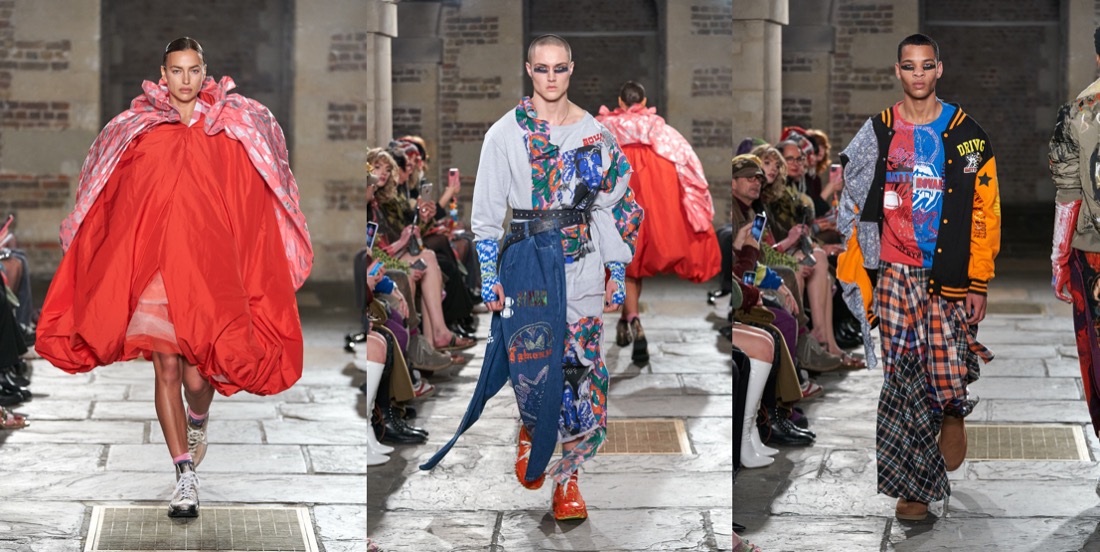
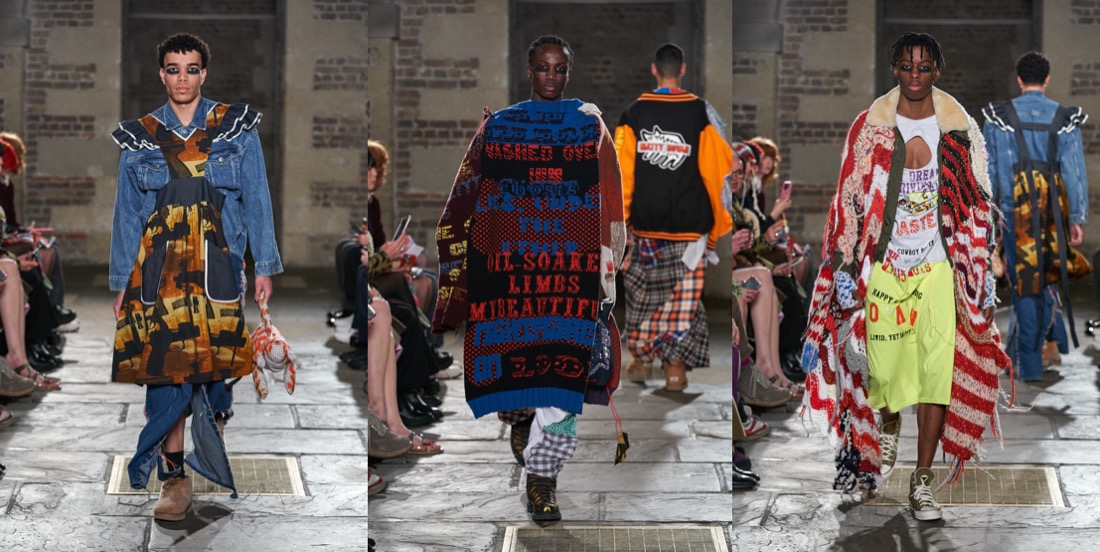
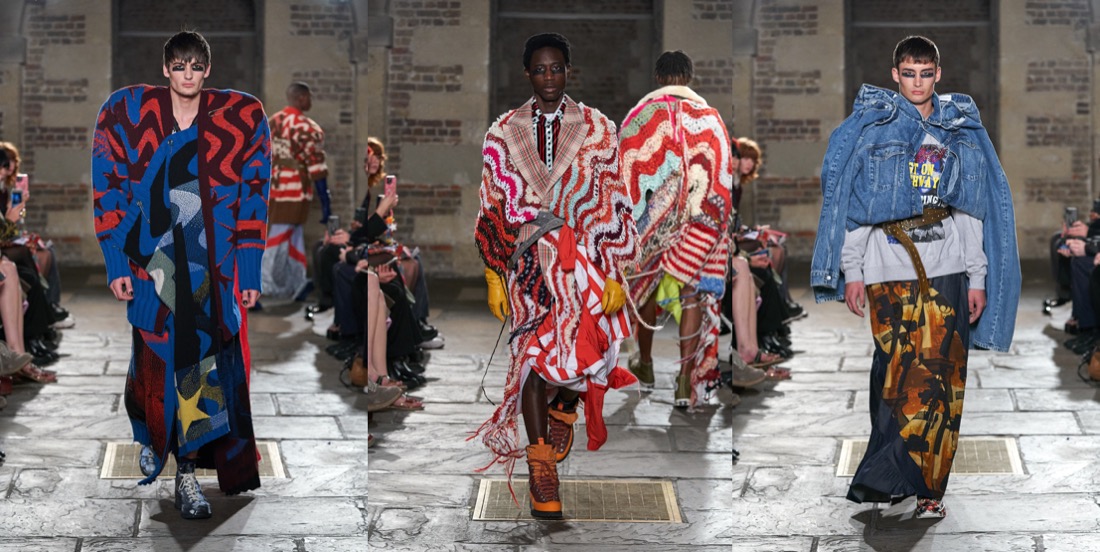
Storm Eunice disturbed the first days of London Fashion Week, and went on, wrecking havoc in the rest of Europe. Matty Bovan‘s nomads, wearing layers of fleecy knits, table-cloth prints and hand-painted outerwear, made sense amidst the disturbing weather conditions. Aptly, he titled his collection Cyclone: a force that causes “chaos and destruction – even beauty – in the wake of its power.” He was talking about the pandemic, but you could say the same for the organized chaos that embodies his work. Some find it messy, others soulful. This season, it was punk for the globalized generations: the kids who have grown up as immersed in other cultures as in their own and feel a need to rebel against said cultures’ symbols of patriotism. Enter America, a place that has so many cultural divisions which all lay claim to its national iconography that those symbols have become universal. “They’re very fun to subvert. Like England, they don’t really belong to anyone,” he shrugged. The Yorkshire-based designer was wearing a Carrie Bradshaw-style necklace with the name Derek on it in homage to his American musician boyfriend, who spends part of his work researching undiscovered folklore music from America. Together, they spent two months in his hometown of Bridgewater, Connecticut this season where Bovan found inspiration for his first collection based on American culture. “I’ve looked at England for so long, I needed to look at something else. America is very easily parodied and there’s a lot of iconic symbols – the star, the stripe – which I like to play with.” As far as American socio-political commentary goes, his collection didn’t escape cliché territory. But that didn’t make it any less captivating. Within the ripped-up sensibility of Bovan’s work his various treatments of the American flag – hand-painted on jeans, as a train on a jacket, as star cut-outs queerly stitched all over a dress with a naval military cape – very much read as punk. As did a series of repurposed classics from collaborations including Vivienne Westwood, Adidas, Converse All-Star, Alpha Industries, and Calvin Klein (as for footwear, Diemme provided boots for many of the looks which Matty customised for the collection). The feeling was echoed in the de- and reconstruction of bomber jackets and parkas – some spliced together – and a beautiful hand-painted blouson with the words “Hopeful” and “Bad Dreams” spelled out within its abstract motif. But the political element here was above all in the casting. Not in Irina Shayk, who opened and closed the show, but in all the bulky frames that followed. Through a conventional lens, these bodies read as masculine. Dressed in Bovan’s genderless garments, which traverse the body-conscious and the dramatically draped, they came across as an interesting comment on male roles from an American perspective.
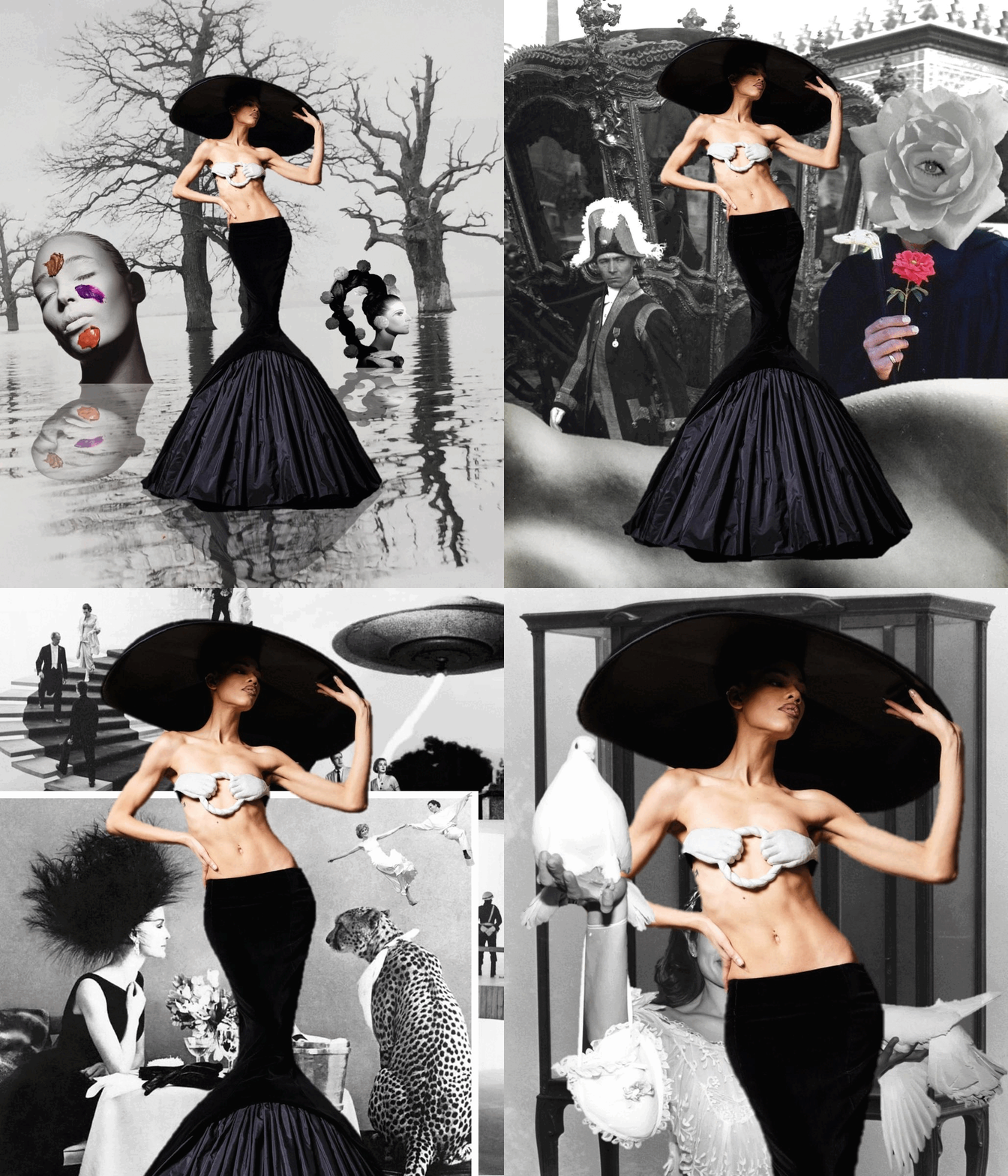
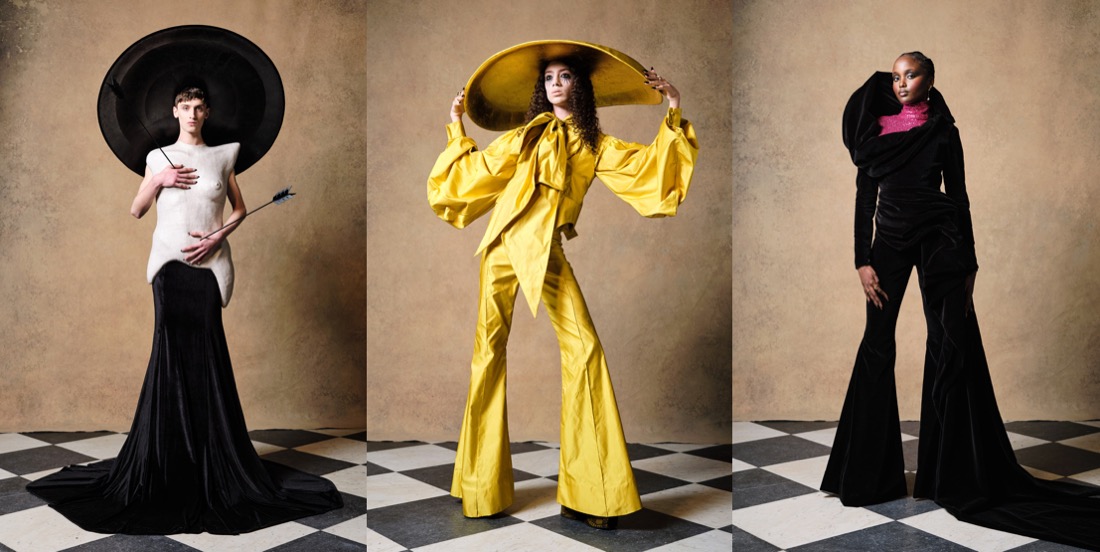
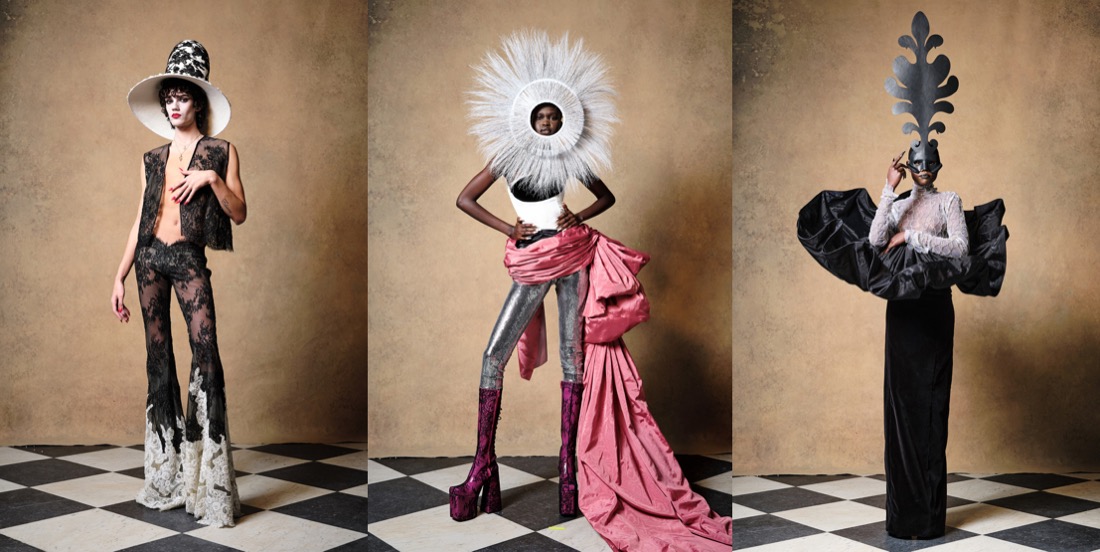
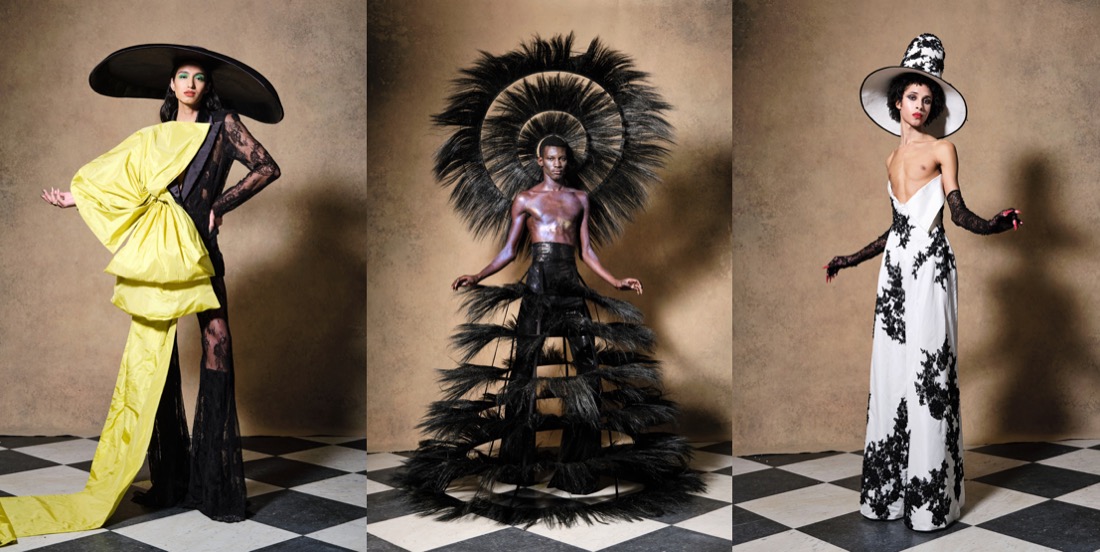
London Fashion Week started on a high note with Harris Reed‘s sophomore collection. The phenomenal autumn-winter 2022 collection, staged at the Saint John the Evangelist Church, was accompanied by Sam Smith’s live performance of Desirée’s “Kissing You”. The musician was surrounded by an elaborate set of paper clouds and models wearing creations made from repurposed fabrics. And here’s another magical detail about Reed’s latest outing: those fabrics came from the home of the heir to the Bussandri upholstery empire, who the designer happened to meet in a café in Northern Italy where his mother lives. “She looked like Donatella Versace’s twin sister. I said, ‘I love your bag.’ She said, ‘Oh, it’s actually from our villa…” And the rest is history. Titled “60 Years a Queen” after Sir Herbert Maxwell’s 1897 book about Queen Victoria, Reed’s collection investigated Victoriana through a “Yas, queen!” club kid lens. “I love how queer culture took on this regal fabulousness,” he explained, gesturing at a gender-nonbinary house model wearing an elongated plush golden suit repurposed from those Bussandri fabrics. As for the rest of the young designer’s silhouettes, they weren’t exemplary of a collection created to explore a specific design idea. Rather, they were DIY-esque explorations of the language of haute couture, and, to a larger degree, testament to the fact that the Harris Reed brand isn’t necessarily about design, anyway. It’s about him as a performative phenomenon rooted in the generational values expressed through his genderless creations and the nonbinary people he puts them in. The message was illustrated in a breastplate spliced from a male and female torso, then pierced with arrows Saint Sebastian-style. But Reed is far from a martyr to his cause. In fact, business is going so well he’s happy he didn’t go down the ready-to-wear route like some of his Central Saint Martins classmates.
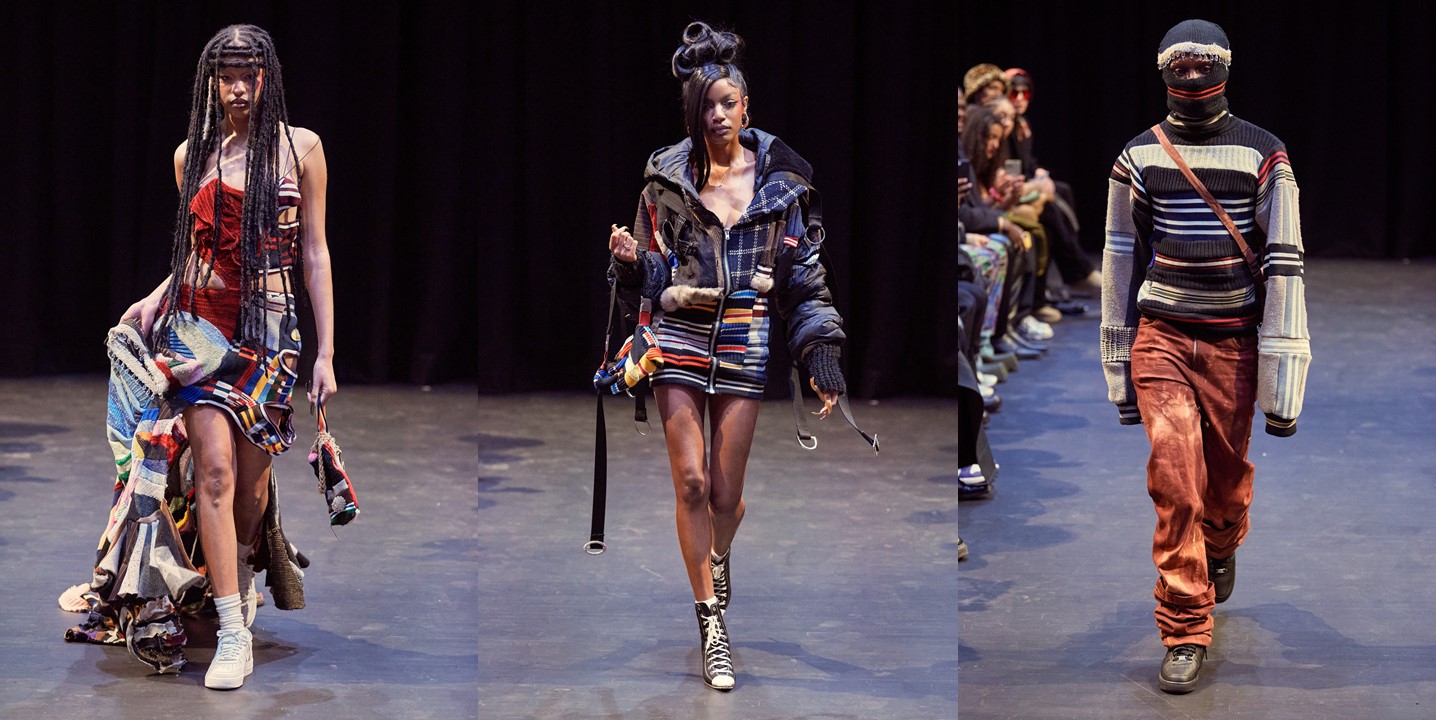
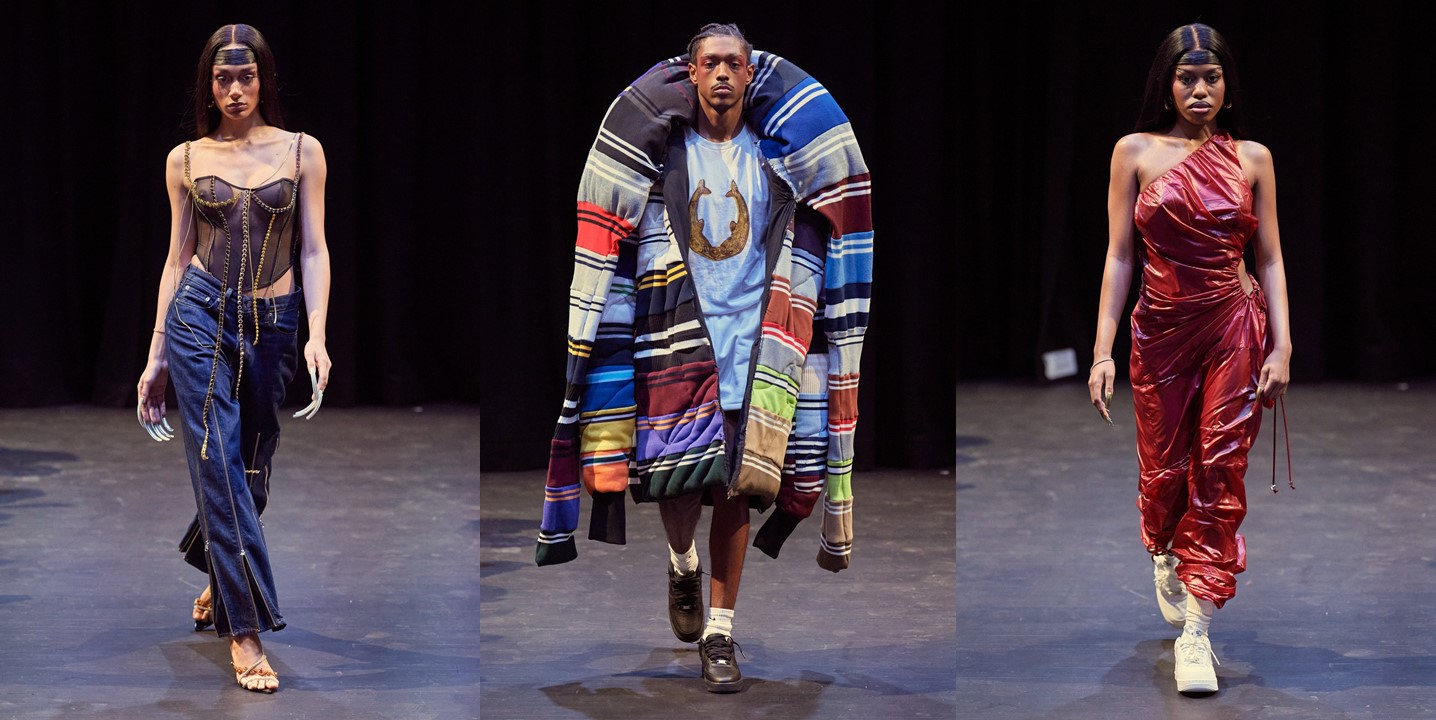
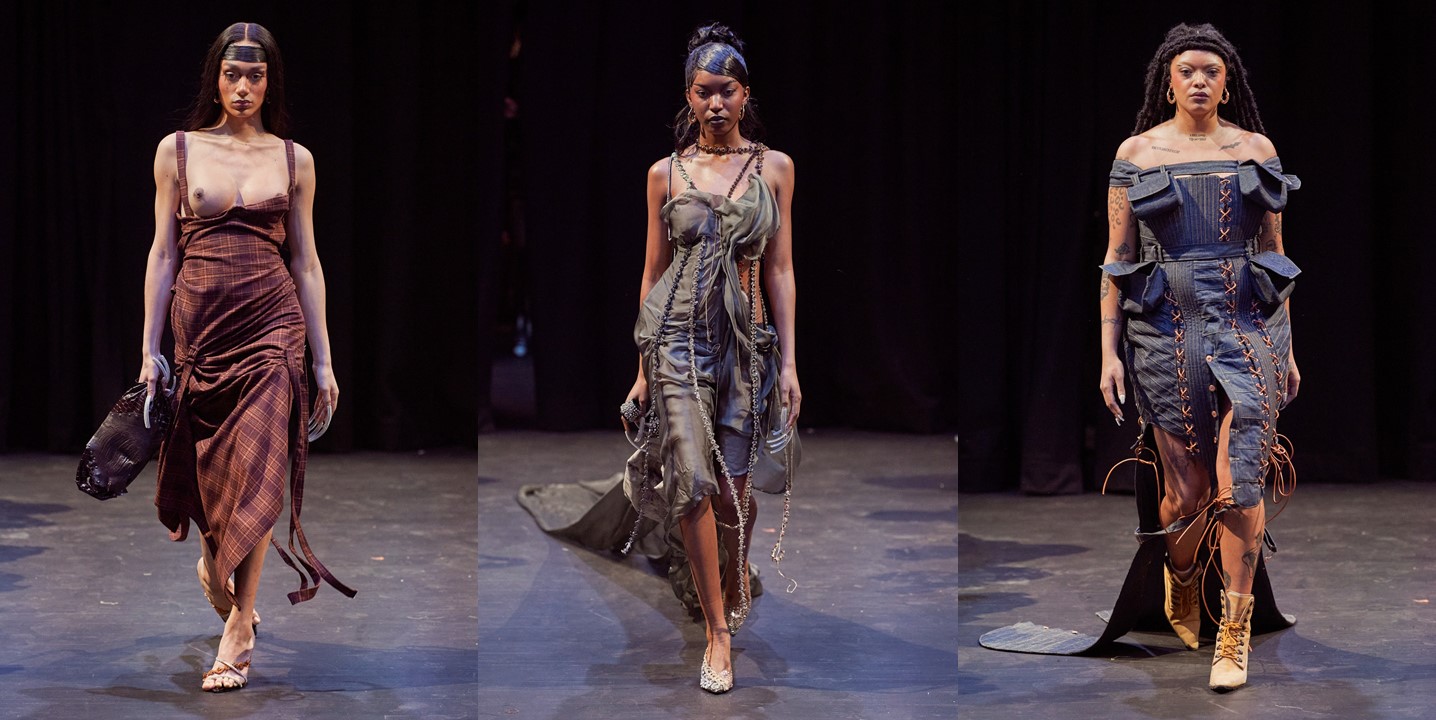
Using traditional American materials, from brown houndstooth wool to red nylon, No Sesso‘s designers Pia Davis and Autumn Randolph wrote their own lexicon of fashion classics steeped in their experiences as Black women. Dresses dripped off the body, some in filmy olive chiffon, others in crisp cotton shirting, cradling the bust and revealing slivers of torso, thigh, and breasts. A one-shoulder silhouette with cargo pockets appeared in several different fabrications, hammering home the piece’s versatility. The real stars of the lineup were the upcycled pieces and the pair’s new Levi’s collaboration. The former, made using vintage varsity jackets, ties, puffer jackets, and other unloved fashion items, took the brand’s familiar practice and pushed it to new heights. A dress collaged together from pieces of old knitwear was trimmed in crystal beading, almost ethereal in its execution, while a short zip-front dress was boldly sexy. The denim pieces made with Levi’s toed the line of appropriateness, using corsets, lacing, and zippers to transform a cool, oversize jacket into a sexy little dress. That play of sexual and sensual with something more appropriate is the territory where No Sesso thrives. It’s also the place where Davis and Randolph are able to combine their skills as artists and as pragmatists. This No Sesso collection included more utilitarian, essential pieces than ever before without losing the pair’s deconstructivist touch.











 Design & Culture by Ed