Cupid’s Door. Alexander Wang AW23

And just like that, it’s New York Fashion Week. The first show on the schedule, at least for a brief moment, made you feel like in the old days. 10 years ago, in 2013, Alexander Wang‘s show was also an opener in New York’s biggest fashion event. Anna Wintour sat in the f-row, hot music was bumping all over the rave-y venue, Instagram was just starting to be a thing, TikTok was non-existent. Wang was the city’s favourite fashion darling – and he was about to show his first collection for Balenciaga in Paris (anyone remembers that?). But we are in 2023, and the world-wide mood is different, even if NYFW does it best to look like in the pre-pandemic times. And Alexander Wang is no longer a new-gen designer with no controversies attached to his name.

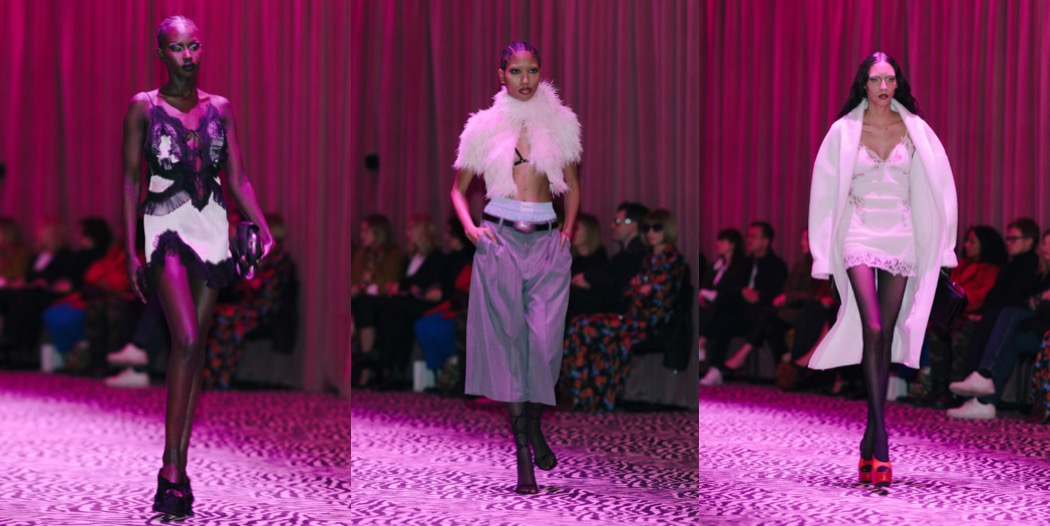
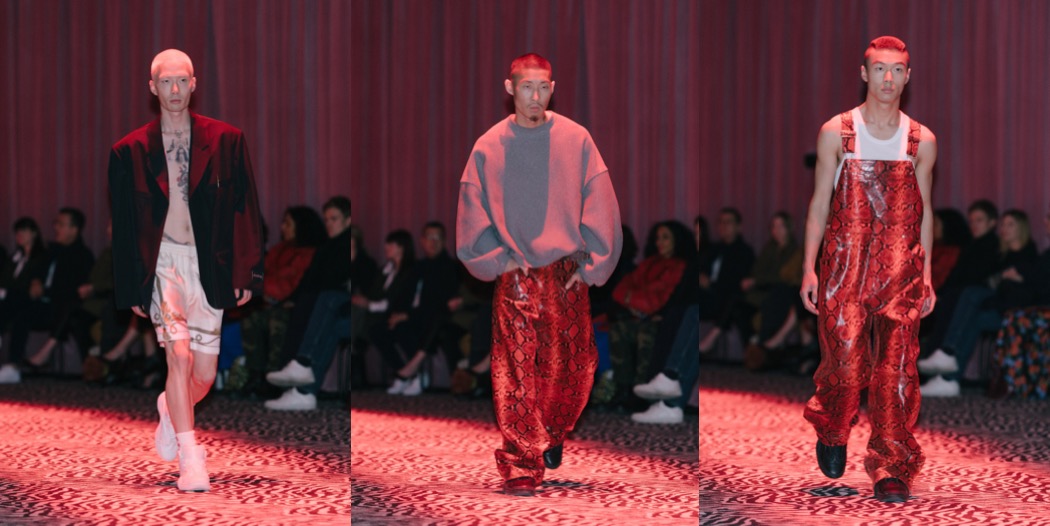
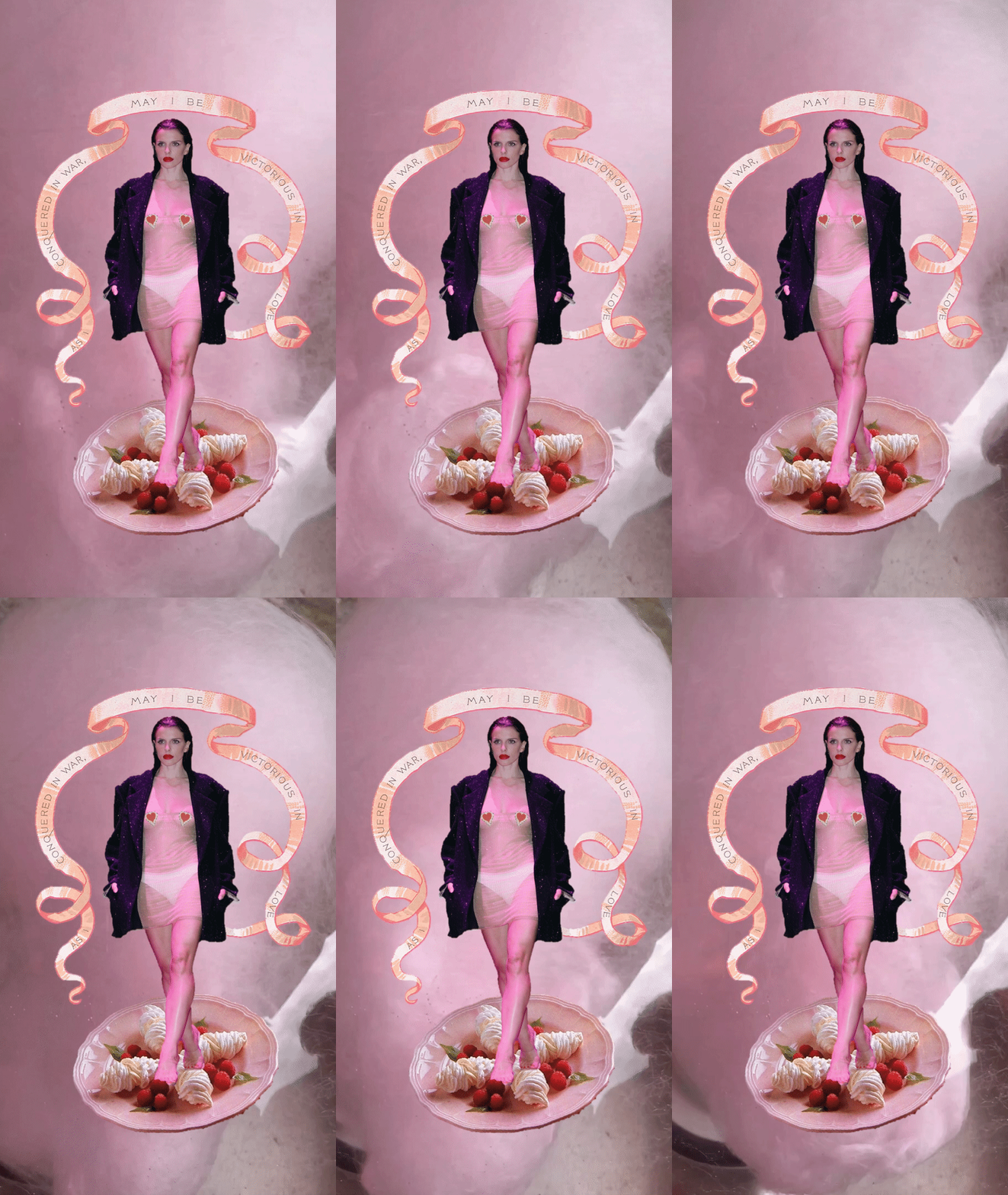
In between May 2019, the time of Wang’s last NYFW show, and now, the designer faced allegations of sexual misconduct that threw the future of his business into question. He made a public apology and his accusers announced they were “moving forward“. He put on a show in Los Angeles’s Chinatown in April of 2022. Honestly, nobody cared to look at it. Yesterday’s New York comeback had a dramatic tension: will anyone care this time? It seems the fashion world forgave Wang, and the designer somehow managed to dive back into the city’s scene of good PR and viral people. A promo spot on his Instagram Reels starring Anna Delvey, the socialite fraudster under house arrest in an East Village apartment, seemed to suggest he wasn’t proceeding from a chastened place. Cheeky is more like it. That fits with the collection’s theme. He gave it a name, Cupid’s Door, and dressed the location in boudoir-ish style, with dusty pink velvet curtains and a mesmeric zebra-stripe carpet; lighting gels that cast a red glow over the whole place. Sexy is enjoying a comeback of its own in the wake of the pandemic. Julia Fox walked the show dressed in a barely-there nude dress and and man’s jacket, like the modern-day version of Carrie Bradshaw in Sex & The City‘s season 1. Lace-edged camisoles, low-slung python print pants, boxer briefs peeking over the tops of waistbands – all of that was here, too. No sight of novelty, clearly. Rather, a lot of ideas many other designers in New York went through in the last couple of seasons.

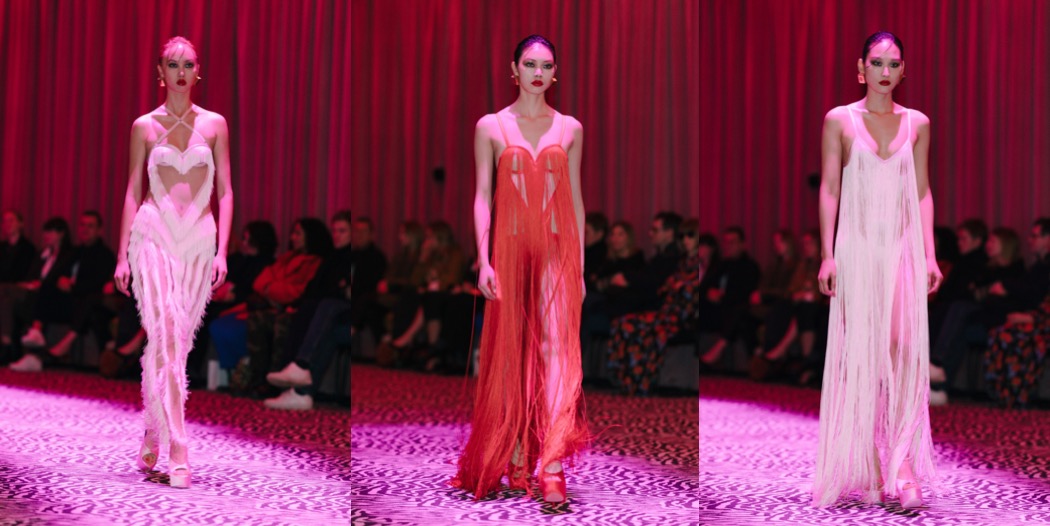
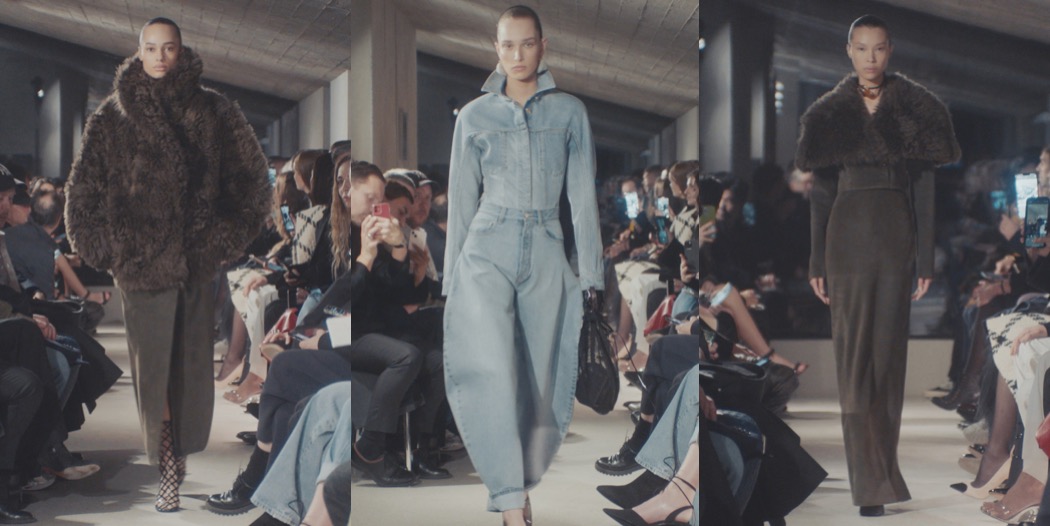
The show was divided into three acts: the opening women’s section featured a lot of denim and faux fur in a variety of textures and silhouettes, very downtown style. Backstage he mentioned Wong Kar Wai films like 2046 and In the Mood for Love, which might have prompted the dressy vibes. Next came a men’s grouping that was quite cool and simple: athleisure-y items like sweatpants and sweatshirts in soft, high pile fabrics, alongside cropped vests and more animal print pants. The ending was the weakest point of the collection. A series of silk fringe dresses suspended from heart shapes built on a foundation of sheer net that revealed as much as they concealed. Eveningwear was never Wang’s thing, and that previously mentioned short stint at Balenciaga didn’t help with crafting that. The thing is, the tumultuous period the designer went through eventually revealed the basic fact that fashion has dozens of other designers who can fill the “sexy” niche in a much better and fresher way than Wang. The autumn-winter 2023 line-up had its ups, but in overall, it seems to be nothing more than Insta-friendly styling.

Collage by Edward Kanarecki.
Don’t forget to follow Design & Culture by Ed on Instagram!

NET-A-PORTER Limited

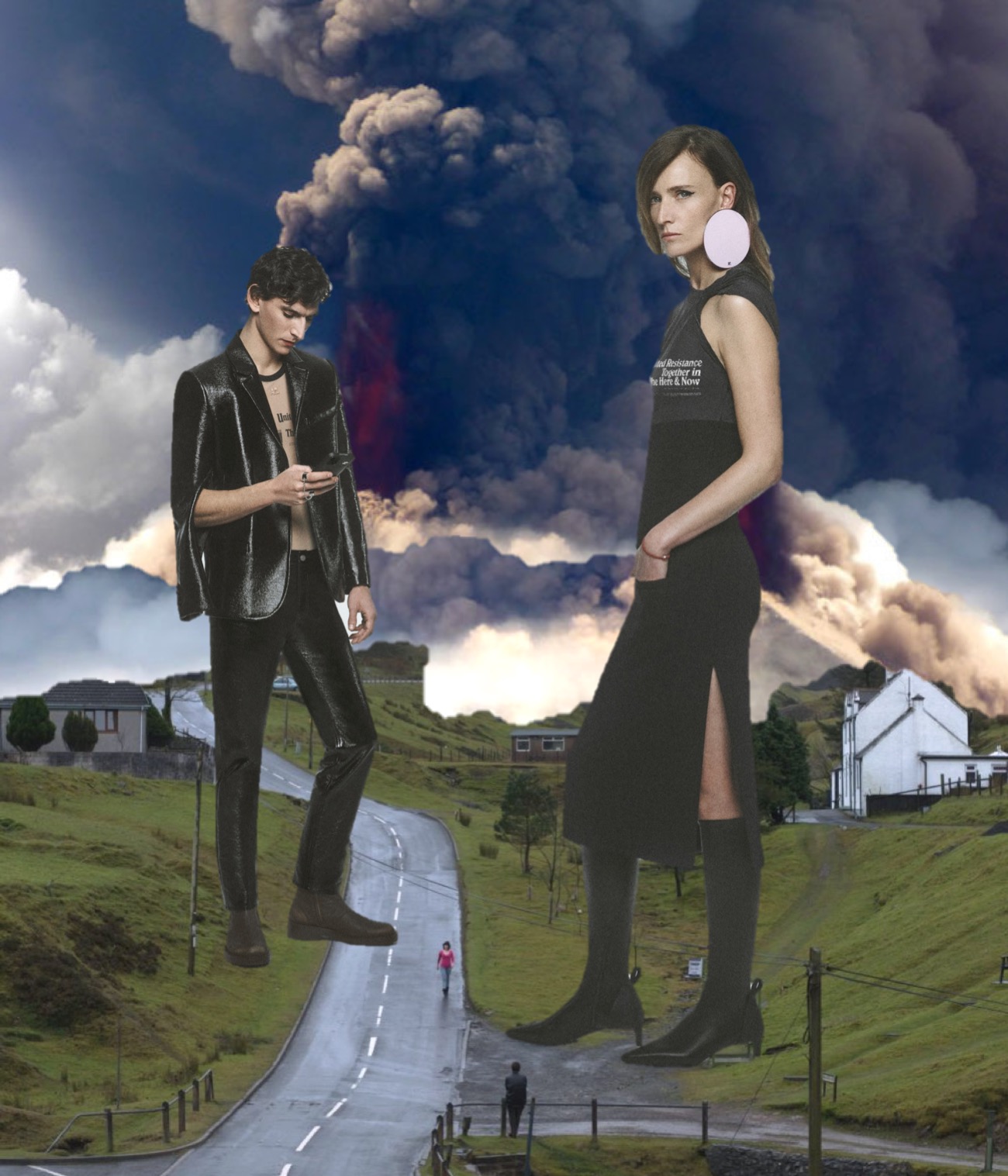
Men’s – On The Phone. Courrèges AW23

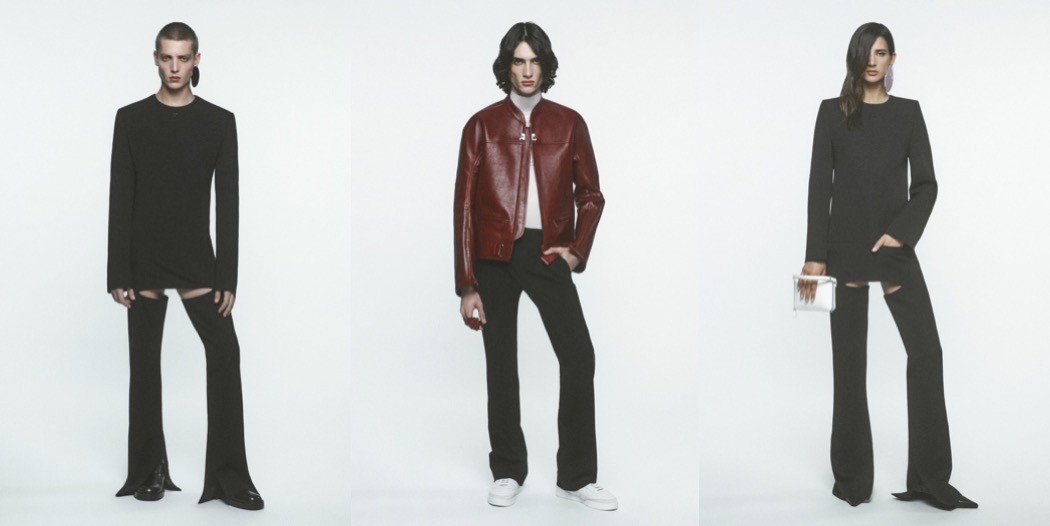
Courrèges is gradually becoming a brand with a contemporary feel that offers some truly desirable clothes. All that thanks to Nicolas Di Felice, who with every season redefines what this French label is to a modern-day audience. The most important aspect the designer orbits around is the functionality of clothes seen through the lens of social observation. In the men’s autumn-winter 2023 (and women’s pre-fall) line-up, his thought process was triggered by watching the phenomenon of people hunching over their phones. “I’m really working on kind of a new silhouette that is really, like, bending,” he said. “It really seems like nothing, but actually it’s something, this reflection of us on our phones.” Somehow, that idea bloomed into a sexy and cool wardrobe. Technically, Felice’s inspiration of the staring-at-screens impact on human posture brought about a slight forward-tilt of the shoulder line – and the ingenious idea of inserting an invisible zipper extending to the elbow on the inside of tailored sleeves, “so you don’t have to ruin you clothes!” The lines of Courrèges are sharp, mostly dark, and cleverly sliced by Di Felice to adapt the original space-age minimalism of the founder for the new generation. That’s another of his talents: witness what he’s named “mini-skirt pants.” It looks like a plain black long-sleeved tunic, but there’s a narrow gap, high up on the thigh; a flash of flesh where the hem meets the pants. An incendiary item he proposes for all genders. Très cool.

Collage by Edward Kanarecki.
Don’t forget to follow Design & Culture by Ed on Instagram!
NET-A-PORTER Limited

Why Do I Make Clothes? Marni AW23

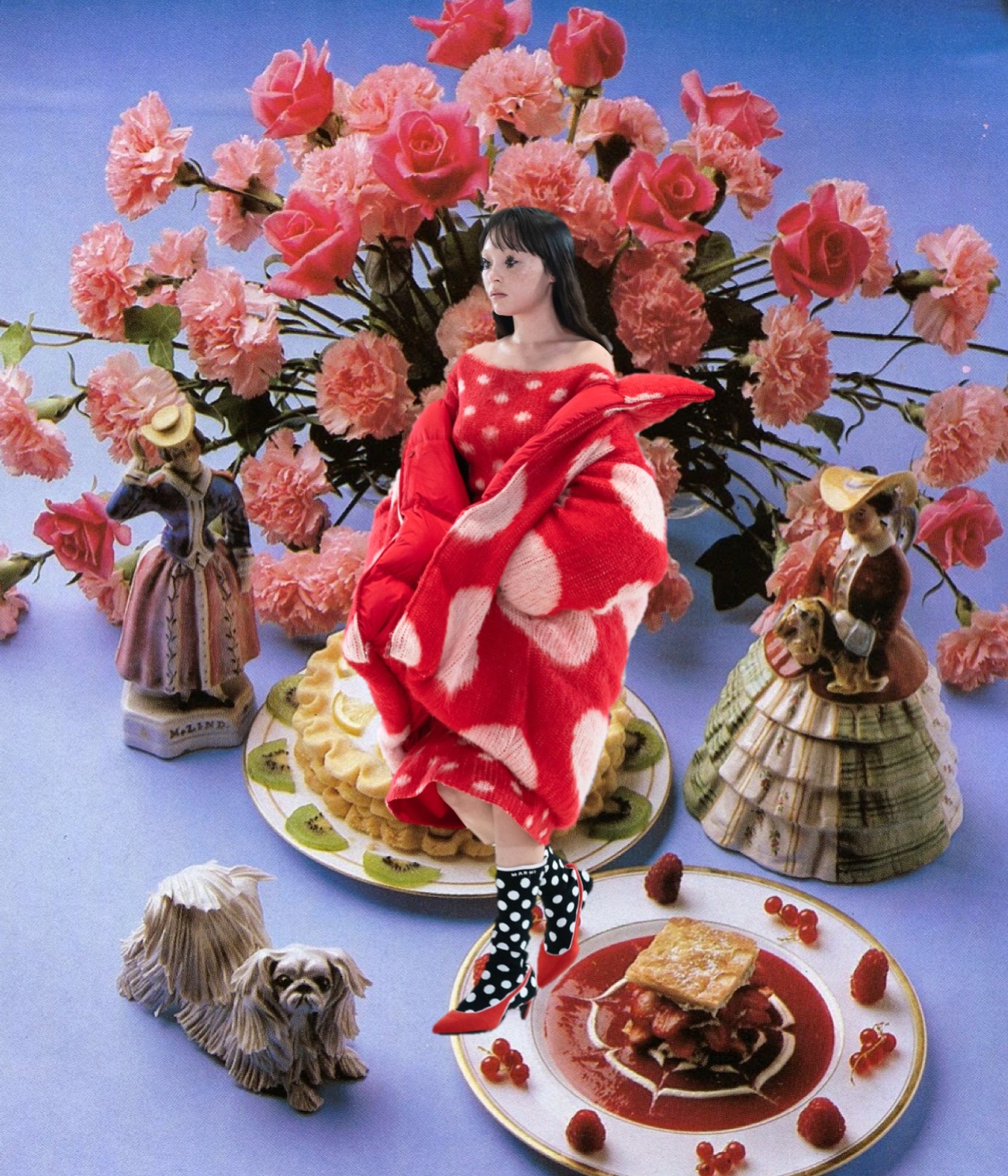
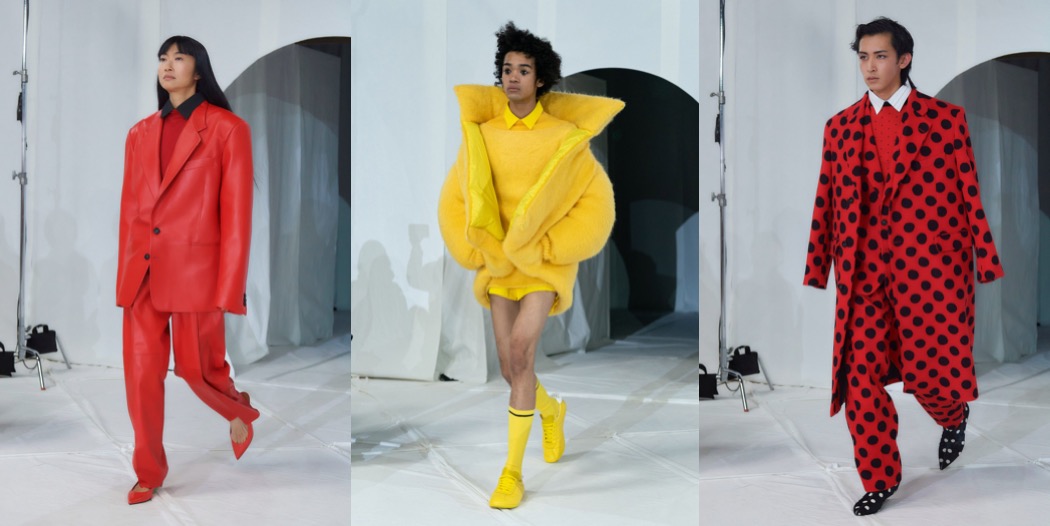
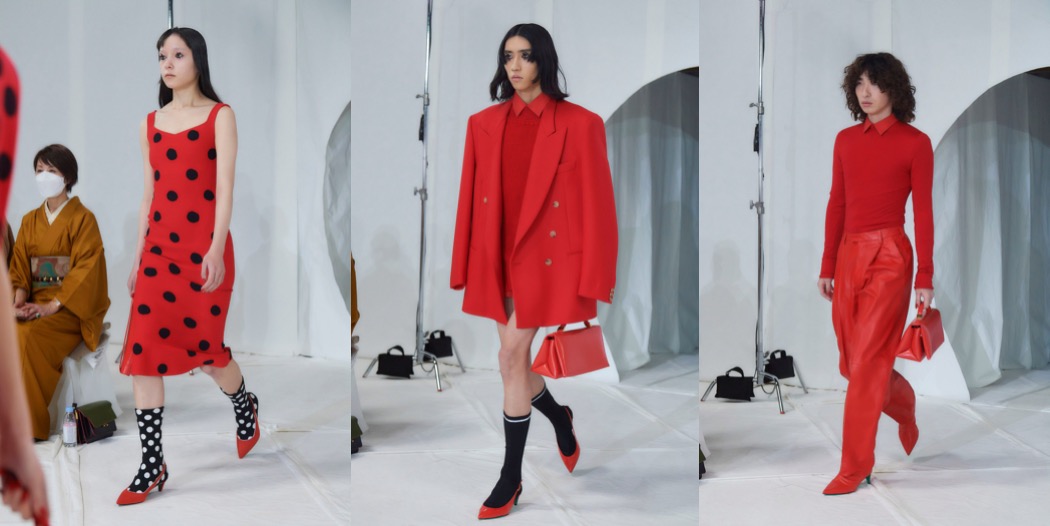
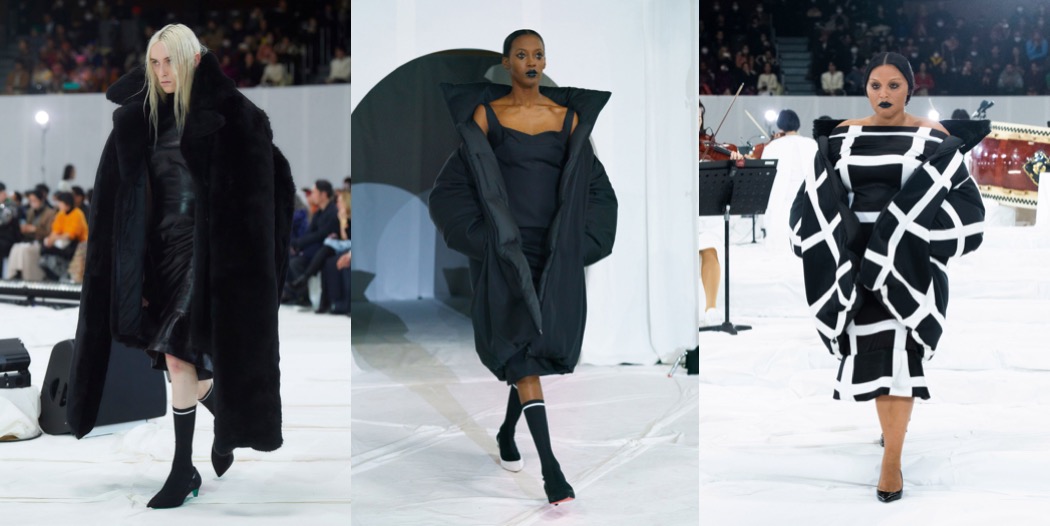
Marni‘s autumn-winter 2023 collection by Francesco Risso felt like a big shift. Not only because it was presented in Tokyo (Marni travels the world – last season, the brand opened New York Fashion Week), although that certainly became a new context for comprehending what this Italian label stands for today. The Yoyogi National Gymnasium, the fashion show’s spectacular venue, was built by the architect Kenzo Tange for the 1964 Summer Olympics. It’s a structure, as Risso pointed out, “both rigorous and intimate – it looks to the future while keeping a feel of enveloping protection, like if you were in a womb.” This way of balancing discipline and humanity, cutting-edge design and domesticity, connects with the soul-searching Risso has been doing on the meaning of making clothes. “Here in Japan I’ve found a profound sense of patience, of stillness, of respect, something that in the West I believe we’re losing.” He continued: “We’re surrounded by futility. After three years of pandemic, where we all have been vocal about the changes we wanted in the system, to slow down, etc., we’re back to square one. We are again devoured by the brutality of the algorithm.”Going back to the love he feels for his metier keeps him grounded. At the show, on each of the paper-covered seats, he left a handwritten letter whose opening line asked: “why do I make clothes?” For the Marni creative director, clothes are living creatures, they touch, breath, move; it’s a love dance, a sentimental relationship: “Because they’re our companions, and there’s more to them than just air kisses. I don’t know if I make clothes that people need, or if I make clothes that need people, or if I make clothes for the people that I urgently need to need the clothes that need them… What I do know is that today we need less and less clothes that are needless.”

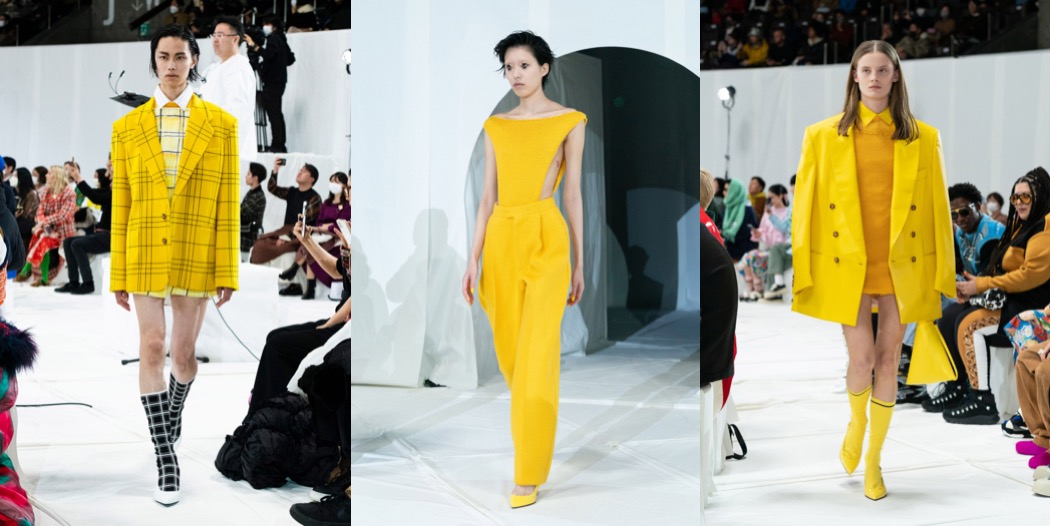
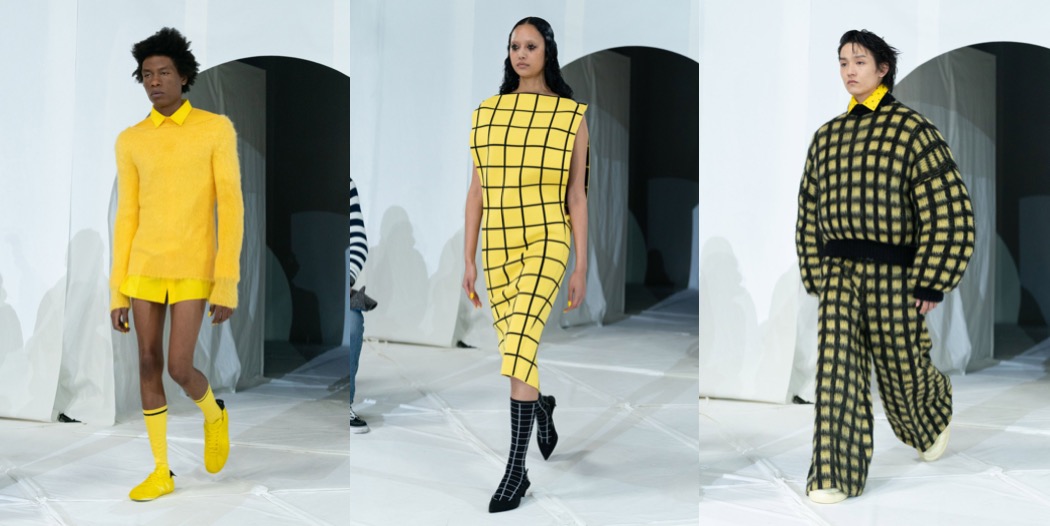
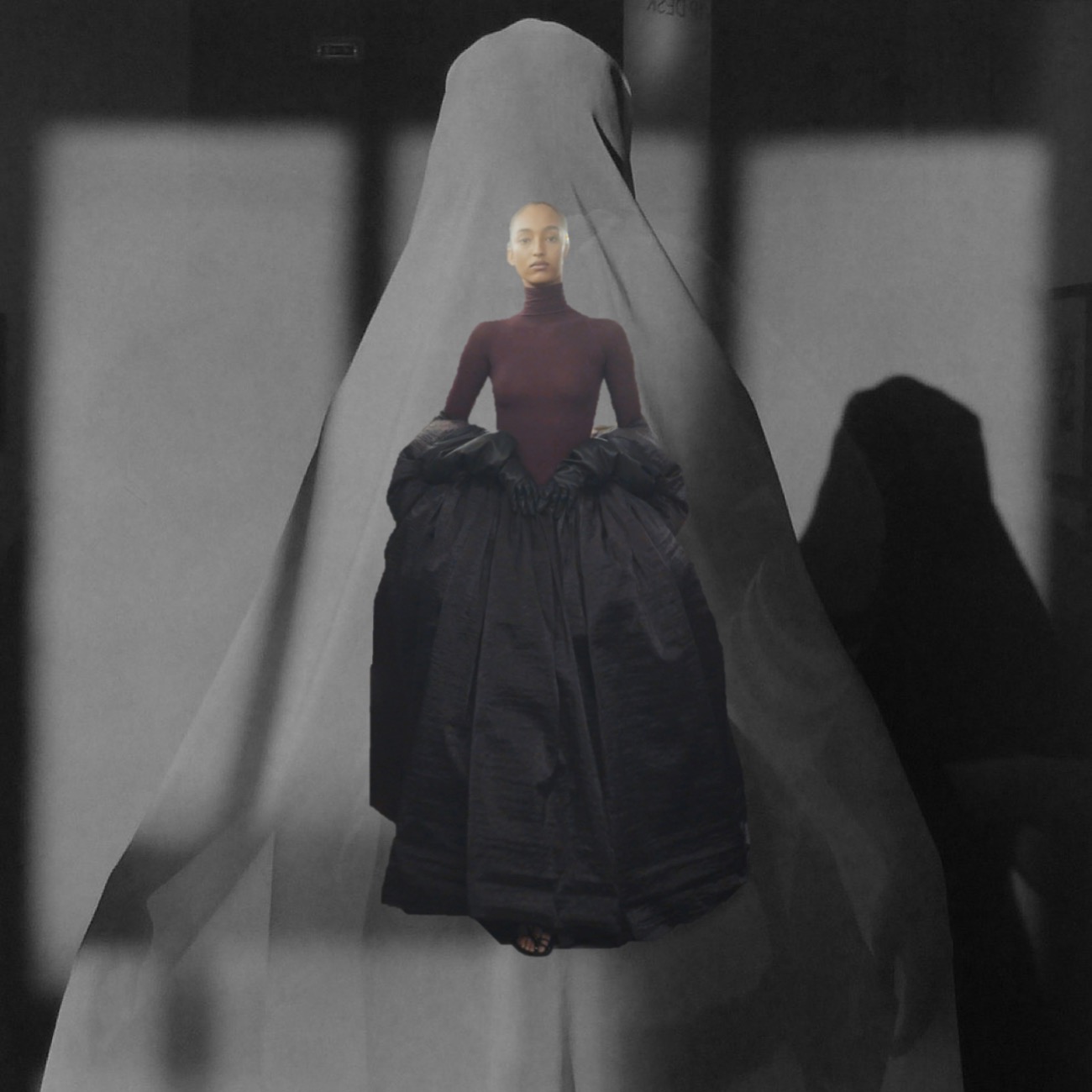
White is a non-color that speaks of absence, but also of clarity. It is a carte blanche on which new words are ready to be written. Wrapping the arena in white paper spoke of a desire for simplicity, for reducing noise and distractions. But Risso is no minimalist, and even if he preached rigor and linearity, the collection had presence, density, and punch. He traded his usual slightly bonkers decorations for starker, elemental graphics, and reduced the palette to a few saturated primary colors: yellow and red playing against white and black. Every look was an all-over proposition, and for both men and women in the mostly local cast (plus Marni favorites like Paloma Elsesser and Angel Prost), silhouettes alternated between slender and form-fitting and bulky and bulbous. Tailoring was offered in oversized versions, and knitwear, a Marni forte, had fuzzy mohair surfaces, as in the jumbo round-cut piuminos that were among the collection’s standouts. The swirling, magical motifs of sirens and unicorns of previous outings were nowhere to be seen, replaced instead by kinetic grids and optical checks, and by slightly Yayoi-Kusama-esque bouncing dots of various sizes. Rectangular tunics and angular apron dresses contrasted with form-fitting, heart-shaped bustier dresses that were kept neat rather than sensual. Cocoons in padded leather or wool conveyed enveloping, comforting warmth. “It’s a collection with one foot in tradition and the other in a not-impossible future,” he said backstage. “It’s a sort of rhythmic alternation of proud normality and proud creativity.”

Collage by Edward Kanarecki.
Don’t forget to follow Design & Culture by Ed on Instagram!

NET-A-PORTER Limited

Harbor of Fineness. The Row AW23

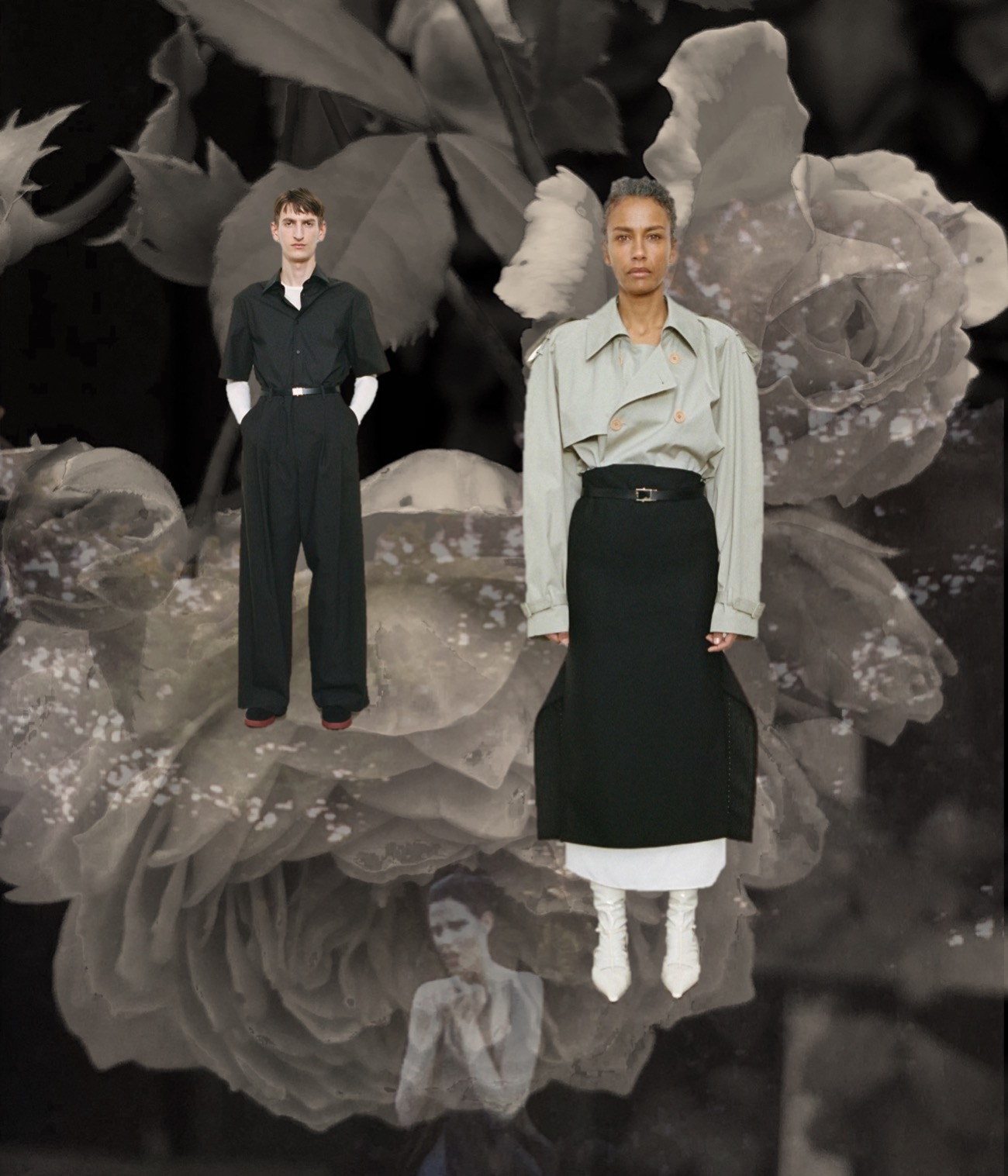
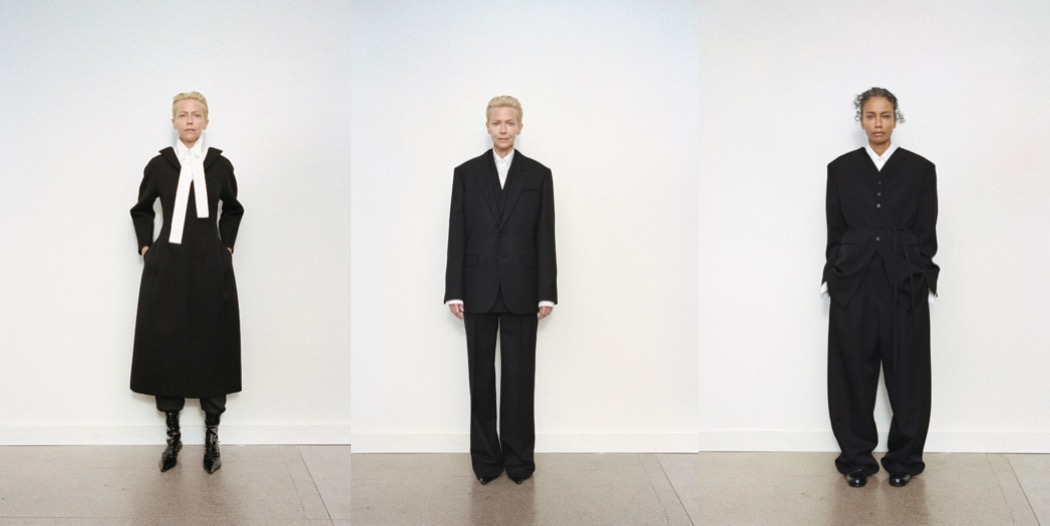
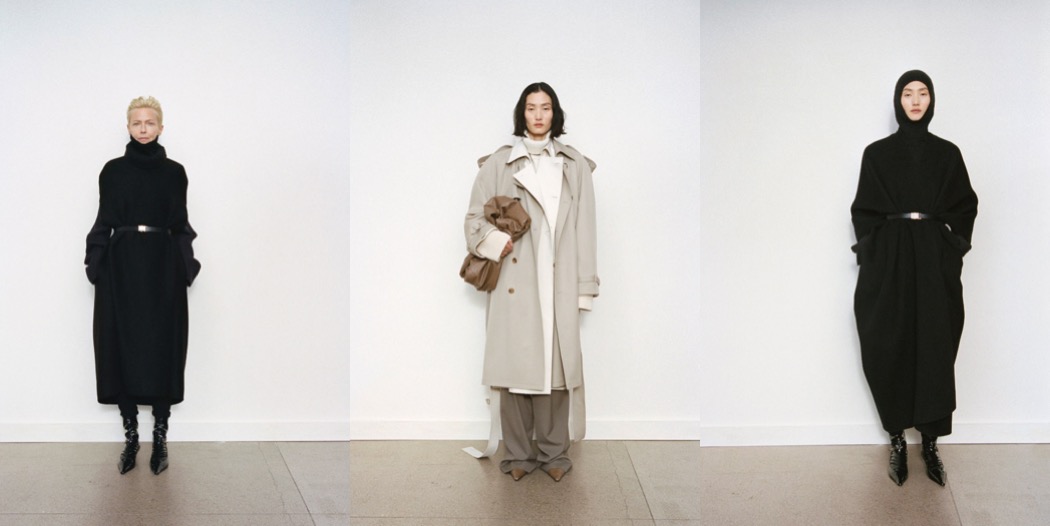
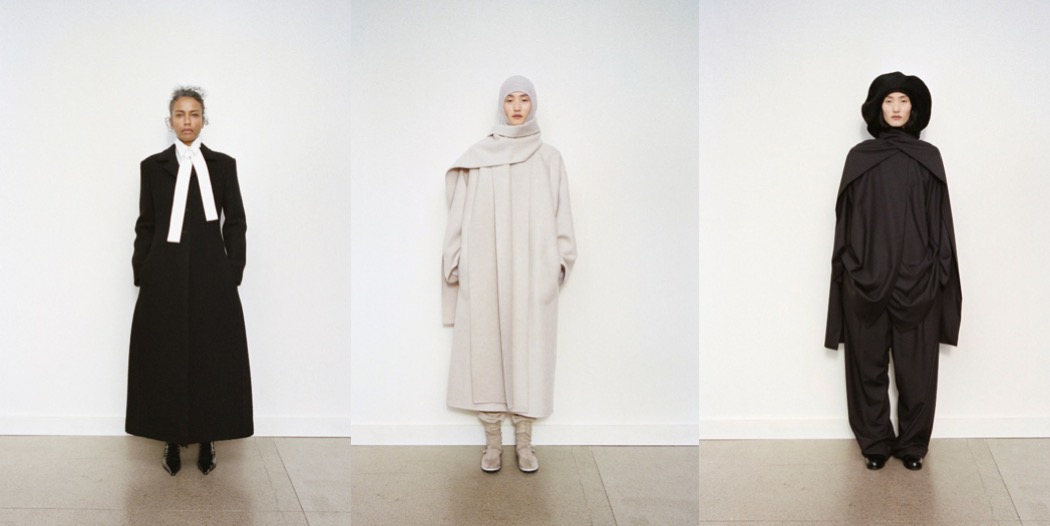
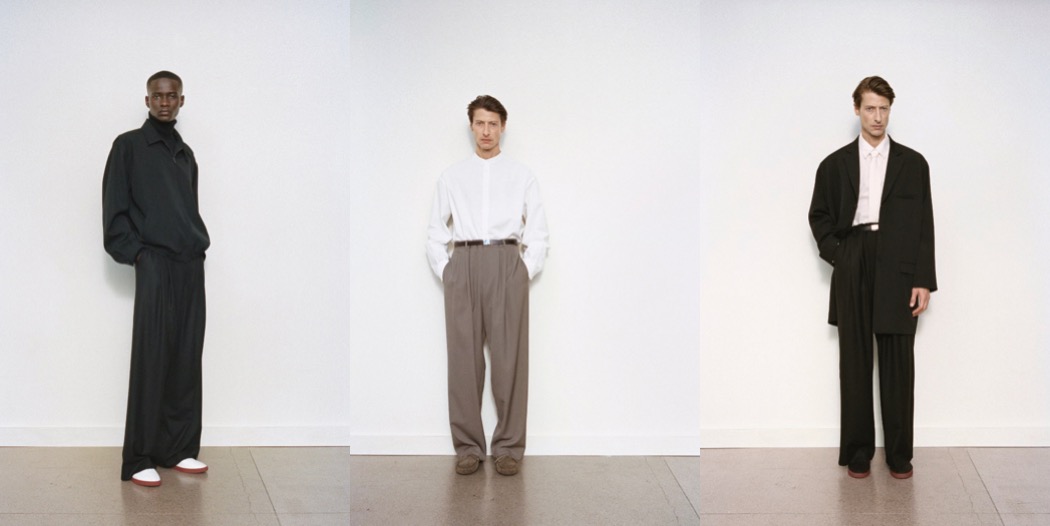
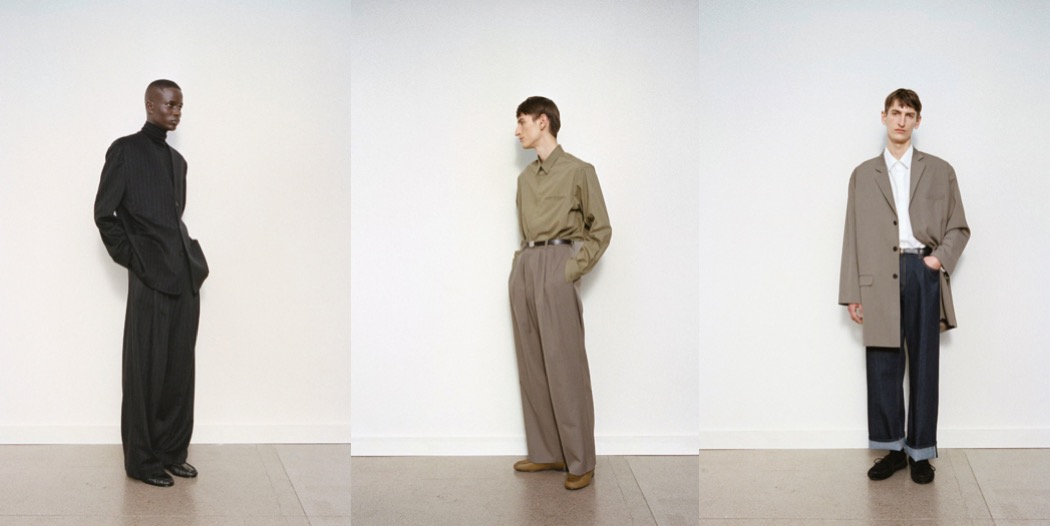
The Row‘s intensely refined autumn-winter 2023 read-to-wear collection matched the couture ambience of the last week. Mary-Kate Olsen and Ashley Olsen didn’t show in Paris, but dropping a new collection in such specific time-frame speaks for itself. The craft, the tailoring, the materials, the silhouettes. The ultra-luxurious and elegantly-understated vision of the The Row woman (and man) is absolutely haute. The new season offering sees the Olsens’ timeless regulars (masculine boxy suits, cashmere coats with shawl-like capes, over-sized crisp cotton shirts – very Lydia Tár!) combined with an ease of flowing shapes (see the floor-sweeping black skirt styled with a boyish blazer) and chic, Armani-like narrowings at the waist. The colors are all about earthy neutrals – another The Row favorite. Trends come and go, but The Row is a peaceful harbor of eternal fineness.

Collage by Edward Kanarecki.
Don’t forget to follow Design & Culture by Ed on Instagram!

NET-A-PORTER Limited

Intimacy. Alaïa AW23

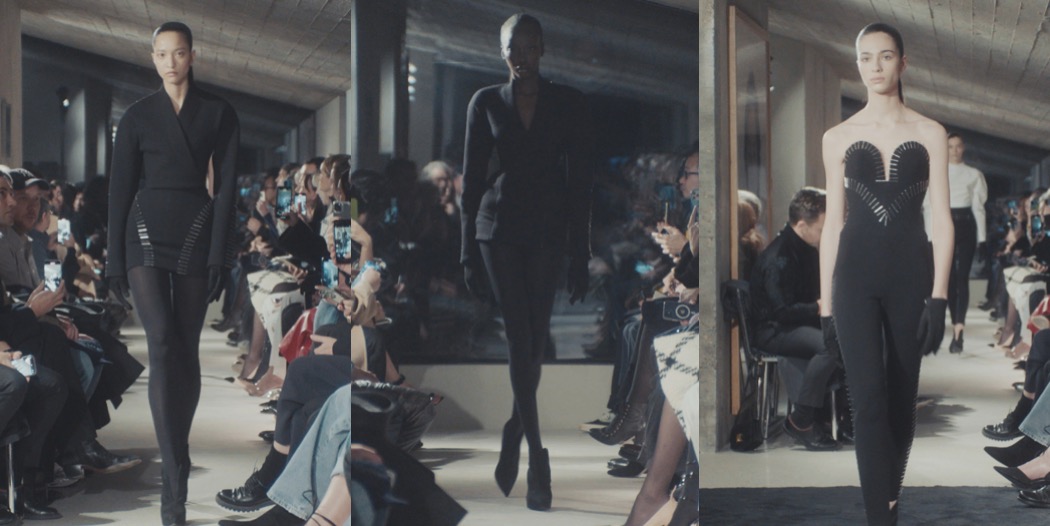
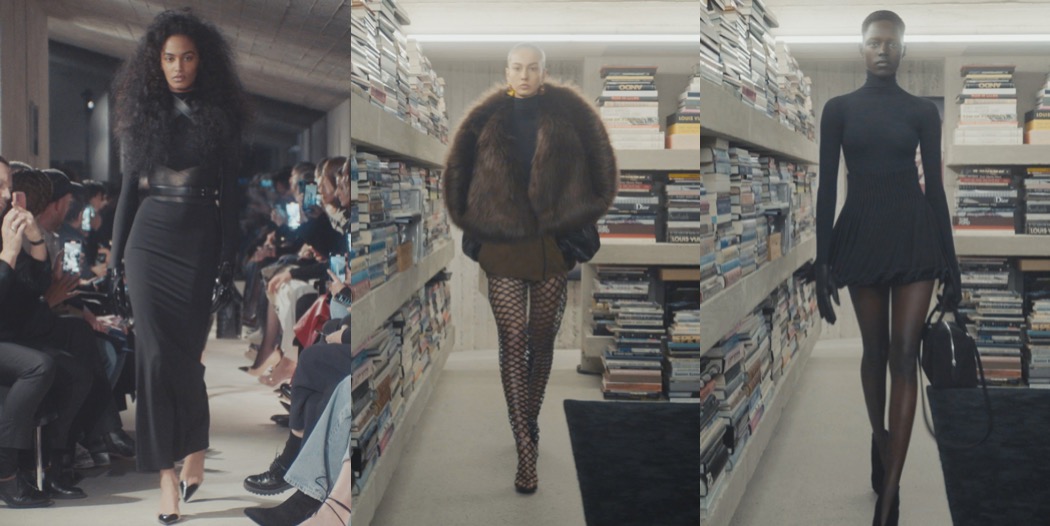
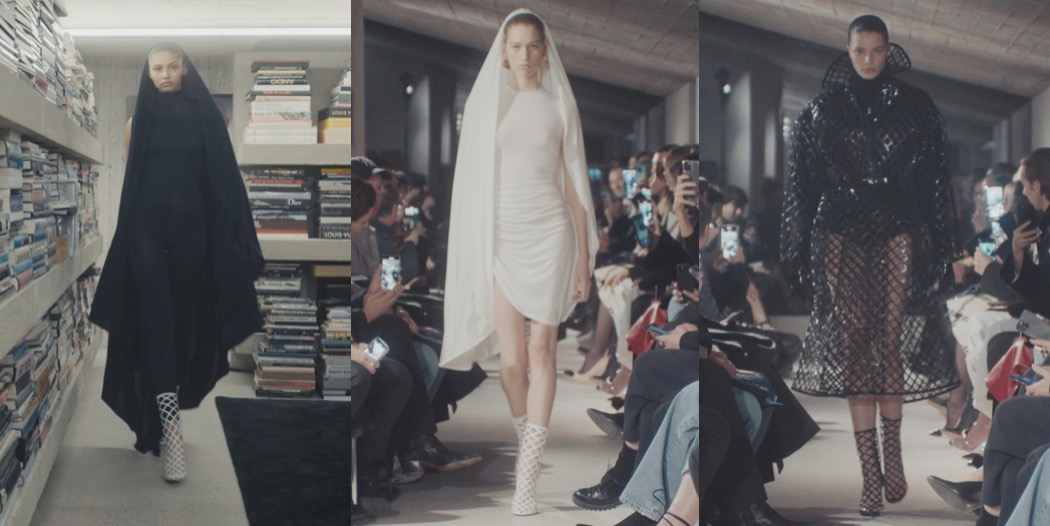
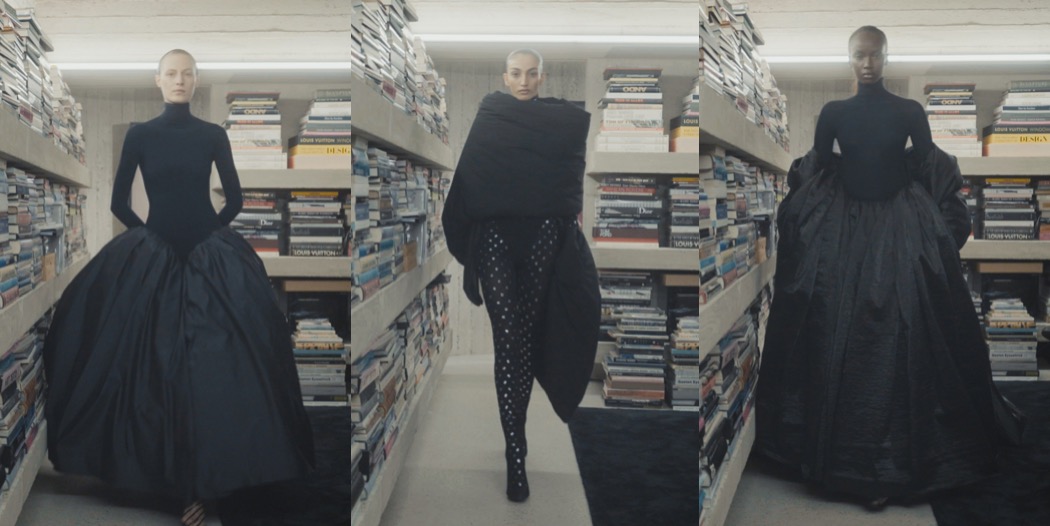
Azzedine Alaïa used to present his collections on 7 Rue de Moussy in Paris, the legendary address which wasn’t only the studio and flagship Alaïa store, but also his home. After the shows – or even on regular days – he invited his guests, from friends to models, to his kitchen, where he served his favorite dishes. This feeling of family-like community was fundamental for the designer and his independent brand. For autumn-winter 2023, Pieter Mulier took that notion to heart, and held his latest fashion show in his and his partner’s (Matthieu Blazy, Bottega Veneta’s creative director) apartment in Antwerp. The group of guests was small: a pack of fashion’s finest critics, the brand’s muses (like Tina Kunakey) and Mulier’s friends (think Raf Simons, Gaia Repossi and Dries Van Noten). The 1972 Brutalist landmark home was a fitting backdrop for the designer’s fourth collection for the brand: sophisticated, somber, very Antwerp. With that gesture, Mulier wanted “to share something of who I am” by pulling Alaïa’s culture onto his own territory. “It’s actually very simple. I didn’t want to do a big show – I didn’t want cold, distant glamour. I want to do something very intimate, small as Azzedine liked it,” he explained. His models had performed their long-leggedy Alaïa strides around his apartment in a collection that showed, in close-up, how the clothes fit to the body (rounded in the shoulder, wrapped, draped). The architecture, and the quality of the Flemish light has an effect on how Mulier sees and shapes his design, he said. “We work here on the beginning of every collection on the ground floor studio with the Alaïa team”, he revealed. “When I start, I always work in the kitchen. And when I’m in the kitchen, I look up to the cathedral, over there.” The conversation with his surroundings began a pursuit of a sculpted roundness, he said. “In our house, everything is geometric. In Alaia, everything is about the two extremes of masculine and feminine, and basically our house is very masculine. You put a feminine silhouette in it and it changes completely. Everything was sculpted on the body so everything is round; all the drapes are cut in circles.” Rounded shoulders, sculpted torso, narrowed hips, elongated silhouette: the beginning, in dense immaculately-fitted dark brown jersey, introduced it. There were bodysuits, jackets, bustiers, and flipped-out skating skirts. Eyes zoomed in to figure out the lines of glinting silver that were running down the backs of sleeves and undulating over hips. They were conceptual ‘pins’ – part homage to the dressmaking and fitting process, part perverse play on piercing; sharpness versus softness. Also a nod to a dress Alaïa once made.

But where was the Belgian identity of Mulier beginning to be apparent? “The tailoring is very minimal. I told the team, I want it to be as minimal as possible, with the maximum effect. But it needs to be sensual, where all the drapes are circles,” he said. “There’s a white dress where we just cut it, draped, attached it – and that was it. So on that level it’s very Antwerp.Very simple.” The white dress, with its scarf over the head, serendipitously evoked the drape of the North African hoods Alaïa often referenced. But there was surely the hint of other Belgian street vibes going on. There was another kind of bomber-hoodie and a distinct echo of an army-surplus parka; then, Mulier’s choice of faded denim rather than Alaïa’s classic rigid version. Moving toward evening, Mulier’s drapes in black cotton were whipped around the body in a dynamic caught between sophistication and romance. Back views mattered: one dress had a low-down half-moon cutout that reverbed sexily from the showstopper Mulier sent out last season. He is not one to rush, but nevertheless, in his logical, emotional Belgian manner of doing things, Mulier is gradually putting his own stamp on the brand. Maybe this collection wasn’t as ferocious and bold as his first line-ups for the brand, but it certainly was the most emotionally-charged.

Collage by Edward Kanarecki.
Don’t forget to follow Design & Culture by Ed on Instagram!

NET-A-PORTER Limited