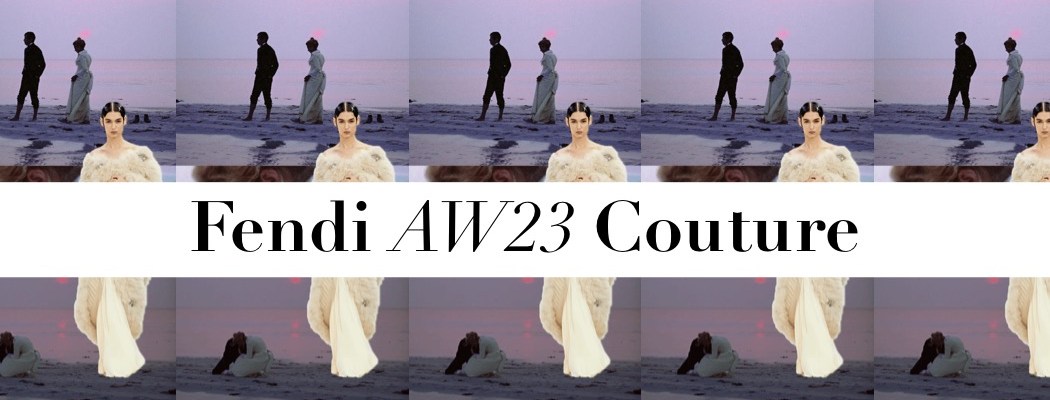
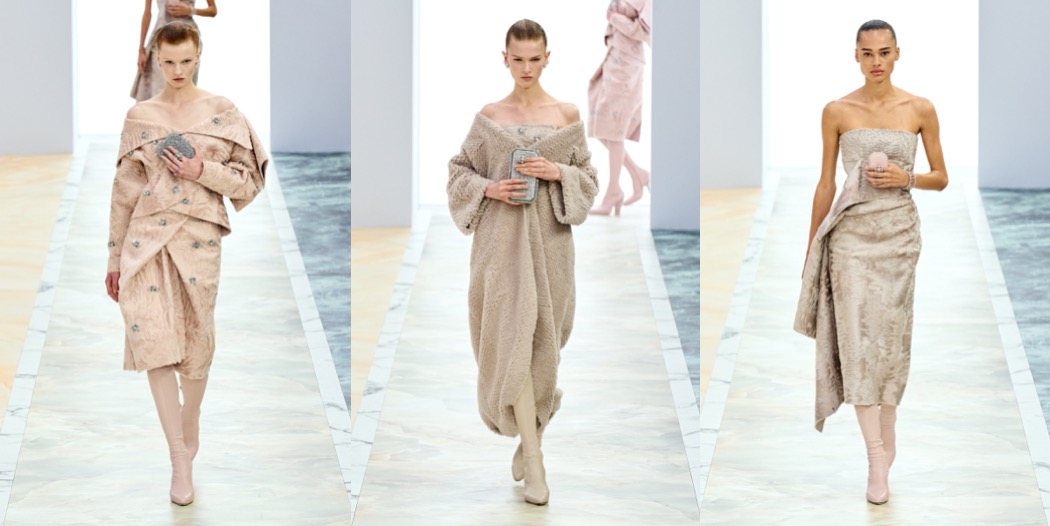
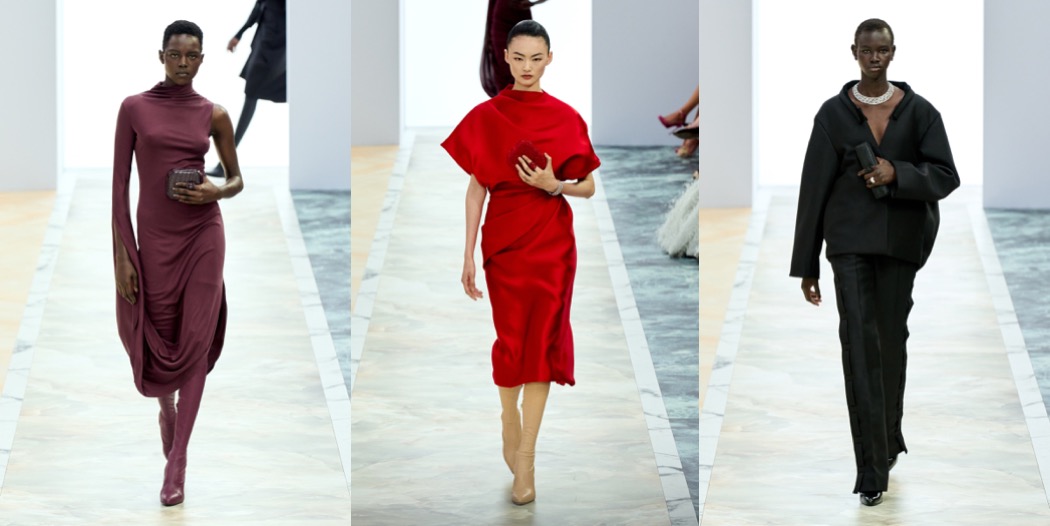
Kim Jones placed the creative synergy between himself and Delfina Delletrez at the heart of his Fendi haute couture show, and it worked: the collection felt assured and strong, comparing to his last attempts at the brand. “I started with looking at Delfina’s Fendi high jewelry, which she’s done for the first time,” he said. His palette flowed “in almost an organic way, with colors and embroideries based around the hues of natural stones, rubies and sapphires,” he added. “It’s the idea of the silhouette being ‘nothing’, but everything at the same time.” This collection didn’t reinvent the wheel, but it had couture clarity that can subtly compare with Pierpaolo Piccioli’s couture work at Valentino. The aesthetic Jones established is based around draped, wrapped, shapes – 1990s minimalist aesthetics merged with echoes of the statuary of ancient Rome, where Fendi is based. This season’s iteration became his canvas for the launch of Delletrez’s 30-piece collection of Fendi precious jewels. The models walked around a marble floored quadrangle, a scenographic impression of Fendi’s headquarters in Rome. Most were clutching a version of a Fendi bag – small rectangular leather jewelry boxes. Delfina’s distinctive diamond earrings, brooches, and necklaces shone from the runway. “Everything is very fluid,” she explained, showing how she created draped, asymmetrical shapes, studded with pink spinels and yellow diamonds, ingeniously incorporating tiny geometric plays on the Fendi logo.
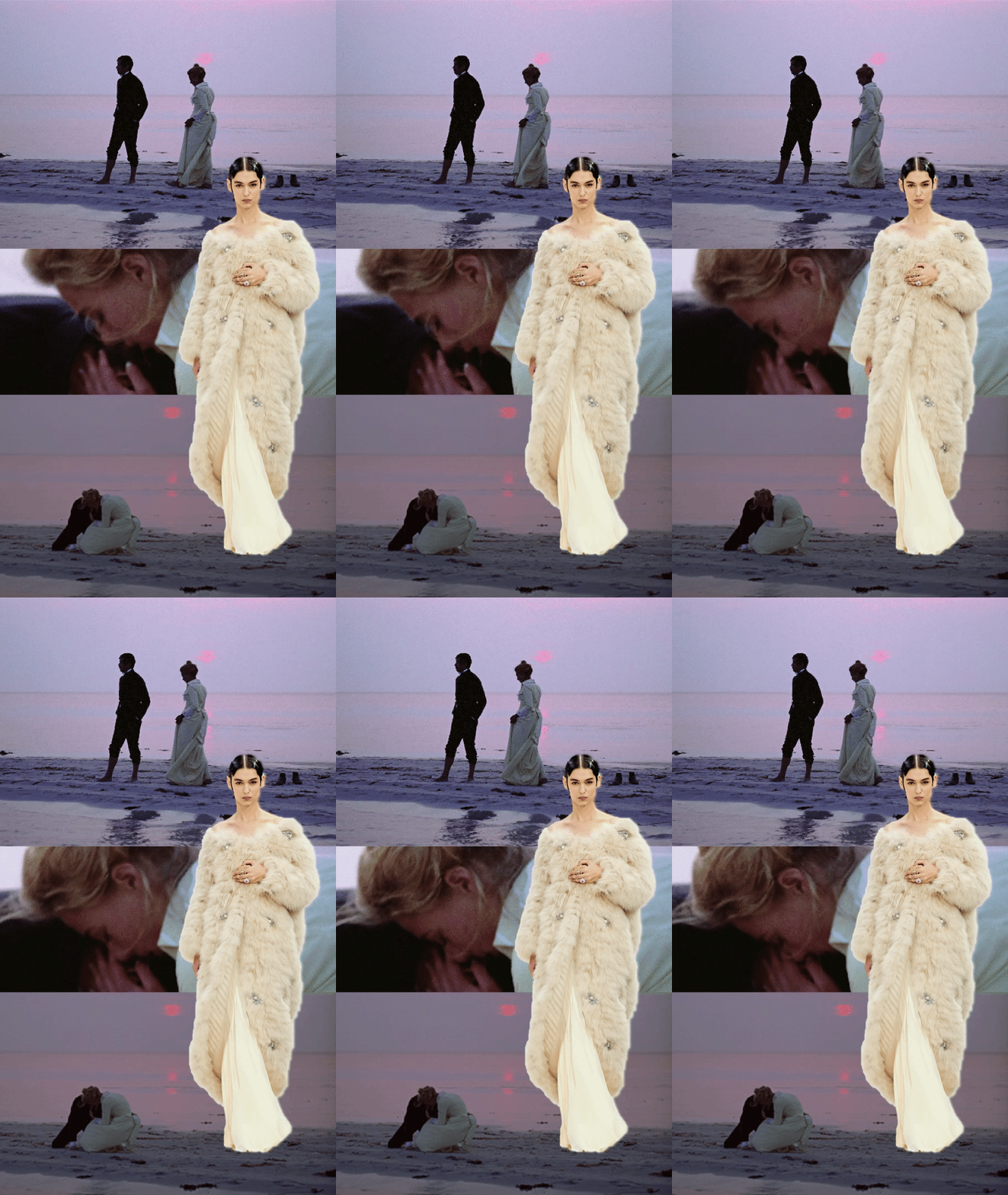
Collage by Edward Kanarecki. Don’t forget to follow Design & Culture by Ed on Instagram! By the way, did you know that I’ve started a newsletter called Ed’s Dispatch? Click here to subscribe!
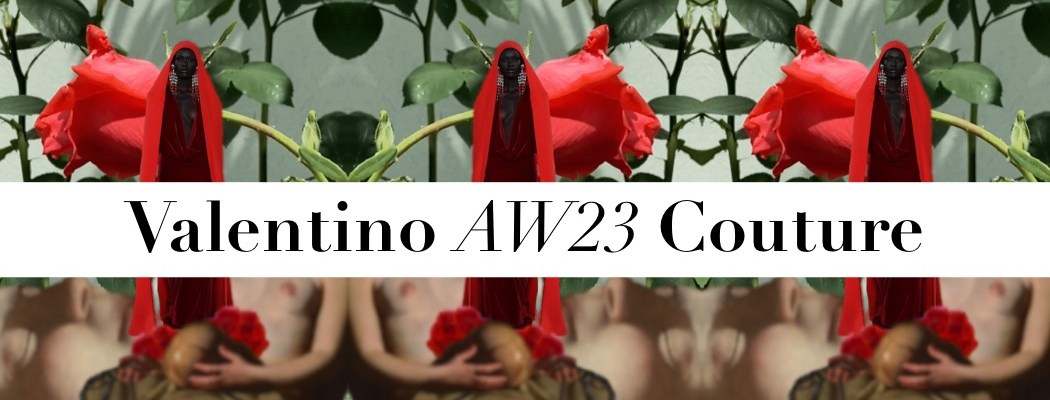
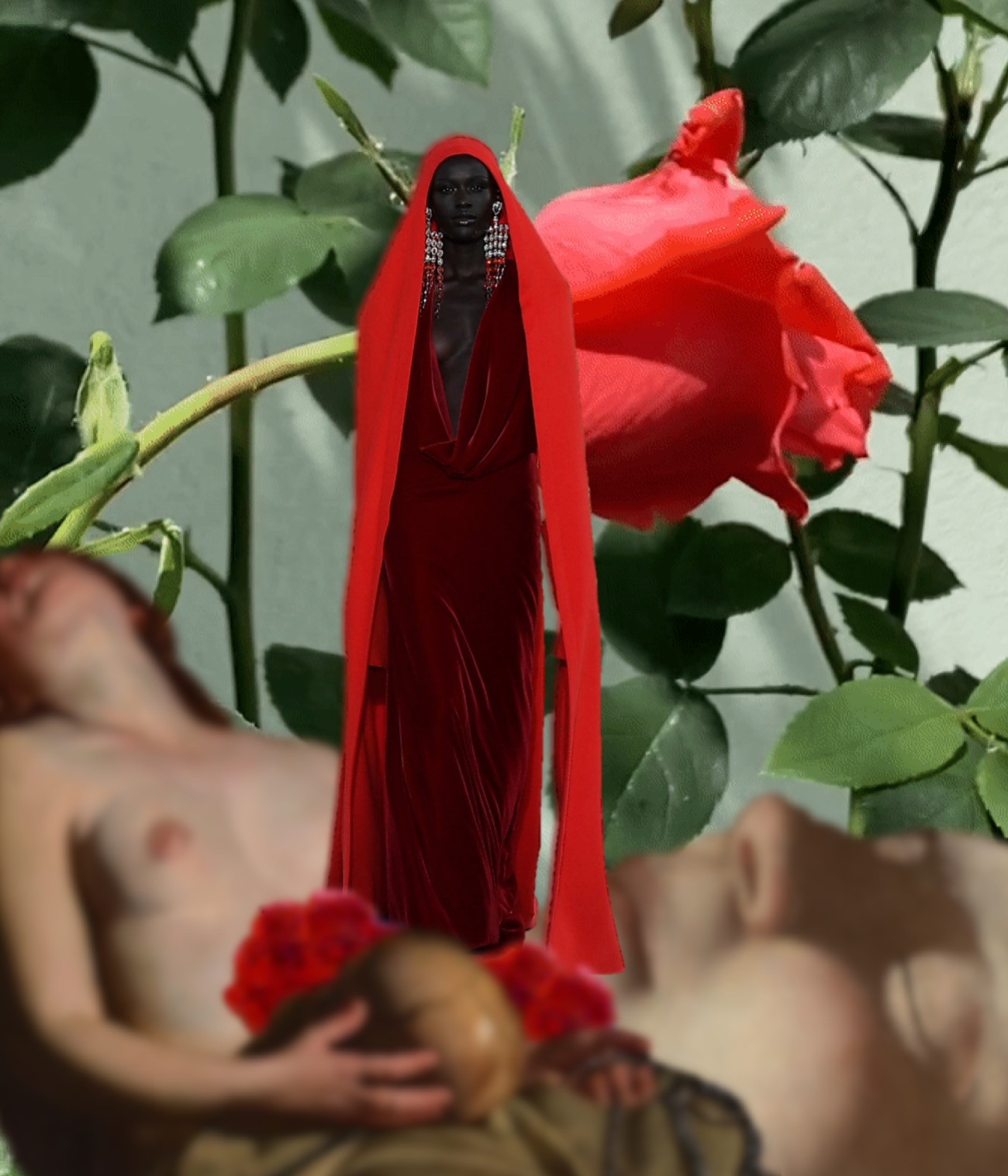
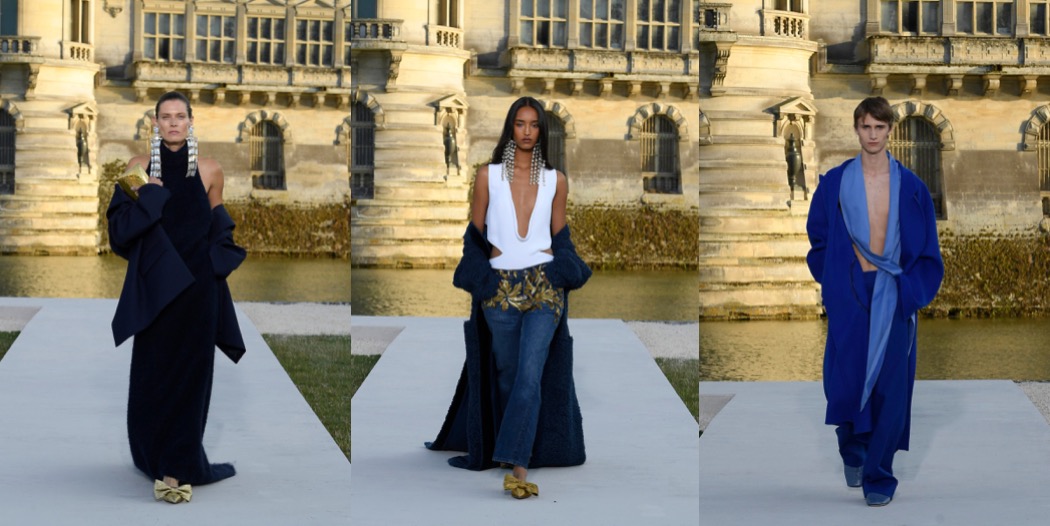
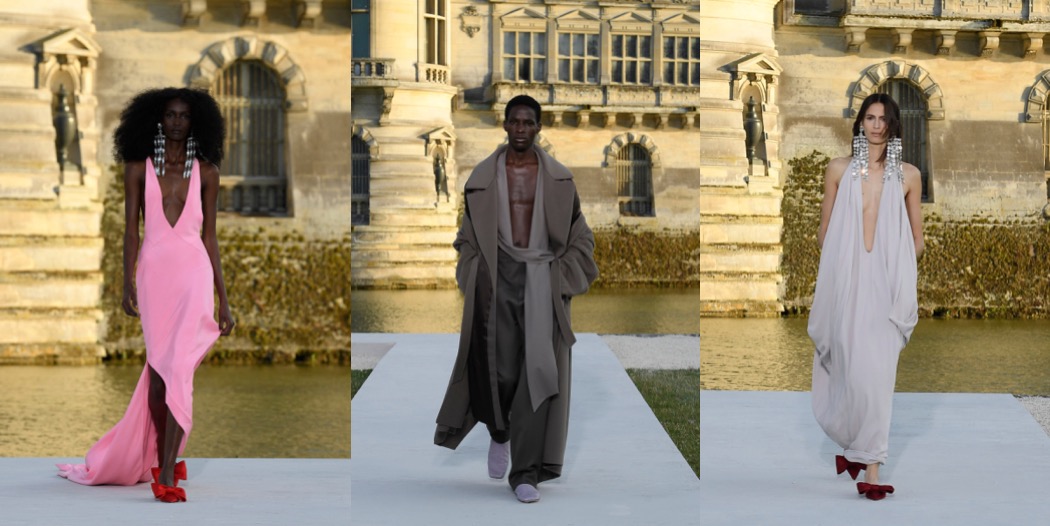
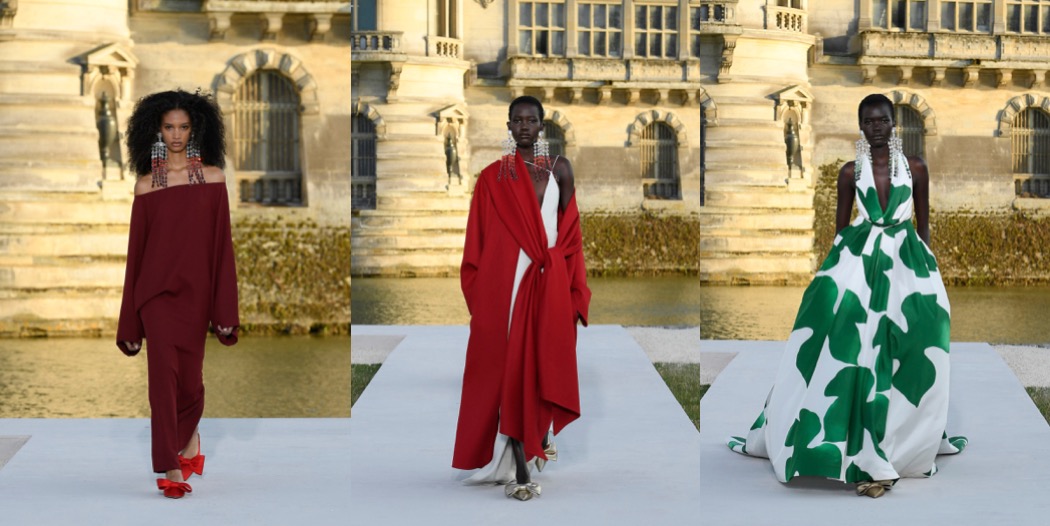
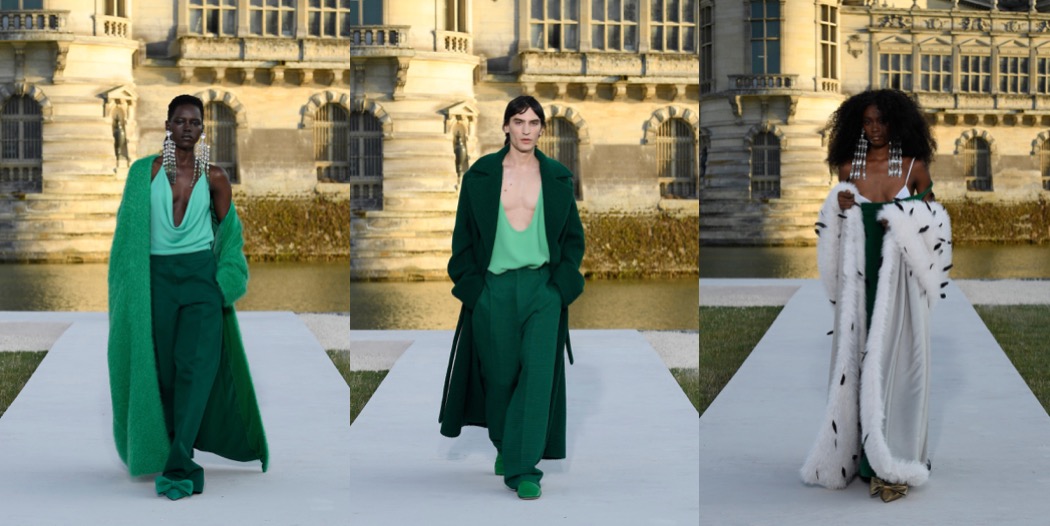
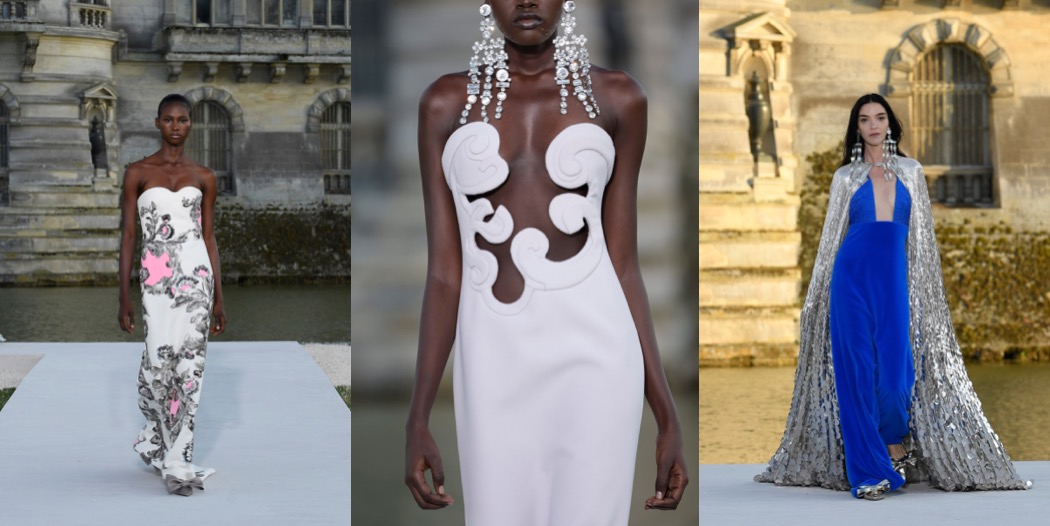
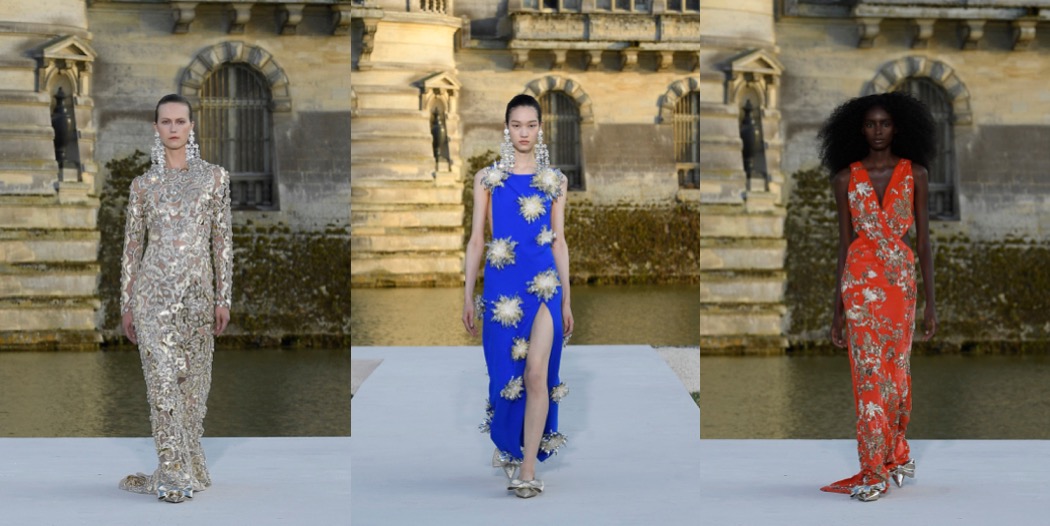
“Simplicity” and “paradox” were the two terms framing Pierpaolo Piccioli’s elevating Valentino haute couture collection, held on the grounds of the majestic Château de Chantilly. “Simplicity is complexity resolved,” the designer said at the press conference, quoting artist Constantin Brancusi, whose sculptures are the modernist epitome of absolute purity. “It’s somehow paradoxical to show in an historical site that I believe is a metaphor for status and power, a symbolism that has to be questioned and re-contextualized,” he said. Staging the défilé en plein air, out of the Château’s regal interiors, was Piccioli’s way of visually performing the metaphor of freeing the constrictions of a walled, elitist life, opening up the seclusion of privilege – Liberté, Egalité, Fraternité. Models – angelic and stoic – walked around one of the castle’s vast parterres à la Francaise; the catwalk sneaked around a circular bassin d’eau, leaving in the background the elegant silhouette of the 17th century manor. This was hands down one of the most spectacular moments of the couture week. One of the paradoxes of couture is that it’s a craft wrongly synonymous with heavy complexity. Piccioli believes on the contrary that the essence of couture is profoundly simple, monastic in its silhouettes. He made the case for this by showing a collection devoid of pyrotechnics, superfluous gimmicks and crowd-pleasing distractions. It was simplicity at its most masterful, a celebration of imaginative, extravagant clarity.
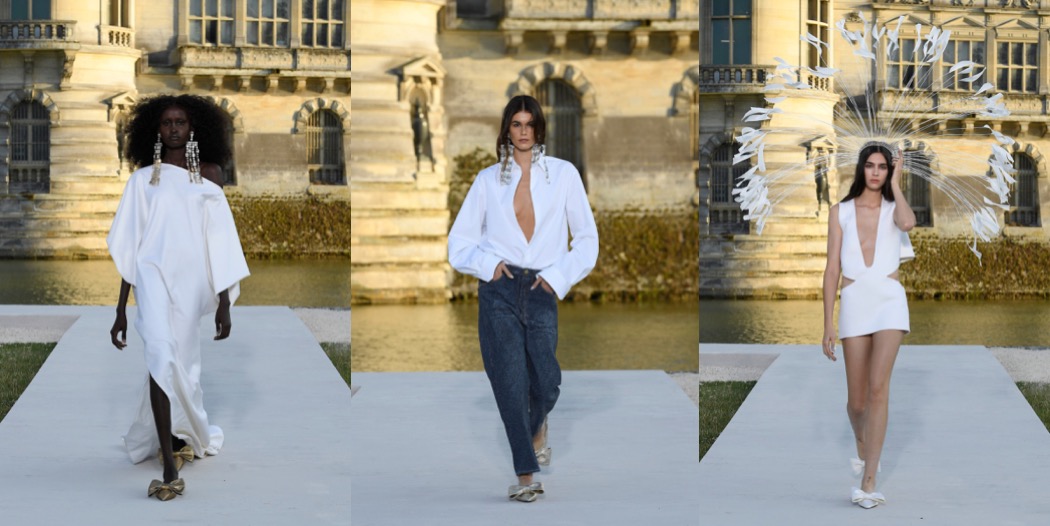
Draping, one of the most challenging haute couture constructions, infused the gesture-defining vertical, pure, essential silhouettes with vitality, modernity, and with the impact of the sophisticated caprice so inherent to Valentino’s aesthetic. Column dresses and tunics were treated to deceptively simple bias-cutting and soft-draping techniques, making them lean sensuously on the body; hooded capes became “mantles of modern Madonnas,” bodices with skin-baring cut-outs extended into twisted knots framing the face. What Piccioli wanted to achieve, he explained, was an effect of almost no gravity. A handsome white dress in featherlight, velvety cashmere with an asymmetrical trailing hem at the back was made on the bias with just one cut. A white tunic in heavenly soft velvet was draped in a way as “to freeze the spontaneous motion of the dress in a sort of still image.” Inventive paradoxes abounded throughout the collection, one of the most striking being the opening look on Kaia Gerber. A pair of slouchy jeans reprised from classic vintage Levi’s were actually made of silk gazar, entirely embroidered with tiny pearlescent beads dyed in 80 hues of indigo to reproduce an actual denim texture (take that, Bottega Veneta’s leather-denim!). Worn with an immaculate oversized masculine white shirt, gold flat slippers and dangling rhinestone chandelier earrings, they were a handsome example of what Piccioli called “a simply paradoxical trompe-l’oeil.” The same approach was echoed in a billowy trapeze-shaped gown, whose circular feathered ruffles were made from 500 feet of white organza. To make the feathers even more featherlight and preternaturally weightless, they were burned one by one to achieve the right quivering cadence. An apparently impossible mission, but not for the formidable Valentino atelier.
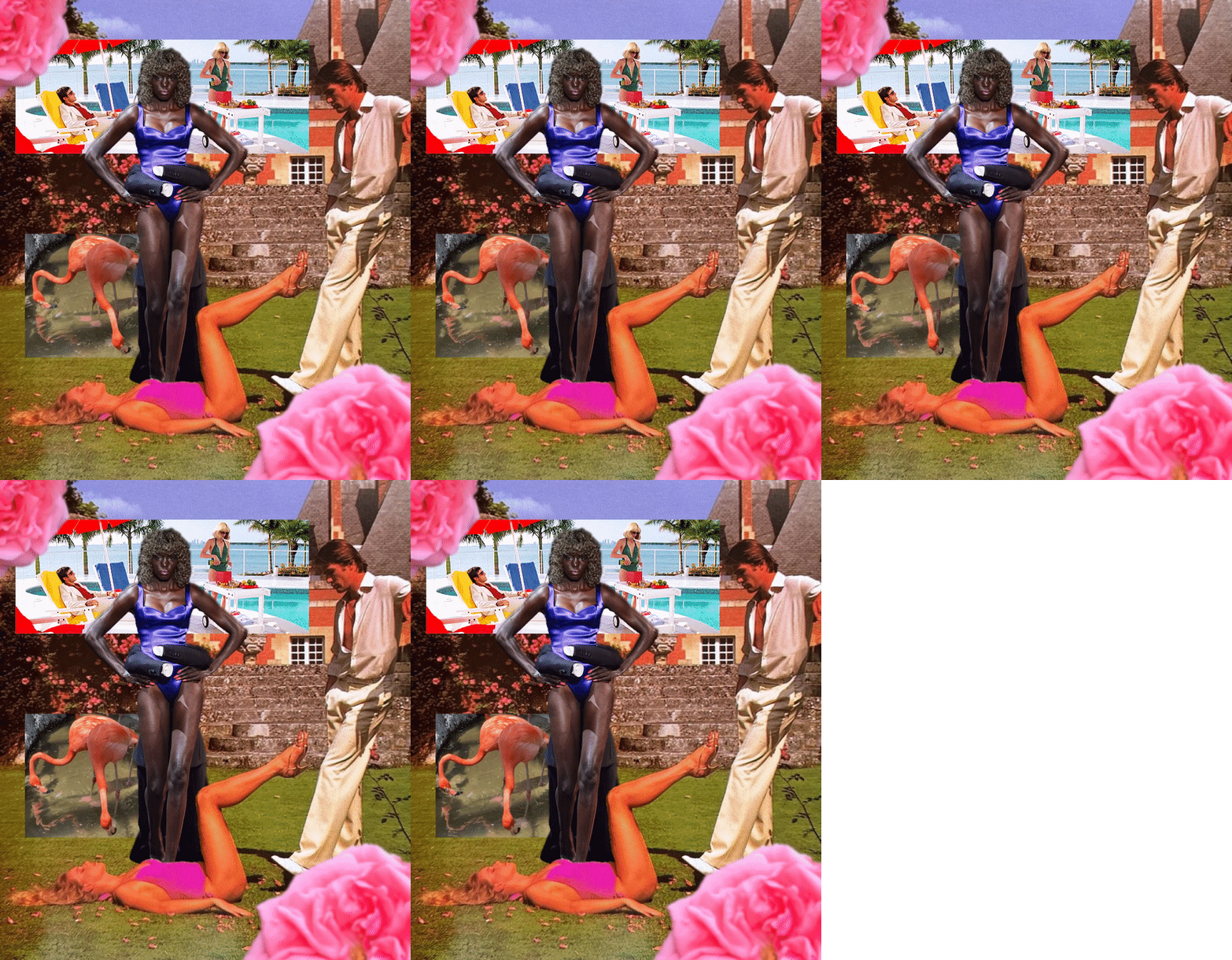
Collage by Edward Kanarecki. Don’t forget to follow Design & Culture by Ed on Instagram! By the way, did you know that I’ve started a newsletter called Ed’s Dispatch? Click here to subscribe!
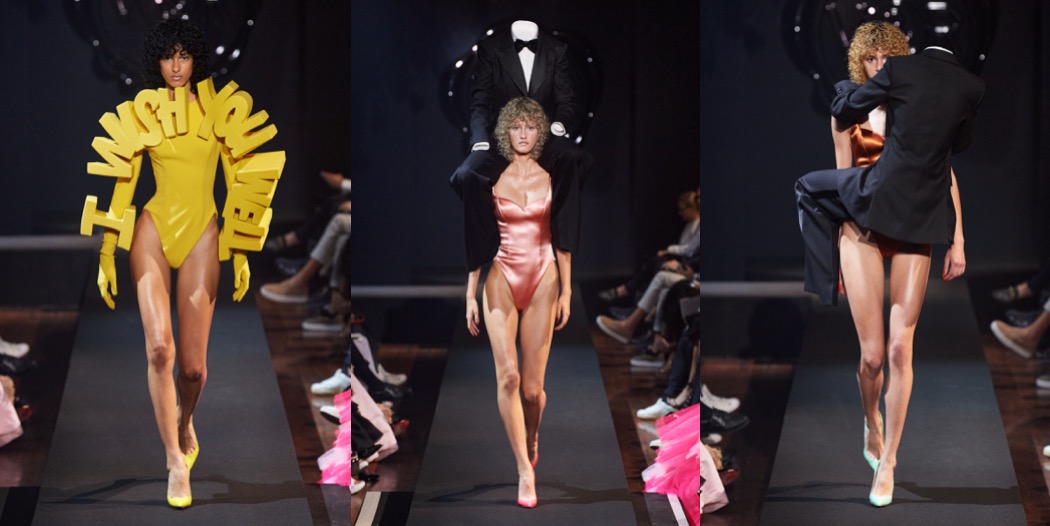
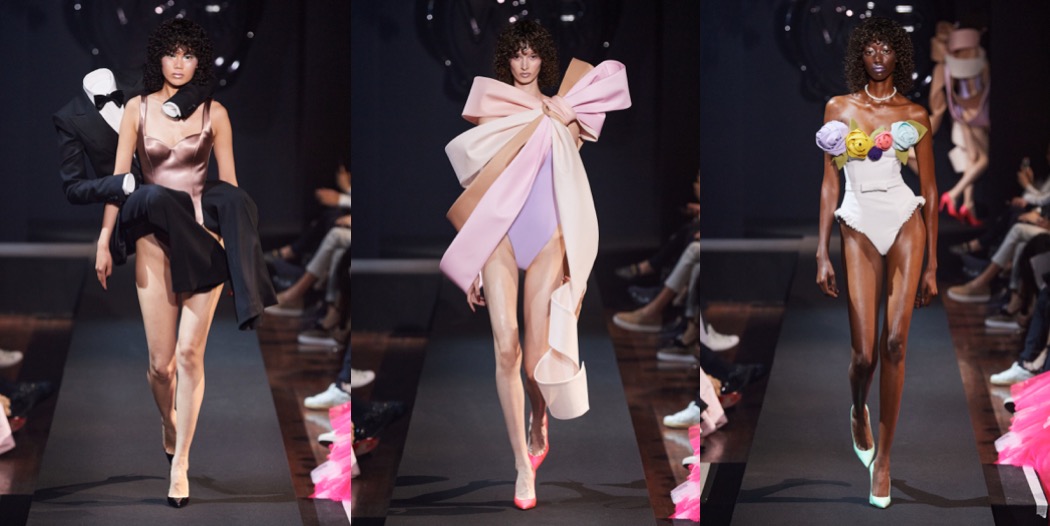
The first part of Viktor & Rolf‘s autumn-winter 2023 couture collection nearly made me stop browsing the looks: the parade of cheesy swimsuits was ridiculous. But then the ridiculous became couture, big camp way. Instead of transforming their 30th anniversary collection into a line-up of humongous, ballooning dresses in the predictable shape of improbable Viktor & Rolf-ish birthday cakes, Viktor Horsting and Rolf Snoeren went the opposite route: undress. Catchphrases like NO or I WISH YOU WELL were extended from décolletages in 3D cubic type (a nod to their ground-breaking autumn-winter 2008 show), an apparent replacement for sleeves. Yet the show stopping icing on the birthday cake were headless mannequins donning female black tailored tuxedos, hanging onto the models’ backs, or twisting in multiple formations around their bodies as if they were desperately calling for attention and didn’t want to let go. The meaning of all this? “It’s open to imagination,” answered the designers in unison. Obviously, the V&R repertoire doesn’t include the banality of logical, reasonable explanations.
Collage by Edward Kanarecki. Don’t forget to follow Design & Culture by Ed on Instagram! By the way, did you know that I’ve started a newsletter called Ed’s Dispatch? Click here to subscribe!
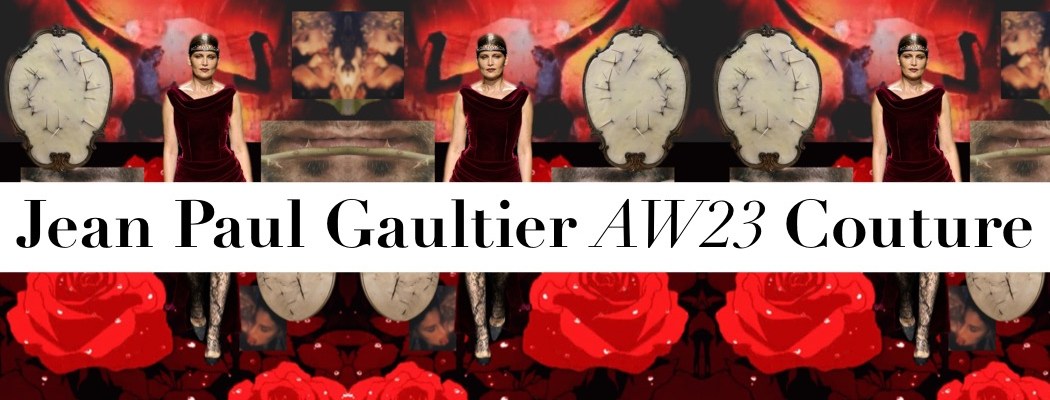
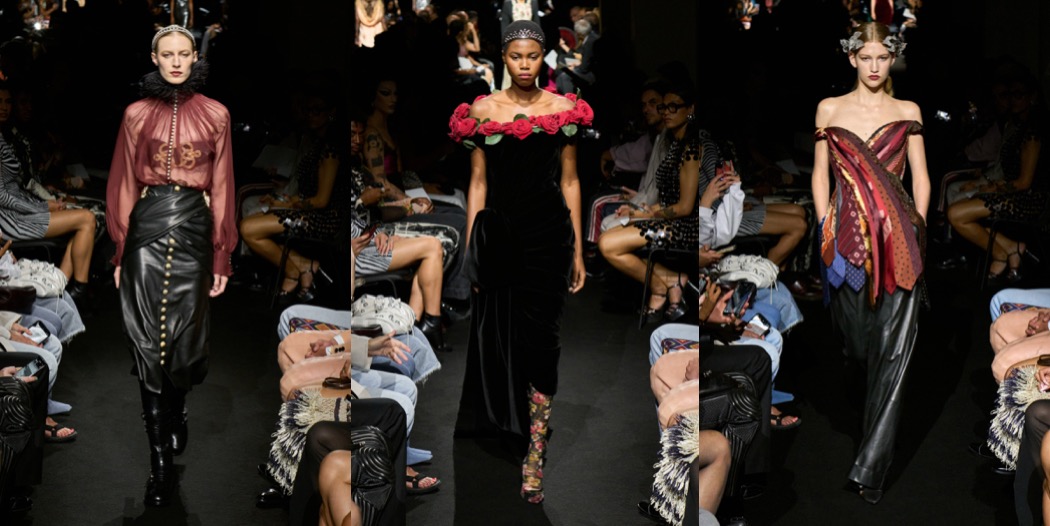
The guest designer gigs at Jean Paul Gaultier have become one of the best moments of haute couture fashion weeks. Julien Dossena‘s take on the couturier’s legacy was definitely a triumph. (Paco) Rabanne’s creative director wanted to achieve “a feeling of characters you pass in the street in Paris,” he said. “I wanted to make all of them queens, each with a different crown.” The honor of being able to bring his interpretation to the work of a national treasure of French couture couldn’t have been more sincerely felt. “Jean Paul was the first designer I ever saw on TV when I was very young. Watching him, I understood for the first time: oh, fashion can be a job! What he did (became) infused into my cultural background in general.” Over lunch with his idol, Dossena discovered that Gaultier had known Paco Rabanne, who had recently passed away. “He asked me to make something to honor him. But I had from him this complete sense of freedom. There’s this feeling in the couture ateliers that anything can be done.”
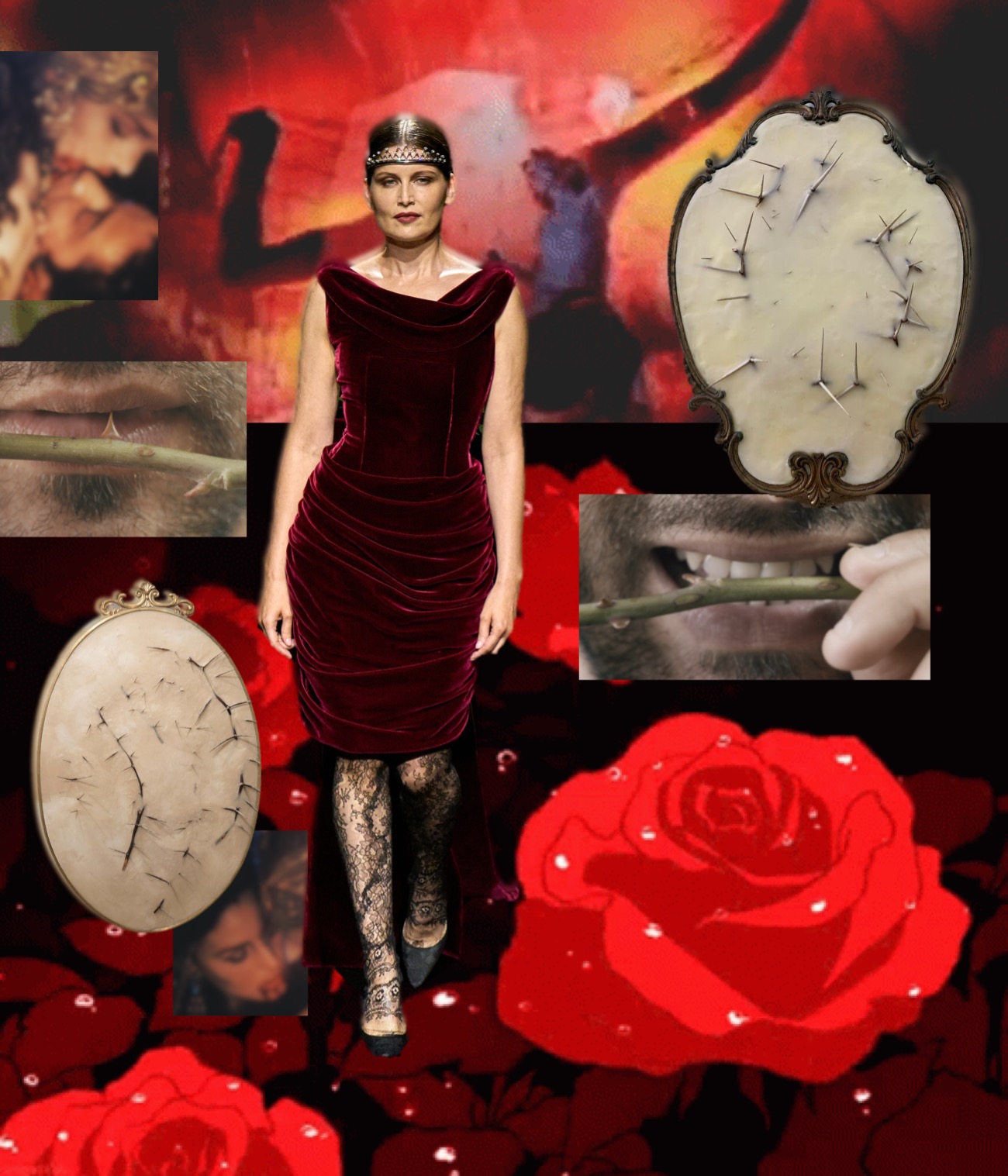
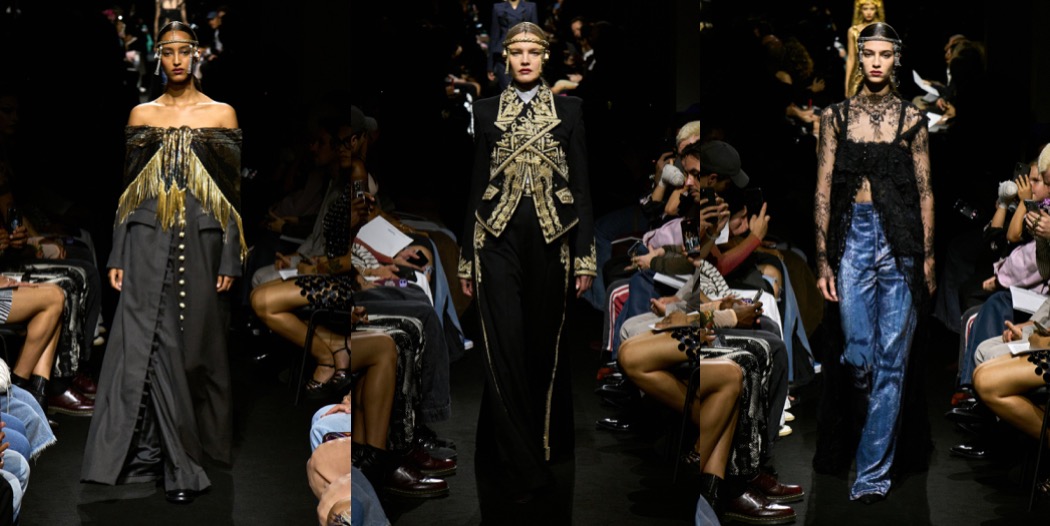
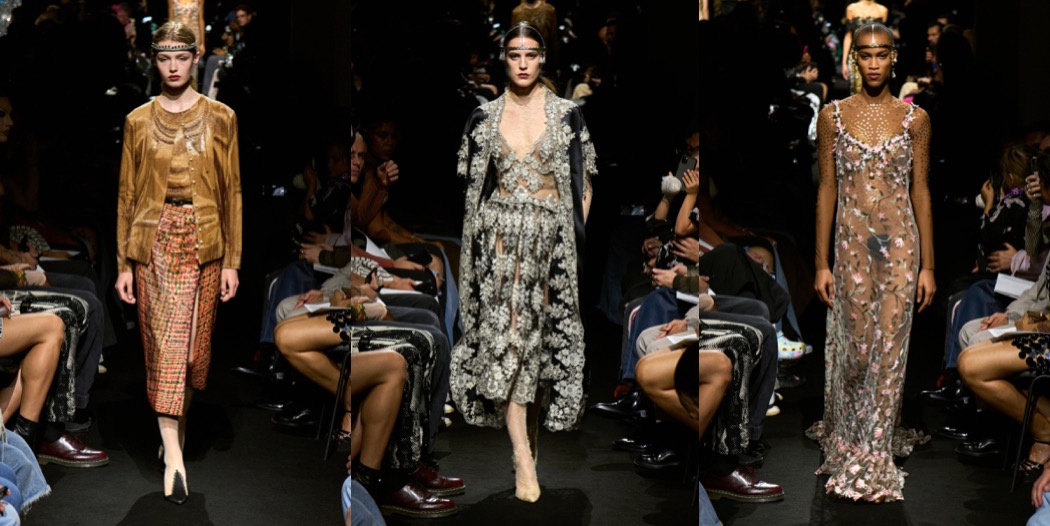
At Rabanne, Dossena’s ability to modernize chainmail and turn it into new techniques in zillions of ways has been one of the hallmarks of his talent – that, and the slant on bohemian glamour that frequently comes through his collections. His unmistakable double-salute to Gaultier and Rabanne was to whip up a replica of the famous pointy-bra dress from Gaultier’s first collection in 1984 in silver chainmail. But the dimension of Gaultier’s work which sparked Dossena’s imagination the most was his street-observation and inclusiveness – decades before it became fashionable. “Jean Paul was really the first to treat fashion as almost sociology, watching what people wear in the street, expressing communities in his shows. Joyously mixing people together.” Dossena’s presentation of chic-ified looks included a pinstriped trouser suit and a lace dress over a pair of trompe l’oeil beaded jeans with sweeping trains. Mid-way, in a stunning moment that spoke dramatically to the beauty of human togetherness, he draped shining gold and silver swathes of chainmail to connect pairs of models – a man apparently carrying a woman’s train, and two individualistic goddess warriors, each symbolizing a different culture. There were references to Gaultier’s giant trapper hat, to the sweeping floor length coats in his “Rabbi Chic” collection, and to off-the shoulder lace he used in his “La Concierge est Dans l’Escalier” show. Dossena said he’d deeply related to Gaultier’s habit of trawling flea-markets for vintage finds – a route into developing rich techniques. Part-way, there was a dress made of Irish-crochet lace, embroidered with gold paillettes meticulously made to look vintage. There was a peach satin lingerie dress layered over black lace, a floral lace apron worn over tailoring. And just as you thought Dossena might have missed a little something of the subversive wit that got Gaultier permanently labeled the Enfant Terrible of French fashion, sure enough, there it was. Clearly glimpsed through a couple of sheer dresses, a pair of trompe l’oeil embroideries of pubic hair. Sitting in the front row, Jean Paul Gaultier raised his eyebrows and chuckled as they passed by.
Collage by Edward Kanarecki. Don’t forget to follow Design & Culture by Ed on Instagram! By the way, did you know that I’ve started a newsletter called Ed’s Dispatch? Click here to subscribe!
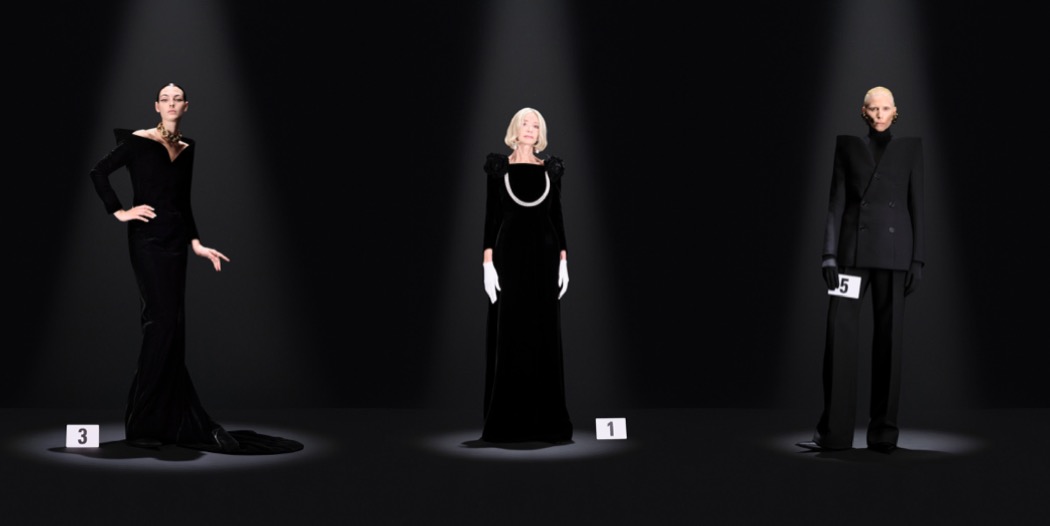
With his third haute couture collection for Balenciaga, Demna reminds the industry that he continues to be a resonating force of fashion power – and gracefully highlights, why couture is still so important. “Making clothes is my armor,” the designer said. At the end of the show, staged at Balenciaga’s historical boutique-slash-atelier on Avenue George V, Eliza Douglas, walking in a shining chrome-laminated 3-D printed bell-skirted suit of armor, reminded Demna of Joan of Arc – and also of himself. “Maybe she wouldn’t have been burned at the stake for wearing men’s clothes if she was wearing that,” he remarked. “Because all my life I suffered because of what I wear.” Whatever inferences to embattlement, self-protection, and resilience might have been fleetingly caught in that conversation, his main point was that being immersed in making clothes is his happiest place. “Couture to me is specifically about clothes. There was a narrative that somehow happened by itself. It was kind of making a bridge between the past and now, which is the reason I wanted to do it from the beginning.” The collection opened with a replica black velvet Cristobal Balenciaga haute couture dress. It was worn by the equisitely elegant Danielle Slavik, who orginally modeled it for Balenciaga himself. Grace Kelly ordered it, with its integral pearl necklace, for her 4Oth birthday. Slavik had told Demna that it was her favorite dress ever. His to and fro between tradition and innovation began with his own fascination with tailoring. For a start, he probed the structure of tailoring for day. He who shot to fashion fame by making jacket shoulders humungous now made them disappear altogether, cutting wide funneled necklines into narrow women’s coats and jackets. That idea, he said, had come from turning jackets upside down. In one way, it read as a couture elevation of the suiting inversions he’d started in ready-to-wear. In another, it was surely a nod to the founder’s signature obsession with sculpting dresses to frame the beauty of his clients’ faces.
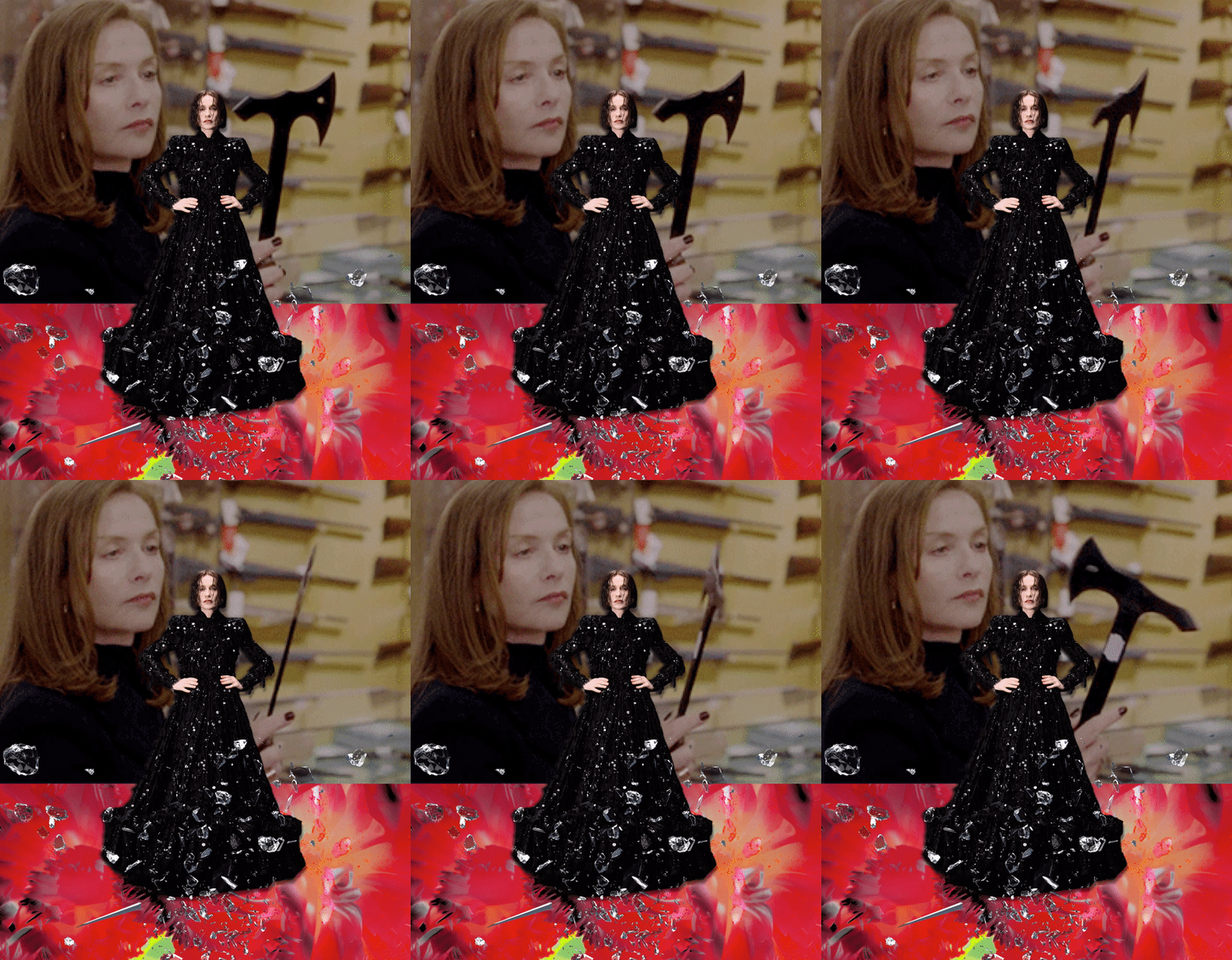
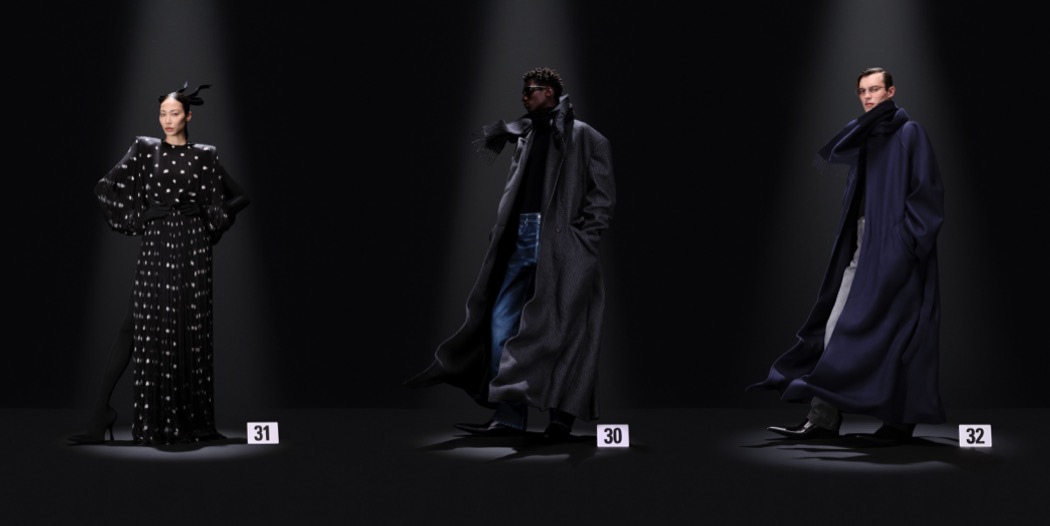
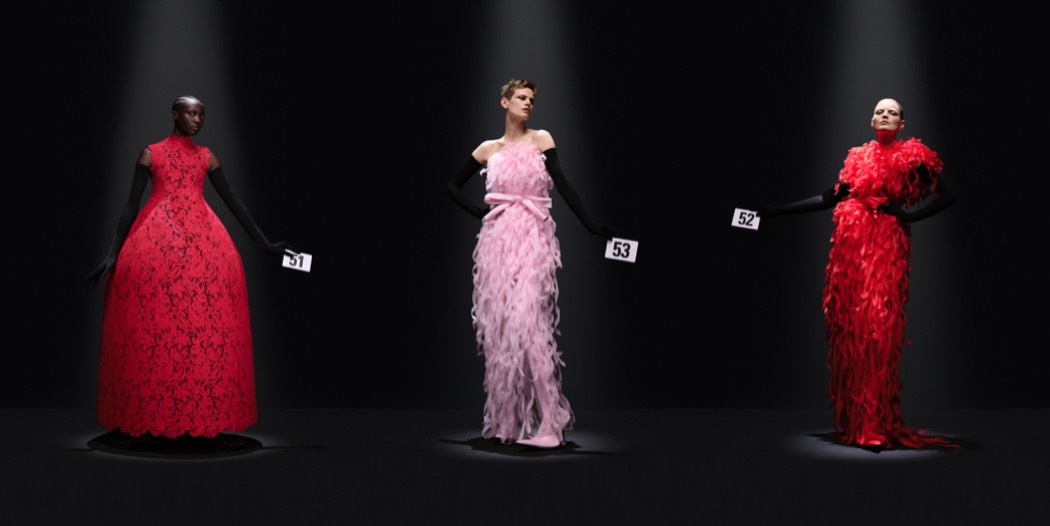
Menswear occupied an extensive section of the collection. It took in ultra rigorous black-tie formality and normal seeming business suits, right through to couture treatments of all the casual generics Demna’s been known for since day one. Menswear traditionally played no part in haute couture, it should be remembered. Silhouette-wise, with his extended-toe shoes poking out from trousers and jeans, it all appeared to be not so different from Demna’s signature ready-to-wear. In fact, he said, a slew of hidden trompe l’oeil hand-crafted techniques had been lavished on garments; there was oil-painting on fabric to imitate fur and printing on Japanese denim to mimic Prince of Wales check, as well as “windswept” raincoats and mufflers sculpted to look as if they were caught in a storm. “Because I like the couture that you see, and I like the couture that you don’t see. What’s really important is the techniques that maybe aren’t so visible. That’s a big part of who I am, and who Cristobal Balenciaga was, too. So I wanted that balance. Couture shouldn’t always be in your face, and like ‘this is a gorgeous dress.’” But there were gorgeous dresses, too. Isabelle Huppert came out in a heavily-pailletted full-skirted black dress like some gothic Infanta. Renata Litvinova’s candy-pink gown was a Balenciaga Barbie moment. There were others which, again, looked as if they’d been caught in movement; a taffeta neckline dramatically blown to one side, a slick black twist of a thing spiraled around the body. Some of it had been made in a complicity between advanced technology and the human hand, like the red lace dress that became a stiff bell-shaped filigree. All this is just as costly as anything traditionally haute couture, while being super-stimulating and truly breathtaking.
Collage by Edward Kanarecki. Don’t forget to follow Design & Culture by Ed on Instagram! By the way, did you know that I’ve started a newsletter called Ed’s Dispatch? Click here to subscribe!




















 Design & Culture by Ed